Feeds:
Posts
Comments

Archive for the ‘jane austen’ Category

Inquiring readers: Raquel Sallaberry from Jane Austen em Portugues sent the link to this post on Promantica about the entail in Downton Abbey entitled “Downton Abbey Fans – Welcome to the MOST Boring Law School Class.” The title is not exactly descriptive, for this wonderful post explains in great detail why the entail cannot be superceded, why Cora’s money is tied up and Lady Mary cannot inherit, and why Matthew Crawley cannot relinquish the title.

The Earl of Grantham and Matthew Crawley walk around the grounds of Downton Abbey

Magdalen, one of the blog contributors, introduces the expert:

By special request, I have asked my ex-husband to help us understand the law of the entail, critical to the plot of Downton Abbey.  Henry is a) British, b) an attorney, c) smart, and d) the son and grandson of QCs, i.e., barristers (British attorneys who appear in court) selected to be “Queen’s Counsel.”  (Although, to be fair, I think Henry’s grandfather took silk — Britspeak for becoming a QC — long enough ago that he was actually King’s Counsel!)
The blog goes on to describe the difference between real property, personal property, and intellectual property. Magdalen then dives into her questions:

First off, what’s an entail?
It is a limitation on the current tenant’s (in our case, the 6th Earl of Grantham) ownership interest in the estate. If he owned Downton Abbey outright, he would have a fee simple. Instead, he has a fee tail, which gives him a life interest so he can’t be evicted in his lifetime, but not the right to say who gets Downton Abbey after he dies.

The Earl of Grantham summarizes the situation best: "I'm a custodian, not an owner."

Okay, so how would an entail work?
The normal entail would be to “the 6th earl and heirs of his body” (meaning his legitimate biological children) or “and heirs male of his body” or “and heirs male of his body to be begotten on Cora.” When the 6th earl had no sons, the second and third of those would terminate, allowing the 6th earl to dispose of the money by will. The first would allow a daughter to inherit, but I’m not sure if it would pass to Mary or to the three daughters jointly or in shares…

To read the rest of this fascinating post, please click on this link to Promantica.

Thank you, Raquel (and Magdalen and Henry). This article is fascinating, fun to read, and very, very informative.

Read this blog’s other posts about Downton Abbey:


Read Full Post »

Copright @Jane Austen’s World. Written by Tony Grant, London Calling

Two of the greatest writers of the late 18th century and early 19th century were Jane Austen and William Wordsworth. We think we know Jane Austen’s primary influences and encouragement in her writing. They are found amongst the members of her family, the villages, towns and great houses she visited constantly near where she lived and the people she interacted with in those diverse places. She was a keen observer and knew them all intimately. Claire Tomalin in her biography, “Jane Austen, A life,” says that Jane wrote

“… tightly constructed stories that cover a short span of time…….Jane Austen also chose to write about small families.”

Dorothy Wordsworth

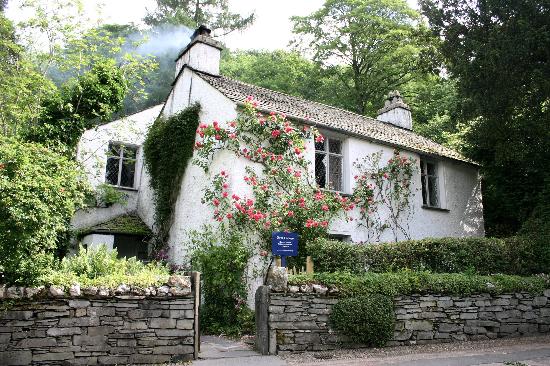
About, 250 miles north, there lived a young lady called Dorothy Wordsworth. She was a little older than Jane by five years. Dorothy’s brother was William Wordsworth and for a while they lived together in a tiny cottage they called Dove Cottage set in the wild and desolate scenery of The Lake District. Dorothy and William Wordsworth wrote about their emotional and intellectual response to nature and the landscape around them. While living at Dove Cottage in the Lake District, Dorothy was the muse, support, encourager and inspiration for her brother.

Dove Cottage, Grasmere. Image @Tony Grant

William often read Dorothy’s journal and drew inspiration for his poems from it.
We might ask why and how did these two writers have such different responses to the world about them?

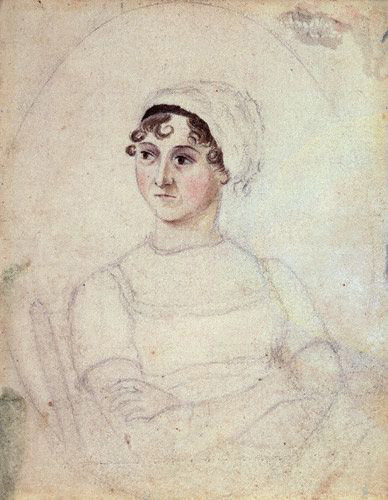
Jane Austen by Cassandra Austen

Jane was born into a lively and vibrant family of six brothers and one sister. It was a boisterous environment and aunts, uncles and neighbours were an additional group of relationships that were there, interested and ready to be involved with the new addition to the family. Family life was paramount in Jane’s existence from the start. All her senses were filled with it. Reading Gilbert Whites journals and letters makes us aware of the rich natural world all around her in her Hampshire village of Steventon, but although Jane would have been brought up in this natural environment, and she would have taken notice and interest in it, the life of family was the overriding power that carried her along. And so from an early start her environment filled her thoughts feelings and imagination. Claire Tomalin reminds us that,

“Not only was she one of eight, she lived with a perpetual awareness of a cousinage extending over many counties and even beyond England.”

Some examples of her writing show the intensity with which she was concerned with conversation and relationships as her primary focus. In Persuasion, the little Dorset coastal port of Lyme Regis plays a major role. In a letter to Cassandra written on Friday 14th, September, 1814, Jane says,

I called yesterday morning-( ought it not in strict propriety be termed yester – Morning?) on Miss Armstrong & was introduced to her father & mother. Like other young ladies she is considerably genteeler than her parents; Mrs Armstrong sat darning a pr of stockings the whole of my visit-.But I do not mention this at home , lest a warning should act as an example.-We afterwards walked on the Cobb; she is very conversable in a common way; I do perceive wit or genius- but she has Sense and some degree of Taste,& her manners are very engaging. She seems to like people too easily- she thought the Downes pleasant…”

In Persuasion, Jane writes about Anne Elliott, Captain Harville, Captain Wentworth,and Louisa Musgrove walking on the Cobb. The scenery is definitely noticed, but the main preoccupation is conversation and social interaction;

“but as they drew near The Cobb there was such a general wish to walk along it once more, all were so inclined…”

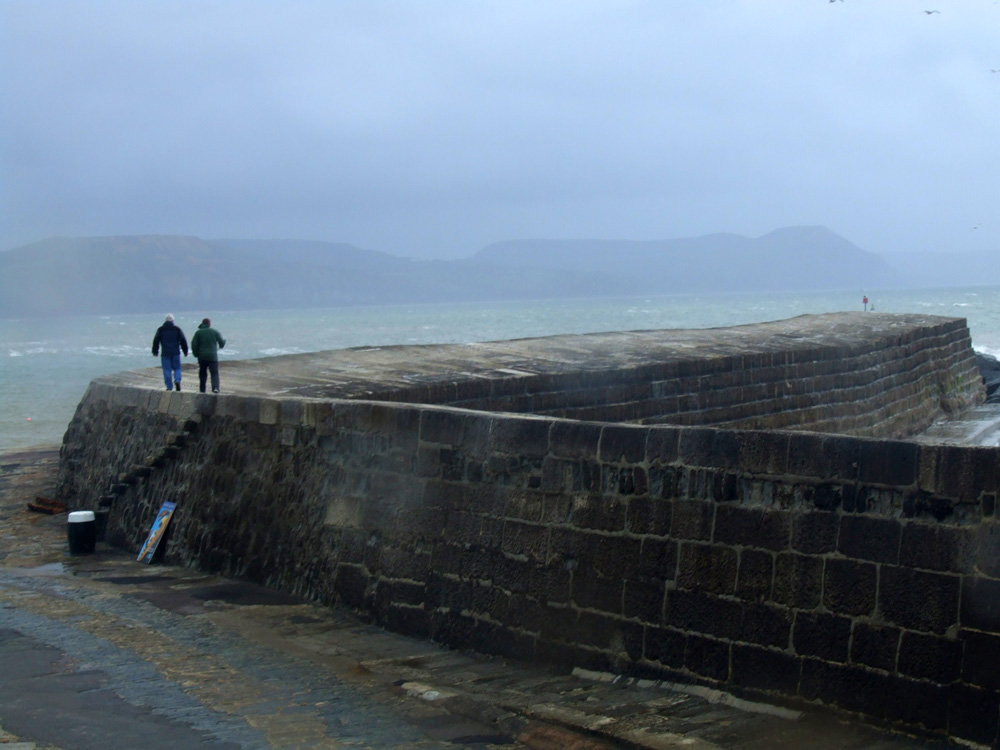
The Cobb at Lyme with Grannies Teeth. Image @Tony Grant

At this point they did not know how this walk along the Cobb would affect their whole situation, but the pull of this great physical presence was important and drew them to it as a social group conversing and interacting, their relationships developing. In both Jane’s letters above to Cassandra, and in this extract from Persuasion, it’s the relationships that are paramount. The Cobb is the setting for both. We can see in these two extracts how relationships play their part in Jane’s real life and Jane’s fictional life. Her own world is the inspiration for her fictional world.

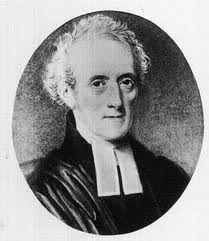
Henry Austen

Her family must have helped and encouraged her. Claire Tomalin writes,

Jane Austen managed the day-to-day routines of a novelist with an efficiency and discipline worthy of her naval brothers. The famous account of her working habits, given by her nephew, credits her with almost miraculous powers in stopping and starting under interruption.(her nephews account describes how she would stop and hide her small pieces of paper under a blotter at the slightest interruption and she used the sound of a creaking door as people entered the house to signal to her.)The picture is admirable, exasperating, painful and can only be half true………..there must have been times when the other inhabitants of the cottage protected her silence with something more than the creaking door……encouragement and practical help came from Henry….. Henry’s army connections may have helped to make the deal with
( Egerton the publisher) and Henry and Eliza’s money paid for the printing.”

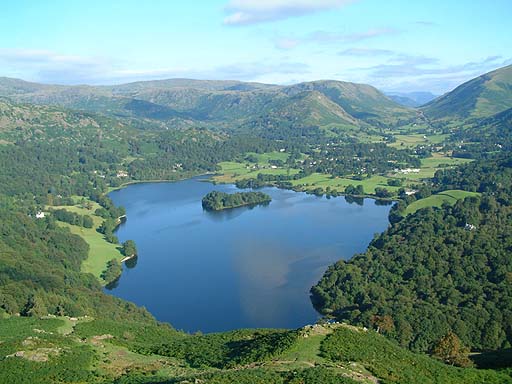
Grasmere Lake

Just over two hundred and fifty miles north of Steventon, in the County of Cumbria, also know as the Lake District, during the same period of time, lived Dorothy and William Wordsworth. They lived in various houses but the most famous is a small cottage, called Dove Cottage at Grasmere, next to Grasmere Lake. It is surrounded by the steep hills and small mountains and streams of the Lake District, the Scafell Pikes, and Dungeon Ghyll. The sights and sounds they lived with were those of tumbling water as it dropped down mountain falls, the hiss of fast-moving mountain streams, and the wild rugged terrain of the Lake District’s fells, crags, tarns, and ghylls.

William Wordsworth, Benjamin Robert Haydon. Image @National Portrait Gallery

Like Jane, William was born into a large family (on the 7th April, 1770). He was the second of five children born to John Wordsworth and Ann Cookson in a large house in the centre of Cockermouth, his father being the legal representative for James Lowther, the 1st Earl of Lonsdale. At the bottom of the garden was a wild stream and this is one of the first things that attracted William’s attention. Dorothy his younger sister was born a year later. She was to become his mentor and supporter throughout her life. Their brothers did well in life as indeed Jane’s brothers did. John Wordsworth became a naval captain but was lost at sea in 1805, the youngest, Christopher became master of Trinity College Cambridge. William himself went to St John’s College Cambridge and achieved his bachelor degree in 1791. Richard became a lawyer. None of the children in the family got close to their father who remained distant to them. Williams’ father did, however, encourage William to read poetry and William, similar to Jane at the Steventon Rectory, had access to his father’s extensive library.

To illustrate the influences and the type of encouragement that William drew on to write his poetry, the time that Dorothy and he lived at Dove Cottage is a prime period to focus on.

Dorothy kept a journal covering the years they spent together at Dove Cottage. She opens the journal in the year 1800. It is May 14th, a Wednesday.

“I resolve to write a journal of the time till William and John return and I set about keeping my resolve, because I will not quarrel with myself, and because I shall give William pleasure by it when he comes home again.”

This start to her journal gives us an insight into her total dedication towards her brother. It is written for William’s pleasure, not hers. She was a selfless soul. William, and indeed their friend and poet Coleridge, who also came to live in the lake District, often referred to Dorothy’s journal. It is almost as though William used his sister’s writing to affirm his own responses and feelings about nature.

Here is an extract that shows how William’s poems and Dorothy’s journal are connected. Dorothy would have written this first of course. It is written beautifully and with passion. It shows her connection to nature.

April 15th 1801

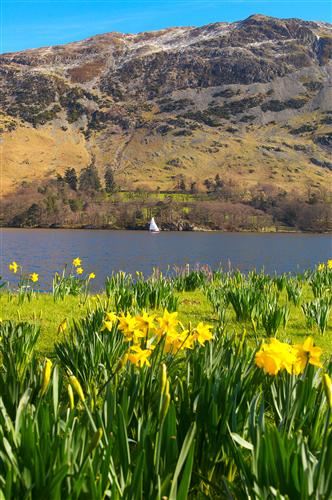
“ When we were in the woods beyond Gowbarrow Park we saw a few daffodils close to the waterside. We fancied that the lake had floated the seeds ashore, and that the little colony had so sprung up. But as we went along there were more and yet more; and at last under the boughs of the trees, we saw that there was a long belt of them along the shore, about the breadth of a country turnpike road. I never saw daffodils so beautiful. They grew among the mossy stones about and about them; some rested their heads upon these stones as on a pillow for weariness; and the rest tossed and reeled and danced, and seemed as if they verily laughed with the wind, that blew upon them over the lake; they looked so gay, ever glancing, ever changing.”

Lake District daffodils

Remember that William and Dorothy were together on this walk and saw the same sight. Soon after this entry William wrote this. It is the second verse of, The Daffodils;

Continuous as the stars that shine
And twinkle on the Milky Way,
They stretched in never ending line
Along the margin of a bay
Ten thousand saw I at a glance
Tossing their heads in sprightly dance”

It appears apparent that Dorothy’s words are used by William. “Tossed”, “danced”, repeat Dorothy’s imagery. He is relying on Dorothy’s emotional response as much as his own. They were very close as brother and sister and would have talked about their feelings of the event. But William’s heightened emotional response in this poem is the same as Dorothy’s.

It worked both ways. Williams’s poetry informed Dorothy’s emotional response too. On Monday may 26th, 1800, Mary writes;

I walked toward Rydal, and turned aside at my favourite field. The air and the lake were still……I could distinguish objects, the woods trees and houses. Two or three different kinds of birds sang at intervals on the opposite shore. I sate til I could hardly drag myself away. I grew so sad. “When pleasant thoughts,”……

Here Dorothy begins to quote a poem William had written two years earlier in 1798

I heard a thousand blended notes,
While in a grove I sate reclined,
In that sweet mood when pleasant thoughts
Bring sad thoughts to the mind.”

She is virtually re-enacting the poem. And of course Dorothy’s journal may well have informed Williams writing of the poem in the first place.

It is easy to see William Wordworths poems, in a quick superficial reading, as merely nice emotional descriptions of nature. Of course they are far more than that. Dorothy herself in her journal warns us that when reading William’s poems, to “look deep.”

In this article I wanted to show the different influences of two of the greatest writers of the late eighteenth century and early nineteenth century. It was not meant to be an analysis of their writing. However, to be fair to William Wordsworth it should be pointed out that his poems must be read carefully and a few times over. You begin to notice his emotional attachment to nature – he calls it his soul “linking” with the spirit of the natural world. It is ultimately about man’s connection with nature and being able to communicate with it, empathise with it, and know that you are part of it.  Wordsworth warns,

“And much it grieved my heart to think

What man has made of man.”

This sounds very modern and apt for our own times.

Jane Austen and William Wordsworth appear to be two very different writers, but I think placing them together shows that one is deeply concerned with the interrelationships of families and small communities and the other is deeply concerned about man’s relationship with nature. The themes and focus of Jane Austen’s and William Wordsworth’s writing were opposite, but they were closely connected too. Both writers wrote about what affected and concerned them as human beings. They show the human response to two different aspects of the world we live in and that we all share. It is interesting to note that Wordsworth obviously related and socialised with people and that Jane obviously noticed and interacted with the natural world about her in Hampshire, but both had a different emotional and intellectual responses to the world they inhabited rooted in their own personal experiences.

References:

Austen J. ( first published 1818) `(1998) Persuasion ; Penguin Classics

Clark C. (ed) (1986) Home At Grasmere : extracts from the journal of Dorothy Wordsworth ( written between 1800 and 1803) and from the poems of William Wordsworth: Penguin Classics

Le Faye D. (1995) Jane Austen’s letters (New Edition): Oxford University Press

Tomlin C. (2000) Jane Austen A Life: Penguin Books

Read Full Post »

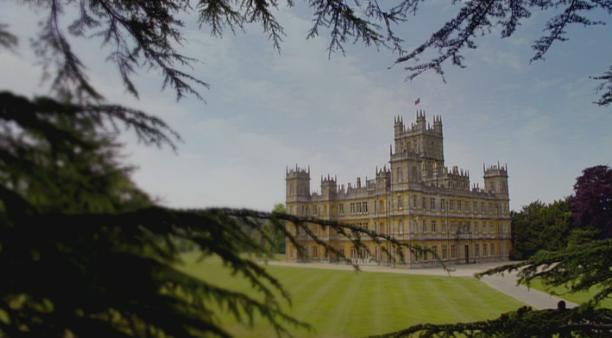
Highclere Castle as Downton Abbey

Downton Abbey’s connection to Jane Austen is through Lord Carnarvon, whose descendents still own Highclere Castle, where the PBS Masterpiece Classic mini-series’ interior and exterior shots of the fictional country house were filmed. (Read about Andrew Lloyd Weber’s recent attempt to purchase the castle.) In Jane’s day, Lord Carnarvon was Henry, the 1st Earl. Jane wrote in a letter to Cassandra Austen, Saturday25 – Monday 27 th,  October 1800 :

“This morning we called at the Harwood’s & in their dining room found Heathcote & Chute for ever – Mrs Wm Heathcote & Mrs Chute – the first of whom took a long ride in to Lord Carnarvons Park and fainted away in the evening…”

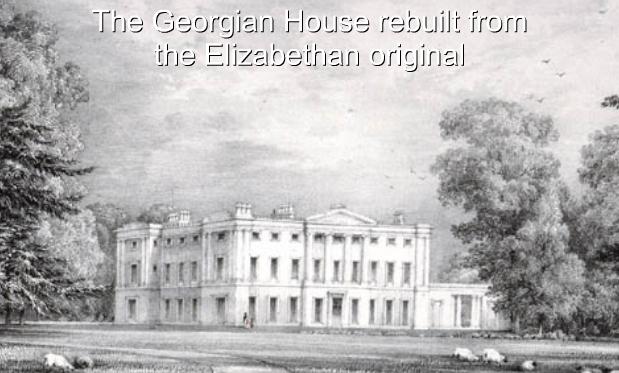
Highclere Castle as it looked in Jane Austen's day

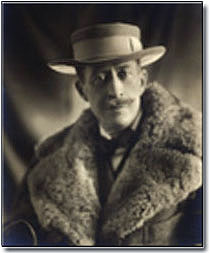
The 5th Earl

Lord Carnarvon’s park, which Jane writes of, is the grounds to Highclere Castle. The Carnarvon family has lived at Highclere since 1679, although the Castle as we see it today sits on the site of an earlier house. (Click here to view a short film about the Castle’s history.) A beautiful 6,000 acre park designed by Capability Brown between 1774-7 surrounds the Castle.

In 1842, the 3rd Earl commissioned architect Sir Charles Barry (also responsible for building the Houses of Parliament in Westminster) to redesign the Castle.

One of the most interesting fact about Highclere Castle is that the golden death mask of King Tutankhamun is featured in its gallery today.

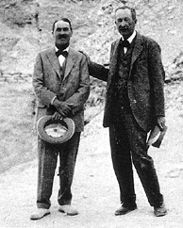
Howard Carter and Lord Carnarvon in Egypt

Lord Carnarvon of Tutankhamun fame (George, the 5th Earl) was an Egyptologist who sponsored Howard Carter,  the archaeologist who discovered Tutankhamun’s tomb in the Valley of the Kings in 1922. It is said that when Canarvon and Carter broke into Tut’s tomb, they unleashed the mummy’s curse. But the story goes more like this:


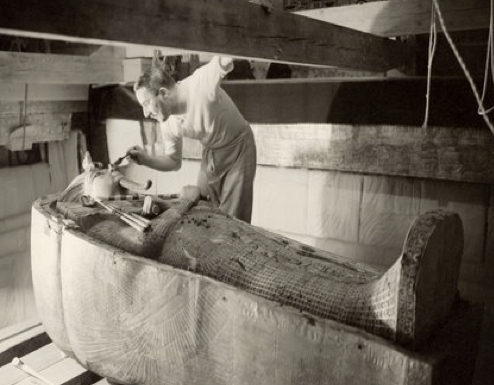
Howard Carter cleans the second coffin. Image @Harry Burton

This popular legend was born when Lord Carnarvon, the English Earl who funded the Tutankhamun expedition, died less than six months after the opening of the tomb. Despite the fact that Lord Carnarvon was a sickly individual, and that no such “hieroglyphic curse” was found inscribed on the tomb, this legend persists today. . . Lord Carnarvon had been in a car accident many years earlier and had never fully recovered. About a month after entering the tomb, he cut open a mosquito bite while shaving and infection set in. Blood poisoning and pneumonia quickly followed, and within a few weeks, he passed away. Newspapers reported that mysterious forces unleashed from the mummy and its trappings had caused his death. – King Tut

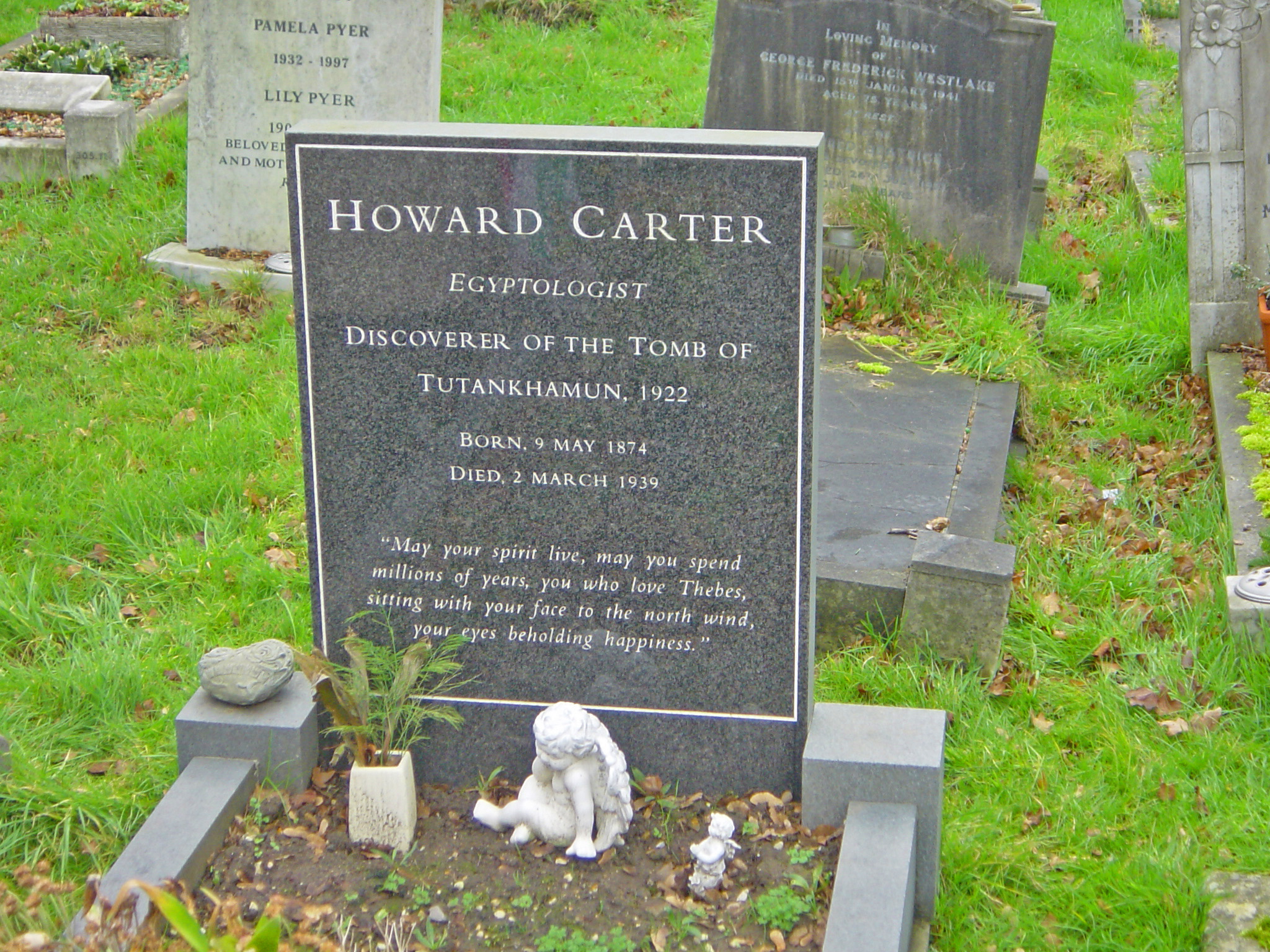
This image of Howard Carter’s grave was taken by Tony Grant, who lives near the cemetery in London. (Thank you, Tony, for the photo and for the quote from Jane Austen’s letter!)

Howard's grave. Image @Tony Grant

Watch Downton Abbey at your local PBS station Sundays, January 9, 16, 23, and 30, 2011 at 9 PM. Read my other posts:

More on the topic:

Read Full Post »

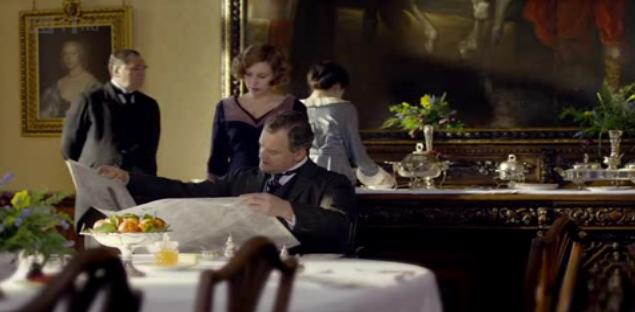
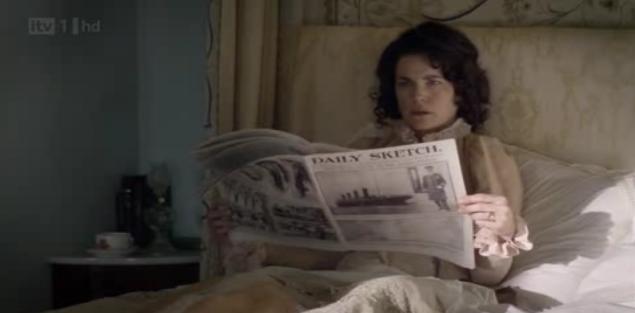
At the start of Downton Abbey, the Earl of Grantham sadly learns of the death of his cousin and cousin’s son on the Titanic. This event places the Earl and Countess of Grantham in a tragic and unexpected situation, for both men – the heir and the spare – were in line to inherit Downton Abbey.

The earl (Hugh Bonneville) reads about the Titanic

The earl had never anticipated such a tragic turn of events. He had married Cora, an American heiress, in a marriage of convenience in order to maintain his landed estate in the manner in which it had been run for centuries. During the marriage negotiations, the old Earl of Grantham struck a hard bargain and Cora’s fortune became completely tied up in the entail. This  was no great matter to the young couple, who were certain they would produce an heir. While the earl eventually fell in love with his beautiful bride, they were unable to produce a son, their union resulting in three daughters.

The countess (Elizabeth McGovern) learns of the tragedy.

And so the plot of Downton Abbey thickens, for lovely Lady Mary, the earl’s eldest daughter, was engaged to the younger heir, Patrick. But Patrick died and now Matthew Crawley, the earl’s third cousin once removed, stands next in line to inherit. Unlike the previous heirs, who were accustomed to the ways of the upper classes, the very reluctant Matthew must learn how to run a great estate from the ground up … and Lady Mary, by dint of being a woman and as the result of an unbreakable entail, is left out in the cold.

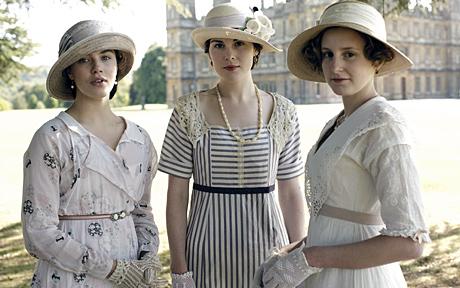
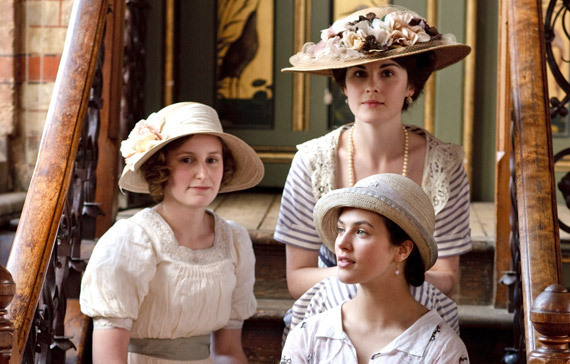
Lady Sybil, Lady Mary, and Lady Edith

The plot line of Downton Abbey weaves the stories of the privileged who live upstairs with the lives of those who serve them, and involves the intricacies of the entail and running the estate. Of the three sisters, only Lady Mary plays a major role. But the other two, Lady Edith and Lady Sybil, faced challenges that were typical of upper class women of the era. As Jane Austen astutely observed, “ There are not so many men of fortune in the world as there are pretty girls who deserve them,” a fact that the middle sister, Lady Edith, comes to know too well, and one that Lady Sybil ignores, for she has modern notions of a woman’s place in Society.

Downton Abbey. Jane Austen's World

Upon learning of the death of her fiance, Patrick, Lady Mary is not as sad as she should be.

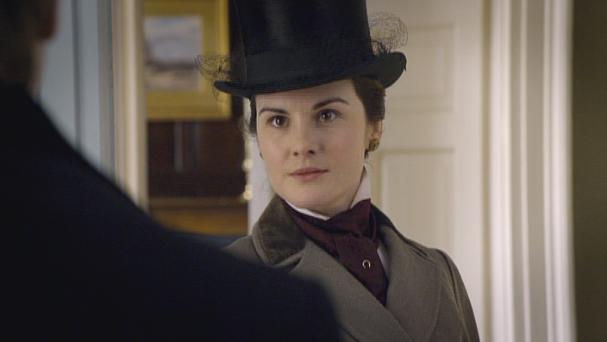
Lady Mary Crawley (Michelle Dockerey)

The eldest of the three girls, and the most beautiful and self-assured, is Lady Mary Crawley who knows her worth. Upset that the entail cannot be undone, she realizes that her only way to marry “up” or to financial security is to find a wealthy man with (preferably) a title. The new heir, Matthew Crawley, in no way interests her. From the moment they meet, snobby Lady Mary looks down her patrician nose at the upstart heir, who, she doubts, even knows how to hunt. (Lady Mary might have no use for Matthew, but he has more than a passing interest in her.)

Lady Mary meets Matthew and ... is not impressed

Ever the opportunist when it comes to snaring a suitable mate, Lady Mary sets her sights on a duke, as well as Evelyn Napier, a gentleman who is besotted with her.  But then a handsome and exotic visitor catches her eye and makes her heart flutter uncharacteristically,  and Lady Mary’s safe and secure world will never be the same again.

Downton Abbey. Jane Austen's World

Lady Edith reads Lady Mary's private letter

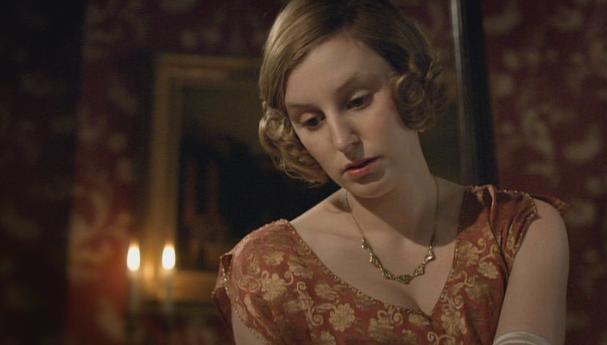
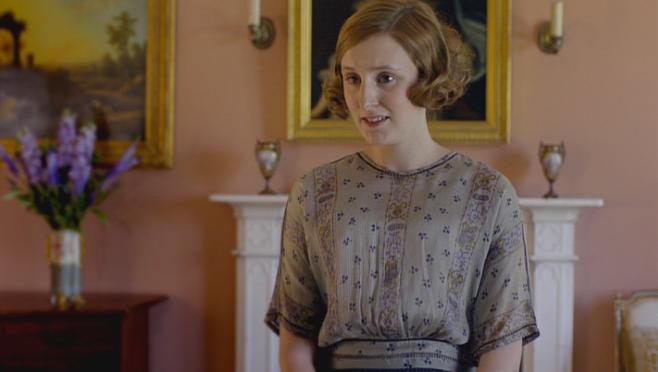
Lady Edith Crawley (Laura Carmichael)

Lady Edith can hardly contain her jealousy of Lady Mary’s beauty, her easy popularity with men, and her status as elder daughter. As the second daughter, she feels invisible. Lady Mary barely mourns her fiance, which triggers Lady Edith’s resentment of her older sister and her cool reaction to his death. Not that she is entirely to be pitied, for her jealousy drives her to snoop on her sister, and tattle tales that should never be shared.

Lady Edith looks hopeful as she is courted unexpectedly

The complex, nasty relationship between the two sisters is a result of the keen pressure that women still felt to marry up and well in the Edwardian era. Upper class women, as Amanda Vickery pointed out in her excellent series, At Home With the Georgians, were raised to live passive lives and accept the fact that they were second-class citizens. While Lady Edith plots and schemes to find a husband (if even from her older sister’s romantic leavings), Lady Sybil, the younger sister, is forging a role for herself.

Lady Sybil helping Gwen, the housemaid

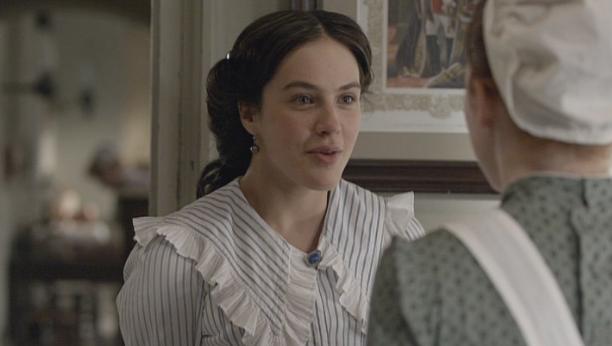
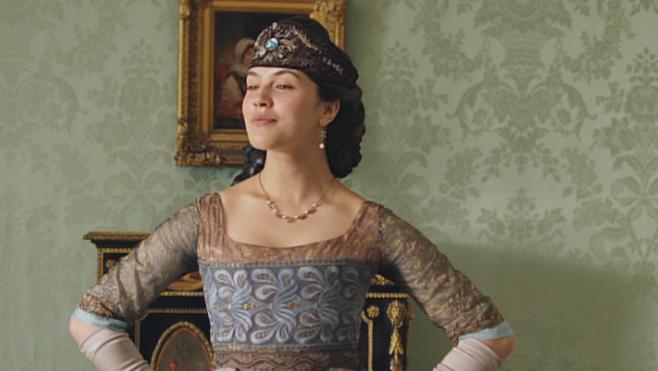
Lady Sybil Crawley (Jessica Brown-Findlay)

Lively, upbeat, and compassionate, Lady Sybil plays no role in the spiteful drama of her two older sisters. She is too busy admiring suffragettes, supporting Gwen, the housemaid, in her ambition to become a secretary, reading political tracts and attending forbidden rallies. Even her taste in clothes is flamboyant, and one suspects that as Lady Sybil matures she will become a character with a capital “C”.

Lady Sybil shows off her new frock

In Downton Abbey, Lady Edith and Lady Mary demonstrate the dependent role that women still played in the early 20th century. But Lady Sybil was another creature altogether.  After the end of World War I,  she would no doubt be dancing the Charleston in flapper clothes, and after turning thirty, exercising her right to vote and earn her own living.


Edith, Mary, and Sybil

More about Downton Abbey, to air on Masterpiece Classic, Sunday, January 9th at your local PBS station:

Read Full Post »

Inquiring readers, from now until the U.S. airing of Downton Abbey, this blog will explore the facets of living in an English country house during the Edwardian era, and drawing upon the similarity and differences between the Edwardian and Regency eras.
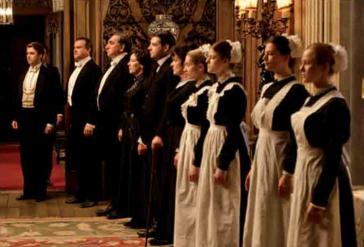
Downton Abbey. Credit: Courtesy of © Carnival Film & Television Limited for MASTERPIECE

Servants await the arrival of guests. Credit: Courtesy of © Carnival Film & Television Limited for MASTERPIECE

Many of us today cannot understand why servants in country manors such as Downton Abbey would consider catering to the whims of others as a desirable occupation. In reality, service in great houses was preferred over other jobs that were available during the 18th and 19th centuries, such as tedious and often dangerous labor in factories or backbreaking work on farms.

Downton Abbey. Credit: Courtesy of © Carnival Film & Television Limited for MASTERPIECE

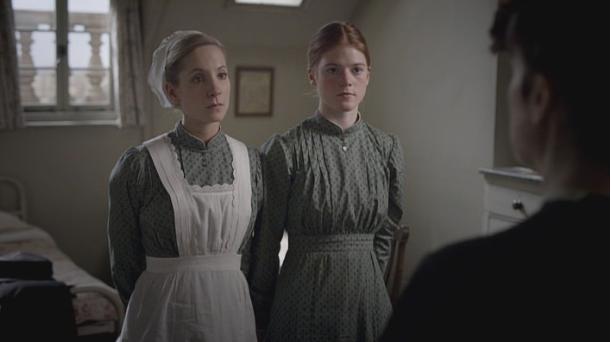
Siobhan Finneran as O’Brien, the countess’s ladies maid, Rose Leslie as Gwen, housemaid, and Joanne Froggatt as Anna, head maid. Credit: Courtesy of © Carnival Film & Television Limited for MASTERPIECE

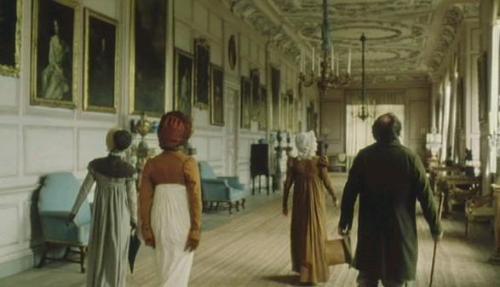
Unlike their poorly paid counterparts, servants were housed and fed by their masters. They had the ability to save a large portion of their salaries, or send money to support their families back home. At the end of their stay with their hosts, guests paid servants a tip for their services. Housekeepers, as Jane Austen famously showed in Pride and Prejudice, served as tour guides when the family was absent. Mrs. Reynolds no doubt received a tip from the Gardiners after showing the public rooms of Mr. Darcy’s great estate.
Jane Austen's World

Mrs. Reynolds, the housekeeper, escorts Elizabeth Bennet and the Gardiners through Pemberley

Although servants began their careers at the bottom, working menial jobs and catering to the upper servants as well as their masters, they could move up in the servant hierarchy. It was not uncommon for a scullery maid to be promoted to kitchen maid and eventually up to a cook.

Downton Abbey. Jane Austen's World

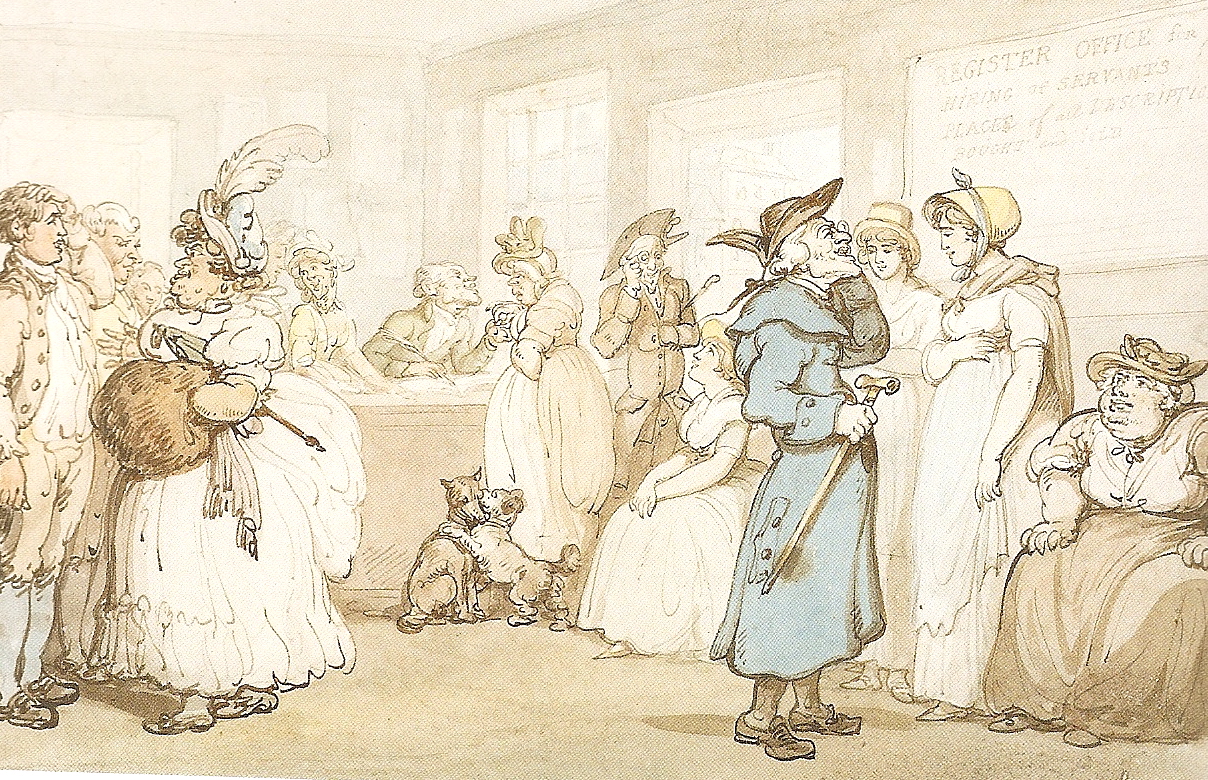
The registry office

A good and reliable servant was a prized commodity. Young, able servants were in a constant state of flux (they worked on average for 2-3 years before moving on), always looking for a better position, which they could acquire as long as their masters gave them good references. Servants found new work in registry offices, where they would enter their name in the registry book, or through word of mouth. (Read more about this topic in my post, Hiring Servants in the Regency Era and Later.)

Downton Abbey 2010. Credit: Courtesy of © Carnival Film & Television Limited for MASTERPIECE

Anna (Head maid) and Gwen (house maid) in their room. Credit: Courtesy of © Carnival Film & Television Limited for MASTERPIECE

Upon rising, servants would labor first and eat only after the family had risen, dressed, and breakfasted. When Downton Abbey opens, the camera follows the servants as they rise and ready the house for the day. The earliest rising servant was the scullery maid, or tweeny, who sat lowest on the pecking order. She would stoke the kitchen fire for the cook and boil water. The kitchen maid would perform these offices if there were no tweeny or scullery maid.

Credit: Courtesy of © Carnival Film & Television Limited for MASTERPIECE

Daisy, the kitchen maid, lays a fire in the library. Credit: Courtesy of © Carnival Film & Television Limited for MASTERPIECE

Housemaids would tread silently up the servant (back) stairs unseen and unheard with fresh water and carrying covered slop pails. Quietly, so as not to wake their masters, the servants – maids and footmen – would empty chamber pots, remove cold ashes in the fireplace, carry up coal and stoke a new fire, and tidy any messes away from the previous day.

The servant stairs. Credit: Courtesy of © Carnival Film & Television Limited for MASTERPIECE

Downstairs they would continue making preparations for the day, opening drapes and shutters, dusting and polishing, and sweeping floors. The only time that the servants might be visible to family or guests was when they cleaned and polished the main halls and stairway. At all other times they were expected to remain invisible as they worked around the house, using the servant’s stairs and working in a room when the family was not expected to use it.
Credit: Courtesy of © Carnival Film & Television Limited for MASTERPIECE

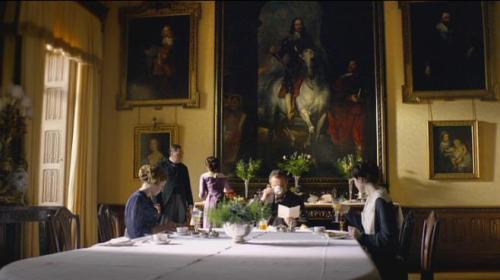
Breakfast at Downton Abbey. Credit: Courtesy of © Carnival Film & Television Limited for MASTERPIECE

With or without guests, the daily routine for a family at its country house was unalterable, due in part to the servants, whose meal-times were rigid, and in part to Edwadian era tradition. At nine 0’clock, housemaids and valets arrived to draw bedroom curtains and deliver a cup of teac as ordered by the hostess the night before.” – The End of High Society

Downton Abbey 2010. Credit: Courtesy of © Carnival Film & Television Limited for MASTERPIECE

The servants quarters. Credit: Courtesy of © Carnival Film & Television Limited for MASTERPIECE

Servant’s dining space and table, Downton Abbey

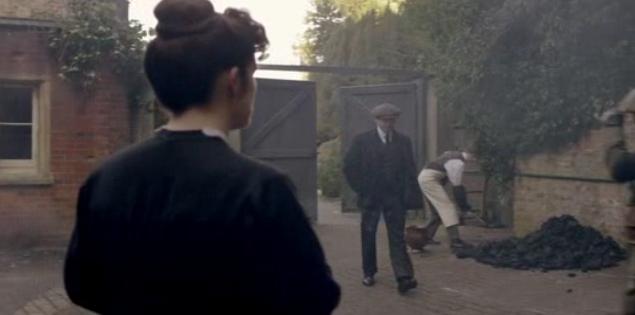
The hierarchy among the servants was strictly defined. At the top stood the butler and housekeeper. Dowton Abbey, the series, highlights eleven servants who ran the household, but in 1912, Highclere Castle, where the exterior and interior shots were filmed, used the services of 25 maids, 14 footmen, and three chefs. Although Downton Abbey follows only 11 of the upper servants closely, one can see other servants (housemaids, a scullery maid, young boys, coal men, and the like) in the background going about their business.
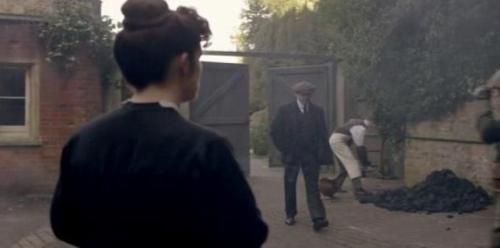
Credit: Courtesy of © Carnival Film & Television Limited for MASTERPIECE

Back of the house. In the background, a servant scoops coal.Credit: Courtesy of © Carnival Film & Television Limited for MASTERPIECE

In addition to the main house, servants worked in the service buildings, such as the stables, garage, dairy, bakehouse, laundry, gun room, and pantry. The kitchen in these great houses often sat away from the house (to prevent cooking smells from wafting up to the public and private rooms) and were connected to the main house via underground passages. This meant that the food often arrived at the dining table cold or, at best, lukewarm.

Credit: Courtesy of © Carnival Film & Television Limited for MASTERPIECE

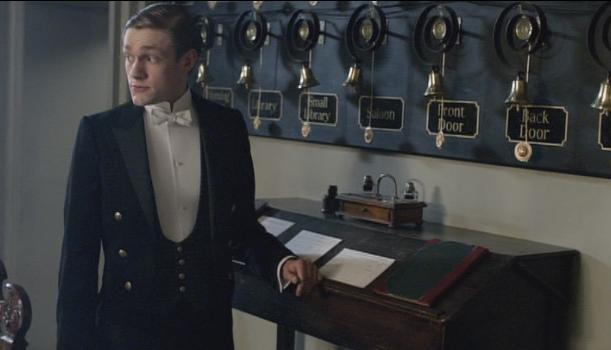
The servant bells behind William, the second footman. Credit: Courtesy of © Carnival Film & Television Limited for MASTERPIECE

In the lower common area, servants were summoned by the family via a system of bells connected to each room. In theory, even when servants had finished with their duties and were finally sitting down to eat their breakfast, they were subject to be called at a moment’s whim. But was this always the case? While the servants of Downton Abbey are shown to be loyal and proud of their positions, the Punch cartoon below shows a group of shiftless servants who are slow to respond to their master’s summons.

‘Oh, ah, let ’em ring again!’ by George Cruikshank

The servants of Downton Abbey worked hard, but as shown in the series, they knew their place and were proud of their positions.
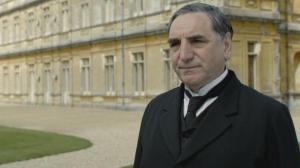
Downton Abbey 2010. Credit: Courtesy of © Carnival Film & Television Limited for MASTERPIECE

Jim Carter as Mr. Carson, the Butler. Credit: Courtesy of © Carnival Film & Television Limited for MASTERPIECE

The Butler: Jim Carter, who you may remember as Captain Brown from Cranford, portrays Mr. Carson, the butler, with grave dignity. He is as protective towards the Crawley family as he would have been to his own. While Mr. Carson is fair, he does not hesitate to reprimand a servant or even fire one if he thinks it is for the benefit of the house. Mr. Carson was not only in charge of the male servants, but also of the wine cellar and the butler’s pantry, which contained the family plate and silver. In addition to his managerial duties, he is shown in several scenes either polishing the silver or pouring over the books and counting the bottles of wine.

Downton Abbey 2010. Jane Austen's World

Phyllis Logan as Mrs. Hughes, Housekeeper. Credit: Courtesy of © Carnival Film & Television Limited for MASTERPIECE

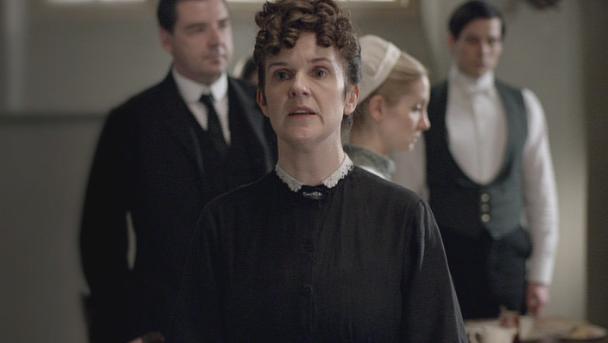
The Housekeeper: Phyllis Logan as Mrs. Hughes is Mr. Carson’s counterpart. Head of the female servants, she consults with her mistress daily about the meals, family plans, and any guests that are expected. Mrs. Hughes (even if they are single, which Mrs. Hughes was, housekeepers were given the distinction of being a Mrs.) was also responsible for the linen and china. A kind and observant woman, Mrs. Hughes nevertheless keeps her female team in line. She begins to wonder if, by devoting her life to this household, she has missed out on managing one of her own.

Downton Abbey 2010.

Brendan Coyle as John Bates, the Valet. Credit: Courtesy of © Carnival Film & Television Limited for MASTERPIECE

The Valet: (Brendan Coyle) In small households, such as Matthew Crawley’s, the position of butler and valet was combined. But Downton Abbey is a great house, and there are servants aplenty. Mr. Bates’s arrival creates a stir that causes the lady’s maid and first footman to plot against him. A stoic and capable man who served the earl as batman during the war, he must perform his duties of dressing the earl and seeing to his wardrobe regardless of the war injury that requires him to use a cane. For Mr. Bates, the flights of steep stairs can be daunting, and he is incapable of carrying large trays or helping with dinner service when more hands are needed.
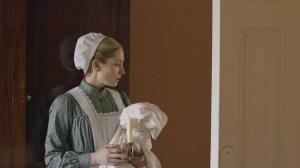
Downton Abbey 2010.

Joanne Froggatt as Anna, Head Housemaid. Credit: Courtesy of © Carnival Film & Television Limited for MASTERPIECE

Head Housemaid: Joanne Froggatt as Anna is a pretty, quiet, and dependable presence. She works with a positive attitude and champions those who need defending. As head housemaid, she assists the daughters of the house with their hair and wardrobe, but she also performs the duties of a regular maid, dusting, cleaning, and changing the bed linen.
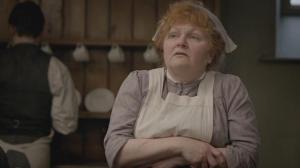
Downton Abbey 2010.

Lesley Nicol as Mrs. Patmore, the Cook. Credit: Courtesy of © Carnival Film & Television Limited for MASTERPIECE

The Cook: Lesley Nicol as Mrs. Patmore, the cook, is hiding a secret, one that threatens her very livelihood. The viewer will be struck by the sheer volume and variety of dishes that she creates and oversees daily. Although only her kitchen maid, Daisy, is seen as her regular assistant, there would have been others in a house this size. At the very least, Mrs. Patmore would have needed a permanent person in the scullery, and other assistants to help maintain order in the kitchens.
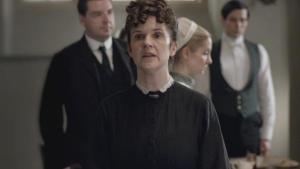
Downton Abbey 2010. Credit: Courtesy of © Carnival Film & Television Limited for MASTERPIECE

Siobhan Finneran as O’Brien, Lady’s Maid. Credit: Courtesy of © Carnival Film & Television Limited for MASTERPIECE

The Lady’s Maid: Siobhan Finneran plays O’Brien as a cold, ruthless woman, who trusts no one. When the Countess of Grantham states that she and O’Brien are friends, for they are often in each others’ company,  O’Brien knows better than to disagree, but disagree she does. A lady’s maid caters to her mistresses’ every whim, making sure that not one coat button is missing or one strand of hair is out of place. Such a close daily association often develops intimacy over time. The countess mistakenly thinks that O’Brien is as fond of her as she is of her maid.

Downton Abbey 2010.

Rob James-Collier as Thomas, First Footman.Credit: Courtesy of © Carnival Film & Television Limited for MASTERPIECE

The First Footman: Thomas (Rob James-Collier) is a piece of work. An ambitious man, who cares only for his own advancement, he will use anyone to achieve his goals, even if it means destroying another’s reputation. A first footman will serve as valet to the male guests if they arrive without a male servant. Footmen are expected to wear livery and are generally tall and handsome. Only the very rich could afford footmen, and thus they were a form of status symbol.

Downton Abbey 2010.

Allen Leech as Tom Branson, the Chauffeur. Credit: Courtesy of © Carnival Film & Television Limited for MASTERPIECE

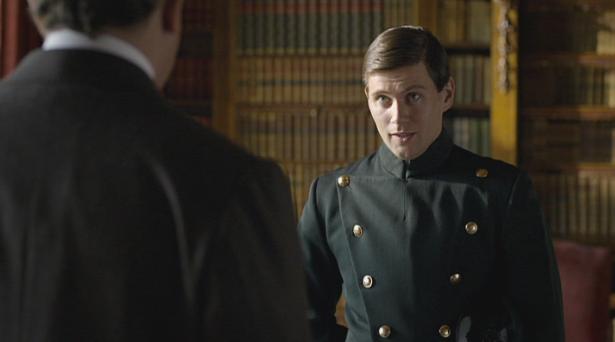
The Chauffeur: Allen Leech as Tom Branson, the chaffeur, demonstrates how very different Edwardian England is from Regency England. Carriages are being replaced by automobiles, but the infrastructure for maintaining cars is not yet in place. A chauffeur not only drove the family around, but he was also its mechanic, keeping the car in top shape, acquiring parts when they were needed, and making sure there was enough petrol on hand to satisfy the family’s needs. This chauffeur can also read and has been given permission by the earl to check books out of his library.
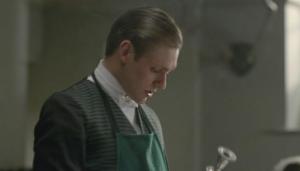
Downton Abbey 2010.

Thomas Howes as William, the Second Footman. Credit: Courtesy of © Carnival Film & Television Limited for MASTERPIECE

The Second Footman: (Thomas Howes) William’s position among the upper servants is low, for he must answer to the butler, housekeeper, and first footman. Young, fresh-faced, and just starting out, William misses his loving family. Yet service allows him to better himself and someday work his way up to the position of butler. One wonders if William will ever achieve that ambition, for times are changing and the aristocracy will be hard pressed to hang onto their lands and houses after the second world war.

Downton Abbey 2010.

Rose Leslie as Gwen, House Maid. Credit: Courtesy of © Carnival Film & Television Limited for MASTERPIECE

The House Maid: (Rose Leslie) Young Gwen is a housemaid with a goal – that of becoming a typist. Towards this end, she has been secretly taking typing courses. When her secret is uncovered the other servants are astounded – how could anyone prefer working in as some faceless office over service in a great house? Yet Gwen represents the future, in which political and socio-economic changes for women will end their dependency on the men of their family and force many to start fending for themselves.
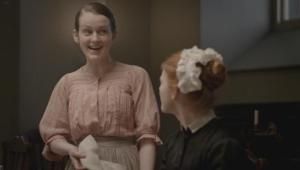
Downton Abbey 2010.

Sophie McShera as Daisy, Kitchen Maid. Credit: Courtesy of © Carnival Film & Television Limited for MASTERPIECE

The Kitchen Maid: (Sophie McShera) Poor Daisy is at the bottom of the status ladder. Subject to the cook’s every whim (and to the housekeeper’s and anyone else who happens nearby) she goes about her duties cheerfully. When disaster strikes, Daisy not only steps in but demonstrates that she is more than ready to step up the servant hierarchy.

Downton Abbey will be shown Sunday night on your local PBS station starting at 9 p.m. Click here to view the video clips.

More about the series:

Read Full Post »

« Newer Posts - Older Posts »