Feeds:
Posts
Comments

Archive for the ‘jane austen’ Category

Gentle readers, Collette from the Serendipity franchise has graciously allowed me to reprint her review of Jane Austen’s Sewing box. I wrote “franchise” because her online presence includes: Serendipity Vintage, Serendipity Handmade, Vintage Life Network, Serendipity Vintage Facebook, and SerendipityVintage on Twitter.

I also now have a copy of the lovely Jane Austen’s Sewing Box: Craft Projects and Stories from Jane Austen’s Novels. You may have seen a review or two on other craft blogs. As I am a Austen aficionado I could not pass it up:
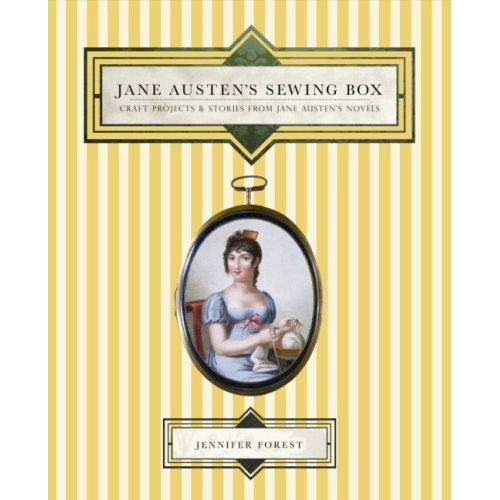
It is a beautiful book, filled with gorgeous color fashion plates of the time that are worth a look. I read it cover-to-cover and enjoyed every moment. However, I would recommend purchasing it only if you enjoy historical Regency costume and /or are a die-hard Regency or Jane Austen fan.

As for the crafts themselves, some are probably of more interest to the costume enthusiast (like the cravat, the bonnet, or the tippet). There is only one photo of each project and even one more photograph of each project would have enhanced this book. Yet one whole page might be devoted to one short quote from one of Austen’s novels, or to a lovely painting from the time period:
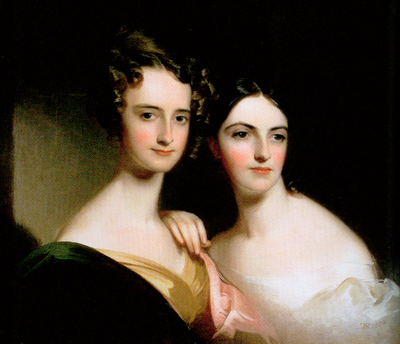
The actual instructions for each project were also quite succinct and limited to only one page. If you’ve ever read any of the antique craft books from the early-to-mid 19th century you know that project instructions were usually all text and that diagrams were sparse. The actual descriptions of the the projects were very reminiscent of the actual books of the time. Still, I would like to make this case for embroidery thread:
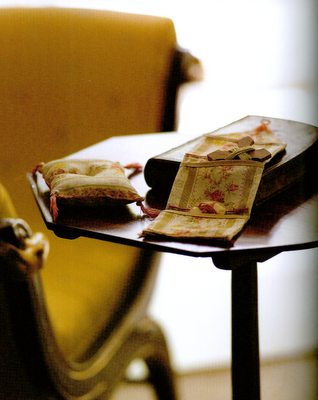

In the time of the Regency you would store your
embroidery thread on a bone or wood thread winder

Austen mentioned each craft project in one of her novels, and it is fascinating to read the excerpts from the novels and then read Forest’s commentary about the craft as it was practiced at the time. If you are interested in historical craft and want to know more about the role of crafts in the lives of Regency women you will love the historical detail in this book. It’s definitely an informative and charming read!

Photographs from Jane Austen’s Sewing Box, Murdoch Books, or in the public domain. Review reprinted with permission.

Read Full Post »

From the Daily Times: Five new Jane Austen letters surfaced when an antique seller purchased an old trunk filled with early Victorian clothing at an estate sale in Basingstoke. Hoping that some of the clothing items would still be salable, Justine de Villiers, shop owner and art appraiser, purchased the lot for £25.  Ms. de Villiers found the letters neatly folded inside a journal and tucked between a chemisette and a pair of lace gloves. While the clothes were in deplorable condition, the letters, which had been hidden from light, were in excellent shape.  Ms. de Villiers, also an art appraiser and an avid reader of Jane Austen’s novels, instantly recognized the handwriting. “My hands and voice were shaking when I rang up the curator at the British Museum,” she said. “There are so few of Jane Austen’s letters that survived, and none between 1801 and 1804.  It was thought that Cassandra destroyed them all. These five letters were written by Jane over a five week period to an acquaintance or a friend, we cannot tell, for the name, Mary Salton, is not one that we associate with Jane.”

Ernestine Meadows, the young woman who inadvertently sold the letters, is thrilled “to be a part of history.  I have no idea where the trunk came from or how it got to my mother’s attic. My mother recently died, and it was up to me to sell her belongings. She inherited the house fully furnished from a bachelor uncle, and much of its contents go back to the early 19th century.  I thought the trunk was filled with old clothes and shawls and such, and sold them as one lot.” When asked what she would have done if she found the letters before the sale, Ernestine answered truthfully, “There was so much to do to prepare my mother’s house for the estate sale, that I never bothered to inspect the trunk closely. Had I found the letters, I  probably would never have made the connection and simply tossed them out. ”

Jane Austen fans can be grateful for Ernestine’s oversight.  When asked what she would do with the letters if they are authenticated by experts, Ms. de Villiers said, “I would like to keep them, but realistically I will probably have to sell them.”

Update: Inquiring readers – yes, this was an April Fool’s post. Comments indicated how much Janeites wish this post were true. We want to know more about Jane. So few of her letters remain, so little of her life is known, even the images made of her are few and far between. And we wish she had lived longer so that she could have written more novels. It is my dream that someday, somewhere, someone will unearth a cache of Jane’s letters. It would have been lovely, wouldn’t it, if this post had been true.

Read Full Post »

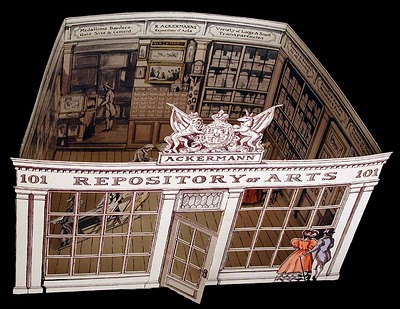
The Antique Prints Blog offers a wonderful post about Ackermann’s Print Shop with excellent illustrations. I will definitely be visiting this site often!

Ackermann Shop Interior: Image from Antique Print Blog

Read Full Post »

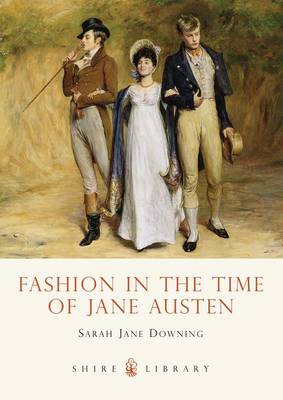
Ever since I learned that this book would be coming out in the spring, I couldn’t wait for its arrival. The title alone told me that it was tailor made to my interests. Slim and more a monograph than a book, Fashion in the Time of Jane Austen‘s 62 pages are jam-packed with information and images. Some of the material that author Sarah Jane Downing wrote about was familiar, but much of it was new. While I finished the book in two sittings, I know I will be using it frequently for future reference.

Until the Napoleonic Wars, France had influenced fashions in Britain and Europe. It was the custom of messengers known as les grandes couriers de la mode to deliver the latest French fashions to the great courts of Europe in person. Wearing designer creations, their costumes were analyzed from head to toe and then tried on and taken apart. Patterns were made from the resulting pieces. People who visited cities and returned home were plied with questions about the latest trends in fashions by those who stayed behind. Soon, fashion journals appeared showing images of fashions, home furnishings, and architectural plans, and new styles trickled down to even those who lived in the farthest reaches of England.

Walking gowns, 1796

The French Revolution marked a radical shift from the elegant, wide-skirted brocade gowns so prevalent for most of the 18th century to the streamlined, body-hugging, empire-waisted silhouettes of the Directoire Period that were inspired by classical antiquity. Wide hooped skirts were still worn for appearances at court, but gowns became simpler, narrower, and more vertical. In fact, the change in dress silhouettes was so dramatic that such a radical shift in style would not occur again until the flapper era and the jazz age over a century later.

Jane Austen’s books were written during the narrow time frame when empire dresses with their high waists, short sleeves and décolletté necklines reigned supreme in the fashion world. When long sleeves were introduced in evening dress, she wrote Cassandra:

I wear my gauze gown today long sleeves & all; I shall see how they succeed, but as yet I have no reason to suppose long sleeves are allowable. Mrs. Tilson has long sleeves too, & she assured me that they are worn in the evening by many. I was glad to hear this. – Jane Austen, 1814

1815 Long sleeved evening dress. Costume of the ladies of England 1810-1823.(NYPL Digital Collection)

Male attire also went through a dramatic change. Ruffles and ornate brocaded fabrics gave way to intricately folded neckcloths, simple shirts, stark jackets and leg-hugging breeches. The emphasis was on the neckcloths, but not the shirts, which were sewn by women, not tailors. Jane was known to be an excellent seamstress, and she wrote about completing a batch of shirts for her brother Charles: “[I] am to send his shirts by half dozens as they are finished; one set will go next week,” and “In Mansfield Park Fanny price works diligently to ensure that her brother’s linen is ready when he goes to sea.” – p 13.

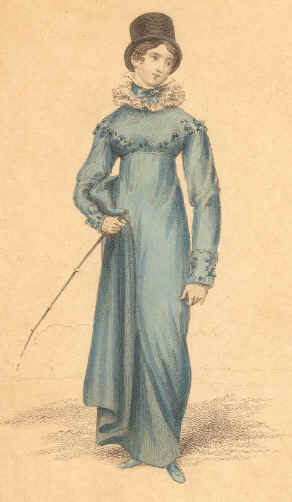
1816 Riding Habit

There are so many other interesting tidbits of information that I won’t share in this review lest I spoil the reader’s pleasure. Fashion in the Time of Jane Austen discusses accessories, underwear, half dress, full dress, court dress and more. I wish a timeline had been included of when hems were raised and when they became decorative; precisely how the Napoleonic Wars affected fashion in both England and France and who influenced who and when; and when waists when up, then down, then up and down again. Another quibble I had was with the book’s cover, which John Pettie painted in 1887. With all the lush images and paintings available of regency misses and their chaperones and suitors, why choose a Victorian painting? The woman in this painting belongs so obviously to another age that I find her face a little creepy.

Be that as it may, I give this book three out of three regency fans and recommend it highly to all readers who are interested in Regency fashion and historical romance writers who are interested in precise details of dress.

More on the topic

Another excellent book about fashion is Penelope Byrd’s A Frivolous Distinction: Fashion and Needlework in the works of Jane Austen.

Regency Fashion History is an excellent site.

And Cathy Decker’s comprehensive site cannot be topped.

Order the book here.

Add to DeliciousAdd to DiggAdd to FaceBookAdd to Google BookmarkAdd to RedditAdd to StumbleUponAdd to TechnoratiAdd to Twitter

Read Full Post »

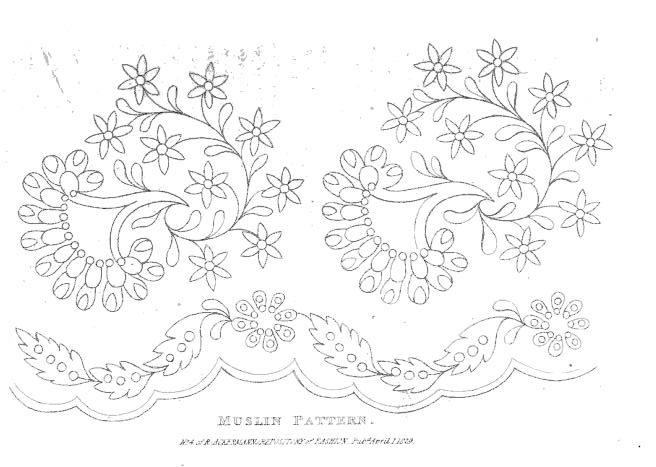
Gentle reader – a few weeks ago someone asked me how the beautiful muslin patterns that Ackermann’s Repository of Fashions offered in its magazines could be transferred. This 19th century Enclyclopedia from Project Gutenberg offers practical suggestions. Among them are:

Tracing patterns against a window pane.—In order to copy a pattern in this way, the first step is to tack or pin the piece of stuff or paper on which the copy is to be made upon the pattern. In the case of a small pattern, the tacking or pinning may be dispensed with and the two sheets held firmly pressed against the window pane with the left hand, whilst the right hand does the tracing, but even then it is safer to pin or gum the four corners of the two sheets together, in case of interruption, as it is difficult to fit them together again exactly.

The tracing may be done with a pencil, or better still, with a brush dipped in Indian ink or water-colour paint.

The process of tracing is easy enough, so long as the hand does not get tired but as this generally comes to pass very soon it is best, if the pattern be a large and complicated one, to stick the sheets to the pane with strong gum or suspend them on a string, fastened across the pane by pins stuck into the window frame on either side.

To copy with oiled paper.—Another rather expeditious mode of transferring patterns on to thin and more especially smooth glossy stuffs, is by means of a special kind of tinted paper, called autographic paper, which is impregnated with a coloured oily substance and is to be had at any stationer’s shop. This you place between the pattern and the stuff, having previously fastened the stuff, perfectly straight by the line of the thread, to a board, with drawing-pins. When you have fitted the two papers likewise exactly together, you go over all the lines of the pattern with a blunt pencil, or with, what is better still, the point of a bone crochet needle or the edge of a folder. You must be careful not to press so heavily upon the pattern paper as to tear it; by the pressure exercised on the two sheets of paper, the oily substance of the blue paper discharges itself on to the stuff, so that when it is removed all the lines you have traced are imprinted upon the stuff.

This blue tracing paper is however only available for the reproduction of patterns on washing stuffs, as satin and all other silky textures are discoloured by it.

To pounce patterns upon stuffs.—The modes of copying, hitherto described, cannot be indiscriminately used for all kinds of stuff; for cloth, velvet and plush, for instance, they are not available and pouncing is the only way that answers.

The patterns, after having been transferred to straw or parchment paper, have to be pricked through. To do this you lay the paper upon cloth or felt and prick out all the lines of the drawing, making the holes, which should be clear and round, all exactly the same distance apart.

The closer and more complicated the pattern is, the finer and closer the holes should be. Every line of the outline must be carefully pricked out.

If the paper be sufficiently thin, several pouncings can be pricked at the same time, and a symmetrical design can be folded together into four and all pricked at once.

Read Full Post »

« Newer Posts - Older Posts »