Feeds:
Posts
Comments

Archive for the ‘jane austen’ Category

Everything we now use is made [in] imitation of those models lately discovered in Italy. – Observation by an Englishman

diana sackville detail 1777

Diana Sackville, 1777

In the late 18th century, hairstyles for women took a dramatic turn from the pouffed-up and constructed hairdos of the earlier Georgian age to the simple hair styles inspired by the Greeks, Romans, and Egyptians. Curls now framed the face and chignons replaced the complicated, almost architectural concoctions that took hairdressers hours to create. Ancient statues and works of art brought back as spoils of war or as souvenirs from grand tours revealed classical hairstyles. Women began to wear simpler hairdos with long hair pulled back in chignons or simple pony tails, long curls trailing over the shoulder, and short ringlets framing the face. Hair ornaments consisted of flower wreaths, ribbons, jewelry, tiaras, and combs.

greek and roman influences

Hairstyles on statues from antiquity

Lady Caroline Lamb (lower left) sported a saucy short bob, whose influence can be seen from the portrait in the Roman mural at the Metropolitan Museum. Madame Recamier, whose hair is longer, achieves a similar effect with ringlets around her face. Her curly hair, gathered in back, allowed the ringlets to fall. At right, the Marchioness of Queenston achieved a very similar style to Madame Recamier’s, but her bandeau sat further back on her head and the ringlets framing her face were thicker.

Curly styles

Longer hair, while not as prevalent as the up-do’s, usually took the form of a long curl draped over the shoulder. At second to right, Mrs. Henry Baring wore a more casual “do”, with her locks streaming around her neck and shoulders.

long hair

The long curl

Straight, simple hairstyles with few ringlets and ordinary bangs, or a style simply parted in the middle were worn, but were not drawn or painted by artists or depicted in fashion plates as often as the curlier styles.

plain ringlet free

Fashion plates of the time show how these hairstyles looked with bonnets and hair ornaments with a (l – r) walking dress, ball gown, afternoon dress, or morning dress.

fashion plate

The hairstyles that Kate Winslet and Emma Thompson wore in Sense and Sensibility seemed to be particularly true to the period (in my opinion). Some of you may have noticed that I use Kate Winslet’s image of Marianne as my avatar.

hair styles

This image of a Roman statue (a copy of an earlier Greek statue) shows the hairstyle that would become prevalent in the later Regency/early Victorian era (1820’s to 1830’s).

marble head of a woman roman copy of greek statue

1st C. AD Roman bust

“We wore white crepe dresses trimmed with satin ribbon & the bodices & sleeves spotted with white beads. . . Thursday night, Pearl combs, necklaces, earrings, & brooches. . . Tuesday evening we had sprigged muslin. . . gold ornaments & flowers in our heads & Friday we wore yellow gauze dresses over satin, beads in our heads & pearl ornaments” – Fanny Knight Austen

Evening dresses, fronticepiece, The Mirror of Graces,, 1811

Fanny Knight wrote a vivid description of how women dressed and what sort of accessories were popular when she was a young woman. The 1811 fronticepiece to The Mirror of Graces (above) shows how simple and elegant the combination of Neoclassical hair, dress, and accessories looked.  Jewelry styles favored smaller, lighter forms of draped chains and classical motifs, which were reflected in hair ornaments. These days jewelry from the Georgian era is difficult to find, for many of the pieces were refitted or redesigned to reflect motifs of the neoclassical period. (Neoclassical Jewellery ). Ebay Guides can be extremely useful in researching information about this era, such as this one entitled,  Georgian and Regency Combs and Hair Accessories – 1800-1814. (Click here for the PDF document.)
tiaras and combs

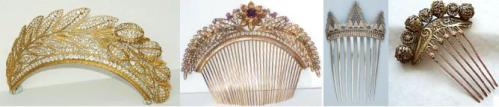
Georgian tiara and combs, early 19th c.

In addition to gold and silver hair ornaments, such as tiaras and diadems, young women wore silk ribbons, strands of pearls, feathers and other fancy hair ornaments in their hair, most notably for balls and formal occasions. These hair jewels were a visible sign of a family’s or husband’s wealth. Bonnets, hats, or turbans were also worn on social outings. The second image from the right (above) is of a George III silver comb, 1807.  “Silver combs of this type appear to have been a speciality of Birmingham, where they were produced in a small quantity and in a collectable variety of forms.” (Cinoa)

As the Regency era progressed long hair became increasingly popular and full ringlets began to appear near the side of the face. Hair ornaments for balls included jewellery, bandeaux, turbans and wreaths of grapes and towards the latter end of the Regency era flowers, turbans and ostrich feathers were seen to adorn the hair. (Overseale House)

ornaments

These days we achieve curls and ringlets with a hot curling iron. The use of hot irons in the 19th century was tricky, for hair could easily be singed. Back then, curls were made with pomade, a hair gel, and curling papers. The lost art of the paper curl describes how a person today can make a similar curl using old-fashioned techniques.

Lydia is exposed to an unregency like cut

Perdita Weeks as Lydia Bennet in Lost in Austen

The transition from the structured hairstyles of the mid-18th Century to the Regency period was not achieved without its own set of complications, as this James Gillray cartoon shows. The cartoon was drawn in the earlier Neoclassical period, when round gowns were still worn.

gillray fashion cartoon

A lady putting on her cap, Gillray, 1795

The fashion plate below shows how charming and uncomplicated, yet classic, the combination of the 1802 hairstyles and afternoon dresses are together, whereas the 1811 fronticepiece showed how rich both hair and fabric can be made to look using similar principles of fashion design.

1802 Lady's Monthly Museum afternoon dress june Payne Milliner Old Bond Street

Afternoon Dress 1802 Lady's Monthly Museum

More links on this topic:

Read Full Post »

Vendors of fruit and flowers, of milk and muffins are not agreeable visitors when they roar for a living, and the poor organ-grinder little knows, let us hope, the anguish he inflicts upon sensitive nerves. – Street Noises, The Illustrated London News, 1882

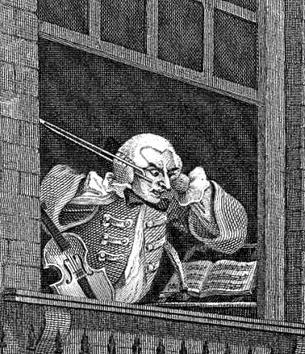
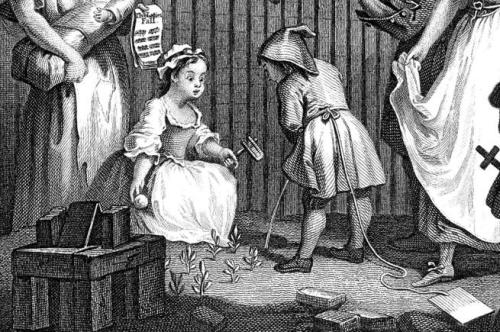
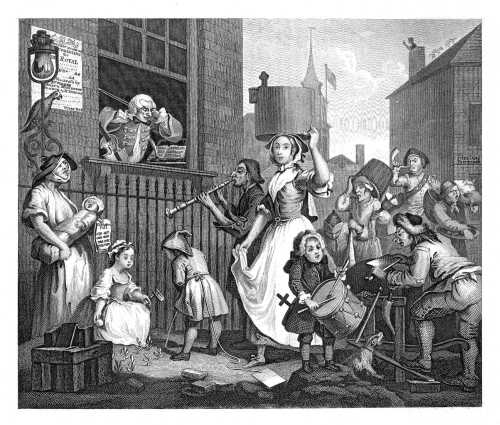
the musicianWilliam Hogarth’s famous 1741 etched engraving of ” The Enraged Musician” visually described the cacophony of sounds heard all over the city of London: the shouts of vendors, clattering of wagon wheels and clopping of horses’ hooves, impromptu concerts from street musicians, clackety-clack of ladies’ pattens (which protected delicate shoes from mud), and the clapping of hooves and bleeting of animals as drovers guided them to Smithfield Market. Laws were enacted to control these noises, but the change did not occur overnight, nor did these laws completely eliminate all irritating sounds for city dwellers. In 1841, 100 years after Hogarth engraved his famous scene, Charles Knight described London’s noises (London, Vol 1, Charles Knight, 1841):
Enraged_musician William Hogarth

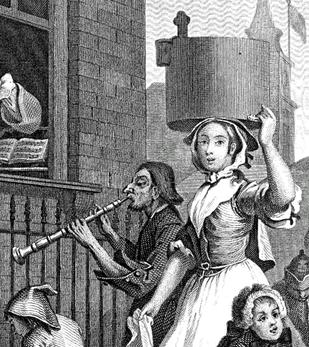
In this extraordinary gathering together of the producers of the most discordant sounds we have a representation which may fairly match the dramatist’s description of street noises …

street musician and vendor

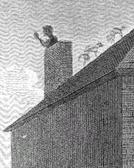
Here we have the milk maid’s scream, the mackerel seller’s shout, the sweep upon the house top, to match the fish wives and orange women; the broom men and costar mongers …

chimney boy

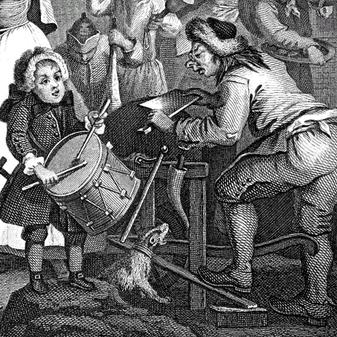
The smith, who was ominous, had no longer his forge in the busy streets of Hogarth’s time, the armourer was obsolete, but Hogarth can rival their noises with the pavior’s hammer, the sow gelder’s horn, and the knife grinder’s wheel…

drummer and knife sharperner

The waits of the city had a pension not to come near Morose’s ward, but it was out of the power of the Enraged Musician to avert the terrible discord of the blind hautboy player.

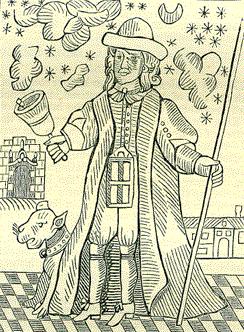
Bellman, Book of Days

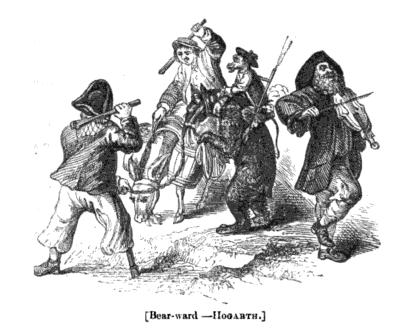
The bellman who frightened the sleepers at midnight was extinct, but modern London had acquired the dustman’s bell. The bear-ward no longer came down the street with the dogs of four parishes, nor did the fencer march with a drum to his prize …

Hogarth, Bear-Ward, Bear and Monkey

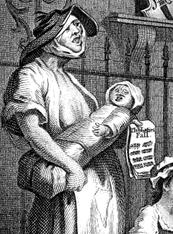
…but there was the ballad singer with her squalling child, roaring worse than bear or dog, and the drum of the little boy playing at soldiers was a more abiding nuisance than the fencer Morose, and the Enraged Musician had each the church bells to fill up the measure of discord…

crying baby

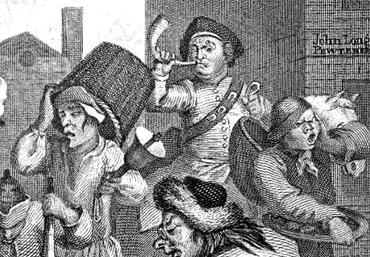
In our own days there has been legislation for the benefit of tender ears, and there are now penalties with police constables to enforce them against all persons blowing any horn or using any other noisy instrument for the purpose of calling persons together, or of announcing any show or entertainment, or for the purpose of hawking selling distributing, or collecting any article or of obtaining money or alms…

bell horn and shouts

These are the words of the Police Act of 1839, and they are stringent enough to have banished from our streets all those uncommon noises, which did something to relieve the monotony of the one endless roar of the tread of feet and the rush of wheels…

peeing in the road

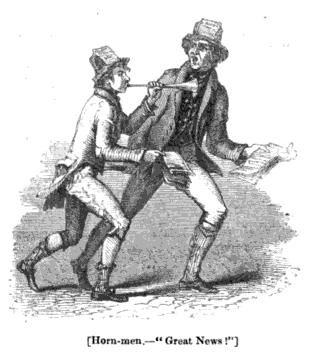
The street noise now is deafening when we are in the midst of it, but in some secluded place, such as Lincoln’s Inn Gardens, it is the ever present sullen sound of angry waves dashing upon the shingles. The horn that proclaimed extraordinary news running to and fro among peaceful squares and secluded courts was sometimes a relief…

hornmen great news

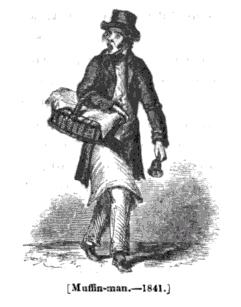
The bell of the dustman was not altogether unpleasant. In the twilight hour, when the shutters were not yet closed and the candles were not yet burnin,g the tinkle of the muffin man had something in it very soothing…

muffin man 1841

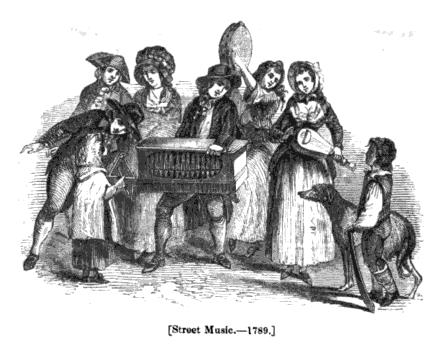
It is gone, but the legislators have still left us our street music…

street music 1789

There was talk of its abolition, but they have satisfied themselves with enacting that musicians on being warned to depart from the neighbourhood of the house of any householder by the occupier, or his servant, or by a police constable, incur a penalty of forty shillings by refusal. De la Serre, who came to England with Mary de Medici when she visited the Queen of Charles I, is enthusiastic in his praises of the street music of London In all public places … – London, Vol 1, Charles Knight, 1841

Addendum: Compared to the noises of the City, the West End’s new neighborhoods were comparatively quiet.

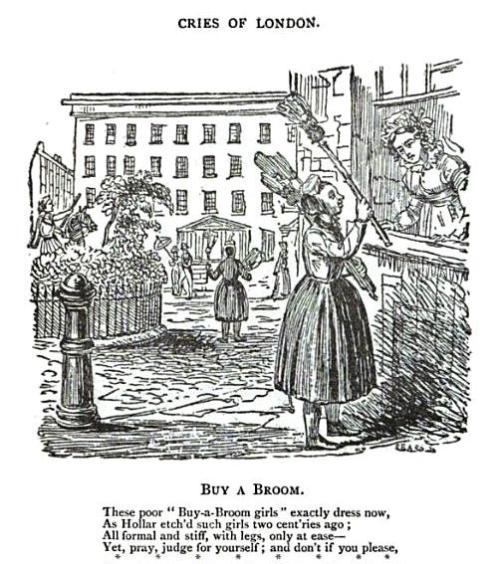
buy a broom 1881 cries of london

An interesting aside: To add insult to injury, one closeup of Hogarth’s etching shows a young boy relieving himself in the middle of the street. The sour smells of London added greatly to the din as well.

More on the topic:

Read Full Post »

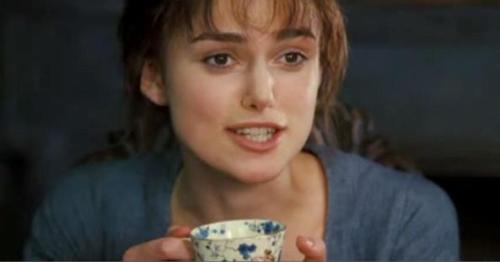
A reader is desperate to find the porcelain set used for this scene in Pride and Prejudice 2005. This was the best image she could pull from the film.

lizzy with teacup

The scene is where Jane and her family discuss whether or not she will be allowed to use the carriage for her travels to dine with Miss Bingley and Mrs. Bennet’s refusal to allow her to do so. Any help you might be able to offer in this matter is highly appreciated.

Read Full Post »

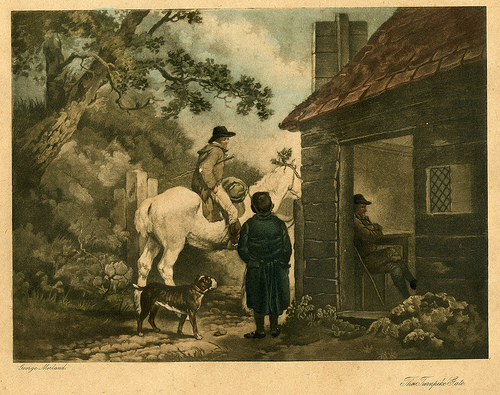
Turnpike Gate, George Morland

Turnpike Gate, George Morland

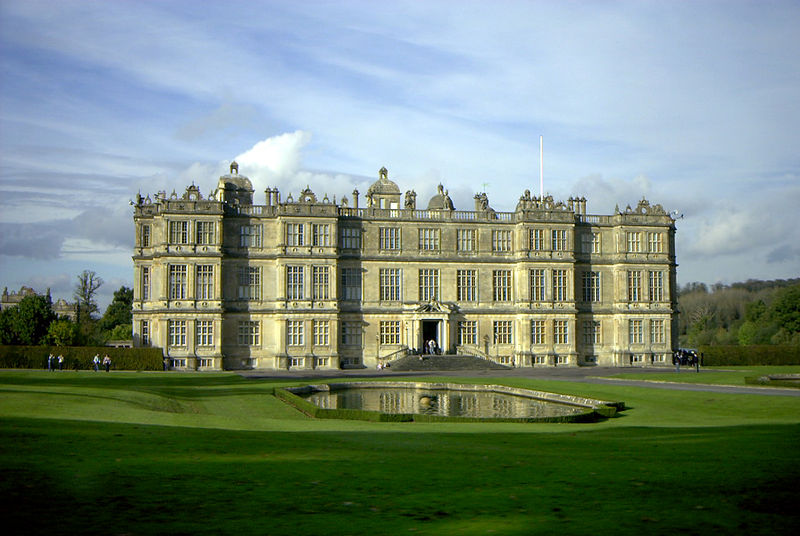
Historical romances abound with tales of aristocrats falling in love with beautiful women outside of their own class and marrying them. Several years ago in The Dairy Maid and the Master of Uppark, I wrote about Sir Harry Fetherstonhaugh, who married his milkmaid.  These exceptions prove the rule, for  Society frowned severely upon those who married downward. Thomas Thynne, 5th Viscount Weymouth, who made the mistake of falling in love with the tollgate keeper’s daughter, was never to become the 3rd Marquess of Bath.  He first eloped to Paris with his pretty bride, then lived in Italy, where he waited to claim his inheritance. No matter how hard his father (the 2nd Marquess) tried, he could not get around the legalities of the entail and disinherit his son. So the Marquess dug in his heels, willing himself to live longer than the Viscount …

The first Marquess of Bath was said to have been a great womanizer, gambler, and dissipator. His biggest contribution to posterity was in hiring Capability Brown to landscape his estate at Longleat, a former priory, changing the gardens from formal parterres to a more natural design.  After his death in 1792, his son, Thomas Thynne, the second Marquess of Bath, rebuilt the outdated portions of the old priory. By 1815, he had spent over£100,000 on improvements. In 1820, the second Marquess opened the grounds to the public once a week and free of charge, encouraging picknics and similar leisurely pursuits. One would think that by setting such a sober example, his children would live equally responsible lives, but this was not to be the case for all.

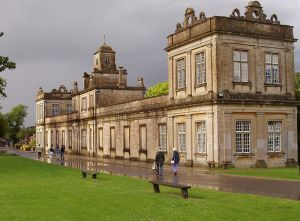
Longleat Outbuilding

The 2nd Marquess and his plumb intellectual wife, Isabella, had eleven children. Two daughers married well, but three of his sons caused them no end of trouble. Without consulting his parents, Thomas, the 24-year-old heir, eloped with beautiful, raven-haired Harriet Robbins, the daughter of a humble local toll-keeper named Thomas Robbins. Up to that point, the young Viscount had not led an exemplary life and had a reputation for drinking and gambling. The Marquess was furious with his son’s marriage.  He must have made his extreme displeasure known, for after two months of silence young Thomas replied in a letter from Italy:

You know the remorse I feel for having given so many miseries to so good a father … a sort of fate hurried us on … I saw myself surrounded by misfortunes which I find at last were of my own making … My mind was in a state of confusion and despair, and I am ashamed to say I tried to attach the blame on you. I did not dare open the last letter from you for a long time, but when I did, I flew to anything to drive away reflection…

The young Viscount was smitten by “the artful charms of a country girl, then hurled [his] fortune to the wind in hasty flight“.  The letter did not assuage the Marquess, who set about to disinherit his heir. He attempted to “bribe” Thomas by offering money in exchange for his inheritance, but the Viscount rejected the offer, opting to live in Italy while literally waiting for his father to die.


Longleat House. Image @Wikimedia Commons

Weymouth was not the only child to disappoint the Marquess, for two of his other three sons, Charles and Edward, lived lives of such extravagance and mounted such enormous debts, that the Marquess fired off a letter to The Times “disclaiming all responsibility for their behaviour” and any liability for their debts. Charles and Edward had expected their father to bail them out. When this did not occur, they moved from England. It is thought that Charles ended up in Canada and Edward in Australia, but the records are not clear on this topic.   Thomas’s mother, Isabella, was the only member of the family to travel to Paris to visit the Viscount and his wife. Seeing that they were reasonably happy, she forgave them for their unkindness and misconduct, but she was never able to arbitrate a truce between her husband and son. Before her death in 1830, she wrote in a letter to her husband:

Accept my grateful thanks for all the kindness and happiness you have bestowed on me for so many years, which has been returned by the warmest affection that one mortal is capable of for another…Talk to our children of your interests, of your affairs, and try to get reacquainted with theirs. Be their friend, as well as their respected father …

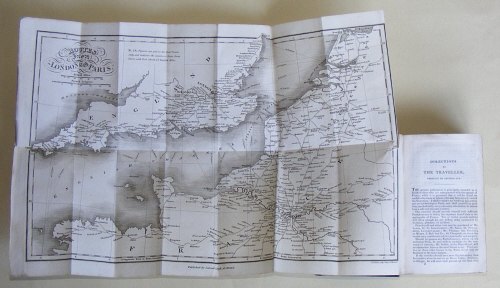
London to Paris Routes, Planta's Paris, 1825

London to Paris routes

Despite his wife’s wishes, the Marquess remained obdurate. After Isabella’s death, any hope of reconciliation vanished, and both he and his son were determined to outlive the other. In January of 1837, the Viscount died at the age of 41 without an heir. He shrugged off his mortal coil a scant five weeks before his father, who died at the age of 74.  Harriet, only a few years younger than her husband, was now a widow.

“So the family now awaited with bated breath to hear if she were pregnant. Insensitive suggestions were made about getting her to submit to an official examination so as to preclude the possibility of her turning up at Longleat in years to come, having acquired a son of approximately the right age, to claim the inheritance retrospectively.

Yet such cynicism proved unwarranted. Harriet went on to marry an Italian nobleman and never did have any children. But in any case, she did not attempt, nor wish, to give any further trouble to the Thynne family. –  Strictly Private

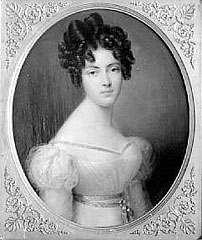
Harriet, Marchioness of Bath

Harriet, Marchioness of Bath and Henry Thynne's wife. Image @Turtle Bunbury

As for the title and the inheritance, they passed to Henry Thynne, a captain in the Royal Navy, who died soon afterwards. A Pyrrhic victory, indeed.

Facts about Harriet Matilda Robbins – Born:18 Nov 1800. Died: 18 June 1873. Daughter of Thomas Robbins. She married, Thomas Thynne, Viscount Weymouth, son of Sir Thomas Thynne, 2nd Marquess of Bath and Hon. Isabella Elizabeth Byng, on 11 May 1820. Her married name became Thynne. She married, secondly, Count unknown Inghirami after 1837, and died on 18 June 1873 at Florence, Italy. From 1837 on her married name became Inghirami.

More on this topic:

Read Full Post »

apsley house

“The last time! a going! gone.”
“Auctioneer.

“Down! down! derry down!”
“Public.

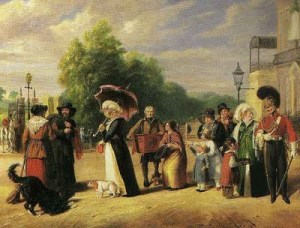
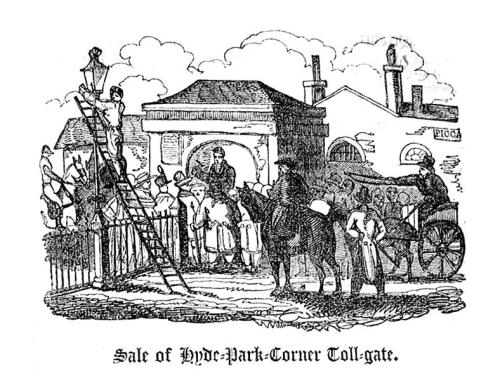
A toll-gate was moved in 1721 from Piccadilly, near Berkeley Street and the present location of the Ritz Hotel, to the west end of Hyde Park in London. It was a real barrier, its gates stretching across the road, and the area was illuminated by a dozen oil lamps before the age of gas. (London, Vol 1, Charles Knight) After passing through the toll, the first building travelers encountered was “Number One”, London, or Apsley House. The residence was named after Baron Apsley, who built the house in 1771. Its most famous and recognizable resident was The Duke Of Wellington. Hyde Park Corner tollgate was one of the busiest tollgates in London, and remained active until 1825, when it was dismantled piece by piece and sold.

Hyde Park Corner, 1822, Charles Cranmer Jr

Sir,
I have taken the liberty of enclosing you a representation of a scene which took place at Hyde-park-corner last Tuesday, October 4th, being no less than the public sale of the toll-house, and all the materials enumerated in the accompanying catalogue. If you were not present, the drawing I have sent may interest you as a view of the old toll-house and the last scene of its eventful history. You are at liberty to make what use of it you please. The sale commenced at one o’clock, the auctioneer stood under the arch before the door of the house one the north side of Piccadilly. Several carriage folks and equestrians, unconscious of the removal of the toll, stopped to pay, whilst the drivers of others passed through knowingly, with a look of satisfaction at their liberation from the accustomed restriction at that place. The poor dismantled house without a turnpike man, seemed “almost afraid to know itself”—”Othello’s occupation was gone.” By this time, if the conditions of the auction have been attended to, not a vestige is left on the spot. I have thought this event would interest a mind like yours, which permits not any change in the history of improvement, or of places full of old associations, to take place without record.

I remain, sir,
Yours, &c.
A CONSTANT READER.

sale of hyde park corner toll gate

These entries come from the October 4th Every-Day Book by William Hone, 1825-26,. The following account relates the dismantling of the property:

The sale by auction of the “toll-houses” on the north and south side of the road, with the “weighing machine,” and lamp-posts at Hyde-park-corner, was effected by Mr. Abbott, the estate agent and appraiser, by order of the trustees of the roads. They were sold for building materials; the north toll-house was in five lots, the south in five other lots; the gates, rails posts, and inscription boards were in five more lots; and the engine-house was also in five lots. At the same time, the weighing machine and toll-houses at Jenny’s Whim bridge were sold in seven lots; and the toll-house near the bun-house at Chelsea, with lamp posts on the road, were likewise sold in seven lots. The whole are entirely cleared away, to the relief of thousands of persons resident in these neighbourhoods. It is too much to expect every thing vexatious to disappear at once; this is a very good beginning, and if there be truth in the old saying, we may expect “a good ending.”

More on the Topic

Read Full Post »

« Newer Posts - Older Posts »