Feeds:
Posts
Comments

Archive for the ‘Jane Austen’s World’ Category

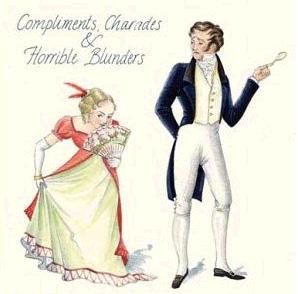
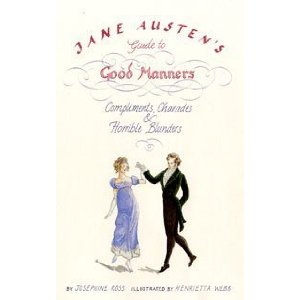
I’ve owned Jane Austen’s Guide to Good Manners: Compliments, Charades and Horrible Blunders by Josephine Ross for a number of years. It is a small book (133 pages), very pretty, and filled with charming illustrations like the one below painted by Henrietta Webb. The language is slightly old-fashioned, as if the book was written in the 19th century. The rules of etiquette and manners are lifted from Jane Austen’s novels, and thus we know they are authentic. The eight chapters are divided logically: Manners; Forms of Introduction; Calling and Conversation; Dancing and Dining; Dress and Taste; Matrimony; Family; and Servants.

Each chapter is divided into “rules”, which serve as guides to the rule of etiquette that will be discussed. For example, Rule 1. Do not be presumptuous in offering introduction. The example comes from the scene in Pride and Prejudice in which Lady Catherine de Bourgh charges angrily into the Bennet home and does not ask for an introduction to Mrs. Bennet, who, awkwardly, has not been granted permission to speak to that grand lady in her own house. Lady Catherine’s rudeness towards Elizabeth and her mother is exacerbated by her pointed cut and lack of manners!


The book would make a wonderful gift for a Jane Austen fan who would like more background into the Regency era. Someone like me, who owns several books of etiquette of the period, would find the lack of index irritating. It is hard to find the precise rules of etiquette quickly. If I must hunt and peck, I infinitely prefer consulting original sources: The Mirror of Graces (1811) by A Lady of Distinction and Lord Chesterfield’s letters to his son, for instance.

But for clarifying exactly what Jane intended in terms of behavior, this book is a tiny gem. Josephine Ross, the author of Jane Austen: A Companion, knows whereof she speaks.  I give Jane Austen Guide to Good Manners four correct rules out of five.

Read Full Post »

Inquiring Readers: This is the third of four posts in honor for Pride and Prejudice Without Zombies, Austenprose’s in-depth reading of Pride and Prejudice. My first post discussed Dressing for the Netherfield Ball and my second post talked about the dances. This post discusses the suppers served during Jane Austen’s era, and concentrates on what kinds of food and drink might have been served at the Netherfield Ball.

“As for the ball, it is quite a settled thing; and as soon as Nicholls has made white soup enough I shall send round my cards.” – Charles Bingley, Pride and Prejudice

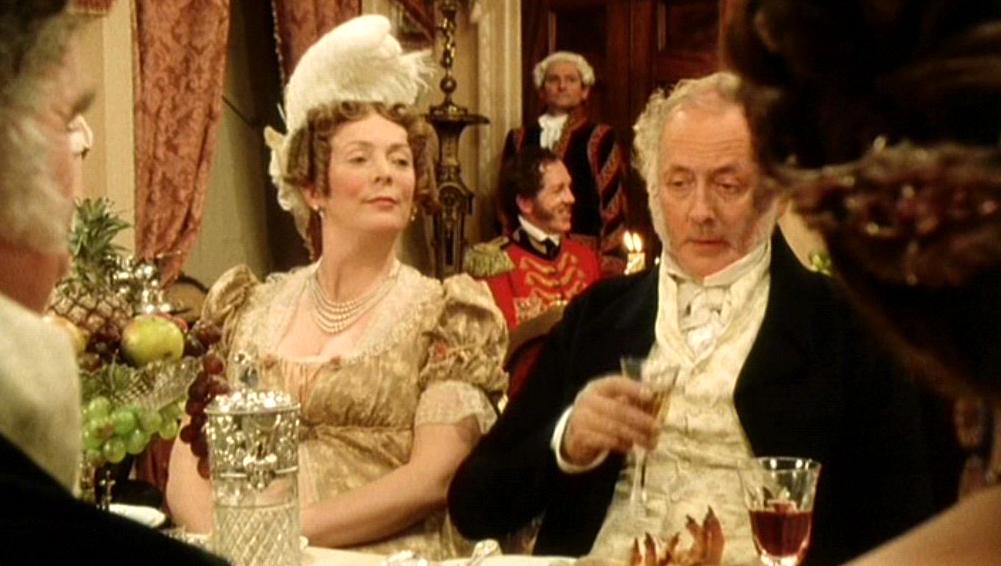
Mr & Mrs Bennet sit down to supper. Notice the lavish bowl of fruit.

The sit-down supper served at the Netherfield Ball in Pride and Prejudice probably occurred around midnight. By that time, people would be famished after their physical exertions or from playing cards nonstop in the card room. They had most likely eaten their dinner between 3-5 p.m. (earlier in the country, and later in Town). Dinners consisted of between 5-16 dishes and could last several hours. The best families would serve up two courses, for a meal’s lavishness depended on the number of courses and dishes that were served. Dishes representing a range of foods, from soups to vegetables and meats, would be spread over the table in a pleasing arrangement and would be set down at the beginning of the meal.

Large Derby porcelain supper dish from Ruby Lane

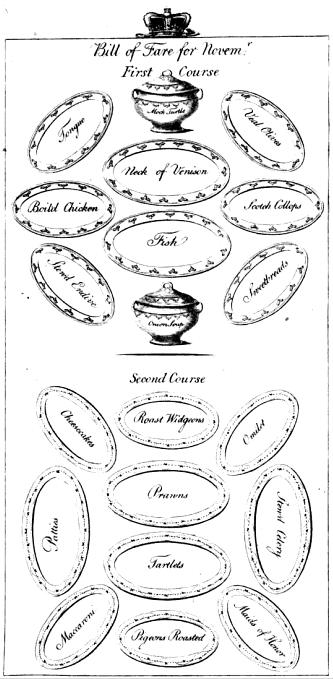
It is conjectured that by the time the covered dishes arrived from the kitchen and the family and guests were seated, the food had turned cold. Diners would be confined to eating from the dishes placed closest to them. In the Bill of Fare from the Universal Cook, 1792 (Francis Collingwood and John Woollams) one can see the foods that were available in November.

Bill of Fare, November 1792

The evening meal, which also included a dessert course, lasted as long as two hours, leaving the diners sated. Suppers were therefore served quite late and were simple and small in comparison. Often called a “tea board”, this small repast was frequently served on a tray between 10-11 p.m. If more than one person was hungry, a cloth would be laid on a small table, not the dining table, and a limited assortment of cakes, tarts, biscuits, pastries, jellies, cheeses, cold meats, sandwiches, savories, salad, dessert, or local fruits – whatever was at hand – would be made available. (One can imagine how tired the servants must have been, rising early as they did.)

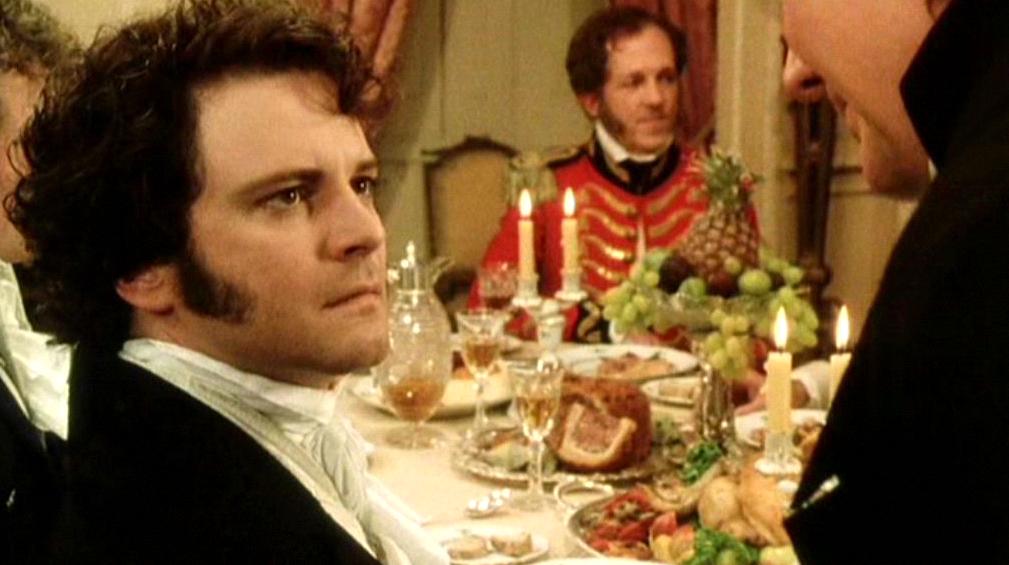
Mr. Darcy observes the Bennet family during supper and is accosted by Mr. Collins

Suppers served at private balls were an entirely different matter for they reflected on the splendor of the event. Balls generally began at 8-9 p.m. and the dancers sat down to a lavish spread at 11 p.m. or midnight. A gentleman accompanied his dance partner into the supper room, which makes one think that it would have been wise for a suitor who wished to further his acquaintance with a young lady to reserve a dance just before the meal.

Jane and Elizabeth at supper

Mr. Bingley most likely served a sumptuous supper on a magnificent table set with his finest china and silver. The food would consist of white soup, which during this time was made with veal stock, cream, and almonds; cold meats, such as chicken or sliced ham; poached salmon; glazed carrots and other seasonal vegetables; salads; fresh fruits;biscuits;dry cake (which meant unfrosted cake, like the pound cake recipe from the Delightful Repast at the bottom of this post); cheeses; short-bread cookies; pies; ice-cream; and trifles. One must not forget that during this period cockscombs and testicles were considered delicacies, and that bone marrow was routinely added to pies for richness. (Fancy Tripe or Trotters for Supper?)

Kitty and Lydia tippling, Netherfield Ball, P&P 2005

Drinks of tea, coffee, lemonade, white wine claret, and red wine (sweet madeira wine was especially popular) were served. Regency cups were filled with punch, negus (wine mixed with hot water, lemon and nougat); orgeat (made with a sweet syrup of orange and almonds); or ratafia (a sweet cordial flavored with fruit or almonds). Port was reserved for gentlemen, though I am not sure that they were allowed to imbibe this liquor in front of the ladies.

A footman holds a tray of drinks, Netherfield Ball, P&P 2005

A private midnight supper at Netherfield was a more splendid affair than the suppers served up at the weekly Wednesday night balls at Almack’s. These subcription dances coincided with the three months of the London social season. Alcohol was not served to discourage drunkenness among gentlemen, who were known to imbibe several bottles of wine per day, and only an assortment of thinly sliced stale bread (which was a day old), dry cakes, lemonade and tea were provided. Simpler balls given by hosts who were not as rich as Mr. Bingley  might offer a little bit of hot supper consisting of six dishes, including salad, dessert, and fruit, and coffee, tea, lemonade and wine.

Trifle, The Delightful Repast

The links to the two recipes in this post were created expressly for us by Jean at The Delightful Repast. The pound cake (dry cake) recipe is one that even I am able to attempt with some success, and Jean’s solution of serving trifle in individual dessert dishes is sheer genius.

The last to leave the Netherfield Ball. Kitty and Lydia sleeping off their drinking. P&P 2005

The Food Timeline shows when meals were served during the Georgian and Regency periods, and how the hours changed.

  • 1780: Breakfast 10AM; Dinner 3-5PM, Tea 7PM, Supper 10-11PM
  • 1815: Breakfast 10AM (leisurely), 9AM (less leisurely), 8AM (working people); Luncheon Midday; Dinner 3-5PM; Supper 10-11PM
  • 1835: Breakfast, before 9AM; Luncheon (ladies only) Midday; Dinner 6-8PM; Supper depending upon the timing and substantiality of dinner

Read Full Post »

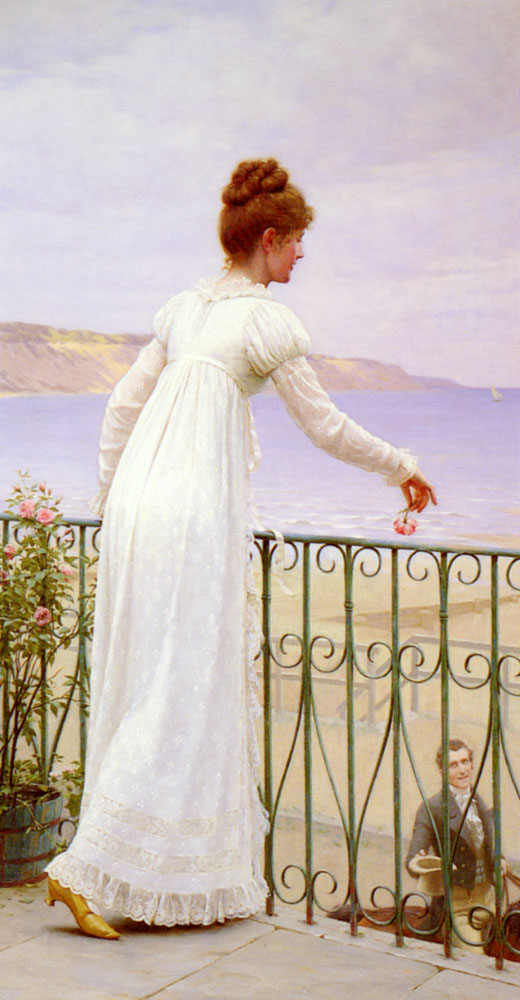
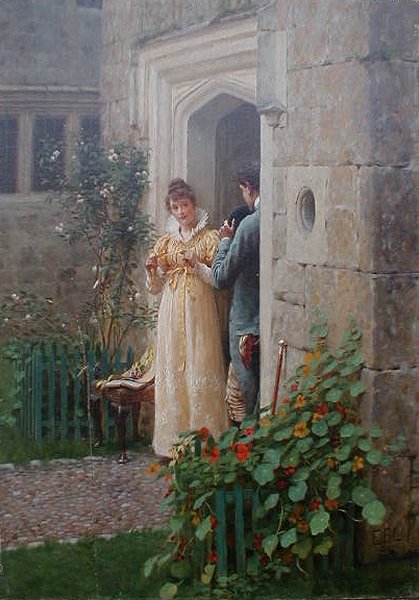
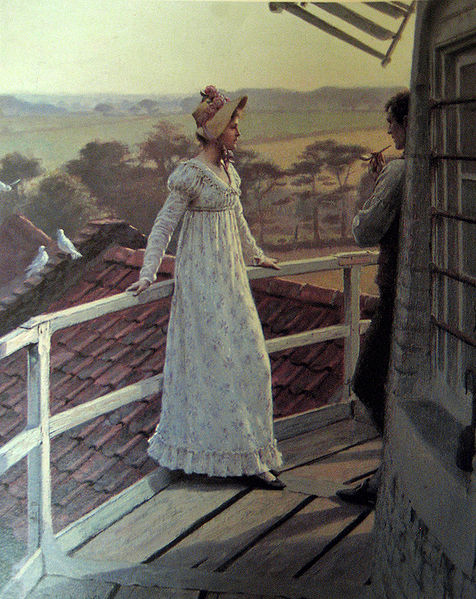
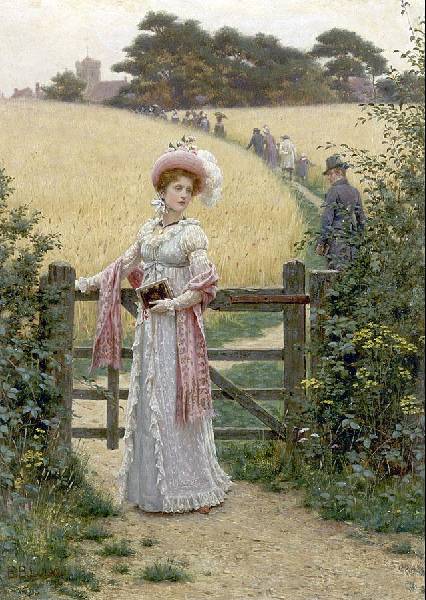
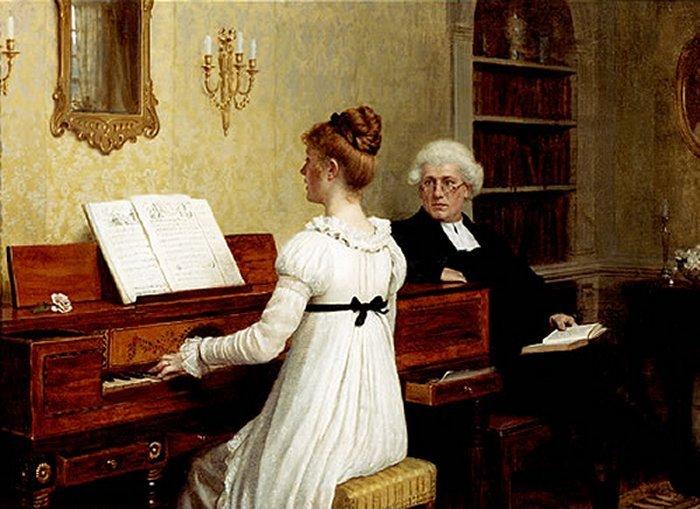
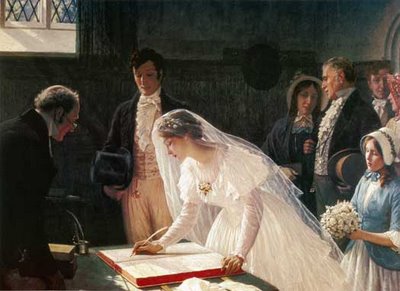
Edmund Blair Leighton (1853 – 1922) was an historical genre painter who is best known for paintings of regency and medieval times. The paintings are sentimental, but are still extremely popular as posters and prints. Very little is known about the artist. This biograpny of E.B. Leighton on ArtMagick offers the most comprehensive information about the painter, aside from Wikipedia. This link to the Art Renewal Center provides a photograph of the artist and an obituary.

A favour, Edmund Blair Leighton

The images, while idealized and a bit syrupy, and obviously painted during Edwardian and Victorian times, are still a joy to behold for their sweet nostalgia for a bygone era.

The request

The Windmiller's Guest

Walking to church

Sweets to the sweet

The piano lesson

Signing the register

More images at Enchanted Serenity of Period Films

Read Full Post »

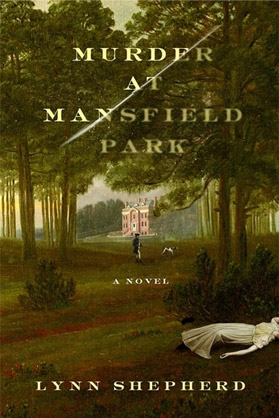
Inquiring Readers: Lynn Shepherd, author of  Murder at Mansfield Park, has written this guest post. She lives in in Berkshire, England, with her husband Simon. Murder at Mansfield Park is her first novel, but she’s been a professional copywriter for the last ten years. Going freelance in 2000 gave her the time she needed to see if she could make a dream into a reality. Ten years and two and a half unpublished novels later, it’s finally happened…

There were two big challenges in writing Murder at Mansfield Park, and they’re summed up in the title of the book. The first was creating an accurate and convincing version of Jane Austen’s own language and idiom, and the second (and in many ways the most fun) was producing an authentic Regency murder mystery.

When I started writing, I didn’t know very much about how a violent (and extremely aristocratic) killing would have been investigated in 1811, when the novel is set. I knew there was nothing we would now recognise as a police force –London didn’t get its first ‘bobbies’ until 1829, and the provinces were much later. But as I did more and more research, I realised that people who’d been the victims of a violent crime had precious few alternatives open to them – as one historian has said, the system at the time was extraordinarily ‘fragmented and inept’. There were the parish constables, of course, but this was often little more than an honorary position, and the elderly men who invariably performed the role would have been little or no use faced with a serious crime like rape or murder. So if you didn’t catch the perpetrator red-handed, your only real options were to post a reward for information in the local newspaper, or pay – very handsomely – for someone to conduct an investigation on your behalf.

This is where the ‘thief takers’ came in: private citizens functioning, in effect, as licensed bounty hunters. The profession – if we can call it that – dates back to the 17th century, when Parliament set a scale of ‘no win, no fee’ rewards for the apprehension of ‘most wanted’ criminals, such as coiners or highwaymen. At that time catching a highwayman was worth £40, and you also got to keep his money, weapons, and horse. Thief takers operated in the shadowy world between the criminals and the law, negotiating between thieves and their victims to return stolen goods for a fee (hence the name). The most famous and infamous of them all was the self-styled ‘Thief Taker General of England and Ireland’, Jonathan Wild, who dominated London’s criminal underworld in the early 1720s. He set up an office where victims of robbery could register the details of their lost possessions, which Wild would then undertake to recover. But what many of his clients didn’t realise was that Wild was also running a very lucrative sideline as a receiver of stolen goods, so more often than not he either had their missing property himself already, or knew who did.

It may sound like nice work if you can get it, but thief taking was a notoriously dangerous undertaking – by the time he was hanged in 1725, Wild had two skull fractures and a plate in his head, and had survived having his throat cut. Wild’s notorious career was one of the main reasons why the thief taking system became so unpopular with more law-abiding citizenry – many people felt it caused more crime than it solved, and some thief takers even became ‘thief makers’ by encouraging gullible men to commit crimes, and then informing on them and claiming the reward. But the bald fact was that English criminal justice couldn’t function without them – they got results even if their methods didn’t bear too much scrutiny.

It was this growing public dissatisfaction with the whole thief taking system that led directly to the founding of the Bow Street Runners in 1748. If Tom Jones is Henry Fielding’s great achievement as a novelist, the Runners were the equivalent for his career as a magistrate. Fielding started out as a group of half a dozen ‘official’ thief takers, who he would send out to track down and arrest culprits when a crime was reported. They would often travel across the country in pursuit of their quarries, and some occasionally got involved in solving crimes on the outskirts of London – in the 1780s half a dozen Runners were involved in arrests in Essex, and a Runner called Patrick McManus made £24 from 4 arrests (up to £2,500 in today’s money).

Lynn Shepherd, Author

Thanks largely to the establishment of the Runners, detection became a lot more professional in the second half of the 18th century. By the 1780s they had developed the sort of techniques we would recognize today, including interrogating witnesses, examining crime scenes, and checking alibis. They’re also known to have used ID parades, and to have traced offenders through lodging house receipts, or vehicle registration numbers! One of the more celebrated Runners, Charles Jealous, was even said to be able to tell country mud from city mud on a highwayman’s boots.

My Charles Maddox is a former Runner who’s set up a (very lucrative) business on his own account. He’s also a man very much after Jealous’s heart – more like a modern private investigator, than a thief taker in the strict sense of the term. All the same, he has a very different background and ethical code from the fine folk at Mansfield Park, and bursts upon the elegant Austen landscape with all the force of an asteroid hit…

Read Full Post »

Inquiring Readers: This is the second of four posts to Pride and Prejudice Without Zombies, Austenprose’s main event for June/July – or an in-depth reading of Pride and Prejudice. My first post discussed Dressing for the Netherfield Ball. This post discusses the dances and etiquette of balls in Jane Austen’s era. Warning: the film adaptations get many dance details wrong.
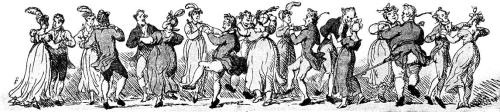
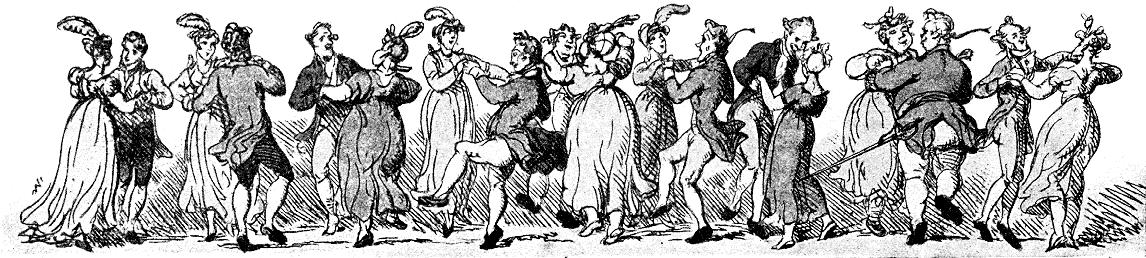
Dancers, Rowlandson, 1790's

So, he enquired who she was, and got introduced, and asked her for the two next. Then, the two third he danced with Miss King, and the two fourth with Maria Lucas, and the two fifth with Jane again, and the two sixth with Lizzy, and the Boulanger …” Mrs Bennet about Mr. Bingley at The Netherfield Ball.

The English ballroom and assembly room was the courting field upon which gentlemen and ladies on the marriage mart could finally touch one another and spend some time conversing during their long sets or ogle each other without seeming to be too forward or brash. Dancing was such an important social event during the Georgian and Regency eras that girls and boys practiced complicated dance steps with dancing masters and learned to memorize the rules of ballroom etiquette.

The Five Positions of Dancing, Wilson, 1811

Balls were regarded as social experiences, and gentlemen were tasked to dance with as many ladies as they could. This is one reason why Mr. Darcy’s behavior was considered rude at the Meryton Ball- there were several ladies, as Elizabeth pointed out to him and Colonel Fitzwilliam at Rosings, who had to sit out the dance.

“He danced only four dances, though gentlemen were scarce; and, to my certain knowledge, more than one young lady was sitting down in want of a partner.”

Mr. Bingley, on the other hand, danced every dance and thus behaved as a gentleman should.

Ladies had to wait passively for a partner to approach them and when they were, they were then obliged to accept the invitation. One reason why Elizabeth was so vexed when Mr. Collins, who had solicited her for the first two dances at the Netherfield Ball, was that she’d intended to reserve them for Mr. Wickham. Had she refused Mr. Collins, she would have been considered not only rude, but she would have forced to sit out the dances for the rest of the evening.
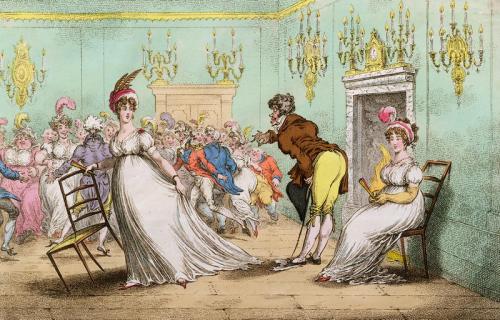
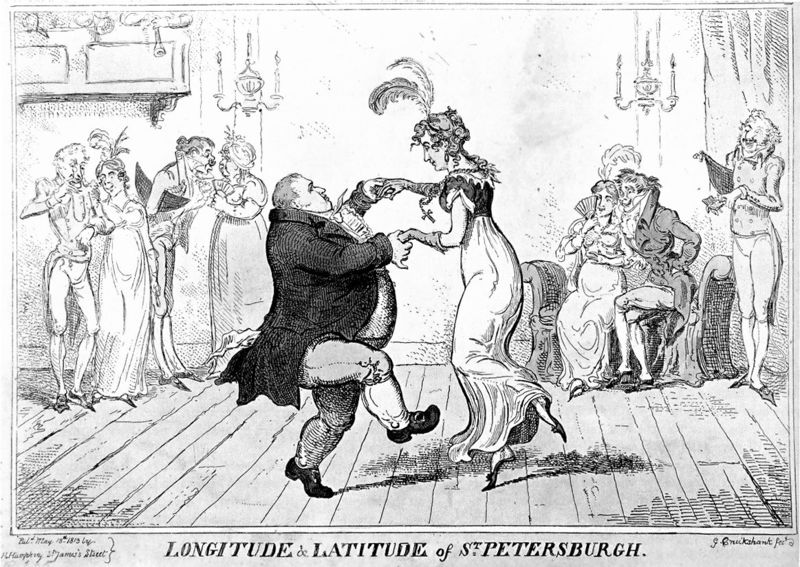
A Broad Hint of Not Meaning to Dance, Gillray, 1804

The only acceptable excuse in refusing a dance was when a lady had already promised the next set to another, or if she had grown tired and was sitting out the dance. Elizabeth could offer neither excuses at the start of the ball, and thus was forced to partner with Mr. Collins.

At a ball, a lady’s dress and deportment were designed to exhibit her best qualities:

As dancing is the accomplishment most calculated to display a fine form, elegant taste, and graceful carriage to advantage, so towards it our regards must be particularly turned: and we shall find that when Beauty in all her power is to be set forth, she cannot choose a more effective exhibition – The Mirror of Graces, 1811

Real Life in London

It was also extremely important for a gentleman to dance well, for such a talent reflected upon his character and abilities. Lizzie’s dances with Mr. Collins were causes of mortification and distress.

Mr. Collins slightly out of step

“Mr. Collins, awkward and solemn, apologising instead of attending, and often moving wrong without being aware of it, gave her all the shame and misery which a disagreeable partner for a couple of dances can give. The moment of her release from him was exstacy.”

A gentleman could not ask a lady to dance if they had not been introduced. This point was well made in Northanger Abbey, when Catherine Morland had to sit out the dances in the Upper Rooms in Bath, for Mrs. Allen and she did not know a single soul. Mrs Allen kept sighing throughout the evening, “I wish you could dance, my dear, — I wish you could get a partner.” Mr. Tilney was introduced by Mr. King, the Master of Ceremonies in the Lower Rooms, to Catherine, who could then dance with him. At Rosings, when Mr. Darcy explained to Lizzie that he danced only four dances at the Meryton Assembly ball because he knew only the ladies in his own party, she scoffed and retorted: “True; and nobody can ever be introduced in a ball room.”

Because a ball was considered a social experience, a couple could (at the most) dance only two sets (each set consisted of two dances), which generally lasted from 20-30 minutes per dance. Thus, a couple in love had an opportunity of spending as much as an hour together for each set.

A gentleman, whether single or married, was expected to approach the ladies who wished to dance. Given the etiquette of the day, Mr. Elton’s refusal to dance with poor Harriet at the Crown Ball in Emma was rude in the extreme, but Mr. Knightley performed his gentlemanly duty by asking that young lady to dance (and winning her heart in the process).

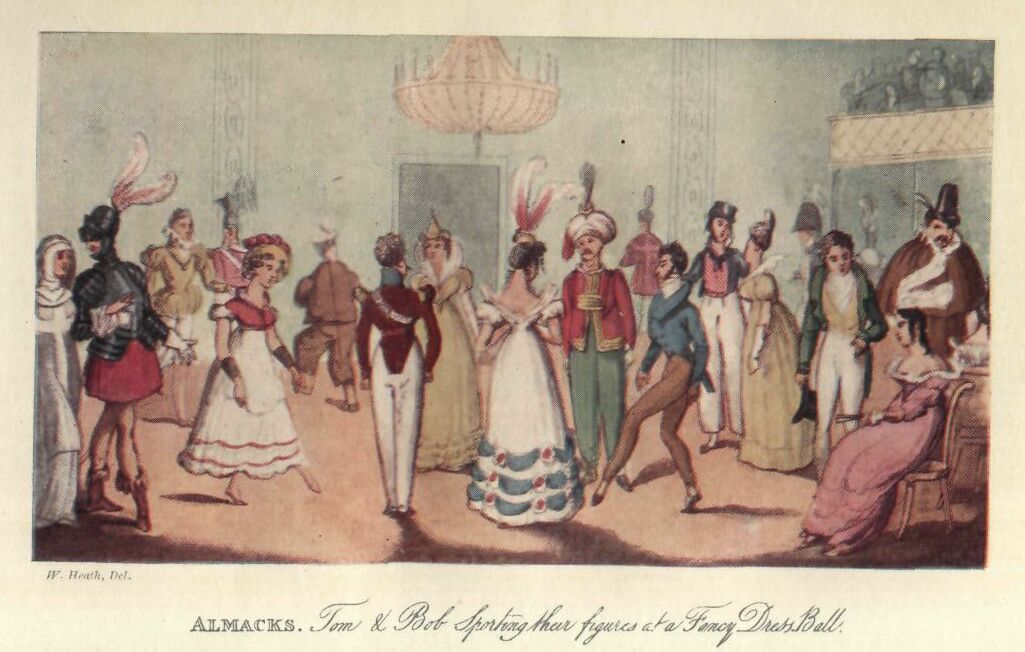
A lively dance at Almack's

Regency dances were extremely lively. The dancers were young, generally from 18-30 years of age, and they did NOT slide or glide sedately, as some recent film adaptations seem to suggest. They performed agile dance steps and exerted themselves in vigorous movements which included hopping, jumping, skipping, and clapping hands.

Depending on the dance formation and steps, a gentleman was allowed to touch a lady and hold her hand (and vice versa, as shown in the example of Mansfield Park 1999 above and in the image below).

Allemande

The couple had many opportunities to converse or catch their breaths when they waited for others to finish working their way down a dance progression.  The ability to carry out a conversation was considered very important, as Lizzie pointedly reminded Mr. Darcy:
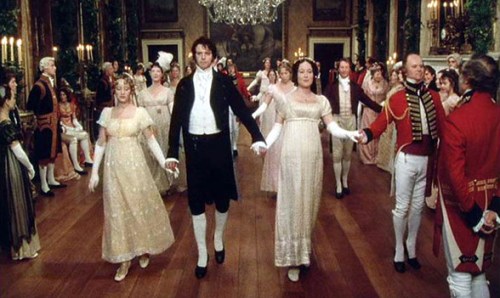
“Elizabeth … took her place in the set, amazed at the dignity to which she was arrived in being allowed to stand opposite to Mr. Darcy, and reading in her neighbours’ looks their equal amazement in beholding it. They stood for some time without speaking a word; and she began to imagine that their silence was to last through the two dances, and at first was resolved not to break it; till suddenly fancying that it would be the greater punishment to her partner to oblige him to talk, she made some slight observation on the dance. He replied, and was again silent. After a pause of some minutes, she addressed him a second time with:

“It is your turn to say something now, Mr. Darcy.—I talked about the dance, and you ought to make some kind of remark on the size of the room, or the number of couples.”

He smiled, and assured her that whatever she wished him to say should be said.

“Very well.—That reply will do for the present.—Perhaps by and by I may observe that private balls are much pleasanter than public ones.—But now we may be silent.”

“Do you talk by rule then, while you are dancing?”

“Sometimes. One must speak a little, you know. It would look odd to be entirely silent for half an hour together, and yet for the advantage of some, conversation ought to be so arranged as that they may have the trouble of saying as little as as possible.”

The dances that would have been danced at the Nethefield Ball were:

The English Country Dance

The characteristic of an English country dance is that of gay simplicity. The steps should be few and easy, and the corresponding motion of the arms and body unaffected, modest , and graceful. – The Mirror of Graces, 1811

Country dances consisted of long lines of dances in which the couples performed figures as they progressed down the line.

When a dancer was too tired to do steps, she would have been considered no longer dancing at all, as with Fanny in Chapter 28 of Mansfield Park:

“Sir Thomas, having seen her walk rather than dance down the shortening set, breathless, and with her hand at her side, gave his orders for her sitting down entirely.”

Rather than everyone starting at once, dances would have called and led off by a single couple at the top; as that couple progressed down the set other couples would begin to dance, then lead off in turn as they reached the top, until all the dancers were moving. Jane Austen occasionally got to lead a dance, as she mentioned in a letter of November 20, 1800, to her sister Cassandra:

“My partners were the two St. Johns, Hooper, Holder, and very prodigious Mr. Mathew, with whom I called the last, and whom I liked the best of my little stock.”

This could lead to very long dances indeed (half an hour to an hour) if there were many couples in a set” – What Did Jane Austen Dance?

The Cotillion
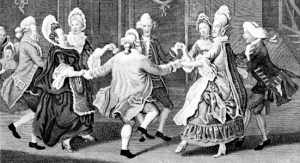

The cotillion was based on the 18th-century French contradanse and was popular through the first two decades of the 19th century. It was performed in a square formation by eight dancers, who performed the figure of the dance alternately with ten changes.

The rapid changes of the cotillion are admirably calculated for the display of elegant gayety, and I hope that their animated evolvements will long continue a favourite accomplishment and amusement with our youthful fair. – The Mirror of Graces

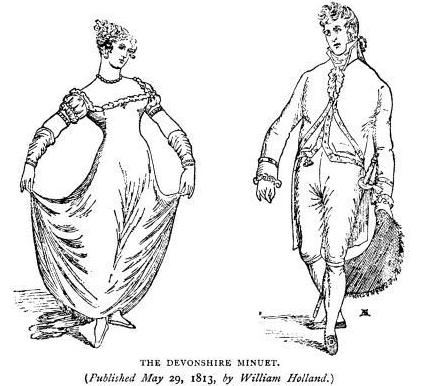
The minuet.

The Devonshire Minuet

This dance had grown almost out of fashion by the time A Lady of Distinction wrote The Mirror of Graces, and it is conjectured that Jane Austen must have danced it in her lifetime.

Boulanger

Boulangers, or circular dances, were performed at the end of the evening, when the couples were tired. Jane Austen danced the boulanger, which she mentioned in a letter to Cassandra in 1796: “We dined at Goodnestone, and in the evening danced two country-dances and the Boulangeries.”
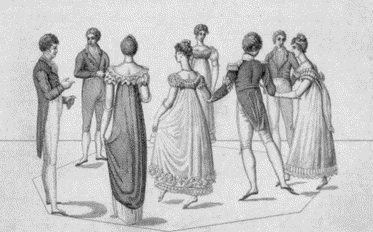
Quadrille

Note: the Quadrille and the waltz would not have been danced at the Netherfield Ball. Jane did mention the quadrille in a letter to Fanny Knight, which was dated 1816. And the waltz would not have been regarded an acceptable dance in 1813. It is doubted that Jane ever waltzed. The reel might have been danced at the Meryton Assembly, or at a private dance given by Colonel Foster and his wife, for instance, but it would probably not have been featured at the Netherfield Ball at the same time as a country dance.

Second Note: The movies have it all wrong. According to the author of this post on Capering and Kickery, “Real Regency Dancers Are Au Courant

Along with the peculiar notion that dance figures from the 17th century are useful for the early 19th century comes the even more peculiar notion that entire dances of that era are appropriate. Regency-era dancers were not interested in doing the dances of their great-great-great-great-great-great-great grandparents, any more than today’s teenagers are. Dances like “Hole in the Wall” and “Mr. Beveridge’s Maggot” were written in the late 17th century. Their music is completely inappropriate for the Regency era. Their style is inappropriate. Their steps are inappropriate. There is no sense in which these dances belong in the Regency era. Loving obsessions with these dances make me want to cry at the sheer ignorance being promulgated by the people who keep putting these dances in movies.”

More on the Topic

Read Full Post »
« Newer Posts - Older Posts »