Feeds:
Posts
Comments

Archive for the ‘Jane Austen’s World’ Category

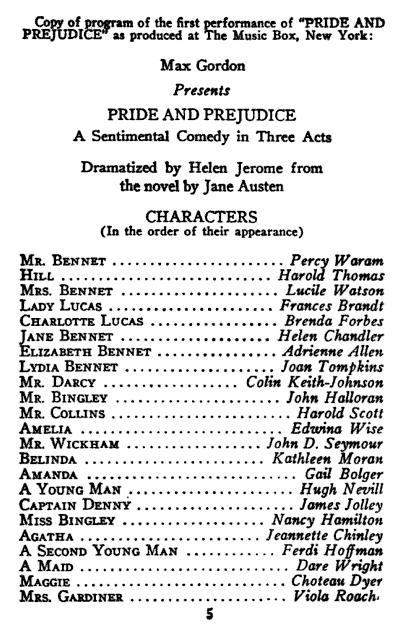
The 1935 production of Pride and Prejudice: A Sentimental Comedy Written in Three Acts, written by Helen Jerome and played on Broadway, featured Adrienne Allen, an English actress, as Elizabeth Bennet.

Miss Allen, a slender blonde, had been successful in London and Broadway stage productions, such as Private Lives with Noel Coward and Gertrude Lawrence, when she was signed to a contract by Paramount. She was married to actor Raymond Massey from 1929 to 1939 and is the mother of Daniel and Anna Massey.

Private Lives, 1930, Laurence Olivier, Adrienne Allen, Noel Coward, and Gertrude Lawrence

Best known for his portrayal of Abraham Lincoln, Canadian-born Massey also portrayed the character of “Jonathan Brewster” in the film version of Arsenic and Old Lace. He played Dr. Leonard Gillespie in Dr. Kildare during the 1960’s.  Raymond Massey Massey died in 1993.

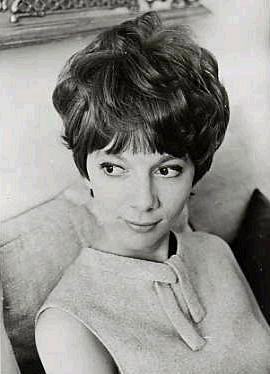
Young Anna Massey’s career might have been decided as early as her christening, for her godfather was the film director John Ford.

Celia Johnson as Elizabeth Bennet in Helen Jerome's Pride and Prejudice

Anna made her stage debut at the age of 17 in the West End hit The Reluctant Debutante with Celia Johnson and Wilfred Hyde-White. Celia, coincidentally, also played Elizabeth Bennet in the Helen Jerome play of Pride and Prejudice (1936).

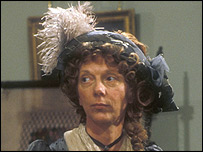
Janeites know Anna Massey best as Mrs Norris in the 1983 BBC mini-series of Mansfield Park.

Anna Massey as Aunt Norris

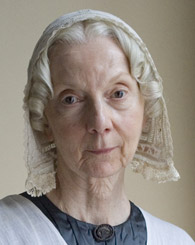
In recent years she has played Mrs. d’Urberville in Tess of the d’Urbervilles (left), and as Mrs. Bedwin in Oliver Twist (2008) right.

“If I’d had an education, I’m not sure that I would’ve been an actor,” she once said. “My education ended when I was 15 and it was assumed that I would go into the theatre and I did.” –  Anna Massey The Plain Girl’s Lament

More on the topic:

Read Full Post »

Loyal Readers:

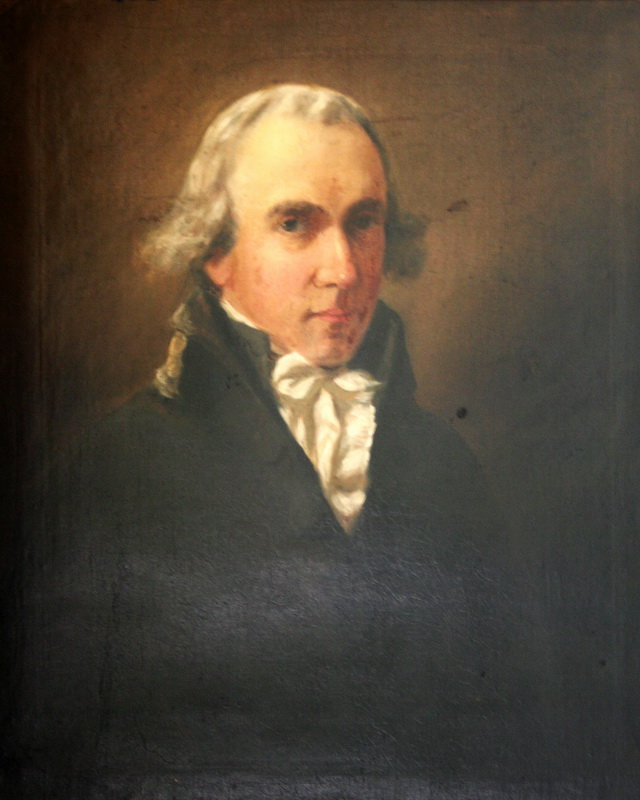
How good are you at solving historical puzzles? Mr. Forrest sent me this query and I told him I would write a post about this interesting riddle that he would like to solve. This is what he wrote (Thank you all in advance for helping!):

My uncle has a portrait (attached) which has been passed down the family line. We think it is one of three portraits referred to in a will – the options being

  1. Charles Macintosh (a Scottish inventor of the Macintosh coat)
  2. Dr John Forrest (a Physician who served much of his time in the army) (more details on my website here: http://rootsunearthed.com/index.php5?title=John_FORREST_(1804-1865) ), or
  3. John Graham Rodger (a merchant who later became a magistrate i.e. Justice of the Peace)

I have found on the internet other portraits of Charles Macintosh and am sure the portrait is not of him. This leaves the possibility of either the Physician or a Magistrate.

I wonder if your experience of the 19th century and clothing could identify anything that may point to Physician or Magistrate?

Or possibly you know someone else who could assist?

Read Full Post »

Ever wanted to listen to the music Jane Austen liked? Listen to a 30-minute podcast at this link. There are only four days left to listen Michelle Kerns from the Book Examiner writes:

BBC Radio 4, bless their souls, have put the recordings together with a spirited little commentary by David Owen Norris pondering on the music and Ms. Austen’s history along with Deirdre Le Fay (of Jane Austen Cookbook and multiple Austen biography fame; she reminds me irresistibly of Julia Child), pianist Samantha Curasca, and the lucky Austen inheritor himself, Richard Jenkins.

There are seven compositions featured in the broadcast, ranging from a suggestive little ditty about a maiden who sings all day and night to keep her lover playing his pipe (snort) to the toe-tapping “Bluebells of Scotland.” One song, written by Robbie Burns, Jane rewrote at the very end to make herself the song’s heroine: the original words, “the chains of his Jean” she changed to “the charms of his Jane.” Atta girl.

One charming piano piece, “Allegretto andantino,” is thought to be an original composition written by Ms. Austen herself. Others highlight Jane’s interest in show tunes and songs about the French Revolution, while still others — pages of nursery rhymes — demonstrate her devotion to her legion of young nieces and nephews.

Read Full Post »

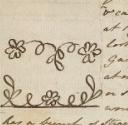
Inquiring reader: Recently I  had the pleasure of viewing Jane Austen’s letters in A Woman’s Wit: Jane Austen’s Life and Legacy, an exhibit showing at the Morgan Libraryin New York City until March 14th. My observations are those of a layman and amateur. Nevertheless, I thought I would share my impressions. As Janeites know, several years before Cassandra Austen’s death, she  ruthlessly censored Jane’s  letters. In this image, taken from the Morgan Library website, you can see that an entire portion of the letter  is missing. To the left of  the same letter, Jane drew the pattern of a piece of lace, writing, “My cloak is come home, and here is the pattern of its lace.”
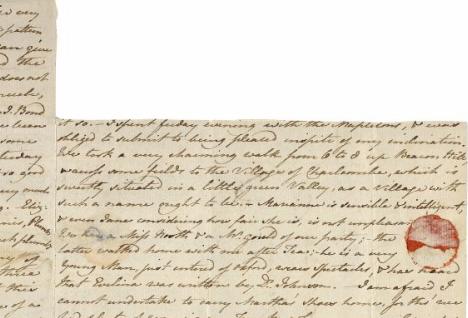
Portion of autograph letter signed, dated Bath, 2 June 1799 to Cassandra Austen

I was struck by how finely some of the portions had been cut out. In one letter that Jane wrote in 1814, Cassandra snipped only a few words and the cut was so unobtrusive that at first I did not spot the missing area. The sentence began with “Edward is quite…” Then nothing. Only a sliver of a line with several additional words cut out. Did the phrase reflect negatively upon Edward or Jane or another member of the family? We shall never know.

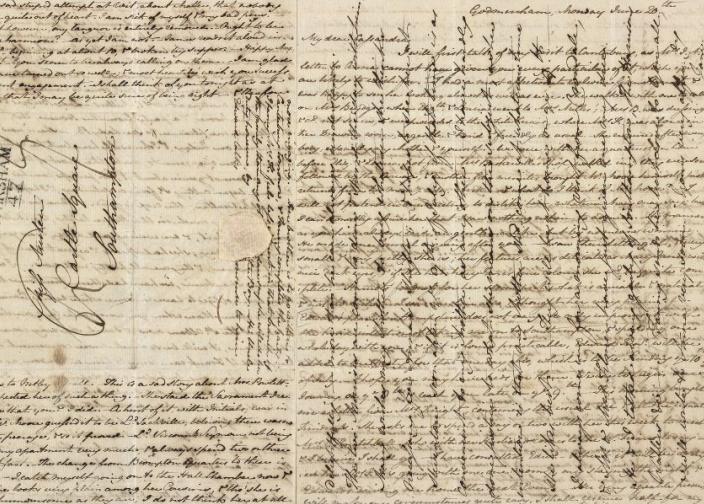
Franking letters was expensive for Jane, whose yearly personal budget consisted of £50 or less. She followed the common practice of cross writing. I noted how straight her lines were, and how carefully she placed them between the blank spaces of the lines on the other side. The letter below shows both practices. The Morgan Library website features this letter and allows you to enlarge it. Scroll to the bottom and study it in more detail. Learn more about crossed letters and the paper Jane used in this link.

Letter to Godmersham

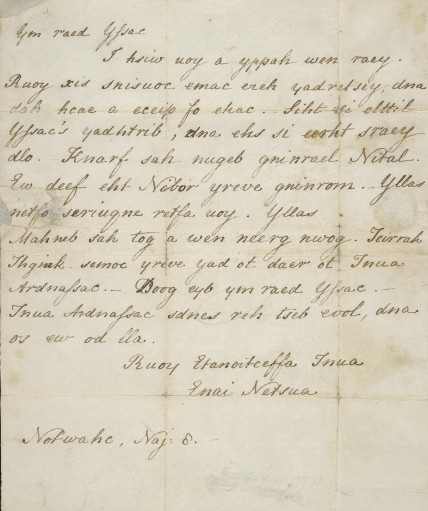
Jane’s letters were not always crossed, nor did she always use both sides of the paper. In this delightful example, written to her  niece, Cassandra, in the last year of her life, Jane takes care to keep a large amount of blank space around the lines. She also writes in a much larger script. Written entirely backwards with an unfaltering hand, the letter must have thrilled its young recipient.
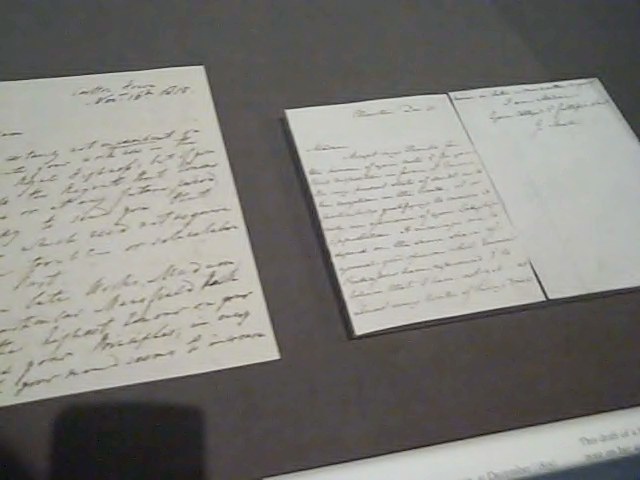
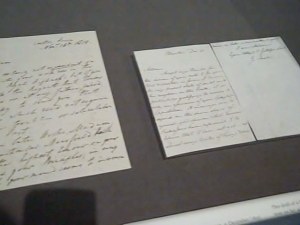
It is estimated that Jane Austen wrote 3,000 letters in her lifetime. Of the 160 that remain, the Morgan Library has purchased 51.  Not all of the lettters in this exhibit were written to family members. In the image below, the letter on the left was written by the Prince Regent’s librarian, James Stanier Clarke, to Jane. To the right of it sits one of her letters to him. I was struck by the brown color of the ink, which in some letters was still strong and vigorous, and in others had faded to a pale, watery color. Jane used iron gall ink, an ink common in her era, which is initially blue-black and then fades to brown.

It is composed of tannin (gallic acid), iron sulfate (known as vitriol in the nineteenth-century), gum arabic, and water. Because it is indelible, it was used for official documents from the middle ages onward. The ink is easy to make, inexpensive, and can be transported as a powder and mixed whenever needed. When first applied to paper, the ink appears pale-gray; as it is exposed to air, the ink darkens to a rich blue-black tone. Eventually, most iron gall ink changes to a brown color, as is evident in Austen’s letters and manuscripts – Thaw Conservation Center.
To learn more about Jane’s letters in the exhibit, I urge you to click on the Morgan Library website and study the few images that are shared with the public. Sadly, the Morgan did not publish a catalog, and much of the information in the exhibit is available only to visitors. Click here to view images from the exhibit. Click here to read about the technicalities of letter writing in Jane Austen’s day.

More links about the exhibit:

More links on this blog about letter writing and the royal mail in Jane Austen’s day:

Read Full Post »

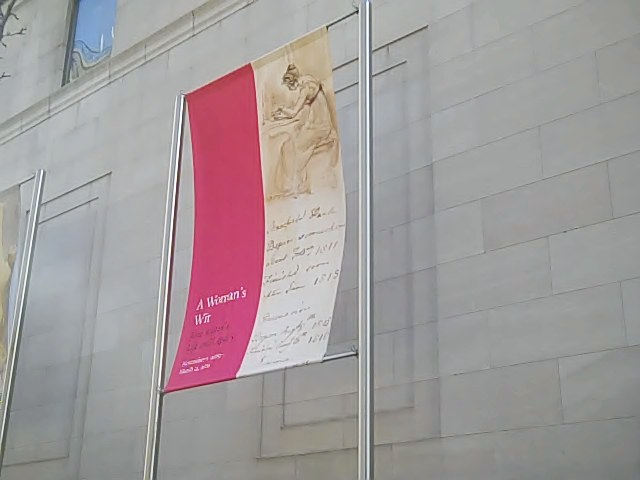
The exhibit, A Woman’s Wit: Jane Austen’s Life and Legacy, will be shown through March 14, 2010 at the Morgan Library in New York City. This week I had the distinct pleasure of seeing this unique presentation of Jane’s letters, the drafts of two of her novels (The Watsons and Lady Susan), several books, and images and cartoons of the Regency era.

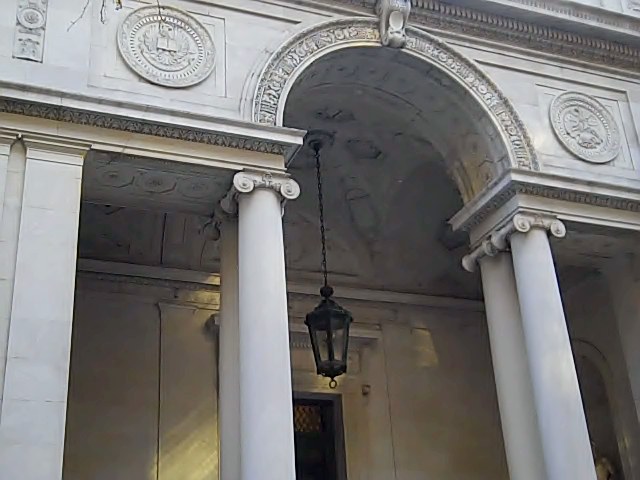
I had taken a number of shots with my flip camera before a museum guard advised me that I could not take pictures. (Since it was possible to take pictures to my heart’s delight in The Louvre, it did not cross my mind that I could not do so at the Morgan Library). Interestingly, I had already taken numerous shots in full view of everyone before the guard stopped me.

The room is small; the riches contained within it are immeasurable

The actual exhibition area is contained within a small room, but there are so many letters and items of interest that I could have spent the entire day inside that space. Jane’s Life and Legacy were divided into three sections – her life and personal letters, her works, and her legacy. Over the next few weeks I shall write about my impressions from that exhibit, tying in other links and posts.

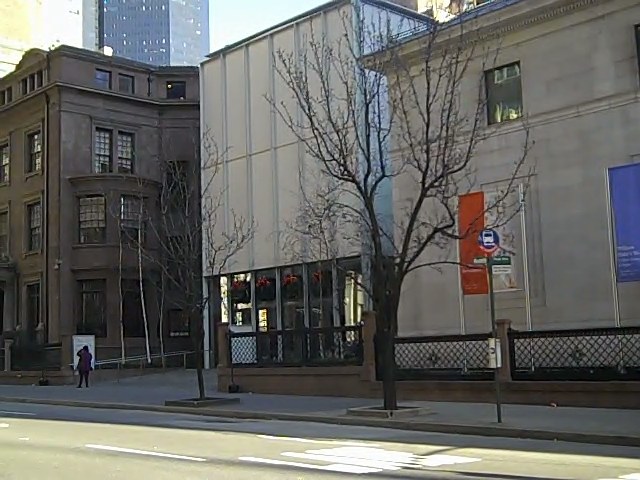
Entrance to new wing from Madison Ave

If you are not familiar with the Morgan Library and Museum, some information about its history might be of interest:

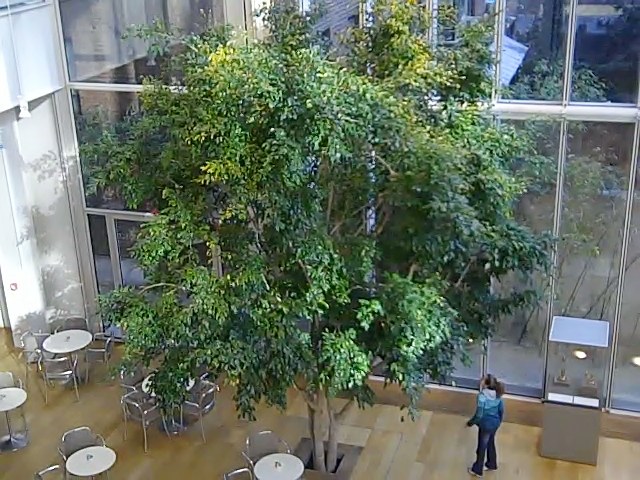
Interior of the new wing

A complex of buildings in the heart of New York City, The Morgan Library & Museum began as the private library of financier Pierpont Morgan, one of the preeminent collectors and cultural benefactors in the United States. Today it is a museum, independent research library, musical venue, architectural landmark, and historic site. More than a century after its founding, the Morgan maintains a unique position in the cultural life of New York City and is considered one of its greatest treasures. With the 2006 reopening of its newly renovated campus, designed by renowned architect Renzo Piano, the Morgan reaffirmed its role as an important repository for the history, art, and literature of Western civilization from 4000 B.C. to the twenty-first century. – Press Release information

Original entrance

The following links might also interest you:


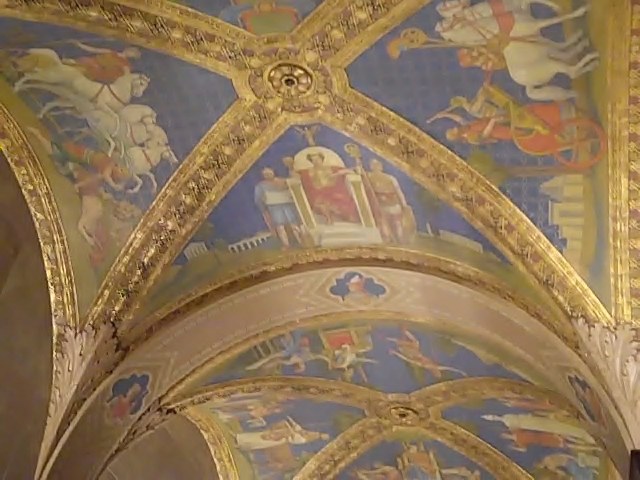
Vaulted Ceiling

Happy New Year, All!

Read Full Post »
« Newer Posts - Older Posts »