Feeds:
Posts
Comments

Archive for the ‘Jane Austen’s World’ Category

By Brenda S. Cox

“Well! I am really haunted by black shadows. Men of colour in the rank of gentleman, a black Lady cover’d with finery, in the Pit at the Opera, and tawny children playing in . . . the gardens of the squares . . . afford ample proofs of Hannah More and Mr. Wilberforce’s success towards breaking down the wall of separation.” –Letter from Hester Thrale to Mrs. Pennington, June 19, 1802 (Hannah More and William Wilberforce were leaders in the campaign to abolish the slave trade.)

Last month we looked at what fiction like The Woman of Colour can show us about the lives of black people in Jane Austen’s England. This week let’s consider what we can learn from records of the time.

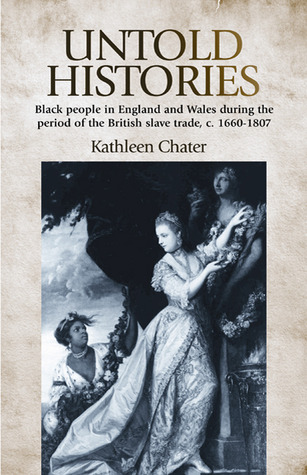
Kathleen Chater, author of Untold Histories: Black People in England and Wales During the Period of the British Slave Trade, c. 1660-1807, researched the lives of black people in eighteenth century England. She searched parish records, newspaper accounts, trial accounts, and private diaries and letters. She found that the term black was often used for any darker-skinned people, including immigrants from the Indian subcontinent and China. In official records, those from Africa might be identified as Negro, black, or many other terms. (Jane Austen seems to use the word black for people with dark hair and eyes and tanned skin, but it’s not likely that official records would use that definition.) So it’s not always easy to tell which people group records refer to.

Kathleen Chater examined a wide variety of records, including parish records, trial records, newspaper articles, and private diaries and letters, researching the situation of black people in eighteenth century England.

Based on Chater’s data, Jane Austen likely saw black African people in London. Chater writes, “Wherever they went, upper- and middle-class people must have seen Blacks, because many were the servants of the upper classes, employed in highly visible positions. They opened doors to visitors, they served meals, they drove coaches in the streets.” Wealthy women liked to have a black page boy or footman serving them. Black musicians played in Army bands and led the Guards through London to Hyde Park. Other black Londoners were soldiers, sailors, shopkeepers, or a variety of other occupations.

An estimated three to five thousand black people lived in Austen’s London, with smaller numbers in the slave ports of Liverpool and Bristol. (Another estimate is that there were around 15,000 black people in 18th century England, but Chater doubts that number, which is not reflected in records of the time.) Many black people in the port cities were transient; they were mariners who were only in England for short periods of time. Some were fugitives from America. An estimated ten thousand black people were spread out through the rest of England (0.1 % of the population).

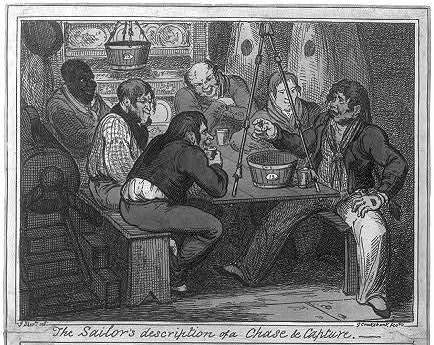
Black sailors were treated as equals on board ship. Public domain image by George Cruikshank and Lieut. John Sheringham, R.N., 1822,
www.loc.gov/item/2006690787/.

Despite an intensive search, Chater did not find evidence of any specifically black communities or black churches at that time. About 80% of the black people in England were men. Many of them married white people, and they and their children became part of the English spouse’s community.

The situation for black people in England was different than it was in the Americas. Their numbers were much smaller in England, so people may not have perceived them as a threat to their society as countries with large numbers of enslaved people did. Slavery as an institution was not practiced in England. Enslaved people were sometimes brought to England, though, from America or the West Indies. The Mansfield judgment in 1772 implied that they were free in England, but it wasn’t totally clear. Enslaved visitors sometimes escaped or were freed, and settled in England. Others were taken back to the overseas colonies. Britain had a self-contradictory position on black people. They treated them as property to be exploited on the plantations of the West Indies, yet gave them human rights in England.

Lord Mansfield, whose name may have inspired the title of Mansfield Park, raised his mixed-race great-niece Dido Belle. He also made several rulings opposing slavery and the slave trade, but could not abolish either. Portrait by Jean-Baptiste Van Loo, about 1737, public domain.

Chater found little evidence of institutionalized racial discrimination, though there were individual racist incidents. It appears that black people in England generally had the same rights as white people. Black people were allowed to testify in court just as white people were, as long as they had been baptized. (Baptism was required to make sure that they acknowledged God’s authority and so would tell the truth. A Muslim was allowed to swear on the Quran, so this was not a matter of religious prejudice.) Some black servants received wages, and others did not; the same was true of white servants. Black people could hold parish offices: Chater lists a black churchwarden, a black parish constable, and a black sexton. There were limitations on apprenticeships for black people, but similar restrictions applied to all “foreigners”; most black people in England at this time came from outside the country. 

In Austen’s England, a person’s social class, or rank (as Austen calls it), was the most important factor of their identity, not skin color. Black working-class people were treated more or less like white working-class people. Mixed-race children of middle- or upper-class people were treated much like their white fathers.

For example, Nathaniel Wells was the son of a white plantation owner in St. Kitts and a black enslaved woman. He inherited great wealth, moved to England, and bought an estate in Monmouthshire. One visitor described him as “a West Indian of large fortune, a man of very gentlemanly manners, but so much a man of colour as to be little removed from a Negro.” However, his color did not bar him from the life of a country gentleman. Wells married the daughter of George II’s former chaplain. He served as a justice of the peace, a county sheriff, and deputy lieutenant for the county. He was also a churchwarden from 1804 to 1843. Two of his sons became clergymen, holding church livings.

For worship, black servants generally attended parish churches along with others in their households. Black people were baptized, married, and buried at Anglican churches, like most people in Britain. They were often baptized as adolescents or adults rather than as babies, since most were not born in England. Enslaved Africans brought into the country sometimes sought baptism under the mistaken idea that baptism would make them free. Others sought baptism because of a genuine religious conversion experience. Some were baptized and took “Christian names” in order to become a full part of the community or to get married. Cather found records that black people were part of all the religious groups of the time, except for the Jews and Quakers. (It is possible, however, that the Quakers simply did not record the race of their adherents.)

According to Chater, most people in England who had black servants “seem to have felt accountable for their Black servants’ spiritual welfare. Not only did servants attend church with them, they also took part in family prayers at home, a practice which reinforced the bonds between members of the family and their household.” This was also true of white servants, of course. In English society, those in higher positions were responsible for dependents in lower positions.

Memorials in churches around England show the esteem that some families felt for their black servants. One in Lancashire, dated 1793, describes “Augustin Leonard, A Black Man” as “a faithful servant And affectionate husband And sincere friend And Beautiful companion.” Another in Cornwall, dated 1700, says Philip Scipio was “an African whose Quality might have done Honour To any Nation or Climate And Give us to See that Virtue is Confined to no Country or Complexion Here Weep Uncorrupted Fidelity And Plain Honesty.” Some today may look on such inscriptions, for black or white servants, as patronizing. However, within the social structure that was taken for granted at that time, they seem to have been meant sincerely. 

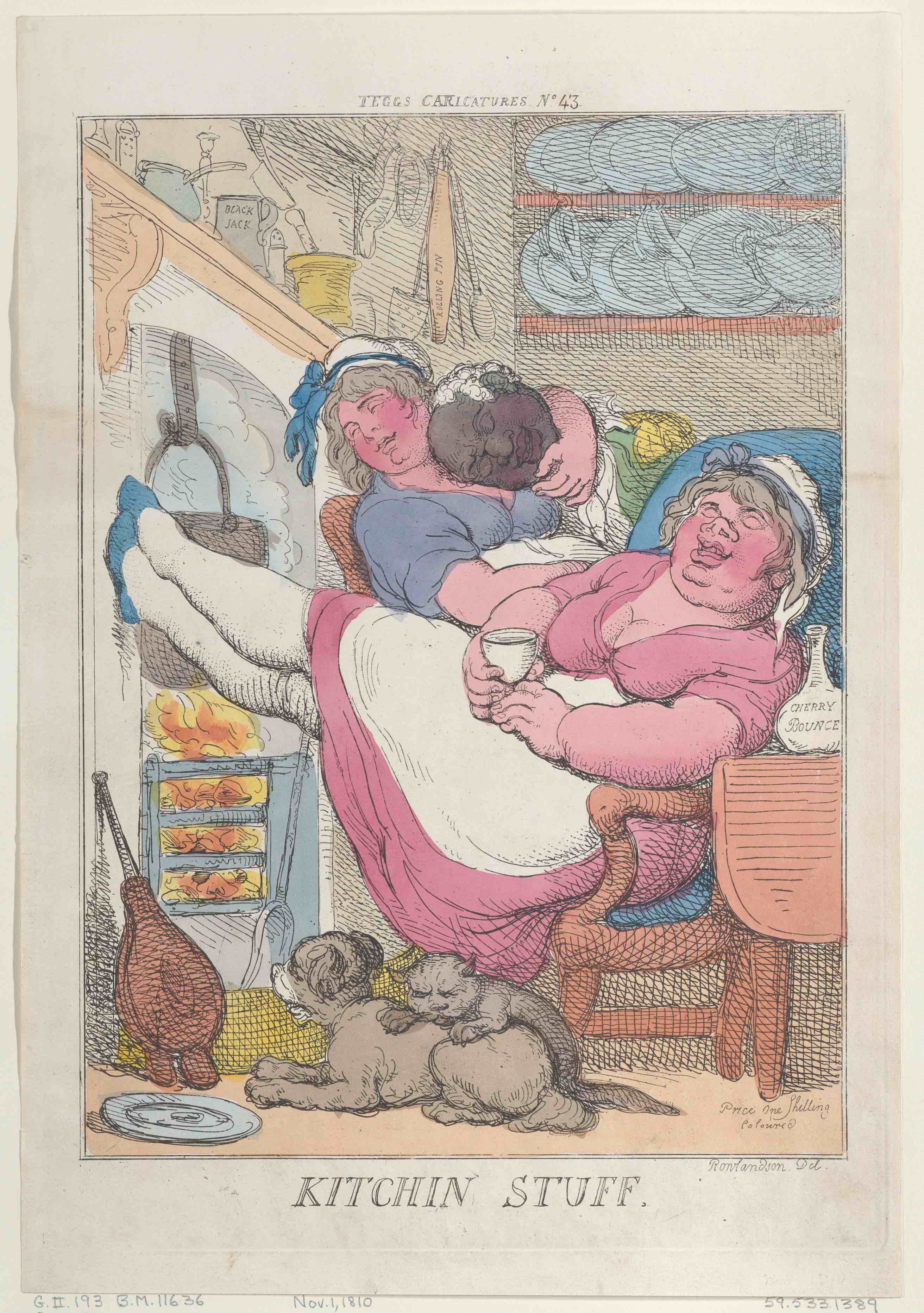
Black and white servants appear to have had equal status “below stairs.” Thomas Rowlandson, 1810, public domain. http://www.metmuseum.org/art/collection/search/811400

In London, however, many black people were not attached to white households. Some had difficulty finding work and became beggars. In about a month’s time in 1786, the Committee for the Relief of the Black Poor gave financial help to almost 2,000 black people in London. This was not necessarily 2,000 different individuals, of course. Some were probably repeat visitors, and some may have been from outside London.

Far fewer black people lived in the English countryside. Austen may not have known any in the country villages where she lived, unless a local squire had a black servant. In the town of Moreton in Devon, a black man caused great excitement. One witness wrote that “Peter the black servant to General Rochambeau” was the first black person to get married in Moreton. For this great event, “The Bells rang merely all day. . . . a great number assembled in the Church yard, and paraded down the street with them.”⁠

It appears black and mixed-race people in England were accepted as part of society, though such people did face some prejudices. Sadly, the people of England seemed to be blind to the suffering of enslaved people on their overseas plantations. Long campaigns had to take place before the slave trade, and then slavery, were outlawed in the British Empire. As Hester Thrale wrote in the letter quoted at the beginning of this article, Christian leaders like William Wilberforce and Hannah More led those campaigns. Two writers Austen loved, Thomas Clarkson and William Cowper, also contributed. Women supported the campaigns greatly by boycotting West Indian sugar. Free black people in England made major contributions as well. Many such men and women helped white Britons see enslaved people as human beings like themselves who deserved freedom.

Next month we’ll look at the stories of some individual black people at various levels of society who lived in Jane Austen’s England.

© Brenda S. Cox 2021, excerpted from the upcoming book Fashionable Goodness: Faith in Jane Austen’s England by Brenda S. Cox

This Tuesday, April 27, Professor Gretchen Gerzina will be speaking on “The Black Woman in Nineteenth Century Studies” at 5 PM EST. The announcement says, “Black and mixed-race women in nineteenth-century Britain were represented in fiction, drama and high and low art. However the reality of their actual presence couldn’t be more different from these exaggerated representations.” Sign up and attend to learn what Dr. Gerzina has to add to this discussion!

Yesterday Chawton House and the Newton and Cowper Museum hosted a study day about William Cowper, Austen’s beloved poet. Videos, which are still available, include a fascinating talk on Cowper and Abolition. Cowper’s poems not only contributed to the fight for abolition in England, but also to the fight against slavery in the United States. For links to the other talks, which were also excellent, click here.

Sources

  • Untold Histories by Kathleen Chater (Manchester University Press, 2009)
  • Oxford Dictionary of National Biography
  • Silvester Treleaven, Oct. 17, 1808. 
  • Black London: Life Before Emancipation by Gretchen Holbrook Gerzina (Hanover: Dartmouth College Library, 1995)

You can find further resources here.

You can connect with Brenda S. Cox, the author of this article, at Faith, Science, Joy, and Jane Austen or on Facebook.

Read Full Post »

Vic’s Review

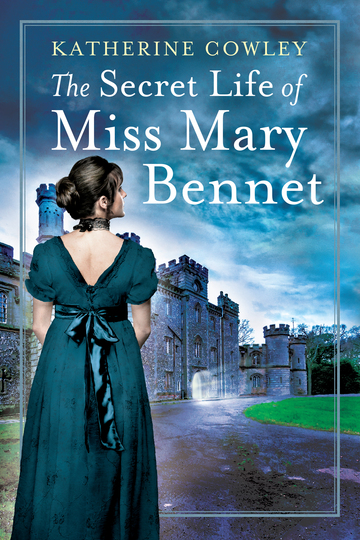
Mary-Bennet-Cover-Smaller-VersionImagine a mystery novel that features Mary Bennet as its investigative heroine! Author Katherine Cowley’s choice of Mary, the largely unnoticed Bennet daughter in Pride and Prejudice, piqued my interest. While Cowley kept some of Mary’s idiosyncrasies and insecurities as the middle child, she has created a sympathetic character, whose strengths as a keen observer accustomed to sitting on the sidelines help her solve a murder.

The book opens just after Mr Bennet’s death, with 19-year-old Mary sitting vigil near her father’s body at Longbourn. It is night and the house is deathly quiet. As she reminisces about past regrets and current events, she comes to dread her future as an unmarried daughter. Her safest choice would be to live with Mrs Bennet, but Mary wants to leave Meryton and wonders if she should take the bold step of earning her own way in life, as a governess perhaps? 

Her reveries are interrupted by the sound of a carriage. Not expecting company at such a late hour, Mary reluctantly asks a maid to let the mysterious visitors in. The door opens to two strangers, Lady Trafford, a strong-willed woman who rarely considers the word “no” as an answer to her requests, and her secretive nephew, Mr. Withrow. Lady Trafford ostensibly came to pay her respects to the mourning family, claiming kinship, but the reason for her visit soon becomes clear—to offer Mary an invitation to live with her at Castle Durrington in Sussex, for reasons that don’t quite make sense to the young woman.

After some persuasion and mental list-making, Mary accepts Lady Trafford’s invitation, and so her adventures as a sleuth begin. The following passage with Mrs Bennet, Lady Trafford, and Mary gives you some idea of Cowley’s writing style, which is her own, but echoes Jane Austen’s in a delightful way:

“Surely it is owed to us, Mary, for you to have such an opportunity. Especially as you are not beautiful like your sisters, and you have had no suitors.”

“I have already made up my mind, Mother.”

“You cannot possibly think to turn down Lady Trafford’s offer! What an inconsiderate child you are.”

“I did not say how I had made up my mind.”

“What do you say, Miss Bennet? Will you join me at Castle Durrington?”

“How big is your library?” asked Mary. “And do you have a pianoforte?”- p.56

In her first days at the castle, Mary becomes embroiled in a mystery. Then, during a brisk walk to the Sussex coast, she stumbles upon a body lying face down in the sea. After meeting a few more characters and getting to know Lady Trafford and Mr Withrow better, she no longer knows who to trust. Given free rein to Castle Durrington’s library, her research leads her to more unsettling truths. 

Cowley writes the book from Mary’s point of view, which is refreshing, for we come to know her as a fully realized person, one who is willing to learn and eager to take lessons to improve herself. She is a careful list maker and planner, and one who combines the characteristics of a good investigator—that of an observant, nondescript, determined, and note-taking woman—who people seldom notice. 

This first published book by Katherine Cowley will appeal to readers who enjoy murder mysteries set in the Regency era with a castle and rugged English coastline as a setting. Readers are also given a host of suspects to suss out until the solution is revealed. I had a great time sussing wilst arriving at my own conclusions to the mystery in this novel!

Interview with Katherine Cowley 

  1. Photo of Katherine Cowley

    Katherine Cowley

    What about Mary Bennet’s character appealed to you to write about her? Which of her traits in Pride and Prejudice did you develop to further and enhance your mystery plot for this novel and make her more interesting?

One of the things that appealed to me most about Mary Bennet is the fact that others overlook her—she is ignored, dismissed, and snubbed. And shouldn’t those who are quiet and overlooked be able to have their own stories, their own adventures?

Mary Bennet is very analytical, she loves to read, and she’s good at remembering things. Like Mary, I know what it’s like to say the wrong thing in a group setting, or to embarrass myself in conversation, or to not feel comfortable in all situations. 

So much is left open about Mary’s character—what is it that she wants? It’s clear that she wants to read and play the pianoforte and have peace and quiet, and there’s a brief mention by Austen that Mary had hoped Mr. Collins would propose to her. But beyond that, we don’t know what Mary wants. In part, I wrote this book to figure that out.

In terms of characteristics that I developed, I played up Mary’s observational skills, and I gave her a desire to learn French and drawing. Also, if Mary does not know what to do in a situation, she’ll think about what one of her sisters would do in such a moment, and often that ends up being the perfect action for her to take.

  1. Briefly describe your writing process for us (if this is possible). What I mean is, did you develop a plot outline first (with the ending always in mind)? And then allowed the characters to speak to you as you wrote about them? Or did you “stay with the program?” You also mentioned a community of writing help in your acknowledgments—how did they influence your thoughts before, during, and after the process?

I would categorize myself as both an outliner and a discovery writer. I did write an outline before the first draft, with some of the major events I wanted in the story (for example, I knew I wanted French and drawing lessons, and I knew I needed a big ball scene that had all sorts of mystery and intrigue and would also act as an important moment for Mary’s character). I also had a very clear vision of what the final chapter would look like. 

But then I “discovered” (or figured out as I went along) all sorts of characters and events and situations as I wrote.

I don’t know the exact how length of my first draft, but the second draft of the novel was about 55,000 words. While there was mystery, there was not a dead body—it was not yet a murder mystery. That came in a later draft.

I wrote five drafts of the novel before querying literary agents. My writing group read one chapter a month and gave me feedback, and I sent the second, third, and fourth draft of my novel to new sets of readers—a mixture of other writers and trusted readers who love Jane Austen. This community was so helpful in helping me refine my ideas, improve my writing, solve plot problems, and figure out what was and was not working.

I wrote two additional drafts with my literary agent (the first was a major revision, and the second was a minor revision). After my book was acquired by my publisher, I did a revision with the editor, a second revision to shorten the book by 1000 words, a copy edit, and proofreads.

Now that it’s finished, the novel is about 90,000 words (so 35,000 words longer than the second draft). It was a lengthy process to get the story from where it started to where it is today.

  1. In this day and age, it is unusual for a new author to have a book published, but you have two more Mary Bennet mystery sequels in the pipeline. Kudos! I suspect this has more to do with hard work than luck. What advice would you give to other hopeful authors who are writing their first books?

If you’re writing a first book, my biggest advice is to keep writing, and to push through and finish the book. When I first began trying to write books, I started a lot of novels that I never finished, sometimes due to perfectionism or not knowing what I wanted to do with the story or because I became distracted by a shiny new idea.

I learned a lot from books that helped me understand structure and plot, and there’s so much you can learn about writing craft from the Internet, from books, and from writing conferences. But there’s a lot that you can only learn by doing it. Push through, finish a first draft, and let go of perfectionism. And then take the time to get feedback from other writers and revise, revise, revise. Then, if you would like to publish the book, make sure to take the time to learn all you can about publication and different publishing options.

__________________
The book will be available on April 22nd, 2021. Find purchase information for preordering in the US, Canada, UK, Australia, and other locations on Katherine Cowley’s site.

Read Full Post »

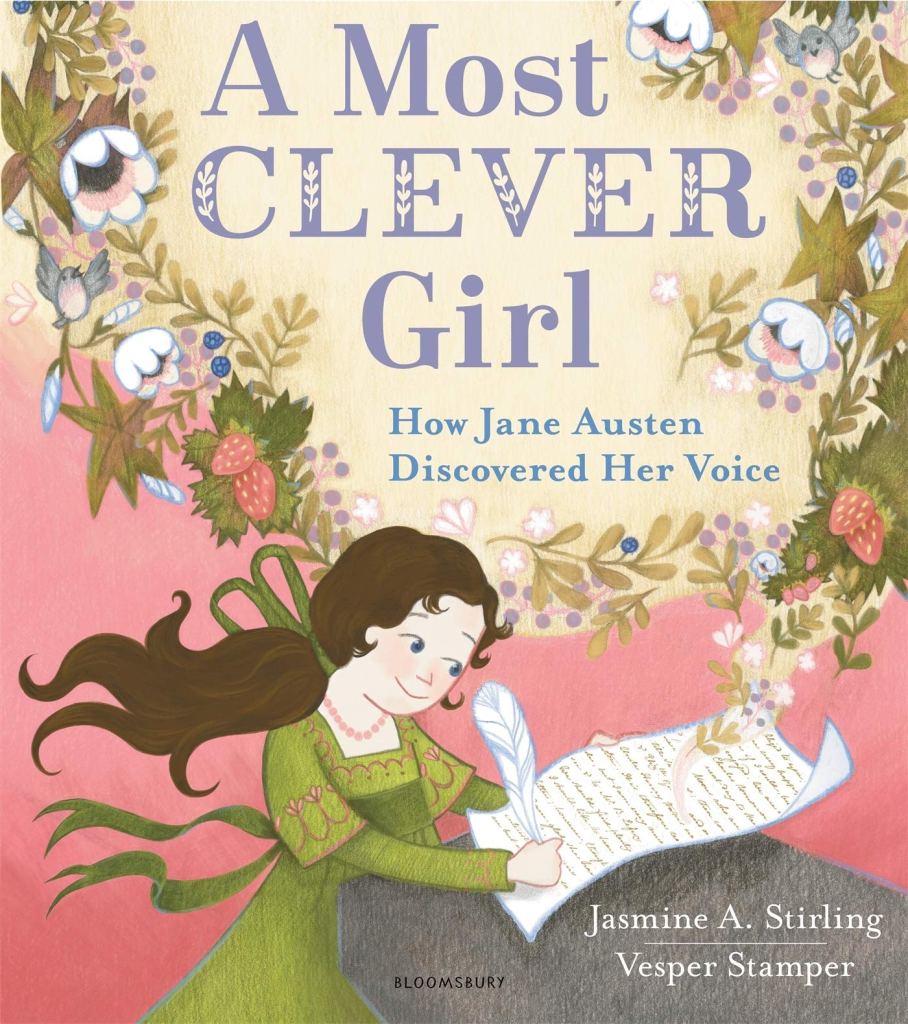
After sharing my book review of A Most Clever Girl: How Jane Austen Discovered Her Voice by Jasmine A. Stirling, I had the great pleasure of interviewing Jasmine about her background, her writing process, and the inspiration behind her book. Thank you to Jasmine for her time and her thoughtful answers to my questions!

Q. What initially inspired you to write A Most Clever Girl? Describe your vision for the book and your writing process.

A. When I set out to write this book, I chose Jane Austen because I admire her life and her work, and because I believe she is one of the most misunderstood women in history. Jane Austen was far from being the prim, prudish, “dear Aunt Jane” depicted by her brother Henry and her nephew Edward in their biographies of the author. She is also far from being an author of swoony romances, as we are sometimes led to believe.

These discrepancies between the popular image of Austen and the real Jane Austen gripped me. I wanted to help young people understand Austen the rebel, Austen the humorist, and Austen the artist, so that when they encountered her work later on, they might better be able to fully appreciate and enjoy it.

However, as I delved into my research, it became clear that Jane Austen was a perfect subject for a children’s book about creativity and persistence, because her upbringing, life struggles, and triumphs tell us a great deal about what a writer needs in order to fully master her craft. Of course, I still hope that A Most Clever Girl will help kids relate to the real Jane Austen and encourage them to pick up her novels when they get a little older.

As for my process, it was extensive. I read widely on Austen—both primary and secondary sources—for two years before I wrote a single word. Then, I sat down and wrote a draft of the book in less than an hour. Of course, it was mediocre. It was my first attempt at creative writing as an adult. I was a beginner.

Over the next ten months, I worked for hours each week rewriting and revising the manuscript based on feedback from dozens of people—writers, kids, freelance editors, and agents. I continued to refer to and pull things from primary and secondary sources as I went. Ultimately, I rewrote or revised my initial draft more than 60 times. The final story was unrecognizable when compared with the first draft.

One of the most challenging aspects of writing this book was figuring out how to explain the literary significance of what Jane Austen did—pioneer her witty realist style, rich with social commentary and moral imperatives—to very young people who have no idea what literature was like in Regency England and have scant understanding of what a writer’s voice is all about. Hopefully I pulled it off!

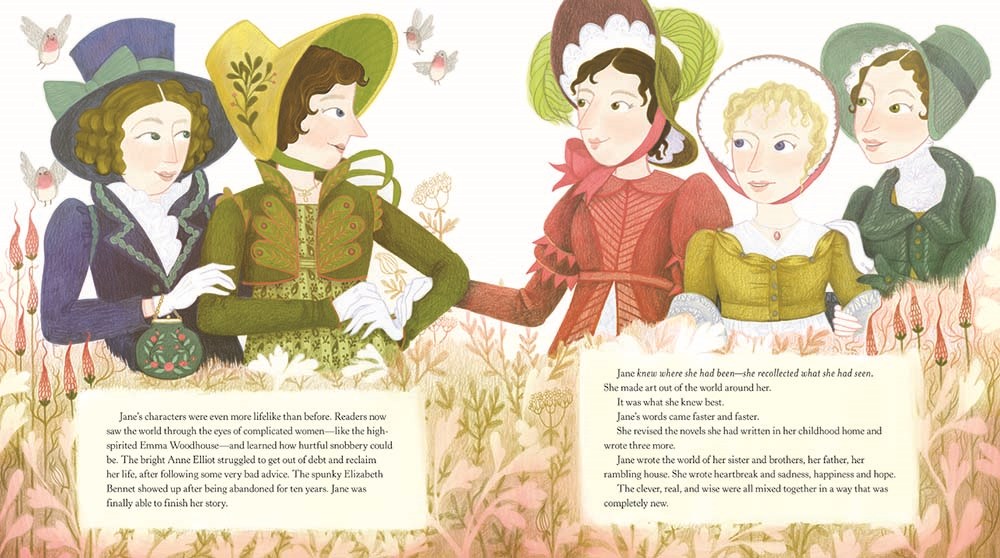
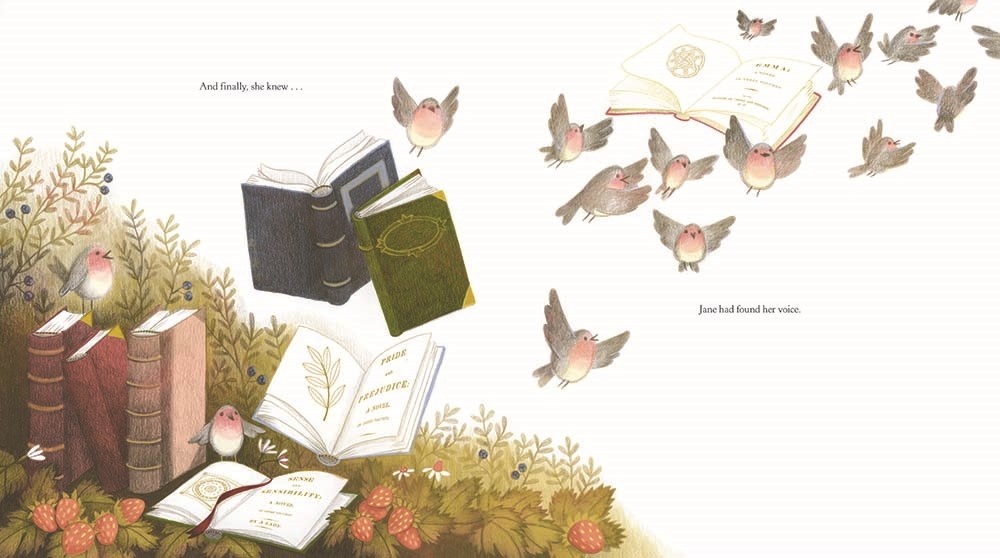
Interior illustration of A Most Clever Girl

Q. What do you hope young readers and the worldwide Jane Austen community will gain from reading this book?

A. A Most Clever Girl is about the process of creative mastery. It’s about all those boring, mundane aspects of creative achievement that our culture doesn’t like to talk about—being rooted in place, having community support, getting consistent feedback, having time, money, and a room of one’s own, discipline, and maturity—which are critical for an artist to bloom.

My hope is that if children (and adults!) study and learn more about how someone becomes a great writer, or filmmaker, or painter, or musician, it will give them insight into how to nurture their own talents—whatever they may be—to greatness.

The message, I hope, is an empowering one. If one begins a project and it isn’t coming out quite as nicely as one expected, do not despair! Set aside ninety minutes each day before or after school or work and keep at it. Find your community. Get feedback. Advocate for the time and space to work on your craft. Be patient.

Although Jane Austen had written drafts of her most famous and beloved novels by her mid 20s, it was not until more than a decade later that she had fully developed her voice as a writer. In fact, by the time Austen had mastered her craft, she had been writing for more than a quarter of a century.

In short, creative mastery is not born of a flash of inspiration. Inspiration plays a part, but not the major part, in any creative endeavor.

Q. When did you first discover Jane Austen and how have her books touched your life?

A. I first fell in love with Jane Austen while reading Persuasion at age nineteen while studying abroad as an associate member of Keble College at the University of Oxford. I also adore Pride and Prejudice.

One way in which Austen inspires me is in her ability to create literature that is fun and escapist and yet anything but light. I am dazzled by Austen’s depth and skill as an artist, and love that she challenges our notion that great art must be a moody, dark, and bitter tonic. Austen, like Shakespeare, is able to work simultaneously on many levels at once. While distracting us with her perfect sentences and tidy plotlines, she entertains and amuses while also viciously satirizing patriarchy, the church, the aristocracy, and conventional views of women. Her characters are of her time and yet distinctively modern. She is perennially relevant, offering each new generation corrective wisdom without being gauche or overbearing.

Q. What was your research process for A Most Clever Girl and what sources did you consult? Have you visited any of the Jane Austen sites in England?

A. One of the things that I think is unique about A Most Clever Girl among children’s books is its liberal use of and reliance on primary sources. Austen’s letters are used to describe details of her life in three spreads. Actual examples from her juvenilia are referenced right at the beginning of the book. Quotes from her novels are sprinkled liberally throughout the text (in italics) to describe Austen’s own creative journey. Every detail, from what young Jane is reading in the second spread to what she thought about her how brother James cut up his turkey, is grounded in a primary source and laid out on an accurate timeline.

Each decision I made was carefully considered, often in agonizing detail. For example, several biographies state that Austen fainted upon hearing the news that the family would move to Bath. On further investigation, I concluded that, based on the primary sources used to develop this theory, this might not have occurred. So although I had included it in an early draft, I wrote it out later on. The last thing a biographer for children wants to do is to perpetuate inaccurate information about someone in history.

I was painfully aware throughout my writing process that Austen is a unique subject. Her enormous popularity and the vast number of professional and novice Austen experts means that anyone writing about her needs to be particularly sensitive about the many versions of the Austen narrative. I tried to tread that line respectfully while also making sure my own version of her story had real heft and direction.

When I was a student at Oxford I had the opportunity to visit many of the sites mentioned in my book. My college friends from those days are currently planning an Oxford reunion (when things open up again) and we plan to revisit the sites in A Most Clever Girl on the same trip.

Interior illustration of A Most Clever Girl

Q. The illustrations for the book are charming! Tell us about those and any other special features in the book.

A. I love that Vesper Stamper visited the sites that she illustrated for the book on a research trip to the UK. Her work emphasizes the three-dimensional portrait of Austen I worked hard to evoke in my writing. Vesper’s Austen sparkles with mischief and wit. At the same time, her illustrations are gorgeous and lush and tap into that escapism that I think make Austen such a delight for grownups to read.

Q. This book traces Jane Austen’s journey as a writer, from Steventon to Bath to Chawton, and explores the way she found her voice. What parts of her story were particularly meaningful for you? In what ways do you relate to Austen as a writer?

A. My journey mirrors Austen’s in that, as a child, I wrote prolifically. From the age of three, I regularly composed poems in my head and dictated them to my mother to write down. I wrote throughout my childhood and into my young adult life. But as an adult, I stopped writing completely, until a few years ago, when I began my first creative writing project—a picture book biography of Jane Austen.

My reasons for abandoning creative writing are probably not dissimilar to Austen’s. In hindsight, I wish I had understood more about how creative achievement works. I think it would have motivated me to carve out time for writing during those years, even when I struggled with where to begin.

Q. If you could step into one of Jane Austen’s novels, which one would it be and which character would you like to play?

A. I would most like to be Anne Eliot in Persuasion. I appreciate that Captain Wentworth is a self-made man, and that he does not come with a large estate. We would be free to make our own, new home together. I think his industriousness, good sense, and lack of inherited wealth would put me at ease. Furthermore, Wentworth writes the most romantic and self-aware letter in human history when he proposes to Anne. That letter would get me through many a quarrel in later years as we raised children and managed a household together.

Q. What are you working on now?

A. I have a 450-page YA/New Adult narrative nonfiction book coming out next year about the women’s suffrage movement titled: We Demand An Equal Voice: Carrie Chapman Catt and Votes for Women. I am also working on a novel.

Interior illustration of A Most Clever Girl

Thank you again to Jasmine for her wonderful interview! If you haven’t read my book review of A Most Clever Girl, you can read it here. I found the book utterly charming. I’m planning to give copies to my friends at birthday parties, baby showers, and graduations–and pretty much every other occasion I can think of. I hope you do too! –Rachel

ABOUT THE BOOK

Witty and mischievous Jane Austen grew up in a house overflowing with words. As a young girl, she delighted in making her family laugh with tales that poked fun at the popular novels of her time, stories that featured fragile ladies and ridiculous plots. Before long, Jane was writing her own stories-uproariously funny ones, using all the details of her life in a country village as inspiration.

In times of joy, Jane’s words burst from her pen. But after facing sorrow and loss, she wondered if she’d ever write again. Jane realized her writing would not be truly her own until she found her unique voice. She didn’t know it then, but that voice would go on to capture readers’ hearts and minds for generations to come.

PURCHASE LINKS:
Amazon
Bookshop.org


ABOUT THE AUTHOR

Jasmine A. Stirling is the debut author of A Most Clever Girl: How Jane Austen Discovered Her Voice, a picture book biography of Jane Austen about persistence and creative mastery. Jasmine lives on a cheerful street in San Francisco with her husband, two daughters, and their dog. From a young age, she loved to write poems and stories and worked her way through nearly every children’s book (and quite a few for grownups, too) in her local library. When she’s not writing, Jasmine can be found hiking in the fog, singing songs from old musicals, and fiddling with her camera.

Follow Jasmine on Instagram and Facebook @jasmine.a.stirling.author where she posts about kidlit and life with two young girls.


RACHEL DODGE teaches college English classes, gives talks at libraries, teas, and book clubs, and writes for Jane Austen’s World blog and Jane Austen’s Regency World magazine. She is the bestselling author of The Anne of Green Gables Devotional: A Chapter-By-Chapter Companion for Kindred Spirits and Praying with Jane: 31 Days Through the Prayers of Jane Austen. Her newest book The Little Women Devotional is now available for pre-order and releases later this year. You can visit Rachel online at www.RachelDodge.com.

Read Full Post »

by Brenda S. Cox

Last week I started a series about people of color in Austen’s England, looking through different lenses of history. We began with Sanditon, The Woman of Colour, and other literature. We’ll be continuing with a post each month. 

If you want to do some of your own exploring, the following are resources that I have found helpful. (These are also listed under the History tab above.) If you know of other good resources that I’ve missed, please let me know in the comments section so I can add them. Or if you’ve read any of these and want to comment on them, please do!

Black History, Black People in Austen’s England

Persuasions On-Line issue: Beyond the Bit of Ivory: Jane Austen and Diversity

Books

 
Untold Histories by Kathleen Chater examines the records of churches, courts, newspapers, and other sources to see what they show about black people in England, 1660-1807.

Individual Black People in Austen’s England

Black Clergy 
  • Clergy of African Descent in England,” Church Times, Oct. 23, 2015. 
  • Barber, Samuel. My Primitive Methodists. Mixed-race Methodist lay minister. Son of Francis Barber (see previous section).
  • Philip Quaque, black Anglican priest and missionary
  • John Jea, The Life, History, and Unparalleled Sufferings of John Jea, the African Preacher. Black African minister who visited England. 
  • John Marrant, The Journal of John Marrant, 3. Black African minister who visited England.
  • Boston King, “Memoirs of the Life of Boston King, a Black Preacher,” from The Methodist Magazine, March-June 1798, 264. Black African minister who visited England.
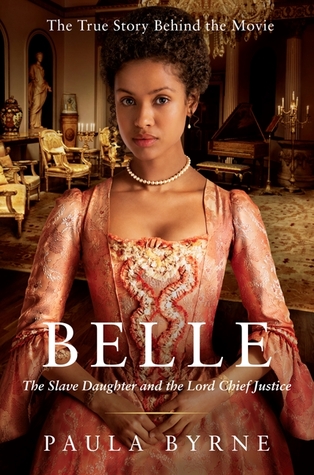
Paula Byrne’s Belle explores what we know of Dido Belle, the mixed-race great-niece of Lord Mansfield.

Slavery and Abolition

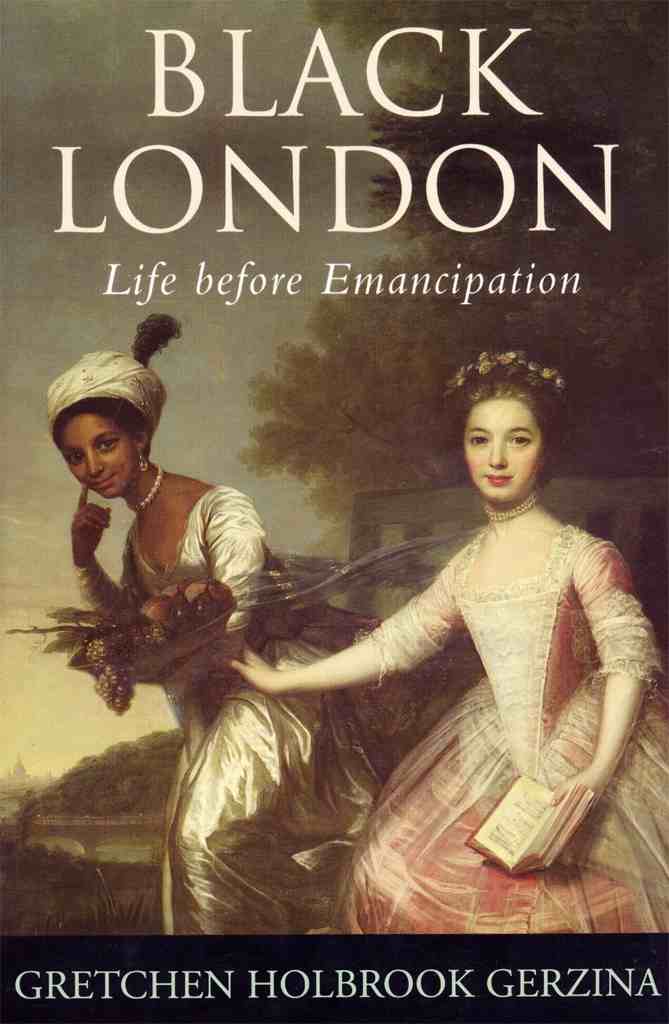
Gretchen Gerzina’s Black London explores the lives of black people in London through art, individual stories, and other lenses.

You can connect with Brenda S. Cox, the author of this article, at Faith, Science, Joy, and Jane Austen or on Facebook.

Read Full Post »

Happy Easter, gentle readers. Many of the customs followed in the early 19th century by Jane Austen and her family are still followed today in one fashion or another. For this blog post, I have gathered information already known to many, and some that might be new. The following quote sums this holiday up nicely:

Easter during the Regency was both a holy day and a holiday.” – Lesley-Ann McCleod

Pancake Races Before Lent:

The 40 days before Easter or Lent began on Wednesday with a church service. This day was preceded by Shrove Tuesday, on which one would confess one’s sins. The date was also the last day to eat all the foods that would be prohibited during abstinence. This meant emptying the larder of rich foods, such as milk, eggs, butter, fat, wheat flour, and spices—ingredients commonly found in pancakes. An alternate name in Britain for Shrove Tuesday was Pancake Tuesday! Pancakes were made for consumption or for public races:

At the sound of a pancake bell, often the bell from the local church, women ran a course carrying a frying pan with a pancake in it. They had to successfully flip the pancake at least three times before they reached the goal. Some communities held pancake parties, with people dressed up [as] the Protector of the Pancakes, irst Founder of the Fritters, Baron of Bacon-flitch, and the Earl of Egg-baskets.” –  Regina Scott, guest author on The Regency Blog of Lesley-Anne McLeod

Pancake races with female contestants are still held today. In addition, street football, or hurling, where teams of men (country men against city dwellers, for instance) hurled the ball against the opposing team until one team won, is also a time-honored Easter tradition.

Easter Sermons:

Easter Sunday, which commemorated Christ’s resurrection from the dead, was a solemn occasion and one of obligation for parishioners, such as the Austen family and the community of worshipers. In the book, Jane Austen and the Clergy, Irene Collins writes that clergymen in Jane Austen’s day were not expected to write original sermons every Sunday, except on a few occasions.

Henry Crawford, assessing Edmund Bertram’s commitments at Thornton Lacey, judged that ‘a sermon at Christmas and Easter ‘would be’ the sum total of the sacrifice.”

She also wrote that Mr. Collins produced only two sermons between his ordination at Easter and his visit to Longbourn in November of the same year.- p. 96. Jane Austen and the Clergy, Irene Collins, August 1, 2002.

cover of Religion and Philosophy of a stack of Bibles and the title of a sermon Thomas Lloyd preached in a parish church on Easter-Day, April 8th, 1787

Easter Music

I will always remember Sunday Easter service with my parents when singing this uplifting Methodist Church hymn, “Jesus Christ is Risen Today.” (14th C. song rewritten in 1739 by: Lyricist Charles Wesley, Composer Samuel Arnold, initially titled Hymn for Easter Day). This hymn was also popular during Jane Austen’s day. My emotions well up when I watch this YouTube video of the King’s College choir singing the hymn.

Easter in Pride and Prejudice

When Elizabeth Bennet visits Hunsford and Rosings, she becomes aware of Lady Catherine de Bourgh’s omission in inviting the Collins’ and their guests in advance for this most important holiday:

In this quiet way, the first fortnight of her visit soon passed away. Easter was approaching, and the week preceding it was to bring an addition to the family at Rosings, which in so small a circle must be important.”

Elizabeth understands that Lady Lady Catherine de Bourgh has no time for herself or Mr and Mrs Collins, but an invitation finally came:

Colonel Fitzwilliam’s manners were very much admired at the parsonage, and the ladies all felt that he must add considerably to the pleasure of their engagements at Rosings. It was some days, however, before they received any invitation thither, for while there were visitors in the house they could not be necessary; and it was not till Easter-day, almost a week after the gentlemen’s arrival, that they were honoured by such an attention, and then they were merely asked on leaving church to come there in the evening. For the last week they had seen very little of either Lady Catherine or her daughter. Colonel Fitzwilliam had called at the parsonage more than once during the time, but Mr. Darcy they had only seen at church.”

The ladies, we presume, arrived wearing their new Easter bonnets and gowns made especially for such an important holiday. One assumes that Easter must have presented a busy schedule for Mr Collins, the vicar of his parish. Elizabeth Hawksley, who has written an interesting article about the clergy in Jane Austen’s novels, describes Mr Collins during the days surrounding Easter. His schedule is far from busy:

So what did the vicar of a parish actually do? Elizabeth Bennet and Sir William and Maria Lucas visited the Collinses around Easter – today, the busiest time of the church year. Nevertheless, we hear of Mr Collins driving his father-in-law round the countryside every day during his visit, and of dinners at Rosings with Lady Catherine de Bourgh; but there is no mention of any church activities.” – Jane Austen and the Clergy: How the System Worked, Elizabeth Hawksley.

Tithing at Easter

Interestingly, people were punished for non-payment of tithes or attendance at Easter. In his book, The Parish Registers of England, Charles Cox (1843-1919) writes:

“…On conviction for divers of the less serious offences, such as non-payment of tithes or Easter dues, or for the non-observance of Sundays or Saints’ Days, offenders were admonished, and if obstinate excommunicated; but in such cases absolution and discharge could  usually be obtained on payment of a fine…”


The Monday After Easter—Merriment at Greenwich Park:

This image depicts Easter day for the masses in Greenwich Park in London. At the top of the hill is the Royal Observatory with astronomical equipment. According to a contemporary description, a sojourn to the park is well worth the visitors’ time! The Monday after Easter the park is filled with throngs of merry makers (ten to thirty thousand) from all walks of life and many ages. The hill is steep, with celebrants running down it in pairs or groups of males and females, sometimes tumbling head over heels, and most likely giggling.

Black and white engraving of Greenwich Park with crowds celebrating Easter

Greenwich Park with the Royal Observatory on Easter Monday, Modern London, Edward Pugh

Greenwich is crowded at these holidays.  In the public-houses is dancing from morning to evening.  Almost every private house of the lower and middle sort make tea and coffee; yet it is often difficult to find room even for a small company; and it is very usual for parties to take a cold repast and wine with them, and dine beneath the trees in the Park, in spots a little retired from the throng. “Mapping Modern London, Horwood’s Map, Greenwich Park

To view the incredible details of the park, click on an image, which will open to enlarged version.

Food:

Hot cross buns, ham, lamb in season, and potatoes were common dishes at Easter, as were colored eggs for an Easter egg hunt. These foods are still popular today. Kirstin Olsen writes about Pastor Woodforde, the author of Diary of a Country Parson,

Woodforde and his friends tended…to prefer the grass lamb, and it is in the spring that most of his references to eating lamb occur.” – Kirstin Olsen, Cooking with Jane Austen (pp. 66-67)

Grass lamb, or young lambs that still drink milk from their mothers were prized by many. Soon after they are born, the lambs start to eat hay, grass, or grain, but much of their food intake is still from their mothers’ rich milk. The lambs are slaughtered within 2-15 months of birth, weigh from 135 to 140 lbs, and are available only from April to September. Their taste is not as intense as an older lamb’s, but it is one that Pastor Woodforde prefered.

Jane Austen’s Easter

This 2011 article from the Jane Austen Centre, written by Laura Boyle, is worth reading in full. It is a comprehensive discussion about Jane Austen’s celebration of Easter, both as a solemn religious holiday and as a festive event. Click here to enter it.

All Things Georgian

I also recommend this website and its many fact-filled blog posts with well-researched, hard to find information. This link lead to an article entitled “An Early Easter Miscellany.”

_____________________

Have a happy Easter everyone. As with many of you, mine will be spent with the family. The sky is cloudless, the day is warm and perfect for the smaller fry to find Easter eggs.

Read Full Post »

« Newer Posts - Older Posts »