Feeds:
Posts
Comments

Archive for the ‘Jane Austen’s World’ Category

Ring in a boxInquiring readers, dear friend Tony Grant (London Calling) has written an article to help jump start my re-entry into blogging. I love this post, for I am a huge Kelly Clarkson fan, and I was happily astounded to learn that she was a Janeite. Who knew that the simple girl from Texas with the huge voice would make it so big in the music industry that one day she would outbid a host of collectors for Jane Austen’s cabochon blue stone ring? Since her winning bid, the ring has lived in limbo, as Tony’s tale will recount, but now it is safely in British hands again, thanks to a committed group of people.

Kelly’s other association with Jane Austen is peripheral. She sang a song for the hit movie, Love Actually, in which a number of actors who starred in Jane Austen films appeared: Colin Firth, Emma Thompson, Keira Knightley, Hugh Grant, and Alan Rickman. I have placed the YouTube video at the bottom of this post. Meanwhile, I hope you enjoy Tony’s tale.

It is possible that you might have heard about a certain ring that hit the headlines worldwide recently.

American singer Kelly Clarkson, a 31 year old singer from Fort Worth Texas, bought a small gold ring with a smooth turquoise stone set in it at Sotheby’s Auction for around £150, 000. The news hit the headlines because this ring had been the property of Jane Austen. British government officials, the Jane Austen Society and readers of Jane Austen across the known world were aghast.

Kelly Clarkson

A number of issues came to the fore. First, a ring, which is of British national importance, because of its provenance, was about to be taken out of Britain; secondly it was going to a pop star, who although she professed her love of Jane Austen, was really just buying it, because she could. A holding order was placed on the ring by the British Government preventing it leaving the country. A few months were given for a British buyer to raise the funds to purchase it back from Miss Clarkson.

Chawton Cottage houses the Jane Austen House Museum.

Chawton Cottage houses the Jane Austen House Museum.

Chawton Cottage , the home of Jane Austen for the last eight years of her life, came forward to raise the necessary money. An anonymous benefactor provided most of the funds required within a short space of time and petitions and activity,  amongst American, Australian and British Janeites secured the rest. Susannah Fullerton took the lead in Australia and Maggie Sullivan sent out a rallying call in America and Chawton House made clear their aim over here. Janeites from around the world contributed money on the site set up by Chawton Cottage and Kelly Clarkson graciously sold it to Chawton Cottage. The ring will now have associations to Jane Austen, as well as to Miss Clarkson. The whole of the Jane Austen community will feel that they have a part of it because of their contributions. It will truly become a ring owned and loved by all. It has now gained another dramatic layer of history and meaning.

The ring will be on display at Chawton Cottage alongside other pieces of Jewellery, the topaz crosses brought back from a voyage by the Austen’s younger brother, Charles and also a beaded bracelet, also owned by Jane, for all visitors to see.

The Arts Council’s reviewing committee secretary states,

The expert adviser had provided a written submission stating that the gold ring (width 17.5 mm; height 8 mm) set with a turquoise was probably made in the eighteenth century, possibly about 1760-80. In excellent condition, the ring sat in a later nineteenth-century case bearing the name of T. West, Goldsmith of Ludgate Street, London and was accompanied by papers documenting the history of the ring within the family of Jane Austen.”

The gold circle of the ring is 9 carat gold which is rather low in pure gold content and so denotes the ring as being an ordinary piece. The highest carat possible is 23 carat, which is almost 100% gold. It has been assessed because of its design and construction as being made between 1760 and 1780. The ends of the hoop of the ring curve round underneath the bezel. Taken with the thin hoop and simple oval bezel this suggest its date. Jane was born in 1775 so it is evident that the ring was not made for her originally. The provenance of the ring is based solely on letters and documents within the Austen family and only go back to Jane‘s ownership. After her death it went to Cassandra and then passed down through the family. Could it possibly have got to Jane in the same way? A relative dying and passing it on to Jane as a keepsake. It is something that Jane obviously wanted to keep. It’s simplicity and effectiveness would have appealed to her. On her finger it would have had a lustre under candlelight. It would have been something that other people would have noticed at any gathering such as a ball or family event such as Christmas.

Janes ring

Gold itself was not an easy commodity to come by between 1760 and 1780. The American war of Independence which waged between 1775 and 1783 made Gold a rare commodity. It was a vital constituent of the wealth of the nation. Britain had to pay for the War. Much gold came to Britain from Brazil in the 18th century, but because of the European war against France and the War against the colonies in North America getting gold here from South America was not an easy business. Transport ships could be captured or sunk. It pushed the price of gold up. Even 9 carat gold must have been expensive and hard to come by at the time. There were some gold mines in Britain  , at Dollgethlau in Wales, in the low border hills of Scotland and in Cornwall at the Treore mine near Wadebridge, the Carlson veins at Hopes Nose Mine and within the copper veins of Bampfylde, North Molton. The Romans first discovered gold in Wales so there is a long history of gold mining in Britain. It would be good to imagine that the gold in Jane’s ring came from one of the mines in Cornwall. She loved the West Country and had family holidays in Lyme, Sidmouth and Colyton.

There is a turquoise gem set in the ring. Turquoise is meant to be a bringer of good luck. It has been found in the tombs and on the artifacts of many Egyptian Pharaohs and important people. It can change colour under certain circumstances. Turquoise is found all over the world. It is associated with copper mining and indeed Cornwall, where copper has been mined it is also associated with turquoise. Because of the geopolitical state of the world in the 1770’s onward, Cornwall, like the gold in Jane’s ring, is the most likely source of the turquoise. It has also been suggested that the turquoise stone in Jane’s ring might be a special variant called Ondontolite. Ondontolite is also called bone or fossil turquoise. It is a gem formed by the infiltration of surrounding minerals into fossil bones. This would fit with the turquoise stone in Jane’s ring because, Dorset and the West Country have rich fossil deposits.

Jane’s ring is therefore connected to wars, national financial need, geology, the mining industry and mining communities and the lives of their inhabitants, which were being developed exponentially with the coming of the Industrial Revolution, social status, personal attractiveness, social occasions and mystical meaning. A designer designed it and a craftsman made it and a shopkeeper sold it. It is one symbol of economic and social endeavour within an historical context.

In the novels rings and jewellery have their importance and meaning. In Pride and Prejudice, Lydia describes how her carriage overtakes the curricle of William Goulding and she lowers the window and lets her ring be seen. Isabella Thorpe in Northanger Abbey looks forward to the day that friends and neighbours will envy her her, “exhibition of hoop rings on her fingers.” These two examples are of characters who show vanity and self-importance but in Mansfield Park, Fanny Price, who receives the present of a small cross from her brother William, is at pains to find just the right simple chain to wear it with and show off her brothers generosity. William cannot afford the chain to go with the cross and Edmund eventually comes to Fanny’s rescue with just the right sort of simple chain for her to wear. The jewellery in the novels  seem to portray elements of character. They show Jane Austen’s understanding of the use of jewellery. This adds to the importance of the turquoise ring that Chawton Cottage have managed to now acquire.

In the Arts Council assessment of the ring, in the part where they describe the provenance of the ring, they describe documentary evidence for it belonging to Jane and various members of her family through the generations.  The report sets out the ownership of the ring after Jane’s death. The other point to be made is the report in the news that the ring is, ” a never seen before ring owned by the novelist Jane Austen.”

The family for generations have kept the ring  to themselves. Jane is one of the most pored over, read about and speculated upon authors in history. The family appeared to want to keep something of her just to themselves, their own private bit of her.

Letter to the next recipient of the ring.

Letter to the next recipient of the ring.

One member of the family in each generation was given guardianship over the ring. So what was special about the keepers of the ring? After Jane’s death Cassandra owned it. She passed it on to her sister in law Eleanor Austen, the second wife of Henry Austen, “as soon as she knew I was engaged to your uncle.” Henry had been Jane’s favourite brother and it was he, whilst a banker living in London, who had arranged for her novels to be published. Eleanor passed it on to Caroline Mary Craven Austen, the daughter of Jane’s brother James. Caroline Austen passed it on to her niece Mary Austen Leigh who passed it on in turn to her niece Mary Dorothy Austen Leigh. Mary Dorothy Austen Leigh then passed it on to her sister Winifred Jenkyns in 1962. Apart from the obvious observation that the ring passed along the female line what else can we deduce? The ring was adapted for the use of somebody with a smaller finger than the original owner. A bar of gold, called a stretcher, has been fitted at a later date, probably by the company T West Goldsmiths of Ludgate Hill which is named on the inside of the box holding the ring. It seems that the ring was worn and not just kept as a memento. This might suggest things about the owner in each generation. A memorial ring, which this is, especially after Jane’s death and passed on through the family, commemorates Jane through generations. The wearer and owner could almost be seen as a surrogate Jane to the family in each generation. It is unlike a memento, such as a piece of furniture or a vase, which is set at a distance from people to be viewed. This ring has a different connection. It was worn on occasions. One wonders what occasions the Austen ancestor in each generation would wear it? When you wear an item belonging to somebody you take on aspects of that person. It’s not just the touching of the object which makes a connection with that person and the past but it is also the using it as they would have used it. They almost, in a way, become that person. A little like an actor wearing a costume,however in a case like this, wearing Jane’s ring would have been much more personal and evocative than merely playing a part.
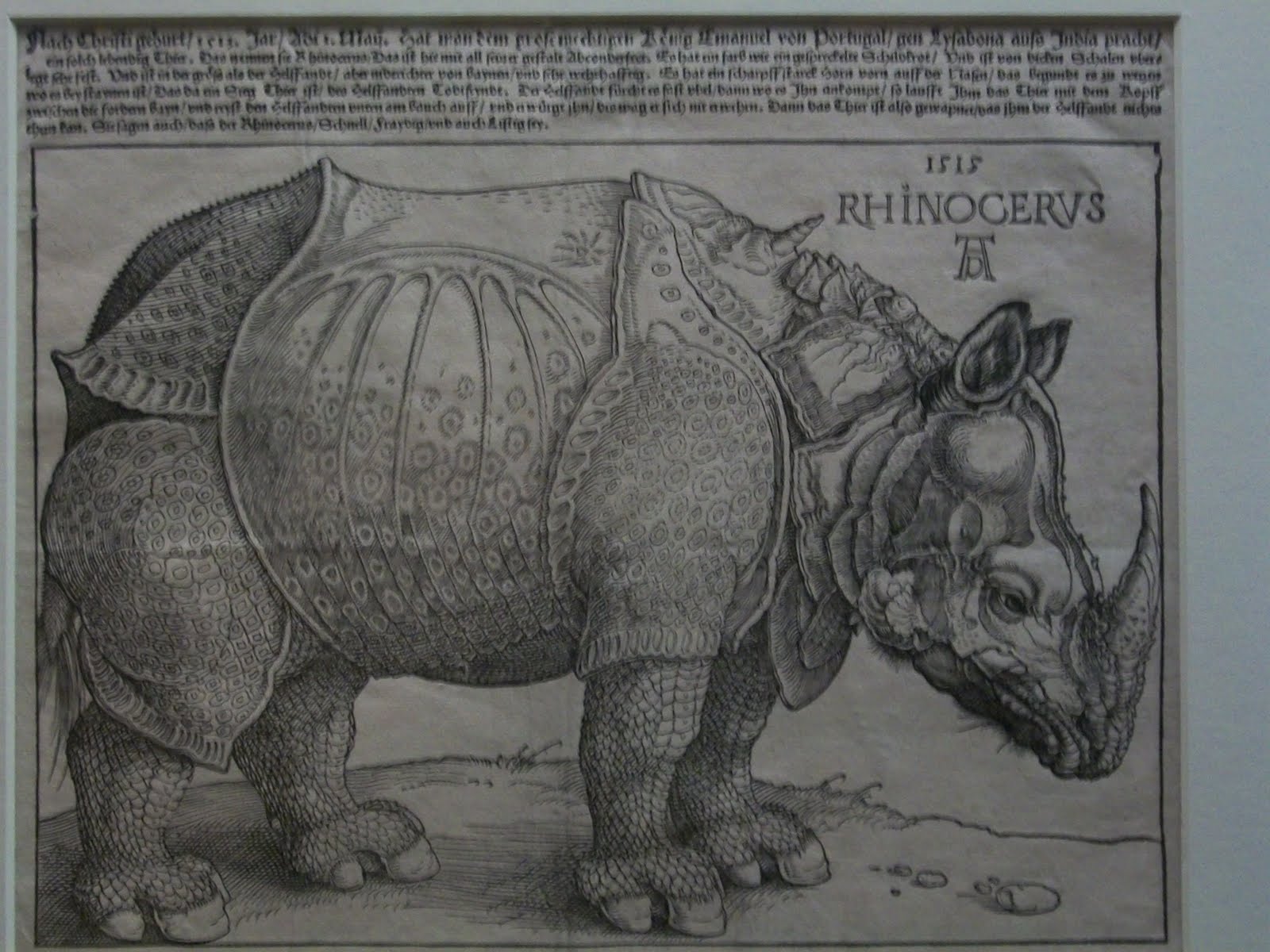
Durer's image of a rhino

Durer’s image of a rhino

Neil MacGregor, the director of The British Museum, wrote and published “A History of The World in 1000 Objects,” in 2010 and broadcast his readings of the book on BBC radio 4. In his description of the first of his 100 objects, the Mummy of Hornedjitef (circa 240BC), an object taken out of chronological order in MacGregors 100 objects, he uses it as an illustration of how knowledge develops. The interpretation of the mummy has changed as more research has been possible. The Mummy is a vivid example of the work of the academic. Neil MacGregor states that the work of an Archaeologist or Historian is to gather the evidence and make the best of the evidence they can. This changes over time as more evidence emerges but the archaeologist can only do his best with what he has. MacGregor gives Durers portrait of a rhinoceros, drawn in 1515, as an example. Durer had never seen a rhinoceros. He drew his portrait from first hand witness accounts. He did his best with what evidence he had. The drawing is completely wrong. I have used the evidence I have got for Jane’s ring and gathered other evidence to answer questions as they occurred, from various sources but I, like Durer, don’t really know.
Clarkson, had almost the last word. This was her reaction to Chawton Cottage buying the ring from her,

“The ring is a beautiful national treasure and I am happy to know that so many Jane Austen fans will get to see it at Jane Austen’s House Museum.”

Chawton actually had the last word. They hoped for a long and fruitful relationship with Kelly and hoped she would visit the ring at the cottage.

Kelly Clarkson wears a facsimile of Jane Austen's ring at a concert.

Kelly Clarkson wears a facsimile of Jane Austen’s ring at a concert. Image @Mirror News

Everybody appears to be friends!!!

Here’s Kelly’s song in Love Actually, The Trouble With Love Is, with scenes from the film
Mirror News: Kelly Clarkson Jane Austen ring row

Read Full Post »

Gentle Readers,

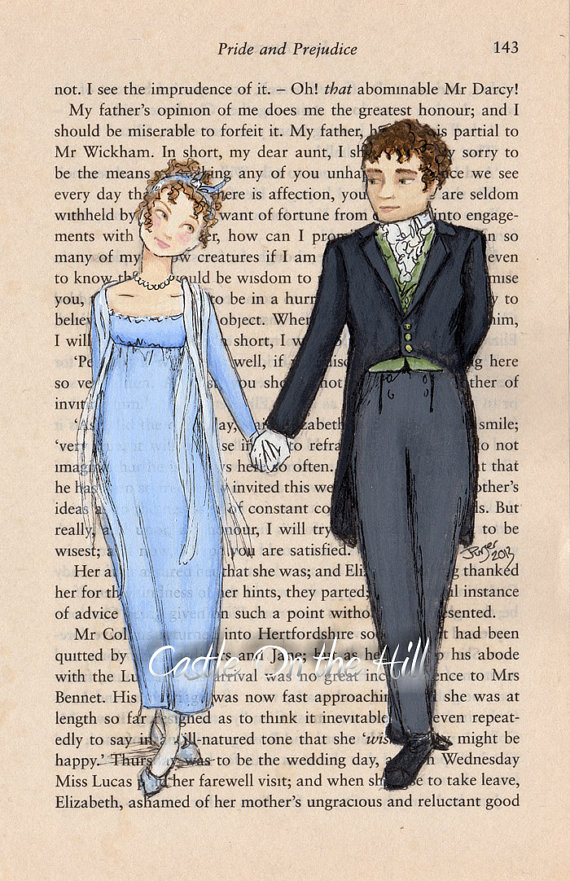
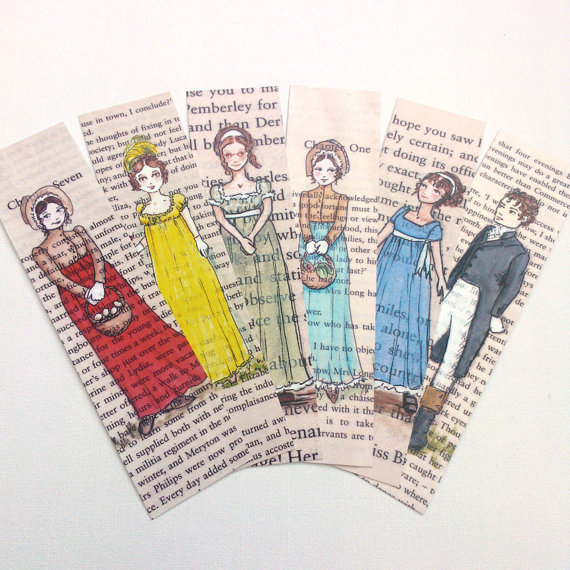
What better way to resume my blog than with Jessica Purser’s lovely Jane Austen post cards and bookmarks? I apologize for my unexcused silence. Life simply caught up with me, and due to a schedule that overwhelmed me because of work and family obligations, I had to cut back on my blog, and Facebook and Twitter comments. I did keep up with my Pinterest boards, for I found that cataloging images was as relaxing as playing solitaire. Whenever I found 10 spare minutes here and there (while waiting, watching the news or a television show, or during a solitary meal), I would pin. I want to thank those who persisted in contacting me (and who I needlessly worried) and who coached me to return to my blogging duties a little earlier than I had planned. Jessica Purser sent these lovely cards and notes for me to review in July. They certainly deserved my immediate attention and not such a long wait.

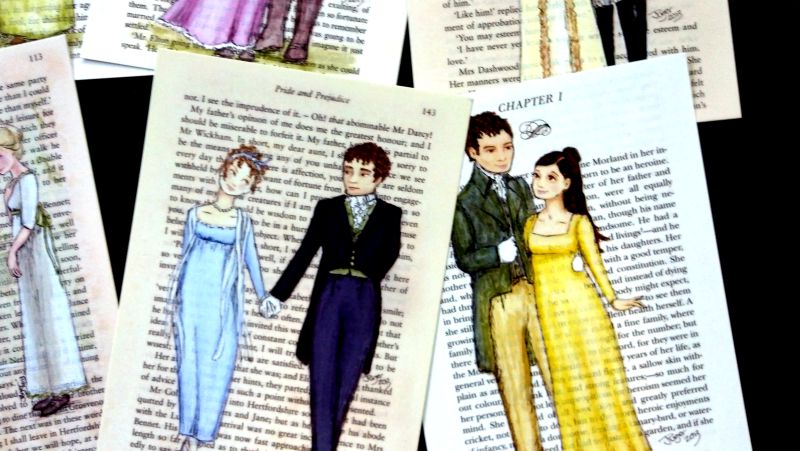
JPurser_PrideandPrejudice.jpg

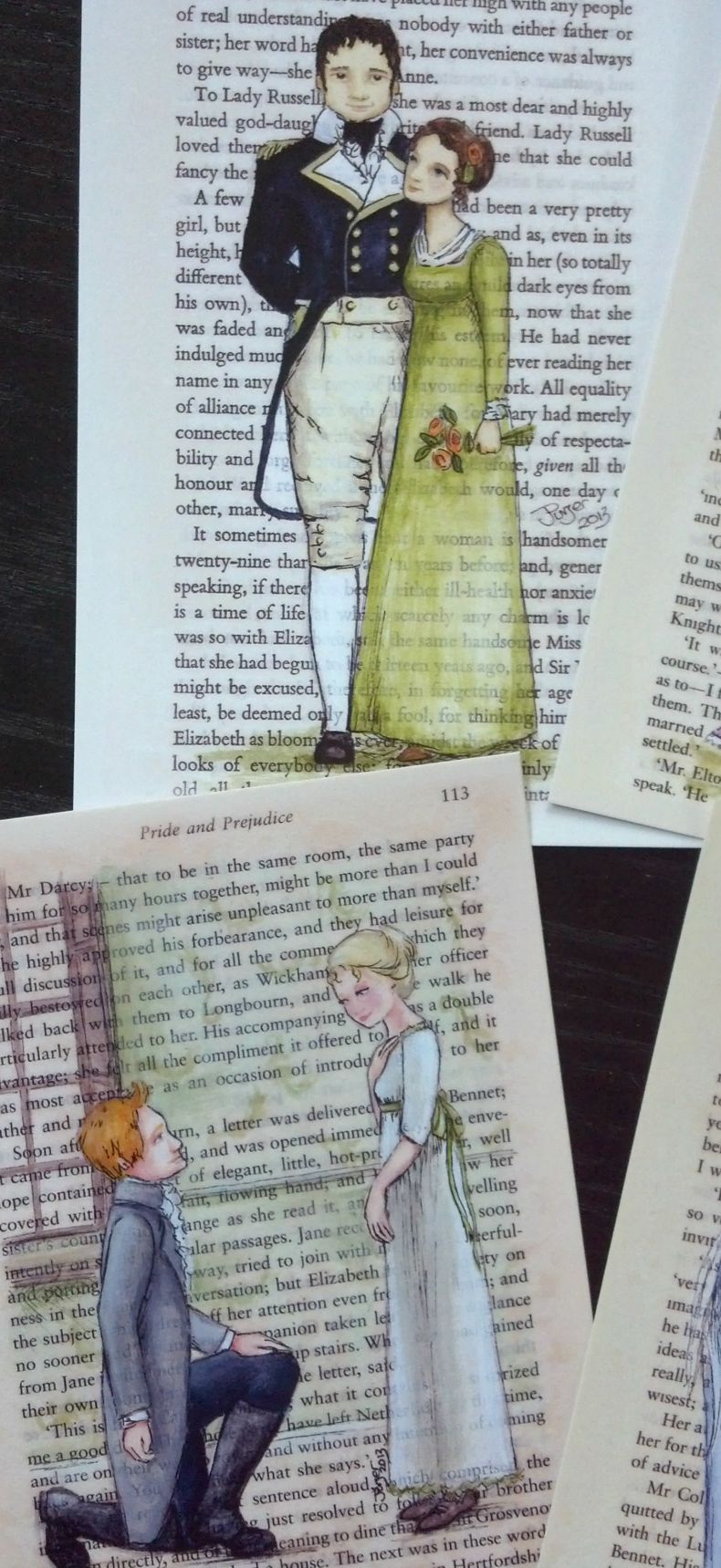
I placed a number of the images on my table. Sorry about the quality of the images. I have interspersed them with images from Jessica Purser’s Etsy site.

I am sure that many of you have already viewed samples of Jess’s images on Facebook, Twitter, Tumblr, and Twitter, but I couldn’t help sharing these cute interpretations of Jane Austen’s characters anyway.

Elizabeth and Mr. Darcy

Elizabeth and Mr. Darcy

Ms. Purser sent me quite a few samples, which I photographed (rather clumsily, I must admit). I am also featuring a number of images from her Etsy site.

persuasion_pride_purser.jpg

Anne and Captain Wentworth in Persuasion, and Bingley proposing to Jane in Pride and Prejudice

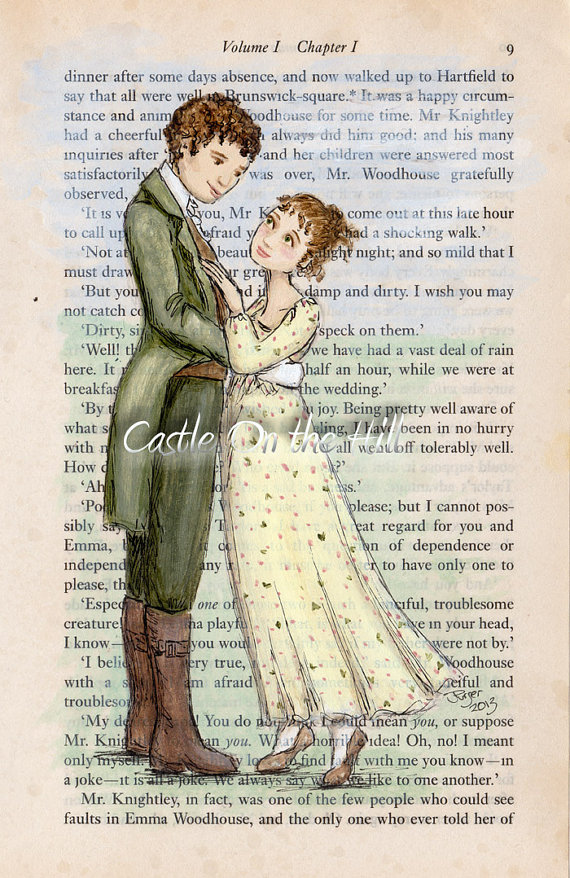
I can’t think of a better way to restart my blog than to share Jess’s wonderful creations with you. They are painted on pages of Jane Austen’s novels, which provide context.

Emma and Mr. Knightley

Emma and Mr. Knightley

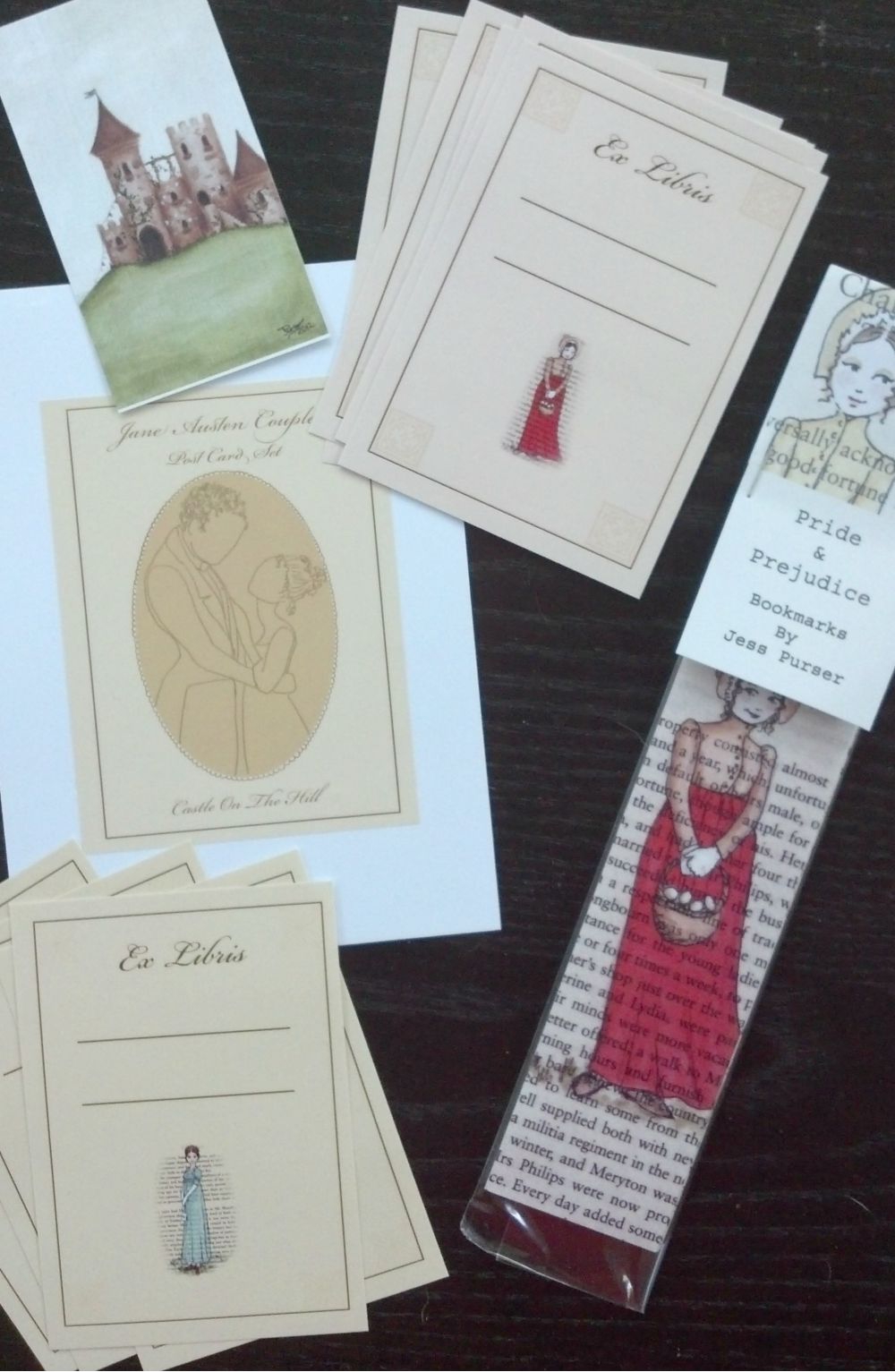
The postcards are printed on hardy card stock and the larger images are suitable for framing. I have been using the bookplates and bookmarks, and sharing them with friends.

Bookmarks and book plates. How lovely.

Bookmarks and book plates. How lovely.

Thank you, Jessica, for this lovely art work.

Jess's book marks

Jess’s book marks

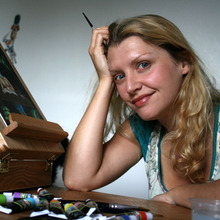
Jessica PurserRead more about Jessica in this Interview with Jessica Purser on Rockalily Cuts

Order her art work at: Castle on the Hill, Jessica’s Etsy Shop


Read Full Post »

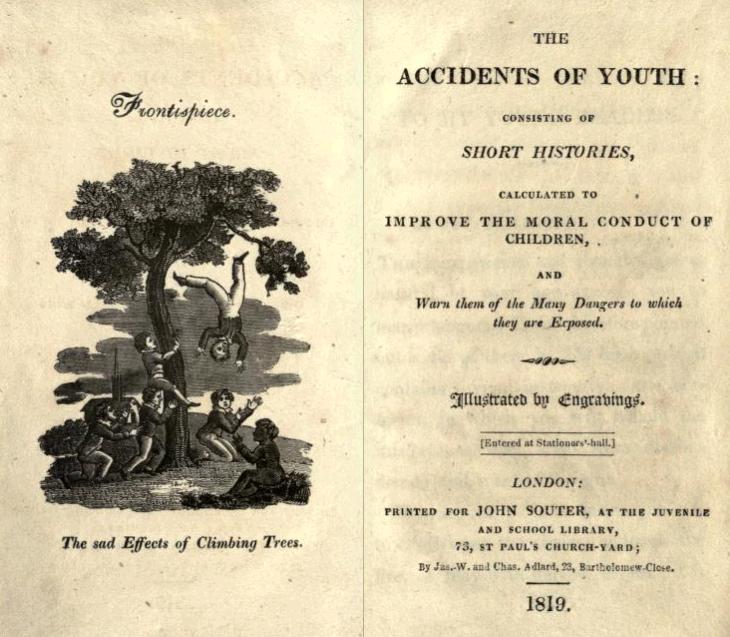
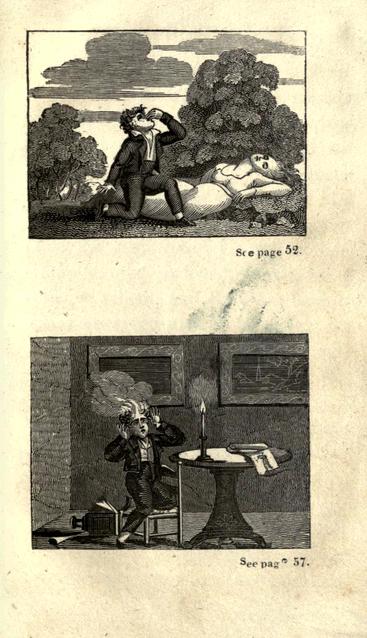
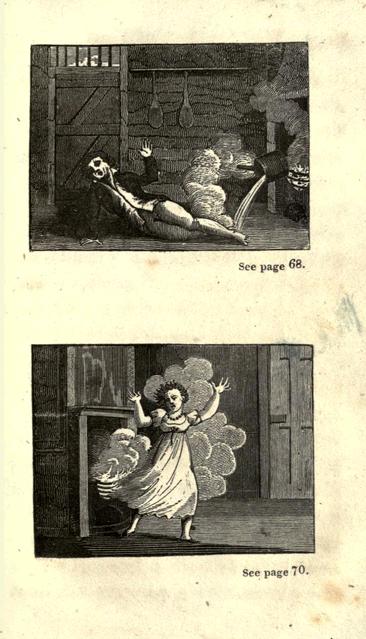
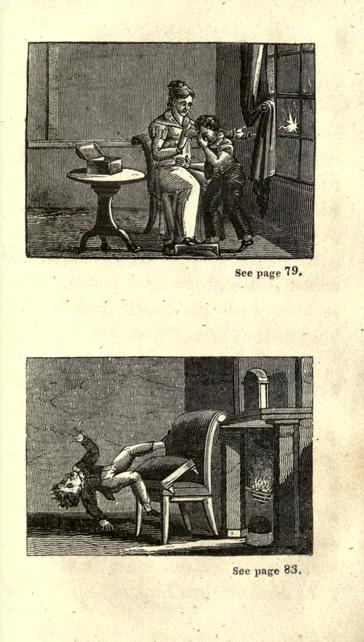
The History of Goody Little Two Shoes was one of the moral lesson books that Jane Austen owned as a child. These seem to have been popular in the Georgian era. Another book with moral lessons came out two years after her death. Entitled The Accidents of Youth, its tales were meant to warn children of risky behaviors and improve their moral conduct. The tales would have been scary enough to make me think twice as a child. I love the Internet Archive, which allows you to read the books virtually intact, with illustrations and original font type. The only thing you can’t do is hold the book or feel the thickness of the pages.

Fronticepiece of The Accidents of Youth, 1819

Fronticepiece of The Accidents of Youth, 1819

accidents of youth2

accidents of youth3

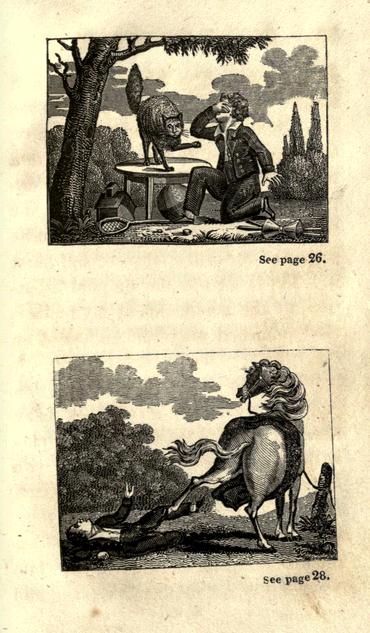
Interestingly, these accidents beset children today, especially those left to their own devices in the countryside.

accidents of youth4

One young man aims at a bird with a slingshot and kills his mother, a horrific tale. Another’s hair is set on fire by a candle.

accidents of youth5

Kitchen accidents were quite common. After death from childbirth, kitchen fires killed more women than other accidents combined. In these stories children are warned of the dangers of hot kettles and catching one’s clothes on fire from coming too close to a fireplace. In the first image, a cast iron pot, hanging directly over the fire on an iron hook tips over, burning the child. Billowing skirts caught fire in fireplaces, as the second image attests.

accidents of youth6The final image in this post shows the danger of a broken glass window and a young boy falling from furniture that he had rearranged at play. Another, earlier book entitled The Blossoms of Morality and published in 1806, concentrates on the instruction of young ladies and gentlemen”. The stories include “Juvenile tyranny conquered” and “The melancholy effects of pride”.  One can imagine that, after reading Fordyce’s Sermons to his young children, Mr. Collins would have picked up these books to read to his children.

I wonder how long the concentration of today’s youth would have lasted when listening to these morality tales. One nanosecond? I think not.

Read Full Post »

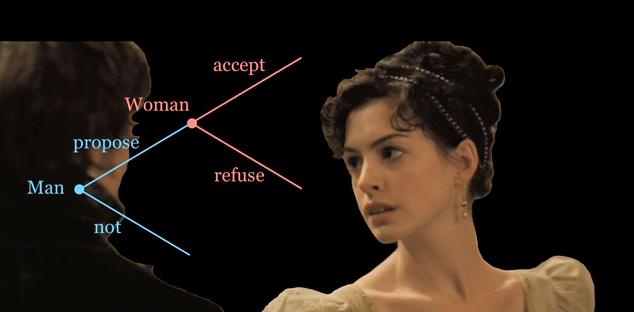
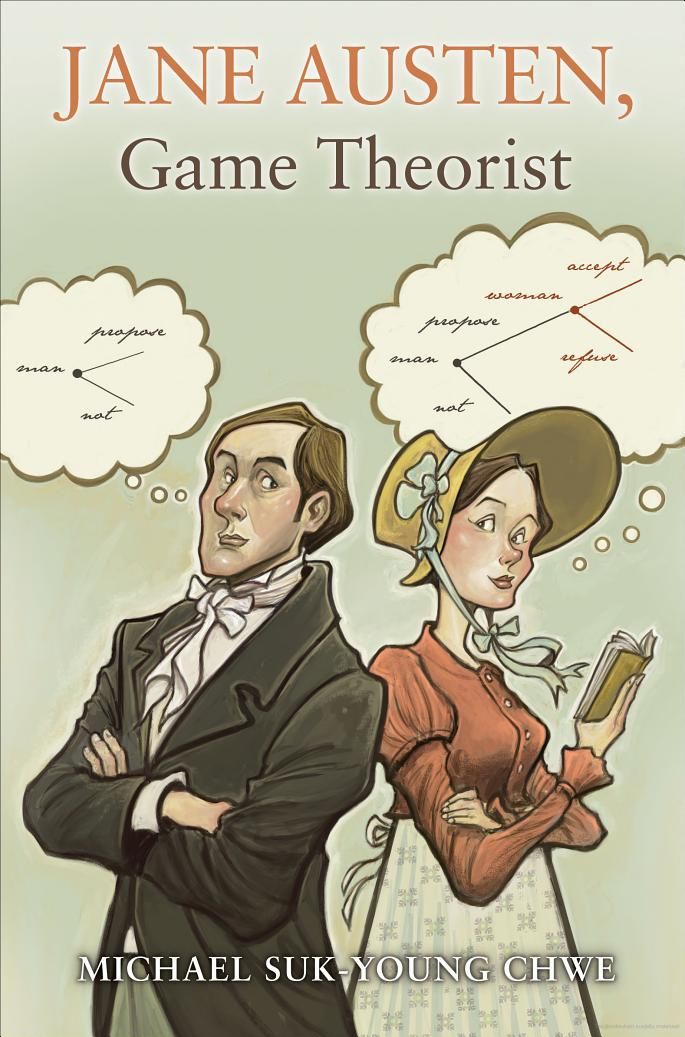
Michael Chwe is an associate professor of political science at UCLA whose research centers on game theory and “its applications to social movements and macroeconomics and violence. He has written a book entitled Jane Austen: Game Theorist, which asserts that Austen is one of our best social theorists.

game theory austen

Steve Levitt of the University of Chicago, Economics Department uses the following definition of game theory:  “The study of the strategic interactions between a small number of adversaries, usually two or three competitors”. This application is usually applied to sports and gambling.

In his introduction to the podcast between Levitt and Chew, Stephen J. Dubner, co-author of the pop-economics book Freakonomics, writes that Levitt loves Clueless, a movie based on Emma, and has watched it repeatedly. The film is about a young woman who constantly schemes to set up others romantically and continually meddles in their lives. Levitt sees that Jane Austen does this intentionally and uses strategic thinking explicitly in her novels.
game theorist jane austen

In the podcast Levitt interviews Michael Chwe about his interesting take on Jane Austen:

[T]here are lots of little parables, or little asides, in the novels which don’t have anything really much to do with the plot or anything. You could just take them out and no one would care, but they do seem to be little explicit discussions of aspects of choice and aspects of strategic thinking. So, for example, in Pride And Prejudice, the very first manipulation is kind of what gets the whole novel started. The Bingleys come into town and so the Bennet family has five unmarried daughters, and that’s kind of a huge problem. So Mrs. Bennet is super-focused on getting her daughters married and for obvious reasons. It’s not like they can get jobs or anything. If that is the main way, you could become either a governess or you could get married. That’s basically it. So the very first manipulation is Mr. Bingley shows up with his sister and they rent out Netherfield which is this estate nearby. And so Mr. Bingley’s sister invites Jane to come for dinner. And the first manipulation is Mrs. Bennet says, “Well you’ve got to go on horseback.” … The daughters say, “Why horseback? Shouldn’t she take the carriage?” And Mrs. Bennet says, “Well, it’s going to rain and if she goes on horseback it is very likely that they will invite her to stay the night, and hence she’ll get to spend more time.” [I]t seems kind of silly but you have to play for keeps. This is a big deal. If you know, if somebody marriageable is nearby and you have a chance to spend 20 more minutes with that person, you’ve got to go for it. … And so in Pride And Prejudice, Mrs. Bennet is not a very sympathetic character, and she seems to be very foolish, but if you look at what she accomplishes, it is pretty good. Jane marries and she incentivizes Lydia, who runs off with Wickham without being married, which is a scandal. But maybe she realizes that by creating this crisis situation the members in her family will solve he problem for her.

Here’s another interesting observation that Chwe makes: in Jane Austen’s novels, high status people have difficulty understanding that low status people are capable of strategic thinking.

Click here to see a short YouTube video on the topic.

The podcast from Freakonomics lasts another 17 minutes after the discussion quoted in the text above. Click here to enjoy the discussion!

game theory austen

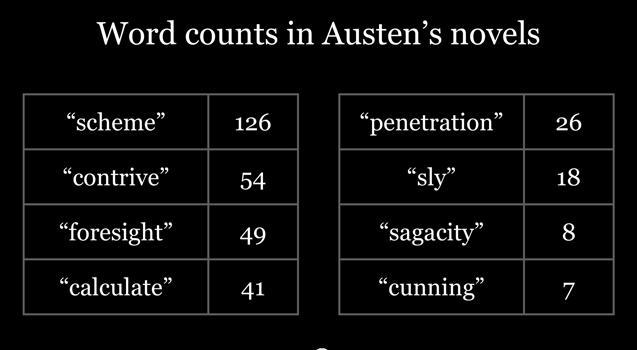
Analysis of the strategic words Jane Austen uses in her novels.

My thanks to Christine Stewart for sending the link to the podcast!

Read Full Post »

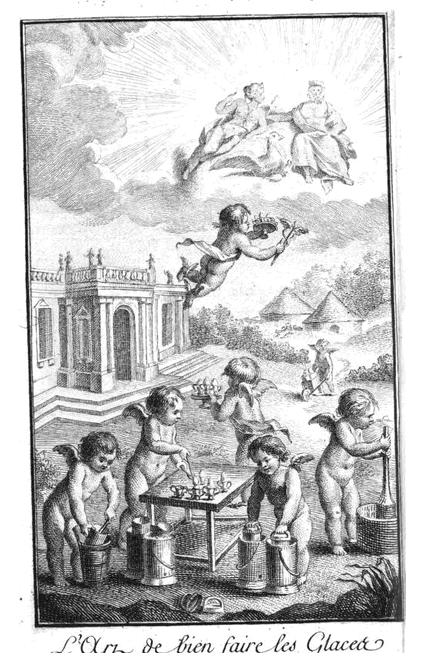
This frontispiece from L’Art de bien faire les glaces d’office,  a book by M. Emy, an 18th century French confectioner, about whom very little is known, depicts how ices and ice cream were made at the time.

M. Emy Fronticepiece2

Click on image for larger view.

Buckets filled with ice and salt held covered metal freezing pots that contained the ice cream mixtures. As the mixture froze, the pots were taken out occasionally to be shaken. The ice cream was scraped from the sides of the pots and stirred. When the mixture was ready, it was placed in decorative molds and served almost immediately. You can see the all the steps of ice cream making in the above image, with ice being delivered from ice houses in the background, and cherubs tending to the freezing mixture, while another hastens to the main house to serve the ices before they melt.

Confectioners tools

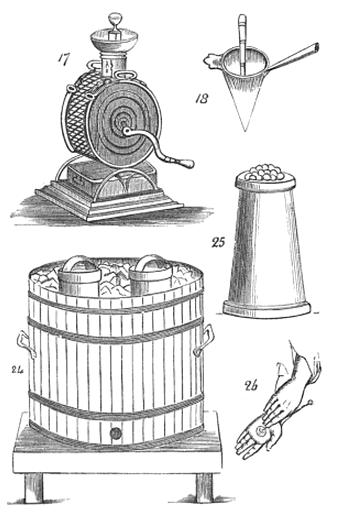
Confectioners tools from Gunter’s modern confectioner by William Jeanes. Figure 18 represents a copper funnel. Figure 24 is an oval tub surrounded with ice and salt and containing tow freezing pewter pots. At the bottom is a plug to let out water. Figure 25 represents a Bomba ice mould, which has the impression of fruit and holds from four to six pints each. Figure 26 shows how the hands are positioned whilst modelling flowers.

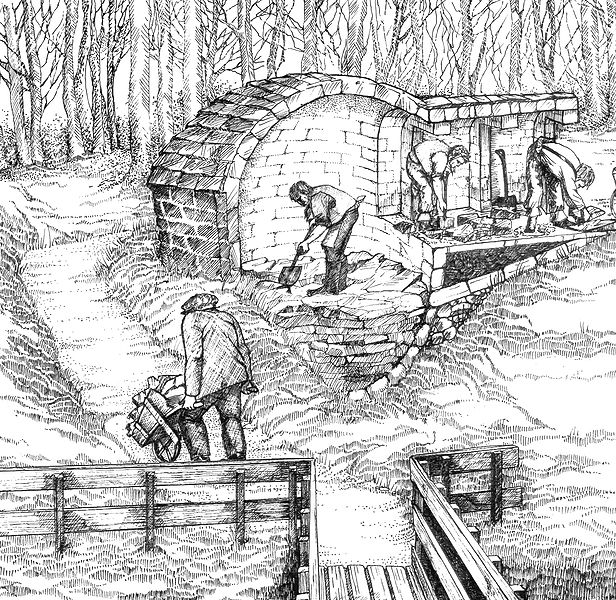
The process was expensive, for hauling and storing great blocks of ice was a laborious process that began in winter. The ice was stored in ice houses that were dug deep into the ground to keep the blocks from melting even in summer.

The Eglinton Ice House being filled with ice. Eglinton Castle, Kilwinning, Scotland. Image @ Wikipedia

The Eglinton Ice House being filled with ice. Eglinton Castle, Kilwinning, Scotland. Image @ Wikipedia

Only the rich were able to afford this luxury food to any extent until the mid-19th century, when Carlo Gatti began importing  ice in large quantities to London from Norway.

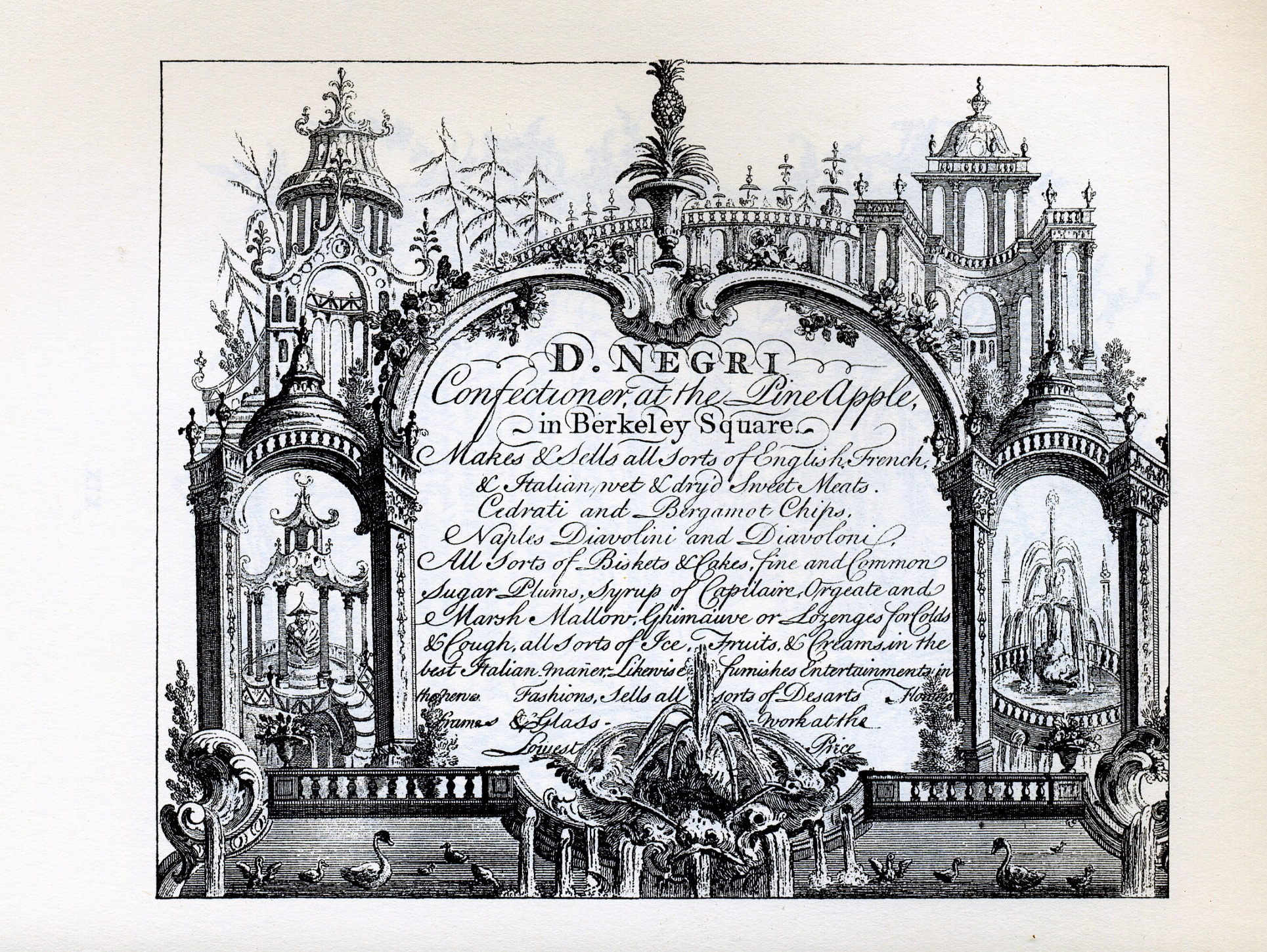
domenico-negri915-correction

Negri’s trade card of the Pot and Pineapple with his description of his shop’s offerings.

The first references to making ice cream harken back to ancient Rome and China. By the mid 18th century, French, Italian, and British chefs had published cookbooks with recipes for ices and ice creams. Specialty confectioner’s shops that offered ices and ice cream began to pop up in London: the most famous of these became to be known as Gunter’s Tea Shop, which survived in one form or another until quite recently.

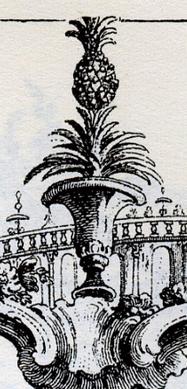
pot and pineapple detail negri

Detail of the pineapple in Negri’s trade card

In 1757 an Italian pastry cook named Domenico Negri opened a confectionery shop at 7-8 Berkeley Square under the sign of “The Pot and Pineapple”. At that time, the pineapple was a symbol of luxury and used extensively as a logo for confectioners. Negri’s impressive trade card not only featured a pineapple, but it advertised that he was in the business of making English, French, and Italian wet and dry sweetmeats. The confectioner’s art required as much precision and craft as a sculptor or silversmith. Equipment for refining sugar resembled those of a foundry, including specialized pans for melting, devices that calibrated heating and cooling, and a variety of molds to create shapes for chilled custards and ice cream, frozen mousses, jellied fruit, and candies and caramels. Negri’s shop sold

Cedrati and Bergamot Chips, Naples … Syrup of Capilaire, orgeate and Marsh mallow … All sorts of Ice, Fruits and Creams in the best Italian manner’. It also sold diavolini, or little icing-sugar drops scented with violet, barberry, peppermint, chocolate and neroli made from the blossom of bitter orange. For those who could not stretch to the luxury of shop-bought produce but who could afford a book of recipes, a long struggle with the complexities of sugar science ensued.” – Taste, Kate Culquohon

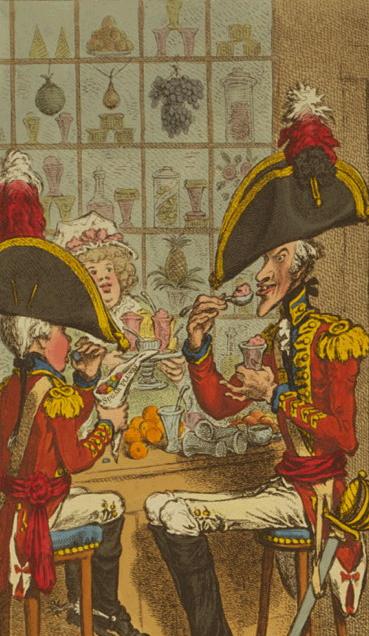
Detail of a James Gillray cartoon of soldiers eating  in a confectioner's shops, 1797. Image @Library of Congress

No Regency image of The Pot and Pineapple or Gunter’s exists. This is a detail of a James Gillray cartoon of soldiers eating in a confectioner’s shops, 1797. Image @Library of Congress

As the chefs of the era attest in their recipes, the taste in ice cream seemed to change with each generation. M. Emy made a glace de creme aux fromages that was flavored with grated parmesan and Gruyere cheeses. Joseph Gillier made an artichoke ice cream and a fromage de parmesan with grated Parmesan, coriander, cinnamon, and cloves frozen in a mold shaped like a wedge of parmesan cheese.

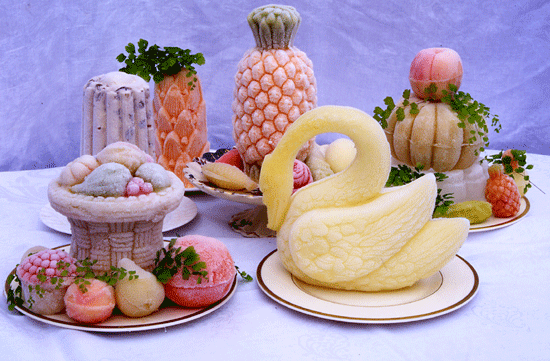
Ivan Day image of ice groups. One can see the recreation of the incredible detail that confectioners were able to create for their wealthy clients.

Ivan Day image of ice groups. One can see his recreation of the incredible detail that confectioners were able to create for their wealthy clients. Ivan Day, Ices and Frozen Desserts

Flower flavors were also common – violets, orange flowers, jasmine roses, and elder flowers – were used in ices. The vanilla bean, although appreciated for its agreeable flavor, did not rise in popularity until Victorian times. Negri must have done a booming business selling syrups, candied fruits, cakes, biscuits, ices, delicate sugar spun fantasies, and elaborate table decorations that showcased his deserts, for his shop survived many decades.

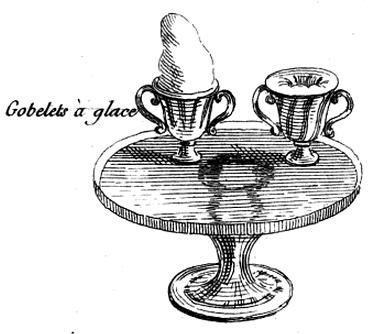
Illustration of ice cream goblets from Emy's cookbook

Illustration of ice cream goblets from Emy’s cookbook

Twenty  years after starting his Berkeley Square establishment (1777),  Negri took in a business partner named James Gunter. The Gunter family, which had both Catholic and Protestant members, had lived in Abergaveny in Wales for generations. (Read a fascinating history about the family at this site, Last Welsh Martyr.)

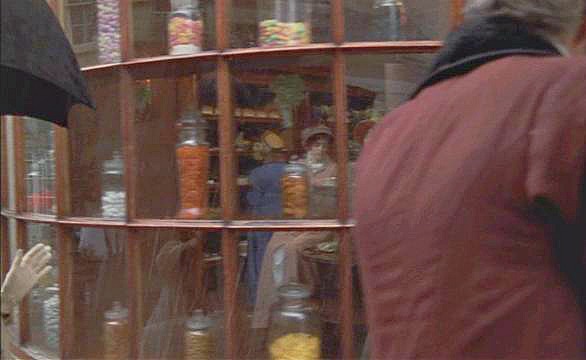
Exterior of a confectioner's shop in Persuasion, 1995.

Exterior of a confectioner’s shop in Persuasion, 1995.

The shop employed famous apprentices like Frederic Nutt, William Jarrin, and William Jeanes, who would go on to write their own cookbooks. All proudly noted their association with the shop. Interestingly, William Gunter, who was James’s son, wrote the most frivolous cookbook, Gunter’s Confectioner’s Oracle (published in 1830), in which he gossiped, name-dropped, and included some illogical details.

William Gunter in 1830

William Gunter in 1830

One section of the book was supposed to be a dictionary of raw materials in use by confectioners. It started with A for apple, and skipped B because it ‘is to us an empty letter.’ C was a fourteen-page treatise on coffee, in French … Gunter did not name its source…The dictionary skipped D and E. The letter F was for flour. Then Gunter wrote, ‘I now skip a number of useless letters until I arrive at P.” – ‘Of Sugars and Snow: A history of ice-cream making’, Jeri Quinzio, University of California Press, 2009, p. 65.

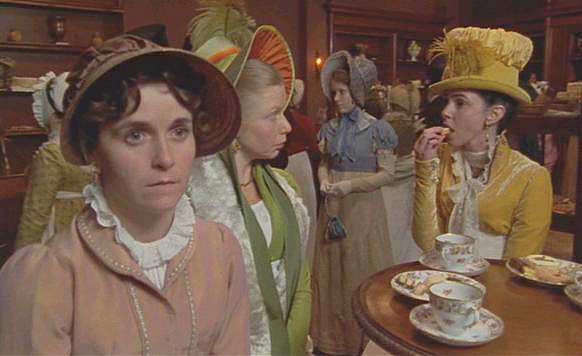
Tea Room in Bath, as depicted in Persuasion 1995

Tea Room in Bath, as depicted in Persuasion 1995

With two men at the helm, The Pot and Pineapple flourished and by 1799 Gunter had become its sole proprietor, changing the name to Gunter’s Tea Shop.  (I tried to find Negri’s birth and death dates, and can only surmise that he must have retired or died when Gunter took over.)

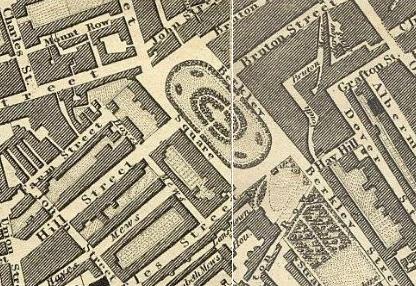
Berkeley Square, Greenwood's Map

Berkeley Square, Greenwood’s Map

Berkeley Square was uniquely situated to appeal to the upper crust.  Many notable people lived there – Beau Brummell at #42 in 1792;  Lord Clive the founder of the British Empire in India, lived at #45 until he killed himself in 1774; and Horace Walpole, whose letters give the record of fashionable society of his day, lived at #11 until he died in 1797. (Nooks and Corners of Old England.) The square was described as a

frontier land between West-end trade and West-end nobility. The east side is half shops, on the northern there is an hotel. Confectioners and stationers here confront peers and baronets.” – Every Saturday: A Journal of Choice Reading, Ticknor and Fields, 1867.

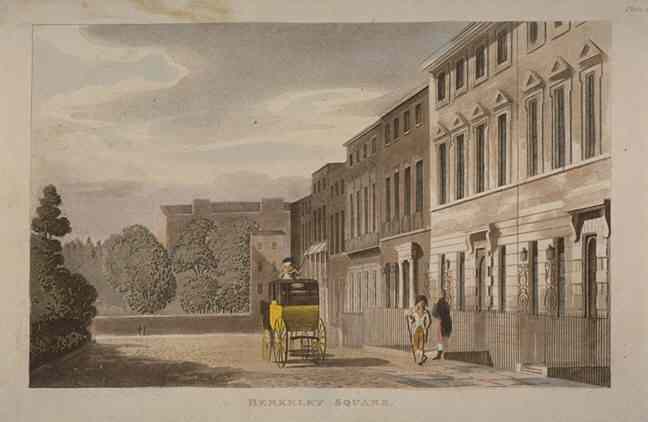
Berkeley Square in 1813

Berkeley Square in 1813

By the early 19th century, Gunter’s ices had become so fashionable that the Beau Monde, many of whom already resided in tony Mayfair, made it a custom to stop by the shop for a cool ice during carriage rides.

A custom grew up that the ices were eaten, not in the shop, but in the Square itself; ladies would remain in their carriages under the trees, their escorts leaning against the railings near them, while the waiters dodged across the road with their orders. For many years, when it was considered not done for a lady to be seen alone with a gentleman at a place of refreshment in the afternoon, it was perfectly respectable for them to be seen at Gunter’s Tea Shop.- Encyclopedia of London

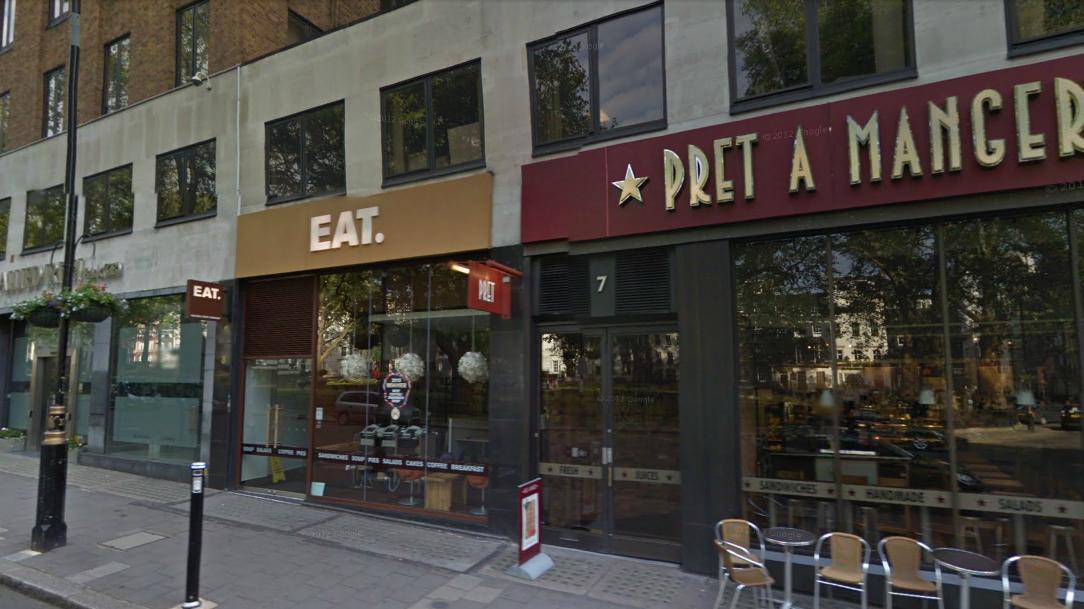
View from the shop at #7 to Berkeley Square. Note that the plane trees are among the oldest in central London, planted in 1789 by

View from the shop today at #7 to the green space of Berkeley Square. The plane trees are among the oldest in central London, planted in 1789 by Edward Bouverie. One can imagine the carriages parked in this area, with waiters scurrying back and forth. (Few of the original buildings still stand today.)

It seemed that a rendezvous at Gunter’s in an open carriage would not harm a gently bred lady’s reputation! One can also imagine waiters running at a full clip across the street on hot days when ices began to melt as soon as they were released from their molds!

7 berkeley square today

How #7 Berkeley Square looks today

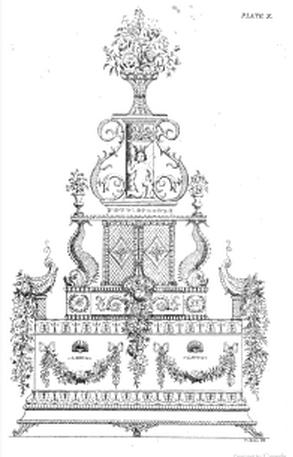
Gunter’s was also known for its catering business and beautifully decorated cakes. In 1811, the Duchess of Bedford’s and Mrs. Calvert’s ball suppers featured the shop’s confectionery, a tradition followed by many a society lady, I am sure.

plate X Gunters

Illustration of an elaborate Gunter’s cake

James Gunter’s success allowed him to purchase land in Earl’s Court, which was largely farmland in the 18th century.

Normand House, built in Earl's Court in the 17th century, is now demolished.

Normand House, built in Earl’s Court in the 17th century, is now demolished. Image @MyEarlsCourt.com

Gunter bought the tracts of land so he could run a market gardening business. The produce  – fruits, vegetables and flowers – was taken daily by horse-drawn wagons to Covent Garden to be sold. Gunter also

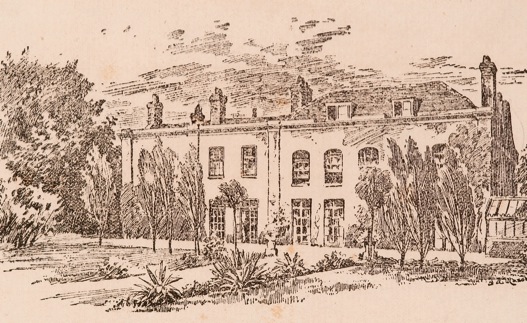
bought Earls Court Lodge (near the present Barkston Gardens) which was to be the Gunters’ family home for the next 60 years. This was one of the few substantial houses in the area. (The aristocratic neighbours at nearby Earls Court House, who weren’t keen on having a cake shop owner next door, called it “Currant-Jelly Hall”).” – The Gunter Estate

Gunter died in 1819 and his son Robert (1783-1852), who studied confectionery in Paris, took over the business. Robert hired his cousin John as a partner in 1837, ensuring that the business would stay in the family for several generations. Gunter’sTea Shop moved to Curzon Street when the east side of Berkeley Square was rebuilt in 1936-37. The shop closed in its new location in 1956, although the catering business continued for another 20 years in Bryanston Square. More on the topic:

Please Note: None of the advertisements that sit below this post are mine. They are from WordPress. I make no money from this blog.

Read Full Post »

« Newer Posts - Older Posts »