Feeds:
Posts
Comments

Archive for the ‘Regency Life’ Category

Over a year ago I read a fabulous blog post on the Regency Redingote entitled  Boy to Man: The Breeching Ceremony. The article is thorough and I was quite satisfied with its information until I ran into this quote, written by Jane Austen in 1801 to her sister Cassandra:

Mary has likewise a message: she will be much obliged to you if you can bring her the pattern of the jacket and trousers, or whatever it is that Elizabeth’s boys wear when they are first put into breeches; so if you could bring her an old suit itself, she would be very glad, but that I suppose is hardly done.”

This short passage told me much more about the topic and I decided to pursue it further.

Portrait of William Ellis Gosling, 1800 , Sir William Beechey, R.A. Image @Wikipedia

Portrait of William Ellis Gosling, 1800 , Sir William Beechey, R.A. Image @Wikimedia Commons

During the 18th century boys and girls were dressed alike in baby clothes during their infancy and in petticoats as toddlers. In Beechey’s image, our modern eyes would not identify the infant as a boy unless he was labeled as such.

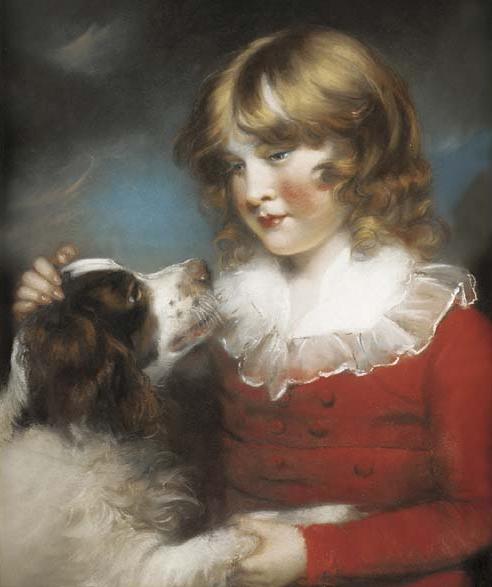
John Russel, Boy with spaniel. Image @ Christie's.

John Russel, Boy with spaniel. Image @ Christie’s.

At some point, the boys** would be placed in skeleton suits or a form of pantaloons and a frilly tunic. Their hair was still worn long and they still lived in the nursery, if the household was wealthy enough, or were overseen by women – their mothers, older sisters, grandmothers, aunts, nursemaids, etc.

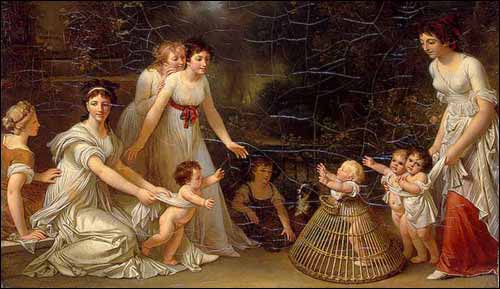
Fathers rarely stepped inside the nursery, the province of women.

Fathers rarely stepped inside the nursery, the province of women. In this idealized scene, the infants are guided on leading strings and a special “cage” that enabled toddlers to learn to walk. Image, source unknown. (Does anyone know the provenance?)

Between the age of 4-6, they would have their hair shorn and graduate to wearing trousers. This important event was marked by a breeching ceremony, a significant milestone in a young boy’s life. I can liken it to my first communion at the age of six. It was an event so important and memorable that I can still vividly recall my pretty white dress and veil, and the details of receiving my first communion wafer and celebrating the occasion with close family and friends. I felt different after that day, and in that way can relate to the pride that 18th and 19th century boys must have felt as they changed into the clothes that marked their first step to manhood.

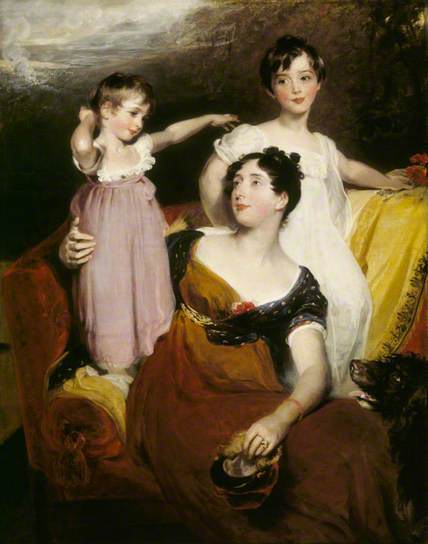
The modern eye would regard these two children as girls. Lydia Elizabeth Hoare (1786–1856), Lady Acland, with Her Two Sons, Thomas (1809–1898), Later 11th Bt, and Arthur (1811–1857) by Thomas Lawrence   Date painted: 1814–1815. Image @National Trust Collection

The modern eye would regard these two children as girls. Lydia Elizabeth Hoare (1786–1856), Lady Acland, with Her Two Sons, Thomas (1809–1898), Later 11th Bt, and Arthur (1811–1857)
by Thomas Lawrence
Date painted: 1814–1815. Image @National Trust Collection

The breeching ceremony had little to do with social status and was practiced across all class lines. The rich could afford any amount of new clothes for their children, made by tailors or seamstresses, no doubt, but at the start of the Industrial Revolution, the cost of clothing was still prohibitive for even the gentry, the class to which Jane Austen’s family belonged. As Jane Austen so often mentioned in her letters, clothes were generally remade and recycled rather than discarded. Ribbons, buttons, lace, or other embellishments were added to update a garment, and sleeves were reshaped or cut down to size, and hems raised or lengthened as current fashion required. If the garment was no longer suitable for one person, it could be cut down to size for someone who was smaller. The refashioned garment was worn and patched until it was given to the poor or used as rags.

Jane Austen’s comments about her sister-in-law’s request to Cassandra to bring back a pattern to share or an old suit for her boy’s breeching ceremony now makes sense. The women of the house sewed the clothes (for mass production of garments and textiles was still in the future), and shared patterns and borrowed sartorial ideas from each other. Hand me downs were de rigeur, I am sure, for most parents of that era with large families could scarcely afford new clothes for each of their many children.

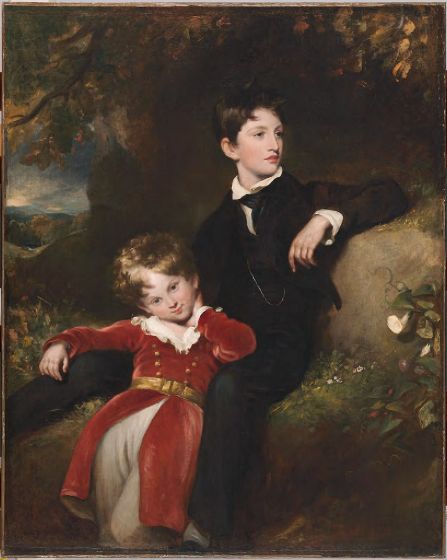
Thomas Lawrence English (Bristol, England 1769 - 1830 London, England) Sir Walter James, Bt., and Charles Stewart Hardinge, 1829. Image @Harvard Art Museums

Thomas Lawrence
English (Bristol, England 1769 – 1830 London, England)
Sir Walter James, Bt., and Charles Stewart Hardinge, 1829. Image @Harvard Art Museums

Regardless of social standing, all boys,  even those from the lower sorts, would receive a new pair of breeches around the age of six (four to six, to be more precise). The breeching event provided a cause for private celebration, to which family and friends were invited. For the parents, this ceremony also acknowledged that their child had survived past infancy. In an age when so many children died before reaching their majority (almost a fourth of them would die before the age of 10), the breeching ceremony might well have been the only significant event in a young boy’s life. In addition, he received a set of brand new clothes – a milestone indeed!

To put a perspective on how a parent felt about this event, Samuel Taylor Coleridge proudly writes of his son Hartley’s breeching ceremony in 1801:

Hartley was breeched last Sunday — & looks far better than in his petticoats. He ran to & fro in a sort of dance to the Jingle of the Load of Money, that had been put in his breeches pockets; but he did [not] roll & tumble over and over in his old joyous way — No! it was an eager & solemn gladness, as if he felt it to be an awful aera in his Life. O bless him! bless him! bless him!” – Samuel Coleridge to Robert Southey, November 9, 1801

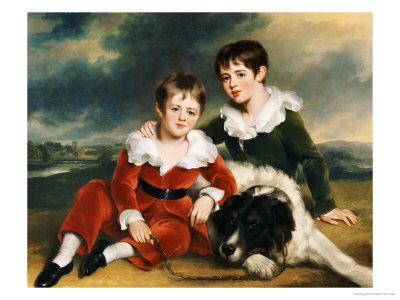
Portrait of Two Boys in Green and Red Velvet Suits by Ramsay Richard Reinagle

Portrait of Two Boys in Green and Red Velvet Suits
by Ramsay Richard Reinagle

What a vivid description! Relatives and friends, including the godparents, showered the young boy with coins and gifts. This ceremony marked an important occasion in which the boy left the world of women (nursery). After this momentous event, his father would become more involved with his upbringing or he would be mentored by other men in his life. He might be placed in a nearby boarding school with the young sons of other gentry, such as the one that Rev. Austen ran, for example, or in a more prestigious school if his parents were richer. Opposed to a young boy of the same age, a little girl’s life remained essentially the same – she would learn the art of running a household and catching a suitable man, but her young male counterpart would learn the art of running an estate or, if he was a second son, the skills required to make his way in life. (Click here for a modern image of breeches.)

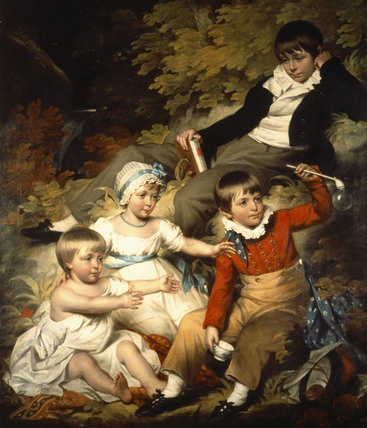
THE CHILDREN OF RICHARD CROFT, 6TH Bt.,c.1803, by John James Halls, R.A.  In this image one can see the three stages of boyhood - petticoats, skeleton suit, and jacket, shirt, and trousers.

THE CHILDREN OF RICHARD CROFT, 6TH Bt.,c.1803, by John James Halls, R.A. In this image one can see the three stages of boyhood – petticoats, skeleton suit, and jacket, shirt, and trousers.

**The type of clothing that young boys wore after the breeching ceremony depended on the century. During the 17th century, children’s clothes looked like miniature versions of adults. Young boys wore waistcoats, shirts, breeches, stockings and leather shoes. But by the time Jane Austen and Samuel Taylor Coleridge wrote their remarks in 1801, childhood was extended. Little boys wore skeleton suits until the age of nine, and then were graduated into more adult like clothing. Sons of the working class and poor did not wear skeleton suits, but wore clothing that resembled that of their farmer and laborer fathers.

More on the Topic:

Other links and resources:

Read Full Post »

janeaustenhandbookInquiring readers, In honor of Pride and Prejudice’s 200 year anniversary, Quirk Books is offering 3 free copies of their books: a copy of The Jane Austen Handbook by Margaret C. Sullivan and two copies of the deluxe edition of Pride and Prejudice and Zombies by Jane Austen and Seth Grahame Smith.

Coincidentally, my blog’s counter turned over 6 million visits this weekend. That’s right! Six million! A true cause for celebration and handing out books. If you are interested in reading about the books, click on the links below to read the reviews.

pride_prejudice_zombies1wClick here to read Tony Grant’s review of The Jane Austen Handbook, which is the forerunner of many similar books that have been published in recent years; and click here to read my review of Pride and Prejudice and Zombies, which began the Jane Austen mash-up craze several years back.

To Enter the Contest (open to those who live in the US, Canada, and UK), tell us how you are celebrating Pride and Prejudice’s 200th anniversary during this year! Contest is open until April 1st. This blog is holding another contest! A giveaway of Maggie Lane’s Jane Austen’s World, which is a reissue of the 1993 edition. Click on the link to enter his contest, open to those who live in the U.S. and open until April 3rd. Giveaway Closed! Congratulations Brenda, Rosalie and Monica Z.

More on the topic:

Read Full Post »

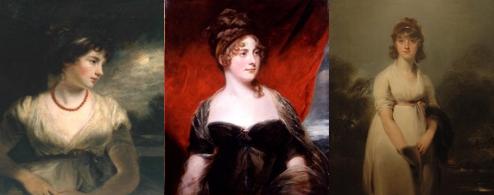
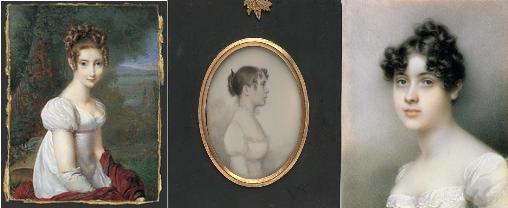
Several years ago I wrote a post on Regency Hairstyles and their Accessories. This series of images starts much earlier than the Regency. Jane Austen, who was born in 1775, would have been familiar with the hairstyles depicted here up to 1817, the year of her death. Her mother and aunts would have worn longer curls and powdered hair in her childhood. As teenagers and young women just coming on the marriage mart, she and Cassandra would have worn their hair much like the women in the 1790s.

Jane Austen's World image

1780s, 1781, 1790

As can be seen from the paintings, hairdos were elaborate in the 1780s and 1790s. Wigs made from real human hair were often used to build up elaborate hair structures. These confections took so many hours to create that a woman would wear them for days on end, protecting the hairdo at night.

Wigs and hair were covered with hair powder made of starch (potato or rice flour, not wheat flour). Oily pomades applied to the hair allowed the powder to stick and fragrant oils masked odors.

Jane Austen's World image

1790, 1792, 1795

Jane Austen's World image

1795, 1796, 1797

Hairdos became increasingly less elaborate and by the end of the 18th century women began to look to antiquity for role models.  (Regency Hairstyles and their Accessories.) A woman’s natural hair color was allowed to shine. More often than not, women tied back their hair in chignons that exposed the neck. In some instances, hairdos were cut boyishly short. Lady Caroline Lamb cut her hair short, as did the two girls shown in 1810.

Jane Austen's World image

1797, 1800, 18001801, 1801, 1802 1801, 1801, 1802

I cannot anyhow continue to find people agreeable; I respect Mrs. Chamberlayne for doing her hair well, but cannot feel a more tender sentiment – Jane Austen, 1801

1802, 1802-1804, 1804

1802, 1802-1804, 1804

1804, 1804, 1804

1804, 1804, 1804

1804, 1805, 1804-1806

1804, 1805, 1804-1806

1806, 1906, 1807

1806, 1906, 1807

1807, 1807, 1808

1807, 1807, 1808

Even when wearing hats, curls were coaxed out to frame the face. The woman below right with straight hair pulled back into a severe chignon wears curls in front of her ears. Curling tongs were very much in use during this era, as were paper and cloth curlers worn at night.

1809, 1809, 1809

1809, 1809, 1809

1810, 1810, 1810

1810, 1810, 1810

1810, 1810, 1810

1810, 1810, 1810

1810, 1810, 1810

1810, 1810, 1810

1810, 1811, 1812

1810, 1811, 1812

She looks very well, and her hair is done up with an elegance to do credit to any education.” – Jane Austen, 1813

1813, 1813, 1815

1813, 1813, 1816

1816, 1816, 1816

1816, 1816, 1816

Jane Austen wore caps over her light brown hair, but allowed curls to peep out from under them. I imagine that her nieces at a ball looked much like the young miss at top left in 1813. Hairdos became slowly more elaborate as dresses as dresses were embellished with frills, lace, and other furbelows. Jane would not have recognized the more elaborately decorated dresses and stylized hairstyles of the mid-1820s and 1830s, in which natural flowing lines were taken over by elaborately ruffled collars and skirt hems. Had she lived, she might even have made a joke at the expense of ladies who wore  the popular but elaborately built-up hairstyles at the crown, with ringlets cascading down the sides, and flowers and feathers arranged artfully into the curls. (Modes des Paris image.)

1818, 1819, 1820

1818, 1819, 1820

1824, 1825, 1825

1824, 1825, 1825

1828, 1828-1833, 1830

1828, 1828-1833, 1830

1831, 1834, 1835

1831, 1834, 1835

Modes des Paris image, 1832

Modes des Paris image, 1832

More on the topic

To see a Regency timeline of headresses and hairstyles for Regency evenings and their descriptions, click here.

Read Full Post »

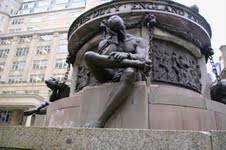
Nelson Memorial. A slave in chains. Image courtesy @Tony Grant

Nelson Memorial. A slave in chains. Image courtesy @Tony Grant

Inquiring readers, this rather serious topic of British slave ownership plays a role in Jane Austen’s world and her novels. She addressed the issue in an indirect way in Mansfield Park and Emma, with the Bertram fortune resting on slave trade and Mrs. Elton’s merchant father situated in Bristol, one of three major slave-trading centers in Britain. I am sure that her two sailor brothers related vivid tales of their travels in their letters and when they returned home for a visit. Jane, who was well-read and participated in family conversations, was keenly aware of human trafficking and exploitation. Ironically, a few years after her death, Charles actively patrolled the seas against the slave trade. In this post, Tony Grant addresses the legacies of British slave ownership. The British, godbless’em, abolished slavery decades before the U.S. and in a more civilized and peaceful manner. (Tony Grant, who lives in Wimbledon, is a frequent contributor to Jane Austen’s World. Visit his other blogs at London Calling and The Novels of Virginia Woolf. He traces his ancestry to the slave trade. As for me, I was born a Dutch citizen. The shameful actions of the Dutch in transporting slaves from Africa and their role in the slave trade is well documented.)

Image @University of York

Catherine Hall, Image @University of York

(Researched at UCL (University College London) by Catherine Hall Professor of Modern British Social and Cultural History and her project team.)

The above title is an umbrella title which has been given to two projects, one called, “Tracing the impact of slave ownership on modern Britain,” and the other, “Legacies of British Slave Ownership.” These will lead to a further project entitled, “Structure and significance of British Caribbean slave ownership 1763 -1833.”
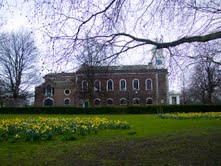
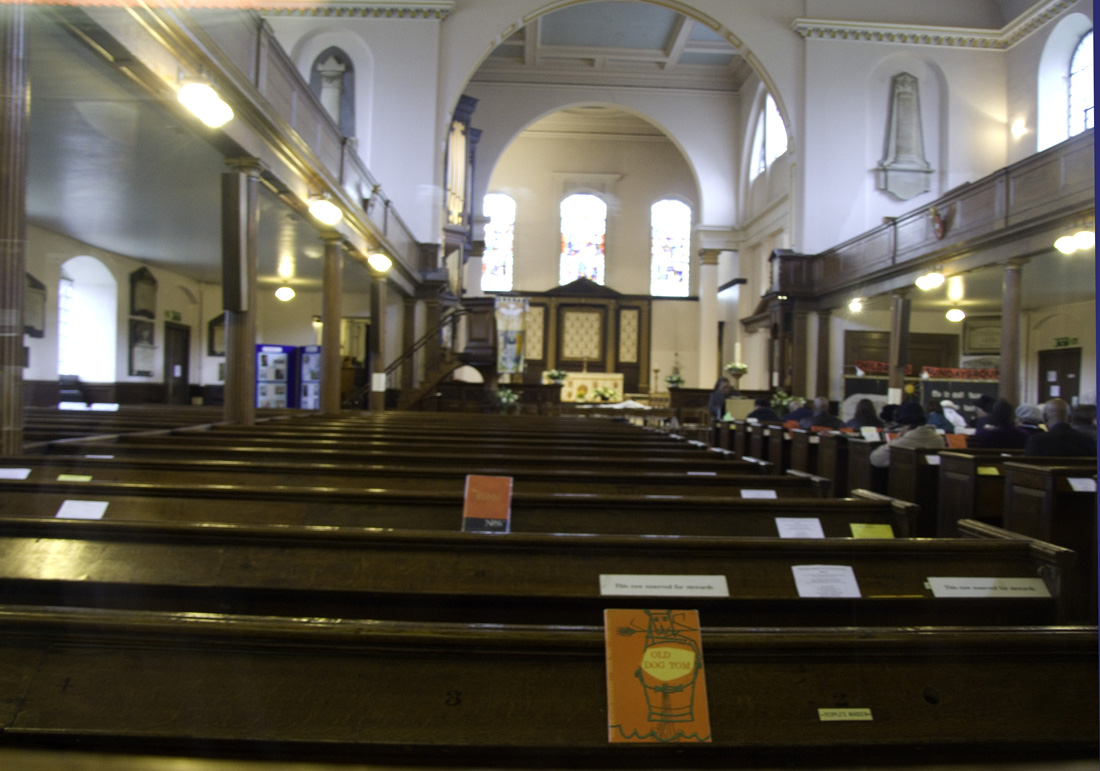
Clapham Church, Holy Trinity. Image @Tony Grant

Clapham Church, Holy Trinity. Image @Tony Grant

In 1974, I was in my second year of teacher training. I was doing a three year teacher training course at Gypsy Hill teachers training college situated on Kingston Hill, about a mile from the centre of Kingston upon Thames. The college was eventually amalgamated with Kingston University. The new university education department did not retain it’s rather romantic sounding epithet, Gypsy Hill, unfortunately. My teaching practice during that second year was to spend six weeks teaching English at Henry Thornton’s Secondary School situated on the south side of Clapham Common. It was a tough place to go as a young teacher. Although Clapham is not quite classed as inner city the area was home to lot of disadvantaged families some of them ethnic minorities and many of them West Indian in origin. Henry Thornton would have been pleased about the ethnic mix in the school. My first English lesson, reading and discussing, Cider With Rosy,by Laurie Lee, was to be with a class of fifteen-year-olds. As soon as I walked into the classroom a large powerfully built West Indian lad, swaying back in his chair staring at me, trying to stare me out, nonchalantly raised his right fist and smashed it through the pain of glass in the window next to him overlooking the corridor. I think the blood must have drained rather quickly from my face and I asked another pupil to get the head of year who came rushing to my help immediately. Coming from Southampton, on the south coast, this was my first experience of Clapham.

Interior of Clapham Holy Trinity Church, image @ Tony Grant

Interior of Clapham Holy Trinity Church, image @ Tony Grant

However that experience has many connections with Britain’s past history in the slave trade and with what I am going to write about in this essay. Henry Thornton, was born in Clapham on the 10th March 1760. His father had been one of the early founders of the Evangelical movement in Britain. His father and his cousins were bankers. In fact his brother Samuel Thornton became The Governor of the Bank of England. Henry himself was a very successful banker. The bank – Down, Thornton and Free – became the most successful bank in London. Henry Thornton is credited with being the father of the modern central banking system. He was a great theorist and wrote books about banking.
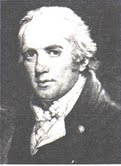
Henry Thornton

Henry Thornton

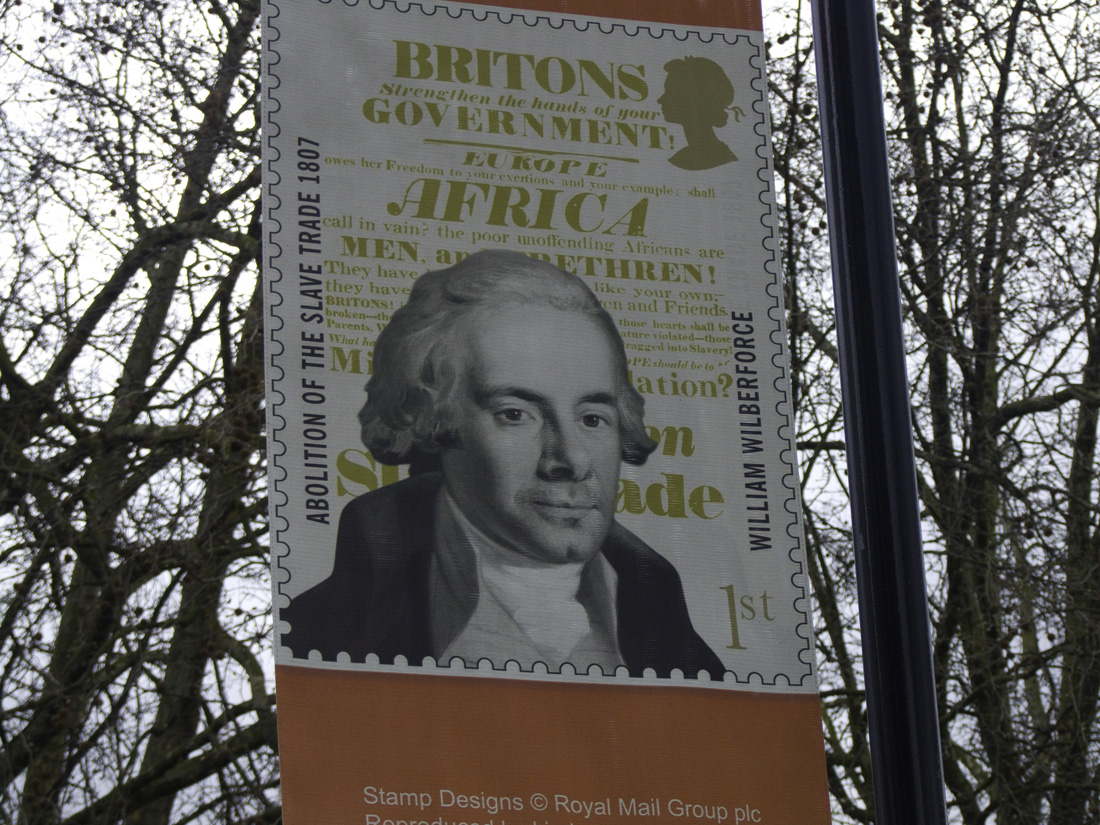
Henry became the Member of Parliament for Southwark, which is situated just across London Bridge from The City. However, he was unlike other bankers of the time. Britain’s wealth was closely tied up with the slave trade, but Henry Thornton was an abolitionist. Henry Thornton was one of the founders of the Clapham Sect of evangelical reformers, who incidentally met and worshiped together at Holy Trinity Church, which nowadays is directly opposite Henry Thornton’s school where I had my momentous teaching experience. He was foremost a campaigner for the abolition of the slave trade. His close friend and cousin was William Wilberforce. The two men lived together with their families at Battersea Rise on the opposite side of Clapham Common to the church and where the school that uses his name is situated. Henry was the financier behind the Clapham Sect in their many campaigns.
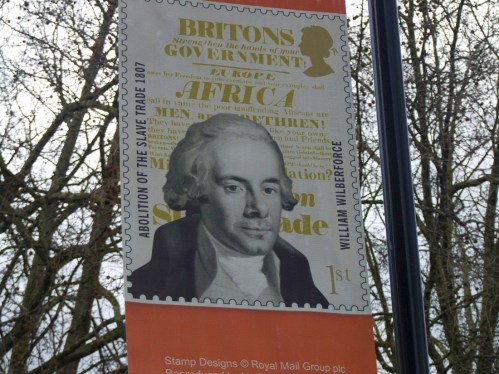
William Wilbeforce. Image @Tony Grant

William Wilbeforce. Image @Tony Grant

Catherine Hall and her project team are endeavouring to understand the extent and the limits of slavery’s role in shaping the history of Britain and its lasting legacy. They are focussing on various aspects such as commerce, culture, history, the Empire, physical attributes, such as the great houses and estates financed by slavery and also political aspects. How was slavery was involved in national and local politics? In Henry Thornton we see many of these aspects even if his actions and beliefs were contrary to the slave trade. He was a member of parliament who campaigned against slavery. He used his wealth to counteract slavery. I wonder if the West Indian lad who broke the window in my lesson realised that his destiny and the generations of his family before him were connected with the man whose name was on the school he was attending?

There is rather a surprising link and revelation about Henry Thornton in the research and data the UCL team has gathered. Kate Donnington, one of the PHD researchers on the team, has written a thesis about George Hibbert, one of the most influential characters and one of the major figures amongst West Indian merchants.
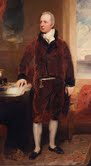
George Hibbett

George Hibbett

George Hibbert was a leading member of the pro slavery lobby and so one of the main adversaries of Henry Thornton over the slavery bill. However, Hibbert was a philanthropist and did many good works for charities. In 1824 he helped set up the National Institution for the Preservation of Life from Shipwreck. Nowadays that has become the RNLI, the Royal National Lifeboat Institution, which saves the lives of many around our coasts to this day. He was also involved in creating The Royal Institute. The running and creation of the Royal institute for the arts and science also involved, Henry Thornton and his brother John. It seems that individuals could be absolutely opposed to each other over slavery but work together in other aspects of the nation’s life.

This project by UCL is of national and international importance, but it also has a very personal meaning. Another of the researchers in the project team, James Dawkins, is studying the slave owning presence of his own family, the Dawkins, through the data collected. This inspired me to look up my surname, Grant, to see who amongst the Grant clan from North East Scotland around the Spey Valley, was connected with slavery. I didn’t have any hopes for direct ancestors to myself being involved in slavery unless were crew on the slave ships; we were labourers in the fields and workers in the whisky distilleries. We owned no land as such and certainly had no wealth.
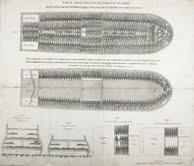
Slave Ship. Image @Liverpool Museum

Slave Ship. Image @Liverpool Museum

I discovered there were many Grants involved in the slave trade and plantation ownership though. There were various Alexander Grants, not all the same person I am sure. Alexander, must have been a popular name amongst the Grants. In fact my son, Samuel, has Alexander as his second name. There is an Alice Grant, one of my daughters is called Alice, a Betty, and various Anne Grants. It quickly becomes evident that many women, perhaps through inheritances, were investors in and owners of slaves. The list of Grants goes on.There are one hundred and eighty five Grants listed. I have an uncle, John Grant. There are many John Grants in the list and my father is Robert and yes there are many Roberts in the list. My own family’s Christian names are amongst the most prevalent Christian names associated with Grants in the survey. But my surname Grant is one Scottish surname amongst hundreds. If my families name is mirrored in the survey by all the other Scottish clan names there must be an inordinate number of Scottish families connected with the slave trade.
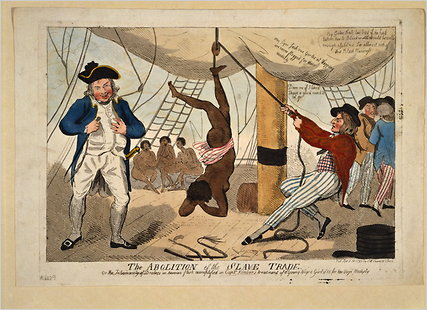
"The abolition of the slave trade Or the inhumanity of dealers in human flesh exemplified in Captn. Kimber's treatment of a young Negro girl of 15 for her virjen (sic) modesty."Shows an incident of an enslaved African girl whipped to death for refusing to dance naked on the deck of the slave ship Recovery, a slaver owned by Bristol merchants. Captain John Kimber was denounced before the House of Commons by William Wilberforce over the incident. In response to outrage by abolitionists, Captain Kimber was brought up on charges before the High Court of Admiralty in June 1792, but acquitted of all charges. Image @Wikimedia

“The abolition of the slave trade Or the inhumanity of dealers in human flesh exemplified in Captn. Kimber’s treatment of a young Negro girl of 15 for her virjen (sic) modesty.”
Shows an incident of an enslaved African girl whipped to death for refusing to dance naked on the deck of the slave ship Recovery, a slaver owned by Bristol merchants. Captain John Kimber was denounced before the House of Commons by William Wilberforce over the incident. In response to outrage by abolitionists, Captain Kimber was brought up on charges before the High Court of Admiralty in June 1792, but acquitted of all charges. Image @Wikimedia

I took one Grant to look at more specifically. Alexander Grant , the survey does not show when he was born but he was born at Abelour, Banffshire. He died on the 7th may 1854 He was a slave owner, planter and merchant on the island of Jamaica. He had Abelour House built for him in 1838. The house still exists today. His will left £300,000. His estates in Jamaica and Scotland were inherited by his niece, Margaret Gordon McPherson Grant.
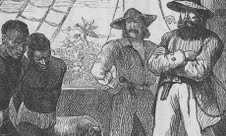
Slaves in transit, Liverpool

Slaves in transit, Liverpool

An interesting character I discovered on the UCL website was Ann Katherine Storer (née Hill, 1785-1854) She was born in Jamaica, where she married Anthony Gilbert Storer. She inherited her husband’s estates after his death, which not only included his Jamaican estates but also Purley Park in Berkshire, England. Anthony Gilbert Storer died in June 1818 and Ann Katherine returned to Purley Park with her five surviving children. There were problems with large debts and disputes over recompense. A rather strange and disturbing story is related about Ann Katherine Storer. When she returned to England she brought some slaves with her to work at Purley House.
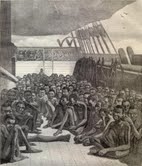
Slave ship

Slave ship

“In 1824, Ann Katherine Storer was accused of the maltreatment of Philip Thompson, a black servant who was bought as a slave in Jamaica and brought to England by the Storers. According to Philip Thompson’s testimony, “flogging was the usual punishment for any misdemeanour and he was often ill treated… One day in July 1824 Mrs Storer was already up when Philip rose at 6 am. Finding that he had not been up in time to clean the lobby she ordered him to be taken to the “whipping place”. After removing his coat, waistcoat and shirt, he then received about a dozen lashes from a hunting whip wielded by the butler so that the blood ran down his back… Mrs Storer was said to have been present and said [to Robert Stewart, the butler], “Well done, Robert, give him more”…
African slaves in Liverpool

African slaves in Liverpool

There is an element of sadism in this. She almost seems to take pleasure in the ill treatment of Philip. Ann was born and brought up on a slave plantation and was obviously used to dealing with slaves. This story made me wonder if this was a usual sort of treatment that was commonplace.

I mentioned above that the project team are focusing on aspects such as commerce, culture, history, the Empire, physical attributes such as the great houses and estates financed by slavery and also political aspects. Money from slavery was used to build Abelour House in Scotland as one example and the estate still exist today. George Hibbet was a philanthropist as well as a slave owner and he did many charitable works including setting up the forerunner to the RNLI as well as the London Institution, which was for the diffusion of useful knowledge in the arts and sciences. He acted as both its president and vice president between 1805 and 1830. He was a member of a number of learned societies and clubs including the Freemasons, the Linnean society and the Royal Society and the Society of Antiquaries. Hibbet collected books, prints and art. He also inherited a house with its estate called Munden in Hertfordshire. I am taking George Hibbet as an example, but the point is that this sort of philanthropy and range of interests in the arts, literature, science, charities and so on is replicated throughout the four thousand individuals of wealth and property identified by this research.

Slavery and it’s proceeds were and are bound up with the whole of society, good and bad, and we must still be benefiting from it today. Eric Williams, the historian who wrote, “Capitalism and Slavery,” believes that the slave trade and slavery, “provided not only essential demand for manufactures and supply of raw materials but also vital capital for the early phases of industrialisation. This has been partially substantiated through the histories of particular family firms.”
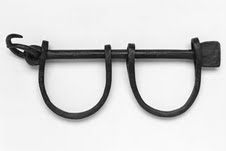
Shackles

Shackles

In 1807 the slave trade was abolished in Britain and it’s Empire. In 1833 slavery was abolished by the British Parliament in the British Caribbean, Mauritius and The Cape. These people in the survey have been identified as the recipients of compensation for the loss of wealth when slavery came to an end. However it is important to note that what replaced it was not much better. The great sugar, tea. cotton and coffee plantations were still there. The slaves got their freedom but were then signed up to what was called an apprentice scheme. This meant that they signed up for work on the estate for a minimum number of years. Life did not materially or actually change for them. In many ways, it is interesting to think about what slavery is and means. Slavery is obviously the worst sort of work contract but we all have to work. We all have no choice once we have signed a contract. The conditions of work are very favourable on the whole for us but there are legal and social requirements we have to fulfill. The jobs we have can in no way be compared to the plight of a slave but there are degrees. Is working for someone else and being contracted to work a type of benign slavery?

The research Catherine Hall and her team are doing is fantastic but it has had its critics. There have been concerns both in the United Kingdom and in the Caribbean that the project team is white. One argument in defence is that white people as well as black people were all part of the slave trade. By putting the emphasis in the study on individual slave owners there is a fear that the case for reparations to be made by the state could be weakened. There is also a concern for banks and legal firms founded in the 17th century or before who have continued to this day and who have inherited the benefits derived from slavery in the past. The UCL group has said they are prepared to share their empirical data with these firms but also the contextualisation of that evidence.

Triangular slave trade. Liverpool

Triangular slave trade. Liverpool

Professor Hall and her colleagues suggest that there are some key questions and problems that remain to be addressed:

  • “What proportion of Britain’s nineteenth-century wealth was linked to slavery?
  • How significant was this injection of capital into the burgeoning industrial economy of the 1830s?
  • Was investment in other parts of the empire seen as desirable?
  • How did this capital contribute to consumer spending – on houses, gardens, books or paintings?
  • Did philanthropic institutions significantly benefit?
  • We have also been exploring the political activities of the slave owners – to follow them in parliament, to see what positions they took on domestic and imperial matters, how active they were in local politics or what contributions they made to cultural institutions.
  • We have also investigated the ways in which their writings represented the slave trade and slavery.”

The UCL website: http://www.ucl.ac.uk/lbs/

Read Full Post »

Mr Darcy, Colin Firth, astride a white horse

Mr Darcy, Colin Firth, astride a white horse

Is chivalry alive and well? Good question. I venture to guess that a large number of Jane Austen’s readers subscribe to the traditional hero as embodied in Mr. Darcy, Mr. Knightley, Colonel Brandon, and Captain Wentworth, all admirable men, who despite some flaws, are wont to treat a lady with respect and come to her rescue out of a sense of duty, or from good breeding or a besotted heart.

Just in time for Valentine’s day comes Queendom.com’s tudy on gender roles in courtship behavior, which reveals that while most courtship conventions have changed, some age-old romance rituals are still going strong. Pulling up on a white horse isn’t necessary for the modern woman, but some chivalry is still a heart-melting must. (Inquiring readers, I have ventured to put my own spin (in blue) on this contribution from lona Jerabek, Ph.D.)

Some men hurtled, on horseback, with a giant stick in their hands. Emperor Shah Jahan built The Taj Mahal as a final resting place for his most beloved wife. Both Cleopatra and Juliet refused to live in a world where they couldn’t be with the one they loved. Thankfully, courtship conventions and romantic gestures need not be this extreme. According to Queendom’s data, most men and women take a modern approach to dating, but a little chivalry can still go a long way.

Jane Austen’s rules of courtship vs modern times

Collecting data from 950 men and 1621 women, Queendom’s research on gender roles and courtship reveals that:

  • 77% of men and 70% of women feel that a date can be initiated by either gender. In fact, 65% of the women have either asked a man out on a date, or would be willing to do so. (This would be a big faux pas in Jane Austen’s book, for a gently bred lady would NEVER make the first move, lest she be thought forward. There were those who had powers of persuasion through beauty and words, like May Crawford, or who took advantage of a man during a moment of weakness and, like that rat terrier, Lucy Steele, never let go. Others, like Marianne Dashwood, ignored society’s strictures, but all in all, a young lady of good breeding would hesitate to step out of the bounds of propriety and bring shame upon her family by acting upon her impulses and brazenly ask a man to pay court. Her actions would be much more subtle than that.)
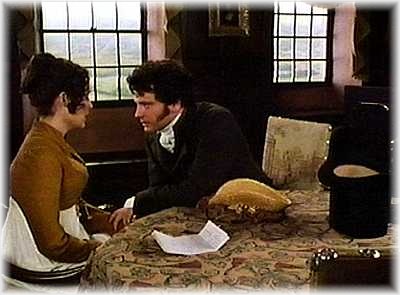
Mr. Darcy listens to Elizabeth about Lydia's predicament, then quietly goes about rectifying the situation and helping Lydia out of a scrape. A true romantic hero.

Mr. Darcy listens to Elizabeth about Lydia’s predicament, then quietly goes about rectifying the situation and helping Lydia out of a scrape. A true romantic hero.

  • 67% of men and 60% of women believe that chivalry is important (e.g. opening doors, pulling out chair, etc.). (This number would have been 100% in Jane’s day. A man who failed to follow the rules of propriety, like John Thorpe, would instantly be regarded as deplorable and wouldn’t stand a chance.)
  • 60% of women still like to be wined and dined, at least in the initial stages of dating. (Courtship was much more constrained, with the virginal girl guarded like hawks by her chaperons and family. After her coming out, a woman would NEVER be seen alone in her swain’s company. The only time they could touch or talk at length was during the set of a dance. They could never dine alone in an inn, for instance, without damaging her reputation. As for drinking wine, a gently bred girl might be given a glass of watered down elderberry or orange wine, but nothing that would make her tipsy and lose control.)
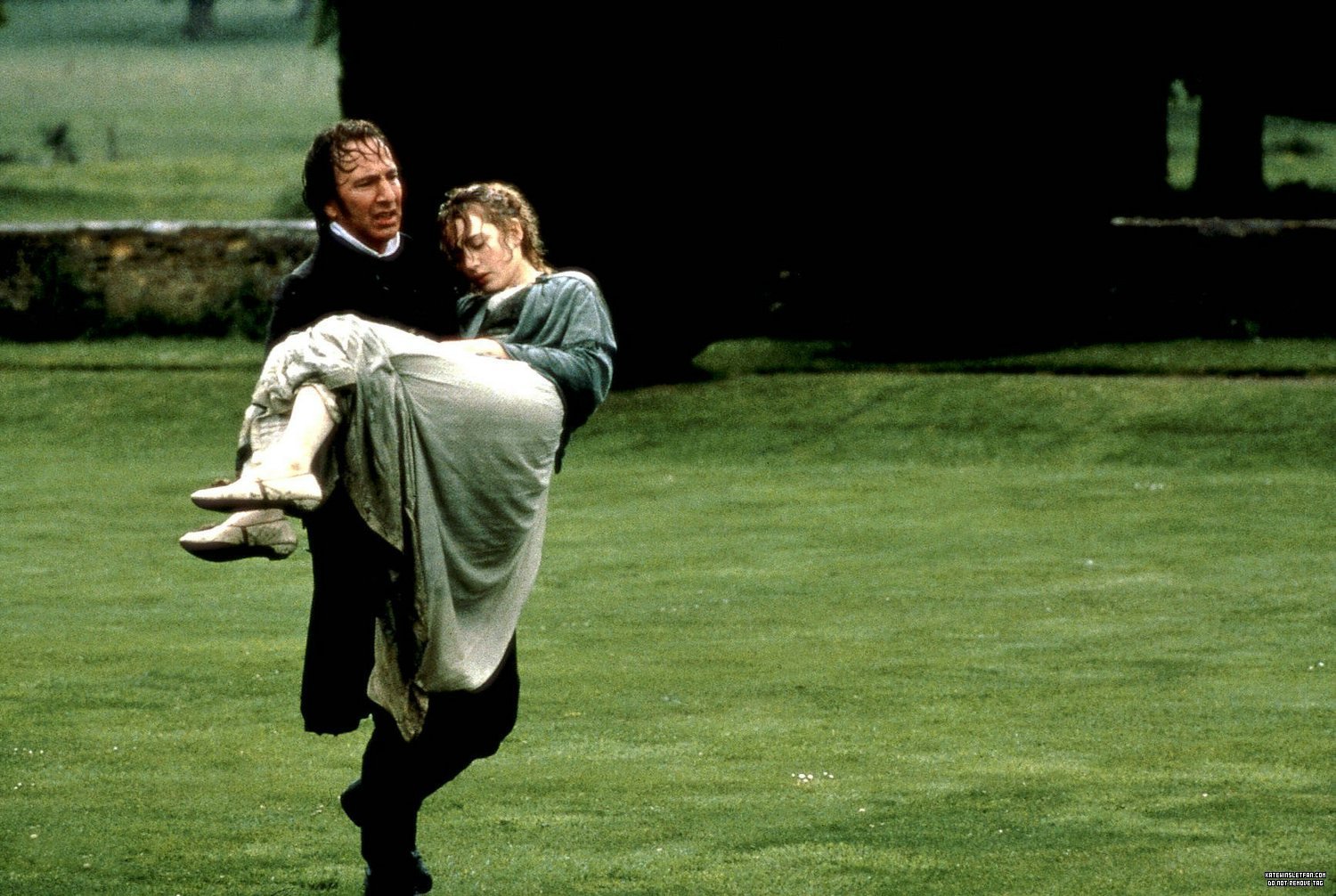
At first blush it is Willoughby who seems heroic, but it is the quieter Colonel Brandon who rescues Marianne from her untidy tendencies.

At first blush it is Willoughby who seems heroic, but it is the quieter Colonel Brandon who rescues Marianne from her untidy tendencies.

  • 26% of men want to be the one who controls how the relationship plays out (i.e. how many dates they should have, how fast the relationship moves, when to meet each other’s family). 39% of men would prefer to let the woman control the direction of the relationship, 35% prefer it to be a mutual decision. For women, 27% want to be in full control, 31% prefer to let men decide; 43% prefer it to be mutual. (Back in the Regency era a wily woman could manipulate the situation behind the scenes, like Charlotte Lucas, in order to snare her man, but most, like Jane Bennet, were passive and took their cues from their suitor’s actions or family’s wishes. A Regency miss who takes control of her courtship or acts in a hasty and willful manner was regarded a hoyden, as with Lydia Bennet and Maria Rushworth,  two stupid girls who were the instruments of their own undoing.)
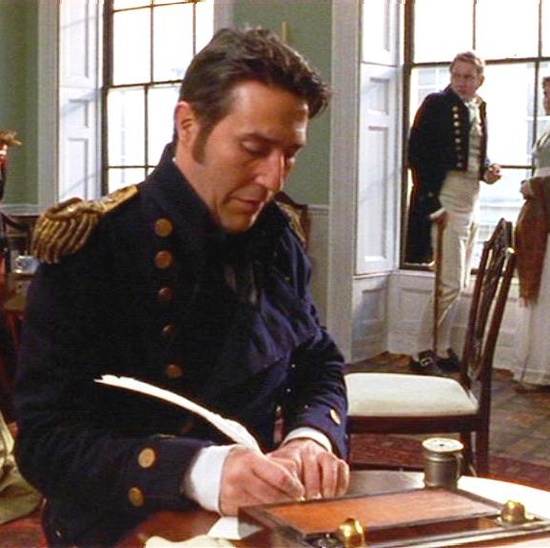
Anne yearned. Anne desired. But it wasn't until Captain Wentworth penned his letter that he opened up the way to their blissful romantic reunion.

Anne yearned. Anne desired. But she could do nothing. It wasn’t until Captain Wentworth took pen in hand and wrote his swoon-worthy letter that he opened up the way to their blissful romantic reunion.

  • When it comes to popping the question, 66% of men and 65% of women think it’s fine for the woman to do the asking. (Not in Jane Austen’s day, when men were obligated to do the asking. A women’s sole power, that of choice, was exercised before marriage. It was up to her instinct and good  judgment to refuse a cad or accept a good man for a husband. Heaven forbid if love clouded her good sense. Unless she was an aristocrat, the family would accede to her wishes, for once she married, she would have no rights and lose control of her money, land, and children. Thus a young woman (girls in many instances) had to be smart about her choice of mate or rely on wise council. Unfortunately for Miss Anne Elliot, her wise council, Mrs. Russel, turned out to be wrong and poor Anne had to wait eight long years before she could marry Captain Wentworth and find happiness in his arms.)
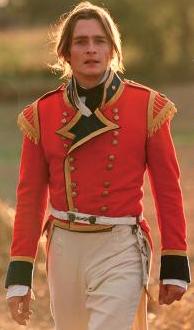
Wickham, a handsome fortune hunter

Wickham, a handsome fortune hunter

  • In terms of who pays for the first date (a long-standing debate), 47% of men feel that the man should pay; 24% feel that the bill should be split; 29% stated that whoever initiated the date should pay. On the women’s side, 31% feel the man should pay, another 31% feel that the bill should be split, and 38% indicated that whoever initiated the date should pay. (Now this is a tricky one, for in Regency times many a fortune hunter was able to inveigle an invitation to dinner or a party for which others paid, including his intended’s family. There were some bachelors who traveled from house to house and, aside from their personal expenses, never parted with a penny. The woman might not literally dig into her reticule to pay for the cad’s board and food, but in the instance of a fortune hunter, he most likely did not foot the bill either, except for a trinket or two with which to woo his heiress.)
Snooty Elizabeth Elliot lost her chance to snare a man

Snooty Elizabeth Elliot lost her chance to bag a man

  • And that old “play-hard-to-get” theory? Still just a theory. Only 19% of men and 28% of women believe that a woman should be mysterious and play hard to get for the first few dates. (Elizabeth Elliot played hard to get and where did that get her? At 29 she’s staring spinsterhood in the face. Good old Charlotte Lucas took the horse by the reigns and saddled her man, albeit a fairly defective one. Mr. Collins had a house and a job, which was all that Charlotte wanted or needed. She encouraged him to garden, while spending her days alone in her private parlor.)

“Women no longer need to play the more submissive, demure role – and it’s nice to see that both genders support this progress,” states Dr. Ilona Jerabek, president of PsychTests. “This doesn’t mean that men are off the hook and don’t need to put an effort into romance anymore. The modern woman still likes romance, but it’s now a shared endeavor, with both genders putting an effort into the relationship. What fascinated us most about this study was that younger men and women had somewhat more traditional courtship views than older age groups.” (It is obvious from the following statistics that attitudes towards chivalry and courtship have changed drastically in 200 years. Imagine a young and spirited woman like Elizabeth Bennet adopting any of the following modern attitudes!:)

Age differences in courtship perceptions: surprising results

Queendom’s age comparisons reveal several interesting differences:

  • 28% of men under 30 and 22% of men over 30 feel that the man should plan most of the dates.
  • 60% of men under 30 and 76% of men over 30 feel that a woman should be able to propose to a man.
  • 20% of men under 30 and 13% of men over 30 said that they would feel threatened by a woman who took control of what they did on the first date.
  • 26% of men under 30 and 14% of men over 30 believe that it should be the man who asks the woman out, not vice versa.
  • 51% of men under 30 and 39% of men over 30 believe stated that the man should pay for the first date.
  • 66% of women under 30 and 71% of women over 30 have either asked a man out or would consider doing it.
  • 64% of women under 30 and 72% of women over 30 think it’s ok to be the one to ask a man to marry them.

The modern way vs Jane Austen’s way of beguiling your beloved

  • Forget the dozen roses. Buy one, wrapped with a ribbon. (200 years ago: Give her a posy of fresh wild flowers that you picked in a field.)
Marianne draws Willoughby's silhouette

Marianne draws Willoughby’s silhouette in the drawing room

  • Show up at your partner’s workplace and whisk him or her away for lunch. (200 years ago: Sit in the drawing room with your intended and let her wind her wool skein over your hands or suggest that you draw his silhouette.)
  • Place a love note in your partner’s lunch bag or on the bathroom mirror. (200 years ago: sing a duet at the pianoforte and make sure that the bench is a tad small.)
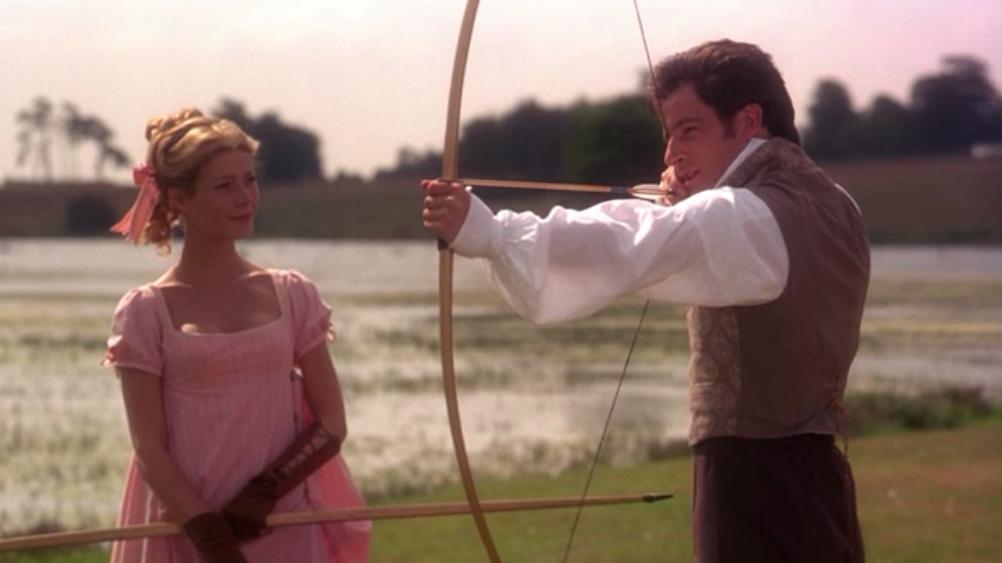
Archery as sport

Archery as sport and a means of courtship

  • Grab a blanket, a bottle of wine, and drive out to a place where you can see the stars. (200 years ago: arrange a walking party with your sisters and cousins and ask him to tag along. Have the servants grab the blankets and wine, and drive you to your location.)
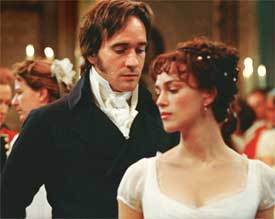
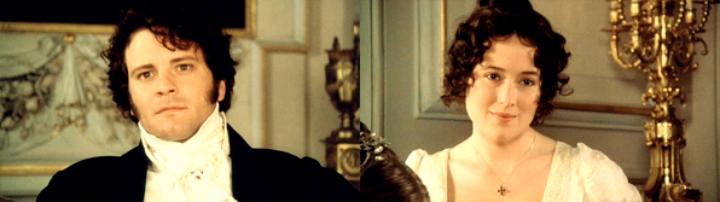
Darcy and Elizabeth

Darcy and Elizabeth

  • Slow dance in your living room. (200 years ago: Make sure to solicit her hand for the supper dance, wherein you shall spend another pleasurable hour in her company.)
Elizabeth Bennet, 1980

Elizabeth Bennet, 1980

  • Avoid embarrassing lingerie no-nos. Take him to a lingerie store and show him all the naughty things you like. (200 years ago: drop your handkerchief near your exposed ankle for him to retrieve, or make sure that your loveliest eye-catching locket nestles snugly between your well-exposed breasts. )
Darcy and Elizabeth make goo goo eyes at each other across the room

Darcy and Elizabeth make goo goo eyes at each other across the room

  • Meet at a local hang-out and pretend you’re two strangers flirting with each other. (200 years ago: make goo goo eyes at each other in the drawing room while others play a musical instrument, or pretend that you don’t like each other and trade bantering insults.)
  • Build a little bonfire in your backyard and make chocolate Smores. (200 years ago: engage in a game of archery and set out an al fresco tea.)
  • Get tango or salsa lessons together. (200 years ago: ask the music master to visit the village to teach the latest dances.)

As you can see, gentle readers, while the rules of romance have changed over the years, the game remains the same! What would Jane Austen have thought of today’s courtship rules, I wonder?

Queendom.com , a subsidiary of PsychTests AIM Inc. , is a site that creates an interactive venue for self-exploration with a healthy dose of fun.  PsychTests AIM Inc. originally appeared on the internet scene in 1996, providing psychological assessment products and services to human resource personnel, therapists, academics, researchers and a host of other professionals around the world.  

Read Full Post »
« Newer Posts - Older Posts »