Feeds:
Posts
Comments

Archive for the ‘Regency Life’ Category

… or music Jane listened to. Recently Jane Austen’s Regency World Magazine sent a CD along with the issue. The songs include music popular in Jane’s time. I’ve included this musical number from YouTube: Thomas Arne’s “Where the Bee Sucks”, sung by a young lady named Sarah.

Jane Austen in Vermont has posted the list of songs on a CD that subscribers to Jane Austen’s Regency World magazine received in the last issue.

Read Full Post »

This link to the BBC site will lead you to a video of a walk with Amanda Parr through Bath. You will need a Real Player.

Other posts about Bath on this site:

The Comforts of Bath: Thomas Rowlandson

The Viscount and the Toll Keeper’s Daughter: How Thomas Thynne Never Became the Marquess of  Bath

Saving Georgian Bath

Read Full Post »

Cassandra Austen (Greta Scacchi) & Mrs Austen (Phyllida Law) in Miss Austen Regrets

During my morning stroll I saw crocuses, snowdrops, pansies, and daffodils in bloom. What a difference two weeks make! Spring is in the air, and the robins are pushing north.

Columbine, Lilac, Small Daisy, Peony, Sweet Briar, & Mignonnette

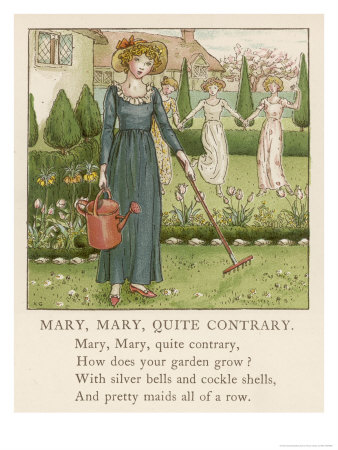
It is time to think about the garden, and this year I am inclined to plant a few varieties that Jane Austen and her family grew. Jane wrote to Cassandra:

Syringa, Sweet William

Some of the Flower seeds are coming up very well–but your Mignioette makes a wretched appearance. Our young Piony at the foot of the Fir tree has just blown & looks very handsome & the whole of the Shrubbery Border will soon be very gay with Pinks & Sweet Williams, in addition to the Columbines already in bloom. The Syringas too are coming out — We are likely to have a great crop of Orleans plumbs–but not many greengages–on the sandard scarcely any–three or four dozen perhaps against the wall. – Christian Encounters:Jane Austen, Leithart, p75- 76.

Greengages, Gooseberry, Wild Strawberry, & Moor Park Apricot

The excellent article, Jane Austens Flower Garden, describes additional variety of flowers, fruits, trees and shrubs and the kitchen garden. “I remember the garden well,” writes Miss Lefroy. “A very high thick hedge divided it from the (Winchester) road, and round it was a pleasant shrubbery walk, with a rough bench or two where no doubt Mrs. Austen and Cassandra and Jane spent many a summer afternoon.”

Row of Beeches, Long grasses, Hedgerow, Potatoes

Kitchen Garden
Flowers, trees, and shrubs mentioned

  • Syringa
  • Lilac
  • Cornflowers
  • Columbines
  • Sweet Williams
  • Old-fashioned roses
  • Mock Orange
  • Hollyhocks
  • Philadelphus
  • Pinks
  • Small daisies
  • Sweetbriar
  • Syringas
  • Laburnum
  • Currants
  • Gooseberry bushes
  • Raspberries
  • Wild strawberries
  • Hedgerow
  • Gravel Walk
  • Orchard with plum tree
  • Long grass
  • Thick hedge
  • Oaks
  • Row of beech trees
  • Quickset hedge
  • Kitchen garden
  • Potatoes
  • Philadelphus, Currants, & Plum

Share/Bookmark//

Read Full Post »

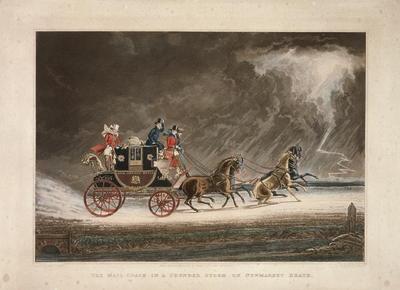
This carriage database discusses the history of the carriage and its uses over time. Included are links to specific makes of carriages, which lead to more detailed information or definition about that type, ie. landau, barouche, mail coach, phaeton, etc. In some instances, images accompany the pages. (Click on reference, then carriage). Update: Something seems to be wrong with the first link to the carriage database. I shall update this post as soon as I find the link again. This link to A Catalogue of Horse drawn vehicles 1896 catalogue of E. S. Annison, Coach Builder, of Hull, features drawings of his carriages and their latest design (late 19th century). Internet Archive provides a downloadable PDF book with images, Carriages and Coaches: their history and their evolution, fully illustrated with reproductions from old prints, contemporary drawings and photographs (1912). This entry in Carriages in Indopediais contemporary and provides links to definitions and information.

Mail Coach, 1827

The Georgian Index features an excellent page on Carriages and their Parts. Highways and Horses, Athol Maudslay, 1888 is an illustrated Google book that discusses carriages and transportation during the Victorian period in great detail. On the fronticepiece, Mr. Maudslay writes :

Share/Bookmark// More about the topic on this blog:

Read Full Post »

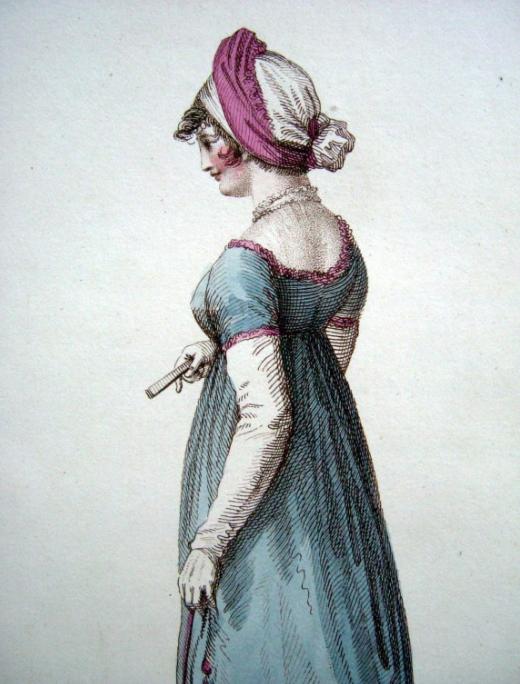
1803 Mirroir de la Mode Evening Dress

In 1803, a woman named Madame Lanchester of Bond Street, published  ‘Le Miroir de la Mode‘. By 1804, scarcely two years after it appeared, the magazine had vanished. (Although The Museum of London has at least one plate published by Madame Lanchester which is dated 1807).  Very little is known about the woman, who had designed for other publications, such as Richard Phillips Fashions of London and Paris.

La Miroir de la Mode was a short-lived, expensive, and large quarto-sized magazine published only from 1803 to 1804, clearly a failed attempt to follow in the footsteps of the defunct Gallery of Fashion, which was also quarto size. The publisher was the famous modiste, Madame Lanchester, who later wrote fashion descriptions and commentary for Ackermann’s Repository. – Word Wenches: Regency Ladies Magazines, Part 3

Ebay is a rich resource for people who are interested  in viewing Regency fashion plates, as this page by Cabrio4 attests. People can purchase their own fashion plates for a reasonable  price, with this particular seller enjoying a reputation of 100% satisfaction. The small image below of a Full Walking Dress  from  ‘Le Miroir de la Mode’, April 1803 (Measures approx: 10.5″ x 8.5″), is extremely rare (and has been sold).

Walking dress, 1803, Mirroir de la Mode

More about the topic

Early Georgian & Regency Fashion Prints to 1806 – Guide written by Cabrio4, eBay seller
Regency Ladies’ Magazines, Part One
Regency Ladies’ Magazines, Part Two
Regency Ladies’ Magazines, Part Three

Read Full Post »

« Newer Posts - Older Posts »