Feeds:
Posts
Comments

Archive for the ‘Regency Period’ Category

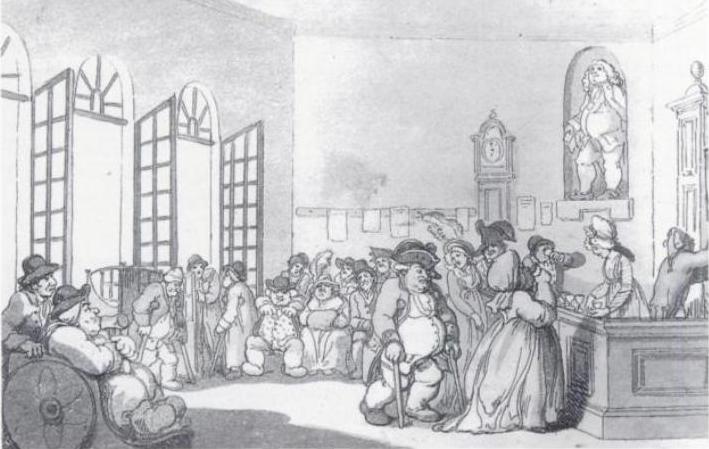
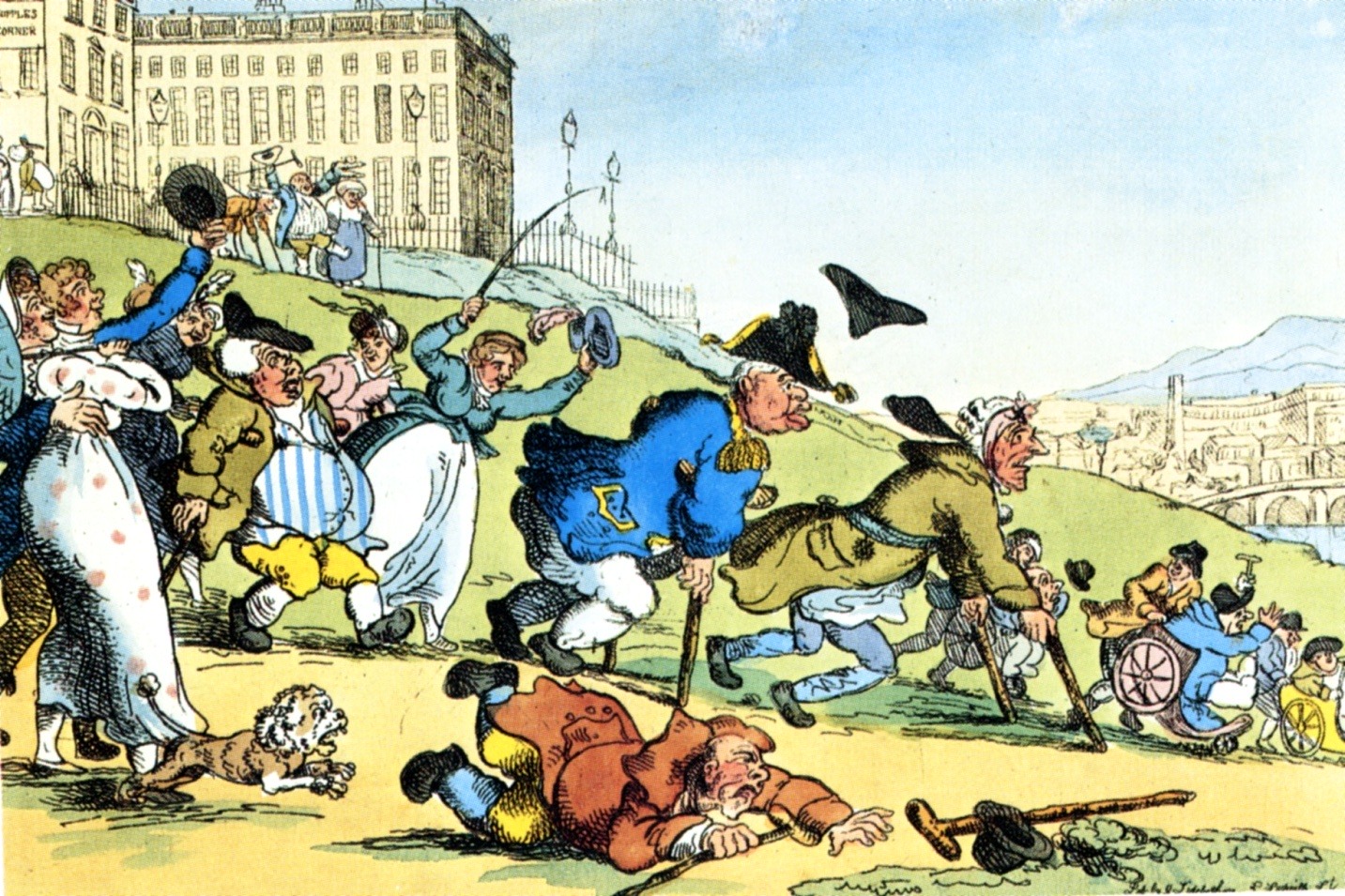
The Comforts of Bath, Thomas Rowlandson.

Almost everyone who visits my blog, Twitter account, and Facebook page knows I’ve broken my foot in two inconvenient places. Even with modern medical advances the most pleasant way to describe my experience is that it’s been a … pain. Literally and figuratively. This lover of walking 3-4 times a day with her dog has been sidelined. I’ve been sitting or lying down for a month, watching my bum grow two sizes. I’m a bit more mobile now and can hobble wearing an unwieldy boot.

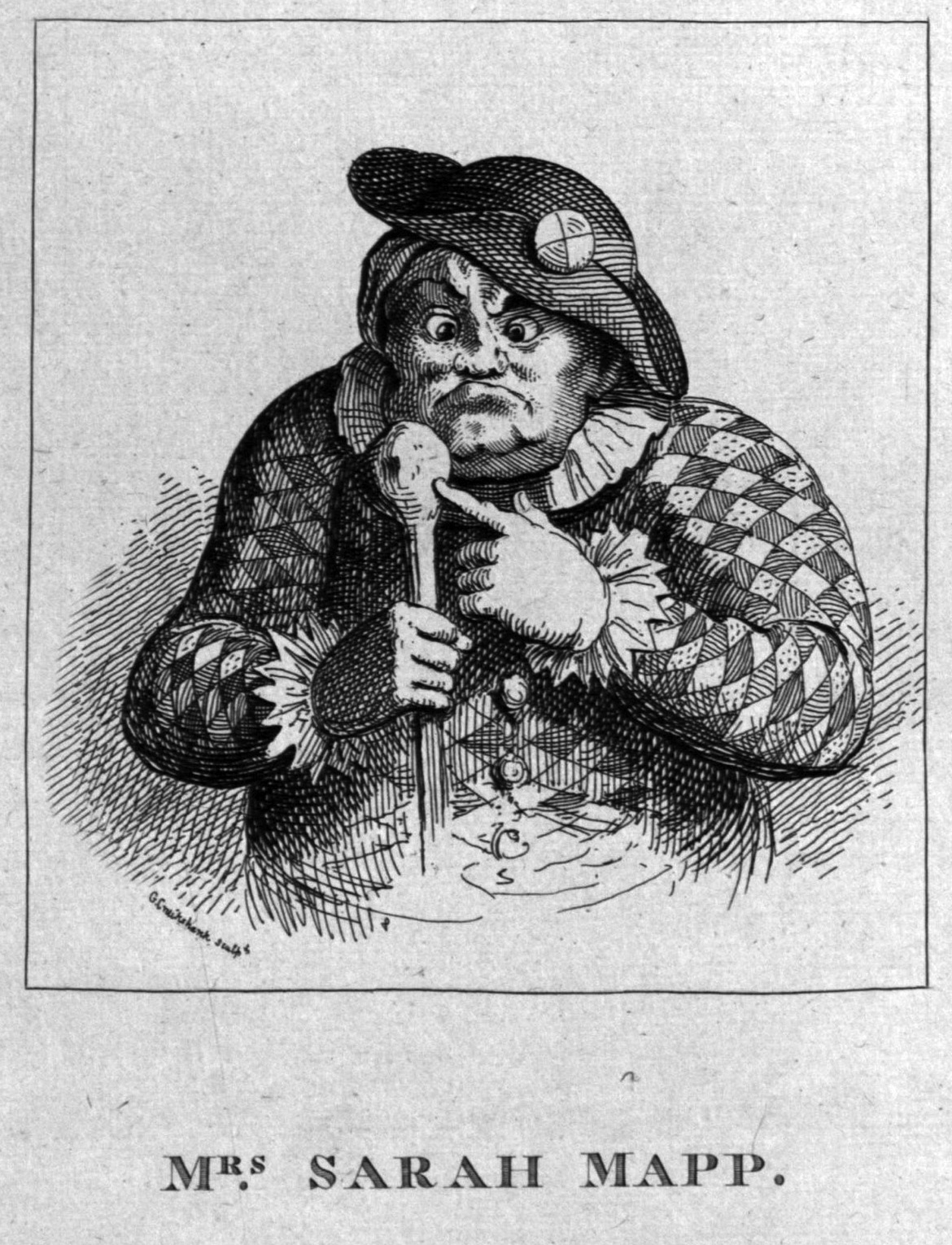
How did people deal with this situation two-hundred years ago? I wondered as I stared at the ceiling with my foot propped up higher than my head. It certainly could not have been easy. Mrs. Mapp, or Crazy Sally, as she was known, was a famous London bone setter in the early 18th century. While she was unlucky in love, she made her fortune with her strength, boldness, and wonder-working cures.

Besides driving a profitable trade at home, she used to drive to town once a week in a coach and four and return again bearing away the crutches of her patients as trophies of honour. – Mrs. Mapp: The Bone-Setter, Book of Days, Robert Chamber, 1864

I doubt Mrs. Mapp would have bothered setting my foot. There was really nothing to manipulate. All it needed was rest and a good calcium-rich diet. How did people get round and about when they were hobbled in days of yore?

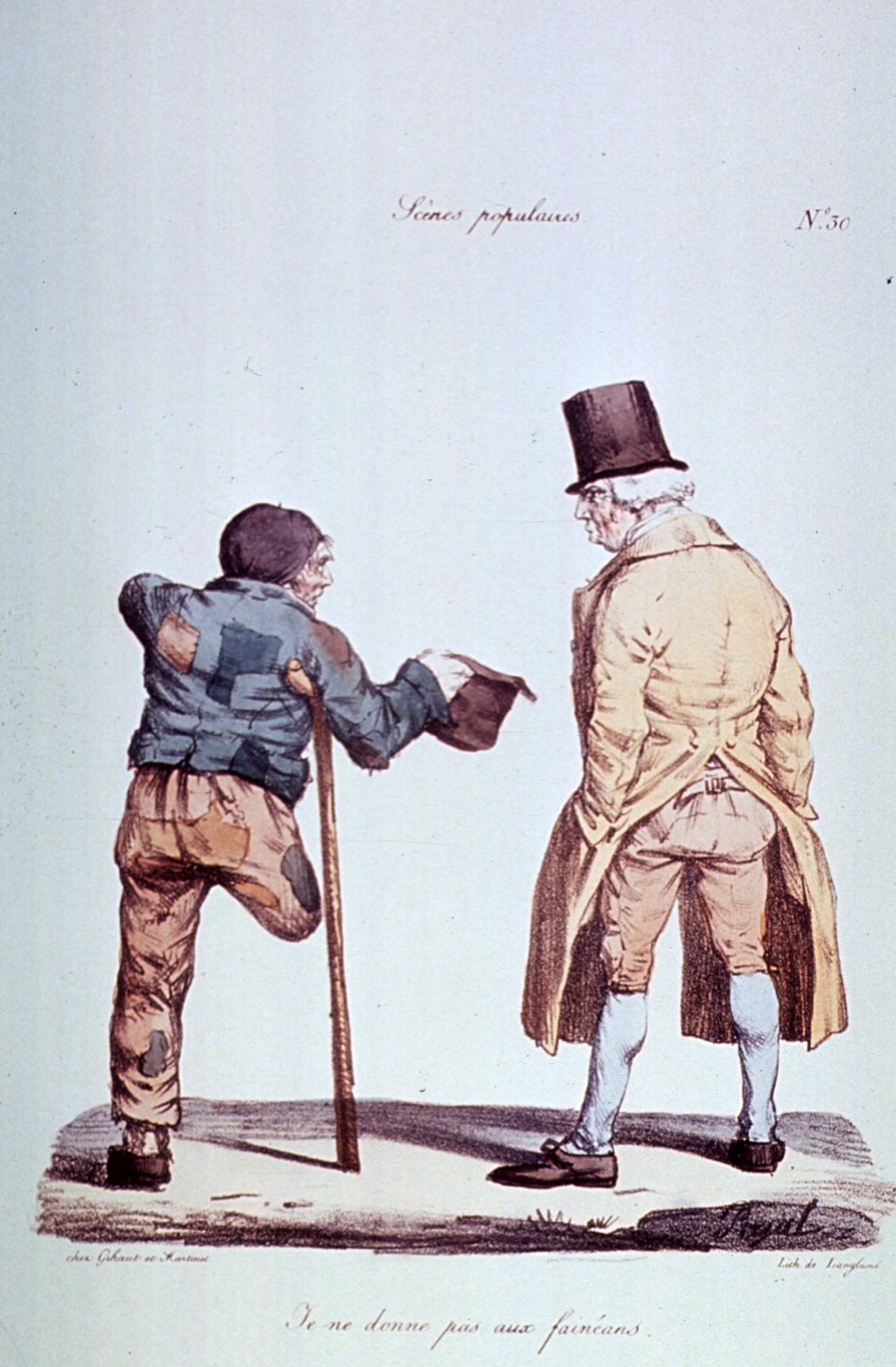
In my estimation, crutches resembled torture instruments more than helpmeets.

Beggar with one leg and a crutch. Image @Risky Regencies

This 1850 crutch is similar to the one depicted in the image above. It was not adjustable, and rags were wound around the top to make the crutch less painful. Even with ample padding on the modern crutch, my underarms became sore. I can only imagine how much discomfort the old models offered.

Wheelchair, Barry Lyndon

Wheelchairs were invented early in the history of mankind. In 530 B.C. a wheeled child’s bed made an appearance on a Greek vase, and in 525 A.D. a wheelchair was depicted on a Chinese print. By the 17th century, the patient’s comfort began to be taken into account.

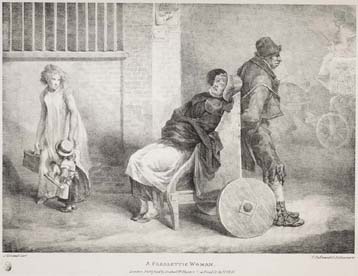
Paralytic woman in wheelchair, 1821. Image @Museum of London

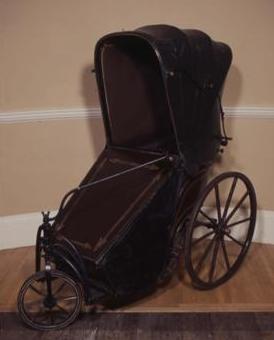
During the 18th century the Bath chair was born. Invented by John Dawson, the three-wheeled chairs remained popular all through the 19th century.

3-wheeled Bath chair. Image @BBC

This Rowlandson caricature depicts the ill visiting the Pump Room to take the waters. Note the sedan chair at left being carried inside the room, the man in the wheelchair, and the man walking with two canes.

Read Full Post »

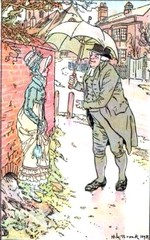
Mansfield Park, Brock. Image @Austenprose

During the 17th century, ladies used parasols for protection from the sun. A century later they were using oiled umbrellas as protection from the rain as well. By the early 19th century, the design of the umbrella had improved and its use had become widespread. After Maria’s marriage, Fanny Price was overtaken by a heavy shower close to the Parsonage and sought shelter under an oak. When the Grants spotted her, they sent out a servant, but Fanny was reluctant to come in:

A civil servant she had withstood but when Dr Grant himself went out with an umbrella there was nothing to be done but to be very much ashamed and to get into the house as fast as possible; and to poor Miss Crawford, who had just been contemplating the dismal rain in a very desponding state of mind, sighing over the ruin of all her plans of exercise for that morning, and of every chance of seeing a single creature beyond themselves for the next twenty four hours, the sound of a little bustle at the front door and the sight of Miss Price dripping with wet in the vestibule was delightful. – Jane Austen, Mansfield Park

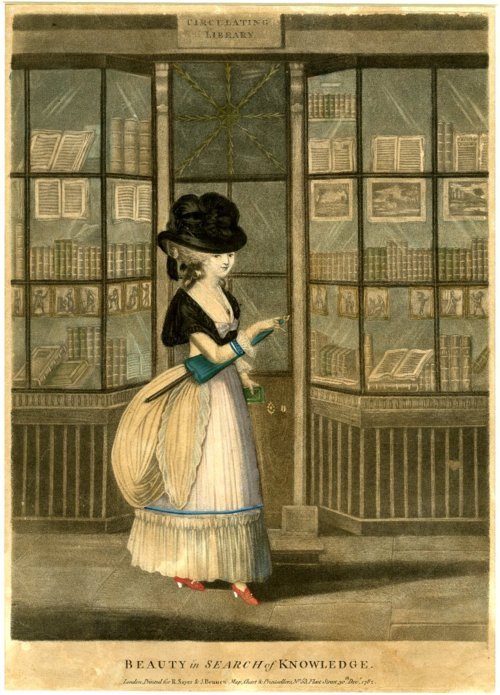
Beauty in search of knowledge, 1782. This 18th century woman carries an early version of an umbrella. These models were heavy and cumbersome. Image @Harry Elkins Widener Collection, Harvard College

A century before Mansfield Park was published (1814) men did not use umbrellas, which were regarded as women’s accessories:

A young man who borrowed one from a coffee house in a downpour in 1709 was excoriated as effeminate in a newspaper. It would have been a cumbersome model, ill-suited to being carried around. Similar heavy umbrellas were kept in churches to protect the parson during burial services. – A Brief History of the Umbrella 

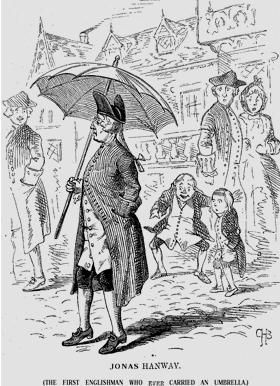
Yet the following passage from Notes and queries, Volume 54, William White (Oxford University Press, 1876,  p. 202), suggests that men began to use umbrellas earlier than Jonas Hanway, who braved ridicule from street urchins and hackney coachmen, who regarded the use of the umbrella as a threat to their livelihood:

1745 – Paid for umbrella, box and carriage.
It is not stated for whose use this was intended; most probably for the minister when officiating at funerals. This is a remarkable entry, as the introduction of umbrellas into England is attributed to a much later period. The employment of the umbrella in the streets London is said to have been by Jonas Hanway, who died in 1786; but the following passage from the Trivia of Gay, who died in 1732, shows it was in use at a much earlier period

Good housewives Defended by th’ umbrella’s oily shed,
Safe through the wet on clinking pattens tread.”

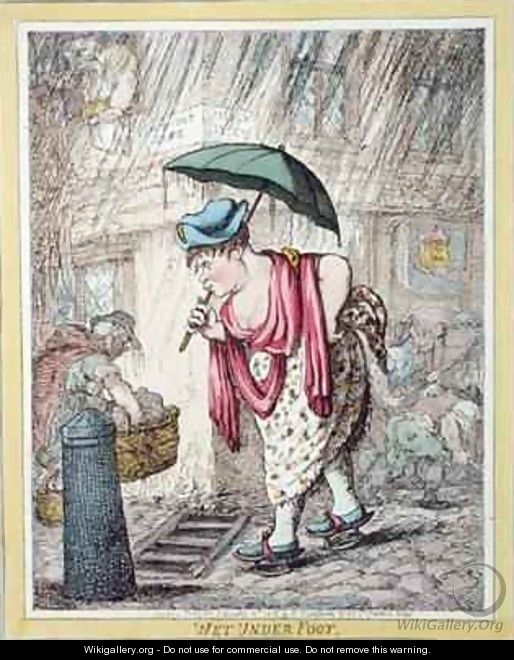
Wet under foot, James Gillray. Image @Wikigallery. The woman is wearing "clinking" pattens as well as carrying an umbrella.

In 1893, Georgiana Hill wrote this descriptive history of the umbrella in England:

Umbrellas were a recent fashion in the earlier part of the century. During the first ten years of George the Third’s reign, the only umbrellas in use were large carriage umbrellas, which required an attendant to hold them. In the country they were hardly known at all. The philanthropist, Jonas Hanway, in 1756, boldly unfurled an umbrella in the streets of London, being the first man who ventured upon such an innovation. Surely Hanway deserves to be held in grateful remembrance by the male sex for this spirited effort towards the emancipation of his brethren from the thraldom of custom. He was jeered and ridiculed by the populace, but was not to be laughed into giving up the sheltering oilskin. About twenty years later, a valiant footman named John Macdonald began to use a silk umbrella, which he had brought from Spain. The boys shouted after him: “Frenchman, why don’t you get a coach?” but he grasped his umbrella more firmly and went on his way, and in some three months time he was able to use it without exciting remark. Miss J. Gay Trivia Hutton, writing in 1779 from Derbyshire, says: “Mrs Greaves lent us their umbrella, and servant to carry it.” Miss Hutton’s brother was the person to use an umbrella in Birmingham, a Frenchman being the first.

Jonas Hanway. Image @Wikipedia. This caricature depicts how long early umbrella handles were.

The town beau, when he first carried an umbrella, was caricatured in the prints as the rain-beau holding a tiny parasol over his head. A gentleman once borrowed an umbrella from the mistress of a coffee- house in Cornhill, and after the following satirical advertisement in The Female Tatler: “The young gentleman belonging to the Custom house, that for fear of rain borrowed the umbrella from Will’s Coffee house in Cornhill, of the mistress, is hereby advertised to be dry from head to foot on the like occasion he shall be welcome to the maid’s pattens.”

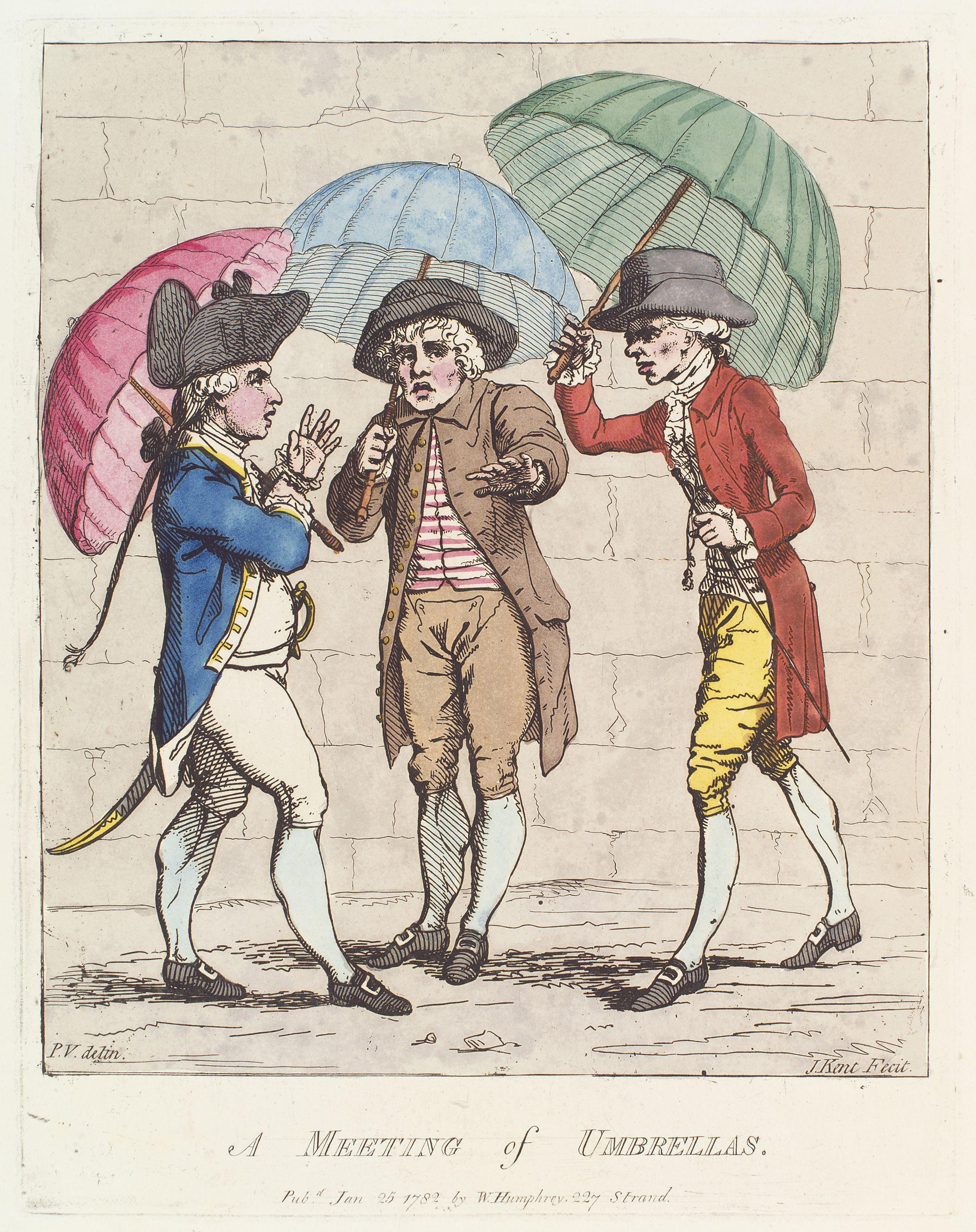
A meeting of umbrellas, James Gillray, 1782. By now, men used umbrellas as a matter of course.

An illustration of the want of umbrellas afforded in one of the caricatures of the period, showing a respectable citizen’s family from Vauxhall in a downpour of rain – the old gentleman with a handkerchief tied over his head to save his wig, and his wife’s cardinal on his to protect his best coat, while the wife herself and her daughters are tripping along in gowns turned up round their waists, and their heads enveloped in coloured handkerchiefs. In 1797 there was one umbrella in all Cambridge, and that was kept at a shop, and let out like a sedan chair ,by the hour. In London women carried umbrellas before men had taken to them, but the first umbrellas were heavy awkward machines made of oilskin or taffeta. Still, in spite of their cumbrous character, women who had to trudge along the streets on rainy days rejoiced in their shelter. With cloak and umbrella, they were able to face the dripping roofs and waterspouts, which were as much to be avoided as the rain. To the fashionable lady. who only walked in fine weather, the one important consideration was the parasol, but it was otherwise with the thrifty citizeness. Great must have been the relief and saving of clothes when the new invention came into use:

Good housewives all the winter’s rage despise,
Defended by the riding hood’s disguise;
Or underneath the umbrella’s oily shade,
Safe through the wet on clinking pattens tread.
Let Persian dames the umbrella’s ribs display,
To guard their beauties from the sunny ray;
Or sweating slaves support the shady load,
When Eastern monarchs show their state abroad;
Britain in winter only knows its aid,
To guard from chilling showers the walking maid.”
– J Gay Trivia

– A history of English dress from the Saxon period to the present day, Volume 1, By Georgiana Hill , 1893, p. 173-74.

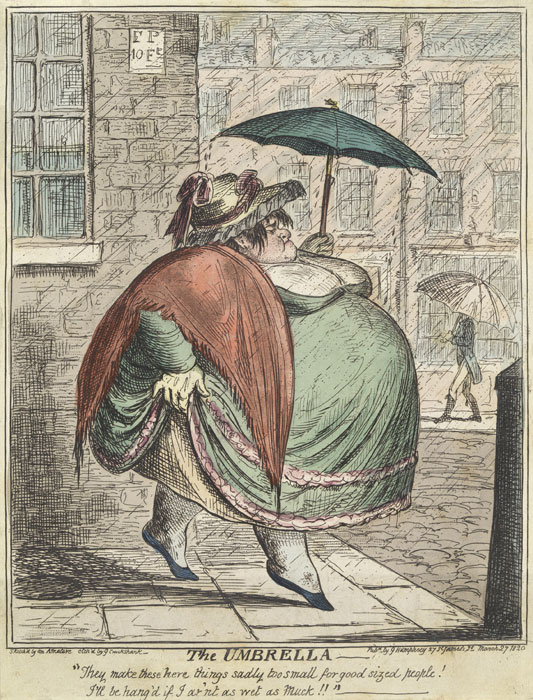
The Umbrella, 1820. This cartoon depicts how little protection these early umbrellas afforded. Cruikshank exaggerates the woman's size to demonstrate the point. Image @Art Tattler

Early umbrellas were heavy and cumbersome to use:

Early umbrellas were made of oiled silk with heavy wooden frames which made them difficult to open or close when wet. Whalebone (baleen) was also used but this still made the article heavy. It wasn’t until 1852 that Samuel Fox invented the steel ribbed umbrella claiming that he was using up stocks bought for making corsets. This made umbrellas much lighter and more portable. – Come rain or shine: historic umbrellas and parasols 

More on the topic:

Read Full Post »

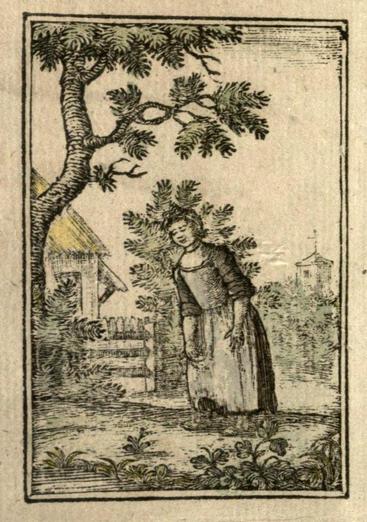
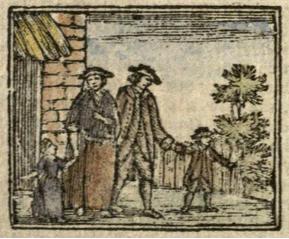
Among the possessions Jane Austen passed down after her death is a miniature book for children, The History of Goody Little Two-Shoes, whose pages were filled with moral lessons for children. During the 18th century, it was regarded as one of the most popular children’s books, and its popularity lasted into the 19th century. As you can see in the image below, Jane’s copy of the book is bound with gilt and and flowered Dutch paper boards. The frontispiece is crudely colored; the front page is inscribed with the name, ‘Jane Austen.’

Jane Austen's copy of Little Goody Two Shoes. Image @Jane Austen em Portugues

The History of Little Goody Two-Shoes was an early book for children that had a huge influence on the way that children were taught to read, from its publication in 1765 until the mid 19th century. Although its sententiousness and overbearing morality might cause hilarity today, it was in several ways a revolutionary publication in its time. – Read the rest of the passage in this link 


The History of Little Goody Two Shoes taught a moral lesson: Good behavior on earth will bring heavenly rewards.

In it, a young orphaned girl called Miss Margery Meanwell is so poor she only has half a pair of shoes. When a friend gives her an actual pair of shoes as a gift, she becomes known to the other children as Little Goody Two Shoes. Little Margery becomes not only a mentor and tutor to the children, she grows up to become a wise teacher, helping adults learn peaceful techniques for resolving quarreling and promoting tolerance. Through her acts of charity and benevolence, Miss Margery is carried from her humble station in life and becomes a lady of means. – Shoes are more than just fashion accessories 

The History of Little Goody Two-Shoes was originally published in 1765.  The text is typically attributed either to John Newbery or Oliver Goldsmith, and the illustrations by “Michael Angelo” were most likely by Richard Johnson, who used the pseudonym as author of Juvenile Sports and Pastimes, published by Newbery’s stepson Thomas Carnan. – The History of Goody Two Shoes, Rare Book Room

Image @Wikipedia

The phrase  “goody two-shoes” is often used to describe an excessively virtuous person. (Wikipedia)

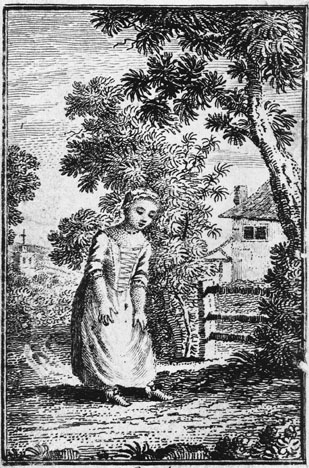
Image from a digital version of the book. This image is more refined than the one in Jane Austen's miniature book

Listen to a History of Little Goody Two Shoes: Podcast 

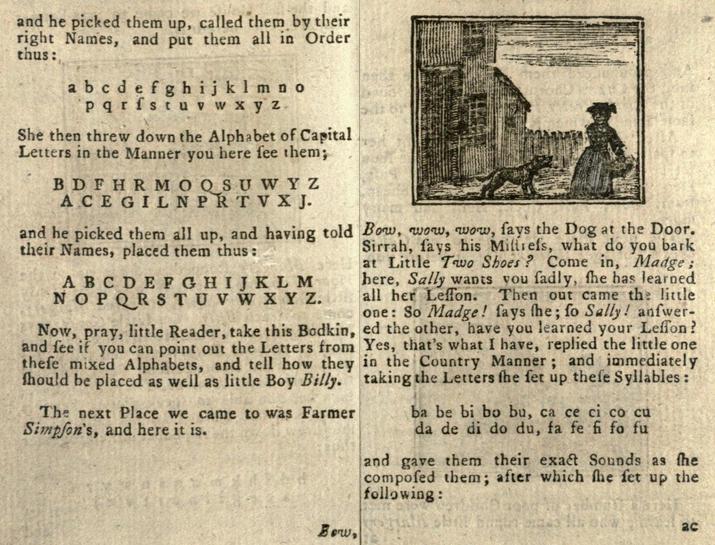
Image from a digital version of the book

Some of the reading exercises for children are evident on these two pages.

Read Full Post »

Lady Catherine de Bourgh's formal table: Pride and Prejudice 2005

When dinner is announced, the mistress of the house requests the lady first in rank, in company, to shew the way to the rest, and walk first into the room where the table is served; she then asks the second in precedience to follow, and after all the ladies are passed, she brings up the rear herself. The master of the house does the same with the gentlemen. Among the persons of real distinction, this marhalling of the company is unnecessary, every woman and every man present knows his rank and precedence, and takes the lead, without any direction from the mistress or the master.

When they enter the dining-room, each takes his place in the same order; the mistress of the table sits at the upper-end, those of superior rank next [to] her, right and left, those next in rank following, the gentlemen, and the master at the lower-end; and nothing is considered as a greater mark of ill-breeding, than for a person to interrup this order, or seat himself higher than he ought. – John Trusler, 1791

The Bennets seated at table en famille, with the two oldest daughters next to their father at the head of the table. Mrs. Bennet sits at the lower end. Pride and Prejudice 1995

As the eldest daughter, Jane and Elizabeth sat nearest their father during family meals, with Jane to his right. When Lydia returns as Mrs. Wickham, she unceremoniously bumps Jane to a position towards the middle of the table, for her married state gave her a higher rank than her eldest sister:

Elizabeth could bear it no longer. She got up and ran out of the room; and returned no more till she heard them passing through the hall to the dining parlour. She then joined them soon enough to see Lydia, with anxious parade, walk up to her mother’s right hand, and hear her say to her eldest sister, ‘Ah, Jane I take your place now, and you must go lower, because I am a married woman.’ – Jane Austen, Pride and Prejudice

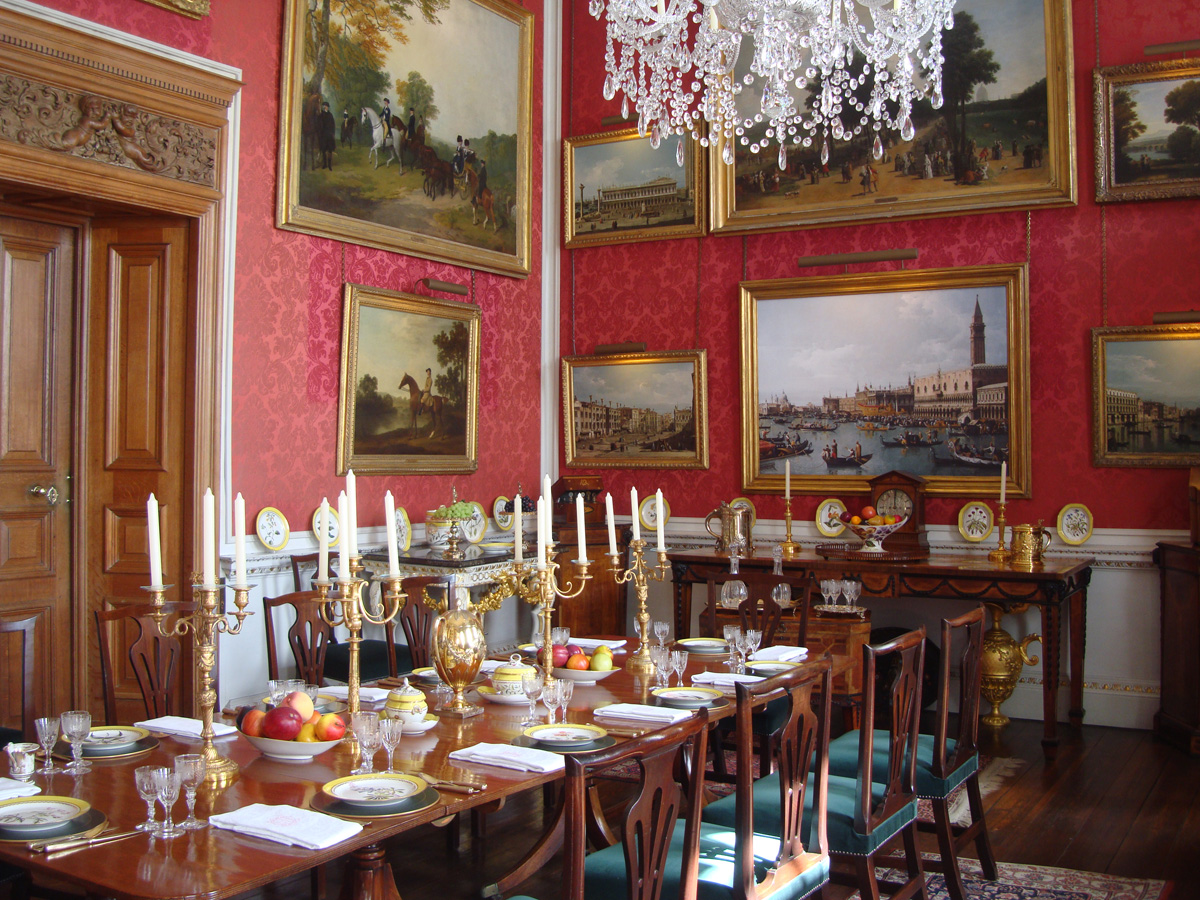
Sumptuous dining table at Castle Howard. Image @Tony Grant

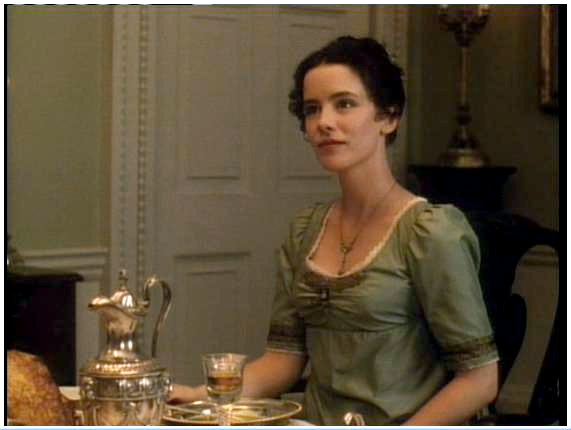
As hostess at her father's table, young Emma Woodhouse sat opposite her father at the upper end of the table. The ladies sit next to Mr. Woodhouse in hierarchy. As in the description by John Trusler, the gentlemen are seated nearest Emma's end of the table.

Emma Woodhouse (Kate Beckinsale)

Custom, however, has lately introduced a new mode of seating. A gentleman and a lady fitting alternately round the table, and this, for the better convenience of a lady’s being attended to, and served by the gentleman next to her. But notwithstanding this promiscuous seating, the ladies, whether above or below, are to be served in order, according to their rank or age, and after them the gentlemen, in the same manner. – John Trusler, p 6

From: The honours of the table, or, Rules for behaviour during meals : with the whole art of carving, illustrated by a variety of cuts. Together with directions for going to market, and the method of distinguishing good provisions from bad; to which is added a number of hints or concise lessons for the improvement of youth, on all occasions in life. By the author of Principles of politeness, &c. … For the use of young people, John Trusler

Other posts on this blog:

Read Full Post »

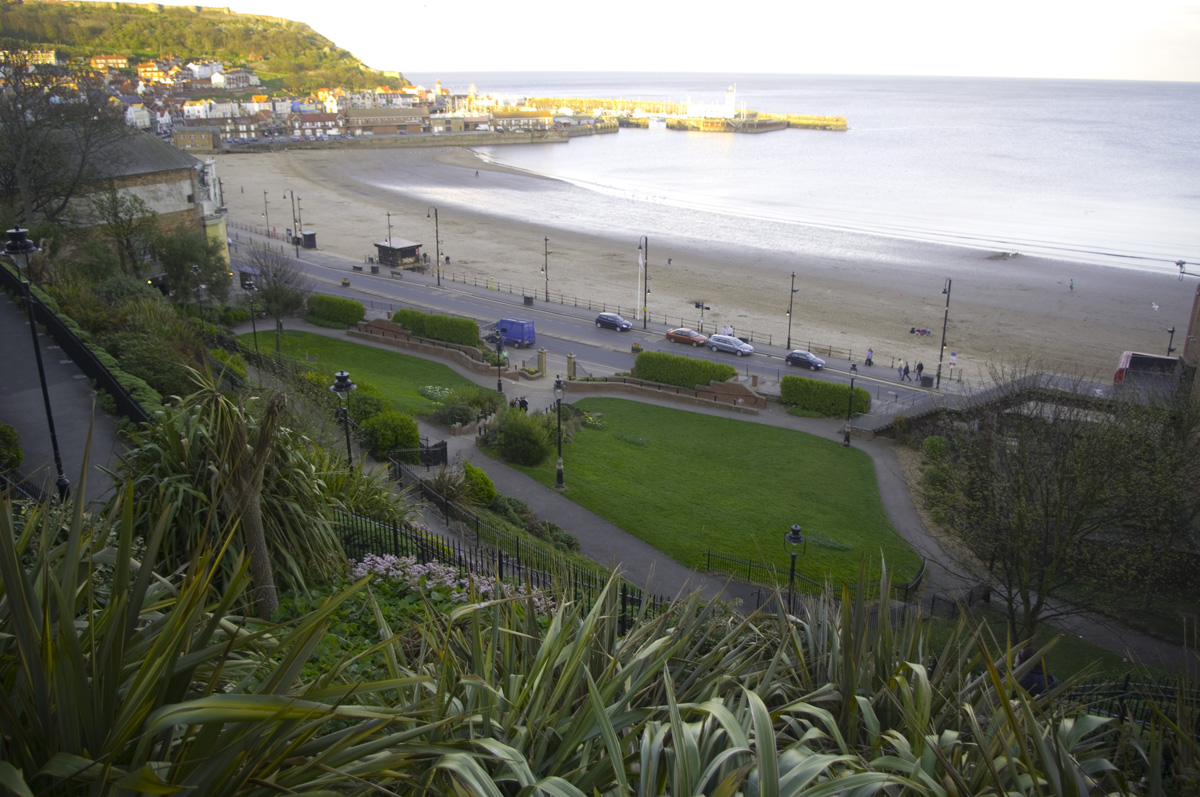
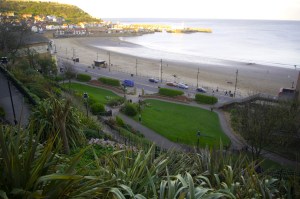
Scarborough Beach today. Image @Tony Grant

Post contributed by Tony Grant. All rights reserved, Tony Grant.

At the start of our Easter Holidays, on the 11th April, Marilyn, Abigail and myself drove up to Scarborough to spend a few days. Scarborough is on the beautiful rugged Yorkshire coast in the North East of England. We wanted to visit somewhere different and take a refreshing break from South London. We spent three days up there and drove on the North Yorkshire Moors, had a day in York, visited the fishing port of Whitby and went to Castle Howard, a few miles east of York, for one whole afternoon. Many of you will know Castle Howard as the wonderful, rich pile, used in the film and TV adaptations of Brideshead Revisited.
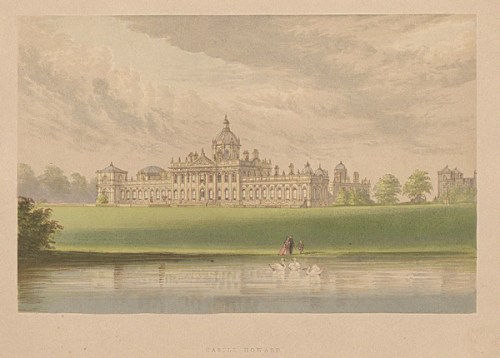
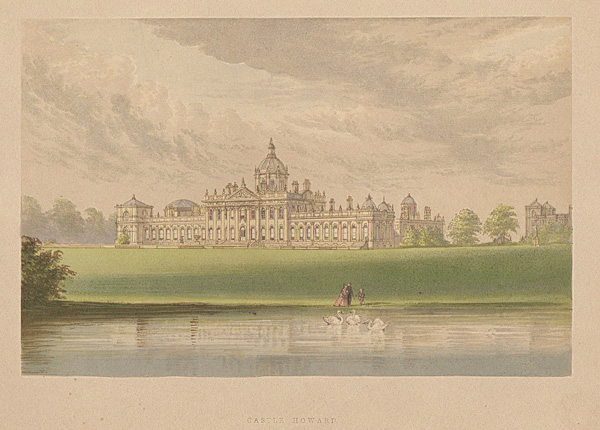
Castle Howard

Castle Howard has been home to the Howard family for over three hundred years. It is an 18th century residence set within over a thousand acres of landscaped gardens and vistas.
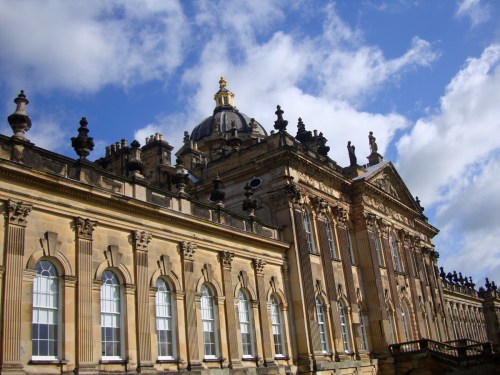
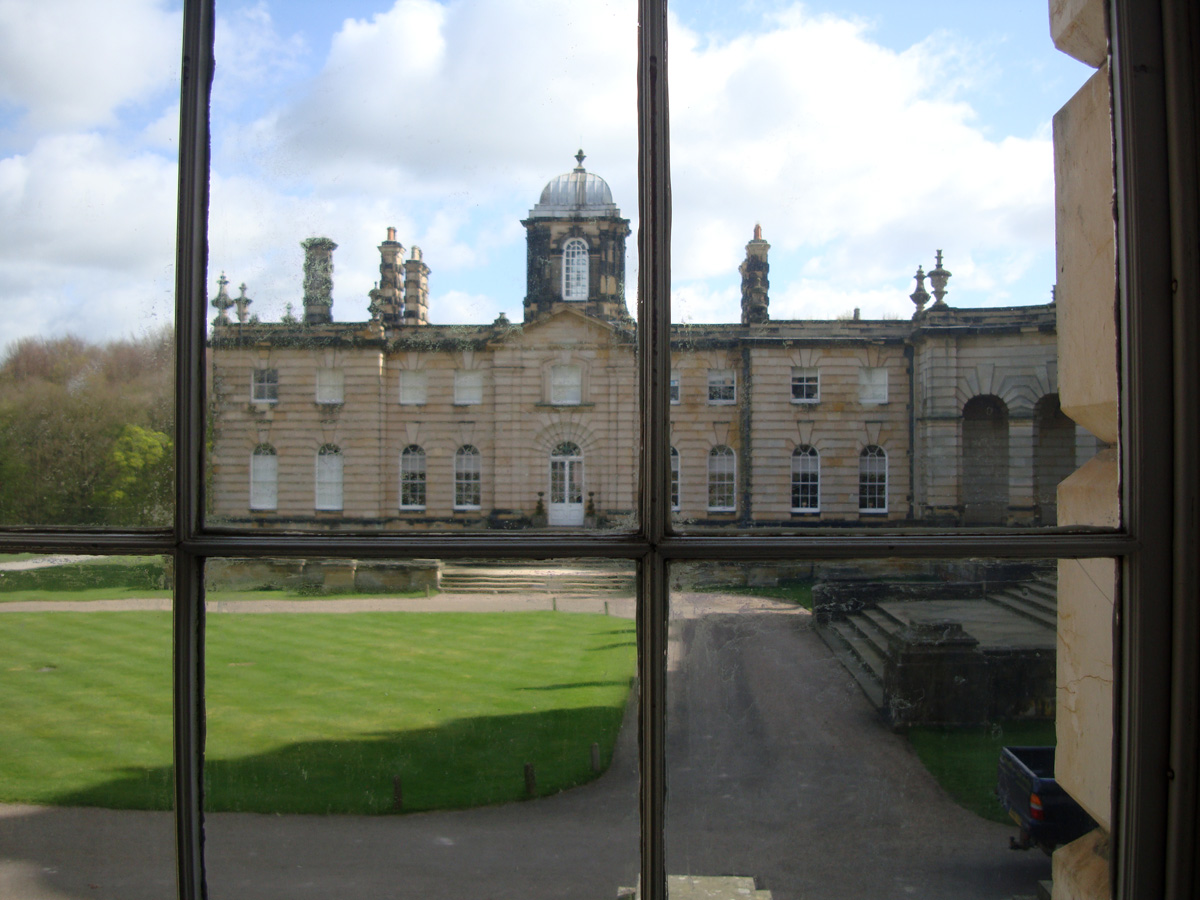
Castle Howard. Image @Tony Grant

Marilyn, Abigail and myself took a tour of this wonderful place. One of the things that has always interested me and I have often wondered about, is what books and authors an 18th century gentlemen has on his shelves. Reading Claire Tomlin’s biography of Jane Austen, it is her father’s library, consisting of hundreds of books that was part of Jane’s partly self lead education at Steventon. A short while ago we visited Sir John Soane’s house in Holburn. He had an extensive library. I asked one of the assistants in his house if I could take pictures. I was told politely that I could not.
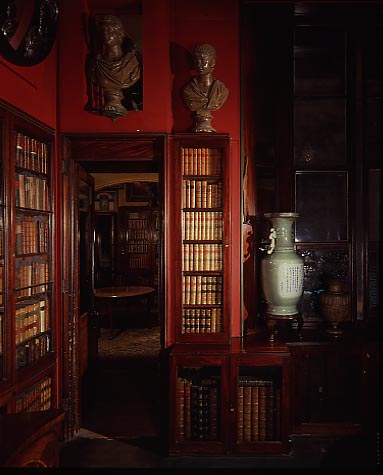
Library at the Sir John Soane's house. Image @Sir John Soane's House Museum

I had a discussion about the books on John Soanes shelves with the assistant but he did not know much about them. I looked at them, stared at them closely, extremely closely and tried very hard to remember titles, authors and general themes that ran throughout the library. My memory is not that good. I remember large leather bound atlases, the works of Shakespeare, books containing prints and sketches of ruins from classical Greece and Rome, philosophies, histories and there were many religious tracts. There seemed to be a variety of dictionaries. It is interesting to remember that Dr Johnson had many rivals before his Oxford English Dictionary became the definitive one.
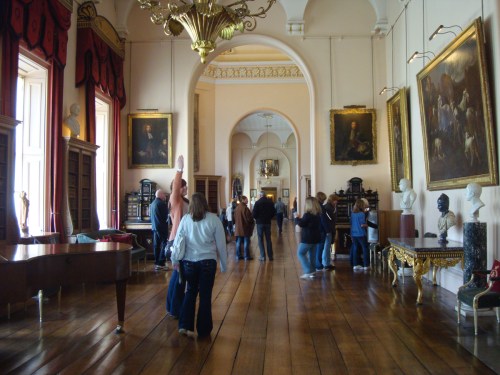
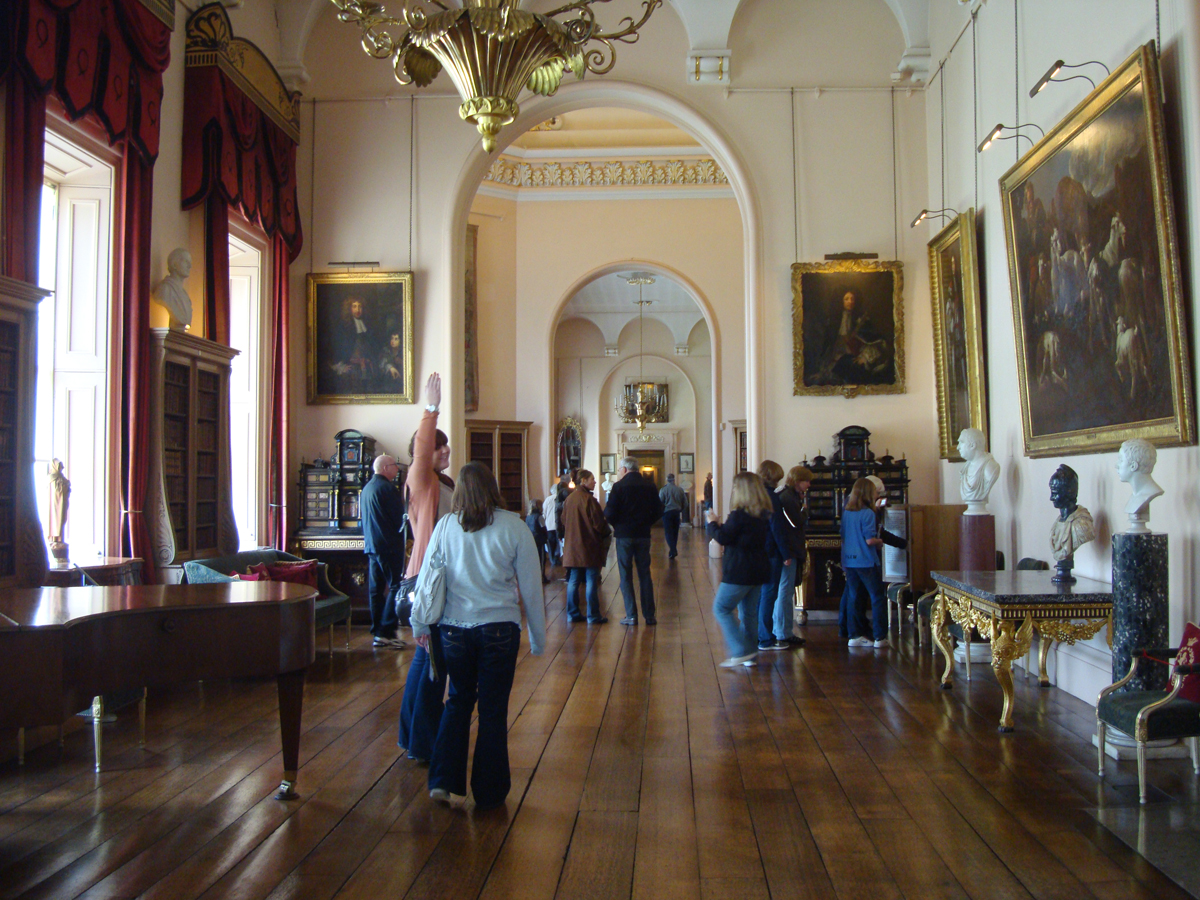
The Library at Castle Howard sits along a grand hallway. Image @Tony Grant

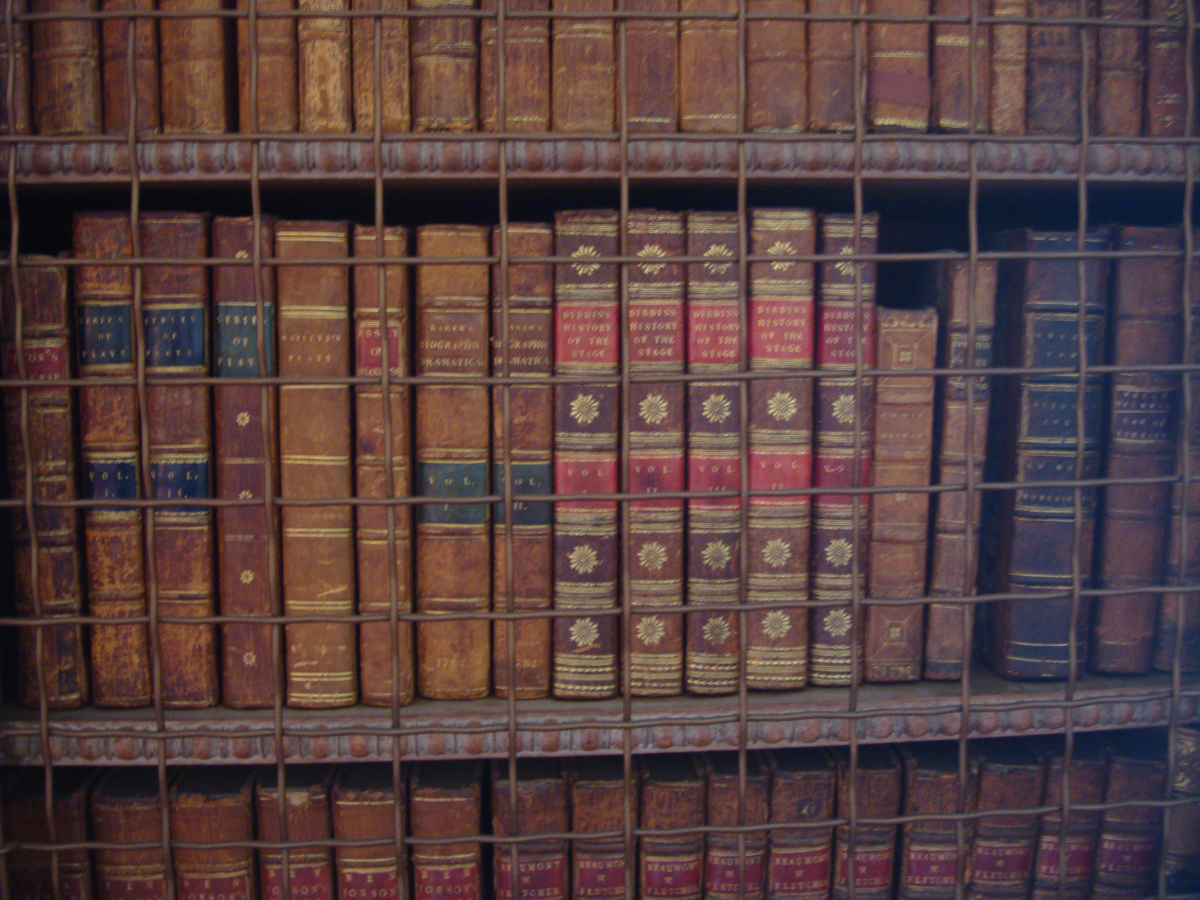
Anyway, getting back to Brideshead, sorry, Castle Howard. There is a magnificent library there. Shelves and shelves of beautiful volumes with gold-tooled titles and gold leaf flower and leaf patterns adorning, the light tan, dark brown and black leather bound volumes.
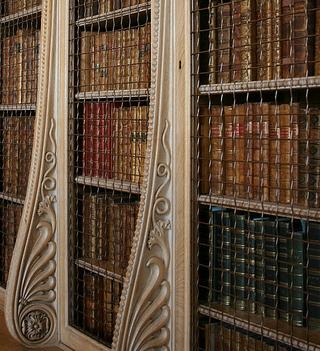
Detail of the book shelves in the library at Castle Howard

I asked, timorously, of a smiling gentle looking lady standing to one side of the library, the gallery assistant, if I could take photographs of the books expecting a negative reply. “Yes,” she said enthusiastically, “go ahead, and are there any particular books you would like to see?” I couldn’t believe my luck. She continued,“We have many first editions by great authors here.” I did ask about Jane Austen first editions. She thought there might be some somewhere amongst the novels section. We looked, but could only find Swift, Dryden, Byron, Congreve and others. We couldn’t find Jane. These first editions were there, on shelves, within touching distance. AAAAAGH!!!!
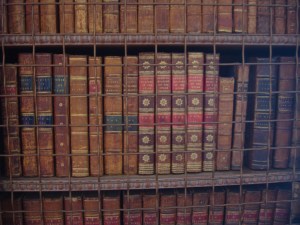
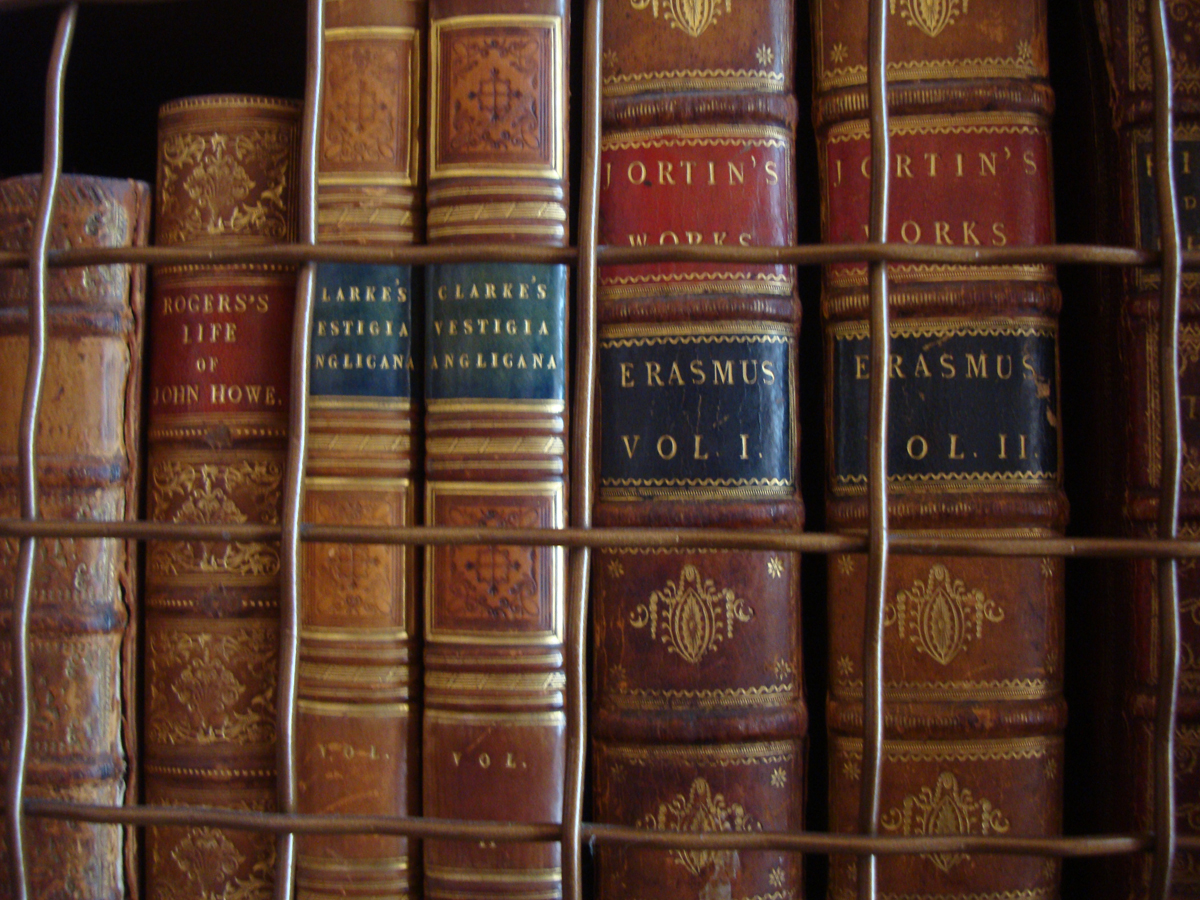
Brown Leather and gold-tooled lettering

One thing I discovered as we went around Castle Howard was that the gallery assistants were not your run of the mill gallery assistants, these people know a lot about the contents of the rooms. They had really studied what they watched over. An example was when we walked into a bedroom and on the wall was a portrait of Henry VIII and it was a Hans Holbein but the same room had Gainsboroughs and Lawrences, on the walls too. No, not copies, the real thing. Rooms throughout the Castle were full of original masterpieces. I couldn’t believe it. A lady there when I asked her, gave me a great art historians analysis of one particular Gainsborough. She, never mind the painting, was the real deal.
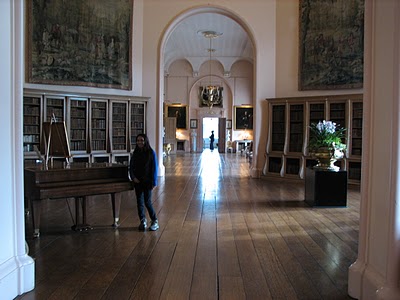
Library at Castle Howard. Image @A Life Less ORdinaRY

So back to the books, where I started. I was allowed to take photographs of the books. I must have looked odd. Other visitors looked through the windows at the magnificent views around the grounds, or studied beautiful gleaming vases and glanced at magnificent paintings and there was I, getting close and personal with brown dusty looking things crammed on shelves. I am a constant embarrassment to my family. Ha! Ha!
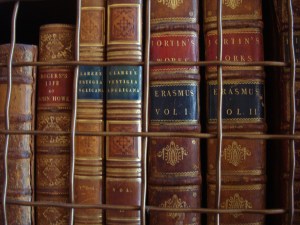
Books on the shelves at the library. Image @Tony Grant

Some of the books I came across were by authors I had never heard of, for instance, “Col. Napiers Peninsula Wars.” I discovered later that,Sir Charles James Napier was born in August 1782 and died in August 1853. He was a general in the British Army and became the British Army’s Commander in Chief in India. Napier commanded the 50th (Queen’s Own) Regiment of Foot during the Peninsular War in Iberia against Napoleon Bonaparte.
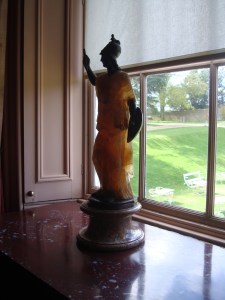
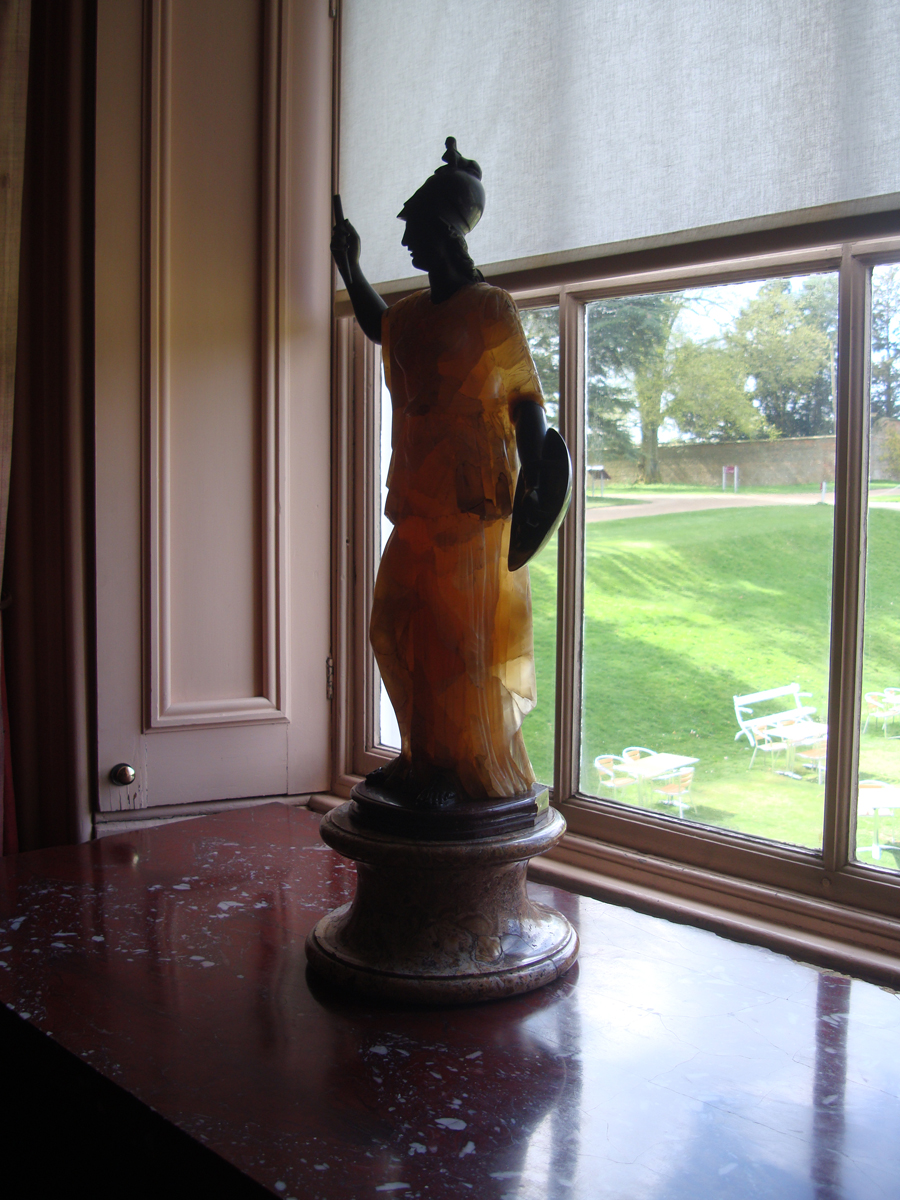
A luminous Greek statuette in the library. Image @Tony Grant

General Napier put down several insurgencies in India during his reign as Commander-in-Chief in India. Some of his rather perceptive insights into dealing with insurgencies included:

The best way to quiet a country is a good thrashing, followed by great kindness afterwards. Even the wildest chaps are thus tamed.
which may help explain why he felt rebellions should be suppressed with such brutality.”

He also once said that:

the human mind is never better disposed to gratitude and attachment than when softened by fear.”
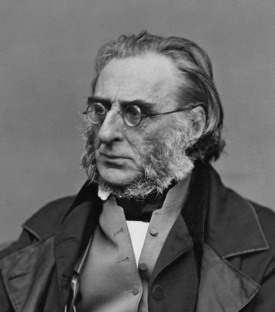
Charles James Napier

An example of this idea in practice was after the Battle of Miani, where most of the Mirs surrendered. One leader held back and was told by Napier:

Come here instantly. Come here at once and make your submission, or I will in a week tear you from the midst of your village and hang you.”

He also mused that:

“so perverse is mankind that every nationality prefers to be misgoverned by its own people than to be well ruled by another”

I would have loved to have met him. Wouldn’t you? Imagine him at your dinner party.
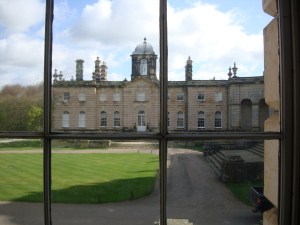
Castle Howard. Image @Tony Grant

Other books on the shelves included: Davies’s Micelanie, J. Orton’s Works ERASMUS, Murphy’s Works, alongside some more tried and tested volumes that have lasted the travails of time: Ben Johnson’s Work, Defoes’ History of The Stage, Drydens Plays, and Smollett’s England, to give you a flavour and taste of the contents of this library. I tried to search for information on some of the more obscure authors and as you can tell I found a bit about Colonel Napier. Many of the authors I could find nothing about, but an interesting discovery I made was about Murphy and his works. He was an Irish playwright. Here are some play titles to slake your thirst and satiate your appetite.

The Upholsterer (1758)
The Way to Keep Him (1760),
The Old Maid (1761)
Three Weeks After Marriage (1764)
Know Your Own Mind (1777)

Arthur Murphy wrote about eighteen plays in this vein. I wonder about The Upholsterer though. I’m sure it was a very “comfortable” play. You would probably fall asleep on your deeply “upholstered” seat during it, mind.

HOW can you write a play about upholstery???

He also wrote biographies of David Garrick, Samuel Johnson and Henry Fielding.
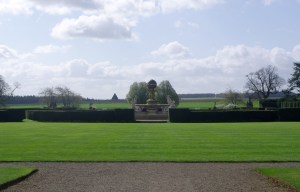
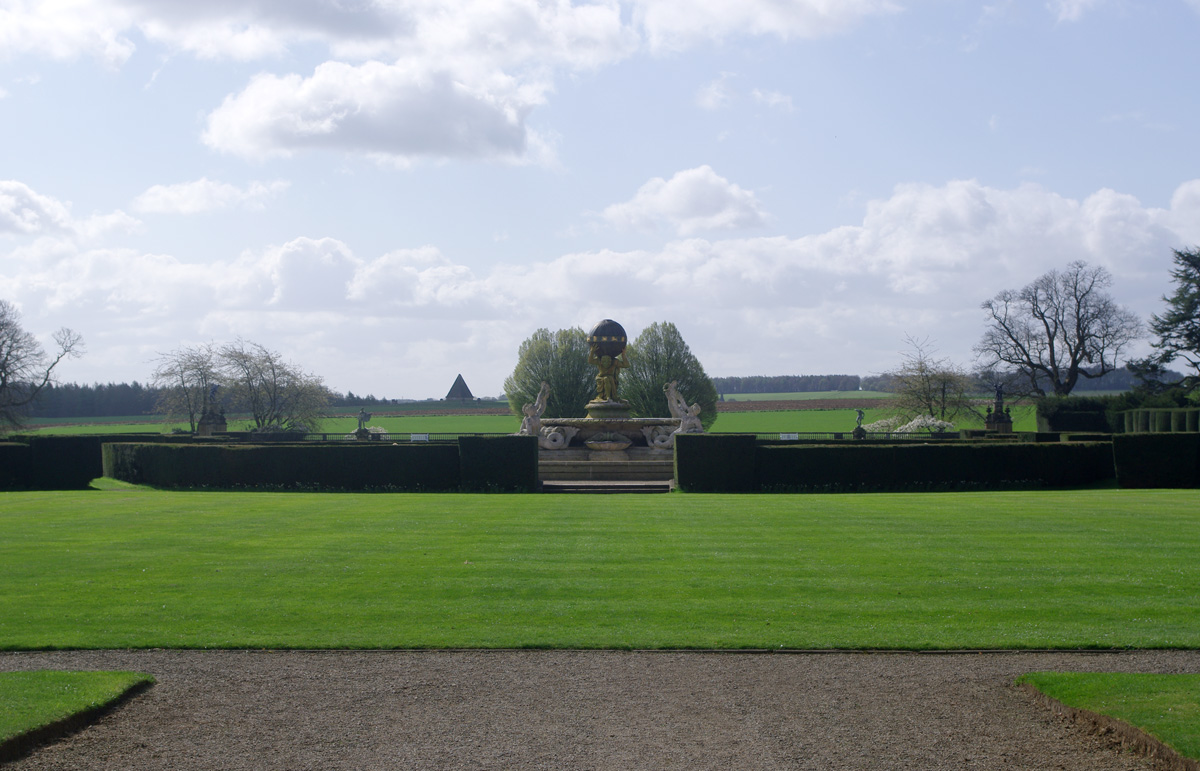
Globe Fountain on Castle Howard Grounds. Image @Tony Grant

With my experiences in two 18th century gentlemen’s libraries, Sir John Soanes house in Holburn, and the vast and airy gallery of the Howard family at Castle Howard, amongst their fine varied brown leather covers and illuminated gold leaf lettering, what sort of conclusion can I come to? After a swift and furtive voyeuristic delving into their interests and source of deep thought and emotions? What can I say?

The book titles have a familiar ring to them. If you spend an afternoon in a Waterstones [bookstore] it too has many of the same book divisions and sections as those two 18th century libraries. Nowadays the novel provides the larger section in Waterstones but at Holburn and Castle Howard they provide a rather smaller section. History, biography, philosophy, poetry, plays and dramas, atlases and travel accounts are there in varied abundance. Dictionaries are very prevalent in the 18th century library and dictionarys produced by different people using different criteria. In the 18th century there was a great interest in words, their meaning and origins. There was a hunt going on for words in the 18th century and need for conformity. There was the need for one language and one set of words accepted by all. You can only speculate the economic consequences. Local dialects were all very well within a locality. There was a sort of race to be the best amongst word gatherers, dictionary makers. Of course, we know now that Dr Johnson won. Hurray!!
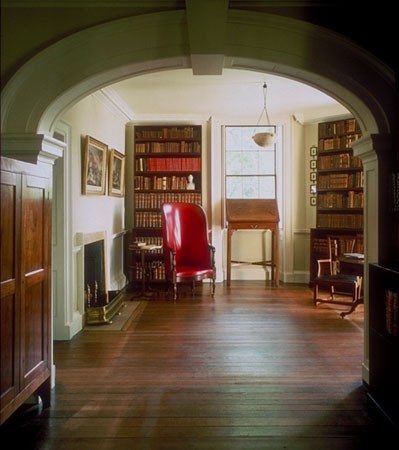
In 1815, Thomas Jefferson sold 6,487 volumes of his vast collection of books from his library at Monticello to the U.S. Library of Congress.

Many of these interests shown in the books displayed can be connected to interests in the classical world, which is not so much of a concern these days for the majority, unless you do a degree or are doing the Romans at school, or are watching a BBC documentary about Delphi or the Olympics.

I imagine plays by Dryden or Arthur Murphy were in great demand, because people didn’t have television and radio then to entertain them. We can see people’s interest in owning written drama scripts, reflected in Jane Austen’s own family’s exuberant enacting of plays and the writing of them at their home in Steventon. Jane uses the play, Lover’s Vows, as home entertainment in Mansfield Park, with many meanings and personal interactions connected to it.

So there are differences in the use and purpose of books between now and the 18th century, but the subjects covered and the systems of organisation were recognisable. Melvil Dewey (1851-1931) didn’t create his system until later, but the general system used for organisation was grouped in familiar ways. How we think about the world was being formed. Dewey and some others made it far more sophisticated. The organisation of books has had a big impact on the way we think and learn.

So there you are. We are not the only generation with a thirst for reading. The next time you visit a country house or stately home, get in amongst the musty smelling, brown leathery things. They will speak volumes to you.

Read Full Post »
« Newer Posts - Older Posts »