Feeds:
Posts
Comments

Archive for the ‘Regency Period’ Category

Along with Austenprose, this blog is celebrating Georgette Heyer’s 108th birthday on August 16th. Look for Laurel Ann’s interview with me on her blog that day! Her questions were quite challenging.

The recent reviews featured on Laurel Ann’s blog echo some of the reviews that have been published in recent years on this blog. For your enjoyment and in celebration of the Austenprose event, we are reviving some of our favorite Georgette Heyer reviews.

Read more Georgette Heyer reviews by a wide variety of bloggers on Austenprose.

Read Full Post »

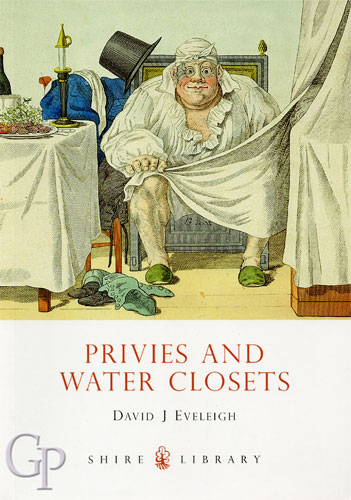
I have reviewed several Shire Library books this past year and have yet to be disappointed. Case in point, Privies and Water Closets by David J. Eveleigh, an excellent small book on the history of fixed and portable sanitation and waste management. I have discovered that this topic is of everlasting curiosity and many of my readers have asked questions similar to the following: How well  did our ancestors manage without indoor bathrooms or running water? This book largely answers the question.

Starting with the 17th and 18th centuries, Mr. Everleigh traces the history of sanitation and the problems our ancestors had in handling waste sewage. While the topic may not seem glamorous, it is hugely fascinating, for sanitation management was intricately connected to the safety of a community’s water supply and the populace’s overall health and well-being. He classified the earliest sanitation methods as either portable or fixed.

Portable Solutions

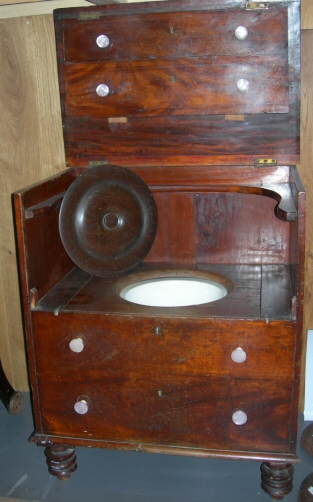
Chamber pots were the easiest method of sanitation. Placed under beds, or a commode or closet stool, the contents could be easily emptied into a covered slop pail and carried outside. In the 17th and 18th century small rooms or closets were introduced that adjoined the bedrooms. These areas were outfitted with a comfortable commode, under which a pan would be placed.

16th century water closet

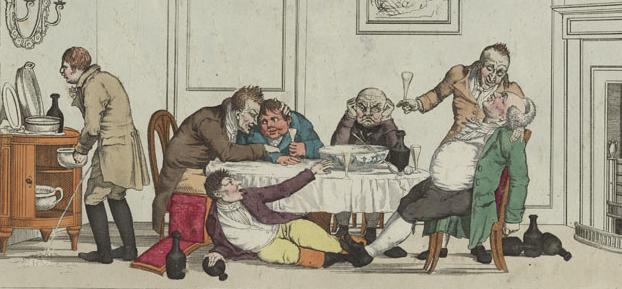
The wealthy did not handle the chamber pots, leaving the servants to clean up after them.  Chamber pots were not always so well situated, as the image below shows (p. 8).
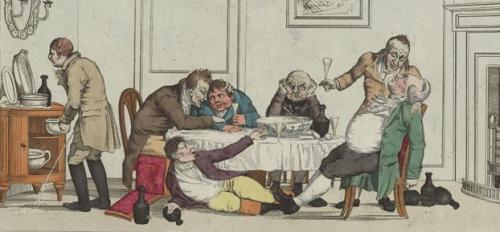
L'apres Dinee des Anglais

English gentlemen, known for their prodigious drinking habits, were wont to relieve themselves where they were – in the dining room, for instance, or in a common room of a public inn – where they did not always aim straight and true (as the young man at left), much to the chagrin and disbelief of French travelers, some of whom wrote about this unsanitary habit.

Fixed Solutions

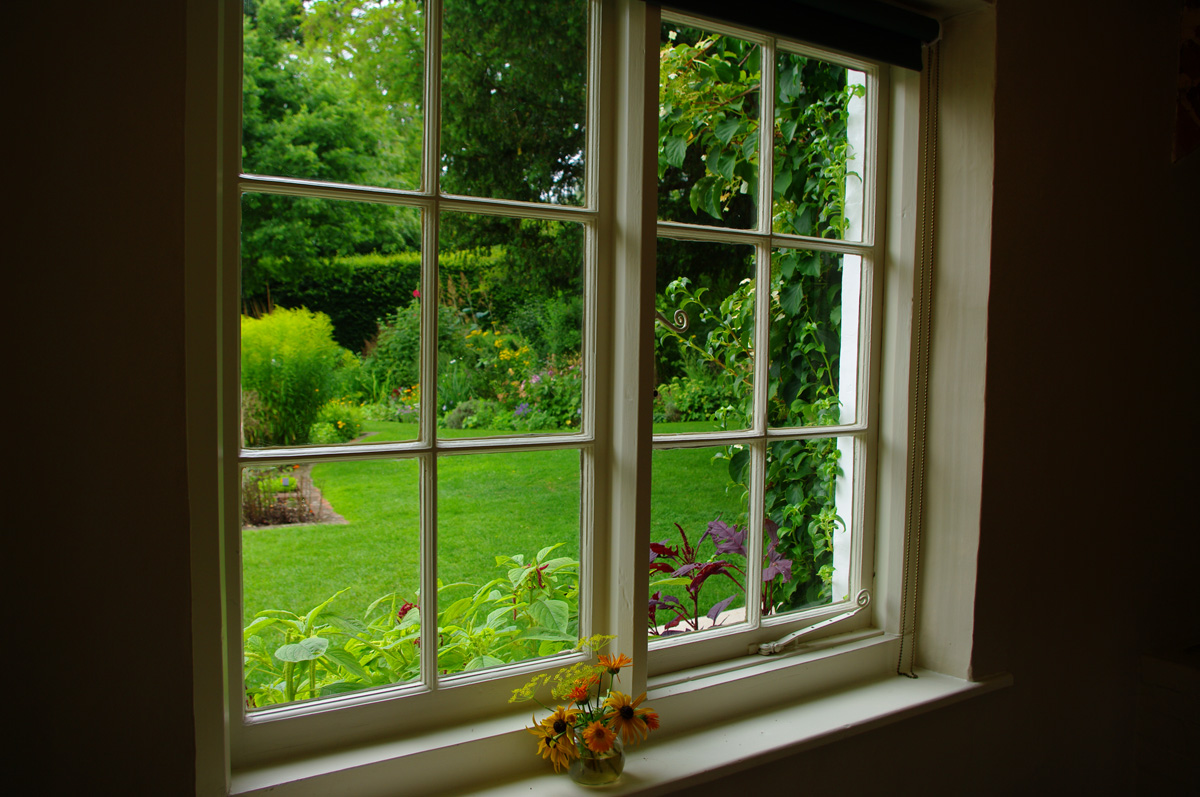
The privy was a fixed out house (or necessary house or house of office), with no water supply or drain and usually located some distance away from the house. A fixed wooden seat with a rounded hole was placed directly over the cesspit or “void.” Occasionally privies were attached to the side of a building, projecting out from a top floor, or reached through on outdoor entry on the ground floor of a service wing. More often than not they were placed at some distance from the main house at the far end of a garden or yard, where its contents could be used to “enrich” flower and vegetable beds.

Earth closet contents were put on the garden, Chawton Cottage. Photo courtesy Tony Grant**

In cities, neighboring privies were placed side by side in yards and drained into a common cesspool located under an alley that ran between the row of cottages or townhouses. In rich to middle class households, nightsoilmen would be paid to cart the waste away when the household was sleeping. This service was quite expensive, and quite often neglected in poorer districts where the lower classes could not (and landlords would not) hire these men until the cesspools were filled to overflowing.
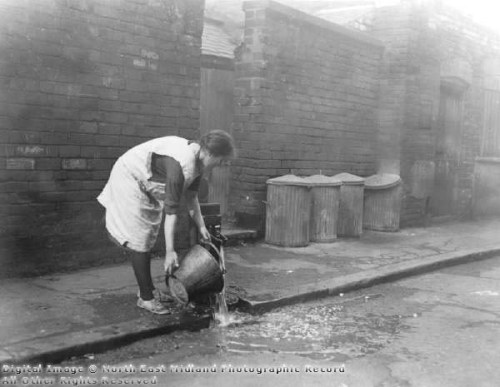
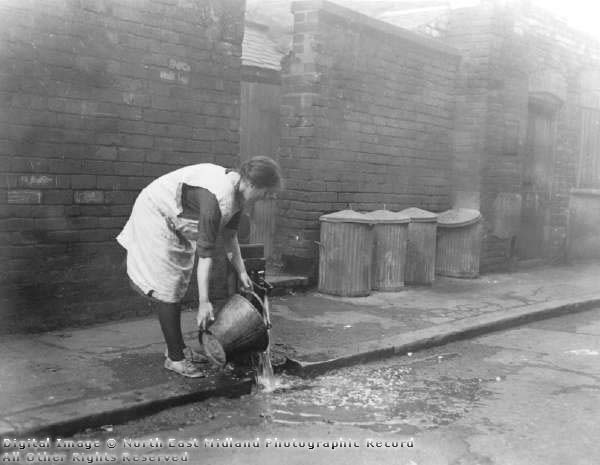
A woman obtains water from a well situated near garbage cans and outdoor privies, which can be seen through the opening in the wall. (Image taken in 1931!)***

Lack of sanitation led to diseases like typhoid, dysentery, and cholera. It was common in the slum districts for cess pools to be left unlined or partially finished, allowing liquid sewage to seep into and contaminate a nearby well, cistern, or other common form of water supply. In cities the public privy was often the only “necessary” available and was shared by a number of households, sometimes as many as sixty-five. The crowding and lack of maintenance and emptying of wastes led to disease and death.
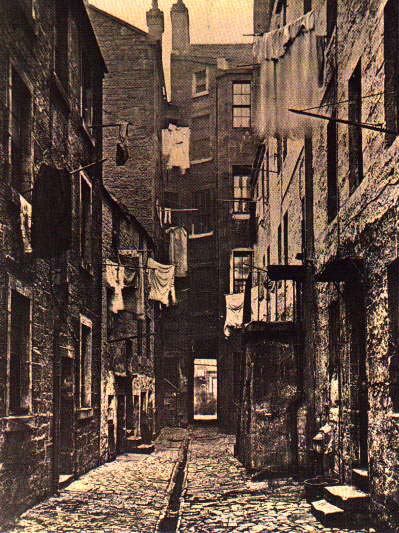
Alley with open sewer drain and privies for the surrounding houses

In Privies and Waterclosets, Mr. Eveleigh traces the improvements in street sewers, indoor plumbing and running water, and sanitary habits throughout the nineteenth century, especially after the second great cholera epidemic in Bermondsey, London in 1849, which killed 13,000 and was the result of water contaminated by raw sewage.

While the book consists of only 64 pages, authors of historical novels will find it a fascinating and welcome addition to their research library. I give this book three out of three Regency fans.

Pages: 64
Published: 2008, Shire Library 479, Shire Publications, UK
150mm x 210mm, soft cover, indexed, new
ISBN 978-0-7478-0702-5

Additional links:

*Image of water closet: Abertillery and District Museum

**Image of Chawton Cottage garden, Tony Grant, London Calling – Personal Hygiene in Jane Austen’s Day

***Image of woman at well, North East Midland Photographic Record, The University of Nottingham, 1931 (This is a correction.)

Read Full Post »

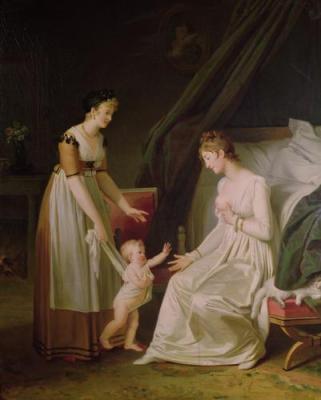
Breastfeeding mother, Marguerite Gerard

French artists Marguerite Gerard (1761-1837) painted this domestic scene of a mother about to breast feed her child.  The subject is unusual in that breasfeeding one’s baby was unfashionable for aristocratic and upper classes,  and the act had become associated with the poor and lower classes.

Generally, wet nurses were paid to feed the babies of the wealthy. Much thought and care went into their selection, and their milk was examined for texture, color, viscosity, and taste. Some thought that aspects of a wet nurse’s personality could be passed through her milk, and therefore her character had to be impeccable. Cassandra Austen, Jane Austen’s mother, sent all her children to the nearby village of Deane to be nursed in their infancy.  Although Cassandra Austen visited her babies daily, they did not return to the family fold until they were around 18 months of age.

The popularity of wet nurses stemmed from the fact that royalty often wanted large families. Wet nurses were hired to feed the newborn so that the royal mother would soon regain fertility and become pregnant again. When royals stopped breastfeeding their children, other women from wealthy families soon followed suit and began to farm their babies out to wet nurses.  This practiced continued until the end of the 19th century, when it largely died out.

Read Full Post »

Inquiring readers, One of the perks of overseeing a blog is getting to know the fascinating people one encounters while researching a topic. One such individual is Patrick Baty of Papers and Paints. Mr. Baty has carried out extensive research into the use of pigments in architectural and decorative paintings. Recently I asked him the following questions:

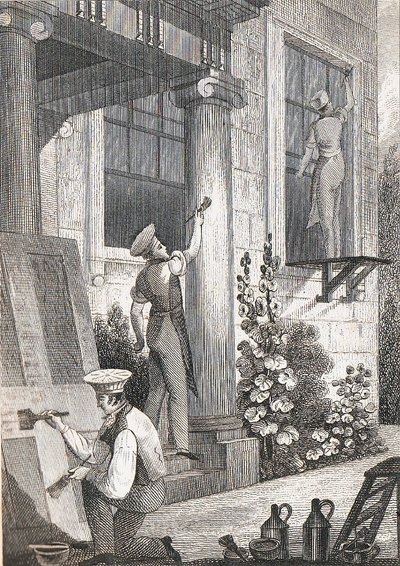
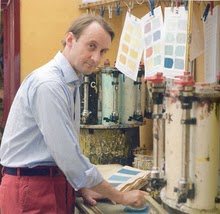
Image of painters from Papers and Paints

“If Sir Walter Elliot from Persuasion decided to paint the door to the carriage house at Kellynch Hall, how would this be accomplished? Would he keep a painter on hand or hire one? Were paints made from scratch from a tried and true formula, or did each painter have a formulaic secret? What were the typical colors used for exterior doors and window casements, and wooden structures?”

Mr. Baty: “It is likely that [Sir Walter] would have hired a painter, unless he was tempted by some of the literature of the time, for example T.H. Vanherman’s “Every Man his own House-painter and Colourman“, 1829. One hundred years earlier there was this revealing passage in a work of 1734:

“Painters Work being very expensive, and this being the only part in Building wherein a Gentleman can be assisting either by himself or Servants, it being almost impossible for any Gentleman to do either Masons, Bricklayers, Carpenters, or Smiths Works; whereas it is well known and daily experienced since the Advertisement of ALEXANDER EMERTON, that several Noblemen and Gentlemen have by themselves and Servants painted whole Houses without the Assistance or Direction of a Painter, which when examined by the best Judges could not be distinguished from the Work of a professed Painter.”

If his house/estate were big enough he might have had a handyman/painter. Otherwise he would have called upon the services of a firm like Messrs Moxon & Carfrae Ltd, painters and decorators, Edinburgh, whose day books survive from the 1770s.

Paints were generally made from ready-mixed paste bought at a colourman’s shop as can be seen in this quote of 1747:

“Methods practised by some Colour-Shops; who have set up Horse-Mills to grind the Colours, and sell them to Noblemen & Gentlemen ready mixed at a low price, & by the help of a few printed Directions, a house may be painted by any common Labourer at one Third of the Expense it would have cost before the Mystery was made public”

Different painters might have had slightly different recipes, but the general mixes would have been very similar.  (The Methods and Materials of the House Painter in England: An Analysis of House Painting Literature 1660 – 1850, thesis by Patrick Baty.)

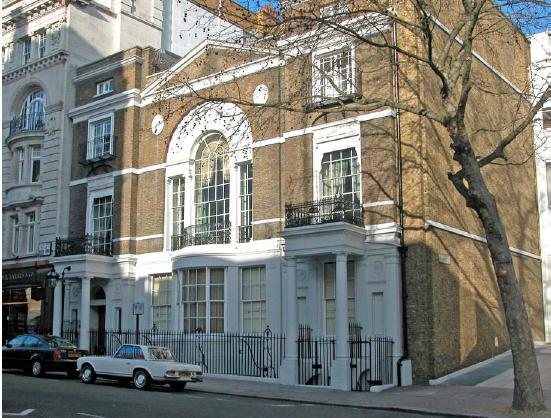
Boodle's St. James's. Papers and Paints performed the colour survey.

The sort of colours being sold by a Bath colourman of the period for exterior use were:

Olive brown paint in casks of 30lb & upwards, per lb 3d

Oil Paints

  • Lead colour 4 1/2d
  • Chocolate colour 4 1/2d
  • Invisible green 4 1/2d
  • Stone colour 5d
  • Black 6d
  • Garden green 8d
  • Rich bottle green 1 0
  • Deep Sardinian green 2 0
  • Light ditto, ditto, 2 0
  • Rainbow green 3 6

Windows, normally, would have been a pale stone colour (off white).

More about Patrick Baty:  Since carrying out a research degree which focussed on The Methods and Materials of the House-painter 1650-1850,Patrick has been running a consultancy that advises on the use of paint and colours in historic buildings.  Buildings have ranged in size and type from Royal palaces; country houses and cathedrals to museums; a wartime RAF station and London housing estates.

Visit Patrick’s sites at the following links: Papers and Paints website; Colourman Blog, the Papers and Paints blog; and Papers and Paints Twitter Account.

More on the topic:

Read Full Post »

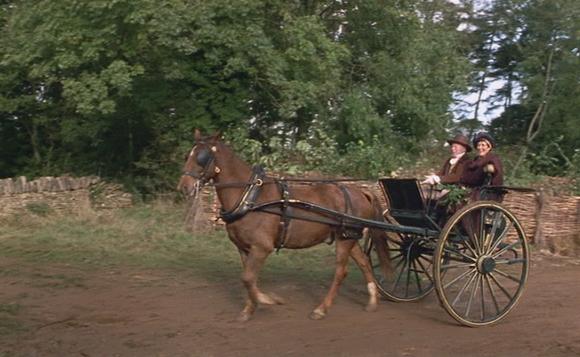
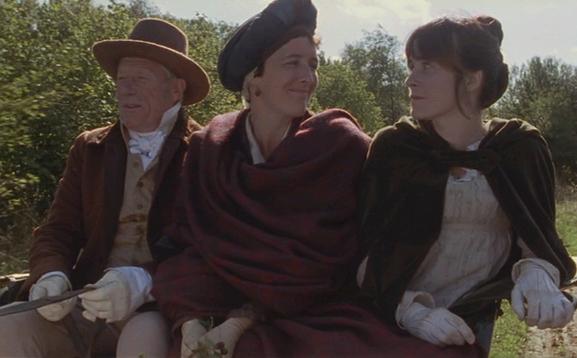
Crofts arrive in the gig, Persuasion 1995

In Persuasion, Jane Austen depicts the Crofts as the happiest couple imaginable. Sophy, who is also Captain Wentworth’s sister, follows her Admiral across the seas, sacrificing her looks in the process. She is only 38 years old, but her complexion is ruddy and has obviously been affected by the sun. Jane Austen writes about the couple in a realistic way, and like all happily married folks, these two exhibit their own idiosyncracies. Admiral Croft, it turns out, is a bad driver. Captain Wentworth says about his brother-in-law to Louisa:

“What glorious weather for the Admiral and my sister! They meant to take a long drive this morning; perhaps we may hail them from some of these hills. They talked of coming into this side of the country. I wonder whereabouts they will upset to-day. Oh! it does happen very often, I assure you–but my sister makes nothing of it–she would as lieve be tossed out as not.”

“Ah! You make the most of it, I know,” cried Louisa, “but if it were really so, I should do just the same in her place. If I loved a man, as she loves the Admiral, I would always be with him, nothing should ever separate us, and I would rather be overturned by him, than driven safely by anybody else.”

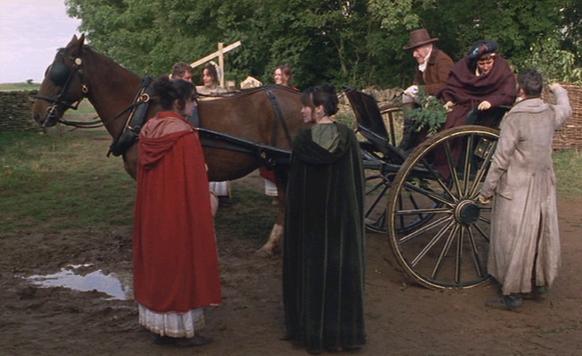
The party stops to talk to the Crofts

During their return walk from Winthrop, the party from Uppercross, which includes Anne Elliot and Captain Wentworth and a number of the Musgroves, encounter Admiral and Mrs. Croft in a gig. They offer a seat to one of the party. Everyone declines, except for Captain Wentworth, who has noticed Anne’s fatigue. He whispers something to his sister, then encourages Anne to join the Crofts in their two-seater for the rest of the way back to Uppercross (about one mile.) Anne is grateful for his thoughtfulness. But as she rides in the carriage, she hears Mrs. Croft warn her husband:

The Crofts and Anne Elliot crowded in a 2-man gig

My dear admiral, that post!–we shall certainly take that post.”

Jane Austen goes on to write:

But by coolly giving the reins a better direction herself, they happily passed the danger; and by once afterwards judiciously putting out her hand, they neither fell into a rut, nor ran foul of a dung-cart; and Anne, with some amusement at their style of driving, which she imagined no bad representation of the general guidance of their affairs, found herself safely deposited by them at the cottage.

The happy admiral is more than willing to allow his wife to steer the carriage alongside him, which many of us who have driven with “back-seat driving” spouses know is a rare attitude indeed!

In this famous scene by Jane Austen, the Crofts moved over to make room for Anne. Mary Musgrove would rather die from fatigue than be seen crowded in a humble gig, but Anne could only feel gratitude. She is beginning to understand that while Captain Wentworth is unable to forgive her for rejecting him, he is still a kind and decent man. He knows her well enough to see that she was tired and made arrangements for her. In these small observable progressions (as with taking the child Walter from her without comment), we see the Captain’s love for Anne come to the surface. It will take a little longer for his anger at her rejection to recede. See also Shopping and Milsom Street, Bath

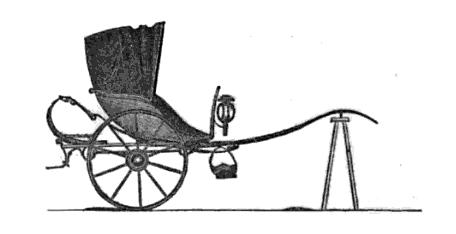
Light weight gig

About Gigs: Gigs were two-wheeled carriages equipped for one horse only. They were designed for two people, one of whom was the driver, and were considered carriages for the middle class, or for the “poorer” classes, who paid less duty on them. Because these carriages were light in weight and springy, they could be easily turned over, especially by a poor driver like Mr. Croft. Gigs were used by doctors, travelers, and people who made short journeys that would not fatigue the horse. Gigs evolved into cabriolets (early versions of cabs) Dennet, Stanhope, and Tilbury. The Stanhope was designed by Fitzroy Stanhope, the second son to the Third Earl Stanhope. This carriage became popular towards the mid-19th century for short trips between Town and the suburbs.

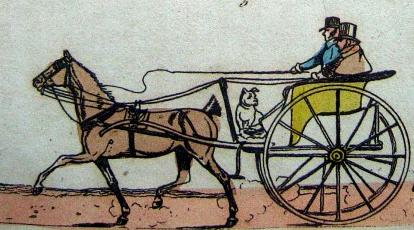
Road to a fight, detail by Henry Alken, 1821

The two men in this high perch phaeton show how precarious a light two-wheeled vehicle can be. One can see the difference between this “sporty” more expensive vehicle and the humble gig (above).

Read Full Post »

« Newer Posts - Older Posts »