Feeds:
Posts
Comments

Archive for the ‘Regency style’ Category

Lady Sarah Jersey

Gentle Readers: In my sidebar I call myself an amateur historian, an apt term as this post will attest. I try to quote from older sources, but this can sometimes backfire. Captain Gronow, for example, whose words I quoted for this post via John Ashton (1890) and Lewis Saul Benjamin (1909), wrote down his memories about the Regency era in 1863, a half century after the events occurred.  Gronow’s memory, unfortunately, was faulty in a few particulars, especially in recalling the names of the patronesses of Almack’s in 1814, and why they turned the Duke of Wellington away. I have placed a number of updates in the original post.

Any individual who has read a novel set in Regency England knows about the assembly rooms at Almack’s and the club’s exclusivity. While Almack’s was notorious for its stale refreshments and thin lemonade in the supper room, the Beau Monde never minded, for the idea was to hob nob with the right people, trot out one’s eligible daughters, and make the best marriages possible given their dowries and family connections. Looks and a personality had very little to do with a young lady’s success in her first season OUT, but a pleasing countenance matched with a fortune would swiftly speed up the unification of great estates or the purchase of a worthy title.

Almack's, Pall Mall, opened in 1765

The Patronesses of Almack’s guarded entry to the club like Valkeries prepared to do battle. No one, not even the Duke of Wellington, would dare to step a foot inside the establishment without a proper voucher, and, indeed, he was turned away once for wearing *gasp* trousers instead of knee breeches. But is this true? Please keep on reading.

This passage from Social England Under the Regency by John Ashton (p 383) is quite telling:
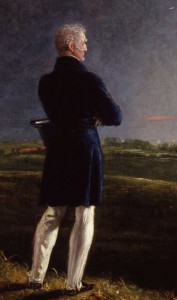
*The Duke of Wellington

Of course the Creme de la creme went to Almack’s, but numberless were the Peris who sighed to enter that Paradise, and could not. Capt. Gronow, writing of 1814, says: “At the present time one can hardly conceive the importance which was attached to getting admission to Almack’s, the seventh heaven of the fashionable world. Of the three hundred officers of the Foot Guards, not more than half a dozen were honoured with vouchers of admission to this exclusive temple of the beau monde, the gates of which were guarded by lady patronesses whose smiles or frowns consigned men and women to happiness or despair. These lady patronesses were the Ladies Castlereagh, Jersey, Cowper, and Sefton; … and the Countess Lieven.” (Note: At that time, two other patronesses included Lady Downshire and Lady Bathurst.)

Cruikshank, Longitude (Countess Lieven) and Latitude (in capri-length pantaloons) at Almack's.

In a Newspaper of May 12, 1817, we read – “The rigorous rule of entry established at Almack’s Rooms produced a curious incident at the last Ball – The Marquis and Marchioness of W__r, the Marchioness of T__, Lady Charlotte C__ and her daughter, had all been so imprudent as to come to the rooms without tickets, and though so intimately known to the Lady Managers, and so perfectly unexceptionable, they were politely requested to withdraw, and accordingly they all submitted to the injunction. Again at the beginning of the season of 1819, we find these female tyrants issuing the following ukase: “An order has been issued, we understand, by the Lady Patronesses of Almack’s, to prevent the admission of Gentlemen in Trowsers and Cossacks to the balls on Wednesdays, at the same time allowing an exception to those Gentlemen who may be knock kneed or otherwise deformed.” But the male sex were equal to the occasion as we find in the following lines: –

TO THE LADY PATRONESSES OF ALMACK’S

Tired of our trousers are ye grown?

But since to them your anger reaches,

Is it because tis so well known

You always love to wear the breeches.
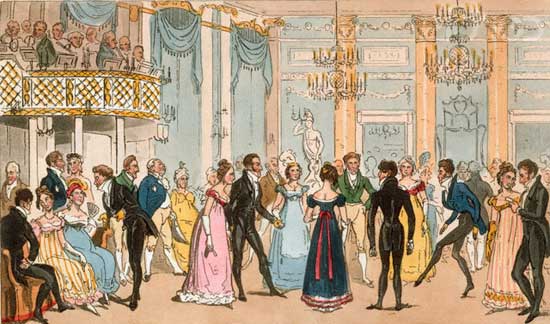
*Image from Highest Life in London: Tom and Jerry Sporting a Toe among the Corinthians at Almack's in the West, by I. Robert and George Cruikshank, 1821

Update:  Regency Researcher, Nancy Mayer, was kind enough to contact me and set a few facts straight. I have placed her explanations in the update/update below. In the above image, the young bucks are wearing dark suits with dark, close-fitted trousers (Beau Brummel’s influence), while the older men are still in buff-colored knee breeches.

If anyone knows the true story about the Duke and his trousers, please contact me. One conjecture is that Wellington was turned away for arriving after midnight. (Read more about the Patronesses’ edict on trousers in this link to The Beaux of the Regency, Vol. 1.)

Update/Update: Pantaloons, which fitted snug to the leg, came in two lengths: capri and long. A strap under the foot kept long pantaloons in place. (The image below shows the strap.) Thus, the men in the image above were wearing tight pantaloons, for trousers at the time were slightly looser and would have sported gussets that extended the fabric low over the shoe.
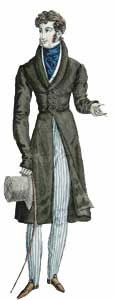
Pantaloons with straps, 1821. Image @Republic of Pemberley

In 1814, the date Gronow recollected, trousers (below) were acceptable for day wear only. Pantaloons were worn as evening wear.

Nancy Mayer, a Regency researcher who provided much of the updated information, wrote in a second note: “Luttrell’s poem on Almack’s was published around 1819. According to the verse about the “trowsers”, I think trousers didn’t become an issue until after 1817, at least. Sometimes it is hard to tell if the men are wearing trousers or the longer pantaloons with the strap under the foot. Most of the Lords in the picture of the Trial of Queen Caroline 1820 are wearing trousers or the long pantaloons.”
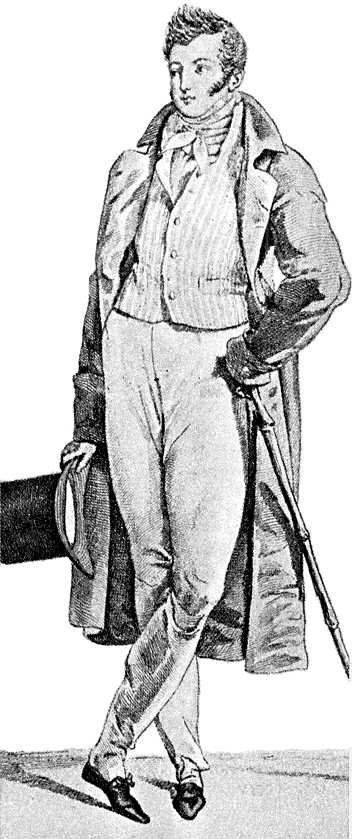
 

Trouser with gussets, day wear, 1813

More on the topic:
*Images: Carolyn McDowell

Read Full Post »

In the second episode of At Home With the Georgians: A Woman’s Touch, Amanda Vickery mentioned metamorphic furniture and (remarkably) turned a desk into a bed. A visitor to Tony Grant’s excellent post left this question: What is metamorphic furniture?

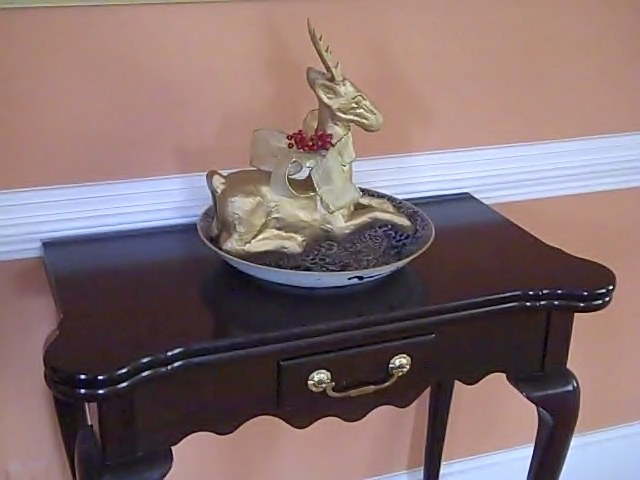
Modern example of metamorphic furniture: hall table/card table

Tony answered the question admirably. This mechanical furniture, wide-spread in Georgian times, had a dual use. A small folding staircase could be transformed into chair or desk, such as a writing table, library table, or card table. These pieces of furniture were great space savers, as I can attest. Only last week I transformed my faux-Georgian hall table into a card table for my guests. I never guessed until Tony’s post that I owned an example of mechanical furniture. Sweet!

The only change I would make in the video (besides the annoying lilt in my voice) is to make sure that the next time I film an example of my furniture, it is thoroughly dusted and cleaned! Extra points if you can spot my pooch in one of the scenes. His hang dog expression tells me that he was out of sorts, having been told to stay put.

This Victorian piano at the Brooklyn Museum pulls out into a bed. Fascinating. The video is available to view until March 2011.

READ MORE: If your interest in the topic is piqued, Clive Taylor (who also left a comment on the previous post) has written a dissertation on the topic (click here to read The Regency Period Metamorphic Chair) and sells metamorphic library chairs/stairs in his shop, Parbold Antiques.

Read Full Post »

“Heigh ho! sing heigh ho! unto the green holly:
Most friendship is feigning, most loving mere folly:
Then, heigh ho, the holly!
This life is most jolly.”
– William Shakespeare, As You Like It

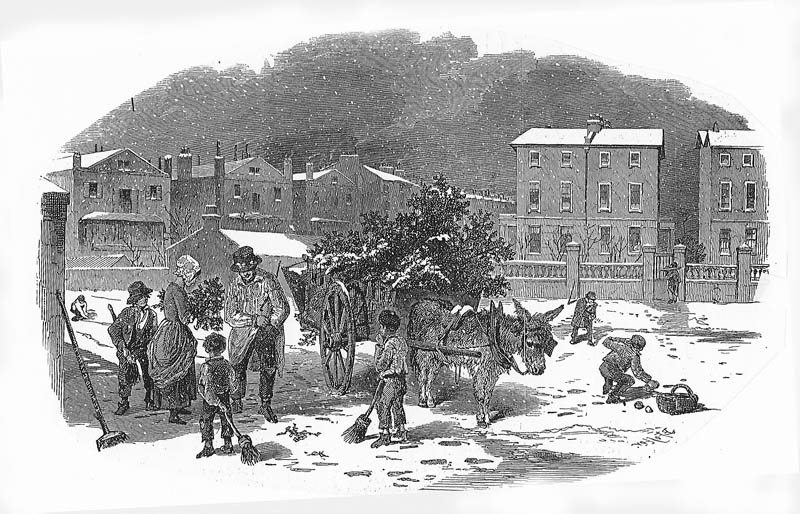
Decorating one’s house with natural boughs has been a Christmas tradition since Celtic times. Boughs of holly with their bright red berries were especially coveted. (Read Mythology and the Folklore of Holly.) One understands how easily people in rural areas could obtain these bright green leaves, but what about those who lived in London? This image of a holly cart pulled by a donkey provides a solution.

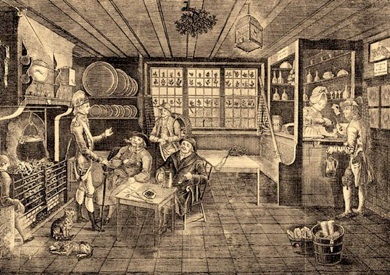
Note that the customer purchases a small amount of boughs. Christmas decorations in the 19th century were modest to none compared to ours. In this 18th-century print of a coffee house or chocolate shop, one can see small leaves of holly placed in each window pane and a bough hanging from the center of the ceiling. (One cannot imagine that mistletoe would  be hung in a public setting.)

Bowles and Carver print, London. Circa 1775

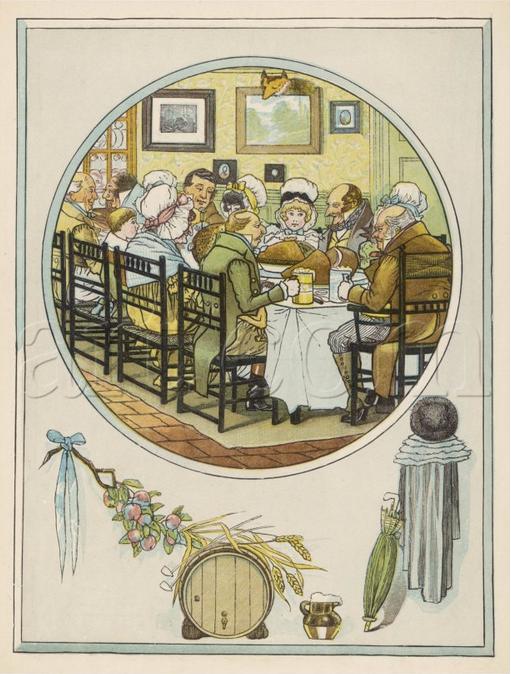
In this image of a lavish family dinner by Cruikshank, not a single bough of holly decorates the room. Most likely a wreath had been hung on the front door or some boughs had been hung from the ceiling. With holly hard to obtain in metropolitan areas, one imagines that the spare use of decorations was as much from necessity as from tradition.

Image: Art.com

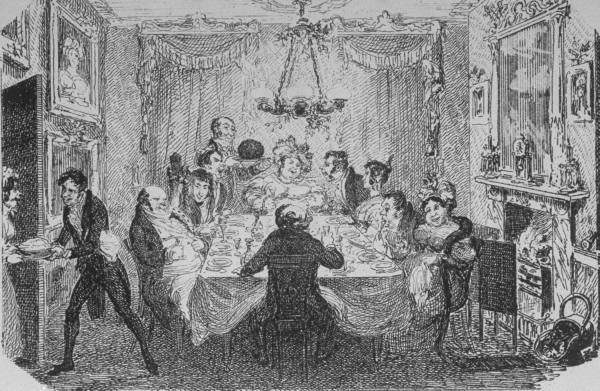
This image by Cruikshank of a family celebrating Christmas during early Victorian times  shows a few boughs inserted into the chandelier, a roaring fire, and the Christmas pudding about to be served to the hostess. This year, I have taken the Regency approach to decorating my house, emphasizing the season with just a few well placed decorations. And I love it.

Other Christmas Posts on this blog:

Read Full Post »

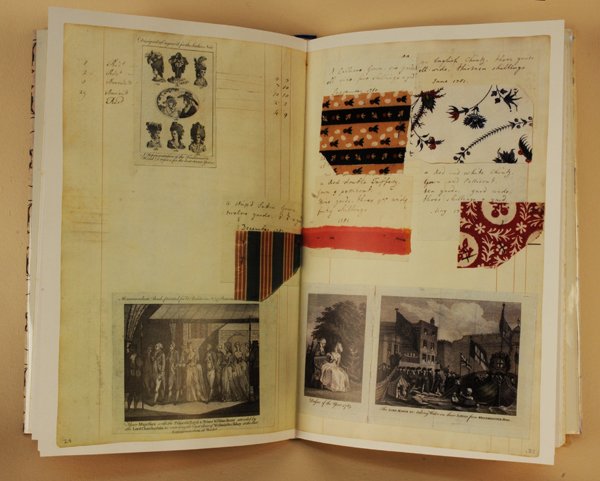
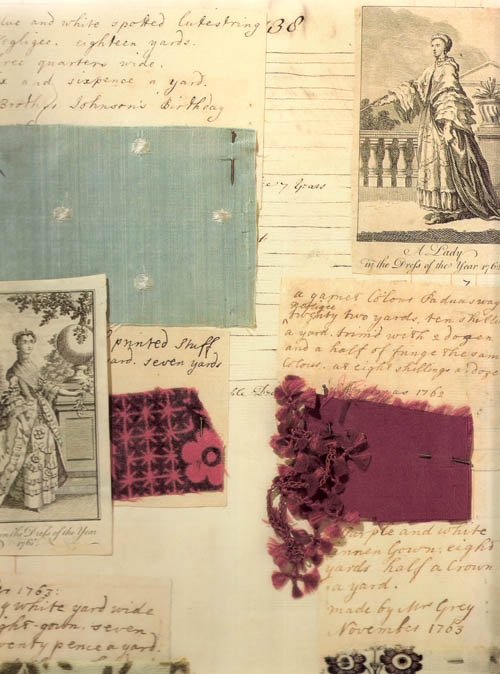
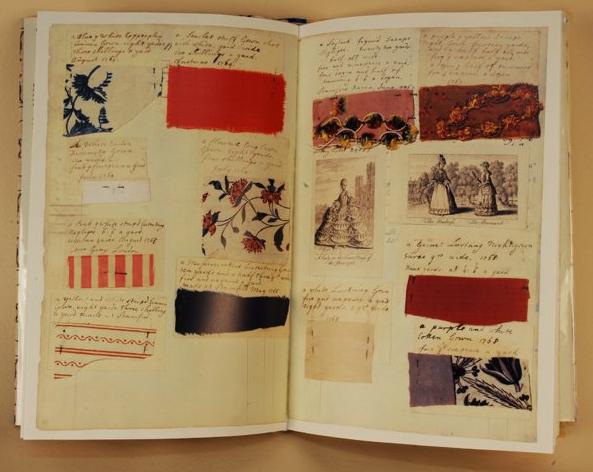
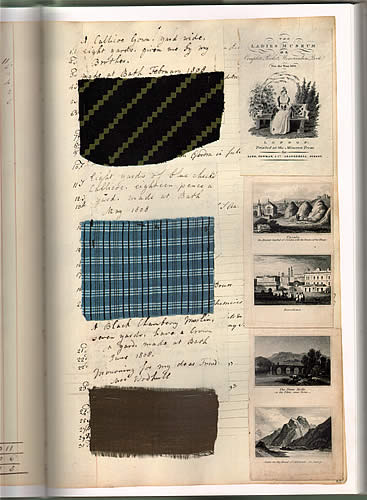
Gentle readers, this YouTube video and these images provide only a sampling of the content of this remarkable book, edited by Natalie Rothstein, who worked in the textile department of the Victoria and Albert Museum before her death. During her lifetime Barbara Johnson (1738-1825) kept a meticulous record of the dresses that were made for her, attaching swatches of fabric and including images from ladies magazines.

Sample pages from the book

Read Full Post »

Copyright @Jane Austen’s World

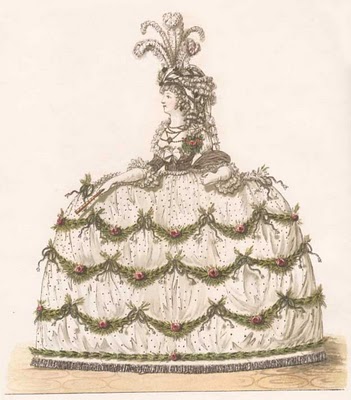
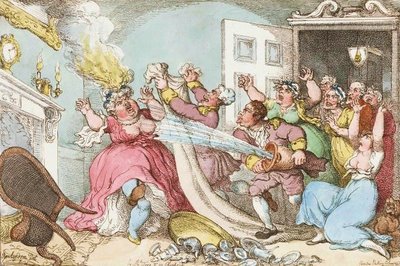
Looking at the images in this post, one can only imagine how difficult it was for a woman in full evening dress (or court dress) to move around. Between taking care of her shawl, reticule, dance card, and fan, she had to walk upright and sedately so that her head feathers did not topple over after an abrupt movement or caught fire under chandeliers ablaze with candles.

1794-95 Court Dress

Examining the above image, one can readily see that these costumes were designed for high-ceilinged rooms that were opened by high double doors.

A lady's wig catches fire. Thomas Rowlandson. Image @Yale University

In this dramatic image, Thomas Rowlandson catches a moment of real danger both for the lady whose wig (and feathers) caught fire, and for the guests, who might have been trapped in a house fire, for water to put out flames was not easily obtained.  In the late 18th century The London Times reported on several more incidents in which ladies found ways to accommodate their head feathers, or in which the feathers (and mother nature) got the best of them.

Lady Godina's Rout

At all elegant Assemblies there is a room set apart for the lady visitants to put their feathers on, as it is impossible to wear them in any carriage with a top to it. The lustres are also removed upon this account, and the doors are carried up to the height of the ceiling. A well-dressed Lady who nods with dexterity can give a friend a little tap upon the shoulder across the room without incommoding the dancers. The Ladies feathers are now generally carried in the sword case at the back of the carriage.  – Times,  Dec 29, 1795.

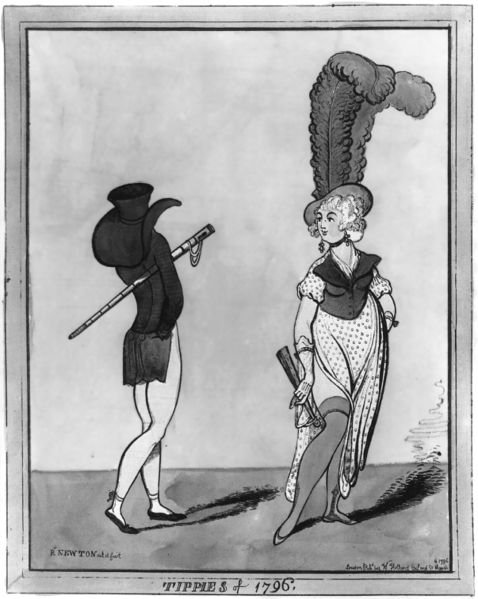
Tippies of Newton, 1796 caricature by Richard Newton. Image @Wikimedia Commons

A young lady only ten feet high was overset in one of the late gales of wind in Portland Place, and the upper mast of her feather blown upon Hampstead Hill.  “The maroon fever has been succeeded by a very odd kind of light-headedness, which the physicians call ptereo mania, or feather folly.” The Ladies now wear feathers exactly of their own length, so that a woman of fashion is twice as long upon her feet as in her bed. –  Times, Dec 30, 1795.

1796, High Change in Bond Street, Gillray

We saw a feather in Drury Lane Theatre yesterday evening that cost ten guinea. We should have thought the whole goose not worth the money.  – Times, Jan 6, 1796.

A Modern Belle Going to the Rooms at Bath, James Gillray, 1796. Image @Wikimedia Commons

Here is a contrivance by which A Modern Belle going to the Rooms or Balls can go fully dressed with her feathers fixed. There is to be seen in Gt Queen Street a Coach upon a new construction. The Ladies set in this well and see between the spokes of the wheels. With this contrivance the fair proprietor is able to go quite dressed to her visits, her feathers being only a yard and a half high. –  Times, Jan 22, 1796.

Vis a vis Ladies Coop, 1776

The Times described predicaments regarding head feathers that were not new. Note how twenty years before, both high wigs AND feathers were accommodated. And, indeed, feathers, whether made from ostrich, emu, goose, or peacock, remained popular as a head dress for years to come.

The headdress, while always including a veil, also required feathers as part of it, although, the number and size of the feathers varied with the Monarchy. At the time of Queen Charlotte, young ladies wore one single towering ostrich feather, but through the years, the number of feathers required increased. By the Edwardian Era, the widespread use of feathers to decorate hats and bonnets began the passage of laws that restricted using certain types of bird’s feathers.*

Queen Victoria hated small feathers, so orders were issued that Her Majesty wanted to see the feathers as the young lady approached. Later in Queen Victoria’s reign, as well as in the court of Edward VII, the mandated headdress was three feathers arranged in a Prince of Wales plume–that is, the center feather was higher than the two on each side of it–and it was worn slightly on the left side of the head. Tiaras were worn by married women, and it was extremely difficult to keep the feathers in place, especially during the curtsy.

More on the topic:

Read Full Post »

« Newer Posts - Older Posts »