Feeds:
Posts
Comments

Archive for the ‘Regency Travel’ Category

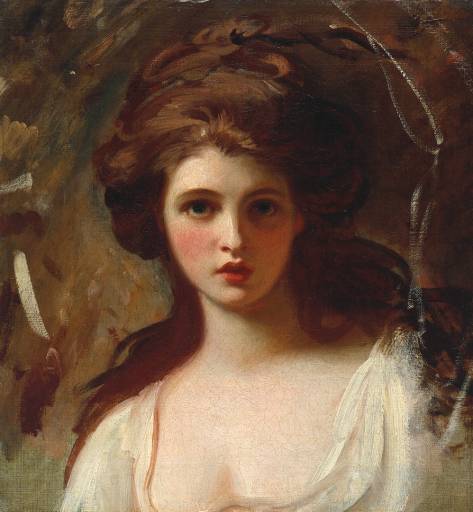
Emma, Lady Hamilton is best known by the casual history fan for her love affair with Lord Nelson. Born in poverty, she first plied her alluring wares in a brothel before becoming Sir Harry Fetherstonhaugh’s mistress. When she became pregnant, he unceremoniously dumped her. But Emma was too stunningly beautiful to live a life of squalor, and the Honorable Charles Greville next picked her to become his mistress. It was through Greville’s connections that she met painter, George Romney, whose obsession with her beauty resulted in a score of memorable paintings. (He continued to paint her portrait even after she left England.)

Emma as Circe, George Romney

Emma loved Charles, but he needed money, so when he met a woman of means in 1786,  he trundled Emma off to his widowed uncle in Naples, Italy, and thus Emma’s association with Sir William Hamilton began. Sir William was a diplomat and an avid art collector of classical statuary, urns and vases, which filled his villa in Portici overlooking the Bay of Naples. A connoisseur, he deeply appreciated Emma’s beauty, intelligence and special talents, not the least among which were her acting skills, hostessing abilities, and aptitude for learning new languages.

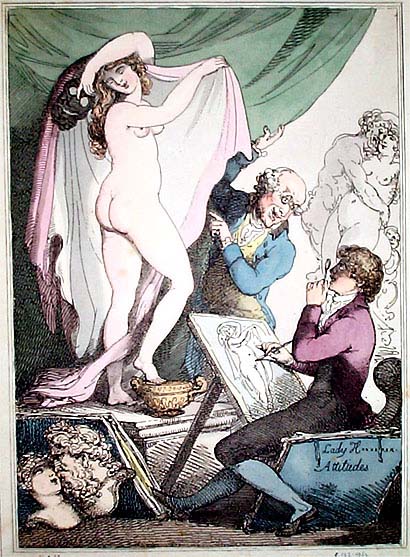
Caricature of Emma Hamilton as an artist’s model posing in an “Attitude”, Thomas Rowlandson

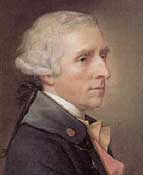
Sir William Hamilton

Emma’s stint as Romney’s model had given her experience posing in various classical guises. She’d also had the dubious distinction earlier in her career in London, of having worked as a scantily clad model and dancer – or “Goddess of Health” –  at Dr. Graham’s Temple of Health and Hymen, which claimed to cure the reproductive and sexual problems of couples. Emma  used her “theatrical” experiences to develop her “Attitudes”.  In helping Emma design her act, Sir William, whose knowledge of the imagery on classical vases was authoritative, used ancient Roman pantomimes as a model. The result of their collaboration was a silent performance that combined poses, classical dance and acting with Emma’s special allure. Emma gave her first showing in spring of 1787 to a group of European guests. Sir William held the lights and introduced his wife, as he would do for all her theatrics.

The Attitudes of Lady Hamilton, 1791, Novelli

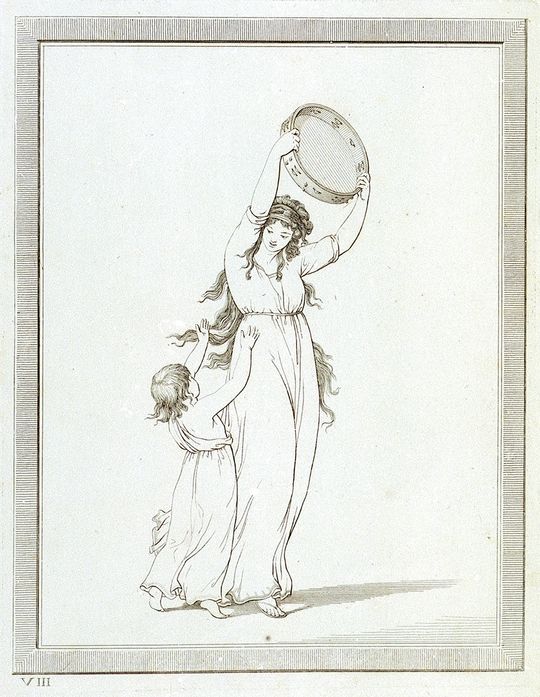
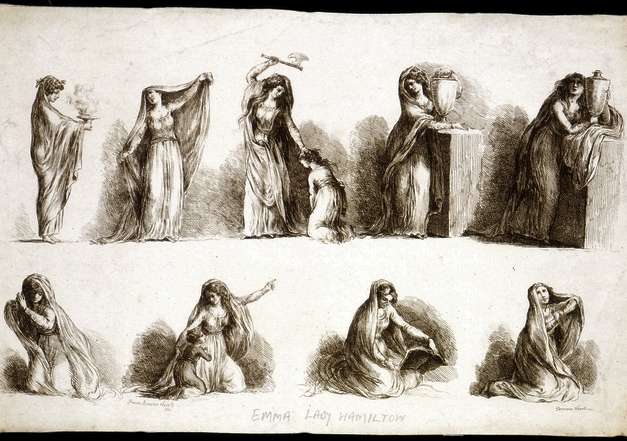
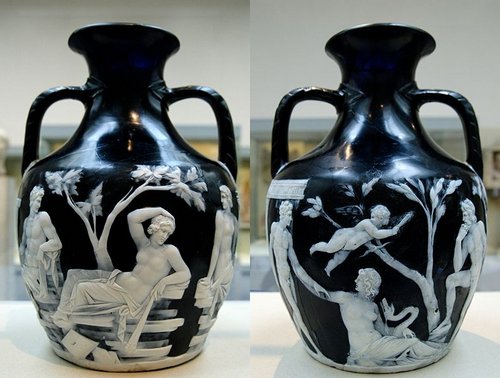
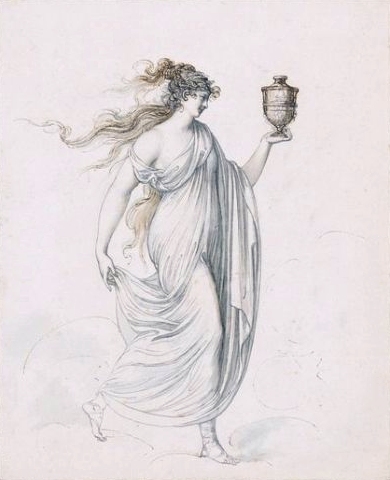
The poses were an immediate hit. Emma moved through her routine within a tall black box surrounded by a gold picture frame, using only a shawl or urn for a prop. (Although she must have occasionally used a child, as included in these images.) For her “Attitudes”, Emma  wore simple white-draped garments that fitted loosely and allowed her long hair to flow free. Her dresses were modeled on those worn by peasant women in the Bay of Naples. Sitting, standing, leaning, or kneeling, or posing as Medea or Cleopatra, she seemed to step right off the antique vases that her husband collected.

Portland Vase, British Museum, once owned by Sir William Hamilton

Emma’s repertoire was large and made up of at least 200 poses. During a performance she moved from one silent tableau to the other with great rapidity, delicacy. and deliberateness in what one writer termed ‘bursts of stillness.’ The private and select audiences would attempt to guess the names of the classical characters and scenes from stage and literature that she pantomimed, and stare in awe at Emma’s ability to transform her moods and the scene in an instant. Out of necessity, earlier viewings remained private, for Sir William and Emma were not married.

The couple did eventually marry  in London in 1791 at St. George’s Church in Hanover Square. Sir William was 61 and his wife was 26. After their wedding, the Hamiltons returned to their home in Italy. They continued to perform the “Attitudes, but now they could publicly and conspicuously invite a much larger and more diverse audience. Johann Wolfgang von Goethe, the German poet, had been invited to watch a performance during a visit to Naples. Impressed, he wrote:

The Chevalier Hamilton so long resident here as English Ambassador, so long too connoisseur and student of Art and Nature, has found their counterpart and acme with exquisite delight in a lovely girl, English, and some twenty years of age. She is exceedingly beautiful and finely built. She wears a Greek garb becoming her to perfection. She then merely loosens her locks takes a pair of shawls, and effects changes of postures, moods, gestures, mien, and appearance that make one really feel as if one were in some dream. Here is visible complete and bodied forth in movements of surprising variety, all that so many artists have sought in vain to fix and render. Successively standing, kneeling, seated, reclining, grave, sad, sportive, teasing, abandoned, penitent, alluring, threatening, agonised. One follows the other and grows out of it. She knows how to choose and shift the simple folds of her single kerchief for every expression, and to adjust it into a hundred kinds of headgear. Her elderly knight holds the torches for her performance, and is absorbed in his soul’s desire.

Lady Emma Hamilton as the Goddess of Health, 1790, Cosway

There must have been something titillating and erotic about Emma’s act, for her poses, although inspired by classical motifs, also drew upon her earlier experiences as a “Goddess of Health” in London and her erotic performances dancing naked for Sir Harry Fetherstonhaugh’s friends on his dining table. Her fame spread far and wide, and Emma, Lady Hamilton’s “Attitudes” became a big draw on Europe’s Grand Tour. Painters and writers sought out her performances, which charmed aristocrats and royals as much as artists and the literary set.  Élisabeth-Louise Vigée-Le Brun observed:

“Nothing was more curious than the faculty that Lady Hamilton had acquired of suddenly imparting to all her features the expression of sorrow or joy, and of posing in a wonderful manner in order to represent different characters. Her eyes alight with animation, her hair strewn about her, she displayed to you a delicious bacchanale, then all at once her face expressed sadness, and you saw an admirable repentant Magdalene.” – Elizabeth Vigee-Lebrun

Lady Emma Hamilton, 1794, Rehberg

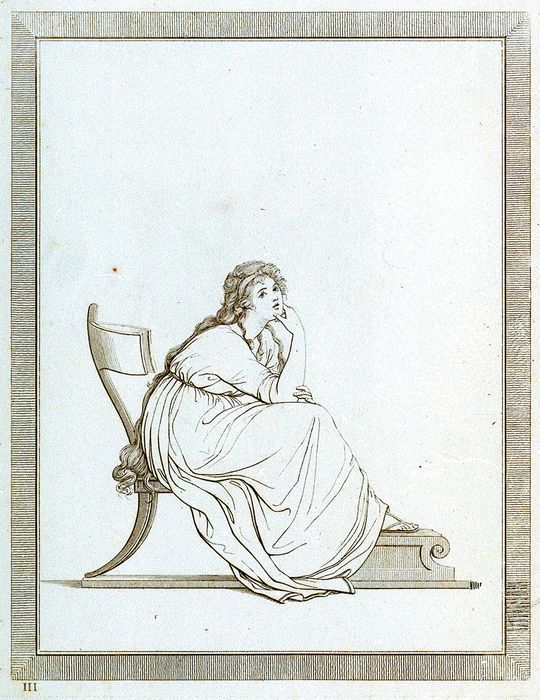
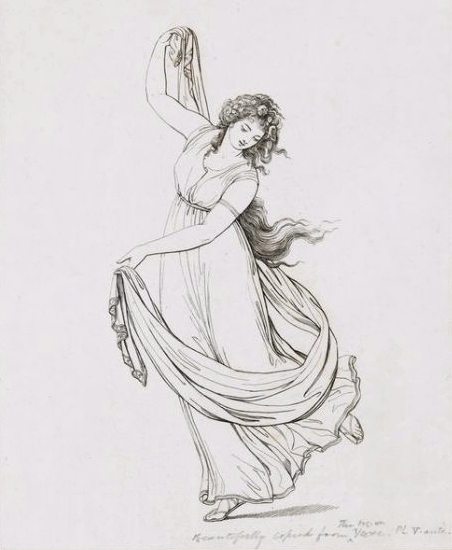
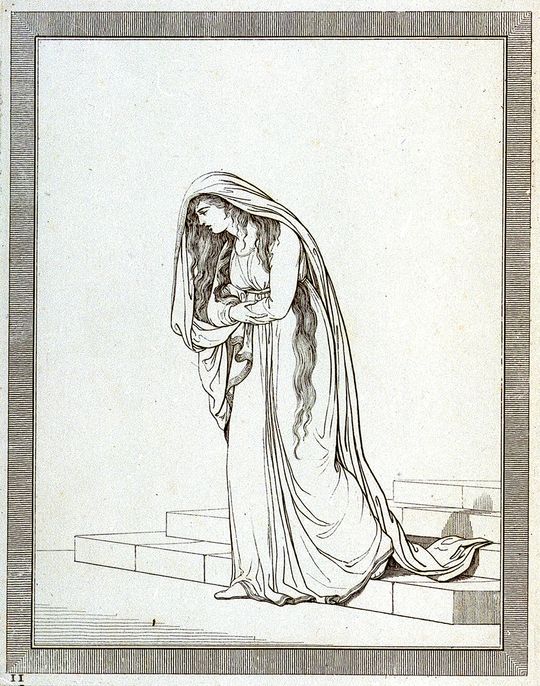
The black and white Rehberg illustrations featured in this post and commisioned by Sir William,  are drawn with simple, graceful and classical lines and freeze a particular “Attitude”. Their idealistic poses are among the few visual reminders that remain of Emma, Lady Hamilton as a performance artist. As the images show, Emma was a voluptuous, well-formed and beautiful woman. Her love for food and drink was no secret, and she would gain a substantial amount of weight over time, until at 47 she was described as being fat. But for a number of magical years, art, performance and beauty combined to create a series of tableaus that are still remembered today for their freshness and originality.

Emma Hamilton, 1794, Friedrich Rehberg, engraver and Tommaso Piroli, illustrator

Read about Lady Hamilton’s later years and sad death in this link.

To learn more about Emma’s fascinating skills, watch a lecture by John Wilton-Ely. His talk is on the ” performances by Lady Emma Hamilton, one of the most celebrated beauties of her era and a remarkable pioneer in developing performance art.”  Click here to watch the lecture. (A little over an hour long but well worth the time.)

More on the topic:

Add to DeliciousAdd to DiggAdd to FaceBookAdd to Google BookmarkAdd to RedditAdd to StumbleUponAdd to TechnoratiAdd to Twitter

Read Full Post »

I’m a little late for the party, but a full day still remains until Laurel Ann at Austenprose finishes her in-depth tour of Sanditon, Jane Austen’s last, unfinished novel. Click on this page to catch up on all the links and comments and guest posts.

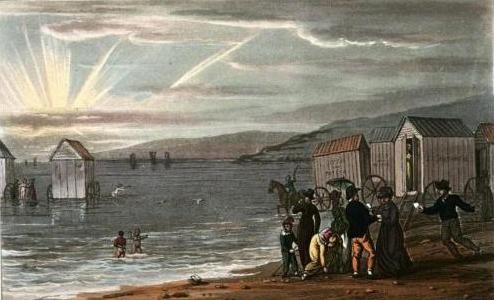
Sea Bathing in Scarborough, 1813

Read more about the seaside and seaside fashions on this blog to round out your knowledge of how the Regency folks enjoyed their seaside excursions:

Poetical Sketches of Scarborough, 1813, is a digitized book about the seaside resort of Scarborough, including color plates.

Read Full Post »

This link to the BBC site will lead you to a video of a walk with Amanda Parr through Bath. You will need a Real Player.

Other posts about Bath on this site:

The Comforts of Bath: Thomas Rowlandson

The Viscount and the Toll Keeper’s Daughter: How Thomas Thynne Never Became the Marquess of  Bath

Saving Georgian Bath

Read Full Post »

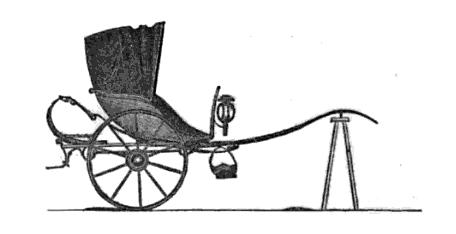
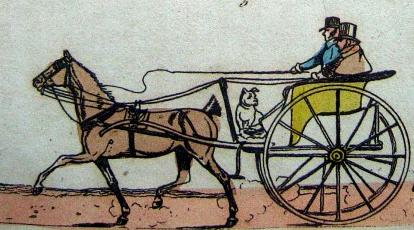
This carriage database discusses the history of the carriage and its uses over time. Included are links to specific makes of carriages, which lead to more detailed information or definition about that type, ie. landau, barouche, mail coach, phaeton, etc. In some instances, images accompany the pages. (Click on reference, then carriage). Update: Something seems to be wrong with the first link to the carriage database. I shall update this post as soon as I find the link again. This link to A Catalogue of Horse drawn vehicles 1896 catalogue of E. S. Annison, Coach Builder, of Hull, features drawings of his carriages and their latest design (late 19th century). Internet Archive provides a downloadable PDF book with images, Carriages and Coaches: their history and their evolution, fully illustrated with reproductions from old prints, contemporary drawings and photographs (1912). This entry in Carriages in Indopediais contemporary and provides links to definitions and information.

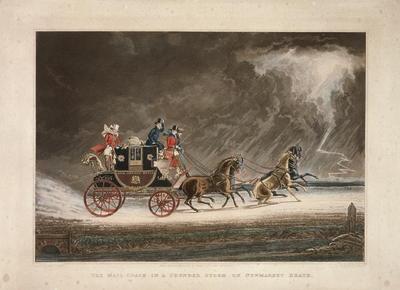
Mail Coach, 1827

The Georgian Index features an excellent page on Carriages and their Parts. Highways and Horses, Athol Maudslay, 1888 is an illustrated Google book that discusses carriages and transportation during the Victorian period in great detail. On the fronticepiece, Mr. Maudslay writes :

Share/Bookmark// More about the topic on this blog:

Read Full Post »

Another book review so soon on this blog? Well, yes. This book from Shire Publications, Victorian and Edwardian Horse Cabs by Trevor May, is short, just 32 pages long, but it  is filled with many facts and rare images of interest to lovers of history. In Jane Austen’s day most people walked to work, town, church, and market square, or to their neighbors. Six miles was not considered an undue distance to travel by foot one way. The gentry were another breed. They either owned their own carriages or hired a public horse cab. These equipages were available as early as the 1620’s.

Hackneys, or public carriages for hire made their first significant appearance in the early 17th century. By 1694, these vehicles had increased to such a number that a body of Hackney Coach Commissioners was established in London. The commissioners dealt out licences, which was a bit of a joke, for a mere four inspectors were responsible for over 1,000 vehicles.

Hackney Coach 1680

Most of these licensed hackney coaches were purchased second hand. All that an enterprising person needed to establish his own hackney coach business was enough money for a used carriage and three horses, two that worked in rotation, and one that could be used as a replacement in case of injury or illness. The death of a horse could lead to a cab owner’s financial ruin. Another important ingredient was housing for the horses.

Hackney Coach 1800. Image @Wikimedia Commons

By, 1823, the lighter horse cabs began to replace cumbersome hackney coaches in great quantity, and by the mid 1830’s, the hansom cab set the new standard for modern horse cabs. Aloysius Hansom, an architect, designed the first carriage. When Hansom went bankrupt through poor investments, John Chapman took over, designing an even lighter, more efficient cab, one whose framework did not strike the horses on their backs or sides whenever a carriage ran over an obstacle in the road.

Hansom Cab

Commercial cab firms tended to be small, even as late as 1892. Only one or two proprietors provided a large number or variety of equipages, like Alfred Pargetter, whose concern advertised removal carriages, cabs, and funeral coaches for hire. While cabs were licensed, their drivers were not and the road could present a dangerous obstacle course. The video clip below shows how adroitly horses and carriages managed to avoid each other with seemingly few rules (mostly towards the end of the clip). Notice how some lucky individual horses pulled relatively light loads compared to other horses forced to pull heavy carts.

These two video clips, one from 1903 and the other from 1896 (unbelievable!) show the end of an era, for by 1914, motorized vehicles were rapidly replacing the horse-drawn cart.

I recommend this book to anyone with an insatiable appetite for a pictorial history on a particular topic. Trevor May is an expert on the Victorian era, and he has managed to squeeze more information about horse-drawn cabs in this short book (more a thick pamphlet) than I have read before. The images are simply splendid.

Read Full Post »

« Newer Posts - Older Posts »