Feeds:
Posts
Comments

Archive for the ‘Regency Women’ Category

Last month, I wrote about Pin Money, or allowances, in Jane Austen’s life and novels. This time, I’m looking more closely at the importance of money in a genteel woman’s life and how it plays out in Austen’s novels.

Money is one obvious way parents could put limits on their children and keep them under control. This happened to both sexes for various reasons in Jane Austen’s time, but it carried even more weight for a woman because there were also financial consequences that came with marriage once she left her father’s home, even if she came from a wealthy family.

At that time in England, husbands had complete control over the finances of their wives. Without an adequate personal budget to spend as she liked, a wife had to go to her husband to ask for money to buy anything and everything she might need. Without a set allowance, wives could find themselves in a very difficult or unhappy position. This is one of many reasons why the marriage settlement (or prenuptial agreement) was so crucial because it was one way fathers could make sure their daughters (and grandchildren) were taken care of financially.
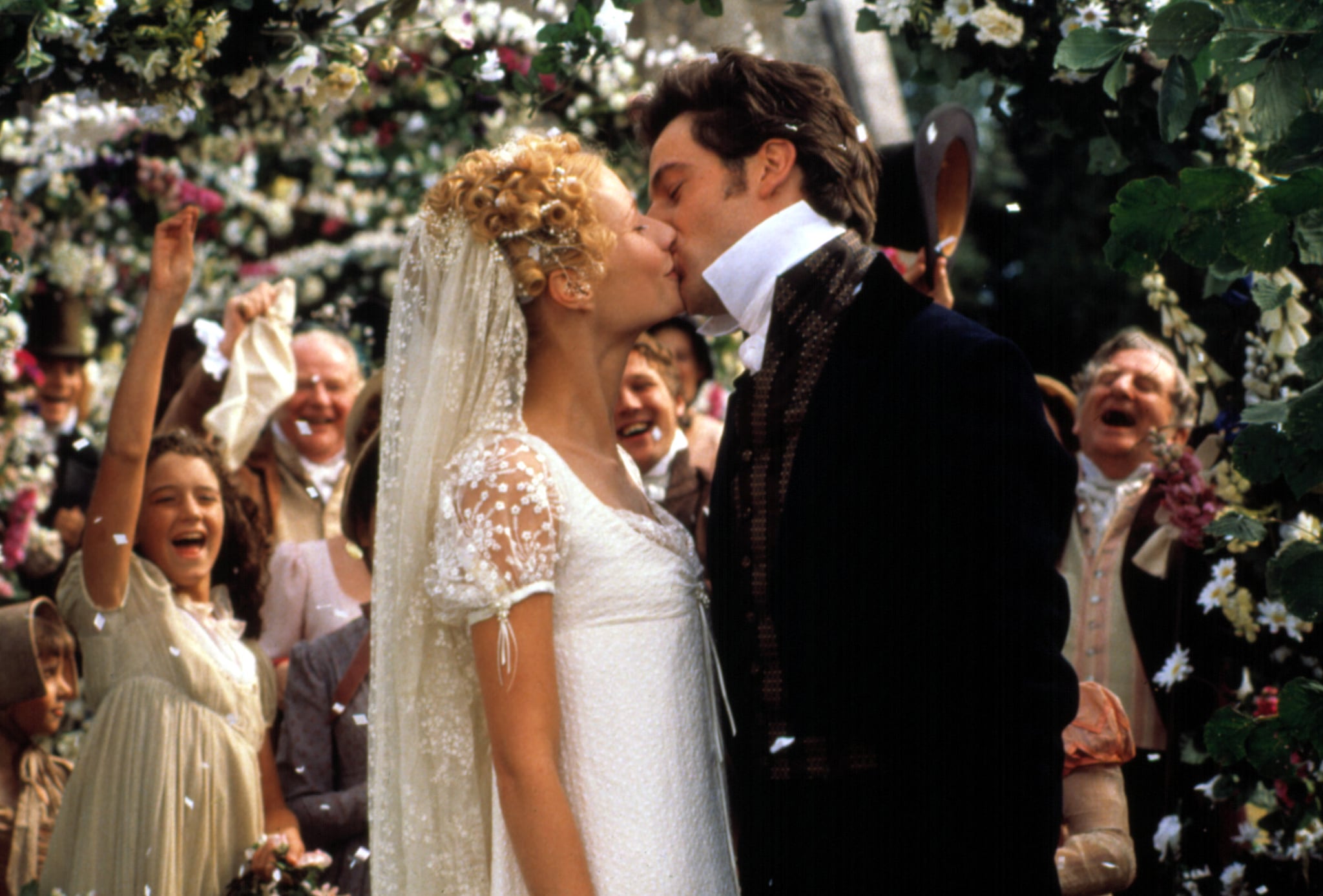
Gwyneth Paltrow in Emma, 1996.

Marriage Settlements

A young woman from a wealthy family would obviously qualify for better marriage terms than a young woman with very little. Her father could leverage what his daughter brought to the marriage for a highly favorable marriage settlement, allowing for her to have the pin money she needed, portions for her children, and a widow’s pension in the event that her husband died. Young women who did not bring as much to the marriage would have a smaller personal budget or, in some cases, no personal budget whatsoever.

In Daniel Pool’s What Jane Austen Ate and What Charles Dickens Knew, he writes, “Typically the bride’s family would have their lawyers negotiate with the husband’s lawyers, to get the husband to agree to grant her ‘pin money,’ which was a small personal annual allowance while he lived, a hefty chunk of property or money to support her after he died, and ‘portions’ of money for their children. All this would be written up in the ‘marriage settlement’ by the lawyers before anybody walked down any aisles.”

In JASNA’s Persuasions, you can read all about The Marriage Law of Jane Austen’s World. (For more on marriage settlements and marriage law in the Regency Era, please see the resources at the end of this article.)

Marriage Settlement, Mills College Library Heller Rare Book Room, Special Collections. Photo by Rachel Dodge, 2019.

Money Matters in Jane Austen’s Novels

In each of Austen’s novels, we find intriguing scenes that relate to women and personal money. Each of these examples shows us just how important it was for a woman to have her own money and the problems (and dangers) that could arise if she did not have any money or ran out of money, especially if she was away from home:

Fanny Price’s £10

In Fanny’s case in Mansfield Park, Sir Thomas supplies her with money before she leaves for her journey to visit her family in Portsmouth:

It had very early occurred to her that a small sum of money might, perhaps, restore peace for ever on the sore subject of the silver knife, canvassed as it now was continually, and the riches which she was in possession of herself, her uncle having given her £10 at parting, made her as able as she was willing to be generous.

Mansfield Park, Jane Austen

Harriet Smith’s Purse

In Emma, we see evidence of Harriet Smith’s allowance, which comes in handy when she meets the “trampers” on the road:

More and more frightened, she immediately promised them money, and taking out her purse, gave them a shilling, and begged them not to want more, or to use her ill.

Emma, Jane Austen
“The terror … was then their own portion.” Illustration by C.E. Brock.

Lydia and Kitty Bennet’s Mismanagement

In Pride and Prejudice, Lydia and Kitty spend their pin money money at the shops and must borrow money from Elizabeth and Jane when they surprise them for a meal at the inn in Hertfordshire:

“And we mean to treat you all,” added Lydia, “but you must lend us the money, for we have just spent ours at the shop out there.” Then, showing her purchases—“Look here, I have bought this bonnet. I do not think it is very pretty; but I thought I might as well buy it as not. I shall pull it to pieces as soon as I get home, and see if I can make it up any better.”

Lydia Bennet, Pride and Prejudice

Nancy Steele’s Fright

In Sense and Sensibility, we find this intriguing passage about the Steele sisters and personal money when Nancy Steele must go to Mrs. Jennings for money after Lucy borrows all of Nancy’s money and marries Robert Ferrars:

Not a soul suspected anything of the matter, not even Nancy, who, poor soul! came crying to me the day after, in a great fright for fear of Mrs. Ferrars, as well as not knowing how to get to Plymouth; for Lucy it seems borrowed all her money before she went off to be married, on purpose we suppose to make a show with, and poor Nancy had not seven shillings in the world…

Mrs. Jennings, Sense and Sensibility
Lucy Steele (Anna Madeley) and Anne, or “Nancy,” Steele (Daisy Haggardand), Sense and Sensibility, 2008.

Catherine Morland’s Borrowed Fare

In Northanger Abbey, money becomes quite important in a crucial moment. First, money is mentioned when Catherine Morland goes to Bath. Her parents send her with money for her personal expenses and ask her to keep account of her spending:

I beg, Catherine, you will always wrap yourself up very warm about the throat, when you come from the rooms at night; and I wish you would try to keep some account of the money you spend; I will give you this little book on purpose.”

Mrs. Morland, Northanger Abbey

Money is mentioned again when Catherine is suddenly and unexpectedly sent home from Northanger Abbey. While she is in Bath, she is under the care of her hosts, the Allens, who would, of course, pay for many of her expenses while she is under their roof and their protection. However, once she goes to Northanger, she is essentially under the care and protection of General Tilney. When he sends her home abruptly, he does not provide the funds necessary for her journey home, leaving her in a very precarious and even dangerous situation. This was a terrible oversight on his part. Thankfully, Eleanor is able to provide the funds, which we may assume is from her own personal allowance:

It had occurred to her that after so long an absence from home, Catherine might not be provided with money enough for the expenses of her journey, and, upon suggesting it to her with most affectionate offers of accommodation, it proved to be exactly the case.

Catherine had never thought on the subject till that moment, but, upon examining her purse, was convinced that but for this kindness of her friend, she might have been turned from the house without even the means of getting home; and the distress in which she must have been thereby involved filling the minds of both, scarcely another word was said by either during the time of their remaining together.

Northanger Abbey, Jane Austen

Catherine makes it home safely and repays the money to Eleanor by mail with only a short note: “The money therefore which Eleanor had advanced was enclosed with little more than grateful thanks, and the thousand good wishes of a most affectionate heart.”

The Morlands, a very practical bunch, decide after a bit that it all ended well in the end, but even they cannot understand such a “breach of conduct” on General Tilney’s part:

They were far from being an irritable race; far from any quickness in catching, or bitterness in resenting, affronts: but here, when the whole was unfolded, was an insult not to be overlooked, nor, for the first half hour, to be easily pardoned.

Mr. and Mrs. Morland could not but feel … that, in forcing her on such a measure, General Tilney had acted neither honourably nor feelingly—neither as a gentleman nor as a parent. Why he had done it, what could have provoked him to such a breach of hospitality . . . was a matter which they were at least as far from divining as Catherine herself…

Northanger Abbey, Jane Austen
Felicity Jones as Catherine Morland, Northanger Abbey, 2007.

Mrs. Smith’s Recovered Property

In Persuasion, we turn our attention to the widowed Mrs. Smith, whose husband had badly mismanaged their finances: “She was a widow and poor. Her husband had been extravagant; and at his death, about two years before, had left his affairs dreadfully involved.” In this situation, it is not just Mrs. Smith’s personal finances that are at stake, but her finances at large. Here, we see Captain Wentworth use his influence to work on her behalf and help improve her financial circumstances. At the end of the novel, we read this:

[Mrs. Smith] was their earliest visitor in their settled life; and Captain Wentworth, by putting her in the way of recovering her husband’s property in the West Indies, by writing for her, acting for her, and seeing her through all the petty difficulties of the case with the activity and exertion of a fearless man and a determined friend, fully requited the services which she had rendered, or ever meant to render, to his wife.

Persuasion, Jane Austen

When we look at the parents, guardians, husbands, and friends in the examples above, it’s clear that Austen uses money matters (just as she uses so many other clever devices) to point to character and propriety. We could go through each novel and study each of the male and female characters and surmise quite a bit about their personalities just from the way they each manage money.

It’s clear that the characters in Austen’s books who provide well for their wives, children, and friends–and those who are generous and charitable with their money–are the characters we should admire and respect. Conversely, those who handle their money poorly–and those who manipulate and use and abuse others for financial gain or for personal control–are the characters we should distrust and, in some cases, even despise. In Austen’s novels, money matters.


RACHEL DODGE teaches college English classes, gives talks at libraries, teas, and book clubs, and writes for Jane Austen’s World blog and Jane Austen’s Regency World magazine. She is the bestselling author of The Anne of Green Gables Devotional: A Chapter-By-Chapter Companion for Kindred Spirits and Praying with Jane: 31 Days Through the Prayers of Jane Austen. Her newest book The Little Women Devotional is now available for pre-order and releases December 2021. You can visit Rachel online at www.RachelDodge.com.


Links About Marriage and Marriage Settlements:

Read Full Post »

As we investigate the private lives of Regency Women, it’s important to consider money and a woman’s private expenses. If a genteel woman was expected to dress a certain way, do her hair in the latest styles, wear the right shoes and accessories to accentuate her beauty, and care for her own private needs and beauty regimes, how did she pay for everything she needed?

If one of Jane Austen’s heroines (or Jane herself) wanted to purchase something like a bonnet or a ribbon or a new gown, where did she get the money? Who supplied her with money, what was the amount she might have to spend, and how often was it replenished? Let’s find out!

You are very right in supposing how my money would be spent—some of it, at least—my loose cash would certainly be employed in improving my collection of music and books.

Marianne Dashwood, Sense and Sensibility
Magazine of Female Fashions of London and Paris, No.21. London Dresses, 1799, Wikipedia Commons.

Pin Money

Pin money, also sometimes referred to as an allowance, was the money that genteel Regency women used for personal expenses, such as dresses, hats, shoes, and other things of that sort. She kept an accounting of it herself and must balance her own budget.

The history of the term “pin money” dates back to the 1500s: “At that time, pin money was a substantial sum that was used for important purchases. The expression is linked to the price of straight pins, once items that were very rare and expensive, and part of the necessary purchases to run a household” (Grammarist). Over time, the term became synonymous with a woman’s personal money.

For the most part, genteel Regency women were entirely reliant on their male relatives for any “loose cash” for their own personal expenses. As an unmarried woman, she would only have what money her father or a close male relative gave to her (or left to her). Once married, she only had what her husband gave to her or what she was entitled to as part of her marriage settlement.

British Sixpence, 1816, Wikipedia Commons.

Jane Austen’s Allowance

We know that Jane Austen herself had a small allowance from her father. In Oliver MacDonough’s Jane Austen: Real and Imagined Worlds, we read this: “Jane had nothing of her own beyond the pin-money allowed her by her father, which was probably only £20 a year.” Cassandra’s annual allowance, as noted in a letter from 28 December 1798 was twenty pounds: “If you will send my father an account of your Washing & Letter expenses, & c, he will send you a draft for the amount of it, as well as for your next quarter [£5, to be paid on 1 January].”

Mrs. Darcy’s Pin Money

Finally, Pride and Prejudice shows us how a generous allowance allowed married women to live in comfort, having enough for their own needs and for the needs of others, either for charitable giving or to help support family members.

We can now read Mrs. Bennet’s famous reaction to Elizabeth’s engagement to Mr. Darcy with even more interest:

Oh! my sweetest Lizzy! how rich and how great you will be! What pin-money, what jewels, what carriages you will have! Jane’s is nothing to it – nothing at all.

Mrs. Bennet, Pride and Prejudice
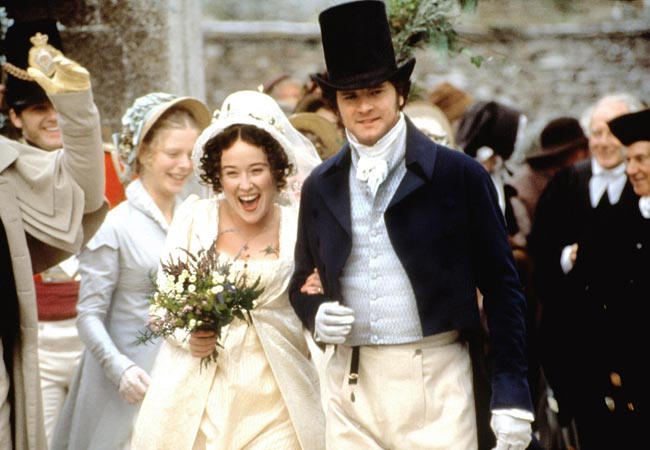
Jennifer Ehle and Colin Firth, Pride and Prejudice, 1995

And it seems that Mrs. Bennet was correct indeed. We see this play out when Lydia writes to Elizabeth at the end of Pride and Prejudice, hoping to get a regular allowance from Elizabeth and Darcy: “As it happened that Elizabeth had much rather not, she endeavoured in her answer to put an end to every intreaty and expectation of the kind.”

However, while the Darcys do not provide the Wickhams with a regular allowance, Elizabeth still kindly send gifts of money on a frequent basis to help Lydia. She gives this money out of her own private funds, which as the text implies, was substantial:

Such relief, however, as it was in her power to afford, by the practice of what might be called economy in her own private expenses, she frequently sent them. . . and whenever [the Wickhams] changed their quarters, either Jane or herself were sure of being applied to for some little assistance towards discharging their bills.

Pride and Prejudice, Jane Austen

The Love of Money

Money mattered greatly in the lives of Jane Austen’s Regency women. Having “loose cash” didn’t just provide for bonnets and gowns; it also provided for the safety and protection of several of Austen’s female characters. Money could be used as a means of control or generosity. It could limit a woman or give her greater freedom.

Join me again next month as we delve further into Regency Women: Money Matters and look closely at several instances where Austen uses a lady’s personal money (or lack thereof) as a clever plot device.


RACHEL DODGE teaches college English classes, gives talks at libraries, teas, and book clubs, and writes for Jane Austen’s World blog and Jane Austen’s Regency World magazine. She is the bestselling author of The Anne of Green Gables Devotional: A Chapter-By-Chapter Companion for Kindred Spirits and Praying with Jane: 31 Days Through the Prayers of Jane Austen. Her newest book The Little Women Devotional is now available for pre-order and releases December 2021. You can visit Rachel online at www.RachelDodge.com.


Read Full Post »

After my previous article on Regency Women: Beauty Behind the Scenes, I realized that the things I really want to know more about concerning Jane Austen’s Regency women aren’t (and weren’t) discussed as much as other topics such as beauty regimes.

I wanted to know about bodily functions (where in the world did a lady relieve herself if she was, say, at a ball?), feminine hygiene (what did women do during “that time of the month?”), and pregnancy and birth (why did so many women die as a result of childbirth?).

Finding this information wasn’t as easy as some of the other information I’ve researched over the years. Why? Because some of these topics (such as menstruation) weren’t discussed openly or written about during Jane Austen’s time. Scholarly authors and bloggers even sometimes make the joke, “maybe women didn’t menstruate back then!”

The truth is, Regency women had specific needs, just as women do now, but information about those needs was shared more discreetly. Women passed information, supplies, and advice to one another—from mother to daughter, sister to sister, cousin to cousin, and even friend to friend. Additionally, terms and nicknames were used for certain topics, such as “in that way” (pregnant); “lying-in” or “confinement” (nearing her due date); and “brought to bed” (gave birth). We can imagine that in some families, young women were informed about such topics without much or any discussion; in others, perhaps a bit more instruction was provided.

Mrs. Jennings and Mrs. Palmer, Sense and Sensibility

I can’t help wishing they had not travelled quite so fast, nor made such a long journey of it, for they came all round by London upon account of some business, for you know (nodding significantly and pointing to her daughter) it was wrong in her situation. I wanted her to stay at home and rest this morning, but she would come with us; she longed so much to see you all!”

Mrs. Palmer laughed, and said it would not do her any harm.

“She expects to be confined in February,” continued Mrs. Jennings.

Lady Middleton could no longer endure such a conversation, and therefore exerted herself to ask Mr. Palmer if there was any news in the paper.

Sense and Sensibility, Jane Austen (emphasis mine)

In attempt to shed some light on these topics, the following is an overview of each, along with a few resources that go into greater detail. As always, I heartily encourage our well-read JAW readers to comment with other resources that can help provide more information on these “privy” matters (pun intended).

Bodily Functions

At home, chamber pots were frequently used and kept under the bed, out of sight, and emptied and cleaned by a servant. A privy or outhouse was outside the home, away from the house. Many times, flowers were planted near the outhouse to help cover the odor. For an in-depth history of Regency plumbing, you can read this wonderful article from The Jane Austen Centre on The Development of Regency Plumbing.

But what about when a lady was traveling or at a ball? As some of you may already know, a fully dressed lady could (carefully) relieve herself using a small chamber pot called a bourdaloue (or bourdalou) without soiling her skirts. Her maid would stand nearby to help and/or receive the pot and empty it. (Note: Men were known to relieve themselves behind a screen into a chamber pot in the dining room.) For more on this strangely intriguing topic, you can read Vic’s engaging article, Regency Hygiene: The Bourdaloue.

Ladies Bourdaloue, a personal chamber pot.

Feminine hygiene and sanitary items

And what, pray tell, did a lady to do when menstruating? In her article “On ‘Flowers’: A short but frank post on how 18thC women dealt with menstruation,” Lucy Inglis has several interesting tidbits to share: Early sanitary pads were used by women in Georgian England, made from a variety of materials. “Women troubled by particularly heavy periods wrapped a belt or bandage about their hips and wore a baby’s muslin napkin looped over the front and back, with stitched ‘sanitary pads’ lining this loincloth.  These pads could be boiled and reused…”

As for tampons, this was surprisingly not unheard of. Early handbooks discuss “‘suppositories’ for the ‘privy place’ made from a smoothed stick, wrapped in absorbent linen rags and securely stitched. A long cord was sewn in. Some disposable; some boiled and reused” (Inglis). For menstrual cramps and other issues, herbal remedies were often used. For more on this topic and others like it, check out Inglis’ book Georgian London: Into the Streets.

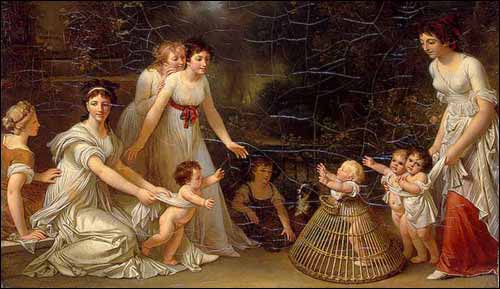
Regency families were often large to account for high child mortality rates.

Pregnancy and childbirth

During the Regency era, childbirth was still one of the most dangerous threats to a woman’s health and life. Up to 20% of all women died either in childbirth, or immediately following birth, most often due to infection. (Many accounts place the infant mortality rate at about the same level.) The practice of washing hands, disinfecting instruments, and providing clean linens and ventilation in birthing chambers did not become common until about the 1840s, which then lowered the mortality rate from 18% to about 6% (Jane Austen Centre). To read an in-depth discussion of birth, birthing rooms, and advances in obstetrics, read here: “Developements in Childbirth in Regency and Victorian England: Childbirth and Lying-In during the Regency” by Kathleen Charon.

Some of the issues that plagued new mothers and babies were due to limited medical practices and a lack of simple hygiene, but there were other factors at play as well. For instance, instead of having women move, walk, and get a breath fresh air, a “lying-in” or “confinement” period was observed before, during, and even after giving birth.

During the birth, a midwife would likely be in attendance; in some instances, a doctor might come. The birthing room was heated and enclosed so that women would not catch cold; however, the stifling rooms often caused a host of other issues, including an increase in infection. After giving birth, women were kept in bed, often given only weak tea and a liquid diet, instead of hearty, nourishing foods to help her heal and gain strength.

I have just received a note from James to say that Mary was brought to bed last night, at eleven o’clock, of a fine little boy, and that everything is going on very well. My mother had desired to know nothing of it before it should be all over, and we were clever enough to prevent her having any suspicion of it…

Jane Austen’s Letters, Godmersham Park, 17 November 1798.
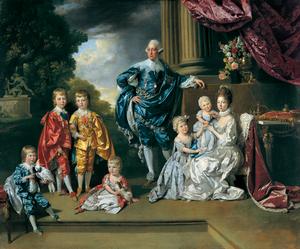
Queen Charlotte, King George IIIs consort, gave birth to 15 children in 21 years. These are their 6 eldest.

Indeed, life for women in Jane Austen’s Regency England, even as part of the upper classes, was uncomfortable, difficult, and dangerous. When I think of my own birth, and the births of my two children, by caesarean section, with the help modern medicine, I stand amazed at the bravery of the women who came before me. To say I’m thankful for the miraculous advances in medicine and obstetrics today would be an understatement.

This, I’m sure, is only the tip of the iceberg with these topics. If you have other resources to share, such as books, articles, podcasts, or talks, please include them in the comments! Next month, check back for my upcoming article, Regency Women: Pin Money and Private Expenses.


RACHEL DODGE teaches college English classes, gives talks at libraries, teas, and book clubs, and writes for Jane Austen’s World blog and Jane Austen’s Regency World magazine. She is the bestselling author of The Anne of Green Gables Devotional: A Chapter-By-Chapter Companion for Kindred Spirits and Praying with Jane: 31 Days Through the Prayers of Jane Austen. Her newest book The Little Women Devotional is now available for pre-order and releases December 2021. You can visit Rachel online at www.RachelDodge.com.

Read Full Post »

After sharing my book review of A Most Clever Girl: How Jane Austen Discovered Her Voice by Jasmine A. Stirling, I had the great pleasure of interviewing Jasmine about her background, her writing process, and the inspiration behind her book. Thank you to Jasmine for her time and her thoughtful answers to my questions!

Q. What initially inspired you to write A Most Clever Girl? Describe your vision for the book and your writing process.

A. When I set out to write this book, I chose Jane Austen because I admire her life and her work, and because I believe she is one of the most misunderstood women in history. Jane Austen was far from being the prim, prudish, “dear Aunt Jane” depicted by her brother Henry and her nephew Edward in their biographies of the author. She is also far from being an author of swoony romances, as we are sometimes led to believe.

These discrepancies between the popular image of Austen and the real Jane Austen gripped me. I wanted to help young people understand Austen the rebel, Austen the humorist, and Austen the artist, so that when they encountered her work later on, they might better be able to fully appreciate and enjoy it.

However, as I delved into my research, it became clear that Jane Austen was a perfect subject for a children’s book about creativity and persistence, because her upbringing, life struggles, and triumphs tell us a great deal about what a writer needs in order to fully master her craft. Of course, I still hope that A Most Clever Girl will help kids relate to the real Jane Austen and encourage them to pick up her novels when they get a little older.

As for my process, it was extensive. I read widely on Austen—both primary and secondary sources—for two years before I wrote a single word. Then, I sat down and wrote a draft of the book in less than an hour. Of course, it was mediocre. It was my first attempt at creative writing as an adult. I was a beginner.

Over the next ten months, I worked for hours each week rewriting and revising the manuscript based on feedback from dozens of people—writers, kids, freelance editors, and agents. I continued to refer to and pull things from primary and secondary sources as I went. Ultimately, I rewrote or revised my initial draft more than 60 times. The final story was unrecognizable when compared with the first draft.

One of the most challenging aspects of writing this book was figuring out how to explain the literary significance of what Jane Austen did—pioneer her witty realist style, rich with social commentary and moral imperatives—to very young people who have no idea what literature was like in Regency England and have scant understanding of what a writer’s voice is all about. Hopefully I pulled it off!

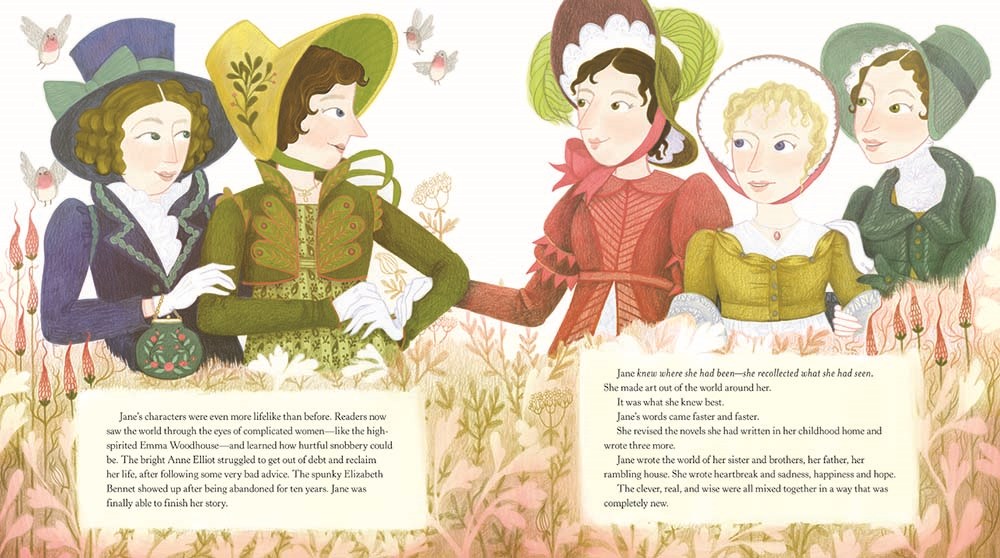
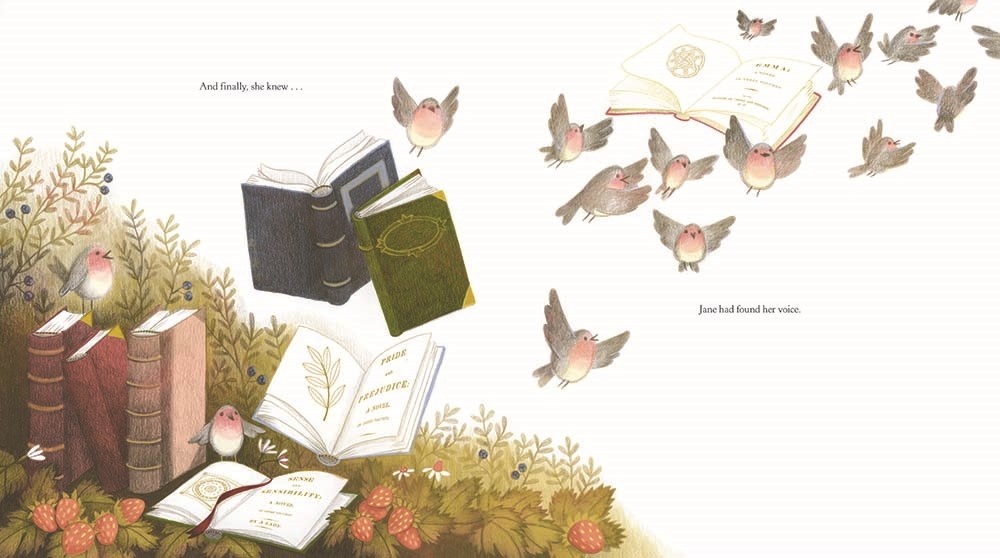
Interior illustration of A Most Clever Girl

Q. What do you hope young readers and the worldwide Jane Austen community will gain from reading this book?

A. A Most Clever Girl is about the process of creative mastery. It’s about all those boring, mundane aspects of creative achievement that our culture doesn’t like to talk about—being rooted in place, having community support, getting consistent feedback, having time, money, and a room of one’s own, discipline, and maturity—which are critical for an artist to bloom.

My hope is that if children (and adults!) study and learn more about how someone becomes a great writer, or filmmaker, or painter, or musician, it will give them insight into how to nurture their own talents—whatever they may be—to greatness.

The message, I hope, is an empowering one. If one begins a project and it isn’t coming out quite as nicely as one expected, do not despair! Set aside ninety minutes each day before or after school or work and keep at it. Find your community. Get feedback. Advocate for the time and space to work on your craft. Be patient.

Although Jane Austen had written drafts of her most famous and beloved novels by her mid 20s, it was not until more than a decade later that she had fully developed her voice as a writer. In fact, by the time Austen had mastered her craft, she had been writing for more than a quarter of a century.

In short, creative mastery is not born of a flash of inspiration. Inspiration plays a part, but not the major part, in any creative endeavor.

Q. When did you first discover Jane Austen and how have her books touched your life?

A. I first fell in love with Jane Austen while reading Persuasion at age nineteen while studying abroad as an associate member of Keble College at the University of Oxford. I also adore Pride and Prejudice.

One way in which Austen inspires me is in her ability to create literature that is fun and escapist and yet anything but light. I am dazzled by Austen’s depth and skill as an artist, and love that she challenges our notion that great art must be a moody, dark, and bitter tonic. Austen, like Shakespeare, is able to work simultaneously on many levels at once. While distracting us with her perfect sentences and tidy plotlines, she entertains and amuses while also viciously satirizing patriarchy, the church, the aristocracy, and conventional views of women. Her characters are of her time and yet distinctively modern. She is perennially relevant, offering each new generation corrective wisdom without being gauche or overbearing.

Q. What was your research process for A Most Clever Girl and what sources did you consult? Have you visited any of the Jane Austen sites in England?

A. One of the things that I think is unique about A Most Clever Girl among children’s books is its liberal use of and reliance on primary sources. Austen’s letters are used to describe details of her life in three spreads. Actual examples from her juvenilia are referenced right at the beginning of the book. Quotes from her novels are sprinkled liberally throughout the text (in italics) to describe Austen’s own creative journey. Every detail, from what young Jane is reading in the second spread to what she thought about her how brother James cut up his turkey, is grounded in a primary source and laid out on an accurate timeline.

Each decision I made was carefully considered, often in agonizing detail. For example, several biographies state that Austen fainted upon hearing the news that the family would move to Bath. On further investigation, I concluded that, based on the primary sources used to develop this theory, this might not have occurred. So although I had included it in an early draft, I wrote it out later on. The last thing a biographer for children wants to do is to perpetuate inaccurate information about someone in history.

I was painfully aware throughout my writing process that Austen is a unique subject. Her enormous popularity and the vast number of professional and novice Austen experts means that anyone writing about her needs to be particularly sensitive about the many versions of the Austen narrative. I tried to tread that line respectfully while also making sure my own version of her story had real heft and direction.

When I was a student at Oxford I had the opportunity to visit many of the sites mentioned in my book. My college friends from those days are currently planning an Oxford reunion (when things open up again) and we plan to revisit the sites in A Most Clever Girl on the same trip.

Interior illustration of A Most Clever Girl

Q. The illustrations for the book are charming! Tell us about those and any other special features in the book.

A. I love that Vesper Stamper visited the sites that she illustrated for the book on a research trip to the UK. Her work emphasizes the three-dimensional portrait of Austen I worked hard to evoke in my writing. Vesper’s Austen sparkles with mischief and wit. At the same time, her illustrations are gorgeous and lush and tap into that escapism that I think make Austen such a delight for grownups to read.

Q. This book traces Jane Austen’s journey as a writer, from Steventon to Bath to Chawton, and explores the way she found her voice. What parts of her story were particularly meaningful for you? In what ways do you relate to Austen as a writer?

A. My journey mirrors Austen’s in that, as a child, I wrote prolifically. From the age of three, I regularly composed poems in my head and dictated them to my mother to write down. I wrote throughout my childhood and into my young adult life. But as an adult, I stopped writing completely, until a few years ago, when I began my first creative writing project—a picture book biography of Jane Austen.

My reasons for abandoning creative writing are probably not dissimilar to Austen’s. In hindsight, I wish I had understood more about how creative achievement works. I think it would have motivated me to carve out time for writing during those years, even when I struggled with where to begin.

Q. If you could step into one of Jane Austen’s novels, which one would it be and which character would you like to play?

A. I would most like to be Anne Eliot in Persuasion. I appreciate that Captain Wentworth is a self-made man, and that he does not come with a large estate. We would be free to make our own, new home together. I think his industriousness, good sense, and lack of inherited wealth would put me at ease. Furthermore, Wentworth writes the most romantic and self-aware letter in human history when he proposes to Anne. That letter would get me through many a quarrel in later years as we raised children and managed a household together.

Q. What are you working on now?

A. I have a 450-page YA/New Adult narrative nonfiction book coming out next year about the women’s suffrage movement titled: We Demand An Equal Voice: Carrie Chapman Catt and Votes for Women. I am also working on a novel.

Interior illustration of A Most Clever Girl

Thank you again to Jasmine for her wonderful interview! If you haven’t read my book review of A Most Clever Girl, you can read it here. I found the book utterly charming. I’m planning to give copies to my friends at birthday parties, baby showers, and graduations–and pretty much every other occasion I can think of. I hope you do too! –Rachel

ABOUT THE BOOK

Witty and mischievous Jane Austen grew up in a house overflowing with words. As a young girl, she delighted in making her family laugh with tales that poked fun at the popular novels of her time, stories that featured fragile ladies and ridiculous plots. Before long, Jane was writing her own stories-uproariously funny ones, using all the details of her life in a country village as inspiration.

In times of joy, Jane’s words burst from her pen. But after facing sorrow and loss, she wondered if she’d ever write again. Jane realized her writing would not be truly her own until she found her unique voice. She didn’t know it then, but that voice would go on to capture readers’ hearts and minds for generations to come.

PURCHASE LINKS:
Amazon
Bookshop.org


ABOUT THE AUTHOR

Jasmine A. Stirling is the debut author of A Most Clever Girl: How Jane Austen Discovered Her Voice, a picture book biography of Jane Austen about persistence and creative mastery. Jasmine lives on a cheerful street in San Francisco with her husband, two daughters, and their dog. From a young age, she loved to write poems and stories and worked her way through nearly every children’s book (and quite a few for grownups, too) in her local library. When she’s not writing, Jasmine can be found hiking in the fog, singing songs from old musicals, and fiddling with her camera.

Follow Jasmine on Instagram and Facebook @jasmine.a.stirling.author where she posts about kidlit and life with two young girls.


RACHEL DODGE teaches college English classes, gives talks at libraries, teas, and book clubs, and writes for Jane Austen’s World blog and Jane Austen’s Regency World magazine. She is the bestselling author of The Anne of Green Gables Devotional: A Chapter-By-Chapter Companion for Kindred Spirits and Praying with Jane: 31 Days Through the Prayers of Jane Austen. Her newest book The Little Women Devotional is now available for pre-order and releases later this year. You can visit Rachel online at www.RachelDodge.com.

Read Full Post »

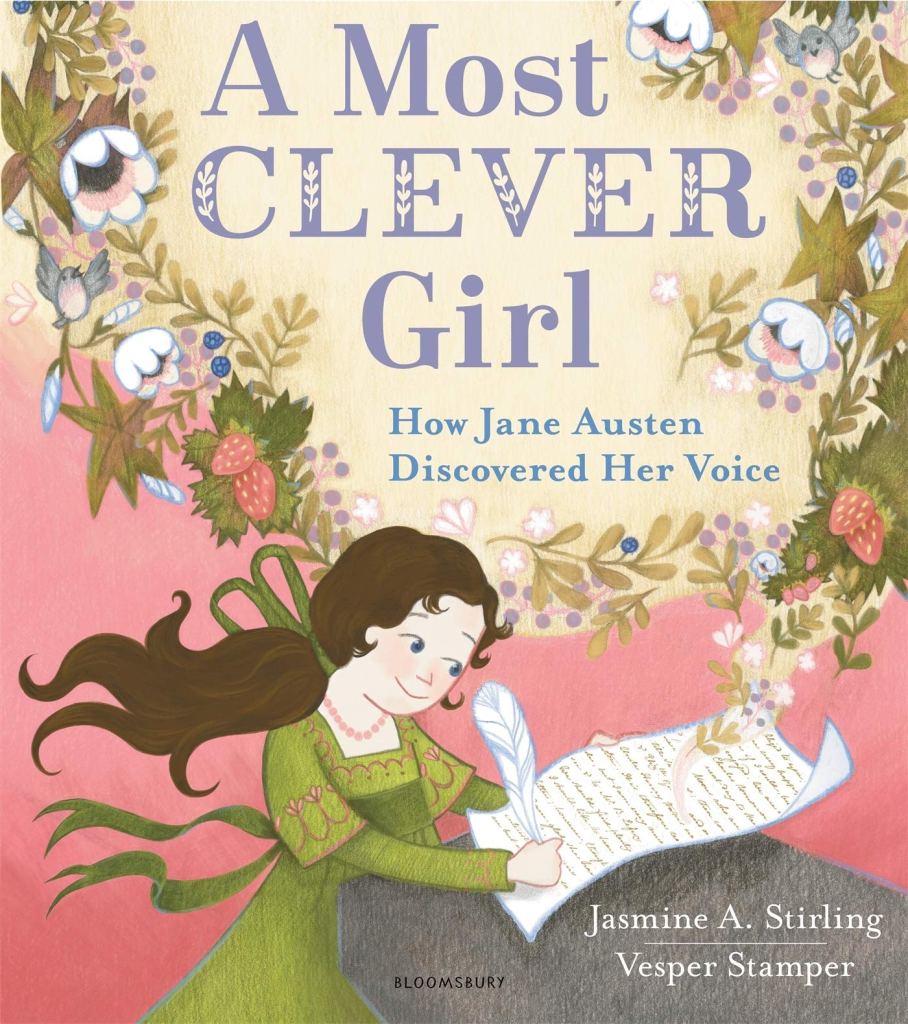
In light of Women’s History Month, I’m pleased to share my review of a beautiful new book by Jasmine A. Stirling that is sure to delight the hearts of Jane Austen fans of all ages entitled A Most Clever Girl: How Jane Austen Found Her Voice.

This exquisitely illustrated, full-color book traces Austen’s writing journey from her younger years at Steventon, to her “quiet” years in Bath after her father died, and finally to her years of astonishing creativity at Chawton. This is a book you’ll want to read for yourself, give as a gift, and display on your coffee table.

The writing by Jasmine A. Stirling and the illustrations by Vesper Stamper truly make this book a feast for the eyes and the heart. As a lifelong Austen fan, I found myself swept up in Stirling’s writing style. Her exploration of Austen’s talent, her heart, and her genius brought me new-found joy. This book vividly captures Austen’s experiences as a writer and shows us why her writing still endures today.

Jasmine and I connected on social media several months ago, and I was intrigued by her book because it is a fictional telling of what I and many others have noticed about Austen’s writing career: that she found her perfect time and place to write when she came to Chawton. (You can read my article on this topic here: New Beginnings at Chawton Cottage.)

Jasmine’s book explores the early foundations of Austen’s literary upbringing, the depth of character that Austen’s life experiences produced, and the intriguing set of circumstances that allowed Austen to discover her unique writer’s voice at Chawton.

I highly recommend A Most Clever Girl to any Austen fan of any age. I especially like the idea that I can give this book as a gift to my friends and family members who have younger children so that their children can be exposed to Jane Austen at an early age and be inspired to follow her example as a person and as a creative.

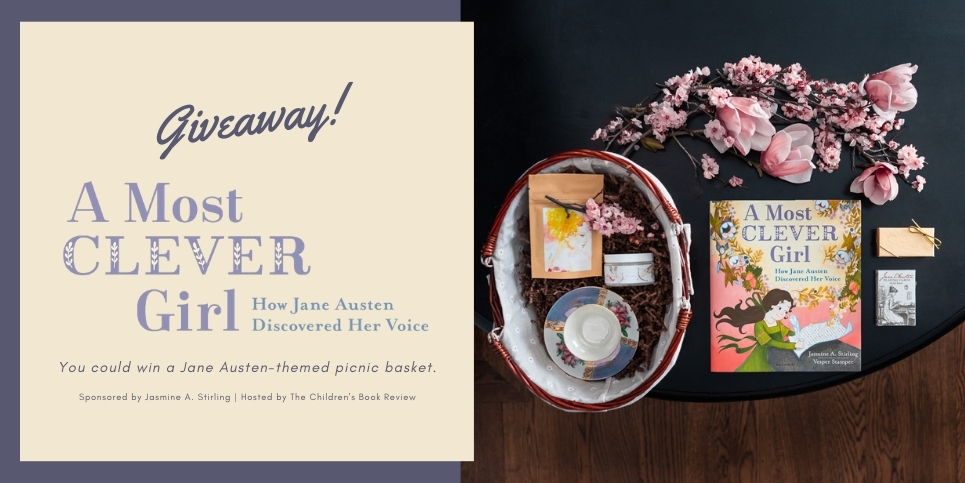
Please continue reading below for the book details, purchase links, and details for a lovely giveaway contest which includes a Jane Austen-themed picnic basket and a hardcover copy of A Most Clever Girl autographed by Jasmine A. Stirling!

ABOUT THE BOOK

A Most Clever Girl: How Jane Austen Found Her Voice
Written by Jasmine A. Stirling
Illustrated by Vesper Stamper
Publisher: Bloomsbury Children’s Books
Release date: March 30, 2021

Publisher’s Synopsis: Witty and mischievous Jane Austen grew up in a house overflowing with words. As a young girl, she delighted in making her family laugh with tales that poked fun at the popular novels of her time, stories that featured fragile ladies and ridiculous plots. Before long, Jane was writing her own stories-uproariously funny ones, using all the details of her life in a country village as inspiration.

In times of joy, Jane’s words burst from her pen. But after facing sorrow and loss, she wondered if she’d ever write again. Jane realized her writing would not be truly her own until she found her unique voice. She didn’t know it then, but that voice would go on to capture readers’ hearts and minds for generations to come.

PURCHASE LINKS:
Amazon
Bookshop.org

ABOUT THE AUTHOR

Jasmine A. Stirling is the debut author of A Most Clever Girl: How Jane Austen Discovered Her Voice, a picture book biography of Jane Austen about persistence and creative mastery. Jasmine lives on a cheerful street in San Francisco with her husband, two daughters, and their dog. From a young age, she loved to write poems and stories and worked her way through nearly every children’s book (and quite a few for grownups, too) in her local library. When she’s not writing, Jasmine can be found hiking in the fog, singing songs from old musicals, and fiddling with her camera.

Jasmine first fell in love with Jane Austen as a student at Oxford, where she read her favorite of Jane’s six masterful novels, Persuasion. A Most Clever Girl is her dream project, done with her dream team—award-winning illustrator Vesper Stamper and Bloomsbury Children’s Publishing. Jasmine also has a YA/New Adult history of the women’s suffrage movement out soon, titled We Demand An Equal Voice.

Visit www.jasmineastirling.com to get a free Jane Austen paper doll kit with the purchase of A Most Clever Girl. While you’re there, enter to win a Regency tea party gift basket!

Follow Jasmine on Instagram and Facebook @jasmine.a.stirling.author where she posts about kidlit and life with two young girls.

GIVEAWAY DETAILS

Enter for a chance to win a glorious Jane Austen-themed picnic basket, including a hardcover copy of A Most Clever Girl autographed by Jasmine A. Stirling!

ENTER GIVEAWAY HERE

One (1) grand prize winner receives:

  • A picnic basket filled with:
    • A copy of A Most Clever Girl: How Jane Austen Discovered Her Voice, signed by author Jasmine A. Stirling
    • A vintage teacup
    • 1 oz of tea From Adagio Teas
    • Truffles from Moonstruck Chocolates
    • Gardenia hand cream
    • A set of Jane Austen playing cards

Two (2) winners receive:

  • A copy of A Most Clever Girl: How Jane Austen Discovered Her Voice, signed by author Jasmine A. Stirling

The giveaway begins March 16, 2021, at 12:01 A.M. MT, and ends April 16, 2021, at 11:59 P.M. MT.

BOOK TOUR SCHEDULE FOR A MOST CLEVER GIRL

March 16The Children’s Book Reviewhttps://www.thechildrensbookreview.com/Book Review
March 17Life is What It’s Calledwww.lifeiswhatitscalled.blogspot.comInterview
March 18Library Lady’s Kid Lithttps://janemouttet.wordpress.com/Book Review & Guest Post
March 19Austen Prosehttps://austenprose.com/Book Preview & Guest Post
March 20A Dream Within A Dreamhttp://adreamwithindream.blogspot.comBook Review
March 21Barbara Ann Mojica’s Bloghttps://bamauthor.meBook Review
March 22Jane Austen’s Worldhttps://janeaustensworld.wordpress.com/Interview
March 23Satisfaction for Insatiable Readershttps://insatiablereaders.blogspot.comBook Review & Guest Post
March 24icefairy’s Treasure Chesthttp://icefairystreasurechest.blogspot.com/Book Review
March 25Heart to Hearttynea-lewis.comBook Review
March 26Confessions of a Book Addicthttp://www.confessionsofabookaddict.comGuest Post
March 27Eccentric Eclectic Womanhttp://finamoon.blogspot.comBook Review
March 28J.R.s Book Reviewshttps://jrsbookreviews.wordpress.com/Book Review
March 29My Jane Austen Book Clubhttp://thesecretunderstandingofthehearts.blogspot.com/Interview
March 30Jane Austen in Vermonthttps://janeausteninvermont.blog/Book Review & Guest Post
March 31Some the Wiserhttps://somethewiser.comBook Review
April 1Austenesque Reviewswww.AustenesqueReviews.comBook Review
April 2Absolutely Austenhttps://absolutelyausten.com/Book Review
April 3Faith, Science, Joy, and Jane Austenbrendascox.wordpress.comBook Review
April 4Fairview Elementary School (Library)https://fveslibrary.blogspot.com/Book Review
April 5Comfy Chair Bookshttps://comfychairbooks.com/Book Review
April 6Reading Is My SuperPowerhttps://readingismysuperpower.orgBook Review
April 7ShootingStarsMagwww.shootingstarsmag.netA Beyond the Book Activity
April 8Glass of Wine, Glass of Milkglassofwineglassofmilk.blogspot.comBook Review
April 9Book Q&As with Deborah Kalbhttp://deborahkalbbooks.blogspot.com/Interview
April 10The Fictional Cafehttps://www.fictionalcafe.com/Review + Interview
April 11Ingenious Babyhttps://www.youtube.com/channel/UCkNfesiHAPnqc4STgBn-LjwInterview
April 12The Children’s Book Reviewhttps://www.thechildrensbookreview.com/Guest Post
April 13Tucked In Tuesdayhttps://www.instagram.com/tutoringyoutoexcellence/Instagram Live: Tucked in Tuesday

RACHEL DODGE teaches college English classes, gives talks at libraries, teas, and book clubs, and writes for Jane Austen’s World blog and Jane Austen’s Regency World magazine. She is the bestselling author of The Anne of Green Gables Devotional: A Chapter-By-Chapter Companion for Kindred Spirits and Praying with Jane: 31 Days Through the Prayers of Jane Austen. You can visit Rachel online at www.RachelDodge.com.

Read Full Post »

« Newer Posts - Older Posts »