Feeds:
Posts
Comments

Archive for the ‘Regency World’ Category

Inquiring readers, It’s such a delight to receive first-hand information from a friend who lives in the U.K. Frequent contributor, Tony Grant, writes about his impressions of seeing the BBC2 special last Sunday entitled Pride and Prejudice: Having a Ball. The scenes were filmed in Chawton House wherein a Regency ball was reconstructed in a way that Jane Austen’s contemporaries knew well, but whose meanings in many instances have been lost to us. I had the privilege of watching the show as well and have interspersed my comments as if Tony and I were engaged in a dialogue. (Italics represent my comments.)  Let’s hope this special will be available soon the world over.
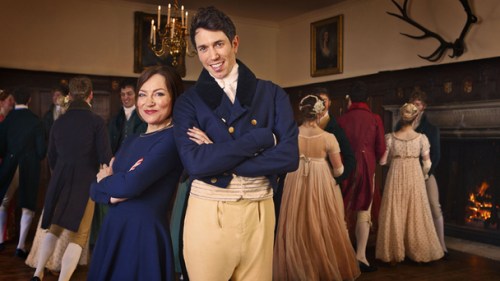
Amanda Vickery. Image courtesy of

Amanda Vickery and Alistair Sooke. Image courtesy of BBC2

It is Winter, 1813.

Amanda Vickery and Alaister Sooke, the art critic for The Daily Telegraph and who also presents art history programmes for the BBC, present this amazing programme. It is one and a half hours long and, being a BBC production, there are no breaks or intermissions.

The programme is a tribute to the two hundredth anniversary of the publication of Pride and Prejudice. The producers have taken the Netherfield Ball as their focus. They did not choose the Merryton Assembly ball, which was a public ball where everybody from the butcher, baker and candlestick maker was eligible to attend. The Netherfield Ball was a more intimate and select affair and by invitation only. One would be assured to rub shoulders with only the best families in the community.

Jane and her sister and mother lived in Chawton Cottage, where Pride and Prejudice was prepared for publication. It was a time when courtship was a serious business. “A woman must have a thorough knowledge of music, singing and drawing,” Jane wrote, and a man had to marry well if he was to secure his dynasty.

Research into costumes, food, dance, music, carriages, conversation and so on focussed on the year 1813.
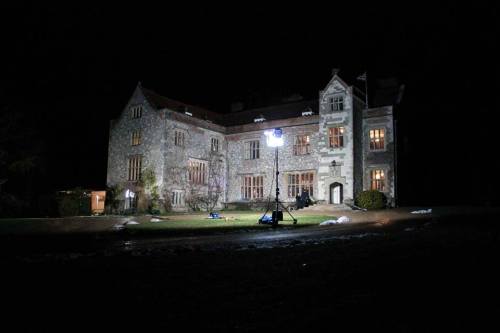
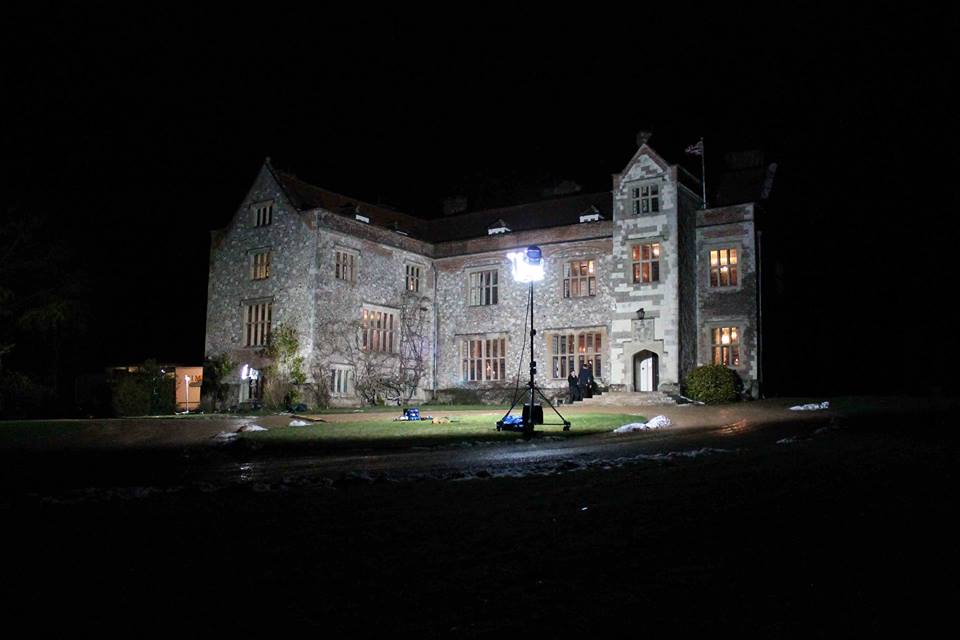
Filming at night on Chawton House grounds

Filming at night on Chawton House grounds. Image courtesy of Chawton House

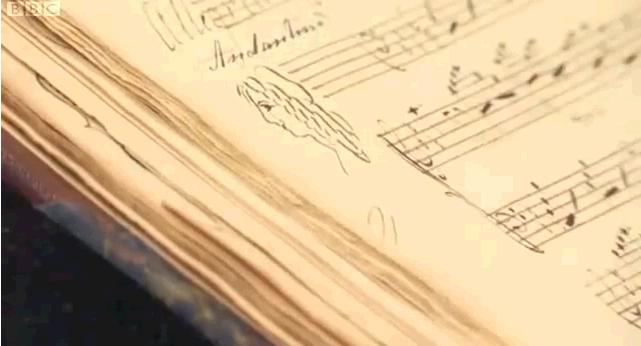
The writers and producers consulted and interviewed professors and experts about the minutiae of Georgian life. One professor, Jeanice Brooks at Southampton University, showed Alexander Sooke the very music manuscripts that Jane Austen wrote out by her hand with little cartoon doodlings in the margin.

Jane Austen doodle in a music manuscript

Jane Austen’s doodle in her music manuscript. Image @BBC2

That was one of the many wow moments for this viewer. (For me too, Tony!)

Popular music was widely collected at the time and summarized for the piano. Jane Austen must have spent hours copying music in her neat hand, for there are quite a number of her music manuscripts still in existence. 

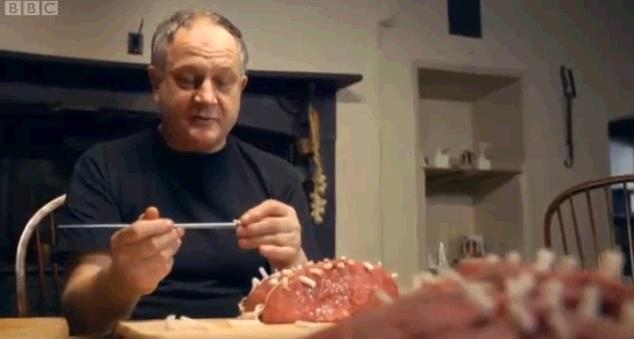
ivan day food expert

Ivan day, historic food expert. Image @BBC2

The food was researched to the minutest degree. Ivan Day and his kitchen staff used Georgian cooking implements, although the Georgian cooking range at Chawton House was not in working order, so they used modern ovens. The recipes were authentic and came from Martha Lloyd’s cook book and other original Georgian documents.

Martha Lloyd's recipe for white soup, a common dish served at supper dances.

Martha Lloyd’s recipe for white soup, a common dish served at supper dances.

Food denoted status. Game shot on a gentleman’s land was turned into a partridge pie, a symbol of upper class dining. At the Netherfield Ball, Mr. Bingley would be sure to provide only the most excellent food, such as fresh grapes, nectarines and peaches in winter, which would have been expensive to import or grow indoors in hot houses. The grand spectacle of the supper table, with its silver platters, silver dishes, and silver tureens, gave an overall impression of austentation [sic] and of the host’s status. 

Ivan Day's recreation of Solomon's Temple, a very difficult flummery to recreate.

Ivan Day’s recreation of Solomon’s Temple, a very difficult flummery (Georgian jelly) to recreate. Image @BBC2

Stuart Marsden, an expert in Georgian dances and a former ballet dancer, assembled students from the dance department of Surrey University at Guildford, about twenty miles north of Chawton, to dance at the ball. Although these young dancers were fit and professional, in their Georgian costumes and in the full glare of hundreds of candles, they suffered from heat and encroaching exhaustion as the evening went on.
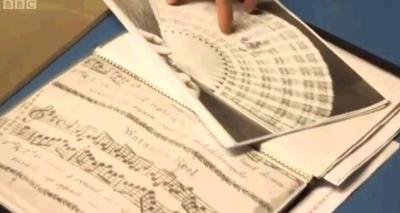
This fan served to cool the dancer and as a crib sheet, in which the steps of intricate dances were written down. Usually made of paper, few have survived.

This fan served to cool the dancer and as a crib sheet, in which the steps of intricate dances were written down. Usually made of paper, few of these fans have survived. As all fans of the Regency know, they also served as the perfect tool for flirtation. Image @BBC2

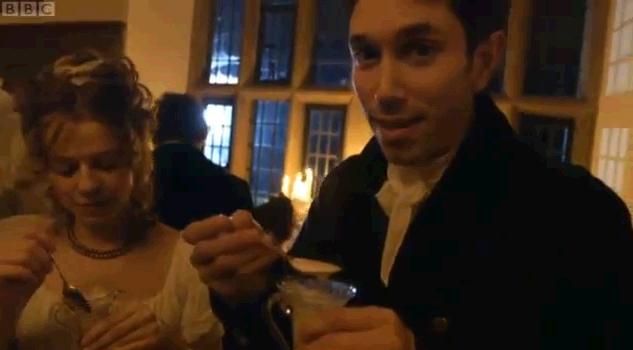
During the course of the evening, the dancers were supplied with Portugese wine and fortified negus punch. Punch a la Romaine, or Roman punch, was a mixture of rum or brandy with lemon water, lemon meringue and a very hot syrup. It was a sort of creamy iced drink that was 30 or 40 percent alcohol, a Georgian equivalent of a cold Coca Cola that cooled the dancers down between dances.

Punch a la Romaine

Punch a la Romaine. By the end of the night the dancers were a little tipsy, shall we say. The spoons used in the production belonged to the Prince Regent and came from Brighton Pavilion. Image @BBC.

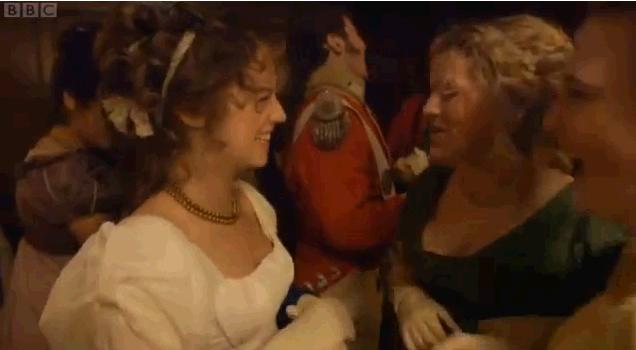
Although Chawton House is large, the room where the dance was held seemed rather crowded once all the dancers were assembled. Candles blazed everywhere. The men wore stiff jackets, waistcoats, and neck high cravats. The ladies, whose bosoms were exposed, also wore many layers. They had donned swaths of petticoats under their skirts, and wore long stockings and long gloves. One can imagine that with the press of bodies, heat from the candles, constant exertion in long dance sets, and frequent imbibing of alcohol that the assembly quickly felt heated.

One can see from this image how crowded the ball room was and how 300 candles and all that exertion might have heated the dancers.

One can see from this image how crowded the ball room was, and how the blaze from 300 candles and hours of exertion might have heated the dancers. I was amazed at the lack of evident sweat.

It was interesting to find out that everybody knew how a long a dance would last from the length and quality of the candles. There were four-hour candles and six-hour candles. For this production eight-hour candles were used.

The finest, most expensive and clean burning candles were made of beeswax. Up to 300 might be used for a ball – quite an expense, for the cost was around £15, or a year’s wages for a manservant. Less expensive (and smokier and stinkier) were tallow candles, which were purchased by the less wealthy. The very poor had to make do with rush sticks, which didn’t last very long.

Peoples’ wealth and position in the upper and gentry classes were evident from the outset. Hierarchy pervaded all strata of Regency society. Social signifiers included the materials used for clothes, their style and the embellishments they had personally chosen for their costumes, the cut of the material and garment, the very buttons they had on their costumes, and so on. These details would reveal not only their status but their personalities too.
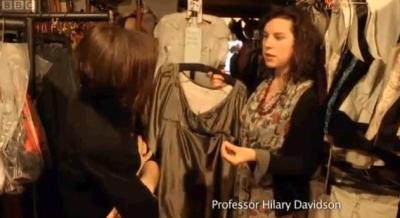
Professor Hillary Davidson explains the personal involvement that people had in their clothes, which were hand made.

Professor Hillary Davidson explains the personal involvement that people had in their clothes, which were hand made and reflected personal taste and input. In addition, the outfits “reflected the range of social rank and social division by cut, color, and texture.” Appearance meant everything at a ball. Many refashioned their frocks from hand-me-downs from an older sister or cousin, creating “hybrid” fashions, for the value of these outfits lay in the material, not the design of the dress. Individual details and features were immediately evident to Jane Austen’s contemporaries, for fashion and jewelry represented a public display of one’s assets. Image @BBC2

Silk would be worn by Miss Bingley, for it was a rich and expensive fabric. Miss Bingley and Miss Hurst would have worn the latest fashions from London, which is quite evident in the film costumes of Pride and Prejudice 1995. Lydia Bennet would have chosen a fine gown,  for she was fashion forward for a country girl (and her mama’s favorite), whereas Mrs. Bennet would have worn a print gown with a frilly but modest matronly cap that denoted her status as a woman with some authority. The Bingley sisters would have sneered at the simply styled hybrid dress that the Bennet sisters might have refashioned from a combination of old clothes and newer fabrics.  If you were a good needlewoman, such a gown might have been embellished with embroidery, lace, or ribbons.

Simple hybrid dress, much as Elizabeth Bennet might have worn. Notice the coral necklace.

Simple hybrid dress, much as Elizabeth Bennet might have worn. Notice the coral necklace.

Shoes were changed in the cloak room, for some people walked quite a distance to get to the ball, and even soldiers exchanged their Hessian boots for dancing slippers. Over the course of the evening, delicate dance slippers might be worn down to a thread.
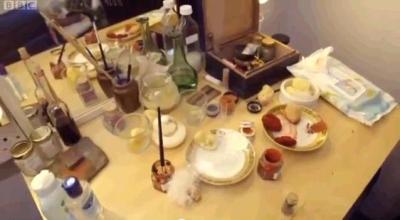
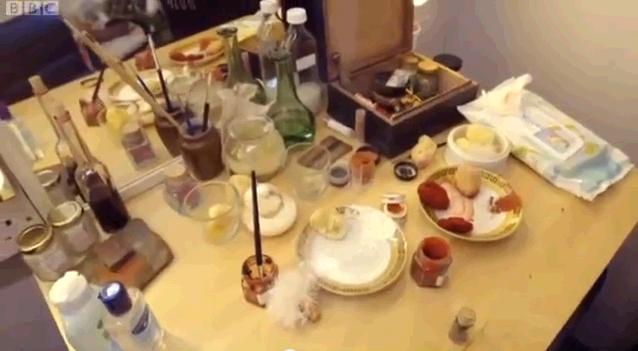
Historical makeup and rouge pots. Too much, and a lady might be labeled a trollop.

These are Sally Pointer’s historical makeup and rouge pots for rosy cheeks (even for the redcoats, like Wickham). Apply too much color and a lady might be labeled a trollop. Image @BBC2

Everything – one’s clothes, actions, and relationships – how you arrived at the ball – could be read and interpreted. This was one of the main points made by the programme.

It’s not so different today, really, is it Tony? At a glance we can tell who is fashion forward, who is a frump. Whose jewelry reeks of Tiffany’s and who shopped at Walmart. We know from each others speech, friends and business associations, educational background, and other social signifiers who belongs in our social strata and who does not. My mother especially had a keen sense of which of my suitors suited and who did not. Her primary social signifiers were persons of moral character and compassion. It was who that person was inside that mattered, not what they wore or what possessions they had acquired. I suspect that during the Regency such distinctions were also important. Jane Austen was a genius at distinguishing wheat from chaff, and ferreting out the foibles of her contemporaries.
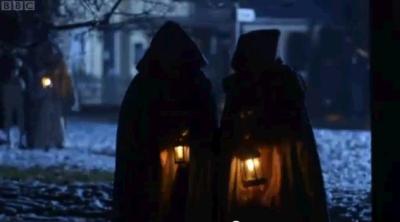
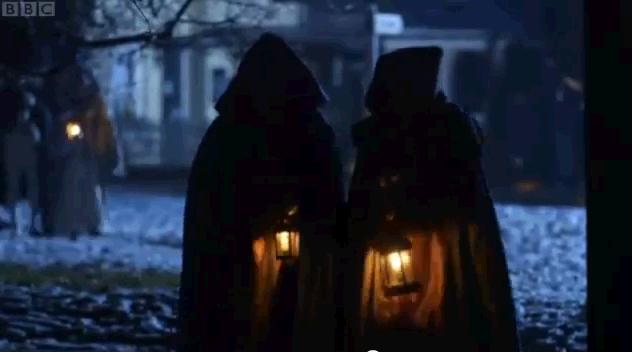
Walking to the ball carrying lanterns.

Walking to the ball carrying lanterns. The hooded cloaks reminded me of the medieval era and monks. Image@BBC2

I noticed how most of the actors in the production walked to the ball holding lanterns. Carriages were expensive. If possible, those who had carriages would arrange to pick others up and bring them. If not, the guests walked to the ball. A similar scene was shown in Becoming Jane, where guests arrived on foot and walked along a lane strung with lanterns. Back in those days balls were planned to coincide with a full moon for maximum light at night and for a bit of safety from bandits and robbers. One wonders about such well-laid plans in rainy England, where a blanket of storm clouds would block the moonlight and rain would soil the hems of delicate ball gowns.

The most interesting thing I found from the programme was the meaning of the dance. This Darcy quote, “every savage can dance,” is used to highlight that the dance alludes to something primal. Elizabeth and Darcy have their most unguarded conversation during a dance. Interestingly, the Savage Dance was a craze in 1813 and taken from a song and dance routine from a musical based on Robinson Crusoe.

Balls, to quote Amanda Vickery, were sexual arenas of social interaction. In Pride and Prejudice, Darcy and Elizabeth dance around their sexual attraction for each other. The truth is that in those days single men and well-protected young and unmarried ladies could not spend one moment in private with each other before they were officially engaged. But at a dance they could touch each other (through gloved hands) and flirt and talk at length without a chaperon breathing down their necks. The long dance sets were strenuous and required stamina, however. To quote Amanda Vickery, “The entire ball is hard work, with physical, social, and emotional investment and cost.” The cost being one of expenditure (looking one’s best) and exertion (maintaining one’s stamina.) 

dance chawton

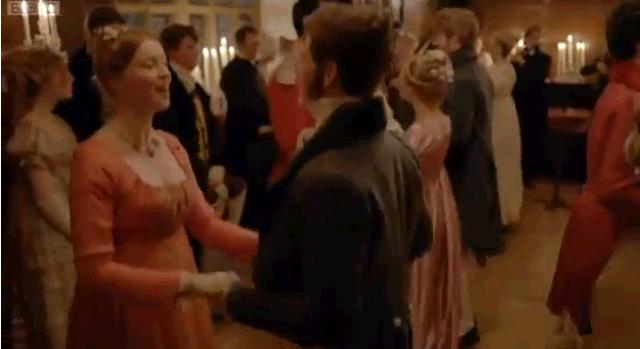
Dancing the cotillion. Image @BBC2

Young ladies and young gentlemen practiced and prepared for the balls from childhood on. They had to be good and graceful at dancing to be admired and looked at. This was necessary for their futures, for they were actually dancing for their lives. You were likely to dance with a person from the same rank and expertise: they endured these dances for a very long time with one partner. There were moments of physical contact and movement. Aristocratic young men like Darcy sought strong and accomplished women to be the mother of their children for the sake of inheritance and future generations of their families. Young women needed to attract a good catch for their happiness and futures too. So much effort and hope was invested in the “ball,” for a girl’s future could be sealed at a dance.

No wonder the excitable Lydia Bennet went ballistic when the Netherfield Ball was announced! She was not only man crazy, but she had a competitive streak in her, frequently pitting herself against her older sisters. I was also struck by how much dancing masters could make per person from dance lessons. Every young boy and girl from a respectable family was expected to practice dance steps. It was quite a telling detail for Jane Austen’s contemporary readers that Mr. Collins is a poor dancer and that Mr. Elton exhibited such ungentlemanly conduct towards Miss Smith at the Crown Inn ball, where Mr. Knightley (a true knight in shining armour) came to her rescue and saved her from public humiliation. Mr. Elton’s reaction towards Miss Smith pointed out how much Emma misjudged Miss Smith’s tenuous connection to the gentry, for Mr. Elton thinks too highly of himself and his own social standing to ally himself to the bastard daughter of a gentleman.

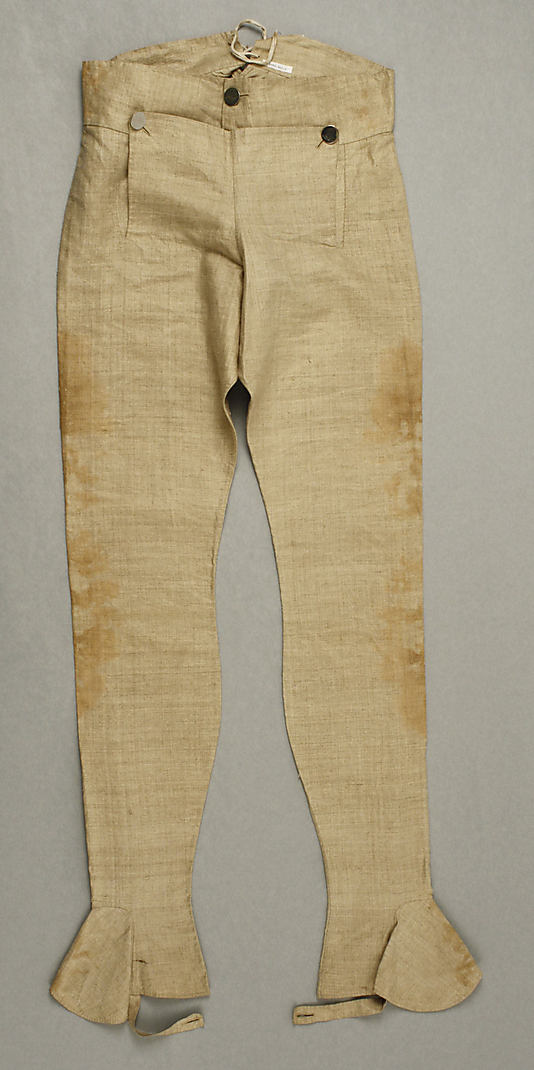
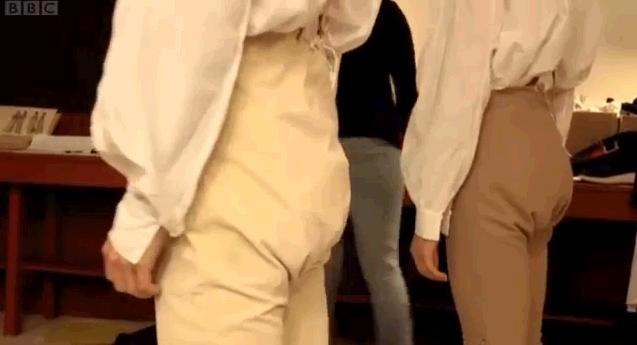
 Alaister Sooke makes the comment that for all its finery and sophistication the ball (it was decorous and tightly controlled) was also primeval, with the subconscious very much in play. The way the dancers were dressed, with women revealing lots of cleavage and the men revealing their groins in tight-fitting trousers, was totally sexual in nature.
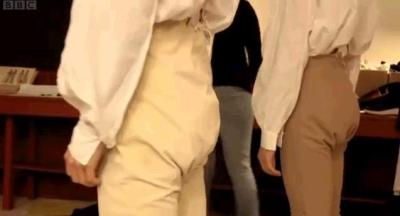
men's breeches

The dancers get fitted for their breeches, which revealed quite a bit of the male anatomy, especially the groin area. Image @BBC2.

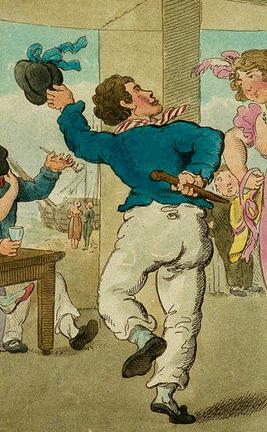
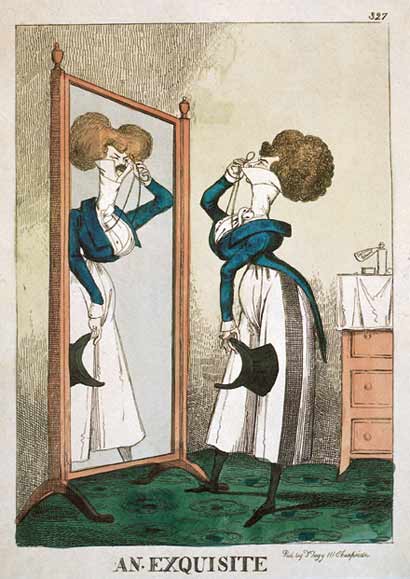
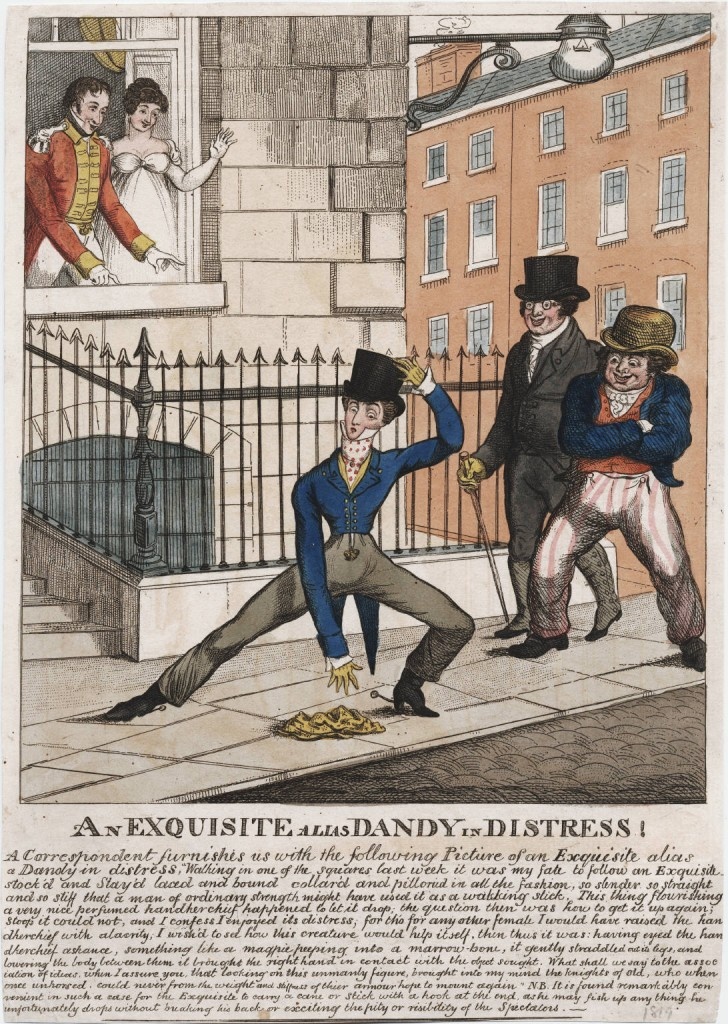
You are so right, Tony. Let’s take the case of menswear ca. 1813. Although the colors were muted, the silhoutte was quite athletic. The front of a man’s coat was cut high so that his body was fully revealed in front from the waist down. Men tucked their long shirt tails between their legs, which served as underwear. Because their calves were exposed, it was important for men to dance well, since all their steps were in full view. Women’s legs were hidden by their skirts and they could make a mistake or two without much notice.  I was struck by how much the modern dancers enjoyed the evening and how much their costumes and the setting affected them.
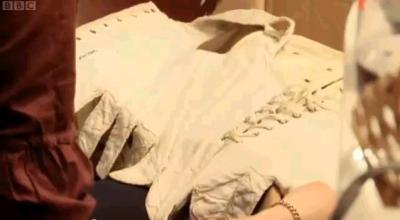
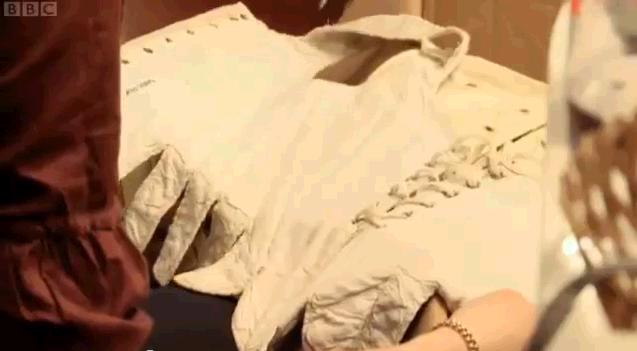
corset

The ladies in the series wore authentic underwear. Underneath the muslins  and silks they wore undergarments consisting of a chemise and petticoat. There was actually a lot going on below the skirt, but the ladies  generally went knickerless. Even when women wore underdrawers, the crotch area remained open and they remained so until the late 19th c. or early 20th century.  Crotchless knickers were the norm! Image @BBC2

A courting couple made sure to reserve the supper dance for each other (or the dance just before the evening meal), for this meant that they could extend the time they spent together to include the meal, which was generally served at midnight. In the series, Ivan Day and his staff slaved to make the dishes, for they were served à la française (in the French style), or all at once. Preparing dishes for such a service required a great deal of skill and Herculean effort, for hot meals needed to be served hot, while delicate ices needed to remain frozen until they were consumed. At the dinner table in this special, a mild scene of chaos ensued, with servants bringing platters from one end of the table to the other, guests handing platters around, and others reaching across the table to sample a tidbit. Ragout of Veal, one of Jane Austen’s favorite dishes, was served. This dish was frequently mentioned by her, particularly in Pride and Prejudice. As an aside, one could readily discern at the supper ball which guests had manners and those who did not.

Ragout of

The ragout of veal at the supper dance was associated with high living. Image @BBC2

More on the topic:

Read Full Post »
Inquiring reader: The city of Bath is a topic that guest writer Paul Emanuelli, author of Avon Street, knows well, having immersed himself in Bath’s history and environs for his novel. For this article he examines Jane’s life in Bath and how the city must have looked and felt to her in the years that she lived there. Enjoy.

Jane Austen’s Pride and Prejudice opens with the sentence, “It is a truth universally acknowledged, that a single man in possession of a good fortune, must be in want of a wife.” It is one of the best written and best known opening lines of any novel. It is also one of the best examples of “comic irony” because, as Austen makes clear throughout the novel, it is primarily the women (or more particularly their mothers) who are desperately in search of a rich single man as husband-material.

Historically Bath was undoubtedly one of the most favoured locations for such husband hunting, both in fact and in fiction. Though the city is relatively small today, it had grown faster than almost any other in Britain during the 17th Century. In 1801, when Jane moved to the city it was the ninth largest conurbation in England with a population of 35,000. Its spa facilities and entertainments were renowned throughout Europe and visitors flocked to the city for “The Season” (roughly from the beginning of May to mid-September). This was the time for match-making.

Rowlandson, The Comforts of Bath, The Bath. Wikimedia image.

Rowlandson, The Comforts of Bath, The Bath. Wikimedia image.

There were balls and gatherings, concerts and card games in the Upper and Lower Assembly Rooms. Each day people met in The Pump Rooms to see who was newly arrived in the city, to make introductions (and to be introduced) and perhaps most importantly to exchange gossip, and arrange social events. The theatre too, was well attended with a continually changing programme of popular contemporary productions, drawing some of the finest actors and performers of the age.

Rowlandson, The Comforts of Bath, The Pump Room. Wikimedia image.

Rowlandson, The Comforts of Bath, The Pump Room. Wikimedia image.

People also entertained at home, and yet one of the most favoured social events (weather permitting) was simply “promenading” in the popular shopping areas like Milsom Street, or the many purpose-built, Parades and Parks, like Jane’s favourite, Sydney Gardens. These were the places to see and be seen, the places where accidental meetings might be expected, or could be contrived. As Catherine Morland remarks in Northanger Abbey – “a fine Sunday in Bath empties every house of its inhabitants, and all the world appears on such an occasion to walk about and tell their acquaintance what a charming day it is.”

Rowlandson, The Comforts of Bath, The Ball. Wikimedia image.

Rowlandson, The Comforts of Bath, The Ball. Wikimedia image.

It would be easy to be swept away by images of “beautiful people” in a social whirl of high society events, set against a back-drop of some of the finest Georgian architecture in the world. Indeed that is the world that Jane Austen seems to present in her novels, yet that was not the whole truth, at least for Jane. The notorious British weather certainly often made promenading, or even attending events or visiting friends, difficult. As Jane said in a letter to her sister, Cassandra,

“We stopped in Paragon (a prestigious address where her wealthy uncle lived) as we came along, but it was too wet and dirty for us to get out.”

Rowlandson, The Comforts of Bath, Gouty person fall on steep hill. Wikimedia image.

Rowlandson, The Comforts of Bath, Gouty persons fall on a steep hill. Wikimedia image.

It must also be remembered that Jane lived in Bath continuously (throughout the years) from 1801 to 1805, and the city was a very different place, out of season. Being primarily a Spa, many of the resident population of Bath were of retirement age and not always in the best of health. As for eligible young men, only 39% of Bath’s population were male in 1801, and it is safe to assume that relatively few of these were eligible, and that even fewer were young. As Sir Walter Elliot observes in Persuasion –

“There certainly were a dreadful multitude of ugly women in Bath; and as for the men! they were infinitely worse. Such scarecrows as the streets were full of! It was evident how little the women were used to the sight of anything tolerable, by the effect which a man of decent appearance produced.”

Rowlanson, The Comforts of Bath, The Breakfast. Wikimedia image.

Rowlanson, The Comforts of Bath, The Breakfast. Wikimedia image.

Many of the eligible young men were of course in the army or navy and away fighting the Napoleonic Wars for much of the time that Jane was living in Bath. And while officers in the services were expected to be at least literate, they came from vary varied educational and social backgrounds. Contrary to popular opinion, although an officer was supposed also to be a “gentleman”, this usually referred to an expectation rather than a predisposition. And often officers fell short of those expectations, which perhaps accounts for Jane’s portrayal of characters like George Wickham, the ne’er-do-well seducer in Pride and Prejudice.

Rowlandson, The Comforts of Bath, Coaches arriving. Wikimedia image.

Rowlandson, The Comforts of Bath, Coaches arriving. Wikimedia image.

I’m sure there were lots of George Wickhams in Bath. It was, and still is, the perfect setting for a novel. It was a place where, given enough money or access to credit, all the trappings of wealth and position could be rented or hired or borrowed for The Season, and where people were often not who they appeared to be. As Jane observed in Persuasion.

“Sir Walter had at first thought more of London; but Mr Shepherd felt that he could not be trusted in London, and had been skillful enough to dissuade him from it, and make Bath preferred. It was a much safer place for a gentleman in his predicament: he might there be important at comparatively little expense.”

Company at Play, Rowlandson, The Comforts of Bath

Rowlandson, The Comforts of Bath, Company at Play

Very few of Jane’s letters survive from her time in Bath and some say that she wrote very little while she was there. Yet it’s well known that Jane was a consummate editor, writing and re-writing, polishing and refining her work until she was satisfied it was good enough. She may well have been working on drafts of her later novels even then. She was certainly observing and remembering what she saw.

Rowlandson, The Comforts of Bath. Private practice previous to the ball. Wikimedia image.

Rowlandson, The Comforts of Bath. Private practice previous to the ball. Wikimedia image.

We do know that Jane wrote the beginning of her unfinished novel, “The Watsons” while in Bath. Some say it remained unfinished because it was a time of upheaval in her life (with the death of her father). Others believe it so clearly mirrored her own experience (particularly the financial precariousness of the family) at the time that she found it too painful to continue. And perhaps the chapters that she did complete lack some of the refinement and polish of her later novels, yet I find them very poignant and touching. I can’t help thinking that someone of Jane’s intelligence and sensitivity must at times have been hurt by a Society where people were judged so much in terms of title, wealth and appearance; as opposed to their true nature and accomplishments. Perhaps it’s little wonder then that Jane Austen makes such good use of comic irony.

Paul Emanuelli holds up his novel, Avon Street

Paul Emanuelli holds up his novel, Avon Street

Find more information about Paul Emanuelli and Avon Street on his blog, unpublishedwriter, where you will find a thoughtful discussion on the demise of book stores, and his Twitter account. Click on image to find his book.

Paperback: 320 pages
Publisher: The History Press (March 28, 2012)
ISBN-10: 0752465546
ISBN-13: 978-0752465548

Read Full Post »

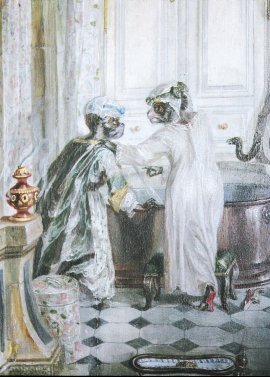
During the 18th century women wore a long flannel shift while bathing, sometimes with lead weights sewn into the hem to keep the skirts from floating up. (Word Wenches: Keeping It Clean.) In  Worn Through, Dr. Kimberly Chrisman-Campbell discusses monkeys in art in a blog entitled Monkeys a la mode. The creatures served as satirical stand-ins for humans, much as dogs did in satirical early 20th century poker paintings.

Bathing_scene

Image @Worn Through. Click on image to go to the source.

I found Chrisman-Campbell’s passage about the bath of particular interest:

The bath scene is a rare and realistic image of an eighteenth-century bathroom and bathing ritual; the monkey kicks off her red-heeled shoes (long before Louboutins, these signified that one had been presented at Versailles, an allusion to the family’s courtly connections) but she will wear her lace-trimmed white linen chemise in the tub.

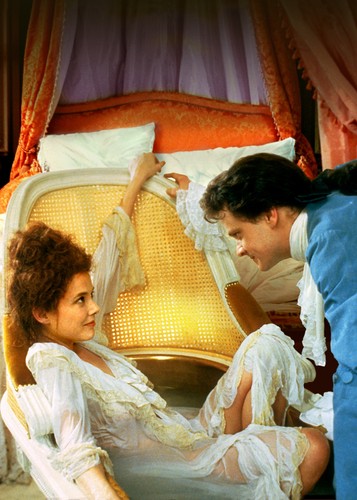
One wonders how much the habit of wearing a bathing gown in a bath had to do with modesty. The time it took to prepare for a bath was long and arduous. Water had to be hauled from the well, heated in sufficient quantities, and then hauled up the stairs before the water cooled. One did not take a quick bath in such an instance, but would linger in the tub until the water became too cold for comfort. One imagines that a roaring fire kept the room (and bather) warm. In those days, aristocratic women entertained visitors in their dressing rooms while wearing elaborate dressing gowns. As shown in the scene below, they also entertained visitors while bathing.

Valmont_stills_21959

Annette Bening and Colin Firth in Valmont

In the  film Valmont, Bening’s Marquise Isabelle de Merteuil uses the bath as a prop to demonstrate her power and sexuality. Her bathing dress enhances her curves and disguises very little. This film clip shows one delicious bath scene.


In this image from Mr. Vernon, Martha Washington’s bathing dress is plain and pedestrian by comparison. It is a mystery to me why the bathing dress was worn, for anyone who has walked in the rain knows how quickly wet clothes can cool the skin. One can only imagine the chilling effect of wet cloth in drafty houses.

Bathing gown. Image @ Mount Vernon

Bathing gown. Image @ Mount Vernon

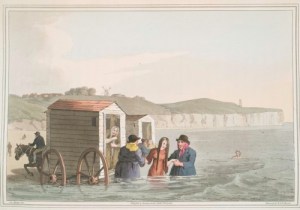
By the late 18th century/early 19th century, bathing dresses were fashionable at seaside resorts. One can readily understand why, for in the image below a man on horseback pulls the bathing machine into the water. The bather peeks out of the door, unwilling to expose herself until all was safe. In fashionable Brighton, men and women bathers were separated and swam from different beaches. Away from prying eyes, some women felt free to bathe nude.

TopILNewsBathingMachine

Tide Coming in Fast and a Jibbing Horse”, a 19th century engraving from the Illustrated London News which shows how a bathing machine was towed in and out of the sea by a man on horseback. Image @The Brighton Swimming Club

As you can see from this 1813 image from the Costumes of Yorkshire, many women still chose modesty over nudity. The dippers were female, and the male rider on horseback kept well away from view.

1813-From-The-costume-of-Yorkshire-illustrated-by-a-series-of-forty-engravings-being-fac-similes-of-original-drawings-500x351

Sea Bathing’ 1813 From “The costume of Yorkshire, illustrated by a series of forty engravings, being fac-similes of original drawings” NYPL Digital Collection

If modesty was the reason for wearing bathing costumes made from linen or cotton, then their purpose failed. As seen in this 1916 photograph, wet fabric didn’t hide the details of the nude body as much as accentuate the curves. The veiling was illusory and the result much sexier than the nude body itself.

bathing suit 1916

Wet suit 1916: Alfred Stieglitz(‘Ellen Koeniger’, 1916, gelatin silver photograph, 11.1 x 9.1, J Paul Getty Museum, Los Angeles)

In an interesting aside, this image of a medieval bath from Leeds Castle shows that bathing wasn’t always regarded as a harmful exercise by the British.

Medieval bath, Leeds Castle

Medieval bath, Leeds Castle

Read more about the seaside and seaside fashions on this blog to round out your knowledge of how the Regency folks enjoyed their seaside excursions:

Read Full Post »
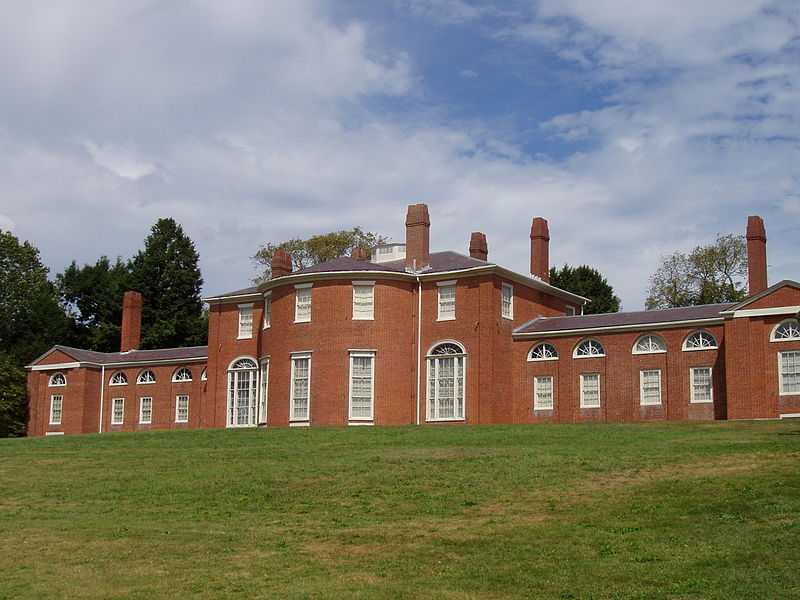
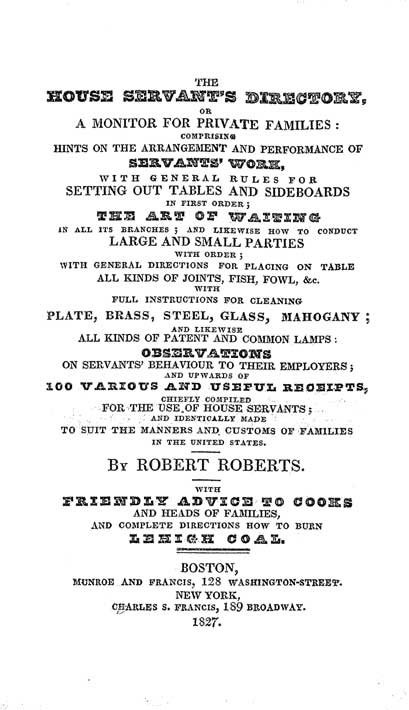
The House Servant’s Directory: An African American Butler’s 1827 Guide by Robert Roberts is the first books written by an African American to have been published in the

Gore Place, Waltham MA

Gore Place, Waltham MA. Image @Wikipedia

United States by a major publisher. Roberts worked as a butler and major domo for Christopher Gore (a U.S. Senator and governor of Massachusetts) from 1825-1827 at Gore Place. Robert’s book, a remarkable feat, was also popular, for it was to have two more printings in 1828 and 1834. His advice gives us a glimpse into the life of an early 19th century butler.

Here are his instructions for taking care of a gentleman’s clothes:

if your gentleman’s clothes should happen to get wet or muddy, hang them out in the sun or before the fire to dry. Do not attempt to brush them when wet, or you will surely spoil them, but as soon as they are perfectly dry, take and rub them between your hands where there are any spots of mud, then hang them on your clothes horse, which you must have for the purpose; then take a rattan and give them a whipping, to take out the dust, but be careful and don’t hit the buttons, or you will be apt to break or scratch them.

Image @Wikipedia

Image @Wikipedia

He goes on to describe how one should then carefully brush the coat, starting with the back of the collar, moving to the shoulders, and then to the sleeves and cuffs.  Roberts’ instructions for folding the coat are equally meticulous and given so that “you will find the coat folded in a manner that will gain you credit from any gentleman, and will keep smooth for any journey.” Clothes, as I mentioned in an earlier post, were quite expensive, and taking care of them and keeping them in good shape was a major undertaking.

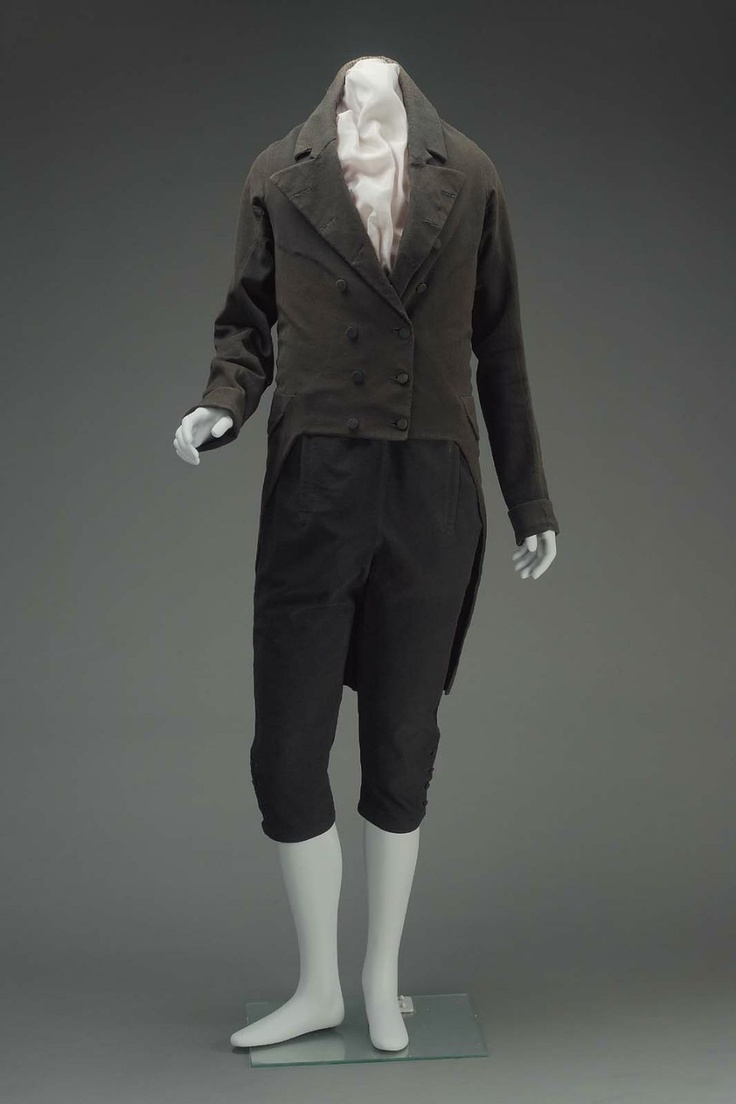
Man's suit, American. 1810-1820. Museum of Fine Art

Man’s suit, American. 1810-1820. Museum of Fine Art

Hats were another part of a gentleman’s wardrobe that required great care lest they begin to look shabby. A soft camels hair brush is the preferred instrument to brush hats with, for it will not injure fur or scratch it off. Wet hands should be handled with great care or “you will put it out of form.” Using a silk handkerchief and holding the hat carefully (hand inside and fingers extended) “rub it lightly all round, the way the fur goes”. Roberts was most likely talking about beaver hats, which were quite the rage and expensive.

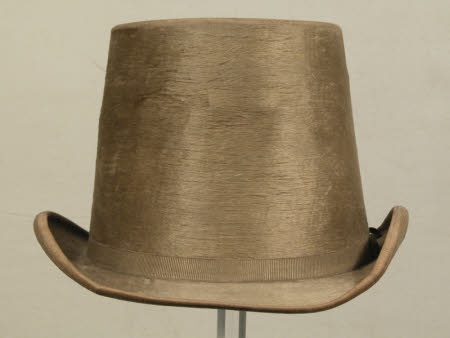
Hat 1820-1830, Snowshill Manor. Image @Nationa Trust/Richard Blakey

Hat 1820-1830, Snowshill Manor. Image @Nationa Trust/Richard Blakey

There are some people that think brushing a hat while it is wet, certainly spoils it; but it is quite the contrary; for the hatters themselves always brush and finish off their hats while damp, so as to give the fur a brilliant appearance. Likewise they set them to their regular shape while damp. I have received these instructions myself, from one of the best hat manufacturers in London.”

This last statement demonstrates Roberts’s worldly and educated background. It is no wonder that his advice still holds up well today.

Read Full Post »

Over a year ago I read a fabulous blog post on the Regency Redingote entitled  Boy to Man: The Breeching Ceremony. The article is thorough and I was quite satisfied with its information until I ran into this quote, written by Jane Austen in 1801 to her sister Cassandra:

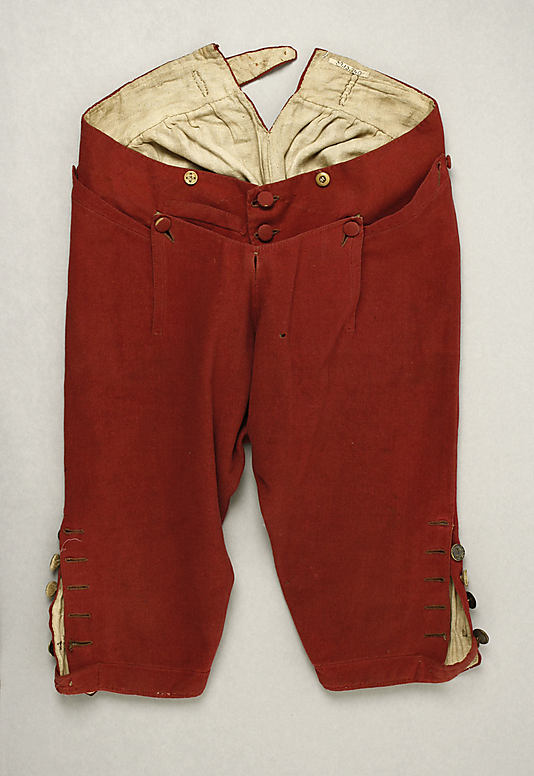
Mary has likewise a message: she will be much obliged to you if you can bring her the pattern of the jacket and trousers, or whatever it is that Elizabeth’s boys wear when they are first put into breeches; so if you could bring her an old suit itself, she would be very glad, but that I suppose is hardly done.”

This short passage told me much more about the topic and I decided to pursue it further.

Portrait of William Ellis Gosling, 1800 , Sir William Beechey, R.A. Image @Wikipedia

Portrait of William Ellis Gosling, 1800 , Sir William Beechey, R.A. Image @Wikimedia Commons

During the 18th century boys and girls were dressed alike in baby clothes during their infancy and in petticoats as toddlers. In Beechey’s image, our modern eyes would not identify the infant as a boy unless he was labeled as such.

John Russel, Boy with spaniel. Image @ Christie's.

John Russel, Boy with spaniel. Image @ Christie’s.

At some point, the boys** would be placed in skeleton suits or a form of pantaloons and a frilly tunic. Their hair was still worn long and they still lived in the nursery, if the household was wealthy enough, or were overseen by women – their mothers, older sisters, grandmothers, aunts, nursemaids, etc.

Fathers rarely stepped inside the nursery, the province of women.

Fathers rarely stepped inside the nursery, the province of women. In this idealized scene, the infants are guided on leading strings and a special “cage” that enabled toddlers to learn to walk. Image, source unknown. (Does anyone know the provenance?)

Between the age of 4-6, they would have their hair shorn and graduate to wearing trousers. This important event was marked by a breeching ceremony, a significant milestone in a young boy’s life. I can liken it to my first communion at the age of six. It was an event so important and memorable that I can still vividly recall my pretty white dress and veil, and the details of receiving my first communion wafer and celebrating the occasion with close family and friends. I felt different after that day, and in that way can relate to the pride that 18th and 19th century boys must have felt as they changed into the clothes that marked their first step to manhood.

The modern eye would regard these two children as girls. Lydia Elizabeth Hoare (1786–1856), Lady Acland, with Her Two Sons, Thomas (1809–1898), Later 11th Bt, and Arthur (1811–1857) by Thomas Lawrence   Date painted: 1814–1815. Image @National Trust Collection

The modern eye would regard these two children as girls. Lydia Elizabeth Hoare (1786–1856), Lady Acland, with Her Two Sons, Thomas (1809–1898), Later 11th Bt, and Arthur (1811–1857)
by Thomas Lawrence
Date painted: 1814–1815. Image @National Trust Collection

The breeching ceremony had little to do with social status and was practiced across all class lines. The rich could afford any amount of new clothes for their children, made by tailors or seamstresses, no doubt, but at the start of the Industrial Revolution, the cost of clothing was still prohibitive for even the gentry, the class to which Jane Austen’s family belonged. As Jane Austen so often mentioned in her letters, clothes were generally remade and recycled rather than discarded. Ribbons, buttons, lace, or other embellishments were added to update a garment, and sleeves were reshaped or cut down to size, and hems raised or lengthened as current fashion required. If the garment was no longer suitable for one person, it could be cut down to size for someone who was smaller. The refashioned garment was worn and patched until it was given to the poor or used as rags.

Jane Austen’s comments about her sister-in-law’s request to Cassandra to bring back a pattern to share or an old suit for her boy’s breeching ceremony now makes sense. The women of the house sewed the clothes (for mass production of garments and textiles was still in the future), and shared patterns and borrowed sartorial ideas from each other. Hand me downs were de rigeur, I am sure, for most parents of that era with large families could scarcely afford new clothes for each of their many children.

Thomas Lawrence English (Bristol, England 1769 - 1830 London, England) Sir Walter James, Bt., and Charles Stewart Hardinge, 1829. Image @Harvard Art Museums

Thomas Lawrence
English (Bristol, England 1769 – 1830 London, England)
Sir Walter James, Bt., and Charles Stewart Hardinge, 1829. Image @Harvard Art Museums

Regardless of social standing, all boys,  even those from the lower sorts, would receive a new pair of breeches around the age of six (four to six, to be more precise). The breeching event provided a cause for private celebration, to which family and friends were invited. For the parents, this ceremony also acknowledged that their child had survived past infancy. In an age when so many children died before reaching their majority (almost a fourth of them would die before the age of 10), the breeching ceremony might well have been the only significant event in a young boy’s life. In addition, he received a set of brand new clothes – a milestone indeed!

To put a perspective on how a parent felt about this event, Samuel Taylor Coleridge proudly writes of his son Hartley’s breeching ceremony in 1801:

Hartley was breeched last Sunday — & looks far better than in his petticoats. He ran to & fro in a sort of dance to the Jingle of the Load of Money, that had been put in his breeches pockets; but he did [not] roll & tumble over and over in his old joyous way — No! it was an eager & solemn gladness, as if he felt it to be an awful aera in his Life. O bless him! bless him! bless him!” – Samuel Coleridge to Robert Southey, November 9, 1801

Portrait of Two Boys in Green and Red Velvet Suits by Ramsay Richard Reinagle

Portrait of Two Boys in Green and Red Velvet Suits
by Ramsay Richard Reinagle

What a vivid description! Relatives and friends, including the godparents, showered the young boy with coins and gifts. This ceremony marked an important occasion in which the boy left the world of women (nursery). After this momentous event, his father would become more involved with his upbringing or he would be mentored by other men in his life. He might be placed in a nearby boarding school with the young sons of other gentry, such as the one that Rev. Austen ran, for example, or in a more prestigious school if his parents were richer. Opposed to a young boy of the same age, a little girl’s life remained essentially the same – she would learn the art of running a household and catching a suitable man, but her young male counterpart would learn the art of running an estate or, if he was a second son, the skills required to make his way in life. (Click here for a modern image of breeches.)

THE CHILDREN OF RICHARD CROFT, 6TH Bt.,c.1803, by John James Halls, R.A.  In this image one can see the three stages of boyhood - petticoats, skeleton suit, and jacket, shirt, and trousers.

THE CHILDREN OF RICHARD CROFT, 6TH Bt.,c.1803, by John James Halls, R.A. In this image one can see the three stages of boyhood – petticoats, skeleton suit, and jacket, shirt, and trousers.

**The type of clothing that young boys wore after the breeching ceremony depended on the century. During the 17th century, children’s clothes looked like miniature versions of adults. Young boys wore waistcoats, shirts, breeches, stockings and leather shoes. But by the time Jane Austen and Samuel Taylor Coleridge wrote their remarks in 1801, childhood was extended. Little boys wore skeleton suits until the age of nine, and then were graduated into more adult like clothing. Sons of the working class and poor did not wear skeleton suits, but wore clothing that resembled that of their farmer and laborer fathers.

More on the Topic:

Other links and resources:

Read Full Post »
« Newer Posts - Older Posts »