Feeds:
Posts
Comments

Archive for the ‘Regency World’ Category

The environs of London changed dramatically during the 18th and 19th century.

Map of London, Fairburn, 1795

Find them here: Maps of the city are clickable for closer views.  Click on this link: Old London Maps.

List of maps and views in chronological order on the site:

1702
St. Paul’s Cathedral. Pieter Schenk c. 1702. A colourised view of St Paul’s from Westminster.
1720
John Stow (John Strype, editor, and Richard Blome, engraver), maps and plans from the 1720 edition of The Survey of the Cities of London and Westminster.
1750
A map of the Thames between the Tower and Blackwall, giving soundings at low tide, and showing stairs and windmills. Printed in the late 18th century, but showing the Thames as it was in 1750.
1753
A map showing the new roads etc. from Westminster Bridge in May 1753, taken from the Gentleman’s Magazine.
1756
The Proposed New Road from Paddington to Islington 1756 in London.
1786
John Carey’s beautiful Actual Survey of the Country Fifteen Miles Around London, 1786 (which now, of course, includes most of London). This incorporates 24 maps of all eighteenth-century London’s satellite villages and many contemporary views.
1792-99
Richard Horwood’s 1792-1799 Plan of London and Westminster – quite simply, the most detailed map of Georgian and Regency London you will ever find. It shows every house (with numbers), every alley, every tavern, every work and alms house. Magnificent.
1801 John Fairburn’s Plan of Westminster and London, 180

Read Full Post »

Copyright (c) Jane Austen’s World.

Jane Austen fans are more familiar with Adam Buck’s small watercolor portraits on pin up print cards than the artist’s name. This format was popular during the Regency era.

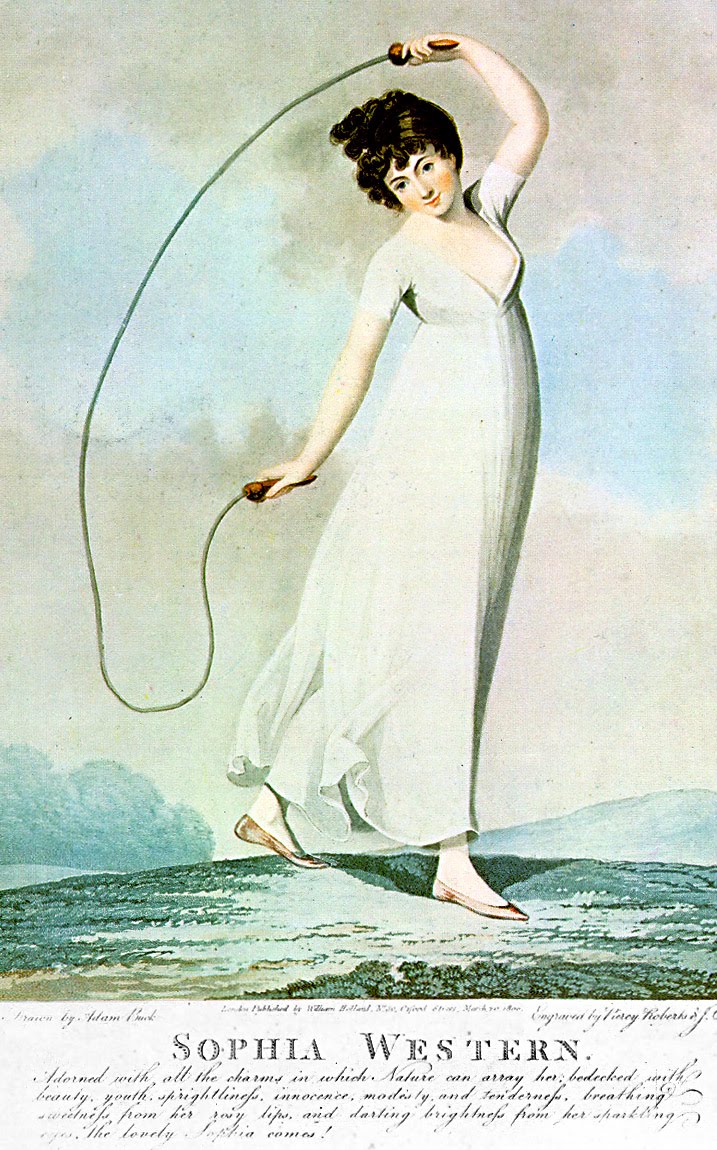
Sophia Western, Adam Buck

Sophia Western, an 1800 engraving after an Adam Buck drawing, depicts a Tom Jones heroine with a jumping rope. She wears a Regency gown, rather than a costume from 1749, when Fielding’s book was published.

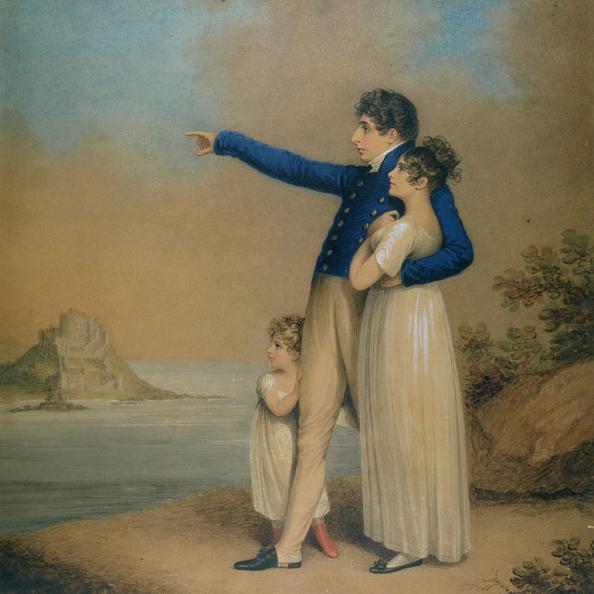
Roberth Southey with Daughter and Son, Adam Buck

Born in 1759 in Ireland, Buck left his native land in 1795 to establish a studio in London, where his small portraits in pencil, oil, crayons, or watercolour were quite popular. His linear, lightly colored neoclassical drawings and paintings showed scenes of domesticity and motherhood in classic attitudes that resembled those on Greek vases. The artist is said to be largely self-taught.

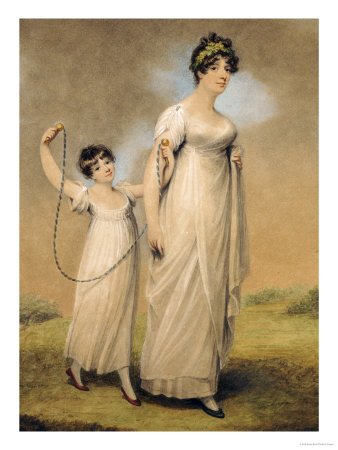
Portrait of a mother and her daughter, Adam Buck

Two … Irish artists brothers of the name of Buck deserve attention. Their pencil groups, slightly coloured, were very popular ,and especially those in which the sitters were grouped in classic attitudes resembling those on Greek vases. The reason for the existence of these portraits was the love that Adam Buck especially had for Greek art. He issued a book on the paintings on Greek vases ,and he modelled many of his best miniatures, as well as his pencil groups, on the classic scenes so dear to him. His work, as a rule, can be distinguished by the exquisite drawing of the profile. His brother, Frederick, who commenced in his profession by painting portraits in crayon, also painted miniatures following on the lines of Adam Buck. Neither of the men were very good col ourists but both were accurate draughtsmen.” – How to Identify Portrait Miniatures, George Charles Williamson, Alyn Williams

Mother and Child, Adam Buck, Victoria and Albert Museum

Buck produced a book in 1812, “Paintings on Greek Vases”, that contained 100 plates designed and engraved by himself. He exhibited his work at the Royal Academy between 1795 and 1833.

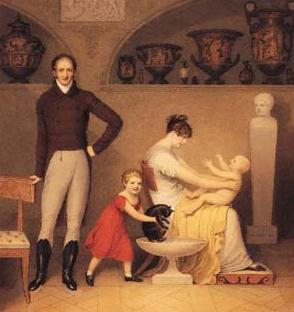
Adam Buck, Self portrait with wife and children, 1813.

Buck’s distinctive linear designs were also used on China ware and in fashion plates. See the Adam Buck inspired bat-printed porcelain images on Candice Hern’s site.

Herculaneum Pottery with Children at Play Pattern in the style of Adam Buck

More on the topic:

Read Full Post »

Copyright (c) Jane Austen’s World. Post written by Tony Grant, London Calling.

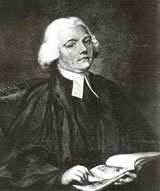
Gilbert White

Claire Tomlin’s biography of Jane Austen called Jane Austen A Life begins with:

The Winter of 1775 was a hard one. On 11th November the naturalist, Gilbert White saw that the trees around his Hampshire village of Selborne had almost lost all their leaves. “Trees begin to be naked,” he wrote in his diary. Fifteen miles away, higher up in the Downs, in the village of Steventon, the rectors wife was expecting the birth of her seventh child from day to day as the leaves fell.”

And thus we have the first introduction to Jane, still inside her mother’s womb, with a reference to the reverend Gilbert White of Selborne.

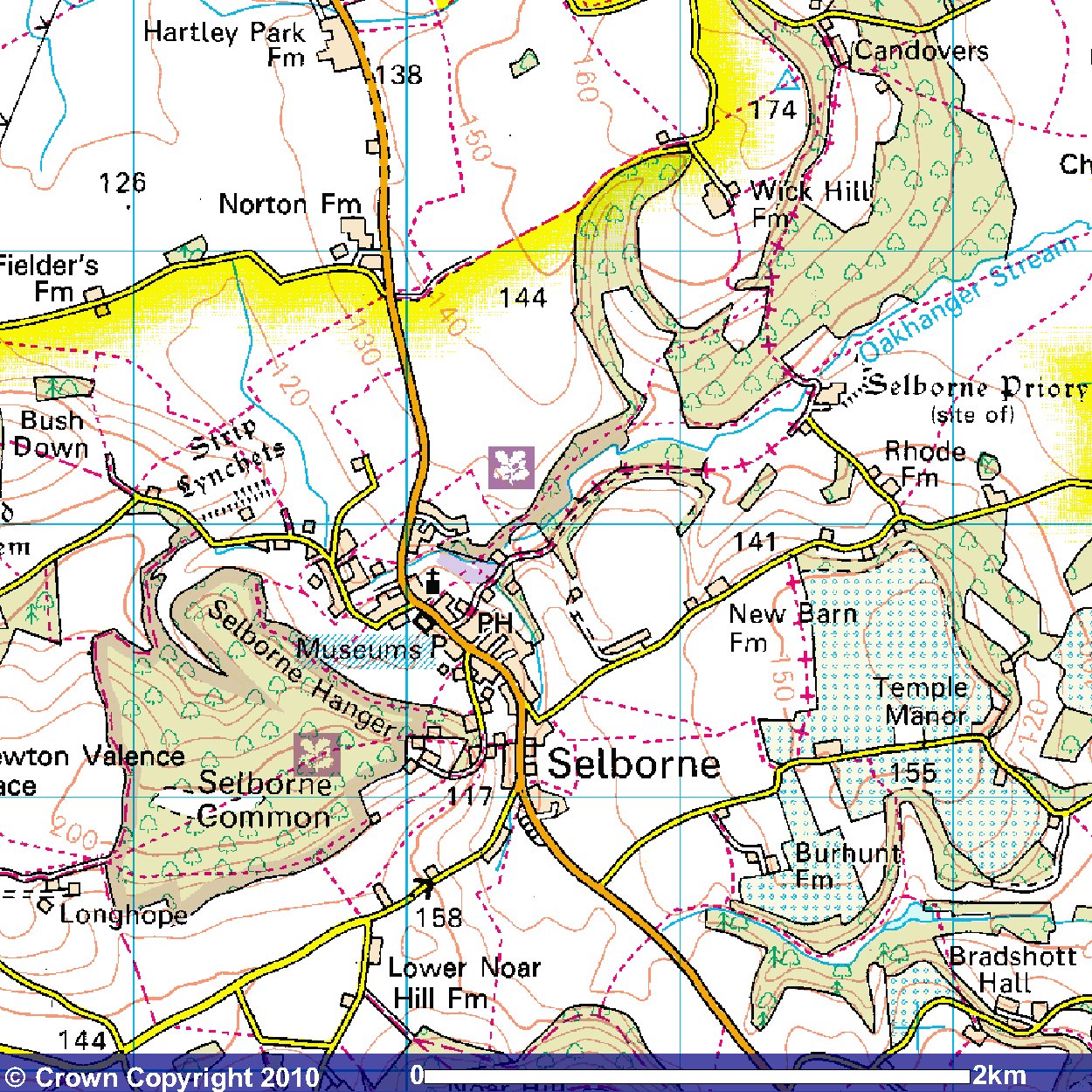
Map of Selborne

Selborne is a village about five miles to the east of Chawton. Gilbert White was in his 55th year just as Jane began her first year. His writing was to become the most continuously published piece of writing in the English language. It has been published more often than Jane’s own writing and the Bible. It is still on the shelves of all good bookshops today and new editions are always being prepared.

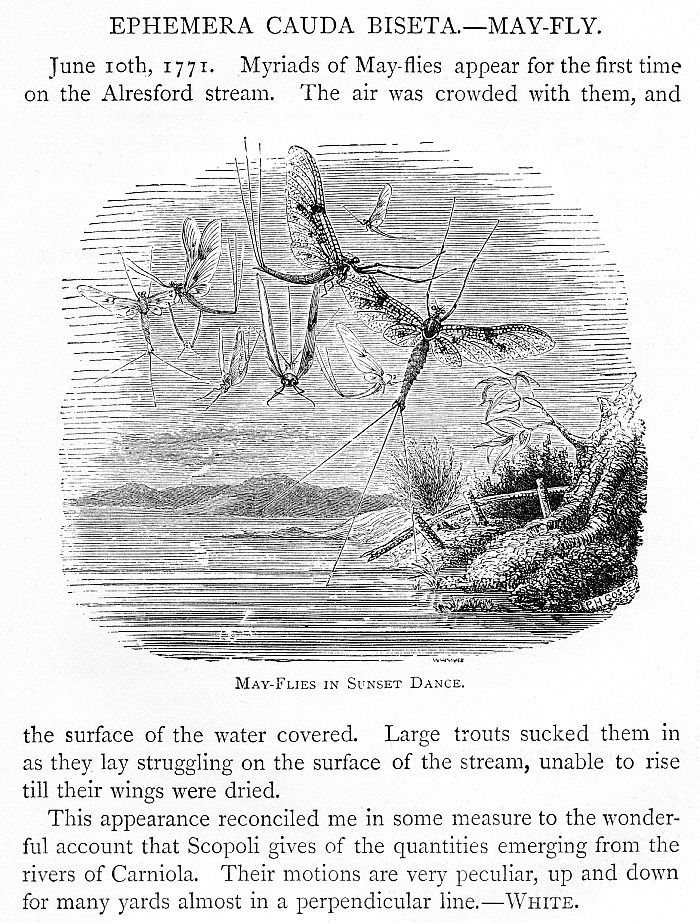
Mayflies, Gilbert White, 1771

Gilbert White was born in 1720. He was educated in the town of Basingstoke, the town Jane knew well. Thomas Wharton was his schoolmaster. He then embarked on an academic career at Oriel College Oxford. Following his grandfather and uncle into the church, he became ordained as a church of England priest. From an early age he took a deep interest in the natural history and the plants and animals in his native Hampshire.

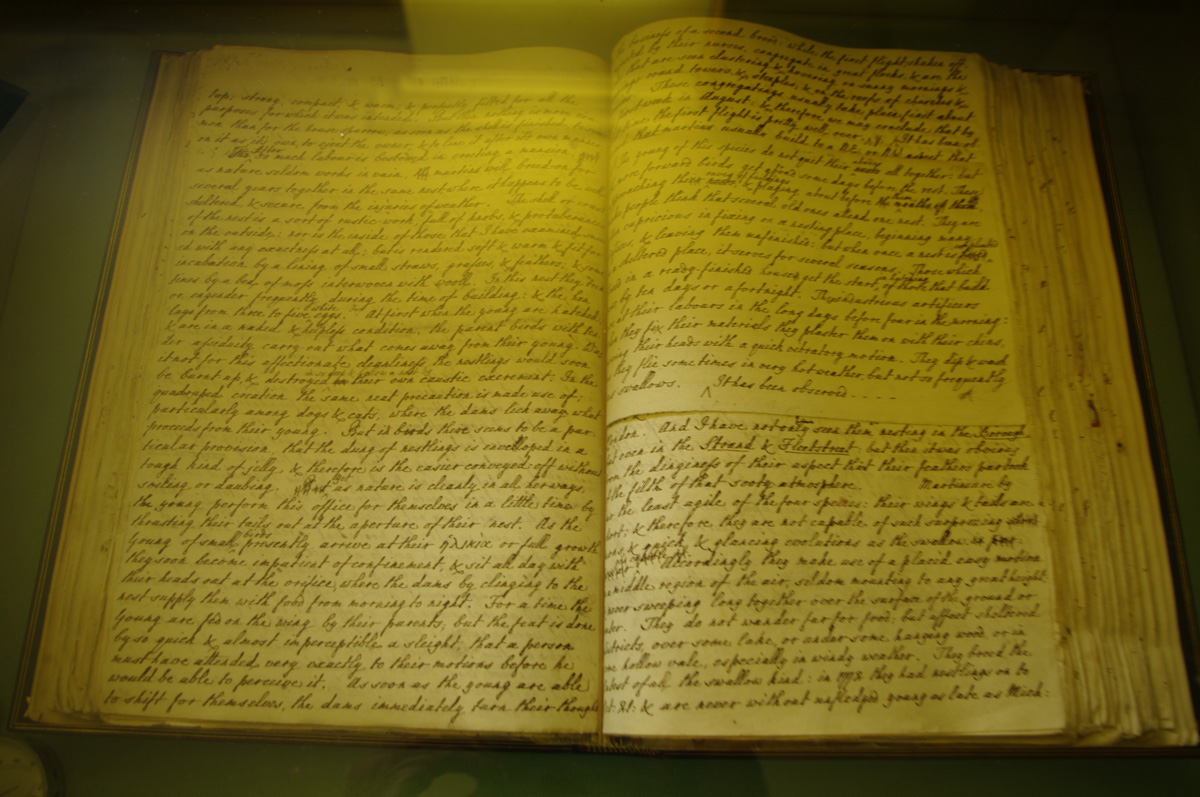
Gilbert White's journal. Image @Tony Grant

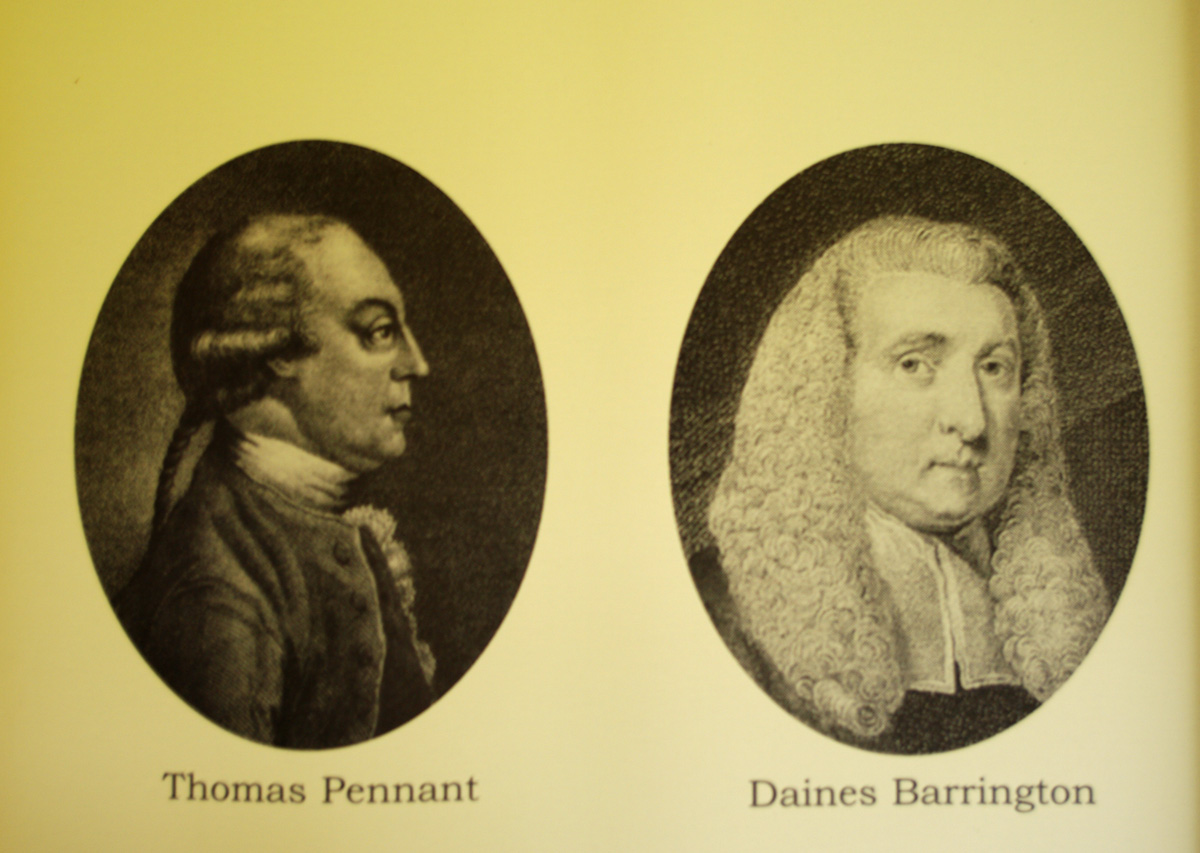
Gilbert White is best known for his collection of letters compiled in a volume called Natural History and Antiquities of Selborne, (1789) The book comprised his correspondence with two of the leading naturalists of the time, Thomas Pennant and Daines Barrington. In the letters White discussed his theories about the local flora and fauna.

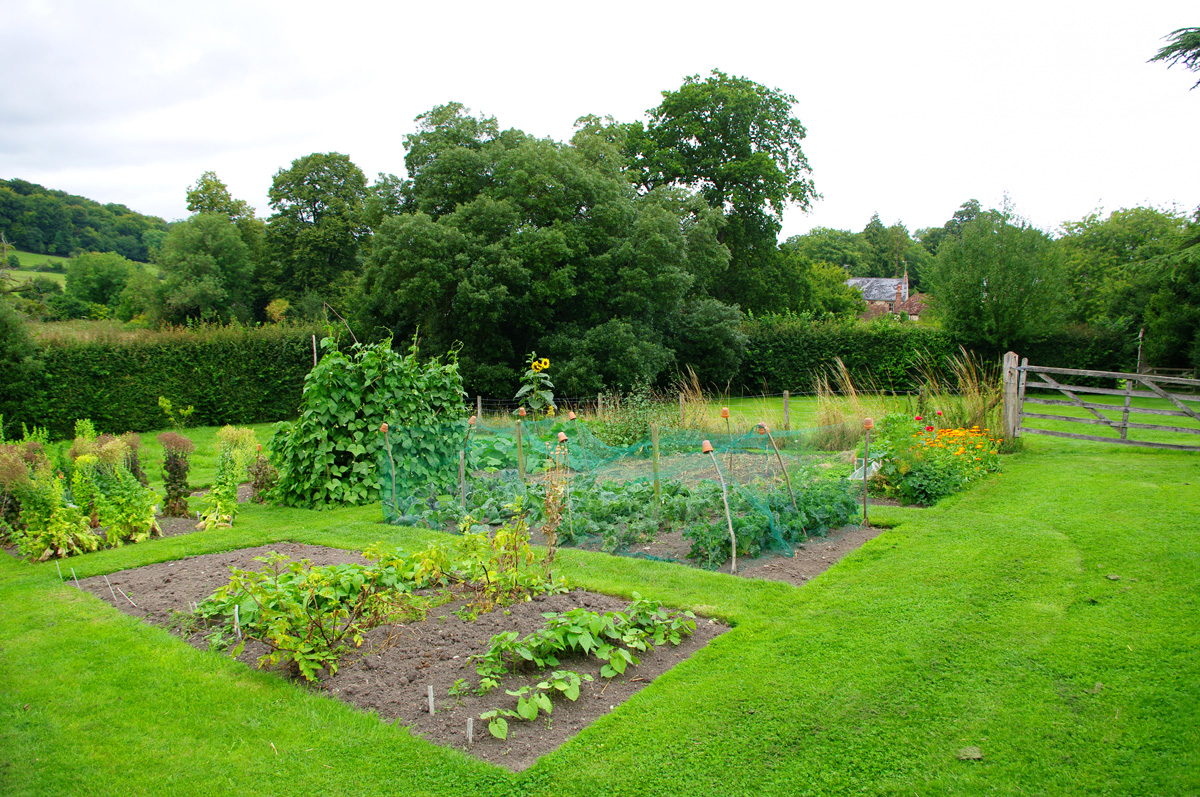
Vegetable garden. Image @Tony Grant

Gilbert White was also a keen gardener and grew many species of flowers, vegetables and fruit. What made him different and unique and applicable to naturalists today was that he observed things closely in their natural state. Naturalists, during his lifetime and before him, tended to examine the dead carcasses of animals brought to them.

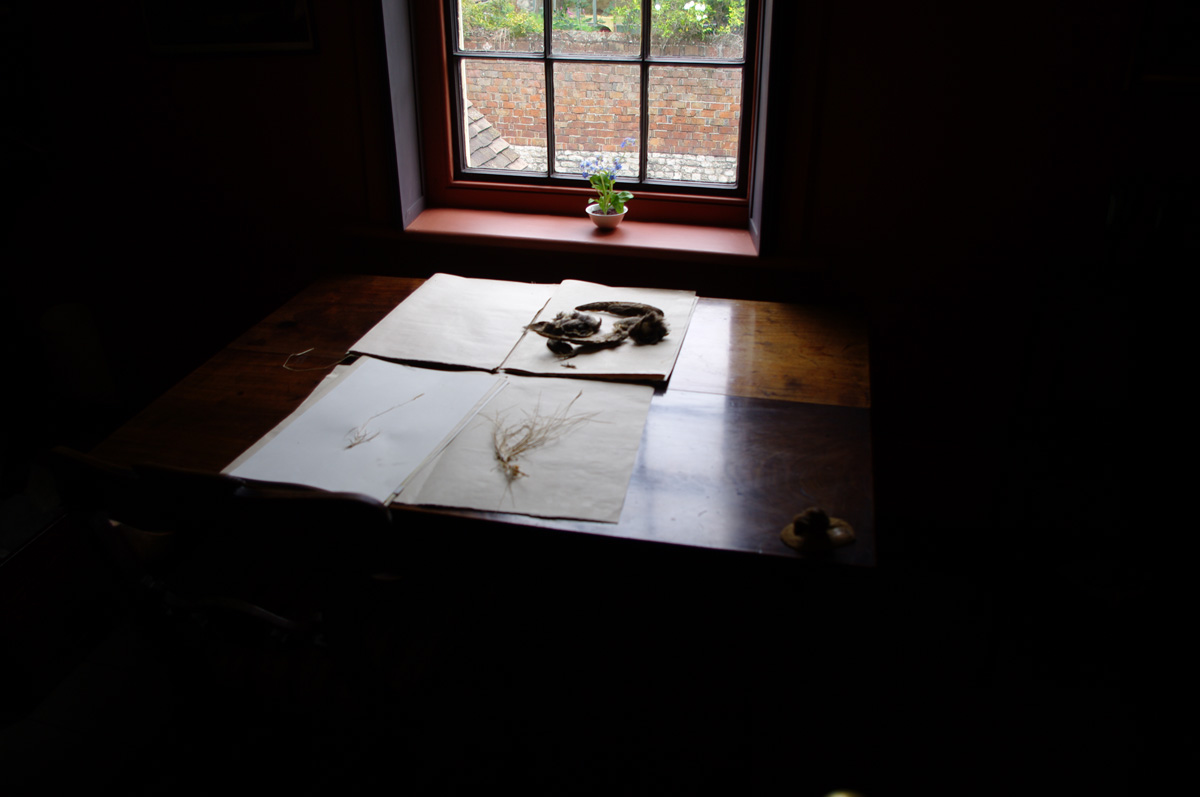
Natural collection. Image @Tony Grant

They would dissect and examine in detail the animal or plant before them; dead, cut off, out of it’s natural environment, there, on their table or desk. White performed some of this type of research, but what really made him different was his observations of animals and plants in their natural habitat. We would not think of studying an animal today without knowing it’s habitat, life cycle, and breeding habits. This is what made White unique for his time. His records are unique also in the length of time he kept them and the systematic detail of his observations. Darwin quoted some of Gilbert White’s observations in his own research.

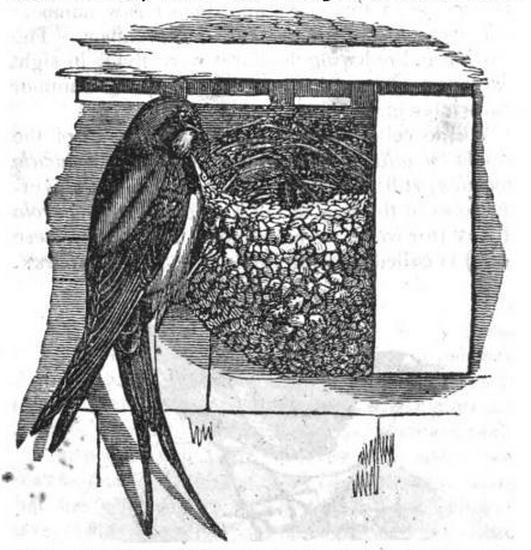
Martin, The Natural History of Selborne, Gilbert White

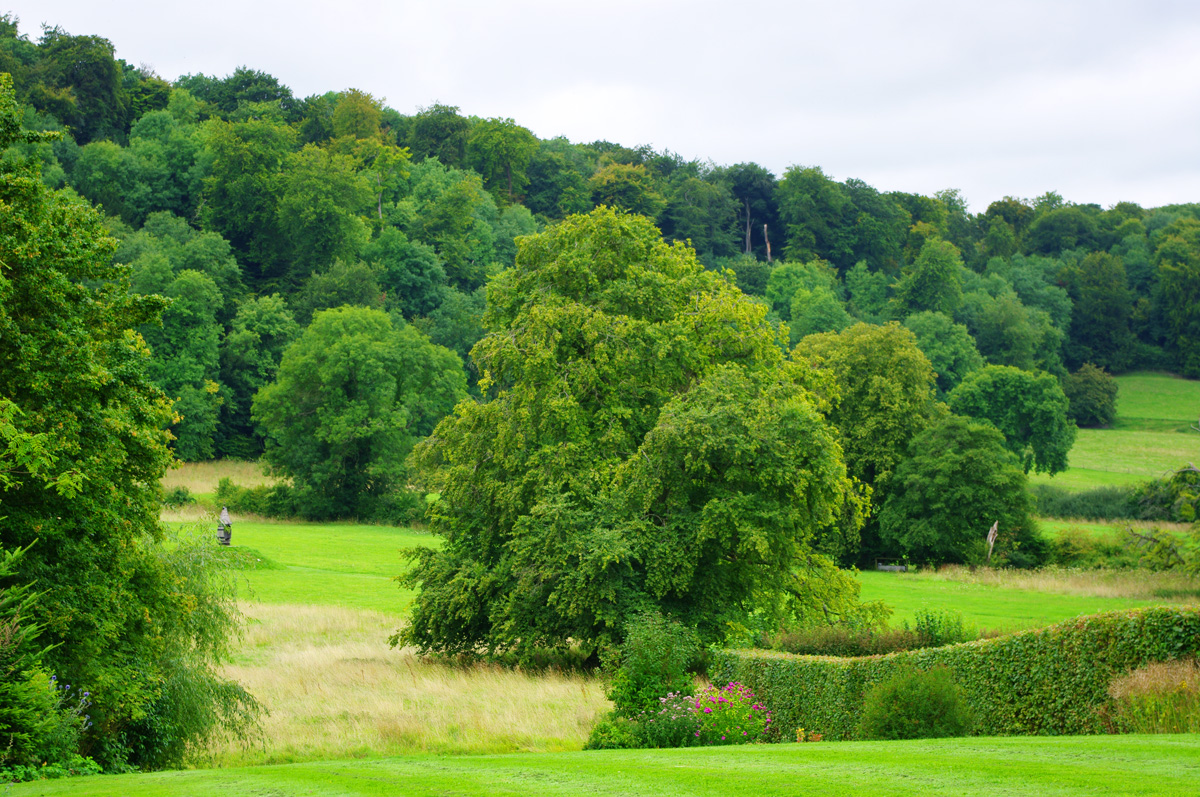
Gilbert White especially studied the species known as hirundines. These are what we know as swallows, house martins and swifts. He observed them flying, soaring, whirling about the great hanger that stood behind the village of Selborne . The base of the hanger was literally at the bottom of his garden. A hanger is a large, very steep hill, with almost vertical sides. Trees adorn its face and seem to ”hang” there. The hanger at Selborne was home to a vast variety of flora and fauna. It is very much the same today as it was in Gilbert White’s time.

The hanger at Selborne. Image @Tony Grant

In fact, by using his letters as guides, you can follow the very same paths and walks he took all those years ago and see the plants and wild life he observed. And, yes, you can still see his beloved hirundines, whirling and twirling and flickering , darting and swooping about the hanger in the springtime and summer months.

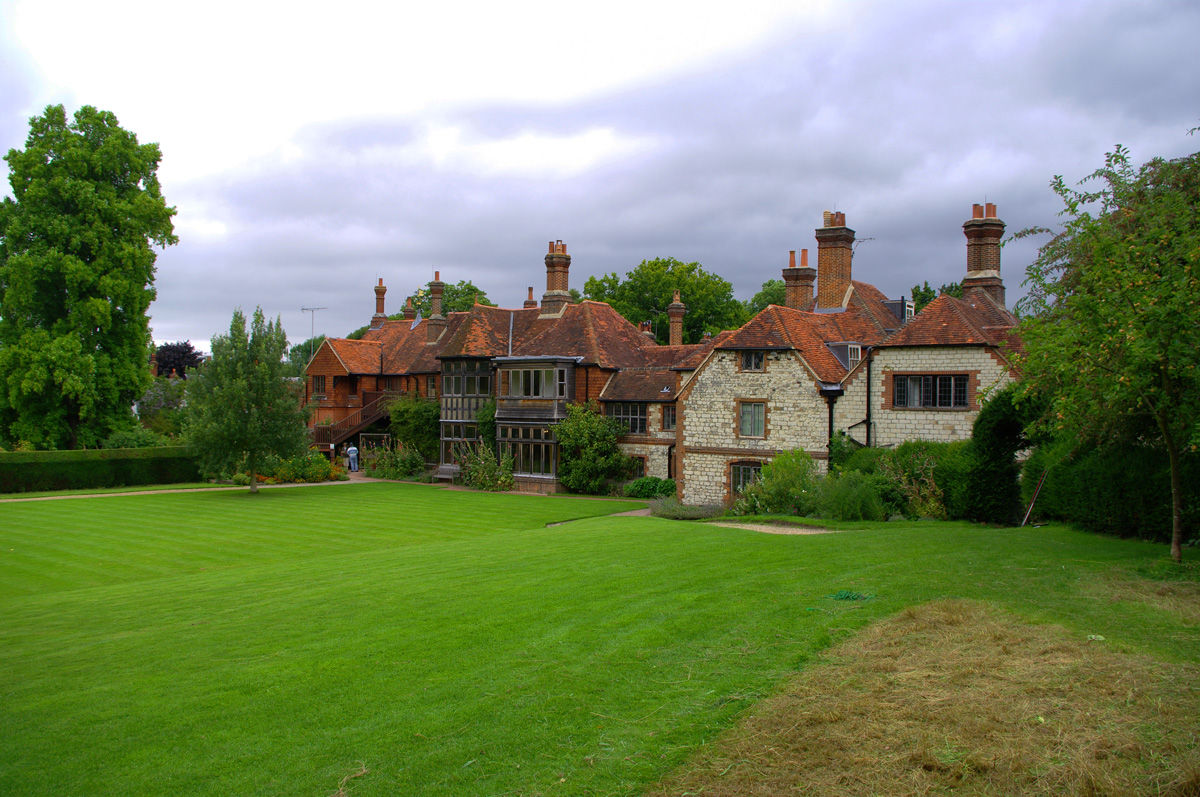
Gilbert White's house at Selborne. Image @Tony Grant

Most of Gilbert White’s contemporaries were convinced that swallows hibernated during the winter months in hollows and under the mud of local ponds. White disputed this and tried throughout his life to gain evidence to prove or disprove this. Unfortunately he never reached a definitive conclusion.

Interior, Gilbert White's house. Image @Tony Grant.

Gilbert White’s brother, Benjamin, who was a publisher of natural history, introduced him to Thomas Pennant, the foremost zoologist of the time, and to Daines Barrington. He corresponded with them and other naturalists, such as Joseph Banks and Daniel Solander.

Pennant and Barrington

In his first letter to Thomas Pennant,  White describes Selborne and it’s situation.

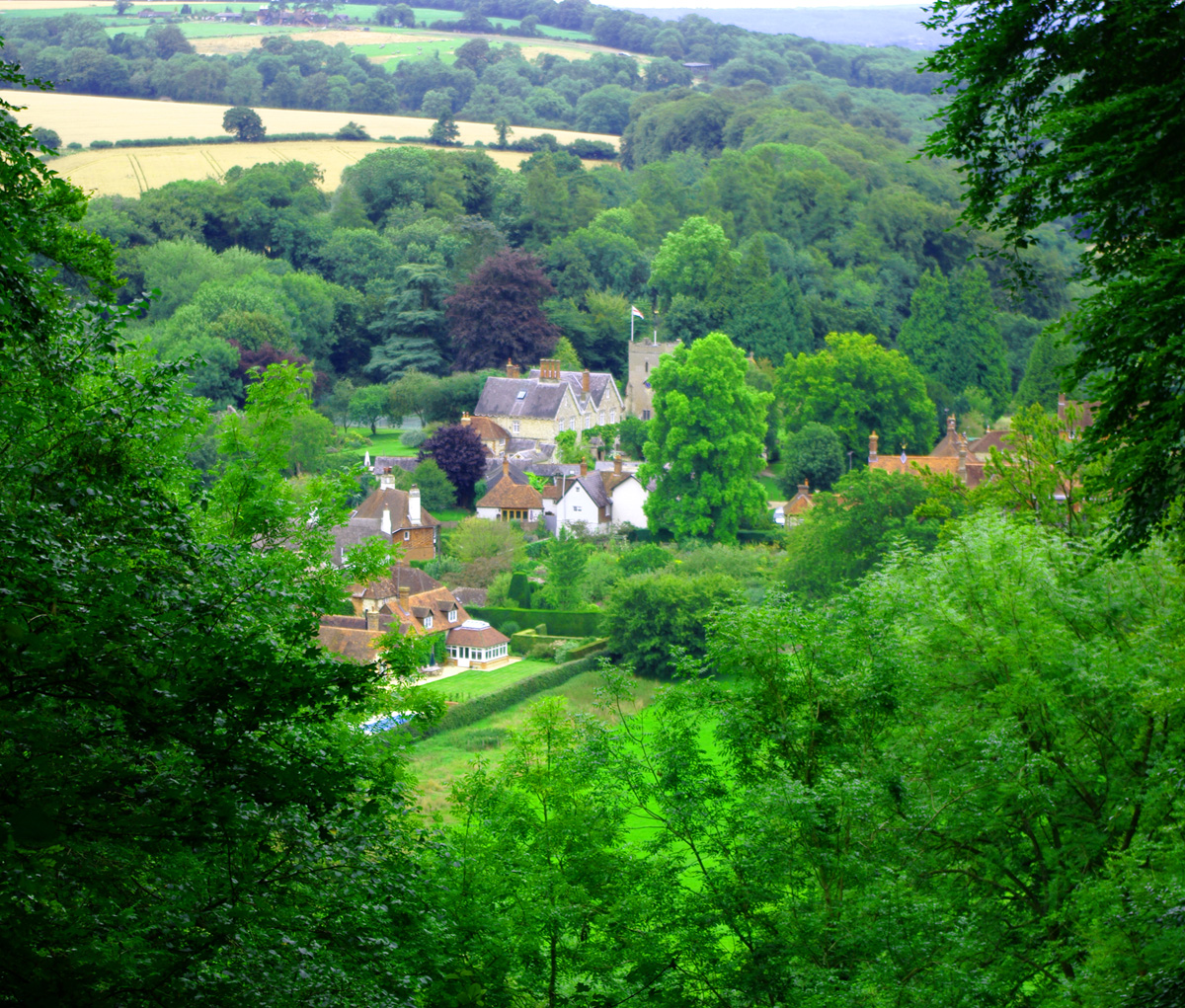
At the foot of this hill, one stage or step from the uplands lies the village, which consists of one straggling street, three quarters of a mile in length, in a sheltered vale and running parallel with the hanger. The houses are divided from the hill by a vein of stiff clay (good wheat land), yet stand a rock of white stone, little in appearance removed from chalk; but seems so far from being calcareous, that it endures extreme heat.”

Selborne from the hanger. Image @Tony Grant

Just in this short extract we can see White’s eye for detail, his wondering mind, and his clarity of recording.

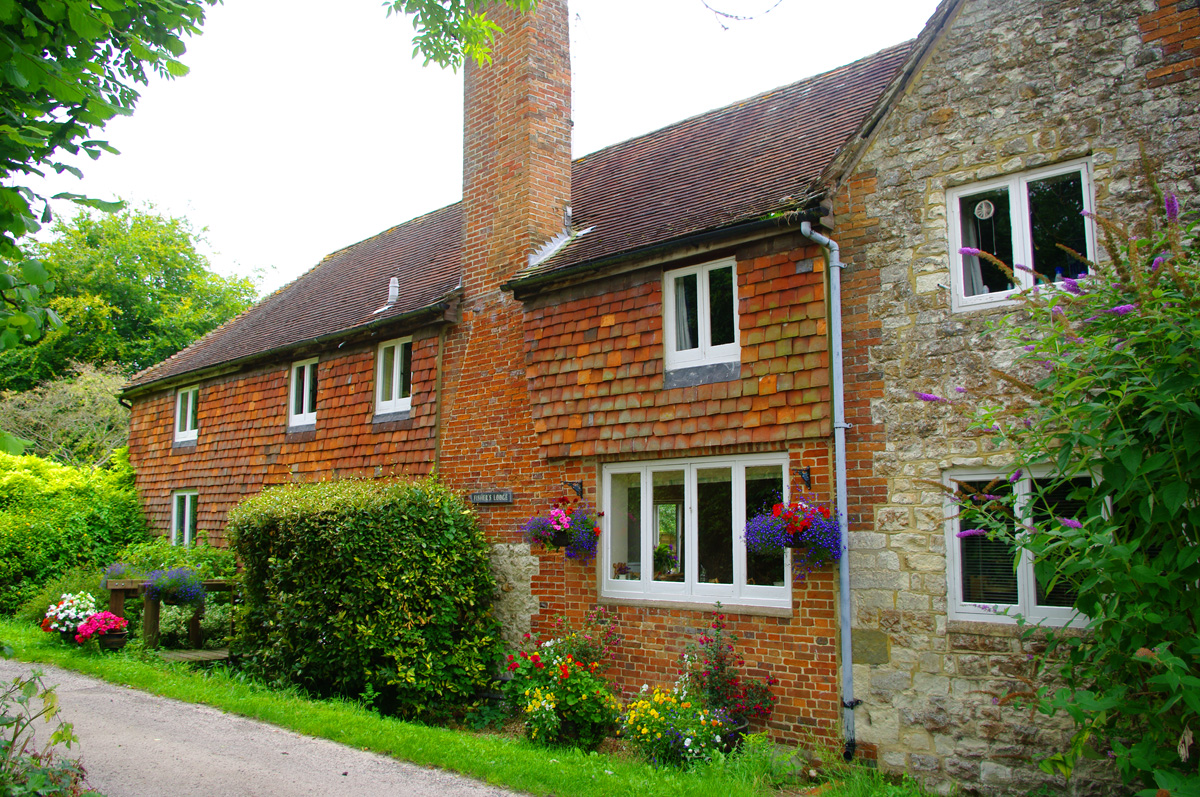
Selborne cottage. Image @Tony Grant.

In LetterXL to Thomas Pennant on September 2nd, 1774, White writes:

Nightingales, when their young first come abroad, and are helpless, make a plaintive and jarring noise; and also a snapping or cracking, pursuing people along the hedges as they walk; these last sounds seem intended for menace and defiance.”

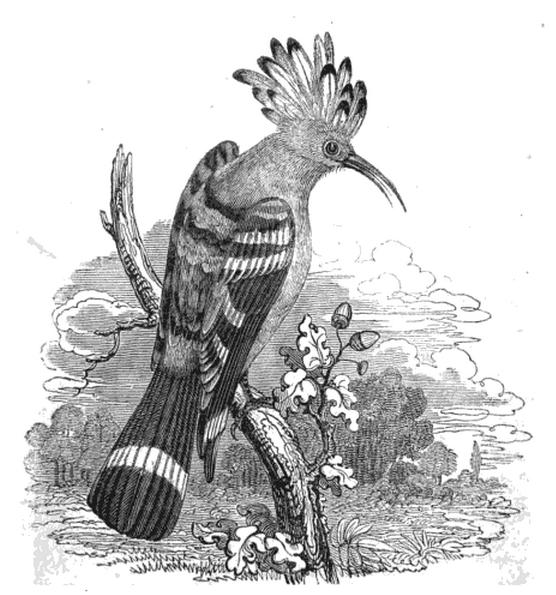
The Hoopoe, The Natural History of Selborne, Gilbert White

You can imagine Gilbert White being hounded and bothered in this way as he walked the lanes around Selborne, and being utterly fascinated and engrossed in this behaviour. Maybe our beloved Jane experienced such sights with the same wildlife too on her daily walks in Chawton five miles away?

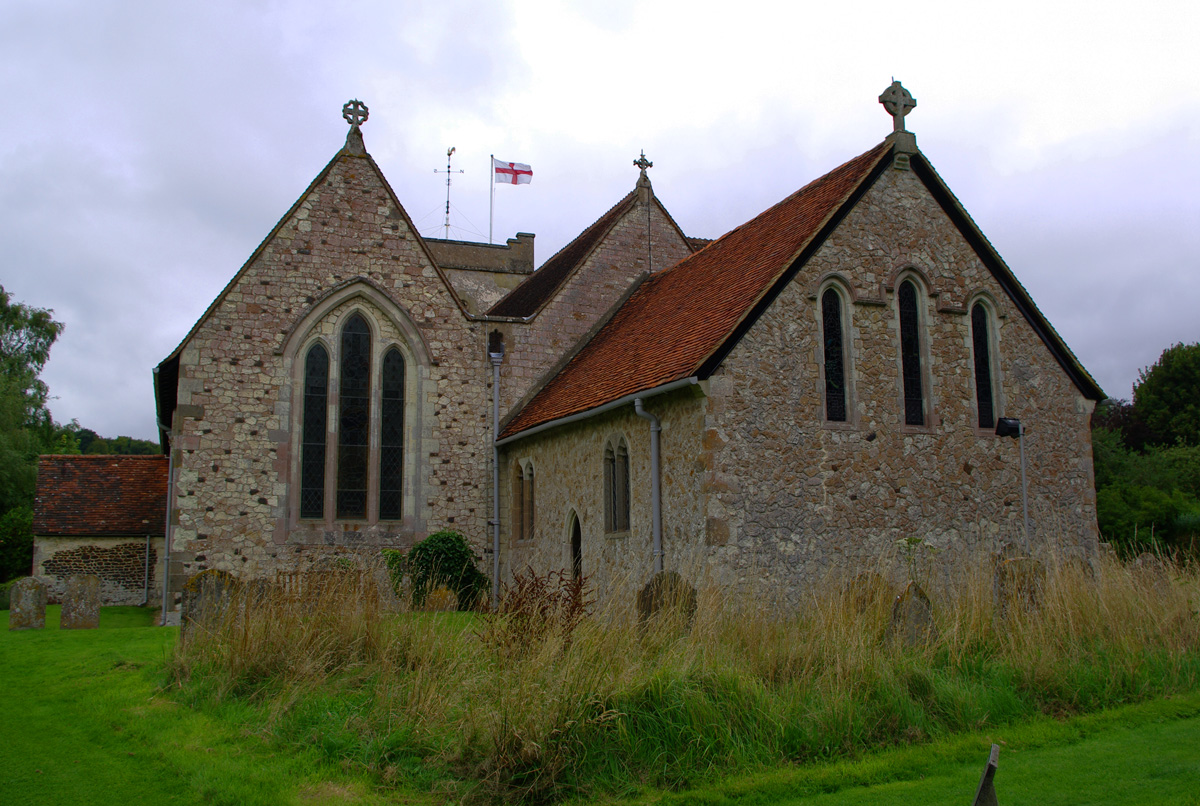
Selborne Church. Image @Tony Grant

In a letter to Danes Barrington November 20th, 1773, Gilbert White writes about house martins.

A few house- martins begin to appear about the sixteenth of April; usually some few days later than the swallow. For some time after they appear the hirundines in general pay no attention to the business of nidification ( the act of building a nest), but play and sport about either to recruit from the fatigue of their journey, if they do migrate at all, or else that their blood may recover it’s true tone and texture after it has been so long benumbed by the severities of the winter.”

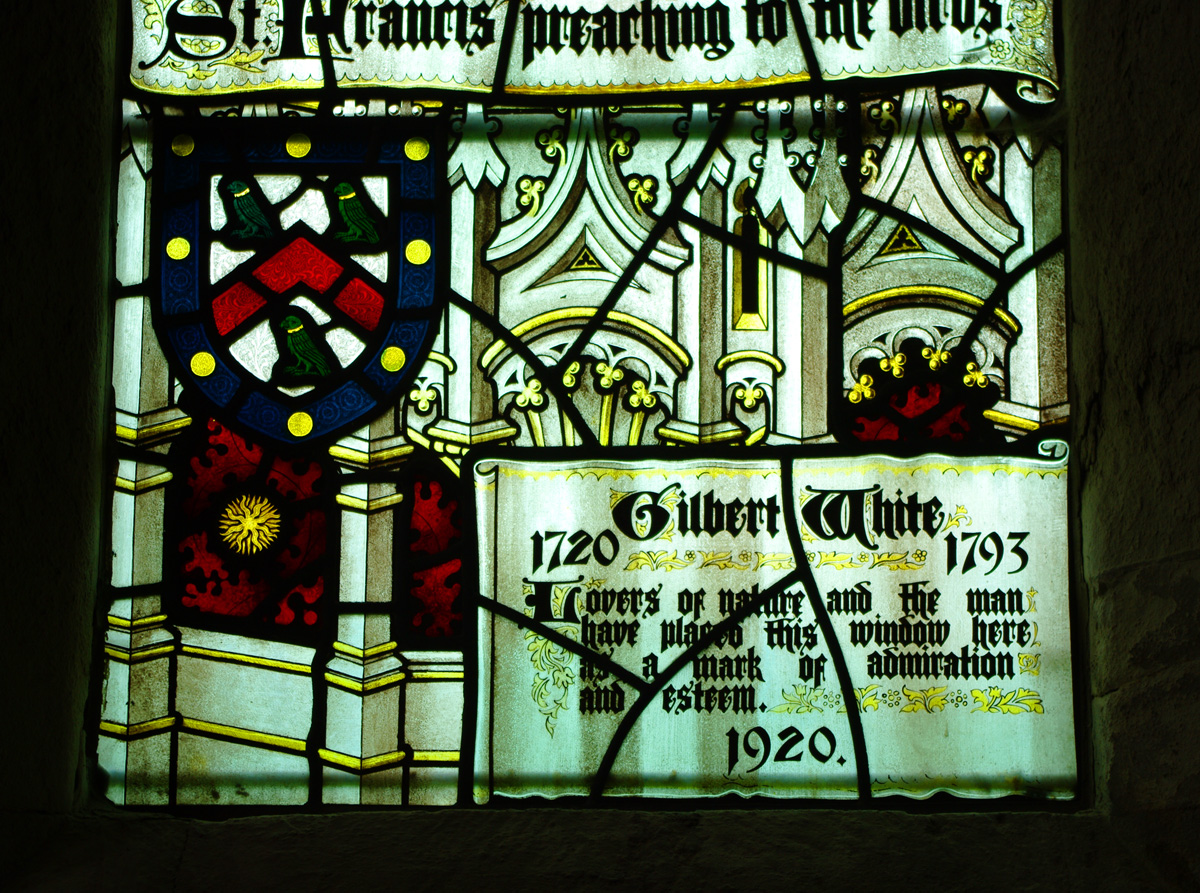
Church window. Image @Tony Grant

Gilbert is not sure, do they migrate or do they hibernate? This is the crux of his life long investigation.

Memorial window dedication. Image @Tony Grant

Every Spring, Gilbert White looked forward to the return of the hirundines and when reading his letters at that time of the year you can sense his uplifted spirits. His friends have returned.

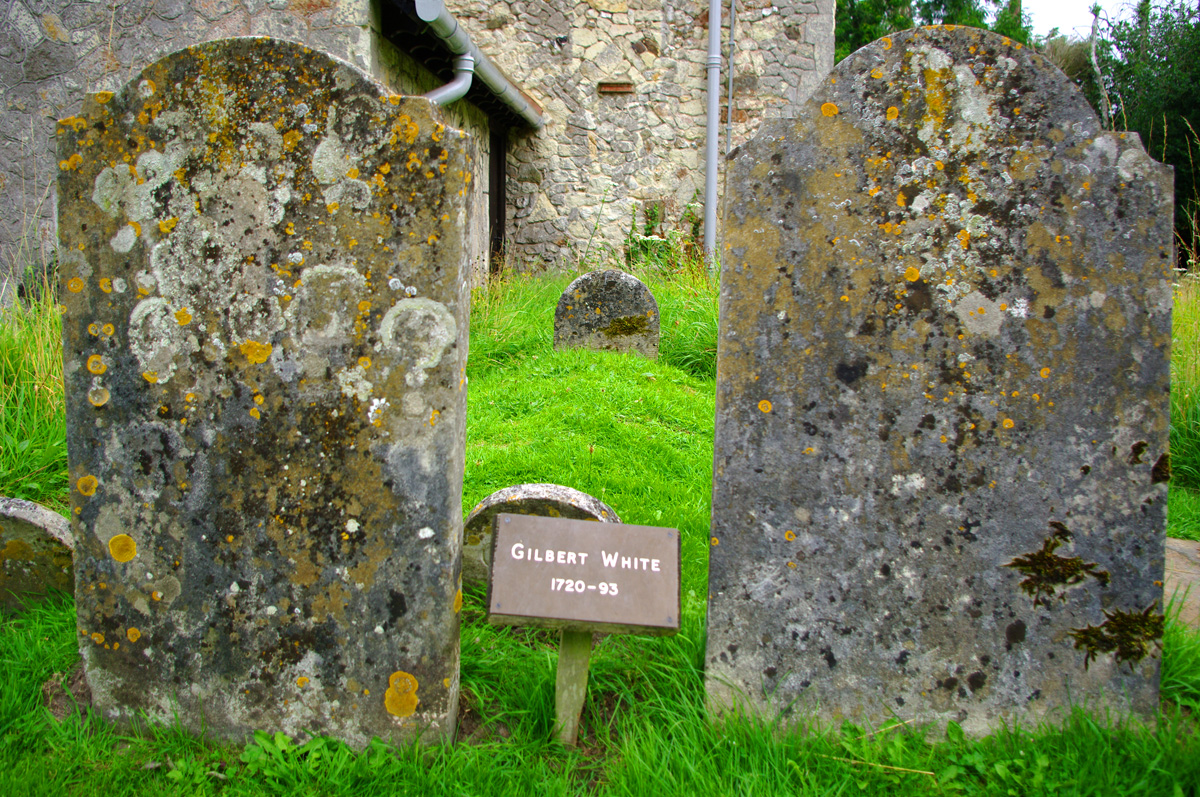
Gilbert White's grave. Image @Tony Grant

Bibliography:

Claire Tomalin, Jane Austen A Life, Penguin Books, 1998 (revised edition 2000). Read Chapter One here.

Gilbert White, The Natural History of Selborne (First published 1788-9). Reprinted by Penguin Classics, 1987.

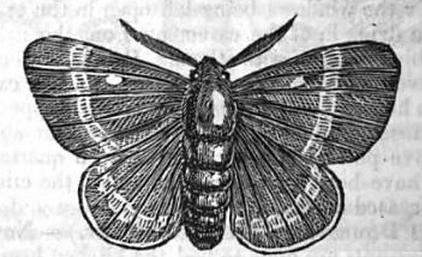
Cimex linearus

Read Full Post »

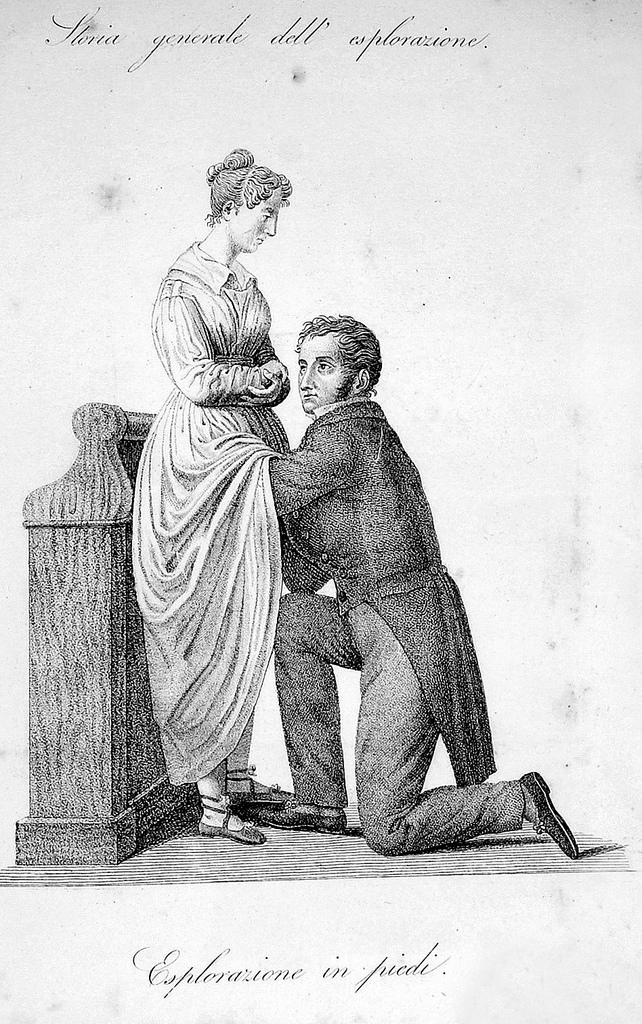
Copyright (c) Jane Austen’s World. In A Triple Tragedy: How Princess Charlotte’s Death in 1817 Changed Obstetrics, I discussed the two approaches to obstetrics in the early 19th century – the conservative approach, which meant no intervention, and the more radical intervention approach. I included no image of a physician examining a woman.

Morbid Anatomy, one of my new favorite sites, features three images of a physician examining a woman (circa 1800). These images came without attribution, but are interesting nevertheless. Click here to see them all.

Internal examination of a woman, circa 1800

In the early 1800’s there was also a growing number of formally trained doctors who took great pains to distinguish themselves from the host of lay practitioners. The most important real distinction was that the formally trained, or “regular” doctors as they called themselves, were male, usually middle class, and almost always more expensive than the lay competition. The “regulars'” practices were largely confined to middle and upper class people who could afford the prestige of being treated by a “gentleman” of their own class. By 1800, fashion even dictated that upper and middle class women employ male “regular” doctors for obstetrical care—a custom which plainer people regarded as grossly indecent.” – Witches, Midwives, and Nurses A History of Women Healers by Barbara Ehrenreich and Deirdre English

More on the topic:

Read Full Post »

Copyright (c) Jane Austen’s World.

Hear what a male writer has observed on the fashion of exposing the bosom! A woman, proud of her beauty, says he, may possibly be nothing but a coquet: one who makes a public display of her bosom, is something worse.” – The Mirror of  Graces, by A Lady of Distinction, 1811, p. 120

Could the above statement possibly be true in light of our modern assumptions that the Georgian bossom was displayed in all its soft glory for all to see?
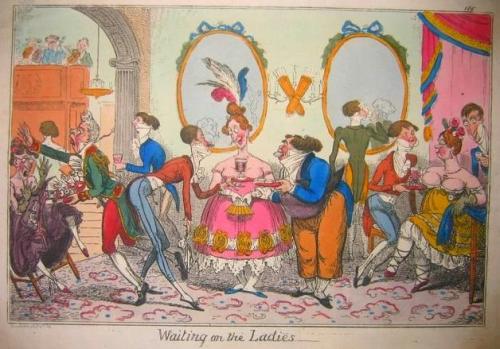
Waiting on the ladies

Our modern perception is heavily influenced by the caricatures of the period that make fun of unrestricted Regency gowns. But how much did contemporary cartoonists exaggerate? And what sort of woman would have exposed her bosom to such an extent that she would have been regarded as worse than a coquet? To be fair, the above image depicts a time (the 1820s) when the waist had gone as high as it could go under a woman’s bosom, skirts had widened and become conical shaped, and hems were festooned and decorated and shortened to reveal slippers and ankles.

Regarding the bosom, the proof is in the pudding, and the best way to assuage our curiosity is to view contemporary examples year by year.
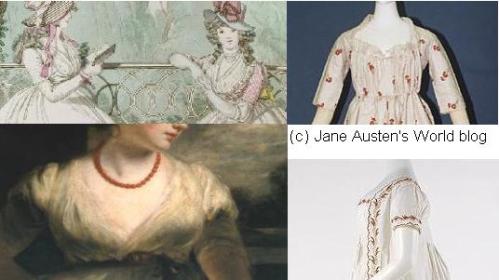
From left, upper row: 1794-1795 walking gowns. 1795-1800 round gown. From left, lower row: 1797 Countess of Oxford. 1798, round gown.

Gentle reader, as you peruse the gallery of images, please look for a pattern. You shall begin to see a distinction between day and evening dress, regardless of the time of year.
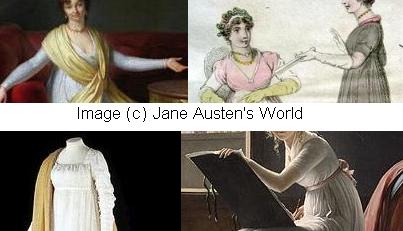
1st column, top: 1800, Salucci family. Bottom: 1800 V&A gown. 2nd column, top: 1801 April day gowns. Bottom: 1801 Marie Denise Villiers

While I believe that a variety of cleavages were on display during the Regency era (and I shall delve more into this topic later), the top left portrait of Mrs. Salucci is one of the few instances in which a shadowed cleavage is clearly painted or drawn.
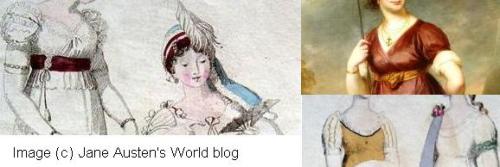
1802 Bosoms. Top right: Princess Augusta. Other two images from Ladies Monthly Museum.

Why is this? One can safely assume that a voluptuous woman with large breasts, even when wearing a dress with a modest neckline, would reveal some cleavage. Thin girls or women with small bosoms would not have as much difficulty following the rules of decorum. Before the 20th century, the feminine ideal was a woman whose curves were bounteous and whose figures were pleasingly plumb. Rich husbands and fathers were proud to show off their well-fed women. Only the poor, who toiled all day and never had enough to eat, or the sick, or those who were metabolically overchallenged, were thin and scrawny. Thus, it made sense that during the Regency heaving bosoms were de rigueur. But were they?
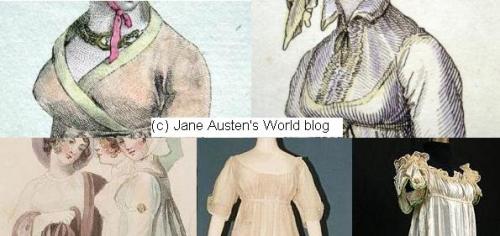
In this image I have included both French, English, and American gowns. Left to right, clockwise, starting at the top. 1803, Costume Parisien. 1803, Mirroir de la Mode. 1805, American neoclassical gown. 1805, English cotton muslin, Kyoto costume Institute. 1804, three French Promenade dresses.

Regardless of nationality, a woman could choose to be as modest (or daring) as she liked. As far as I can tell from fashion images and portraits, modesty won hands down. High necklines, chemisette inserts,  and high collars ruled the day. But night provided a different story.
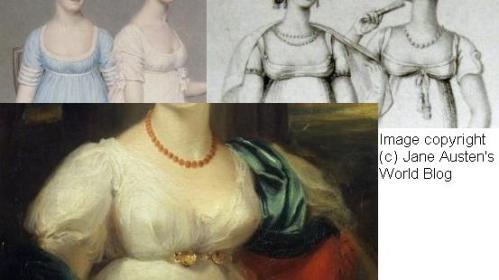
1806 gowns. Top left, Binney sisters. Top right, Opera and drawing room gowns. Bottom image, Lady Codrington.

In the above composite image of 1806 gowns, more of the bosom is revealed than in previous images. Consider the sources. The Binney sisters and Lady Codrington, who were sitting for their portraits, would have chosen their best gowns to wear. Full dress, or evening dress, revealed more skin. The third image also depicts evening wear. In those two images you can more readily understand why empire gowns created such a stir at first:

Observers of the period frequently deplored the absence of modesty conveyed by a style that was predicated on the prominence and exposure of the breasts and on the barely veiled body….Sheer, narrow dresses … caused a sensation at the beginning of the nineteenth century, more because of their contrast with the elaborate hooped costumes of previous decades than for any real immodesty. – Source: Two dresses [French] (1983.6.1,07.146.5) | Heilbrunn Timeline of Art History | The Metropolitan Museum of Art
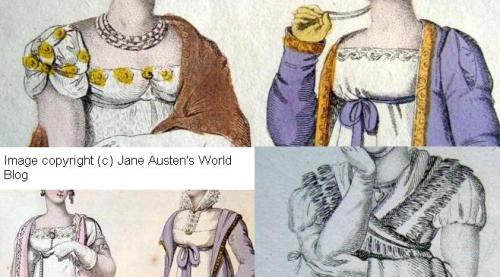
1807 Regency gown fashion plates

By now you have seen enough examples to have noticed a trend. Examine the above fashion plate images. Which necklines belong to full dress, or evening gowns, and which belong to day gowns or walking gowns? Of the five necklines, only the top left can be construed as revealing. And this neckline, depending on the size of the woman’s breasts, could be both modest or plunging.

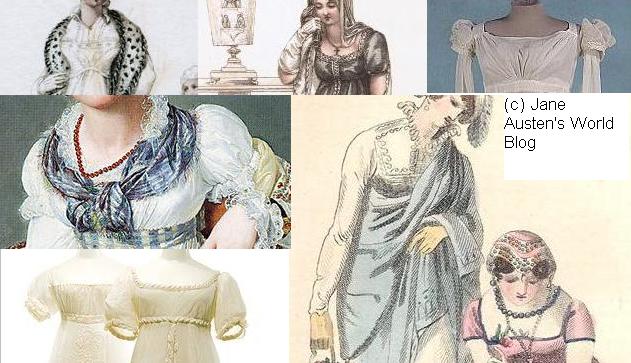
1810 Regency gowns

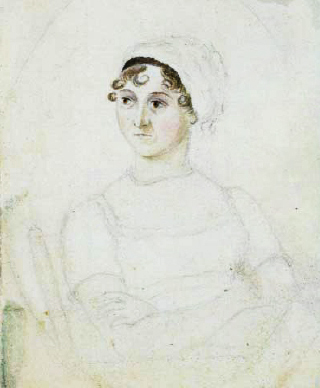
The 1810 Regency gowns demonstrate a variety of necklines and layers of clothing. As in Cassandra’s portrait of Jane Austen,  chemissetes were widely used. Fichus, shawls, tippets, and pelerines were also popular. The widow in the evening mourning gown (top middle) wears a cross that lies inside her cleavage. The white embroidered gowns (top right and lower left) demonstrate how the neckline is determined by whether the gown is worn for day (top right) or for evening (lower left, image of French gowns, Metropolitan Museum of Art.)
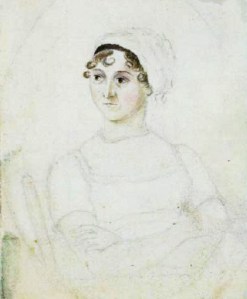
Jane Austen by Cassandra, 1810

In the image painted by Cassandra, Jane wears a simple gown, much like the Binney sisters were wearing. You can observe her chemisette under the low neckline, which created a more modest look for day time.

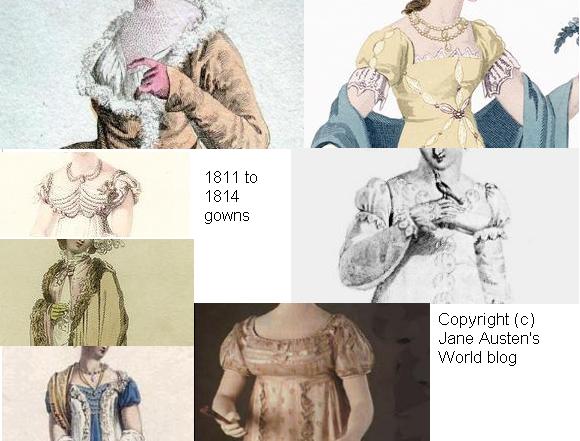
Regency gowns, 1811-1814

Princess Charlotte’s 1814 bellflower court gown (lower right), while breathtaking, did not reveal her bosom. The image of the 1812 full dress (second from top on the left) is a bit misleading, for the decorative drooping elements give the illusion that the neckline is lower than it actually is.  (In this example, it is hard to see the line of the silk fabric running across the top.) The other day gowns cover the torso quite modestly.
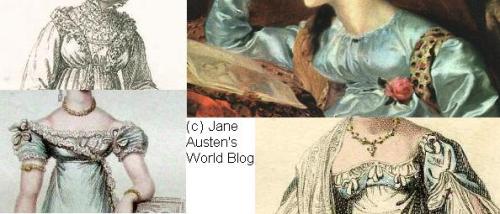
1815-1816 Regency Gowns

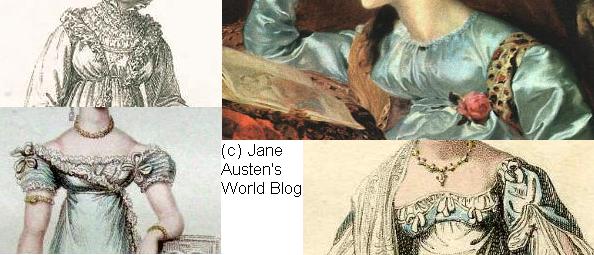
The high necklines of the 1815 morning gown at top left and Mrs. Jens Wolff’s 1815 satin dress at top right would make a Quaker lady proud. The two 1816 evening gowns show a relatively modest neckline (lower left) and one that could be quite daring (lower right).

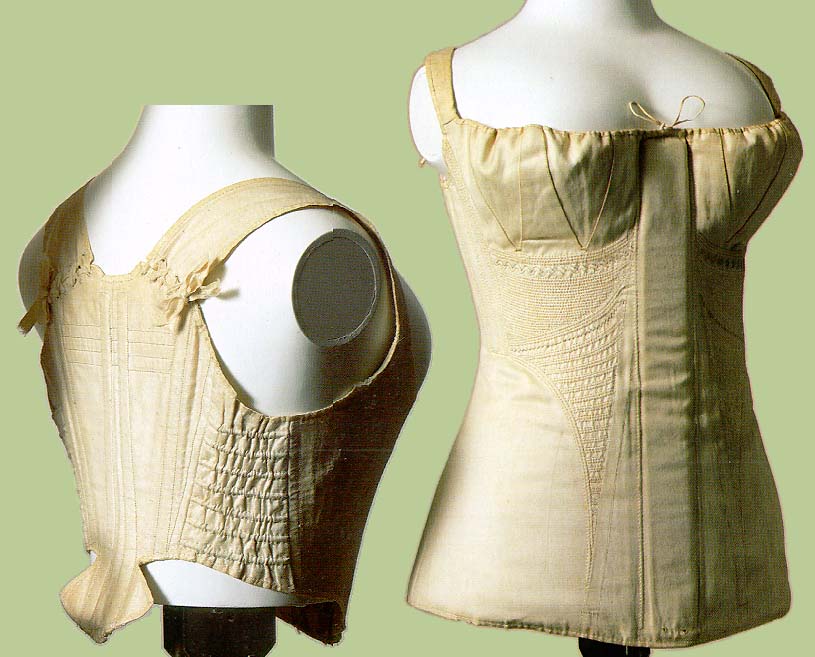
Until now I have not discussed the role that corsets played in propping up the bust line. Regency stays, which were darted and laced in the back, were quite short and were much less constricting than earlier Georgian models that cinched in the waist. The purpose of the Regency stay was to support a woman’s bust and create the distinctive Regency “shelf” silhouette.
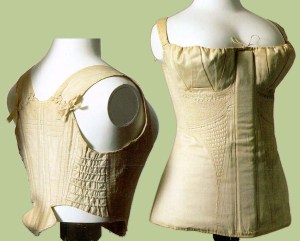
1819 stays (short on left, long on right with inserted busk). Image @ Kyoto Costume Institute

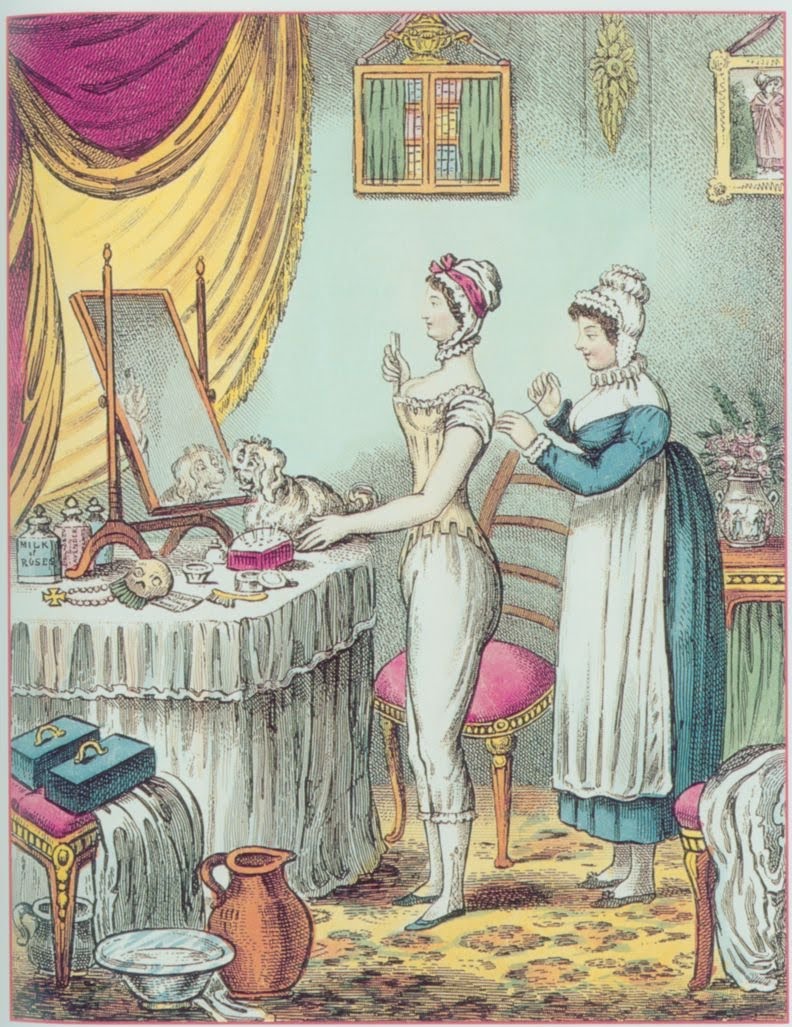
A rigid wood or bone busk, which served to separate the breasts and encourage good posture, was inserted in the stays (or corseted petticoat).
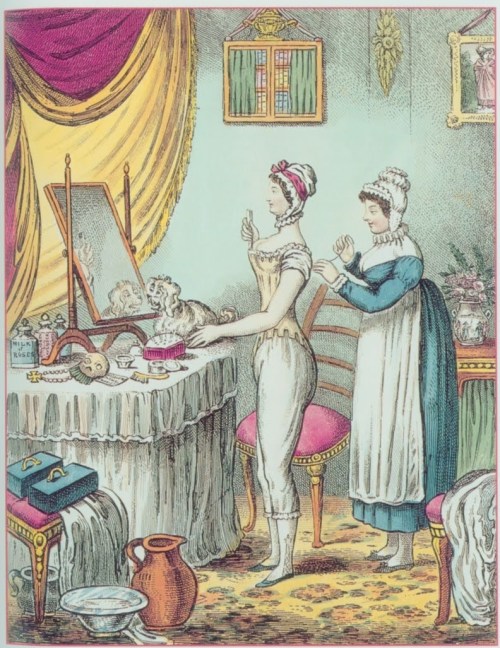
1810 German copy of James Gillray's cartoon. The lady inserts her busk as her maid ties her stays.

Busks might provide one explanation of why so few drawings and paintings of the era depict a deep, shadowed cleavage, for the breasts were splayed aside. The busks were often hand-carved and decorated by a woman’s sweetheart. The exerpt from a poem entitled: On a Juniper Tree, cut down to make Busks, waxes eloquently about the tree’s sacrifice for beauty.

She cut me down, and did translate,

My being to a happier state.

No martyr for religion died

With half that unconsidering pride;

My top was on that altar laid,

Where Love his softest offerings paid:

And was as fragrant incense burned,

My body into busks was turned:

Where I still guard the sacred store,

And of Love’s temple keep the door.

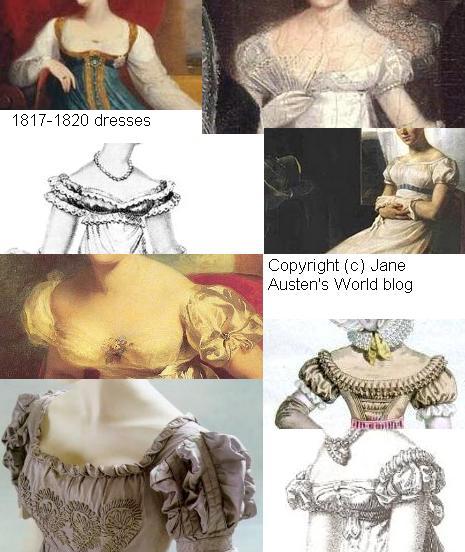
1817-1820 dresses

By 1817, the stark neoclassical outlines of empire gowns at the turn of the century had given way to a fancier more decorative outline, in which embellishments were added both at the top of the gown and at its hem. The 1817 portrait of Princess Charlotte (top left) is bittersweet, for she died in fall of that year in childbirth. Once again, the popular princess fails to exhibit her cleavage.

Rolinda Sharples’ painting of the cloak room at Clifton Assembly Rooms (top right) shows a woman with a small bust wearing a low décolleté ball dress. Countess Blessington (second from bottom, left) also wore a daring neckline for her sitting for her portrait by Thomas Lawrence. The two evening gowns at the bottom are modest, and the 1820 beige walking dress with its high ruff neck demonstrates the Tudor influences in dress embellishments. Also note the lowered waistline.
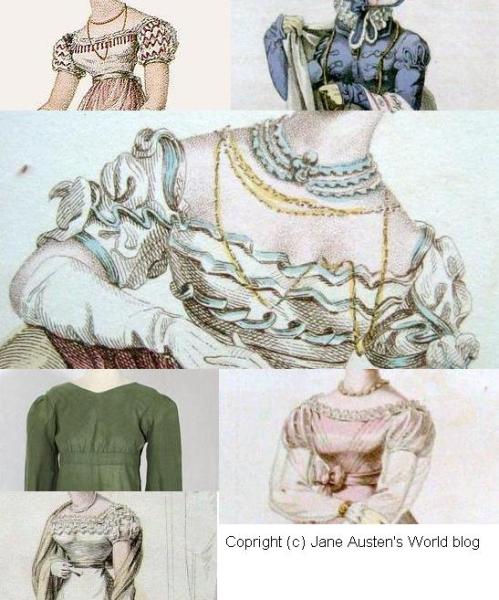
1823-1825 dresses

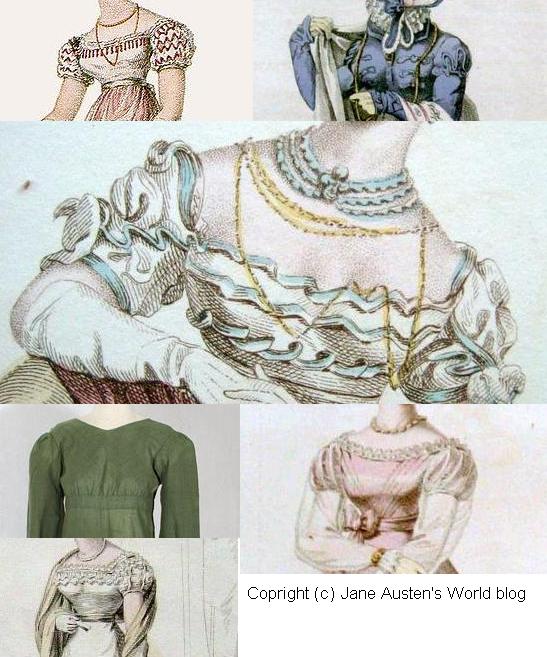
By 1823, Jane Austen had been dead for six years. She would have been shocked to see how many furlebows, tucks, rows of lace, and ribbons decorated ladies gowns. At this time, the waistline was gradually lowering back to its natural position. Gone was the neoclassical Regency empire silhouette. Note how the three ball gowns shown in this series of images provide hardly any chance for a lady to show off her cleavage.

One can see the hint of shadow of the woman’s breasts in the large 1823 La Belle Assemblee image in the center and how the artist accommodated the influence of the busk. I included the plain every day green 1825 American gown to show the kind of dress an ordinary woman would sew for herself and wear.

I hope this post has cast a light on a Regency lady’s bosom. A Lady of Distinction wrote in 1811:

Let the youthful female exhibit without shade as much of her bust as shall come within the limits of fashion, without infringing on the borders of immodesty. Let the fair of riper years appear less exposed. To sensible and tasteful women a hint is merely required.”

A tasteful hint? I can only conclude that exposing too much of one’s bosom was not considered lady-like behavior. Thin and small breasted women experienced an easier time following society’s strictures. The well-endowed had a tougher row to hoe, although an enterprising young virgin could always insert a handy nosegay to hide her feminine bounty or add  a pretty bow or a lace embellishment at the precise spot where a gentleman’s eyes should not stray.

Brazen hussies, light skirts, and women of easy virtue could bare as much skin as they pleased, having no reputation to protect. A very rich matron, whose place in society was secure, might be tempted to show more of her bosom than was prudent, but even she would refrain from displaying too many of her feminine allures before she was married!

Next, I will discuss heaving bosoms in Regency films and on book covers, and how the two media have influenced our perception of Regency bustlines.

More on the topic:

Read Full Post »

« Newer Posts - Older Posts »