Feeds:
Posts
Comments

Archive for the ‘Regency World’ Category

Emma, Lady Hamilton is best known by the casual history fan for her love affair with Lord Nelson. Born in poverty, she first plied her alluring wares in a brothel before becoming Sir Harry Fetherstonhaugh’s mistress. When she became pregnant, he unceremoniously dumped her. But Emma was too stunningly beautiful to live a life of squalor, and the Honorable Charles Greville next picked her to become his mistress. It was through Greville’s connections that she met painter, George Romney, whose obsession with her beauty resulted in a score of memorable paintings. (He continued to paint her portrait even after she left England.)
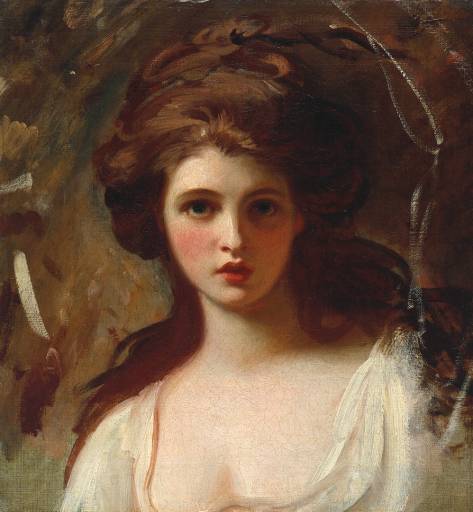
Emma as Circe, George Romney

Emma loved Charles, but he needed money, so when he met a woman of means in 1786,  he trundled Emma off to his widowed uncle in Naples, Italy, and thus Emma’s association with Sir William Hamilton began. Sir William was a diplomat and an avid art collector of classical statuary, urns and vases, which filled his villa in Portici overlooking the Bay of Naples. A connoisseur, he deeply appreciated Emma’s beauty, intelligence and special talents, not the least among which were her acting skills, hostessing abilities, and aptitude for learning new languages.
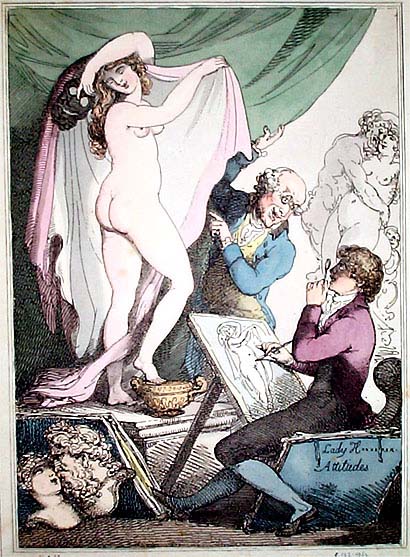
Caricature of Emma Hamilton as an artist’s model posing in an “Attitude”, Thomas Rowlandson
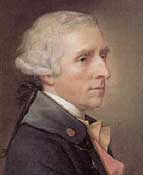
Sir William Hamilton

Emma’s stint as Romney’s model had given her experience posing in various classical guises. She’d also had the dubious distinction earlier in her career in London, of having worked as a scantily clad model and dancer – or “Goddess of Health” –  at Dr. Graham’s Temple of Health and Hymen, which claimed to cure the reproductive and sexual problems of couples. Emma  used her “theatrical” experiences to develop her “Attitudes”.  In helping Emma design her act, Sir William, whose knowledge of the imagery on classical vases was authoritative, used ancient Roman pantomimes as a model. The result of their collaboration was a silent performance that combined poses, classical dance and acting with Emma’s special allure. Emma gave her first showing in spring of 1787 to a group of European guests. Sir William held the lights and introduced his wife, as he would do for all her theatrics.
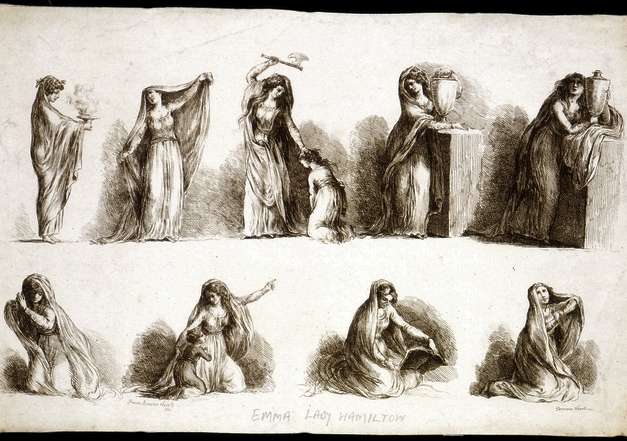
The Attitudes of Lady Hamilton, 1791, Novelli

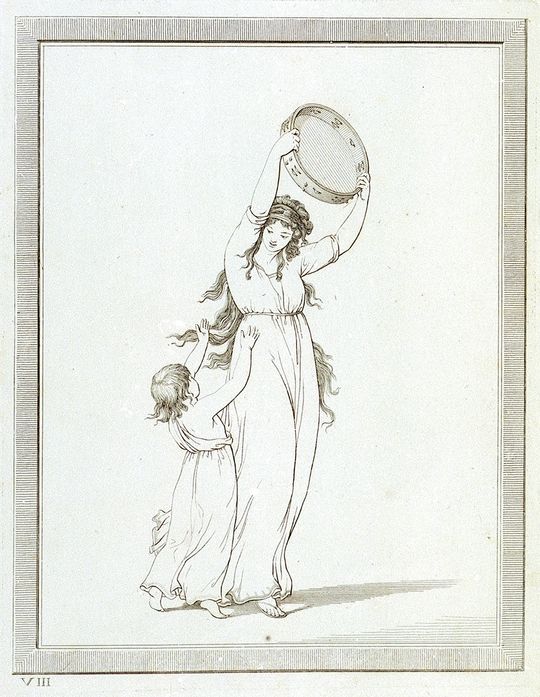
The poses were an immediate hit. Emma moved through her routine within a tall black box surrounded by a gold picture frame, using only a shawl or urn for a prop. (Although she must have occasionally used a child, as included in these images.) For her “Attitudes”, Emma  wore simple white-draped garments that fitted loosely and allowed her long hair to flow free. Her dresses were modeled on those worn by peasant women in the Bay of Naples. Sitting, standing, leaning, or kneeling, or posing as Medea or Cleopatra, she seemed to step right off the antique vases that her husband collected.
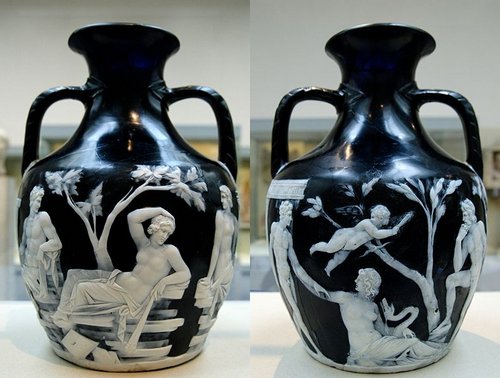
Portland Vase, British Museum, once owned by Sir William Hamilton

Emma’s repertoire was large and made up of at least 200 poses. During a performance she moved from one silent tableau to the other with great rapidity, delicacy. and deliberateness in what one writer termed ‘bursts of stillness.’ The private and select audiences would attempt to guess the names of the classical characters and scenes from stage and literature that she pantomimed, and stare in awe at Emma’s ability to transform her moods and the scene in an instant. Out of necessity, earlier viewings remained private, for Sir William and Emma were not married.
The couple did eventually marry  in London in 1791 at St. George’s Church in Hanover Square. Sir William was 61 and his wife was 26. After their wedding, the Hamiltons returned to their home in Italy. They continued to perform the “Attitudes, but now they could publicly and conspicuously invite a much larger and more diverse audience. Johann Wolfgang von Goethe, the German poet, had been invited to watch a performance during a visit to Naples. Impressed, he wrote:

The Chevalier Hamilton so long resident here as English Ambassador, so long too connoisseur and student of Art and Nature, has found their counterpart and acme with exquisite delight in a lovely girl, English, and some twenty years of age. She is exceedingly beautiful and finely built. She wears a Greek garb becoming her to perfection. She then merely loosens her locks takes a pair of shawls, and effects changes of postures, moods, gestures, mien, and appearance that make one really feel as if one were in some dream. Here is visible complete and bodied forth in movements of surprising variety, all that so many artists have sought in vain to fix and render. Successively standing, kneeling, seated, reclining, grave, sad, sportive, teasing, abandoned, penitent, alluring, threatening, agonised. One follows the other and grows out of it. She knows how to choose and shift the simple folds of her single kerchief for every expression, and to adjust it into a hundred kinds of headgear. Her elderly knight holds the torches for her performance, and is absorbed in his soul’s desire.
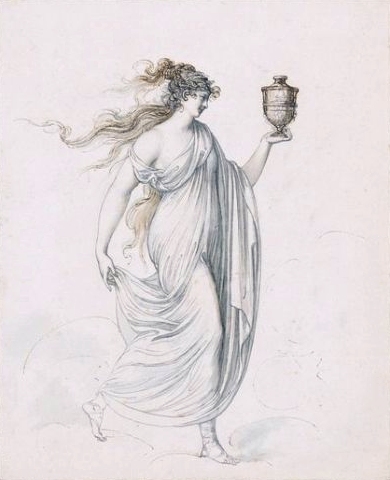
Lady Emma Hamilton as the Goddess of Health, 1790, Cosway

There must have been something titillating and erotic about Emma’s act, for her poses, although inspired by classical motifs, also drew upon her earlier experiences as a “Goddess of Health” in London and her erotic performances dancing naked for Sir Harry Fetherstonhaugh’s friends on his dining table. Her fame spread far and wide, and Emma, Lady Hamilton’s “Attitudes” became a big draw on Europe’s Grand Tour. Painters and writers sought out her performances, which charmed aristocrats and royals as much as artists and the literary set.  Élisabeth-Louise Vigée-Le Brun observed:

“Nothing was more curious than the faculty that Lady Hamilton had acquired of suddenly imparting to all her features the expression of sorrow or joy, and of posing in a wonderful manner in order to represent different characters. Her eyes alight with animation, her hair strewn about her, she displayed to you a delicious bacchanale, then all at once her face expressed sadness, and you saw an admirable repentant Magdalene.” – Elizabeth Vigee-Lebrun
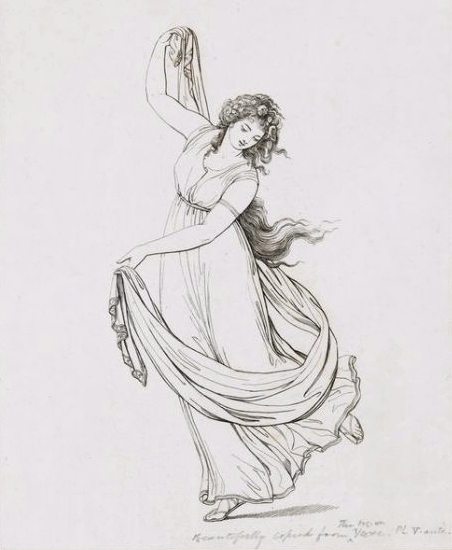
Lady Emma Hamilton, 1794, Rehberg

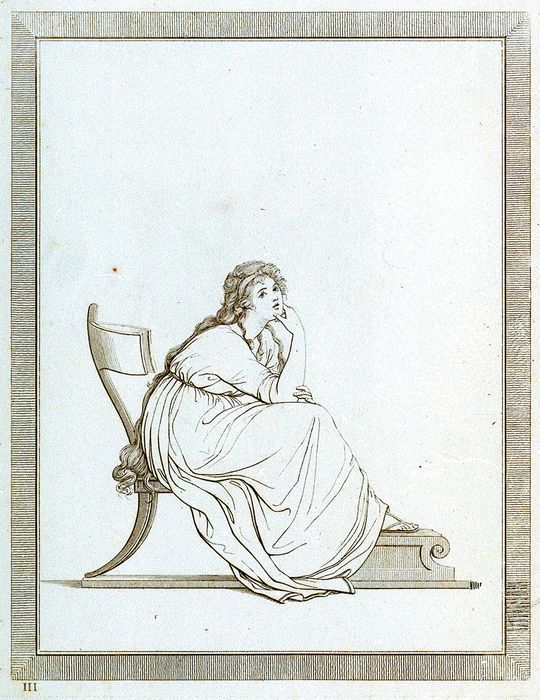
The black and white Rehberg illustrations featured in this post and commisioned by Sir William,  are drawn with simple, graceful and classical lines and freeze a particular “Attitude”. Their idealistic poses are among the few visual reminders that remain of Emma, Lady Hamilton as a performance artist. As the images show, Emma was a voluptuous, well-formed and beautiful woman. Her love for food and drink was no secret, and she would gain a substantial amount of weight over time, until at 47 she was described as being fat. But for a number of magical years, art, performance and beauty combined to create a series of tableaus that are still remembered today for their freshness and originality.
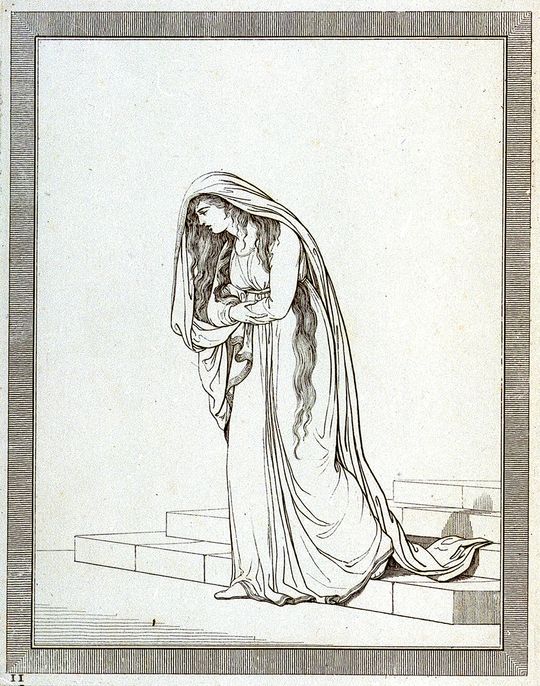
Emma Hamilton, 1794, Friedrich Rehberg, engraver and Tommaso Piroli, illustrator

Read about Lady Hamilton’s later years and sad death in this link.

To learn more about Emma’s fascinating skills, watch a lecture by John Wilton-Ely. His talk is on the ” performances by Lady Emma Hamilton, one of the most celebrated beauties of her era and a remarkable pioneer in developing performance art.”  Click here to watch the lecture. (A little over an hour long but well worth the time.)

More on the topic:

Add to DeliciousAdd to DiggAdd to FaceBookAdd to Google BookmarkAdd to RedditAdd to StumbleUponAdd to TechnoratiAdd to Twitter

Read Full Post »

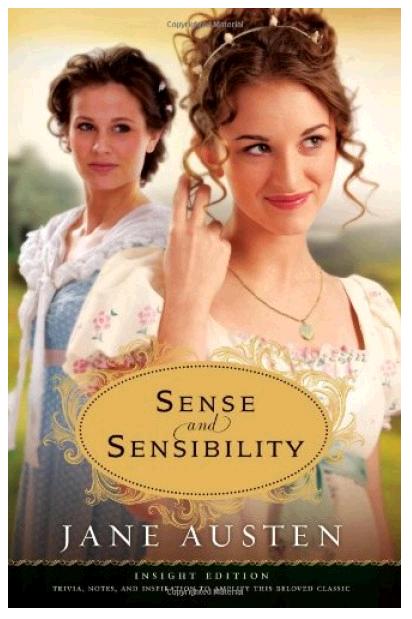
Sense and Sensibility by Jane Austen, the Insight Edition from Bethany House is a lovely annotated version of this classic novel. The intended audience is obviously a young Christian girl or someone who is reading the novel for the first time. The notes sit in the margins; they are not too obtrusive or overly verbose, but they do add a dimension to reading the book. Symbols indicate what sort of comment to expect. For example, a feather tells us that we will learn a tidbit about Jane Austen’s life. A small cross will indicate themes of faith drawn from the novel or her life; a small crown leads to historical facts. (“Consumption: tuberculosis; once referred to as consumption because it “consumed” the body. P. 189.)  Smiley faces tell us about parts of the novel that make the reader smile, and frownies assure us that the character has become nothing but irritating. (On page 133, “ranking our dislike: 1. Fanny; 2. Lady “Passive-aggressive” Middleton, 3. ..”etc.)

Many of the annotations deal with scenes from film adaptations, which help to clarify them in relation to the book (look for the camera symbol). With the inclusion of these film annotations, Bethany House rightly assumes that many people reading Jane Austen for the first time seek out her novels only after seeing a movie based on her novel.

The foreword by Julie Klassen is short and to the point, and the book group questions in the back are neither pompous nor difficult to discuss. In short, this book provides a wonderful introduction to Sense and Sensibility, one of Jane Austen’s earlier novels and, next to Pride and Prejudice and Northanger Abbey, the most accessible to her new fans. Bethany House also offers a Pride and Prejudice edition, which I surmise must contain similar annotations and book group questions.

I highly recommend this book to new readers of Jane Austen, especially those who possess only a cursory knowledge about her life or the Regency era. Before purchasing the book for yourself or a friend or loved one, you should aware of the many notes that pertain to faith. The quotes are informative and not preachy, as on p. 145: “The hard core of morality and even of religion seems to me to be just what makes good comedy possible…where there is no norm, nothing can be ridiculous…” C.S. Lewis, “A Note on Jane Austen, Essays in Criticism.” This edition of Sense and Sensibility points out how Jane’s faith informs her writing and her life, which is natural given that her father and two of her brother were men of the cloth.

In reading this book I am enjoying my revisit with Marianne and Elinor, and the shenanigans of the devious Lucy Steele and mean-spirited Fanny Dashwood. I still find Willoughby’s conduct reprehensible for a man in love, but Colonel Brandon, though a tad boring, makes my heart patter with his devotion and strength of character . The margin notes, written by Jane Austen fans (not scholars)  have enriched my enjoyment of this edition, and thus I give it three out of three Regency fans.

About Bethany House: Bethany House Publishers, a division of Baker Publishing Group, has been publishing Christian fiction books for 50 years. Nearly 120 titles are published annually, including historical and contemporary fiction, Christian living, family, health, devotional, children’s, classics, and theology subjects.

Sense and Sensibility, insight ed. by Jane Austen
ISBN: 978-0-7642-0740-2
Price: $14.99
Format: Paperback
Division: Bethany House

Read Full Post »

Gentle Reader, Those of us who have read The Scarlet Pimpernel by Baroness Emmuska Orczy know that Sir Percy Blakeney pretends to be an effete dandy. Unbeknownst to his wife, who cannot conceal her disappointment in her foppish husband, he smuggles people out of  France during the French Revolution and away from danger. Sir Percy, despite his heroics, is a bit of a clothes horse. Here, then, is his opinion of cravats after he accidentally on purpose spills wine on Monsieur Chauvelin, for whom the public admiration for the Scarlet Pimpernel was a source of bitter hatred.

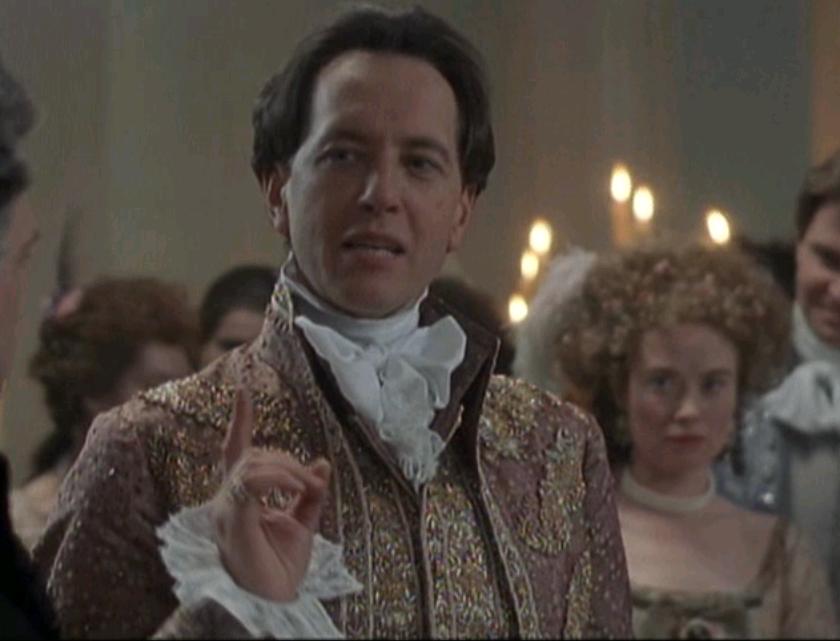
Sir Percy Blakeney, Richard E. Grant as the Scarlet Pimpernel

Sir Percy Blakeney to Monsieur Chauvelin: “Sir, my most abject and humble apologies. I’ve completely drowned your cravat! How can I possibley make amends for such clumsiness?”

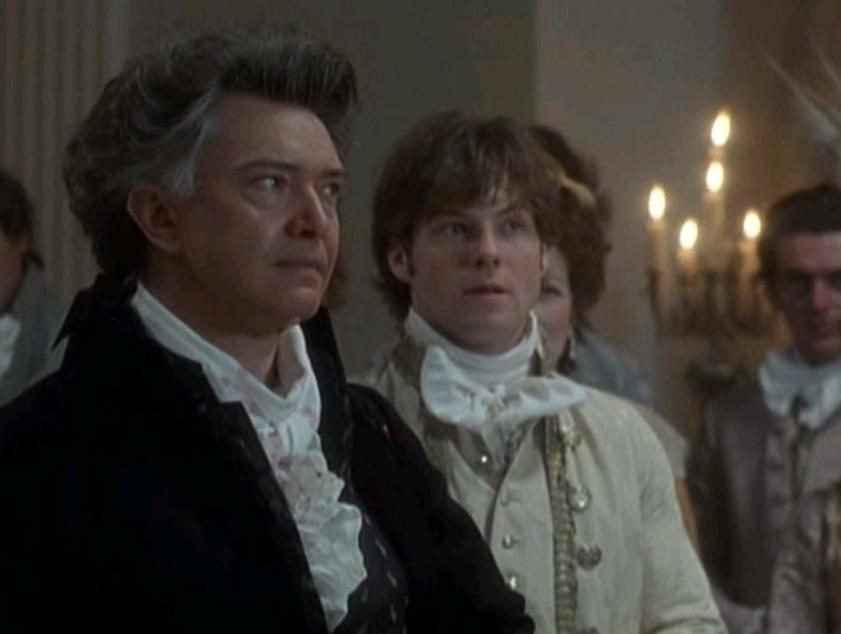
Martin Shaw as Monsieur Chauvelin

Monsieur Chauvelin, Ministry of Justice: “It’s of no consequence. It’s only a cravat.”

Richard E. Grant as Sir Percy aka The Scarlet Pimpernel

Sir Percy: “Only a cravat! Oh, my dear sir! A cravat is the apotheosis of all neckwear! A cravat distinguishes a man of refinement from the merely ordinary. It sneers at the severity of the stock. It is the only item of dress that expresses true individuality. And whether it be made of lace or silk or the finest lawn it thrives on ingenuity, on originality, and above all, on personality down to the last skilled twist of bow or knot.”

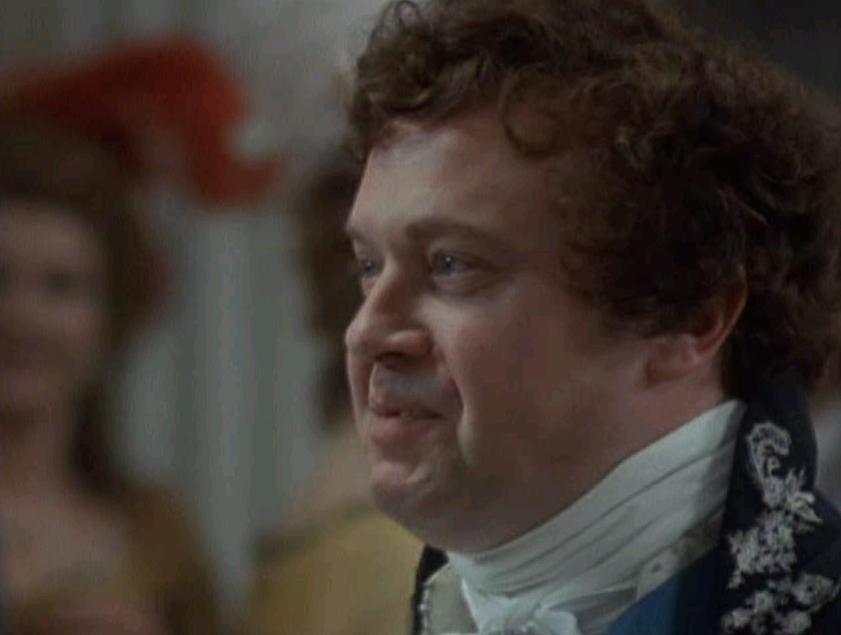
Jonathan Coy as the Prince of Wales

Prince Regent: “Bravo, Percy! Bravo!”

Bravo, indeed! More on the topic

Read Full Post »

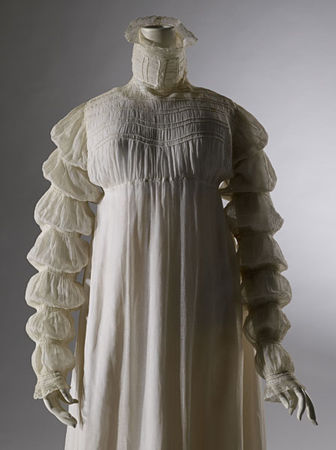
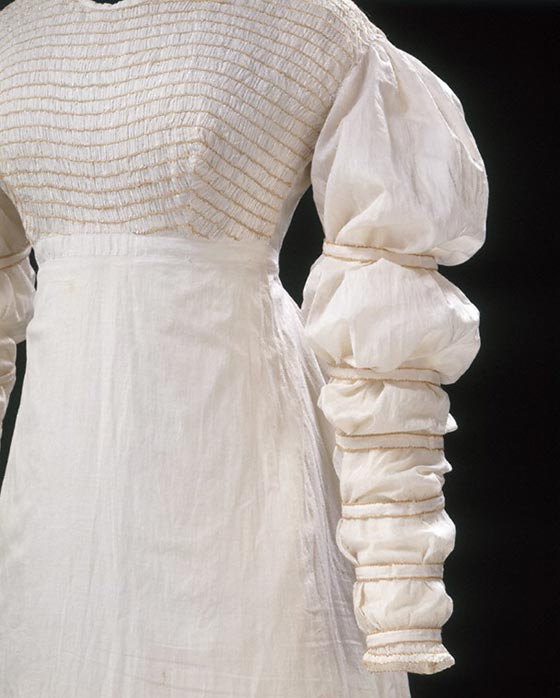
I love puffed and gathered sleeves on regency gowns. The Probert Encyclopedia defines a mamaluke sleeve as “a long full sleeve partitioned into five sections, each section being drawn and seamed to fit around the arm.” Romantic Fashion Plates defines Marie Sleeves as full to the wrist but tied at intervals. Which source accurately names the sleeves on these gowns?  The three dresses shown in this post show sleeves with more than the five sections. Could the number of sections determine what the sleeve is called?

Muslin dress with mamaluke sleeves

The first dress (1816) was featured in the Jane Austen Fashion Exhibit last fall in Melbourne. Note that in the second dress (1819-1820) the waist is beginning to creep down. The skirt during this time is conical in shape and stiffened at the bottom, whereas the earlier dress has a columnar-shaped skirt that drapes in soft folds from the high waist.

The dress below is described as having Marie sleeves. Adding another wrinkle to identifying these sleeves is this description found in a glossary from Nineteenth Century Fashions: A Compendium: “sleeve with multitude of puffs top to bottom” (romance).  I’m not sure how these differ from Marie sleeves.” In a description for Marie Sleeves, the site states:

“long gauzy sleeves gathered at intervals to make a series of puffs down the arm. I think I have also heard these referred to as “Juliet sleeves”; may also be synonymous with Gabrielle sleeves, the point being, I think, that they were perceived as vaguely Latinate and Renaissancy in origin.”

So, now we have these sleeves described as Mameluke, Marie, Juliet, or Gabrielle.

1820 dress with marie sleeves, V&A museum

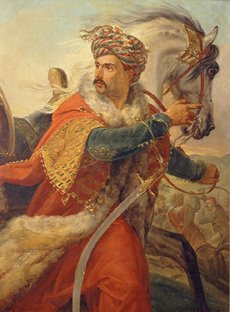
I’ve scoured images of Mamelukes, none of which feature these segmented sleeves. Mamelukes are members of a former military caste originally composed of slaves from Turkey, that held the Egyptian throne from the mid thirteenth century to the early 1500s. They remained strong until 1811. Regency fashion took inspiration from Mameluke clothing, so it wouldn’t be surprising if the sleeves were also inspired by this group of warriors – if only I could find a painting of a Mameluke wearing a shirt with partitioned puffy sleeves.

Mameluke, early 19th c.

Read Full Post »

Three years ago I wrote about the summer of 1816 in England, which was widely regarded as the year without a summer. Six months before, a volcanic eruption in Indonesia ejected over 19 million cubic miles of volcanic ash in the atmosphere. This ash traveled in the upper atmosphere, blocking the sun.

This week, an ash plume from a volcanic eruption of Eyjafjallajokull (ay-yah-FYAH’-plah-yer-kuh-duhl) volcano in Iceland has grounded air travel in Europe. As the debris travels around the world in upper atmospheric currents, one wonders if a colder winter than normal will affect the world next year. Will we also experience a year without summer? Or is this an eenie minie volanic eruption as far as eruptions go?

Icelandic volcano April 2010

Read Full Post »

« Newer Posts - Older Posts »