Feeds:
Posts
Comments

Inquiring readers,

Earlier this year, I met author Sarah Emsley online, after she made an observation about something I’d written on Jane Austen’s World blog: she then revealed that she visited this site often. I was thrilled, and during our ensuing online discussions I agreed to write an article for her “Summer Party for Sense and Sensibility.” My article, published August 2nd, is entitled “Mrs. Dashwood’s Journey of Growth in Sense and Sensibility.”

Knowing that so much has been researched, discussed and written about Austen’s first published novel, I honed in on one of her lesser characters, Mrs. Dashwood, who is well known by Austen’s readers. She plays a pivotal role, but remains largely a side character to her two eldest daughters, She is not written as a one-dimensional character. Nevertheless, she practically disappears from the novel’s plot in the last third of the novel, until events necessitate her return to help move the plot to its conclusion.

Image copyright Sarah Emsley

A Summer Party for Sense an Sensibility can be found at this link. Guest authors include: Maggie Arnold, Finola Austin, Elaine Bander, Deb Barnum, Sandra Barry, Cheryl Bell, Matthew Berry, Diana Birchall, L. Bao Bui, Kathy Cawsey, Lori Mulligan Davis, Lizzie Dunford, Susan Allen Ford, Paul Gordon, Heidi L.M. Jacobs, Natalie Jenner, Hazel Jones, George Justice, Theresa Kenney, Deborah Knuth Klenck, Shawna Lemay, Emily Midorikawa, Jessica Richard, S.K. Rizzolo, Peter Sabor, Vic Sanborn, Marilyn Smulders, Jacqueline Stevens, Emma Claire Sweeney, Joyce Tarpley, Janet Todd, and Deborah Yaffe, along with two teenagers, Gail and Ria, who are reading S&S for the first time.

New contributions are published every Friday and Tuesday, and will continue through the end of summer. Sarah refreshes the page (see the above link) with each new article, and encourages people to leave comments for the author.

The other series she’s featured in past years can be found on her site. They are:

About Sarah Emsley 

Screenshot from Ms.Elmsley’s page on Amazon.com

Sarah’s request: Please share the tour with others. Better yet, she’d love for you to write comments to the various contributors. Enjoy!

Jane Austen and the Creation of Modern Fiction: Six Novels in “a Style Entirely New,” explores Jane Austen’s development as a fiction writer.

by Brenda S. Cox

A few days ago I reviewed Collins Hemingway’s fascinating new book on the development of Austen’s writing techniques, Jane Austen and the Creation of Modern Fiction: Six Novels in “a Style Entirely New.”  Today we meet with the author to get his perspectives on the book.

Collins Hemingway began his analysis of Jane Austen’s writing techniques as he wrote a fiction trilogy speculating on the “lost years” of Austen’s life, The Marriage of Miss Jane Austen.

I asked Collins Hemingway to tell us more about Jane Austen and the Creation of Modern Fiction.

JAW: What led you to write this book, Collins?

Collins: I’ve read Austen all my life, but I did not read much commentary during my 25-year high-tech career. When I came back to Austen fulltime, I read a ton of Austen scholarship from the last 20 years. I noticed that there wasn’t much about her writing, as writing. Scholars would mention a technique and use it as a launch point for broader criticism. With rare exceptions, they would not analyze the technique itself or how it affected the reader. I saw this as an area in which I could add something new.

JAW: You have, of course, written a fiction series, The Marriage of Miss Jane Austen. How did your experiences writing fiction about Austen feed into your development of Jane Austen and the Creation of Modern Fiction?

Collins: Writing the novels led directly to this book, though it took several years of hard reading, notetaking, and writing to flesh out the meat over the bones. I have shared that story on my blog.

JAW: The book is full of great insights. For you, what was one of the most helpful, something that helped you see Austen’s novels in a new way?

Collins: After completing the fiction trilogy, I went a step further, going through each of Austen’s six novels line by line, noting everything of interest to a writer. I ended up with 20 to 30 pages of handwritten notes on each one. Then I began to consolidate various topics. For instance, I ended up with five pages of notes just on description, collated from all her books, including the juvenilia. Then I examined the patterns in different aspects of writing and tried to understand how the patterns fit within and between each book.

As the patterns began to organize themselves, I realized that there was a distinct trend from early to late. In each book, Austen learned something, then applied it in the succeeding books. Like Virginia Woolf examining the early works and the unfinished works, I began to see the internal structures of each book. (As my wife would caution—in my opinion.) I could see how Austen was feeling her way along in the early works, then painting like a master in the later ones.

JAW: You’ve pointed out the strengths and weaknesses of each of Austen’s novels. It appears that you see Emma as the most “perfect” novel, as other commentators do. But for you personally, which novel do you tend to enjoy re-reading the most, and why?

Collins: Depends on my mood. P&P for its sheer energy, and for Liz bowing to no one, ever. Emma for its magnificence, page by page. Persuasion for the depth of Anne’s feeling. MP, though it is in no way my favorite, when I just want to admire the structural purity and the work she put into it.

JAW: You talk about many techniques of modern fiction that Jane Austen helped to develop and show how they developed in her novels over time. Could you briefly list for us some of those techniques, so readers can see some of the treats they have in store?

Collins: She was a master of dialogue probably from the day she first picked up a quill pen. Description. Behavior. Character motivation and interaction. Complex plots (without castles, brigands, or shipwrecks.) Ever deeper and subtler ways to get into her characters’ minds.

JAW: What is one takeaway that you want readers to have when they finish reading your book?

Collins: What Austen accomplished would make any author proud. But the fact that she learned all that she did on her own, away from other writers, pulling the best from a small number of others (such as Richardson, in a very specific way), building on a few good things from tradition, figuring out the rest on her own—it’s astonishing. And she did it in her too short 41.5 years of life!

JAW: What was the most fun part of the book to write?

Collins: My breakthrough in really understanding the internals came through descriptions. They unlocked the issues in NA and S&S, showed how radically different P&P was from the earlier two, and became miraculously mature in MP. This was the most fun. Especially when I realized the difference in the way Austen treated Lady Russell and Anne as they entered Bath in Persuasion. It took my breath away to see what Austen had done.


You may want to read my review if you missed it earlier. This is a fascinating book if you want to better understand Jane Austen’s modern writing techniques and how she developed them herself. Jane Austen and the Creation of Modern Fiction is available from Amazon and from Jane Austen Books. Jane Austen Books is currently offering it at a substantial discount.


Brenda S. Cox is the author of Fashionable Goodness: Christianity in Jane Austen’s England. She also blogs at Faith, Science, Joy, and Jane Austen.

By Brenda S. Cox

I thoroughly enjoyed Jane Austen and the Creation of Modern Fiction: Six Novels in “a Style Entirely New,” by Collins Hemingway. As a fiction writer himself, Hemingway examines Austen’s novels, in the order she wrote them, to analyze the techniques she pioneered. He observes her abilities growing from novel to novel, as she experiments and succeeds in creating the worlds and characters we so love.

Collins Hemingway’s new book, Jane Austen and the Creation of Modern Fiction: Six Novels in “a Style Entirely New,“ gives fascinating insights into Austen’s development of modern techniques of fiction writing.

A New Style?

Did Jane Austen develop a new style of novel-writing? Her contemporary reviewers thought so. They felt compelled to give long contrasts between the previous style of novel-writing, full of intensity and improbability, with Jane Austen’s new realistic style. Sir Walter Scott in his 1815 review of Emma said Austen “draws the characters and incidents introduced more immediately from the current of everyday life.” Rev. Richard Whately wrote in his 1821 review of Northanger Abbey and Persuasion, “A new style of novel has arisen. . . . The substitute for these excitements [of unlikely adventures] . . . was the art of copying from nature as she really exists in the common walks of life.” Both these reviews are worth reading (follow the links above) to see how Austen’s contemporaries struggled to describe what she was, and wasn’t, doing in her novels.

The third volume of Austen’s Juvenilia includes a penciled note inside the front cover, “Effusions of Fancy by a very Young Lady consisting of Tales in a Style entirely new.” Peter Sabor says this inscription is written in Jane’s father’s handwriting, though others have speculated that it may have been written by Cassandra or even by Jane herself, tongue-in-cheek.

Author Collins Hemingway told me, “The epigram seems most likely to me to be from her father. . . . To me, the quotation is Mr. Austen enjoying and encouraging Jane’s raw power and comedy, her sheer audacity in sending up the pulp fiction of the day with her various teenage writings. I saw a strong parallel to her adult fiction. Her juvenilia showed that she understood that traditional fiction didn’t cut it. Her adult fiction shows that she learned how to write good novels—something new at the time.”

Jane Austen Learning (or Inventing) the Craft of Writing Fiction

Jane Austen and the Creation of Modern Fiction starts out with a preface for more academic readers (feel free to skip it if that’s not you), then an introduction for us all, which begins:

“I wrote this book so that people can read Jane Austen with fresh eyes. I wanted booklovers to view her not as a literary or cultural icon but as a writer, someone who puts words to paper to try to touch another person’s heart. I wanted people to see her as a human being who struggled to master her craft as anyone in any field, regardless of talent, must do. . . . As both a student of literature and a writer, I wanted to know how Austen affects readers. I wanted to know how she created remarkably  real people interacting in remarkably realistic situations. This is what writers care about, and what readers respond to.”

Yes.

Hemingway starts with an exploration of the context of Austen’s writing, how she “straddled the old and new literary order, ultimately pivoting the novel from improbable adventures to deep penetration of the minds of her heroines.” (These early chapters are necessarily a bit more difficult, as they compare Austen with her contemporaries, who most of us have not read—and here we can see why Austen is so much more accessible than other writers of her time!)

Then he brings us deep into our beloved Austen–following her development of description in her earliest novels, Northanger Abbey and Sense and Sensibility. In Pride and Prejudice, she continues to develop “pocket descriptions,” which are “pithy, telling details.” For example, Elizabeth Bennet’s jumping over stiles and puddles and arriving at Netherfield with “weary ancles” and “dirty stockings” is a pocket description that shows us a lot about Elizabeth.

Sense and Sensibility was originally written in the popular “epistolary” form, as a series of letters. Letters give a sense of distance, as the character is writing about events that have already happened, rather than the author drawing readers directly into events. A chapter analyzes how Austen made the transition from letters into narrative. For example, Edward Ferrars is a “blurry” presence in the early chapters, which are closer to the letter format. By the end of the novel, though, Austen has added vivid, immediate scenes. So, in the final proposal scene, we see Edward as “the very real and anguished presence of a human being.”

My favorite chapter is the one on “The Marvelous Complexity of Mansfield Park.” Hemingway’s discussion helps readers appreciate its elaborate scenes, complex characters, and interconnected plotlines. He particularly explores the depths of Fanny Price’s thoughts and feelings.

Fanny’s “responses, which for the most part only the reader observes, show her to be by far the most complex individual Austen ever creates. Outwardly, she is a saint. Inwardly, she is as confused and angry as any person who is regularly embarrassed or put down. Her raw feelings sometimes overpower her Christian charity and patience.” Austen even uses the furnishings of Fanny’s room to show her interior life. Fanny constantly examines her own motives, trying to find the right path.

Every chapter includes new insights into Austen’s novels, her writing techniques, and her development as an author.

Persuasion

One area of the book that Janeites might find a little uncomfortable is the section on Persuasion. Collins Hemingway discusses the revision process—authors generally rewrite their books multiple times. He points out several areas in Persuasion that could be considered imperfect. For example, Mrs. Smith is not quite consistent. Why does she encourage Anne to marry Mr. Elliot, then reveal how horrible he is? And why does Lady Russell mostly disappear from the second half of the book?

Austen might have fixed these issues with a major rewrite. (I suggest she also might have changed Charles Hayter’s name, so we wouldn’t have two adult characters named Charles, besides Charles Musgrove’s son Little Charles.) But Hemingway suggests that perhaps her health was failing already, and she did not have the time and energy for major revision. She had already replaced the original ending with the beautiful one we know and love. And, in “the quiet passion of Anne Elliot,” she had already given readers “a depth of character never seen before.”

If Austen had begun another revision to fix smaller structural issues, she might not have had a publishable version available when she died. So, Hemingway persuades us that Austen wrapped up the work, as it stood, to give the world another work of art and to help provide for her mother and sister after her death. As Hemingway states, “Like Emma, Jane is faultless despite her faults.”

Any lover of Austen will learn a lot from Jane Austen and the Creation of Modern Fiction. I particularly recommend it to writers (like myself), who will enjoy seeing Austen’s techniques and their development. Any of you who love digging deeper into Austen’s novels will find new delights here.

On Monday, we’ll interview the author to get his perspectives on the book.

Jane Austen and the Creation of Modern Fiction is available from Amazon and from Jane Austen Books. Jane Austen Books is currently offering it at a substantial discount.

Gentle readers, what aspect of Austen’s writing do you most admire? Her settings, characters, plots, style, humor, or something else?

Brenda S. Cox is the author of Fashionable Goodness: Christianity in Jane Austen’s England. She also blogs at Faith, Science, Joy, and Jane Austen.

As the summer months continue in our month-by-month exploration of Jane Austen’s life, letters, and novels, we turn our attention to July in Jane Austen’s world. If you’re new to the “A Year in Jane Austen’s World” series, you can find previous articles here: January, February, March, April, May, and June.

Last month, we enjoyed the June roses at Chawton House Gardens. Let’s take a look at our monthly view for July! Can you imagine exploring the walled gardens on a warm summer day? I know two kids who did explore the gardens and the apple orchard (with permission) at Chawton House a few years ago!

Chawton House in July: Photo @ChawtonHouse.

July in Hampshire

July in Hampshire brings sporadic heat waves, overcast days, sunny days, and frequent rain showers. The Austen women moved to Chawton in July 1809:

“On this day (7 July) in 1809 Jane Austen moved to Chawton to live in this house. It was here, in this inspiring cottage, that Jane’s genius flourished and where she wrote, revised, and had published all six of her globally beloved novels.” (Jane Austen’s House Museum)

Jane Austen’s House in July, Photo: @JaneAustensHouse.

July in Jane Austen’s Letters

We don’t have as many of Jane’s letters from the month of July on record, though there is one funny aside that caught my attention as I searched through her letters. After complaining earlier to Cassandra about a few days of “cold disagreeable weather,” “fires every day,” and use of her “kerseymere spencer” for evening walks, Jane wrote the following on 1 July 1808: “The weather is mended, which I attribute to my writing about it…”

The fact is, however, that two of the most important letters we have from the month of July are not from Jane herself but from her sister Cassandra. And those, as many of you well know, are the letters Cassandra wrote to her niece Fanny Knight after Jane’s passing in July 1817.

Cassandra’s Letters

Cassandra’s letters, which many of you have read, are some of the most beautiful letters we have on record. Jane was Cassandra’s younger sister, but she was also her lifelong companion and best friend. Cassandra’s sorrow at losing one so dear is obvious in her writings.

In her first letter (18 July 1817), Cassandra tells Fanny about Jane’s last days and hours with delicacy, reverence, and love:

I have lost a treasure, such a sister, such a friend as never can have been surpassed. She was the sun of my life, the gilder of every pleasure, the soother of every sorrow; I had not a thought concealed from her, and it is as if I had lost a part of myself. I loved her only too well,—not better than she deserved, but I am conscious that my affection for her made me sometimes unjust to and negligent of others; and I can acknowledge, more than as a general principle, the justice of the Hand which has struck this blow.

You know me too well to be at all afraid that I should suffer materially from my feelings; I am perfectly conscious of the extent of my irreparable loss, but I am not at all overpowered and very little indisposed,—nothing but what a short time, with rest and change of air, will remove. I thank God that I was enabled to attend her to the last, and amongst my many causes of self-reproach I have not to add any wilful neglect of her comfort.

In her second letter (29 July 1817), Cassandra expresses to Fanny that she often thinks of Jane in Heaven and hopes she will one day be reunited with her there:

If I think of her less as on earth, God grant that I may never cease to reflect on her as inhabiting heaven, and never cease my humble endeavors (when it shall please God) to join her there.

As a lifelong lover of Jane Austen, I treasure Cassandra’s letters deeply, as I’m sure many of you do too. If you have not read her letters in a while, or if you wish to read them for the first time, you can find them HERE.

July in Jane Austen’s Novels

Pride and Prejudice

  • July is when Elizabeth travels with Mr. and Mrs. Gardiner: “The time fixed for the beginning of their northern tour was now fast approaching; and a fortnight only was wanting of it, when a letter arrived from Mrs. Gardiner, which at once delayed its commencement and curtailed its extent. Mr. Gardiner would be prevented by business from setting out till a fortnight later in July, and must be in London again within a month; and as that left too short a period for them to go so far, and see so much as they had proposed, or at least to see it with the leisure and comfort they had built on, they were obliged to give up the Lakes, and substitute a more contracted tour; and, according to the present plan, were to go no farther northward than Derbyshire. In that county there was enough to be seen to occupy the chief of their three weeks; and to Mrs. Gardiner it had a peculiarly strong attraction. The town where she had formerly passed some years of her life, and where they were now to spend a few days, was probably as great an object of her curiosity as all the celebrated beauties of Matlock, Chatsworth, Dovedale, or the Peak.”
Elizabeth and Mr. Darcy, Mr. and Mrs. Gardiner

Mansfield Park

  • Mr. and Miss Crawford come on the scene: “Such was the state of affairs in the month of July; and Fanny had just reached her eighteenth year, when the society of the village received an addition in the brother and sister of Mrs. Grant, a Mr. and Miss Crawford, the children of her mother by a second marriage. They were young people of fortune. The son had a good estate in Norfolk, the daughter twenty thousand pounds.”

Emma

  • The night before Mr. Knightley returns from London, Emma spends a miserable evening wondering what will come of Harriet’s feelings (and her own feelings) toward Mr. Knightley: “The evening of this day was very long, and melancholy, at Hartfield. The weather added what it could of gloom. A cold stormy rain set in, and nothing of July appeared but in the trees and shrubs, which the wind was despoiling, and the length of the day, which only made such cruel sights the longer visible.”
  • Emma’s thoughts that evening regarding the loss of Mr. Knightley, if he were to marry Harriet: “All that were good would be withdrawn; and if to these losses, the loss of Donwell were to be added, what would remain of cheerful or of rational society within their reach? Mr. Knightley to be no longer coming there for his evening comfort!—No longer walking in at all hours, as if ever willing to change his own home for theirs!—How was it to be endured?”
Gwyneth Paltrow in Emma, 1997.

Persuasion

  • Sir Walter Elliot’s wedding day: “Walter Elliot, born March 1, 1760, married, July 15, 1784, Elizabeth, daughter of James Stevenson, Esq. of South Park, in the county of Gloucester, by which lady (who died 1800) he has issue Elizabeth, born June 1, 1785; Anne, born August 9, 1787; a still-born son, November 5, 1789; Mary, born November 20, 1791.”
  • The letter Mrs. Smith produces from Mr. Elliot, written to “Charles Smith, Esq. Tunbridge Wells,” dated July 1803, reads as follows:

“Dear Smith,

“I have received yours. Your kindness almost overpowers me. I wish nature had made such hearts as yours more common, but I have lived three-and-twenty years in the world, and have seen none like it. At present, believe me, I have no need of your services, being in cash again. Give me joy: I have got rid of Sir Walter and Miss. They are gone back to Kellynch, and almost made me swear to visit them this summer; but my first visit to Kellynch will be with a surveyor, to tell me how to bring it with best advantage to the hammer. The baronet, nevertheless, is not unlikely to marry again; he is quite fool enough. If he does, however, they will leave me in peace, which may be a decent equivalent for the reversion. He is worse than last year.

“I wish I had any name but Elliot. I am sick of it. The name of Walter I can drop, thank God! and I desire you will never insult me with my second W. again, meaning, for the rest of my life, to be only yours truly,

“WM. ELLIOT.”

Samuel West at Mr. Elliot in Persuasion, 1995.

July Dates of Importance

This brings us now to several important July dates that relate to Jane and her family:

Family News:

July–August 1768: The Austen family moves to Steventon, Hampshire.

3 July 1779: James Austen matriculates at St. John’s College, Oxford (BA 1783, MA 1788).

1 July 1788: Henry Austen matriculates at St. John’s College, Oxford (BA 1792, MA 1796).

2 July 1806: Mrs. Austen and her daughters leave Bath.

24 July 1806: Francis Austen marries Mary Gibson.

7 July 1809: Austen women and Martha Lloyd move to Chawton Cottage.

Historic Dates:

14 July 1789: Storming of the Bastille in Paris.

July 1793: Beginning of the Reign of Terror in France.

Writing:

July 1813: Austen (most likely) finishes Mansfield Park.

18 July 1816: Austen completes first draft of Persuasion.

Sorrows:

18 July 1817: Jane Austen dies, early in the morning, attended by her sister Cassandra.

24 July 1817: Jane Austen is buried in Winchester Cathedral.

Helen LeFroy at a private JASNA ceremony at Jane Austen’s grave, Winchester Cathedral, 2007. Image @ Rachel Dodge.
Jane Austen’s Grave.

July Beginnings and Endings

It’s interesting to note that Jane Austen moved to Chawton in July 1809 and passed away (in Winchester) in July 1817. Her years at Chawton Cottage are some of the most fruitful of all her writing career. From Jane Austen’s House Museum:

1811: Sense and Sensibility published.
1813: Pride and Prejudice published.
1814: Mansfield Park published.
1816: Emma published (December 1815).
1815 – 1816: Jane writes The Elliots (later published as Persuasion).
January 1817: Jane begins The Brothers (later published as Sanditon), but she only completes the first twelve chapters.

Though we wish Austen could have lived much longer, enjoyed her wonderful family, and written many more novels, it’s incredible to think that she was able to accomplish so much in just a few short years. I’m thankful that Austen enjoyed a season of joy and creativity at Chawton Cottage. She wrote happily there in the beloved Hampshire countryside of her youth.

See you next month for August in Jane Austen’s World!


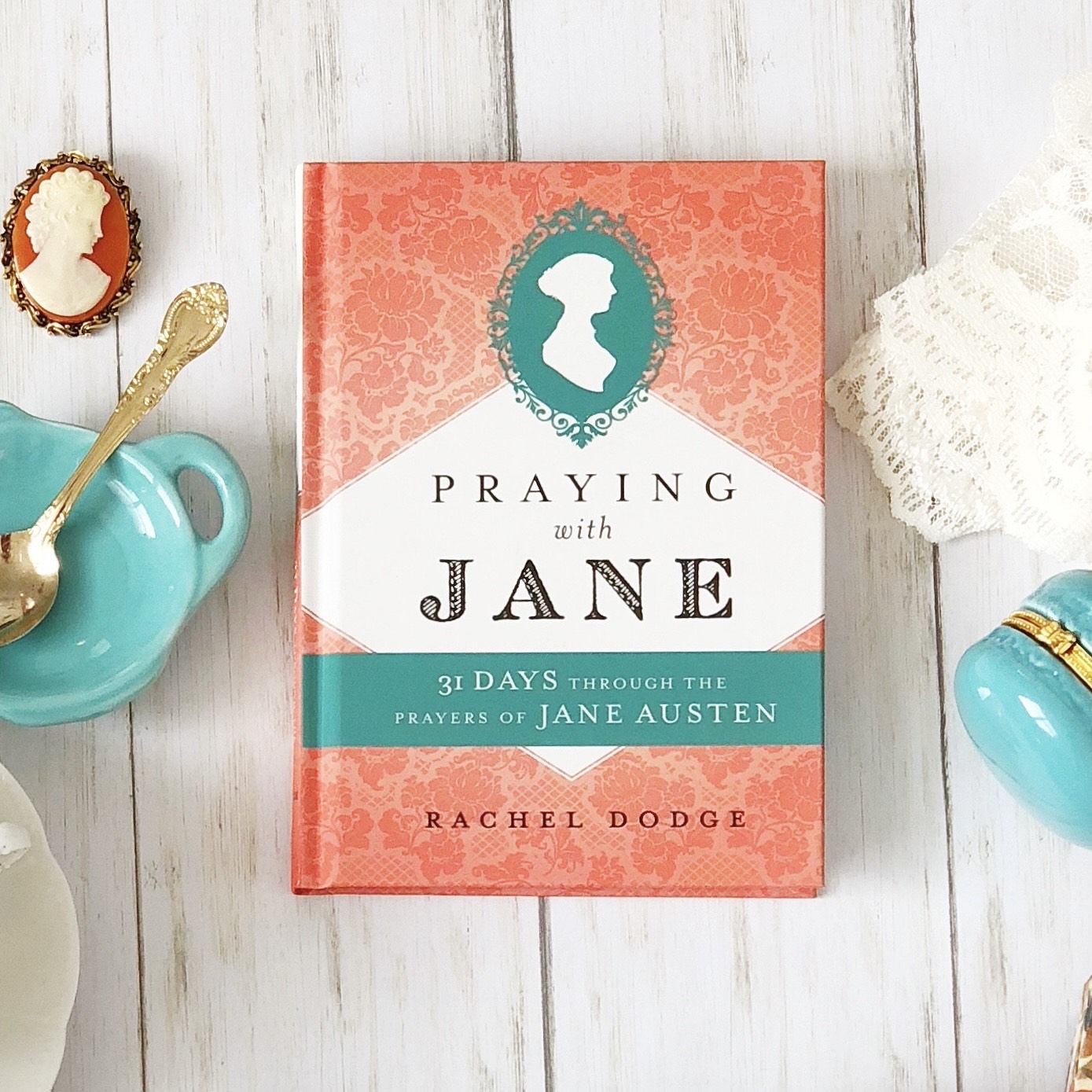
RACHEL DODGE teaches college English classes, gives talks at libraries, teas, and book clubs, and writes for Jane Austen’s World blog. She is the bestselling author of The Little Women Devotional, The Anne of Green Gables Devotional and Praying with Jane: 31 Days Through the Prayers of Jane Austen. Now Available: The Secret Garden Devotional! You can visit Rachel online at www.RachelDodge.com.

Inquiring readers,

I recently purchased a book entitled The Grand Tour of Europe (*1). The tour was a rite of passage from the 17th through 19th centuries for the sons (and in a few cases, the daughters) of aristocrats, the wealthy gentry, and rising merchant classes. Some of the travelers were accompanied by their tutors for serious study, others led merry, somewhat debauched lives with friends. Most returned to their homeland 3 – 5 years later with a sense of continental sophistication. Perfecting their French was an accomplishment absolutely expected of the sophisticated, well-traveled Englishman or woman.

In her review of Masculinity and Danger on the Eighteenth-Century Grand Tour (2*), Michele Cohen mentions Stephen Conway’s reasoning – that the tour:

“Encouraged a ‘specifically European outlook’, which included polish and refinement, appreciation of classical art and architecture, theatre, and music as well as continental cuisine, wine and fashion.”

Austen’s connection to the grand tour was her brother Edward Austen Knight, who took several extended journeys. He wrote his memories in private journals. (The Grand Tour in the 18th & 19th Century | Jane Austen’s World.)

Copies and molds of ancient gems that visitors collected and brought back:

Throughout history, the marvelous gems and cameos cut in Ancient Greece and Rome were admired by collectors for their beauty and perfection. Many visitors who returned from their Grand Tour brought back fabulous paintings, sculptures, and a collection of impressions and casts made from those gems. Others, who were not as flush in the pocket, returned with more modest, portable souvenirs, such as trinkets, fans, and a few impressions and casts.

Tourists in Italy commissioned intaglios and cameos from numerous workshops as souvenirs of their travels: 

“…the demand was chiefly for technically accomplished, accurate copies, often difficult to distinguish from the originals, a feat made possible because the engravers had at hand collections of casts from well-known gems which made copying easy. Such casts, produced in quantity by moulding in materials such as wax and plaster of various kinds, had been circulating among connoisseurs and collectors for centuries in mid-i8th century Rome. Their manufacture in hard-wearing, red-dyed sulphur or white gesso became a major industry…” – The Grand Tourist’s favourite souvenirs: cameos and intaglios, Gertrud Seidmann (*3).

Screen Shot 2024-07-03 at 8.31.09 PM

Madame de Pomadour, 1754, François Boucher

Madame de Pompadour, the mistress of King Louis XV of France, was an influential patron of the arts and helped revive the ancient art of gem carving. She hired the best gem carver to live at Versailles and provided him with the finest tools. Then she asked him to teach her how to carve gems. (National Galleries Scotland.) In this portrait she “is depicted surrounded by a garland of flowers supported by three putti. Scattered at the base of the design are the symbolic attributes of the arts she so enthusiastically supported – painting, drawing, sculpture, architecture, writing and music.” – Google Arts and Culture

The following pair of casts are made in sulfur and sealing wax and are from a private 19th C collection. They are part of a much larger collection. (*1)

Screen Shot 2024-07-02 at 2.56.10 PM

 “During the sixteenth century, ancient gems and cameos circulated widely among collectors, directly or by means of impressions and metal casts.” (*1, p120.)

Shared Knowledge 

Ancient Carved Art Gems in 18th-Century Europe:

“During the 18th century, the arts of Rome and Greece were discovered anew. With their simple linear grace, ancient carved gems in particular inspired artists, scholars, and collectors. Long part of royal or aristocratic collections, these tiny but enduring fragments of the distant past now sparked a popular craze…” – From an explanation near an art display of an Oak Cabinet, at the Walters Art Museum in Baltimore, Maryland.

“The 18th century saw the standardization and sharing of all kinds of knowledge…This oak cabinet is part of the same movement. Its carefully lettered drawers contain thousands of numbered red sulphur wax impressions or casts of ancient and modern carved gems created in the London shop of Scotsman James Tassie (1735-99)…[and] copied from collections around Europe, was the most comprehensive of its kind, numbering about 20,000 casts at the time of his death.” –  From a wall plaque near an oak cabinet displaying James Tassie impressions and casts at the Walters Art Museum.

Screen Shot 2024-07-03 at 7.20.31 PM

Oak Cabinet, – Photo @ Vic Sanborn, February 2024

Click on this link to see a Drawer of Gem Impressions and read a description about it. Their arrangement is typical of the thousands of gems that rest inside the drawers.

[The] carved gems fall into two categories: intaglios and cameos. With intaglios, the design is carved down into the selected material, whereas with cameos, material is carved away so that the design projects upward from the surface. Glass paste copies of carved gems made by Tassie could be used as costume jewelry, seals, or mounted into frames to create innovative window displays.

Screen Shot 2024-07-02 at 3.58.20 PM

James Tassie holds one of his cameos. Portrait by David Allen.

James Tassie, 1735 – 1799. Sculptor and gem engraver | National Galleries of Scotland. Interestingly, Tassie and Allen went to art school together and later shared a house in London. Tassie then invented vitreous glass paste and used it to create small portrait medallions and reproductions of antique gems and cameos. His fame spread, and Catherine the Great became his most important patron. Listen to the Talk | by Liz Louis – The life and work of James Tassie on the National Galleries of Scotland site. 

Smaller collections in smaller cabinets

Not all of the copies were made for large and elaborate collections, as shown in this Portrait of a Lady, painted in oil. (Walters Art Museum, 37.394, Acquired by Henry Walters.)

“On the table in this portrait is a smaller cabinet of impressions of ancient carved gems than the larger cabinet. The unknown woman seems lost in thought…and is presented as scholarly (literate and interested in the Classical past), but also ladylike (fashionably dressed and bonded to a male relative or lover-shown by the miniature portrait pinned to her dress). The portrait can be dated to after 1793, as this is the year that saw the publication of the sheet music, seen rolled on the table, for Peter von Winter’s duet “Con quell occhietto languido non mi” (“With that little languid eye, not to me”). 

The objects included in this portrait tell a story about the interests of the woman portrayed…” 

– Plaque near the portrait in the North Flanking Gallery, Walters Museum of Art. 

About the exhibit at the Walters Art Museum described in this post:

This exhibit in the north flanking galleries was taken down on July 3rd, 2024, and is no longer in view. In its place, a new installation, entitled Art of the Americas, will open in 2025. Some galleries featuring 19th C. art objects, mostly the Walter’s sevres porecelain collection, will still be available . 

Fortuitously, I had made photos of the art objects and the wall signs, which are now taken down but are quoted in full. I’ve also linked directly to the museum’s website for a different description to provide you with a more rounded story. 

In conclusion:

“Returning with a gem on one’s finger or with a precious collection, shipping back cabinets of casts – the later collections often miscellanies of Roman monuments, sculptures and paintings intermingled with gems, almost equivalent to modern photograph albums – was an inevitable part of the scene for the grandest as well as humbler visitors to Italy.” – (*3.)

Sources:

*1 – The Grand Tour of Europe, (2023) Editor Franco Maria Ricci, 167 p. Van Cleef & Arpels  

*2 – Professor Michèle Cohen, review of “Masculinity and Danger on the Eighteenth-Century Grand Tour,” (review no. 2451) 10.14296/RiH/2014/2451 Date accessed: 04 July 2024

*3 – “The Grand Tourist’s favourite souvenirs: cameos and intaglios”, Gertrud Seidmann,  Research Associate, University of Oxford Institute of Archaeology, Delivered to the Society’s History Study Group on 18 November, 1996. JSTOR

*4 – “Madame de Pompadour’s Legacy as a Patron of Arts Is Often Overlooked: A new exhibit explores the creative works of one of history’s most famous mistresses”, Maris Fessenden, Former correspondent, May 12, 2016, The Smithsonian Magazine.

Additional Sources:

James Tassie, Cast Collection, Victoria & Albert (V&A) Museum, London

The Grand Tour: Souvenir Project:  An exploration of culture and memory.

‘Making an Impression’ exhibit highlights ancient engraved gemstones

Also see Artworks by James Tassie at the Walters Art Museum website.