Feeds:
Posts
Comments

Gentle Reader: This Father’s Day weekend, I salute Jane Austen’s father, George Austen. This post, which I wrote three years ago, has been resurrected and updated for this occasion.

Rev. George Austen was by all accounts a handsome man. Anna LeFroy, Jane’s niece wrote,

I have always understood that he was considered extremely handsome, and it was a beauty which stood by him all his life. At the time when I have the most perfect recollection of him he must have been hard upon seventy, but his hair in its milk-whiteness might have belonged to a much older man. It was very beautiful, with short curls about the ears. His eyes were not large, but of a peculiar and bright hazel. My aunt Jane’s were something like them, but none of the children had precisely the same excepting my uncle Henry.”

George Austen was born in 1731. His mother died in childbirth and his father died a year after marrying a new wife, who did not want the responsibility of taking care of the young lad. George then lived with an aunt in Tonbridge and earned a Fellowship to study at St. John’s. Smart, ambitious, and self-made (with the support of his uncle Francis), he received a Bachelor of Arts, a Master of Arts, and a Bachelor of Divinity degree at Oxford. Considered good looking all his life, he was called “the handsome proctor” as he worked as an assistant chaplain, dean of arts, and Greek lecturer while going to school.

George first met Cassandra Leigh in Oxford when she was visiting her uncle Theophilus, a renowned scholar. After marrying Cassandra in Bath, George became rector in several country parishes, including Steventon. The family grew by leaps and bounds, and eventually he and Cassandra had six sons and two daughters.
Shortly after Jane was born, her father said: “She is to be Jenny, and seems to me as if she would be as like Henry, as Cassy is to Neddy.” But the little girl was known as Jane all her life.

By all accounts George and Cassandra Austen had a happy marriage. His annual income from the combined tithes of Steventon and the neighboring village of Deane was modest. With so many mouths to feed, the family was not wealthy. To augment the family income,  George Austen opened a boarding school at Steventon Rectory for the sons of local gentlemen, and sold produce from his farm.

George Austen presents his son Edward to the Knights, who adopted him. This was a common practice in that era. Image from Chawton House.

Rev. Austen, a doting father to all his children, encouraged Cassandra and Jane to read from his extensive library, and taught his boys in his boarding school. For entertainment, the family read to each other, played games, and produced poetry, novels, and plays. James, the eldest son, an accomplished writer and poet, was considered to be the “writer” of the family, especially by his mother, Cassandra, who doted on him. George Austen was proud of his youngest daughter’s accomplishments, and tried to get First Impressions, the first draft of  Pride and Prejudice published. The “Memoir of Jane Austen” by Edward Austen-Leigh contains a letter from George Austen to Mr. Cadell, publisher, dated November 1797, in which he describes the work as a “manuscript novel comprising three volumes, about the length of Miss Burney’s ‘Evelina'” and asks Mr. Cadell if he would like to see the work with a view to entering into some arrangement for its publication, “either at the author’s risk or otherwise.” Unfortunately, nothing came of this query, but P&P became hugely popular among the friends and family who read it before it was published. The original 3-part manuscript no longer exists, and a much shorter form of the novel was finally published in 1813, long after George’s death and only four short years before Jane’s fatal illness.
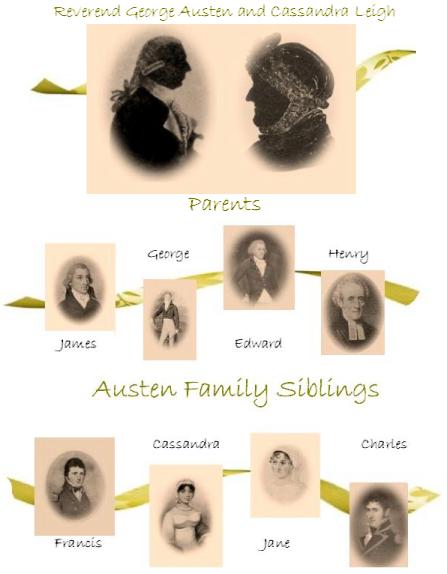
Rev. George Austen died unexpectedly in Bath on  January 1, 1805, where the Austen family had moved after living in Steventon for over 30 years. This move did not sit well with Jane, who, as legend goes, fainted when she learned that the family was moving to Bath. (The silhouettes above are of George and Cassandra, who had not aged well). Rev. Austen did not linger long after falling ill, and on January 21,  Jane Austen would write sorrowfully to her brother, Frank, one of two sailors in the family:

“We have lost an excellent Father. An illness of only eight and forty hours carried him off yesterday morning between ten and eleven. His tenderness as a father, who can do justice to?” – Sir Francis William Austen

Rev. Austen was buried in St. Swithin churchyard in Bath. The inscription on his grave reads:

Under this stone rests the remains of
the Revd. George Austen
Rector of Steventon and Deane in Hampshire
who departed this life
the 1st. of January 1805
aged 75 years.”

Double click on this grave marker to read the words. (From: Find a Grave Memorial. Image of George and his grave is from this site.)

More on the topic:

The Austen Family:

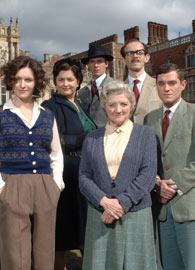
I should have guessed the ending of The Secret of the Chimneys, the latest Miss Marple episode on PBS on Sunday, June 20, but I so enjoyed going along for the ride that I deliberately missed the cues until the very end.  The mysterious County Ludwig Von Stainach wishes to purchase The Chimneys, a house that has seen better days. Assembled at the mansion are a motley sort, even for a Miss Marple mystery. Once again things go bump in the night and someone is murdered.

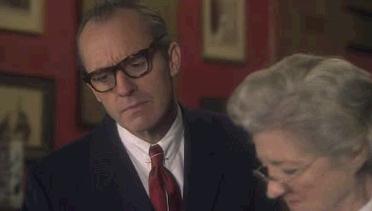
Enter Finch, Chief Inspector from Scotland Yard. Played by the divine Stephen Dillane, who portrayed Schmidt in God on Trial and Thomas Jefferson in John Adams. Finch is a particularly refreshing official, for he respects Miss Marple’s detective skills and consults her as they both, well, she solves the mystery.

I won’t spoil the plot for you other than to say that this was one of the more satisfying Miss Marple mysteries that I have watched. If you missed the episode, or would like to see it again, PBS will show it online from June 21 to July 4th.

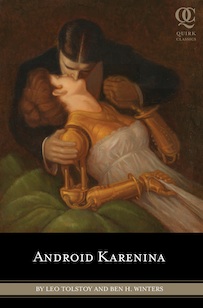
Inquiring readers: Ben H. Winters bravely left a comment on my in-depth analysis of his new steam punk mashup, Android Karenina, and was kind enough to answer a few questions.

Hi Ben: Thank you for agreeing to participate in this Q&A. I must say that you made a fan out of me when you left that gracious comment on my blog.

Even though I was unable to complete more than one paragraph in the first Chapter of Android Karenina, I thought that you managed to capture an amazing amount of angst and subtext in the opening lines. Did you want readers to learn anything from your book?

Well, yes and no. First and foremost, it’s a work of popular entertainment, so the goal is for readers to have a good time — to laugh, to be drawn in by the characters and pulled along by the story.

At the same time, there is some food for thought to be had here, if a reader is up for it. For example, Tolstoy’s original is full of anxiety about how technologies like the steam engine and the telegraph are transforming society. By vastly accelerating the pace of that technological change, and deepening the violence that surrounds it, I’ve juiced that anxiety, and (potentially) asked the reader to consider how rapid technological innovation is changing our contemporary society.

You should try reading it again. The second paragraph is amazing.

Click here to read the rest of the interview ...

Readers of the Regency era are familiar with Beau (George Bryan) Brummell’s elegance and sartorial splendor. He was born on June 7, 1778, the younger son of William Brummell, private secretary of Lord North.

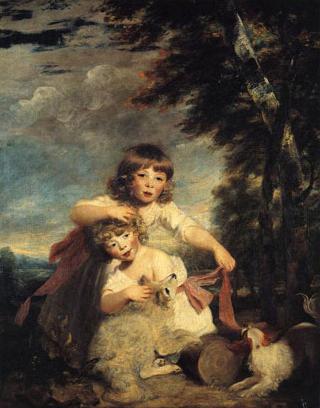
William Brummell and his younger brother George, by Joshua Reynolds, 1782

In 1793 George attended Eton, where he met the Prince of Wales. Even back then Brummell was known for his sense of fashion and wit. Tall and fair in looks, he cut a neat and enviable figure.

Beau Brummell as a young man, 1886 illustration

Only 16 when is father died in 1794, George quit Oriel College in Oxford and joined the 10th hussars. Two years later he was promoted to captain. During his service, Brummell fell from his horse, acquiring a broken nose that healed crookedly to the side. The new nose added a harsh element to his soft face, making it less than perfect.

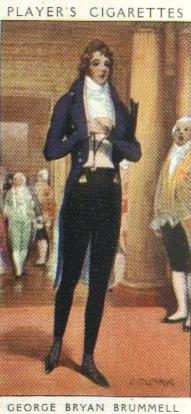
Idealized image of Brummell in a Player's cigarette ad.

While some felt that the Beau’s less than perfect nose added character to his features, others, like Julia Johnstone, a famous demimondaine of the era, felt that it had ruined his looks.

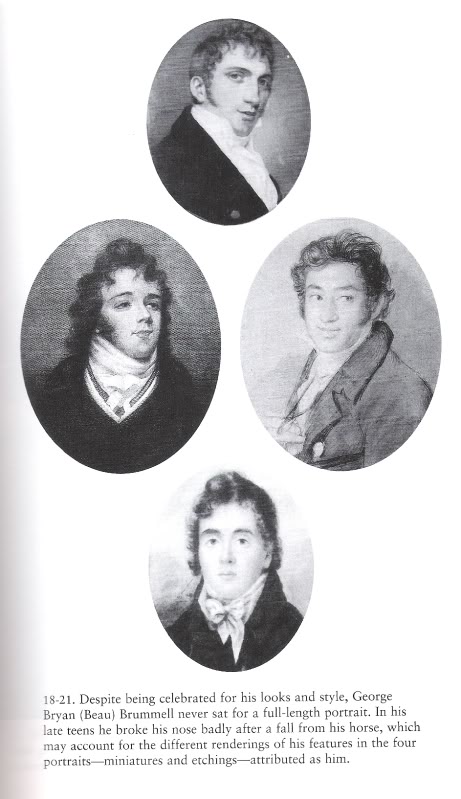
Image from Beau Brummell: The Ultimate Man of Style via the London Lounge

According to Ian Kelly, author of Beau Brummell: The Ultimate Man of Style, the few sketches and miniatures that remain of Brummell show radically different interpretations of the dandy’s features. Was the broken nose responsible for these inconsistencies?

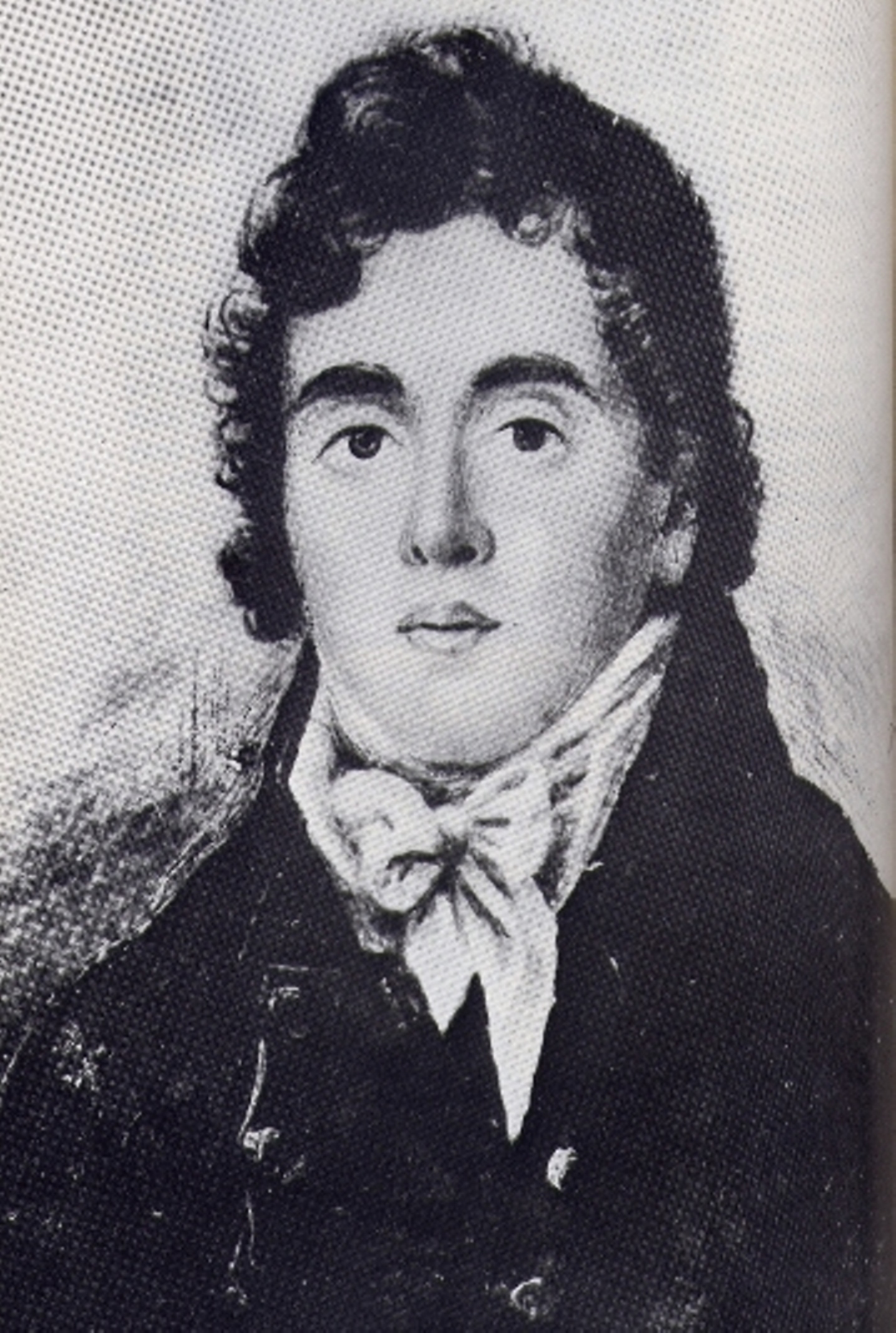
Interestingly, these two images do not depict a man with a broken nose.

Beau Brummell retired from service in 1798 and shortly thereafter came into his property, a moderate 30,000 pounds that would not go far in supporting his gambling habits. But with his knack for making friends in high places (the Prince Regent and his set) and his sartorial gifts, Brummell reigned supreme as the style arbiter of his era, inspiring generations of men to dress with simplicity, taste, and style.

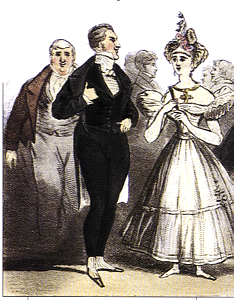
Brummell in 1815 at Almack's, the year he insulted the Prince Regent. This image must have been made later, for the style of the woman's dress was popular after 1825, when Brummell was already exiled in France.

In 1816, Brummell’s debts forced him into exile in France, where he died in 1840.

Brummell, broken and broke, in Calais

More on the topic:

Book page image from the London Lounge

Inquiring reader: Jean at The Delightful Repast is a freelance writer who writes mostly about food, weddings, etiquette and entertaining for numerous publications. Her blog reflects her culinary heritage–an English grandmother, a Southern grandmother and a mother who could do it all. Jean’s love of reading and cooking (often done simultaneously) is definitely in her genes. She has (delightfully) offered to share her thoughts about tea in Jane Austen’s day and her recipe for Sally Lunn buns!

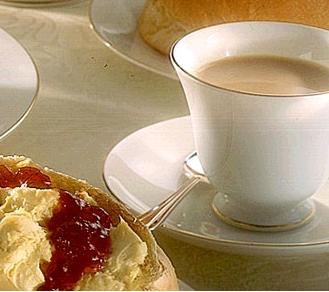
It came as quite a disappointment to me that day long ago when I, an avid afternoon tea aficionado, realized that afternoon tea was not part of Jane Austen’s life. (I am still taken aback by the thought as I write those words!) Tea drinking, popular at Court since the 1660’s, had by the Regency Period long since trickled down through all strata of society. Jane and her family no doubt enjoyed a nice cup of tea at least twice a day, at breakfast and in the evening after dinner.

Tea, being the magical all-purpose beverage that it is, was surely drunk at other times as well. I drink tea a minimum of four times a day. My grandmother Elizabeth (from the Lake District) drank tea several times a day, including once in the middle of the night. Her mother Mary Ann was constantly putting the kettle on. And it was Mary Ann’s grandmother Mary who was a contemporary of Jane Austen’s, though at the other end of the country.

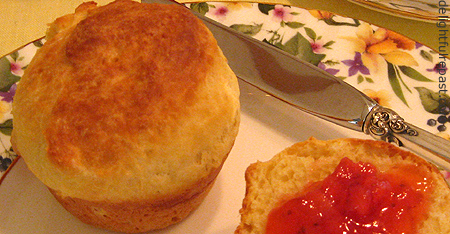
There are a number of things Jane might have had with her tea, including hot, buttered Sally Lunn buns, good with both sweet and savory toppings. Those made today in Bath are very large, perhaps six inches across and four inches high. My own version, which I’m sure Sally Lunn’s in Bath would scorn as an inadequate imitation, is much smaller. I’ve made them as large as a hamburger bun but, preferring them smaller yet, usually make them in a muffin tin.

Sally Lunn Buns
(Makes 18 )

4 packed cups (20 ounces) unbleached all-purpose flour

1/3 cup sugar

2 1/4 teaspoons (1 package) instant yeast

1 1/2 teaspoons salt

1 stick (1/2 cup) unsalted butter
4 large eggs

1 cup milk

In medium bowl (I use a 2-quart glass measure), whisk together flour, sugar, yeast and salt. In small saucepan, melt butter.

With electric mixer, beat the eggs until fluffy and pale lemon yellow, about 5 minutes. Add the milk and beat until smooth, about 1 minute. By hand with a dough whisk or wooden spoon, add the flour mixture to the egg mixture in three additions, alternating with the melted butter and beginning and ending with the flour mixture. Cover with lid or plastic wrap. Place in refrigerator for at least 24 hours and up to three days.

About 2 1/4 hours before serving time, remove dough from refrigerator. Stir down the dough, just a few strokes, with a wooden spoon. With a 1/4-cup measure or scoop sprayed with cooking spray, scoop dough into well-greased or cooking-sprayed standard muffin tins. Lightly butter a sheet of plastic wrap and place, buttered side down, over the buns. Let rise until puffy but likely not doubled in volume, about 1 3/4 hours. During last 15 minutes, preheat oven to 375 degrees.

Uncover buns. Bake at 375 degrees about 25 minutes, or until golden brown. Transfer tins to wire racks and let cool for 5 minutes. Turn the buns out of the tins onto the racks and serve warm or continue to cool before storing.

By Jean at The Delightful Repast at http://delightfulrepast.com/