Feeds:
Posts
Comments

faros-daughterInquiring reader: Faro’s Daughter is reviewed by Lady Anne, my good friend and one of Georgette Heyer’s biggest fans.

Max Ravenscar is one of Georgette Heyer’s favorite hero types: he is 35 years old, single, and the head of his family for many years. He is a powerful athlete and superb horseman. He is harsh featured, strong-willed, and suffers no one to cross his will. And, oh yes, even more importantly, he is extraordinarily, amazingly wealthy. Deborah Grantham is also a favorite type: well-born and gently raised, but her family has suffered reverses, and she is forced to make her way. Her father was a military man, but more importantly to our story, a gamester. Her aunt, with whom she resides since her father’s death, is a widow forced to make ends meet by running a private gaming club. She was successful on a small scale, but is in no way equipped to run a profitable business, and inevitably, has fallen into debt.

Max’s nephew Adrian has fallen hard for Deb Grantham, and his mother, Max’s aunt, one of the women who depend on Max to keep their worlds untroubled, implores him to extricate the young man from this potential pitfall. Deb Grantham, a lovely 25 year old Juno-esque blonde, has a strong will and temper, along with a finely tuned moral code and sense of her own worth. At their first meeting, Ravenscar is surprised by her, but also beats her badly at piquet. The following day, he offers her money to turn his nephew loose. Deb has been playing with Adrian to keep another suitor, one who wishes to make her his mistress, at bay. Incensed at Max’s blunt offer, she plays a role that suits what he thinks she is, rather than showing her very real anger. Predictably, they show each other their worst sides, misconstrue actions, get into and out of scrapes, forestall any serious problems, and inevitably, end up in each other’s arms.

Other characters include the raffish sidekick, her father’s friend and confidante who is devoted to Deb, a spoiled younger brother, who is appalled at the slide into not-quite-respectable territory his aunt and sister have begun, an enchanting younger step-sister who gives her older brother something to think about, and a very young and foolish ingénue who is not so foolish as to allow herself to be married to a far older man of worse than dubious reputation. It is a great mix and a lot of fun.
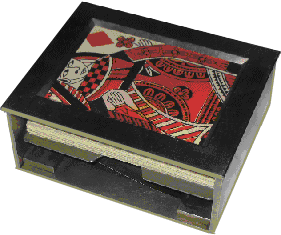
Faro Dealing Box

Faro Dealing Box

Along the way, Heyer, who knows her periods well, reveals some of the cracks in the world of upper class Eighteenth Century England. The wellborn do not work; their money is inherited. If the families waste their fortunes, the choices for their children are harsh. Improvident parents marry children off to the highest bidder they can find, no matter how unsavory the reputation. Few opportunities present themselves for those girls who do not marry: companion or governess for the not so lucky. Deb Grantham shows this when she responds to Ravenscar’s comment that she is accomplished. “No,” she says, “drawing, singing or playing an instrument are accomplishments.” She means of course, suitable for a young lady. She was not fortunate to acquire those skills, but instead has learned card games like faro and piquet. She does not expect to marry because of her slightly tarnished reputation. Max is cynical in part because he has been the head of his family since far-too-young an age. Not only has he had too heavy a burden caring for his various family members, but ambitions mamas trying to marry off their daughters have disgusted him with their headlong pursuit of his name and his fortune. Naturally strong-willed, no one has crossed him in a long time. Deb’s expert fencing with him, whether playing cards or pitting her will against his, comes as a not entirely welcome surprise. They are equally matched; he may have doubts about her eligibility to marry into his family, but her behavior actually is more honorable than his. When he plays for high stakes against Lord Ormkirk, his lordship is drunk. The race, for breathtakingly high stakes, is against a man who he knows has inferior driving skills. It’s all right; both his competitors are bad men, but Deb, for all that she is plays in her aunt’s gaming establishment, would not take unfair advantage. She cannot afford to.
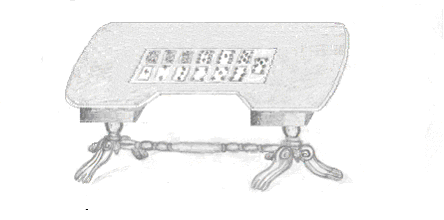
Faro Betting Board

Faro Betting Board

But, being a rollicking romance, all ends well, and Deb can stop playing faro, Max will pay her aunt’s debts, and everyone ends up happy. Including Georgette Heyer’s loyal readers.

About Lady Anne, the reviewer: A confirmed Janeite and co-founder of Janeites on the James (our Jane Austen group), an expert on all things Georgette Heyer and the Regency Era, a lady well read and well bred, Lady Anne is known for her discerning eye for both literature and her breath-taking garments made by a select mantua maker. Cloth’d and coifed, Lady Anne knows few equals, and when she enters a room she is a commanding presence. She is also Ms. Place’s special friend and confidante.

To read more about gambling during this era, please read the post that sits below this one or click here.

Our Other Georgette Heyer Reviews Sit Here:

These Georgette Heyer books, available this holiday season, will be reviewed on this blog and Jane Austen Today.
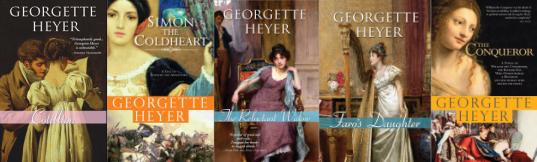
Cotillion, Simon the Coldheart, The Reluctant Widow, Faro's Daugher, and The Conqueror

Cotillion, Simon the Coldheart, The Reluctant Widow, Faro


For centuries, gambling was viewed as a vice typical of the upper classes, but during the Regency this way of passing the time became an even more accepted practice. Card games were played at private parties and at public assemblies, where both sexes indulged in these activities. While the games were often harmless and played for fun, high stakes betting could lead to vice, shocking losses, and crippling addiction. Men gambled and lost vast sums in the men’s clubs in St. James’s, often losing their inheritance. Politicians seeking to deter such an exchange of lands, which undermined the stability of property, held a double standard towards those whom they deemed worthy of winning such wealth:

Regency card party

Regency card party

If a landowner chose to ‘make a sport’ of his property and to lose it, say, at the game of hazard, to another son of broad acres, that was his prerogative. But if, on the other hand, he was foolish enough to throw away what he had inherited to low-born adventurers or, worse, to Jewish moneylenders, the loss was invariably considered serious. The nation’s rulers judged it a threat to their own kind when an estate or any significant portion of one passed into the ‘wrong hands’. The Regency Underworld, Donald A. Lowe, p. 128, ISBN 0-7509-2121-8

Cruikshank, Interior of Modern Hell

Cruikshank, Interior of Modern Hell

One gets the sense that Jane Austen and her social set played cards for amusement and to wile away a pleasant hour or two with friends and family. For some ladies, gambling for profit was an acceptable way of supplementing a fixed income:

Well-off women with no other income sometimes allowed their houses to be turned into gambling houses. The two best known at the end of the eighteenth century, Lady Archer and Lady Buckingamshire, were only the most prominent of a circle of “faro” ladies who owned banks in private homes.- Roll the Bones: The History of Gambling, David G. Schwartz, p. 162, ISBN 1-592-40208-9

Although the two ladies claimed that their aristocratic birth gave them license to run gambling operations, they were subject to ridicule. Lady Buckinghamshire slept with a cache of weapons to protect her bank, and Lady Archer was known for wearing too much makeup. Faro began to decline in popularity, and by the early 19th century, young ladies in boarding school were learning whist and casino. Young gentlemen continued to play hazard, baccarat, and whist in men’s gaming clubs, also known as Hells.

ladygodinaprint

The politician Charles Fox, able to play for long periods without sleep, lost his fortune at the gaming tables. Horace Walpole described one of Fox’s marathon gambling sessions:

He had sat up playing Hazard at Almack’s from Tuesday evening, 4th February [1778], till five in the afternoon of Wednesday 5th. An hour before he had recovered £12,000 that he had lost, and by dinner, which was at five o’clock, he had ended losing £11,000. On Thursday he spoke, went to dinner at past eleven at night; from thence to White’s, where he drank till seven the next morning; thence to Almack’s, where he won £6,000; and between three and four in the afternoon he set out for Newmarket. His brother Stephen lost £11,000 two nights after, and Charles £10,000 more on the 13th; so that in three nights the two brothers, the eldest not twenty-five, lost £32,000. – Lowe, p 129.

Fox’s father, Lord Holland, paid off his son’s debt to the princely tune of £140,000. (In today’s terms this sum would be astronomical – depending on the inflation converter you used, you would multiply the sum by 97 to get at the value of 1780 money today.) The Prince of Wales, in rebellion against his frugal father, modeled his own conduct after that of Fox. Known for his extravagant lifestyle, Prinny set the pace for hedonistic living as Regent and King.

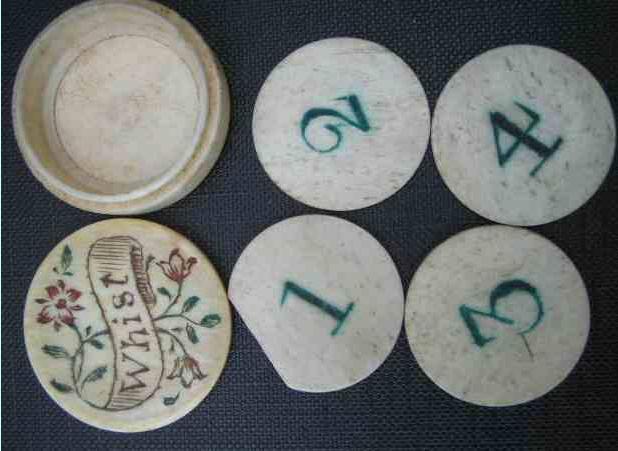
whist-markersWhist Markers

More links on gambling and games in the Regency Era:

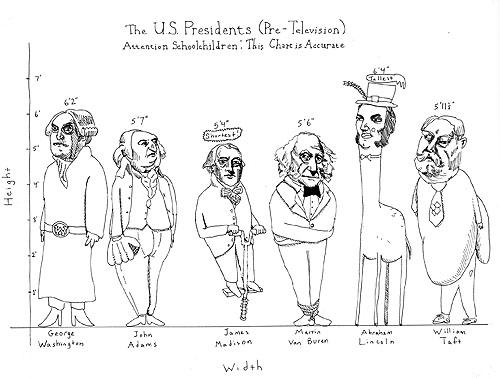
Carolyn Freeman Travers, Research Manager at Plimoth Patuxet Museum, wrote in an article entitled, “Were They All Shorter Back Then?” that the “average height for an early 17th-century English man was approximately 5′ 6″. For 17th-century English women, it was about 5′ ½”. While average heights in England remained virtually unchanged in the 17th and 18th centuries, American colonists grew taller.”

Note: Update to links May 2022: PDF Document from Evergreen Log, 2006: Where They All Shorter Back Then?

This post from History Hoydens provides more detail about the Georgian era.

Phys.org traces the height of an average Englishman over 2000 years.

Early presidents
Image from “Does Height Matter in Politics?”

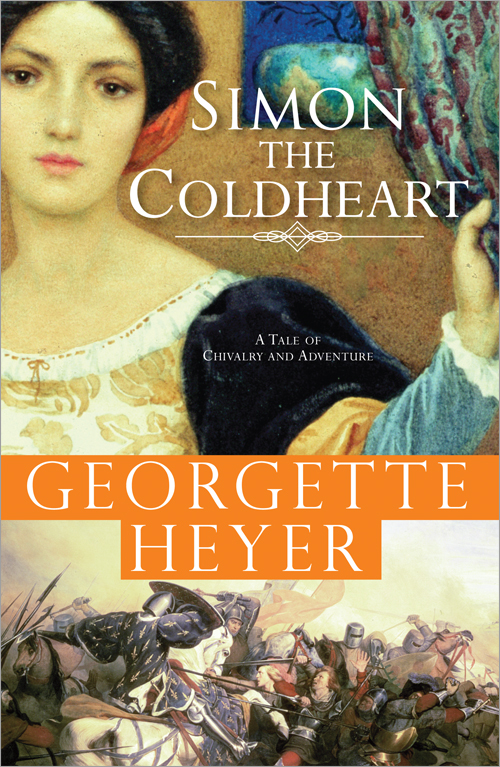
Layout 1Inquiring readers, Simon the Coldheart, an early Georgette Heyer novel, was reviewed by my co-founder of our Jane Austen book group. Lady Anne would be the first person to admit that she is addicted to reading Ms. Heyer’s novels. Her collection of Georgette Heyer’s novels is complete – she owns all her regency romance novels, mysteries, and historical novels. (With 51 titles, that is saying something.)  This is Lady Anne’s review of one of Georgette Heyer’s earliest novels, which will be reissued by SourceBooks just in time for this holiday season.

No one gets period better than Georgette Heyer. Whether she is writing about England in the Regency era or the 15th Century, she has the details and the language perfectly.

In Simon the Coldheart Heyer uses period language to excellent effect. The story, characterized as a tale of chivalry and adventure, tells of young Simon, a base-born bastard of one Geoffrey of Malvallet, as he is off to make his way in the world. Our young hero is not one to feel sorry for his accident of birth, nor does he look to his father to support him. Simon instead styles himself Beauvallet – a nice little wordplay — and seeks to become a member of the household of one of his father’s enemies.
Matters would have gone ill with Simon but for the appearance of a boy, a little younger than himself, who came strolling towards them, followed by two liver-coloured hounds. He was dark, and magnificently clad, and he carried himself with an air of languid arrogance.

“Hola there! he called, and the soldiers fell away from Simon, leaving him to stand alone, arms folded and head turned to survey the newcomer.

The boy came up gracefully, looking at Simon with a questioning lift to his brows.

“What is this?” he asked. “Who are you who strike our men?”

Simon stepped forward.

“So please you sir, I seek my Lord the Earl.”

One of the men, he whom Simon had dealt that lusty blow, started to speak, but was hushed by an imperious gesture from the boy. He smiled at Simon with a mixture of friendliness and hauteur.

“I am Alan of Montlice,” he said. “What want you of my father?”

Simon doffed his cap, showing his thick, straight hair clubbed across his brow and at the nape of his brown neck. He bowed awkwardly.

I want employment, sir, he replied.

Simon is strong and sure of himself. His great confidence amuses and charms Fulk of Montlice, in whose household he seeks to live, and he is awarded a place. Fulk’s son is about Simon’s age, and the two very different young men become close friends. No jealousy or tiresome infighting here.

The book is set in the early 15th Century, and before long, we find ourselves with King Henry IV and young Prince Hal fighting Hotspur and Owen Glendower, in that famous uprising. Young Simon proves himself in battle – no surprise – and comes to the rescue of his half-brother, the young Geoffrey of Malvallet. The rescue earns him a knighthood and begins another surprising friendship, this time with his half-brother. During the next few years, Simon is a knight in the household of Fulk, and young Alan of Montlice, always in love, despairs over Simon. But Simon is looking for a home. On the day that he finds a baronetcy in disarray, he also learns of a plot against King Henry. Gathering some of the men of Montlice around him, he goes to London to tell Henry, and so is awarded the home he needs. His father comes to ask him to live in his household, but he refuses. Because he goes his solitary way, he earns the soubriquet of Coldheart.

But here, Heyer is on firm psychological ground. The base-born child of a servant-girl who died in his childhood is likely to keep his own council and wish to establish his own line. At our first meeting of Simon he claims to be going to his goal, and throughout the book, he stays clear on that. He does not have the luxury of excuses, or whining, or wasting time over women or poetry. He is intent on making his way. It could be an interesting portrait of a complex person, but Heyer only alludes to it. Her business is with the history, and the fun of a group of young men.

Soon enough, Prince Hal, now King Henry V, calls on Simon, his half-brother Geoffrey, and his great friend Alan to assist with the war in France. This is Shakespeare’s Henry at Agincourt, and the battles that Simon and his men fight are a continuation of that part of the Hundred Year’ War. Like his King, Simon meets a strong-willed Frenchwoman at Belremy, and in the end, of course, the lady Margaret falls before Simon and Simon is Coldheart no more. Ultimately, King Henry makes Simon his lieutenant and warden of the lands and marches of Normandy. Heyer, ever the careful scholar, notes in a footnote that in fact the Earls of March and Salisbury held that title.

Simon the Coldheart is an early book, originally published in 1925. As always, Heyer’s details describe the period, and in this book, she takes the further step of using language suited to the time: slightly inverted, filled with pomp and chivalry. It adds greatly to total experience. The book is a romp, fun for those of us who loved the transformation of Prince Hal into Henry, and fun for anyone who would want to read of that bygone age of chivalry. Click here to order the book.

Click on More Book Links Here:

Our Other Georgette Heyer Reviews Sit Below

These Georgette Heyer books, available this holiday season, will be reviewed on this blog and Jane Austen Today.

Cotillion, Simon the Coldheart, The Reluctant Widow, Faro's Daugher, and The Conqueror

Cotillion, Simon the Coldheart, The Reluctant Widow, Faro's Daughter, and The Conqueror


Two generations gone—gone in a moment! I have felt for myself, but I have also felt for the prince regent. My Charlotte is gone from the country—it has lost her. She was a good, she was an admirable woman. None could know my Charlotte as I did know her. It was my study, my duty, to know her character, but it was also my delight. – Prince Leopold to Sir Thomas Lawrence after the death of his wife.

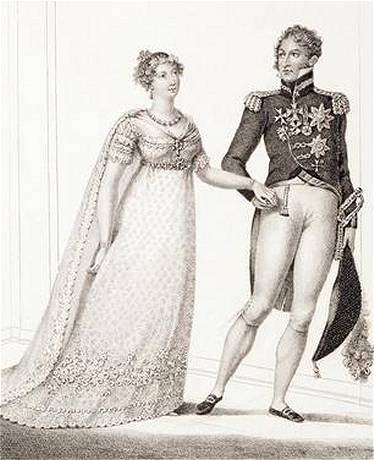
Princess Charlotte and Prince Leopold at their Wedding

Princess Charlotte and Prince Leopold at their Wedding

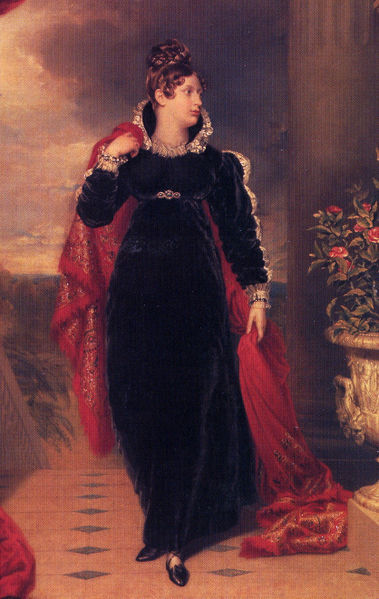
Princess Charlotte’s death after giving birth to a still-born son on November 5, 1817 elicited a national outpouring of grief that was unprecedented in Britain, and her funeral drew massive mourning crowds on a scale similar to those who thronged to Princess Diana’s funeral in 1997. In stark contrast to her father, the Prince Regent, who was universally despised, the young princess was extremely popular, and her pregnancy was closely followed by an enthusiastic public. Charlotte, the only child of George, Prince of Wales (later Prince Regent and George IV) by his wife Caroline of Brunswick, had been married a mere seventeen months before to Prince Leopold of Saxe-Coburg-Gotha amid pomp and splendor. A dutiful young Regency wife, she became pregnant almost immediately, but suffered two miscarriages before carrying her third child to full term. Though her grandfather, George III, had 7 sons and 5 daughters, Charlotte was the only legitimate grandchild. Thus this pregnancy was a truly significant one.

Charlotte  began her pregnancy as a healthy and robust young woman, but after months of blood-letting and a strict diet, an accepted medical practice prescribed by her physician, Sir Richard Croft, she grew feeble. Her death after her tortuous two-day, 50-hour labor would precipitate a new age in medicine,

Princess Charlotte

Princess Charlotte

ending arch-conservatism in obstetrics. At the time that Princess Charlotte gave birth there were two schools of medical thought in delivering a baby: intervention and non-intervention. During the previous century, anatomical knowledge about the birth process increased. Henrick Van Deventer showed that the female pelvis was unyielding during labor, and forceps were introduced. Intervention during labor was still crude, largely consisting of extracting the baby with forceps during a breech birth in order to save the mother’s life. A cesarean section, which might have saved the baby, would surely have resulted in Princess Charlotte’s death.

Princess Charlotte’s physician had married the daughter of a prominent physician who had trained him and who belonged to the non-intervention school of obstetrics. On the evening of November 3, the Princess’s water broke. Although Dr. Croft had accurately diagnosed a breech birth, he decided not to use forceps during the first stage of labor. He also did not administer pain killers. Prince Leopold was so concerned about his wife’s labor that he rarely left her side.

Throughout the Princess’s labour, Royal Physicians, courtiers and ladies-in-waiting had been in constant attendance. The Archbishop of Canterbury and the Home Secretary waited in a downstairs room, while her husband, Prince Leopold, was often at her side. The first stage of her labour, lasting 26 hours, was characterised by inefficient contractions of the uterus – there was very slow progress towards the full dilatation, or opening up, of the cervix that is an essential step in natural birth. The second stage of labour, that part involving the actual pushing of the baby out into the world, which at the beginning of the 21st century we believe should be accomplished in two or three hours, dragged on for twenty-four. The attending doctors were concerned by the appearance of meconium, the dark green bowel contents of the newborn – meconium detected in the course of labour suggests that the infant is becoming distressed. And indeed the child, a boy, was stillborn. Following the birth there was a brisk haemorrhage which undoubtedly contributed to the Princess’s demise. Despite the best efforts of the galaxy of medical talent gathered at Charlotte’s bedside, the royal line could not be secured. So depressed by the tragic event was the Royal Physician Sir Richard Croft that he later committed suicide. – De Costa

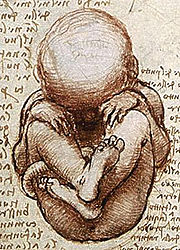
leonardo-fetus-in-wombAfter 50 hours, Princess Charlotte delivered a stillborn 9-pound son. His head had been in a sideways position and was too large for her pelvis. After the delivery Charlotte seemed to do well at first, and she was even given some port wine to drink after two days without food (she mentioned later that the alcohol made her tipsy), but after several hours she became restless, had difficulty breathing, and her pulse became rapid and feeble. She developed malaise and weakness, followed by somnolence then agitation, with progressive worsening and death. Five and half hours after her delivery she died from post partum haemorrhage and shock. Three months after this event, Sir Richard Croft committed suicide, unable to live with the resulting criticism and the knowledge that he had been responsible for the two deaths. Later it was concluded that:

Physicians attending her had failed to act with effective means at their disposal, hastening her demise. In the aftermath of this widely publicized tragedy, “rational intervention” — best represented in the work of Davis — gained force once again. This development included the use of ergot (to stimulate uterine contraction during labor and for expulsion of the placenta), experimentation with blood transfusion, and the introduction of anesthesia for obstetrics by Simpson, all intended to make birth safer, as well as less painful. – Obstetric Literature and the Changing Character of Childbirth

For my other post about medicine in this era, click on: The Physician in the 19th Century

For more information about this triple tragedy and about the Princess, click on the links below: