Feeds:
Posts
Comments

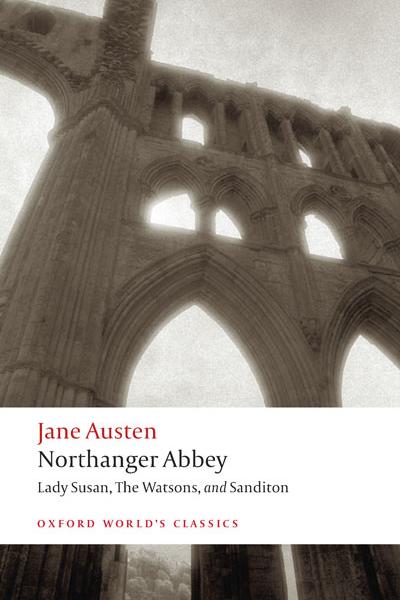
The reissue of the Oxford World’s Classic Northanger Abbey includes Jane Austen’s lesser known works: Lady Susan, The Watsons (a fragment), and Sanditon (Jane’s unfinished last work). As with Pride and Prejudice, this new publication comes with an introduction (excellently written by Claudia L. Johnson, but included in a previous edition) and a wealth of resources in the form of explanatory notes, source bibliography, and appendix. So much has been written about Northanger Abbey by experts whose knowledge of that excellent work eclipse mine, that I will concentrate on one of Jane’s more fascinating but lesser known earlier works, Lady Susan. This book was written around 1793-1794 (there are several date estimates) but it was not published until 1871 in Edward Austen-Leigh’s A Memoir of Jane Austen, almost a half century after Jane Austen’s death. While Jane recopied the book she did not revise it; it was evidently never meant for publication.

Author Joe Queenan included Lady Susan in his 2004 volume, The Malcontents: The Best Bitter, Cynical, and Satirical Writing in the World, Explaining why he chose this short work for his book, he writes:

Why did I choose Jane Austen’s less famous and somewhat atypical Lady Susan rather than an excerpt from Sense and Sensiblility, Emma, or Pride and Prejudice? Because as much as possible I wanted to use complete works rather than fragments, and because this little jewel is unbelievably vicious. Also , it is a superb example of the novel composed entirely of letters, and one can never have too many of those in a collection. – p 22.

If you have not read Lady Susan before, be prepared to encounter an anti-Jane heroine; a beautiful, manipulative, calculating, and self-indulgent widow; a woman so cold-hearted in her machinations that she puts her own interests ahead of her daughter’s, or anyone else’s for that matter. Having become accustomed to the innate goodness of Jane’s heroines, I had to read the following passage twice before I fully understood that Lady Susan was made of different stuff than Elizabeth Bennet or Anne Elliot:

I have been called an unkind mother, but it was the sacred impulse of maternal affection, it was the advantage of my daughter that led me on; and if that daughter were not the greatest simpleton on earth, I might have been rewarded for my exertions as I ought.

Sir James did make proposals to me for Frederica; but Frederica, who was born to be the torment of my life, chose to set herself so violently against the match that I thought it better to lay aside the scheme for the present. I have more than once repented that I did not marry him myself; and were he but one degree less contemptibly weak I certainly should: but I must own myself rather romantic in that respect, and that riches only will not satisfy me.

In this short passage Lady Susan reveals her true thoughts to her friend, Alicia Johnson, an equally cool and calculating character.  Lady Susan pretends to be a loving mother and friend, but her frank words belie her actions, and she clearly exults in her talent for manipulating a situation (or man) to suit her needs. She lies without compunction to her sister-in-law, Catherine, a woman she disliked so intensely that she tried to prevent her marriage to her brother. Catherine, no simpering fool, mistrusts her unwanted house guest, and in most situations sees right through her.
The cat and mouse games played by the main characters set up the emotional tension in this novel. Lady Susan believes she is fooling everyone, although she is not. Her brash plans quickly unravel as her equally savvy opponents outmaneuver her, but before her downfall, she collects victims along the way, in particular Mrs. Mainwaring, whose marriage is destroyed by Lady Susan’s flirtation with her husband. Reginald de Courcy, Catherine’s brother, arrives on the scene full of mistrust and dislike for the non-grieving widow. Lady Susan effortlessly wraps him around her little finger until he learns the truth about her.  In the end she marries Sir James, the young and foolish but rich young man she had chosen for her daughter.

As Jay Arnold Levine pointed out in ‘Lady Susan: Jane Austen’s Character of the Merry Widow, Lady Susan is reminiscent of the lascivious and hypocritical widows written about in 18th century Restoration literature, like Fielding’s Lady Booby and Tom Jones‘ Lady Bellaston.  “Dangerously endowed with experience and independence”, Lady Susan “must be regarded as the culmination of the earlier phase of literary burlesque.”

Susan Anthony’s point of view differs from Mr. Levine’s, although it is not incompatible with it. In ‘The Perfect Model of a Woman’: Femininity and Power in Lady Susan, she writes:

Imperceptibly, we are drawn into this sparser imaginative world. We become alert to the cross-play of purposes, aware of suspect motivation, hidden agendas, and the deceptiveness of Language. Lady Susan gradually exposes the politics of family life and the machinations of women in a conservative, restrictive, and male-dominated society, founded on inherited wealth and policed by gossip: the option of ‘the world.’…Lady Susan makes apparent that money, power, and the freedom to act independently are the prerogatives of men. For a woman, even wealth cannot empower: it serves simply to license any fortune-hunter she is foolish enough to marry.

Jane’s epistolary novel is a remarkable and sophisticated achievement for a budding 20-year-old author. There are faults to be sure (Claudia Johnson calls Lady Susan’s world “cartoonish”), and the ending is abrupt and switches from the first-person letter to the third-person narrative, but one cannot mistake Jane Austen’s genius in telling this tale of a woman who “has the power to inflame” but not the power to direct her life. The book ends unhappily for our protagonist. As Susan Anthony observes, “Disappointment of a bad husband is Lady Susan’s fitting punishment,” but before that denouement, the reader has been taken on a splendid literary ride.

More Links:

  • ‘Lady Susan: Jane Austen’s Character of the Merry Widow’, Jay Arnold Levine, Studies in English Literature, 1500-1900, Vol 1, No. 4, Nineteenth Century. (Autumn, 1961), pp. 23-34.

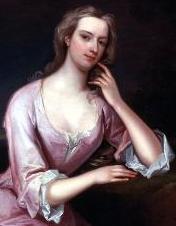
Image: Henrietta Howard, Countess of Suffold, Mistress of George II, painted by Charles Jervas
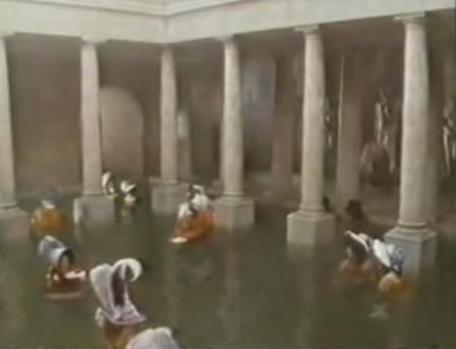
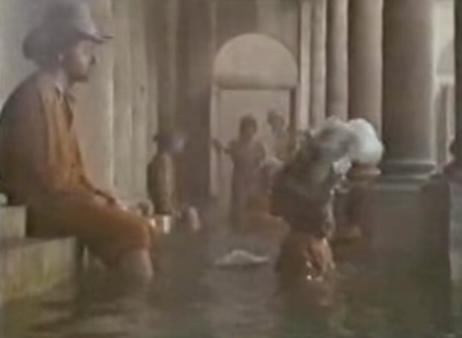
I had always wondered about this hot bath scene in 1986’s Northanger Abbey (click on the link to watch a 2-minute YouTube video) and how accurate it was. I was particularly curious to know if men and women truly mingled in the hot baths, and what kind of items were placed on the floating objects that the bathers held. While Jane Austen did not write this scene in her novel, the scene in the film lent a note of authenticity to Catherine Morland’s visit to Bath.

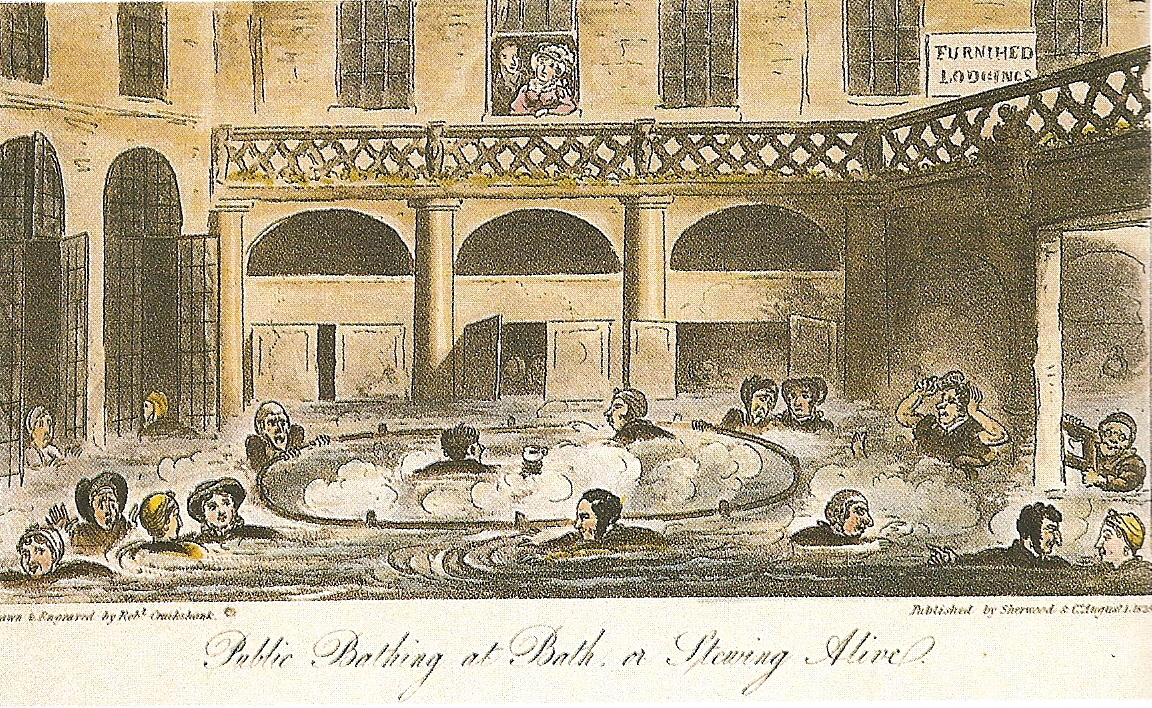
In Aristocrats, Stella Tillyard writes a full description of  these 18th century bathers:

In the eighteenth century pride of place went to the Pump Room, where warm mineral water was sold by the glass, and the King’s Bath. This giant communal cistern was right under the windows of the Pump Room, open to the gaze of all. Patients sat in the bath with hot water right up to their necks. Men were enveloped in brown linen suits. Women wore petticoats and jackets of the same material. They sat side by side in a hot, faintly sulphurous mist.

Limp cotton handkerchiefs caught the sweat which dribbled down the bathers’ faces; afterwards they were tucked away in the brims of patients’ hats. Lightweight bowls of copper floated perilously on the water. Inside them vials of oil and sweet smelling pomanders bobbed up and down. On a cold morning the bathers in their caps and hats looked to the curious onlookers pressed against the glass above them like perspiring mushrooms rising into the thick gaseous air (p 35-36).


More links:

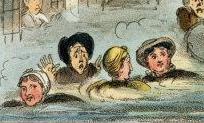
Image and two details: Cruikshank, Public Bathing in Bath or Stewing Alive, 1825

The Duke of Wellington, the much decorated general who defeated Napoleon twice and who, to many in the era, defined the British character, still had to answer a flurry of petty questions generated by bureaucrats in London. The following is a letter he wrote to the National Office in 1812 in response to some trifling expenses for which he was held accounted:

Gentlemen,

Whilst marching from Portugal to a position which commands the approach to Madrid and the French forces, my officers have been diligently complying with your requests which have been sent by H.M. ship from London to Lisbon and thence by dispatch to our headquarters.

We have enumerated our saddles, bridles, tents and tent poles, and all manner of sundry items for which His Majesty’s Government holds me accountable. I have dispatched reports on the character, wit, and spleen of every officer. Each item and every farthing has been accounted for, with two regrettable exceptions for which I beg your indulgence.

Unfortunately the sum of one shilling and ninepence remains unaccounted for in one infantry battalion’s petty cash and there has been a hideous confusion as the the number of jars of raspberry jam issued to one cavalry regiment during a sandstorm in western Spain. This reprehensible carelessness may be related to the pressure of circumstance, since we are war with France, a fact which may come as a bit of a surprise to you gentlemen in Whitehall.

This brings me to my present purpose, which is to request elucidation of my instructions from His Majesty’s Government so that I may better understand why I am dragging an army over these barren plains. I construe that perforce it must be one of two alternative duties, as given below. I shall pursue either one with the best of my ability, but I cannot do both:

1. To train an army of uniformed British clerks in Spain for the benefit of the accountants and copy-boys in London or perchance.

2. To see to it that the forces of Napoleon are driven out of Spain.

Your most obedient servant,

Wellington

Update: While I try to link to resources directly (see link list below), at times I can find no attributions or a source. I found this letter on a fun fact site and had no initial reference to point to. If you will note, this blog largely consists of a series of links to other sites of interest, especially in the pages at top. In addition, as with David Brass Rare Books, I receive their permission to write about their publications and use certain images PROVIDED I make no money off the enterprise and make certain that I mention David Brass Rare Books prominently in my posts. I also try to use e-text quotes and images that are in the public domain (Wikimedia Commons), or to quote no more than a paragraph from books that are copyrighted. Publishers that have asked me to review their books have given me permission to use images of their book covers and use quotes. When I am reviewing a blog post (as in my Seen Over the Ether post), I will use an identifying image from that post.

Other links:

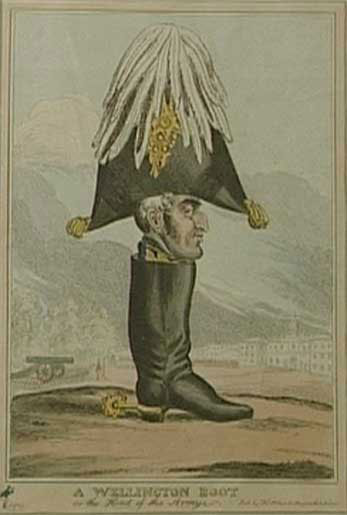
Image: William Heath, A Wellington Boot – or Head of the Army.

Portrait of the Duke by Sir Thomas Lawrence (1769-1830), 1814.

I’ve just ordered this fabulous book, and can’t wait to see it in person. Contained within its pages are luscious photographs like these:

Yellow silk taffeta dress (1803) with black silk net shawl with polychrome floral embroidery, and yellow and green silk knit pineapple reticule (c. 1800) with trimmings of silver beads and tassels.

Order information for the book:

Fashion: The Collection of the Kyoto Costume Institute (Hardcover)

My other post about the Institute:

Kyoto Costume Institute

Create Your Own Pineapple Shaped Reticule

There was nothing romantic about marriage in England before the 17th Century. The institution was viewed as a means of securing or advancing the family fortune. Alliances through marriage were arranged by parents; offspring were regarded as pawns; and couples were often engaged and wed while they were still children.

By the 18th and 19th centuries, the idea of marrying for love was gaining ground, although it was considered déclassé to demonstrate too much passion for one’s spouse. A man proposed to the woman of his choice, but parental approval of the engagement, especially for the woman, still needed to be obtained, for a father could withold a fortune from a daughter, whereas it was out of his power to prevent a son from inheriting his estate. Certain conventions, such as marrying for money, power, or position, did not change. David Shapard writes in The Annotated Pride and Prejudice:

Marriages among the upper classes frequently involved people whose families were related, or allied, in some way, for such marriages could further strengthen the family ties that were so crucial in this society in determining power, wealth, and position, especially among the upper classes. (p 645)

When Lady Catherine de Bourgh confronted Elizabeth Bennet with her suspicions about the younger woman’s relationship with Mr. Darcy, she told her that her daugher Anne had been intended for Mr. Darcy from infancy. By the early 19th century such parental arrangements were no longer common. Lady Catherine refers to this change in the first part of her speech:

The engagement between them is of a peculiar kind. From their infancy, they have been intended for each other. It was the favourite wish of his mother, as well as of her’s. While in their cradles, we planned the union: and now, at the moment when the wishes of both sisters would be accomplished in their marriage, to be prevented by a young woman of inferior birth, of no importance in the world, and wholly unallied to the family! Do you pay no regard to the wishes of his friends? To his tacit engagement with Miss De Bourgh?

A little later, Lady Catherine declares:

My daughter and my nephew are formed for each other. They are descended, on the maternal side, from the same noble line; and, on the father’s, from respectable, honourable, and ancient – though untitled – families. Their fortune on both sides is splendid. They are destined for each other by the voice of every member of their respective houses; and what is to divide them? The upstart pretensions of a young woman without family, connections, or fortune. Is this to be endured! But it must not, shall not be. If you were sensible of your own good, you would not wish to quit the sphere in which you have been brought up.”

Lady Catherine was right. Mr. Darcy’s immense fortune would have attracted the most desirable women in all of Britain. The fact that he proposed not once but twice to Elizabeth gave Pride and Prejudice, to my way of thinking, a Regency fairy tale ending.

Once a woman came out in Society she had but one duty to fulfill: to find a suitable match. Jane Austen wrote about Miss Mainwaring in Lady Susan:

Sir James Martin had been drawn in by that young lady to pay her some attention; and as he is a man of fortune, it was easy to see HER views extended to marriage. It is well know that Miss M. is absolutely on the catch for a husband…” (XIV, Mr. De Courcy to Sir Reginald)

While finding a suitable husband was the ultimate object of a young girl who was coming out, her life after the marriage would not be her own. Once the vows were said, the husband took charge of his wife’s possessions and she would have little say in how he chose to spend her income. Woe betide the poor woman who made a miserable match, or who did not bear her husband male children. In Maria, or the Wrongs of a Woman, a novel written in 1798 by Mary Wollstonecraft about a spectacularly bad marriage, the landlady lamented, “Women must be submissive. Indeed what could most women do? Who had they to maintain them, but their husbands?” (Chapter Thirteen).

Not all marriages led to an unhappy ending, however. The first Duke of Richmond was an inveterate gambler. While staying in The Hague (Holland) in 1719, he lost a huge sum to the Irish Earl of Cadogan. At the time, the earl’s daughter, Sarah, was only thirteen years old. The Earl of March, the duke’s son, was eighteen. To pay off the debt, the Duke of Richmond agreed to an engagement between Sarah and the young earl, and a reduction of 5,000 pounds in Sarah’s marriage settlement. The deal sealed, the wedding was hastily arranged between the girl and the young earl, who had plans to embark on a Grand Tour with his tutor.

It seems almost incredible to our nineteenth century civilization that the marriage of this nobleman when Lord March, during his father’s lifetime, and a mere youth at college, should have been a bargain to cancel a gambling debt which his father was unable to meet. “The young Lord March,” writes Sir William Napier, “was brought from college, the lady from the nursery for the ceremony. The bride was amazed and silent, but the bridegroom exclaimed, ‘Surely you are not going to marry me to that dowdy?’ Married he was, however, and his tutor instantly carried him off to the continent. Lady Sarah went back to her mother, a daughter of Wilhelm Munter, States Councillor of Holland.

Three years afterward Lord March returned from his travels, an accomplished gentleman, but having such a disagreeable recollection of his wife that he avoided home, and repaired on the first night of his arrival to the theatre. There he saw a lady of so fine appearance that he asked who she was. ‘The reigning toast, the beautiful Lady March.’ He hastened to claim her, and they lived together so affectionately that, one year after his decease, in 1750, she died of grief.
The Mothers of Great Men and Women, and Some Wives of Great Men By Laura Carter Holloway, Laura C Langford, 1883

In Aristocrats, Stella Tillyard writes about the union:

Thus in an extreme form, [the 2nd Duke of Richmond and his duchess] acted out the powerlessness of aristocratic children, who could become pawns in a parental chess game, who were sacrificed for family alliances or sold for money and prestige.

When he grew up, [the duke] developed a taste for practical jokes, and came to see his marriage as one of them…He was never ashamed to demonstrate, in portraits, letters and drawing-rooms his love for his wife and children.” (p. 10)

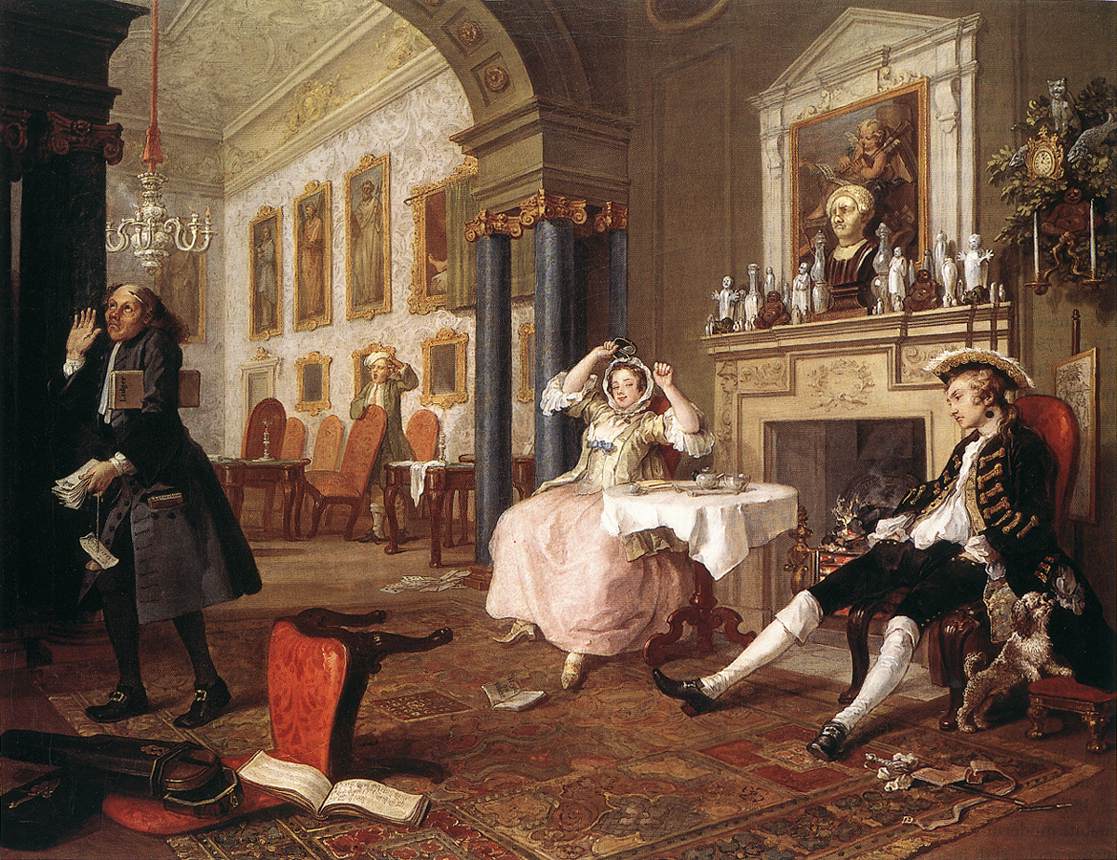
Image: William Hogarth, Marriage à La Mode, Tête à Tête, 1745

Update: Marriage a La Mode, Part 3, The Inspection, Georgianna’s Gossip Guide