Feeds:
Posts
Comments

Inquiring readers, 

In January of this year I published a post regarding podcasts and zoom workshops about Jane Austen. In this post, I am offering a series of YouTube videos, some of which might not last long as a link, so please view them asap.

I’ve seen over 3/4ths of these videos and absolutely adore how they visually explain the era in which Jane Austen lived and her home life. I recommend the books that authors/historians Amanda Vickery and Lucy Worsley wrote on the topics in their video series. (I am a visual learner, so these videos helped me with my understanding of Jane Austen’s World.) The other videos reminded me of the times I visited England.

Amanda Vickery

Amanda Vickery-At Home

Amanda Vickery, At Home With the Georgians

At Home With the Georgians, 

S1, E 1 (Episodes 2 + 3 missing). Click here for the link.  https://youtu.be/zbKzGnSypa0 

Lucy Worsley

If Walls Could Talk: The History of the Home

Part 1: https://youtu.be/yrn42rvTlpk  Lucy Worsley explores the Living Room in the history of the home. Episode one of a four part series.

Lucy-Worsley

Lucy Worsley, If Walls Could Talk

Part 2: https://youtu.be/NvdWc4WcYXA  Lucy Worsley explores the Bathroom in the history of the home. Episode two of a four part series.

Part 3: https://youtu.be/VK6mwqw0FqQ  Lucy Worsley explores the Bedroom in the history of the home. Episode three of a four part series.

Part 4: https://youtu.be/XtC6X7ylmZE  Lucy Worsley explores the Kitchen in the history of the home. Episode four of a four part series.

Other Jane Austen-Related Videos

Who was the Real Jane Austen? https://youtu.be/tSW4u6uA8Cw  Lucy Worsley explores the different houses in which Jane Austen lived and stayed, to discover just how much they shaped Jane’s life and novels.

Life of Jane Austen – videos by MemorySeekers  Jane Austen had a remarkable life and 250 years on she is regarded as one of the best English Novelists. In this mini-series, we look at her life and visit many of the places she lived or visited during her short life. The videos include:

Queen's Square 1799

Queen’s Square, Bath. Walking in the Steps of Jane Austen

Walking in Her Footsteps: From Jane Austen’s birth to her death we have travelled to many of the places we know she lived and visited starting in Steventon her birth village, to the glamorous Georgian City of Bath where fortunes were mixed and unsettling for the 6 years she lived there. We follow her to Southampton where her brother Francis gave her a home, and then back to her beloved Hampshire and Chawton Cottage, her final proper home. Along the way, we tell many stories of Jane Austen that give us a picture of her life, and how the luck of her brother Edward Austen Knight being adopted by the rich Knight family, enabled him to provide a home for Jane and to provide her with inspiration to write in part thanks to Edward and his Chawton House estate. We see her final days in Winchester, follow the route her coffin took to Winchester Cathedral and visit the grave of Jane Austen to complete our final footsteps in her past. Jane Austen was arguably one of the best English novelists of her time we hope our video will give you further insight into her life..https://youtu.be/g8-zx056ek0

Room by Room Tour: Chawton Hampshire. The Jane Austen House and Museum are located in Chawton, Hampshire. Jane Austen lived in this house in the latter part of her life. The Jane Austen House is a fascinating look at the Life of Jane Austen and gives you insight into her days spent here https://youtu.be/NQ9CPE21cm8

Chawton House Hampshire – Home of Jane Austen’s Brother – History and Tour. Chawton House was the home of Jane Austen’s brother, Edward Austen Knight. It’s a fascinating story of how this property has stayed in the Knight family for over 400 years, and how it has such close ties to Jane Austen who visited this property regularly when Edward was in residence. Chawton House is located in the already famous village of Chawton, as it’s where Jane Austen lived in her later life, in a home provided by Edward on the estate. https://youtu.be/x-RHJ8ivIHs
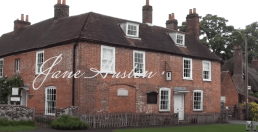
Chawton Cottage, Jane Austen

Chawton Cottage, Jane Austen, Chawton

Jane Austen House Museum, Chawton, England. https://youtu.be/y-iFPFYJoK8?t=5  Full Tour. Jane Austen is one of England’s greatest writers, her novels are appreciated around the world  and frequently adapted for film and tv. The Jane Austen House Museum lovingly preserves the house where she spent the last eight years of her life. My film takes you on a full tour around Jane Austen’s cottage.

Georgian/Regency Related Topics

Walks in Sussex, Exploring the Regency Townhouse: Richard Vobes – I am thrilled to be taken on a personal guide tour of the Regency Town House in Brunswick Square in Hove, East Sussex. Paul Couchman, one of the volunteers dedicated to renovating the Georgian terraced house, takes me round on this private excursion of this amazing building.  

Part 1: https://youtu.be/qOavO7awido

Part 2: https://youtu.be/pVJ02gSKJkM 

Getting Dressed-Austen and Cassandra

Getting Dressed – Jane Austen and Cassandra

Getting Dressed: Jane Austen and her Sister Cassandra: Jane Austen and her sister Cassandra Austen help each other to dress in the Regency fashions of 1810. CrowsEyeProductions https://youtu.be/0W36w-PT9ic

Getting Dressed in the 18th Century: Chemise Gown (1780s): A woman gets dressed in an 18th Century ‘Chemise a la Reine’ style gown. Visit this website to learn about and support a project to research and recreate muslin fabrics: CrowsEyeProductions http://bengalmuslin.com/
https://youtu.be/XtRzNWWS1F8

The Austen Family Music Books

“Without music, life would be a blank to me.”

― Jane Austen, Emma

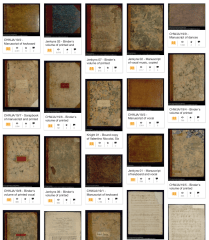
Inquiring readers: This information came from a JASNA Zoom discussion from a “Music and Jane Austen” Roundtable where presenters from the 2021 AGM in Chicago talked about their “Jane Austen and the Arts” presentations. Listeners were encouraged to ask questions. When someone asked about Jane Austen’s music preferences, we were referred to the Internet Archive, where the family’s music books were digitised by the Library Digitisation Unit of the University of Southampton (created November 18, 2015).

screen shot of the Austen music books on the Internet Archive

Screenshot of the Austen family music books on The Internet Archive

Description of the music books from The Internet Archive:

This collection consists of eighteen printed and manuscript music books owned by members of the Austen family, including the writer Jane Austen, in the eighteenth and early nineteenth centuries. Many are binder’s volumes, compiled from separate manuscript or printed sheet music items bound together for an individual user. Others are personal manuscript albums made wholly or principally by a single copyist. Although some volumes were compiled as early as the 1750s, the majority date from Jane Austen’s lifetime (1775-1817). Austen made or used several of the books, and she was probably familiar with music collected by other family members. Find the rest of the description on The Internet Archive. Click here.

“I shall be most happy to play to you both,” said Miss Crawford; “at least as long as you can like to listen: probably much longer, for I dearly love music myself, and where the natural taste is equal the player must always be best off, for she is gratified in more ways than one.”
― Jane Austen, Mansfield Park

Other music posts on this blog:

When I have finished reading a novel, I always write down all family  names which occur in it because I would like to ask the author how and  why she or he has chosen these names. There occur 35 family names in Pride and Prejudice, but I can no longer ask Jane Austen those questions. I can only guess what she had in mind. Here is what my guesses, fortified by a little research on the Internet, produced.

The name which struck me first was DeBourgh, because the word Bourgh as in Cherbourgh is the French equivalent of the English Burgh as in Edinburgh. If the name DeBourgh refers to a French ancestry of the husband of the Lady DeBourgh it cannot mean “we are aristocrats from a Bourgh” (Burgh) because in French, they would have been named “DuBourgh”. More likely is the interpretation “we are aristocrats from a French town of Bourgh”, hence “DeBourgh”.

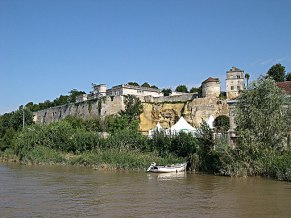
Photo of a fort or castle along a river at Bourg-sur-Gironde in the south of France.

Bourg-sur-Gironde, Image from Wikipedia.

Does a French town named Bourgh, or Bourg exist? Yes, it does! It is “Bourg sur Gironde” on the river Garonne and is located approximately 10 miles North of Bordeaux [1]. Hence my guess is that the town was originally named Bourgh and that the DeBourghs were a noble French family of which some members had moved to England.

Next it occurred to me that the 35 family names could logically be arranged in two groups. Group 1 contains the names of the aristocrats. DeBourgh, Darcy, and Fitzwilliam. Group 2 contains the names of the commoners [2]. I guess that Jane Austen had made those choices deliberately. The only French-sounding names were assigned by her to two of the noble families of the novel! Could Darcy, like DeBourgh, also be of French origin? Then there had to be a town named Arcy in France. Well, there is! The town of Arcy is located WSW of Paris near Versailles. In French, De-Arcy which means from Arcy would have been shortened to D’Arcy.

If the families DeBourgh and D’Arcy (later changed to Darcy) had come from France when and how had the first DeBourgh or Darcy emigrated? I had to go to the Internet to try my luck. I found the following in an article by Sharon Latham. According to her there had existed a French nobleman Richard D’arcy who had joined William the Conqueror’s army, had sailed with William to England, and had fought for him at the Battle of Hastings in 1066. Under the existing economic system William became the owner of every square inch of land of England when he became King of England. It was in his interest, and it was common practice at the time, to make nobles his vassals by loaning them tracts of land. Apparently, William bequeathed large tracts of land to Sir Richard D’Arcy, among others in Dorset where Jane Austen located Pemberton. Eventually the most powerful nobles ignored their vassalage and declared that they owned their lands outright.

Today many Darcy’s live in Ireland. It is not fully clear to me why, how, and when they moved there but, in 1320, King Edward II sent Sir John D’Arcy as Lord Justice and General Governor to Ireland.

A second item on the Internet (in “Jane Austen in Vermont”) mentions a connection between the families of DeBourgh and Darcy. In 1329 there was a marriage of a John Darcy 1st Lord of Knaith with Joan De Burgh (the o was apparently dropped) whose father was Richard de Burgh, 2nd Earl of Ulster.

I am sure that there are numerous additional Internet and other studies on DeBourgh and Darcy from Pride and Prejudice done by real experts. I was satisfied that the two studies which I had consulted produced a sufficiently rational explanation for Jane Austin’s choice of two French-sounding names for the two noble families of her novel to set them apart from the commoners. Whether she knew the histories of these families, which existed in England at her time, I leave to the experts to debate.

____________

[1] There is also a French town named “Le Bourg” 50 miles North of Toulouse. The reason why I have chosen Bourg sur Gironde for my guesses is its location in Aquitaine. After Eleanor of Aquitaine died the region was ruled by English Kings for about 300 years.

[2] Mr. Bennett is a “gentleman” but not an earl.

Genealogical Charts of the Characters in Pride and Prejudice, The Republic of Pemberley. Scroll down the page to find the charts.

_____________

Professor-Dieter-Heymann-180x180

Dr. Heymann, Image courtesy Rice University

About the author, Dr Dieter Heymann:

Dr. Heymann was born in Germany and received his M.S. and Ph.D. at the University of Amsterdam, Nederland. Today he is Professor Emeritus, Earth, Environmental and Planetary Sciences. Research areas: cosmochemistry, conditions in the early solar system, origin of elements, causes of elemental and isotopic inhomogeneities in the solar nebula. 

Some of my most memorable family moments are during the times when we gather to play board or word games. On New Year’s Eve we played Apples to Apples, laughing and not caring whether we won or lost. During Jane Austen’s day, games helped to wile away the time on long dark winter nights or rainy evenings. Games could be fun, educational, or intellectual, just like today’s. 

As discussed in previous articles in this blog, during the Regency era, writing in verse and rhyme was a popular pastime and mode of communication for the gentry, pseudo gentry, diarists, and authors. Mrs Cassandra Austen wrote recipes in rhyme; her daughter Jane wrote poetry (although they lacked the genius of her prose); guidebooks, such as Christopher Anstey’s New Bath Guide (1766) were written in rhyme; and stories in verse, like John Matthews’ description of a day in Bath, entitled Bath: An Adumbration in Rhyme (1795), had a dry, humorous tone admired during that time.

About Bouts-Rimé, a literary game (pronounced Boo-ReeMay):

Brittanica.com defines Bouts-Rimé as rhymed words or syllables to which verses are written, best known from a literary game of making verses from a list of rhyming words supplied by another person. The game requires that the rhymes follow a given order and that the results make a modicum of sense.

According to Wikipedia, a minor 17th century French poet named Dulot complained that he’d been robbed of valuable papers and three hundred sonnets. When surprised people wondered at his having written so many, Dulot explained that the sonnets were blank except for the ending rhyming words. The idea struck everyone as amusing, and what Dulot had done seriously was taken up as a jest. Bouts-rimés became the fashion throughout the 18th century” and is still played today. The term means “rhymed ends” or a set of pre-selected final words. 

The trick in writing bouts-rimés is to make sense of the words, The rhymes should seem effortless and natural, but a person choosing the rhyming words can put a spoke in the wheel of an opponent’s effortless creativity by selecting a set of rhyming words that seemingly have no connection.

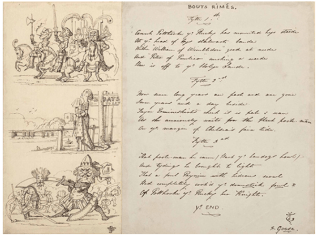
Bouts-Rimés created by Mrs. Cassandra Austen and her grandson George Knight

The Jane Austen Centre website published a post on its blog with four bouts-rimés written in 1820 at Chawton House. Two were written by Jane Austen’s mother (C.A.) and two by Jane’s nephew, George (G.K.). On reading them, you might list the rhymed ends, and decide whose/which bouts-rimés are better in your estimation and why. Did they fit the criteria of the definitions listed above?

Why d’you ask me to scribble in verse 

When my heart’s full of trouble and sorrow? 

The cause I will briefly rehearse, 

I’m in debt, with a sad empty purse, 

And the bailiffs will seize me tomorrow. C. A. 

I’ve said it in prose, and I’ll say it in verse, 

That riches bring comfort and poverty sorrow, 

That it’s better to ride in a coach than a hearse, 

That it’s better to fill than to empty your purse, 

And to feast well to-day than to fast till to-morrow. C.A. 

To mutton I am not averse, 

But veal I eat with sorrow, 

So from my cradle to my hearse 

For calves I’d never draw my purse 

For lambs I would to-morrow. G. K. 

I hate your French tragedies written in verse, 

They fill me with laughter, not sorrow; 

What Racine has written, let Talma rehearse, 

The notions I’ve formed he would never disperse, 

Though he laboured from now till to-morrow. G. K.

Screen Shot 2022-01-15 at 6.27.51 PM

This digital collection features poems by John Tenniel (1820–1914) and others, with illustrations by Tenniel. From theHarry Ransom Center, Digital Collections, University of Texas at Austin

A modern version of a Bouts-Rimé

A post on the blog dVerse~Poets Pub mentions that the practice of writing boutes-rimés continues through the 19th century and to this day. Bouts-Rimés Revisited; Meeting the Bar | dVerse (March 10, 2016, Gayle Walters Rose.)

This bouts rimé printed in dVerse~Poets Pub and written in 2016 by Jack Collom, is more complicated than the verses written by A.C. and G.K. in 1820. Collom’s bouts-rimé consists of 14 lines based on the following words:

jump, fanned, lump; reading, lawn, misleading, yawn; yo-yo, death, no-no, breath; France and pants, as outlined  in the book by Ron Padgett, in ‘The Teachers and Writers Handbook of Poetic Forms’ (2nd Edition).”

Posted are five of the 14 lines:

Getting burnt, evaporated, bleached, or tanned

By the sun ain’t no way to jump.

I’d rather plop in shadow, be fanned

By some geisha girl, and lay around like a proverbial lump.

I’m not that hot for so-called good reading …

(find the full 14 lines of this bouts rimé here)

Additional Resources:

Inquiring readers,

This time last year, Jane Austen’s World blog recommended our team’s favorite books to read in 2021. For 2022, we recommend ways you can attend Jane Austen workshops and discussions electronically, via either zoom broadcasts or podcasts. Here are some suggestions. Most of these experiences are free, but those that require payment are often worth the cost.

Jane Austen & Co (Free Zoom series)

Logo of Jane Austen & Co.

Logo of Jane Austen & Co.

At the beginning of the COVID pandemic, I took refuge in watching workshops offered by Jane Austen & Co, a free public Zoom series focused on the life, histories, and writings of women living in the Regency era. This organization began as a book group in Durham, North Carolina. Since Summer 2020, the group has offered a diverse array of excellent lectures by experts, Q&As, and digital programming. Past series and discussions are archived and can be accessed on the site. While programming is free, the group does passively ask for donations for a Jane Austen summer program. 

The series:

2020: “Staying Home with Jane Austen,” explored domestic life, labor, and practices during the Regency, including dress, music, embroidery, gardening, and gaming.

2021: “Race and the Regency,” explored the role of race, nationalism, colonialism, and identity in the culture of the long eighteenth century, exploring topics such as slavery, abolition, portraiture, and modern representations of historical people of color. 

2022: “Asia and the Regency,” starting off the year with three new talks on adaptations of Jane Austen in Japan and India, entitled “Pride and Prejudice in Japan,”  “Emma in Bollywood,” and “Jane Austen in India, Jane Austen and India.” Click here to sign up for live talks If you’ve missed them, they are archived here.

Conversations with authors of modern Austen adaptations, including Ibi Zoboi (author of Pride), Margot Melcon and Lauren Gunderson (co-authors of Miss Bennet: Christmas at Pemberley), and Jo Baker (author of Longbourn).

Banner for Jane Austen Society of North America

Publication banner for Jane Austen Society of North America

Jane Austen Society of North America (JASNA virtual conference, Fee required)

Membership to this important organization is not only affordable, but its website acts as a gateway to all news, events, and publications of importance to the Janeite community.

Major Membership Benefit: 

The AGM (Annual General Meeting) – now with Zoom benefits:

This yearly conference was so highly competitive when delivered onsite, that if members did not sign up within hours of open registration, they were out of luck. I attended only two in person. The pandemic has changed this situation. In 2020, I attended a virtual conference and was able to view every presentation online, since my conference fee allowed me to view the links for a month. In 2021, an onsite AGM was given in Chicago. Immune-compromised individuals like myself still didn’t feel comfortable attending such a large function. Right now, I still have nearly a month (until February 15) to watch most of the workshops and presentations online. What a bargain at $99!

Regional Memberships in local JASNA societies:

Over the years I’ve joined local JASNA societies in Richmond, my former hometown, and Baltimore, my current location. I also belong to the societies in Northern California and New York – all offer a variety of JA discussions and workshops, most virtually until the pandemic subsides significantly.

 Podcasts/Audio Recordings

This list of podcasts is a mixed bag. According to your preferences, you might or might not like some of the choices below. The good news is that they are all free. Many are available on an app for your tablet or smartphone. While not all might suit you, I am sure you can find new and interesting information about Austen and her era. The first two choices are available on websites only.

Audios

Chawton House – Podcasts – Chawton House

In these relatively new offerings, find podcasts that discuss the restoration of Chawton House, their recent acquisitions and writing contests, Caroline Jane Knight, who spent her childhood in Chawton House and is Jane Austen’s fifth great niece, interviews, history of Chawton House, and more!

BBC podcast

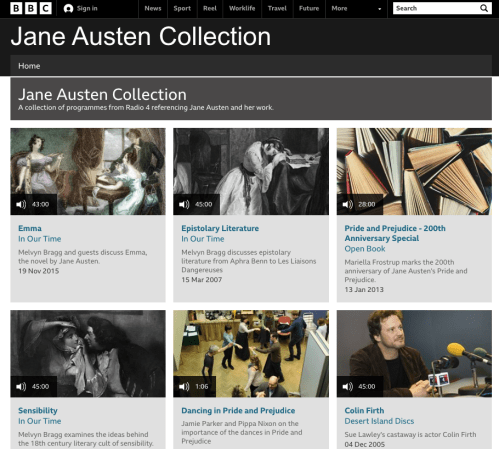
Choices of the BBC Radio 4 collection of audios

BBC Radio 4Jane Austen Collection

These radio programmes feature discussions about Emma, Epistolary Literature, Pride and Prejudice Anniversary Special, and so much more. There is nothing more pleasurable than listening to these programmes while sewing or crocheting (even housecleaning)!

Podcasts

Player FM: Jane Austen Podcasts Click here to enter this indexed site 

This mega site lists too many Austen podcasts to mention in one paragraph, so I’ve included two with detailed descriptions and three more links. It is worth looking at this Jane Austen podcast collection to see what suits your fancy. I love listening to podcasts on long drives 

The Austen Connection: podcasts

These podcasts talk about the stories of Jane Austen – how they connect to us today, and connect us to each other.

Reading Jane Austen – 3 Seasons completed (Pride & Prejudice, Sense & Sensibility, & Mansfield ParkAbout us – Reading Jane Austen

Example, in Season One, P&P, Chapters 1-6, Ellen and Harriet, talk about how the book sets up the relationship between love and marriage, the way the characters are introduced so gradually, what we see in Darcy and the fact that we quickly learn how much money everyone has. We discuss Mrs Bennet in some detail, and then Ellen talks about class in the early nineteenth century, and the type of neighbourhood Pride and Prejudice is set in. Ellen is a retired senior lecturer in sociology, and Harriet works for an education publishing company. Both are lifelong Jane Austen readers. 

The following podcasts are for those who think outside the box or who like cheeky humor.

Manners and Madness: A Jane Austen & David Lynch Podcast on Apple Podcasts

Reclaiming Jane: A Jane Austen Podcast for Fans on the Margins

First Impressions: Why All the Austen Haters Are Wrong

In addition to these links, view our page Audio/Podcasts at the top of this blog. Enjoy!