In the past, this blog published several articles on hairstyles for men and women in the Regency era. This post discusses hairstyles in Georgian times. During a recent visit to the Walters Art Museum in Baltimore, I had the pleasure of examining a small, but excellent collection of Greco Roman statues and ancient artifacts. Strolling through several galleries, I took photographs of the hairstyles of the female figures. The Walters Art Museum’s antiquities collection ranks among the top tier in North America (JSTOR). The images below are confined to the photographs I shot at the museum and the public domain portraits I found to compare them to.
A Change Towards the Neoclassical Ideal
From the late 16th century to the mid-19th century (until train travel changed the nature of long-distance travel), young male British aristocrats embarked on a Grand Tour to the Continent for several months or years to round out their education. Accompanied by a teacher or guardian, they completed their knowledge of the classics, studied art, and enjoyed a life of leisure, luxury, and exotic (at times erotic) adventures.
The itinerary included stays in France (Paris being a much sought after destination), The Netherlands, Switzerland, Germany, and, of course, Italy. Rome remained the premier stop, but trips to Venice, Florence, Pompeii, and Greece were also prized. Travelers returned home with souvenirs, works of art to decorate their houses and gardens, and a thorough appreciation of the Neoclassical ideals of ancient Rome, Greece, and the near East, as well as the Renaissance principles of art and architecture.
Influence of Neoclassicism on Women’s Hairstyles and Fashion
Transformation in women’s clothing and hair styles developed slowly during this period, but changed quickly between 1778 and 1793, influenced not only by the Grand Tours, but also in reaction to the French Revolution (1789-1799). Even before the war, Marie Antoinette sought refuge from the extravagant dress at Versailles in her Hameau de la Reine, which was built for her on estate grounds. Here she could enjoy a more natural environment than court life offered and dress “down” from elaborate corseted dresses and the over-the-top hair styles that were caricatured.
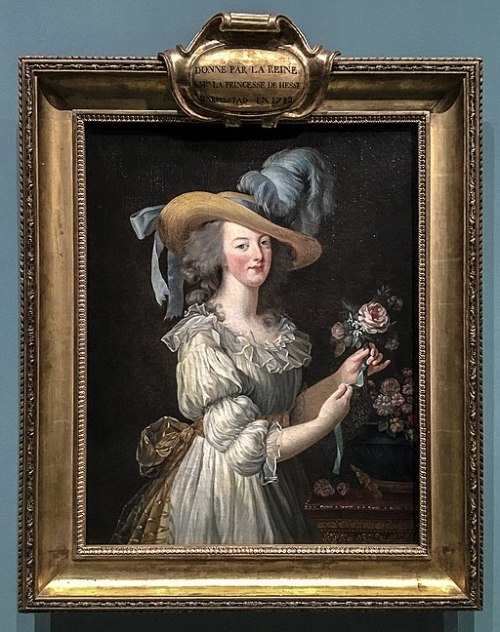
Marie Antoinette, by Elisabeth Louise Vigée Le Brun, 1783. She is wearing a relatively loose and simple gaulle gown or chemise a la reine, made of muslin. Wikimedia image.
Marie Antoinette, along with the ladies of her court, walked and relaxed in light-loosed dressed in the gardens, grounds, and working farm that surrounded the hamlet. To complement a more “natural” look and in keeping with the casual atmosphere, she and her female entourage wore straw bonnets and loosely curled hairstyles, which, for its time, were “simple.”
The print below shows the old school reaction to the new styles. The Merveilleuses were instrumental in transforming fashion to the Neoclassical style during the the French Directorate (1795-1799) in the last four tumultuous years of the French Revolution.
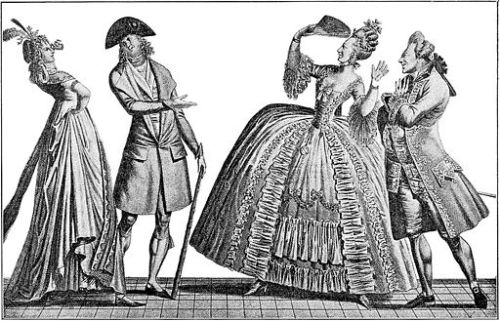
From Vernet’s “Incroyables et Merveilleuses” series, 1793. Public Domain image.
Comparisons of images of Greco Roman statues to contemporary Georgian paintings
As previously stated, this post contains the original images I took in the Walters Art Museum. The quoted text about the ancient statues is rewritten from the museum informational labels for each sculpture or relief.

Luise von Mecklenburg-Strelitz, Josef Grassi 1802. Charlottenbug Palace. Public Domain.

Relief of Apollo and Artemis, ca 50 B.C. Walters Museum of Art. Image taken by V. Sanborn.
Right: Relief of Apollo and Artemis, ca 50 B.C. Walters Art Museum. Image by V. Sanborn. Left: Portrait of Louise of Mecklenburg-Strelitz, Queen of Prussia, 1802. Josef Grassi. Wikimedia Commons. Comment: The Queen of Prussia wears a diadem much like Artemis in the 50 B.C. relief panel. Differences in hairstyles are due to adaptations made by the Europeans, who were influenced by the ancients, but who did not slavishly copy the hairstyles and hair jewelry. Their adaptations were unique to their era.

Detail, Maidens Playing “Knucklebones”. Greek, late 4th or early 3rd century B.C., Walters Art Museum. Image by V. Sanborn.
Left: Detail, Maidens Playing “Knucklebones”. Greek, late 4th or early 3rd century B.C., Terracotta. Walters Art Museum. Image by V. Sanborn. Right: Harriet Melon by John Russel, 1804. Image from The Peerage. Comment: One can see almost a direct correlation between these two hairstyles, centuries apart. The primary difference is in the soft curls framing the face and forehead in Harriet’s undo In 1804, soft white muslin dresses, draped gently from a high waist, were all the style. Emma Thompson and Kate Winslet wore hairstyles in 1995’s Sense and Sensibility that were remarkably similar to the terracotta maiden’s, with touches of the ringlets popular in the early 19th century.

Detail of leghorn bonnet, Mccord Museum, about 1810. Creative commons image.

Portrait of a Woman. Roman, Trajanic period, ca A.D. 10. Walters Art Museum. Image by V. Sanborn.
Left: Bonnet, About 1810, 19th century, Gift of Mrs. C. Walsh © McCord Museum View the leghorn bonnet at this link. Right: Portrait of a Woman. Roman, Trajanic period, ca A.D. 10. Walters Art Museum. Image by V. Sanborn. Comment: I found no online examples that emulated this elaborate Roman hairstyle, but I loved how the leghorn bonnet echoes it. By 10 A,D., Roman women wore complicated hairstyles requiring daily maintenance by attendants. Wigs, hairpieces made from the hair of slaves, and padding kept in place with hair nets, pins, or combs, were used to create a sculptural “do.” (Hairstyles through the ages.)

Portrait of Livia, Roman, Late Republican period, mid-late 30s B.C. Walters Art Museum. Image by V. Sanborn

Louise, Queen of Prussia by Vigee Lebrun_ ,1801, Schloss Charlottenburg)
Left: “This portrait of Livia was created not long after her marriage to Emperor Augustus…She…set a new fashion with her innovative nodus hairstyle, in which a section of hair is arranged in a roll over the forehead, while the rest of the hair is swept back in loose waves and secured in a bun at the nape of the neck.” (Text from the Walters Art Museum). Livia, Late Republican period, mid-late 30s B.C. Image by V. Sanborn. Right: Louise, Queen of Prussia by Elizabeth Vigee Lebrun, 1801, Schloss Charlottenburg. Public domain image Comment: Louise wears an adaptation of the nodus hairstyle. Hers is looser with curls framing her forehead and face. Her low bun is larger, looser, and curlier.

Portrait of a Young Woman. Roman (Egypt?), late Republican period, ca. 50 B.C. Walters Art Museum. Image by V. Sanborn.

Portrait of a Young Woman. Roman (Egypt?), late Republican period, ca. 50 B.C. Walters Art Museum. Image by V. Sanborn.

An Embarrassing Proposal, Antoine Watteau , 1715-16,
Top left and right: Portrait of a Young Woman. Roman (Egypt?), late Republican period, ca. 50 B.C. Walters Art Museum. Image by V. Sanborn. “The realism of the young woman’s fleshy features and the detailed treatment of her elaborate hairstyle are typical of the late Republican period.” (Text from Walters Art Museum.) Bottom left: Detail of An Embarrassing Proposal, 1715-1716, Jean Antoine Watteu, Hermitage Museum. Bottom right: English School, A Lady, profile facing to the left, wearing pale lilac dress with white sleeves and coral necklace (early 19th Century), watercolour on card, , set in a red leather travelling case. Oval, 78mm (3in) high.Bonham’s. Comment: The lovely bust of the young Roman woman demonstrates a hairstyle that spans a hundred years between the early 18th and early 19th centuries. The Roman hairstyle reminded me of several Watteau paintings from the early 18th century. The lady at bottom right also wears a version similar to the Roman example, but is more complicated. In the Watteau painting, the ladies demonstrate three versions of a similar underlying style. In this instance, Greco Roman influence definitely made its appearance at the start of the Georgian era in England (1714-1830). French influence on English fashion is well known.

Standing Maiden. Greek (Tarentum, Italy) 3rd century B.C.. Terracotta with traces of paint and gilding. Walters Art Museum. Image by V. Sanborn
Top right: Standing Maiden. Greek (Tarentum, Italy) 3rd century B.C.. Terracotta with traces of paint and gilding. “…the draping of the fabric on top of the maiden’s high, ‘melon” hairstyle are typically South Italian.” (Quoted text from the Walters Art Museum.) Image by V. Sanborn. Top left: Fashion plate, Costume Parisiens, 1815. Bottom: Detail of an 1812 print. Comment: From the original model of a high melon hairstyle, one can see the inspiration for the hairstyles featured in the two prints. These early 19th century hairstyle adaptations don’t strictly follow the original example, but pay homage to it. In the fashion plate, one can observe the French empire custom of inserting flowers, ribbons, and hair jewelry. The two ladies busying themselves with needle work affect simpler hairstyles that echo the high “melon” look but that leave the bun loose and curling down the back of the head.

Portrait of a young girl, Louis-Léopold Boilly. Date unknown.

Portrait of young woman, bust, wearing a gray-brown dress, Adèle Laplatte (late 18th century-early 19th century) Paris, Louvre Museum, DAG

Head of a Maiden With Lampadion Hairstyle. Greek, 3rd-2nd century B.C. Dicaearchus (active about 320 -300 B.C.) a pupil of Aristotle’s, remarked that women described this hairstyle with topknot as the lampadion, or “little torch.” Walters Art Museum. Image taken by V. Sanborn.
Right: Head of a Maiden With Lampadion Hairstyle. Greek, 3rd-2nd century B.C. “Dicaearchus (active about 320 -300 B.C.) a pupil of Aristotle’s, remarked that women described this hairstyle with topknot as the lampadion, or “little torch.” (Quoted text from the Walters Art Museum.) Image taken by V. Sanborn. Left: Portrait of a young girl, Louis-Léopold Boilly. Date unknown. Middle: Portrait of young woman, bust, wearing a gray-brown dress Laplatte Adèle (late 18th century-early 19th century) Paris, Louvre Museum, DAG. Comment: The Lampadian hairstyles as worn by the ladies in the two paintings, closely resemble the Greek example. Women still wear this today, including me when I’m dressed casually.

Portrait of Mrs Moffet, 1826, Sir Martin Archer Shee, Walters Art Museum. Image by V. Sanborn.

Head of a Woman with Long Curls. Greek (South Italy), 3rd century B.C. Walters Art Museum. Image taken by V. Sanborn

Head of a Woman with Long Curls. Greek (South Italy), 3rd century B.C. Walters Art Museum. Image taken by V. Sanborn
Top right and middle: Terracotta Head of a Woman with Long Curls. Greek (South Italy), 3rd century B.C. Walters Art Museum. Image taken by V. Sanborn Top left: Portrait of Mrs Moffet, 1826, Sir Martin Archer Shee, Walters Art Museum. Image by V. Sanborn. Lower left: Princess Louise of Prussia (Princess Antoni Henryk Radziwill), 1802. Metropolitan Museum of Art, Public domain image. Lower middle: Miniature of Mrs Russell by John Smart. 1781. Christie’s. Lower right: Detail of Mrs John Gibson. Portrait by Jacob Eichholz, ca 1820. Sotheby’s. Comment: This hairstyle is personally one of my favorites. I used to wear a version of it when I had long straight hair. I’d pull a ponytail to the side and let my hair fall over my shoulder. Mrs. Moffet has the closest proximation to the terracotta head, but the other variations are equally lovely and span decades if not centuries.

Head of a Satyr, 2nd century A.D. Roman copy after a Hellenistic Greek original. Walters Art Museum. Image taken by V. Sanborn

Mrs. Fox,ca. 1805. Benjamin Trott, American. Metropolitan Museum of Art. Public Domain image.
Top left: Head of a Satyr, 2nd century A.D. Roman copy after a Hellenistic Greek original. Walters Art Museum. Image taken by V. Sanborn. Top right: Mrs. Fox,ca. 1805. Benjamin Trott, American. Metropolitan Museum of Art. Public Domain image. Below: Portrait of Lady Caroline Lamb, ca. 1805, Sir Thomas Lawrence. Wikimedia Commons. Comment: Lady Caroline Lamb, Lord Byron’s mistress, was known for her eccentric often manic ways and short curly hair. Mrs. Fox sports a “do” similar to the Satyr’s. Children, both boys and girls, sported this attractive style during the latter part of the 18th C. and early years of the 19th century.
Silhouettes of Jane Austen (left) and her sister, Cassandra (right), as young women. Wikipedia. Below sits my Pinterest board entitled Regency hairstyles. You might have fun finding images that resemble the hairstyles by the Greco Roman statues or by the two Austen women!
Sources:
Sorabella, Jean. “The Grand Tour.” In Heilbrunn Timeline of Art History. New York: The Metropolitan Museum of Art, 2000-, http://www.metmuseum.org/toah/hd/grtr/hd_grtr.htm (October 2003)
Cadeau, Carmen. “Women’s Fashion During and After the French Revolution (1790 to 1810),” All About Canadian History…Except not really. More like bits an pieces. Retrieved 8/14/2019: https://cdnhistorybits.wordpress.com/2016/01/19/womens-fashion-during-and-after-the-french-revolution-1790-to-1810/ (January 2016)
Victoria and Albert Museum. “Style Guide: Regency Classicism.” Retrieved 8/22/2019: http://www.vam.ac.uk/content/articles/s/style-guide-regency-classicism/
Batman, E. (2004). The New Galleries of Ancient Art at the Walters Art Museum, Baltimore. American Journal of Archaeology, 108(1), 79-86. Retrieved from http://www.jstor.org/stable/40024677
The Scandal of Marie Antoinette’s Gown, Meghan Masterson, Meghan Masterson blog. Retrieved 8/22/2019 from https://meghanmastersonauthor.com/the-scandal-of-marie-antoinettes-gowns/
Hairstyles Through the Ages, Crystalinks, History. Retrieved 8/22/2019 from https://www.crystalinks.com/hair.history.html
Warnock, R. (1942). Boswell on the Grand Tour. Studies in Philology, 39(4), 650-661. Retrieved from http://www.jstor.org/stable/4172592
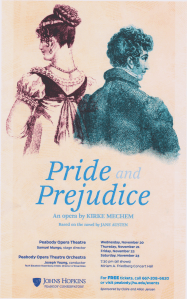 Pride and Prejudice, an opera written by Kirke Mechem, will make its debut November 20th-23rd at the Miriam A. Friedberg Concert Hall, located at historic Mt. Vernon Place in Baltimore. This event is part of the Peabody Opera Theatre, Johns Hopkins University.



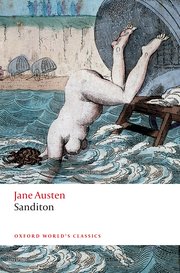 Inquiring readers, It is confirmed!! Sanditon, Jane Austen’s last unfinished fragment of a novel has been adapted for television as an 8-episode mini-series by Andrew Davies, who adapted 1995’s Pride and Prejudice for the small screen. Mr. Davies uses his talents and knowledge of Jane Austen and British history to finish the novel that Jane laid aside months before her death. The mini-series includes nude bathing (an historically accurate touch) and, to paraphrase Mr. Davies, is somewhat “sexed up.” (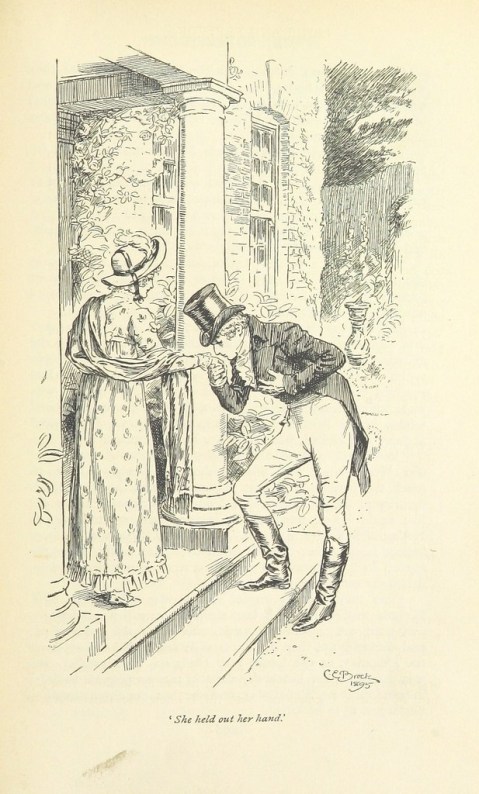
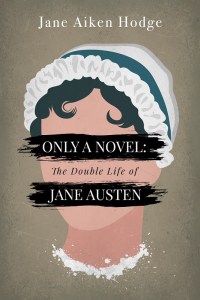 It is only a novel… or, in short, only some work in which the greatest powers of the mind are displayed, in which the most thorough knowledge of human nature, the happiest delineation of its varieties, the liveliest effusions of wit and humour, are conveyed to the world in the best-chosen language” – Jane Austen, Northanger Abbey
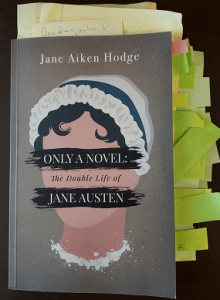 Compared to Claire Tomalin’s biography Jane Austen: A Life (1999), which is filled with images and illustrations and attachments with postscripts, two appendices, page notes, bibliography, family tree, and index consisting of 73 pages, Aiken Hodge’s Only A Novel provides six pages of notes and bibliography. Instead, JAHs bibliography uses the memoirs, letters, histories, biographies, and papers available to her in the early 70’s. I loved reading this biography. From the photo on the right, you can see by the sticky notes how much interesting information I found. Aiken Hodge’s lovely writing style suits me to a tee. I also own another JAH biography, the wonderfully illustrated The Private World of Georgette Heyer, published in 1984 and which I have kept all these years. Only A Novel: The Double Life of Jane Austen is worth every penny of its purchase and has become a grand addition to my Austen library.







 Jane Austen's World