Feeds:
Posts
Comments

I’d like to share my thoughts on two Jane Austen movies before the end of the year: Pride and Prejudice, 2005 and Clueless, 1995.
CapturePP_Clueless
Pride and Prejudice 2005 premiered in November ten years ago in the U.S.. I recall watching the film with two members of our Jane Austen book club. The three of us felt less than “whelmed.” We usually eat dinner after a movie and discuss the film in detail. I recall very little discussion other than sharing our sense of disappointment. Keira Knightley seemed too thin and modern as Lizzie. Matthew MacFadyen was no Colin Firth, not his fault, I suppose, but damning in our eyes.

PP05_icons
Ten years later, my opinion of the film has changed somewhat. I have come to appreciate that Joe Wright was trying to reach an audience much younger than the members in my book club. That he targeted his audience correctly is proven by the numerous fan clubs that sprang up around the film, the tens of thousands of creative and interesting icons that were created to represent P&P 2005 characters, the many discussion forums and blogs that dedicated reams of information about the film and its actors, and the many nominations the film received at award shows (although I find Keira Knightley’s Academy Award nomination for best actress perplexing). One cannot fault the film’s cinematography and music, which were lush and gorgeous. Has England ever looked more romantic? – its ancient, gnarled oaks, sweeping vistas, misty fields lit by rising suns, and grand houses never looked lovelier on film.

PP country

Let’s not forget that PROPOSAL scene in the rain. One cannot deny the chemistry between Keira and Matthew. Pure unrequited lust sprang off the screen.

rain scene

There was also a lovely scene in which Lizzie rotates on a swing in an archway as the seasons of the year swirled past. While this scene was short, it provided a unique visual of the passing seasons.
lizzy_jane

Finally, finally, this film delivered an actress as beautiful and sweet as the Jane Bennet of my imagination! I will be forever grateful to Joe Wright for hiring Rosamund Pike for the part and pairing her with the first true puppy-like Mr. Bingley.

Film directors are not expected to follow an author’s vision religiously. After all, film is a visual medium, whereas the author relies on words to stimulate our imaginations. BUT. Please. Did Jane Austen really mean for the Bennets to live in a moated manor house, with pigs, geese, and cattle meandering through a muddy courtyard?

darcy courtyard

While I adore Donald Sutherland as an actor, at 70 he was more suited to playing Mr. Bennet’s elderly uncle than Mrs. Bennet’s husband. He also interpreted Mr. Bennet as still having the hots for Mrs. Bennet, despite her irritating personality, a modern POV, to be sure, but surely not in keeping with what we know about Mr. Bennet’s huge disappointment with his wife’s foolishness (and with himself for choosing such a ninny)?
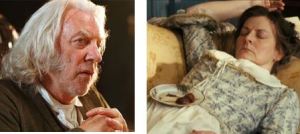
mr mrs bennet
While Lizzie was definitely a tomboy compared to her sisters, did she HAVE to be shown walking barefoot or slogging through the fields and dragging her hems through mud and dew so often? Austen, in demonstrating Lizzie’s loyalty to Jane, devised a scene where Lizzie walked through 3 miles of wet fields to be with her sister. This caused Miss Bingley to note with disdain that her petticoat was six inches deep in mud. The Bennets, while upper class, were not super rich. Cloth was not easily obtained or cheap. Clothes were made, remade, reused, and worked over, until the cloth became so threadbare that it was used for cleaning. So, for Lizzie to be shown muddying her hems in so many scenes makes no sense. Her gowns would need repeated washings, which, with the strong lye soaps of the day, would have degraded the cloth too quickly for practicality. She would surely have pinned her dress and train up, exposing only the petticoat, or worn a shorter day gown, as so many commoners and country folk did. Perhaps I am being too much of a stickler, but these lapses in logic affected my experience of the film the first time around and they still do.
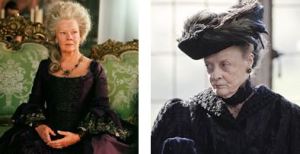
catherine violet

One more rant. It’s become de rigueur in historical films to dress dowagers in the richly made, old-fashioned clothes of their younger years (think of Violet, the dowager countess in Downton Abbey and Judith Dench as Lady Catherine de Bourgh in this film). We get that. My mom still wears serviceable but outdated clothes from the 1980s, but can there be any excuse for dressing Miss Bingley in a nightgown for the Netherfield Ball and arranging her hair in a 1960’s updo?

caroline bingley

In my opinion, this 2-hour adaptation of a 200+ page novel falls short when compared to the 1995 six-hour P&P. In 2005, Wickham was given very short shrift, as were the younger Bennet sisters. The scenes moved too fast, though I suppose this suited director Joe Wright’s intent, since he was targeting an audience that can barely remember life before fast-paced electronic games, instant messages, and music videos.

My final beef is with the alternative American ending. Mr. Wright insulted many serious fans of classic literature across the Pond with the final dialogue between Lizzie and Darcy, which lowered their romance to the level of a Barbara Cartland novel.


I still don’t like P&P 2005 half as much as P&P 1995.  Yet, despite my misgivings, P&P 2005 has held up relatively well and I think younger viewers still prefer this adaptation to P&P 95. The second film on my mind is Clueless, which premiered several months ahead of Pride and Prejudice 1995 in the U.S., and which also targeted the young theater goer.

Amy Heckerling’s 90’s take on Jane’s meddlesome Emma is as fresh and funny today as it was then. It’s hard to choose which is more ridiculous: the slang of the 90’s valley girl airheads,  the over-the-top fashions, the conspicuous consumption of LA teen culture, the banality of Cher’s high school education, the immature boyfriends, or the neutered adults.

Who can forget Cher’s mugging, where she resists lying down on the ground in her designer outfit, even with a gun to her head? Or how Heckerling turned Frank Churchill into Christian, a disco-dancing, Oscar-Wilde-reading, Streisand-ticket-holding-friend-of-Dorothy cake boy?

cher and christian at the mall

As Dion reminds Cher, “He does like to shop and the boy can dress.” Cher’s classic reply to Christian’s being gay? “Oh, my God, I’m totally buggin’!” Then there’s the girls’ inability to drive in LA, where driving is as essential as breathing. Those scenes are still classic and not to be missed.

Amy Heckerling did a smart thing in reinterpreting Emma. She brought Jane’s heroine over to California and gave her a different name, and moved her from a dull, country town and dropped her in the center of Beverley Hills, the Mecca for consumption-driven materialists.

Like Emma, Cher is motherless. Whereas Emma’s mama died a natural death, Cher’s mom died from the complications of liposuction on a plastic surgeon’s table. Both Cher and Emma are rich, bored, and meddlesome. Cher babies her father, much as Emma caters to Mr. Woodhouse. In Clueless, Cher’s father, a lawyer, is more dynamic than Mr. Woodhouse. One senses that he tolerates Cher’s mothering more than needs it. The love between them is palpable, and Cher’s kindness to one and all is genuine and sweet. These traits save her shallow character.

There are many similarities between the Emma characters and Clueless characters, and it’s fun to guess in the film who is who. You can tell from my excited tone how much I like this cinematic take of Emma. Clueless is a broad satire that seldom delves below the surface. The film is a feel good movie designed to give the viewer a rollicking good time.

Clueless has the same energy, sense of fun, and satiric take on human foibles as Jane Austen’s Juvenilia. I wonder if Amy Heckerling, having lumbered through all 400+ pages of Emma, turned to Jane’s juvenile stories for inspiration? They are filled with zany plots and joie de vivre. I wonder if she decided to meld the boisterous tone of Jane’s youthful stories with the more layered and complex plot of Emma. Meld? I think not. I think Amy gleefully tossed Emma’s subtext aside in favor of a bit of fun.

I am curious, gentle readers, about your take on both films. Do you agree or disagree with my assessments? Please let me know.
Cooking With Jane Austen

images

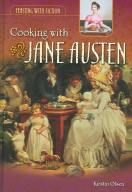
Cooking With Jane Austen, Kirstin Olsen

What can be a better way to celebrate fall and the Thanksgiving holiday than to examine a recipe or two from Kirstin Olsen’s 2005 book, Cooking with Jane Austen? – spending time with family and friends and sharing the food!

I’ll just get my two major complaints about the book out of the way. The font is difficult to read – too fancy for my taste – and the book’s cost: $55.00. I found my copy (in excellent shape) via second hand means, which I recommend.

Now, for the good news. While we know that Jane Austen was spare in her descriptions of food, interiors, and clothing in her novels, she provided enough hints for Ms. Olsen to peruse cookery books of that era. Using a variety of sources, Ms. Olsen found recipes similar and close to those she thought Jane might have known. Elizabeth Raffald’s and Hannah Glasse’s recipes are consulted, as well as those from John Farley, Martha Bradley, and more. Ms. Olsen provides historical context at the start of her book and with each recipe category. Even if you never try out one of the recipes, you can glean much information for your personal interest or to add authenticity to a novel you are writing.

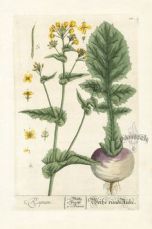
Turnip_Elizabeth Blackwell

Illustration by Elizabeth Blackwell

Boiled Turnips

This recipe for boiled turnips begins with a quote from Mr Woodhouse in Emma (172)

An historic explanation of the popularization of the turnip follows, with a typical description of a recipe from an 18th century cookery book:

Turnips may be boiled in the pot with the meat, and indeed eat best when so done. When they be enough, take them out, put them in a pan, mash them with butter and a little salt, and in that state send them to the table…

Ms. Olsen then provides the modern recipe for today’ cook, which is extremely useful for those of us who wish to recreate a regency meal for our Jane Austen book clubs.

Modern Recipe for Boiled Turnips

1 lb turnips, 3 T. butter, 1 tsp. salt.

Wash and peel the turnips and trim off the tops an bottom. Cut them into 1″ dice. Bring a pot of salted water to a boil and add the turnips, boiling them until fork-tender, about 15 minutes. Mash the turnips with the butter and salt and serve immediately. (Olsen, p 216)

For my taste, I would prefer boiling the turnips with the meat, as suggested in the 18th century description, much as I prefer making stuffing inside the turkey over making the stuffing separately in the oven. The bird’s natural fat and juices add much more flavor, don’t you think?

Roast Stubble Goose

Goose_thehistoricfoodie

Roast Stubble Goose image found on The Historic Foodie blog

Here’s another recipe to celebrate this season and holiday – Roast Stubble Goose. It starts off  with a quotation from Emma, a novel filled with references to food. (Thank you, Jane.)

Mrs. Martin was so very kind as to send Mrs. Goddard a beautiful goose: the finest goose Mrs. Goddard had ever seen. Mrs. Goddard had dressed it on a Sunday, and asked all the three teachers, Miss Nash, and Miss Prince, and Miss Richardson, to sup with her. (Emma 28-29.)

Ms. Olsen tells us that a stubble goose is an older bird that fattened on harvest gleanings. In Jane Austen’s time, it was traditionally served with applesauce.

Elizabeth Raffald’s recipe for Roasted Stubble Goose starts with:

Chop a few sage leaves and two onions very fine; mix them with a good lump of butter, a teaspoonful of pepper and two of salt. Put it in your goose, then spit it and lay it down, singe it well, dust it with flour; when it is thoroughly hot baste it with fresh butter…

In this section of Cooking With Jane Austen (p 121-126), Ms. Olsen offers old and modern recipes for roast stubble goose, roast green goose, goose with mustard, and roast turkey. The book consists of 414 pages, so there are numerous recipes to try.

Other Jane Austen themed food books that I love include: Tea With Jane Austen by Kim Wilson and The Jane Austen Cookbook by Maggie Black and Dierdre le Faye, both still readily available. Also on this blog: 18th Century Cookery Books and the British Housewife and a review of Jane Austen and Food by Maggie Lane.

To all my U.S. readers, have a splendid Thanksgiving holiday. While we are thankful for our lives, family, and friends, please give a special thank you to the animals who were sacrificed to nourish us. They “gave” up their most precious gift – their lives.

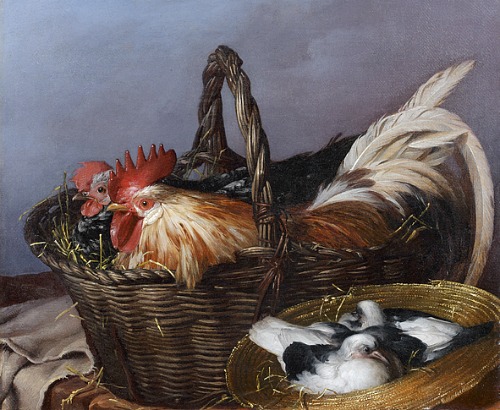
chickens and pigeons 18th c.

Chickens and pigeons, 18th c. painting


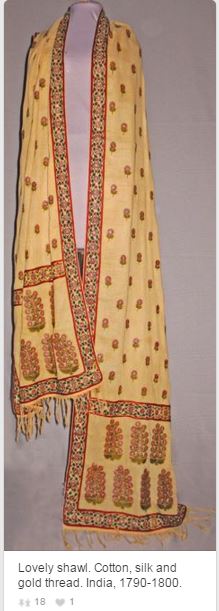
India shawl made of cotton, silk, and gold thread. 1790-1800, Napoleon-fashion.com

India shawl made of cotton, silk, and gold thread. 1790-1800, Napoleon-fashion.com

Indian influence on Regency dress included fine Indian muslin, used for dresses and cravats, and beautiful, expensive hand-loomed shawls. During the late 18th-early 19th century, an unprecedented number of Indian cloths, made of quality fabrics, were exported to Britain. These cloths were expressly made for the British market, with colors and chintz patterns toned down to appeal to the more restrained British taste.

While cheaper and inferior imitation paisley shawls were increasingly made in Great Britain (by 1821, shawls made in British locations like Spitalfields and Scottland would overtake the Indian exports in numbers sold), the authentic Indian shawl was highly prized for its quality, cost, and prestige. These shawls were so popular with those who could afford them that they were presented to friends and family members by merchants, soldiers, and visitors returning from the East Indies. Made of durable cloth, they were carefully handled and handed down from mother to daughter and aunt to niece over the years.

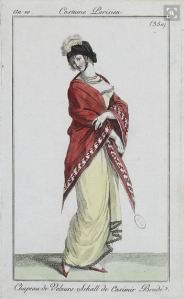
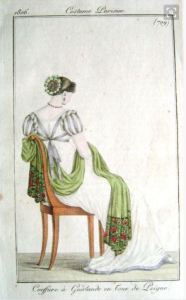
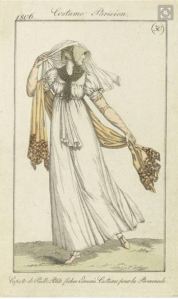
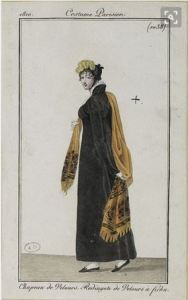
Shawls not only added prestige and style to a lady’s wardrobe, they served other functions, such as color and pattern. They definitely added warmth to the thin, gauzy, almost transparent muslin gowns that became so popular at the turn of the 19th century. The shawls lent themselves to other uses as well.

Lady Hamilton, Lord Horatio Nelson mistress, used the shawls to great effect for her “Attitudes,” as described by Mrs. St. George, who had the occasion to witness several of her performances.

From their book Drawings Faithfully Copied from Nature at Naples by Friedrich Rehberg, Engraver and Tommaso Piroli, Illustrator, 1794 4

From their book Drawings Faithfully Copied from Nature at Naples by Friedrich Rehberg, Engraver and Tommaso Piroli, Illustrator, 1794 4

She assumes their attitude expression, and drapery with great facility, swiftness, and accuracy. Several Indian shawls, a chair, some antique vases,  a wreath of roses, a tambourine, and a few children are her whole apparatus. She stands at one end of the room, with a strong light to her left, and every other window closed. Her hair (which by-the-bye) is never clean is short, dressed like an antique, and her gown a simple calico chemise, very easy, with loose sleeves to the wrist. She disposes the shawls so as to form Grecian, Turkish, and other drapery, as well as a variety of turbans. Her arrangement of the turbans is absolute sleight of hand, she does it so quickly, so easily, and so well. It is a beautiful performance, amusing to the most ignorant, and highly interesting to lovers of art. The chief of her imitations are from the antique. Each representation lasts about ten minutes. It is remarkable that, though coarse and ungraceful in common life, she becomes highly graceful, and even beautiful, during this performance. It is also singular that, in spite of the accuracy of her imitation of the finest ancient draperies, her usual dress is tasteless, vulgar, loaded, and unbecoming. – Account by Mrs. St. George, Wit, Beaux, and Beauties of the Georgian Era, John Fyvie, 1909, pp 335-336.

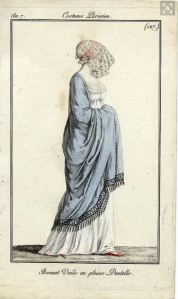
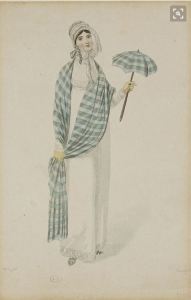
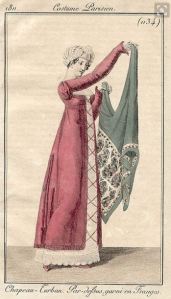
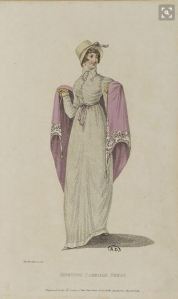
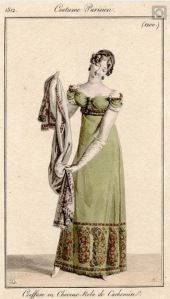
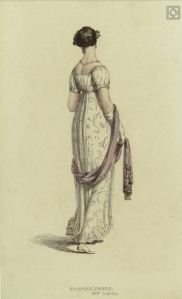
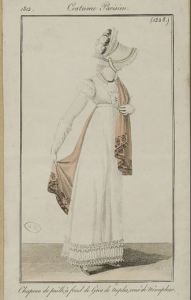
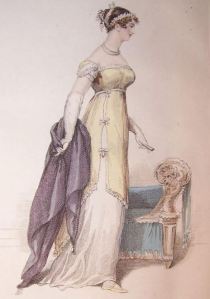
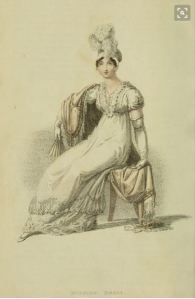
As I collected Pinterest images of fashion plates of elegant ladies and their shawls, I saw how much elegance and beauty these accessories added to a woman’s arm and hand gestures. The artists who drew the fashion plates were certainly aware of these effects. I have created a short gallery of an example of the beauty that shawls added to a woman’s figure and fashion statement. Enjoy.

More on the topic:

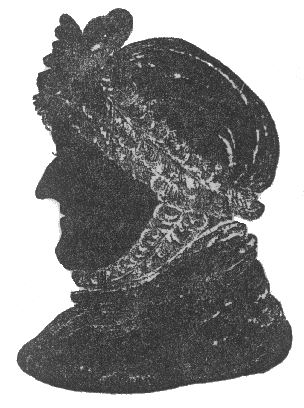
Cassandra Austen

Cassandra Austen in old age

Jane Austen’s family was not rich, by any means, but the family was genteel and belonged to the English gentry. Rev. Austen earned a respectable living as a rector at Steventon rectory. His wife, Cassandra, was a close relative of Theophilus Leigh, head master of Balliol College. She was also a relation of the Leighs of Stoneleigh Abbey, a most impressive and well-regarded family.

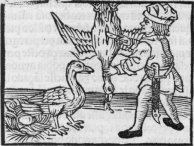
When handsome Miss Leigh married the very handsome Mr. George Austen, her life became no picnic. After his marriage, Mr. Austen took to farming with a spirit. This meant that while he enjoyed the prestige of becoming a gentleman farmer, Mrs. Austen took over the daily charge of the dairy with a bull and six cows, plus ducks, chicken, guinea-fowl and turkeys, the vegetables that were grown in the garden, the honey used for mead, and the home-made wines.

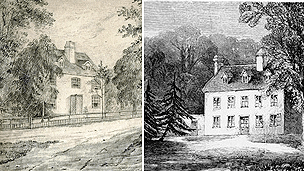
Steventon Rectory, Images from BBC

Steventon Rectory, Images from BBC

Any surplus allowed the Austen family to sell the produce for a profit. Under Mrs.Austen’s supervision during Jane’s childhood and spinsterhood years, only tea, coffee, chocolate, spices sugar, and other luxury foods were purchased. As James Edward Austen-Leigh wrote in 1870 in his Memoir of Jane Austen,

I am sure that the ladies there [Steventon] had nothing to do with the mysteries of the stew-pot or the preserving pan;but it is probable that their way of life differed a little from ours, and would have appeared to us more homely.”

As with many wives of her station, Mrs. Austen accepted her role as the family’s housekeeper. However, she relied on servants, such as a cook and maid of all work to actually do the “hard” work, such as cooking, cleaning, laundry, and general sewing. While her servants performed the tasks, Mrs. Austen determined the duties of the day, much like a general manager. She met daily with her cook to superintend the meals of the day. There were also a dairy maid and a washer woman, who came once a month. Cassandra Austen’s other important tasks were to train her daughters in the art of overseeing a household.

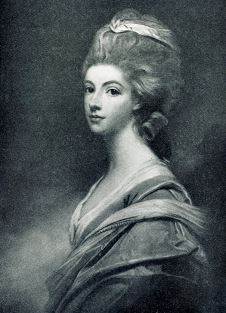
Susanna Whatman shortly after her marriage

Susanna Whatman shortly after her marriage

Susanna Whatman was a contemporary of Mrs. Austen. Born in 1752, she was married to James Whatman, a papermaker. Shortly after her marriage in 1776, she wrote a housekeeping book to instruct her servants and offer advice about housekeeping duties and domestic life.

The following passage of her advice is of particular interest. Rev. Austen kept an extensive library, much like Mr. Bennet in Pride and Prejudice. In this instance, Mrs. Whatman instructs the housemaid to clean the library.

The sun comes into the Library very early. The window on that side of the bow must have the blind let down. The painted chairs must not be knocked against anything, or against one another. A chair must not be placed against the door that goes into Mr. Whatman’s Dressingroom. All the space between the daydo and skirting board is plaister. Therefore, if it is knocked, it will break. The books are not to be meddled with, but they may be dusted as far as a wing of a goose* will go. Nothing put behind the door besides the ladder. Tea leaves* used on the carpet in this room, Drawingroom, and Eating Parlor, and Mrs. Whatman’s Dressingroom, no where else.

*wing of a goose – dusters were made with goose feathers from their wings.

**During the Georgian era, carpets were sprinkled with moist tea leaves and cleaned with a hair broom.

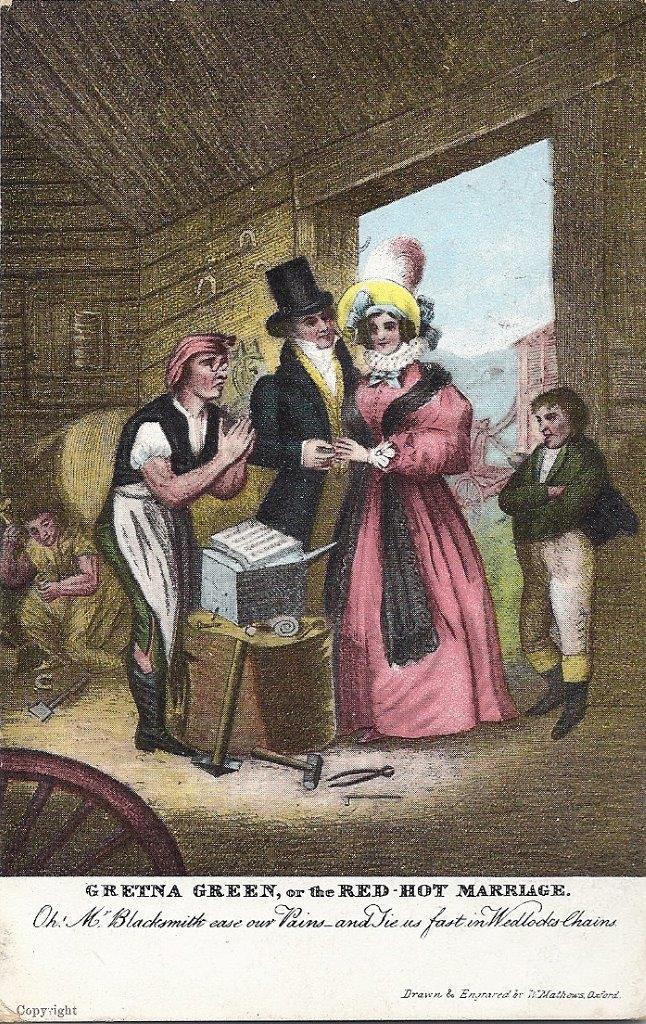
Gretna Green, or the Red-Hot Marriage

Gretna Green, or the Red-Hot Marriage

Another Elopement–A considerable sensation has been created in Dublin by the disappearance of the lovely daughter of Sir Thomas Butler, of county Carlow, with Captain Gosset, son of the Secretary to the Lord Lieutenant. An attachment had existed between the parties for some time, but the friends of both were averse to the marriage, in consequence, it is said, of “almighty love” being their only patrimony. The lady is one of ten children. (The Court Journal: Gazette of the Fashionable World, No. 319, Windsor, Friday, June 5th, 1835, p 357.)

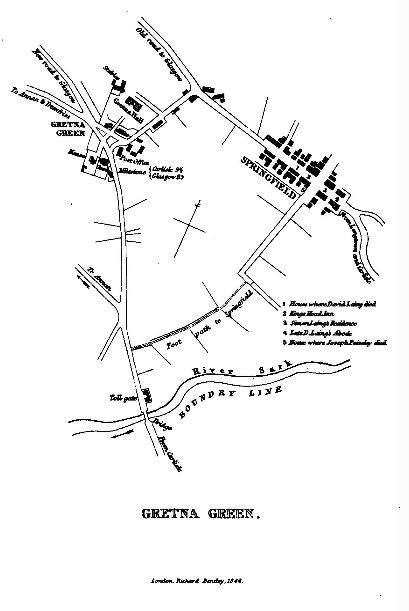
The short announcement above of the elopement serves as a literary amouse-bouche to a longer elopement tale about a Lord and his housekeeper. Clandestine elopements to Gretna Green created scandalous sensations in England during the Georgian, Regency, and Victorian periods. There was nothing quite like peer pressure to keep the daughters of peers and the rising middle class in line to protect lands, inheritances, and investments. There were enough exceptions to the rule, however, to hold all but the most daring in check when held in love’s hormonal thrall. About 300 marriages were celebrated yearly in that border Scottish town in what were popularly termed “o’er the march” weddings.

Gretna Green

Gretna Green

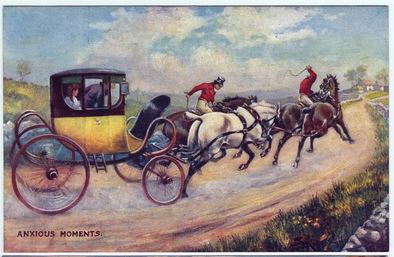
Traveling to Gretna Green along the Great North Road was no mean feat back then. Today, it takes a little over 5 hours via M40 and M6 to travel the 326 miles from London to the Scottish border town. In 1818, it took an average of four days, with carriages traveling and average of 6 miles an hour. Frequent stops to change tired horses and rest for food. and an overnight stop for a room at an inn added to travel time. Should a virginal heiress spend at least one night on the road, her reputation would be lost, even if she slept in a separate room from her paramour and was chaperoned by her maid.

A close male relative needed to catch up with her before she reached Scotland, for her fortune was at stake. A wealthy bride who married in haste missed out on the careful negotiations made on her behalf before her wedding for her future security. Without those arrangements, she would forever be at the mercy of her husband, for he would have full control of her fortune from the moment they said their “I do’s.” Wickham ran through Lydia’s 10,000 pounds (so generously negotiated by Mr. Darcy) in no time. He could do this with impunity, aided and abetted by a law that gave the husband all the rights and the wife none.

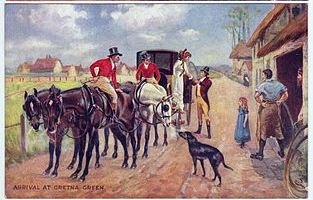
Gretna Green, trois cartes postales illustrées (d’une série de 4) représentant les épisodes d'un mariage à Gretna Green : (Le Départ) ; Moments d'angoisse. Image @Wikimedia Commons

Gretna Green, trois cartes postales illustrées (d’une série de 4) représentant les épisodes d’un mariage à Gretna Green : (Le Départ) ; Moments d’angoisse. Image @Wikimedia Commons

After the Hardwicke Marriage Act of 1753, which tightened the conditions for marriage, fortune hunters and scoundrels, and even amorous gents, trundled their “beloveds” in fast equipages and sped north before their “sweethearts” could come to their senses. Couples could marry in haste in Scotland, where marriage laws were lax. The Scots, bless their hearts, were more than willing to accommodate runaway couples and speed them on their way to marital bliss.

Not all Gretna Green elopements involved heiresses and fortune hunters. Lord Erskine, a baron and a Lord Chancellor, ran off with his housekeeper. Their story is told by Peter Orlando Hutchinson in Chronicles of Gretna Green: in two volumes, Volume 2.

Hutchinson chronicled the joining in 1818 of 66-year-old Lord Erskine to his much younger mistress/housekeeper, Miss Sarah Buck, in a way that conveyed the scandalous nature of the elopement. The amorous couple brought along their two bastard children, for once the parents were wed in Scotland, the children would be legitimized. One can only imagine what Erskine’s eight legitimate children must have thought of this misadventure when they discovered that their papa had run off with one of the servants. Erskine headed straight towards the village of Springfield, successfully eluding his pursuing son, Thomas, until it was too late.

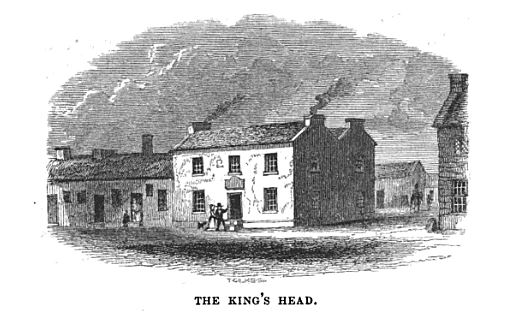
Those peregrinators who enter into the village of Springfield, in the parish of Gretna in the county of Dumfries, in that part of Great Britain denominated Scotland, would do well to draw their handkerchiefs from their pockets, and give free vent to their feelings when they contemplate that especial hostelrie yelped “The King’s Head.”

The King’s Head Inn stands in the midst of the village of Springfield…This hostelrie is a glorious ruin; we say ruin, because forsooth. since the alteration of the road the tide of passengers and the channel of business have been turned aside into another course, and hence the prosperity of former days has dwindled away to a lamentable extent.

King's Head In external appearance the edifice is ordinary and humble; — no lawn or parterre in front; no flowers and sweet smelling shrubs no long carriage drive from the lodge up to the steps, for it stands flush with the street; no grounds; no sentimental walks; no trees to hang on. It forms the coin or angle of two streets; it is entered from the principal one by a door in the centre of the facade; there is a sash window on each side of the door, whilst three similar windows appear in the story above, ranged equidistant; the roof is of slate, but the heart sinks when the eye surveys it, for with tears be it recorded, the said roof is but sparingly adorned with chimneys. Hence, in passing through Springfield, no pictures of profuse hospitality arise in the imagination of the peregrinator; no visions of good cheer, or pleasant fellowship, and no bright ideas of rich entertainment gladden his spirit.

Lord Erskine’s Marriage

Lord Erskine

“Visitors to this shrine have somewhat liberally amused themselves with writing, by means of certain diamond rings, their names or those of their friends, mottoes, apophthegms, and amatory verses. On one of the panes of the window in the apartment over the kitchen appears the name and title of a noble baron of these realms, now no more…” (Hutchinson found it doubtful that Erskine scratched his name on the window pane, for no noble baron would have added the prefix of “Lord.”)

Thomas Erskine, Baron Erskine of Restormel, in the county of Cornwall in England, was born into this wicked world in the year 1750…He fixed on the study of the law…and in due course he became eminent.

At the age of twenty, videlicet, in 1770, he wedded the amiable and accomplished Miss Moore; he became a widower in 1805, she being the mother of several [8] children his offspring.

An acute man, a first-rate lawyer, an ingenious arguer, a specious reasoner, and an orator that claimed the willing attention of his hearers, he at last rose to the exalted and honourable office of Lord High Chancellor of Great Britain.

Alas and well-way! there is no stability in human nature, no reliance, no confidence, no trust. Oh what a fall was here!–honour, respect, high place, dignity–all, all, came rushing down to the dust.

If it be the historian’s greatest delight to record mighty and noble achievements, so, also, it must be his greatest affliction to tell of weaknesses and acts unwise that the heroes of his pages may have perpetrated.

[He] married his housekeeper–ye powers!–but hush!–hold your tongue.

The manner of it was this to wit,–hush, hush!–cannot it be evaded? Evaded? how? Shall the just and impartial chronicler record what he likes and omit all that he chooses to omit? There is no help.

Coloring the events with highly emotional language, Hutchinson described the ceremony in the downstairs parlor of the King’s Head as an execution, no pun intended. At this point, the he backtracks his tale and describes the couple’s journey from London to Scotland. “–hush! do hold your tongue.”

We are told by such rare chronicles as have made especial note of this matter, and eke by such contemporaries as are now living and remember it, the noble baron laid aside his honours, and became a plain man by assuming an alias–even that of “Mr. Thomas,” and that name, indeed, was returned to those who inquired whose carriage stopped the way.

Mr. Thomas passed unknown for a space; but deception will endure only for a season, and the will eventually prevail. So it was here Mr Thomas’s doublet was soon peered through, and the Lord Erskine was perceived withinside.

It even got about, through the horribly libellous exertions of the gossips of the day, that he travelled in woman’s attire for the purpose of preserving a more certain incog…We pray you to abjure all credence in this assertion; to eschew harbouring it in any wise; and to abhor the mention of it…

Such a scandalous report arose after this fashion,–namely, as my Lord journeyed in the vehicle, together with Mistress Sarah Buck, the lady of his especial election, and the two little pledges of his dearest affection; he did in fatherly love, and that he might beguile the way, and amuse these, the said little pledges, facetiously put upon his own head the bonnet of the herein-before-mentioned Mistress Sarah Buck. Now this is the historical relation of the fact the clearing up the mystery and the expungement of all slur and detraction.

Gretna Green, trois cartes postales illustrées (d’une série de 4) représentant les épisodes d'un mariage à Gretna Green

Gretna Green, trois cartes postales illustrées (d’une série de 4) représentant les épisodes d’un mariage à Gretna Green

They sped on their journey at a fair pace and…Arrived at Springfield by the old road–for neither the present new one nor Gretna Hall were in existence–they repaired to the King’s Head hostel, and in that hostel, to the parlour or sitting-room on the right hand of the door at entering. Here they…”married in haste:” and let us add also… they shortly afterwards” repented at leisure,” but with that we have nothing to do.

Hutchinson describes how Lord Erskine alighted from the carriage wearing an ample traveling cloak, which he wore inside the King’s Head. “It was gathered round his neck by a collar; and by flowing in long folds down to the ground, it served well to cover his whole person. Under this he took his children during the ceremony, in order, as I was told, that they should become his heirs.” A contemporary announcement of the marriage stated, “His Lordship formally signed certificates on the spot to give his children the advantage of the conduct pursued.”

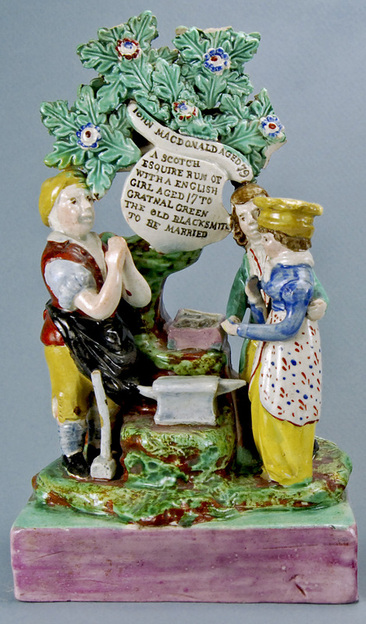
Lord Erskine's marriage

The inscription on the plaque is thought to refer to the elderly Lord Erskine, who eloped to Gretna Green with his young housekeeper, Sarah (sometimes referred to as Mary) Buck. Stafordshire Figures: 1780-1840

According to Hutchinson, the marriage was not to last and Lord Erskine would soon ask for a divorce. While Hutchinson did not tell us why his lordship wished to divorce his lady, he shared the horrified reaction of Dame Beattie upon hearing the news: “Alas the inconstancy of man, the shallowness of his judgment, the instability of his resolution, and the insecurity of his love.”

Alas, yes, but this did not change the fact that the deed had been done…and undone.

Other tales of Erskine’s elopement provide vastly different accounts, despite Hutchinson’s protestations. According to the website for Gretna Green, Lord Erskine was married at the “Queen’s” Head Inn to his housekeeper. He was indeed disguised as a woman and wore the outfit until the “priest” arrived. Only then did he change out of female clothes in order to be married in male attire. The children were instead covered by Miss Buck’s cloak during the ceremony.

Erskine’s legitimate son, Thomas, arrived too late from London to stop the marriage. An argument with his new step-mama ensued, the details of which entertained the village for some time.

Upon Erskine’s death at 75, he left Sarah with very little money and a few more children to look after. One presumes that, as with most British estates, Erskine’s will left his lands and moneys largely intact, to be inherited by his eldest son.