Feeds:
Posts
Comments

Inquiring readers, Tony Grant from London Calling has contributed yet another wonderful article. Inspired by my visit to Williamsburg a few weeks ago, he decided to research some of the buildings in more depth.

The Sir Christopher Wren building at the William and Mary College in Virginia is the oldest academic building in the United States. It was built between 1695 and 1700. However its origins began long before that and a long and tortuous path was followed before the construction of the college could be  begun.
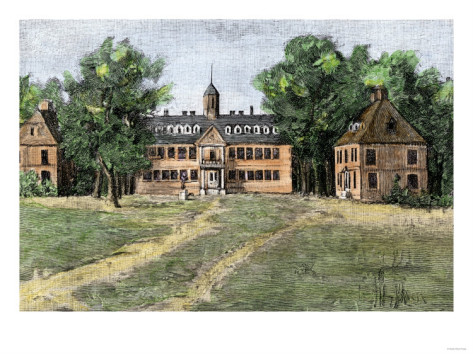
1700s view of William & Mary college with Wren building. @All Posters. Click on image to go to the site.

1700s view of William & Mary college with Wren building. @All Posters. Click on image to go to the site.

In 1618 The Virginia Company of London ordered the construction of a university at Henrico, a few miles south of the present day city of Richmond. By 1619 Sir Edwyn Sandys the treasurer of The Virginia Company reported that £1,500 had been collected and also that every bishop in England had been asked to collect money from their parishioners for the construction of the university. In July 1619, workmen were sent  from England to construct the university. In 1622 an Indian uprising destroyed Henrico. In 1624 Virginia became a Royal Colony and the licence of The Virginia Company was revoked. This removed the charter allowing the building of the university. In 1661 The General Assembly authorised the purchase of land for the building of a college. Nothing happened until 1690 when the Church of England clergy in Virginia put forward propositions for the construction of a college. The reverend James Blair was sent to England in 1691 to petition the new King and Queen, Willam and Mary, to grant a charter to establish a college. The King provided £1,985 14s 10d for the construction of a college to be named William and Mary. There was also a 1d tax placed on all tobacco sold to other countries apart from Britain to raise money. In 1693 a tract of land was purchased for £170 from Captain Thomas Ballard. In May 1694 The Royal College of Arms, which is situated beside St Paul’s Cathedral in the City of London, created a coat of arms for the college. In 1695 the first bricks were laid of the foundation of the college.
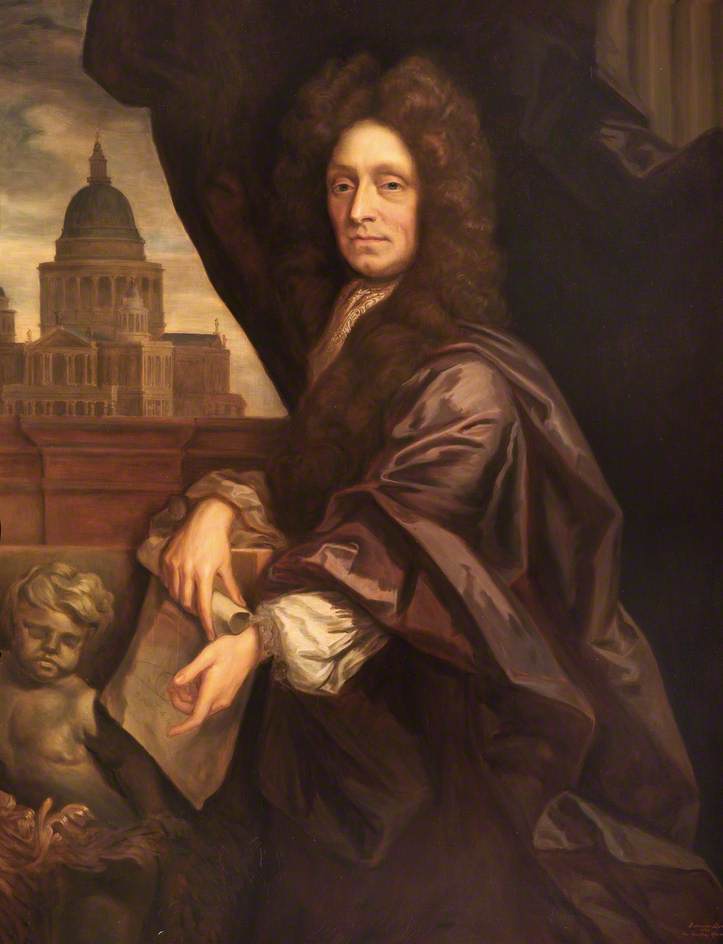
Sir Christopher Wren

Sir Christopher Wren

This original building of the college is thought to have been designed by Sir Christopher Wren. There is no documentary evidence to prove this but there are some arguments in favour of Wren being the architect. Wren was the King’s chief architect and William and Mary authorised the construction of the college. The Church of England used Wren as their chief architect in London and it was the Church of England ministers in Virginia who instigated the building of the college. Wren was also responsible for many other important buildings throughout Britain. Wren was the architect who virtually rebuilt London after the Great Fire in 1666.
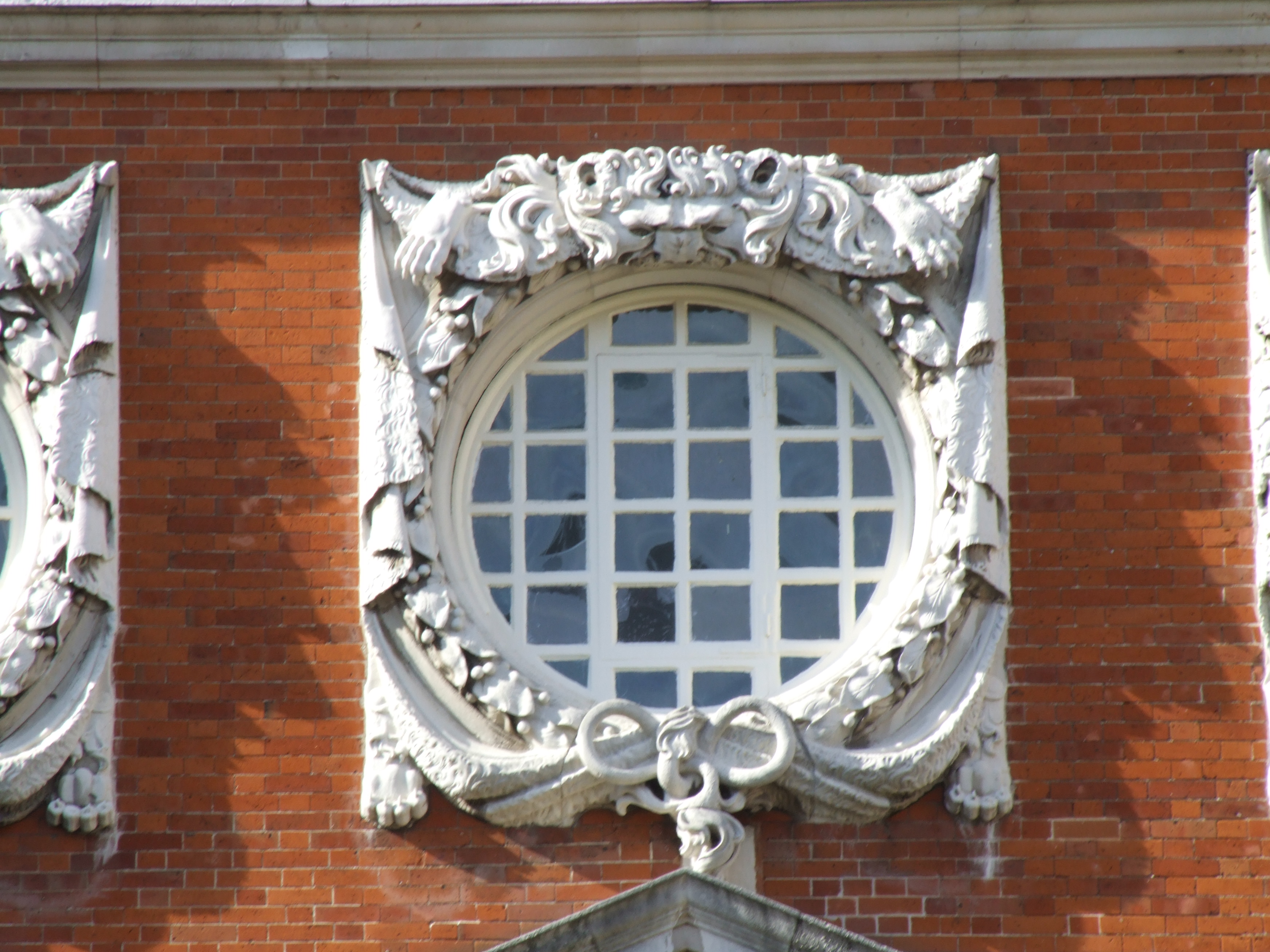
Detail of a Wren window

Detail of a Wren window

Sir Christopher Wren was a scientist and mathematician and became one of England’s most famous architects. He was responsible for designing and building over fifty London churches and he was the builder of St Paul’s cathedral in the city. He was born on October 20th 1632 in East Knoyle, a village in Wiltshire in Southern England. His father was the local rector. His father later moved to Windsor and Christopher went to Westminster School, situated next to Westminster Abbey and then went on to Oxford University. He had a talent for mathematics and also inventing things. In 1657 Wren was appointed as the professor of astronomy at Gresham College in London and four years later he became the professor of astronomy at Oxford.

he Royal College of Arms next to St Pauls where the coat of arms for William and Mary College was created. Image @Tony Grant

The Royal College of Arms next to St Pauls where the coat of arms for the College of William and Mary was created. Image @Tony Grant

In 1662 he was one of the founding members of The Royal Society along with other great mathematicians and scientists. From his interest in physics and mathematics he developed an interest in architecture. In 1664 and 1665 he was commissioned to build the Sheldonian Theatre in Oxford and also the chapel of Pembroke College Cambridge. Architecture then became his main interest. He visited Paris and became interested in the baroque style. In 1666 The Great Fire of London destroyed much of the old city. This provided a great opportunity for Wren. He drew up designs for a grand new city. However, many of his ideas did not come to fruition because the owners of different parcels of land, in the city, did not want to sell. Wren was able, though, to design fifty-one churches and St Paul’s Cathedral.
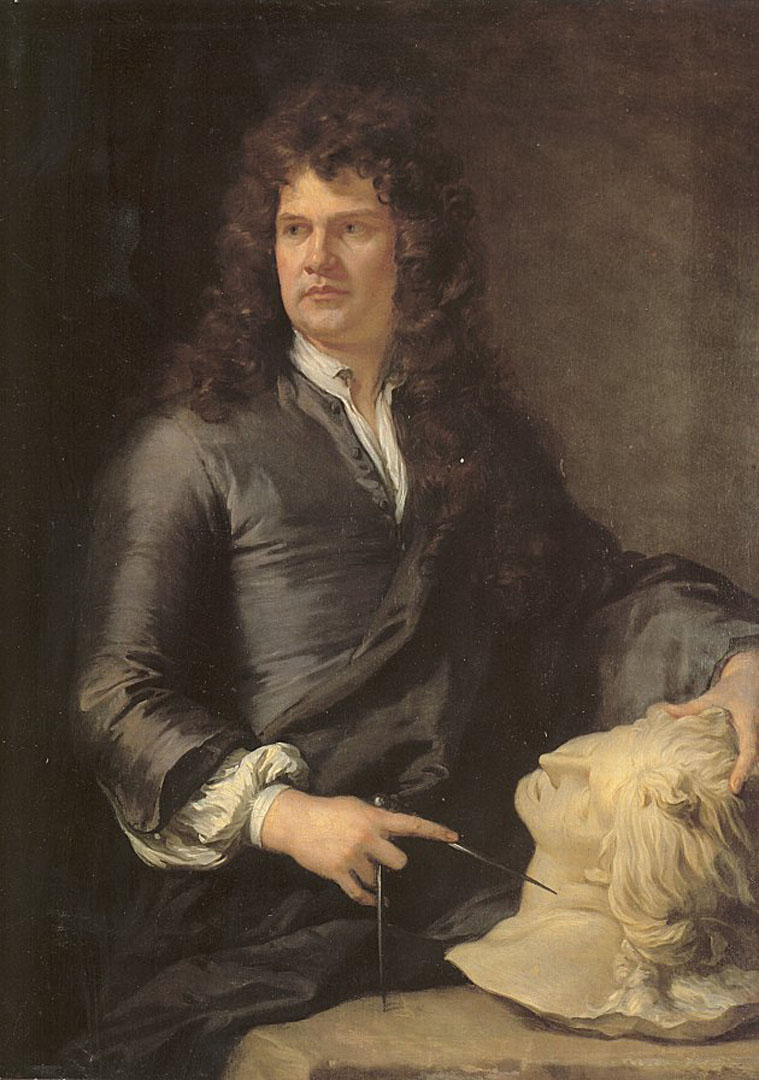
Grinling Gibbons

Grinling Gibbons

Returning to the possibility of Wren designing the William and Mary College in Virginia, it is interesting to compare Wren’s known buildings with the college to see what similarities in style there might be. I referred to the efforts to raise the finances to build the college and maybe there was a difficulty here. When you compare what Wren built here in England with William and Mary College there are many discrepancies. William and Mary College looks to be a very downmarket version of Wren’s classic buildings.
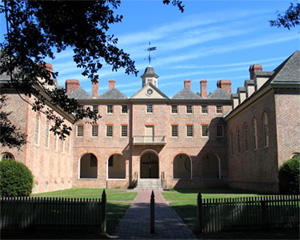
Wren Building. @William & Mary's website. Click on image to see the source.

Wren Building. @William & Mary’s website. Click on image to see the source.

There are some similarities in design and proportion though. Whoever did design William and Mary College could at least have had Wren as an inspiration. Wren worked closely with designers such as Grindling Gibbons, the wood carver and John Groves, the plasterer.
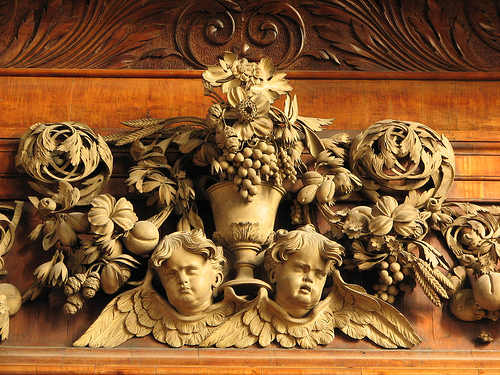
Carving design by Grinling Gibbons

Carving design by Grinling Gibbons

They both created the most ornate ceilings, wood panelling and facia stone carvings on Wrens buildings. These people were the most prominent and influential designers of their day. They would have charged a premium price for their talents and skills.From the pictures of William and Mary College these features are not present.
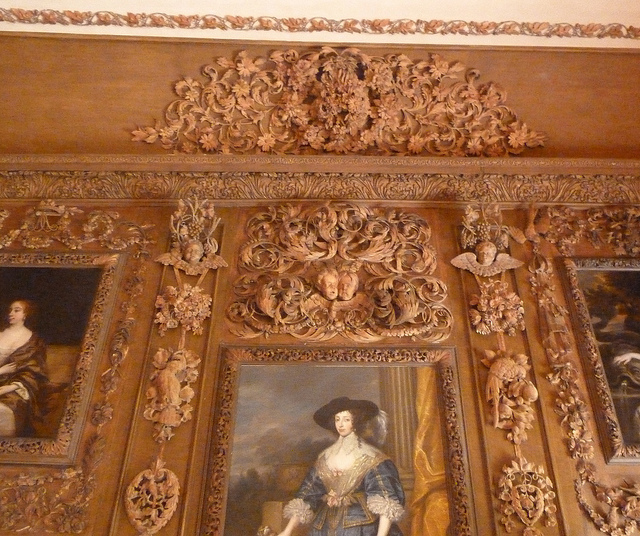
Details of wood work by Grinling Gibbons

Details of wood work by Grinling Gibbons

William and Mary, who the college is named after, provide an insight into the turbulent history after the even more turbulent times of the English Civil War.

William Henry Stuart was born on November 14th 1650 in the Hague in the Netherlands. He was the son of William II of Orange. In 1672 William was appointed Stadholder(chief magistrate)and captain general of the Dutch forces  to resist a French invasion of the Netherlands. In 1677 he married his cousin Mary, the eldest daughter of James, Duke of York who became James II of England. It was a diplomatic and politically inspired marriage intending to repair the rift between England and the Netherlands after the Anglo Dutch Wars. James II was a very unpopular monarch, not least because he was a catholic. The English Parliament tried to oppose James and wanted to reduce his powers. They secretly invited William and Mary to come to England and rule as joint monarchs. William landed at Torbay on 5th November 1688, a very nice Devon coastal resort these days, with an army of 14,000 troops. With local support this increased to 20,000 men. They advanced on London. This was called the Glorious Revolution. James fled to France and William and Mary were crowned as William III and Mary II. Parliament then passed the Bill of Rights which prevented a catholic taking the throne again and parliament also limited the powers of the monarch.
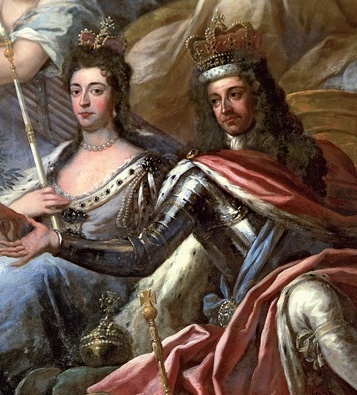
William and Mary

William and Mary

William and Mary did not like each other. William had a dour personality. He was asthmatic, twelve years older and several inches shorter than Mary and he was a homosexual by nature.
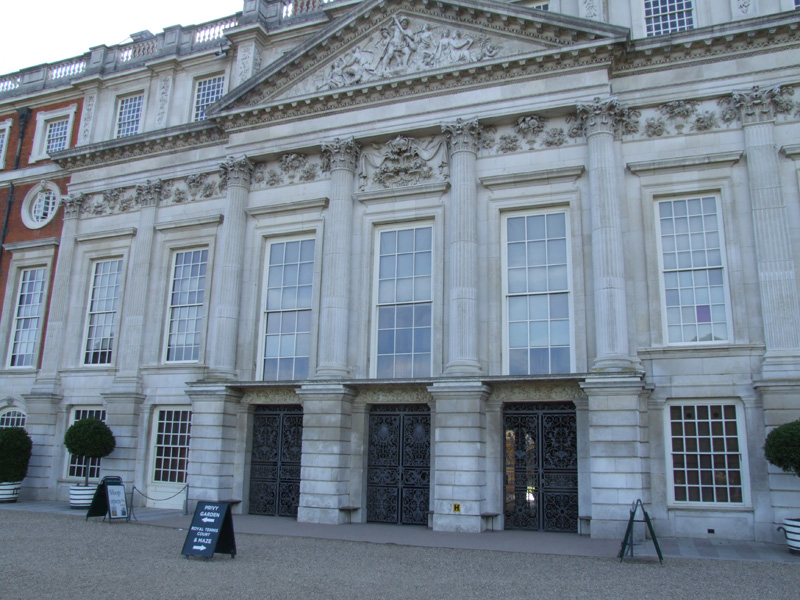
Sir Christopher Wren's addition to Hampton Court

Christopher Wren facade

If ever you visit Hampton Court you can walk around the 17th century part of the palace behind the old Tudor part which was designed and built by Sir Christopher Wren as a present for William and Mary. It was  also intended as an enticement to bring William to England as our monarch. William and Mary liked Hampton Court and spent a lot of time there.

Visitors today can process through all the rooms of state. A palace was designed to a specific plan. The first rooms you enter were waiting rooms. Ambassadors from other countries would wait until ushered into the next set of rooms to have an audience with the King. Rooms following on from that would be for the Kings own ministers. Following on to the next set of rooms, the greatest of the aristocracy and personal friends of the King would be admitted. As you process through the rooms further only the monarchs most intimate friends, advisors and family would be permitted.
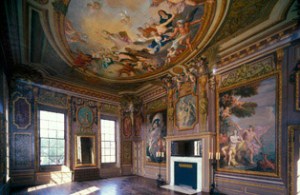
Baroque interior of the King's apartments, Hampton Court. Click on image for source.

Baroque interior of the King’s apartments, Hampton Court. Click on image for source.

Finally you reach the Kings own personal rooms and, lastly, after all the grand state rooms, a small bedroom, lavishly decorated but very small, almost a closet, the kings own sleeping chamber. It is interesting to note that the room above the king’s bedroom was the room of his own personal manservant who was the only one who had access to the King in the night. His manservant could enter by way of a narrow staircase, which apparently, he often did. We can only surmise!
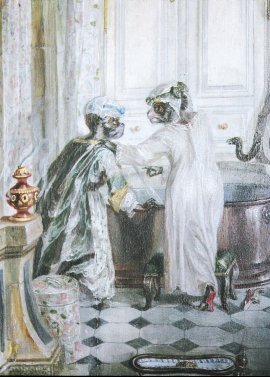
During the 18th century women wore a long flannel shift while bathing, sometimes with lead weights sewn into the hem to keep the skirts from floating up. (Word Wenches: Keeping It Clean.) In  Worn Through, Dr. Kimberly Chrisman-Campbell discusses monkeys in art in a blog entitled Monkeys a la mode. The creatures served as satirical stand-ins for humans, much as dogs did in satirical early 20th century poker paintings.

Bathing_scene

Image @Worn Through. Click on image to go to the source.

I found Chrisman-Campbell’s passage about the bath of particular interest:

The bath scene is a rare and realistic image of an eighteenth-century bathroom and bathing ritual; the monkey kicks off her red-heeled shoes (long before Louboutins, these signified that one had been presented at Versailles, an allusion to the family’s courtly connections) but she will wear her lace-trimmed white linen chemise in the tub.

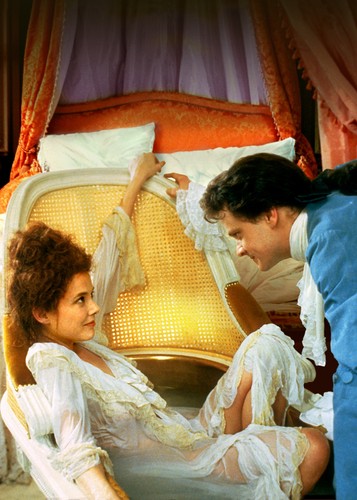
One wonders how much the habit of wearing a bathing gown in a bath had to do with modesty. The time it took to prepare for a bath was long and arduous. Water had to be hauled from the well, heated in sufficient quantities, and then hauled up the stairs before the water cooled. One did not take a quick bath in such an instance, but would linger in the tub until the water became too cold for comfort. One imagines that a roaring fire kept the room (and bather) warm. In those days, aristocratic women entertained visitors in their dressing rooms while wearing elaborate dressing gowns. As shown in the scene below, they also entertained visitors while bathing.

Valmont_stills_21959

Annette Bening and Colin Firth in Valmont

In the  film Valmont, Bening’s Marquise Isabelle de Merteuil uses the bath as a prop to demonstrate her power and sexuality. Her bathing dress enhances her curves and disguises very little. This film clip shows one delicious bath scene.


In this image from Mr. Vernon, Martha Washington’s bathing dress is plain and pedestrian by comparison. It is a mystery to me why the bathing dress was worn, for anyone who has walked in the rain knows how quickly wet clothes can cool the skin. One can only imagine the chilling effect of wet cloth in drafty houses.

Bathing gown. Image @ Mount Vernon

Bathing gown. Image @ Mount Vernon

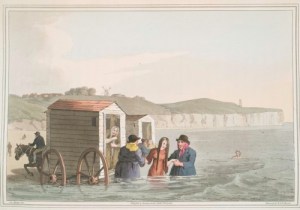
By the late 18th century/early 19th century, bathing dresses were fashionable at seaside resorts. One can readily understand why, for in the image below a man on horseback pulls the bathing machine into the water. The bather peeks out of the door, unwilling to expose herself until all was safe. In fashionable Brighton, men and women bathers were separated and swam from different beaches. Away from prying eyes, some women felt free to bathe nude.

TopILNewsBathingMachine

Tide Coming in Fast and a Jibbing Horse”, a 19th century engraving from the Illustrated London News which shows how a bathing machine was towed in and out of the sea by a man on horseback. Image @The Brighton Swimming Club

As you can see from this 1813 image from the Costumes of Yorkshire, many women still chose modesty over nudity. The dippers were female, and the male rider on horseback kept well away from view.

1813-From-The-costume-of-Yorkshire-illustrated-by-a-series-of-forty-engravings-being-fac-similes-of-original-drawings-500x351

Sea Bathing’ 1813 From “The costume of Yorkshire, illustrated by a series of forty engravings, being fac-similes of original drawings” NYPL Digital Collection

If modesty was the reason for wearing bathing costumes made from linen or cotton, then their purpose failed. As seen in this 1916 photograph, wet fabric didn’t hide the details of the nude body as much as accentuate the curves. The veiling was illusory and the result much sexier than the nude body itself.

bathing suit 1916

Wet suit 1916: Alfred Stieglitz(‘Ellen Koeniger’, 1916, gelatin silver photograph, 11.1 x 9.1, J Paul Getty Museum, Los Angeles)

In an interesting aside, this image of a medieval bath from Leeds Castle shows that bathing wasn’t always regarded as a harmful exercise by the British.

Medieval bath, Leeds Castle

Medieval bath, Leeds Castle

Read more about the seaside and seaside fashions on this blog to round out your knowledge of how the Regency folks enjoyed their seaside excursions:

Nice, informative video about book binding, although I have a minor disagreement with the statement about a book not being important enough to mention the name of an author. Jane Austen’s early editions were by a lady because a gentlewoman simply did not publicly admit to earning a living as a novelist,

Laurel Ann Nattress's avatarAustenprose

Just in case you were interested to know how much your first editions of Jane Austen’s works were worth, this video featuring Adam Douglas, Senior Specialist in Early Literature at Peter Harrington, a rare book dealer in London, introduces a selection of Jane Austen’s first editions and explains how bindings affect value.

We just love how he handles the books. It’s like an aphrodisiac for an Austen fan as he sensually glides his hands over first editions of Sense and Sensibility and Mansfield Park and speaks in reverent and seductive tones! Adam, you are such a Willoughby!

Enjoy!

Laurel Ann

View original post

Sidmouth is now talked of as our summer abode” – Jane Austen to her sister Cassandra, January 1801

Sidmouth: A History. Book available at. Click on link.

Sidmouth: A History, edited by Geof Holmes. Book at this link. Click on image for source.

In the summer of 1801, Jane Austen and her sister and parents visited Sidmouth, a seaside Devon town made unexpectedly popular by a visit from King George III in 1791. The Austens came at the invitation of Richard Buller, a newly-wed vicar and former pupil of Jane’s father, Rev. George Austen.

Jane was happy to escape Bath which, even then, she found confining after the freedom of Steventon; and, furthermore, she liked Mr Buller and was satisfied, she wrote, that ‘he would not oppress me by his felicity and his love for his wife…he simply calls her Anna without any Angelic embellishments.’-  Sidmouth, Dawlish, and Weymouth

For a few short weeks there Jane experienced the happiness of new love, although scant proof exists.  Cassandra, according to many accounts, made brief remarks about that visit to her nephews and nieces years after Jane’s death. Her memories, according to David Cecil, author of A Portrait of Jane Austen, are not in complete agreement.

All we can be reasonably sure of is that at Sidmouth Jane met a young gentleman who showed signs of being extremely attracted by her. We do not know his name nor his profession, though there is a suggestion that he was a clergyman. We do know that he was handsome, intelligent and possessed of unusual charm; so much so that Cassandra, who hardly ever praised anybody, praised him warmly and even thought him good enough for her sister Jane. – Cecil, p. 97

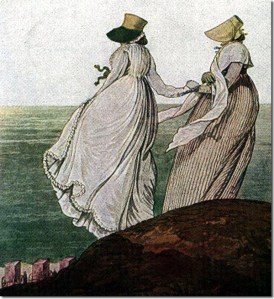
Morning Dress, 1797, from Nicholas Heideloff’s Gallery of Fashion.

Morning Dress, 1797, from Nicholas Heideloff’s Gallery of Fashion. Click on image for source.

Jane was apparently as smitten with the young man as he was with her. After only two or three weeks acquaintance, in which Cassandra was convinced that their attraction towards each other had blossomed into love, the young man had to leave to meet an obligation.

It was understood that he would soon come back and join the family again. Cassandra had no doubt that he would then state his intentions and that Jane would receive them favourably. – Cecil, p. 97

Sadly, this hope did not come to fruition. Before the budding lovers could meet again, the young man’s brother wrote to say that he had died suddenly. We know no more about the story. Jane’s letters are missing for many months afterwards – either she was so grief stricken that she was unable to write or her letters were destroyed by Cassandra. We will never know.

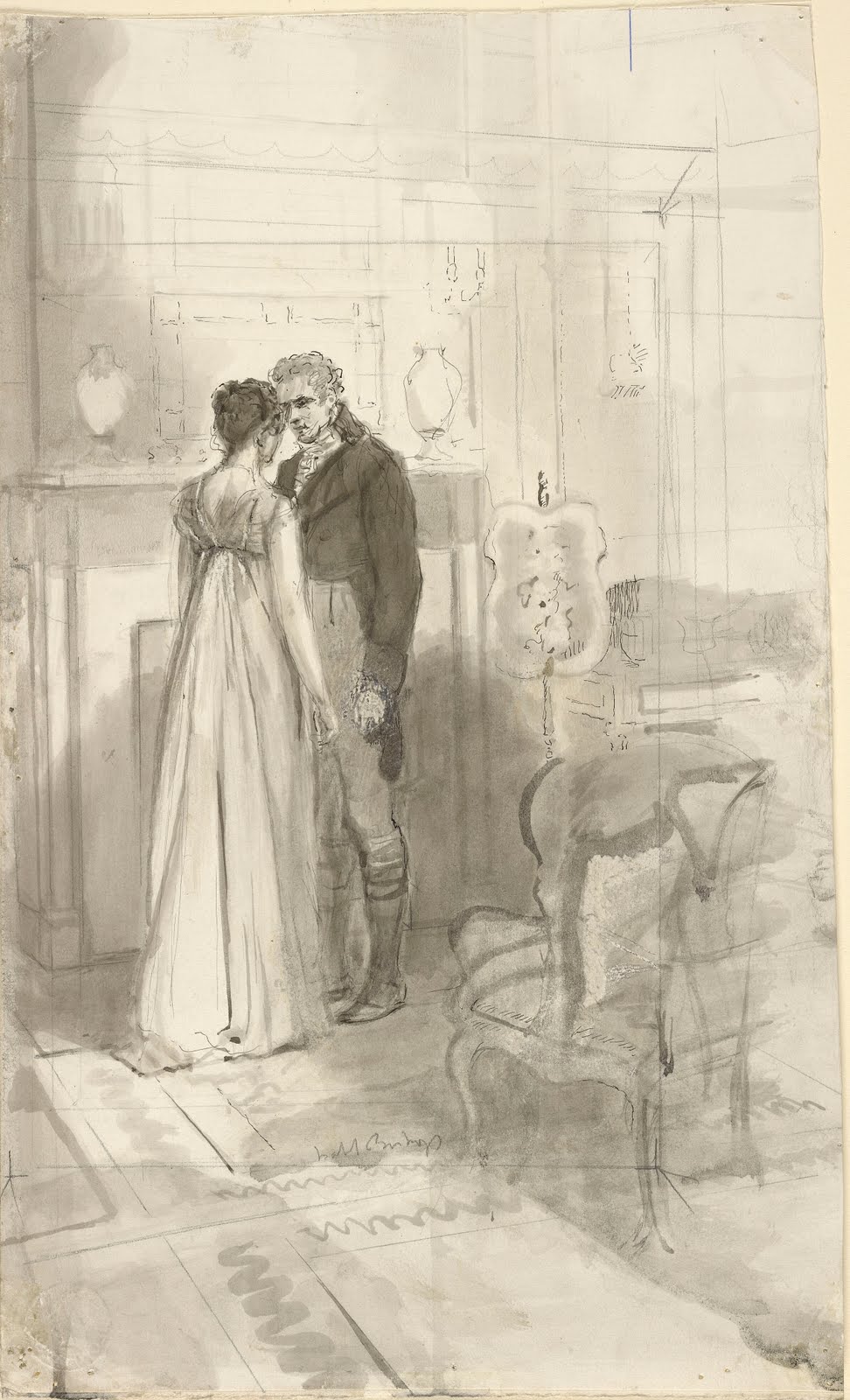
“Her sister and Bingley standing together.” Isobel Bishop image @Morgan Library

“Her sister and Bingley standing together.” Isobel Bishop image @Morgan Library

We can only surmise that Harris Big-Wither, Jane’s next suitor who did propose (and was accepted one evening and rejected the following morning) did not live up to Jane’s standards for a husband, not in the way that her mysterious lover had. While rich and able to support Jane and her family, Harris lacked looks, intelligence and charm. (“Mr Wither was very plain in person – awkward, and even uncouth in manner – nothing but his size to recommend him” – The Suitor: Harris Big-Wither, JASA.)

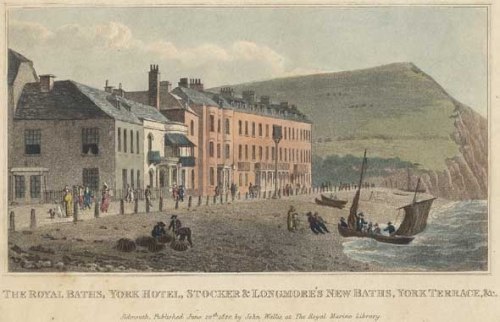
Jane’s doomed love affair occurred in a small seaside town in Devon that had increased in popularity after the King’s visit. Until 1800, Sidmouth was a fishing village situated on the Channel, between Lyme and Exmouth, one hundred and sixty-two miles from London. By 1801, Sidmouth offered an elegant ball room, tea-room, and some shops. By the mid-19th century there were seven or eight bathing machines, which were private property. Several rows of good houses were built by the gentry, a numbers of whom made it their summer residence. The market-days were Tuesday and Saturday, with no coaches or waggons going regularly to or from this small resort. In an 1814 panorama, one can see the Georgian verandas and awnings  and the fashionable dandies and well-dressed ladies parading up and down the esplanade.

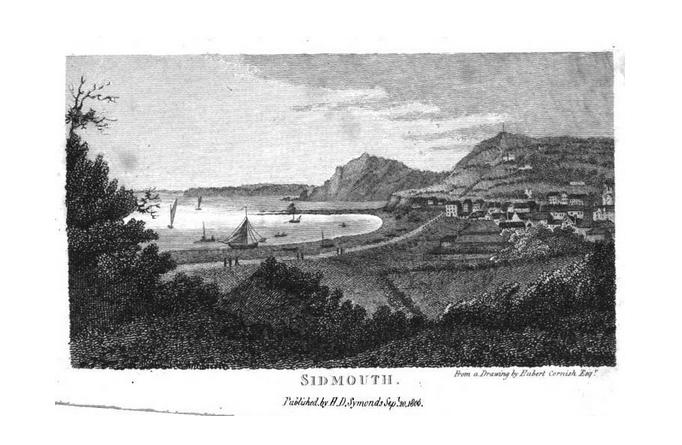
Sidmouth 1803 engraving

Sidmouth, 1803 engraving. Fronticepiece.

For the Frontispiece the Author is indebted to the friendly and elegant pencil of Hubert Cornish, Esq.; and he feels happy in thus acknowledging his obligations, for a drawing of one of the most interesting bathing-places in the kingdom.

The view is taken at low water, and from Salcombe-hill, which rises on the east side of the town; A part only of Sidmouth is included; but the Beach, and the distinguishing features of its coast, are sketched with fidelity and spirit.

The cliffs of Torbay are seen in the western distance—High Peak succeeds; and Peak-hill, with its signal-post, near which runs the road to Exmouth, exhibits the western side of Sidmouth valley. Peak-house, the residence of Mr. Baruhr, and the elegant cottage of Miss Floyd, are seen above the town. – An Excursion from Sidmouth to Chester, 1803, Google ebook

Sidmouth during Jane Austen's day. Image@Sidmouth Library. Click on image.

Sidmouth during Jane Austen’s day. Image@Sidmouth Library. Click on image.

The town consists of about three hundred houses and, in the census taken by order of Parliament in the year 1803, was said to contain twelve hundred and fifty-two inhabitants. This number, according to the census in 1813, was increased to above 1600. Beginning from what is termed Mill-cross, at the north end of the town, and ending at the beach, its length is about the third part of a mile. For rather more than half of this space it is, principally, one street; the remainder is divided into two branches like the letter Y. In the eastern branch, which seems rather the best of the two, are shops of almost every description, and two of the inns of the town, the London Inn and the New Inn. In the western branch of the main street is the Post-office. Both branches of the Y, as well as the main stem, contain lodging-houses, very various both in size and price. – The Beauties of Sidmouth, 1816

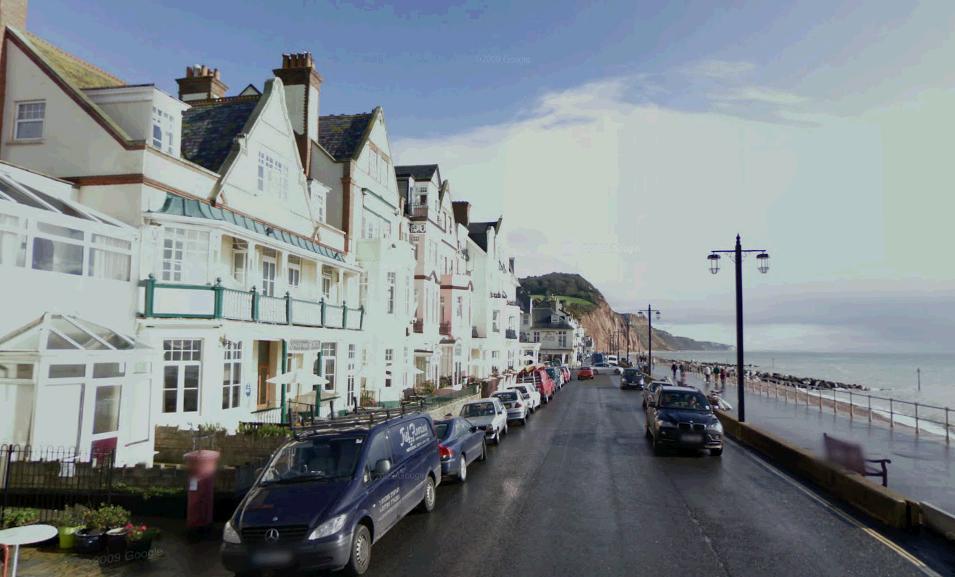
Sidmouth today. Image @ Google Maps

Sidmouth today. Image @ Google Maps

Today, much of the Regency architecture remains and one can readily imagine Jane and her beau walking along the coast, inhaling the bracing sea air and feeling the ocean breezes. Years later Jane mentioned Sidmouth briefly, for William Elliot had visited the town before visiting Lyme and meeting Anne in Persuasion.

Years after her death:

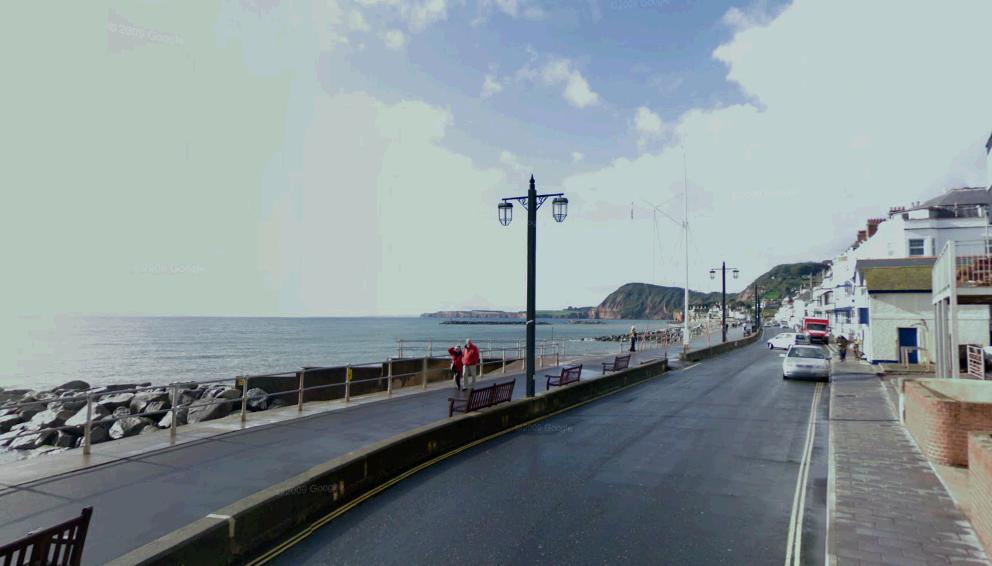
Sidmouth became an epicentre of the craze for cottages ornées – gentlemen’s residences designed in faux rustic style. Look at the thatched roofs on the seafront. When the future Elizabeth Barrett Browning came to Sidmouth in 1832, the house she rented had previously been occupied by the Grand Duchess Helena of Russia. Sidmouth had found its form.  – Sidmouth mans the barricades

Sidmouth's Esplanade today. Image @Google maps.

Sidmouth’s Esplanade today. Image @Google maps.

Another version of Jane’s romance with a stranger has recently surfaced. In Jane Austen: An Unrequited Love, author Andrew Norman asserts that the young clergyman was called Samuel Bicknall. According to the Daily Mail, a British rag, “Not only were her dreams of marrying Sam thwarted, but the match was sabotaged by her own beloved sister, Cassandra, who also lusted after him.”

Oh, dear (and how contrary to our knowledge of Jane’s and Cassandra’s deep love and respect for each other!)  I ordered this seemingly spiteful book for my Kindle. More on Mr. Norman’s assertions later!

Read more on the topic:

My short visit to Williamsburg resulted in a lot of pix and short videos. For those who have never visited Colonial Williamsburg, this renovated Virginia city evokes the 18th century just prior to the American Revolution. I visited on a glorious April day, just when the shops were about to close, and saw workers dressed in Colonial garb ending their day and closing up shop. I witnessed a juxtaposition of old/new, with modern-day people re-enacting chores and professions as if they lived during Thomas Jefferson’s and Benjamin Franklin’s time. This very short 18-second clip shows a female silversmith apprentice. My camera panned to her shoes, which she admitted were quite worn, perhaps more than was authentic!

From 1699-1780 there were 15, possibly 16, silversmiths in Williamsburg. There was a strong preference among wealthy planters for importing large silverware from London. – Silversmith

I walked further down the street and saw this shopkeeper locking up the Prentis and walking home.  Prentis shops in and around the historic section sell hand crafted goods made in the traditional way. Other than the absence of horses and carts, the scene could have been lifted straight out of the 18th Century.

This clickable map shows what a pitifully small section I walked (from the Capitol to Botetourt street and the two parallel streets to the Duke of Gloucester Street). I have seen most of Williamsburg over the years, for I celebrated one of my wedding anniversaries in this city and got to explore it quite a bit then.

Workers near the tavern

Workers in back of Shields Tavern

I concentrated on walking in portions of Williamsburg that I had not much explored before, which was the section closest to the Capitol.

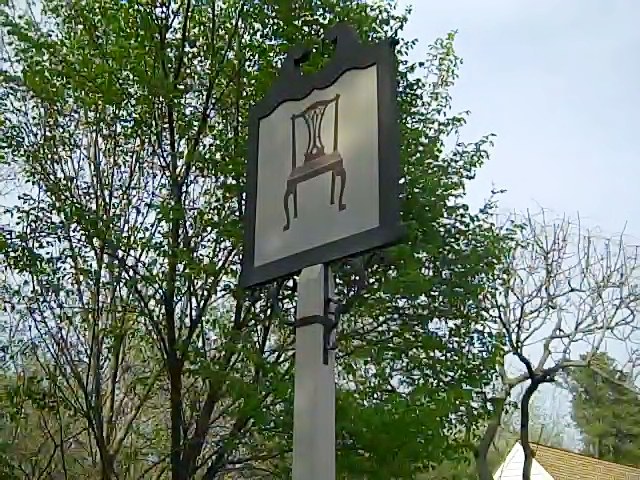
Sign of the furniture maker

Sign of the cabinet maker

Many of the walkways are covered by either gravel or crushed oyster shells, a common commodity in Virginia’s tidewater area.

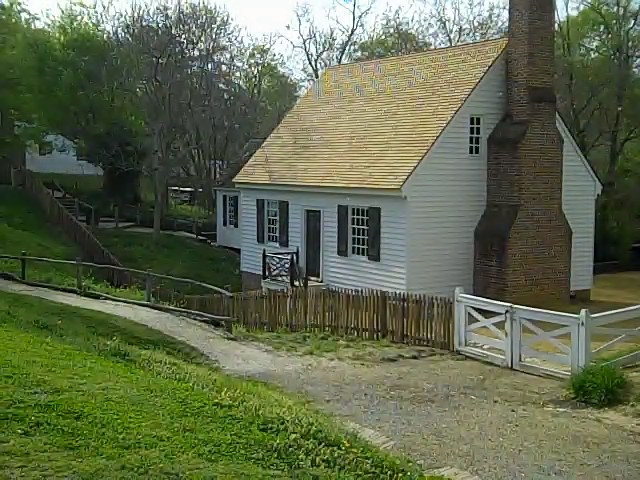
The furniture maker's workshop

The cabinet maker’s workshop

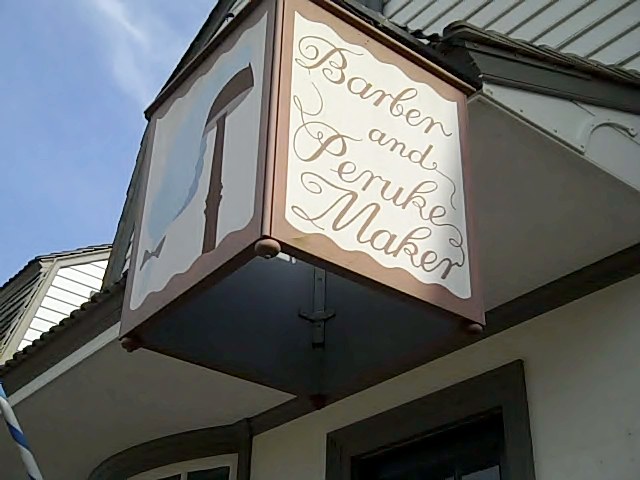
The cabinet maker is situated on Nicholson Street, which is parallel to the main drag, the Duke of Gloucester Street, where the Barber and Peruke Maker’s shop can be found.

Barber and Peruke Maker

Barber and Peruke Maker

You can see images of the shop interiors if you click on the tour and find the shop you are interested in.
Untitled 0 00 00-01 (3)
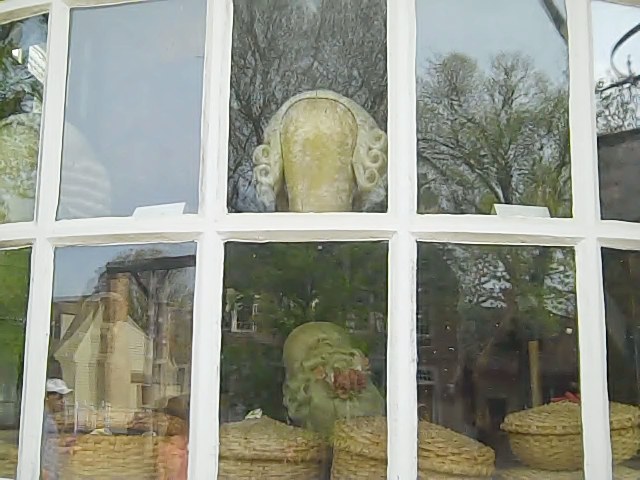
A peruke is a periwig, popular with men during the 18th and 19th centuries.
Untitled 0 00 00-01 (4)
Here is the official Williamsburg link to the Barber and Peruke Maker

Working gent

Working gent

While I met him on the porch of the Barber and Peruke Maker, this gentleman was simply making a delivery and did not work there.

Untitled 0 00 00-07

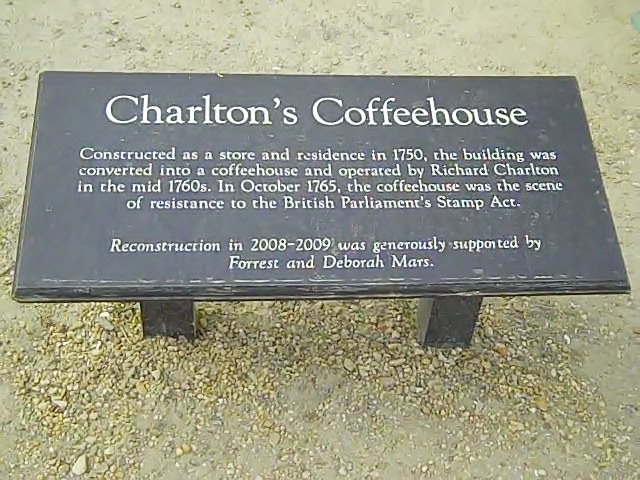
This building was quite new to me. No wonder, since it was reconstructed a mere 4-5 years ago. It has been at least 8 years since I last wandered around the historic district.

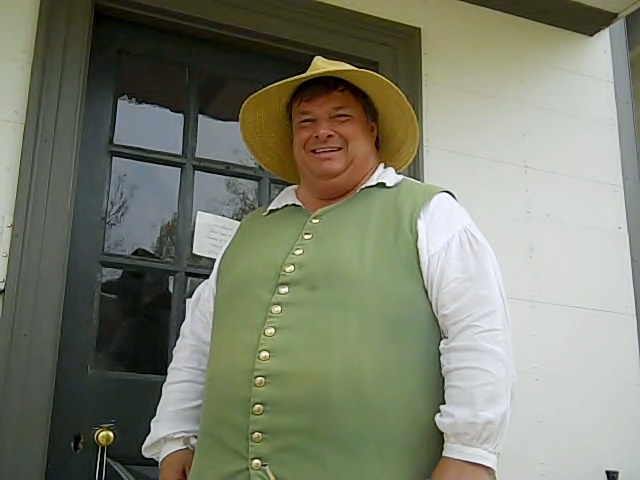
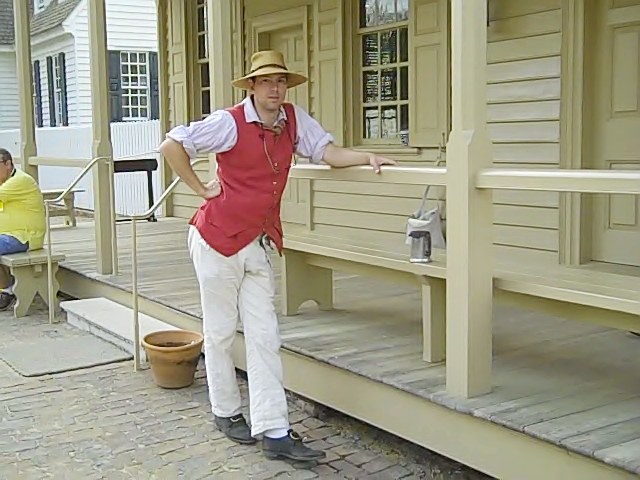
Chatting outside the coffee house

Chatting outside the coffee house

I loved this man’s pose.

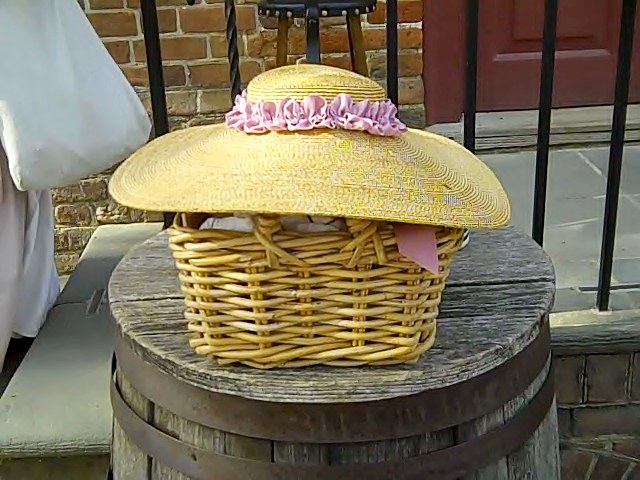
Outside the milliner's shop

Outside the milliner’s shop

The milliner’s hats can be purchased at the store or at a stall in the market place.

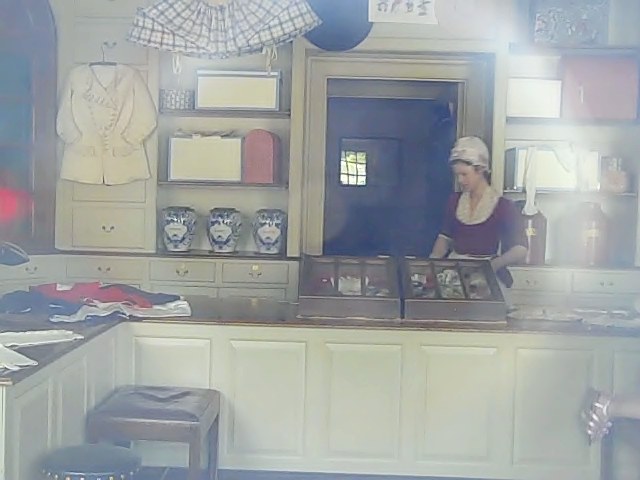
Inside the milliner's shop

Inside the milliner’s shop

One needs to purchase a series of tickets before entering a shop. Since I had not done so, I could only peek through the windows (made with hand blown glass). Thus the rather fuzzy image of the shop keeper tidying up before closing the store.

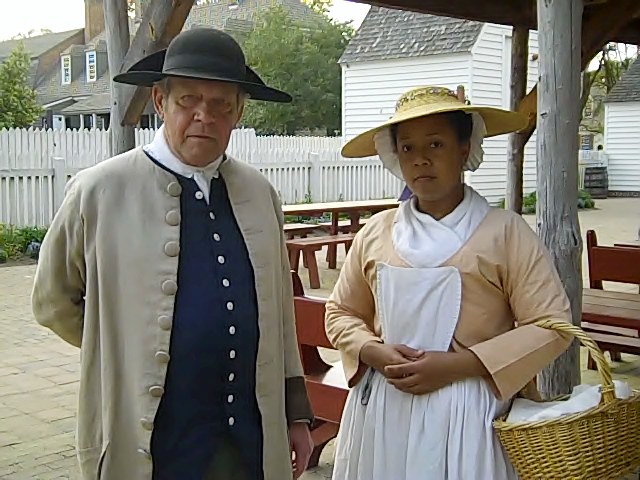
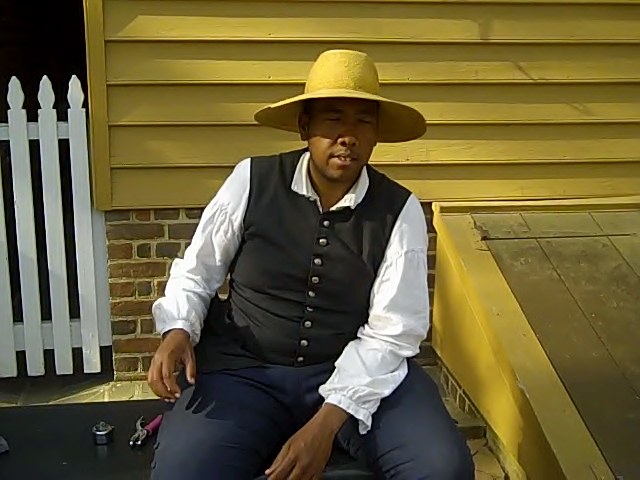
Chatting to tourists about life as a black man in Colonial Virginia

Chatting to tourists about life as a black man in Colonial Virginia

All the workers in Williamsburg are willing to chat with tourists. I took this image when this man was in deep discussion with someone, who was peppering him with questions. I admired his patience.

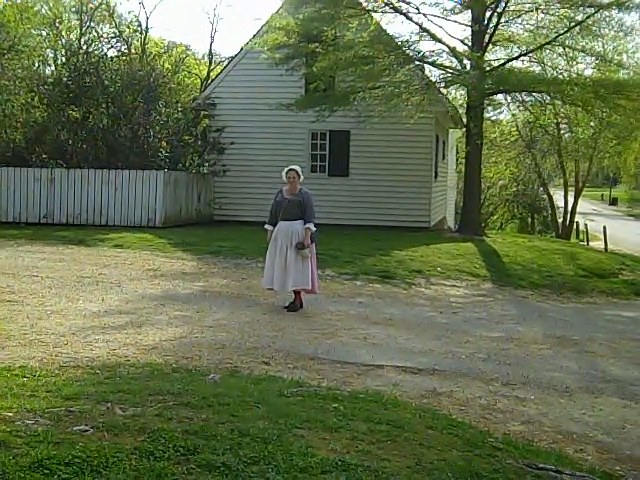
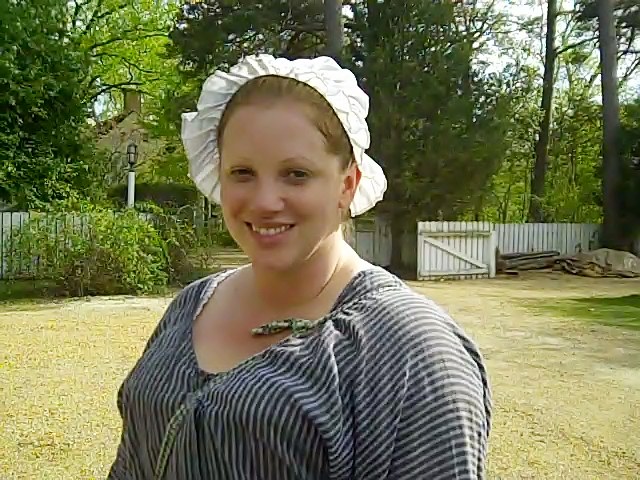
A comely maid walks home after a long day.

A comely maid walks home after a long day.

The sun shone through the trees on what I consider a perfect spring evening. In a few short weeks, hot humid days will descend upon Virginia.

All the staff are friendly and willing to pose

All the staff are friendly and willing to pose

At the end of a long day, the workers returning to their real 21st century lives walk through a quiet town towards their parked cars. The following video captures only the sound of the birds and breezes. The loudest music comes from the male cardinal who, this time of year, is quite loud in claiming his territory. You  can also hear the phoebe. The sheep are Leicester long haired sheep.

Every day the sound of fifes and drums pierce the air. I had wondered where all the visitors had gone. Why, to watch the marching band and to walk with them!

Colonial Williamsburg’s field musicians are drawn from a waiting list of young community applicants. Boys and girls begin their education in military music at age 10 and practice weekly for the next eight years, until after they have graduated from high school. These young people talk with the public about the role of music in the 18th-century military. They teach younger members the music and history lessons needed to continue the tradition of the field musicians. – About the Fives and Drums

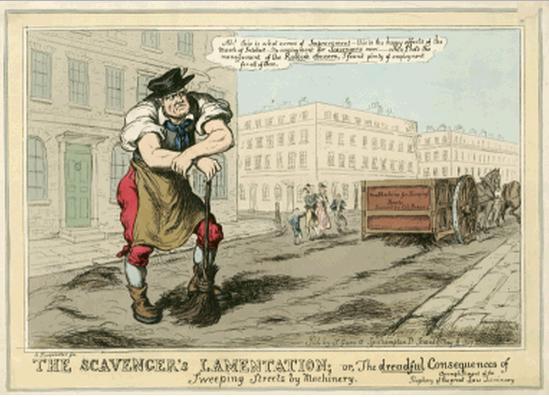
If you look closely at this video you will see that the kids do not break formation, even though they are walking over horse droppings. Where are the street sweepers when you need them! (The street sweeper below is lamenting the advent of the machine!)

street sweeper and machine

Note to readers: although the era so dramatically demonstrated at Williamsburg is from the 18th century through 1776, the customs and costumes would have been familiar to Jane Austen’s parents at the time of her birth. One can easily imagine Reverend Austen and his wife Cassandra wearing similar clothes as they raised their growing family in Steventon.  Their parsonage had a cow (and a pig and chickens, no doubt), a well and kitchen garden, and the means to make cream and butter, wines and preserves, and other household goods that are so well demonstrated in Williamsburg!

My other Williamsburg posts: