Feeds:
Posts
Comments

Note: Plot spoilers if you have not seen the 2nd episode! PBS is streaming each episode for a number of weeks one day after the air date. Click here to view online videos.

Review: Downton Abbey, S3, Episode Two: Being tested only makes you stronger, or platitudes don’t help when your heart is breaking.

The second episode was largely devoted to Edith, her wedding and aftermath, Matthew’s dithering about Swire’s money, Mrs. Hughes’ health, and the further deterioration of ThomasanO’brien’s relationship

Lady Edith and the wedding that wasn’t
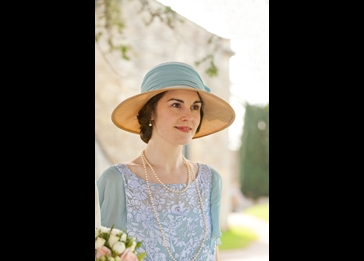
Credit: Courtesy of © Carnival Film & Television Limited 2012 for MASTERPIECE

Credit: Courtesy of © Carnival Film & Television Limited 2012 for MASTERPIECE

For once Edith is happy and the viewer is led to believe that his time it’s Edith’s turn to shine. But woe betide the middle child, especially one who is plainer than her sisters and who so openly longs for the same good fortune and happiness as were bestowed on those prettier creatures. Poor Edith. It is pathetic to see how much she yearns for equality. “Something happening in this house is actually about me”,  she states naively.

She gazes at Sir Anthony in worship, seeing freedom from Downton Abbey and the chance to be mistress of her own house, whereas her affianced is beginning to acquire a hunted look. No wonder. Hounded at first by the earl and then by Violet, he is starting to feel as second class as Edith. I have watched this episode three times and still cannot quite understand the earl’s and dowager countess’s objections. Even today, hardly anyone blinks when a Hugh Hefner or a Donald Trump marries a woman young enough to be their daughter or granddaughter. Has anyone taken a gander at Ronnie Wood’s latest bride? Hello! She’s younger than a Beaujolais Nouveau. The age gap has always favored the man, not the woman. Therefore I’ll ask it again: What is so objectionable about Sir Anthony?

The second episode starts well enough, with a Violet quipping over the wedding arrangements: “At my age one must ration one’s excitement.” That was just about the last time I liked her in this episode. I must backtrack on my last post in which I called Violet inviolate, for I despise her behavior towards the blissful couple, calling Sir Anthony a “broken down old crock” and observing,. “Edith is beginning her life as an old man’s drudge.” What strange things for granny to say in a post war world where practically any whole young man left standing couldn’t serve in the war to begin with. And Daddy Crawley is no better, although one gets the sense that he is starting to put a good face on the situation, saying to his prospective son-in-law: “I’m happy Edith is happy, I’m happy you mean to keep her happy. That is quite enough happiness to be getting on with.” Damned with faint praise, but at least he gave it.

Credit: Courtesy of © Carnival Film & Television Limited 2012 for MASTERPIECE

Credit: Courtesy of © Carnival Film & Television Limited 2012 for MASTERPIECE

And so Edith’s big day arrives It is pathetic to see how radiant she is. “All of us married. All of us happy,” she declares. How plaintive. How naïve.

Knowing how Papa and Granny Crawley feel and based on Edith’s past track record, the viewer can sense that trouble is brewing. Even the minister seems to have swallowed a sour candy as he commiserated with the still bleating Violet, who, upon seeing Sir Anthony in the pew, says: “He looks as if he’s waiting for a beating from the head master.”

She’s some sore loser and won’t quit until she’s had the last word. This trait has been charming thus far, but there is a time and a place for everything. Violet’s like a python. Once she starts twisting and choking her victim, she’s unable to let go.

Credit: Courtesy of © Carnival Film & Television Limited 2012 for MASTERPIECE

Credit: Courtesy of © Carnival Film & Television Limited 2012 for MASTERPIECE

Poor Edith, looking quite beautiful walking down the aisle. Her mother and sisters are genuinely happy for her. And then Sir Anthony drops the bomb, hyperventilating and backtracking faster than the speed of light, saying: “I can’t do it. Bye, bye y’all. Take care of my little Edie” as he hightails it out of the church.

Grannie restrains Edith from going after her man, urging her: “Let him go. Don’t stop him. Don’t drag it out. Wish him well.” But if crazy glue had been invented back then, Edith would have poured some all over herself and Sir Anthony and clung to him until they were stuck for life.

A good friend of mine pointed out an implausibility. It was clear that Sir Anthony was fond of Edith and even loved her. Would he have waited until the last-minute to cry off, or would he have sought a less public, less humiliating forum? Like the night before, for instance? Or arranged to meet Daddy Crawley that morning before everyone tramped off towards the church? Or asked that someone stop Edith from walking down the aisle so that he did not have to jilt her in front of kith and kin?

The real Sir Anthony would have done anything but humiliate Edith. This plot development smacks of “deliberate melodrama” syndrome, in which, given the choice to proceed logically or throw viewers off track, the writers chose the path that promises the most gasps and cries of outrage. I almost threw my glass of Merlot at the screen, but then thought of my liver and its enjoyment.

Laura Carmichael truly shines in these scenes, going from radiant to disbelief to grief of the rawest kind, tearing off her veil as she runs to the privacy of her room, flinging aside her tiara, and then, unable to stand the sight of her two lucky sisters, wailing: “ Look at them both with their husbands … Sybil pregnant … Mary probably pregnant.”

Hers was a raw, naked emotion and a cry of longing for a husband, her own house, a family. Now, all of it gone.

No one can console her, not even her mother.

Only a day later Anna enters Edith’s room and asks her: “What would you like me to get you?” and Edith responds, “A different life.”

My heart broke for her just a little. But what placed me firmly in Edith’s camp was this resigned yet stoic quip to Anna’s question: “Can I bring you up some breakfast?”

“No, I’m a useless spinster, good at helping out. That is my role. And spinsters get up for breakfast.

Edith’s made of stern stuff and she’s going to land on top. Mark my words. Grannie Violet takes one more post wedding dig when Carson offers to take the wedding food to the poor. “If the poor don’t want it, you can bring it over to me.” The woman who admonished Sybil with “vulgarity is no substitute for wit,” certainly could have used a dose of her own medicine.

The rest of Downton Abbey’s cast:

Credit: Courtesy of © Carnival Film & Television Limited 2012 for MASTERPIECE

Credit: Courtesy of © Carnival Film & Television Limited 2012 for MASTERPIECE

Thomas and O’Brien

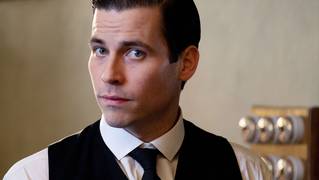
ThomasanObrien’s dislike for each other is taking a serious turn. Thomas uses Moseley to create trouble for O’Brien with Cora. The valet informs Cora that since O’brien was leaving the Crawley’s service, could he nominate his niece for the post instead? Cora, who doesn’t like surprises, expresses her disappointment to her maid. (Cora’s shown her steely side before when it comes to servants, such as expressing her disbelief that Bates could fully perform his duties as valet when he first arrived in Season One.)

We also get a clear sense of Robert’s lack of fondness for O’Brien and his lack of support for her. O’Brien confronts Moseley, who reveals Thomas’s role in starting the rumor. In one of the better scenes in episode 2,  O’Brien promises the footman that if he wants a fight, he ain’t seen nothin’ yet.

Daisy

Daisy is the unlikely heroine in Mary’s quest to save Downton Abbey from bankruptcy and ruin, confirming that she sent the letter for a dying Lavinia to her daddy, a letter that Matthew was certain had been counterfeited. Daisy’s been angry at Mrs. Patmore for not honoring her promotion to cook’s assistant, not knowing that the Crawleys at this point have less money than William’s farmer papa. I find her anger to be cute but petulant, like a kitten not getting its way. C’mon, Daise! The tarot cards and Ouija board say that you are going to inherit a rich yeoman farmer’s assets some day. Stay the course, girl, and you’ll be able to rent Downton Place in the near future.

Lavinia Swire’s Daddy’s Money

Chemistry twixt Matthew and Mary

Chemistry twixt Matthew and Mary

Lavinia Swire’s daddy’s fortune causes a heap of troubles twixt newly wed Mary and Matthew. Am I the only one who thinks their scenes in this episode are stiffer than starch and have about as much chemistry as two brooms in a closet?

It was Robert and Matthew who provided the real romance in this episode, or, more correctly, a splendid bromance moment. When Matthew offers to fork over his inheritance to Robert, the earl rejoined teary-eyed: “Don’t be silly you’re not going to give me any money. What I will allow is for you to invest in the place.” Matthew’s scenes with Robert and Tom, with whom he plays pool, were more passionate than his with Mary. (She hasn’t been able to give off smoldering hot looks since Pamuk’s arrival in Season 1 at the hunt.)

Isobel and Ethel

Isobel Crawley remains a peripheral figure, always looking for something worthwhile to do, in this instance converting ho’s into respectable underpaid working women. Poor Ethel is in a very bad way and trapped in a downward spiral. Fallen women without a family had few choices back then, which was to starve,  sell their bodies, or enter a workhouse. Shame prevents Ethel from seeking help, yet desperation forces her to come out of hiding to ask for aid from Isobel. I wish Matthew’s mama were given a meatier role, as in Season 1. Lately she’s come off as an irritant and, frankly, I miss her stand-offs with Violet.

Downton Place

Credit: Courtesy of © Nick Briggs/Carnival Film & Television Limited 2012 for MASTERPIECE

Credit: Courtesy of © Nick Briggs/Carnival Film & Television Limited 2012 for MASTERPIECE

The poor Crawleys. The specter of having to live in a luxurious house instead of a mansion and having to let all but 8 servants go puts the lot of them in a bad mood. Off they go a-picnicking to view the grounds of their new abode and surprise the current tenant, who probably thought he had a 90-year lease. Only Cora can see the positive side of things, which makes me wonder all the more about her back story and what makes her tick. In this scene Violet is given a couple of zingers, my favorite of which is a rejoinder to her son, who tries to find room for all the family (talk about boomerang kids!)

Violet: What about me? Where am I supposed to go?
Robert: Well we still own most of the village.
Violet: Perhaps I can open up a shop?

Mrs Hughes, Mrs. Patmore, and Mr. Carson

DA3_1_2

Credit: Courtesy of © Carnival Film & Television Limited 2012 for MASTERPIECE

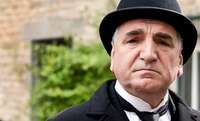
Without these three upper servants, Downton Abbey, the series, wouldn’t be the same. Mrs. Hughes’ worry about cancer, Mrs. Patmore’s sincere concern for her friend, and Mr. Carson’s astute reading of the situation were a joy to watch. Many worry lines were lifted off Mrs. Hughes’s brow when Cora promised the housekeeper that she would always have a place at Downton and that she would be taken care of.

But my favorite scene was the last one, in which Mrs. Hughes observed Carson singing a little ditty after learning that her tumor was benign. In the first season, Carson declared that the servants were his family. This viewer wonders: is a romance brewing between Carson and Mrs. Hughes? Stay tuned, readers.

For those who have seen the full season, please feel free to comment, but, please, no plot spoilers.

More on the topic:

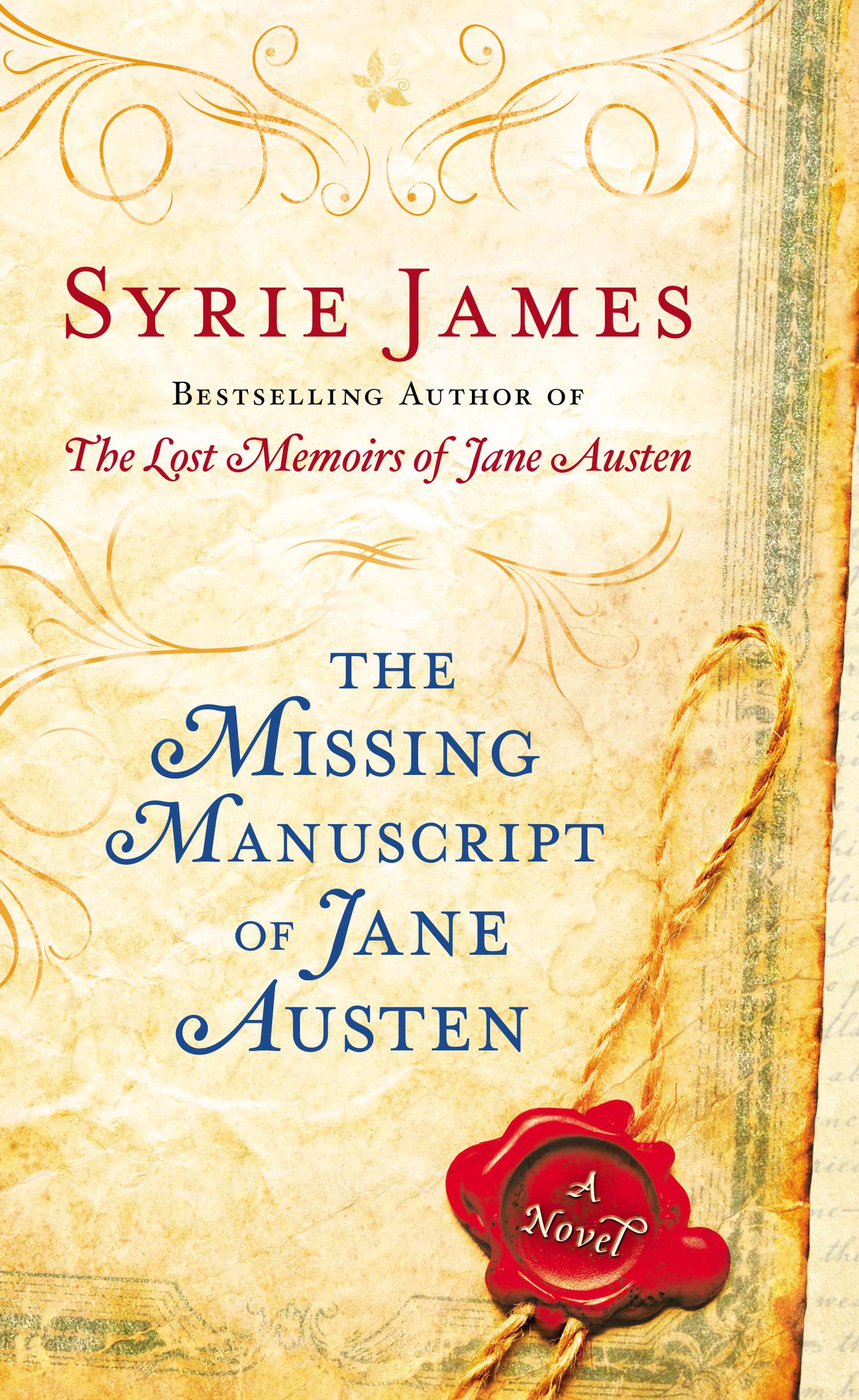
The Missing Manuscript of Jane Austen by Syrie JamesGentle readers, One lucky U.S. reader is eligible to win a copy of Syrie James’s latest book, The Missing Manuscript of Jane Austen! (See below) Contest Closed: The winner is – Lilyane Soltz. Congratulations!

The Missing Manuscript of Jane Austen, Syrie James

In the Missing Manuscript of Jane Austen, author Syrie James attempts a plot device that often trips up even the most experienced authors -a novel within a novel. Samantha McDonough, librarian and Jane Austen scholar, stumbles upon a clue in an old book of poetry she purchased while on a visit to England.

The minute I saw the letter, I knew it was hers. There was no mistaking it: the salutation, the tiny, precise handwriting, the date, the content itself, all confirmed its ancient status and authorship…

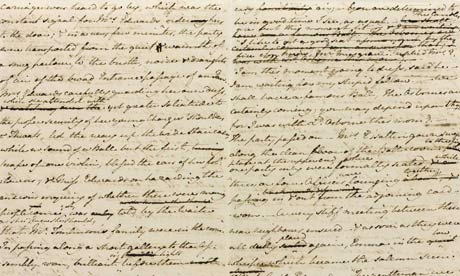
This letter leads her on a quest to find a missing manuscript by Jane Austen. Her journey lands her on the doorstep of handsome Anthony Whitaker, who has just inherited his estranged father’s rundown estate. By virtue of her charm, grit, and determination, Samantha persuades a skeptical Anthony to rummage around dusty rooms, cupboards, and closets and his attic until, voilà, they miraculously find a manuscript entitled The Stanhopes and that consists of 41 tiny hand-cut and bound booklets. (The Watsons, Jane’s unfinished manuscript, is made of 11 similarly bound booklets.)

A draft of Jane Austen's novel The Watsons, which was written in about 1804 . Image @The Guardian

A draft of Jane Austen’s novel The Watsons, which was written in about 1804 . Image @The Guardian

Anthony and Samantha immediately begin to read Jane’s long lost words, and, like Alice tumbling down the rabbit hole, the pair are instantly swept into the story of Rebecca Stanhope and her father, a rector with a propensity for mild gambling over a friendly game of cards. His vice sets off the plot, which is based on Jane’s hilarious Plan of a Novel. In short order, the rector loses a great deal of money with which he has been entrusted and then is forcibly retired from his living. Now destitute,  Mr. Stanhope and Rebecca (a sweet heroine  in the vein of a slightly feistier Jane Bennet or more mature Catherine Morland) must move from place to place — from the rectory to a married daughter’s cramped house, to an elegant abode in Bath, to a seedy inn, and so forth. Along the way, Rebecca receives three proposals, one that is almost as ridiculous as Mr. Collins’ proposal to Elizabeth, and two more serious ones from two suitors who are as different from each other in temperament and intent as, well, Henry Crawford and Edmund Bertram or Willoughby and Colonel Brandon. The road to a romantic union is rocky, and along the way both heroines (Rebecca and Samantha) must learn some harsh truths about themselves and others before they can be united with their heroes.

As the story develops, the reader will recognize a number of plot developments and characters based on those in Austen’s novels. Since the missing manuscript was written early (1802) and before Jane published her books and rewrote Sense and Sensibility and Pride and Prejudice for publication, one can assume that this manuscript is meant to be a foreshadowing of the mature novels.  Syrie James, a strong writer in her own right, is smart in setting Jane’s  lost manuscript so early in Jane’s writing career. Austen’s Juvinilia includes melodramatic twists and turns, evident in Northanger Abbey (when Catherine Morland is forced to leave the Abbey alone in the middle of the night) and in The Stanhopes, when Rebecca must find employment in the most unusual and creative way in order to feed herself and her father. The reader should also assume that the manuscript, having been lost before Jane could fully edit and revise it, was found in its  “raw” stage. This would explain any stylistic differences between the lost manuscript and Jane’s later works (and, more practically, between Syrie’s and Jane’s writing styles as well).

I won’t give too much of the plot away, except to say that I was more interested in the Stanhopes than the modern Samantha and Anthony story line. (I believe I had the same preference with Jane Odiwe’s Searching for Captain Wentworth, in which I liked the time travel to the past more than the contemporary narrative.) Syrie’s novel is filled with historically and geographically correct details, which I always appreciate in a novel set in a foreign country or in the past. As an interesting aside, one of Samantha’s friends in the modern world is Laurel Ann, a bookseller. Who could it be, I wonder? (Hint: Austenprose.)

Insights into Jane Austen’s World

Syrie, who I met at the Brooklyn AGM meeting and whose Regency costumes are varied and fabulous, graciously sent me some interesting details about one of Jane’s letters to Cassandra, and how one should handle an old manuscript:

 I don’t know if it’s strange or funny, but while re-reading Jane Austen’s letters to her sister Cassandra, I was fascinated to find the following mention of a “shut-up bed”:

Martha kindly made room for me in her bed, which was the shut-up one in the new nursery. Nurse and the child slept upon the floor, and there we all were in some confusion and great comfort. The bed did exceedingly well for us, both to lie awake in and talk till two o’clock, and to sleep in the rest of the night.

I take this to mean that a “shut-up bed” is what we now call a Murphy bed, or a bed that folds up and away by day into a piece of furniture. I happily put this information to use in The Stanhopes.

Here’s one fact that surprised me: I presumed that when my modern day characters found Jane Austen’s centuries-old manuscript, they’d have to wear latex gloves while handling it. (That was previous my experience when reviewing precious, old documents.) However, Christine Megowan, the Special Collections Librarian at Loyola Marymount University, explained that none of the conservators she knows wear gloves to handle old books and paper, because they don’t fit well and are clumsy. As long as your hands are clean and you work gently, she said, the oils on your fingers don’t do all that much damage to paper—you’d do far more mechanical damage by fumbling with latex gloves. I put that quote directly into the novel.

If you are interesting in reading similar  insights from Syrie, click on the links to her blog tour!

About Syrie James:

Syrie JamesAuthorPhoto2011 - Credit William James (1)Syrie James is the bestselling author of eight critically acclaimed novels, including The Missing Manuscript of Jane Austen, The Lost Memoirs of Jane Austen, The Secret Diaries of Charlotte Brontë, Dracula My Love, Nocturne, Forbidden, and The Harrison Duet: Songbird and Propositions. Her books have been translated into eighteen foreign languages. In addition to her work as a novelist, she is a screenwriter, a member of the Writers Guild of America, and a life member of the Jane Austen Society of North America. She lives with her family in Los Angeles, California. Connect with her on her website, Facebook, and Twitter.

Follow Syrie’s Blog tour in these links: 

About the book:

Amazon Prices

  • Kindle Edition $9.99
  • Paperback $10.20
  • Audible Audio Edition, Unabridged $23.95 or Free with Audible 30-day free trial
  • Reading level: Ages 18 and up
  • Paperback: 432 pages
  • Publisher: Berkley Trade; Reprint edition (December 31, 2012)
  • ISBN-10: 0425253368
  • ISBN-13: 978-0425253366

About the book giveaway for The Missing Manuscript of Jane Austen:  

For your chance to win a copy of Syrie’s latest book, let us know how you would feel and react if you stumbled across a long lost Jane Austen document! Contest open to U.S. readers only. Drawing by random number generator. Deadline, January 23rd, 2013, midnight EST. Contest Closed: The winner is – Lilyane Soltz. Congratulations!

Attention: Spoiler Alert. Do not go further or view the images if you have not seen Episode 2. Missed this episode? Want to watch it again? Click here to see PBSs streaming videos of Downton Abbey 3, Episodes One and Two, available for a limited time only.

Two episodes, two weddings, two radically different endings. Poor Edith. She’s rapidly turning into the Upstairs version of Mr. Bates. Poor Edith/poor Bates. See how these two phrases can be used interchangeably? But Edith’s fate is not what this post is about. I am asking you to cast your critical eyes upon the two wedding dresses and two wedding parties and vote for your fave. Who sported a more breathtaking 1920s bridal outfit? Whose flowers blow your mind? And who spurred guests to dress better? Edith or Mary? Curious minds want to know. Find the poll at the bottom of this post.

Mary and Edith in full wedding regalia

Mary and Edith in full wedding regalia.  Credit: Courtesy of © Carnival Film & Television Limited 2012 for MASTERPIECE


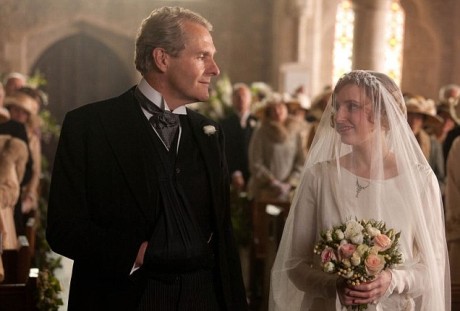
Edith walks down the aisle with Papa

Edith walks down the aisle with Papa. Credit: Courtesy of © Carnival Film & Television Limited 2012 for MASTERPIECE

Mary with her man, veil, and bouquet

Mary with her man, veil, and bouquet. Credit: Courtesy of © Carnival Film & Television Limited 2012 for MASTERPIECE

Edith with her man, veil, and bouquet

Edith with her man, veil, and bouquet. Credit: Courtesy of © Carnival Film & Television Limited 2012 for MASTERPIECE

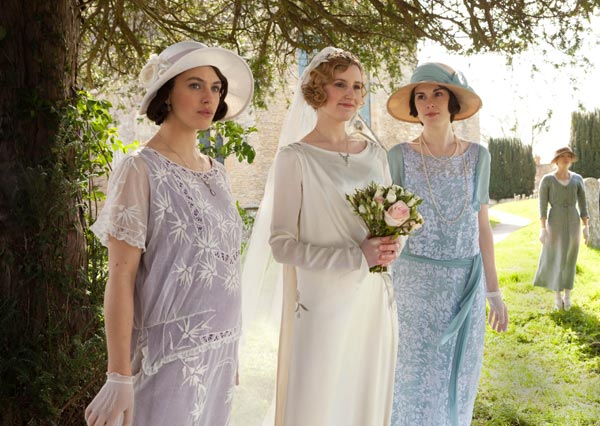
Edith with her sisters

Edith with her sisters. (That’s Anna in the background.) Credit: Courtesy of © Carnival Film & Television Limited 2012 for MASTERPIECE

Edith, Cora, and Sybil in the pews at Mary's wedding

Edith, Cora, and Sybil in the pews at Mary’s wedding. Credit: Courtesy of ©Carnival Film & Television Limited 2012 for MASTERPIECE

Cora's hat at Edith's wedding

Cora’s hat at Edith’s wedding. Credit: Courtesy of © Carnival Film & Television Limited 2012 for MASTERPIECE

The pews at Lady Mary wedding

The pews at Lady Mary wedding. Credit: Courtesy of © Nick Wall/Carnival Film & Television Limited 2012 for MASTERPIECE

Violet at Edith's wedding

Violet at Edith’s wedding. Credit: Courtesy of © Carnival Film & Television Limited 2012 for MASTERPIECE

Downton Abbey Season 3, Episode 2 Wedding Dress Poll

Alas and alack the results of the two weddings were radically different. While one couple experienced wedded bliss, the other couple, well, uncoupled. Sir Anthony, cad, fleed the scene, leaving poor Edith bereft and without purpose. Poor Edith. I am firmly on her team.

Feel free to leave your comments about Episode Two, but no spoilers about later episodes please. Review to come.

Other Downton Abbey Series 3 Posts on this Blog

The anticipation is over for American fans. PBS has aired the first two-hour installment of Downton Abbey Season 3 and we have had 6 days to digest the goings on of the Crawleys, their friends, relatives and spouses. All week people have been asking me: What are your thoughts?

Credit: Courtesy of © Nick Briggs/Carnival Film & Television Limited 2012 for MASTERPIECE

Credit: Courtesy of © Carnival Film & Television Limited 2012 for MASTERPIECE

Let me confess, I saw the entire series before Christmas and have since dithered. How to review a program that contains a minefield of plot spoilers? I decided to share my thoughts one week at a time. So, without further ado, I’ll break down the first 120 minutes.

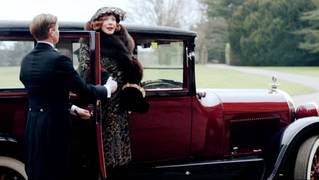
Shirley Maclaine as Martha Levinson

Credit: Courtesy of © Nick Briggs/Carnival Film & Television Limited 2012 for MASTERPIECE

Credit: Courtesy of © Nick Briggs/Carnival Film & Television Limited 2012 for MASTERPIECE

I salivated, I yearned, I couldn’t wait for Shirley’s appearance KNOWING that she would be Maggie Smith’s equal in retorts and sarcasm. Boy, was I wrong. My dreams of epic verbal sparring between two battle axes were dashed, leaving me feeling as flat as a bottle of Champagne left open for too long. The best line was Martha’s opening salvo when she first sees Violet:

Martha: “Oh dear, I’m afraid the war has made old women of us both.”
Violet: “Oh, I wouldn’t say that – but then, I always keep out of the sun.

I expected more zingers between these two characters, but alas they were few and far between. Martha is a brash American who wears her fortune on her person and looks a bit too newly-minted. She also apes her youngers in dress and fashion, a species whom Violet refuses to acknowledge as her sartorial betters.

Martha lacks proper manners, and here is where the Brit writers got her wrong, for Martha lives in Newport, Rhode Island, one of the snobbiest enclaves for the rich in early 20th century America. As Edith Wharton so brilliantly attested in her novels, there is nothing snobbier than a New York/New England socialite. A nouveau riche American trying to make a dent in that upper strata would have to learn to behave. Martha might be gauche and her money might be fresher than yesterday’s salmon, but she would have known about proper etiquette and manners, make no mistake about that.

My biggest surprise was Shirley’s physical presence. Maggie looms large in every scene, whereas Shirley’s hunched figure seemed diminished in contrast to Maggie’s stiff upper lip and upright posture. Worse, there was no connection between Cora (Elizabeth McGovern) and Martha (Shirley). The viewer was left to wonder about the back story between mother and daughter. A short but marvelously written scene could have given us insight as to what makes Cora tick, but this never happened. An opportunity lost? You betcha.

Sad violin music for Bates and Anna

Credit: Courtesy of © Nick Briggs/Carnival Film & Television Limited 2012 for MASTERPIECE

Credit: Courtesy of © Nick Briggs/Carnival Film & Television Limited 2012 for MASTERPIECE

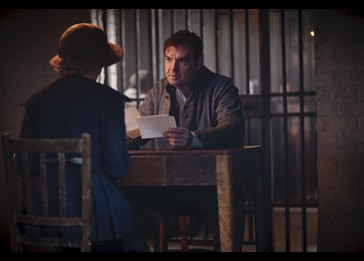
As a member of Team Bates I’ve had enough! Will someone please break Bates out of prison before I start rooting for Thomas? I’m sick of watching Anna and Bates making moon eyes at each other across a prison table. Anna does show some moxie in that she’s determined to sleuth in order to free her man. And who knew that Bates could be so ruthless with his cell mate? No patsy he! Still … I yearn to see Bates and his Anna in a more uplifting story line and it isn’t happening anytime soon.

The dissolution of the finest villanous couple in PBS history

Credit: Courtesy of © Carnival Film & Television Limited 2012 for MASTERPIECE

Credit: Courtesy of © Carnival Film & Television Limited 2012 for MASTERPIECE

I’m at a loss for words. Who’d have thunk that the writers would mess with Thomas and O’Brien? I never thought of them as separate entities but as ThomasanObrien. They were always plotting in back corridors as we watched in glee. The reason for their estrangement is so piddly it’s barely worth a mention. Thomas is worried about keeping his job at Downton Abbey and O’Brien’s wants to promote her too tall nephew to footman. THAT’s the conflict. It’s llike asking circus lions to perform a kitten’s trick, or akin to morphing The Clash of the Titans into a bitch fight at a “Real Housewives” party.

The truncated wedding of Mary and Matthew

If you blinked at the wrong time you might have thought that you time travelled. One moment Matthew is making goo goo eyes at his bride at the altar and in the next they are dashing around the countryside in an automobile. No I do’s. No kisses. No tossing of rice, and no cavorting under the sheets in wedded bliss. When the wedding scene was cut short, a gasp went around the room (7 of us viewed the first episode together) and then we shouted – “We wuz robbed!” Anna and the viewers do get a glimpse of Mary and Matthew in bed — much much later. All I could think was: “What if Anna had walked into the room while they were doing IT?” To paraphrase Cher Horowitz in Clueless – “Ewwww.”

Lady Edith, shameless hussy

World War One and influenza did more to reduce Europe’s male population than untold centuries of starvation, hunting accidents, duels, or bar brawls ever did. After 1918, there were a gazillion fertile young women for every man. No wonder Lady Edith set her sight, hooks, and clamps upon Sir Anthony Strallan. While considerably older than the nubile Edith, he’s not all that decrepit a specimen of British aristocratic manhood. He still has his teeth and hair, and can offer her a fine house. While one of his hands can no longer do the job for which it was intended, the other can still unhook Lady Edith’s underthings if Sir Anthony so desired. What else would a young lady of breeding age want? With her biological clock ticking and her eggs shriveling by the minute (and with nothing much else to do), Edith hones in on Sir Anthony like a heat seeking missile, which makes Papa Crawley’s innards crawl The viewer is asked to wonder why, since historically young aristocratic British maidens were SACRIFICED on the altar of land and wealth with nary a blink of an eye by their doting papas.

Tom Branson and his Sybil

Credit: Courtesy of © Nick Briggs/Carnival Film & Television Limited 2012 for MASTERPIECE

Credit: Courtesy of Carnival Film & Television Limited 2012 for MASTERPIECE

Our former chauffeur turned newspaperman wears ill-fitting suits and cannot let go of his political fervor even at the dinner table. The servants sniff and snort within his vicinity, unable to withhold their disdain for a man who married his BETTER. The servants resort to the tools they know best to put him in his place. When serving him at table, the footmen hold platters of food too high or low for comfort, or for too short a time. Others sling sideway looks and lift their noses as if smelling a putrid excrescence. Violet shows much more tolerance towards Branson, for in her book he has become FAMILY.

As for Saint Sybil, she’s turned into the invisible woman. Branson leaves her in danger in Ireland to save his own hide, and when she finally shows up at the Abbey, she’s pregnant, dowdy, and all but mute. What’s happened to our feisty miss? I’m not feeling her this season and apparently she’s not feeling it either..

Violet, the Inviolate

mast-004302-da3-hires_crop_319x180

Credit: Courtesy of © Carnival Film & Television Limited 2012 for MASTERPIECE

In this instance the writers have not messed with perfection. Either that or Maggie Smith is able to rise above hasty script writing. She’s given fewer zingers this go-round, but every utterance is platinum in my book. Do not criticize my Maggie or you will be banished from my blog forever.

In Conclusion

Credit: Courtesy of © Carnival Film & Television Limited 2012 for MASTERPIECE

Credit: Courtesy of © Carnival Film & Television Limited 2012 for MASTERPIECE

Let’s face it, the first episode is off to a slow start. The writers are juggling too many story lines, but the main problem with season three is the lack of real conflict. Season One featured the sinking of the Titanic, which killed off Downton’s heir, and Season Two played against the backdrop of World War One. The only thing Season Three has going for it thus far is that the earl has lost Cora’s money out of sheer stupidity by investing all of it in one railway, and that Matthew refuses to save the day with Lavinia’s dead daddy’s money because of his tiresome high-mindedness about having let Lavinia down. Mary’s still willing to marry him and not pull a Clytemnestra, which boggles the mind. Meanwhile, as Daddy Crawley is forced to contemplate selling his books and his beloved dog Isis, and firing all the servants in order to make ends meet, his daughter Mary is spending money on her trousseau like no tomorrow.

Credit: Courtesy of © Nick Briggs/Carnival Film & Television Limited 2012 for MASTERPIECE

Credit: Courtesy of © Carnival Film & Television Limited 2012 for MASTERPIECE

With tepid fare like this, the 120 minutes seemed to drag on. At the end of the first episode, I sang in my best Peggy Lee voice, “Is that all there is?” Well, no. There is more to come and the season does gain momentum. There will be plot twists and turns that will leave viewers stupefied, howling with grief and laughter, or wanting more. Too bad that the first episode barely hinted at the drama to come.

I did a quick survey among friends and colleagues this week and tallied up the scores. Half the people I talked to loved the first episode, the others felt like me. All were let down by Shirley MacLain’s performance, except for one. The best line regarding saving Downton Abbey from bankruptcy came from Market Watch, which asked: “Desperate times call for desperate measures. If you were Earl and Countess of Grantham, what would you do?” One person answered, “I say buy life insurance on Mary and knock her off. Ghastly woman.”

Hah!

Please, in your comments, NO plot spoilers.

The New York Times has an interesting take on the phenomenon that is Downton Abbey

Gentle readers, in celebration of Pride and Prejudice’s 200 year anniversary, Jane Austen’s World will feature a regular article about Jane Austen’s most popular novel throughout 2013. We can count on frequent contributor Tony Grant from London Calling to provide us with a unique perspective. Enjoy!

All good films have a car chase. Some originate from well written, exciting, nail-biting, on the edge of your seats, breathless descriptions in a novel.

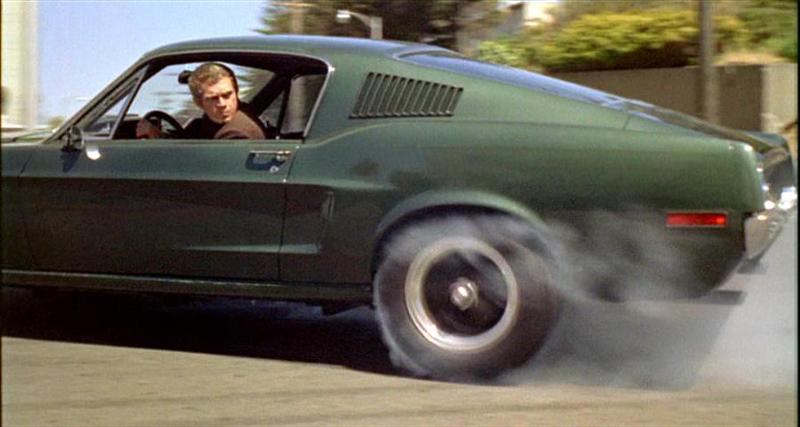
Steve McQueen in mustang

Steve McQueen in mustang

Let it not be said Pride and Prejudice doesn’t have it’s nail biter, it’s moment of burning rubber and screeching tyres that is right up there with Steve McQueen ripping up the streets of San Francisco in Bullitt, hurling his Ford Mustang over the lips of hills and down daredevil slopes with a street fighters aggression or Michael Caine escaping the Italian police with wheels spitting gravel and door smashing bravado in his supercharged mini cooper GT along the Corniche, “not many people know that,” or John Thaw in The Sweeney, as gritty streetwise cop Jack Regan thundering through the Isle of Dogs in his 3 litre V6 Ford Consul GT. Mr Bennett has his contenders, but not, may I dare say, his equals, oh no.

Elizabeth Bennett, who is visiting Derbyshire with her aunt and uncle, the Gardeners has received a letter from her sister Jane

Since writing the above, dearest Lizzy, something has occurred of a most unexpected and serious nature; but I am afraid of alarming you — be assured that we are all well. What I have to say relates to poor Lydia. An express came at twelve last night, just as we were all gone to bed, from Colonel Forster, to inform us that she was gone off to Scotland with one of his officers; to own the truth, with Wickham!”

Image of eloping couple. 1815

Image of eloping couple. 1815

This piece of information about Lydia sets in motion, literally, a series of coach journeys and desperate searchings that rivals anything Steve McQueen or Michael Caine partook of.

Michael Caine: Nuts to your watches! You just be at the Piazza at a quarter to..
Steve McQueen: Look, you work your side of the street, and I’ll work mine.
Det. Insp. Jack Regan: Remember, no guns unless they use ’em.

Mr Gardner and Mr Bennett walking the streets of London, searching for Wickham and Lydia could well have used lines like those. What needs to be said, what needs to be done, never changes whatever century, don’t you think?

“…and all three being actuated by one spirit, every thing relating to their journey was speedily settled. They were to be off as soon as possible.”

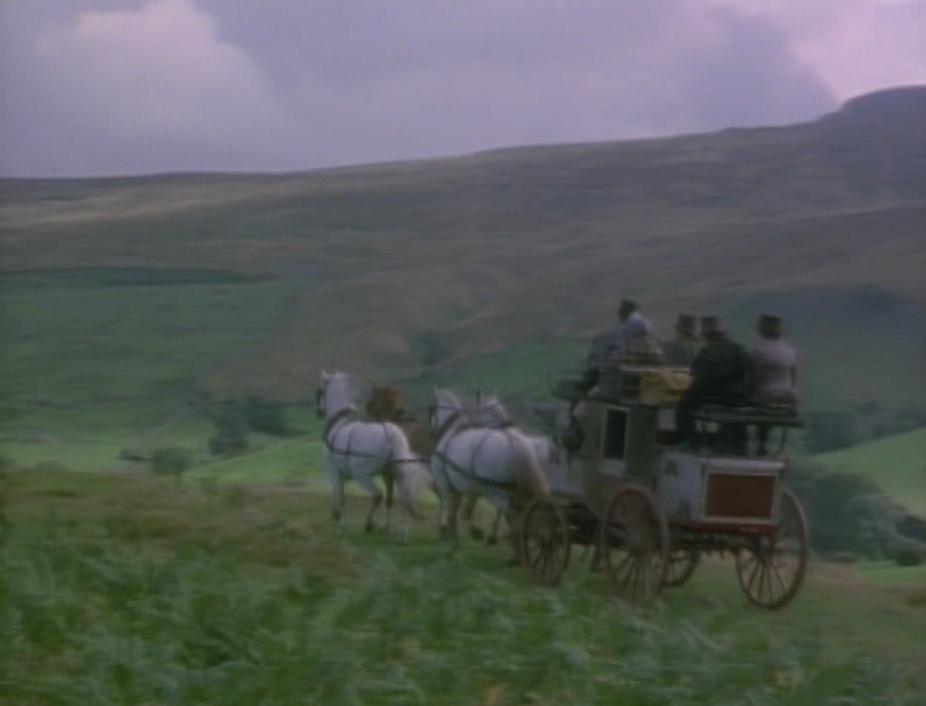
Coach travel

Coach travel

And so Mr and Mrs Gardner and Lizzie Bennett sped south to Longbourn at the hair-raising speed of 10 miles per hour or more, on the occasion of increased velocity being achieved when long flat straight roads presented themselves; jolted and tossed about, no doubt, like three potatoes in a sack.

But Lydia and Wickham were as devious and cunning as any mafia on the streets of Naples, or ruthless bank robbers from the East End of London or murderous killers off the dangerous streets of San Francisco. Gretna Green was, dare I say, a red herring. They spread rumours, gasp, horror; they planned and they plotted, they predicted and they saw clearly with their crazed, devious minds thinking out brilliantly, their next move. They lived the heady adrenalin pumped life of criminals on the run.

Mr Bennett “… did trace them easily to Clapham, but no farther; for on entering that place they removed into a Hackney coach and dismissed the chaise that brought them from Epsom.”

Oh gosh and golly, what subterfuge, what dastardly cunning. They actually changed from a chaise to a hackney coach.The evil mind games of those criminals. But they were hunted, yes, hunted, by Mr Bennett, he, a wily, ruthless backwoodsman who once he smelled the scent of his prey cannot, will not, be put off his quest. Mrs Bennett was right to be desperate in her concerns,

And now here’s Mr Bennett gone away and I know he will fight Wickham, wherever he meets him, and then he will be killed, and what is to become of us all?”.

Popeye Doyle himself could not compete with Mr Bennett surely in his ruthless endeavour

 The son of a bitch is here. I saw him. I’m gonna get him.”

But our Mr Bennett in his utter, focused, desperate determination can but say,

“Who should suffer but myself? It has been my own doing, and I ought to feel it.”

Good gracious, the man is a titan of hot-blooded aggression. Surely nothing can prevail? Wickham has met his match.

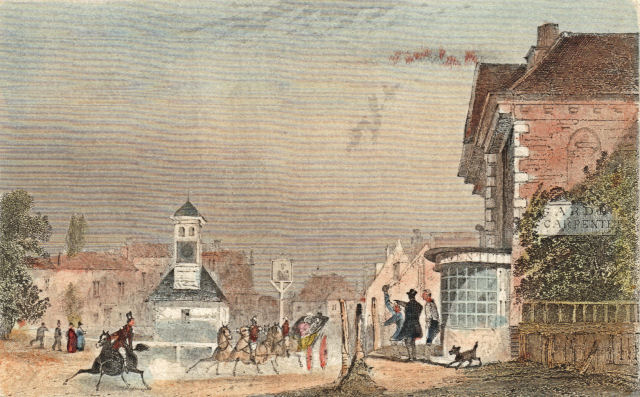
epsom

Epsom Watch House & Clock c1840 from Dugdale’s England & Wales
Image courtesy of Surrey Libraries and is held in the
Epsom & Ewell Local And Family History Centre

Elizabeth was desperate to know what lengths, what depths her father would go to retrieve his wayward daughter, her very own sister.

He meant, I believe,” replied Jane, “to go to Epsom, the place where they last changed horses, see the postilions, and try if anything could be made out from them. His principal object must be to discover the number of the hackney coach which took them from Clapham. “

Of course, a touch of sheer genius; find out the number of the Hackney Coach. That would do it. He would be sure to find them then.
And after all this searching, this animal desperation, this wolf like howl of anguish ripped from the primeval instinctive depths of Mr Bennett’s heart, what then? What could be the consequences? So after many letters flying backwards and forwards, if anything, P&P appears to hinge very often on the writing, sending and receiving of letters, Mr Gardner has appeared to pay Wickhams debts,, Mr Bennet has only to provide a paltry £100 a year, he can’t believ his luck and can’t quite work out the finances as if he ever could work out his finances. (Aside: we all know who really has settled the finances, don’t we?? Ha! Ha! It’s getting more like a pantomime all the time this. Mrs Bennnet as Widow Twanky and Mr Bennet as Baron Hardup.)

He had never before supposed that, could Wickham be prevailed on to marry his daughter, it would be done with so little inconvenience to himself as by the present arrangement. He would scarcely be ten pounds a year the loser, by the hundred that was to be paid them; for, what with her board and pocket allowance, and the continual presents in money which passed to her through her mother’s hands, Lydia’s expenses had been very little within that sum.

That it would be done with such trifling exertion on his side, too, was another very welcome surprise; for his chief wish at present was to have as little trouble in the business as possible. When the first transports of rage which had produced his activity in seeking her were over, he naturally returned to all his former indolence.”

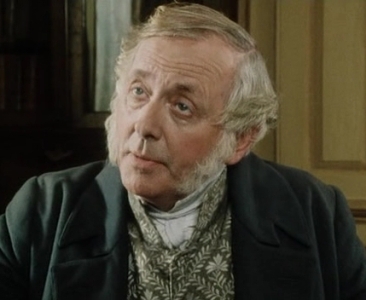
Mr. Bennet

Mr. Bennet

So Wickham was to marry Lydia and Mrs Bennett was happy and all was well with Mr Bennett and he could return to his former state of,” indolence.” A sort of Popeye Doyle with carpet slippers smoking a pipe and reading his newspaper seated at his fireside; a Michael Caine reminiscing about his past, cold eyed and tough emotionless roles in Get Carter relaxing now in his easy chair or Steve McQueen sitting back on his ranch, his rocking chair gently calming his fevered brain and letting his motorbikes go rusty, crying into his beer, or, even a Jack Regan from The Sweeney who could at last ,” Shut it!” himself. Ah, all was well in the end. Colonel Forster could return too to Brighton, to the lesser dangers of defending our shores and leading his regiment against Napoleon knocking at the very shingle on Brighton Beach. Mr and Mrs Gardner could return to the hustle and bustle and shops and markets of Gracechurch Street in the city and Lizzie and Jane, yes, well, we know what becomes of Lizzie and Jane,

Happy for all her maternal feelings was the day on which Mrs Bennet got rid of her two most deserving daughters. With what delighted pride she afterwards visited Mrs Bingley and talked of Mrs Darcy may be guessed.”

Lydia in connubial bliss and Wickham not so

Lydia in connubial bliss and Wickham apparently not so

So, in a novel dedicated to getting daughters married, a lot of horse and carriage mileage is accrued and many letters are written. We only hear of weddings, but we certainly know about how characters felt. Will, Lady Catherine ever get over being, “exceedingly angry” or will she just explode with high blood pressure?