• Home
  • Audio/Podcasts
  • Austensites
  • AV/E-Texts
  • History
  • JA Novels & Bio
  • Links
  • Original Sources/19th C. Texts
  • Social Customs During the Regency
  • Teacher/Student
  • Writer/Literature Resources

Jane Austen's World

This Jane Austen blog brings Jane Austen, her novels, and the Regency Period alive through food, dress, social customs, and other 19th C. historical details related to this topic.

Feeds:
Posts
Comments
« January in Jane Austen’s World
Jane Austen in the News »

Visiting Great Bookham: Church of St Nicolas (and, Box Hill)

January 22, 2024 by Brenda S Cox

by Brenda S. Cox

“I dread the idea of going to Bookham as much as you can do”—Jan. 9, 1799

“My scheme is to take Bookham in my way home for a few days . . . I have a most kind repetition of Mrs. Cooke’s two or three dozen invitations, with the offer of meeting me anywhere” –Nov. 3, 1813

We’ve been looking at some of Jane’s mother’s Leigh family. The Austens also corresponded regularly with the Cooke family in Great Bookham, who are often mentioned in Jane’s letters. Mrs. Cooke was Jane’s mother’s cousin. Her name was the same as Jane’s mother’s: Cassandra Leigh. She was the daughter of Jane’s uncle Theophilus Leigh, master of Balliol College at Oxford.

This cousin’s husband, Rev. Samuel Cooke, was Jane’s godfather. He was the vicar of St. Nicolas’, Great Bookham. He was also rector of Cottisford, Oxon, about 80 miles away, but he and his family lived in Great Bookham.

Godparents play an important role in Anglican families.They promise to pray for the child’s salvation, faith, and obedience, and, at the child’s baptism, they renounce the devil on the child’s behalf. A girl has one godfather and two godmothers.

Memorial plaque in St. Nicolas’ Church, Great Bookham, to Jane Austen’s godfather, Rev. Samuel Cooke, “formerly fellow of Baliol College Oxford, and for fifty-two years the resident and respected vicar of this parish. He died March 29th, 1820, in the eightieth year of his age. Guided by a spirit of piety and benevolence and by an inflexible sense of duty, which sought not the honour that cometh of man, he ran his long course in peace and content; and closed it in an humble trust on that blessed hope, ‘Enter thou into the joy of thy Lord.'”
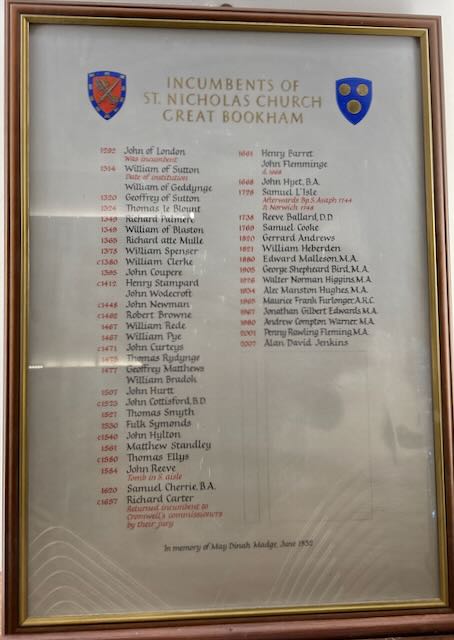
The Incumbents (vicars, then rectors) of the Great Bookham church lists Samuel Cooke from 1769 to 1820.

Jane Austen visited the Cookes in Great Bookham, which is between Chawton and London, a number of times. We don’t know why she did not want to go there in 1799, but she visited from May 14 to June 2.
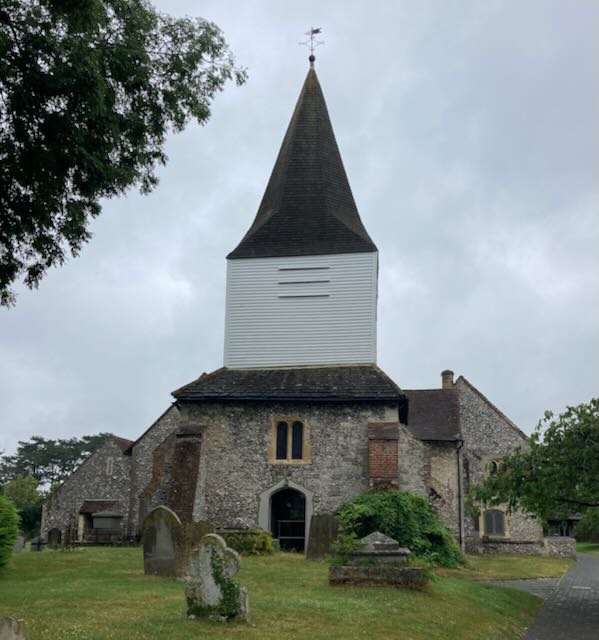
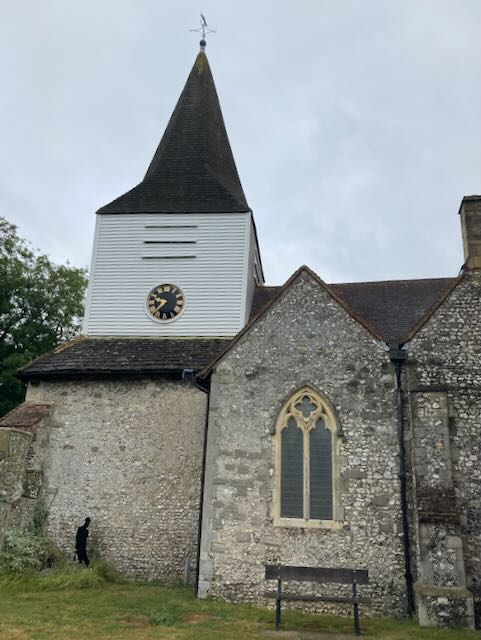
St. Nicolas’ Church, Great Bookham, externally still much as it was when Jane Austen visited there. See this image by JMW Turner.

Great Bookham in Austen’s Novels

Jane made good use of her visit. In 1801, she started writing The Watsons. Its setting in “Stanton” was apparently based on West Humble (now Westhumble), a town near Great Bookham. It is three miles from Dorking, which Austen calls “the town of D. in Surrey.” Betchworth Castle is nearby, so it may be the basis for Osborne Castle in the novel.

After probably visiting several more times, in the summer of 1814, Austen decided to visit the Cookes again. On June 14, she wrote,

“The only Letter to day is from Mrs. Cooke to me. They . . . want me to come to them according to my promise.—And after considering everything, I have resolved on going. . . . In addition to their standing claims on me, they admire Mansfield Park exceedingly. Mr. Cooke says ‘it is the most sensible Novel he ever read’—and the manner in which I treat the Clergy, delights them very much.—Altogether I must go–& I want you [Cassandra] to join me there . . .”

One commentator (Chapman) says the Cookes may have had Evangelical leanings and appreciated Mansfield Park’s protest against lax views of the duties of the clergy. Evangelical or not, Edmund Bertram of Mansfield Park does present a very high view of the clergy. He says, for example:

“I cannot call that situation [of clergyman] nothing which has the charge of all that is of the first importance to mankind, individually or collectively considered, temporally and eternally, which has the guardianship of religion and morals, and consequently of the manners which result from their influence. No one here can call the office nothing. . . . it will, I believe, be everywhere found, that as the clergy are, or are not what they ought to be, so are the rest of the nation.”

Jane Austen apparently based Highbury in Emma on Great Bookham or the adjacent town of Leatherhead.

When Jane Austen visited in 1814, she was in the midst of writing Emma. She later told her nephew that Leatherhead, next to Great Bookham, was the model for Highbury. Box Hill, where Emma and her friends picnic, is nearby, and Great Bookham had an Old Crown Inn similar to the one in Highbury. (It was, however, demolished in 1930). There was also a Randalls Park, and other features similar to Highbury.
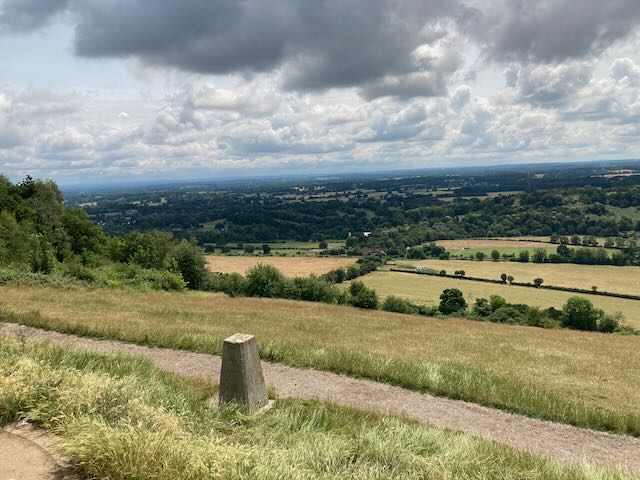
View from Box Hill, where Emma and her friends picnic in Emma. (Tony Grant points out that this wonderful view is not from the exact spot where they held their picnic. “Frank Churchill, when he gets up to to proclaim to the world, says that Dorking is to his left and Mickleham to his right. That can only mean the picnic took place on the Burford Spur of Box Hill.” You can find photos of other views in his posts linked below.)

Box Hill

Box Hill is still a beautiful spot for picnics, hiking, walking, and cycling. The current rector of Great Bookham, Alan Jenkins, kindly took us to visit there. It includes a cycling trail. In the 2012 Olympics, cyclists made nine laps on this trail as part of their route.

The Vicarage

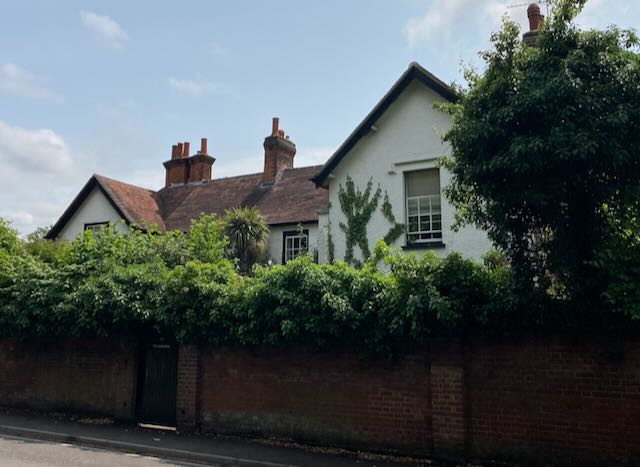
The Cookes’ parsonage, where Jane Austen stayed, was a large one. (A maid working there was named Elizabeth Bennet, by the way.) They had at least six children, but only three survived to adulthood. Their daughter Mary, who apparently did not marry, was a good friend of Jane’s, mentioned in her letters. Their son Theophilus Leigh Cooke (1778-1846) became a clergyman, a fellow of Magdalen College at Oxford, and holder of three church livings. His brother George Leigh Cooke (1779-1853) combined religion and science. He was a fellow of Corpus Christi College and earned a bachelor of divinity (a graduate degree). He also became a professor of Natural Philosophy (science) at Oxford, a keeper of the archives, and published an edition of Newton’s Principia Mathematica. Austen’s nephew, James-Edward Austen-Leigh wrote in his Memoir that George was “an impressive preacher of earnest and awakening sermons,” which, in the jargon of the time, implies that he was an Evangelical. Jane mentions in one of her letters that George “was very kind & talked sense to me every now & then” (Apr. 21, 1805).

Until 1869, Great Bookham had vicars, not rectors, so the parsonage was called a vicarage. The patron of the parish (a person who changed over the years), took part of the tithes and the rest went to the vicar, along with income from the glebe farmland belonging to the living. It is speculated that some of the excommunications in the Vestry Books were for non-payment of tithes (from 1800: Great Bookham at the Time of Jane Austen).

The parsonage was removed in 1961. For early pictures, see here. The parish now has a rector; the term no longer refers to tithes. His rectory is a modern building.

St. Nicolas’ Church, Great Bookham, History

Jane Austen must have worshiped in this church, where her godfather was the vicar, a number of times on her visits to Great Bookham.

When Austen visited, the church was full of box pews with walls around them. Some were three feet high, some were four feet high. The box pews were replaced by regular pews in 1885.
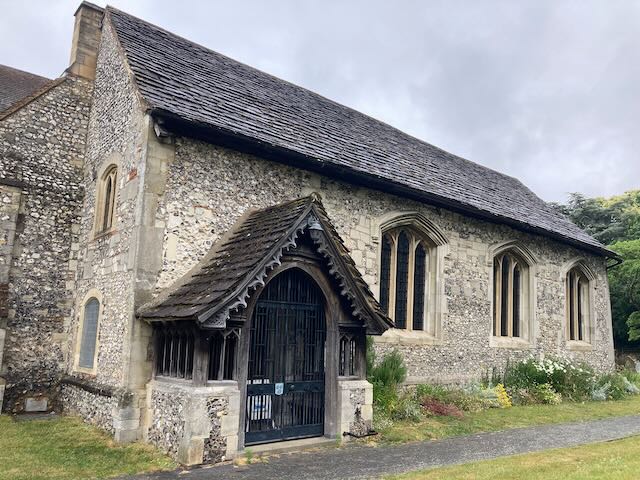
This wooden gate was added to side of the Great Bookham church in 1914. In Austen’s time, there was an external staircase here to an upper room, where Sunday school was held. Sunday schools, run by Christians of all denominations across England, educated the poor and enabled them to build better lives.
The church tower of St. Nicolas’ Great Bookham dates back to the 1100s. The clock in it was not there when Austen visited. Some years ago, the tower was in danger of falling down. The whole village got behind the project of fixing it, and raised even more than the large sum necessary to save the tower.
The chancel of the Great Bookham church was built in the 1300s, though when Jane Austen saw it, it did not have stained glass.

Other Literary Connections at Great Bookham

Great Bookham has a number of literary connections, some of which Jane Austen would have known about.
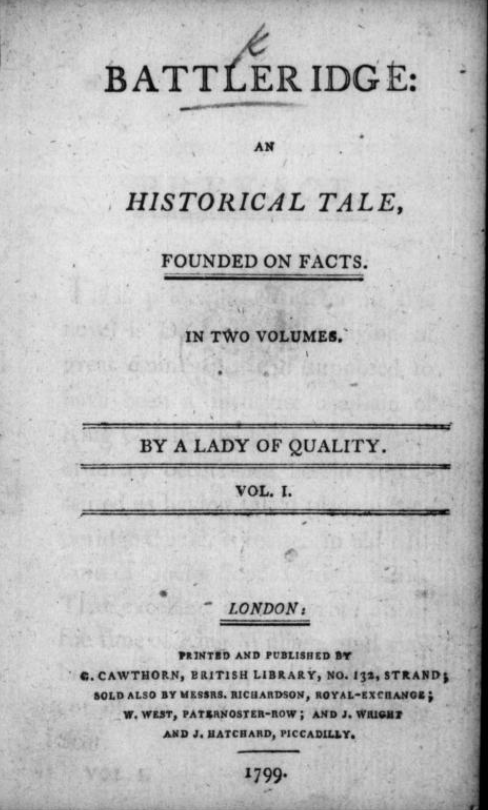
Cassandra Cooke, Jane Austen’s mother’s cousin, published her novel, Battleridge: An Historical Tale founded on facts, in 1799, by “a lady of quality.” Austen mentions it in her letters. Available on archive.org in two volumes.
Fanny Burney, one of Jane Austen’s favorite authors, lived here at the Hermitage with her husband, General Alexandre D’Arblay. Their son was baptized in the nearby Great Bookham church in 1795.

Fanny Burney wrote of the Cookes, “the father is worthy, the mother is good, so deserving, so liberal and so infinitely kind, that the world certainly does not abound with people to compare them with. The eldest son is a remarkably pleasing young man. The young seems sulky, as the sister is haughty.” She also wrote of Rev. Cooke, “Our vicar is a very worthy man and goodish—though by no means a marvellously rapid preacher.”

She also wrote to her father, Dr. Burney, “Mr. Cooke tells me he longs for nothing so much as a conversation with you on the subject of Parish Psalm singing—he complains that the Methodists run away with the regular congregation from their superiority in vocal devotion.” The Methodists, led by John and Charles Wesley, had been leading a revival in the church. They attracted people with lively hymns. Country churches were mostly singing psalms, often quite poorly, at this time, though hymns were beginning to be introduced into some churches.
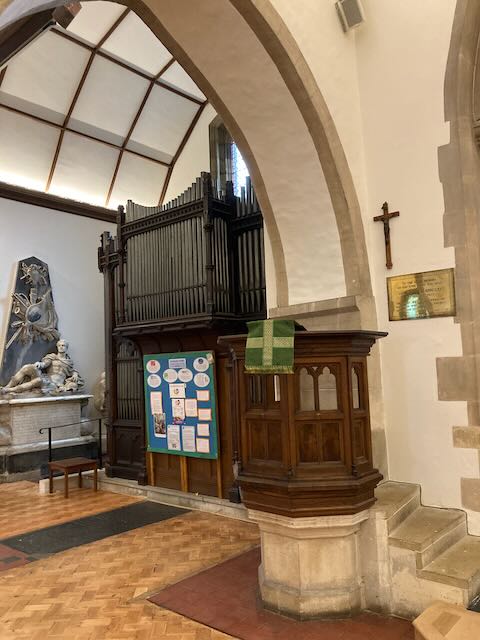
Old and new: St. Nicolas’ pipe organ today. In 1800, the Great Bookham church only had a barrel organ that could play ten tunes. It accompanied their choir of Singers who sang from the West Gallery (balcony) of the church. So their music was probably better than that of many country churches at the time, which often had no musical instruments. This photo shows a memorial tomb/statue that Austen would have seen. The pulpit would have been higher, however, to be seen over the box pews. The blue bulletin board is modern, showing charities the church supports.

Playwright and politician Richard Sheridan (1751-1816), who wrote The Rivals and School for Scandal, owned several manors in the area around Great Bookham.

Later, teenaged C. S. Lewis lived in Great Bookham from 1914-1917, being educated by a private tutor, William T. Kirkpatrick.

St. Nicolas’ Church, Great Bookham, Today

St. Nicolas’ is a very active church, larger than the others we have “visited” so far. I was told the parish includes eleven to twelve thousand people. The electoral role of St. Nicolas’ lists about 250 members, and around 140 attend on Sundays. Three other ministers and five staff members assist the rector in serving the church. The church holds services every Sunday, Communion on Thursdays and Sundays, and several weekly prayer meetings. Members also meet in housegroups.

This board welcomes people to St. Nicolas’, Great Bookham, and advertises concerts and other community events held at the church.

The area also includes Baptist, Catholic, and United Reformed churches, and St. Nicolas’ cooperates with them on projects like Alpha Courses, designed to address people’s questions about Christian faith.

A few years ago, the church removed the Victorian pews and substituted chairs. This gives them the flexibility to hold various kinds of services and to host community events.

Religious education and daily worship are required to be offered in British government schools (student participation is optional). The rector, Alan Jenkins, provides some of this in local schools, briefly sharing a Bible story, prayer, and sometimes a song. School groups also come into the church for harvest or Easter services, with programs organized by the teachers.
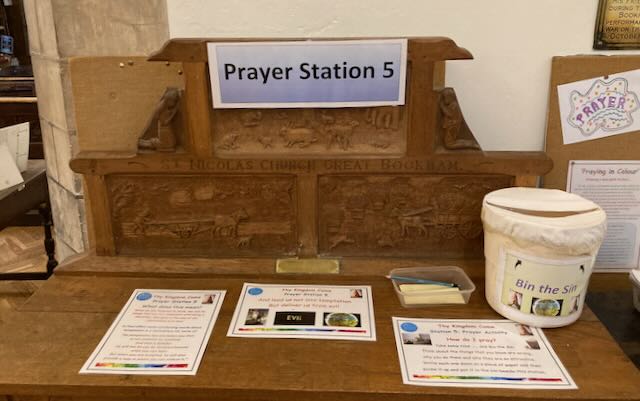
Prayer stations around the church offer ideas for personal prayer.
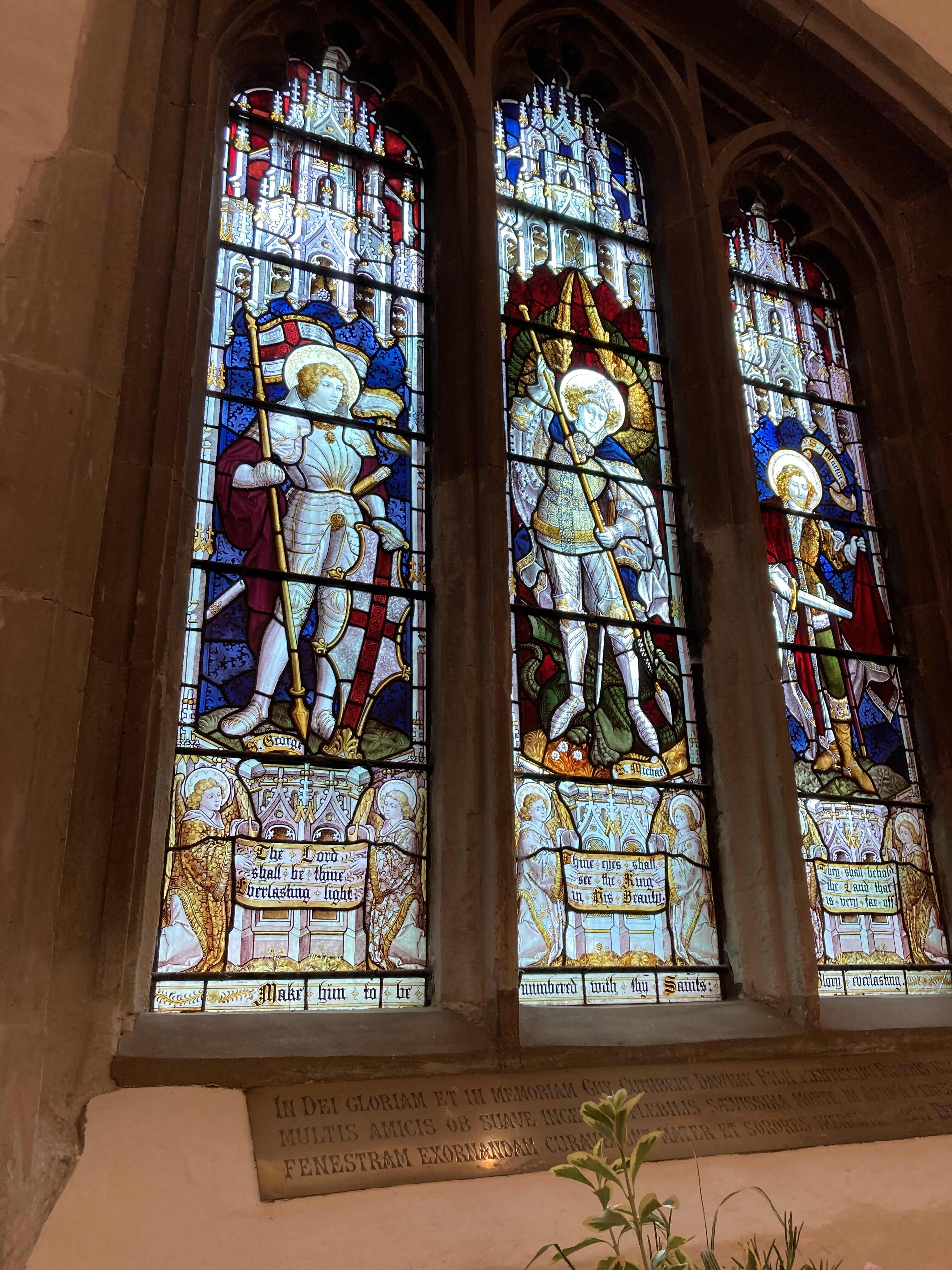
An interesting aside for you: St. Nicolas’ Great Bookham has many lovely stained glass windows today, though there were none when Jane Austen visited. This one honors St. George, patron saint of England; St. Michael, who in the Bible defeats the great dragon, the devil; and St. Martin using his sword to cut his cloak in half in order to give half to a beggar in winter. These windows, with military images, are dedicated to Guy Cuthbert Dawnay, a soldier and Conservative politician. A large cross dedicated to Dawnay in the churchyard says he “was killed by a buffalo while on a hunting expedition in Masailand, E. Africa,” Feb. 28, 1889. Both have verses from Isaiah 60:19-20 about the Lord being his everlasting light.
On the day we visited the Great Bookham church, the central kneeling cushion at the altar commemorated Jane Austen’s connection with the church.

I hope you are enjoying learning about Jane Austen’s churches along with me. There is so much history at these old churches, as well as continuing community life and worship today.

All photos copyright Brenda S. Cox, 2024.

Brenda S. Cox is the author of Fashionable Goodness: Christianity in Jane Austen’s England. She also blogs at Faith, Science, Joy, and Jane Austen.

Sources

1800: Great Bookham at the Time of Jane Austen, Fanny Burney, and R. B. Sheridan, published by the Parochial Council of St. Nicolas Great Bookham (booklet available at the church, funded by JASNA)

“The Original of Highbury,” Jane Austen Society Collected Reports II:60,

Church of St. Nicolas, official list entry

St. Nicolas, Great Bookham website and The History of the Building

Special thanks to Tony Grant for telling me that Box Hill was near Great Bookham, and to Rev. Alan Jenkins for taking us up to Box Hill!

Further Exploration

Jane Austen and Great Bookham, by Tony Grant

Box Hill in Jane Austen’s Emma, by Tony Grant (includes the geology, history, and literary connections of Box Hill)

Jane Austen’s Surrey, by Tony Grant (includes views Emma might have seen on her picnic)

Emma Woodhouse’s Surrey, by Tony Grant (includes views Emma might have seen on her picnic)

Other Churches Connected to Jane Austen

Steventon

Chawton

Hamstall Ridware and Austen’s cousin Edward Cooper

Adlestrop Church and the Leigh Family

Stoneleigh Abbey Chapel

Share with others:

  • Click to email a link to a friend (Opens in new window) Email
  • Click to print (Opens in new window) Print
  • Click to share on Facebook (Opens in new window) Facebook
  • Click to share on Reddit (Opens in new window) Reddit
  • Click to share on X (Opens in new window) X
  • Click to share on Pinterest (Opens in new window) Pinterest
  • Click to share on Tumblr (Opens in new window) Tumblr
  • Click to share on LinkedIn (Opens in new window) LinkedIn
Like Loading...

Related

Posted in Anglican Church, Architecture, Churches of the Austen family, Emma, Jane Austen's World, Religion in Austen's England | Tagged Box Hill, Churches in Jane Austen's England, Great Bookham, Jane Austen's godfather, Samuel Cooke | 7 Comments

7 Responses

  1. on January 22, 2024 at 02:51 dholcomb1's avatar dholcomb1

    I really enjoyed this post about another church in the life of Jane Austen. Thank you for all of your research and photos.

    denise


    • on January 22, 2024 at 20:34 Brenda S Cox's avatar Brenda S Cox

      You’re very welcome, Denise! My pleasure! I feel privileged to have seen all these amazing places, and met a few of the wonderful people connected with each church.


  2. on January 22, 2024 at 04:38 generalgtony's avatar generalgtony

    I’m glad you enjoyed Great Bookham and Surrey in general Brenda. Surrey and Hampshire are becoming a second home to you. I used to teach in Little Bookham at St Lawrence Primary School, to the west of Great Bookham, for a while. I loved my drive from Wimbledon every day. I enjoyed reading your article Brenda.


  3. on January 22, 2024 at 04:55 generalgtony's avatar generalgtony

    Ha! ha!. I had almost forgotten about those articles I wrote about Surrey, Brenda. I appear to have come at the same subject from different angles. Must have had something on my mind!!!!


  4. on January 22, 2024 at 20:34 Brenda S Cox's avatar Brenda S Cox

    Thanks, Tony! Always good to see things from multiple perspectives, I think. :-)


  5. on January 23, 2024 at 05:57 margaretmills3's avatar margaretmills3

    Great article, Brenda – thank you for sharing this with us. Like others, I love reading about old churches with a connection to a literary personage. I do wonder why Jane seemed so reluctant to make that visit to the Cookes – I like her reference to having received ‘dozens’ of invitations, so she must have really tried to avoid going! I’d love to know the reason why.


    • on February 12, 2024 at 16:30 Brenda S Cox's avatar Brenda S Cox

      So many questions we wish we could ask Jane! But we can only speculate.


Comments are closed.

  • Enter your email address to subscribe to this blog and receive notifications of new posts by email.

    Join 7,246 other subscribers
  • 2025 AGM in Baltimore

  • Items of Interest

  • Blog Stats

    • 18,382,940 hits
  • Follow Jane Austen's World on WordPress.com
  • RECOMMENDED BOOKS AND RESOURCES

  • Fashionable Goodness: Christianity in Jane Austen's England is now available! By JAW contributor Brenda S. Cox. See Review. Available from Amazon and Jane Austen Books.
  • We also recommend JAW contributor Rachel Dodge's devotionals based on Jane Austen's prayers and classic literature. Reviews:
    Praying With Jane: 31 Days Through the Prayers of Jane Austen
    The Anne of Green Gables DevotionalThe Little Women Devotional
    The Secret Garden Devotional
  • The Tour of Doctor Syntax. Edited by Ben Wiebracht. Read the review of the book at this link. Click to order the book on Amazon US or Amazon UK or Jane Austen Books
  • FREE Student Membership to JASNA

    Available through December 31st, 2025. Click on image for details, and share this poster with other teachers and students!

  • The Obituary of Charlotte Collins by Andrew Capes

    Click on image to read the story.

  • Comments

    “My idea of good company…is the company of clever, well-informed people, who have a great deal of conversation.” – Jane Austen, Persuasion


    Gentle readers: Please feel free to post your comments and continue the conversation! Due to SPAM, we will no longer accept comments on posts after 30 days of publication. In some instances, links will be removed from comments as well.

  • Administrators and Contributors

    Vic Sanborn, founder of this blog, is supported by a team of talented and knowledgeable writers about Jane Austen and the Regency era. They are:

    • Brenda Cox
    • Rachel Dodge and
    • Tony Grant, who now contributes his photos from London and England

    Click on their names to enter their own blogs.

    In addition, we thank the many experts and authors who frequently contribute their posts and opinions, and who continue to do so freely or at our request.

  • Pin It!

    Follow Me on Pinterest
  • Top Posts

    • Exploring Jane Austen's Prayers
      Exploring Jane Austen's Prayers
    • Cassandra Writes About Jane Austen's Death, July 18, 1817
      Cassandra Writes About Jane Austen's Death, July 18, 1817
    • Highclere Castle Floor Plan: The Real Downton Abbey
      Highclere Castle Floor Plan: The Real Downton Abbey
    • Regency Fashion: Men's Breeches, Pantaloons, and Trousers
      Regency Fashion: Men's Breeches, Pantaloons, and Trousers
    • Men's hair styles at the turn of the 19th century
      Men's hair styles at the turn of the 19th century
    • Happy 250th Birthday, Jane Austen!
      Happy 250th Birthday, Jane Austen!
    • More Birthday Events for Jane Austen!
      More Birthday Events for Jane Austen!
    • Sense and Sensibility, 1995 & 2008: Marianne’s Illness
      Sense and Sensibility, 1995 & 2008: Marianne’s Illness
    • In Jane Austen’s Own Words: Economic Sense and Sensibility
      In Jane Austen’s Own Words: Economic Sense and Sensibility
    • Social Customs During the Regency
      Social Customs During the Regency
  • Recent Posts

    • More Birthday Events for Jane Austen!
    • Happy 250th Birthday, Jane Austen!
    • Coming Soon: Birthday Tales for Jane Austen’s 250th
    • Book Review: The Austens, by Sarah Emsley
    • Praying with Jane Audiobook with Amanda Root
  • Links to Jane Austen Blogs

    Click here to enter the page. Topics include Regency fashion, historic foods, Jane Austen societies, British sites, related topics. Click on image.

  • May we suggest?

  • Unknown's avatarHello, my name is Vic and I live in Maryland, USA. I have adored Jane Austen almost all of my life. I am a proud lifetime member of the Jane Austen Society of North America. This blog is a personal blog written and edited by me and my team. We do not accept any form of cash advertising, sponsorship, or paid topic insertions. However, we do accept and keep books and CDs to review.

    If you would like to share a new site, or point out an error, please email us. (Yes, we are fallible. We'll own up to our mistakes and will make the corrections with a polite smile on our faces.) Write us at

    gmailbw

    Thank you for visiting this blog. Your comments and suggestions are most welcome.

  • Project Gutenberg: eBook of Stage-coach and Mail in Days of Yore, Volume 2 (of 2), by Charles G. Harper

    STAGE-COACH AND MAIL IN DAYS OF YORE: A PICTURESQUE HISTORY
    OF THE COACHING AGE, VOL. II, By CHARLES G. HARPER. 1903. Click on this link.


  • Top Posts & Pages

    • Exploring Jane Austen's Prayers
    • Cassandra Writes About Jane Austen's Death, July 18, 1817
    • Highclere Castle Floor Plan: The Real Downton Abbey
    • Regency Fashion: Men's Breeches, Pantaloons, and Trousers
    • Men's hair styles at the turn of the 19th century
    • Happy 250th Birthday, Jane Austen!
    • More Birthday Events for Jane Austen!
    • Sense and Sensibility, 1995 & 2008: Marianne’s Illness
    • In Jane Austen’s Own Words: Economic Sense and Sensibility
    • Social Customs During the Regency
  • Tour Chawton Cottage on YouTube

  • Disclaimer: Our team makes no profit from this blog. We may receive books (physical or digitized) for review purposes.

  • Copyright Statement: © Jane Austen's World blog, 2009-2024. Unauthorized use and/or duplication of this material without express and written permission from this blog’s author and/or owners is strictly prohibited. Excerpts and links may be used, provided that full and clear credit is given to Jane Austen's World with appropriate and specific direction to the original content.

Blog at WordPress.com.

WPThemes.


  • Reblog
  • Subscribe Subscribed
    • Jane Austen's World
    • Join 7,246 other subscribers
    • Already have a WordPress.com account? Log in now.
    • Jane Austen's World
    • Subscribe Subscribed
    • Sign up
    • Log in
    • Copy shortlink
    • Report this content
    • View post in Reader
    • Manage subscriptions
    • Collapse this bar
 

Loading Comments...
 

    %d

