This Jane Austen blog brings Jane Austen, her novels, and the Regency Period alive through food, dress, social customs, and other 19th C. historical details related to this topic.
This is the time of year when I start to dream of traveling to England or other beautiful places over the summer. I know just how Elizabeth Bennet felt when looking forward to her trip with her Uncle and Aunt Gardiner.
What a delightful thought! Anticipation is half the joy of any exciting pursuit. Her words could not be more true:
Her tour to the Lakes was now the object of her happiest thoughts: it was her best consolation for all the uncomfortable hours which the discontentedness of her mother and Kitty made inevitable; and could she have included Jane in the scheme, every part of it would have been perfect.
“But it is fortunate,” thought she, “that I have something to wish for. Were the whole arrangement complete, my disappointment would be certain. But here, by carrying with me one ceaseless source of regret in my sister’s absence, I may reasonably hope to have all my expectations of pleasure realized. A scheme of which every part promises delight can never be successful; and general disappointment is only warded off by the defence of some little peculiar vexation.”
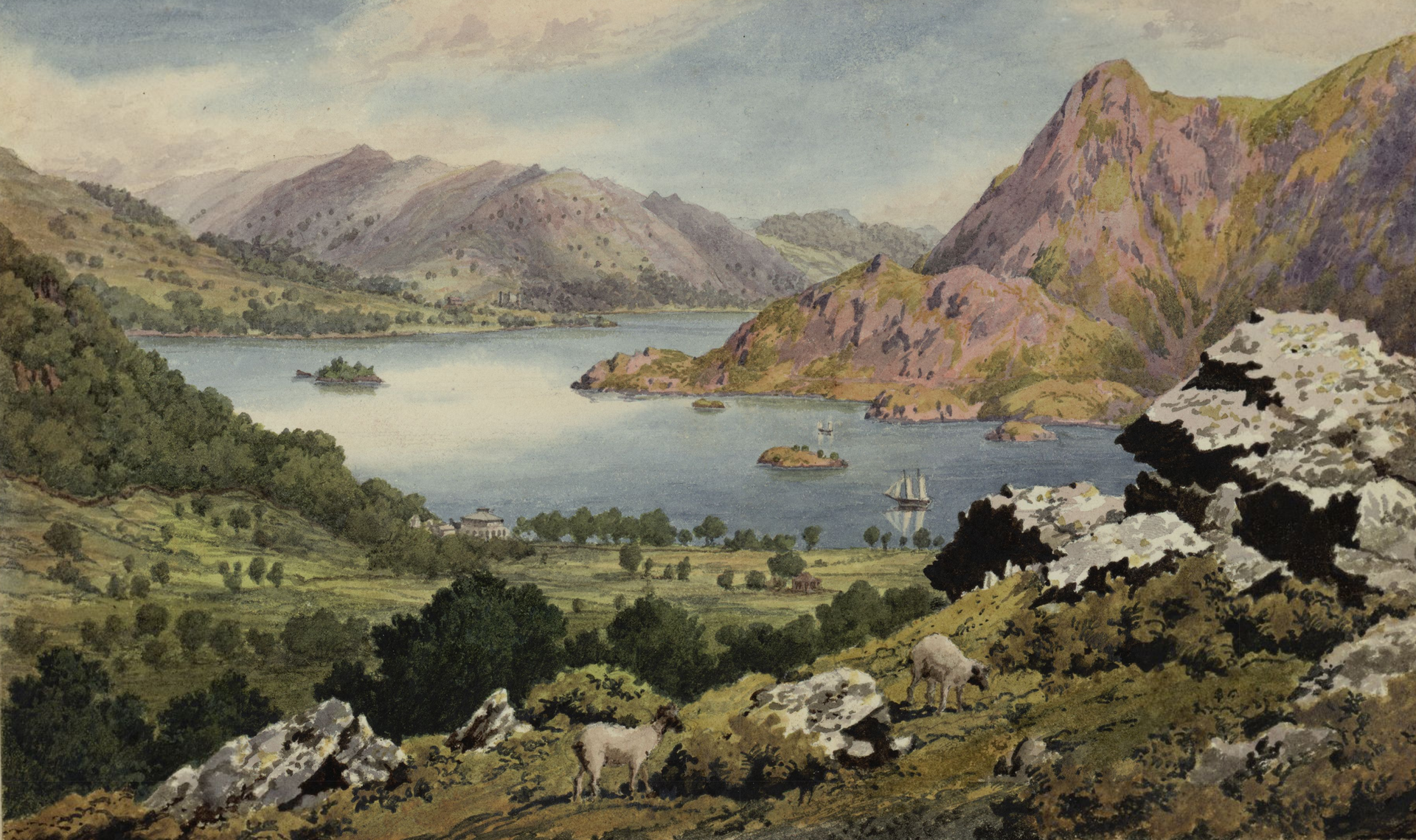
A view of the Lake District: Parker, John. Ullswater from Above Patterdale. 1825. Wikimedia Commons.
Travel Plans
Like many of us who have had our plans amended, Elizabeth has high expectations of all they might see on their trip, but eventually she finds contentment in the final plans to visit Derbyshire and the Peak District but not venture to the Lakes:
…they were obliged to give up the Lakes, and substitute a more contracted tour; and, according to the present plan, were to go no farther northward than Derbyshire. In that county there was enough to be seen to occupy the chief of their three weeks; and to Mrs. Gardiner it had a peculiarly strong attraction. The town where she had formerly passed some years of her life, and where they were now to spend a few days, was probably as great an object of her curiosity as all the celebrated beauties of Matlock, Chatsworth, Dovedale, or the Peak.
Most of us can relate to Elizabeth’s feelings on the topic:
Elizabeth was excessively disappointed: she had set her heart on seeing the Lakes; and still thought there might have been time enough. But it was her business to be satisfied—and certainly her temper to be happy; and all was soon right again.
Wright of Derby, Joseph. Dovedale by Moonlight. c.1784–1785, oil on canvas. Wikimedia Commons.
Travel Route
Her trip was revised, but there was still much for her to see. I’ve always been intrigued by this paragraph that tells us about the route they took on their way to Derbyshire, for there would have been many interesting sights along the way:
It is not the object of this work to give a description of Derbyshire, nor of any of the remarkable places through which their route thither lay—Oxford, Blenheim, Warwick, Kenilworth, Birmingham, etc., are sufficiently known. A small part of Derbyshire is all the present concern.
If Elizabeth and the Gardiners stopped along the way, what might these locations have looked like at the time? Most scholars agree that this trip would have taken several days, which means they would have had to change horses several times and stop for food and rest and lodging. It’s fun to imagine what all they saw and where they stopped, though we know they would have wanted as much time as possible in Derbyshire.
For anyone curious about how far and how fast people could travel in Jane Austen’s England, I highly recommend Wade H. Mann’s article, “Distance and Time in Regency England” on Quills & Quartos. It breaks down the realities of journeying by carriage, horseback, and foot, giving a clear sense of the distances and travel times that shaped the world Austen’s characters inhabited.
Pollard, James. London to Brighton Stage Coach. c. 1822, coloured aquatint, engraved by Matthew Dubourg (attributed), Wikimedia Commons.
Oxford
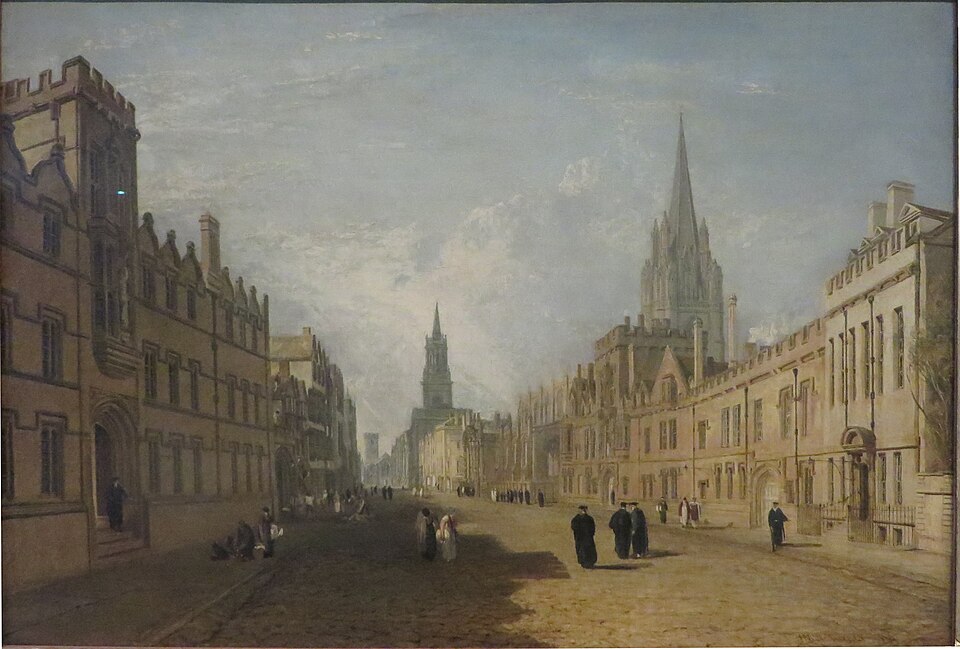
Austen’s contemporary readers would have recognized Oxford as a center of learning and culture. High Street and Cornmarket Street bustled with shops, inns, and markets. The architecture would have also been of interest. There are many gardens and parks to explore and walk, museums and libraries, and several religious sites. There would have been much for Elizabeth and the Gardiners to experience along the way.
High Street, Oxford, J. M. W. Turner, Wikipedia, 1810.
Blenheim
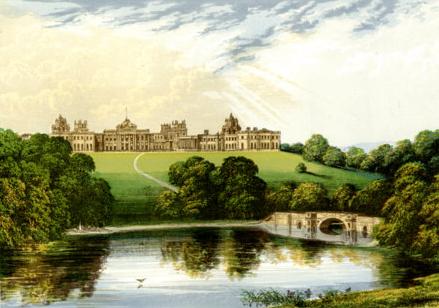
Blenheim Palace, the seat of the Dukes of Marlborough (which would later become the birthplace of Winston Churchill), was also on the route. As we see later when Elizabeth and the Gardiners visit Pemberley, by the late 18th and early 19th centuries, many famous estates in England had become informal tourist attractions. Wealthy travelers, and even respectable middle-class visitors, often toured grand houses while traveling through the countryside.
Morris, F. O. Blenheim Palace. 1880. Wikimedia Commons.
Warwick
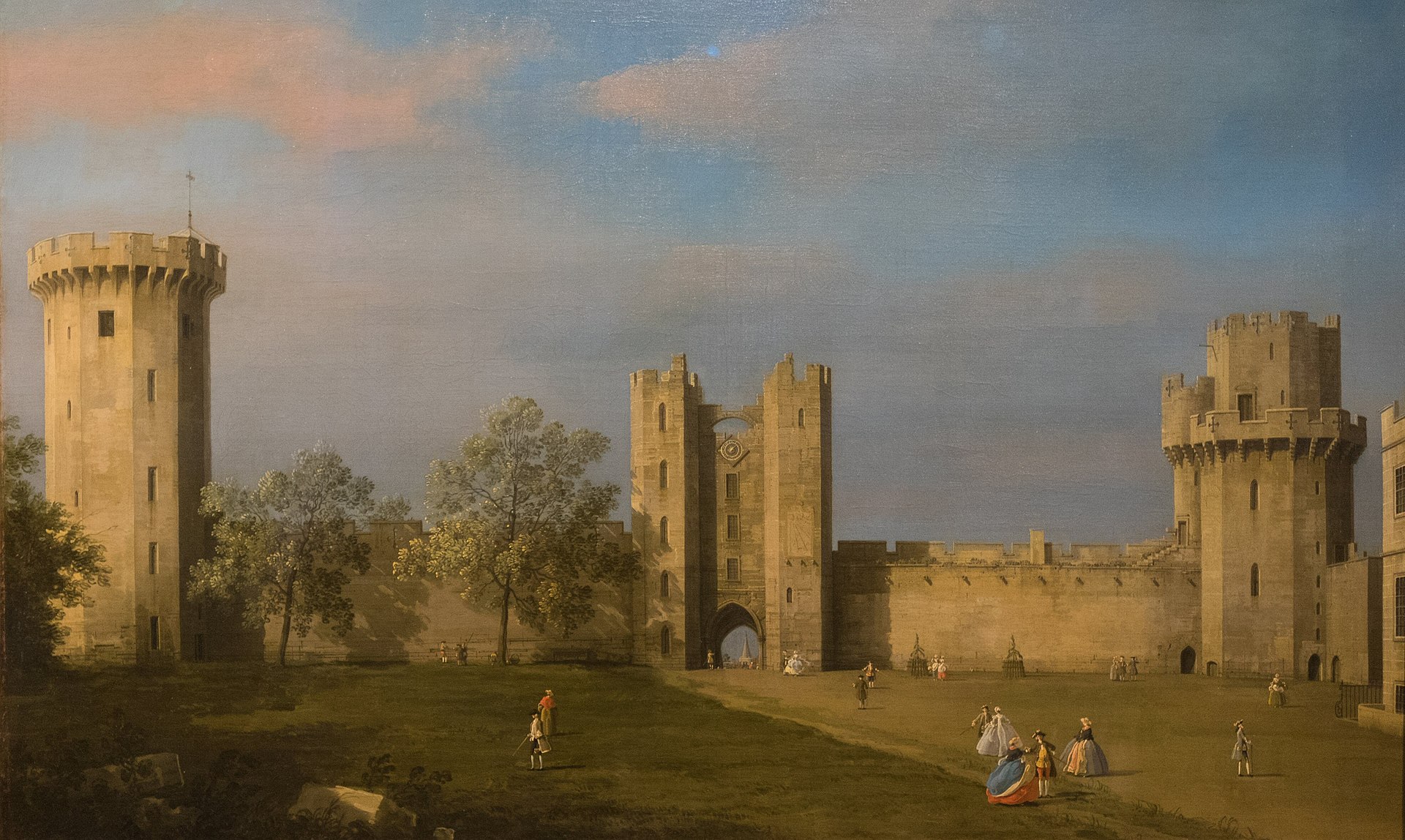
Today, Warwick is a lovely little village, and the castle is one of my favorite sites to visit. During Austen’s time, Warwick Castle would have boasted recent new landscaping by Lancelot “Capability” Brown (1716–1783). Warwick Castle’s grounds were redesigned in the 18th century, and Brown’s landscapes created sweeping lawns, gentle vistas, and picturesque trees. Visitors like Elizabeth Bennet might have enjoyed exploring the grounds.
Canaletto. Warwick Castle, the East Front from the Courtyard. Birmingham Museum and Art Gallery, Wikimedia Commons.
Kenilworth
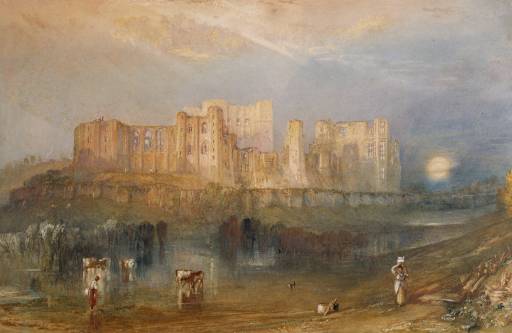
Kenilworth Castle, already a famous historic ruin during the Regency Era, offered visitors sweeping views, crumbling walls, and picturesque gardens. Tourists like Elizabeth Bennet might have strolled the grounds and enjoyed the romantic, dramatic scenery that made it a highlight of Warwickshire travel.
Turner, Joseph Mallord William. Kenilworth Castle. c. 1830, watercolour, bodycolour, and graphite on paper. Fine Arts Museums of San Francisco. Wikimedia Commons.
Finally, in Austen’s day, Birmingham was a bustling market and industrial town rather than a landscaped estate. Travelers might stop for lodging, shopping, or supplies, experiencing the commerce of an emerging urban center instead of picturesque grounds or aristocratic architecture.
Derbyshire
Once they arrive in Derbyshire, we know whom Elizabeth and the Gardiners visit and what they see. Unlike Elizabeth Bennet, most of us will never enjoy living at such a glorious estate as Pemberley. But we can visit many of the real, historic sites. And if we’re very lucky, perhaps we might be invited to visit a historic estate or home one day, such as my visit to Sherbourne Park.
Most of all, Elizabeth’s travels remind us that the journey is often just as important and interesting as the destination. Unless, of course, Mr. Darcy is waiting at one of those destinations.
Tune in for more about Elizabeth’s travels in the coming months!
Very interesting Rachel. People living at the time of Jane Austen would have known the implications of the places Jane mentions.As you say, Birmingham, was a growing industrial centre. It was the heart of the Industrial revolution. Many labourers from the countryside were leaving their villages to move to the growing industrialised towns.(We don’t connect Austen with industrialisation but it was going on.)
Stratford upon Avon, the birthplace of Shakespeare wasn’t too far off Elizabeth Bennett’s route.
It is a shame she never reached The Lakes. I wonder if Jane knew The Lakes? She read Dr Syntax written by William Combe, who spends time in The Lakes. It is where Wordsworth lived and wrote many of his great poetry.
I have walked a few times in The Lakes visiting all the Wordsworth sites, being hit by horizontal rain and wind on the top of the fells , getting stuck up to my knees in a peat bog and being blown into mountain streams. Jane and Elizabeth would have loved it.
Your comment is appreciated. If you would like to make a correction or have me add a link, please send an email to Vic at janeaustensworld [at] (gee) (male) dot (com). Spam or suspect comments will be deleted. Cancel reply
Fashionable Goodness: Christianity in Jane Austen's England is now available! By JAW contributor Brenda S. Cox. See Review. Available from Amazon and Jane Austen Books.
Available through December 31st, 2025. Click on image for details, and share this poster with other teachers and students!
The Obituary of Charlotte Collins by Andrew Capes
Click on image to read the story.
Comments
“My idea of good company…is the company of clever, well-informed people, who have a great deal of conversation.” – Jane Austen, Persuasion
Gentle readers: Please feel free to post your comments and continue the conversation! Due to SPAM, we will no longer accept comments on posts after 30 days of publication. In some instances, links will be removed from comments as well.
Administrators and Contributors
Vic Sanborn, founder of this blog, is supported by a team of talented and knowledgeable writers about Jane Austen and the Regency era. They are:
Tony Grant, who now contributes his photos from London and England
Click on their names to enter their own blogs.
In addition, we thank the many experts and authors who frequently contribute their posts and opinions, and who continue to do so freely or at our request.
Click here to enter the page. Topics include Regency fashion, historic foods, Jane Austen societies, British sites, related topics. Click on image.
May we suggest?
Hello, my name is Vic and I live in Maryland, USA. I have adored Jane Austen almost all of my life. I am a proud lifetime member of the Jane Austen Society of North America. This blog is a personal blog written and edited by me and my team. We do not accept any form of cash advertising, sponsorship, or paid topic insertions. However, we do accept and keep books and CDs to review.
If you would like to share a new site, or point out an error, please email us. (Yes, we are fallible. We'll own up to our mistakes and will make the corrections with a polite smile on our faces.) Write us at
Thank you for visiting this blog. Your comments and suggestions are most welcome.
Project Gutenberg: eBook of Stage-coach and Mail in Days of Yore, Volume 2 (of 2), by Charles G. Harper
STAGE-COACH AND MAIL IN DAYS OF YORE: A PICTURESQUE HISTORY
OF THE COACHING AGE, VOL. II, By CHARLES G. HARPER. 1903. Click on this link.









 Jane Austen's World
What a lovely trip, Rachel! Thanks for finding all those great pictures, so we could travel along with Elizabeth and the Gardiners!
Thank you, Brenda! It was fun to delve into the places listed, as I had never stopped to really pay attention.
Loved this post! ~Denise
Thank you, Denise!
Very interesting Rachel. People living at the time of Jane Austen would have known the implications of the places Jane mentions.As you say, Birmingham, was a growing industrial centre. It was the heart of the Industrial revolution. Many labourers from the countryside were leaving their villages to move to the growing industrialised towns.(We don’t connect Austen with industrialisation but it was going on.)
Stratford upon Avon, the birthplace of Shakespeare wasn’t too far off Elizabeth Bennett’s route.
It is a shame she never reached The Lakes. I wonder if Jane knew The Lakes? She read Dr Syntax written by William Combe, who spends time in The Lakes. It is where Wordsworth lived and wrote many of his great poetry.
I have walked a few times in The Lakes visiting all the Wordsworth sites, being hit by horizontal rain and wind on the top of the fells , getting stuck up to my knees in a peat bog and being blown into mountain streams. Jane and Elizabeth would have loved it.
Thank you, Tony. Such great insights. I was curious about Austen’s mention of Birmingham as well, since it’s not a “pleasure site.”
It’s a dream of mine to visit The Lakes. One day, I hope!