Feeds:
Posts
Comments

Archive for the ‘18th Century England’ Category

18th century robe a la Francaise. Image @Rijksmuseum

During the 18th century and much of the Regency era, trains were popular on evening and court dresses, and at times on walking gowns. The length of the train shortened as the 18th century progressed, but even shorter trains swept over lawns and grounds and sidewalks. This fashion turned out to be quite expensive, for after several short walks, the fabric would be quite soiled or would need replacement. Oliver Goldsmith wrote in Citizen of the world (1760):

Nothing can be better calculated to increase the price of silk than the present manner of dressing. A lady’s train is not bought but at some expense, and after it has swept  the public walks for a very few evenings, is fit to be worn no longer, more silk must be bought in order to repair the breach, and some ladies of peculiar economy are thus found to patch up their tails eight or ten times in a season.”

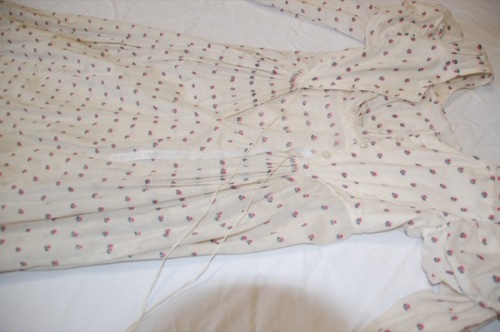
One imagines that the delicate muslin trains of the Regency era were as easily wrecked by wear and tear, and that only the rich could afford such an extravagant consumption. There were ways to save one’s train. In 1996’s Emma, Gwynneth Paltrow is seen holding up her train during the dance.

Emma's train is attached to her wrist.

In Northanger Abbey, Jane Austen described how Isabella Thorpe and Catherine Morland pinned up each others trains.

They called each other by their Christian name, were always arm in arm when they walked, pinned up each other’s train for the dance, and were not to be divided in the set; and if a rainy morning deprived them of other enjoyments, they were still resolute in meeting in defiance of wet and dirt, and shut themselves up, to read novels together.”

1800 sprigged muslin gown. Image @Christies

One can only conclude that trains (or tails, as Goldsmith called them) were an extravagance that the ordinary working woman did not indulge in wearing, for until mass production made cloth more affordable, the added lengths of cloth, plus the constant need for laundering and patching, would make this fashionable feature prohibitively high for most women.

Note: That Isabella and Catherine met  “in defiance of wet and dirt” meant something, for shoes and fabrics were so delicate at the time, that ladies tended to stay indoors on rainy days.
Read Full Post »

Image @The Culture Concept Circle

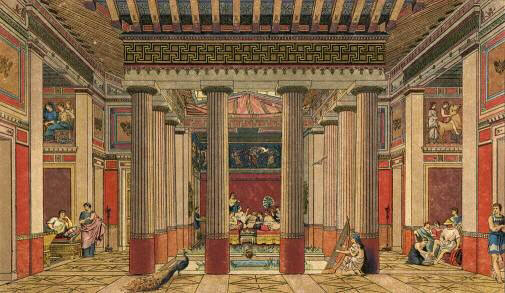
The era in which Jane Austen lived was a complex time in which scientific advances, the Industrial Revolution, warfare in Europe, and visits to ancient lands influenced the culture of Great Britain. These articles from The Culture Concept Circle will answer your questions about a few of the influences on the neoclassical style so prevalent during this time. Videos are included in some links.

Image @The Culture Concept Circle

Posts on this blog:

Read Full Post »

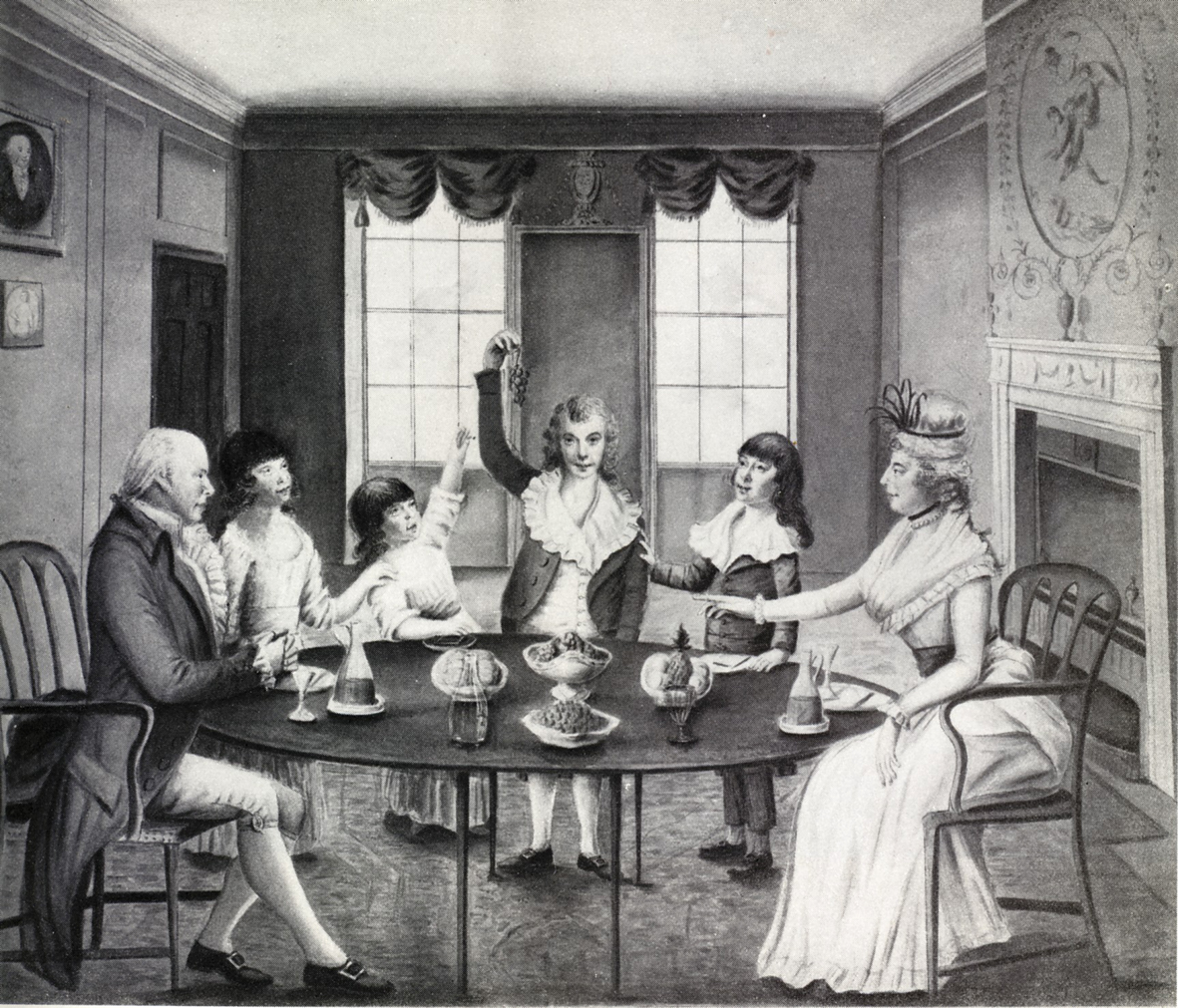
Inquiring readers: Jane Odiwe’s blog features a portrait of a Regency family that had sold in 1983. She wrote to several bloggers recently: “I’m writing to you on Mrs. Henry Rice’s behalf to ask if you would be interested in showing the painting with the information I’ve learned about on your blogs. The family would really like some help in publicising the picture, and wish to make an appeal to see if we can find its whereabouts, as Christie’s do not seem to have any record. They are hoping the painting is by Ozias Humphry, which will help to strengthen his association as a painter of the Austen family.”

Jane Austen's family?

Is this a portrait of Jane Austen’s family that has gone unnoticed until now?  The image was made in 1781, when young Jane would have been six years old. What say you?

To learn more about this art work and possible image of the Austen family, click on this link to Jane’s blog. Thank you for joining in!!

Read Full Post »

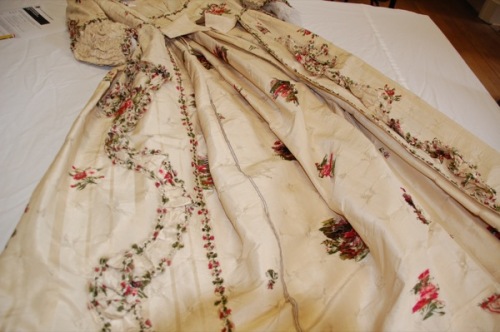
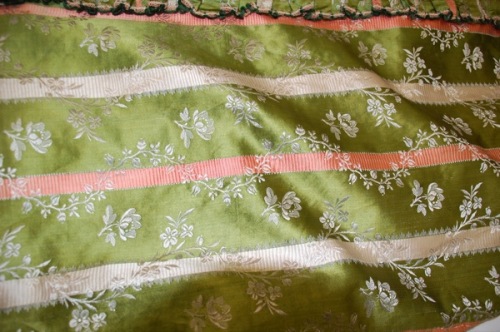
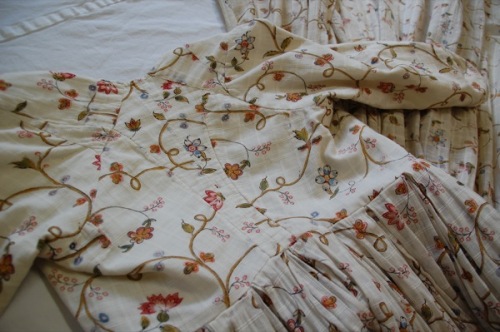
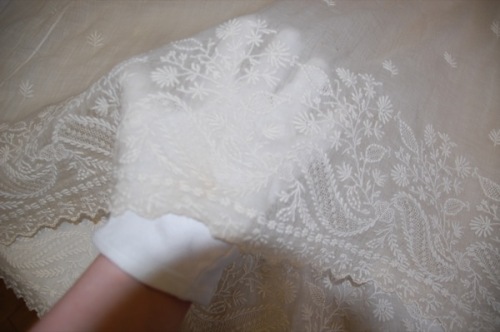
I spent a lazy Sunday catching up on the many posts I am unable to read during the week. Imagine my delight when I landed on Madame Guillotine’s blog and read her impressions about her visit to the Fashion Museum in Bath.  With increasing excitement, I viewed her close up images of several of the most beautiful 18th and early 19th century gowns imaginable. Melanie graciously allowed me to showcase her posts. (I concentrated on the early 19th century examples.) Do rush over and view all her photos. They are simply amazing.

I have just got home after an amazing couple of hours spent studying some of the eighteenth century dresses in the vast collections (I think they said they have 80,000 pieces in their archives) of the Fashion Museum in Bath.

English, silk, 1770-73.

It was amazing seeing the hook and eye arrangements that they used to do up the bodices, the neat seam work and even the staining beneath the armpits which serves as a reminder that these are the real deal and not just mere costumes!

French, sacque gown, 1760-63. Image @Madame Guillotine

They were really keen on combinations of pink and green during the eighteenth century – a colour combination that seems to have vanished from fashion, alas.

A floral printed muslin from 1793-97. Image @Madame Guillotine

[This dress] is really is lovely – very floaty and romantic with a pretty floral print. You can really imagine Marianne Dashwood in this one!

Muslin dress, 1813-20. Image @Madame Guillotine

This dress was so beautiful but really worryingly see through! You forget this about muslin when you see them in period dramas…

Patterned muslin dress, 1815-20. Image @Madame Guillotine

This is the sort of thing that a Heyer heroine would have worn.

These images are just a foretaste of the many photos that Melanie took at the Fashion Museum. To read both her posts, click on the two links below:

Read Full Post »

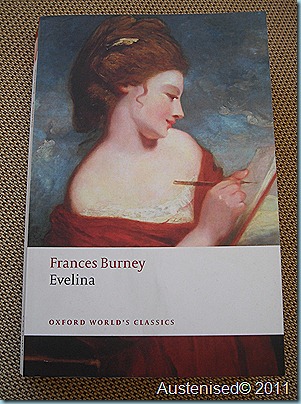
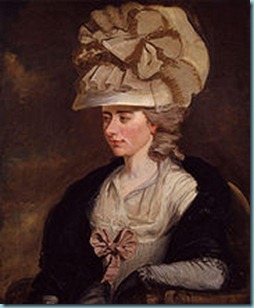
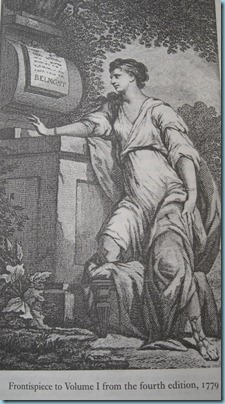
It is interesting to know that the 18th Century author, Fanny Burney, introduced several new words into the English language through the literary form. Through Evelina, she is the first known person to use words which are still so commonplace now, such as a-shopping, seeing sights, break down and grumpy.


Have you ever wondered what inspired Jane Austen to use dialogue as a clever way to personify her characters? Was the romantic charlatan, Mr Willoughby, a product of Jane’s imagination or an imprint of her early reading? Read on!

In her novels and letters, Jane Austen made several references to her favourite authors, and amongst her favourites were always Frances (Fanny) Burney and Maria Edgeworth. Fanny Burney wrote Evelina in the 1770’s, when Jane Austen was still an infant, and Cecilia soon after, and Jane grew up reading these stories. As you read through her novels, it becomes evident that Jane Austen drew inspiration from them.

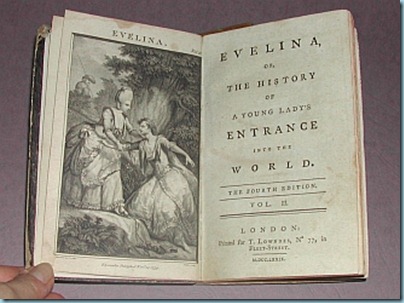
Evelina is a lengthy novel, which was originally written in 3 volumes, according to the custom of the time. Like Northanger Abbey, Evelina is a coming-of-age novel, with the apt subtitle “The History of the Young Lady’s Entrance Into the World”. The heroine is a girl of obscure birth who has been raised by her loving foster father, Mr Villars, in a comfortable home. Like Catherine, Evelina is set to ‘come out’ and enter the society to lure the attentions of eligible young men.

Evelina is chaperoned to London, where she visits the numerous theatres, operas and pleasure gardens frequented by fashionable society. As Evelina enters into society, she comes across one odious character after another and must defend her virtue against characters of low morals. Not unlike Catherine, Evelina is all innocence and youthfulness and is shocked to experience the realities of London society. She is repulsed by the lewd behaviour of men that she meets and soon wishes that she had never left Berry Hill, her home. In short, her trips are a journey from innocence to experience (to quote Blake).

Evelina is a satire of fashionable life. Like Jane Austen, Frances Burney is an excellent satirist and parodies characters through her excellent mimicry. It is in the dialogue that she really shows her ingenuity. In the preface of Evelina, Burney describes her style as follows:

To draw characters from nature, though not from life, and to mark the manners of the times, is the attempted plan…”

As a key component of her style, Burney reveals personality through her use of language. Her highest-ranking characters (e.g. Lord Orville, Lady Louisa) use extremely formal register, as opposed to the lower-ranking, more vulgar characters (e.g. Captain Mirvan, Madame Duval), who Burney mimics endlessly.

The grotesque Captain Mirvan who enjoys abusing the would-be French woman, Madame Duval, uses crass language with plenty of nautical references.

The old buck is safe – but we must sheer off directly, or we shall be all aground.”

On the other hand, Madame Duval’s bad grammar reveals her lack of breed and education.

This is prettier than all the rest! I declare, in all my travels, I never see nothing eleganter.”

As Evelina meets her ‘vulgar’ cousins in London, the scene reminds me of Mansfield Park where Fanny meets her real family in Portsmouth after several years and feels out of place, having got used to the genteel, polished manners of a country house (Burney uses the word “low-bred” to describe Evelina’s relatives).

Like Austen’s novels, Evelina too is written in somewhat archaic 18th Century language with a preference for long, complex sentences – a style that Jane Austen certainly assumed. Thankfully, this Oxford edition has been carefully edited by Edward Bloom, with detailed notes on 18th Century vocabulary and manners… to read the rest of the post, click here to enter Austenised by Anna.

Thank you, Anna, for giving me permission to link to your post!

Read Full Post »

« Newer Posts - Older Posts »