Feeds:
Posts
Comments

Archive for the ‘19th Century England’ Category

Among the principle gifts in 1908 may be mentioned: – suit of clothes, &c., formerly belonging to Mr Thomas Coutts, the founder of Coutts Bank, died 1822, given by Francis Coutts, Esq., Announcement for The Victoria & Albert Museum

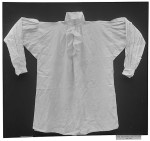
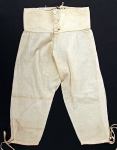
Shirt. Image @Metropolitan Museum of Art

This cryptic announcement does not tell the whole story of how a number of important museums around the world came into the possession of several portions of Mr. Coutt’s wardrobe. In her excellent book, Four Hundred Years of Fashion, Natalie Rothstein (curator of silks at the Victoria & Albert Museum) recounted how the clothes that had once been worn by Thomas Coutts, successful banker, came to be passed down for several generations in the family and divided among a number of major museums in 1908 and 1912.  The collection was unusual, for it consisted of the entire wardrobe of a gentleman who lived in the early 19th century, that included:

the considerable number of cloth costumes, articles of hosiery and underclothing left by Mr Thomas Coutts at the time of his death, 24th February 1822 . . . The cloth suits are all of a plain black and of precisely the same cut, so that only one is necessary for exhibition.”

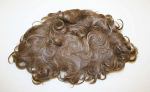
One of the ten wigs in the “brutus” style. One wonders if Mr. Coutts is wearing one in the illustration below! Image @The Metropolitan Museum of Art
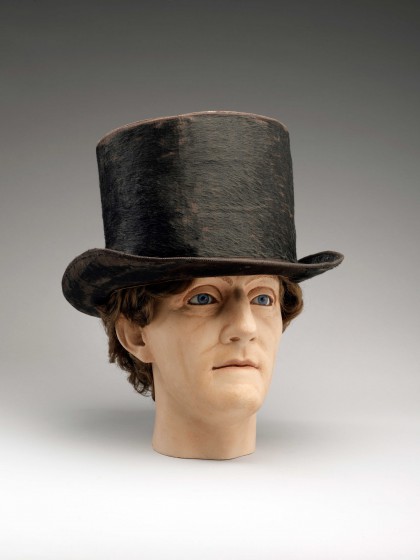
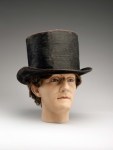
Top hat

Additional clothes in the collection include: 57 items of underwear made of linen or wool,  46 shirts made of a fine cambric and with and without frills, four spotted nightgowns, several plain nightgowns, 13 pair of leather and wool gloves, ten wigs and three beaver hats. Such a large, intact group of clothes from one source was rare and unique. Ironically for the museums, according to Strandlines, “Thomas Coutts seems to have been an eccentric man, who preferred to dress scruffily and to hide his wealth, rather than display it.”

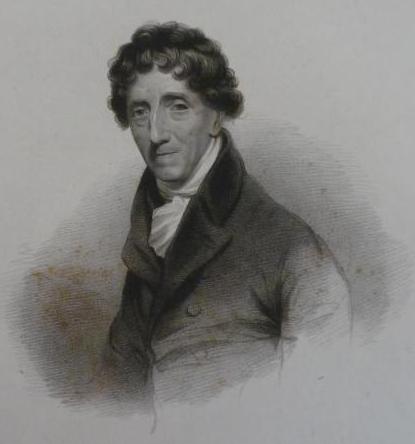
Thomas Coutts. {From an engraving by R. W. Sievier of an oil painting by Sir W. Beechey, R.A.)

Coutts was not a wit himself or the cause of wit in others. There are, indeed, two or three anecdotes, ” duplications,” in the argot of the Higher Criticism of the same legend, which turn upon the piquant incongruity of his garb with his gear. He is dressed in a threadbare coat, “the costume of a decayed gentleman,” and a benevolent stranger of limited means presses a guinea into his hand, and then to his dismay learns that he has ” pouched ” the wealthiest man in England. It may have been so. A dean once complained to the present writer that he was often mistaken for the verger, and offered a shilling for his services as guide to the Cathedral. It is possible that before the days of Harriot Mellon, Coutts was sometimes ” attired in very faded, worn-out clothes,” but his wardrobe, which his widow preserved in camphor, was, like Alice Fell’s new cloak, as stout and ” warm as man can sell.” A select portion is preserved at the Victoria and Albert Museum, and may be inspected by the curious. He had, too, some five or six ” Brutus ” wigs, which were of the finest make and the costliest description. Even if these legends are founded on fact, they are hardly worth the re-telling.” – The life of Thomas Coutts, bankerErnest Hartley Coleridge (1920).

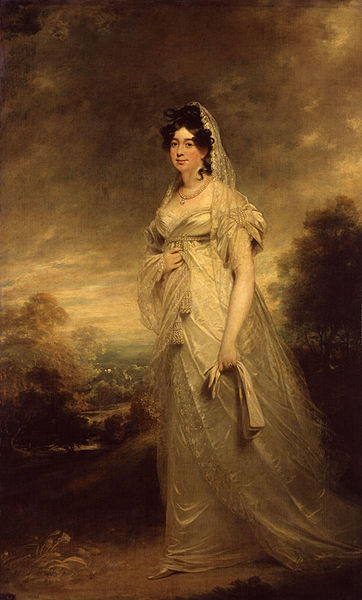
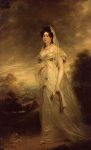
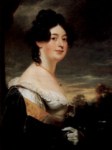
Harriot Mellon Coutts and the future Duchess of St. Albans, painted by Sir William Beechey in 1817-1818. She preserved her husband’s wardrobe.

It was fortuitous that Coutt’s second wife, Harriot Coutts, nee Mellon, was the daughter of a wardrobe-keeper in a company of strolling players. One can only imagine that when she was made a widow the preservation of her husband’s wardrobe would come naturally to her. The Victoria & Albert Museum eventually acquired three suits, several sets of the underwear, two of the spotted nightgown, and some accessories. The rest of Coutts’s wardrobe was (sadly) divided among a number of museums, including The Metropolitan Museum of Art in New York, The Royal Ontario Museum, The Royal Scottish Museum, Bristol Museum and Art Gallery, and more. All but one of the museums would receive a black suit. With vast understatement, Ms. Rothstein (who laments the break up of such an intact collection) writes:

The clothes worn by Mr Coutts were probably not the height of fashion but rather conservative. There is no mention of any trousers for instance, in the full list of his clothes. All his suits had breeches. The cut of his coats is consistent with the current fashions: his tailor was probably as conservative as his customer. None of his coats had a waist seam. – Four Hundred Years of Fashion, Natalie Rothstein, p. 62
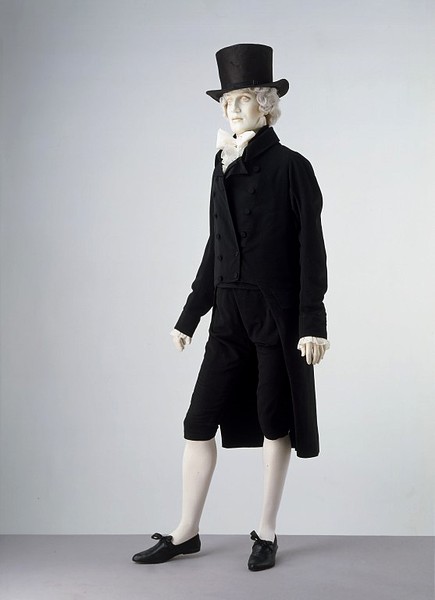
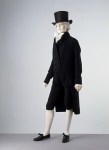
Black wool day suit. Image @ Victoria & Albert Museum

Since the late 16th century, middle-class professionals like doctors, lawyers, clergymen, academics, merchants, and businessmen have worn these stark black suits. This tradition continued through the 19th century and well into the 20th. “The sombre colour of this suit befits the sober profession of its wearer, Thomas Coutts (1735-1822), the founder of Coutts Bank., including the old-fashioned breeches, which suited his age. Top hat made in Great Britain, ca. 1800-1817. Cotton shirt, (1800-1820) made in England. (Text from the V&A.)
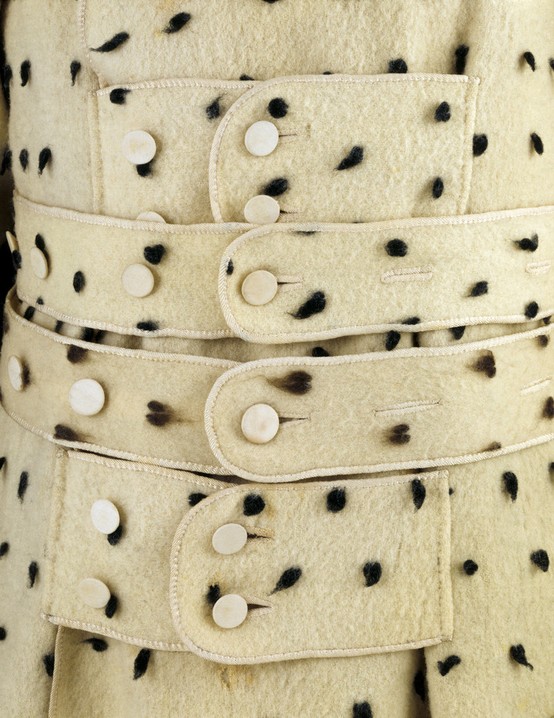
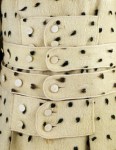
Detail of one of Coutts’s nightgowns. Image @Victoria & Albert Museum

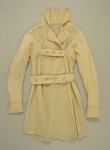
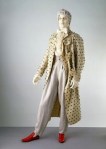
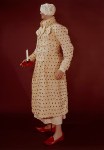
Nightgown. Image @V&A
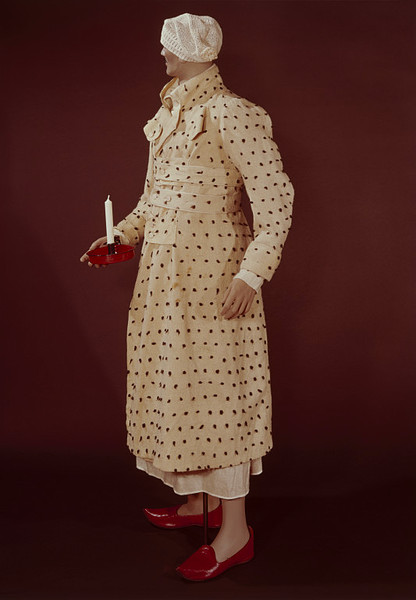
Nightgown. Image @V&A

Nightgowns were worn over shirt and breeches, in the privacy of home before noon or late at night.  The tufts of black wool on the cream wool fabric are meant to imitate ermine. These nightgowns come from the wardrobe of Thomas Coutts (1735-1822), the founder of Coutts Bank. (Text from the V&A.)

More on the topic:
Read Full Post »

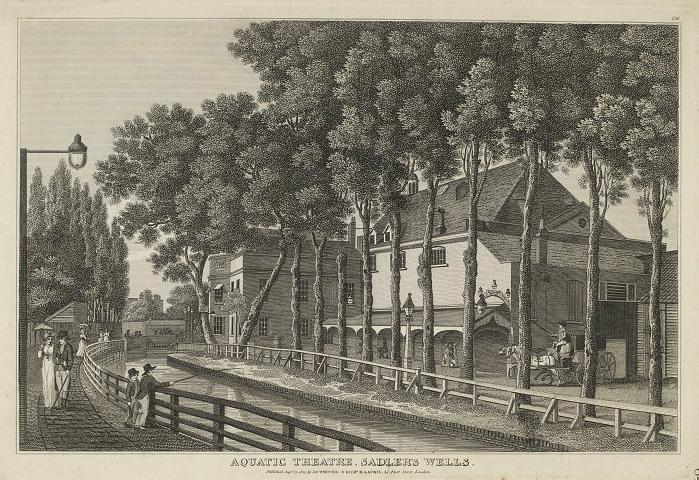
Sadler’s Wells Aquatic Theatre, 1813. copyright The V&A Museum. Click on image to view details.

Sadler’s Wells was a performing arts area located in Clerkenwell in the outskirts of London. Named after Richard Sadler, who opened a musick house there in the late 17th century, the region boasted well water thought to have medicinal qualities.

Sadler was prompted to claim that drinking the water from the wells would be effective against “dropsy, jaundice, scurvy, green sickness and other distempers to which females are liable – ulcers, fits of the mother, virgin’s fever and hypochondriacal distemper.” -Wikipedia

Six theatres have stood at this site since Sadler built his first theatre. A second theatre,  Sadler’s Wells, was constructed in 1765, which attracted summer theatre goers (the Theatre Royal offered performances only in the fall and winter.)

Interior of the theatre in 1810. One can see the water-filled tank on the stage.

In the early 19th century, Sadler’s Wells began to offer aquatic spectacles. The construction of a large tank (90x24x3 ft)  in 1804 by Charles Dibdin covered the entire area of the stage. It was flooded with water that was pumped from the nearby New River at the cost of 30 pounds per annum. This renovation allowed for the theatre to be used for naval melodramas, a popular theme, one imagines, in the days of the Napoleonic Wars and tales of Admiral Nelson’s heroism. The Siege of Gilbraltar, an ambitious spectacle, deployed 117 model ships created by the Woolwich Dockyard shipwrights and riggers, who used a scale of one inch to a foot in exact imitation of the slightest details, including the rigging. Children were cast as drowning Spanish sailors, and could be seen struggling in the waves.

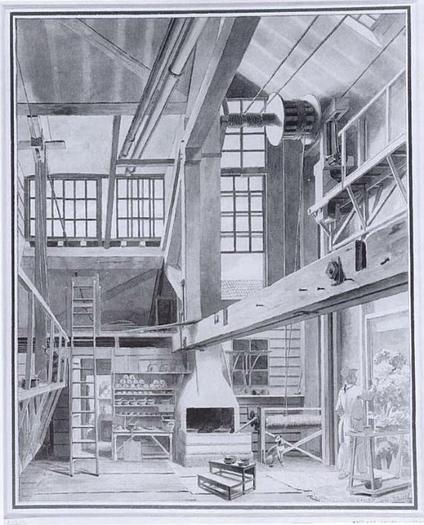
Scenic artist at work, 1790. Image @British Museum

A beautiful drop scene that filled up all the area of the proscenium showed the English fleet drawn up in battle against France and Spain. The enormous painting was used to entertain the audience during a delay while preparations were made behind stage. In order to alleviate 20 minutes of boredom between scenes, the stage slowly rose to nearly the roof of the theatre in full view. A second water tank was built on the theatre’s roof to simulate waterfalls. (With the lack of temperature control in the 19th century and windows in the main area, one can imagine that the theatre’s interior developed a powerful moldy smell in the heat of summer!)

Audience watching a play at Drury Lane, Rowlandson, 1785

The behavior of the theatre goers at Sadler’s Wells left much to be desired. As early as 1711 it was observed that members of the audience were publicly drunk, and their behavior boorish and loutish. Karl Philipp Moritz, a German traveler in England in 1782, described in his travel diary the audience in a typical British play house. Not only was the crowd rowdy between scenes and before the performance (making a “noise and uproar”), but there was a constant pelting of orange peels, for oranges were “tolerably cheap”.

Besides this perpetual pelting from the gallery, which renders and English play-house so uncomfortable, there is no end to their calling out and knocking with their sticks till the curtain is drawn up…I sometimes heard, too, the people in the lower or middle gallery quarrelling with those of the upper one. Behind me, in the pit, sat a young fop, who, in order to display his costly stone buckles with the utmost brilliancy, continually put his foot on my bench, and even sometimes upon my coat. – Karl Philipp Moritz

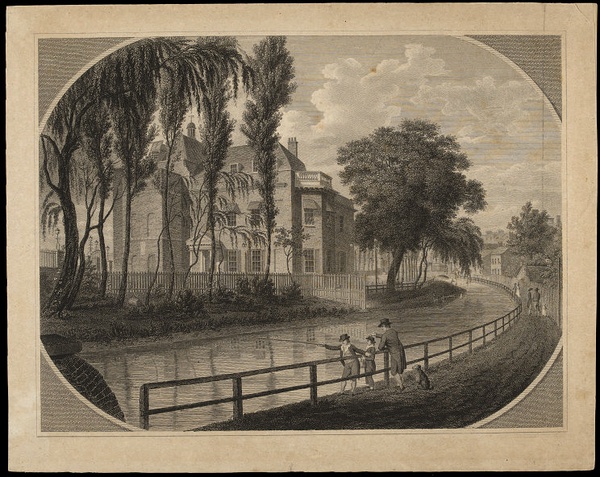
Another view of the theatre. Fishing seems to have been a popular pasttime as well.

If the Sadler’s Wells theatre audience had a particularly rowdy reputation compared to theatres in central London, one can only imagine how truly awful the experience was. The theatre slowly lost its lustre during the first half of the 19th century, for it was located in the rural outskirts of London. Without street lights and an organized police force, travel at night was dangerous, and patrons of the theatre were provided escorts as they traveled back to central London.

 Pinero’s play Trelawny of the ‘Wells’ (1898), portrays Sadler’s Wells as outmoded by the new fashion for realism. The theatre declined until, by 1875, plans to turn it into a bath house were proposed and, for a while, the new craze of roller skating was catered to, as the theatre was converted into a roller-skating rink and later a prize fight arena. The theatre was condemned as a dangerous structure in 1878. – Wikipedia

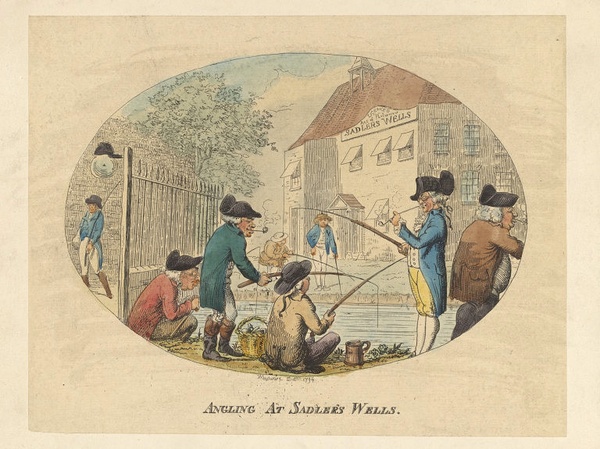
Anglers at Sadler’s Wells.

Read Full Post »

Inquiring readers: This article from frequent contributor, Patricia Saffran from Brandy Parfums, describes the exhibit at the British Museum, which opened in London on May 24. These exquisite works of art, along with others, will be on view through September 30th. With this exhibit, the upcoming Olympic Games, and the Diamond Jubilee Celebration, what a sterling year it has been thus far for Great Britain.

Queen Elizabeth’s love of horses is well-known. As part of the Queen’s Diamond Jubilee Celebration, an exhibition has been created in her honor on the history of the horse in civilization. Opening May 24, 2012 at the British Museum in London, the emphasis in this exhibition is on the domestication of horses and the revolutionary impact of horses on ancient civilizations. Artifacts and art from the Museum’s extensive collection, as well as various loans on display depict the horse in its early use in farming, hunting and warfare. In the exhibition, the role of horses in the history of the Middle East is examined with an emphasis on the breeding of the Arab as a foundation of the Thoroughbred. Britain’s long equestrian tradition figures prominently in the show.

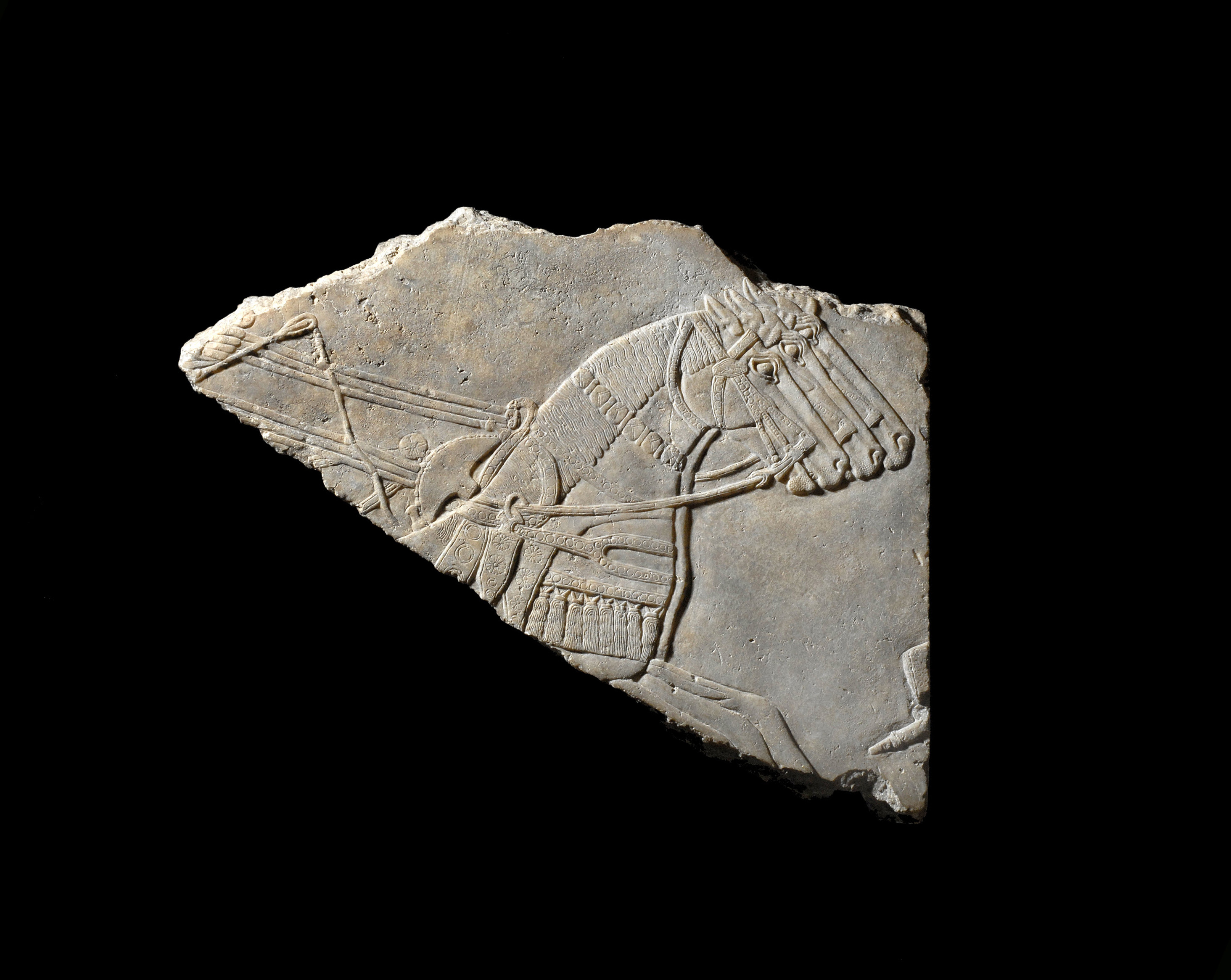
253093: Fragment of carved limestone relief featuring the heads and foreparts of three horses drawing a chariot with reins, hands of
charioteer and whip, 9thC BC, Neo-Assyrian. Copyright the Trustees of the British Museum.

The genus Equus, including all current species such as horses, asses and zebras, is native to North America. During the first major glaciations of the Pliocene, around 2.6 million years ago, certain species crossed the Bering Land Bridge. From there they spread out, some to Africa diversifying into zebras. Other species spread to Asia, the Mideast and North Africa as desert asses. The modern horse, equus caballus, migrated to Asia, Europe and the Mideast. Other Equus species drifted toward South America.

Due to the possible change in grasses, forage, or the threat of hunting, it is believed that horses, asses and zebras remaining in North and South America died out at the end of the last glaciations of the Pleistocene around 10,000 years ago, but there is no definitive proof. Some horses may have stayed and survived in the Great Plains or elsewhere in the Western Hemisphere. Horses were reintroduced into the Americas by the Spanish about five hundred years ago, and possibly before that by the Vikings and Asians.

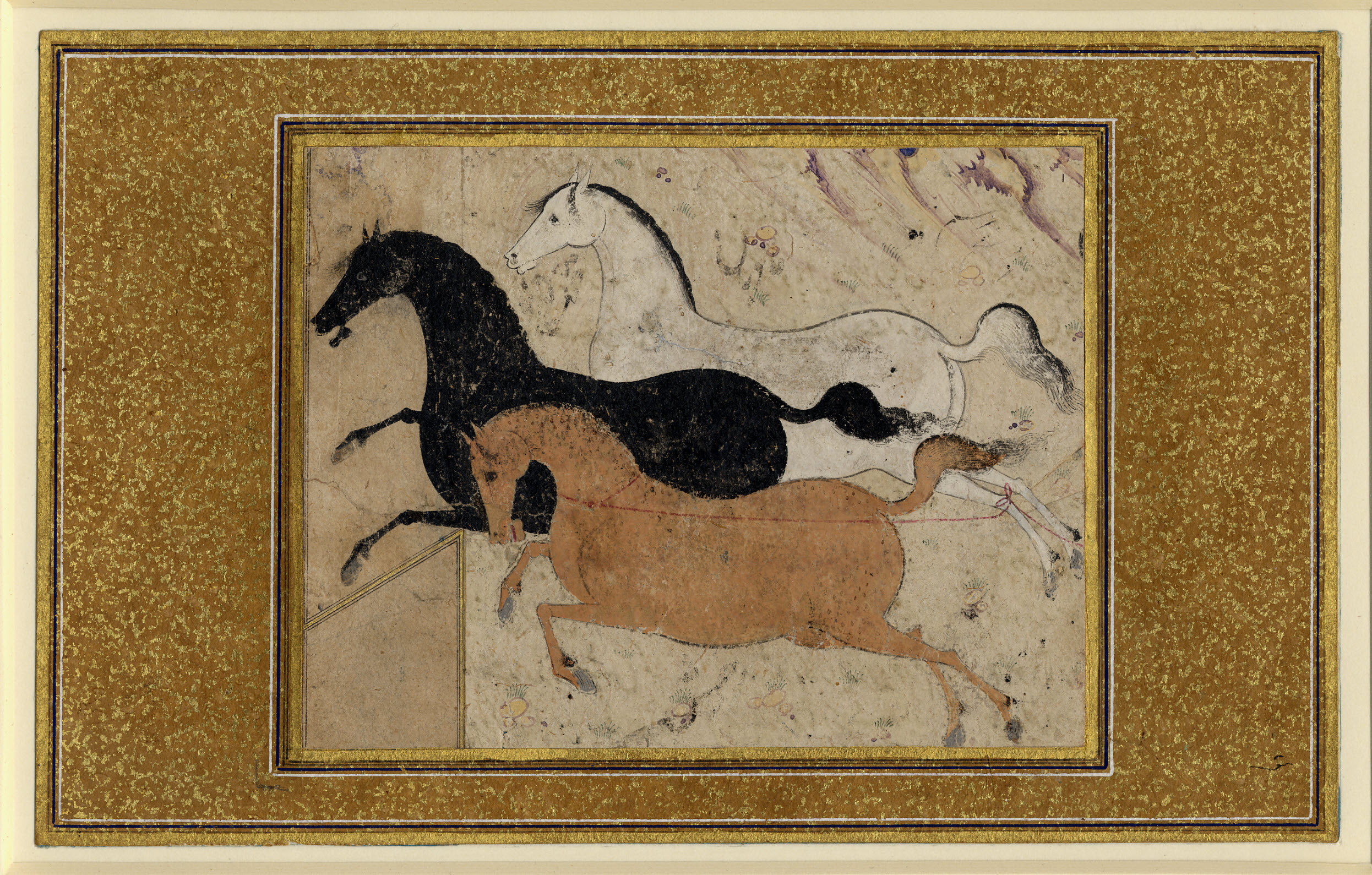
90313: Three horses (white, black and chestnut) galloping across a bare landscape, chestnut horse has a lasso round its neck and white horse round its hind legs. mid-16thC, Persian. Copyright the Trustees of the British Museum.

As horses moved toward the rich grasslands in the steppes of southern Russia around 5,000 years ago, their domestication occurred – the wild Przewalski’s horse in Central Asia is an exception.

Horses were introduced to the Ancient Near East in about 2,300 BC. Before this time donkeys, asses and oxen pulled crude carts in this area. Technological advances later on saw swifter carts and chariots pulled by horses, and the development of horseback riding. The history of conquest utilizing horses along with advancements in writing, art, architecture and agriculture were all part of the culture of these ancient lands.

The following are highlights of the exhibition with some of the history attached to the objects and art on display.

The famous standard of Ur, a Sumerian mosaic from 2,400- 2,600 BC with chariots drawn by equines is on display.

One of the earliest known representations of a horse and rider will be shown – a terracotta mould from Old Babylonia (Iraq) from about 2000-1800 BC. The rider sits well to the back of the horse where there is very little control. Later in the ninth century BC, Assyrian cavalrymen brought horses that may have been bred to be finer and faster. They sat forward on the horse for better maneuverability, and the calvary charge was born.

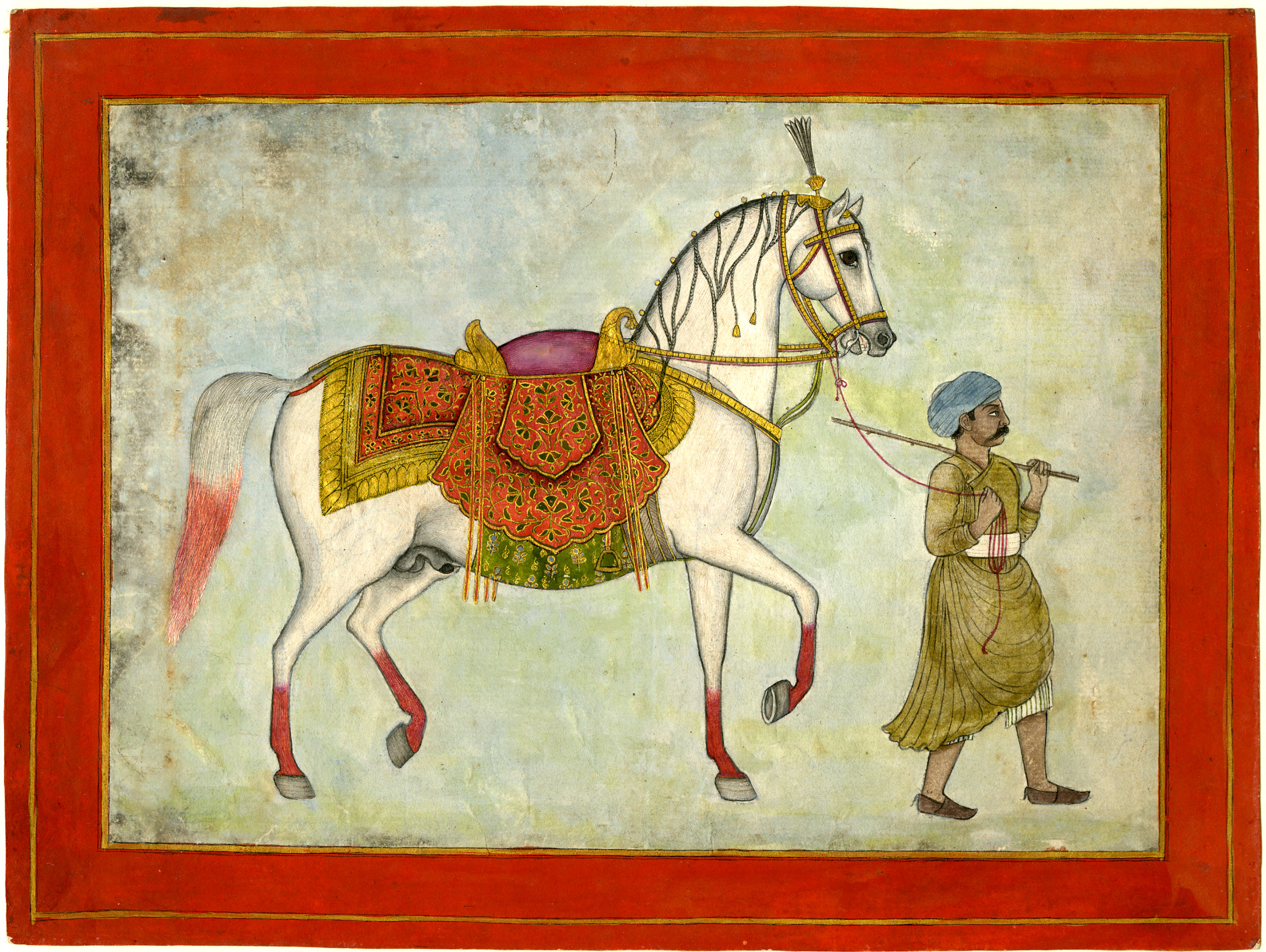
265010: Album leaf. A horse with elaborate saddle and harness being led by a groom. On paper. Copyright the Trustees of the British Museum.

Horses were highly prized and given as gifts in the Ancient Near East around 2000 BC according to ancient texts. Also, around this time what appears to be an Arab type can be seen in Egyptian tomb paintings – horses with a short back, high tail and large eyes. In about 1,600 BC the use of the faster, superior chariot ushered in the Chariot age – which was to have a profound effect on warfare, even reaching later on to China and elsewhere. Particularly among the ancient Hurrians, between the Tigris and Euphrates, a system of royal patronage developed with an aristocratic military.

The Assyrians reveled in the horse as a source of prestige and created meticulously crafted horse trappings. A Neo-Assyrian carved relief from Nimrud(Iraq) from the 9th century BC shows the intricate detail in these chariot horse trappings.

The Achaemenid King Darius was known to hunt fast game like lions from a fast-moving chariot and a seal of this image is on display. Darius was better known for developing a system similar to the Pony Express where horses were changed at intervals to deliver mail along the improved Royal road, stretching 1000 miles long. It was Herodotus who wrote, “nothing stops these couriers from covering their allotted range in the quickest possible time. Neither snow, rain, heat nor darkness.” (Sound familiar?) – Herodotus, the Histories, Book VIII, 5th century BC.

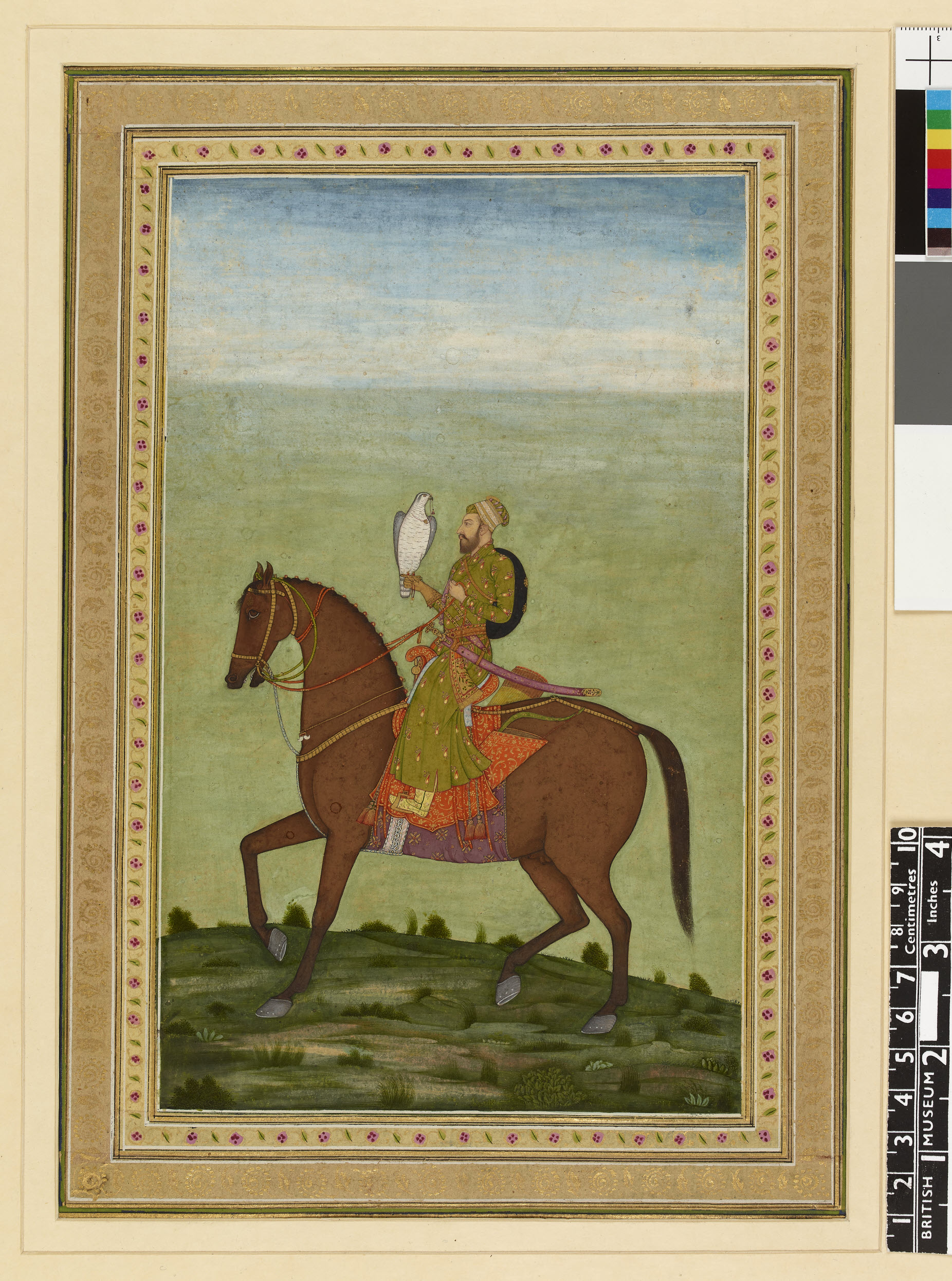
948688: Man on horseback, with a falcon, early 18th century, India. Copyright the Trustees of the British Museum.

The Parthian Empire 3rd century BC to 3rd century AD, saw more developments in horse combat. They were famous for the “Parthian shot” – pretending to flee while on horseback, then turning around shooting an arrow backwards. We now use the expression, “Parting shot” that comes from this manoeuvre.

Under the Parthians and later Sassanian Dynasty in 224 AD horses and riders started to wear armor for battle. While we think of jousting as quintessentially European with its armored horses and riders, the sport was actually practiced early on by the Parthians and Sassanians.

The horse grew in importance in the world across what is now Arabia, India and Turkey with numerous depictions in paintings and ceramics. Lovely Mughal miniatures from the 7th century AD reveal the high status of horses. Many show an owner and his beloved horse with delicate detail. The famous
Furusiyya manuscript from the 14th century AD is on display with its text on horsemanship.

Fine horses in the Middle East are explored in the Abbas Pasha manuscript from the 19th century. This document is the main text to describe the lineage of the purebred Arabian horses acquired by Abbas Pasha (the viceroy of Egypt). The Arab is the result of deliberate selective breeding.

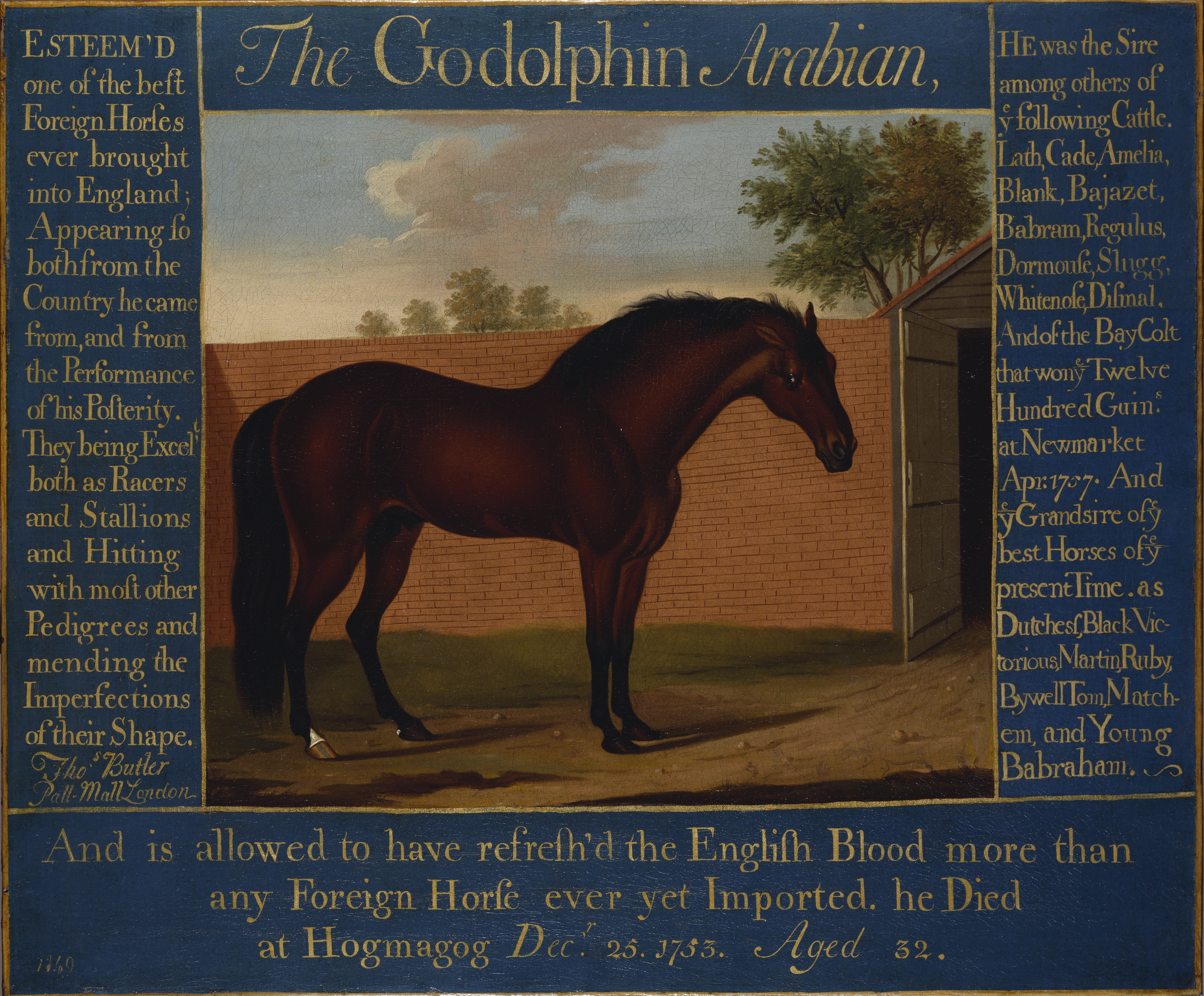
406001: The Godolphin Arabian, Butler, T, 1750-55: Copyright of the Royal Collection

This exhibition includes the famous painting of the Godolphin Arabian by Thomas Butler, painted around 1750- 1755. The Godolphin Arabian was one of three foundation stallions (the other two being the Byerly Turk and the Darley Arabian) brought to England in the 18th century and bred to native
English horses to eventually become the Thoroughbred. The majority of modern Thoroughbreds (95%) are descended from these stallions. Those readers who saw the fantastic exhibition, All the Queen’s Horses, at the Kentucky Horse Park in 2003, will be familiar with this painting, which is on loan from
the Royal Collection.

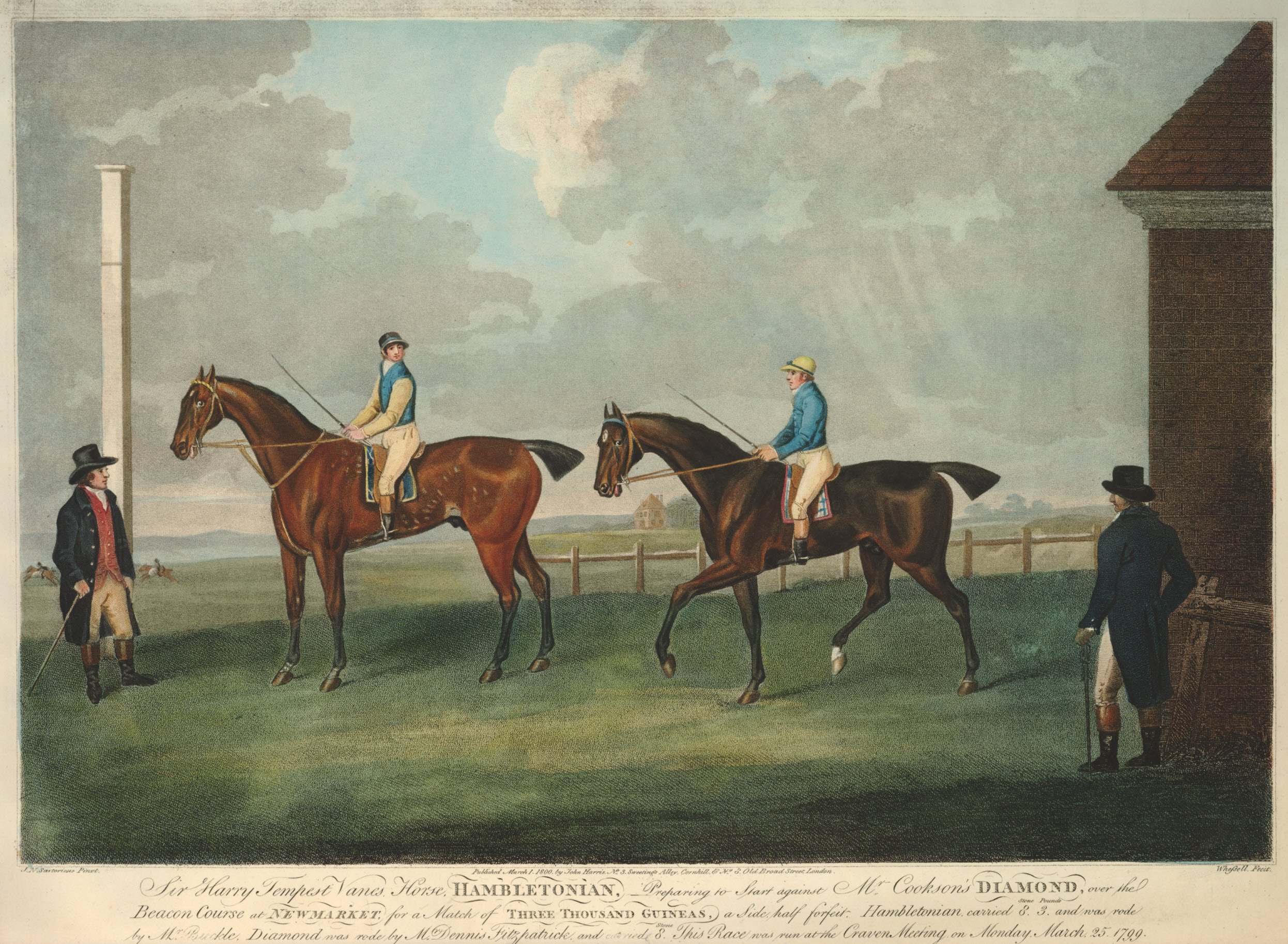
185544: Hambletonian and Diamond at Newmarket.1800, by John Whessell, Copyright the Trustees of the British Museum

Also from the Royal Collection is a silver Faberge sculpture of the race horse Persimmon who had been owned by the Queen’s great-grandfather, Edward VII. The horse created a sensation by winning the 1896 Doncaster, St. Leger and Epsom Derby, the Epsom Derby being shown around the world in an
early newsreel.

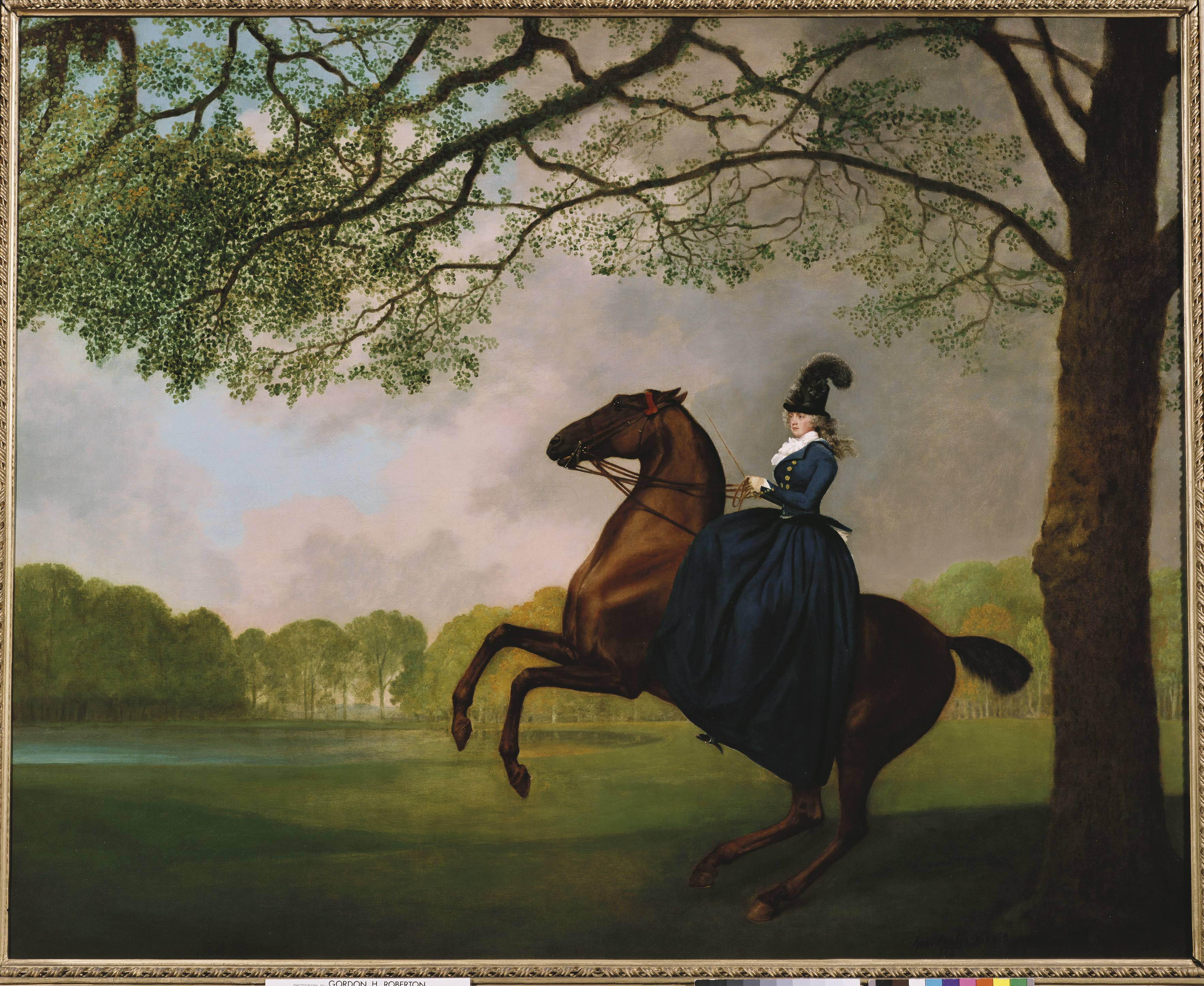
400997: Lady Laetitia, Stubbs, G, 1793: Copyright of the Royal Collection

Normally hanging in the private quarters of Windsor, a George Stubbs portrait of Laetitia, Lady Lade on horseback will be on display. Lady Lade was a somewhat controversial figure, who swore among other things, but who was a gifted horsewoman. This painting from 1793, was commissioned by George IV who was smitten with Laetitia, the wife of his racing manager. The pleasure-loving George IV was himself an expert horseman, whip and breeder of racehorses.

Discussing the exhibition, curator John Curtis told The Guardian, “There are probably horses somewhere in every gallery in the museum, from Assyrian sculptures to coins. They’re so familiar and ubiquitous they mostly go unnoticed. We want to bring them together and show their importance in
history. The horse was an engine of human development…..”

For more information: britishmuseum.org Admission is free. The exhibition runs from May 24 – September 30.
While in the Museum, be sure to see the Elgin Marbles, a must for horse enthusiasts.

Read Full Post »

Some books are so useful they are hard to pass up. Several months ago, I received the Kindle edition of Behind Jane Austen’s Door by Jennifer Forest, author of the delightful Jane Austen’s Sewing Box. Behind Jane Austen’s Door takes you on a tour of a Regency house, room by room – the entrance hall, drawing room, dining room, breakfast room, dressing room, bedroom, and kitchen – to
explore the challenges and lives of Jane Austen’s women. Included is an appendix that provides a quick overview of the Regency era.

More accessible in tone and organization than the excellent Behind Closed Doors by Amanda Vickery and If Walls Could Talk by Lucy Worsley, which cover similar but more comprehensive territory, this book can be used as a quick reference by people who want immediate access to the purposes and functions of the rooms in a Georgian household. What distinguishes this book is its close association to Jane Austen and her novels (much like Jennifer Kloestler’s book, Georgette Heyer’s Regency World, is associated with that author).

In these large houses [such as Pemberley], the women didn’t need to use the drawing room during the day. There were other rooms for use; they had their own office and other smaller parlors. The drawing rooms, and yes there could be more than one drawing room, in these big houses were just for receiving the morning visitors and for evening entertainment.

One gains close glimpses of a rich family as well as one of more modest means, such as the household that Jane Austen’s mother oversaw.

She works with the cook in preparing menus, sourcing food and caring for the vegetables, dairy and chickens. On washing day, she and her daughters work alongside the servants to get all the laundry completed: it was just so time consuming in the days before washing machines! A gentlewoman had to monitor the budget, find supplies and pay the bills for all those expenses, including the tea and wine. 

While much of the territory that Jennifer covered seemed familiar, it is arranged in such a pleasant and easy to use format that new authors to the Jane Austen genre or Regency romance will find it very useful, especially Jane Austen fans.

Jane Austen’s own mother used her dressing room at Steventon as a second sitting space, more casual and private than the drawing room. After five weeks of illness, Mrs Austen’s return to health allows a resumption of tea in the dressing room. “My mother made her entree into the dressing-room through crowds of admiring spectators yesterday afternoon, and we all drank tea together for the first time in five weeks … We live entirely in the dressing-room now, which I like very much; I always feel so much more elegant in it than in the parlour.” Letter from Jane Austen to Cassandra Austen, Sunday 2 December 1798.

Oh, there will be people who say that they already know this information and that the book provides nothing really new, but readers who are just discovering Jane Austen and the Regency world will think otherwise. I, for one, am happy to have another source to turn to when checking my facts about meal times and the precise function of certain rooms and furniture. The book, which is a quick read, is available in e-book format. I found this quite convenient, for I can access it on all my mobile devices and computers. Also, at $2.99 for the Kindle version, it is quite a bargain. I give it four out of five Regency teacups!

About the Author
Jennifer Forest has a Bachelor of Arts and a Graduate Diploma in Cultural Heritage Management. Jennifer is a museum curator with a love of beautiful old historic buildings. She lives in Australia, a country built by Regency England.

Blog: Behind Jane Austen’s Door

Print Length: 51 pages
Sold by: Amazon Digital Services
Language: English
ASIN: B006YITPAS
Text-to-Speech: Enabled
X-Ray: Not Enabled
Lending: Enabled

Read Full Post »

Vintage book cover. The book had been purchased in the shop at Dove Cottage. Image @Grey Pony

Inquiring readers, frequent contributor, Tony Grant,  has done it again and brought the 19th century alive through his discussion of poetry. One can walk the paths along Grasmere in the Lake District with him and William Wordsworth, inhaling the clean crisp air and regarding the sad cautionary tale of Martha Ray, the woman in the scarlet cloak. Visit Tony’s blog at London Calling.

Saturday August 23rd 1798.

“ A very fine morning. Wm was composing all the morning. I shelled peas, gathered beans and worked in the garden till half past twelve. Then walked with William in the wood. The gleams of the sunshine, and the stirring trees, and gleaming boughs, cheerful lake, most delightful. After dinner we walked to Ambleside…”

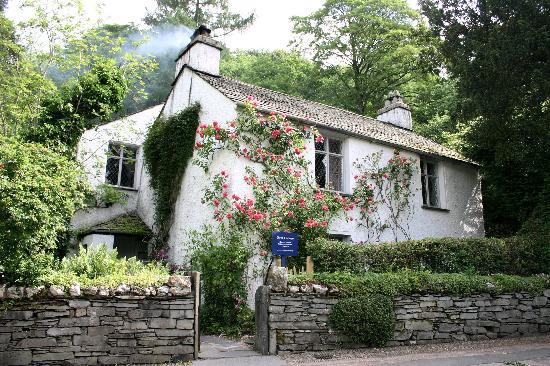
Thus Dorothy Wordsworth describes the division of labour in the Wordsworth house hold at Dove Cottage, Grasmere in Cumbria. She did the labour and William her brother did the,” Romanticising.” But it shows the division of experience wasn’t as clear cut as might appear at first. Dorothy shows her emotional response to the world she inhabits too, as much as her esteemed brother does in his poetry.

Dorothy

Romanticism was a way of seeing and experiencing the world and which Wordsworth promoted in his poetry. It wasn’t necessarily about being romantic however. It was about an emotional response to the world that balanced a logical factual approach. It promoted the importance of feelings, myth, symbolism and intuition as well as taking into account the facts of a situation.

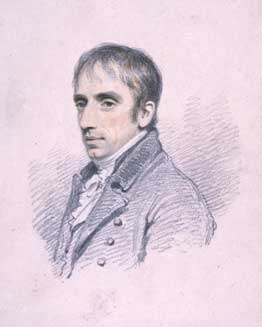
William Wordsworth by Henry Eldridge, 1807

”The Thorn,” written by William Wordsworth in 1789 is very melodramatic and tells the story of a solitary, rejected woman, Martha Ray, who’s baby has died and the mythology that builds around her.

Dove Cottage.

Wordsworth, in the opening stanzas introduces us immediately to the thorn describing it as , “so old and grey,” “stands erect,” “A wretched thing forlorn.” And takes the personification to a higher degree saying it is,” Not higher than a two year’s child.”

He is setting us up to respond to natural things in an emotional way.

Footpath around the lake. Image @A Year In the Lakes

He then balances this emotional approach with factual evidence as he gives us the thorns location ,”high on a mountains highest ridge,” and the minutest detail, telling us that three yards from the thorn is, “a muddy pond,” and close beside the thorn is,

“A beauteous heap, a hill of moss.
Just half a foot in height.”

A mixture of fact and emotion balanced.
Three things are described in close proximity and we wonder how they relate to each other.

Colour is very important. The mound of earth near the thorn has, “vermilion dye,” “lovely tints,” “olive green, “scarlet bright,” “green red and pearly white.” Vivid in our minds eye.

Then, “A woman in a scarlet cloak,” Martha Ray, is introduced into this setting and we are asked,

“Now wherefore, thus, by day and night,
In rain, in tempest, and in snow,
Thus to the dreary mountain top
Does this poor woman go?”

The question all the local villagers ponder too. Observation, and imagination create a myth. Many believe she has killed her baby and buried it next to the thorn but they don’t actually know that. Wordsworth keeps pulling us back to reality, tempering our emotional response, “I cannot tell; I wish I could; for the true reason no one knows.”

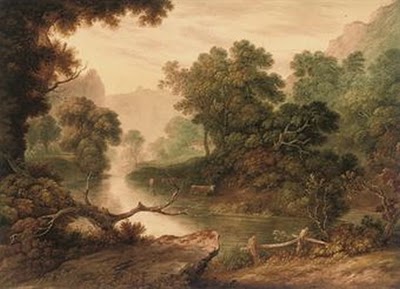
Cattle watering at Grasmere, near Ambleside, Cumbria, by John Glover.

Wordsworth also begins to use the personal pronoun. It is an egotistical device but we are with him. It is us as well as Wordsworth asking the same questions. He has got involved in this apparent tragedy and so have we.

Wordsworth relates to us the story of Martha Ray and what makes her mad.

“Full twenty years are past and gone
Since she (her name is Martha Ray)
Gave with a maidens true good will
Her company to Stephen Hill”

Stephen Hill, we are told, gets Martha pregnant but leaves her and marries somebody else. As result she has the baby but it is never seen by other people.

Then imagination intervenes again,

“For many a time and often were heard
Cries coming from the mountains head
Some plainly living voices were:
And other, I’ve heard many swear,
Were voices of the dead:
I cannot think, whate’er they say,
They had to do with Martha Ray.”

Wordsworth then draws us back to a cool scientific approach,

“But what’s the Thorn? And what the pond?
And what the hill of moss to her?”
And what the creeping breeze that comes
The little pond to stir?”

You can almost imagine Wordsworth and us being explorers into this mystery using investigative questions.
However, finally, myth is triumphant

“…but some will say
She hanged her baby on the tree
Some say she drowned it in the pond
Which is a little step beyond
But all and each one agree
The little babe was buried there
Beneath the hill of moss so fair.”

Fact, imagination, emotion, have combined to create a myth.

What use would this mythologizing be to those people in the hills and mountains of the Lake District? Would it help them make moral decisions? They wanted to bring Martha Ray to public justice based on what they thought and felt. Would it help them to create their own response to Martha’s predicament without having to experience it themselves? Is that the purpose of mythologizing? The purpose of fairy tales and myths have always been important to childhood and early emotional development and moral growth. Wordsworth has created an adult myth. So does the need for myths go beyond childhood and remain important to all?

……………………………………………………………………………………….

In a few weeks, a good friend of mine, Clive, is coming over from Canada for a reunion of old school friends. Some of us are reaching 60 this year and we are getting together for a celebration in Liverpool. Clive and I are going on further north into the Lake District for a couple of days. We will be staying in Ambleside, not far from Grasmere and Wordswoth’s Dove Cottage. We will visit Dove Cottage and I promise we will listen out for the cry of Martha Ray caught in the winds blowing about the peaks surrounding Grasmere and we will too be able to say,

“That I have heard her cry,
“Oh misery! Oh misery!
Oh woe is me! Oh misery!”

More on the topic:
Read Full Post »

« Newer Posts - Older Posts »