Feeds:
Posts
Comments

Archive for the ‘19th Century England’ Category

Gentle readers, this incredible panorama was found in an attic in Rhinebeck, New York. Forgotten and neglected in a barrel, filthy, and badly torn, this painting c. 1810 revealed itself to be over eight feet long when it was unrolled. Click here to see a magnified version of the painting. The details are staggering. I even see a fire! Can you spot other details? Like cannon fire? Or is this my imagination?

London panorama, unknown artist, c. 1810

The ‘Rhinebeck’ Panorama of London, c.1810. Facsimile publication (no.125) of the London Topographical Society, 1981. Stk ++ DA 683 RF396.
 

Read Full Post »

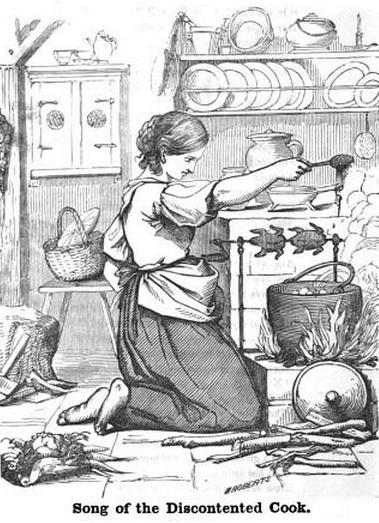
Gentle readers, this poem in a mid-19th century children’s family circle book perfectly describes the long and arduous day of an ordinary family cook.

The Discontented Cook. Image @Forrester's pictorial miscellany for the family circle edited by Mark Forrester, 1855

Oh, who would wish to be a cook,
To live in such a broil!

With all one’s pains, to cook one’s brains,
And lead a Life of toil?

“Tis, Stir the pudding, Peggy,
And give those ducks a turn;

Be quick, be quick, you lazy jade!
Else one or both will burn.

An hour before the rising sun
I’m forced to leave my bed,

To make the fires, and fry the cakes,

And get the table spread.
‘Tis, Stir the pudding, Peggy,

And give those ducks a turn;
Be quick, be quick, you lazy jade!

Else one or both will burn.

The breakfast’s scarely over,

And all things set to rights,
Before the savory haunch, or fowl,

My skill and care invites.
‘T is, Stir the pudding, Peggy,

And give those ducks a turn;
Be quick, be quick, you lazy jade!

Else one or both will burn.

And here I stand before the fire,

And turn them round and round;
And keep the kettle boiling —

I hate their very sound!
‘T is, Stir the pudding, Peggy,

And give those ducks a turn;
Be quick, be quick, you lazy jade!

Else one or both will burn.

And long before the day is spent,

I ‘m all in such a toast,
You scarce could tell which’s done the most

Myself, or what I roast!
‘Tis, Stir the pudding, Peggy,

And give those ducks a turn;
Be quick, be quick, you lazy jade’.

Else one or both will burn.

From Forrester’s Pictorial Miscellany for the Family Circle, 1855

Read Full Post »

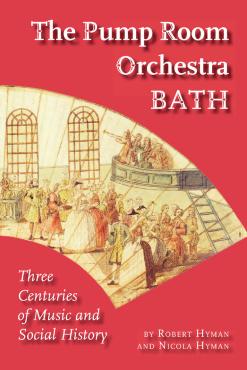
Gentle Readers, Nicola Hyman, one of the authors of The Pump Room Orchestra, Three Centuries of Music and Social History, a book that she co-wrote with her musician husband, Robert, sent me this information about music in the Pump Room. The book is available at Hobnob Press in the UK.

The Pump Room Orchestra is believed to be the first resident band in the country to play in an assembly room in the early 1700s. The book chronicles the three hundred year old history of this Band, from its inception to today. Beau Nash founded the Band and, during his sojourn, his supremacy over its management was unequalled. However, over the decades municipal philistinism, wars, economic slumps and the appeal of (usually Italian), virtuosi in Bath threatened its almost unbroken continuity. Handel visited Bath in 1749 and collaborated with Thomas Chilcot whose support of the Pump Room Band leader, during one of its most intense conflicts, is explored in the book. Thomas Linley and William Herschel both played in the Band in the 1760s. Haydn enthused over the progress of the new Grand Pump Room built in 1795 where the present Trio play. The glamorous backdrop of eighteenth century Bath was underpinned by a climate of fierce rivalry and partisan affiliations among many musicians, many who struggled to survive.

Several fine German musicians were directors or members of the Pump Room Orchestra during the nineteenth century, including up to the Great War, the great grandfather of Bristol based composer Richard Barnard. Bath was now a more sober city, its appeal as a resort diminishing and the Corporation’s control of the Pump Room Orchestra a constant challenge. During bleak pre Great War years, Holst conducted the Orchestra for the first performance of his Somerset Rhapsody.

During the Spa hey day of the 1920s ‘cellist Gilhermina Suggia, contralto Edna Thornton , violinist Daniel Melsa, Arthur Rubenstein and Solomon are just a few of the well known guest soloists who played with the Orchestra. Sir Thomas Beecham conducted the Orchestra several times during this period. Elgar was another guest conductor. As Spa Director, John Hatton’s progressive style of marketing revived Bath as a tourist attraction. A thriving Pump Room Orchestra reflected the unique collaboration Hatton had with Jan Hurst, the Orchestra’s director.

In the late 1930s the Orchestra was directed by the distinguished Maurice Miles and concerts were regularly aired on the BBC. His predecessor, the brilliant and popular ‘showman’ Edward Dunn, had emigrated to South Africa. Dunn’s role as Durban’s Director of Music led him after the War to build up an International Arts League of Youth Festivals across South Africa. While, after the Second World War, the direction of the Yorkshire Symphony Orchestra and the BBC Northern Ireland Orchestra were among Maurice Miles’s later roles.

However, it is the forgotten army of predominantly rank and file players in the Orchestra which is a central theme in the book. Many of these players were given solo roles and played in chamber ensembles in the Pump Room. Our research has divulged fascinating cameos, many tragic but many invested with astonishing devotion to music in the Pump Room and to Bath. One example was Lawrence Lackland who switched, at Lionel Tertis’ suggestion, to viola, and whose father was a violinist in St Helens under Thomas Beecham’s early orchestra.
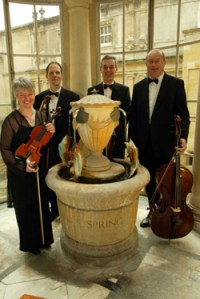
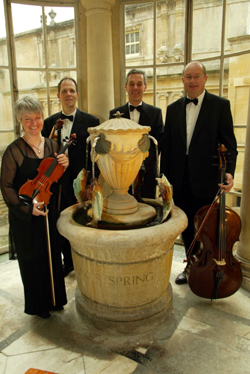
The Pump Room Trio at the fountain

A piano trio was the phoenix from the ashes of the Second World War, an unbroken legacy to this day. Now two violinists share the role dividing the 363 days of music in the Pump Room between them. All four members of the Trio are experienced, conservatoire trained musicians (RCM, RAM, RNCM, the Juilliard School).
People from all over Britain and the world come to the Pump Room. For many the visit is a regular pilgrimage, whether they be tourists or academics; their awe of the building enhanced by the music. Many writers, researchers and musicians have shared their expertise and knowledge in the development of this book. It is a departure from the many histories of Bath which are usually focussed on its architecture and archaeology. As such it covers unchartered territory – the people who played in the Pump Room. Trevor Fawcett, the eminent social historian and 18th century expert on Bath, has kindly helped with editing and other suggestions. The book will be marketed in Bath and other Spa towns in Britain as well as other independent book shops in this country and overseas. The publisher John Chandler (see http://www.hobnobpress.co.uk) will oversee distribution and contributes to on-line sales sites, such as Amazon. The book is eagerly awaited by the many contributors, either as a relative of an Orchestra member, regular visitor to the Pump Room, research contributor or musician.
© Nicola and Robert Hyman

To order The Pump Room Orchestra, Bath: Three Centuries of Music and Social History

US customers can order the book at Amazon.com at this link.

Please find attached the website http://www.hobnobpress.co.uk for an order form for those readers who would like to purchase The Pump Room Orchestra, Bath: Three Centuries of Music and Social History. Robert Hyman, (who studied at the Juilliard School, New York) is a violinist in the Pump Room Trio in Bath. Together he and his wife Nicola have researched and written this history. The book has a Foreward by Tom Conti. Colour plates include a photo ‘Leaving the Pump Room’ of ladies dressed in costume for the annual Jane Austen Festival. Two chapters in the book explore music in the Pump Room when Austen first visited Bath. They are ‘When Jane Austen Came to Bath’ and ‘After Rauzzini’. There is also a chapter called Screen and Stage which chronicles movies filmed in and around the Pump Room; actors who visit or have visited the Pump Room, some because they are performing at the Theatre Royal in Bath, and also TV productions of Jane Austen’s novels, where many of the scenes were filmed in the Pump Room. UK customers can order the book directly from the publisher. 

November 2011, 214 pages + 8 pages of colour, £14.95. ISBN 978-0-946418-74-9.

Read Full Post »

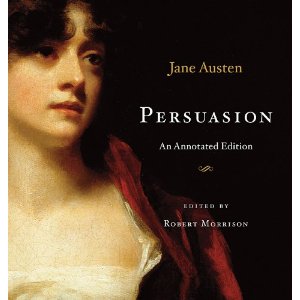
Harvard University Press has done it again and wowed us with a superb annotation of a Jane Austen novel! Persuasion: An Annotated Edition, edited by Robert Morrison is slated to be released in November. This large edition hardback is a mouthwateringly scrumptious book that contains 102 color illustrations (some of which are included in this review), notes on the original text, a 21-page introduction by Dr. Morrison, the text of Persuasion and annotations placed in the far margins, the original ending of Persuasion, (which Jane Austen abandoned), biographical notice of the author by her brother Henry Austen (written shortly after her death), and further recommended reading. Annotator, Dr. Morrison, describes the book as the most profound novel that Jane Austen has written, containing “her most compelling and adult love story.”

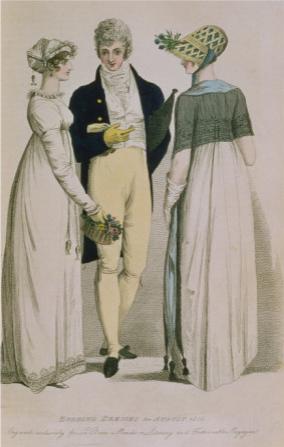
1808 evening dresses, August issue of Le Beau Monde.

I found every part of this book worthy of reading. In his foreword, Dr. Morrison sets up the novel in context of the Napoleonic Wars and Jane Austen’s experience with her sailor brothers and knowledge of how the wars changed the British class system, allowing self-made men like Admiral Croft and Captain Wentworth to rise in the world, while those who clung to traditional conventions, like Sir Walter Elliot and his daughters Elizabeth and Mary, to become increasingly anachronisistic. Dr Morrison explains in an interview for Harvard Press:

“Austen, on the other hand, is a novelist, and the emphasis when editing her is frequently on her immensely insightful views on social structures, sexual politics, economic pressures, and individual obligations and aspirations. Editing her means developing a very clear sense of the difference between riding in a barouche and riding in a curricle, of what it means to command a frigate as opposed to a sloop.“ – Interview with Robert Morrison, Harvard Press 

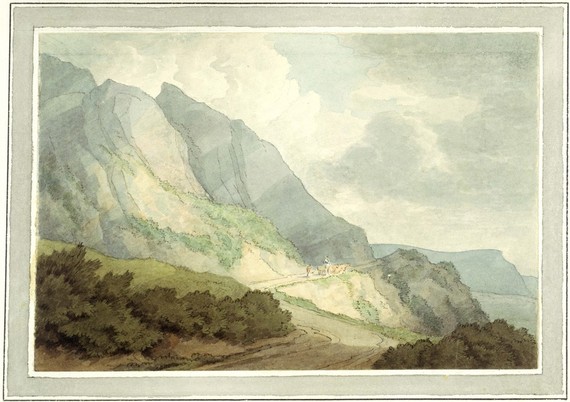
Between Lyme Regis and Charmouth, by John White Abbot

The star attractions of this book are the annotations, which are liberally sprinkled in the sidebars of each page. Dr. Morrison chose information that would appeal to seasoned readers of the novel as well as those who are reading it for the first time. He discusses naval rank, the various reasons why Anne’s family pressured her to not marry Wentworth, descriptions of the duties of apothecaries and surgeons, inheritance laws, the streets and buildings in Bath, descriptions of Lyme Regis, letter writing, and more. He explained in an interview for Harvard Press:

“Knowing my prose was going to appear right beside Austen’s really did change the way I approached writing my commentary. I have tried to use the commentary to illuminate the text as often as I can, and from as many different angles as I can, and to emphasize both what I believe to be central in Persuasion, and what the finest critics from Austen’s day to ours have written about it. I have attempted to produce a commentary that is in immediate and active dialogue with her text, rather than in a relationship that is more distant and intermittent.” – Interview, Harvard Press

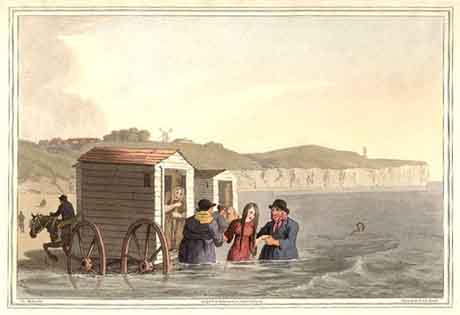
Sea bathing at Scarborough

I find it hard to read a novel smoothly while referring to the annotations, which I regard as interruptions, so I generally read the annotations alone. I then refer to the sections of the novel that are described. After going through the annotations, I will sit down and read the novel again. That second reading is much enriched because of the additional information. (I am curious to know how others tackle reading an annotated book!)

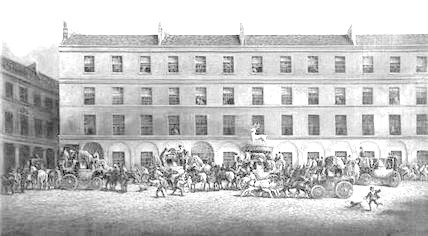
The White Hart Inn

Professor Morrison ends his interview with Harvard Press by comparing the radical change in Anne from a faded to a blooming woman to the transformation in Jane Austen’s novels: “[Persuasion] signals a radical change from what she has written in the past, and throws searching light on the world that is to come.”

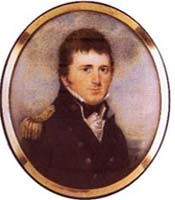
Francis Austen, Jane Austen's sailor brother.

Persuasion, an annotated edition will sit proudly on my bookshelf next to last year’s edition of Pride and Prejudice: An Annotated Edition by Patricia Meyer Spacks, also from Harvard University Press. I give this book five out of five Regency teacups.

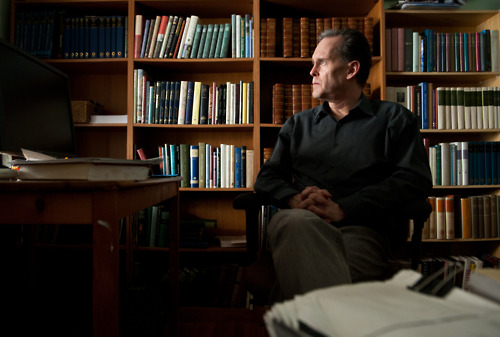
Dr. Robert Morrison. Image @Galit Rodan

About the author: Robert Morrison, is an English professor and world-class scholar of Romantic and Victorian literature at Queen’s University, Ontario, Cananda. He is the author of the acclaimed biography of Thomas de Quincey entitled The English Opium Eater.

Hardcover: 360 pages, 102 ills.
Publisher: Belknap Press of Harvard University Press; Annotated edition
Language: English
ISBN-13: 978-0674049741

Read Full Post »

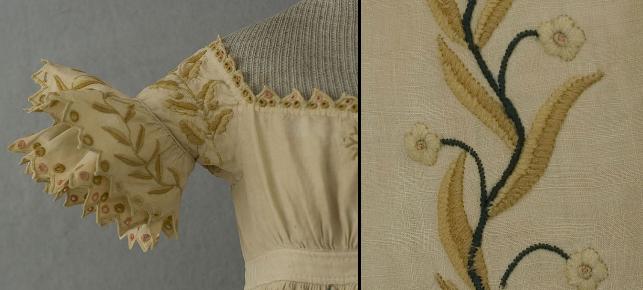
Child's hand-embroidered dress, c 1810. Image @Vintage Textile

I love visiting Vintage Textile, one of the best, most descriptive vintage fashion sites on the Internet. The Regency era fashions are superb. Take this embroidered child’s dress, which was once white. It was made for a child around one or two years of age. The dress, which came from a New England estate, is long, like a christening dress, which suggests that the child would have been carried in it. The fabric is made of a lightweight cotton broadcloth, and the Persian-style Tree of Life embroidery design is made with wool floss. For more images and information about the dress or to purchase it, click here. 

Detail of sleeve with Van Dyke points and embroidery. Images@Vintage Textile

More on the topic:

Read Full Post »

« Newer Posts - Older Posts »