Feeds:
Posts
Comments

Archive for the ‘Book review’ Category

Reviewed by Brenda S. Cox

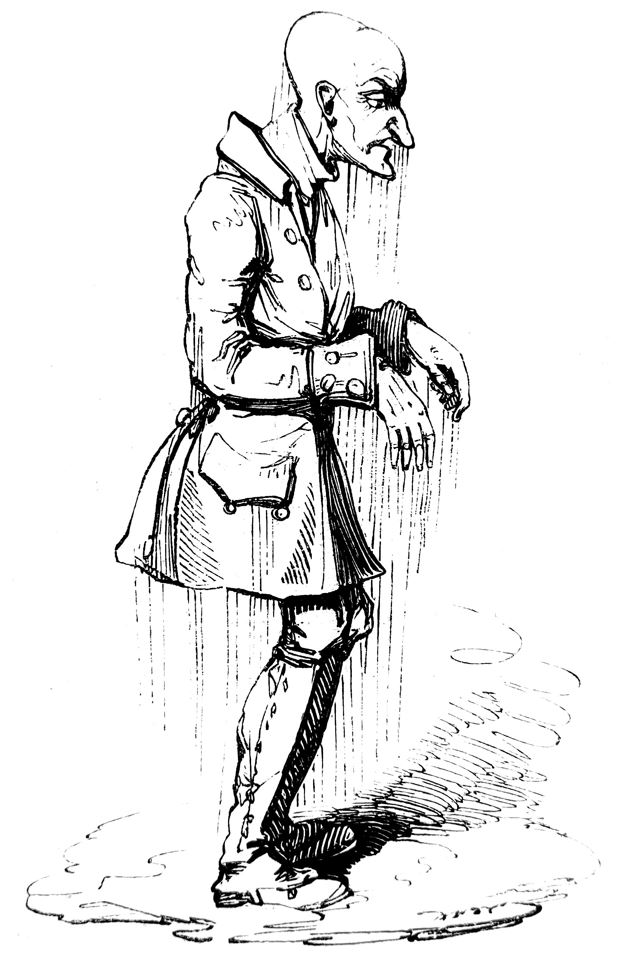
“I have seen nobody in London yet with such a long chin as Dr Syntax” (Jane Austen, March 2, 1814).

I just finished reading, cover to cover, a brand-new book which is over 200 years old. The Tour of Doctor Syntax in Search of the Picturesque, by William Combe, is a classic which Jane Austen herself enjoyed. But it’s out in a new edition, with wonderful illustrations, explanations, and comments.

A fun new annotated version of The Tour of Doctor Syntax, including parallels with Jane Austen’s novels!

The story in verse was first published from 1809-1811 as a series in Ackermann’s Poetical Magazine. Ackermann had a series of prints by the great caricaturist Thomas Rowlandson. They featured a country clergyman with a long pointed chin and a tall white wig traveling through the countryside. Ackermann gave Combe the illustrations for each issue of the magazine, and Combe wrote a section of the story to go with them. He didn’t know ahead of time what the pictures would be for the next issue, but somehow he came up with a coherent story. One interesting facet is that Rowlandson apparently intended to satirize the clergy, but Combe made Syntax into a good, learned man, a little silly, but lovable.

A book version came out in 1812. Dr. Syntax was wildly popular and stayed in print, with multiple printings and editions, well into the 1800s.

This new version of The Tour of Doctor Syntax was edited and annotated by an advanced high school class and their professor, Dr. Ben Wiebracht. Ben actually discovered Dr. Syntax through one of my posts right here at Jane Austen’s World. Recognizing its potential for his class on “Jane Austen and Her World,” he asked Vic Sanborn, owner and primary writer of this website, and myself, to share with his class. Vic owns some lovely Rowlandson prints. We both loved connecting with such bright and interested students, who asked knowledgeable questions.

The Book

They’ve done a brilliant job with the book. It starts with a biography of William Combe and the history of the book itself. Combe’s challenges as a writer in Austen’s age were fascinating to me, as a writer myself. A clear introduction explains “the picturesque,” which is mentioned in Austen’s novels. Parallel to the text are straightforward explanations of difficult terms and phrases. That makes them easy to quickly reference. A glossary in the back gives terms previously defined.

The best part, for me, are comments pointing out parallels with Jane Austen’s work. I can’t even begin to list these, but there are many great insights. Some are about the clergy in Austen’s work, since Syntax is an underpaid country curate like Charles Hayter of Persuasion. Many comments have to do with the “picturesque,” “improvement” and country estates ranging from Sotherton to Pemberley. Others relate to the class system, Gothic novels, and other topics.
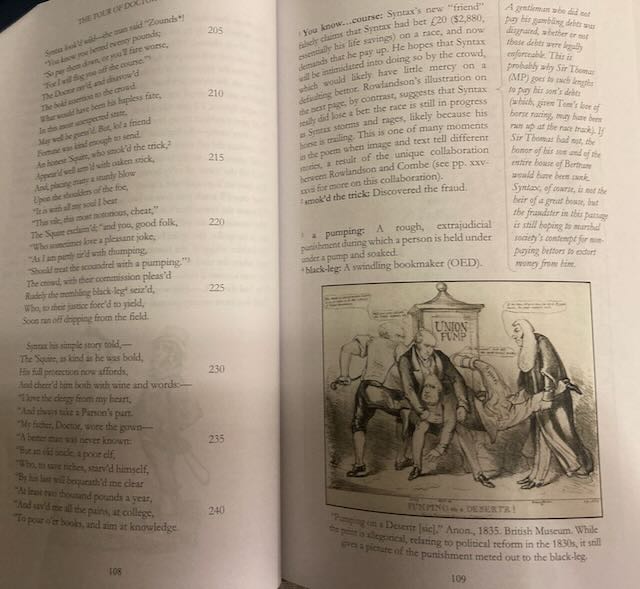
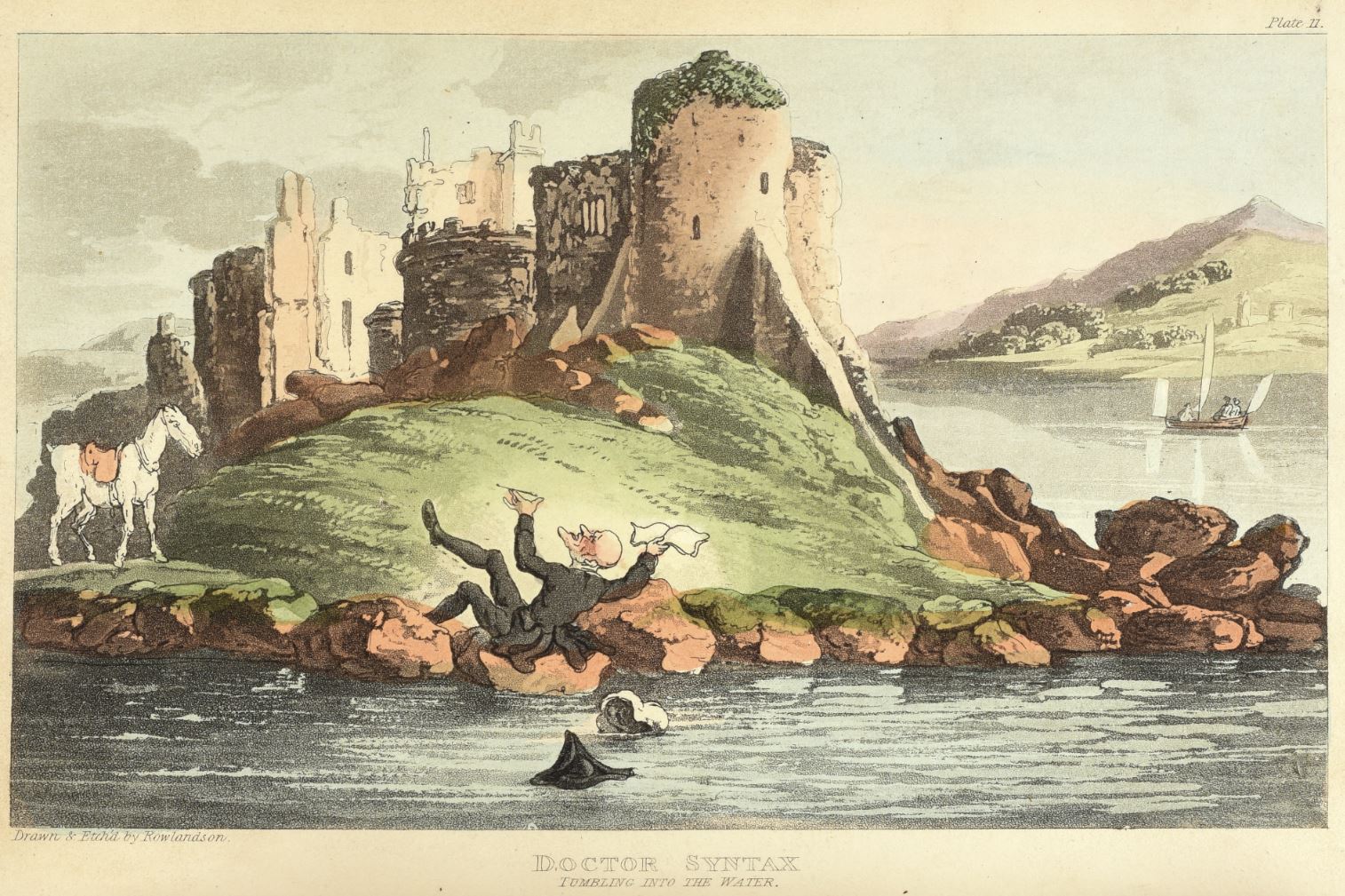
The full text of the poem/story is opposite explanations, comments, and illustrations, making them easy to access. The Tour of Doctor Syntax, 2024.
“Doctor Syntax Tumbling into the Lake,” by Thomas Rowlandson. One of the lovely full-page illustrations for this new version of The Tour of Doctor Syntax.
Victorian illustration, 1838, of the same scene, by Alfred Crowquill. The Tour of Doctor Syntax includes both the Rowlandson and Crowquill illustrations.

I also loved the illustrations. The editors chose the best versions they could find of each of the full-page, hand-colored pictures by Rowlandson that were the basis of the book. They added illustrations from a later Victorian version, as well as other entertaining and illuminating cartoons and pictures from the time.

Interview with the Editor

I’ll let Dr. Wiebracht himself tell you more about how this book came about.

Ben, please tell me about your class that produced this book.

The class is called “Jane Austen and Her World” and it’s designed for advanced juniors and seniors. The goal is to see Austen’s novels not as sealed-off masterpieces, floating in a historical vacuum, but as windows into her world. Most class days, our Austen reading is accompanied by shorter texts designed to create a sense of context and show how Austen was in conversation with her contemporaries. For instance:

  • We pair Austen’s account of Bath in Northanger Abbey with a number of late 18th-c. satires of Bath, 18th-c. dance music, and illustrations of the city by Rowlandson and others.
  • We pair Catherine’s pseudo-Gothic adventures in Vol. II with excerpts from The Monk, The Castle of Otranto, and The Mysteries of Udolpho.
  • We pair the private theatricals in Mansfield Park with a viewing of a performance of Lover’s Vows, as well as specimens of anti-theatrical criticism from the period, including a satire on private theatricals by Jane’s brothers!
  • We pair the discussion of landscape gardening in Mansfield Park with images from Humphry Repton’s famous “red books” showing “before and after” estate grounds.

The idea is to understand Austen in a deeper way by developing the practice of “reading outward.” And we incorporate that principle in our work for the class. Instead of the usual school essays, students work with me to create a critical edition of a neglected text from Austen’s time, with annotations and other resources that draw connections between the text and Austen’s life and work.

The class enrolled 16 students (the maximum). They hailed from all over the country and world: Japan, China, and many different U.S. states. This was my first time teaching the course, though I developed the core ideas in an Austen unit for a previous course. In the future, I will probably teach the course every three years. The book project in particular is a heavy lift, and I’m not capable of it every year!           

How did you end up studying Dr. Syntax along with Jane Austen?

I have to back up a bit here. In the course of an Austen unit for a previous class, students and I had created a critical edition of a long-forgotten 1795 poem called Bath: An Adumbration in Rhyme. We used that book to launch a new series called “Forgotten Contemporaries of Jane Austen.” Its goals are:

  • to recover neglected but valuable texts from Austen’s time, and
  • to trace new connections between Austen and her contemporaries.

As I was preparing my Austen class, I settled on Doctor Syntax (first brought to my attention in JAW by one of your articles!) for three reasons.

  • First, the poem had undeniable literary-historical importance – one of the all-out bestsellers of the Regency. A critical edition, I thought, was long overdue.
  • Second, many of its themes – from the plight of poor clergy to the “picturesque” – were major concerns of Austen’s novels, too.
  • Finally, the poem was simply a really good read. Combe’s verses are light, fun, and at times even touching, and Rowlandson’s accompanying illustrations are some of his best work. In every way, the poem deserved to be revived!

What do you hope readers will gain from the book?

There are a lot of things I hope people take away! One would be a deeper appreciation of just how engaged Austen was in the debates and issues of her day. Sometimes Austen is talked about as something of a provincial writer, sealed off from the wider Regency world, modestly toiling away on her “pictures of domestic life in country villages,” as she once put it. But when we keep in mind just how much of a smash hit Doctor Syntax was, and when we consider the many, many parallels between this work and Austen’s novels, which our edition lays out in detail, then we see Austen differently. She now starts looking like a very savvy writer, who understood what the major issues of the day were, what readers were interested in. To be sure, she stuck to her convictions and drew on her own experience and observations, but she did so in a way designed to appeal to a broad, national readership.

I’m also excited for people to meet this poet William Combe, who had one of the most interesting lives of any Regency writer. He was a remarkable literary talent. He doesn’t fit the mold of the “Romantic poet,” which is one reason he might be overlooked. Instead he offers a light, generous humor that shows us that Regency poetry wasn’t all about Byronic heroes and Wordsworthian dreamers. There was a sociable, comic side to the poetry of the period. Combe represents that comic side particularly well.

Finally, I would love it if this book inspired other teacher-scholars to undertake collaborative research with their students – especially at the upper-high-school level. There are so many benefits. For students, it’s a more rewarding and enjoyable approach to literary scholarship than the usual school essays. For teachers, it’s a welcome relief from the role of “judge/grader” – instead you get to teach through co-creation, as is done in most trades through the apprenticeship model. And for the reading public, there’s the benefit of the work produced! I am convinced that student involvement, with the right guidance and leadership from the teacher, leads to better scholarship. It certainly has in my experience.

By the way, while we don’t offer a Kindle edition, we do offer a free etext in the form of a downloadable PDF on our website. We decided from the beginning to be an open-access publisher, in part to make it easier for teachers with low-income students to assign our books. The best way to use the e-text is to enable the 2-page view in your pdf reader – that way the text and notes are neatly parallel, as in the physical book. The etext can also be used as a supplement to the physical book – for instance if you want to do a text search for a particular word.

How did you and the students share the work on this project?

Each student was responsible to annotate one of the poem’s 26 cantos, about ten pages of text. I did the other ten cantos myself. Students also had one or more additional responsibilities, which included:

  • Researching aspects of Combe’s life
  • Researching Gilpin and the picturesque
  • Compiling chronologies
  • Drawing maps
  • Designing the cover
  • Editing the text according to scholarly standards

My job was twofold. First, I offered regular feedback on work in progress, helping students learn how to navigate library databases, write good, concise annotations, etc. I also did the parts of the book that were a bit beyond the reach of high-school students, even excellent ones, which all the students who worked on this book were! For example, I wrote most of the introductory materials, as well as some of the trickier annotations. I helped with the final prose, too, to ensure continuity of voice. That doesn’t mean, though, that the best stuff is mine. Many of the best, most insightful annotations in the book are entirely by students, and every one of my students has some of their own writing, their own voice in the final book – which was a major priority for me. And just as students benefited from my feedback, I benefitted from theirs. They fully earned their editor credits in the final book.

Final Thoughts

Dr. Wiebracht and his class did an amazing job. I highly recommend this book, which is available on Amazon and from Jane Austen Books at a discount. I have not yet read the earlier book in the series, Bath: An Adumbration in Rhyme, but now I want to get hold of that and read it, too!

If you’re at the JASNA AGM this month, you can hear Ben and some of his students speak, and get them to sign your copy of the book. (Unfortunately I’m speaking in a slot opposite theirs, as well as other excellent speakers at that time, so you’ll have to choose! It’s always challenging.) Their talk is also available in the virtual version of the AGM.

The price is very reasonable for a book with color illustrations. I hope you’ll get a chance to enjoy and learn from this lovely book!
Read Full Post »

By Brenda S. Cox

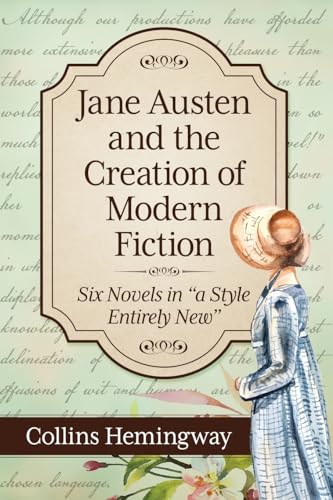
I thoroughly enjoyed Jane Austen and the Creation of Modern Fiction: Six Novels in “a Style Entirely New,” by Collins Hemingway. As a fiction writer himself, Hemingway examines Austen’s novels, in the order she wrote them, to analyze the techniques she pioneered. He observes her abilities growing from novel to novel, as she experiments and succeeds in creating the worlds and characters we so love.

Collins Hemingway’s new book, Jane Austen and the Creation of Modern Fiction: Six Novels in “a Style Entirely New, gives fascinating insights into Austen’s development of modern techniques of fiction writing.

A New Style?

Did Jane Austen develop a new style of novel-writing? Her contemporary reviewers thought so. They felt compelled to give long contrasts between the previous style of novel-writing, full of intensity and improbability, with Jane Austen’s new realistic style. Sir Walter Scott in his 1815 review of Emma said Austen “draws the characters and incidents introduced more immediately from the current of everyday life.” Rev. Richard Whately wrote in his 1821 review of Northanger Abbey and Persuasion, “A new style of novel has arisen. . . . The substitute for these excitements [of unlikely adventures] . . . was the art of copying from nature as she really exists in the common walks of life.” Both these reviews are worth reading (follow the links above) to see how Austen’s contemporaries struggled to describe what she was, and wasn’t, doing in her novels.

The third volume of Austen’s Juvenilia includes a penciled note inside the front cover, “Effusions of Fancy by a very Young Lady consisting of Tales in a Style entirely new.” Peter Sabor says this inscription is written in Jane’s father’s handwriting, though others have speculated that it may have been written by Cassandra or even by Jane herself, tongue-in-cheek.

Author Collins Hemingway told me, “The epigram seems most likely to me to be from her father. . . . To me, the quotation is Mr. Austen enjoying and encouraging Jane’s raw power and comedy, her sheer audacity in sending up the pulp fiction of the day with her various teenage writings. I saw a strong parallel to her adult fiction. Her juvenilia showed that she understood that traditional fiction didn’t cut it. Her adult fiction shows that she learned how to write good novels—something new at the time.”

Jane Austen Learning (or Inventing) the Craft of Writing Fiction

Jane Austen and the Creation of Modern Fiction starts out with a preface for more academic readers (feel free to skip it if that’s not you), then an introduction for us all, which begins:

“I wrote this book so that people can read Jane Austen with fresh eyes. I wanted booklovers to view her not as a literary or cultural icon but as a writer, someone who puts words to paper to try to touch another person’s heart. I wanted people to see her as a human being who struggled to master her craft as anyone in any field, regardless of talent, must do. . . . As both a student of literature and a writer, I wanted to know how Austen affects readers. I wanted to know how she created remarkably  real people interacting in remarkably realistic situations. This is what writers care about, and what readers respond to.”

Yes.

Hemingway starts with an exploration of the context of Austen’s writing, how she “straddled the old and new literary order, ultimately pivoting the novel from improbable adventures to deep penetration of the minds of her heroines.” (These early chapters are necessarily a bit more difficult, as they compare Austen with her contemporaries, who most of us have not read—and here we can see why Austen is so much more accessible than other writers of her time!)

Then he brings us deep into our beloved Austen–following her development of description in her earliest novels, Northanger Abbey and Sense and Sensibility. In Pride and Prejudice, she continues to develop “pocket descriptions,” which are “pithy, telling details.” For example, Elizabeth Bennet’s jumping over stiles and puddles and arriving at Netherfield with “weary ancles” and “dirty stockings” is a pocket description that shows us a lot about Elizabeth.

Sense and Sensibility was originally written in the popular “epistolary” form, as a series of letters. Letters give a sense of distance, as the character is writing about events that have already happened, rather than the author drawing readers directly into events. A chapter analyzes how Austen made the transition from letters into narrative. For example, Edward Ferrars is a “blurry” presence in the early chapters, which are closer to the letter format. By the end of the novel, though, Austen has added vivid, immediate scenes. So, in the final proposal scene, we see Edward as “the very real and anguished presence of a human being.”

My favorite chapter is the one on “The Marvelous Complexity of Mansfield Park.” Hemingway’s discussion helps readers appreciate its elaborate scenes, complex characters, and interconnected plotlines. He particularly explores the depths of Fanny Price’s thoughts and feelings.

Fanny’s “responses, which for the most part only the reader observes, show her to be by far the most complex individual Austen ever creates. Outwardly, she is a saint. Inwardly, she is as confused and angry as any person who is regularly embarrassed or put down. Her raw feelings sometimes overpower her Christian charity and patience.” Austen even uses the furnishings of Fanny’s room to show her interior life. Fanny constantly examines her own motives, trying to find the right path.

Every chapter includes new insights into Austen’s novels, her writing techniques, and her development as an author.

Persuasion

One area of the book that Janeites might find a little uncomfortable is the section on Persuasion. Collins Hemingway discusses the revision process—authors generally rewrite their books multiple times. He points out several areas in Persuasion that could be considered imperfect. For example, Mrs. Smith is not quite consistent. Why does she encourage Anne to marry Mr. Elliot, then reveal how horrible he is? And why does Lady Russell mostly disappear from the second half of the book?

Austen might have fixed these issues with a major rewrite. (I suggest she also might have changed Charles Hayter’s name, so we wouldn’t have two adult characters named Charles, besides Charles Musgrove’s son Little Charles.) But Hemingway suggests that perhaps her health was failing already, and she did not have the time and energy for major revision. She had already replaced the original ending with the beautiful one we know and love. And, in “the quiet passion of Anne Elliot,” she had already given readers “a depth of character never seen before.”

If Austen had begun another revision to fix smaller structural issues, she might not have had a publishable version available when she died. So, Hemingway persuades us that Austen wrapped up the work, as it stood, to give the world another work of art and to help provide for her mother and sister after her death. As Hemingway states, “Like Emma, Jane is faultless despite her faults.”

Any lover of Austen will learn a lot from Jane Austen and the Creation of Modern Fiction. I particularly recommend it to writers (like myself), who will enjoy seeing Austen’s techniques and their development. Any of you who love digging deeper into Austen’s novels will find new delights here.

On Monday, we’ll interview the author to get his perspectives on the book.

Jane Austen and the Creation of Modern Fiction is available from Amazon and from Jane Austen Books. Jane Austen Books is currently offering it at a substantial discount.

Gentle readers, what aspect of Austen’s writing do you most admire? Her settings, characters, plots, style, humor, or something else?

Brenda S. Cox is the author of Fashionable Goodness: Christianity in Jane Austen’s England. She also blogs at Faith, Science, Joy, and Jane Austen.

Read Full Post »

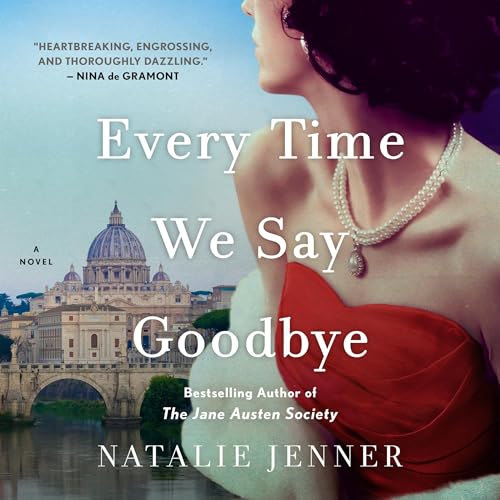
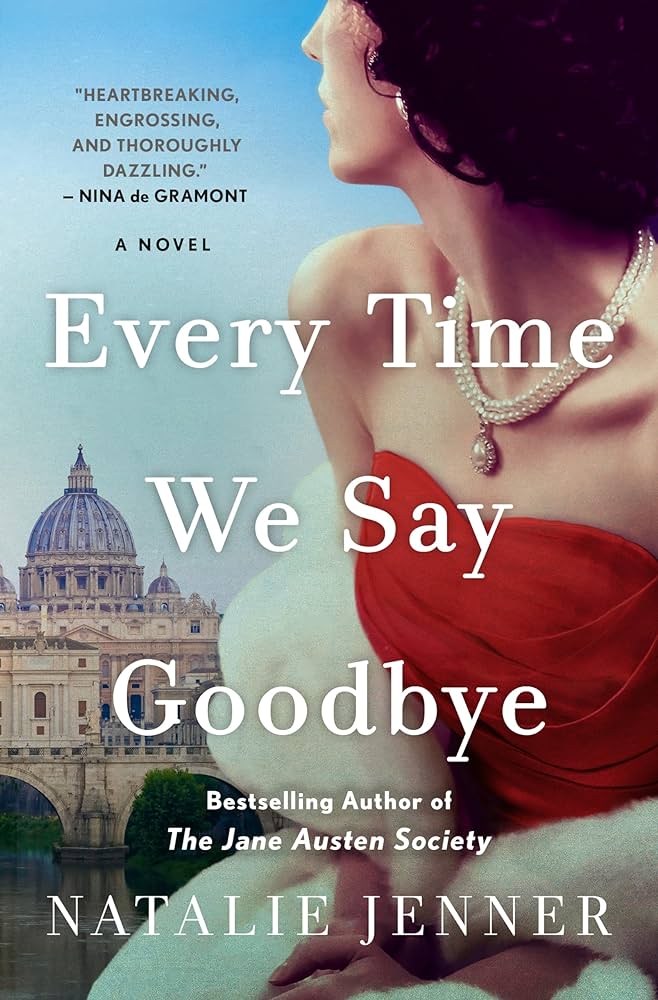
For those looking for a glamorous, post-WW2, historical fiction novel for spring and summer, I have great news for you! Natalie Jenner, the bestselling author of The Jane Austen Society and Bloomsbury Girls, is back with a new novel called Every Time We Say Goodbye!

If you fell in love with Jenner’s writing, storylines, and characters when you read her first two novels, then add this third installment to your TBR list. Though Jenner’s books can be read as stand-alone stories, they each tie to the others.

This time, we follow actress and playwright Vivien Lowry, one of the original (fictional) members of the Jane Austen Society, to 1950s, post-war Italy to pursue her film career.

Book Details

The bestselling author of The Jane Austen Society and Bloomsbury Girls returns with a brilliant novel of love and art, of grief and memory, of confronting the past and facing the future.

In 1955, Vivien Lowry is facing the greatest challenge of her life. Her latest play, the only female-authored play on the London stage that season, has opened in the West End to rapturous applause from the audience. The reviewers, however, are not as impressed as the playgoers and their savage notices not only shut down the play but ruin Lowry’s last chance for a dramatic career.

With her future in London not looking bright, at the suggestion of her friend, Peggy Guggenheim, Vivien takes a job in as a script doctor on a major film shooting in Rome’s Cinecitta Studios. There she finds a vibrant movie making scene filled with rising stars, acclaimed directors, and famous actors in a country that is torn between its past and its potentially bright future, between the liberation of the post-war cinema and the restrictions of the Catholic Church that permeates the very soul of Italy.

As Vivien tries to forge a new future for herself, she also must face the long-buried truth of the recent World War and the mystery of what really happened to her deceased fiancé. Every Time We Say Goodbye is a brilliant exploration of trauma and tragedy, hope and renewal, filled with dazzling characters both real and imaginary, from the incomparable author who charmed the world with her novels The Jane Austen Society and Bloomsbury Girls.

Audiobook

If you prefer listening to your historical fiction, BAFTA Award-winning actress Juliet Aubrey has narrated the audiobook of Every Time We Say Goodbye.

“Aubrey won the BAFTA for her performance as the quintessential Dorothea Brooke in the BBC’s 1994 production of Middlemarch and has appeared in dozens of television, film, stage, and radio programs over her impressive career, most recently winning the BBC Audio Drama Award for Best Actress in 2022. Aubrey has a voice full of dusky cadence, emotion, and subtlety, and brings to the audiobook a mastery of dialect and intonation.”

I highly recommend listening to this one! I’ve been listening, and I love the play between the English, American, and Italian accents. You can listen to an excerpt from the audiobook for Every Time We Say Goodbye here:

Every Time We Say Goodbye by Natalie Jenner, audiobook excerpt [Chapter Three] by MacmillanAudio (soundcloud.com)

Order Your Copy

Every Time We Say Goodbye releases May 14, 2024. You can purchase the book online or in any of your local retail bookshops. If you’d like a hardcover copy, the details are below:

Order HERE

One of Bookbub’s Best Historical Fiction Books for Spring!
One of the CBC’s Most Anticipated Canadian Novels this Spring!

“Jenner provides an insightful view into Italy’s postwar reckoning, and she imbues the novel’s many celebrity cameos – including actresses Sophia Loren and Gina Lollobrigida―with authentic flair. Jenner’s fans will love this.” ―Publishers Weekly

“With warmth and compassion…lush descriptions, vivid period detail, and fascinating personalities, Jenner’s cinematic narrative is shot through with both pain and hope.” ―Shelf Awareness

About the Author

NATALIE JENNER is the author of the international bestseller The Jane Austen Society and Bloomsbury Girls. A Goodreads Choice Award runner-up for historical fiction and finalist for best debut novel, The Jane Austen Society was a USA Today and #1 national bestseller, and has been sold for translation in twenty countries.

Born in England and raised in Canada, Natalie has been a corporate lawyer, career coach and, most recently, an independent bookstore owner in Oakville, Ontario, where she lives with her family and two rescue dogs. Visit her website for more.

Jane Austen News from Natalie

Finally, it’s my great joy to announce that Natalie has a 4th upcoming novel slated for 2025, tentatively titled Austen at Sea, just in time for Jane Austen’s 250th celebration!

This new novel, once again about Austen’s fans, is set in 1865 Boston and Hampshire. Here’s a brief introduction:

“In Austen at Sea, Henrietta and Charlotte Stevenson, the only children of a widowed Massachusetts supreme court judge, are desperate to experience freedom of any kind, at a time when young unmarried women are kept largely at home. Striking up a correspondence with Jane Austen’s last surviving sibling, ninety-one-year-old retired admiral Sir Francis Austen, the two sisters invite themselves to visit and end up sneaking on board the S. S. China, a transatlantic mail packet steamship heading to Portsmouth.”


RACHEL DODGE teaches college English classes, gives talks at libraries, teas, and book clubs, and writes for Jane Austen’s World blog. She is the bestselling author of The Little Women DevotionalThe Anne of Green Gables Devotional and Praying with Jane: 31 Days Through the Prayers of Jane Austen. Now Available: The Secret Garden Devotional! You can visit Rachel online at www.RachelDodge.com.

Read Full Post »

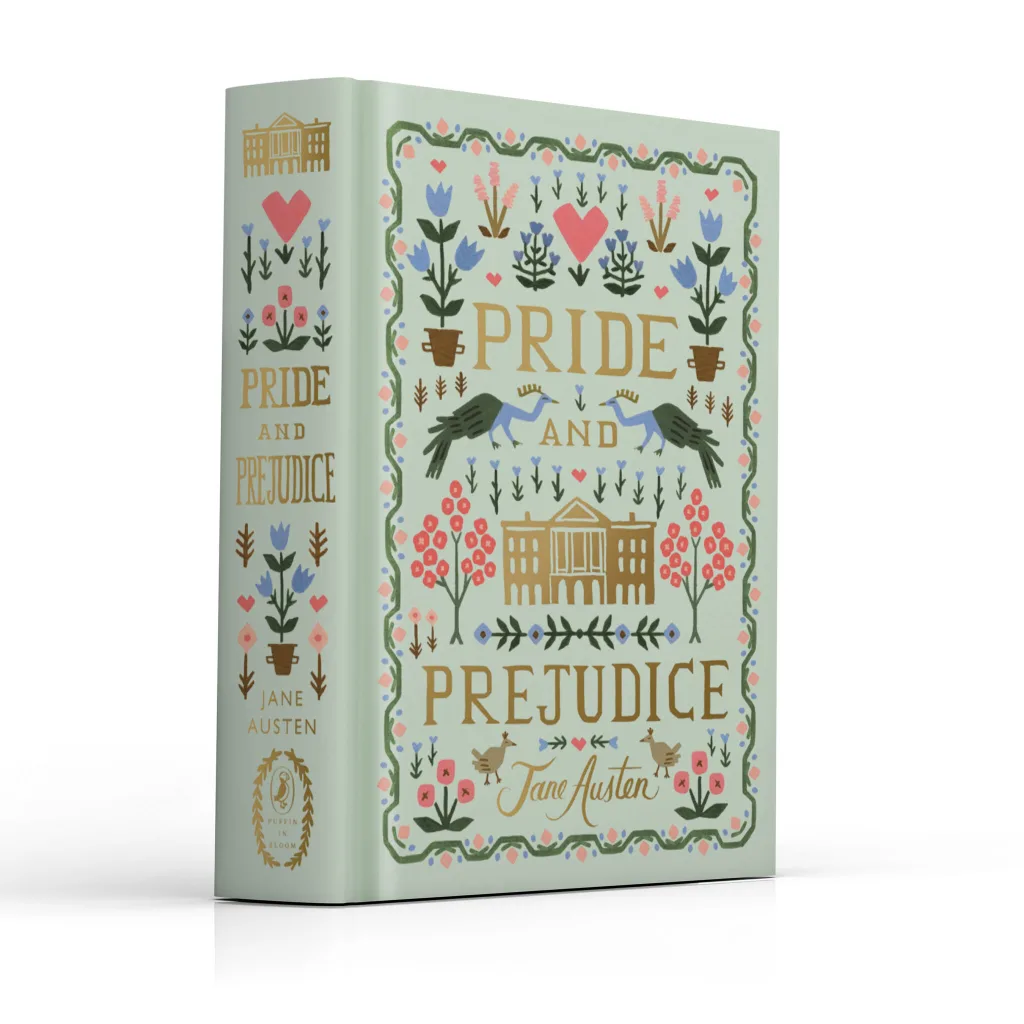
For years, I’ve loved the Penguin Random House “Puffin in Bloom” editions of Anne of Green GablesHeidiLittle Women, and A Little Princess. I typically purchase these gorgeous books as gifts for my bookish friends and their daughters.

Now, the Puffin in Bloom line has expanded to include three of Jane Austen’s novels as well!

Delectable Classic Covers

The Puffin in Bloom line started with four classic, coming-of-age novels: Anne of Green GablesHeidiLittle Women, and A Little Princess. These hardcover classics feature floral cover illustrations by Anna Bond, the creative director and artistic inspiration behind the global stationery phenomenon Rifle Paper Co. Puffin in Bloom became an instant success and the original foursome continues to fly off the shelves. Classics novels with such beautiful covers do not disappoint!

Each book can be purchased individually or as a boxed set in a beautiful keepsake box. These hardcover books don’t just boast a pretty cover; they look and feel great in your hands. They are just the right size and they read well. I am very particular about the feel of a book in my hands, and these are a joy to hold and read. You can easily slip them into a purse or tote to take with you, too!

Alice’s Adventures in Wonderland

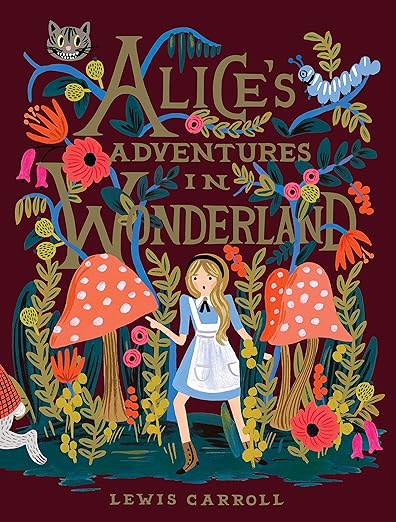
To commemorate the 150th anniversary of Alice’s Adventures in Wonderful by Lewis Carroll, Puffin Books added to the Puffin in Bloom line and released a deluxe, hardcover gift edition of the famous novel. Once again, the talented Anna Bond created the cover illustration, and she also provided full-color illustrations inside. The result is exquisite!

“In this beautiful edition, Alice’s story comes to life for a whole new generation of readers through the colorful, whimsical artwork of Anna Bond, best known as the creative director and artistic inspiration behind the worldwide stationery and gift brand Rifle Paper Co.”

Jane Austen in Bloom

After years of waiting and wondering (and wishing), I was overjoyed when Penguin announced last year that they were planning to expand the Puffin in Bloom line to include other classics as well. Again, they chose Anna Bond to create new cover art with her signature style. But best of all, they chose our Jane’s cherished novels for this new endeavor!!

This first installment (I truly hope there will be more) includes Austen’s Pride and Prejudice, Sense and Sensibility, and Emma. Let’s take a closer look:

Pride and Prejudice

Though her sisters are keen on finding men to marry, Elizabeth Bennet would rather wait for someone she loves – certainly not someone like Mr. Fitzwilliam Darcy, whom she finds to be smug and judgmental, in contrast to the charming George Wickham. But soon Elizabeth learns that her first impressions may not have been correct, and the quiet, genteel Mr. Darcy might be her true love after all. You can view and purchase HERE.

Sense and Sensibility

Book Description: “Marianne Dashwood wears her heart on her sleeve, and when she falls in love with the dashing but unsuitable John Willoughby, she ignores her sister Elinor‘s warning that her impulsive behavior leaves her open to gossip and innuendo. Meanwhile Elinor, always sensitive to social convention, is struggling to conceal her own romantic disappointment, even from those closest to her. Through their parallel experience of love– and its threatened loss–the sisters learn that sense must mix with sensibility if they are to find personal happiness in a society where status and money govern the rules of love.” You can view and purchase HERE.

Emma

Book Description: “Emma Woodhouse believes herself to be an excellent matchmaker, though she herself does not plan on marrying. But as she meddles in the relationships of others, she causes confusion and misunderstandings throughout the village, and she just may be overlooking a true love of her own.” You can view and purchase HERE.

Anna Bond

Anna Bond is co-founder and CCO of Rifle Paper Co., an international stationery and lifestyle brand with offices in Winter Park, Florida and New York City. Originally from Summit, New Jersey, Anna trained as a graphic designer and made her way to Florida to work as a senior art director at a media company at age 21. After a year of working in print design she left to pursue her passion in illustration. A number of gig posters and freelance work later, she re-discovered her lifelong love of stationery through wedding invitation design and the idea for a stationery collection was born.

Together with her husband Nathan, Anna launched Rifle Paper Co. based out of their apartment in November 2009 and the brand has quickly grown to become of the most notable brands in the industry. Every one of Rifle’s over 900 products are designed by Anna and feature her signature hand-painted illustrations, vibrant color palette, and whimsical tone which has helped propel the brand’s success. Rifle Paper Co. now employs over 200 people and is carried in over 5,000 stores around the world including Anthropologie, MoMA and Barnes & Noble. You can see more of Anna’s work HERE.

Collecting Austen Covers

With covers like these, who can resist “just one more” edition of Austen’s beloved novels? I know many of us have shelves with several pretty editions, plus a favorite, worn-in version that we keep close by for regular reading. Do you have several editions of Austen’s novels? Which books do you collect and how many do you have so far?


RACHEL DODGE teaches college English classes, gives talks at libraries, teas, and book clubs, and writes for Jane Austen’s World blog. She is the bestselling author of The Little Women DevotionalThe Anne of Green Gables Devotional and Praying with Jane: 31 Days Through the Prayers of Jane Austen. Now Available: The Secret Garden Devotional! You can visit Rachel online at www.RachelDodge.com.

Read Full Post »

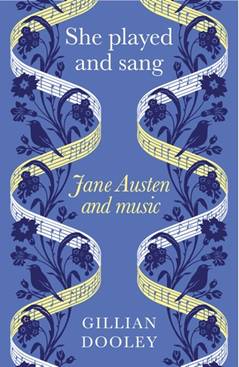
She Played and Sang: Jane Austen and musicThis is the time when new books are published ahead of the spring and summer seasons. One offering from Manchester University Press particularly intrigued me. I also included in this post  my responses to two books I recently purchased in preparation for a post about the Grand Tour.
She Played and Sang: Jane Austen and Music by Gillian Dooley

In March, Manchester University Press will offer a book that features an in depth look at Jane Austen’s lifelong connection to music. I have the honor of reading an advance proof and will review the book this March. The press sheet states:

“Until recently, our knowledge of Austen’s musical inclinations was  limited to the recollections of relatives who were still in their youth when she passed away. But with the digitisation of music books from her immediate family circle, a treasure trove of evidence has  emerged. Delving into these books, alongside letters and other  familial records, She played and sang unveils a previously unknown facet of Austen’s world. 

[Dooley] not only uncovers the music closely associated with Austen, but also unravels  her musical connections with family and friends, revealing the intricate ties between her fiction and  the melodies she performed. With these revelations, Austen’s musical legacy comes to life, granting  us a deeper understanding of her artistic prowess and the influences that shaped her literary  masterpieces.

Screen Shot 2024-01-28 at 9.52.53 AMThe Grand Tour of Europe

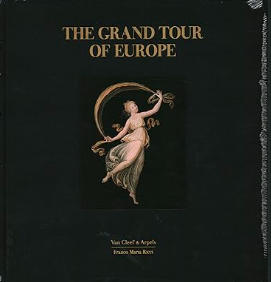
I recently purchased this lavish book, The Grand Tour of Europe, which sits prominently on my coffee table. 

“The Grand Tour, a journey through Europe aimed at culture and leisure, was a common practice between the 17th century and the first quarter of the 19th century. This book revisits the stages in an itinerary that left profound traces in European culture.”

Published by Van Cleef & Arpels and edited by Franco Maria Ricci, the information is divided into the following lushly illustrated sections:

Chapter I: Three essays 

Fops on Holiday, Nicholas Foulkes

Theatres of Antiquity: Art and Artists During the Grand Tour, Fernando Mazzocca

The Grand Tour of Europe, Attilio Brilli

Chapter II: Myths and Views of Italy

Chapter III: Imagination and the Grand Tour – Sculpture

Chapter IV: Imagination and the Grand Tour – Painting

Chapter V: Travellers and Artists

Note: Chapters II – V include anthologies with reactions from 17th – 19th C. travellers to their experiences. 

For a peek inside the book, click on this link: https://www.francomariaricci.com/en/books/grandtour Publisher ‏ : ‎ Franco Maria Ricci Editore (October 29, 2023), 168 pages, ISBN-13 ‏ : ‎ 979-1280294180

I wanted to connect this beautiful book to Jane Austen’s life, and found the bridge in the following reproduction of Edward Austen Knight’s memories of his own Grand Tour.

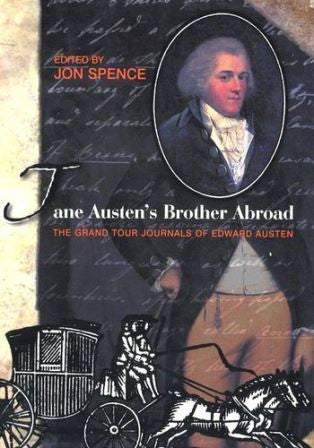
Edward Grand TourJane Austen’s Brother Abroad: The Grand Tour Journals of Edward Austen 

I ordered this book, edited by Jon Spence and first published in 2005, from Jane Austen’s Books. Austen herself, while she mentioned Edward Austen Knight in her surviving letters, provided few personal details about this brother and none about his Grand Tour. Before this book’s publication, we knew very little about his personality or his likes and dislikes, except for a letter from his mother, who compared and contrasted his talents with those of his brother James:

“[He] has a most active mind, a clear head, and a sound judgement, he is quite a man of business. That my dear James was not – Classical Knowledge, Literary Taste and the Power of Elegant Composition possessed in the highest degree; to these Mr Knight makes no pretensions. Both equally good, amiable and sweet-tempered.” – From an introduction in the book by Jon Spence.

In his foreword, Richard Knight, a descendant of Edward Austen Knight and a trustee today of the Chawton House Library writes:

“The publication of Edward’s Grand Tour journals provides another, more personal and intimate memorial to Edward himself. In the journals he speaks to us as he was as a young man: wry, amusing, playful, eager, and interested.”

The latter two books help Austen aficionados understand the scope of these “rites of passage” and educational journeys for the males* of the upper classes and those of the bourgeoisie who had the time and means to leave their home countries for lengthy periods, in some instances for years. Edward’s journal was written from the notes he kept during his travels and the result was meant to be read out loud to his family. 

*Females also embarked on Grand Tours, but not near the numbers of their male counterparts.

Read Full Post »

« Newer Posts - Older Posts »