Feeds:
Posts
Comments

Archive for the ‘Book review’ Category

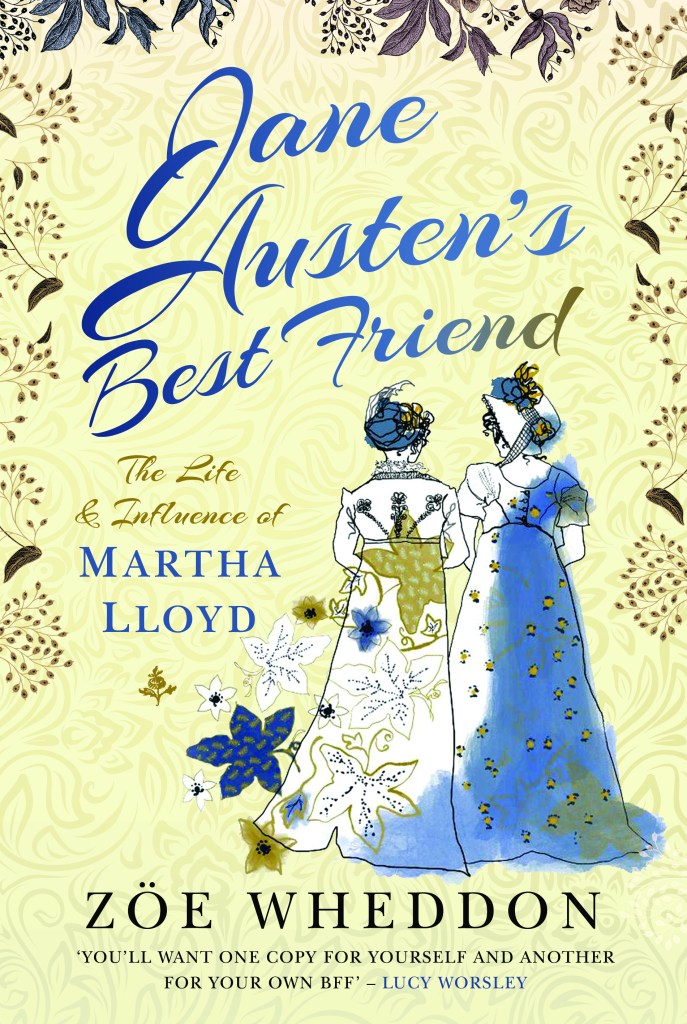
I’ve always been intrigued by the friendship between Jane Austen and Martha Lloyd. (Who wouldn’t want to be close friends with Jane Austen?) When I saw Zöe Wheddon’s new book, Jane Austen’s Best Friend: The Life and Influence of Martha Lloyd, I knew I had to have it.

As a lifelong student of Jane Austen’s life and works, I particularly enjoy books that focus on one aspect of her life. It’s helpful to have gathered into one place all of the information I want to read on a certain topic. Jane Austen’s Best Friend tells the story of Jane and Martha’s friendship and brings together many of the finer details of Martha’s life and her impact on Jane as a person and a writer.

Photo courtesy of Rachel Dodge

I was personally touched by the closeness that was shared by Cassandra, Jane, and Martha. Jane’s deep affection and care for both her sister and her friend are clear. I took note of the fact that Jane formed her strongest bonds with women who were wise and clever, devoted and kind. Her active mind needed people who could keep up with her quick wit—and even challenge her and keep her on her toes—and Martha seems to have fit the bill perfectly.

“I would not let Martha read First Impressions again upon any account, & am very glad that I did not leave it in your power.—She is very cunning, but I see through her design;–she means to publish it from Memory, & one more perusal must enable her to do it.”

Jane Austen in a letter to Cassandra, June 11, 1799.

While this book takes on a lighter, more modern tone, the research is thorough and detailed. Jane’s letters to and about Martha reveal yet another warm, loving relationship in her close circle. The early years of their friendship were marked by silliness, witty remarks, dresses, and balls. Later, their relationship deepened as they walked through pain, loss, change, and grief together. Martha’s inner strength seems to have been particularly important in Jane’s life, especially as she grew older, began to see success as an author, and later became ill.

When I set out to read Jane Austen’s Best Friend, I wasn’t sure how much information could be found about Martha herself, but after reading it, I was amazed at just how much there is to learn about Martha Lloyd. While I enjoyed reading about the bosom friendship between Jane and Martha, I was blown away by Martha herself. She was truly a remarkable woman, and I could have just as happily read a book based solely on her life. It’s easy to see why she and Jane became as close as sisters. I’ve always wished I could spend a day with Jane Austen, but now I’d like to spend a day with these two friends. It certainly seems like they never ran out of things to say or do—and they always had a lot of fun along the way.

If you’ve ever wanted to know more about Martha Lloyd and her friendship with Jane Austen, this is the place to start!

Stay tuned next month as I interview Zöe and share details about her inspiration for Jane Austen’s Best friend, her thoughts on friendship, and some of her favorite highlights from her research for the book.


ABOUT THE AUTHOR

A native of Jane Austen’s beloved county of Hampshire, Zöe lives in a North Hampshire village, on the outskirts of the town that she and her husband Matt both grew up in, with their 3 grown up children and their cat Leia. When she is not researching or writing, Zöe can be found in the classroom teaching Spanish and French or singing ABBA songs loudly in her kitchen. People can get to know her better at www.zoewheddon.co.uk.

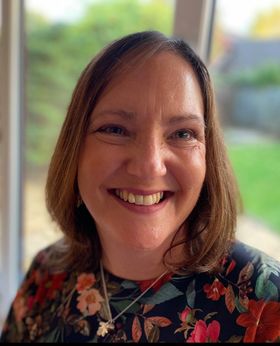
Zoe Wheddon, Author

ABOUT THE BOOK

JANE AUSTEN’S BEST FRIEND: THE LIFE AND INFLUENCE OF MARTHA LLOYD is a heart-warming examination of the ‘recipe for friendship’ between Jane Austen, (with whom all Janeites are best friends in their imaginations,) and Martha Lloyd. In looking back somewhat longingly at Martha and Jane’s strong and enduring bond we can examine all their interests, including the hits and misses of their romantic love lives, their passion for shopping and fashion, their family histories, their lucky breaks and their girly chats.

Through an examination of the defining moments of their shared lives together, the book gives readers an insight into the inner circle of the famously enigmatic and private authoress and the life changing force of their friendship.

All fans for Jane Austen everywhere believe themselves to be best friends with the beloved author and this book shines a light on what it meant to be exactly that. JANE AUSTEN’S BEST FRIEND: THE LIFE AND INFLUENCE OF MARTHA LLOYD offers a unique insight into Jane’s private inner circle. Each chapter details fascinating facts and friendship forming qualities that tied Jane and Martha together. This book offers a behind the scenes tour of the shared lives of a fascinating pair and the chance to deepen our own bonds in ‘love and friendship’ with them both.

Available in the USA with Pen and Sword/Casemate.


PURCHASE LINKS:


Amazon (US)
Barnes and Noble (US)
Bookshop.org (UK)


SOCIAL MEDIA

Instagram – Zoe_Wheddon
Website – www.zoewheddon.co.uk
Twitter – @ZoeWheddon
Facebook – @authorzoewheddon


RACHEL DODGE teaches college English classes, gives talks at libraries, teas, and book clubs, and writes for Jane Austen’s World blog and Jane Austen’s Regency World magazine. She is the bestselling author of The Anne of Green Gables Devotional: A Chapter-By-Chapter Companion for Kindred Spirits and Praying with Jane: 31 Days Through the Prayers of Jane Austen. Her newest book The Little Women Devotional is now available for pre-order and releases later this year. You can visit Rachel online at www.RachelDodge.com.

Read Full Post »

Vic’s Review

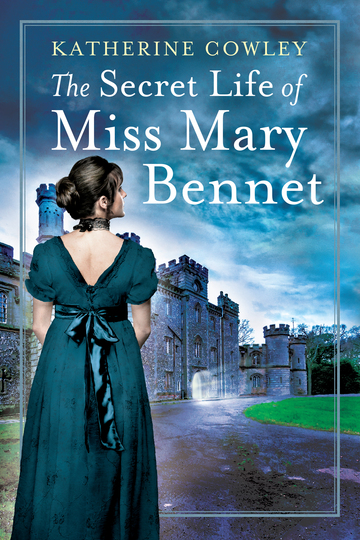
Mary-Bennet-Cover-Smaller-VersionImagine a mystery novel that features Mary Bennet as its investigative heroine! Author Katherine Cowley’s choice of Mary, the largely unnoticed Bennet daughter in Pride and Prejudice, piqued my interest. While Cowley kept some of Mary’s idiosyncrasies and insecurities as the middle child, she has created a sympathetic character, whose strengths as a keen observer accustomed to sitting on the sidelines help her solve a murder.
The book opens just after Mr Bennet’s death, with 19-year-old Mary sitting vigil near her father’s body at Longbourn. It is night and the house is deathly quiet. As she reminisces about past regrets and current events, she comes to dread her future as an unmarried daughter. Her safest choice would be to live with Mrs Bennet, but Mary wants to leave Meryton and wonders if she should take the bold step of earning her own way in life, as a governess perhaps? 

Her reveries are interrupted by the sound of a carriage. Not expecting company at such a late hour, Mary reluctantly asks a maid to let the mysterious visitors in. The door opens to two strangers, Lady Trafford, a strong-willed woman who rarely considers the word “no” as an answer to her requests, and her secretive nephew, Mr. Withrow. Lady Trafford ostensibly came to pay her respects to the mourning family, claiming kinship, but the reason for her visit soon becomes clear—to offer Mary an invitation to live with her at Castle Durrington in Sussex, for reasons that don’t quite make sense to the young woman.

After some persuasion and mental list-making, Mary accepts Lady Trafford’s invitation, and so her adventures as a sleuth begin. The following passage with Mrs Bennet, Lady Trafford, and Mary gives you some idea of Cowley’s writing style, which is her own, but echoes Jane Austen’s in a delightful way:

“Surely it is owed to us, Mary, for you to have such an opportunity. Especially as you are not beautiful like your sisters, and you have had no suitors.”

“I have already made up my mind, Mother.”

“You cannot possibly think to turn down Lady Trafford’s offer! What an inconsiderate child you are.”

“I did not say how I had made up my mind.”

“What do you say, Miss Bennet? Will you join me at Castle Durrington?”

“How big is your library?” asked Mary. “And do you have a pianoforte?”- p.56

In her first days at the castle, Mary becomes embroiled in a mystery. Then, during a brisk walk to the Sussex coast, she stumbles upon a body lying face down in the sea. After meeting a few more characters and getting to know Lady Trafford and Mr Withrow better, she no longer knows who to trust. Given free rein to Castle Durrington’s library, her research leads her to more unsettling truths. 

Cowley writes the book from Mary’s point of view, which is refreshing, for we come to know her as a fully realized person, one who is willing to learn and eager to take lessons to improve herself. She is a careful list maker and planner, and one who combines the characteristics of a good investigator—that of an observant, nondescript, determined, and note-taking woman—who people seldom notice. 

This first published book by Katherine Cowley will appeal to readers who enjoy murder mysteries set in the Regency era with a castle and rugged English coastline as a setting. Readers are also given a host of suspects to suss out until the solution is revealed. I had a great time sussing wilst arriving at my own conclusions to the mystery in this novel!

Interview with Katherine Cowley 

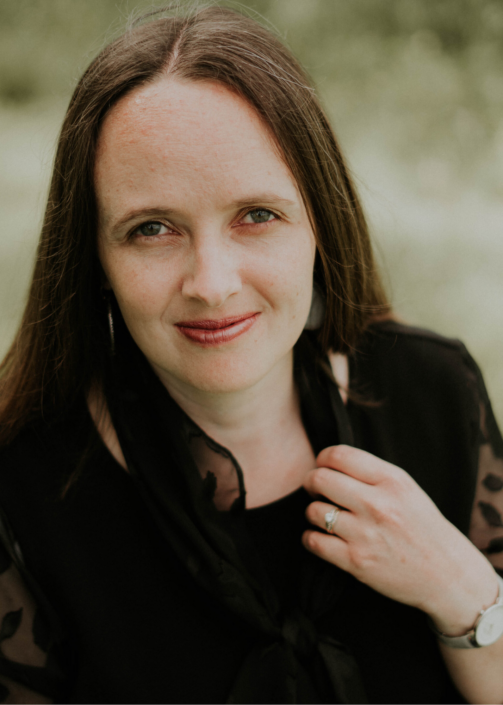
  1. Photo of Katherine Cowley

    Katherine Cowley

    What about Mary Bennet’s character appealed to you to write about her? Which of her traits in Pride and Prejudice did you develop to further and enhance your mystery plot for this novel and make her more interesting?

One of the things that appealed to me most about Mary Bennet is the fact that others overlook her—she is ignored, dismissed, and snubbed. And shouldn’t those who are quiet and overlooked be able to have their own stories, their own adventures?

Mary Bennet is very analytical, she loves to read, and she’s good at remembering things. Like Mary, I know what it’s like to say the wrong thing in a group setting, or to embarrass myself in conversation, or to not feel comfortable in all situations. 

So much is left open about Mary’s character—what is it that she wants? It’s clear that she wants to read and play the pianoforte and have peace and quiet, and there’s a brief mention by Austen that Mary had hoped Mr. Collins would propose to her. But beyond that, we don’t know what Mary wants. In part, I wrote this book to figure that out.

In terms of characteristics that I developed, I played up Mary’s observational skills, and I gave her a desire to learn French and drawing. Also, if Mary does not know what to do in a situation, she’ll think about what one of her sisters would do in such a moment, and often that ends up being the perfect action for her to take.

  1. Briefly describe your writing process for us (if this is possible). What I mean is, did you develop a plot outline first (with the ending always in mind)? And then allowed the characters to speak to you as you wrote about them? Or did you “stay with the program?” You also mentioned a community of writing help in your acknowledgments—how did they influence your thoughts before, during, and after the process?

I would categorize myself as both an outliner and a discovery writer. I did write an outline before the first draft, with some of the major events I wanted in the story (for example, I knew I wanted French and drawing lessons, and I knew I needed a big ball scene that had all sorts of mystery and intrigue and would also act as an important moment for Mary’s character). I also had a very clear vision of what the final chapter would look like. 

But then I “discovered” (or figured out as I went along) all sorts of characters and events and situations as I wrote.

I don’t know the exact how length of my first draft, but the second draft of the novel was about 55,000 words. While there was mystery, there was not a dead body—it was not yet a murder mystery. That came in a later draft.

I wrote five drafts of the novel before querying literary agents. My writing group read one chapter a month and gave me feedback, and I sent the second, third, and fourth draft of my novel to new sets of readers—a mixture of other writers and trusted readers who love Jane Austen. This community was so helpful in helping me refine my ideas, improve my writing, solve plot problems, and figure out what was and was not working.

I wrote two additional drafts with my literary agent (the first was a major revision, and the second was a minor revision). After my book was acquired by my publisher, I did a revision with the editor, a second revision to shorten the book by 1000 words, a copy edit, and proofreads.

Now that it’s finished, the novel is about 90,000 words (so 35,000 words longer than the second draft). It was a lengthy process to get the story from where it started to where it is today.

  1. In this day and age, it is unusual for a new author to have a book published, but you have two more Mary Bennet mystery sequels in the pipeline. Kudos! I suspect this has more to do with hard work than luck. What advice would you give to other hopeful authors who are writing their first books?

If you’re writing a first book, my biggest advice is to keep writing, and to push through and finish the book. When I first began trying to write books, I started a lot of novels that I never finished, sometimes due to perfectionism or not knowing what I wanted to do with the story or because I became distracted by a shiny new idea.

I learned a lot from books that helped me understand structure and plot, and there’s so much you can learn about writing craft from the Internet, from books, and from writing conferences. But there’s a lot that you can only learn by doing it. Push through, finish a first draft, and let go of perfectionism. And then take the time to get feedback from other writers and revise, revise, revise. Then, if you would like to publish the book, make sure to take the time to learn all you can about publication and different publishing options.

__________________
The book will be available on April 22nd, 2021. Find purchase information for preordering in the US, Canada, UK, Australia, and other locations on Katherine Cowley’s site.

Read Full Post »

by Brenda S. Cox

“Of these three, and indeed of all, Miss Lambe was beyond comparison the most important and precious, as she paid in proportion to her fortune. She was about seventeen, half mulatto, chilly and tender, had a maid of her own, was to have the best room in the lodgings, and was always of the first consequence in every plan of Mrs. Griffiths.” – Sanditon

This is the only time Jane Austen clearly introduces a black or mixed-race character in her fiction. And we don’t know what direction she was going to go with this young lady. (Though obviously the producers of Sanditon have made their own speculations, as have the authors of completions of the novel. My favorite completion, by the way, is here.)

My favorite completion of Jane Austen’s Sanditon is by Jane Austen and “Another Lady.”

Austen’s inclusion of a mixed-race character raises questions for us today:

  • How many black and mixed-race people were there in Austen’s England?
  • Is she likely to have known any of them?
  • What were their lives like?
  • How did Austen’s society view them and treat them?

I’ve been doing a lot of reading on this topic, and it’s hard to find solid answers. However, the series of posts that I’m starting today will look at the question from different angles. We’ll start today with some indications from fiction of Austen’s time. Then we’ll look at statistics from official records, using Kathleen Chater’s Untold Histories.  We’ll also look at what art of the time can tell us, and consider the lives of some individual black and mixed-race people. Each of these lenses will give us a little clearer picture of black people’s lives in Austen’s England.

Miss Lambe

Miss Lambe is “half mulatto.” Nowadays “mulatto” is an offensive term, as it is based on the word “mule”; mixed-race people were believed to be sterile like mules. (Though there must have been plenty of evidence to the contrary!) But I don’t think Austen is using it pejoratively. She is simply describing Miss Lambe’s background. It sounds like Miss Lambe had a parent who was half-black and half-white, most likely her mother, and a white parent. Such pairings were quite common in the West Indies. A plantation owner might well leave his wealth to a mixed-race child.

Austen calls Miss Lambe “chilly and tender.” “Chilly” probably meant that the weather of England was too cold for her, compared to the West Indies where she grew up. “Tender” probably meant that she was delicate, easily becoming ill. Though as I imagine Miss Lambe, I like to think that “tender” also meant she was kind and gentle.

Austen sometimes describes people, such as Marianne Dashwood and Henry Tilney, as having a “brown” complexion. There’s been some speculation that she may mean to imply mixed racial backgrounds. That’s possible, but it seems a little unlikely to me. It sounds like Austen is just describing minor variations in skin tones. She usually pairs “brown” skin with dark eyes and dark hair. In one other reference, Miss Bingley says Elizabeth Bennet has become “brown and coarse.” Darcy says she is tanned from traveling in the summer.

The Woman of Colour is an anonymous novel published in 1808 about an heiress like Miss Lambe. The modern version edited by Lyndon J. Dominique includes much helpful background information and excerpts from other fiction and nonfiction of the time.

Back to Miss Lambe. We can get some idea of what her life might have been like from a novel of the time. The Woman of Colour: A Tale  was published anonymously in London in 1808, nine years before Austen began writing Sanditon. Professor Lyndon J. Dominique has edited a modern version, full of helpful background information.

Modern scholars speculate that the writer was herself a “woman of colour,” the mixed-race daughter of a West Indies planter, but we don’t know for sure who wrote the book. “People of color” may be used today to describe people of various races. However, eighteenth-century British people used it to refer to certain groups of free people in the Americas. Some included free black people, but others used the term only for those of mixed race (p. 21 in The Woman of Colour).

The novel is a series of letters from Olivia Fairfield to her former governess in Jamaica. Olivia, the daughter of a white plantation owner and a black slave, is on her way to England. Her loving father knows that because of her skin color she will never be treated as an equal by the planters of Jamaica. So he arranges that after his death she will travel to England. In England, laws and attitudes toward mixed-race people were less harsh, and tender-hearted Olivia wouldn’t have to see the suffering of the black people she identifies with. Her father, in his will, has arranged for her to marry her cousin, who will then inherit her fortune.

Already we find an interesting contrast. While black people were often treated horrifically in the West Indies, they found more acceptance in England itself.

Prejudices

The story shows some examples of prejudices that black and mixed-race people experienced in England at this time. Olivia and her black maid are called names, and yet they earn a place in society.

At her first English ball, Olivia is “an object of pretty general curiosity” (84). She says, “My colour, you know, renders me remarkable” (84). People stare at her “as if they had been invited purposely to see the untamed savage at a shilling a piece!” However, one gentleman, who calls her a “native,” adds, “In native elegance unrivalled! . . . More grace, more expression, more characteristic dignity, I never yet beheld in one female figure!” His friend calls her a “sable goddess.” Olivia enjoys the dancing, but complains that rather than rational people, she finds only “folly and dissimulation” (88).

Olivia’s maid Dido is a black woman. Though not enslaved, she seems the stereotype of the faithful black slave. She speaks in “half-broken language” (57), presumably a Jamaican dialect. She loves Olivia dearly and serves her faithfully. Olivia also loves Dido. In town, Dido says she is called names like “blacky” and “wowsky” and “squabby” and “guashy,” “and all because she has a skin not quite so white,–God Almighty help them all.” (“Wowski” was the name of an American Indian woman in a novel of 1787; “Quasheba” was the name of dark-skinned characters in novels of 1767 and 1798.) Dido says even a maid treats her like a slave. But she looks forward to their home in the countryside, where she will be the housekeeper and be in charge. Once in the country, she wins the affection of the “peasants” with her warm heart (105).

Olivia’s husband’s young nephew George thinks Olivia’s skin is “dirty” and Dido’s even dirtier. Olivia explains to him, “The same God that made you made me . . . the poor black woman—the whole world—and every creature in it! A great part of the world is peopled by creatures with skins as black as Dido’s, and as yellow as mine. God chose it should be so, and we cannot make our skins white, any more than you can make yours black” (79).

They go on to discuss the evils of slavery. The child has heard the coachman saying that “black slaves are no better than horses over there,” and Olivia explains, “Those black slaves are, by some cruel masters, obliged to work like horses . . . but God Almighty created them men, equal with their masters, if they had the same advantages, and the same blessings of education.” Olivia says that human feelings and religious principles, as well as “kindred claims,” impel her to pray for the end of slavery, the emancipation of her brethren (80-81).

Once Olivia is married and living in the countryside, she meets “East Indian Nabobs,” a family who made their fortune in India, and finds them proud and selfish. However, she is completely accepted into the social circles of her area. The most prejudice she experiences is from her sister-in-law, who is a conniving, selfish woman.

The Woman of Colour: A Tale  shows some of the prejudices against black and mixed-race people in England. Nevertheless, it also implies that people of color were fully accepted in English society, particularly if they had wealth, like Austen’s Miss Lambe.

Jane Austen’s niece Anna Austen Lefroy made the earliest attempt to complete Sanditon.

Religious Themes

The novel has many Christian themes. At this time, Christians in England, led by William Wilberforce’s “Clapham Sect,” were pushing strongly to abolish the slave trade and then slavery. Literature was one of their most important means of raising public awareness and calling for compassion for oppressed people. Evangelical Hannah More was writing tracts like “The Sorrows of Yamba: or, The Negro Woman’s Lament,” a story about an enslaved woman whose baby died in her arms on a slave ship. William Cowper, Jane Austen’s beloved poet, wrote poems condemning slavery. Cowper wrote, “We have no slaves at home – then why abroad? . . . 
Slaves cannot breathe in England; if their lungs Receive our air, that moment they are free,
They touch our country and their shackles fall.” (This wasn’t strictly true, in legal terms, but was widely believed. It does point out the radical difference, though, between British colonies where slavery was part of the economy, and Britain itself.) While we don’t know who wrote The Woman of Colour, the book seems to fit with other such literature that put a human face on enslaved peoples and called for Christian compassion toward them.

Olivia’s mother was her father’s slave and his mistress. He taught her Christian faith, which she accepted eagerly. But she also learned from the church that her relationship with him was wrong, since they weren’t married. She confronted him, but he was too proud and too prejudiced to marry her. She died in childbirth. Olivia’s father raised her, gave her a good education, then sent her to England.

Her cousin Augustus, a good man, is at first repelled by Olivia’s dark complexion. However, he soon realizes that she has “a noble and dignified soul.”

Olivia is “a stranger in a strange land, where she is more likely to receive contumely [contempt] than consideration . . . a superior being, and . . . the child of humanity, the citizen of the world, with a heart teeming with benevolence and mercy towards every living creature!—She is accomplished and elegant; but her accomplishments are not the superficial acquirements of the day,–they are the result of application and genius in unison” (102-3).

In fact, Augustus and Olivia, both epitomes of beauty, intelligence, and virtue, seem to be made for each other. They marry and live happily. But—I won’t spoil it—something happens to destroy their happiness. Interestingly, the person who destroys their marriage is motivated by greed, jealousy, and class prejudices, not racial prejudices.

Olivia ends up alone, but she bears it well and peacefully. Throughout the story, she turns to God in all her trials and fears. The story ends by spelling out the moral: In times of calamity, we should seek God. Faith in God can enable us to become resigned to any hard situation.

The original editor adds that if the book can “teach [even] one skeptical European to look with a compassionate eye towards the despised native of Africa—then, whether Olivia Fairfield’s be a real or an imaginary character, I shall not regret that I have edited the Letters of a Woman of Colour!” (189)

Another cover for Sanditon completed by “Another Lady”; other completions are also available by other authors.

Other Fiction of Austen’s Time

Lyndon J. Dominique, who edited the modern version of The Woman of Colour: A Tale, provides a timeline of “Women of Color in Drama and Long Prose Fiction” from 1605 to 1861. He lists 37 publications during Austen’s lifetime with black or mixed-race characters, including Sanditon. It seems likely that as an avid reader, Austen was probably familiar with some of these, or earlier ones.

Dominique includes excerpts from a few of these works, including:

Lucy Peacock’s “The Creole” (1786). A creole heiress (who may be white or mixed-race) loses her fortune to an unscrupulous husband. Only her “honest negroes” console her (196). Again there is a Christian message. The creole lady writes, “Surely . . . we have no right to tyrannize over, and treat as brutes, those who will doubtless one day be made partakers with us of an immortality. Have they not the same faculties, the same passions, and the same innate sense of good and evil? Should we, then, who are enlightened by the holy precepts of Christianity, refuse to stretch forth the friendly hand, to point these human affections to the most laudable purposes, the glory of God, and the real advantage of society?” (196) She frees her slaves.

Agnes Musgrave’s Solemn Injunctions (1798).  At a boarding school, a girl is jealous of a talented, amiable young lady from the West Indies. So she “insinuates” that the girl has black ancestry and should be rejected. The other West Indian girls bring the prejudices of the islands with them to school. “In the West Indies the distinction is kept up by the women with so scrupulous an exactness, as never to mix, on equal terms, with people so descended”: they would not mix with any “child of mixed blood whose ancestors within the fourth degree of descent were negroes” (215). Here again the prejudices of the West Indies are much stronger than the prejudices of England.

Other stories include mixed-race heiresses like Olivia who are beautiful, well-educated, and virtuous Christians. They also include people who condemn “vulgar” black people. It appears that some of these stories, like The Woman of Colour, were written at least partly to help counteract prejudices and support anti-slavery causes.

I suspect Jane Austen’s Miss Lambe would have been a more balanced character then those we find in other novels of the time. Austen did not write stereotypes. However, Austen was strongly opposed to slavery* and probably would have presented Miss Lambe positively.

The Woman of Colour also includes nonfiction excerpts of the time which confirm some of the attitudes and situations represented in the novel. For example, a copy of a Jamaican planter’s will, leaving his fortune to his “reputed daughters” born of his black mistress, shows that there were mixed-race West Indian heiresses.

Next month we’ll look at who the black people in England were at this time, how they got there, and what social classes they belonged to. Scholar Kathleen Chater searched through a huge number of primary sources to find that information, so I’ll share some of that with you, from her book Untold Histories.

If you are familiar with other fiction of Austen’s era that includes black characters, tell us about those characters! Or, if you’ve read The Woman of Colour, what did you learn from it or think about it?

Learning More

On Friday, April 9, from 5:00 – 6:30 PM EDT, Professor Dominique will be giving an online seminar on “Political Blackness in The Woman of Colour,” discussing the novel he edited. You can sign up at Jane Austen & Co. The recorded talk is now available there.

If you want to start exploring more on this topic on your own, in the tabs above, under History, scroll down until you find the section I’ve added on Black History, or see Resources. It will give you a wide variety of resources to start investigating.

*I don’t intend to look at slavery in the British colonies, or abolition, in this series, but you’ll also find sources addressing those areas among the resources listed. “Austen and Antigua—Slavery in Her Time”  is a good discussion of Jane Austen’s comments on slavery and her family’s connections with slave plantations.

You can connect with Brenda S. Cox, the author of this article, at Faith, Science, Joy, and Jane Austen or on Facebook.

Read Full Post »

In light of Women’s History Month, I’m pleased to share my review of a beautiful new book by Jasmine A. Stirling that is sure to delight the hearts of Jane Austen fans of all ages entitled A Most Clever Girl: How Jane Austen Found Her Voice.

This exquisitely illustrated, full-color book traces Austen’s writing journey from her younger years at Steventon, to her “quiet” years in Bath after her father died, and finally to her years of astonishing creativity at Chawton. This is a book you’ll want to read for yourself, give as a gift, and display on your coffee table.

The writing by Jasmine A. Stirling and the illustrations by Vesper Stamper truly make this book a feast for the eyes and the heart. As a lifelong Austen fan, I found myself swept up in Stirling’s writing style. Her exploration of Austen’s talent, her heart, and her genius brought me new-found joy. This book vividly captures Austen’s experiences as a writer and shows us why her writing still endures today.

Jasmine and I connected on social media several months ago, and I was intrigued by her book because it is a fictional telling of what I and many others have noticed about Austen’s writing career: that she found her perfect time and place to write when she came to Chawton. (You can read my article on this topic here: New Beginnings at Chawton Cottage.)

Jasmine’s book explores the early foundations of Austen’s literary upbringing, the depth of character that Austen’s life experiences produced, and the intriguing set of circumstances that allowed Austen to discover her unique writer’s voice at Chawton.

I highly recommend A Most Clever Girl to any Austen fan of any age. I especially like the idea that I can give this book as a gift to my friends and family members who have younger children so that their children can be exposed to Jane Austen at an early age and be inspired to follow her example as a person and as a creative.

Please continue reading below for the book details, purchase links, and details for a lovely giveaway contest which includes a Jane Austen-themed picnic basket and a hardcover copy of A Most Clever Girl autographed by Jasmine A. Stirling!

ABOUT THE BOOK

A Most Clever Girl: How Jane Austen Found Her Voice
Written by Jasmine A. Stirling
Illustrated by Vesper Stamper
Publisher: Bloomsbury Children’s Books
Release date: March 30, 2021

Publisher’s Synopsis: Witty and mischievous Jane Austen grew up in a house overflowing with words. As a young girl, she delighted in making her family laugh with tales that poked fun at the popular novels of her time, stories that featured fragile ladies and ridiculous plots. Before long, Jane was writing her own stories-uproariously funny ones, using all the details of her life in a country village as inspiration.

In times of joy, Jane’s words burst from her pen. But after facing sorrow and loss, she wondered if she’d ever write again. Jane realized her writing would not be truly her own until she found her unique voice. She didn’t know it then, but that voice would go on to capture readers’ hearts and minds for generations to come.

PURCHASE LINKS:
Amazon
Bookshop.org

ABOUT THE AUTHOR

Jasmine A. Stirling is the debut author of A Most Clever Girl: How Jane Austen Discovered Her Voice, a picture book biography of Jane Austen about persistence and creative mastery. Jasmine lives on a cheerful street in San Francisco with her husband, two daughters, and their dog. From a young age, she loved to write poems and stories and worked her way through nearly every children’s book (and quite a few for grownups, too) in her local library. When she’s not writing, Jasmine can be found hiking in the fog, singing songs from old musicals, and fiddling with her camera.

Jasmine first fell in love with Jane Austen as a student at Oxford, where she read her favorite of Jane’s six masterful novels, Persuasion. A Most Clever Girl is her dream project, done with her dream team—award-winning illustrator Vesper Stamper and Bloomsbury Children’s Publishing. Jasmine also has a YA/New Adult history of the women’s suffrage movement out soon, titled We Demand An Equal Voice.

Visit www.jasmineastirling.com to get a free Jane Austen paper doll kit with the purchase of A Most Clever Girl. While you’re there, enter to win a Regency tea party gift basket!

Follow Jasmine on Instagram and Facebook @jasmine.a.stirling.author where she posts about kidlit and life with two young girls.

GIVEAWAY DETAILS

Enter for a chance to win a glorious Jane Austen-themed picnic basket, including a hardcover copy of A Most Clever Girl autographed by Jasmine A. Stirling!

ENTER GIVEAWAY HERE

One (1) grand prize winner receives:

  • A picnic basket filled with:
    • A copy of A Most Clever Girl: How Jane Austen Discovered Her Voice, signed by author Jasmine A. Stirling
    • A vintage teacup
    • 1 oz of tea From Adagio Teas
    • Truffles from Moonstruck Chocolates
    • Gardenia hand cream
    • A set of Jane Austen playing cards

Two (2) winners receive:

  • A copy of A Most Clever Girl: How Jane Austen Discovered Her Voice, signed by author Jasmine A. Stirling

The giveaway begins March 16, 2021, at 12:01 A.M. MT, and ends April 16, 2021, at 11:59 P.M. MT.

BOOK TOUR SCHEDULE FOR A MOST CLEVER GIRL

March 16The Children’s Book Reviewhttps://www.thechildrensbookreview.com/Book Review
March 17Life is What It’s Calledwww.lifeiswhatitscalled.blogspot.comInterview
March 18Library Lady’s Kid Lithttps://janemouttet.wordpress.com/Book Review & Guest Post
March 19Austen Prosehttps://austenprose.com/Book Preview & Guest Post
March 20A Dream Within A Dreamhttp://adreamwithindream.blogspot.comBook Review
March 21Barbara Ann Mojica’s Bloghttps://bamauthor.meBook Review
March 22Jane Austen’s Worldhttps://janeaustensworld.wordpress.com/Interview
March 23Satisfaction for Insatiable Readershttps://insatiablereaders.blogspot.comBook Review & Guest Post
March 24icefairy’s Treasure Chesthttp://icefairystreasurechest.blogspot.com/Book Review
March 25Heart to Hearttynea-lewis.comBook Review
March 26Confessions of a Book Addicthttp://www.confessionsofabookaddict.comGuest Post
March 27Eccentric Eclectic Womanhttp://finamoon.blogspot.comBook Review
March 28J.R.s Book Reviewshttps://jrsbookreviews.wordpress.com/Book Review
March 29My Jane Austen Book Clubhttp://thesecretunderstandingofthehearts.blogspot.com/Interview
March 30Jane Austen in Vermonthttps://janeausteninvermont.blog/Book Review & Guest Post
March 31Some the Wiserhttps://somethewiser.comBook Review
April 1Austenesque Reviewswww.AustenesqueReviews.comBook Review
April 2Absolutely Austenhttps://absolutelyausten.com/Book Review
April 3Faith, Science, Joy, and Jane Austenbrendascox.wordpress.comBook Review
April 4Fairview Elementary School (Library)https://fveslibrary.blogspot.com/Book Review
April 5Comfy Chair Bookshttps://comfychairbooks.com/Book Review
April 6Reading Is My SuperPowerhttps://readingismysuperpower.orgBook Review
April 7ShootingStarsMagwww.shootingstarsmag.netA Beyond the Book Activity
April 8Glass of Wine, Glass of Milkglassofwineglassofmilk.blogspot.comBook Review
April 9Book Q&As with Deborah Kalbhttp://deborahkalbbooks.blogspot.com/Interview
April 10The Fictional Cafehttps://www.fictionalcafe.com/Review + Interview
April 11Ingenious Babyhttps://www.youtube.com/channel/UCkNfesiHAPnqc4STgBn-LjwInterview
April 12The Children’s Book Reviewhttps://www.thechildrensbookreview.com/Guest Post
April 13Tucked In Tuesdayhttps://www.instagram.com/tutoringyoutoexcellence/Instagram Live: Tucked in Tuesday

RACHEL DODGE teaches college English classes, gives talks at libraries, teas, and book clubs, and writes for Jane Austen’s World blog and Jane Austen’s Regency World magazine. She is the bestselling author of The Anne of Green Gables Devotional: A Chapter-By-Chapter Companion for Kindred Spirits and Praying with Jane: 31 Days Through the Prayers of Jane Austen. You can visit Rachel online at www.RachelDodge.com.

Read Full Post »

By Brenda S. Cox

“I would rather do anything than be teacher at a school” — Elizabeth Watson in The Watsons

No doubt you’ve heard how restrictive Austen’s world was for women. When a woman got married, all her wealth became the property of her husband (unless she had a good lawyer who arranged things differently). A lady without money or a husband might end up a governess (Jane Fairfax compares that to slavery) or a teacher at a girl’s school (Elizabeth Watson would “rather do anything than be a teacher at a school”). A man could divorce his wife by accusing her of adultery (even if there wasn’t what we would consider clear proof), but a woman was almost never able to divorce her husband.

Despite all that, there were outstanding women of the Georgian era who broke through those barriers. Some were widows, some were single, some were married.

Two fascinating books tell us about some of these boundary-breaking women. Mike Rendell’s Trailblazing Women of the Georgian Era (Pen & Sword 2018) brings us seventeen women from the eighteenth-century who made outstanding contributions in Arts & Literature; The Scientific World; Business & Commerce; and Reform and Education. Rendell explains the legal position of women in Austen’s world, and after each short biography gives a wider picture. For example, at the end of the chapter on Lady Mary Wortley Montagu, who promoted smallpox inoculation in England, we learn more about smallpox, “the most dreadful scourge of the human species” (according to Edward Jenner, who developed vaccinations). At the end of Trailblazing Women, Rendell continues the saga of women’s achievements in England, into the present.

Trailblazing Women of the Georgian Era, by Mike Rendell, tells the story of 17 boundary-breaking women.

In a complementary book, What Regency Women Did For Us (Pen & Sword 2017), Rachel Knowles shares the lives of twelve Regency women who made an impact on their communities and on our world today. Knowles does not give such wide coverage as Rendell, but tells the fascinating story of each woman in more depth. She is more focused on the Regency period, while Rendell adds earlier women from the 18th century.

What Regency Women Did For Us, by Rachel Knowles, tells the stories of a dozen Regency women who impacted our world today.

Rendell and Knowles chose some of the same women and some different ones. Both introduce actress Sarah Siddons, scientific book writer Jane Marcet, engineer/inventor Sarah Guppy, artificial stone manufacturer Eleanor Coade, and prison reformer Elizabeth Fry. Rendell adds businesswomen, writers, an anti-slavery campaigner (Lady Middleton), and others, while Knowles adds mountaineer Mary Parminter, fossilist Mary Anning, astronomer Caroline Herschel, our own Jane Austen, and more.

Let’s look at a few of my favorites, out of all these fascinating women.

Jane Marcet: Author of Science Books for Women

Rendell identifies Jane Marcet as a “scientific book writer,” while Knowles calls her “Faraday’s teacher.” I love that Marcet wrote science books for girls and women in an age when many thought that reading and arithmetic, embroidery and music, were all that women needed to know. I can imagine Fanny Price reading Marcet’s books and developing her love for the natural world.

Like Jane Marcet, I love chemistry, and I love to write about complex issues, making them clear and understandable. So Marcet seems like a kindred spirit to me. Her husband was a doctor who enjoyed chemistry. They attended lectures together at the Royal Institution in London to hear Humphry Davy explain the latest chemical discoveries. Jane Marcet had been given a basic grounding in science at home and even learned some Latin, which Regency girls rarely studied.  However, she still needed her husband’s help in understanding the scientific vocabulary that Davy and other lecturers used.

A page from Jane Marcet’s Conversations in Chemistry, which taught science to young women and many young men, using discussions, pictures, and everyday examples.

Marcet wrote a book, Conversations on Chemistry, to help other women understand those lectures. In dialogues between a woman teacher and two female students, Marcet explains basic chemical concepts in clear language with everyday illustrations. Practical experiments, questions and answers, and Jane Marcet’s own illustrations make the book even easier to understand. She published it anonymously in 1805 (as Jane Austen published her books anonymously), but her name was later added to it. The book was very popular in both England and America.

Conversations on Chemistry became a standard school textbook for teaching science to girls, as well as for teaching at home. But Marcet’s book didn’t just benefit girls. Boys without access to much schooling also learned from it. Marcet’s book introduced Michael Faraday, who had little formal education, to chemistry. Faraday went on to make major discoveries in chemistry and electricity and also lectured to the public at the Royal Institution.

Jane Marcet went on to write popular books teaching economics, natural philosophy (science), and botany, as well as Conversations on the Evidences of Christianity. She helped revolutionize education, particularly for women, making these subjects accessible to all.

Hester Bateman: Silversmith and Business Owner

When I visited colonial Williamsburg during the 2019 JASNA AGM, I was surprised to learn that most eighteenth-century trades included women. In England, Hester Bateman was a well-known silversmith, with her own company. Like many Georgian women who made names for themselves, her career began when her husband died. He was a silver worker who taught his wife to assist him. She was illiterate herself, but he bequeathed his tools to her, rather than to their sons, and she immediately took over the business, calling it “Hester Bateman and Company.” She registered her own mark, “HB,” which still identifies her work today.

Hester Bateman developed beautiful, simple, classical designs for the dining rooms and tea tables of the upwardly-mobile middle classes. Her family business expanded into  a workshop across the backs of three houses. She and her company produced many thousands of silver objects. Her sons, daughter-in-law, and grandchildren eventually took over the prosperous business. But Hester herself ran the company until she died at age 82.

This mustard-pot is lined with blue glass so the mustard does not react with the silver. It was made in 1774 by Hester Bateman, a lady silversmith with her own mark. Lauren Rogers Museum of Art, gift of Thomas M. and Harriet S. Gibbons, used by permission.

In Trailblazing Women of the Georgian Era, Rendell tells us about other Georgian businesswomen who made lace, sold stocks, manufactured artificial stone (used for anything from tiny ornaments to giant statues), owned a print shop, wrote and sold cookbooks, and manufactured chocolates. He even includes a “bigamist, litigant and courtesan,” Teresia ‘Con’ Phillips, as a businesswoman, to show the limited avenues available for women. He wonders why there were not more Georgian businesswomen. However, I’m impressed that, despite the restrictions on women owning property and having their own money, there were so many Georgian businesswomen that we still know about today.

Madame Tussaud: Artist and Businesswoman

Rachel Knowles calls Marie Tussaud “Entrepreneur Extraordinaire.” Madame Tussaud was a talented artist and craftswoman as well as a smart and creative businesswoman.The wax museums she developed are still popular today.

Waxwork of Marie Tussaud, at Madame Tussaud’s in London. Photo by Immanuel Giel, CC BY-SA 3.0 via Wikimedia Commons

Marie’s mother was housekeeper to a Swiss doctor, Philippe Curtius, who adopted Marie as his daughter. Curtius made wax models to show the anatomy of the human body. His models were so successful that he left medicine and set up a waxworks in Paris. He taught Marie how to make wax models and how to run a business. During the French Revolution, Marie and Curtius made wax models of the royal family, of people who had been guillotined, and of prisoners and revolutionaries. Marie took impressions of people’s heads shortly after they were cut off—quite a gruesome job.

When Curtius died, he left his waxworks and other property to Marie. She married François Tussaud, but her marriage settlement ensured that she kept control of her own property—that was unusual in France, as in England. It was a good move, since her husband turned out to be irresponsible with money. In 1802 she moved her exhibition to England. Her husband stayed in France, and she eventually gave him her French property, but she kept the waxworks and her income from it.

After some difficult years and an unprofitable partnership with an English businessman, Madame Tussaud developed her exhibition into a popular traveling show. In 1833 she set up a permanent exhibit in London. Her sons took it over—she transferred it into their names to keep her husband from getting it.  The waxworks survived the centuries and Madame Tussaud’s is still one of the most popular attractions in London, with related wax museums around the world.

In What Regency Women Did for Us, Knowles includes other women with unusual stories, such as Harriet Mellon, the penniless Irish peasant who became a wealthy banker and left a fortune to a Victorian woman philanthropist. Mary Parminter, another unusual Regency woman, took the Grand Tour of Europe (usually a men’s activity) with her cousins while they were unmarried, and climbed mountains. Mary stayed single, keeping control of her extensive fortune and using it to build a lovely chapel and provide homes for independent single women.

If you have been thinking that teaching and writing were the only occupations open to Georgian and Regency women, these two books will open your eyes. Many women pushed outside the boundaries of societal expectations and left lasting legacies. In both Mike Rendell’s Trailblazing Women of the Georgian Era and Rachel Knowles’ What Regency Women Did For Us you will meet many such women and enjoy their exciting stories.

You can find Mike Rendell at Georgian Gentleman. Rendell has written books on other aspects of Georgian society, including Journal of a Georgian Gentleman.

You can find Rachel Knowles at Regency History. For an additional review of What Regency Women Did For Us, see “Women of Science, Women of Faith.” Rachel has also written a fun Regency novel, A Perfect Matchand is about to release a second book in the series, A Reason for Romance.

You can connect with Brenda S. Cox, the author of this article, at Faith, Science, Joy, and Jane Austen or on Facebook.

Read Full Post »

« Newer Posts - Older Posts »