Feeds:
Posts
Comments

Archive for the ‘Fashions’ Category

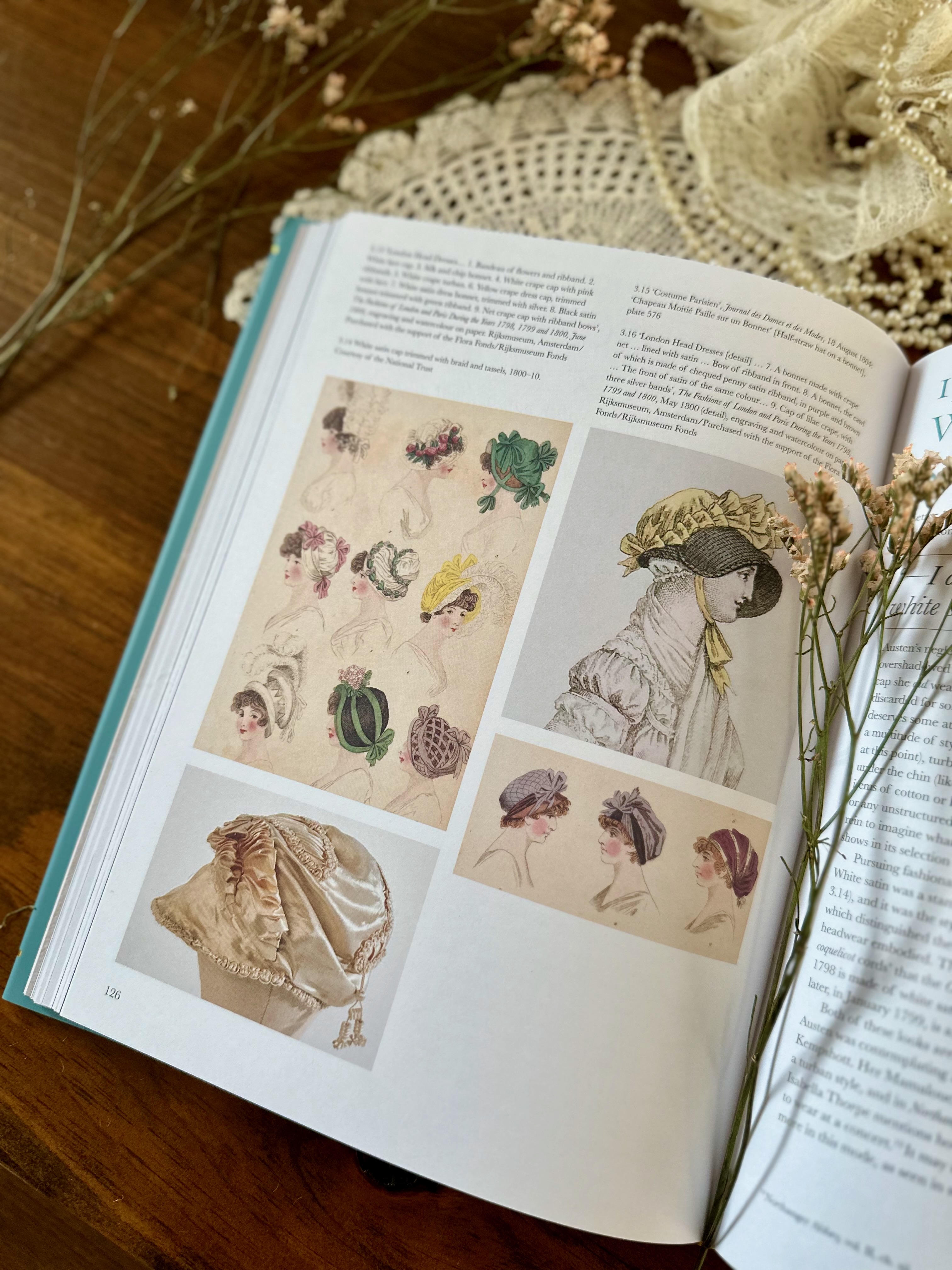
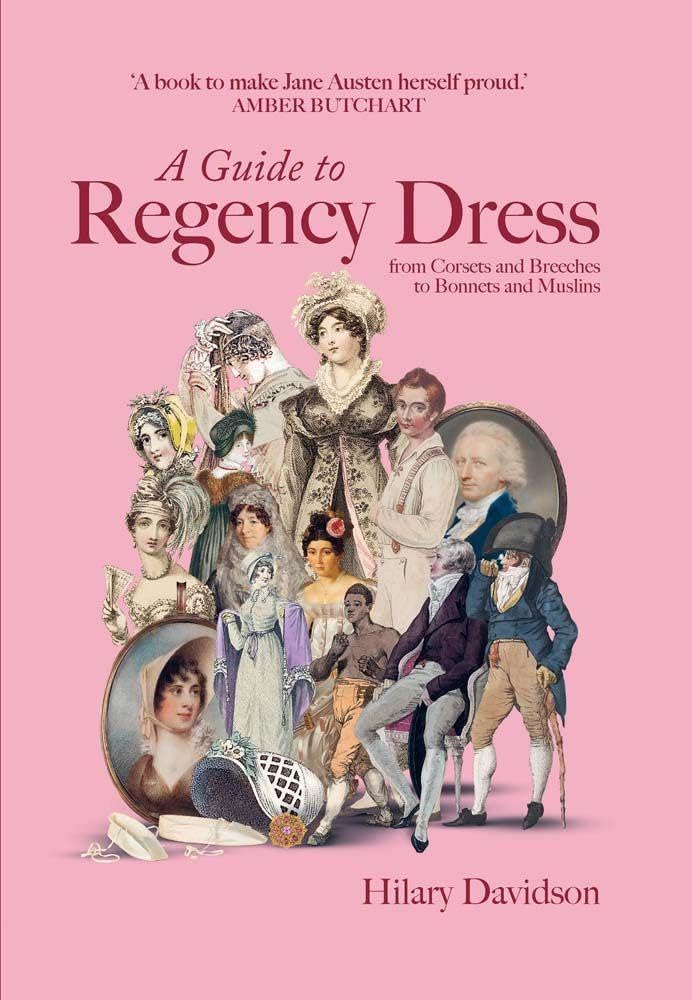
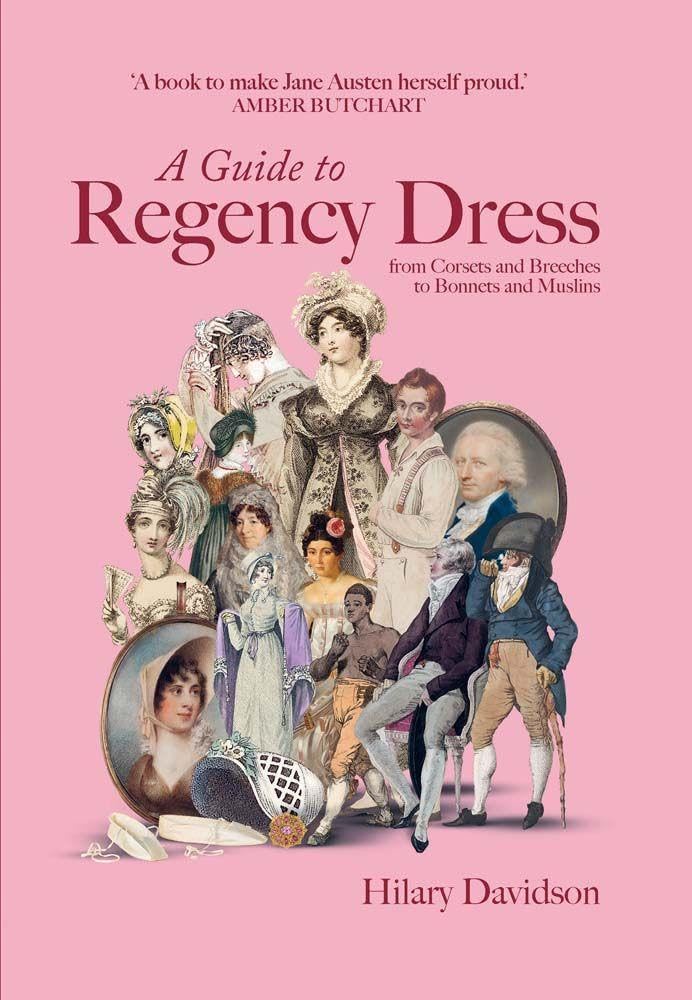
As we enter the new year, I introduce to you a beautiful new book by Hilary Davidson called A Guide to Regency Dress: from Corsets and Breeches to Bonnets and Muslins. This book is a true gem, and it was the perfect gift (to myself) for Christmas. I am a fashion and textiles nut, and a huge fan of Davidson’s work, including her previous book Jane Austen’s Wardrobe.

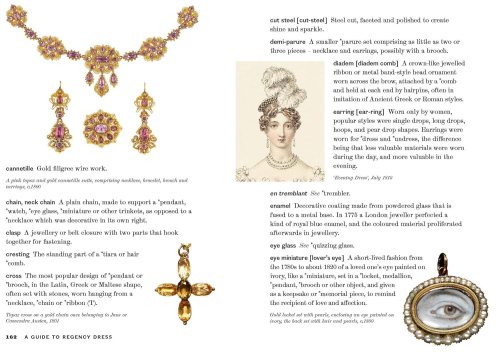
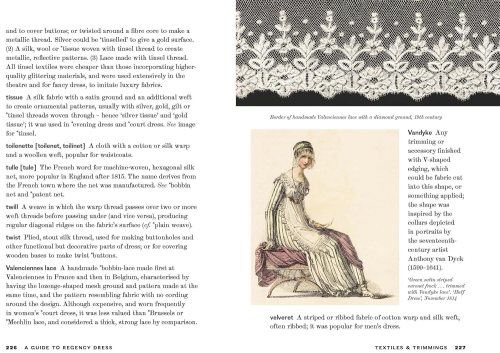
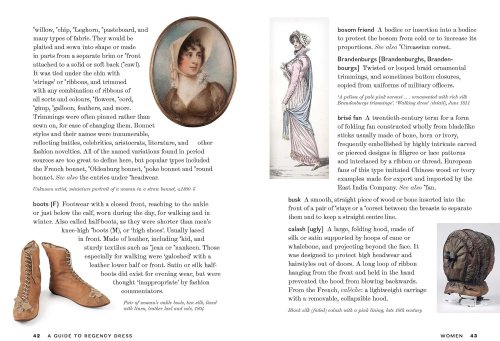
This is one of my favorite new books of the past year, and I plan to use it as I read and research Austen’s novels and watch the film adaptations. Davidson provides a comprehensive glossary of terms related to fashion and clothing during Austen’s time, included beautiful photography to help illustrate various items. Seeing everything in one place makes this a Jane Austen fashion dictionary and encyclopedia that is both fascinating and beautiful. What might normally take me hours to research for one of my articles, I can now find easily in one place.

I particularly enjoyed the way the book is broken up into sections, with a detailed glossary in each section. The sections include Women, Men, Hair and Beauty, Jewellry (sic), and Textiles and Trimmings. Each section includes information and a full glossary with exquisite, full-color photos and illustrations. I enjoyed reading about the differences between items such as women’s stockings and men’s stockings. Women are often the focal point of Regency dress, but men’s clothing and dress is just as interesting. As a writer, I also appreciated Richardson’s extensive bibliography at the end of the book.

You can peruse this book anytime you want to learn more about dress in Austen’s day or find inspiration for your next Regency tea party, event, or ball!
Order Your Copy Here

About the Book

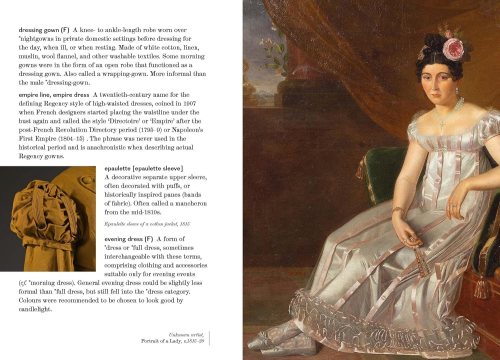
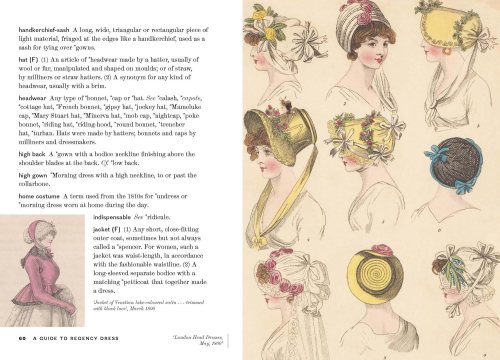
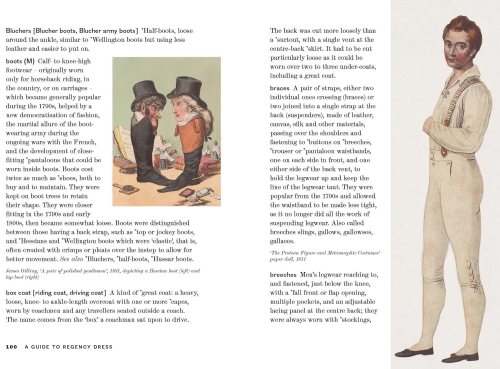
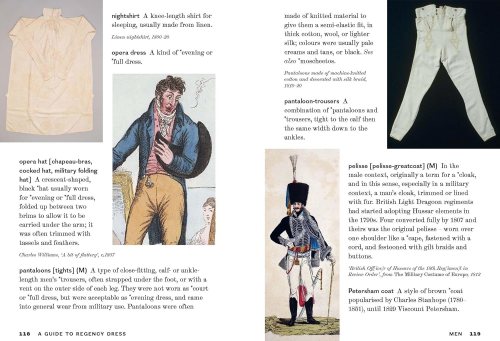
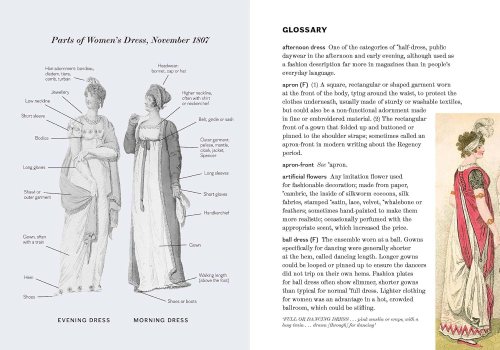
An accessible, fun, yet authoritative guide to male and female Regency fashion: Celebrated dress historian Hilary Davidson brings together nearly 20 years of research on Regency fashion in an illustrated guide for the first time. All the elements of the Regency wardrobe of both men and women―from coats, gowns and undergarments to shoes, accessories, beauty, hair and jewellery―are assembled, along with their textiles and trimmings.

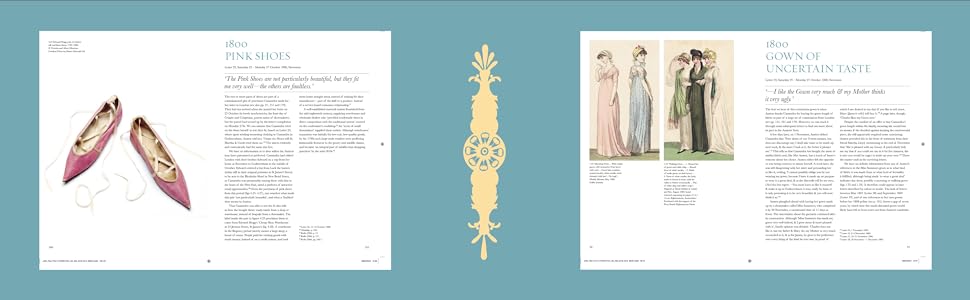
A Guide to Regency Dress is an essential companion to navigate the fashion world of Jane Austen or re-create the Regency look. Here’s a look inside the book:
About the Author

Hilary Davidson is a dress, textiles, and fashion historian and curator. Hilary trained as a bespoke shoemaker in her native Australia before completing a Masters in the History of Textiles and Dress at Winchester School of Art (University of Southampton) in 2004. As a skilled and meticulous hand-sewer, she has created replica clothing projects for a number of museums, including a ground-breaking replication of Jane Austen’s pelisse.

In 2007, Hilary became curator of fashion and decorative arts at the Museum of London. She also worked on the AHRC 5-star rated Early Modern Dress and Textiles Network (2007-2009) and from 2011 has appeared as an expert on a number of BBC historical television programs, and as a frequent radio guest speaker in London and Sydney. From 2012, Hilary worked between Sydney and London as a freelance curator, historian, broadcaster, teacher, lecturer, consultant and designer, while working on a PhD in Archaeology at La Trobe University, Melbourne. In 2022, she moved to New York City to take up the role of Associate Professor and Chair of the MA Fashion and Textile Studies: History, Theory, Museum Practice at the Fashion Institute of Technology.

Hilary has taught and lectured extensively at the University of Southampton, Central St Martins, the University of Cambridge, the University of Glasgow, New York University London, The American University Paris, Fashion Design Studio TAFE Sydney and the National Institute of Dramatic Art, Sydney. Her previous books include Dress in the Age of Jane Austen (2019) and Jane Austen’s Wardrobe (2023).

Final Thoughts

When I attended my first JASNA AGM many years ago, I wore a beautiful Regency dress my mother sewed for me to the banquet and ball. I received a lot of compliments, but I only had a dress. Since then, I’ve slowly added to my “Jane Austen closet” with various accessories. Now that I have this book, I can continue to expand my collection until I can dress in Regency clothing from head to toe.

I could easily spend hours researching the fashion and textiles of Jane Austen’s era, and I hope others of you will find this new resource as fascinating as I do!
Rachel Dodge Bio

Rachel Dodge teaches writing classes, speaks at libraries, teas, and conferences, and writes for Jane Austen’s World blog. She is the bestselling, award-winning author of The Anne of Green Gables DevotionalThe Little Women DevotionalThe Secret Garden Devotional, and Praying with Jane: 31 Days Through the Prayers of Jane Austen. She has narrated numerous book titles, including the Praying with Jane Audiobook with actress Amanda Root. A true kindred spirit at heart, Rachel loves books, bonnets, and ballgowns. Visit her online at www.RachelDodge.com.
Read Full Post »

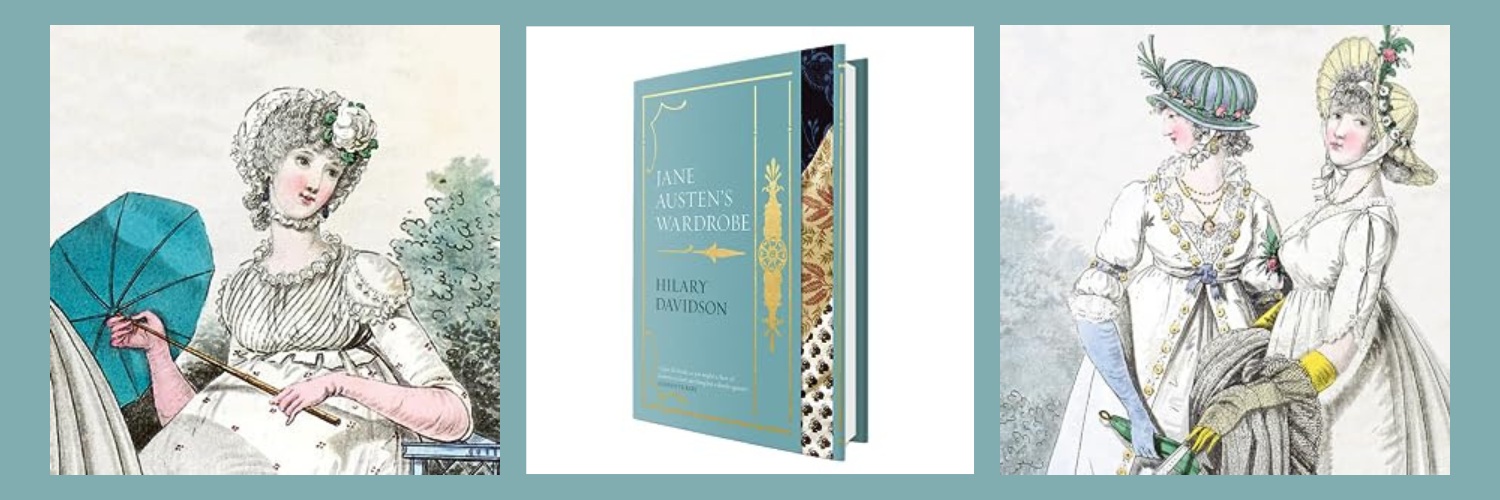
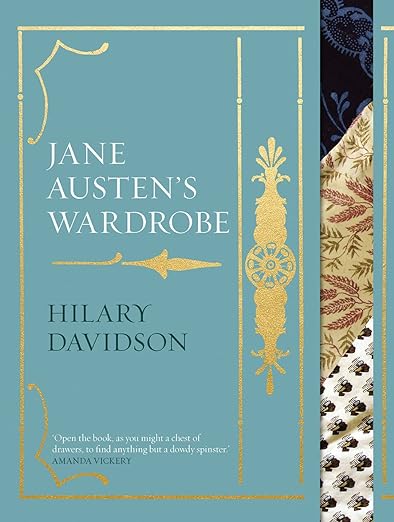
Dear readers, I have an exquisite new book to share with you today: Jane Austen’s Wardrobe by Hilary Davidson!

Filled with incredible photos and written information, it’s one of the most detailed books I’ve seen in a long time on this topic. Not only is it beautiful, it is filled with fascinating information on one of my most favorite topics.

This is my new favorite book on Jane Austen’s Regency Fashion. I know I’ll continue to pour over it for years to come!

Austen’s Wardrobe by Category

Within the pages of this lovely book, Davidson works her way through Austen’s personal wardrobe chronologically, from head to toe. Davidson’s system for cataloging Austen’s wardrobe is fascinating! For those of us who delight in a linear and/or chronological order to a wide and varied topic, Davidson definitely checks all the boxes.

First, she breaks all of Austen’s clothing down into the following categories:

  • Clothes Press: Gowns
  • Closet: Spencers, Pelisses and Outer Garments
  • Band Box: Hats, Caps and Bonnets
  • Shelves: Shawls, Tippets, Cloaks and Shoes
  • Dressing Table: Gloves, Fans, Flowers, Trims and Handkerchiefs
  • Jewelery Box: Necklaces, Rings and Bracelets
  • Drawers: Undergarments and Nightwear

Davidson even includes several pages of sketches, descriptions, and explanations for Jane’s “Portrait Gown” – which I found completely engrossing.

Austen’s Letters Quoted

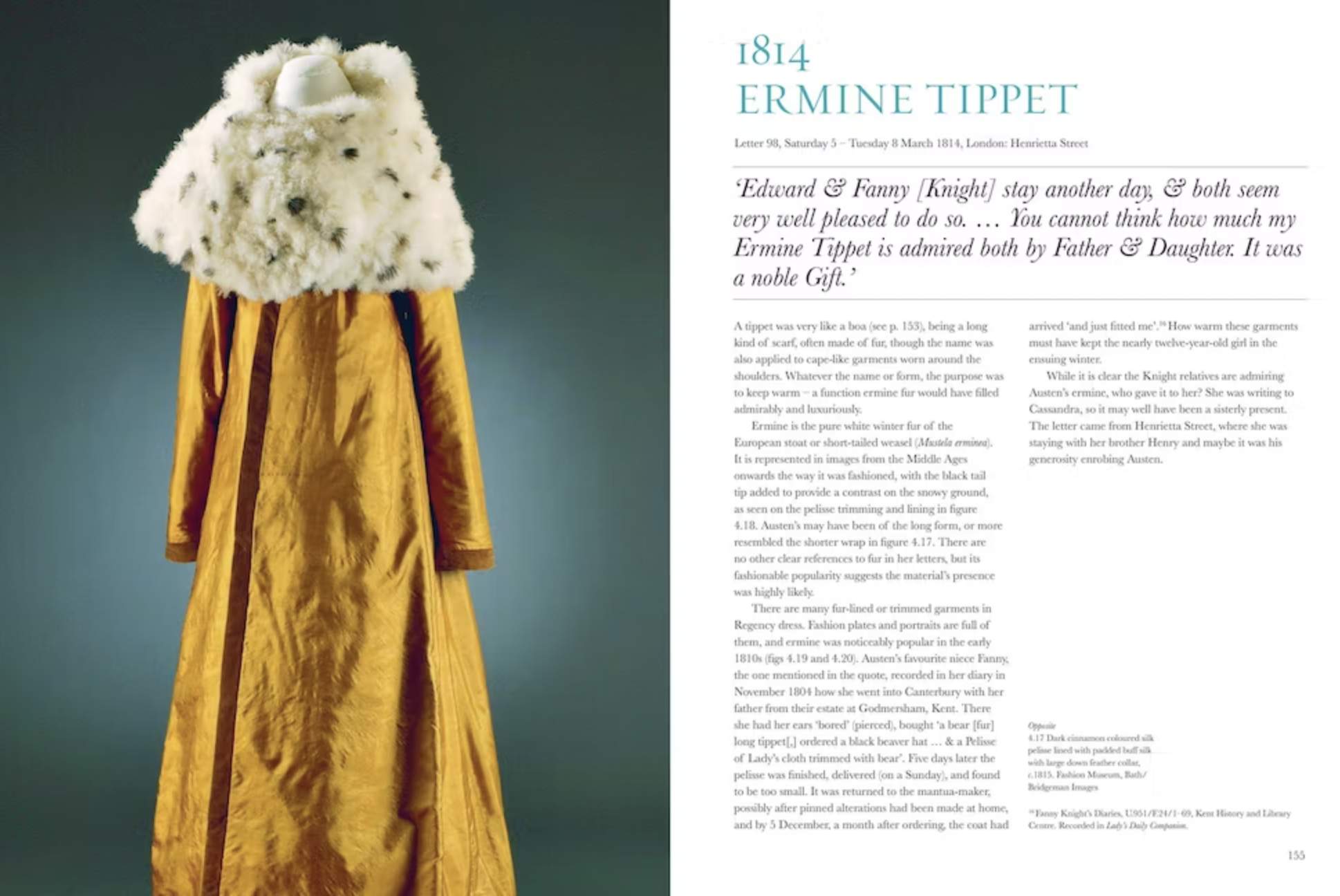
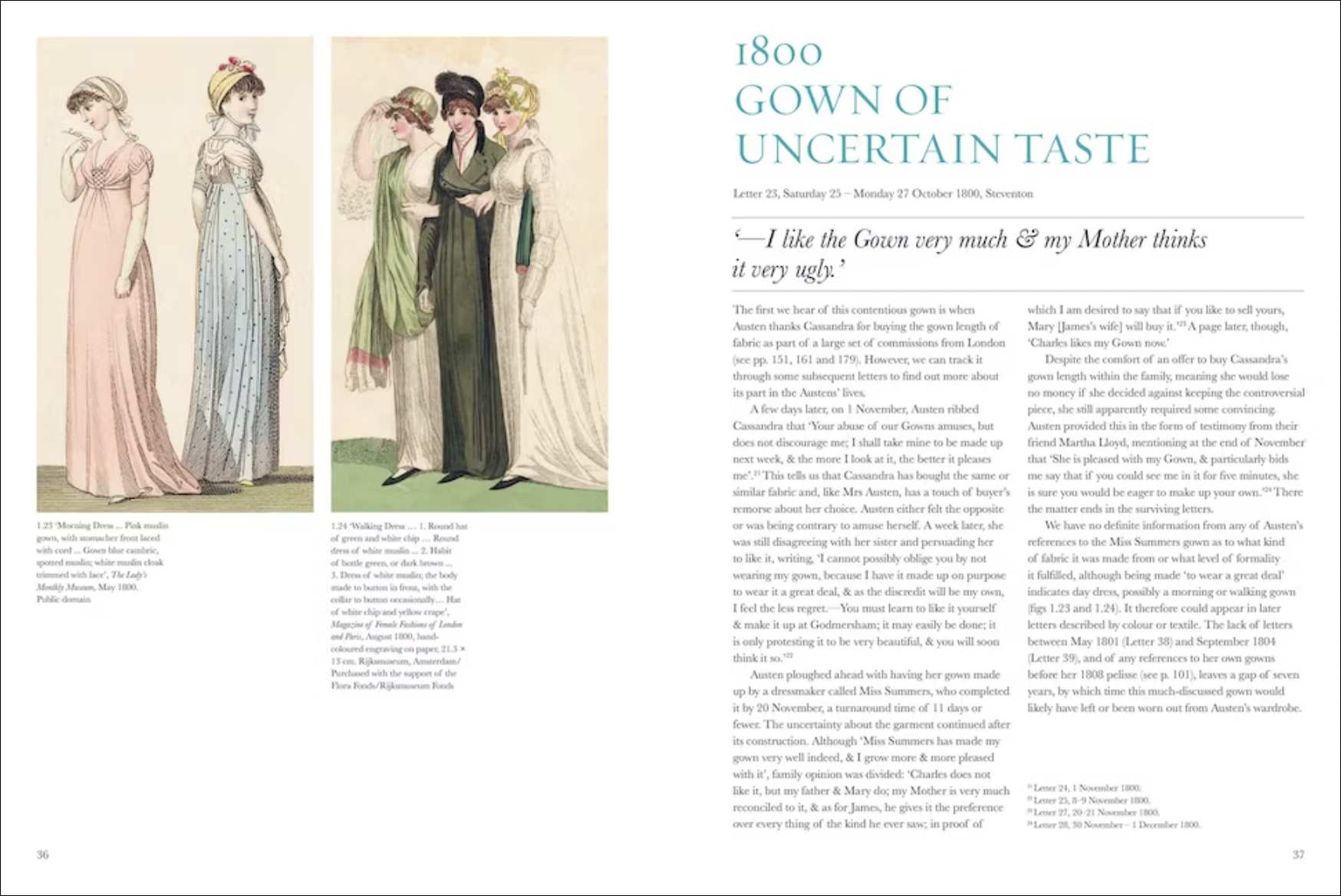
Next, Davidson utilizes Austen’s personal letters to explore every inch of Austen’s wardrobe, working her way through each category in chronological order. To do this, she shares one quote at time, citing portions of letters that mention Austen’s clothing. Then, for each article of clothing, every hat, and every piece of jewelry, she explains that quote in great detail and provides photos to aid our understanding.

For instance, Austen writes this in Letter 65:

“I can easily suppose that your six weeks here will be fully occupied, were it only in lengthening the waists of your gowns. I have pretty well arranged my spring & summer plans of that kind, & mean to wear out my spotted Muslin before I go. –You will exclaim at this–but mine has signs of feebleness, which with a little care may come to something.”

Tuesday 17 – Wednesday 18 January, 1809, Castle Square

Davidson provides photos of spotted muslin fabric swatches and a photo of a dress made of spotted muslin, dated 1805-10. Then she explains the muslin fabric, provides quotes from Austen’s novels about muslin dresses, and explains Austen’s quote. She goes over the dress styles, what was involved in “lengthening the waist” of a gown, the meaning of “worked” fabric, and the ins and outs of fragile fabrics of that time period, including how women used belts to cover holes in the fabric when a waist was lengthened.

I found this incredibly interesting because I’ve always been curious about Austen’s extensive quotes about her dresses and hats in her letters. The result is a delightful (and sometimes hilarious) tour through Jane Austen’s closet in her own words, with pictures and explanations to match!

Here are several more examples, provided by Yale University Press:

Informative and Beautiful

Like many of Austen’s heroines, this book is both intelligent and beautiful. Inside and out, this book is absolutely stunning. The photos provide a detailed look into Jane Austen’s clothing that is hard to find, especially all in one place. This book feels like a worldwide museum tour of all the most exquisite clothing artifacts from Austen’s time.

This is the perfect addition to any Jane Austen library – and it will look gorgeous on your coffee table!

Book Description

Hilary Davidson delves into the clothing of one of the world’s great authors, providing unique and intimate insight into her everyday life and material world.
 
Acclaimed dress historian and Austen expert Hilary Davidson reveals, for the first time, the wardrobe of one of the world’s most celebrated authors. Despite her acknowledged brilliance on the page, Jane Austen has all too often been accused of dowdiness in her appearance. Drawing on Austen’s 161 known letters, as well as her own surviving garments and accessories, this book assembles examples of the variety of clothes she would have possessed—from gowns and coats to shoes and undergarments—to tell a very different story.

The Jane Austen Hilary Davidson discovers is alert to fashion trends but thrifty and eager to reuse and repurpose clothing. Her renowned irony and wit peppers her letters, describing clothes, shopping, and taste. Jane Austen’s Wardrobe offers the rare pleasure of a glimpse inside the closet of a stylish dresser and perpetually fascinating writer.

About the Author

Hilary Davidson is a dress, textile and fashion historian and curator. Her work encompasses making and knowing, things and theory, with an extraordinary understanding of how historic clothing objects come to be and how they function in culture.

Hilary is equally skilled in analysing historical and archaeological material culture artefacts; presenting engaging, fascinating talks to diverse audiences; and producing influential academic research.

Her extensive experience includes:

  • Scholarly research
  • Lecturing, teaching and public talks
  • Broadcasting and journalism
  • Historic dressmaking

Hilary trained as a bespoke shoemaker in her native Australia before completing a Masters in the History of Textiles and Dress at Winchester School of Art (University of Southampton) in 2004. Since graduating, Hilary’s practice has concerned the relationship between theoretical and highly material approaches to dress history, especially in the early modern and medieval periods.

As a skilled and meticulous handsewer, she has created replica clothing projects for a number of museums, including a ground-breaking replication of Jane Austen’s pelisse. At the same time she lectured extensively on fashion history, theory and culture, on semiotics, and cultural mythologies, especially red shoes.

In 2007 Hilary became curator of fashion and decorative arts at the Museum of London. She contributed to the £20 million permanent gallery redevelopment opening in 2010, and curated an exhibition on pirates, while continuing to publish, teach and lecture in the UK and internationally. In collaboration with Museum of London Archaeology, Hilary began analysing archaeological textiles and continues to cross disciplines by consulting in this area in England and Australia. She also worked on the AHRC 5-star rated Early Modern Dress and Textiles Network (2007-2009) and from 2011 has appeared as an expert on a number of BBC historical television programmes, and as a frequent radio guest speaker in London and Sydney.

From 2012 Hilary worked between Sydney and London as a freelance curator, historian, broadcaster, teacher, lecturer, consultant and designer, while working on a PhD in Archaeology at La Trobe University, Melbourne. In addition to historical studies she has been a jewellery designer, graphic designer, photographer, gallerist, and worked in retail fashion and vintage clothing. In 2022 she moved to New York City to take up the role of Associate Professor and Chair of the MA Fashion and Textile Studies: History, Theory, Museum Practice at the Fashion Institute of Technology.

Hilary has taught and lectured extensively, including at the University of Southampton, Central St Martins, the University of Cambridge, the University of Glasgow, New York University London, The American University Paris, Fashion Design Studio TAFE Sydney and the National Institute of Dramatic Art (NIDA), Sydney. She speaks regularly at academic conferences and to the public. Her first monograph book was Dress in the Age of Jane Austen (2019) followed by Jane Austen’s Wardrobe in 2023. Her extensive publications can be found on Academia and ResearchGate.

To Order the Book:

You can order the book by clicking HERE
or by clicking the image below:

Recommended Book Gift

I hope you’ve enjoyed this short tour of this stunning new book by Hilary Davidson. If you’re looking for a gift for a fellow Jane Austen fan, or if your friends or family members need an idea for a gift for you this holiday season, I highly recommend this one!


RACHEL DODGE teaches college English classes, gives talks at libraries, teas, and book clubs, and writes for Jane Austen’s World blog. She is the bestselling author of The Little Women DevotionalThe Anne of Green Gables Devotional and Praying with Jane: 31 Days Through the Prayers of Jane Austen. Now Available: The Secret Garden Devotional! You can visit Rachel online at www.RachelDodge.com.

Read Full Post »

Regency women went to great lengths to achieve an effortless, romantic look with long, flowing lines to their dresses and hairstyles. Even their dresses, which appeared to have little underneath, had several layers hidden below the surface. As with everything, nothing in the Regency era is quite as simple as it seems.

And behind the scenes of every genteel woman’s daily beauty regime were servants who made it all possible. Without today’s modern household appliances, a whole team of people were required to make a household run smoothly. There were servants who laundered, mended, ironed, and polished. Maids who buckled, tied, boosted, and smoothed; carried clean, hot water for bathing; and emptied bathtubs and chamber pots. Men and women cleaned, cooked, served, polished, and dusted. All so that life could go on smoothly and seamlessly.

Women in Jane Austen’s world were expected to be many things, especially when it came to their personal appearance, but what went on behind the scenes to make these women appear so effortless and graceful?

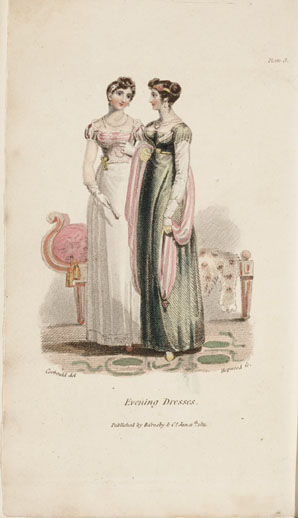
Evening dresses, fronticepiece, The Mirror of Graces,, 1811
Evening dresses

[Mr. Bingley] came, and in such very good time that the ladies were none of them dressed. In ran Mrs. Bennet to her daughter’s room, in her dressing gown, and with her hair half finished, crying out:

“My dear Jane, make haste and hurry down. He is come—Mr. Bingley is come. He is, indeed. Make haste, make haste. Here, Sarah, come to Miss Bennet this moment, and help her on with her gown. Never mind Miss Lizzy’s hair.”

“We will be down as soon as we can,” said Jane; “but I dare say Kitty is forwarder than either of us, for she went up stairs half an hour ago.”

Oh! hang Kitty! what has she to do with it? Come be quick, be quick! Where is your sash, my dear?”

Pride and Prejudice, Jane Austen

It took time to achieve the polished look of a Jane Austen heroine; thus, I’ve also included additional links for each of the topics below for those who want to delve deeper. Let’s look behind the scenes:

Bathing

Cleanliness then wasn’t quite what it is today. Bathing only became common during the 18th century in wealthy households. In Jane Austen’s time, baths were taken once a week (more or less depending on the season) with sponge baths in between. This was usually done by sponging off with a pitcher of water and a little basin on the bedroom dresser. To bathe, people sat in a larger tub or stood in a smallish tub on the floor and washed with a pitcher of water. (The Family, Sex & Marriage in England 1500-1800 by Laurence Stone)

A portable bath shower from the mid 19th c.

Affordable soaps of the time were soft and more caustic than the soaps, lathers, and body washes we enjoy today. Firm, refined bar soaps were scented and more costly (and therefore less frequently used). As for a woman’s hair, the same soap used for the body was also used for the hair, and the hair was washed far less often than today.

Oral Health

As for dental health, tooth brushes and tooth powder were used. In Sense and Sensibility, we read this: “He was giving orders for a toothpick-case for himself, and till its size, shape, and ornaments were determined, all of which, after examining and debating for a quarter of an hour over every toothpick-case in the shop, were finally arranged by his own inventive fancy…”

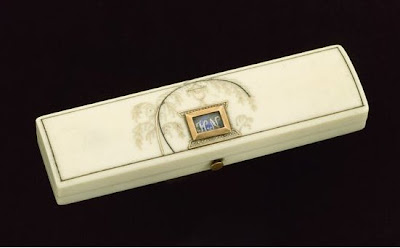
Toothpick Case, National Maritime Museum, 1806

From Austen’s own letters, we know that dentistry in her time was a grisly business:

The poor girls and their teeth! I have not mentioned them yet, but we were a whole hour at Spence’s, and Lizzy’s were filed and lamented over again, and poor Marianne had two taken out after all, the two just beyond the eye teeth, to make room for those in front. When her doom was fixed, Fanny, Lizzy, and I walked into the next room, where we heard each of the two sharp and hasty screams.

The little girls’ teeth I can suppose in a critical state, but I think he must be a lover of teeth and money and mischief, to parade about Fanny’s. I would not have had him look at mine for a shilling a tooth and double it. It was a disagreeable hour.

Jane Austen’s Letters, Henrietta St., 15 Sept. 1813

The advent of modern dentistry, and the use of anesthetics, wouldn’t come until long after Austen’s lifetime. I, for one, feel much more enthusiastic about my next dental cleaning after this. For more on the topic of Regency dentistry, you can read this JAW article on Dental Hygiene in the Regency Period.

Dressing and Undergarments

For the latest fashions, women often shared patterns and new fashions. Those who had lately traveled to London or even Bath brought back descriptions, clippings, and patterns to share with their friends and family member. In Pride and Prejudice, we read this about Mrs. Gardiner’s visit: “The first part of Mrs. Gardiner’s business on her arrival, was to distribute her presents and describe the newest fashions.”

Underdrawers belonging to the Duchess of Kent, 1810-1820

As fashions evolved, so did women’s undergarments. Under their slim, empire-waisted Regency dresses made of thinner material than previous years, women wore a shift, stays, a waist petticoat, stockings, and more. With so much to lace up and buckle, women needed help getting dressed. On the topic of stays, we know that Jane wrote this to Cassandra:

I learnt from Mrs Tickar’s young Lady, to my high amusement, that the stays now are not made to force the Bosom up at all; that was a very unbecoming, unnatural fashion.

Jane Austen’s Letters, September 1813

However, women did not yet wear “underwear,” drawers, or pantaloons. Drawers were considered immodest and improper, something only men wore, until the early to mid 1800s. Slowly they caught on, and by the mid-1800s they were a matter of course when hoop skirts became popular. You can find more here: Ladies Underdrawers in Regency Times: Regency Underwear.

Cosmetics

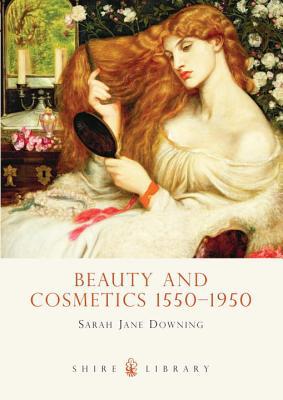
In terms of cosmetics, a more natural Romantic look took hold during Austen’s life, in large part aided by the blockade during the Napoleonic Wars. Ladies were still, nevertheless, never too far from their rouge pot (Beauty and Cosmetics, 1550-1950 by Sarah Jane Downing). Regardless of one’s complexion or skin tone, a rosy glow was part of achieving that healthy romantic look.

As for covering up body odor, deodorant was not yet used, while the perfumes of the time tended toward sweet, musky scents. To find out more about cosmetics and how they were made (many times out of materials we now know are dangerous), you can read this article: A Deadly Fashion: Beauty and Cosmetics 1550-1950 – A Review.

Hair

During Jane Austen’s lifetime, hairstyles for women became more natural and graceful. This meant instead of powder, wigs, and elaborate updos, the natural hair color became popular again. Women wore their hair swept up into simple twists, buns, and chignons with locks of hair curled around their faces. Curling tongs and curling papers and cloths were used to create this effect.

The fashions and hairstyles all came from the Greco Roman styling that became popular during Austen’s day. You can read more here: Greco Roman Influences on Women’s Hairstyles During the Georgian Era.

Combs used as hair accessories

With the bonnets and caps used at the time, curls were used to frame the face. For evening and dinner parties, accessories such as combs and ribbons were used. Often a maid helped fix a lady’s hair each morning and before an evening dinner or party. What might look like a very natural hairstyle could take quite a bit of time to perfect beforehand. For more, you can read about Regency Hairstyles and their Accessories. Additionally, you can view Vic’s stunning Pictorial History of Regency Hairstyles.

A Look Behind the Scenes

The world of a genteel Regency woman was complex and nuanced. Next month, I’ll discuss “Privy” Matters: Regency Feminine Hygiene, Bodily Functions, and Childbirth. We’ll take an even closer, behind-the-scenes look at a genteel woman’s private life in Jane Austen’s time. All to help us understand the real-life world of carriage rides, balls, dinners, and courtship that we so enjoy in Austen’s novels.

As much as I love dressing up for a Jane Austen event, all of this information reminds me, as ever, that as romantic as everything looks in a Jane Austen film, life for women of her time was anything but simple—even for those who were part of the landed gentry.

When I’ve dressed for the ball given at past JASNA AGMs, my outer layer tends to be the most historically accurate. I’ve yet to invest in undergarments, and I usually “make do” with my own homemade hair accessories, jewelry, and ballet flats. One day, I’d like to invest in a bonnet. As one wise woman once told me at an AGM, “It takes years to build your Regency wardrobe – just take it one piece at a time.” Do you own any Regency clothing? If so, what do you enjoy wearing most? -Rachel


RACHEL DODGE teaches college English classes, gives talks at libraries, teas, and book clubs, and writes for Jane Austen’s World blog and Jane Austen’s Regency World magazine. She is the bestselling author of The Anne of Green Gables Devotional: A Chapter-By-Chapter Companion for Kindred Spirits and Praying with Jane: 31 Days Through the Prayers of Jane Austen. Her newest book The Little Women Devotional is now available for pre-order and releases December 2021. You can visit Rachel online at www.RachelDodge.com.

Read Full Post »

by Brenda S. Cox

When Emma encountered Mrs. Elton visiting Jane Fairfax, “she saw [Mrs. Elton] with a sort of anxious parade of mystery fold up a letter which she had apparently been reading aloud to Miss Fairfax, and return it into the purple and gold ridicule by her side,”—Emma, Volume 3, chapter 16, Cambridge edition

If you’ve ever made yourself a Jane Austen-era costume, you know that a reticule is an essential accessory. These lovely small purses hung by a drawstring from the lady’s wrist.

In previous generations, wide skirts had allowed for two huge pockets, one on each hip, to hold essential items. But with the slim new Regency style, there was no longer room for pockets. So the pockets were externalized and made small and beautiful.

If you have a reticule, you realize that it doesn’t hold nearly as much as a modern purse. Nowadays we might put our phone and a credit card, driver’s license, and little cash in the reticule. But what did Jane Austen’s ladies carry in theirs?

Candice Hern recently gave three lovely presentations for the JASNA AGM*. She showed her collection of items an Austen-era lady might have carried in her reticule. First, she pointed out that Jane Austen would probably not have used the word reticule! This little purse was more often called a ridicule.  This was the word used in ladies’ magazines of the time. That’s why, in the quote above from the original 1816 edition of Emma, Mrs. Elton has a purple and gold ridicule, not a reticule.

The Oxford English Dictionary lists sources calling it a ridicule from 1799 to 1999, and sources calling it a reticule from 1801 to 2004. So the terms were used interchangeably for a long time. Both words apparently came from the French word réticule for a small handbag. That word came from the Latin rēticulum for a small meshwork bag. Ridicule may have been a pun on the French word, though no one seems to know for sure.

The only time Jane Austen mentions a reticule, or ridicule, is in the above passage from Emma. Mrs. Elton slips a letter into her ridicule, which is, of course, a showy purple and gold one. Austen may have purposely chosen the form ridicule because Mrs. Elton is so often ridiculous! But modern versions usually change it to reticule.

So, we know that reticules could be used to carry letters. The Cambridge edition of Emma tells me that reticules might also hold handkerchiefs, snuff boxes, or sweets. However, snuff boxes seem to have been a gentleman’s item, so I doubt ladies would have often carried them. (Though some ladies did take snuff, though not as widely as men did.)

Candice Hern tells us that Regency reticules might range from only two inches long up to about ten inches long. So everything that ladies carried began to be made smaller. This created some lovely, tiny treasures.

Here are some of the items Candice showed us, with photos she kindly provided from her collection:

Reticule Essentials: the Fan, the Coin Purse, and the Vinaigrette

Fans

For hot evenings in the “crush” of a crowded ball or party, women carried fans. In Austen’s novels, she says Catherine Morland carried a fan at a dance. At Fanny Price’s ball, it seems her brother fanned her with his partner’s fan. Austen talks about her own “white fan” in a letter of Jan. 8, 1799.

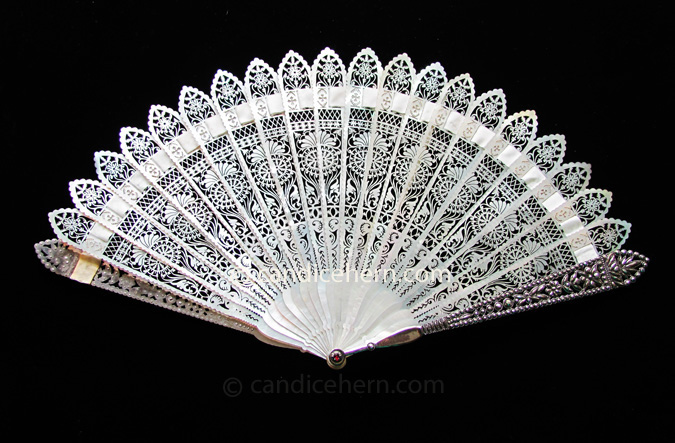
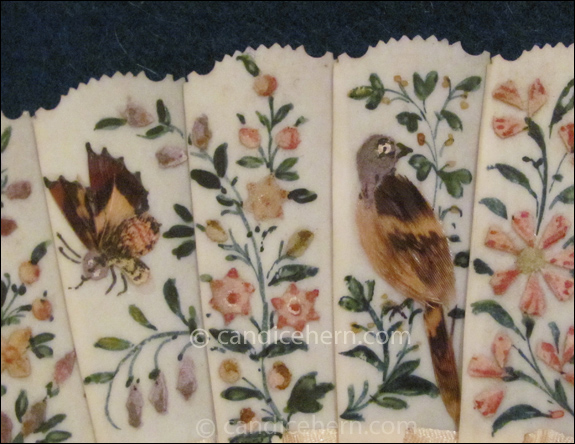
Before and after this period, fans were about 10-12 inches long. (This is the length of the fan sticks; the open fan would be almost twice that in width.) But, to fit in the reticule, fans were made smaller, only about 7 inches long. They were most often made from ivory. Some were pierced with a tiny jeweler’s saw, to give a lacy effect. This was called brisé (pronounced bree-ZAY). Here are two of Candice’s (and my) favorites:

This gorgeous brisé fan is made of mother-of-pearl. It would shine and sparkle in a candlelit ballroom. The guard sticks, at each end of the fan, are made of faceted and polished steel. It also sparkles like jewels. Each stick is pierced identically, but the sticks are placed in alternating directions to form a pattern. c. 1810-1815.

The top section of this fan is painted rather than pierced. The birds and butterflies are made of real feathers. The flowers were created with tiny pieces of velvet.

On the lower part, sticks of three different pierced patterns are arranged to form a more complex pattern. The sticks are 6 ½” long. c. 1810-1820, or earlier.

For more lovely fans, see Candice’s website. Above photos courtesy of Candice Hern.

Coin Purses

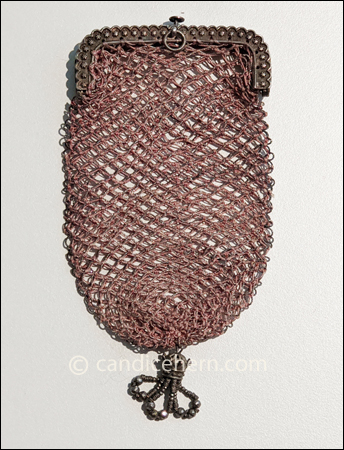
Regency women didn’t have wallets like we carry today. In small reticules, they may have carried loose coins. But in larger reticules they kept coins in a coin purse so they could find them easily. Ladies usually made these purses, which might be beaded, knitted, or netted. In Pride and Prejudice, Mr. Bingley marvels at the accomplishments of young ladies, who can all “net purses.”

Some coin purses closed with drawstrings, while others had a metal closure at the top. The closure might be made of pinchbeck—a cheap metal alloy that looks golden—or other metals. Ladies also made coin purses for men. Austen’s favorite poet, William Cowper, wrote a poem thanking his cousin for making him a network purse. Gentlemen’s purses were sometimes called miser’s purses.

A lady probably bought the sterling silver frame (dated 1816) for this coin purse, then netted it with pink and silver metallic thread. It is 3 ¾” long, plus the tassel. Courtesy of Candice Hern.

Vinaigrettes

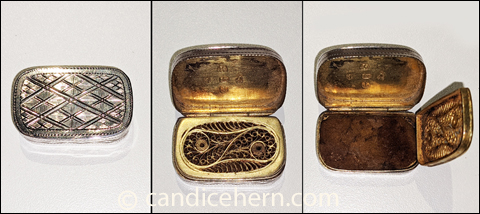
If a woman began to swoon, in an airless room or when she learned something unpleasant, a vinaigrette was pulled out of a reticule and waved under her nose. These tiny metal boxes held a sponge soaked in vinegar and perfumed oils, with a grille over the sponge to let out the fumes. The grille might be dotted with holes, or might be pierced in a lovely design. Vinaigrettes were made of various materials and in many shapes and designs; those in Candice’s collection are silver.

The sponge might alternatively be soaked in something sweet-smelling, like rose water or lavender water. Many places in the Regency era stank, and a sweet smell could help the lady tolerate them.

Austen doesn’t mention vinaigrettes, but she does mention smelling salts, which were used similarly. Candice thinks these salts would actually have been a solution in vinegar, kept in a vinaigrette.

Regency vinaigrettes were tiny and delicate; Candice’s range from ½” across to 1 ¾” across.

This vinaigrette is made of silver but gilded inside, so the vinegar did not discolor the silver. It still contained a ratty sponge when Candice bought it. It could be carried in a reticule, or, with the metal ring, attached to a chatelaine: chains used for hanging things to a woman’s belt. Marked 1802, made in Birmingham. Courtesy of Candice Hern.

Other Items That Might be Carried in a Reticule: Perfumes and Cosmetics

Perfume étuis

Perfume also counteracted bad smells. In Austen’s age, when bathing was not very common, perfumes were essential. However, perfume bottles were breakable, easily spilled, and too large to carry in a reticule.

So a lady would carry a perfume étui (pronounced ay-twee), a tiny container that could hold a glass vial of perfume and be fastened tightly shut. (Other types of étuis were used to carry sewing materials, writing materials, eating utensils, and other items; the word is French for any portable case.)

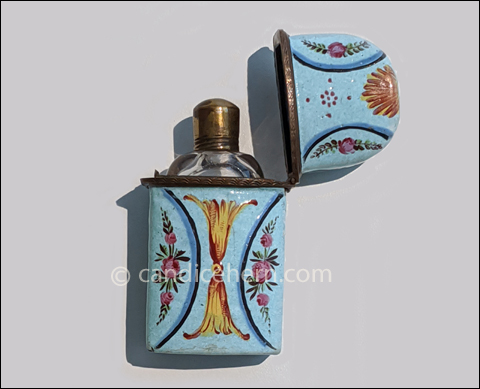
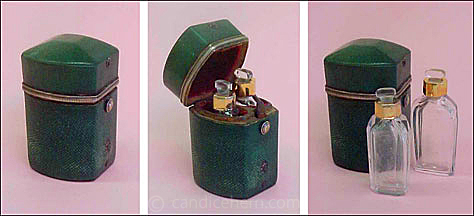
Perfume étuis were made of enamel, metal, tortoiseshell, shagreen, or other materials. Shagreen was a cheap option. It was shark’s skin, usually dyed green, with a knobbly texture. Shagreen étuis were probably used by middle-class women, while upper-class women used more expensive materials.

This painted enamel étui with brass fittings is about 2 ½” high. It held a tiny glass bottle of perfume with a screw-on metal top. 1760s to 1780s.

This shagreen étui is only 1 ¾” tall. It holds two tiny bottles of scent, so the lady can choose which she wants to use. Photos courtesy of Candice Hern.

Cosmetic Cases

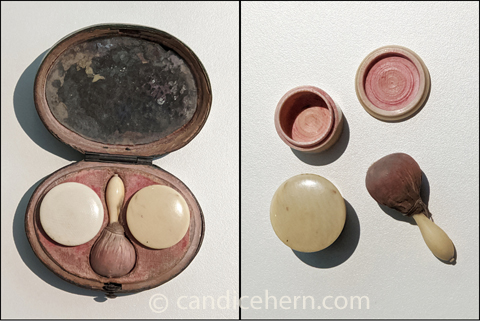
Some ladies also carried small cosmetic cases in their reticules. These were similar to today’s compacts. When open, the top was a polished mirror, and the bottom might contain rouge and/or lip color, and an applicator.

This 2 ½” wide cosmetic case still had traces of rouge in it when Candice bought it. The applicator brush is made of ivory. The outside of this case is shagreen (dyed shark skin), with silver decoration. 1770s or 1780s. Photos courtesy of Candice Hern.

Next time, in Part 2, we’ll look at some other fun items a woman might have carried in her reticule. What else do you guess a lady might have carried?

*JASNA AGM—the Jane Austen Society of North America Annual General Meeting, which this year was held online in October.

Candice Hern writes Regency-era novels.

To find out more about her and her work, look for her on:

Facebook

Twitter

Pinterest

Regency World

To see more of her lovely collections, go to her Regency Collections.

Links in the article above take you to Candice’s articles about specific items.

All images courtesy of Candice Hern, used by permission.

For more information, see also:

Fans: Essential Accessories, including the language of the fan

Reticule: The Regency Purse

A Fashionable Accessory

The Reticule and Purse

You can connect with Brenda S. Cox, the author of this article, at Faith, Science, Joy, and Jane Austen or on Facebook.

Read Full Post »

Inquiring readers,

Kevin Lindsey, who frequently comments to posts on this blog, forwarded the link to this 5-minute YouTube video. He writes:

As a long time subscriber to your blog, I thought you might be interested in this. It’s from a British group called Crows Eye Production. They create excellent, tasteful, and informative videos on historical clothing. They released this one on Jane & Cassandra Austen today. I thought it really well done, and thought I would share it with you, in case you wanted to pass it along. Below is a link. If you would prefer not to use that just got to YouTube and look up “CrowsEyeProductions”

Enjoy!

More on Regency Fashions: Jane Austen’s World category on fashions

Read Full Post »

Older Posts »