Feeds:
Posts
Comments

Archive for the ‘Georgian Life’ Category

Some books are so useful they are hard to pass up. Several months ago, I received the Kindle edition of Behind Jane Austen’s Door by Jennifer Forest, author of the delightful Jane Austen’s Sewing Box. Behind Jane Austen’s Door takes you on a tour of a Regency house, room by room – the entrance hall, drawing room, dining room, breakfast room, dressing room, bedroom, and kitchen – to
explore the challenges and lives of Jane Austen’s women. Included is an appendix that provides a quick overview of the Regency era.

More accessible in tone and organization than the excellent Behind Closed Doors by Amanda Vickery and If Walls Could Talk by Lucy Worsley, which cover similar but more comprehensive territory, this book can be used as a quick reference by people who want immediate access to the purposes and functions of the rooms in a Georgian household. What distinguishes this book is its close association to Jane Austen and her novels (much like Jennifer Kloestler’s book, Georgette Heyer’s Regency World, is associated with that author).

In these large houses [such as Pemberley], the women didn’t need to use the drawing room during the day. There were other rooms for use; they had their own office and other smaller parlors. The drawing rooms, and yes there could be more than one drawing room, in these big houses were just for receiving the morning visitors and for evening entertainment.

One gains close glimpses of a rich family as well as one of more modest means, such as the household that Jane Austen’s mother oversaw.

She works with the cook in preparing menus, sourcing food and caring for the vegetables, dairy and chickens. On washing day, she and her daughters work alongside the servants to get all the laundry completed: it was just so time consuming in the days before washing machines! A gentlewoman had to monitor the budget, find supplies and pay the bills for all those expenses, including the tea and wine. 

While much of the territory that Jennifer covered seemed familiar, it is arranged in such a pleasant and easy to use format that new authors to the Jane Austen genre or Regency romance will find it very useful, especially Jane Austen fans.

Jane Austen’s own mother used her dressing room at Steventon as a second sitting space, more casual and private than the drawing room. After five weeks of illness, Mrs Austen’s return to health allows a resumption of tea in the dressing room. “My mother made her entree into the dressing-room through crowds of admiring spectators yesterday afternoon, and we all drank tea together for the first time in five weeks … We live entirely in the dressing-room now, which I like very much; I always feel so much more elegant in it than in the parlour.” Letter from Jane Austen to Cassandra Austen, Sunday 2 December 1798.

Oh, there will be people who say that they already know this information and that the book provides nothing really new, but readers who are just discovering Jane Austen and the Regency world will think otherwise. I, for one, am happy to have another source to turn to when checking my facts about meal times and the precise function of certain rooms and furniture. The book, which is a quick read, is available in e-book format. I found this quite convenient, for I can access it on all my mobile devices and computers. Also, at $2.99 for the Kindle version, it is quite a bargain. I give it four out of five Regency teacups!
About the Author
Jennifer Forest has a Bachelor of Arts and a Graduate Diploma in Cultural Heritage Management. Jennifer is a museum curator with a love of beautiful old historic buildings. She lives in Australia, a country built by Regency England.

Blog: Behind Jane Austen’s Door

Print Length: 51 pages
Sold by: Amazon Digital Services
Language: English
ASIN: B006YITPAS
Text-to-Speech: Enabled
X-Ray: Not Enabled
Lending: Enabled

Read Full Post »

Inquiring readers: Paul Emanuelli has frequently contributed his comments on this blog. Little did I know that he was an author! He has graciously sent in his thoughts about Bath, the city in which he has set his historical crime novel. Paul writes about Bath in his own blog, unpublishedwriterblog. It is well worth a visit!

Beau Nash turned the city of Bath into the most fashionable resort in 18th-century England. In his role as Master of Ceremonies he organised the premier social events in the city and chose who should, and should not be invited. He established a select list of people who he defined as the cream of Society, and more importantly he changed the social conventions of the city.

Richard Beau Nash

Nash broke down the old order dominated by the nobility and gentry, and promoted the nouveaux- riches. Whereas in other cities the growing number of wealthy industrialists and tradespeople were still looked down on because of their background, in Bath, Nash welcomed them as elite members of society.

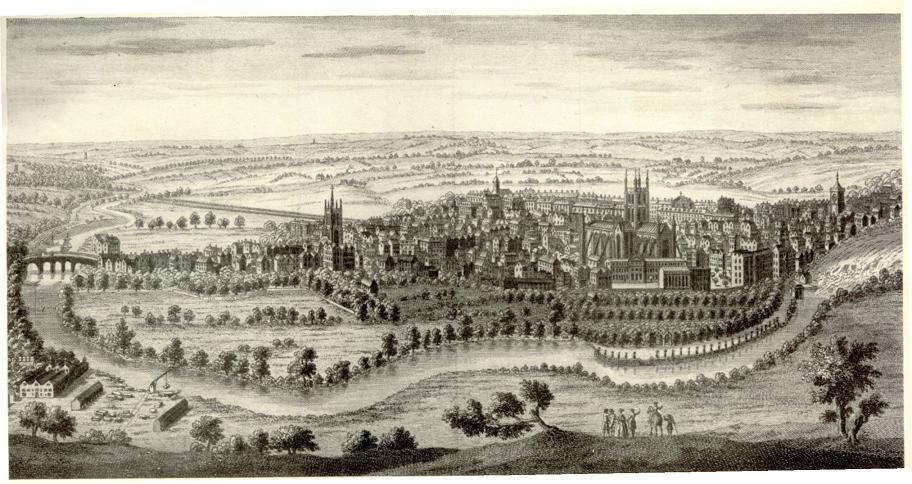
Bath in the 18th century at the time of Beau Nash

For years the city thrived on the wealth of visitors who stayed for the Season. The affluent tourists rented houses and apartments and all the trappings that went with them; crockery and cutlery, silver-ware and ornaments, horses and carriages, servants and attendants. Prominent architects designed fine buildings and the city grew. Milsom Street became one of the most prestigious shopping areas in the country.

Milsom Street and Bond Street with Portraits of Bath Swells.

By 1801, when Jane Austen moved to Bath, the city was the 9th largest in England, with a population of 33,000. Yet the city’s fortunes had already begun to decline. Bath had changed in character and atmosphere. It was becoming less fashionable and the wealthy were visiting less often, and their stays were becoming shorter.

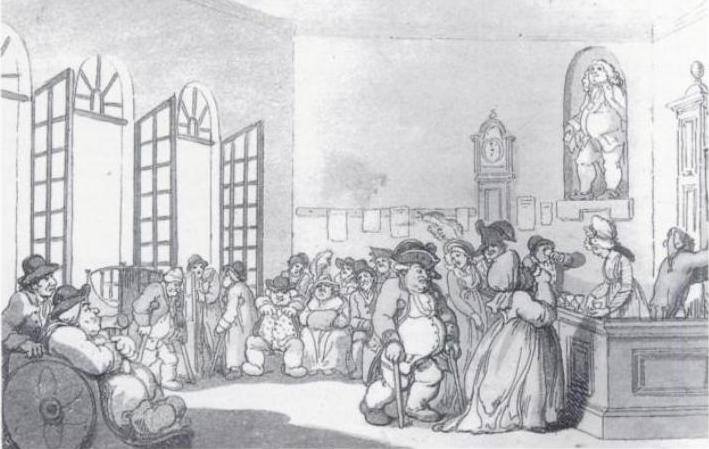
Thomas Rowlandson’s caricature of the Comforts of Bath. The classes noticeably mingled as they awaited drinking the waters in the Pump Room. (Notice the patient in the wheel chair on the left and the sedan chair next to him, which was carried inside the room.) Nash’s statue is in the niche at the top right. You can still see it today.

Built in a bowl of seven hills, Bath’s ever-growing population was increasingly crowded into a relatively small area. It’s little wonder that when Jane Austen moved to the city, she wrote to her sister, Cassandra saying, “The first view of Bath in fine weather does not answer my expectations; … the appearance of the place from the top of Kingsdown was all vapour, shadow, smoke, and confusion.”

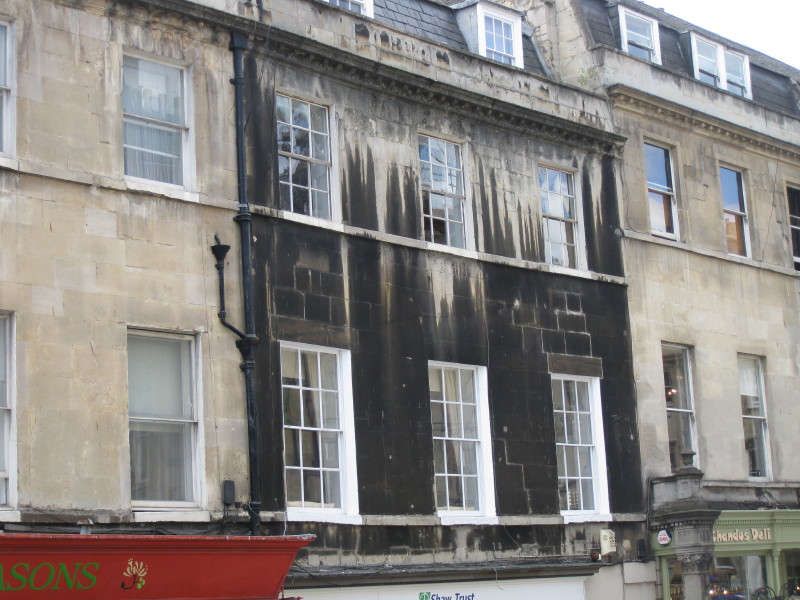
Coal soot darkened the creamy colored stone of the buildings.

Perhaps it is unsurprising that it seemed, “all smoke” when every household depended on coal fires for warmth, that it was “all confusion” when its roads were congested with carts and carriages. And in Georgian cities, once you set foot on the streets there was no escaping the poor drainage and lack of decent sanitation and sewerage systems. As Austen said in a letter to her sister, “We stopped in Paragon (a prestigious address where her wealthy uncle lived) as we came along, but it was too wet and dirty for us to get out.”

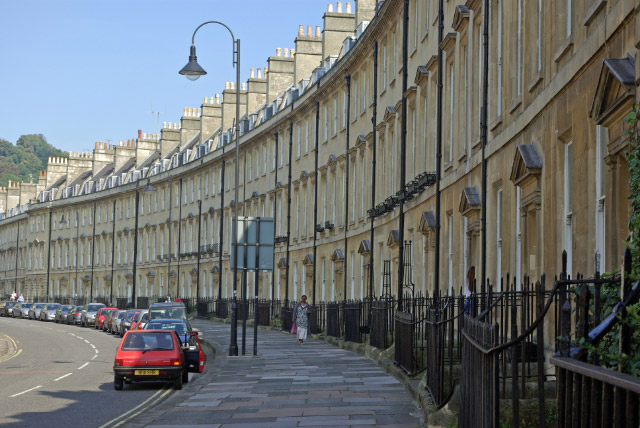
The Paragon, Bath.

By the time Persuasion was published in 1817, the larger part of Bath’s population was working class. Industry was thriving in the city, supplying the many fine shops in Milsom Street and drawing people from the countryside to fill the jobs created. Yet the people who worked in the factories and sweat-shops, the costermongers and shop-assistants, the building labourers and hotel staff were, for the most part, poorly paid.

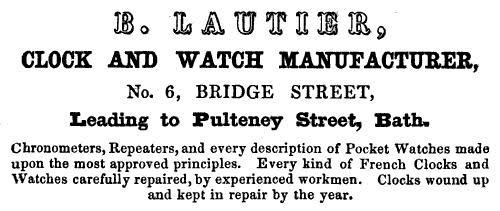
Advertisement for B. Lautier Goldsmith Shop in Bath, 1848

The only housing they could afford was overcrowded and poorly maintained, and the slum areas around Avon Street were increasing in size, as quickly as they were deteriorating in quality and appearance. By 1850, the rookery of hovels and cheap boarding-houses in and around Avon Street were home to almost a quarter of the Bath’s population.

Bath had grown considerably by the 1850’s, the date of this illustration.

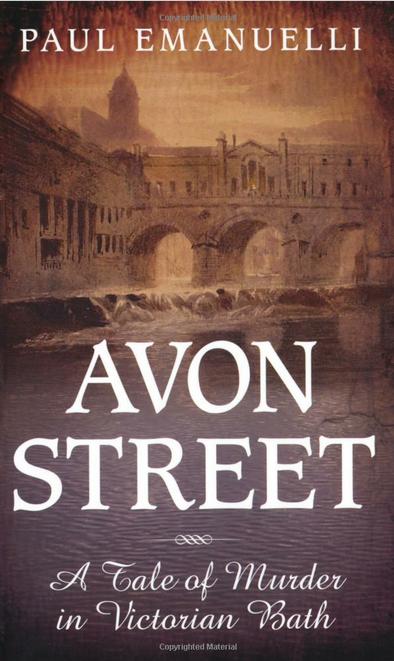
My novel, Avon Street is set in Bath in 1850. But Bath isn’t just a setting. It is a character in its own right. In writing Avon Street, I have tried to take the reader beyond the Georgian facades, and reveal a city, where wealth and elegance were never far from poverty and squalor. Bath was a city, where things were often not as they seemed, where people as Austen said, could “be important at comparatively little cost.” In short it is the ideal setting for a story of confidence tricksters and crime, intrigue and betrayal. A city where enemies can seem all-powerful, and friends are sometimes found where least expected.

Image of Avon Street.

In Persuasion Anne Elliot visits a friend in Westgate Buildings despite Sir Walter’s warning of its unsuitableness – “Everything that revolts other people, low company, paltry rooms, foul air, disgusting associations are inviting to you.” (Click here to see an image of Westgate Buildings in 1900.) It seemed only fitting that the first chapter of my book be set in the same location, on the borders of the Avon Street area.

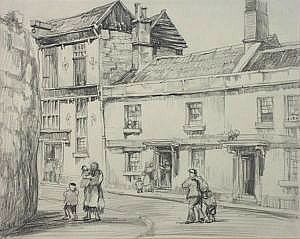
Pickwick Mews, Avon Street, in 1923. Image @The Victoria Art Gallery

More about Avon Street and Paul Emanuelli: Why Avon Street?

Avon Street: Purchase information

Paperback: 352 pages

Publisher: The History Press Ltd (1 Feb 2012)

Language English

ISBN-10: 0752465546

ISBN-13: 978-0752465548

Read Full Post »

This historical tidbit comes from a page designed by J.R. Burrows & Company, Historical-Design Merchants about historic carpet cleaning methods. One sees in films carpets being hung outside on a line and beaten with carpet beaters made of cane.

Elinor beats the carpet. Sense and Sensibility 2008

Some carpets were fitted and hard to remove. In such instances, druggets, or hard-wearing canvas cloths, came to the rescue.

The Young Trio, by E.V. Rippingille, 1829. Image @Bristol City Museum & Art Gallery.

One of the most common strategies of keeping carpets clean in the early nineteenth century was to use druggets, heavy woolen goods spread under tables to protect carpet from spills. They are sometimes called crumb cloths. In addition to dining rooms they were used in other areas of heavy wear. E.V. Rippingille painted The Young Trio in 1829 showing a drugget protecting carpet in a parlor where children are at play. – Historic Carpet Cleaning Methods in the Nineteenth and Twentieth Centuries

You can clearly see the drugget underneath the table in this classic print.

The Dinner-Locust; or Advantages of a Keen Scent’, Charles Hunt after E. F. Lambert, c.1823; hand coloured etching and aquatint. Image @The Geffrye Museum of the Home

Read more at these links:

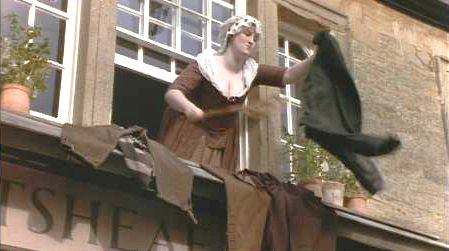
A maid shakes a small carpet or a drugget from a second story window, as well as some trousers. If I recall, one of the actors walked through the door below her as she shook the cloth. Such scenes must have been common then. Sense and Sensibility, 1996.

Read Full Post »

As a blogger who is curious about all things in Jane Austen’s world and customs in her past that might have influenced her, I am still amazed at how one tiny clue points to another until I land on a series of sites that open up a whole new topic. While history foodies probably know about the elaborate lengths that pastry chefs took to please their patrons, the visual results of a full banquet are simply astounding. I can only assume that Georgian taste buds were equally pleased.

Modern chef and historian, Ivan Day, recreated a feast from the past using sugar structures and porcelain figures to arrange a fanciful garden centerpieces for the table.

I already knew about The Prince Regent’s elaborate 1811 dinner at Carlton House, which was described as thus:

“Along the centre of the table about six inches above the surface, a canal of pure water continued flowing from a silver fountain beautifully constructed at the head of the table. Its banks were covered with green moss aquatic flowers; gold and silver fish swam and sported through the bubbling current, which produced a pleasing murmur where it fell, and formed a cascade at the outlet.” – The Gentleman’s Magazine, describing the Prince Regent’s fete at Carlton House, June 19, 1811 in honor of the exiled French royal family.

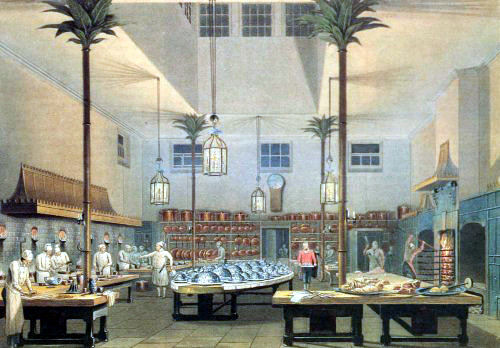
The great kitchen at the Prince Regent’s Pavilion at Brighton could accommodate creating dishes for huge and fanciful banquets.

So great was the interest that the doors of Carlton House were opened for three days in a row. But instead of satisfying the curiosity of the masses, the result was ever-increasing crowds. Chaos ensued.

‘The condescension of the Prince in extending the permission to view the arrangements for the late fete at Carlton House has nearly been attended with fatal consequences,’ reported one newspaper. Read more: http://www.dailymail.co.uk/news/article-1039063/As-Queen-opens-Palace-Ballroom-public-story-decadent-royal-banquet-ever.html#ixzz1s7ijkAEv

Detail of the design for an elaborate garden centerpiece. These engravings were showcased in Le Cannameliste Français by famed confectionary chef, Joseph Gilliers, in the mid-18th century. View the entire centerpiece here: Click on this link.

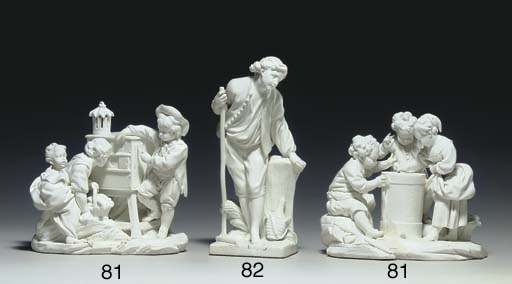
The banquet featured a recreation of a landscape at its center. Such a method of decorating a table was not new, especially when it came to desserts. Elaborate set pieces with architectural French influence were created for tables using spun sugar and Sevres bisque figures to create fantasy landscapes. Before the Napoleonic Wars, travel over the English Channel between British and French courtiers and diplomats was common, and thus the French chef’s custom of creating these elaborate centerpieces became well-known in England. Upper class households vied for highly paid (and desired) French chefs, and by the 1820s these gentlemen had by and large invaded British upper class kitchens. Their ability to create dishes that feasted both the eyes and the stomach was unrivaled.

 SEVRES BISCUIT FIGURES CIRCA 1755, Modeled after François Boucher. Image @Christies.

This was an era when confectionary was considered as much a branch of the decorative arts as of cuisine, and porcelain for the table represented prestige as well as a demonstration of power. The combination of French chef, porcelain, and fanciful confectionary desserts served as symbols of prestige and wealth, for no ordinary household could offer such an extravagant display of food and panoply. (View this porcelain table centerpiece set.)

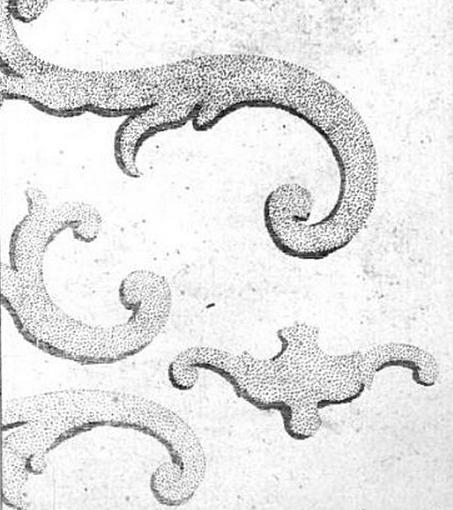
Detail of Gilliers’ templates for cut outs.

Most of the images of the banquets and figurines are copyrighted. I encourage you to click on the links to view the spectacular results of sugar and porcelain table centerpieces that mimic gardens, sculptures, and figures based on famous paintings. The fanciful recreation included redesigning tables as well.

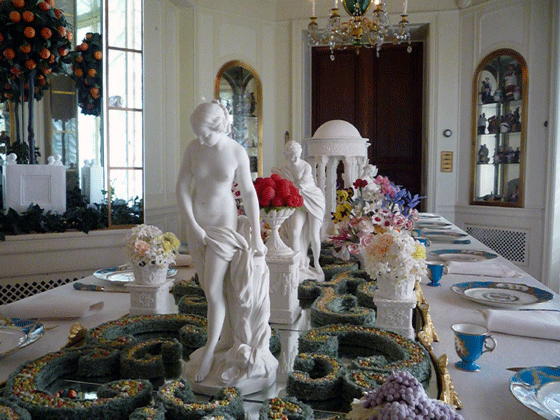
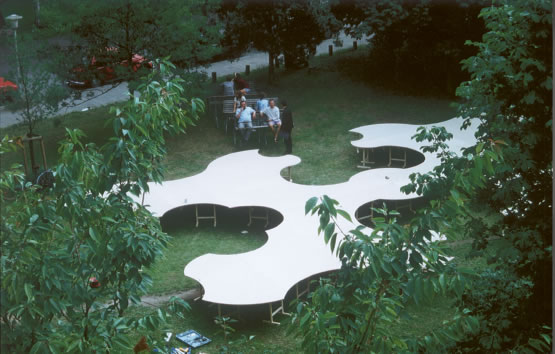
Modern version of Gilliers table. Image @Simon Beer.

Gilliers’ 1751 sketch of the table, plus seating.

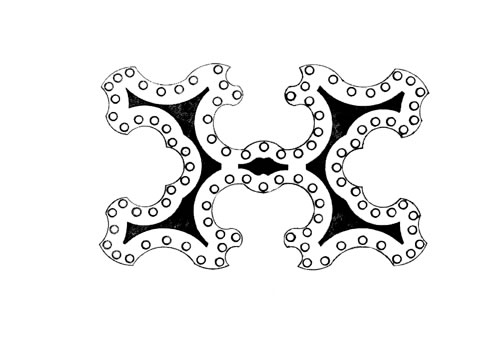
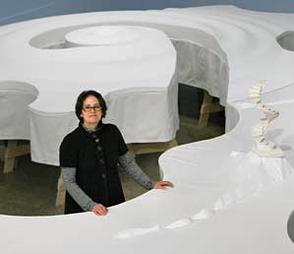
Amy Hauft, VCU sculpture department. Confectioner Joseph Gilliers conceived his 100-seat rococo fantasy for the serving of a single course — dessert — in a garden setting. The centerpiece atop the tailored white tablecloth was to be a sculpture made of sugar paste fortified with dried sturgeon bladder. There is no record that this table was ever built by Gilliers. Image@Richmond Times Dispatch

More on this fascinating topic:

Ivan Day’s  pavilion made from a “pastillage sugar paste for an exhibition at the Met in NYC two years ago. They were exact replicas of ones made for Maria Theresa, the Empress of Austria in 1740. “

Read Full Post »

Inquiring readers, guest blogger Tony Grant is a marvelous photographer, as you might have discovered from the images that accompany his posts. A week or so ago he wrote a post about door knockers. He provided only two original images: the rest came from the web. Last weekend he rectified the situation, saying:

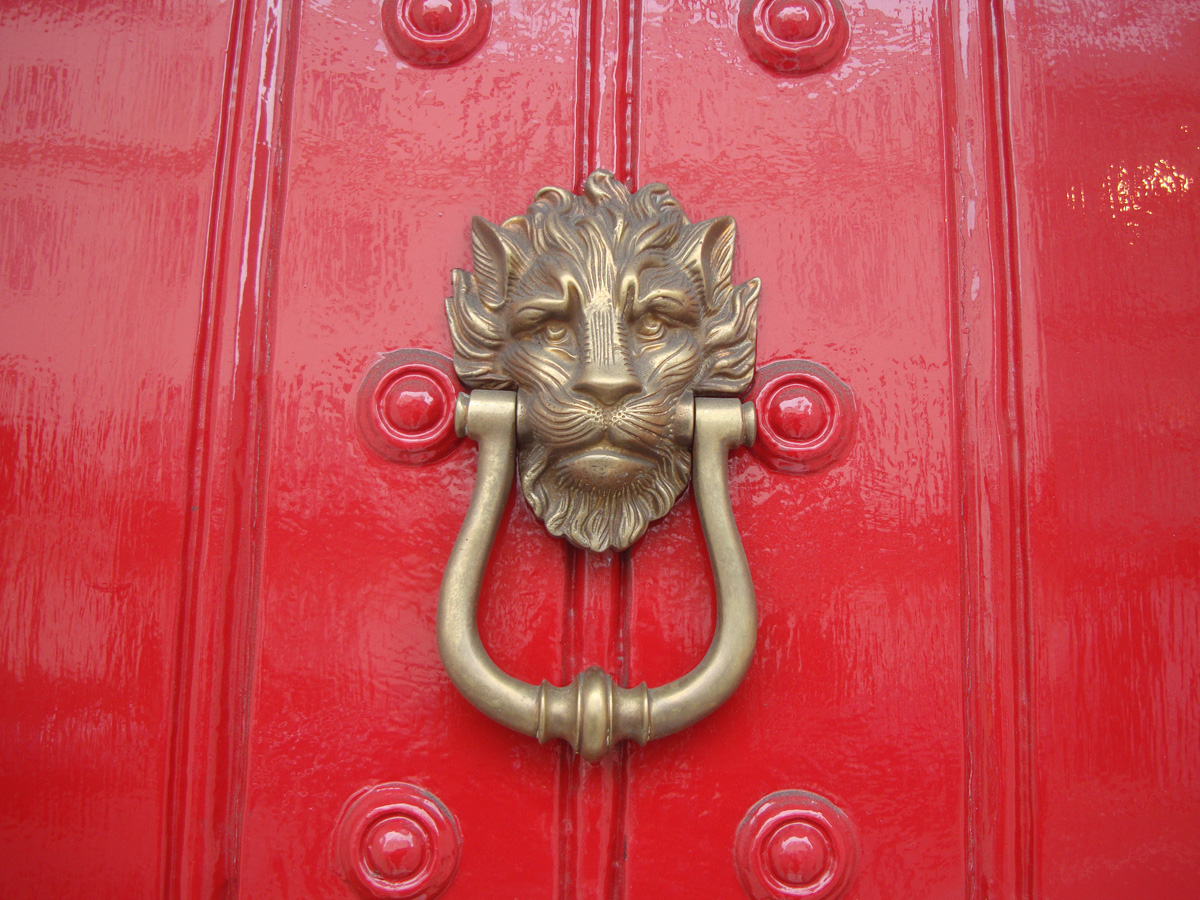
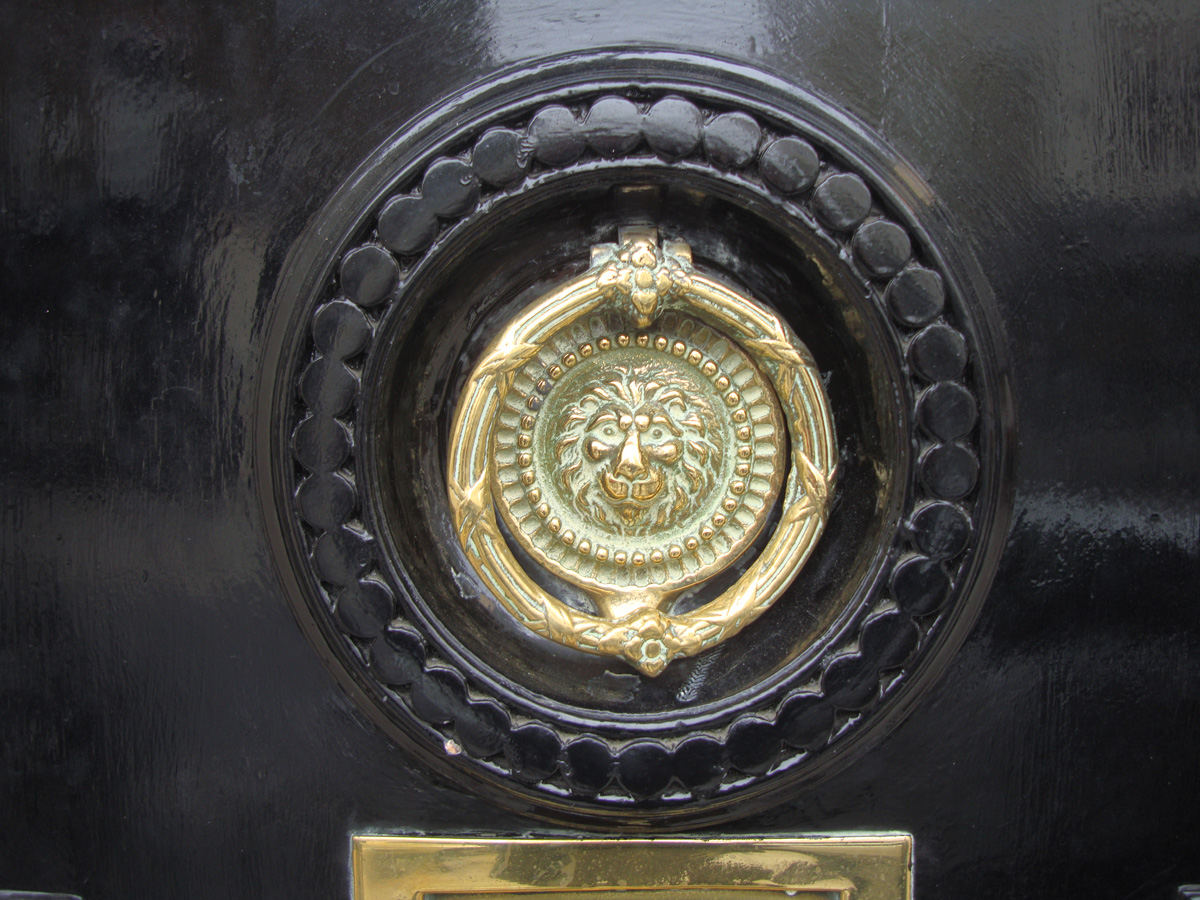
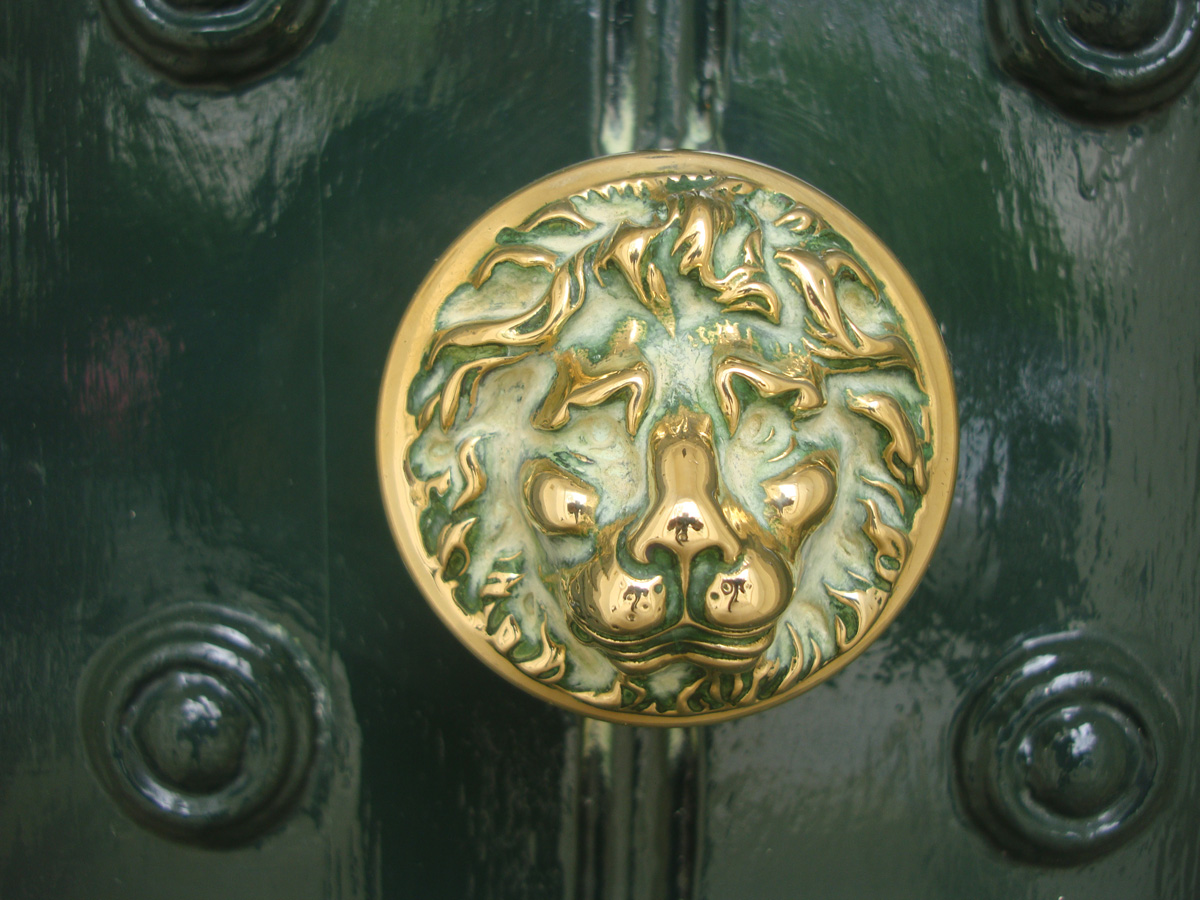
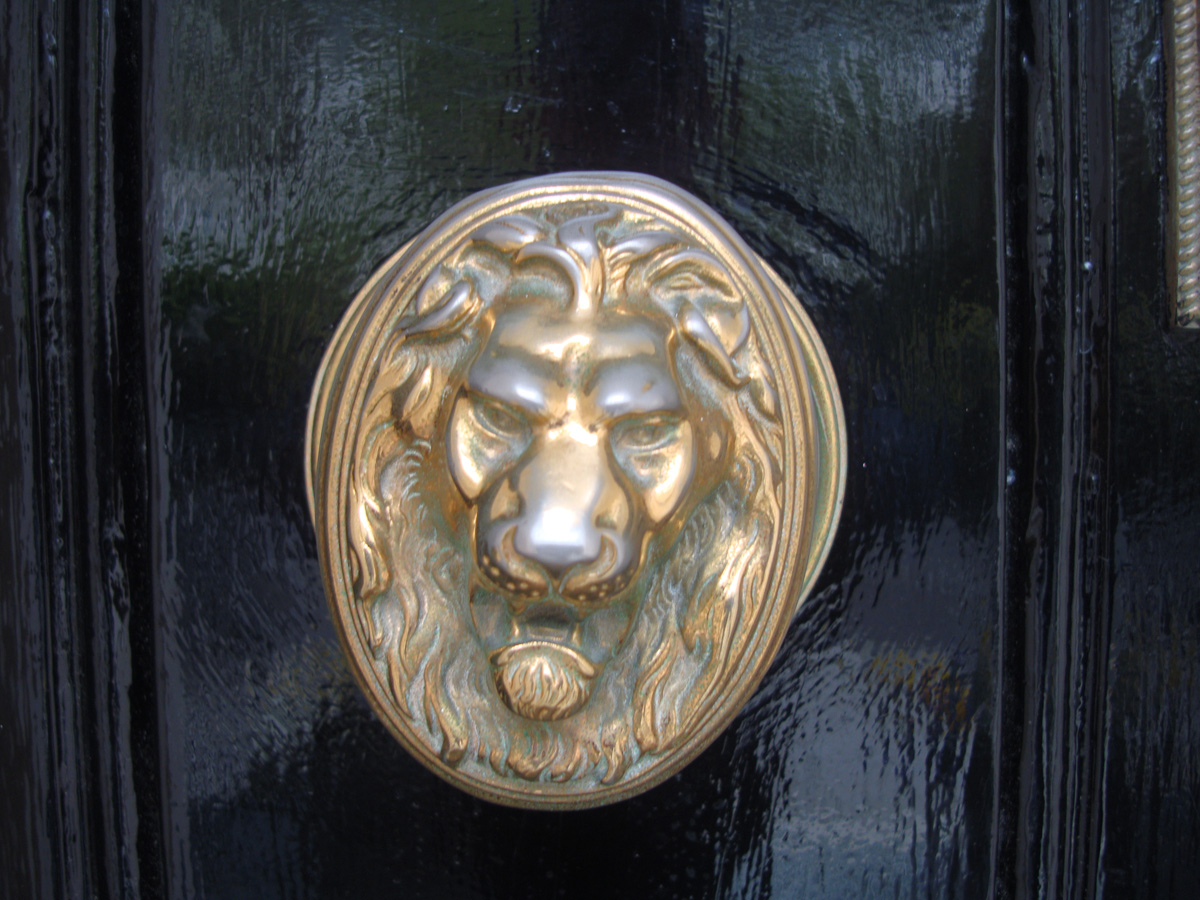
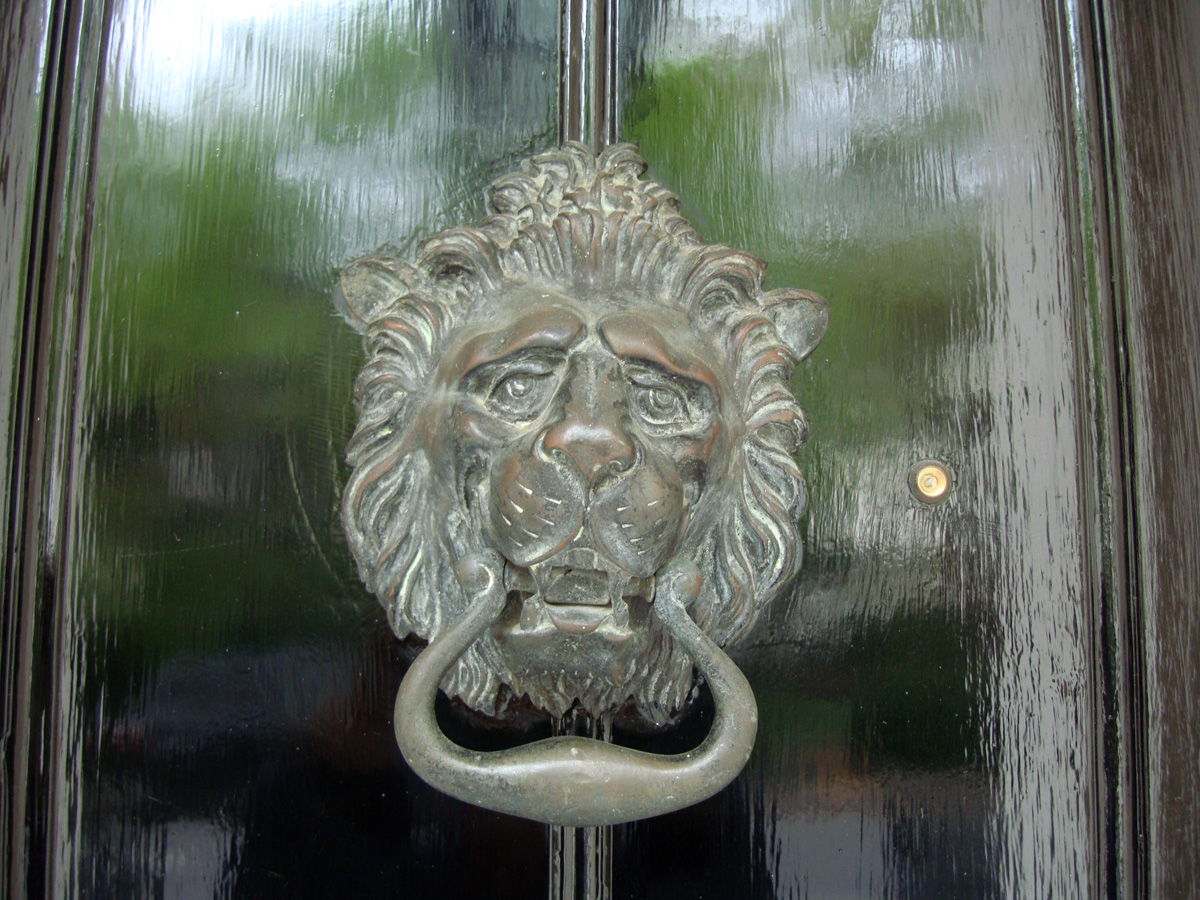
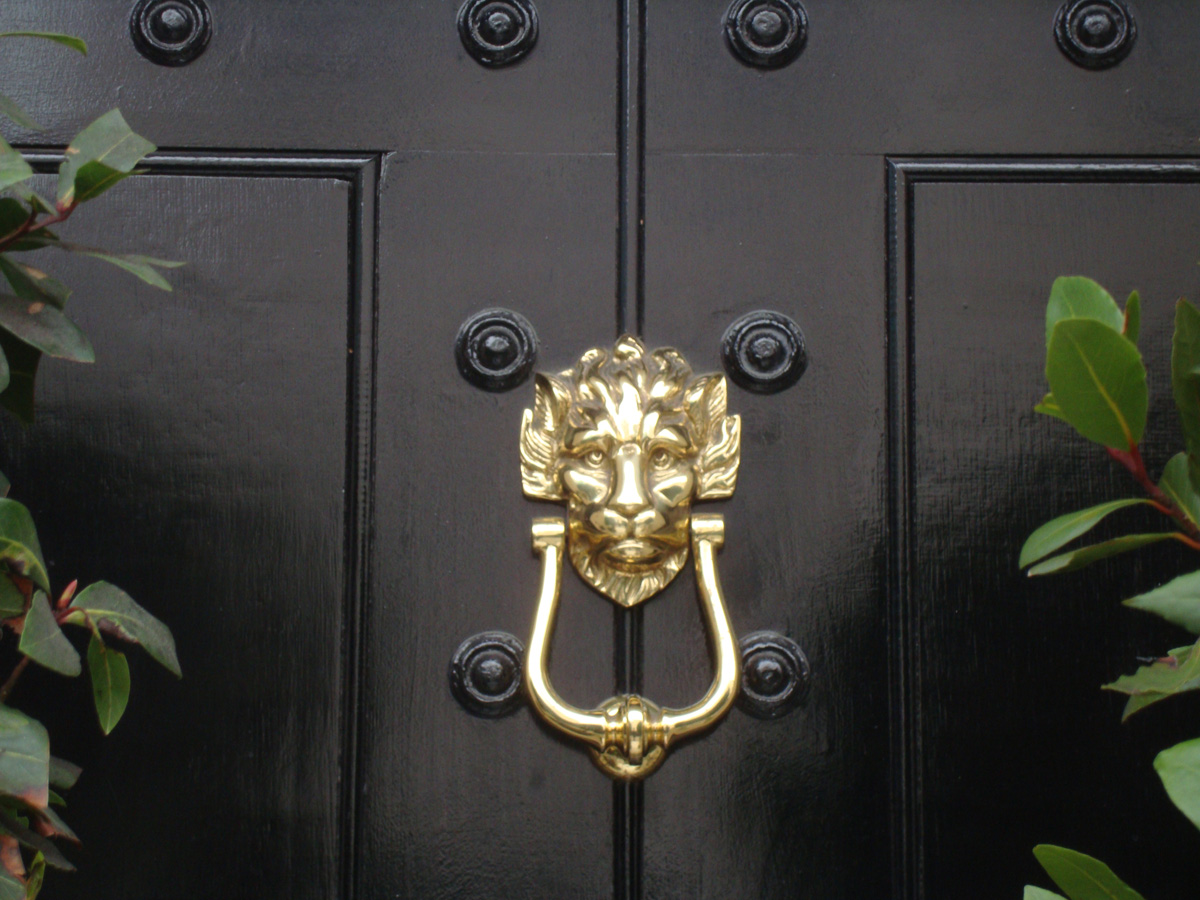
I drove into London to meet my daughter off the Cardiff coach at Victoria Coach Station today. I think I did an article on Belgravia once connected with the upstairs Downstairs series. Victoria is in Belgravia.To cut this story short, I had time to have a walk around Belgravia and along Eaton Square. The doors to those houses have a superfluity of Lion head door knockers.
What I have discovered taking these photographs is that  each lion head has it’s  own personality. They are all different which means they were all made individually, each from their own unique mould.

What struck me in viewing those photos is how beautifully painted the doors are. Tony is right – the lions all have their own personalities! Enjoy. Click on each image to view the larger photo.

Read Full Post »

« Newer Posts - Older Posts »