Feeds:
Posts
Comments

Archive for the ‘Georgian Life’ Category

What did ladies do in the morning 200 years ago? Why, write letters and draw and paint, of course. A genteel lady knew all three arts and achieved them with varying skills. This delightful La Belle Assemblee print details how a well-dressed woman would look at her work table. This young Regency miss works like me, btw: with everything out and cluttering surfaces.

Morning Dress, March 1812, La Belle Assemblee

First, a description of the outfit:

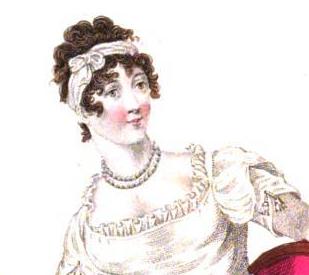
MORNING or HOME COSTUME: A white cambric frock with a demi train, short sleeves fastened up in front with cordon and tassels, a necklace formed of two rows of opal; the hair dressed in full curls, and confined by a demi turban of very fine muslin tied on the right side with a small bow; silk stockings with lace clocks richly brocaded; and plain black kid slippers.”

Detail of hair and bodice, La Belle Assemblee, March 1812. Note the lovely bandeau, the ringlets framing the face, and the relatively high neckline with ruff.

The magazine goes on to say that embroidery on all gowns, whether for domestic parties or home attire, seems very prevalent. Embroidery on evening gowns made of costly materials is frequently of gold and silver. India muslins are again coming much into wear and were very decently priced:

for the information of our Fashionable Readers, we have observed, at the house of Millard, in the City, some of the choicest production of the East Indies from the Company’s recent Sale of Bengal Muslins, &c. Their beauty is exquisite…”

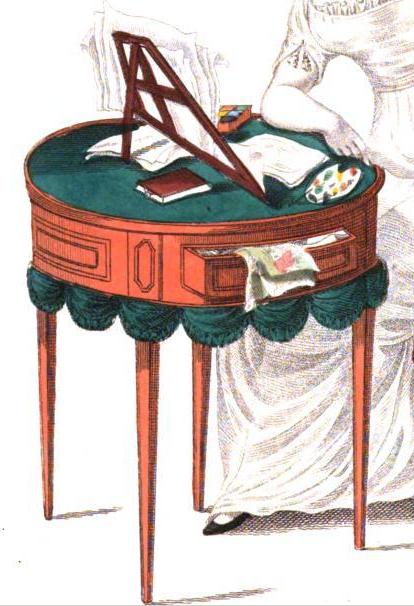
Detail of ladies round worktable with drawer. La Belle Assemblee, March 1812. This one most likely had a top and decorative swaths made of green baize, which prevented sliding.

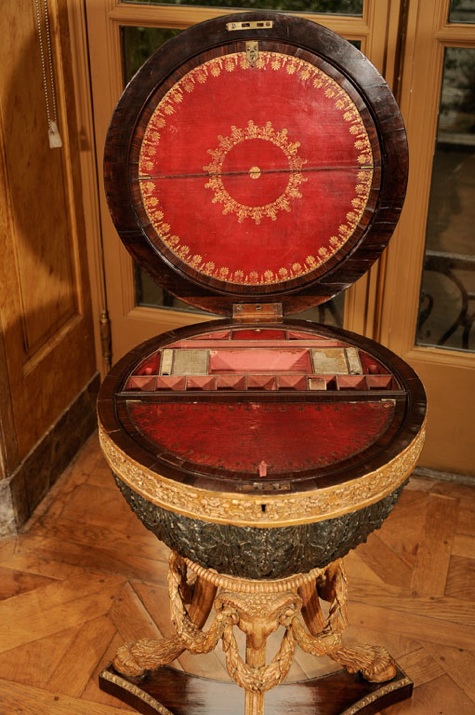
These small and elegant worktables were portable and could be easily carried near a light source or fireplace, or stashed against a wall when company came. They varied, some coming with a variety of compartments – some hidden – that contained writing and painting supplies. Many had book stands for reading, others had drawers that contained paper or embroidery threads and sewing supplies.

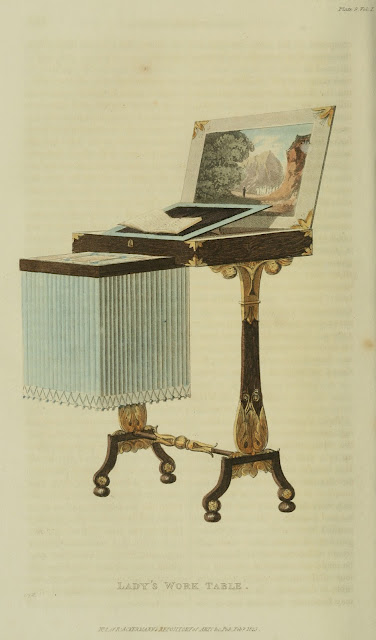
Ackermanns Lady’s work table, 1823. Image from EK Duncan

This work table was “equally adapted to the boudoir and drawing-room, and answers the purpose of a drawing-table as well as a work-table, and a desk for writing and reading.”

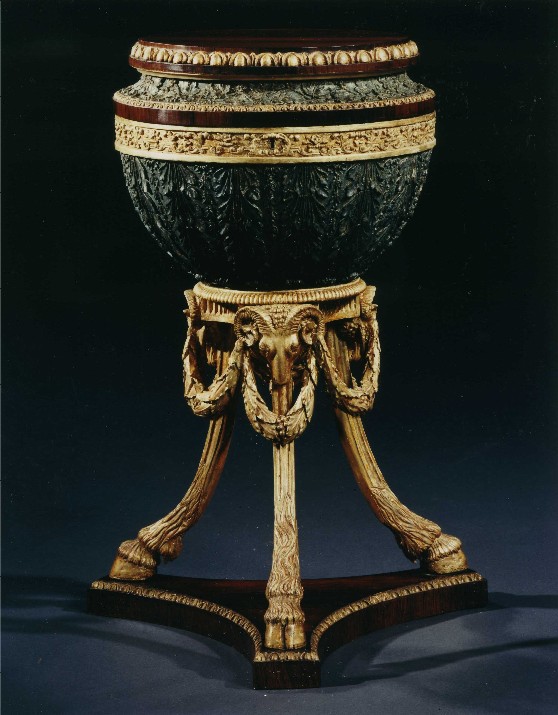
This was a very elegant and expensive work table for a rich lady.

This English work table, circa 1815, is a curious fusion of the refined neoclassicism of Robert Adam and the exotic eclecticism which emerged during the Regency period.  The finely carved tri-form giltwood stand, based on a Roman form, is typical of Adam’s adaptation of the antique. – Carlton Hobbs Work Table

… it was also a Regency characteristic to employ finely tooled scarlet leather, such as that fitted to the interior of this piece.”

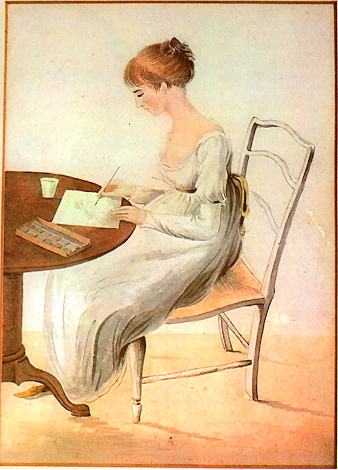
Jane Austen’s niece, Fanny Knight, paints watercolors on a regular table.

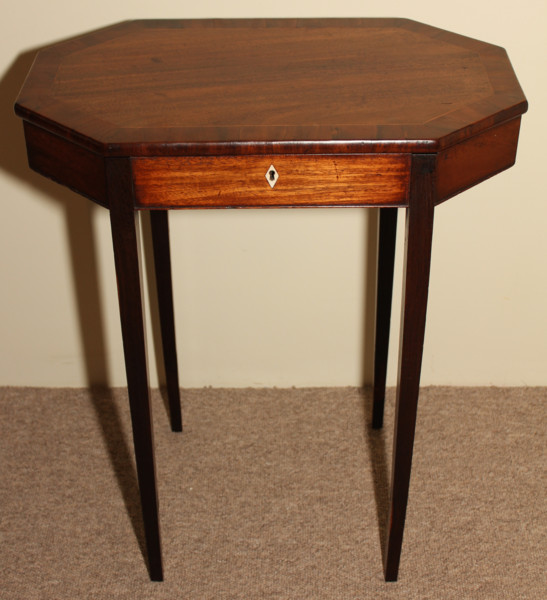
This rather plain octagonal worktable has four legs instead of the pedestal on Fanny Knight’s table.

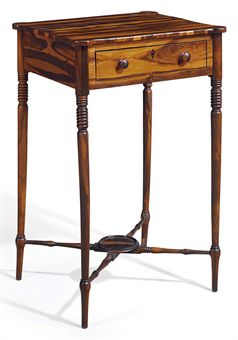
As you can see, work tables varied in design and construction. This simpler and smaller cocuswood work table suited a lady’s purpose as well as a fancier one, but it has fewer compartments.

This plain worktable with a single drawer is an:

Early 19th century regency cocuswood work table with a rectangular top and single drawer.The turned legs are joined by a turned stretcher with circular platform, with paper label to underside inscribed purchased by ABM.

A few months ago I featured a short video of an 18th century French mechanical worktable, which showed how the hidden mechanisms worked and how easily the table could be moved from place to place. Click on this link to view it.

Note: The blue links are mine: the green links are ads placed here by WordPress. I make no money from this blog.

Read Full Post »

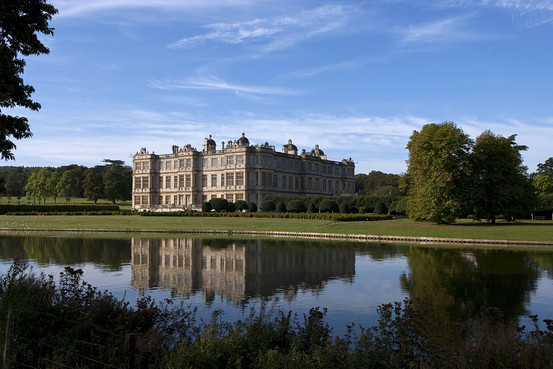
Great landed estates were symbols of the owner’s wealth and status in British society. Everything was put on grand display – from the exquisite architecture of the house itself to the furniture, jewels, silver plate, servants, books, carriages, horses, deer, game, forests, fields, and splendid grounds and gardens.

Longleat House in Wiltshire Image @www.longleat.co.uk

A fine estate certainly elevated a man in a lady’s estimation. Take this passage in Mansfield Park, written from Mary Crawford’s point of view:

Tom Bertram must have been thought pleasant, indeed, at any rate; he was the sort of young man to be generally liked, his agreeableness was of the kind to be oftener found agreeable than some endowments of a higher stamp, for he had easy manners, excellent spirits, a large acquaintance, and a great deal to say; and the reversion of Mansfield Park, and a baronetcy, did no harm to all this. Miss Crawford soon felt that he and his situation might do. She looked about her with due consideration,and found almost everything in his favour, a park, a real park, five miles round, a spacious modern-built house, so well placed and well screened as to deserve to be in any collection of engravings of gentlemen’s seats in the kingdom, and wanting only to be completely new furnished—pleasant sisters, a quiet mother, and an agreeable man himself—with the advantage of being tied up from much gaming at present, by a promise to his father, and of being Sir Thomas hereafter. ” – Mansfield Park, Jane Austen

(It is to Mary’s credit that, after this consideration, she prefered Edmund, the younger son, until she discovered that he intended to become a man of the cloth, and even then she did not give him up so easily.)

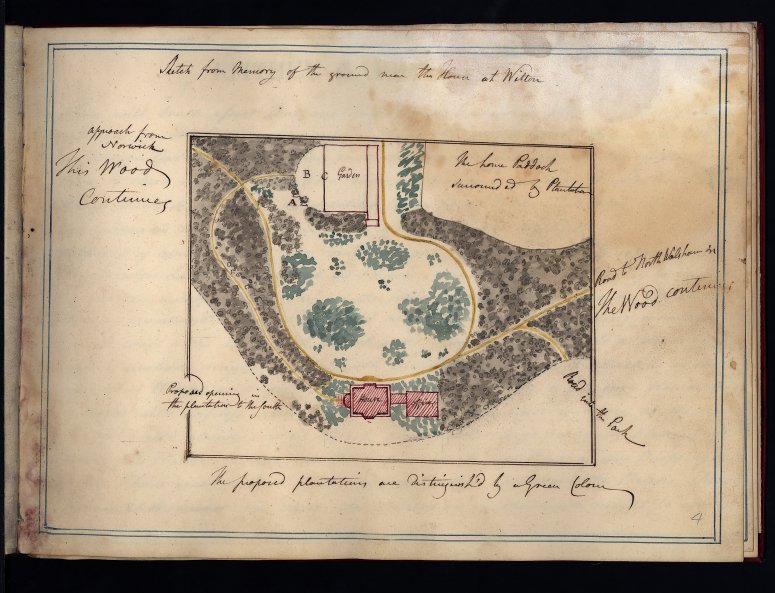
Visitors arriving at a landed estate took a circuitous route to the house along winding paths that were designed to show the grounds to their best advantage. They would pass through wooded areas and open fields, past lakes and rivers and herds of deer or cattle, and through a controlled wilderness area.

“The idea with Brownian landscapes is that you effectively go round them,” explains Mowl. “When [Capability] Brown did his landscape designs they would always have drives in them. They were an essential part of what he would do.” – The English Landscape Garden

Witton approach from Norwich, 1801, Humphrey Repton Red Book. Image @University of Florida Rare Book Collection

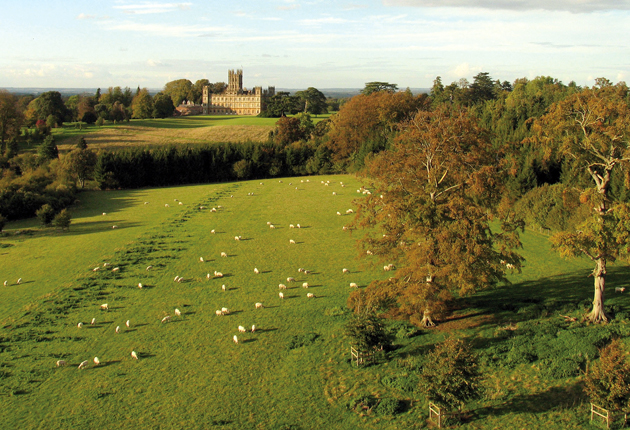
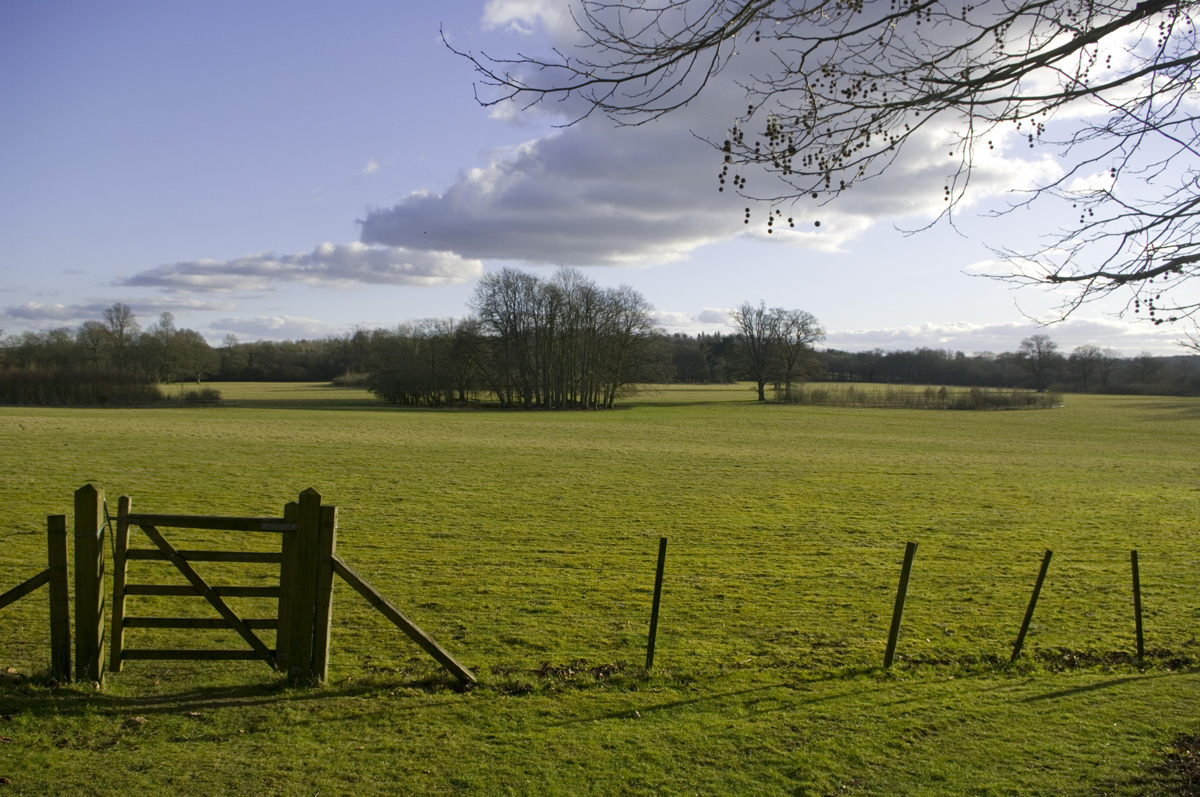
Groundskeepers of extensive parks that featured winding drives and a variety of formal and ornamental gardens employed several means of keeping grass under control. Grazing sheep and cattle represented the first lines of defense. These herds were allowed to roam over vast expanses of land. Eighteenth-century romantic sensibility required that nothing as obviously artificial as a visible fence be allowed to contain them.

Highclere Castle is surrounded by park land designed by Capability Brown. Grazing sheep in the foreground.

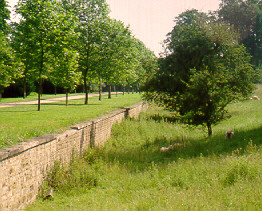
A landscape feature called a Ha-Ha prevented grazing herds from coming too close to the house. The Ha-Ha, which consisted of a deep trench abutting a wall and which was hidden from casual view even at a short distance, allowed for the naturalistic features of romantic landscape gardening to take hold.

The Ha-Ha prevented grazing animals from crossing from one area of the estate to another. Image © John D. Tatter, Birmingham-Southern College

A Ha-Ha was so named because, as the myth goes, this landscape feature was so well hidden that an unsuspecting visitor would blurt out “ha-ha!” before falling into the trench.  This cross section shows how the system worked.

The trenches of a Ha-Ha could sometimes be 8 feet deep.The primary view is from the right and the barrier created by the ha-ha becomes invisible from that direction and sometimes from both directions, unless close to the trench. Image @Wikipedia

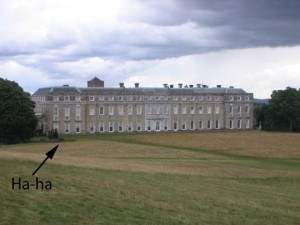
Not all Ha-Ha’s prevented deer, sheep, or cattle from grazing up to the front of the house (though considering their droppings, one would thinks that this would be highly preferred.) At Petworth, the Ha-Ha was placed at the side of the house.

Petworth with Ha-Ha on the side of the house. Image @The English Landscape Garden

Built at the edge of a pleasure grounds surrounding a house, the ha-aha made a virtually invisible barrier that kept the cows and sheep in their pastures yet allowed uninterrupted views from house into park of from park into distant countryside. It meant that pleasure grounds, park and landscape could seamlessly become one. It is probably French in origin. Charles Bridgeman is generally credited with it’s introduction, but the first remnants of a ha-ha had already been installed at Levens Hall in Cumbria in 1689. – Architessica: Gardens and Landscapes

The transitional area between the formal gardens and the large park surrounding the house was known as the wilderness. This area was as meticulously planned as the other areas of the estate, but here the plantings were more irregular and included native plants and trees; gravel walkways; a pond, lake or river or all three; waterfalls; lawns that resembled meadows; and areas where the vistas were framed to deliberately look natural. If cottages and villages were required to be moved to achieve this picturesque effect, then so be it. The master’s will was done.

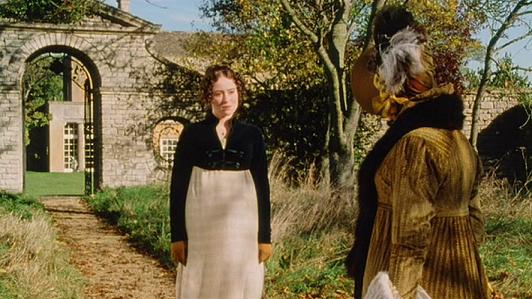
In Pride and Prejudice 1995, Elizabeth Bennet and Lady Catherine de Bourgh conduct their heated discussion in Longbourn’s “wilderness”. No grazing required here.

These wilderness areas were unique to topography and region, for each estate was uniquely different.

Nature in Herefordshire is not like nature in Lancashire and the garden style that tries to emulate the same form everywhere (particularly
one imported from another country entirely) is destroying what Pope had called the genius loci.” – (Wildness in the English Garden Tradition: A Reassessment of the Picturesque from Environmental Philosophy Author(s): Isis Brook Reviewed work(s): Source: Ethics and the Environment, Vol. 13, No. 1 (Spring, 2008), pp. 105-119)

This plan of Paca Garden in Annapolis, MD, shows the formal gardens separated from the park by a wilderness area with pond, bridge, and follies. Image (a) Creating a Period Garden

Walking along a wilderness provided one with an endless variety of aesthetic experiences. Paths wended their way through woods that opened up to vistas. Large trees provided shelter for a bench or revealed moss growing on gnarly roots. Rivers, ponds, follies, and bridges provided natural sources of visual patterns. They were pleasant places to visit:

 A ‘pleasant place’ is supposed to be naturally crafted. It’s a balance between two opposites: wanting to cultivate the land and letting it grow freely.  However landscapers and architects finally accomplish this goal, the product always ends up being a beautiful oxymoron. – Landscape as Amenity

Chawton House grounds. One of the vistas from a gravel path. Image @Tony Grant

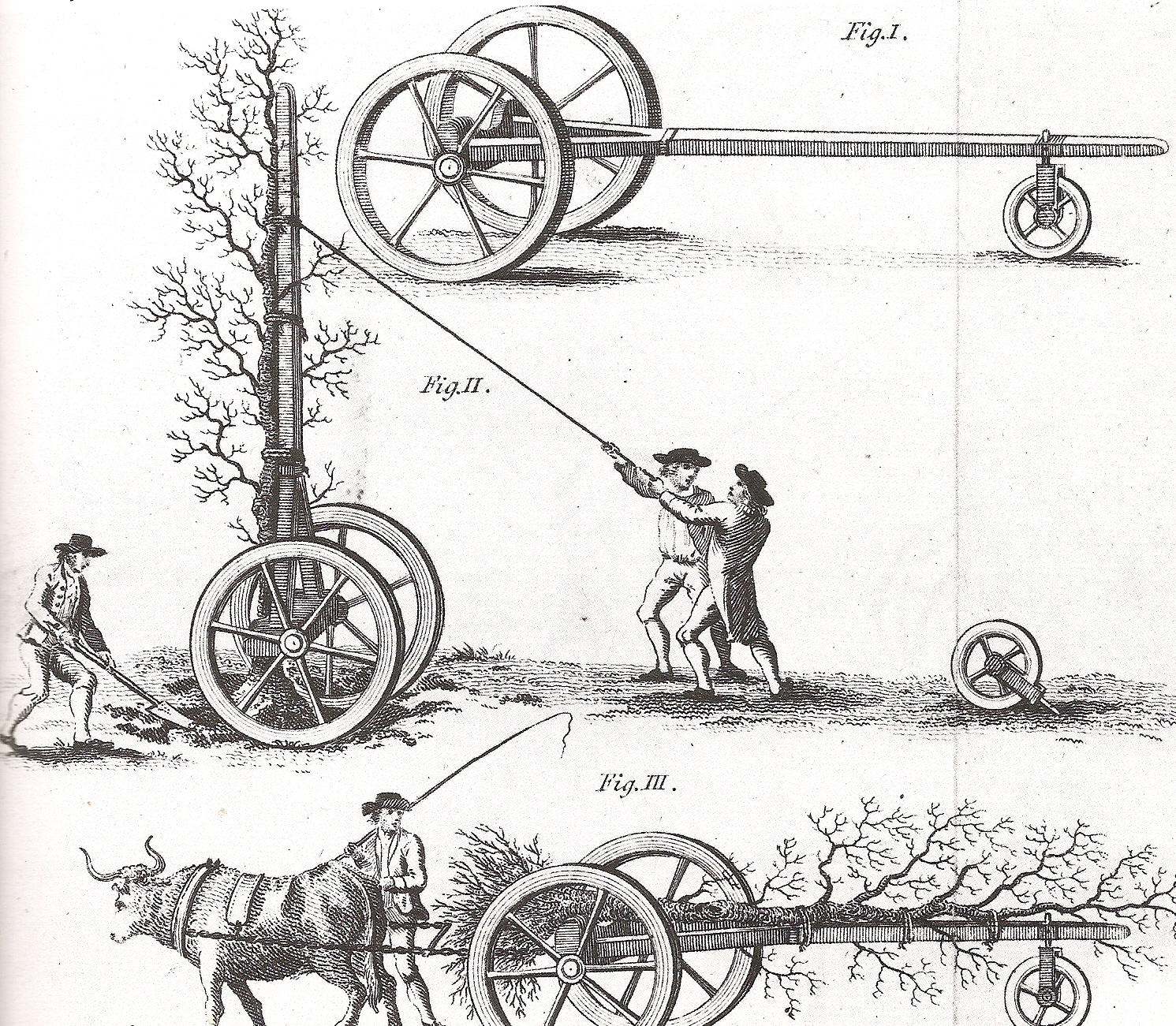
The exercise of walking along a wilderness ground was both visually and physically stimulating. These wilderness areas took years to design and arrange, with large trees moved from one area to another, buildings demolished or transported, and hillsides lowered or raised to “improve” the view.

Moving a full grown tree into place, Hayes, 1794

Such improvements, as they were generally known, required meticulous planning and strenuous effort. Master landscape gardeners like Lancelot “Capability” Brown and  Humphry Repton became household names. Jane Austen knew about such efforts and their resulting changes:

Mr. Rushworth, however, though not usually a great talker, had still more to say on the subject next his heart. “Smith has not much above a hundred acres altogether, in his grounds, which is little enough, and makes it more surprising that the place can have been so improved. Now, at Sotherton, we have a good seven hundred, without reckoning the water meadows; so that I think, if so much could be done at Compton, we need not despair. There have been two or three fine old trees cut down that grew too near the house, and it opens the prospect amazingly, which makes me think that Repton, or anybody of that sort, would certainly have the avenue at Sotherton down; the avenue that leads from the west front to the top of the hill, you know,” turning to Miss Bertram particularly as he spoke. But Miss Bertram thought it most becoming to reply—

“The avenue! Oh! I do not recollect it. I really know very little of Sotherton.”

Fanny, who was sitting on the other side of Edmund, exactly opposite Miss Crawford, and who had been attentively listening, now looked at him, and said, in a low voice—

“Cut down an avenue! What a pity! Does it not make you think of Cowper ?’ Ye fallen avenues, once more I mourn your fate unmerited.'”

He smiled as he answered, ” I am afraid the avenue stands a bad chance, Fanny.”

“I should like to see Sotherton before it is cut down, to see the place as it is now, in its old state , but I do not suppose I shall.” – Mansfield Park, Jane Austen

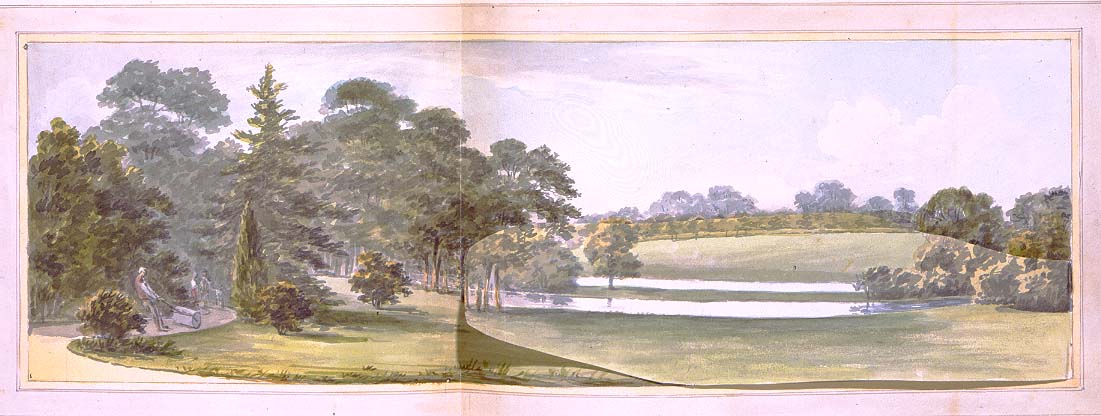
Sir Humphrey Repton, Whiton (Before) Image @British Architecture

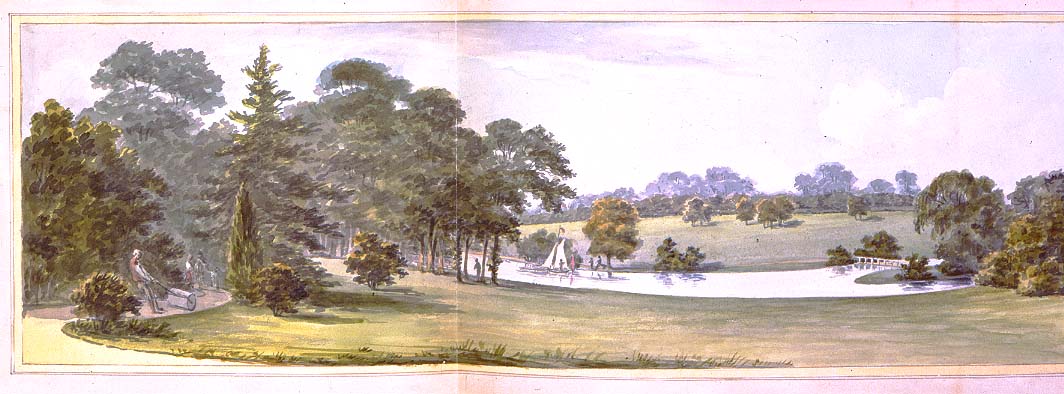
Sir Humphry Repton left a valuable legacy with his Red Books. It was his habit to sketch before and after landscapes for his customers and present the drawings to them bound in red covers. His improvements for Whiton are subtle but important. Two parallel streams have been turned into a serpentine lake with a waterfall at one end. The distant fields provide a focal point with artfully arranged trees. If you look closely at the gravel path on the left, you can spy a gardener.

Sir Humphrey Repton, Whiton (After). Image @British Architecture

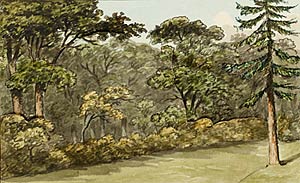
The samples below of Ferney Hall from The Morgan Library and Museum show the before and after drawing of an improved vista in which, using Jane Austen’s words, ” a prospect was opened”.

Ferney Hall by Repton. Image @The Morgan Library

The after image provides a glimpse of a folly. Instead of acting as a barrier, the woods give way to the scene, which provides a pleasant stopping point for the wanderer to sit and view. While such scenes looked natural, they were not.

Ferney Hall, After, by Repton. Image @The Morgan Library

Though visually the wild and the domestic were one is the same, “these were carefully managed scenes, designed to look natural, but actually contrived on a vast scale” – Landscape as Amenity

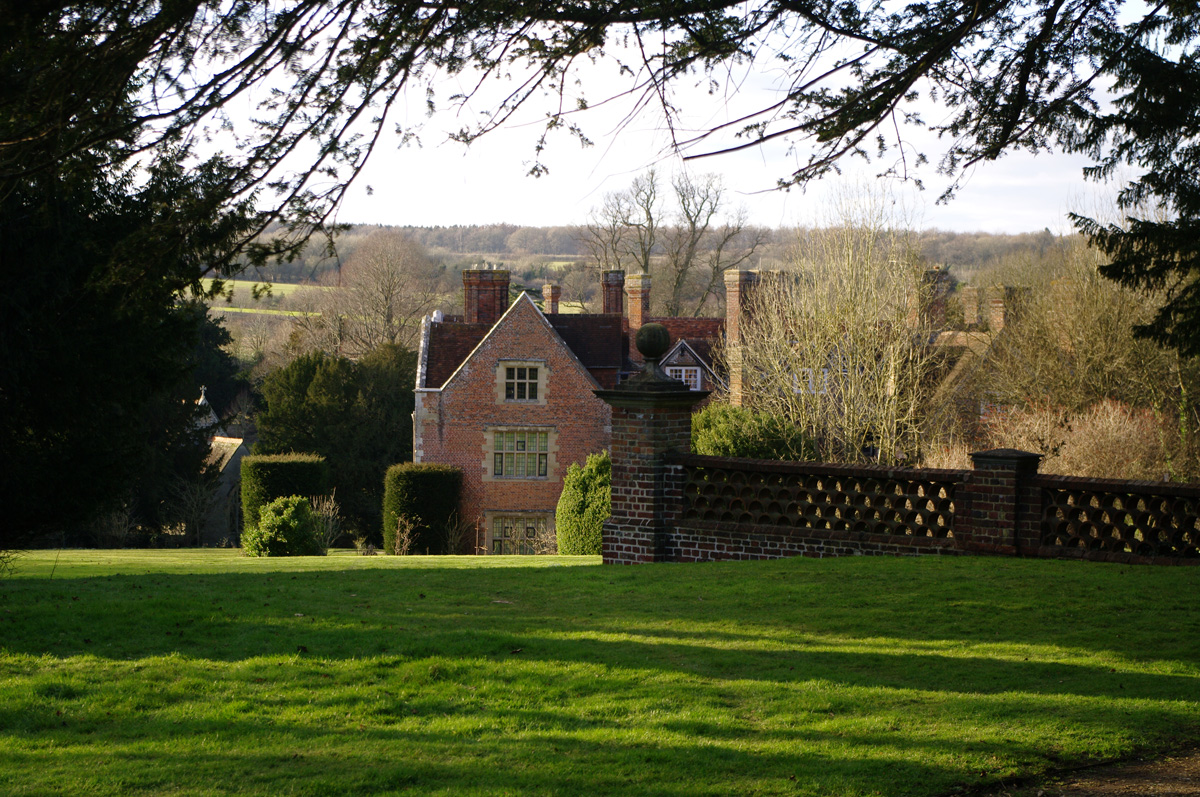
The wilderness was designed some distance from the house. Approaching closer, the visitor would see a more formal arrangement of fountains and shrubbery and mazes and flower gardens.

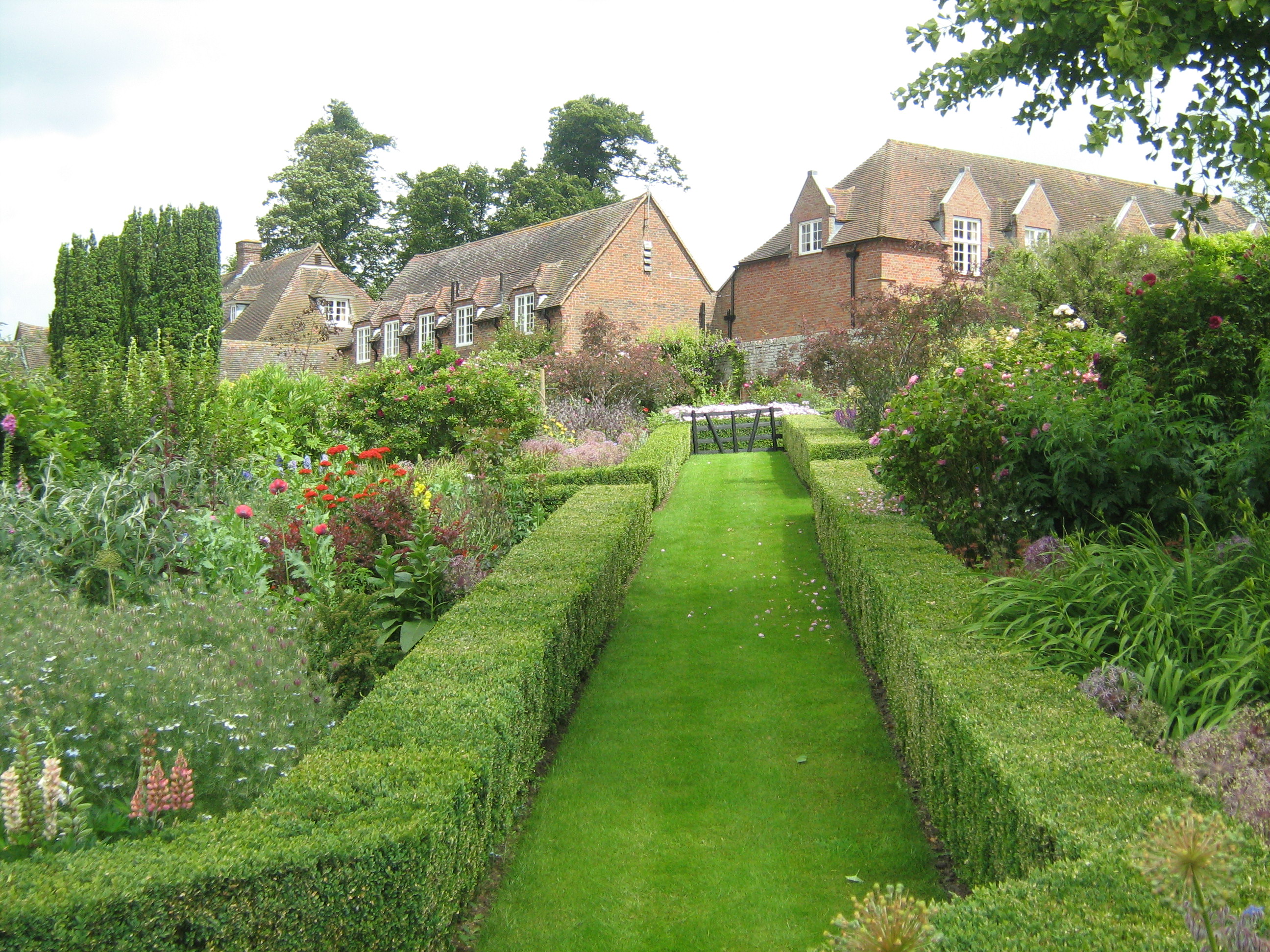
Chawton House: View from the wilderness towards the house and more formal plantings. Image @Tony Grant

The gentlemen who had these gardens designed for them had all been on the Grand Tour and learned the classics,” says Timothy Mowl of the University of Bristol. “It was part of their make-up and they wanted to display their taste and learning within gardens.” – The English Landscape Garden

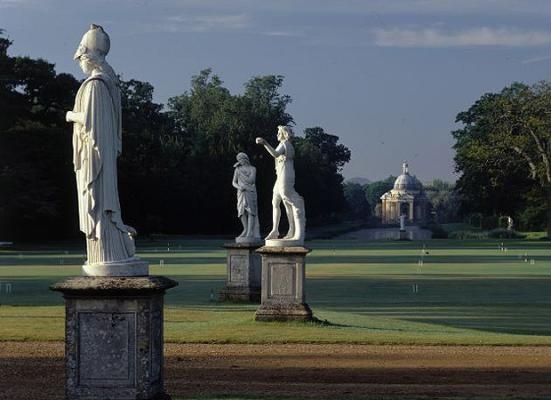
Wrest Park, Bedfordshire. Image @The Telegraph UK

Landscape designs informed the process of maintaining the grounds. Large estates employed many gardeners to keep cricket and croquet fields in pristine condition, cultivate the ornamental and kitchen gardens, and oversee the orchards and hot houses. The question is: How did they do it?

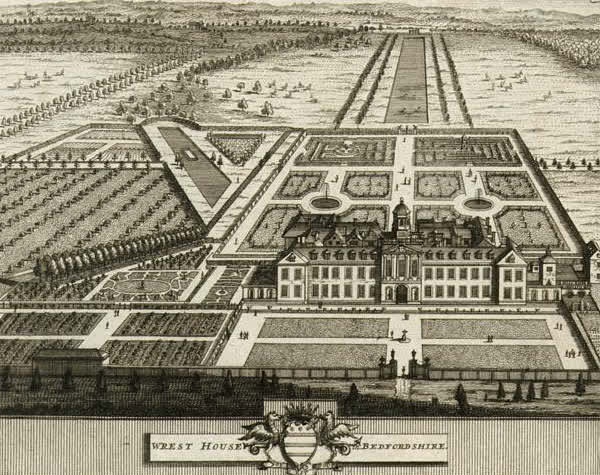
Extensive gardens surrounding Wrest House in Bedfordshire. Wrest Park Gardens are spread over 150 acres (607,000 m²) near Silsoe, Bedfordshire, and were originally laid out in the early 18th century, probably by George London and Henry Wise for Henry Grey, 1st Duke of Kent, then modified by Capability Brown in a more informal landscape style, without sacrificing the parterres. Image from The Leisure Guide

As mentioned before, the first line of defense was allowing herds of sheep and cattle to graze. However, their by-products left something to be desired. (If anyone has ever walked through a cow pasture, they will know what I mean.)

English Garden at Leeds: Artfully contrived to look both contained and natural. Image @Landscape Into Land

Lawn mowing and ornamental landscaping held no particular interest to 99% of the people who lived during the Georgian era. Cottagers and town dwellers maintained small plots of vegetable gardens and laborers worked in the fields, using scythes to cut wheat and grain for their employers.

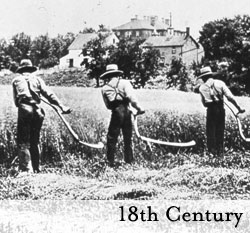
18th century method for harvesting grain with scythes. Image @Our Ohio

The laborers wielding scythes in the above image provide a clue to how grass was clipped – using a smooth, well-rehearsed motion, they worked in teams to cover large areas of ground. Their labor was cheap and they followed a system that included working in the morning when the ground was still damp.

Mowing Clover, late 19th c., by Arthur Verey

To prepare the lawn for scything, a gardener would:

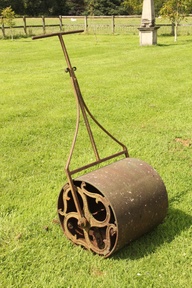
“pole” the lawn first (swishing a long whippy stick across the grass to remove wormcasts) and … roll the ground to firm it and set the blades of grass in a uniform direction.” – Notes and Queries, The Guardian UK

19th Century Coalbrookdale Roller. Rolling the lawn tamped down the grass and seed, and promoted growth and strong roots. Image @jardinique.co.uk

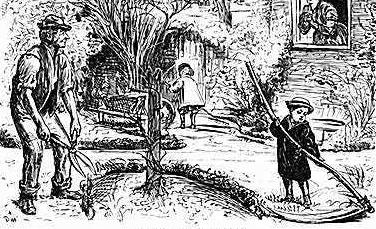
The secret to maintaining a close-cropped lawn was to trim it frequently, about once a week. Lawn edges were best trimmed with sheep shearing clippers.

This gardening family is using shears, a rake, and a scythe in their cottage garden.

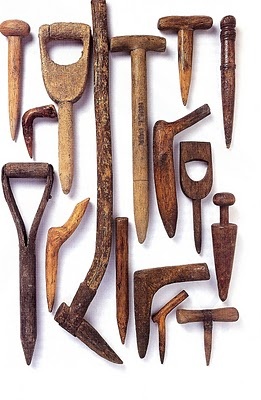
The grass was kept free of daisies with an instrument named a daisy grubber, which is the long-handled instrument with angled pick in the image below. Daisy grubbers are still sold today, as they apparently do the job well.

Dibbles and daisy grubber. Image @Garden History -Tools the Dibble

Dibbles were used to dig holes in the ground to plant seeds or bulbs, pry up roots, or jab weeds out between bricks and stone.

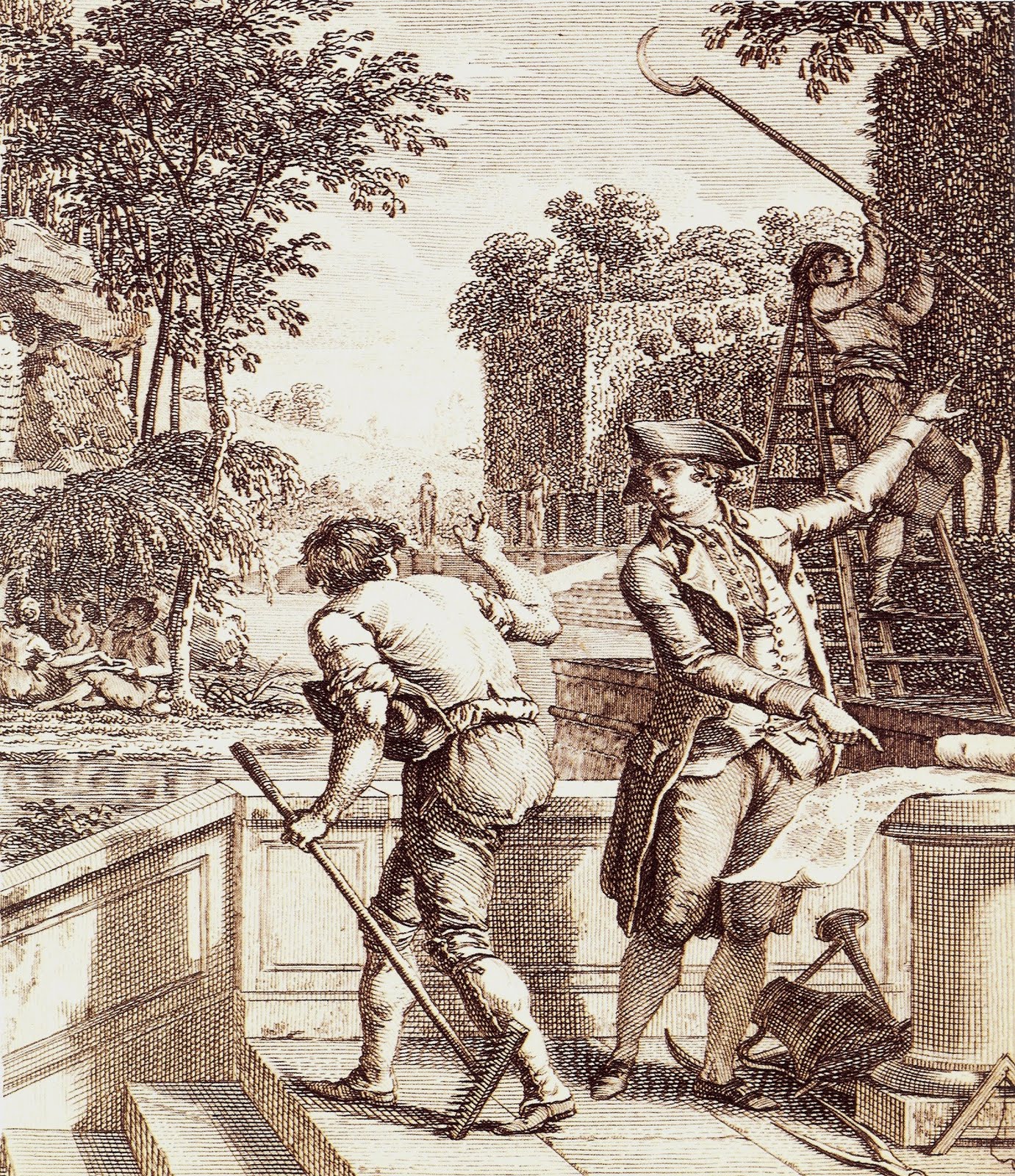
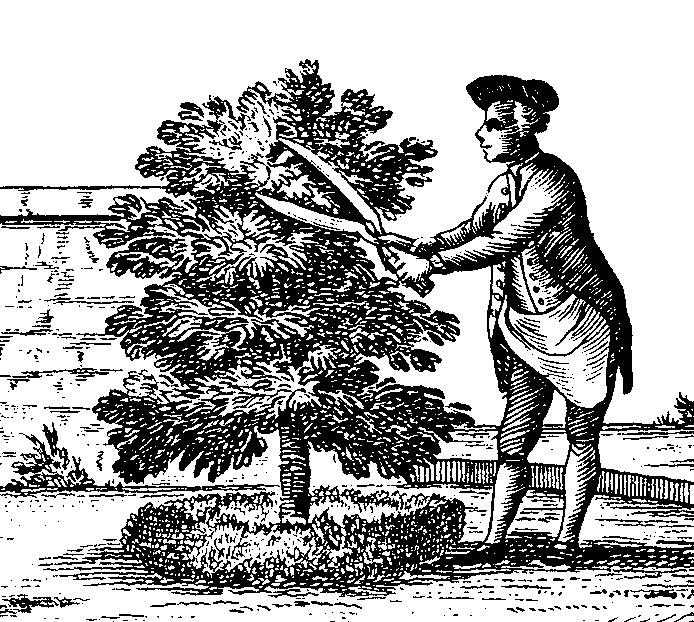
18th century gardener taking direction from a landscape designer. Note the man pruning the tree.

Even with these instruments, maintaining these large gardens took intensive labor. One can just imagine how much work was involved in protecting tender plants from insects and marauders, early frosts, and dry spells; and forcing exotic fruits and vegetables to grow out of season in hot houses.

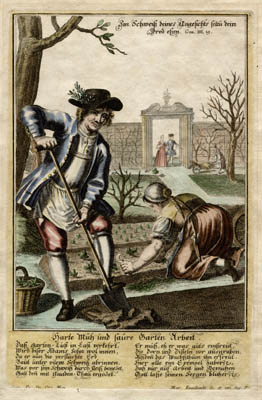
Engelbrecht. 18th century German print of gardening – planting.

While improvements were made over the course of the 19th century, some customs remained the same:

“rich people used to show their wealth by the size of their bedding-plant list: 10,000 plants for a squire; 20,000 for a baronet; 30,000 for an earl and 50,000 for a duke. ” – Ernest Fields, Life in the Victorian Country House by Pamela Horn, p. 75.

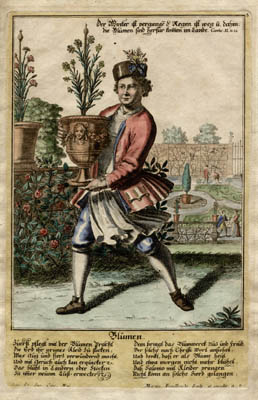
Engelbrecht’s plate of an 18th century gardener working with flowers

Landed owners showed off their wealth through a variety of means, including the number of servants they employed.

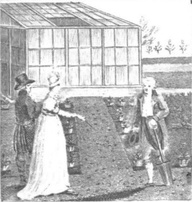
Master and mistress in discussion with the head gardener

It was not unusual for a great estate to employ 60 – 100 gardeners. There was the full-time staff, consisting of a master gardener, who had begun his apprenticeship as a boy, and his assistants.

Pruning

Scottish gardeners were preferred, as it was thought that they had received the best training. Unmarried apprentice gardeners moved from estate to estate in order to gain experience and be promoted.

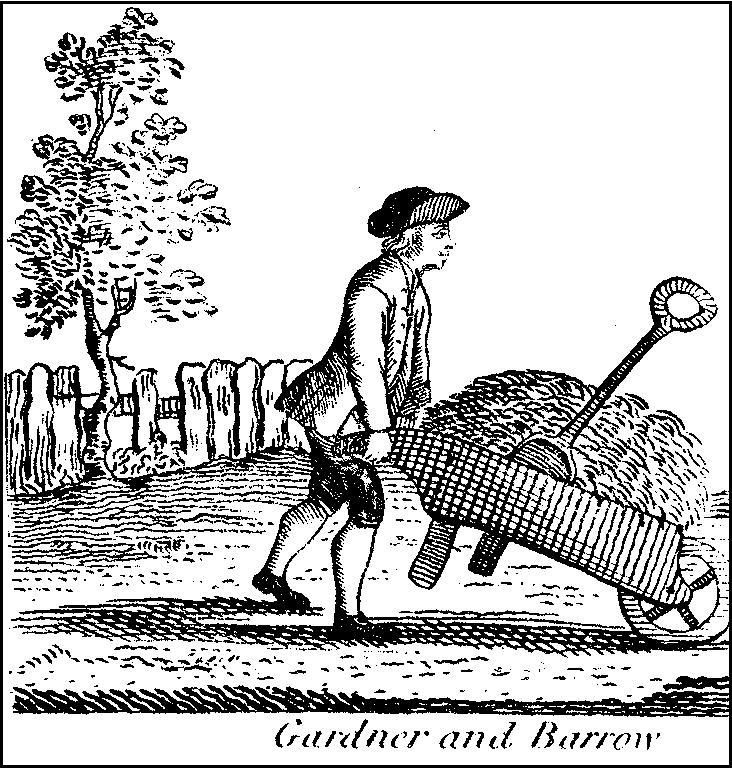
Dungbarrow

Junior staff worked long hours, around 60 hours a week, for, in addition to their gardening duties, they had to maintain the temperatures in glassed-in conservatories and meticulously care for archery, cricket, bowling and croquet lawns.

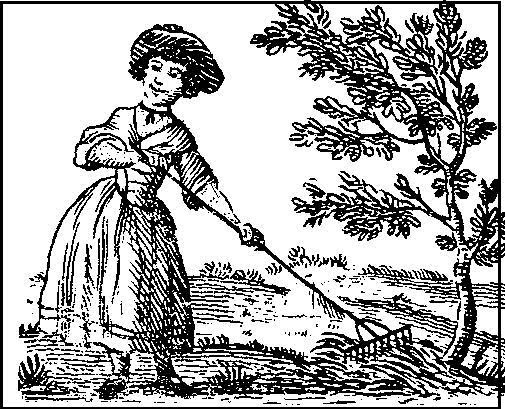
Woman using a rake

The master gardener hired local labor seasonally to help during peak times, so the number of laborers fluctuated.

The head gardener at the Thornham estate in Sussex at the end of the 19th century. Image by kitchen915

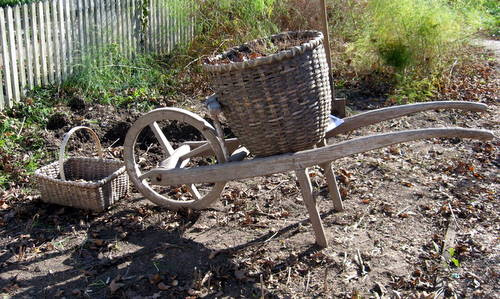
18th century garden cart and basket

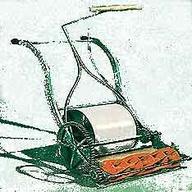
With improvements in gardening equipment, including the invention of the lawn mower in 1830 by Edwin Beard Budding, machines began to take over the hard work of the scythe men.

First lawnmower invented by Edwin Beard Budding. Image @The Chronicle of Andrew Jackson, Wikispaces

I imagined a Regency gentleman pushing one in his regalia, and found this wonderful advertisement. After Budding’s initial invention, a variety of lawn mowers were invented, each improving on the other.

Mowing a lawn in 1832. Credit: Ann Ronan Picture Library / Heritage Images

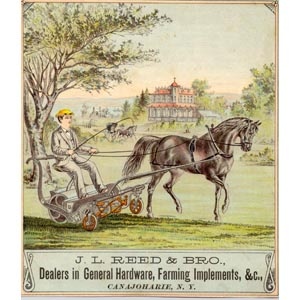
Needless to say, large areas of lawn needed a more efficient method of keeping the grasses trimmed. As the 19th century progressed, horses were employed to pull large lawn mowing machines.

Horse pulling a lawn mower. Image @The Cultural Landscape Foundation

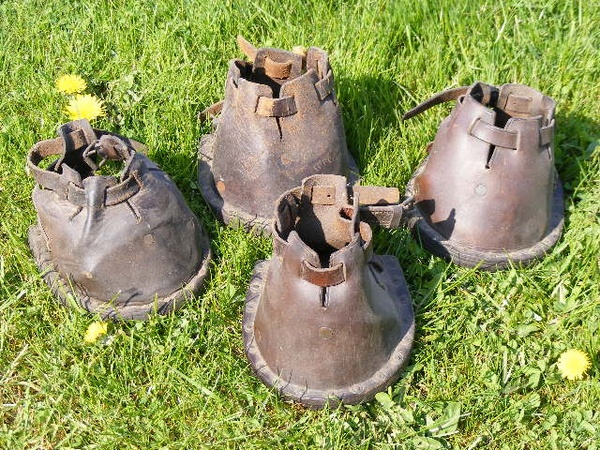
They wore special leather over shoes to protect fragile lawns, such as those shown in the image below.

This short video on YouTube demonstrates how 18th century gardeners dealt with sudden cold snaps.

More on the topic:

Read Full Post »

Men of fashion began to wear short and more natural hair at the end of the 18th century, sporting cropped curls and long sideburns in a classical manner much like  Grecian warriors and Roman senators. Before this period, a balding Louis XIII had made powdered wigs popular at the French court and consequently throughout Europe. The often elaborate and expensive gray wigs lent an air of wisdom and authority to their wearers.

William Pitt the Younger – Attributed to Thomas Gainsborough (c. 1804)
Prime Minister 1783 – 1801; Chancellor of the Exchequer 1804 – 1806

A scarcity of flour in 1795, combined with William Pitt’s attempt to raise revenue through a hair powder tax, brought the fashion for wigs and powder to a screeching halt. Men protested and a new more natural hair style became fashionable.

The 5th Duke of Bedford. Image @ Wikipedia

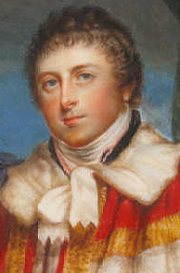
The Bedford Crop was a style of hair favored by the Duke of Bedford, who, in protest to the tax, abandoned his wigs in favor of a short cropped and unpowdered hairstyle. He challenged his friends to do the same.  His natural looking crop was parted on the side with a dab of hair wax.Wikipedia)

Pitt eventually reduced this unpopular tax on hair powder, which never quite generated the revenue he predicted, but by then it was too late. Gentlemen had discovered the comforts of going au naturel, and by 1812, few men still wore wigs. There were some holdovers – older men, military officers, and those in conservative professions such as lawyers, judges, physicians, and some servants for the very rich (footmen and coachmen) retained their wigs and powder. Formal court dress also still required powdered hair.

Beau Brummel’s Brutus hair style in 1805. Notice how it is brushed forward and volumized on top of his head.

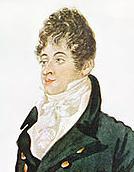
By and large men took their cue from classical Greek and Roman art. The romantic movement also influenced a natural, unpretentious aesthetic. A dry disordered look that used very few artificial products began to rule.  Beau Brummel’s influence cannot be discounted. His own grooming included shorter hair and a clean-shaven face. Every morning he examined his face in a dentist mirror and plucked any remaining stray hairs with tweezers. By 1813, almost all Regency men sported both long or short sideburns; they rarely wore mustaches or beards.

In Pride and Prejudice 1995, Colin Firth as Mr. Darcy wore his hair somewhat longer than the Bedford Crop and affected a slightly unruly hairdo, probably known as the Brutus.  (I confess I never liked Firth’s hairstyle for Mr. Darcy.)

Colin Firth as Mr. Darcy. His rather long, wild hairstyle now makes sense to me.

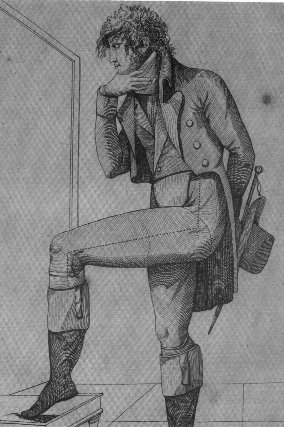
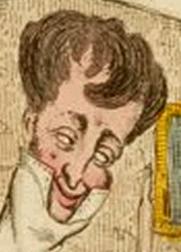
Upon seeing the following images, I can now see why the film’s hair stylist settled on this slightly wild do for Mr. Darcy, which seems to be a compromise between a severe clipped hair style and the stylish “frightened owl” hairdo below.

Young man by an unknown artist, c. 1800, from the book The Tie. Image @Jessamyn’s Regency Costume Companion

The  “frightened owl” hairstyle was achieved through infrequent hair washing (as infrequently as every few months) and the use of hair wax, which helped to create the wild and unruly volume.

The models for Regency men’s hairstyles: Caesar, Titus, and Brutus

Popular styles in the late 18th century were the Caesar, Titus, and Brutus. The Coup au Vent was short at the back and worn long over the eyes at the front.

Caesar cut. You can almost see the laurel leaves on his head with this brushed forward Caesar cut. Portrait of an unnamed man, ca. 1810-20

The Cherubin, like the Bedford Crop, sported short curls all over (the Caesar was clipped even closer.)

Bernier by Ingres, 1800. You can see the all over cropped unruly look. The sideburns in all these images are long, but the men are clean shaven.

The Classically influenced Titus was cropped short everywhere but at the front with curls combed forward onto the forehead to resemble the Roman Emperor Titus.

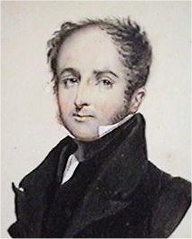
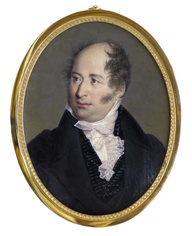
Balding men benefited from the close cropped, forward brushed styles. c.1815. Louis Francois Aubry. Monsieur Rivio Baritone in Paris Opera. Image courtesy of A Private Portrait Miniature Collection. (Update:) Mr. Phillips, who oversees the blog, lists the date of the portrait as 1840.

The more severe Brutus was even more clopped than the Titus. One of the most popular hair styles of the day, though, was the Brutus, a disheveled style that Beau Brummell and his followers wore.

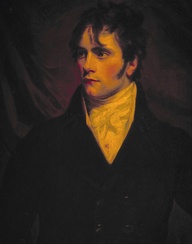
John Opie’s 1802 portrait of Edmund Lenthal Swifte shows a few artfully arranged locks over the forehead.

These hairstyles  took a great deal of time and patience to achieve. Men used an oil or pomade made of bear fat to achieve a natural “tamed” wildness. (Scented pomades were called Pomade de Nerole and Pomade de Graffa.)  Since hair was rarely washed, night caps were worn to prevent soiling pillows and doilies protected the backs of chairs.

The height on top with the artfully arranged curls take precedence in this hairstyle. Friedrich Wilhelm Schelling, 1801.

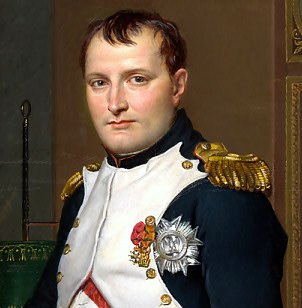
Napoloeon Bonaparte’s classic Caesar cut sported  longer locks down the forehead.

This dandy sports a Titus.

Arnauld de Beaufort ca 1818 (by Pierre Paul pPrud’hon). His hair is noticeably brushed forward, lending his features a saturnine look.

Regency hairstyles gave men a natural, romanticized look. (Portrait of an Artist by Unknown Artist) is part of the collection of the Michele and Donald D’Amour Museum of Fine Arts, Springfield, Massachusetts.

Gericault’s 1816 self-portrait shows a wildly romantic and unruly hairstyle.

Additional Information:

Please note: All green links in this post are WordPress Ads.

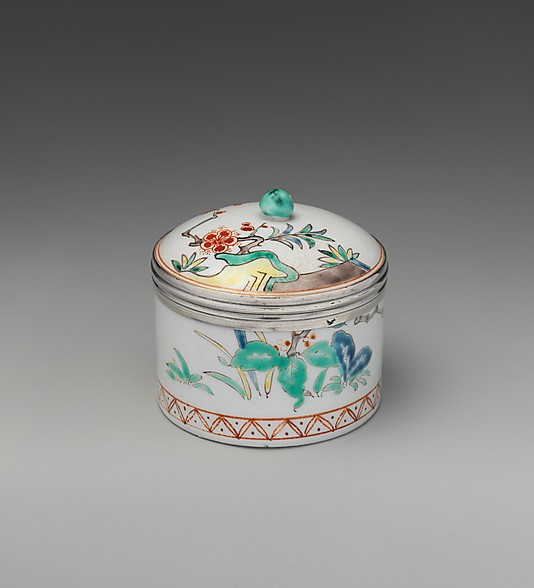
Covered porcelain pomade pot. Mid 18th Century. Image@Metropolitan Museum of Art

Read Full Post »

Gentle readers, some months back Lucy Warriner expressed an interest in writing about Mary Darby Robinson. This past week she submitted this wonderful post about a fascinating and successful woman who embodied the Georgian Era – wife, mother, actress, mistress, and writer. Enjoy. Mary Darby Robinson (1758–1800) was a woman of considerable talent. She was one of the leading English actresses of her day, and she also published several volumes of poetry and prose. Yet Robinson’s tumultuous love life often rivaled her professional accomplishments. She was unhappily married, and the press maligned her for her affairs with the Prince of Wales and Revolutionary War veteran Banastre Tarleton. Mary Robinson’s autobiography, first published in 1801 as Memoirs of the Late Mrs. Robinson, Written by Herself,sheds light on her fascination with the stage, which started at an early age and continued even after she became a full-time writer.
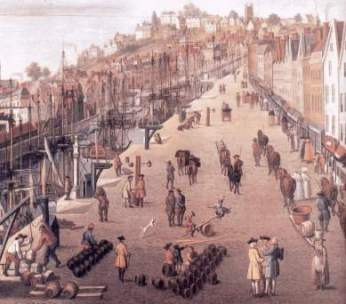
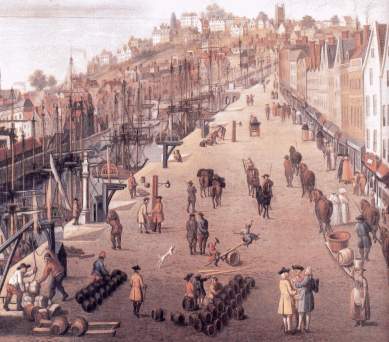
Bristol in the 18th century

Mary Darby, daughter of John Darby and Mary Seys Darby, was born in Bristol, England, on November 27, 1758. Her father pursued whaling in Labrador and America while she, her mother, and her four siblings remained in England. John Darby acquired a mistress, and after young Mary’s parents separated, the family finances were strained. However, John Darby intermittently funded his daughter’s education at schools in Chelsea, Battersea, and London. At Chelsea, teacher Meribah Lorrington fostered Mary’s love of reading and encouraged her when she began to write poetry.
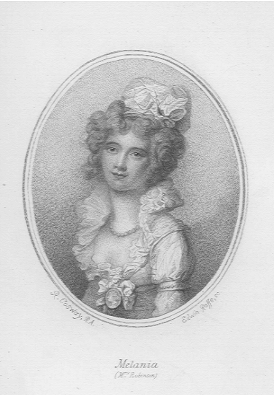
Mrs. Robinson as Melania

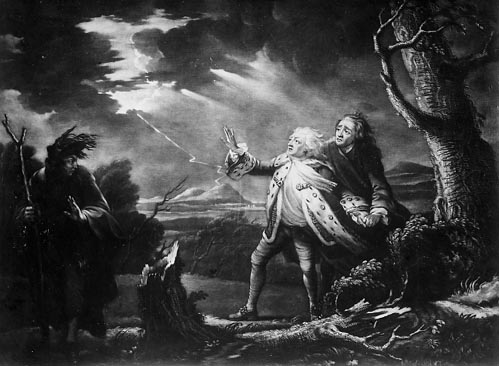
As a fifteen-year-old student at Oxford House in Marylebone, Mary was still drafting poems, even planning a great tragedy. This was a fitting development, for she had long shown a flair for the sentimental and dramatic. As a child, she had delighted in sad poetry and music, and she loved “the awful though sublime impression which the church service never failed to make upon [her] feelings” (Robinson, Memoirs 8–9). The recollection of seeing King Lear, the first play she ever attended, remained vivid throughout her life. In time, one of Mary’s teachers at Oxford House noticed her “extraordinary genius for dramatic exhibitions” (Robinson 31). The school dancing instructor, who was also employed at Covent Garden Theatre in London, put Mary and her mother in touch with Thomas Hull, the theatre manager. Hull, too, discerned Mary’s talent, and it was soon decided that her first performance would be opposite acclaimed thespian David Garrick in Lear.
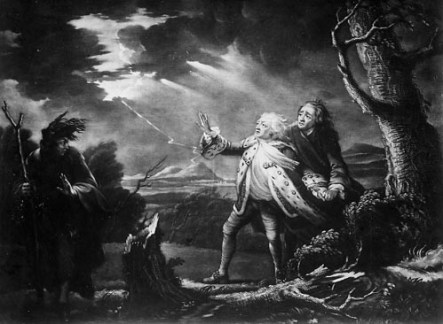
David Garrick as King Lear, London, 1761. Image @UC, Berkeley

Garrick soon began coaching Mary for her debut, and she seems to have been his prize pupil:

Garrick was delighted with everything I did. He would sometimes dance a minuet with me, sometimes request me to sing the favourite ballads of the day; but the circumstance which most pleased him was my tone of voice, which he frequently told me closely resembled that of his favourite Cibber [singer and actress Susannah Cibber, who was a member of Garrick’s Drury Lane troupe from 1753 to 1766]. (Robinson 37)

But while Mary relished the charismatic actor’s tutelage, she was unable to take full advantage of it. In the midst of her training, Mary met Thomas Robinson, an aspiring legal assistant who endeared himself to Mrs. Darby by bringing her books and comforting her when her son contracted smallpox. He turned his attentions to Mary when she, too, developed smallpox. When she was almost sixteen, Mary accepted Robinson’s marriage proposal and gave up the chance to appear in Lear with Garrick. The couple married on April 12, 1774, and remained in London. When Thomas wanted the union to remain secret, the new Mary Robinson discovered that he was an illegitimate child with no prospect of inheritance and a great amount of arrears.
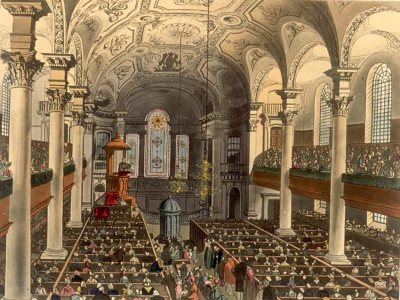
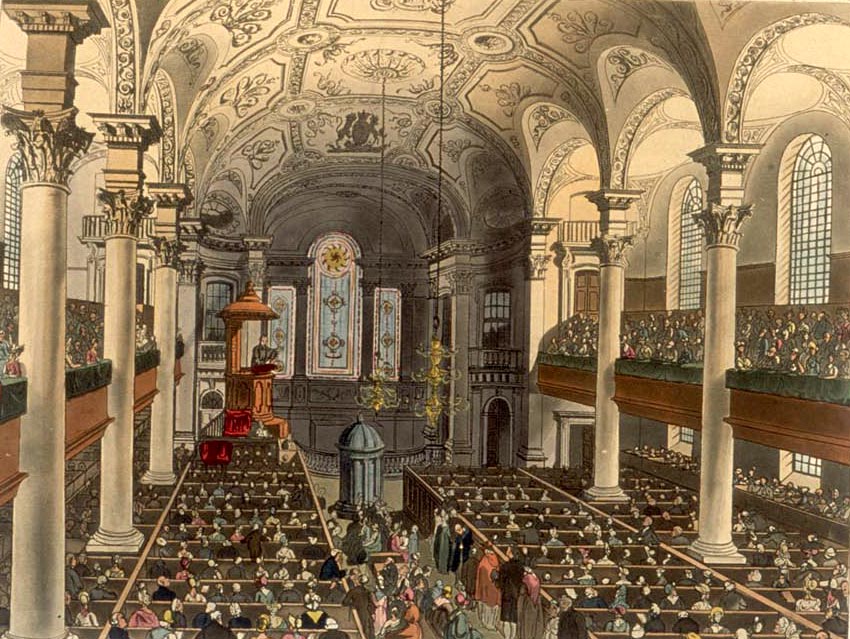
St. Martin in the Fields. Mary’s wedding was not so well attended.

Despite his penury, Thomas Robinson lived extravagantly. He took a mistress, Harriet Wilmot, and associated with debauched spendthrifts Lord Lyttleton and George Robert Fitzgerald, both of whom propositioned Mary. Deeply unhappy, Mary Robinson’s thoughts again turned to the theatre. Encountering accomplished thespian Mrs. Abington at a party, she “thought the heroine of the scenic art was of all human creatures the most to be envied” (Robinson 80). When creditors laid claim to the Robinsons’ possessions, the couple moved to evade them, at one point staying with Thomas’s father in Wales. Mary gave birth to Maria Elizabeth, her first child, in Wales on November 18, 1774.
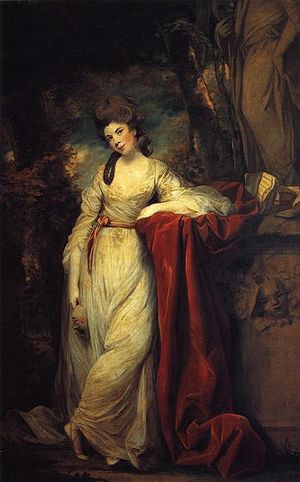
Frances (Fanny) Abington by Sir Joshua Reynolds, 1764-1773

Upon his return to London in 1775, police apprehended Thomas Robinson and confined him in King’s Bench Prison. Mary and Maria joined him there, and their imprisonment lasted little more than a year. While Thomas began an affair with the wife of a fellow inmate, Mary rebuffed further offers to become a kept woman. She devoted herself to raising Maria, transcribing legal documents for Thomas, and writing poetry. Prior to her incarceration, Mary had published Poems by Mrs. Robinson to help offset her husband’s debts. Though it had not sold well, she forwarded a copy to Georgiana, Duchess of Devonshire, a devotee of literature who sponsored writers. Mary Robinson soon became the duchess’s protégé.
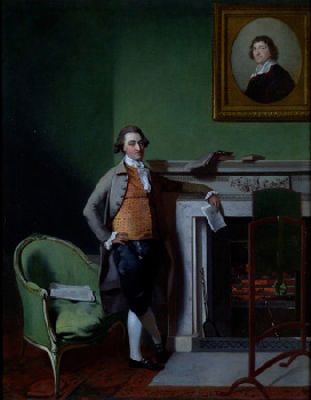
William Breteton, by Henry Walton, 1780

Once her husband was freed from prison, Robinson resumed acting to provide for the family. Thomas, who had never finished his legal training, was no breadwinner. A chance encounter with Drury Lane actor William Brereton, who introduced her to theatre manager and famed playwright Richard Sheridan, returned Robinson to the theatrical milieu. While pregnant with her second child, Sophia, she read Shakespeare for Sheridan and won his approval. Garrick, Robinson’s old mentor, came out of retirement to coach her for the lead in Romeo and Juliet.
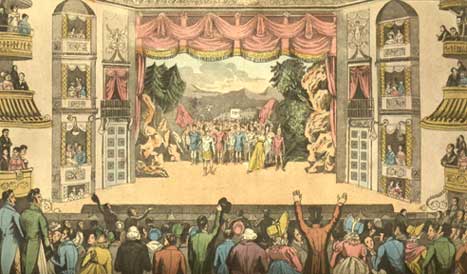
Drury Lane Theatre

In a flurry of nerves, she debuted at Drury Lane Theatre opposite Brereton’s Romeo in December 1776:

When I approached the side-wing my heart throbbed convulsively; I then began to fear that my resolution would fail, and I leaned upon the Nurse’s [the character of Juliet’s nurse] arm, almost fainting. Mr. Sheridan and several other friends encouraged me to proceed; and at length, with trembling limbs and fearful apprehension, I approached the audience. The thundering applause that greeted me nearly overpowered all my faculties. I stood mute and bending with alarm, which did not subside till I had feebly articulated the few sentences of the first short scene, during the whole of which I never once ventured to look at the audience. . . . The second scene being the masquerade, I had time to collect myself. I shall never forget the sensation which rushed upon my bosom when I first looked towards the pit. . . . All eyes were fixed upon me, and the sensation they conveyed was awfully impressive; but the keen, the penetrating eyes of Mr. Garrick, darting their lustre from the centre of the orchestra, were, beyond all others, the objects most conspicuous. As I acquired courage, I found the applause augment; and the night was concluded with peals of clamorous approbation. (Robinson 129–131)
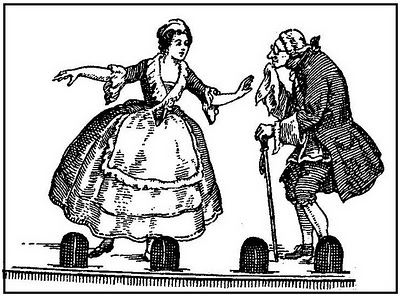
18th century actors on stage

Robinson’s appearance as Juliet led to a four-year acting career in which she starred in forty dramas, at times portraying several characters per week or per play. In February 1777, she followed her turn as Juliet with appearances in Alexander the Great and in Sheridan’s A Trip to Scarborough. The latter play was adapted from another work, and it elicited “a considerable degree of disapprobation” from audience members who had expected an original play (Robinson 132). Nevertheless, Robinson carried the day:
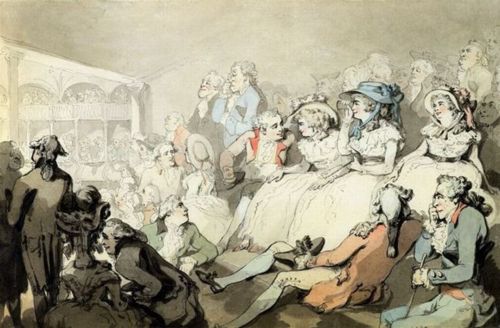
An audience watching a play at Drury Lane Theatre, by Thomas Rowlandson, ca. 1785

I was terrified beyond imagination when Mrs. Yates, no longer able to bear the hissing of the audience, quitted the scene, and left me alone to encounter the critic tempest. I stood for some moments as though I had been petrified. Mr. Sheridan, from the side wing, desired me not to quit the boards; the late Duke of Cumberland, from the stage box, bade me take courage: “It is not you, but the play, they hiss,” said his Royal Highness. I curtsied; and that curtsey seemed to electrify the whole house, for a thundering appeal of encouraging applause followed. The comedy was suffered to go on, and is to this hour a stock play at Drury Lane Theatre. (Robinson 132).

It is no wonder that Robinson claimed she “was always received with the most flattering approbation” (Robinson 133).
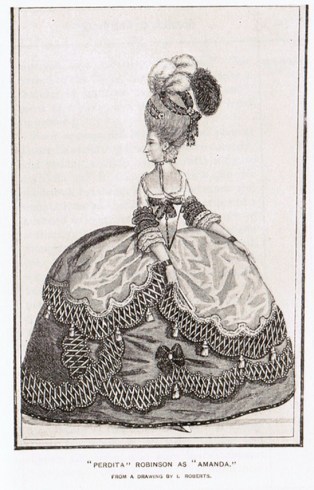
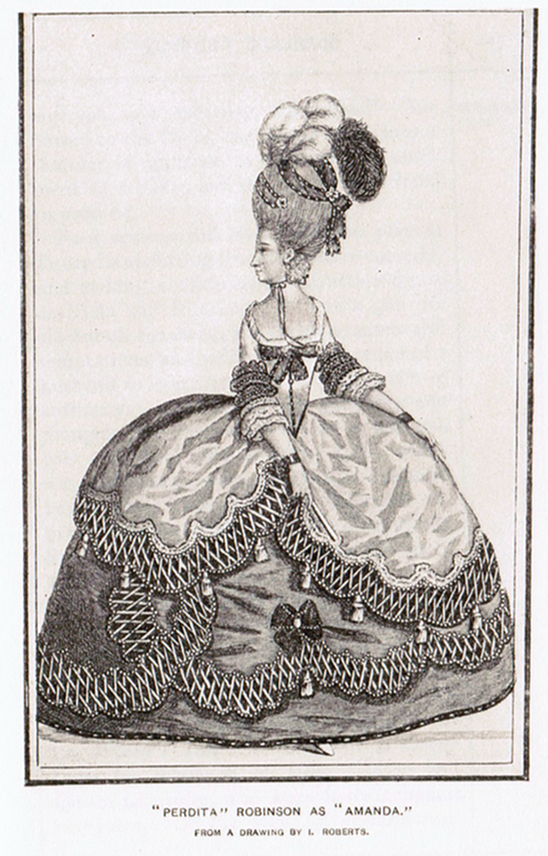
Mary Robinson in stage costume as Amanda, by Roberts Robins

Indeed, Mary Robinson was a prominent figure in a great age of theater. She observed that her time on the stage marked a period when dramatists and thespians were exceptionally gifted, when public enthusiasm about the theater was high, and when she and three other young actresses—Miss Farren, Miss Walpole, and Miss P. Hopkins—dominated their field. Robinson’s most acclaimed heroines were Juliet, Ophelia in Hamlet, Rosalind in As You Like It, and Palmira in Mahomet. Yet for all her renown, Robinson’s family never completely approved of her career. Her mother “never beheld [her] on the stage but with a painful regret” (Robinson 151). Her brother attended one of her performances but walked out when she took the stage. Robinson was somewhat relieved that her father was always abroad and never saw her perform.
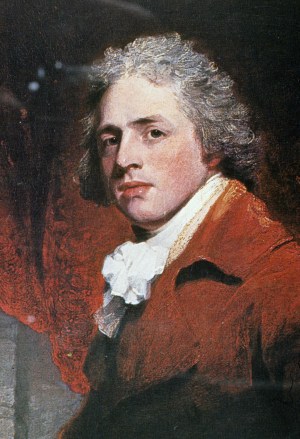
Richard Sheridan, by Sir Joshua Reynolds

In 1778, Robinson took time off from acting to give birth to Sophia and mourn the infant’s passing less than two months later . Sheridan, who had planned for her to star in The School for Scandal, was unfailingly supportive during her bereavement. Robinson considered him her “most esteemed of friends,” and she found his grief over Sophia’s death deeper than her husband’s (Robinson 153). When she was ready to work again, Sheridan helped find Robinson summer employment at Haymarket Theatre. However, a casting dispute with the director resulted in her receiving payment but never taking the stage.
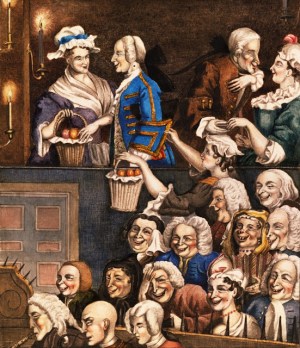
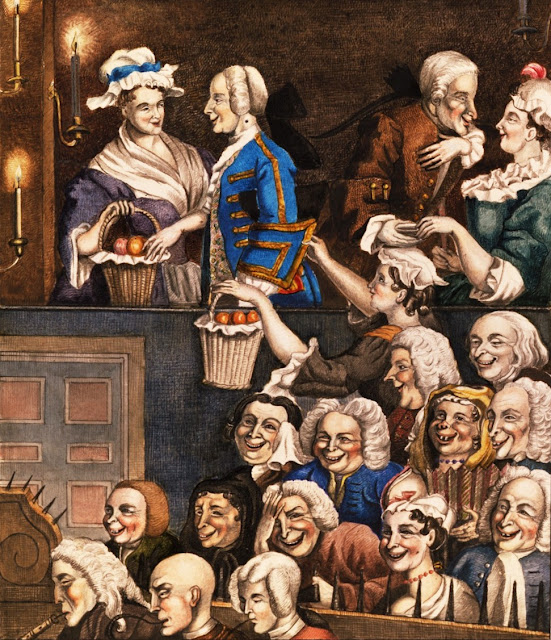
Theatre goers: The laughing audience, Edward Matthew Ward, from an etching by William Hogarth made in 1733

Mary Robinson had returned to acting in 1779 when her life changed drastically. A twenty-one-year-old with many celebrated performances to her name, she was hopeful about her future. Though Thomas remained negligent, the Robinsons’ financial situation was improving. Ever concerned for Mary, Sheridan worried that she would exceed her income and/or have an affair with one of her many wealthy admirers, thereby jeopardizing her acting career. His fears were well founded. King George III and Queen Charlotte requested a performance of The Winter’s Tale, in which Robinson played Perdita. When the royal family attended the play on December 3, 1779, the seventeen-year-old Prince of Wales unashamedly admired her:
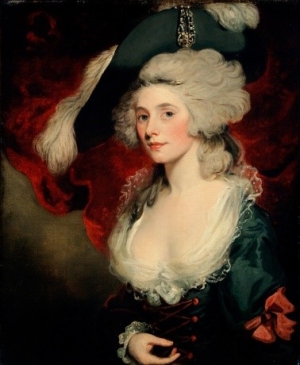
Mary Robinson as Perdita

I hurried through the first scene, not without embarrassment, owing to the fixed attention with which the Prince of Wales honoured me. Indeed, some flattering remarks which were made by his Royal Highness met my ear as I stood near his box, and I was overwhelmed with confusion. The Prince’s particular attention was observed by everyone. . . . On the last curtsy, the royal family condescendingly returned a bow to the performers; but just as the curtain was falling, my eyes met those of the Prince of Wales, and with a look that I never shall forget, he gently inclined his head a second time; I felt the compliment, and blushed my gratitude. . . . I met the royal family crossing the stage. I was again honoured with a very marked and low bow from the Prince of Wales. (Robinson 157-158) A few days later, Lord Malden (George Capel Coningsby) delivered Robinson a love letter from the Prince of Wales, who was an associate of his. The prince referred to her as “Perdita” and himself as “Florizel,” in the latter case referring to the prince in A Winter’s Tale who falls in love with Perdita. The press, which chronicled the relationship from its start, appropriated these names for their own use as well. Robinson at first refused to meet her new admirer, entering instead into an impassioned correspondence with him. Malden, who eventually fell in love with Mary himself, remained their reluctant go-between.
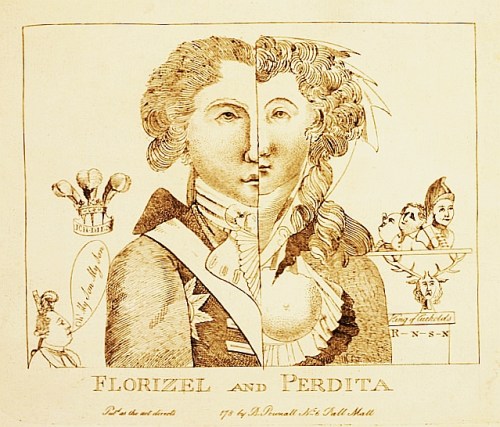
Caricature of the Prince of Wales as Florizel and Mary Robinson as Perdita, 1783

Eventually, the couple began meeting in person with third parties present, hoping to conceal the relationship until the prince was a legal adult. The prince guaranteed Robinson 20,000 pounds upon reaching his majority, and she left her husband and retired from acting.
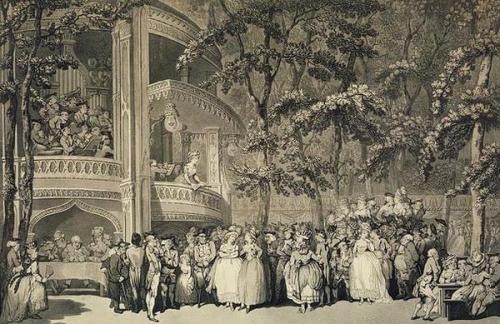
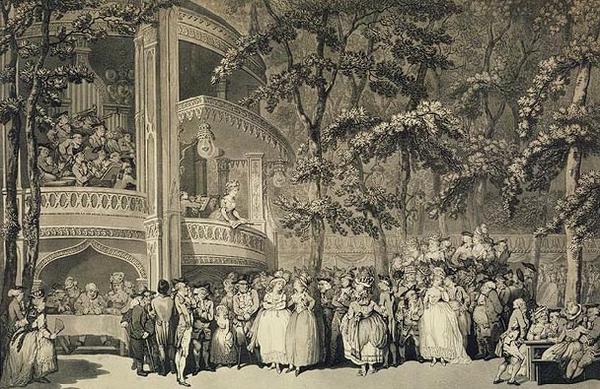
At Vauxhall by Thomas Rowlandson. Mary Robinson stands at the right side on the front row, her husband (with cane) on one side and the Prince of Wales on the other.

Her last performance showcased her roles in The Miniature Picture and The Irish Widow. Robinson wept during the show, aware “that [she] was flying from a happy certainty, perhaps to pursue the phantom disappointment” (Robinson 177).
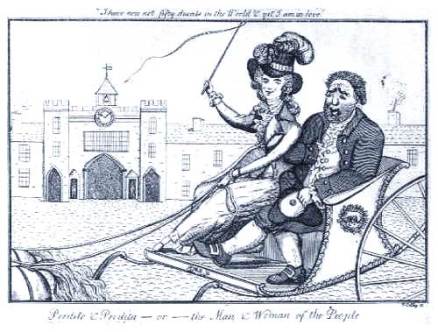
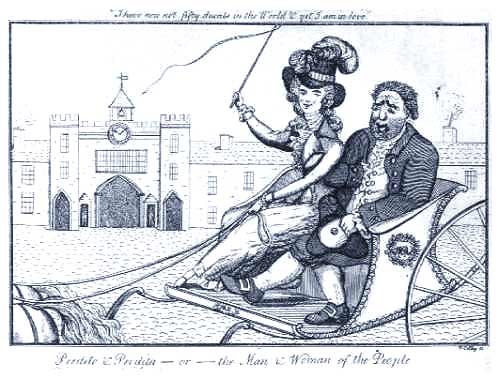
Caricature of Perdita and Charles James Fox (The Man & Woman of the People). He obtained an annuity for her from George III at the end of her affair with the prince.

Disappointment was, indeed, fast in coming. Before he formally and publicly acknowledged their love, Robinson received word from the prince that they could no longer see one another. He had given no prior indication of a change in his feelings, and all her attempts to contact him were unsuccessful. The press began lampooning Robinson mercilessly. Deeply in debt, she considered acting again but decided against it due to the general enmity against her. An invitation to meet the prince raised Robinson’s hopes, as did his renewed professions of love. But he quickly shunned her again, and their relationship was over by 1781. With the help of politician Charles James Fox, Robinson attempted to claim her promised 20,000 pounds, but in 1783 she instead accepted 500 pounds a year to make up for having abandoned her career.

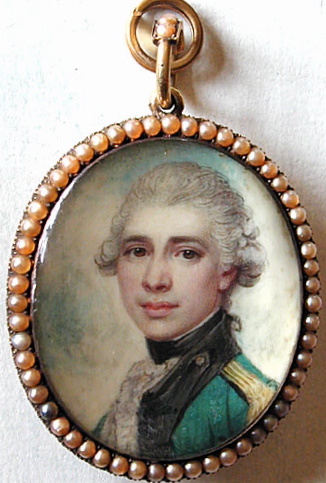
Banastre Tarleton, miniature by Richard Cosway, 1782

After her disappointment with the prince, Robinson was linked romantically to Fox and Malden. Banastre Tarleton, a hard-living veteran of the American Revolution who moved in the same echelons as Malden, stole Mary away from him on a bet. Though sporadic, this relationship lasted for sixteen years, ending in 1798. As far as the press was concerned, it was the final blow against Robinson’s character. In 1784, at age twenty-four, she contracted rheumatism and developed paralysis that left her unable to walk. It is possible that botched treatment after she miscarried Tarleton’s child caused her condition. Robinson sought treatment in Germany and Flanders and returned to England in 1787.
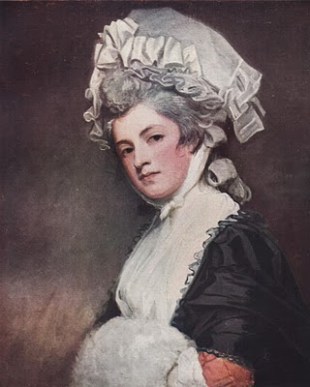
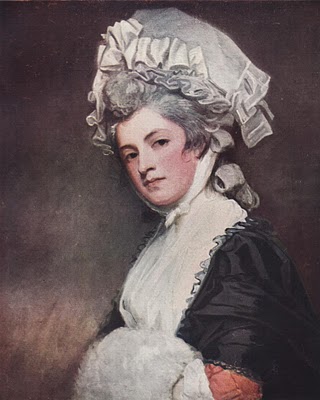
Mrs Mary Robinson by George Romney

From the time she returned to England, Mary Robinson focused on writing and publishing. She wrote in a variety of genres, and her works were highly sought after due to the notoriety her love life had achieved. Poetry was a continuing interest for Robinson. She participated in the Della Cruscan movement that championed elaborate romantic verse; composed poems for the Morning Post, which also published Samuel Taylor Coleridge’s work; and published seven collections of her own verse between 1791 and 1800. Robinson also wrote eight novels, two of which alluded to her relationship with Tarleton.
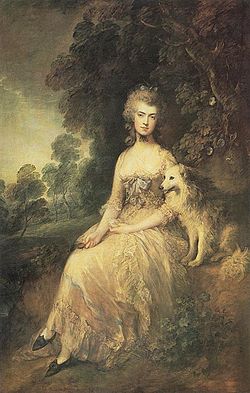
Mary Darby Robinson by Thomas Gainsboroughm, 1781

Though they were less popular than her other projects, Robinson penned at least two works for performance. In the late 1780s, she was reputed to be composing an opera. If the rumors were true, no trace of the work survived. But the idea recalls Robinson’s youthful desire to write a tragedy. In 1793, she authored The Nobody, a play focusing on women gamblers. It was not her first foray into playwriting, for she had penned and acted in The Lucky Escape in 1778. Unfortunately, The Nobodymet with derision and only played for three nights before Robinson stopped production.
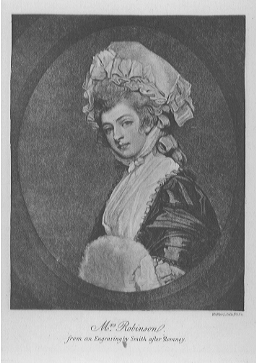
Mrs. Robinson from an engraving by Smith after Romney

Robinson’s last completed literary effort was A Letter to the Women of England, on the Injustice of Mental Insubordination, published in 1799. In it, she asserted women’s right to escape unhappy marriages, defending her own lifestyle in the process. Robinson was at work on her memoirs when she died on December 26, 1800. Maria Robinson edited the existing manuscript and continued the narrative from the point at which her mother began corresponding with the Prince of Wales. Memoirs of the Late Mrs. Robinson, Written by Herselfappeared in 1801, and a volume of verse, The Poetical Works of the Late Mrs. Mary Robinson, appeared in 1806. In 1895, Robinson’s memoirs were republished as Memoirs of Mary Robinson, this time with an introduction and footnotes by J. Fitzgerald Molloy.
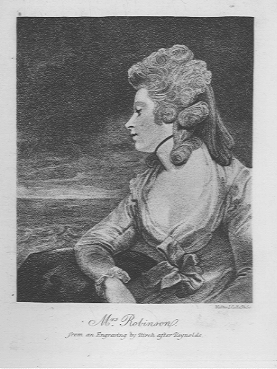
Fronticepiece of Mary Robinson’s Memoirs

Mary Robinson’s autobiography provides an intriguing glimpse into eighteenth-century London’s theatrical circles. Though her acclaimed acting career was cut short, Robinson channeled her innate sense of the dramatic into writing. Her poetry and prose have garnered sporadic interest, only attracting scholarly attention over the last several decades. But Robinson’s autobiography has had enduring appeal. Perhaps this is because Mary Robinson was far more than a royal mistress, even though much of her notoriety was based upon this role. Instead of confining herself to the domestic sphere, she was at once a wife, mother, and career woman. By leaving her unfaithful husband and taking lovers, she flouted sexual double standards and affirmed women’s autonomy within marriage. Thus the study of this intelligent, rebellious, and troubled woman—at once an inspiration and a tragic figure—will likely endure for many years to come. About the author of this post: Lucy Warriner is a North Carolina animal lover and dance enthusiast. She is also an ardent admirer of Jane Austen. Bibliography

Image sources:

Read Full Post »
Inquiring readers: Paul Emanuelli, author of Avon Street, has contributed posts for this blog before about the City of Bath as a Character and Law & Order and Jane Austen’s Aunt. He has graciously sent in an article about food preparation in the 18th and 19th centuries. The content will astonish you. Paul writes about Bath in his own blog, unpublishedwriterblog. It is well worth a visit.

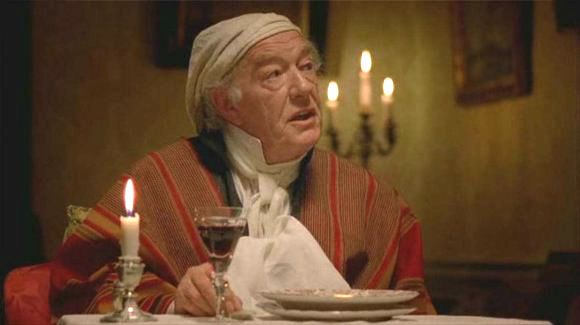
Miss Bates, let Emma help you to a little bit of tart–a very little bit. Ours are all apple-tarts. You need not be afraid of unwholesome preserves here. I do not advise the custard.”

Michael Gambon as Mr. Woodhouse, Emma, 2009

So says the ever-cautious, Mr Woodhouse, in Jane Austen’s Emma as he entertains his guests at supper. Yet Mr Woodhouse’s fears were not entirely in his imagination. At the time it was relatively common for commercially bought pickles and preserves to contain poisonous sulphate of copper to improve their eye-appeal. And even when prepared at home, the copper pans in which they were cooked, unless properly looked after, could also poison the ingredients.

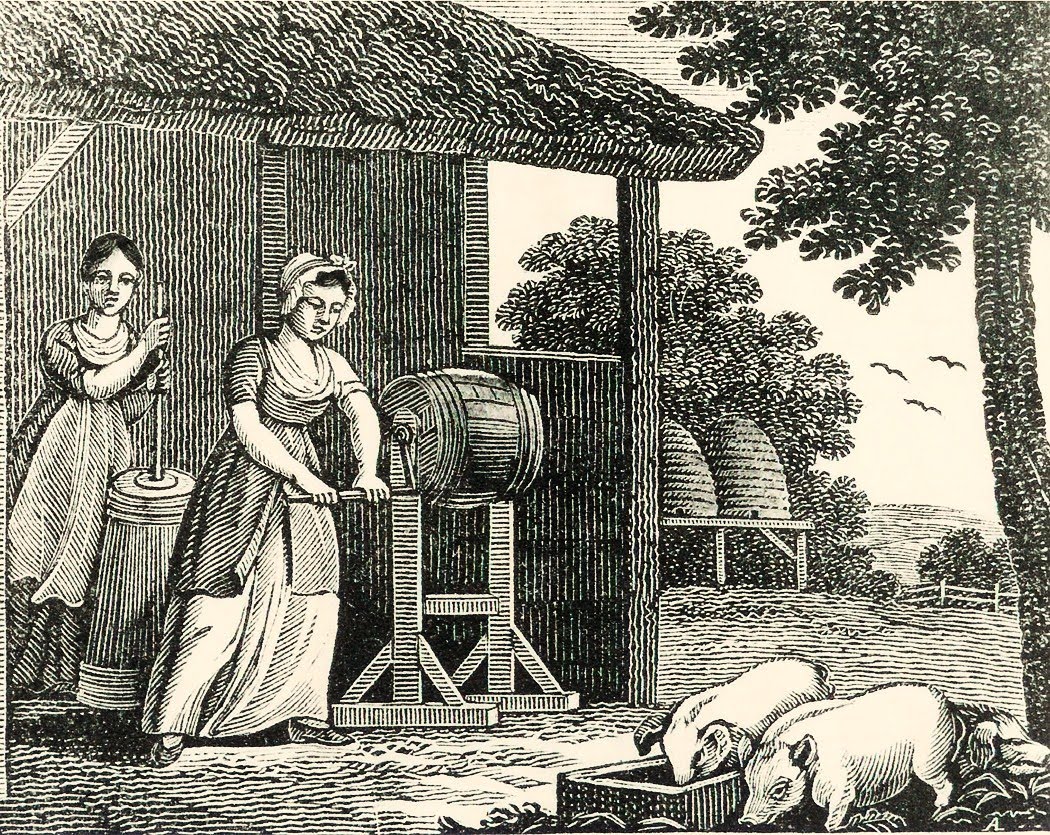
Churning butter

Yet for most people who lived in the country, as Jane Austen did for much of her life, food-safety was not a major concern. Food was prepared and preserved either by the family themselves or by their domestic staff, and cooking and baking was done at home.

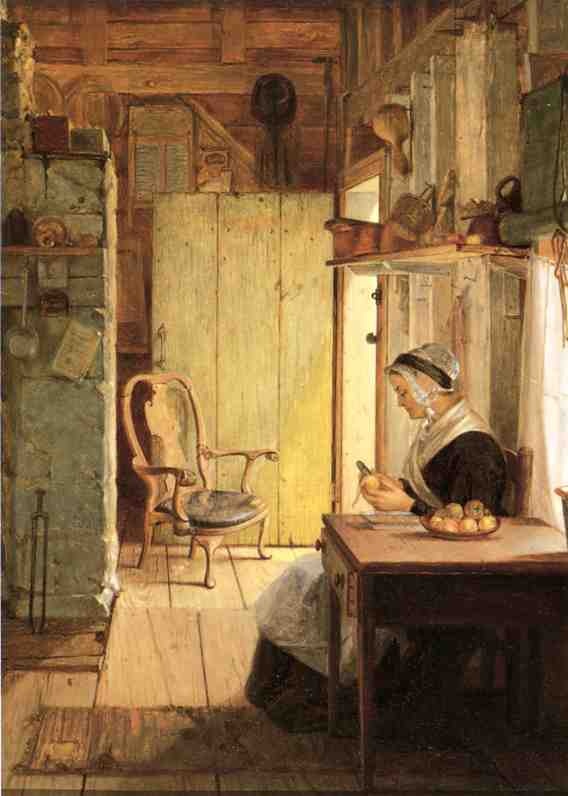
Food preparation in the kitchen.

The ingredients were for the most part grown and bought locally, and word travels quickly in small communities. Meat came from local farms or estates, and farmers and landowners had reputations to maintain, as did the local mill for flour, and the local shopkeepers for all that they sold.

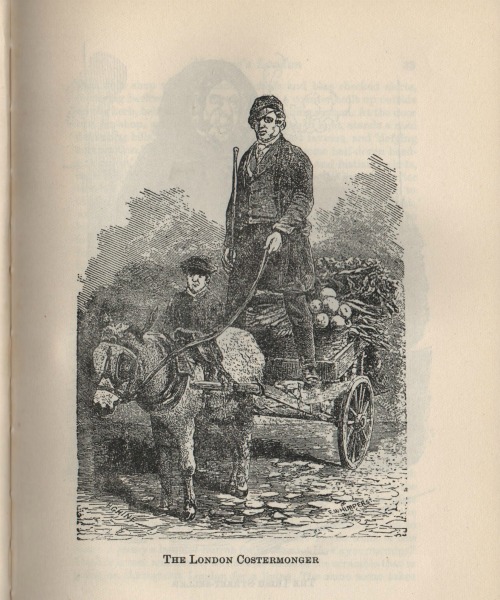
Costermonger from Henry Mayhew’s London Labour and the London Poor, 1840s.

The situation though, was very different in towns and cities. Here it was the shopkeepers and “costermongers” who sourced, stored, prepared and supplied the produce. And with a wider market at their disposal these tradesmen were often less concerned with quality, as they were with cost. The worst affected were the poor. For the most part they lived from hand-to-mouth and bought food in “pennyworths” or even “half-pennyworths.” Buying in these smaller quantities (enough for the day) meant goods often cost four or five times more than they would have cost had they been bought in regular quantities.

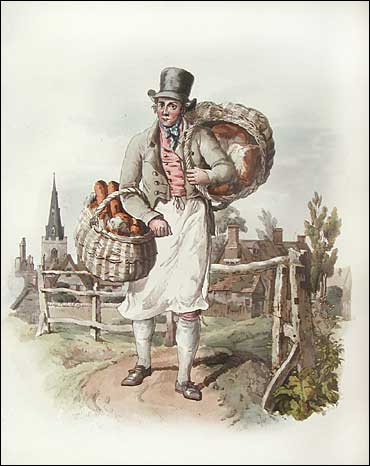
Bread Seller, William Henry Pyne, ca. 1805

Bread itself could be bought as quarter or half loaves and the poor subsisted largely on bread. But even then, bakers used chalk to make the bread whiter, and alum to enable the use of inferior flour, and while alum was not poisonous it inhibited the digestion and decreased the nutritional value of anything else their customers ate.

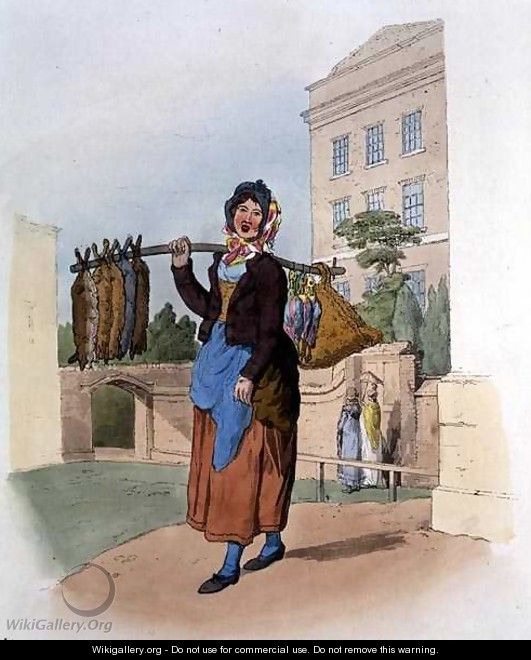
Rabbit seller, William Henry Pyne, 1805

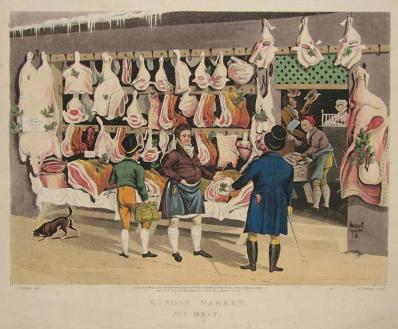
The wealthier residents in towns and cities could afford a “better” diet, yet this too carried its own dangers. There was of course no refrigeration at the time and little concept of hygiene. In towns and cities most meat was killed locally, but then it had to be stored, sold and transported to the home. As late as 1862 the government estimated that one-fifth of butcher’s meat in England and Wales came from animals which had died of disease or were carrying considerably disease. And at the start of the nineteenth century butcher’s boys would deliver meat to the wealthier homes, carried on their heads, in baskets or trays, open to the heat and dirt of the day.

A butcher’s shop, by James Pollard

As the Industrial Revolution took hold, the British population grew, and so did the towns and cities. The nation became more dependent on imported and processed foods. The growing “middle classes” were acquiring a growing taste for tea, coffee, sugar, cocoa, and sauces and spices from around the world. The problem that the fictional Mr Woodhouse had been concerned about a few years earlier rapidly became a fact of life as the century progressed.

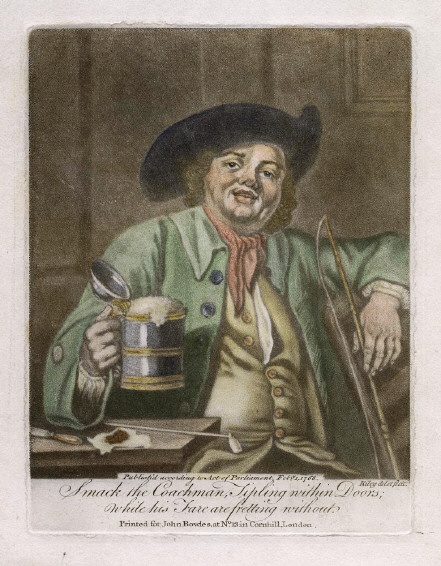
Coachman, seated, holding a tankard. Mezzotint by Ryley, printed in colours for John Bowles in London Feb. 1st, 1768

The “adulteration” of food and drink became increasingly commonplace. Producers, importers, merchants and sellers were all adding ingredients to increase bulk or “improve” appearance. The making of beer had more to do with chemistry than the brewing process. As Dr Richard Wetherby says, in my novel, Avon Street,

Have you any idea of how they adulterate the beer in the ale houses around Avon Street? It is full of foxglove, henbane, opium and God knows what other concoctions. They use chemicals so that they can water down the beer, keep its taste and appearance, but make it stronger, and still sell it cheaply.”

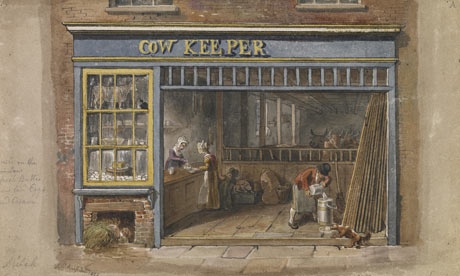
Cow Keeper’s Shop in London, 1825, George Scharf

Milk too, was often watered down, sometimes by as much as 50%. So common did the adulteration of food become that books on housekeeping routinely carried warnings and tests for detecting added chemicals like plaster of Paris. Mrs Beeton in prefacing a recipe for a popular anchovy paste warned against shop-bought pastes,

In six cases out of ten, the only portion of those preserved delicacies, that contains anything indicative of anchovies, is the paper label pasted on the bottle or pot, on which the word itself is printed.”

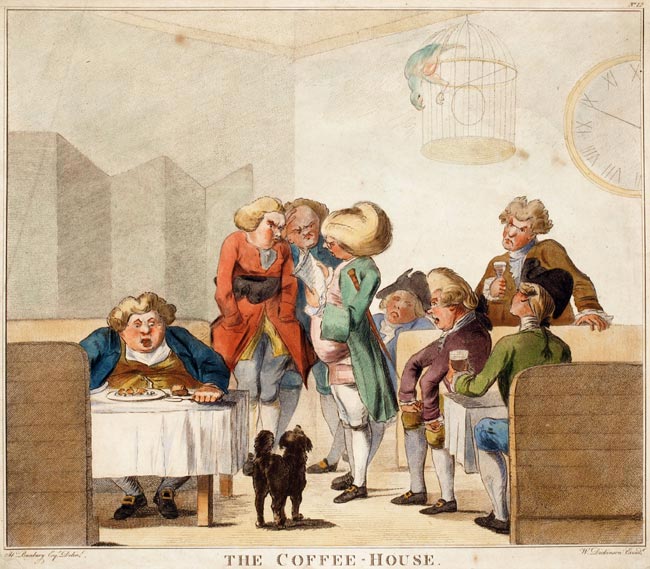
Typical coffee house, late 18th century

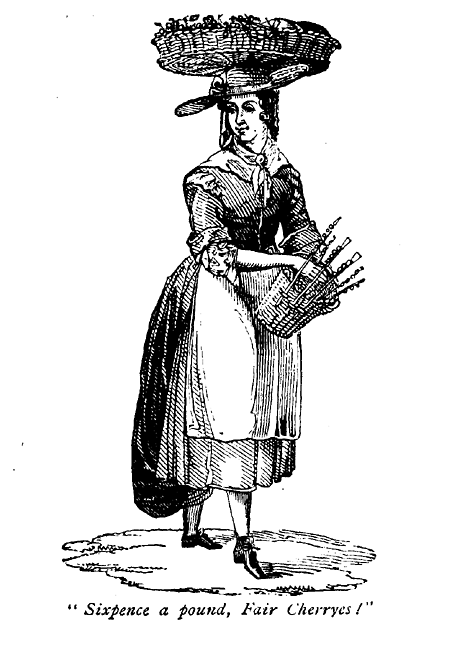
In 1851 The Lancet, medical journal, commissioned a doctor from the London Royal Free Hospital to examine the adulteration of thirty common foods. The study revealed that China tea contained 45% sand and dirt together with traces of sulphate of iron; lard contained carbonate of soda and caustic lime; coffee included chicory, mangel wurzel (root vegetable) sawdust, and acorns; cocoa and chocolate were coloured with earth and included arrowroot and Venetian lead; sweets (candy) were found to contain chromate of lead, sulphate of mercury and various other noxious flavourings and colourings. Red lead and other chemical colourings were found to be routinely used in foodstuffs such as “Red Leicester Cheese.”

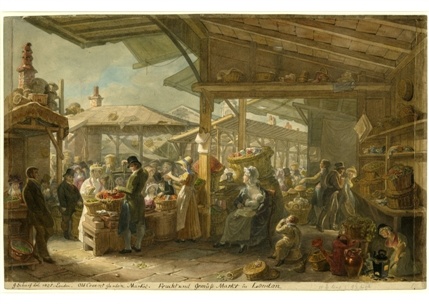
Six pence a pound, fair cherryes

Even after the study was published the merchants, tradespeople and government were slow to respond. It was not until 1860 that the Adulteration Act was passed. Thankfully, technology and innovation helped in the interim. In 1857 a process for the mass production of ice was patented allowing foods to be better preserved and transported. The availability of canned goods also increased. The army had been supplied with canned foods since 1820, but the cans had to be opened with a chisel or a bayonet, until the can-opener was invented in 1858. As technology improved, mass-produced processed foods like soups, sauces, biscuits, chocolate, pickles and egg-powder became more popular and were prepared to more rigorous standards. And though the Adulteration Act was still largely resisted, in 1872 official inspectors were created with the power to test food and impose substantial fines. Quality and safety of food gradually improved, which I am sure would have pleased the fictional Mr Woodhouse.

Old Covent Garden market, 1825, Scharf

More on the topic:

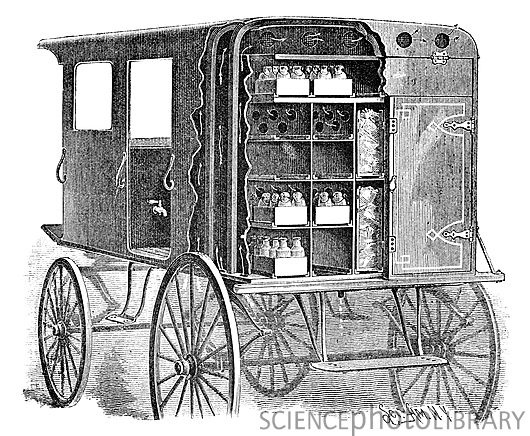
Refrigerated milk cart, 19th c. This design, from the USA, used ice to keep the air temperature cool for the transport of milk. Holes in the compartments allowed air to circulate from where the ice compartments to the milk compartments.

This slideshow requires JavaScript.

Read Full Post »
« Newer Posts - Older Posts »