Feeds:
Posts
Comments

Archive for the ‘Inspired by Jane Austen’ Category

One of the most beautiful new books available for Jane Austen fans this year is the Jane Austen: Visual Encyclopedia by French authors Claire Saim and Gwen Giret. With sumptuous artwork throughout and gorgeous illustrations by Sophie Koechlin, this is one of the most extensive catalogs of the Jane Austen fandom I’ve seen in recent years.

It’s a showstopper and conversation-starter that you’ll want to keep on your coffee table indefinitely. While the sticker price is a bit steep (currently on sale on Amazon), this beautiful book is an investment many Jane Austen fans and book collectors will want to make. 

Available Now
Order HERE

Book Review

As I explored this gorgeous new collectible book, I felt as though I was immersed in the entire world of Austen’s life, novels, and film adaptations. It’s a rich compilation of all-things-Austen for the dedicated Austen fan. It’s a one-stop book for everything you could ever hope to know about Austen, and it’s rare to see so many photos, articles, and illustrations in one place. It is not a scholarly book or a research tool, as it sticks more to the more popular aspects of Austen’s legacy, but it is delightful all the same.

Most of all, this book provides an expansive introduction to the enduring popularity of Jane Austen. It makes a wonderful gift for new Austen fans who have recently discovered the films or books. For fans of the film adaptations, it has many interesting tidbits about the various films throughout.

This is the book I would have wanted to read in college or in my grad school years when my Austen addiction truly took hold of me. I read dozens of books about her and watched as many documentaries as I could find during my early “Jane years,” but this has everything in one place.

Lastly, I cannot say enough about the actual look and feel of this book. When it arrived, wrapped in plastic, I was impressed. Once I opened it, it was even more stunning than I expected. It has a nice heavy feel to it, but you can still hold it comfortably in your lap, unlike larger coffee-table books. It’s definitely a book people will pick up if they see it displayed, which is what I’m planning to do!

Book Description

From her beloved family and her romantic escapades to her literary adventures and her enduring popular culture influence, experience the life and legacy of Jane Austen in this full-colour, beautifully illustrated, definitive 312-page encyclopedia.

Bursting with over 200 photographs and illustrations, explore Jane Austen’s work, which consists of six completed novels, two incomplete novels, letters and early writings. From the written word to the screen, from adaptations to secrets and filming locations, this book invites you on a fascinating journey of discovery through Austen’s writing.

Want to walk in the footsteps of Jane Austen, dressing in Regency style or simply enjoying a delicious afternoon tea? This coffee-table book features a beautiful gold-foiled cover and is perfect gift for fans of Jane Austen, her works and their enduring legacy.

Book Outline:

  • PART 1: Jane Austen, a woman of her time
    • Essays on Jane Austen, her family, friends and potential lovers
    • Illustrations and photos from across Jane’s beloved England
    • Researchers discuss Jane Austen’s appearance
  • PART II: The world of Jane Austen
    • A complete chronology of Jane Austen’s work
    • The historical and fictional backgrounds to iconic characters such as Elizabeth Bennet, the Dashwoods, and Mr Darcy
    • Filming locations and production secrets from over 30 adaptations
    • The unfinished novels and how they were eventually published
    • Expert analysis of early works and other writings
  • PART III: Jane Austen’s legacy
    • A comprehensive guide to the best Austen festivals
    • Details on the famous museums and collections dedicated to Jane Austen
    • From postage stamps to Funko-Pops Jane’s indelible influence

About the Authors

This book was lovingly compiled by Claire Saim and Gwen Giret (French authors), Sophie Koechlin (illustrator, French writer, painter & designer, and Hermès scarf designer), Lizzie Dunford (contributor and current Director at Jane Austen’s House Museum), and Helen Moss (translator).

Claire Saim, deeply in love with everything English, from literature to history and culture – including scones, obviously – she has been a devoted Janeite for many years. Always looking around Paris in search of whatever could be a reminder of her dear Great Britain, she shares her adventures on Instagram @jane_austen_france_. Based in France.

Gwen Giret, Jane Austen is a long-time passion of hers which led her to create a blog titled Jane Austen and her world. Her favourite things include travelling through the Pride and Prejudice author’s footsteps, reading all about Captain Wentworth and eating tons of clotted cream. Based in France.

Book Interior

If you’d like to take a tour of the interior of the book, you can watch this lovely video posted by the Jane Austen Centre: 

Celebrating 250 Years of Jane

This book is a true testament to Austen’s timelessness and enduring legacy. Her life and work only become more popular with each passing year. It’s a comfort for many Austen fans to read about her life or sit down with one of her novels and slip into her world.

As we work our way through the many new books released and releasing in honor of Jane Austen’s 250th year, there is so much more to come! We have books to read and new shows to watch. What could be more delightful than a Year of Austen in books and on screen?


RACHEL DODGE teaches college English classes, speaks at libraries, teas, and conferences, and writes for Jane Austen’s World blog. She is the bestselling author of The Anne of Green Gables DevotionalThe Little Women DevotionalThe Secret Garden Devotional, and Praying with Jane: 31 Days Through the Prayers of Jane Austen. A true kindred spirit at heart, Rachel loves books, bonnets, and ballgowns! You can visit her online at www.RachelDodge.com or on Instagram @KindredSpiritBooks.

Read Full Post »

Over the last few months, we’ve explored timeless romantic themes in Jane Austen’s novels that are still frequently used in today’s popular books, movies, and television shows. Thus far, we’ve covered the following themes in this series: “Enemies to Lovers” in Pride and Prejudice, the “Slow Burn” Romance in Emma“Best Friends to Lovers” in Mansfield Park“Second-Chance” Love in Persuasion, and “The Meet-Cute” in Northanger Abbey.

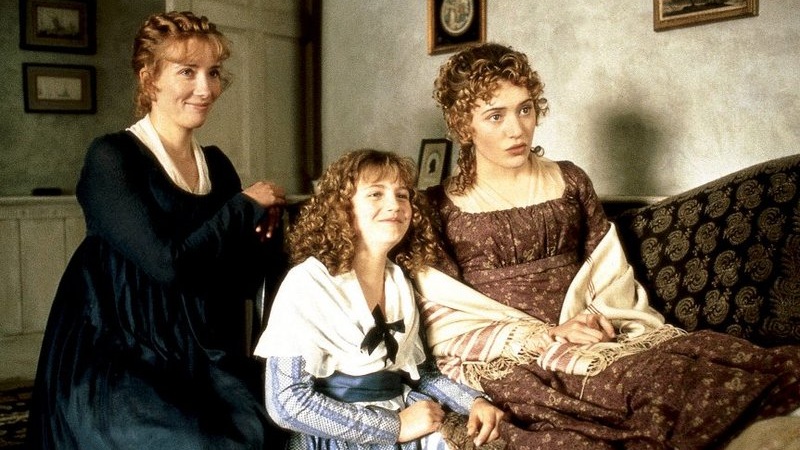
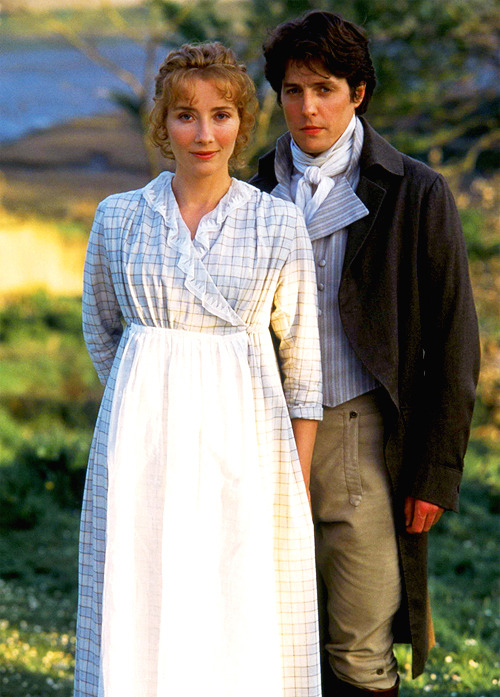
Last but certainly not least, this brings us to Sense and Sensibility and one of Austen’s most mature and intricate plots. Sense and Sensibility is unique in that it contains two main love stories with its sister-heroines, Elinor and Marianne Dashwood. Though Elinor is the main protagonist of the novel, Marianne’s romantic life is often front-and-center with its high drama and plot impact.

Love Triangles

In the world of storytelling, love triangles provide a potent plot device. There’s the age-old King Arthur-Guinevere-Lancelot story that’s been told again and again; the love triangle/identity mix-up in Shakespeare’s Twelfth Night; and the explosive Heathcliff-Cathy-Edgar triangle in Wuthering Heights. And this is only the tip of the iceberg. We could add dozens of other famous triangular love stories to this list.

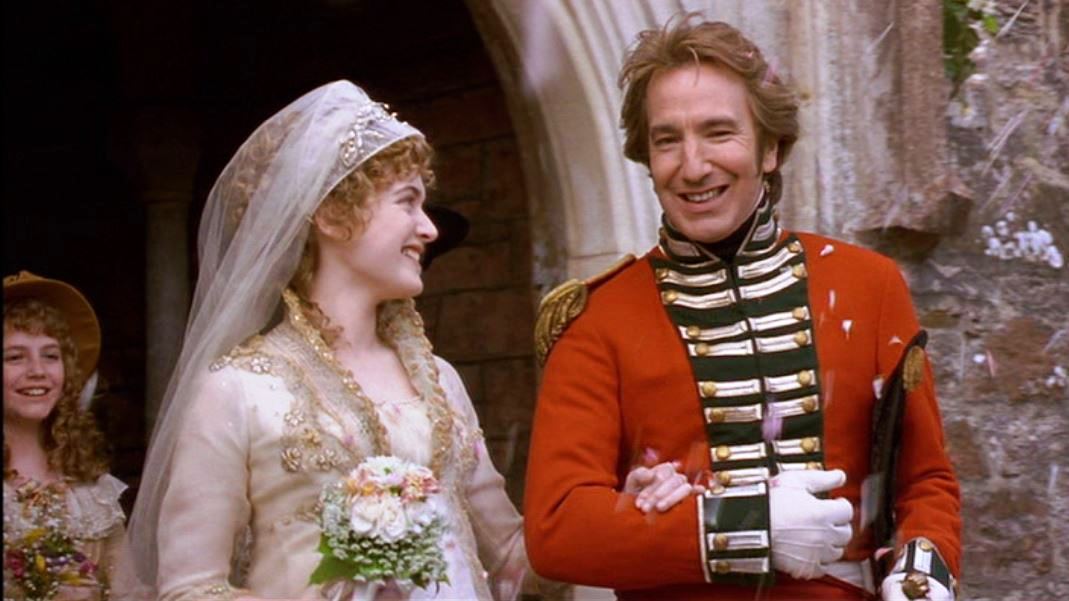
In Sense and Sensibility, Austen provides her readers with not one, but two separate love triangles to untangle between Elinor-Edward-Lucy Steele and Marianne-Willoughby-Colonel Brandon.

In each of these triangles, there is one “wrong” person standing in the way of true love with Mr./Ms. Right. For Colonel Brandon, Willoughby takes the spotlight and all of Marianne’s attention. For Elinor, Lucy stands in the way of her happiness with Edward, due to an unfortunate youthful promise made by Edward.

Falling for Mr./Ms. Wrong, Finding Mr./Ms. Right

In both of these love triangles, a character falls for Mr./Ms. Wrong first and later finds Mr./Ms. Right. Elinor and Colonel Brandon both wait in the wings and watch to see if Edward and Marianne will break free from their previous attachments. They both must wait and wonder; they both feel the pain and angst of separation; and they both know that they may never find their personal happy ending.

The only difference is, Edward and Elinor have a mutual attachment to one another, while Marianne does not develop romantic feelings toward Colonel Brandon until far later in the novel. She thinks he’s far too old for romance and “thirty-five has nothing to do with matrimony”:

Colonel Brandon is certainly younger than Mrs. Jennings, but he is old enough to be my father; and if he were ever animated enough to be in love, must have long outlived every sensation of the kind. It is too ridiculous! When is a man to be safe from such wit, if age and infirmity will not protect him?

Sense and Sensibility

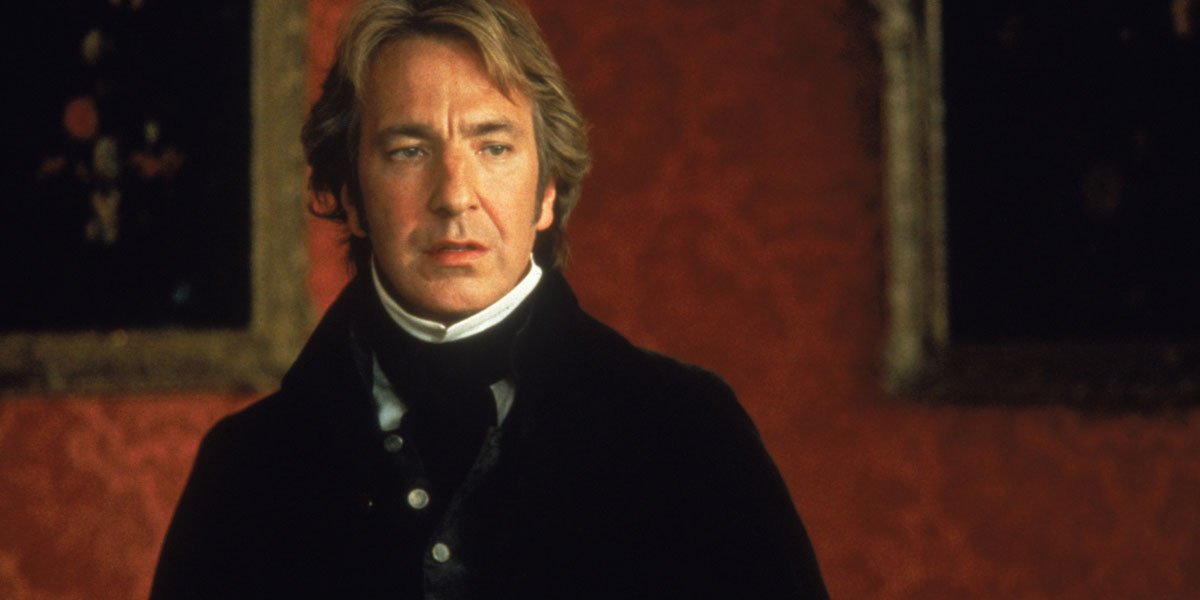
Thus, Colonel Brandon must wait in the wings, ever true and ever patient, caring deeply for Marianne and wanting the best for her, even if it means watching her break her heart and health over Willoughby.

Mr. Wrong: The Problem with Willoughby

As in life, Jane Austen’s characters often have to fall for Mr./Ms. Wrong before they can appreciate Mr./Ms. Right. In some of her novels, she even uses a “red herring” to keep her readers distracted (Frank Churchill is one such example). In Sense and Sensibility, Marianne Dashwood falls for a young, dashing, handsome, attractive man who appears to be everything she’s ever hoped for in a man.

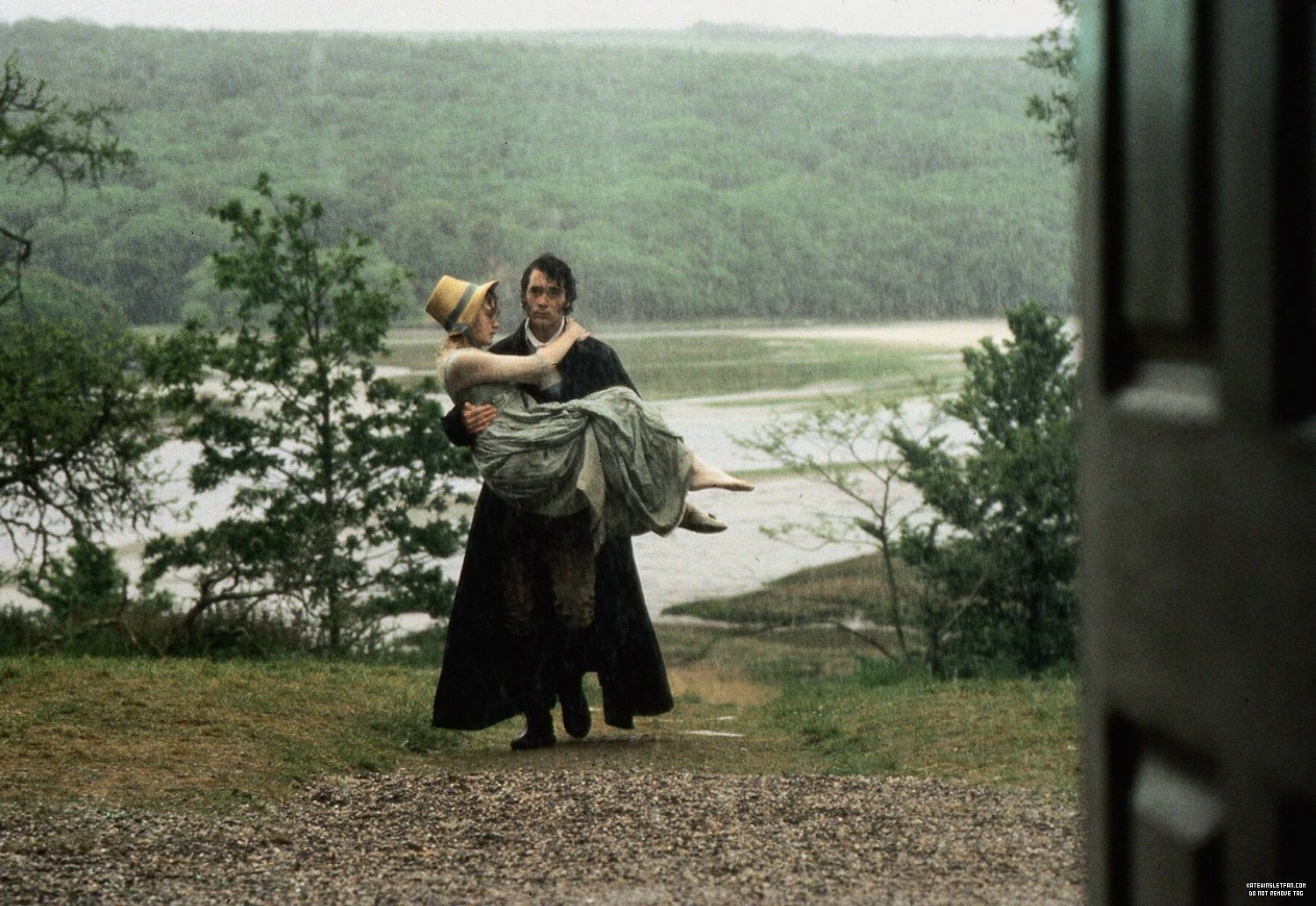
To make matters even more exciting, their “meet-cute” involves an intoxicating rescue scene where Willoughby lifts Marianne and carries her home after she falls down and is hurt. How could a young lady, especially a young romantic woman like Marianne, not fall for a strong, handsome man who literally sweeps her off her feet and carries her through the rain to safety.

The problem is, no matter how dashing, friendly, attractive, romantic, or exciting Willoughby might appear, he is not who he seems. As we later find out from Colonel Brandon, Willoughby has a checkered past and has impregnated (at least) one young woman out of wedlock, without taking any responsibility for her care, sufficiently ruining her reputation and her chances (in that time/culture) of a happy future.

But, you might ask, how could anyone have known, since the fate of Colonel Brandon’s ward was unknown to any of the Dashwoods until much later? Though no one could believe just how bad he is, Austen does provide clues about Willoughby’s character through her descriptions of his conduct. He frequently crosses lines of propriety (usually a red flag in Austen’s novels) and makes himself far too cozy and familiar with Marianne without making any firm promises.

Today, dozens of movies and books follow a similar script. We often see characters like Mr. Willoughby, Mr. Wickham, and Mr. Crawford who are just a little bit too handsome, too dashing, and too perfect to actually be Mr. Right.

Ms. Wrong: The Problem with Lucy Steele

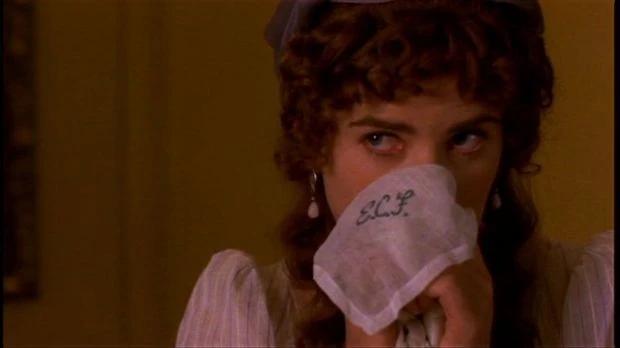
The problem with Lucy Steele is more a matter of youthful ignorance and inexperience. Edward Ferrars is captivated by Lucy’s beauty and, due in part to forced proximity, experiences young love and makes a commitment to someone who does not match his personality, intelligence, values, or interests in life. Austen describes her as “illiterate, artful, and selfish” – certainly no match for a thoughtful, principled man like Edward.

Not surprisingly, he soon regrets committing himself to a woman like Lucy:

The youthful infatuation of nineteen would naturally blind him to every thing but her beauty and good nature; but the four succeeding years—years, which if rationally spent, give such improvement to the understanding, must have opened his eyes to her defects of education, while the same period of time, spent on her side in inferior society and more frivolous pursuits, had perhaps robbed her of that simplicity which might once have given an interesting character to her beauty.

Sense and Sensibility

And while Lucy at first only appears to be an ignorant, vapid girl without much sense, we quickly realize she is far less sweet and far more dangerous than meets the eye. She’s not in love with Edward; she merely sees him as a “way up.” We later find out that she’s a conniving “gold digger” (to use today’s terms) who is looking for any way to climb the social ladder and make the best match she can, regardless of who she hurts or what anyone thinks.

This type of female red herring shows up in many popular romantic movies and books today as well. However, in many of today’s plot lines, this type of female character tends to be some kind of shark in the business world who cares more about appearances and getting ahead than building a loving relationship and happy life with the handsome main character.

Finding Mr. (Colonel) Right

Marianne must go through heartache before she can appreciate or fall in love with Colonel Brandon. He watches and waits, hoping against hope, until she begins to blossom and heal from her broken heart. His steadiness, thoughtfulness, and gentlemanlike manner is a welcome change from the high drama and passion of her first attachment, and soon an attachment forms:

Instead of falling a sacrifice to an irresistible passion, as once she had fondly flattered herself with expecting,—instead of remaining even for ever with her mother, and finding her only pleasures in retirement and study, as afterwards in her more calm and sober judgment she had determined on,—she found herself at nineteen, submitting to new attachments, entering on new duties, placed in a new home, a wife, the mistress of a family, and the patroness of a village.

Colonel Brandon was now as happy, as all those who best loved him, believed he deserved to be;—in Marianne he was consoled for every past affliction;—her regard and her society restored his mind to animation, and his spirits to cheerfulness; and that Marianne found her own happiness in forming his, was equally the persuasion and delight of each observing friend. Marianne could never love by halves; and her whole heart became, in time, as much devoted to her husband, as it had once been to Willoughby.

Sense and Sensibility

In today’s popular movies and books, a character like Colonel Brandon is sometimes the childhood best friend or the nerdy next door neighbor that suddenly turns handsome. It’s usually a matter of the main character being blinded at first by a passionate but unhealthy relationship and then “coming to their senses” and noticing the quality person that’s been there all along.

As far as the age-gap between Brandon and Marianne (which was quite common during Austen’s day and culture), many of today’s romantic storylines, such as As Good as It Gets, Crazy Heart, and Autumn in New York, feature a May-December romance.

Finding Ms. Right

From the moment they meet, it’s clear that Elinor and Edward are perfect for one another in every way. For Edward, once he meets a woman of Elinor’s caliber, there is no question that she is far superior to Lucy Steele.

However, Edward is a man of his word and refuses to do wrong by Lucy Steele. This honorable choice only serves to make Edward more attractive, even though Elinor is pained deeply by the knowledge that he must marry an ignorant woman he does not love. Like Brandon, Elinor waits patiently, enduring much pain, until Edward is finally set free.

Dozens of movies and televisions shows use this type of plot line where the main character must come to the realization that their current relationship is all wrong and someone else is a much better fit. Sweet Home Alabama is one mainstream movie example of this type of love affair.

Love Triangles in Popular Media

More romantic comedies feature a love triangle of some kind in today’s world of romantic writing.

The following are some popular movies (and/or books) with this theme: Pretty in Pink, While You Were Sleeping, The Notebook, Beauty and the Beast, Spider-Man, The Hunger Games, Titanic, Twilight (Team Edward v. Team Jacob), My Best Friend’s Wedding, Bridget Jones’s Diary, Sabrina, Reality Bites, Gone with the Wind, Something Borrowed, Pearl Harbor, Pirates of the Caribbean, and The Princess Bride.

Some well-known television love triangles include: Dawson’s Creek, Friends, Gilmore Girls, The Office, Beverly Hills 90210, Sex & The City, How I Met Your Mother, Felicity, Outlander, The Summer I Turned Pretty, Never Have I Ever, Friday Night Lights, Lost, and Grey’s Anatomy.

Though none of these shows or movies holds a candle to Austen’s writing, it’s clear that love triangles and plot twists about finding and/or waiting for Mr./Ms. Right continue to keep audiences coming back for more.

Happily Ever After

In the end, everyone lives happily ever after. (Except, of course, those characters whom Austen deems foolish or undeserving of true happiness.) As always, Austen provides her reader’s with a satisfying ending: “Let other pens dwell on guilt and misery. I quit such odious subjects as soon as I can, impatient to restore everybody not greatly in fault themselves to tolerable comfort, and to have done with all the rest.”

As we close this pop culture series on Jane Austen and Rom Coms, I’d love to know which couples and romantic themes are your favorite(s) in her novels!


RACHEL DODGE teaches college English classes, gives talks at libraries, teas, and book clubs, and writes for Jane Austen’s World blog. She is the bestselling author of The Little Women DevotionalThe Anne of Green Gables Devotional and Praying with Jane: 31 Days Through the Prayers of Jane Austen. Now Available: The Secret Garden Devotional! You can visit Rachel online at www.RachelDodge.com.

Read Full Post »

« Newer Posts