Feeds:
Posts
Comments

Archive for the ‘jane austen’ Category

Copryright (c) Jane Austen’s World. Post written by Tony Grant, London Calling.

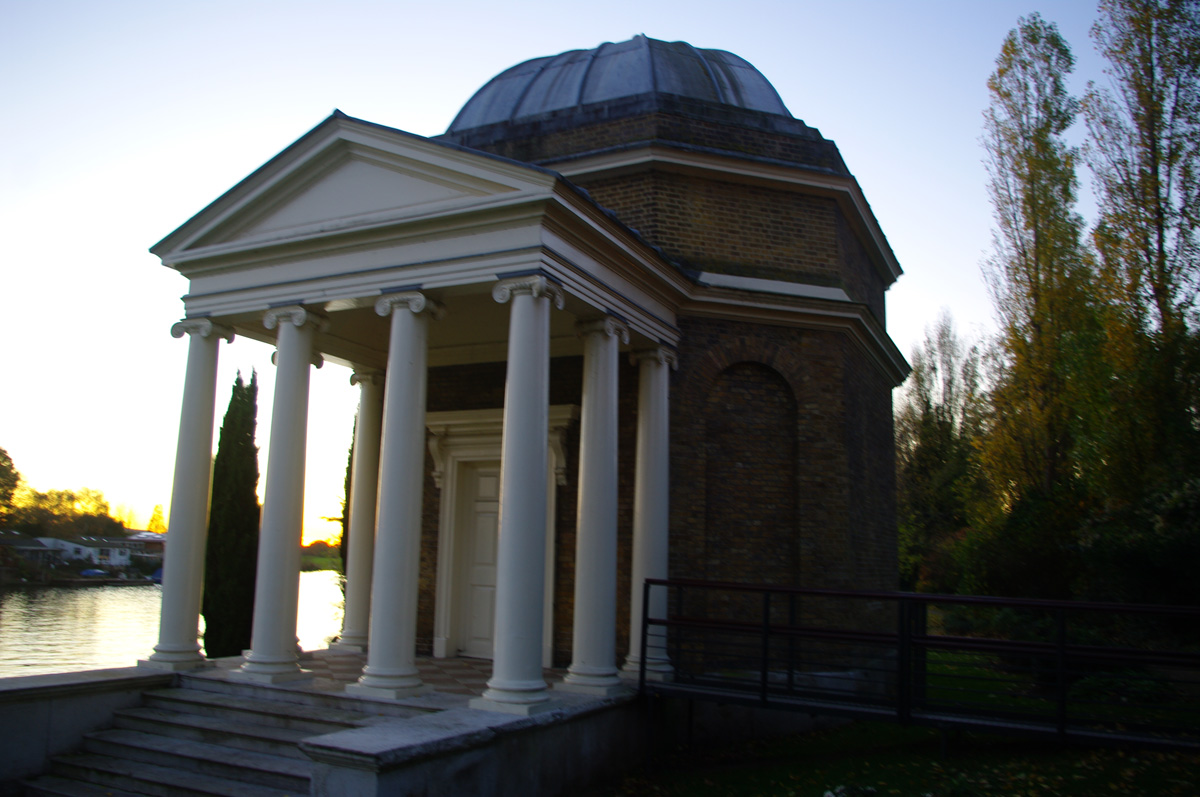
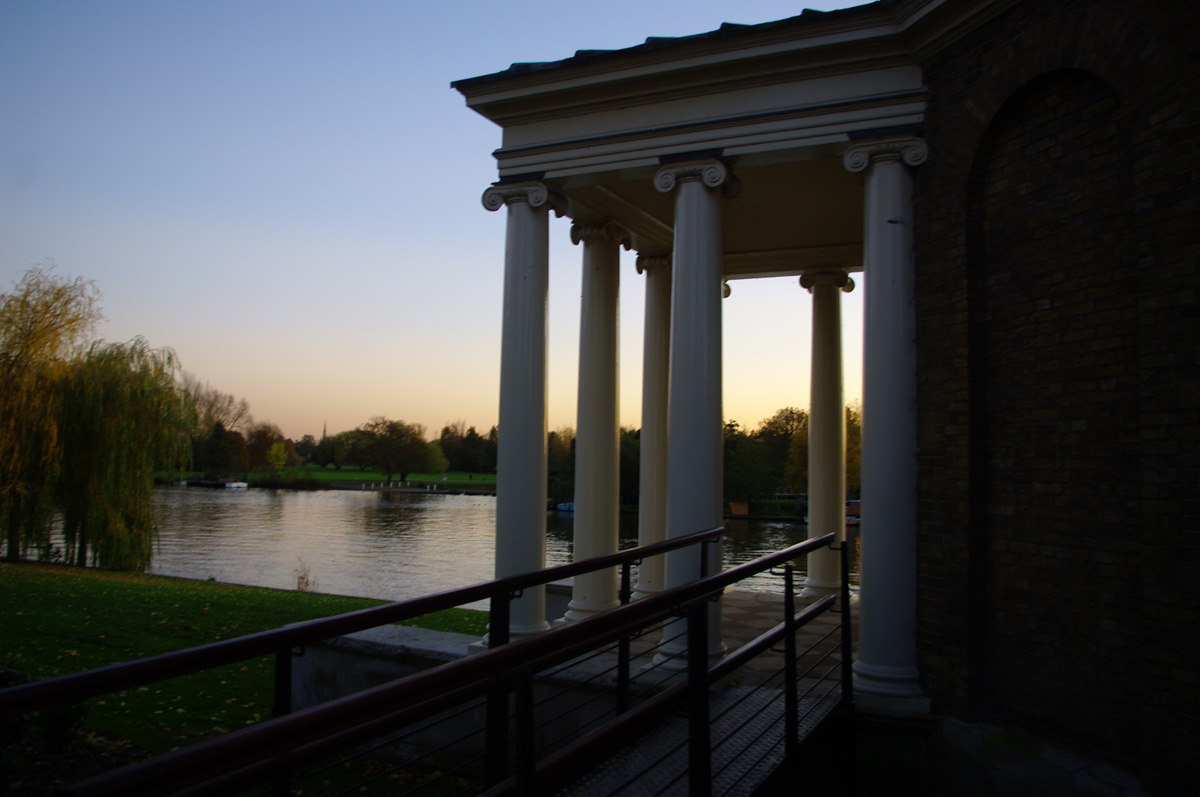
For four days last week, I was working in a school in Staines near Heathrow Airport. To get there from Wimbledon I had to drive past David Garrick’s Villa and his temple to Shakespeare, at Hampton on The Thames.

Garrick's Villa, 1783

David Garrick was an 18th century actor, playwright and owner of Drury Lane Theatre. He was innovative, and the forerunner of a new acting style. He was regarded as the greatest actor of his time and arguably is one of the great actors of all time. He had a profound interest in Shakespeare. It is easy to see connections between David Garrick and his career and the career and  driven personality of Dickens. Perhaps they are both a mirror in which we can see something of ourselves.

Garrick

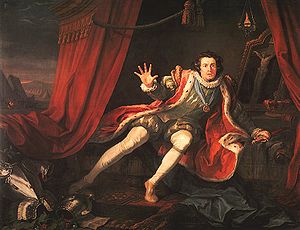
David Garrick was the second son of Peter and Arabella Garrick. He was born at The Angel Inn in Hereford on the 19th February 1717. For a while he was the pupil of Samuel Johnson at the little school at Edial near Lichfield. In 1773 Garrick and Johnson went to London together both with little money to support them. Garrick at first worked as a salesman in his family’s wine firm. However he turned to playwriting and acting. He write a version of, “Lethe,” that was used by Henry Giffard’s company at Drury Lane. He then joined Giffard’s company and worked at the theatre in Tankard street in Ipswich. At first Garrick took the stage name of Lyddall. On the 19th October 1741 he played Richard III at Goodman’s Fields Theatre in East London. He was an overnight sensation.

David Garrick as Richard III, 1745. William Hogarth

His acting style was new and innovative. He began a more naturalistic style. Rather than use the exaggerated bombastic style that was popular. On 28th November that year he got rid of his stage name and began to use his real name. His real name appeared on the posters advertising, “The Orphan,” in which he played the character, Chamont.. As a sign of his meteoric rise to fame within two months William Pitt decalerd that the 22 year old Garrick was the best actor the British stage had ever produced. Garrick became the dominant force in British theatre from then on.

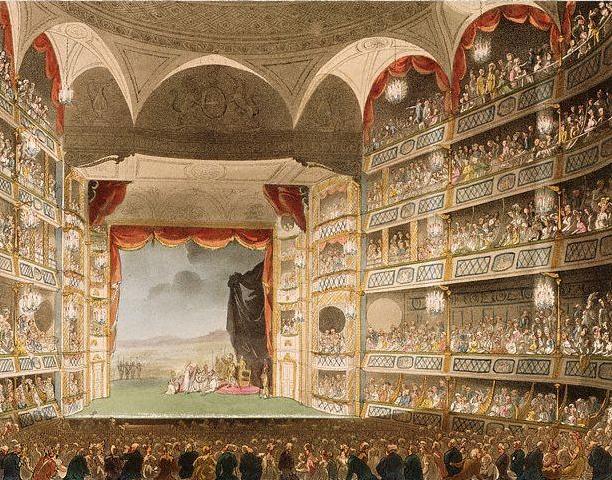
Drury Lane 1808

In 1747 with a new partner, James Lacey he took over the management of Drury Lane Theatre. For 29 years he directed repertory company in Europe. He developed new rehearsal techniques and discipline. His ideas included analysing characters, restoring the original texts of Shakespeare. Much of Shakespeare’s plays in the 18th century had been written in a bombastic and alliterative style. He didn’t always keep to Shakespeare’s original texts himself. He did tend to leave out bits and add bits to emphasise the character he was playing. Garrick was one of the leading playwrights of his day and wrote The Clandestine Marriage, Cymon, The Lying Valet and The Guardian. Garricks influence became the yardstick by which all other acting and drama was measured throughout Europe.

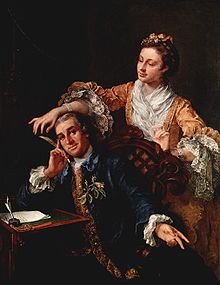
William Garrick and his wife, Eva Maria Vegel, by William Hogarth

In 1749 Garrick married the Viennese dancer, Eva Maria Vegel. They had no children and she outlived him by 43 years.They were so famous the crowned heads of Europe, the nobility and the leading figures of the London literary, art and social circles came to visit him.He owned residences at No 27 Southampton Street in Covent garden, in the Sdelphi, and his villa at Hampton on The Thames.You can imagine the elite of Europe coming to Hampton to visit garrick at his Thameside retreat, walking by The Thames, visiting his temple to Shakespeare and rowing out to the aits (river islands) Garrick owned along his stretch of the river to have sylvan parties in a beautiful natural surround.

Garrick's temple close up. Image @Tony Grant

Garrick gave up Drury Lane and made his last performance at Drury Lane during a series of final performances in June 1776. He died in his house in the Adelphi on 20 th January 1779. He was buried at Poets Corner, Westminster Abbey.

View of the Thames from the Temple. Image @Tony Grant

Gentle reader: This is the first of two articles about David Garrick by Tony Grant. The second will concentrate on the actor’s beautiful house and temple on the Thames.

Read more about the topic

Read Full Post »

Copyright (c) Jane Austen’s World.

Hear what a male writer has observed on the fashion of exposing the bosom! A woman, proud of her beauty, says he, may possibly be nothing but a coquet: one who makes a public display of her bosom, is something worse.” – The Mirror of  Graces, by A Lady of Distinction, 1811, p. 120

Could the above statement possibly be true in light of our modern assumptions that the Georgian bossom was displayed in all its soft glory for all to see?
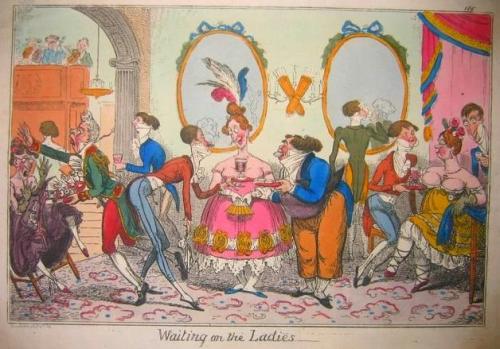
Waiting on the ladies

Our modern perception is heavily influenced by the caricatures of the period that make fun of unrestricted Regency gowns. But how much did contemporary cartoonists exaggerate? And what sort of woman would have exposed her bosom to such an extent that she would have been regarded as worse than a coquet? To be fair, the above image depicts a time (the 1820s) when the waist had gone as high as it could go under a woman’s bosom, skirts had widened and become conical shaped, and hems were festooned and decorated and shortened to reveal slippers and ankles.

Regarding the bosom, the proof is in the pudding, and the best way to assuage our curiosity is to view contemporary examples year by year.
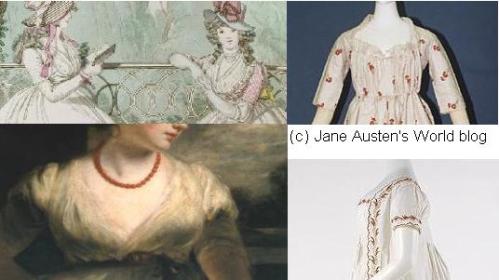
From left, upper row: 1794-1795 walking gowns. 1795-1800 round gown. From left, lower row: 1797 Countess of Oxford. 1798, round gown.

Gentle reader, as you peruse the gallery of images, please look for a pattern. You shall begin to see a distinction between day and evening dress, regardless of the time of year.
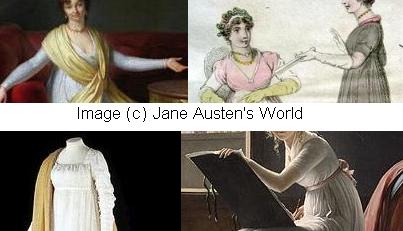
1st column, top: 1800, Salucci family. Bottom: 1800 V&A gown. 2nd column, top: 1801 April day gowns. Bottom: 1801 Marie Denise Villiers

While I believe that a variety of cleavages were on display during the Regency era (and I shall delve more into this topic later), the top left portrait of Mrs. Salucci is one of the few instances in which a shadowed cleavage is clearly painted or drawn.
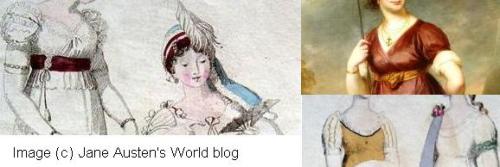
1802 Bosoms. Top right: Princess Augusta. Other two images from Ladies Monthly Museum.

Why is this? One can safely assume that a voluptuous woman with large breasts, even when wearing a dress with a modest neckline, would reveal some cleavage. Thin girls or women with small bosoms would not have as much difficulty following the rules of decorum. Before the 20th century, the feminine ideal was a woman whose curves were bounteous and whose figures were pleasingly plumb. Rich husbands and fathers were proud to show off their well-fed women. Only the poor, who toiled all day and never had enough to eat, or the sick, or those who were metabolically overchallenged, were thin and scrawny. Thus, it made sense that during the Regency heaving bosoms were de rigueur. But were they?
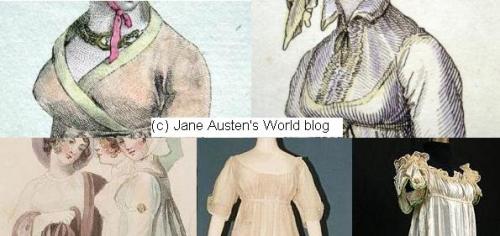
In this image I have included both French, English, and American gowns. Left to right, clockwise, starting at the top. 1803, Costume Parisien. 1803, Mirroir de la Mode. 1805, American neoclassical gown. 1805, English cotton muslin, Kyoto costume Institute. 1804, three French Promenade dresses.

Regardless of nationality, a woman could choose to be as modest (or daring) as she liked. As far as I can tell from fashion images and portraits, modesty won hands down. High necklines, chemisette inserts,  and high collars ruled the day. But night provided a different story.
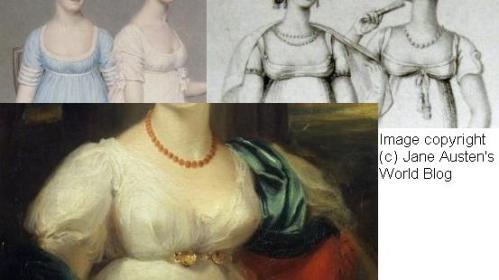
1806 gowns. Top left, Binney sisters. Top right, Opera and drawing room gowns. Bottom image, Lady Codrington.

In the above composite image of 1806 gowns, more of the bosom is revealed than in previous images. Consider the sources. The Binney sisters and Lady Codrington, who were sitting for their portraits, would have chosen their best gowns to wear. Full dress, or evening dress, revealed more skin. The third image also depicts evening wear. In those two images you can more readily understand why empire gowns created such a stir at first:

Observers of the period frequently deplored the absence of modesty conveyed by a style that was predicated on the prominence and exposure of the breasts and on the barely veiled body….Sheer, narrow dresses … caused a sensation at the beginning of the nineteenth century, more because of their contrast with the elaborate hooped costumes of previous decades than for any real immodesty. – Source: Two dresses [French] (1983.6.1,07.146.5) | Heilbrunn Timeline of Art History | The Metropolitan Museum of Art
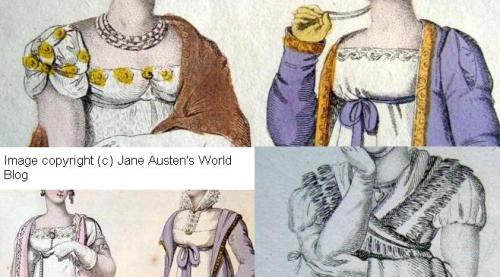
1807 Regency gown fashion plates

By now you have seen enough examples to have noticed a trend. Examine the above fashion plate images. Which necklines belong to full dress, or evening gowns, and which belong to day gowns or walking gowns? Of the five necklines, only the top left can be construed as revealing. And this neckline, depending on the size of the woman’s breasts, could be both modest or plunging.

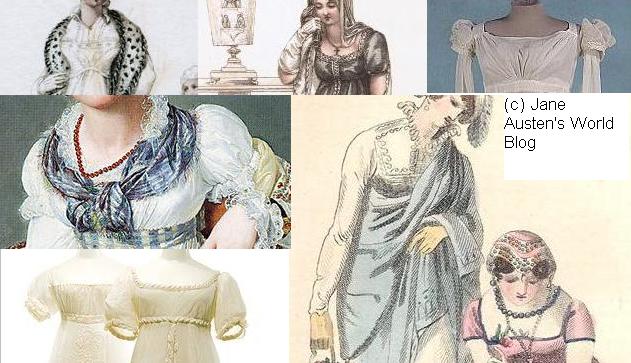
1810 Regency gowns

The 1810 Regency gowns demonstrate a variety of necklines and layers of clothing. As in Cassandra’s portrait of Jane Austen,  chemissetes were widely used. Fichus, shawls, tippets, and pelerines were also popular. The widow in the evening mourning gown (top middle) wears a cross that lies inside her cleavage. The white embroidered gowns (top right and lower left) demonstrate how the neckline is determined by whether the gown is worn for day (top right) or for evening (lower left, image of French gowns, Metropolitan Museum of Art.)
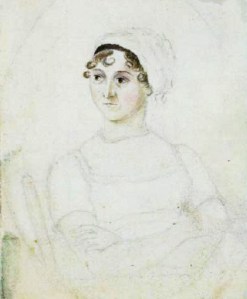
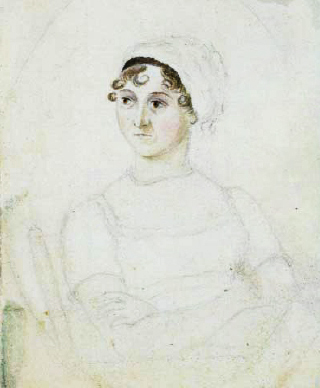
Jane Austen by Cassandra, 1810

In the image painted by Cassandra, Jane wears a simple gown, much like the Binney sisters were wearing. You can observe her chemisette under the low neckline, which created a more modest look for day time.

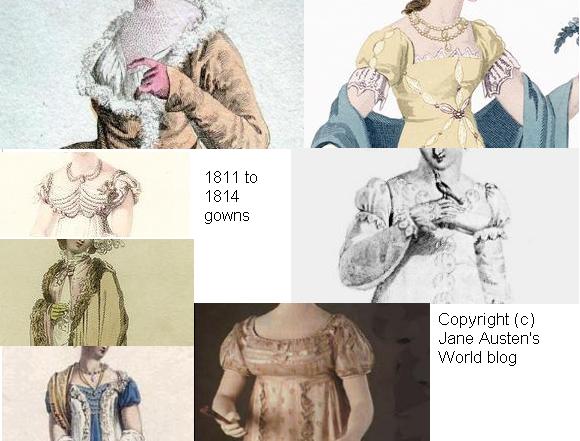
Regency gowns, 1811-1814

Princess Charlotte’s 1814 bellflower court gown (lower right), while breathtaking, did not reveal her bosom. The image of the 1812 full dress (second from top on the left) is a bit misleading, for the decorative drooping elements give the illusion that the neckline is lower than it actually is.  (In this example, it is hard to see the line of the silk fabric running across the top.) The other day gowns cover the torso quite modestly.
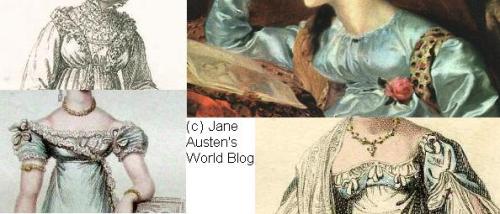
1815-1816 Regency Gowns

The high necklines of the 1815 morning gown at top left and Mrs. Jens Wolff’s 1815 satin dress at top right would make a Quaker lady proud. The two 1816 evening gowns show a relatively modest neckline (lower left) and one that could be quite daring (lower right).

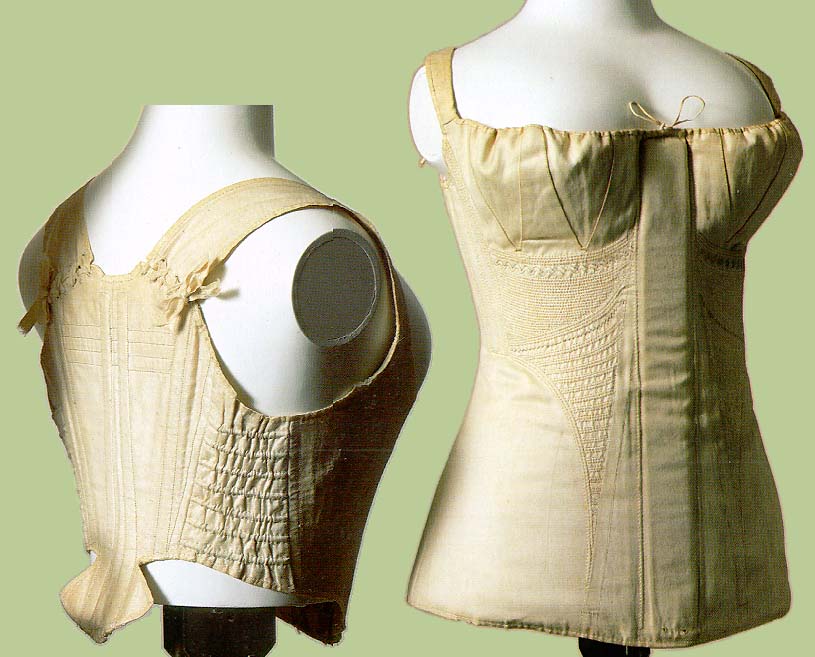
Until now I have not discussed the role that corsets played in propping up the bust line. Regency stays, which were darted and laced in the back, were quite short and were much less constricting than earlier Georgian models that cinched in the waist. The purpose of the Regency stay was to support a woman’s bust and create the distinctive Regency “shelf” silhouette.
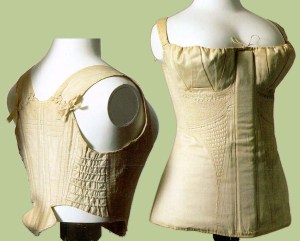
1819 stays (short on left, long on right with inserted busk). Image @ Kyoto Costume Institute

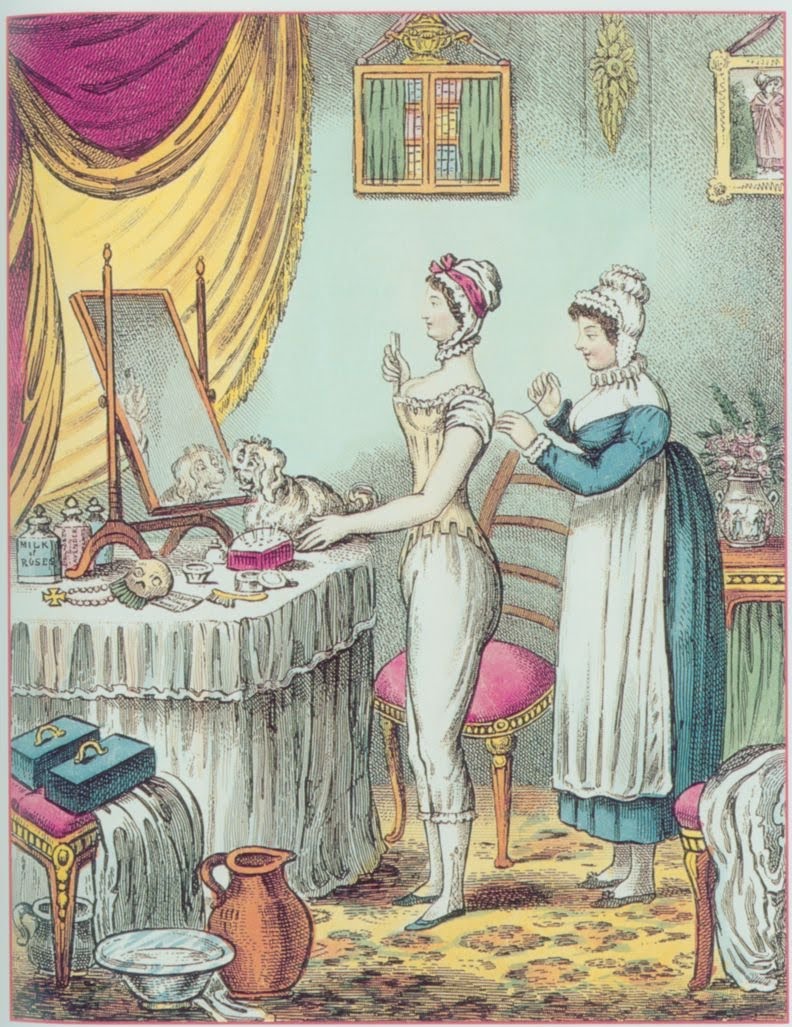
A rigid wood or bone busk, which served to separate the breasts and encourage good posture, was inserted in the stays (or corseted petticoat).
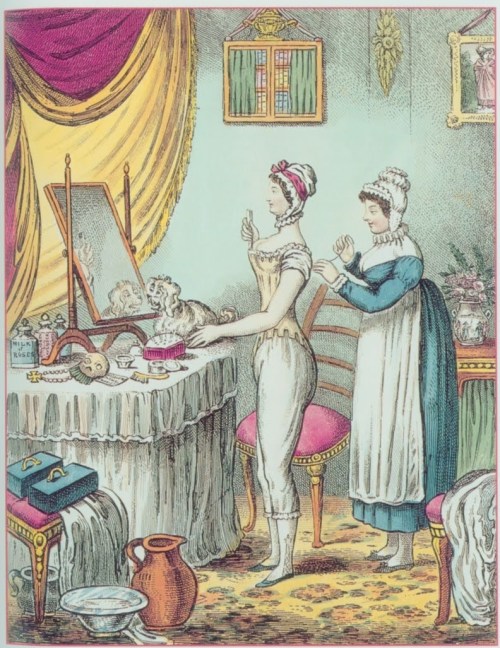
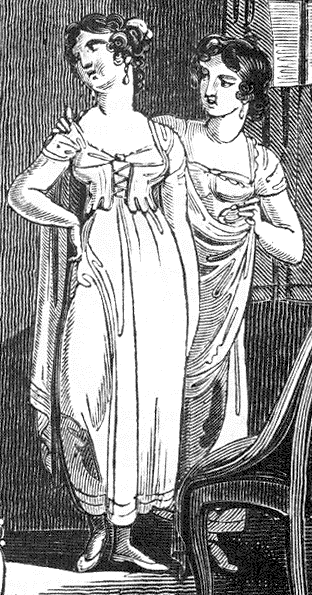
1810 German copy of James Gillray's cartoon. The lady inserts her busk as her maid ties her stays.

Busks might provide one explanation of why so few drawings and paintings of the era depict a deep, shadowed cleavage, for the breasts were splayed aside. The busks were often hand-carved and decorated by a woman’s sweetheart. The exerpt from a poem entitled: On a Juniper Tree, cut down to make Busks, waxes eloquently about the tree’s sacrifice for beauty.

She cut me down, and did translate,

My being to a happier state.

No martyr for religion died

With half that unconsidering pride;

My top was on that altar laid,

Where Love his softest offerings paid:

And was as fragrant incense burned,

My body into busks was turned:

Where I still guard the sacred store,

And of Love’s temple keep the door.

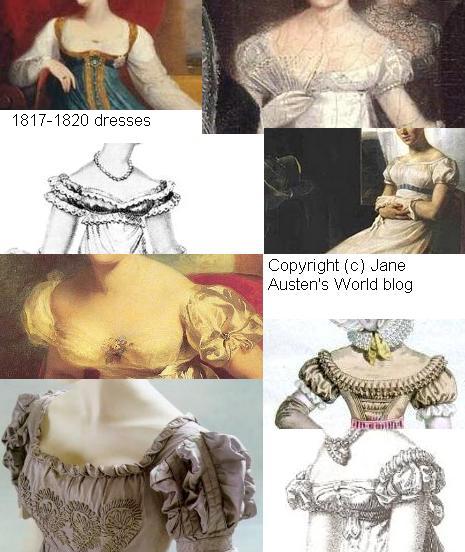
1817-1820 dresses

By 1817, the stark neoclassical outlines of empire gowns at the turn of the century had given way to a fancier more decorative outline, in which embellishments were added both at the top of the gown and at its hem. The 1817 portrait of Princess Charlotte (top left) is bittersweet, for she died in fall of that year in childbirth. Once again, the popular princess fails to exhibit her cleavage.

Rolinda Sharples’ painting of the cloak room at Clifton Assembly Rooms (top right) shows a woman with a small bust wearing a low décolleté ball dress. Countess Blessington (second from bottom, left) also wore a daring neckline for her sitting for her portrait by Thomas Lawrence. The two evening gowns at the bottom are modest, and the 1820 beige walking dress with its high ruff neck demonstrates the Tudor influences in dress embellishments. Also note the lowered waistline.
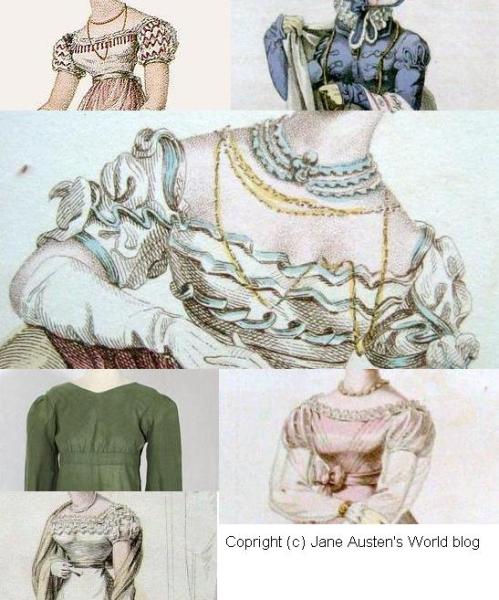
1823-1825 dresses

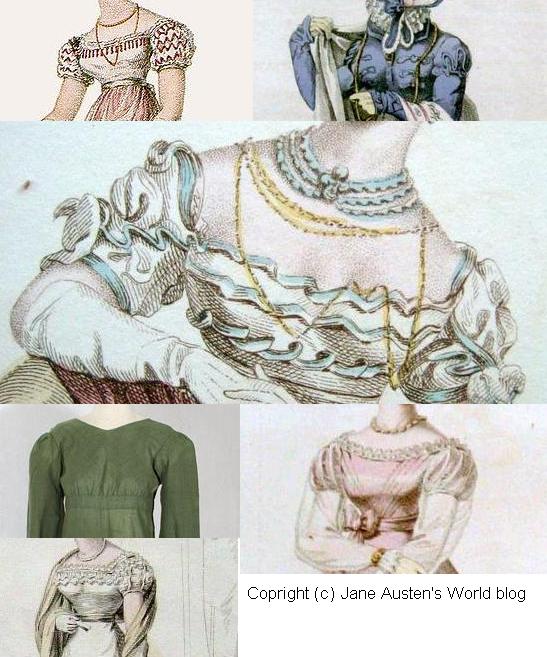
By 1823, Jane Austen had been dead for six years. She would have been shocked to see how many furlebows, tucks, rows of lace, and ribbons decorated ladies gowns. At this time, the waistline was gradually lowering back to its natural position. Gone was the neoclassical Regency empire silhouette. Note how the three ball gowns shown in this series of images provide hardly any chance for a lady to show off her cleavage.

One can see the hint of shadow of the woman’s breasts in the large 1823 La Belle Assemblee image in the center and how the artist accommodated the influence of the busk. I included the plain every day green 1825 American gown to show the kind of dress an ordinary woman would sew for herself and wear.

I hope this post has cast a light on a Regency lady’s bosom. A Lady of Distinction wrote in 1811:

Let the youthful female exhibit without shade as much of her bust as shall come within the limits of fashion, without infringing on the borders of immodesty. Let the fair of riper years appear less exposed. To sensible and tasteful women a hint is merely required.”

A tasteful hint? I can only conclude that exposing too much of one’s bosom was not considered lady-like behavior. Thin and small breasted women experienced an easier time following society’s strictures. The well-endowed had a tougher row to hoe, although an enterprising young virgin could always insert a handy nosegay to hide her feminine bounty or add  a pretty bow or a lace embellishment at the precise spot where a gentleman’s eyes should not stray.

Brazen hussies, light skirts, and women of easy virtue could bare as much skin as they pleased, having no reputation to protect. A very rich matron, whose place in society was secure, might be tempted to show more of her bosom than was prudent, but even she would refrain from displaying too many of her feminine allures before she was married!

Next, I will discuss heaving bosoms in Regency films and on book covers, and how the two media have influenced our perception of Regency bustlines.

More on the topic:

Read Full Post »
Copyright (c) Jane Austen’s World. Mrs. James Ward Thorne of Chicago was no ordinary luxury-loving, self-indulgent socialite.  Her love for doll houses as a child spilled over into adulthood, and she collected miniature furniture as she traveled through Europe. Her hobby led her to commission cabinetmakers and architects to recreate dozens of detailed historically accurate and important rooms on a scale of one inch to one foot. Each room was not only made to scale, but so were the upholstery, textiles, rugs, and curtains, which were fashioned by the Needlework Guild of Chicago.

Mrs Thorne bequeathed 26 European rooms and 98 American rooms to the Art Institute of Chicago. When I visited that world renowned museum, I had the forethought to bring my Flip Camera. My amateurish videos managed to capture the three-dimensional quality of the rooms and how they were lighted. Each room provides a peek into another space, giving the sense that doors and windows open up to a real world outside or lead to hallways and other important spaces.

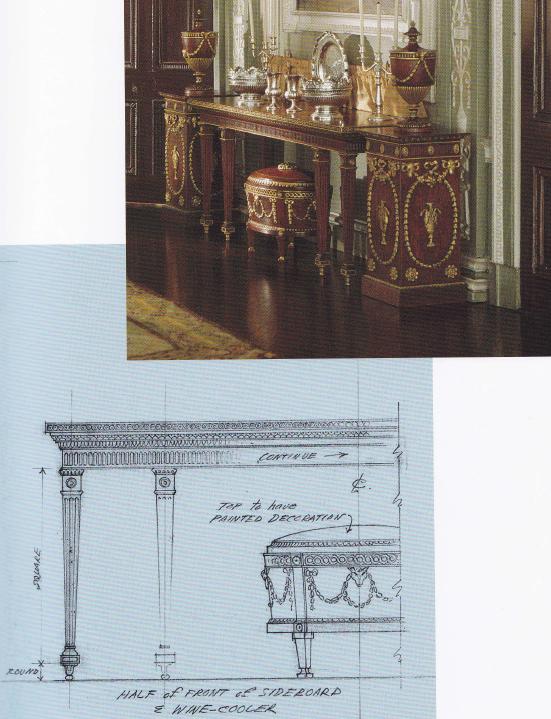
Detail of side table with flanking pedestals and oval wine cooler, with architectural drawing.

Image scanned from Miniature Rooms: The Thorne Rooms at the Art Institute of Chicago.

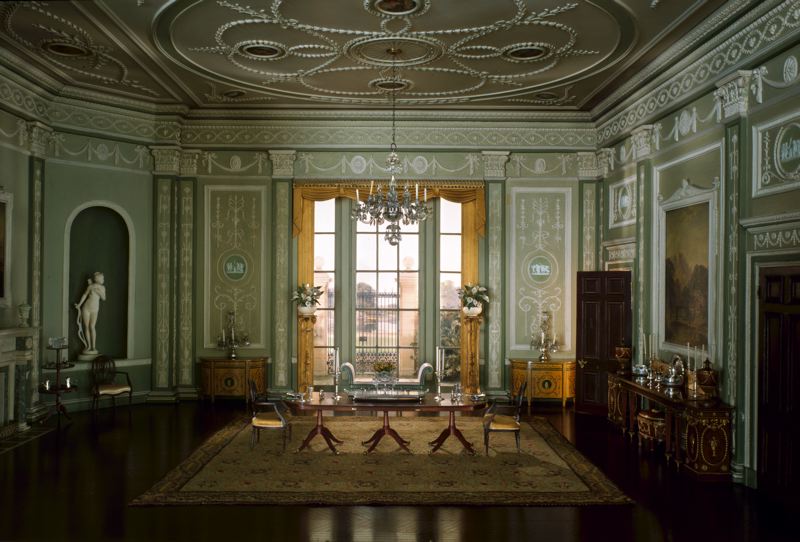
This remarkably detailed model of an English dining room was based on the interior of the dining room designed by Robert Adam at Home House in London. Features from the dining room in Saltram in Devonshire were also incorporated into the miniature. Comparing the miniature model (below) with the life-sized recreated Adam dining room from Lansdown House, which is now housed at the Metropolitan Museum in New York city, one can see how faithful Mrs. Thorne and her artisans were in recreating details and proportions.

About this work: Art Institute of Chicago

Like Adam, who had control over all aspects of the design, including the architecture, decoration, antiques, furniture,wall papers, paint and plasterwork, Mrs. Thorne closely oversaw each detail of her exquisite rooms. The furniture throughout Mrs. Thorne’s version of the Adam dining room were decorated with ram’s heads, as was the frieze. The urns on the fireplace mantle are copies of Wedgwood examples, and the paintings over the mantle and side table are after Claude Lorrain.

Dining room, Lansdowne House, Metropolitan Museum of Art

Heilbrun Timeline of Art History

More on the topic:

Read Full Post »

Copyright @ Jane Austen’s World

Before that you suffer it to be washed, lay it all night in urine, the next day rub all the spots in the urine as if you were washing in water; then lay it in more urine another night and then rub it again, and so do till you find they be quite out.
Hannah Woolley, The Compleat Servant-Maid, 1677

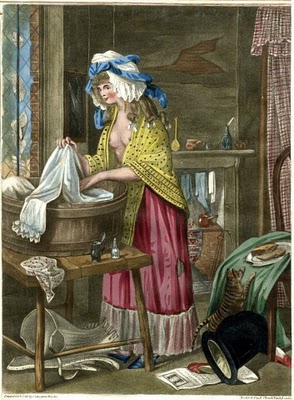
The Last Shift, Carrington Bowles

Urine for spot cleaning? Yes, you read the first word correctly.  Since the middle ages, professionals belonging to guilds manufactured soap and candles, for both products required tallow. They traditionally manufactured soaps from sodium or potassium salt or alkalis present in plant materials, and boiled the ingredients with animal fat. In the 19th century, it was discovered how to make caustic soda from brine. Soap makers no longer relied on cut wood to make soap and the cleaning industry was never the same again.

Before innovations during the Industrial Revolution changed laundry day forever, it was generally known that that alkaline substances, such as bleach or ash, dissolved or disintegrated stains and soils, enhancing the water’s ability to clean clothes.

Urine is alkaline, and since the days of ancient Rome, this by-product of the human body was used as a bleaching agent. “Pecunia non olet — money does not stink”,  Emperor Vespasian reportedly said when he started taxing this trade.*

Yes, urine stinks. But so do bleach and vinegar, a weak acid. The stinking ingredient that turns us off and that makes urine such a good cleaning agent – ammonia – is a substance that our modern cleaning products include in abundance.**  Eighteenth century English wool manufacturers used both urine and sheep or pig manure for washing. In addition, urine also sets dye. (The seller of my beautiful little handmade rug from Turkey cautioned that its vegetable dyes were set with goat urine. Twenty years after its purchase, the rug no longer smells, but its fragile colors must be vigilantly protected from direct sunlight.)

As recently as the early 20th century, urine was collected in barrels in Japan and fermented for use in laundering. The Japanese threw the contents of their slop jar into the barrel, then separated the feces from the liquid urine. The feces were used as fertilizer to enrich the soil, and the urine was collected by laundry shops, who fermented the liquid and used it  as a bleaching agent by pounding it into the cloth. – Edible Soap, A Harmless Natural Soap for the Family. It is the fermentation process that probably made urine safe to handle, much like fermented beer or distilled alcohol were safe to drink in the days before sterilization.

Urine from the animal of choice was also used to improve the complexion. Samuel Pepys’ wife decided to try the urine of puppies (‘puppy-dog water’), for instance, in March 1664 (Diary of Samuel Pepys). This may have been less foolish than spending a hundred bucks on a small pot of modern-day moisturiser, since the ‘active’ ingredient in urine is urea, and urea creams are inexpensive, effective and regularly recommended by dermatologists. – The Thirteenth Depository: A Wheel of Time Blog

This YouTube video uses urine to demonstrate that it is as powerful a cleanser as commercial products.

More on the Topic

*The Historical Development for Washing Laundrys

**Pepys Diary

Read Full Post »

Copyright (c) Jane Austen’s World. Look at this lovely Regency lady in this image from 1814. Her petticoat peeps under her fashionably short gown, whose conical shaped skirt has been given a definite shape by the undergarment.

1814 Ball Dress, Costume Parisien

At the turn of the century, when lighter cloths were used to fashion gowns and when the dress silhouette was columnar and worn close to the body, the use of a chemise or petticoat was even more crucial, for the thin fabric would cling to the legs and work its way between them without the barrier of the petticoat. A few weeks ago, one of my posts created a stir when I revealed that drawers were regarded as optional underwear for Regency ladies, and readers wondered how a Regency lady could withstand the cold in winter.

Morning Dress, Ladies Monthly Museum.

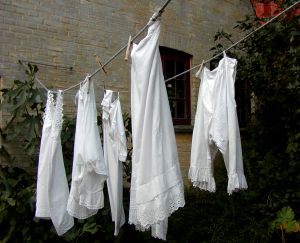
While bloomers were optional,  a petticoat was an absolutely necessity. Dress fabrics were gossamer thin, and petticoats, made of sturdier linen or cotton, and reinforced with tucks and perhaps a thin line of boning at the hem, served to give shape to the hem of the dress, keeping it away from the feet and body. As skirts rose, the decorative elements of a petticoat peeped out under the skirt. Below, one can see a typical petticoat of the day (with corset on top of it). This one is short, but the tucks are evident.

Petticoat

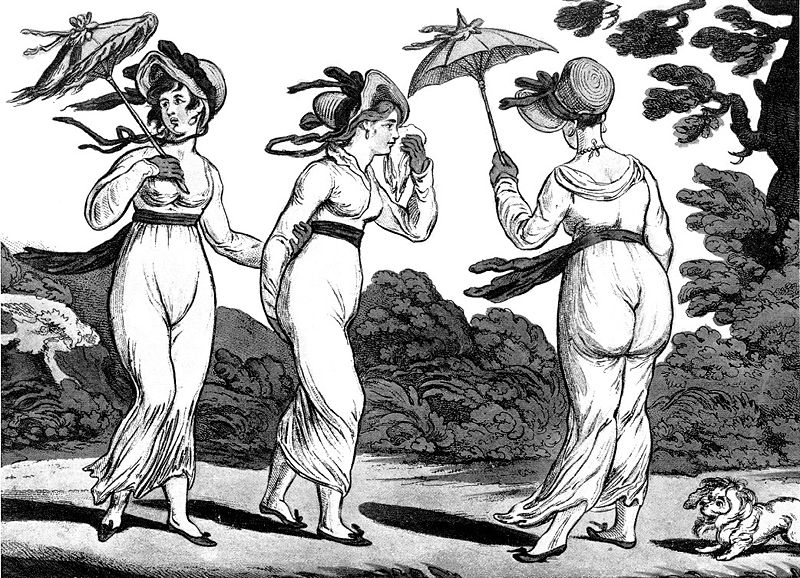
Without this undergarment, the thin fabric of a ladies gown would hug her body, revealing her legs and her mons of Venus in stark outlines when she moved. Gillray’s cartoon of The Three Graces in High Wind demonstrates how revealing Regency dresses were, even when petticoats were worn.

The Three Graces in High Wind, James Gillray, 1810

Illustrators James Gillray, Isaac Cruickshank, and Thomas Rowlandson relished making fun of the new fashions. In the image below Gillray shows the effects of wearing a gown without underwear and taking the fashion features of décolleté and side slits to the extreme. Rather than creating an elegant effect, the lady resembled a tart.

Boilly’s painting shows how clearly the chemise, which ended above the knees, shows through the thin fabric of this lady’s gown.

Point de Convention, Louis-Léopold Boilly, ca. 1797. Image @ Wikimedia Commons.

This image from the Kyoto Costume Institute also demonstrates the transparency of Regency gown fabrics.

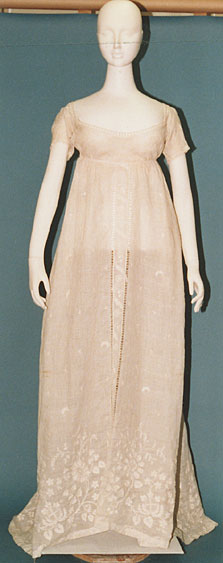
White muslin dress with whitework embroidery, 1810. Image Kyoto Costume Institute.

The unusual (and rare) practice of dampening one’s gown at the turn of the century was most likely followed by light-o-loves, courtesans, ladybirds, cyprians, and women of ill repute. Aristocratic women who were confident in their unassailable status might have gotten away with such licentious behavior on a dare, and their fashion inclinations might have been considered “au courant”, but no proper lady, no young miss on the marriage mart, no merchant’s daughter looking to improve her station in life, would for a moment consider walking out in public without the protection of a chemise or petticoat, much less wet her gown to make it more revealing. While caricaturists showed enormous zest in depicting the new revealing fashions, they exaggerated the trend of these flimsy gowns out of all proportion in their visual commentaries.

Isaak Cruikshank, Parisian ladies in full winter dress, 1800. Image @ Wikimedia Commons.

Addendum: I must add that another primary purpose of these undergarments was to protect the delicate outer garment from soiling. In Regency times people did not wash themselves frequently, and petticoats and chemises presented a barrier between unwashed and sweaty skin and the dress. Since undergarments were made of sturdier fabrics, they could be laundered more often. In addition, people with less means owned fewer gowns and employed fewer servants to do the laundering. Even these ladies owned a number of chemises (usually homemade) and petticoats that could be washed frequently, thereby protecting their every day AND special gowns.

More on the topic:

Read Full Post »

« Newer Posts - Older Posts »