Feeds:
Posts
Comments

Archive for the ‘jane austen’ Category

From the desk of Shelley DeWees… Gentle reader, guest writer Shelley DeWees, blog author of Uprising, writes book reviews for me. A Darcy Christmas: A Holiday Tribute to Jane Austen by Amanda Grange, Sharon Lathan, and Carolyn Eberhart is her first review for this blog. Welcome on board, Shelley.

A collection of stories designed to awaken the holiday spirit, A Darcy Christmas is a quick read showcasing veteran and amateur Austen spinoff writers. In the beginning, I was excited. I really wanted to be seduced by the magic imagery of the winter festivities, feel the warmth of some imaginary fire, manifest the taste of hot chocolate on my tongue while gazing at grainy photographs and luxuriating in a wool blanket…but success wasn’t to be mine.

The first problem was easy to spot: the short stories are printed in the wrong order. Books are like sandwiches in the way they should be designed. The fillings are important, yes, but they can be made to be better with the introduction of really delicious bread. Is your PB & J not to your liking? Too much jelly? Not enough peanut butter? Is the crunchy peanut butter a bit too crunchy? We all have our preferences. However, they seem to go by the wayside if the bread, beautiful in its simplicity and perfect in its splendor, is amazing. Who cares if the jelly to peanut butter ratio is off when the bread is wonderful?

If the first short story had in fact been the second, and Christmas Present by Amanda Grange had been the opening glimpse into Christmas à la Darcy, perhaps the subpar fillings would’ve been less noticeable. Instead, the book begins on its weakest leg, Mr. Darcy’s Christmas Carol by Carolyn Eberhart. As a fledgling author, Ms. Eberhart deserves commendation for her first publication. That being said, her portion of A Darcy Christmas was wholly unoriginal, insipid, and fraught with characters whose predictability astounded me. The connection to Charles Dickens’ timeless classic was, in my humble opinion, more than should’ve been allowed. Darcy essentially fills the shoes of Scrooge and does some soul searching, this time about whether he should renew his offer of marriage to Elizabeth (and with a little less snobbery, hmm?). The ghosts visit him, they show him the same humdrum imagery we’ve come to expect from the original story, and he has an easily-foreseeable revelation. Though a story about Darcy’s inner broodings over the loss of Elizabeth would be interesting, this one fell short and needn’t have taken place during Christmas at all.

Amanda Grange’s Christmas Present represented a noticeable uptick in the book’s procession. The story is engaging and sweet as we watch Elizabeth and Darcy bring their first child into the world, and the imagery is full-on wintery goodness. Familiar characters make their appearances including Mr. Collins, Lady Catherine, Kitty and Mary Bennet, and Bingley and Jane who have also become new parents. Mr. and Mrs. Bennet emerge too, albeit with Mrs. Bennet’s overly prominent vulgar comments and an odd social presence that seems a bit far-fetched. Beyond that though, everything is copacetic. Darcy and Elizabeth have no worries on the horizon and thus, no reason for their story to continue. This ever-positive view of their life together seems to have saturated the imaginations of all brilliant authors including Sharon Lathan, whose contribution rounds out A Darcy Christmas.

Her story, which shares the same title as the book, is another rendition of Darcy-and-Elizabeth-lived-happily-ever-after. Elderly and rich beyond measure, Mr. and Mrs. Darcy are busy hanging a family portrait when they begin to look back on their days, first as infatuated lovers and then as a cohesive couple. We see Darcy brooding over his first proposal, quietly but thoroughly berating himself, followed by a picture-perfect honeymoon scene, the birth of 5 children, the death of Mr. Bennet, and the marriage of their oldest son. There are, of course, few problems. In fact, the only recognizable woe comes in the form of a slightly disfigured daughter who is otherwise healthy, spunky, and smart.

It is at this point that I let out an audible sigh positively reeking of been-there-read-that. Isn’t there anything else that Darcy and Elizabeth could do with their lives? What about “Darcy and Elizabeth: The China Years”? Or how about a story where they lose all their money, move to a slum, and learn their true love for eachother as they slowly move forward? Though I realize that Jane Austen’s writings are most assuredly focused on the upper class, I tire of the same ‘ol “Everything is Perfect” spinoffs where Christmas means finery and feasts, gifts, treasures, and luxuries. A Darcy Christmas embodies some of the worst qualities of the holiday season, overconsumption and stuff-mongering among them.

And so it was that I felt no kinship with Christmas because of this book, no sudden urge for eggnog, no desire to buy things for my best Janeite friends or to call my Mom just because. This book left me wanting for a real story of life as a Regency twosome, with all the ups and downs that were part of everyone’s daily existence (even the very rich people of English high society). I’m tired of the “Look how happy we are!” stories that seemingly have no substance, no vulnerable underbelly, no challenge to them. A Darcy Christmas was a disappointment, not only as a vehicle for the Christmas spirit but as a statement of values as well.

Read Full Post »


Bootmaker, 1845


He wore green trousers and a red jacket and his hat was leather with a narrow brim and a purple band all around the crown. He was sitting on a wooden stool, hammering away at a pair of boots that he was making, with the tools of his trade all laid out beside him: the lap-stone, the stirrup, the whet-board, the pincers and the nippers. As he worked he sang a little song to himself, to go with the rhythm of the hammering:

A Gentle Craft that hath the Art,
To steal soon into a Lady’s Heart.
Here you may see what Guile can do,
The Crown doth stoop to th’ Maker of a Shoe.

The Other End of the Rainbow, David Gardiner


16th Century Shoemaker Shop


In the Middle Ages, tradesmen formed guilds that protected their trades. Those who worked with fine leather were known as Cordwainers,  named after the very finest leather that was imported from Cordoba, Spain. In later years, those who processed leather formed their own guild, but  shoemakers retained the name of Cordwainer. Cobblers were distinct from Cordwainers, for they only repaired shoes, but over the years, this distinction began to weaken.  – Cordwainers: History.


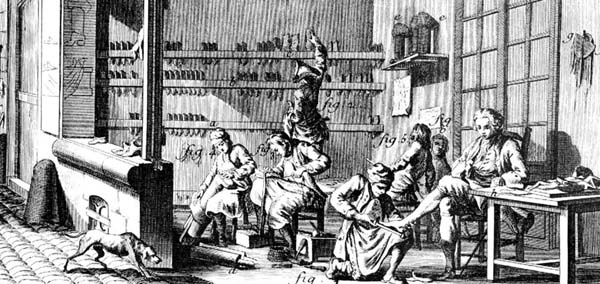
18th Century Shoe Shop


At the time, the shoemaking trade consisted of division according to the type of shoes made: men’s, women’s, and shoes for workers, such as night-soil men and slaughterhouse men. There were different operations performed by different persons: cutting leathers, sewing uppers, and joining heel and sole. And there were production sites, such as shop masters and cellar, garret and stall masters. Shoe masters employed many people in large operations that hired many workers (there were only 600 or 700 of these), but over 30,000 individuals worked as journeymen, countryworkers, apprentices and cheap garret masters.*


Shoe Seller, 1840


By the 18th century, most boot and shoemakers barely made a subsistence wage. The majority of individuals who made shoes worked for very low wages, about 9s or 10 s a week. Many could barely afford their own lodging, and if they did, the accommodations were mean and poor.  The wages, while low for men, were even lower for women – who worked in shoe closing and shoe binding – and for children.*


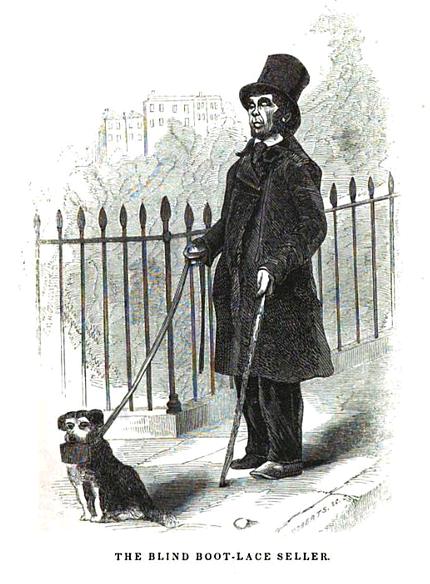
Blind bootlace seller, Mayhew


The life of a shoemaker was a hard scrabble life, for their trade depended on leather, the purchase of which required money or credit. Some shoemakers were known to stretch their goods by reducing the thickness of the leather used for heels and soles. Others, desperate to feed their families, would steal food or clothing and be jailed or, worse, hung after they were caught.*  -*London Hanged: crime and civil society in the eighteenth century, Peter Linebaugh


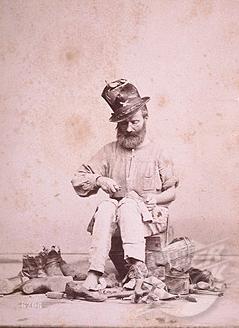
19th century shoe cobbler


Yet the shoemaking business was not totally abysmal:


Shoes over the 18th Century**


Shoemaking flourished in the 18th century, and boot- and shoe-makers were the most numerous of all Salisbury craftsmen throughout the 19th century and until the First World War. It was said that in the later 19th century ‘in hundreds of houses the shoe-binders, the closers and finishers were busy week in week out’. The business with the longest history is Moore Brothers, whose origins can be found in William Moore, boot and shoemaker in 1822 and 1830, and Henry Rowe, established in Catherine Street in 1842, who had moved by 1867 to Silver Street. By 1875 these premises were occupied by Rowe, Moore and Moore, a firm which subsequently became James and William Moore Brothers. The firm moved to its present premises in the New Canal at the end of the 19th century.  – Salisbury Economic History Since 1621


Yellow silk shoes with buckles, French, c. 1760's. @Bata Shoe Museum


Early in the Georgian era the fashion for high heels (as much as 3″) made it difficult for cobblers to make “paired lasts” for left and right shoes. The “last” of the shoe is footprint of the shoe, which can be straight or without a left or right side. Many of the 18th and 19th century shoes and boots were produced on straight lasts. As the person wore the shoes, they “molded” to the foot, creating a left side and right side over time. –  The Bootmaker


1810-1820 woven straw shoes


After the French Revolution, shoe heels began to disappear, symbolizing that everyone was born on the same level. Delicate silk uppers began to be replaced by more affordable, sturdier leathers.


1891 silk shoe made with straight lasts***.


But the shoes continued to be made with straight lasts, a technique that continued into the 20th century.


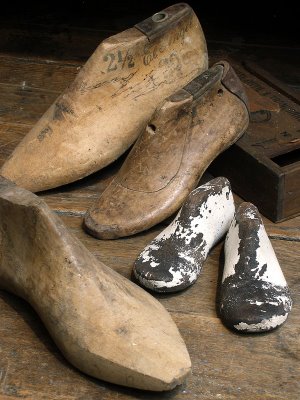
Vintage shoe lasts


As late as 1850 most shoes were made on absolutely straight lasts, there being no difference between the right and the left shoe. Breaking in a new pair of shoes was not easy. There were but two widths to a size; a basic last was used to produce what was known as a “slim” shoe. When it was necessary to make a “fat” or “stout” shoe the shoemaker placed over the cone of the last a pad of leather to create the additional foot room needed. – Fashion Through Time, History of Your Shoes


Shoemaker's shop, 1849


Tools used by bootmakers and cobblers included: awls for punching holes in leather; hot burnishers that rubbed soles and heels to a shine; sole knives that shaped soles; stretching pliers which stretched the leather upppers; marking wheels to mark where the needle should go throught the sole, and size sticks to measure the foot. “By 1750 shoemakers were making shoes in different sizes for anyone who wanted to buy them. Before that they only made shoes on special order.” – Tradesmen/shoemaker.

Sources:


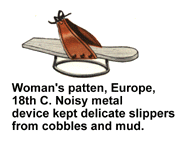
Pattens went out of fashion in the early 19th century. Jane Austen recalled their noise on cobblestones in Bath. It was common for women to trip while wearing this awkward device.


Read Full Post »

( A discussion about what friendship might be. A few thoughts and considerations while writing about Jane and Martha. You might agree. You might not. I am open for criticism. Guest writer Tony Grant of London Calling)
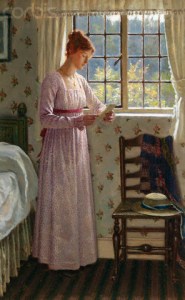
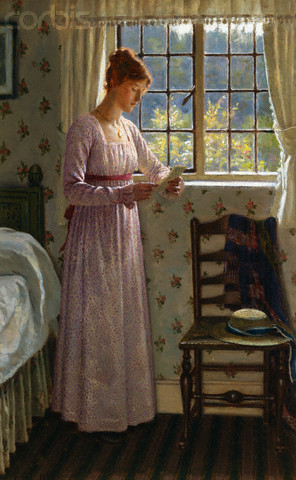
The Letter, Edmund Blair Leighton

Jane Austen didn’t marry. There are suggestions she did have love affairs but they did not come to fruition. Did this make her human experience less than those who have the love of another human? She had the love of her family and especially her sister Cassandra. She had the love of Martha Lloyd her best friend. She experienced love from other human beings and she gave love to others.

Lets have a look at what we can find out about Jane’s relationship with Martha Lloyd, her best friend.

Who was Martha Lloyd?

Martha Lloyd was born in 1765. Her mother, Martha Craven, had been the daughter of the Royal governor of South Carolina. Martha Craven , although coming from a wealthy background, married an obscure country vicar called the Reverend Nowis Lloyd who was the rector of Little Hinton, Wiltshire and who also, in 1771, became the vicar of Enborne near Newbury in Berkshire. After the Reverend Nowis died Martha and her two sisters, Mary and Eliza were left with their cruel and some say insane mother. They escaped by going to live with an aunt who lived in Newbury. They also have a brother but he died in a smallpox epidemic. Martha and Mary were both left scarred for life by the same epidemic. The younger sister, Eliza, is supposed to have escaped the epidemic unscathed. She married

It is not known how exactly the Lloyd family and the Austen family met but they had many acquaintances in common. The two families became very close after the Reverend Nowis died in 1789. The Reverend Austen gave the widow and her three daughters his unused parsonage at Deane a mile from Steventon. So Jane and Cassandra lived very close to the Lloyd sisters and they saw a lot of each other. There were not many chances to form close acquaintances in the countryside and the daughters of both families all became close friends, especially Martha Lloyd and Jane Austen. Jane was ten years younger than Martha but they obviously got on very well. Martha became like a second sister to Jane.

When James Austen married in 1792 he took over the parish at Deane and so required the parsonage there. The Lloyd family had to move out and went to Ibthorpe, a small hamlet near Hurstbourne Tarrant in Hampshire, fifteen miles further away. This must have been hard for Jane and Martha. They had no independent transport to visit each other.

Mary Lloyd, the younger of the two sisters, married James Austen as his second wife, after his first wife died.

The Reverend George Austen died on January 21st 1805 in Bath. Martha’s mother died soon after. Mrs Austen, Cassandra, Jane, and Martha decided to pool their resources and live together. They first moved to Southampton together to live with Jane’s brother Frank’s wife Mary, in Castle Square. Frank and Mary had only just got married and Frank had to go away to sea. The arrangement was beneficial to all concerned. Apparently they all got on well together.

On July 7th 1809 Jane, her mother, her sister Cassandra and Martha moved to the cottage at Chawton on their brother Edward Knight’s estate.

Martha knew all about Jane’s writing exploits, something Jane kept secret from most people. She even dedicated some early works to Martha, her friend. A sure sign of Jane’s close trusting affinity with Martha.

Jane’s letters show evidence of her easy and close relationship to Martha. Her comments are often teasing and full of fun about Martha but always show love for her friend. Sometimes there are mere asides mentioning Martha within a discussion about other people or other things. Martha’s opinion or what Martha is doing at the moment of writing. It’s as though she is always in Jane’s mind and presence.

Tuesday 11th June 1799, writing from Queen Square, Bath, to Cassandra.

“ I am very glad You liked my Lace, & so is Martha-& we are all glad together.-I have got your cloak home, which is quite delightful!….”

Again on Friday 9th December 1808 from castle Square to Cassandra.

“ Our Ball was rather more amusing than I expected, Martha liked it very much, & I did not gape until the last quarter of an hour.-It was past nine before we were sent for & not twelve when we returned…”
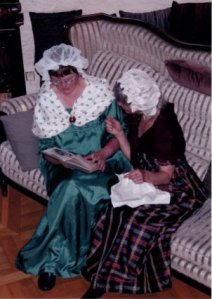
Jane Austen Invites, Sue Humphreys.* A Theatre Someone production ‘Jane Austen invites…’ written by Susan Leather, Lesley Sherwood & Sue Humphreys.

Jane’s letters have many short references to Martha. She is always present.

Other letters tell more detailed stories about Martha. While living in Castle Square, Southampton, the Austen’s attended services at All Saints church in the High Street where Dr Mant was the vicar. Dr Mant was well known in Southampton. He had been the headmaster of King Edward VII’s Grammar School in the town . He had also been a professor of Divinity at Oxford and written religious discussion pamphlets. He was a super star in the firmament of vicars. He was a very charismatic preacher too. Dr Mant had his following of inspired young ladies. Martha was apparently a besotted member of this clan.

Tuesday 17th January 1809 from castle Square to Cassandra.

“ Martha and Dr Mant are as bad as ever, he runs after her for having spoken to a Gentleman while she was near him the day before.- Poor Mrs Mant can stand it no longer; she is retired to one of her married daughters.”

This story sounds quite scandalous. One wonders what is Martha’s attractiveness. She obviously has a passionate heart and is prone to,”love.” A certain, young girlish tendency towards infatuation. And, poor Mrs Mant, what of her, indeed. Scandal is in the air or is Jane being creative with the truth? She feels free to be personal. She definitely has a relaxed attitude towards her dear friend. She is being very personal in this letter. Being able to get that close to somebody and maybe even play with their emotions is a sign of something close in a relationship.

Another letter highlights this playfulness again.

Tuesday 11th June 1799 form Queen Square to Cassandra.

“ I would not let Martha read First Impressions again upon any account,& am very glad that I did not leave it in your power.- She is very cunning , but I see through her design;-she means to publish it from memory & one more perusal will enable her to do it.”

And then there is the close affection and freedom each feels in the others presence expressed in this story of a night spent together. You can imagine the enjoyment of each others presence in this letter. Jane is full of fun and teasing.

Wednesday 9th January 1799 from Steventon to Cassandra.

“ You express so little anxiety about my being murdered under Ash Park Copse by Mr Hulbert’s servant that I have a great mind not to tell whether I was or not,&shall only say that I did not return home that night or the next, as Martha kindly made room for me in her bed, which was the shut up one in the new nursery.-Nurse and the child slept on the floor;&there we all were in some confusion& great comfort;- the bed did exceedingly well for us, both to lie awake in and talk till two o’clock,& to sleep in the rest of the night.-I love Martha better than ever …….”

These are two girls having the time of their lives. Totally at one, relaxed and full of fun with each other.

There are only four letters in existence that Jane wrote to Martha. The first, written in 1800 has two parts. Jane’s letters are always full of news about people and places she and the recipient of the letter have in common and in some ways we the present day reader of those letters are left out of this private world unless we find out for ourselves about her references. This first letter we have to Martha is partly taken up with this sort of news about people and places. However what makes this letter different is the opening, where Jane expresses her wish to be with Martha. There is an intensity shown in these words maybe even a passion to see her friend, revealed here.
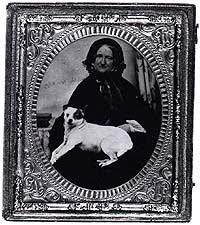
Martha Lloyd lived long enough to be photographed

To Martha Lloyd, Thursday 13th November 1800 from Steventon:

“-You are very good at wishing to see me at Ibthorpe so soon, & I am equally good in wishing to come to you; I believe our merit in that respect is much upon a par, our Self denial mutually strong.-Having paid this tribute of praise to the Virtue of both, I shall have done with Panegyric & proceed to plain matter of fact.-In about a fortnights time I hope to be with you; I have two reasons for being not being able to come before; I wish so to arrange my visit to spend some days with you after your mother’s return, in the 1st place that I may have the pleasure of seeing her, & in the 2nd, that I may have a better chance of bringing you back with me.- Your promise in my favour was not quite absolute, but if your will is not perverse, You & I will do all in our power to overcome your scruples of conscience.- I hope we will meet next week to talk all this over, till we have tired ourselves with the very idea of my visit before my visit begins.”

Compare this to an exchange between Romeo and Juliet.

Act III Scene V Capulet’s Orchard:

Juliet:
Art thou gone so? Love, lord, ay husband, friend! I must hear from thee every day in the hour
For in a minute there are many days!
O, by this count I shall be much in years
Ere again I behold my Romeo!

Romeo:
Farewell! I will omit no opportunity
That may convey my greetings, love, to thee.

Juliet:
O thinks thou we shall ever meet again?

Romeo:
I doubt it not; and all these woes shall serve
For sweet discourses in our time to come.

The two situations are not exactly the same. There is no added angst of the forbidden meeting driving on the will to meet between Martha and Jane but there is the want brought about by separation.

Friendship indeed.

Is this what it’s all about?

Are we hard wired to get the friends we have? Hard wired meaning, made to relate with and find love with a certain person or type of person.

How do we get a friend? We choose friends, or do we? They have to come into our proximity, live near us, or be near us for part of our lives so we can actually meet. We could meet them at school, or university. They could be neighbours, attend a club we go to, work in a place we work in or be introduced to us. We have to make regular contact for some time in our life, with them, for the friendship to take wing and fly. So finding friends is accidental to a certain degree. But, we meet many people accidentally. They don’t all become our friends. So what is it, this friendship thing?

My opening question asked, “Are we hard wired to get the friends we have?” Our personality, our way of thinking, what we say, how we say it, our sense of humour, our moods, all these intangible things that make us the individual we are must in some way meld with these intangible things found in another person and somehow they are illuminated, expanded, ignited with this coming together.
Is friendship love? We love our husband , wife or partner. We love our children. We do love our friends. What are these different aspects of love? Or, are they different? Aren’t they the same?

Our children come from our bodies. Marriage is formalised in a church ceremony or a civil ceremony. Partners are people we at some stage decide to stay with. But do these guarantee love, friendship, a close relationship? A loving relationship of whatever label is beyond the label. The labels are just signs. But signs can be false. Do we all really love our husband, wife or partner all the time, part of the time or never? Do we really love our children because they come from us? Don’t we fall out drift apart, sometimes? Relationships can be split and the name friend, partner, wife, husband loses it’s meaning. So a real deep love and friendship is beyond the outward signs and words.

Why do we need a loving relationship?
They take us beyond ourselves. They take us beyond and out of ourselves. Phrases come to mind, “I love them more than life itself. I love them more than myself.” And there are other phrases, which describe it.

What is it all about? It’s a sort of searching and if we are lucky, a finding of something that necessary, life ennobling, deep within ourselves and even outside of ourselves. But is a husband, wife, partner, son, daughter, friend, enough and finally necessary? Do those relationships go deep enough? Does our real need go deeper?

What about those who stay single or people whose relationships are broken? Or consider the contemplative monk or nun who hardly ever speak, the celibate in or out of the religious life, the rejected and dejected, the drug addict, alcoholic, the tramp, the drop outs from society, those who have nobody, is their human experience less and are they denied love somehow because they don’t appear to have a close loving human relationship with someone? How deep can we go with this love thing? Is there something more infinitely deeper than the merely human side of it? Are human relationships, human love, really just a taste of something deeper and even more profound? Human relationships can be fickle, wither and dry up. People also die. Is the need and search for love within us naturally there? Are we born with the desire and need for it? What could it all be out? I don’t know.

But Jane had her friend.

Other posts by Tony Grant

*Image from Theatre Someone

Read Full Post »
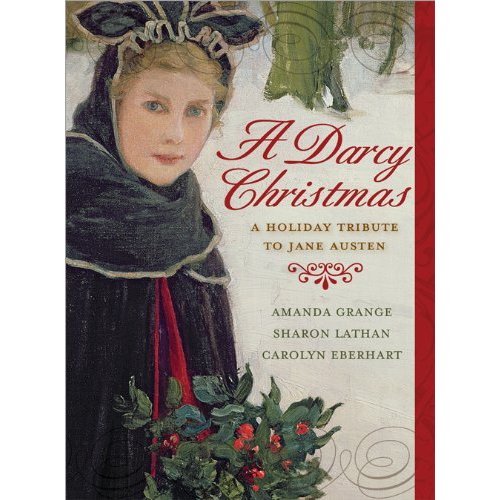
I know I am late in reviewing this Jane Austen undead novel, which came out in August. My initial reaction to Emma and the Vampires was “Meh!” and “Oh, no, not another one of those deadfuls.” But as I read Wayne Josephson’s book further, its sweet and gentle quality and its quiet humor began to grow on me. Then I became confused.

If this book was meant to be a vampire mashup, then it failed miserably, for aren’t vampires ravenous for human blood? Aren’t they irresistibly drawn to the smell of humans to the point where they are sexually attracted to their victims and MUST have them at all cost? Aren’t vampires generally fearful of daylight and aren’t decent, law-abiding humans frightened to associate with them?

Emma, while highly skilled at driving stakes through the hearts of the rag tag vampires that attack humans, is unaware that a number of her social group have already gone over to the other side, including Miss Taylor upon her marriage to the vampire, Mr. Weston, Mr. Knightley and his brother George, Mr. Elton, who is attracted to her long neck, and Mr. Martin. These vampires live normally among humans, abstaining from feasting on their human acquaintances and friends, and concentrating on hunting wild animals. They are able to emerge on overcast or rainy days to go about human-like business, but they do not sleep or eat.

Then there are the horrible vampires, who bare their fangs, wear rags, and thrash and drool. These are the vampires that must be dealt with by both the citizens of Highbury and the aristocratic vampires, who are not of their class. In one scene, as the party leaves Randall’s because of the snow, the bad vampires attack the Knightley family and Mr. Woodhouse as they exit the door. As Mrs. Westos screams and Mr. Woodhouse faints, Mr. George Knightley dashes back into the house to return “with two sabres, one of which he tossed to Mr. Weston, who expertly caught it…Emma deftly retrieved her wooden stake from beneath her bombazines, having practiced the the exercise repeatedly at home.” John Knightley joins in the fray, and the fighters, half of them human, half of them aristocratic vampires, then quickly dispatch the drooling, murderous undead. These vampire wars and the dangers in the countryside feed Mr. Woodhouse’s paranoia and general sense of fear, a nice twist on his hypochondria. He is also clueless:

Yes, but the children never sleep—nor does John. They are up all the night long, running everywhere while John paces. And they keep disappearing into the forest, for what reason I haven’t the slightest notion. It worries me exceedingly, with so many wild vampires about.”

As with all vampire books, there are gaping gaps in logic. Why the humans of Highbury don’t seem to connect the dots – that the good vampires among them are never seen eating, that the majority of their activities are done at night, that their eyes are bright red – is beyond me, and one must suspend all logic when entering into the spirit of this novel. As my mom would say, the reader will simply have to go with the flow.

This Emma is Jane Austen light. The book’s tone and style are quite accessible to the modern reader. I had read somewhere that Mr. Josephson had written this novel for his young teenage daughter. If that is the case, then its sweet tone, its epic tale of benevolent vampires fighting evil ones, and its accessible introduction of the Emma character are appropriate.

I enjoyed this novel for what it was. This book certainly has a different take on vampires. If it is true that it is geared toward a younger audience, then it has found its niche. While it would not appeal to die-hard fans of True Blood and Ann Rice novels, it does have a charm of its own.

I give Emma and the Vampires two out of three regency fans.

My Other Mashup Reviews:

Read Full Post »


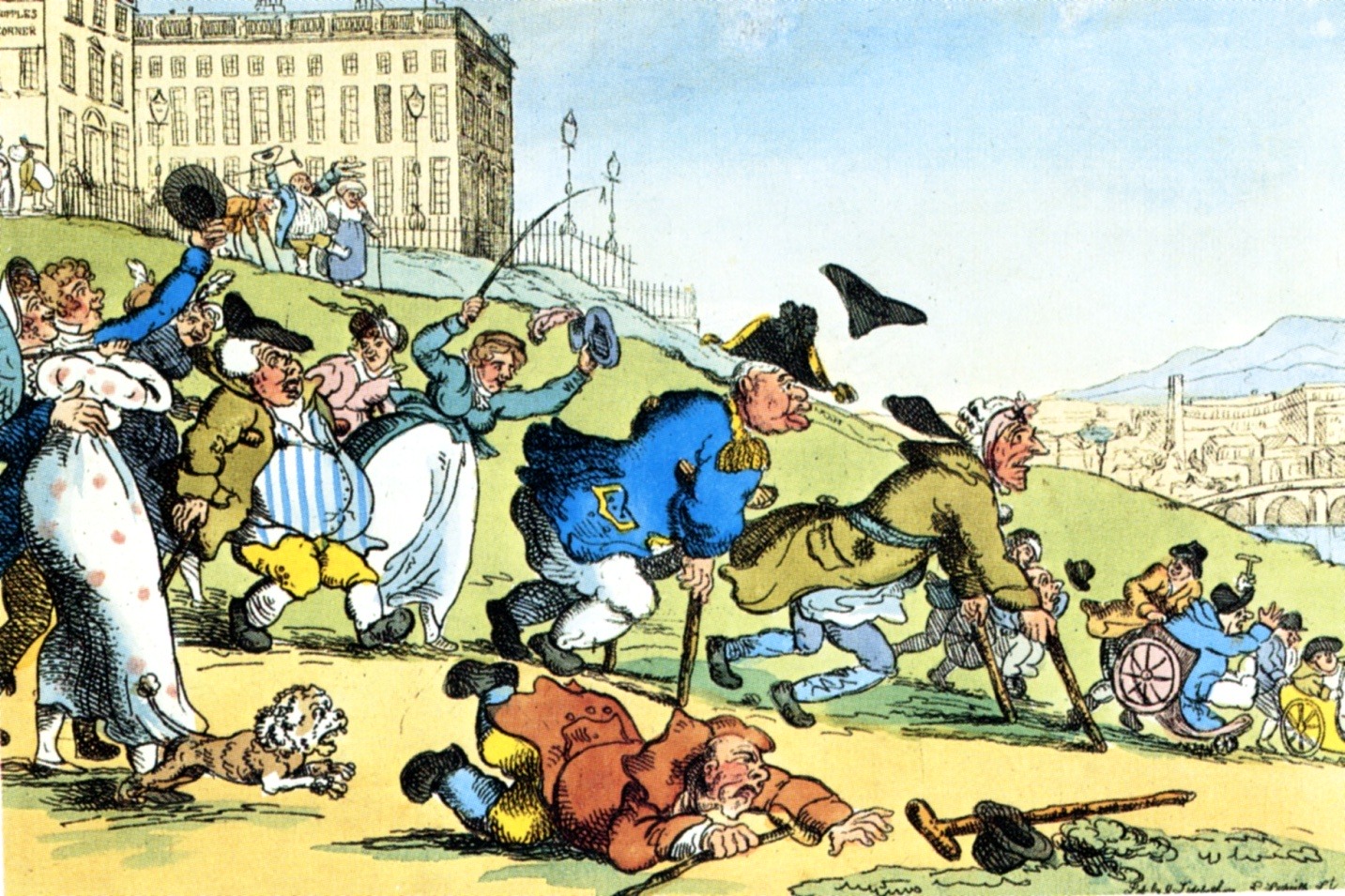
The Comforts of Bath, Rowlandson


Had Margaret Dashwood fallen from a tree and broken her forearm, Mrs. Dashwood would have sent for the surgeon to set it. A broken bone presented a painful procedure in a time before anesthesia, but simple fractures of the arm were relatively easy to fix, even in the late 18th and early 19th centuries. In reaction to the injury, muscles contract and are stretched before the bone is set. Arm muscles do not offer undue resistance. Thus the bone of a forearm can be set without too much exertion on the part of the surgeon or bone setter. Once set and placed in a sling, the arm bone required time and rest for healing.


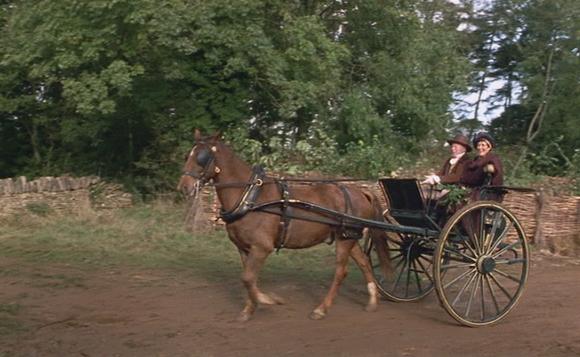
The Crofts in their gig, 1995 Persuasion


If Admiral Croft, a notoriously bad driver, had overset his vehicle and tossed poor Mrs. Croft to the ground, breaking her leg in two places, the situation would have been different. The size and strength of her leg muscles would have been so much stronger than Margaret’s arm muscles, and the exertion to set Mrs. Croft’s bone in place would have required more effort and required the work of at least two persons.

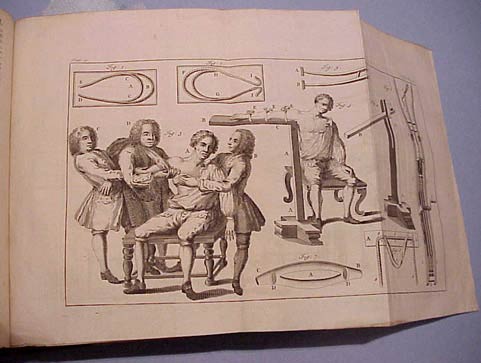
A fracture in Mrs. Croft’s lower leg would have been easier to remedy than a fracture of the thigh, in which large and strong muscles would experience a great degree of contraction and shortening. Considerable manipulation would have been required by several assistants to overcome strong thigh muscles and stretch them in order to place the bones in their natural position.

The simple position of the injured member sometimes suffices to overcome the contraction of the muscles and to restore the broken bone to something like its natural position. Yet, in most cases, it becomes necessary to employ additional means to accomplish this object by pulling the lower fragment away from the upper. This must be done with care and yet with considerable force.”- Home Medical Treatments

If, after the pulling and resetting, both limbs were the same length again, then the procedure was succesful, but this was not always the case. Soldiers on the battlefield whose bones shattered from canon and gun fire risked getting an infection. In such instances, surgeons often chose to amputate before the tissue became necrotic.

Bone Setters

As early as the 16th century, apprentice barber-surgeons were impressed in the army to treat soldiers, where they learned their trade by neccesity Generally, surgeons and bone setters learned how to set various kinds of fractures through apprenticeship.

“Bone setters included surgeons and barbers. the practice of bonesetting by both qualified and unqualified practitioners. (In using the term “unqualified,” we refer to those who take up the practice of healing without having had any formal training in the accepted medical procedures of the day.) –  Bonesetting, Chiropractic, and Cultism Chapter 1: The Origin and Course of Bonesetting ©1963, Samuel Homola, D.C.”

Not all bone setters were apprenticed to a medical person. If no surgeon or physician lived within the vicinity, the local blacksmith would set bones in humans and animals, for a fee, of course.


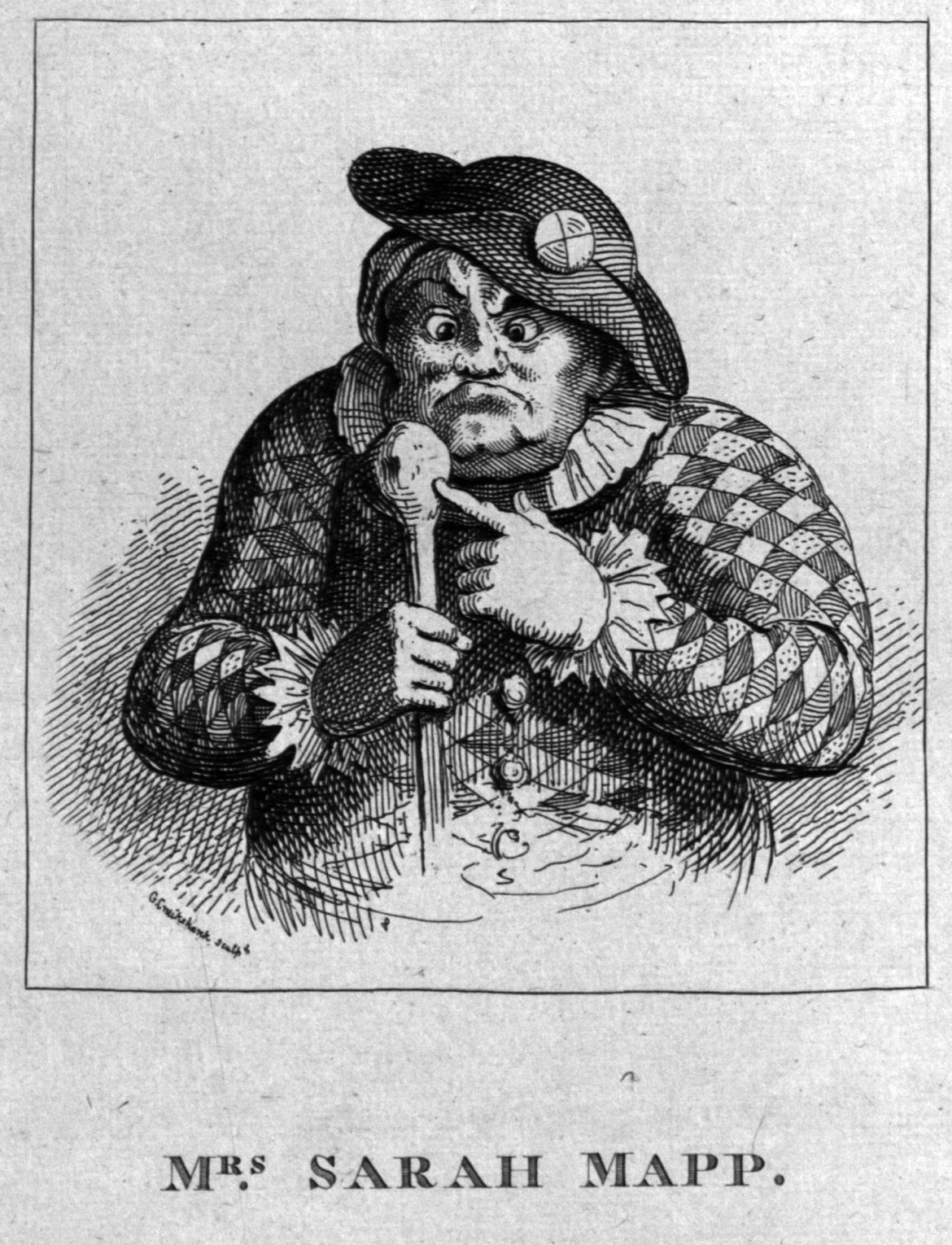
Sarah Mapp, 18th Century Bone Setter


Some bonesetters became celebrated for their dexterity. One such person in the early 18th century was Mrs Mapp, whose skill was legendary. A daughter of another famous bone setter, Polly Peachum (who married the Duke of Bolton), she was known as crazy Sally. Nevertheless, her “cures earned her upward of 100 guineas per year. Sally Mapp’s marriage was not as successful as her skills with bones. Her husband thrashed her several times before absconding with a majority of her earnings.

“Her bandages were neat, and her skill in reducing dislocations and in setting fractures was said to be wonderful. If it was known that she was going to the theatre, that was sufficient to fill the house. Her own estimate of herself is shown by an interesting incident. When passing through Kent street, she was taken for one of the King’s German mistresses, who was unpopular. A mob gathered and used threatening languages. Mrs Mapp thereupon put her head out of the window and cried, “Damn your bloods, don t you know me! I am Mrs Mapp, the bone setter,”and drove away amid the applause of the multitude.” – Boston Medical and Surgeon Journal

Not everyone was a fan. “Mr Percival Pott, the celebrated surgeon, who was her contemporary, spoke of her claims as the most extravagant assertions of an ignorant illiberal drunken female savage.”  – Boston Medical and Surgeon Journal

As the medical professions evolved, barber-surgeons, midwives, and professional bone setters like Mrs. Mapp, began to be replaced by trained male physicians and surgeons. During the 19th century, colorful characters like Mrs. Mapp, and midwives, who had widely practiced across all spectrum of classes, labored primarily for the poor and could barely scrape a decent living.

By the 1860’s, British physicians and surgeons were largely registered. A case against a Mr. A.E. Shakesby, bonesetter and osteopath was dismissed, for “osteopathy was not regulated, supervised, or recognized by any statute.” Mr. Shakesby had committed the cardinal sin of elevating his stature as bonesetter and describing himself as an osteopathic physician and surgeon. While his self-description amplified his profession of bonesetter, the grander sounding title did not go against the Medical Act of 1858, which required doctors to be registered in recognized fields. – Medico-Legal, 1932

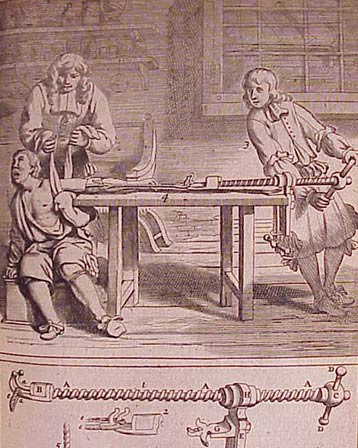
Over the centuries, scientific inventions sped up a surgeon’s or bonesetter’s ability to help patients. As early as the 15th century, the printing press churned out medical manuals, in which medical procedures were standardized and disseminated over the world. In the late 17th century, traction was used to repair a broken bone, and in 1718, French surgeon, Jean Louis Petit, invented the tourniquet to control bleeding, a medical technique that was especially helpful during amputations.

Traction to repair a broken bone is seen here in “Armamentarium Chirurgiae”, by Ioannis Sculteti (1693), and the final illustration is by Laurence Heister in “A General System of Surgery” (1743). Note the numerous assistants required to restrain the patient in this pre-anesthetic era. – Collect Medical Antiques

Pain Control

Bone setting could be extremely painful, and pain was excrutiating during amputations. Before 1853, only a few substances were available to dull pain, but these efforts were generally unsuccessful and many surgeons relied on their patients to faint from pain as a method of relief. A person in shock would feel less pain and bleed less, for their lower blood pressure would reduce the flow of blood, in the case of a jagged bone.

Methods of pain control included: icing the limb, prescribing laudanum, drinking alcohol, and providing nerve compression or hypnosis. Icing the limb was problematic in that carting ice was a hugely expensive and laborious procedure, and storage through the warms months required ice houses and was available to only a few. (Storing Ice and Making Ice cream in Georgian England)

During the latter half of the 18th century and early 19th century, there were several missed opportunities for finding an effective anesthetic. In 1773, Joseph Priestley used nitrous oxide, a gas that was difficult to synthesize and store. Humphry Davy commented in 1800 that nitroous oxide transiently “relieved a severe headache, obliterated a minor headache, and briefly quenched an aggravating toothache.” No one seems to have taken that observation further. Humprhy Davy also realized that inhaling ether relieved pain, but remarkably, ether was considered a recreational drug during this period. In Britain and Ireland, when gin was taxed to the point where the poor found the cost prohibitive, they began to drink and ounce or two of ether instead. In America, students would hold nocturnal “ether frolics” by holding ethe-soaked towels to their faces.

By 1846, the situation had changed. Ether had made its appearance as a pain reliever, and chloroform was introduced for operations a year later. In 1853, Queen Victoira requested chloroform when giving birth to her eight child, and from then on it was accepted practice to offer pain relief to women in labor.

Sources

Read Full Post »

« Newer Posts - Older Posts »