This Jane Austen blog brings Jane Austen, her novels, and the Regency Period alive through food, dress, social customs, and other 19th C. historical details related to this topic.
One of the most beautiful new books available for Jane Austen fans this year is the Jane Austen: Visual Encyclopedia by French authors Claire Saim and Gwen Giret. With sumptuous artwork throughout and gorgeous illustrations by Sophie Koechlin, this is one of the most extensive catalogs of the Jane Austen fandom I’ve seen in recent years.
It’s a showstopper and conversation-starter that you’ll want to keep on your coffee table indefinitely. While the sticker price is a bit steep (currently on sale on Amazon), this beautiful book is an investment many Jane Austen fans and book collectors will want to make.
As I explored this gorgeous new collectible book, I felt as though I was immersed in the entire world of Austen’s life, novels, and film adaptations. It’s a rich compilation of all-things-Austen for the dedicated Austen fan. It’s a one-stop book for everything you could ever hope to know about Austen, and it’s rare to see so many photos, articles, and illustrations in one place. It is not a scholarly book or a research tool, as it sticks more to the more popular aspects of Austen’s legacy, but it is delightful all the same.
Most of all, this book provides an expansive introduction to the enduring popularity of Jane Austen. It makes a wonderful gift for new Austen fans who have recently discovered the films or books. For fans of the film adaptations, it has many interesting tidbits about the various films throughout.
This is the book I would have wanted to read in college or in my grad school years when my Austen addiction truly took hold of me. I read dozens of books about her and watched as many documentaries as I could find during my early “Jane years,” but this has everything in one place.
Lastly, I cannot say enough about the actual look and feel of this book. When it arrived, wrapped in plastic, I was impressed. Once I opened it, it was even more stunning than I expected. It has a nice heavy feel to it, but you can still hold it comfortably in your lap, unlike larger coffee-table books. It’s definitely a book people will pick up if they see it displayed, which is what I’m planning to do!
Book Description
From her beloved family and her romantic escapades to her literary adventures and her enduring popular culture influence, experience the life and legacy of Jane Austen in this full-colour, beautifully illustrated, definitive 312-page encyclopedia.
Bursting with over 200 photographs and illustrations, explore Jane Austen’s work, which consists of six completed novels, two incomplete novels, letters and early writings. From the written word to the screen, from adaptations to secrets and filming locations, this book invites you on a fascinating journey of discovery through Austen’s writing.
Want to walk in the footsteps of Jane Austen, dressing in Regency style or simply enjoying a delicious afternoon tea? This coffee-table book features a beautiful gold-foiled cover and is perfect gift for fans of Jane Austen, her works and their enduring legacy.
Book Outline:
PART 1: Jane Austen, a woman of her time
Essays on Jane Austen, her family, friends and potential lovers
Illustrations and photos from across Jane’s beloved England
Researchers discuss Jane Austen’s appearance
PART II: The world of Jane Austen
A complete chronology of Jane Austen’s work
The historical and fictional backgrounds to iconic characters such as Elizabeth Bennet, the Dashwoods, and Mr Darcy
Filming locations and production secrets from over 30 adaptations
The unfinished novels and how they were eventually published
Expert analysis of early works and other writings
PART III: Jane Austen’s legacy
A comprehensive guide to the best Austen festivals
Details on the famous museums and collections dedicated to Jane Austen
From postage stamps to Funko-Pops Jane’s indelible influence
About the Authors
This book was lovingly compiled by Claire Saim and Gwen Giret (French authors), Sophie Koechlin (illustrator, French writer, painter & designer, and Hermès scarf designer), Lizzie Dunford (contributor and current Director at Jane Austen’s House Museum), and Helen Moss (translator).
Claire Saim, deeply in love with everything English, from literature to history and culture – including scones, obviously – she has been a devoted Janeite for many years. Always looking around Paris in search of whatever could be a reminder of her dear Great Britain, she shares her adventures on Instagram @jane_austen_france_. Based in France.
Gwen Giret, Jane Austen is a long-time passion of hers which led her to create a blog titled Jane Austen and her world. Her favourite things include travelling through the Pride and Prejudice author’s footsteps, reading all about Captain Wentworth and eating tons of clotted cream. Based in France.
Book Interior
If you’d like to take a tour of the interior of the book, you can watch this lovely video posted by the Jane Austen Centre:
Celebrating 250 Years of Jane
This book is a true testament to Austen’s timelessness and enduring legacy. Her life and work only become more popular with each passing year. It’s a comfort for many Austen fans to read about her life or sit down with one of her novels and slip into her world.
As we work our way through the many new books released and releasing in honor of Jane Austen’s 250th year, there is so much more to come! We have books to read and new shows to watch. What could be more delightful than a Year of Austen in books and on screen?
In this series, we’re exploring Jane Austen’s novels and identifying the romantic themes used in each one – with the goal of proving that Jane Austen not only used romantic themes ingeniously but also played an important role in developing several key plot devices that are still used in modern filmmaking today.
Last month, I wrote about the “Enemies-to-Lovers” theme in Pride and Prejudice. This month, I’m delving into Emma and looking at the romantic themes it continues to inspire in modern romantic movies and shows.
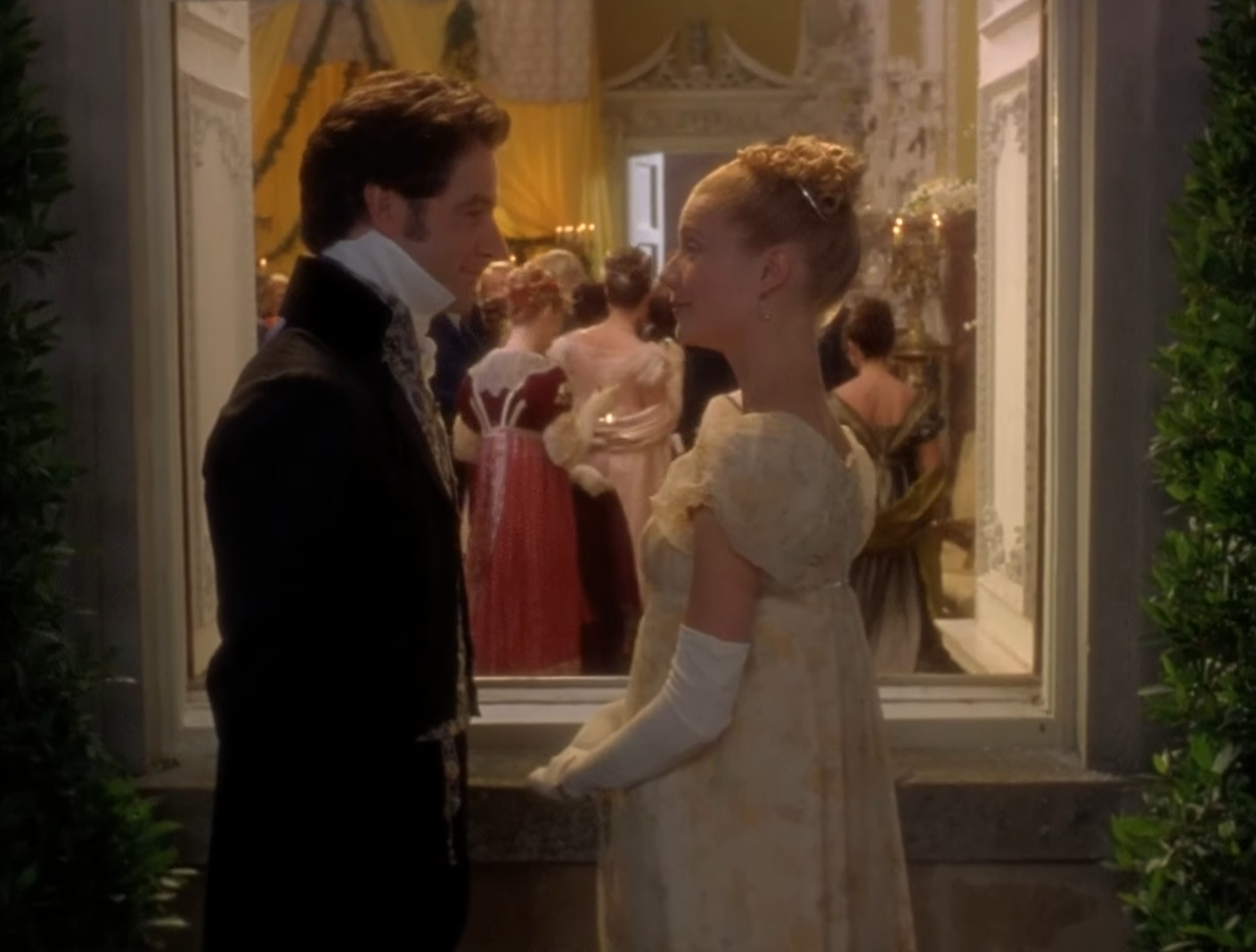
Emma 1996
Enemies to Lovers in Emma
In “The Rom Com Explained” on TheTake.com, we read this humorous definition of the popular enemies-to-lovers trope that I discussed last month in regard to Elizabeth Bennet and Mr. Darcy:
“The two love interests probably start out at odds. They may come from different worlds, have competing goals, or simply get off on the wrong foot. But as the rom-com wisdom goes, there’s a very thin line between love and hate, and the story frames all this friction as kindling for sparks to fly.”
What about Emma and Mr. Knightley? In Emma, some have said that Mr. Knightley and Emma fit the rivals description as well because of their witty banter and playful digs, but their delayed love interest seems to be much more about their age gap, their family history, and their comfort level with one another that comes from being brother- and sister-in-law.
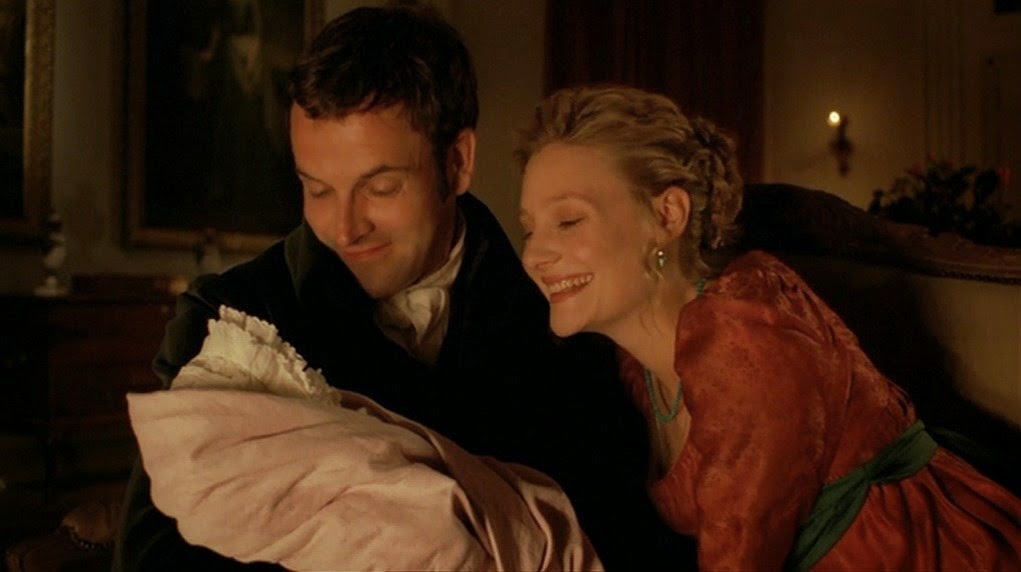
Emma 2009
Defining the Relationship
But if they aren’t rivals-to-lovers, what makes the romance between Emma and Mr. Knightley so irresistible? What techniques does Austen use to cleverly draw us into their world? What causes the slow burn that builds between them?
Are they boy/girl next door lovers? Possibly.
Friends-turned-lovers? Probably.
While Emma falls into both of these categories, if we want to narrow it down even further, the romance between Emma and Mr. Knightley best fits the “It Was Right In Front Of You All Along” theme. Their love story starts with a slow simmer, builds to a slow burn, and turn into a raging inferno.
The Slow Burn
In Emma, the relationship between Emma and Mr. Knightley sizzles because it’s so unexpected—at least for the two main characters. We, the readers, watch it slowly build (and hope that it will happen), but the characters themselves don’t recognize their own feelings for quite some time. It takes Emma the longest to realize, which adds to the charm of the story. With the Slow Burn love story, there are obstacles standing in the way (knowing one another too well, growing up together, not seeing each other “that” way, and other love interests). Most commonly, there’s a distraction that keeps one or the other from recognizing the chemistry that is building all along the way.
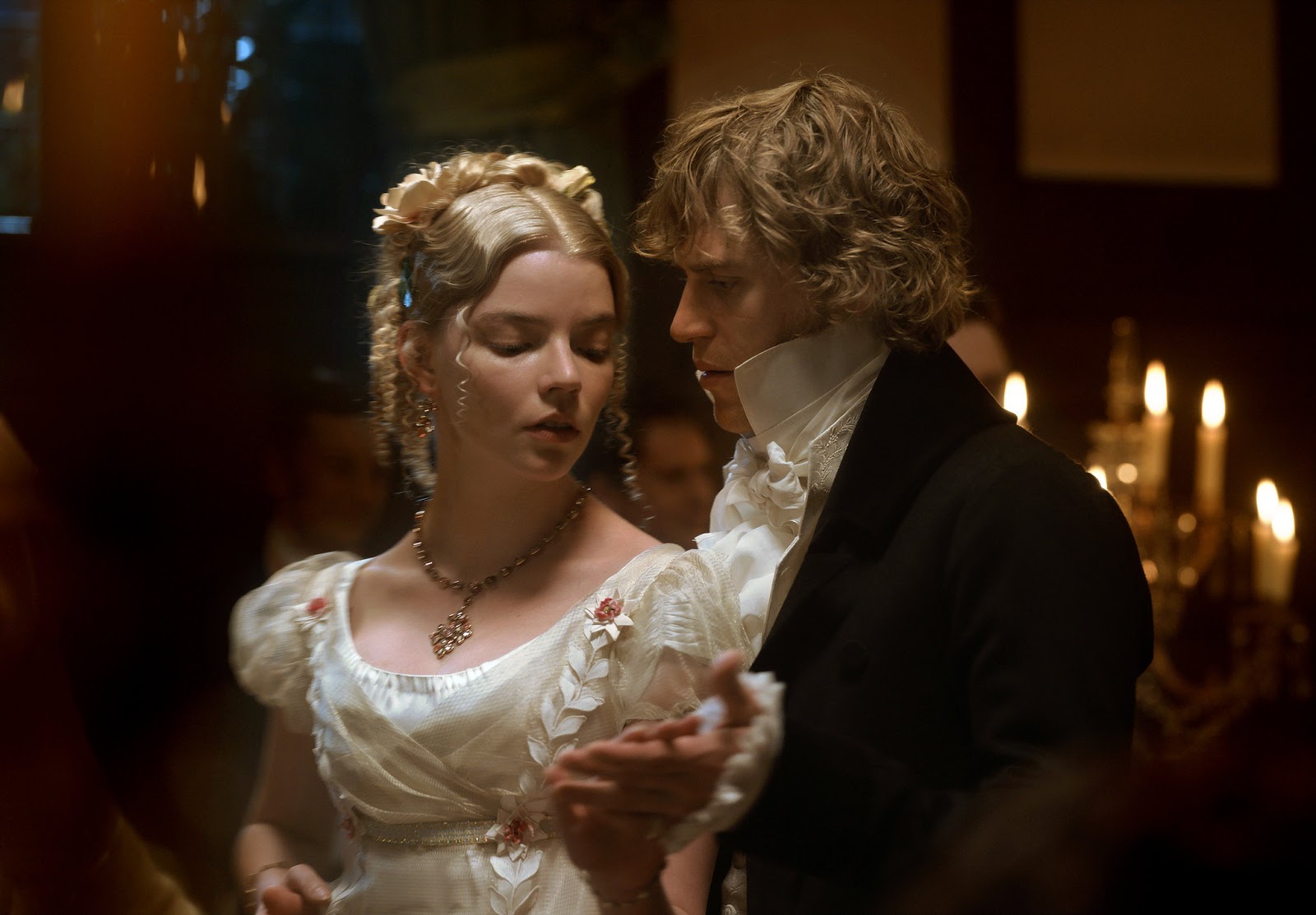
Emma 2020
The Red Herring Distraction
In a Slow Burn love story, there is usually at least one misleading love interest or storyline (or “red herring”) to keep readers off the trail. Jane Austen obviously sets the bar high for the red herring theme in Emma, but here’s a definition from “The Rom Com Explained” article:
“Rom-com leads often start out with a red herring love interest who seems very appealing but turns out to be all wrong. Meanwhile, as the protagonist spends time with someone they aren’t actively trying to impress, they can be their unfiltered self and get to know the other person in a real way.”
Emma, Pride and Prejudice, and Sense and Sensibility all have at least one red herring love interest. In each, there’s a man who seems charming and agreeable at first but turns out to be quite the opposite. In PP and SS, the red herrings turn out to be villains (yes, I’m looking at you Mr. Wickham and Mr. Willoughby), but in Emma, Frank Churchill, an immature and obnoxious man who think it’s funny to play with other people’s emotions, acts as the red herring. These red herring lovers keep audiences busy trying to figure them out so that they don’t notice the real love story brewing beneath the surface.
Emma 2020
Emma 2009
Reading Emma like a Detective
Unlike most modern romantic comedies, Jane Austen’s plot in Emma is anything but obvious. She outdoes herself with several misleading storylines. She keeps us so busy figuring out what’s happening between Emma and Frank Churchill, Emma or Harriet and Mr. Elton, Harriet and Frank Churchill, and even Harriet and Mr. Knightley that the majority of first-time readers never even notice the Frank and Jane Fairfax storyline until later in the novel.
In fact, Emma is so cleverly written that many scholars believe it reads more like a detective story than a romance. If you’d like to delve into this fascinating topic, click to read David H. Bell’s brilliant article, “Fun with Frank and Jane: Austen on Detective Fiction” in JASNA’s Persuasions.
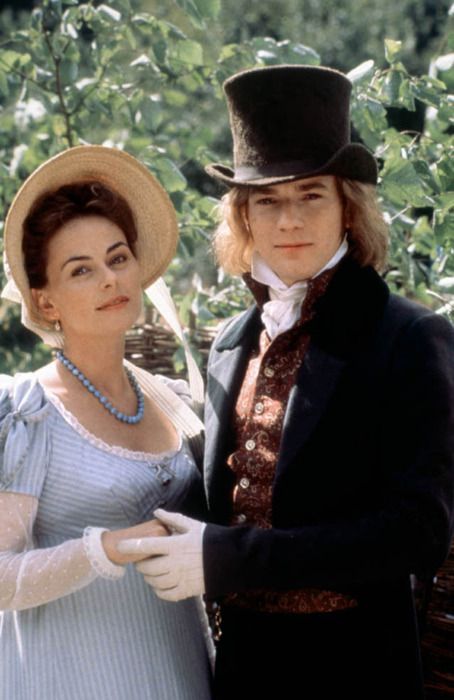
Emma 1997 (Jane Fairfax and Frank Churchill)
Hidden in Plain Sight
The other side of the coin with a red herring love story is that the false-love interest helps hide the true love interest—the one the heroine’s known for a long time and has never thought about “in that way.”
In the red herring plot line, this “real” love interest hides in plain sight. Sometimes, like in the situation with Mr. Darcy, he’s cloaked in some kind of mystery, misunderstanding, or perceived arrogance. Other times, as with Mr. Knightley, the hidden male lead is considered “off limits” because he’s a cousin, a step brother, a friend, or a co-worker. Most of the time, we (the audience) know he’s the real love interest rather quickly, but it takes most of the movie for the heroine to figure it out.
This is where Mr. Knightley really shines. He’s “the one,” hiding in plain sight. From the start, Austen casts him as the “big brother-type.” As a neighbor and friend, and the brother of Emma’s sister’s husband, Mr. Knightley is the perfect “off limits” hidden love interest. Emma has never looked at him in “that way.” It has never crossed her mind that he could see her as anything other than an annoying little sister.
The Aha Moment
“This long-developing chemistry leads to a moment of epiphany, where the character suddenly realizes the feelings that have been crystal-clear to the viewer all along” (“The Rom Com Explained”).
In this type of plot, usually one lead character realizes his/her feelings first, while the other takes longer to wake up to what’s going on between them. In Emma, Mr. Knightley sees Emma as much more than a neighbor and friend early on, but Emma is busy chasing other love stories and doesn’t see her own true love story blossoming right in front of her nose.
It’s only later in the film that Emma finally realizes that she loves Mr. Knightley. It’s always been him. This realization comes when she finds out that Harriet has feelings for Mr. Knightley (and that her feelings might possibly be returned). Startled by the powerful feelings of jealousy that come over her, she finally awakens to the deep love she’s felt for Mr. Knightley for quite some time.
Emma 1996
Modern rom-coms patterned after Emma:
Ever since Emma, there have been countless stories of friends-turned-lovers and lovers-hidden-in-plain-sight.
Modern films that fit this category are 13 Going on 30, Always Be My Maybe, Love and Basketball, Just Friends, Made of Honor, When Harry Met Sally, and Yesterday. In television, there are several couples in The Big Bang Theory, Monica and Chandler on Friends, and Jim and Pam from The Office. While these romances also fall into the friends-turned-lovers category, they fit the themes in Emma because most include a love interest that is hiding in plain sight but also “off limits” for one reason or another.
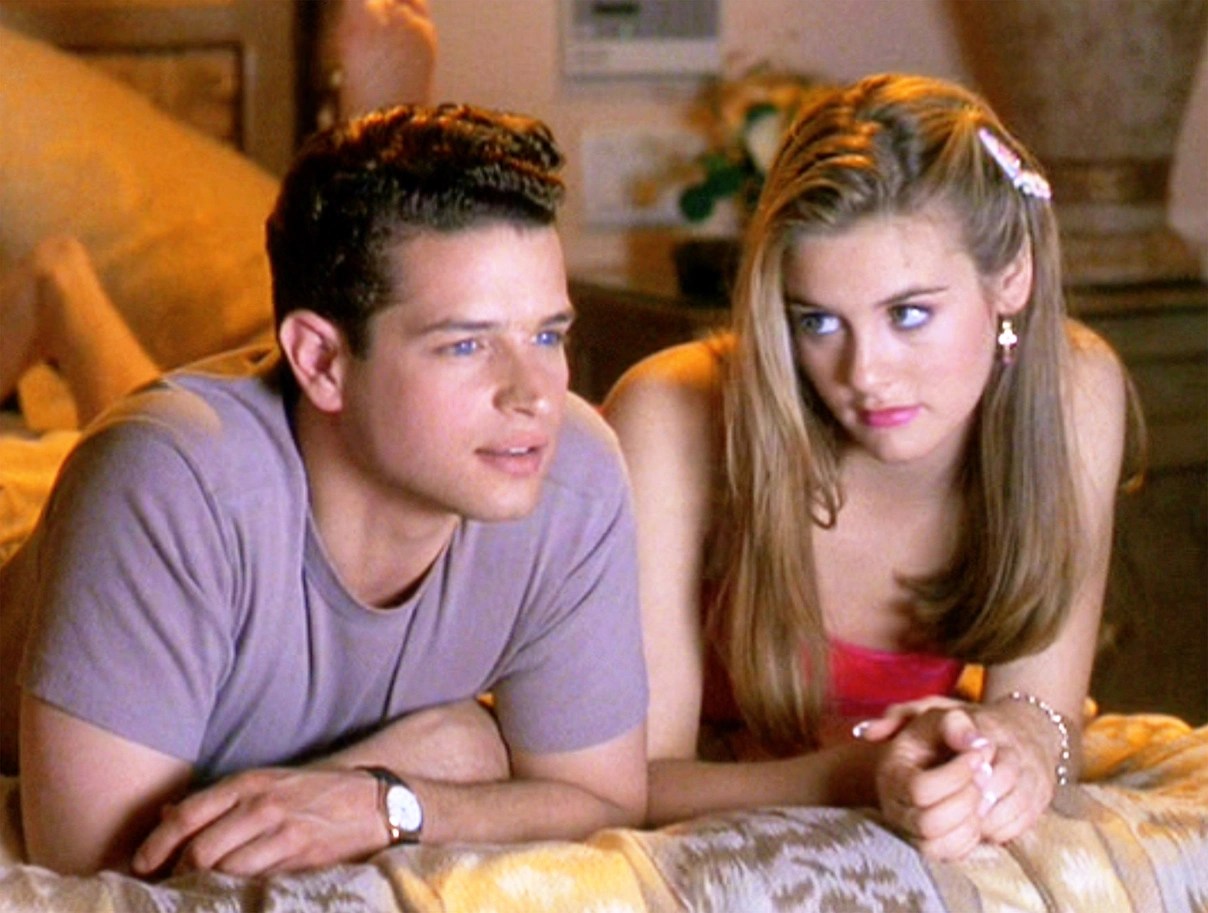
The most obvious modern film to follow in Emma’s footsteps is Clueless. It’s worth discussing because it is considered by many as one of the best modern remakes of a Jane Austen novel. Though some say it’s just a silly teen romance, it’s also incredibly clever in its own right. I truly believe it belongs in the “It was Right in Front of You All Along” category.
Clueless 1995
Clueless 1995
Finally, while Bridget Jones’s Diary is most often connected with Pride and Prejudice, there are also plenty of similarities between it and Emma. Mark Darcy has many attributes that closely align with Mr. Knightley. He’s an older, wiser family friend who seems (and probably is) far too good for Bridget but actually finds her quite adorable and captivating. It takes Bridget a long time to realize that Daniel Cleaver is a jerk and Mark is the better, more mature man.
If you love Emma and Mr. Knightley as much as I do, what do you think makes their romance so charming? At what point do you think Mr. Knightley realized his romantic feelings for Emma?
Greenwich University’s Trigger Warnings Towards Northanger Abbey
Question: Does catering to students’ sensitive sensibilities and possible antipathy towards a gently humorous and ironic novel prepare them for a successful adulthood and working life? Northanger Abbey, originally titled Susan, was written by a 23-year-old author around 230 years ago. Inquiring minds want to know.
Catherine Bennet sums up the article in one sentence, “Greenwich University is warning students to prepare themselves for the ‘toxic friendships’ Jane Austen satirises in her novel.”
TOXIC? I gasped as I read the reasoning this university gave for protecting students from gender stereotypes and toxic relationships so they won’t be upset. Do universities no longer teach classic literature in context of the historical times in which it was written? Do literature professors no longer supervise robust debates and healthy discussions? Or help their classes to understand how, over the course of her short life, Austen’s novels and her personal viewpoint changed and transformed her own understanding of the human condition?
Must our childrens’ tender sensibilities be given a safe space from a brilliant spinster writer who helped to revolutionize the novel? I’ll tell you what triggered me, Greenwich University, and forced my bosom to heave: It was your pandering where none was needed.
To quiet my suffering nerves, I must now reach for my smelling salts, drink some elderberry wine, and rest. A handsome companion holding my hand would not be amiss. Hint: humor and irony here. (My friend and editor would have merely added a wink emoji, but yours truly desires to dramatize her feelings à la Marianne Dashwood!)
Steventon House for Sale
Just as this article surfaced, another one popped up! While Jane Austen is more popular than ever, which has me chuffed, this account does not quite describe the before and after differences of the Steventon House. Here’s the description of the sale of Steventon House today.
“Steventon House was the birthplace of the iconic author Jane Austen,” said Ed Sugden, director of Savills, the estate’s listing agency, along with Knight Frank. “Although the original structure has since disappeared, the Georgian masterpiece that currently stands, envisioned by her older brother Edward, perfectly befits the milieu that Austen captured in her writing.”
Well, no. Take a look at the link to these images. Can you see anything that resembles late 18th C./early Regency furnishings? One must applaud the mystery that our spinster Jane still holds over her admirers today. The new owners would not be living in her family’s historic house, but they could still imagine trodding the same lanes that she and her family walked towards Steventon Church, to friends’ houses, and to purchase goods in nearby towns. They can still experience the landscape that nurtured her childhood and budding writing career. These imaginings alone should be worth the cost of their purchase.
Jane Austen’s Little Book of Wisdom: Words on Love, Life, Society, and Literature, Compiled by Andrea Kirk Assaf. (Click on link.)
This book provides the reader with a quote a day or the opportunity to devour swaths of her genius at a time. Be that as it may, let’s gauge how many of Austen’s sayings are as inspiring and witty as ever:
“I declare after all there is no enjoyment like reading!” – Pride & Prejudice, back cover
“I hate to hear you talk about all women as if they were fine ladies instead of rational creatures. None of us want to be in calm waters all our lives” – Persuasion, p140
“I think it ought not to set down as certain that a man must be acceptable to every woman he may like himself” – Mansfield Park, p 49
For a lady who was never married, she sounds modern and reasonable. This lovely book will provide a daily diet of Austen sensibility every day of the year. My vote: 4 out of 4 teacups.
A friend Discovers Jane Austen
A fellow board member who serves with me on a local board asked me out of the blue about the two BBC Jane Austen films he had watched. They were Emma, 2009 (he stood up and applauded the film at the end) and Sense and Sensibility, 2007, which he also applauded. When I asked him why he began watching the films, he confessed to reading this blog and being intrigued by my devotion to Jane.
He then asked if Pride and Prejudice was worth watching. After a short conversation, I realized he had never read Jane’s novels. I told him that P&P was regarded as one of the top novels in literature, and asked him which version he had borrowed from the library. It was the splendid 1995 A&E/BBC Firth/Ehle mini series.
He viewed P&P and within two days told me that this tale/movie version was his favorite. He then asked for more suggestions. I gave him a few, but he made it clear that he wanted to see the movies based on her other novels.
What say you, fair readers? Which Austen film adaptations should he watch next in your opinion? And why.
In the world of romantic comedies, there are certain tropes (common or overused themes) that come up again and again. In this series, starting with Pride and Prejudice, I’ll analyze Jane Austen’s novels and identify the best romantic tropes used in each one – with the goal of proving that Jane Austen not only used romantic themes ingeniously but also played an important role in developing several key plot devices that are regularly used in modern filmmaking today.
Defining the Relationship
When you look down the list of common themes used in modern romantic movies, there are many to choose from. There’s “Best Friends Turned Lovers,” “The Girl/Boy Next Door,” “Stuck on an Island/In a Car/On a Plane,” “The Makeover,” and of course the “Love Triangle.”
When it comes to Pride and Prejudice, we can all agree it definitely does not utilize a “Cute Meet-Cute” to kick off the romance between Elizabeth and Mr. Darcy. It does seem to fit the “Opposites Attract” theme rather well. However, the theme that Pride and Prejudice models most perfectly is the “Enemies-to-Lovers” trope.
The “Enemies-to-Lovers” plot is one of the most popular themes used in romantic books and movies today. Austen modeled it so well that many romantic movies have borrowed (whether knowingly or unknowingly) from Pride and Prejudice. Though Austen didn’t invent the idea of rivals falling in love, the chemistry she created between Elizabeth and Darcy is unmatched. Modern era movie-makers continue to utilize the heat-factor Austen tapped into with her “Fitz-Lizzy” combo.
Enemies at First Sight
We see this theme play out in many popular romantic comedy movies. A huge majority of Hallmark (and Hallmark-like) movies start with a misunderstanding, a bad first impression, or enemies / rivals who fall in love.
However, it’s not just the made-for-tv rom coms that utilize this popular theme. Some of the highest grossing “date movies” have used some variation or other of the enemies-to-lovers plot. One IMDB list, “Enemies-to-lovers Movies,” includes over 80 titles!
Here are a few popular movies that caught my eye from that list:
When Harry Met Sally, You’ve Got Mail, New in Town, How to Lose a Guy in 10 Days, Runaway Bride, What Women Want, The Breakfast Club, The Cutting Edge, Sweet Home Alabama, A Walk to Remember, Someone Like You, Silver Linings Playbook, Leap Year, Life as We Know It, Letters to Juliet, 27 Dresses, As Good as It Gets, Picture Perfect, French Kiss, and Bridget Jones’s Diary.
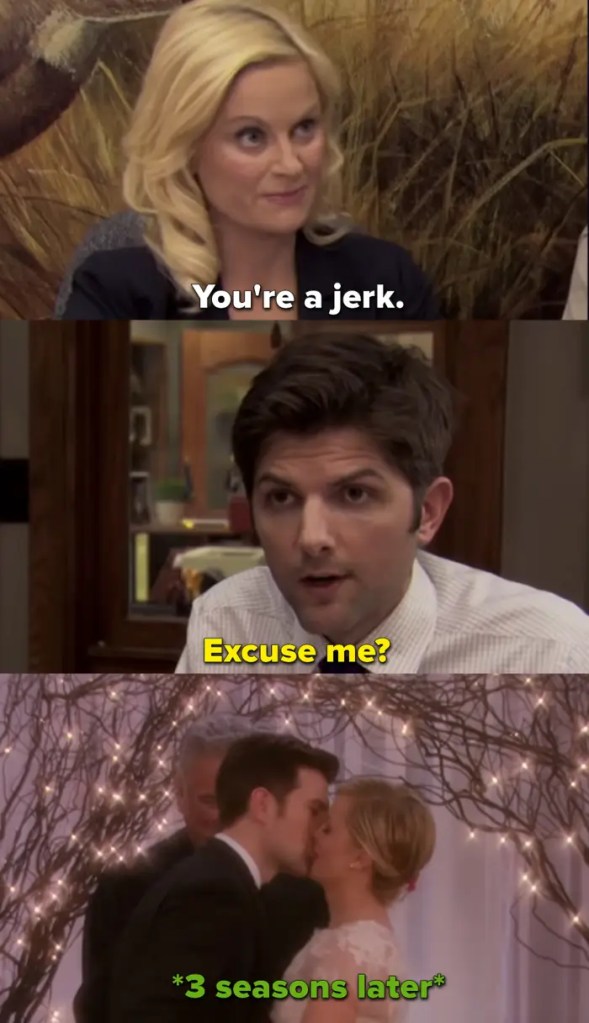
I’m sure there are many other movies (and books) you might add to the list! BuzzFeed nailed it with this funny graphic about Parks and Recreation:
Recipe for Love
The enemies-to-lovers recipe is pretty potent stuff; in order to understand it better, we need to analyze the ingredients that make it possible to change a rivalry into a romance.
The following steps are used in many enemies-to-lovers plot lines. I’ve included modern movie examples for each, plus the clever building blocks Austen used in Pride and Prejudice to create the sizzling chemistry between Elizabeth and Darcy.
It’s the friction between the two characters that provides the spark for romance!
Step 1: A Bad First Impression
In the enemies-to-lovers trope, rather than a meet-cute, there’s a bad first impression (or a “Bad Meet-Cute”) that starts the action. This is where the soon-to-be-lovers first meet and get off on the wrong foot. The fall-out from this first meeting sets the stage for the rest of the story.
You can find the heroine’s “enemy” in a modern rom-com because he’s the one who makes the main character bristle at first sight. He’s the guy that made fun of her growing up, the one who took her spot on the debate team, the business man who stole her cab, or the flower shop owner across the street who’s putting her out of business. (Side note: The “enemy” is usually infuriatingly good looking.)
Bottom line: There is always an initial misunderstanding that causes the two leads to get off on the wrong foot.
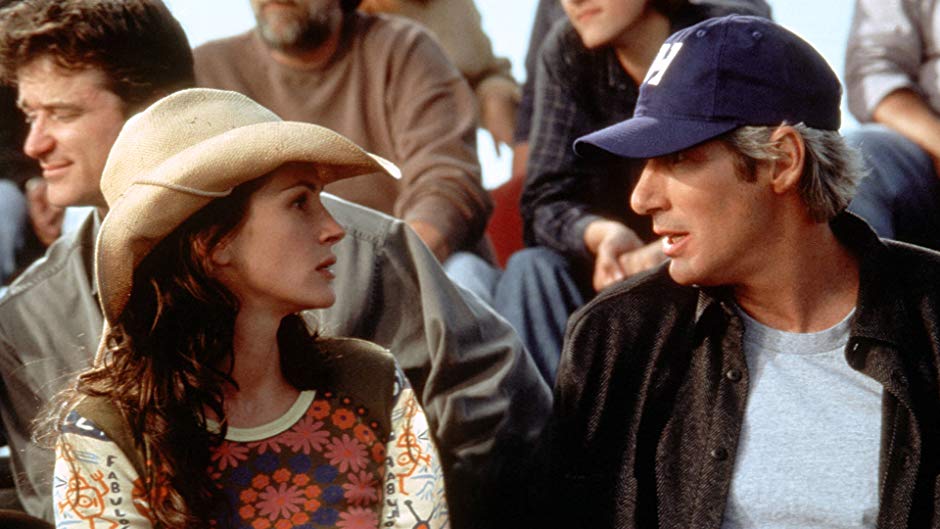
Modern Example: In Runaway Bride, Ike writes an erroneous newspaper article about Maggie, so Maggie gets him fired. From that moment forward, she sees him as the jerk journalist from the big city who made her a laughing stock. Meanwhile, he sees her as the “man eater” who cost him his job. As with most rom coms, their anger-to-attraction ratio sets off some serious fireworks.
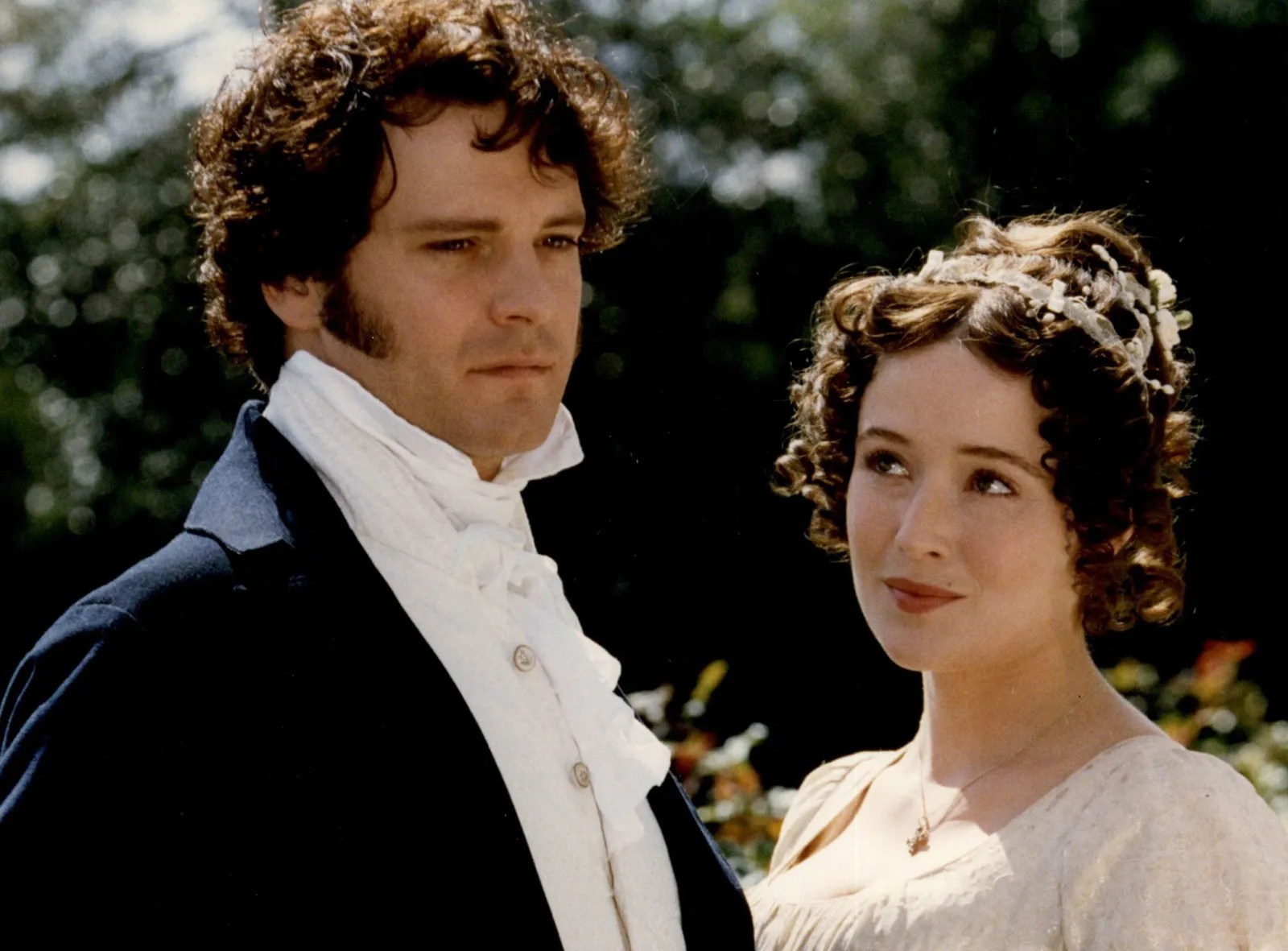
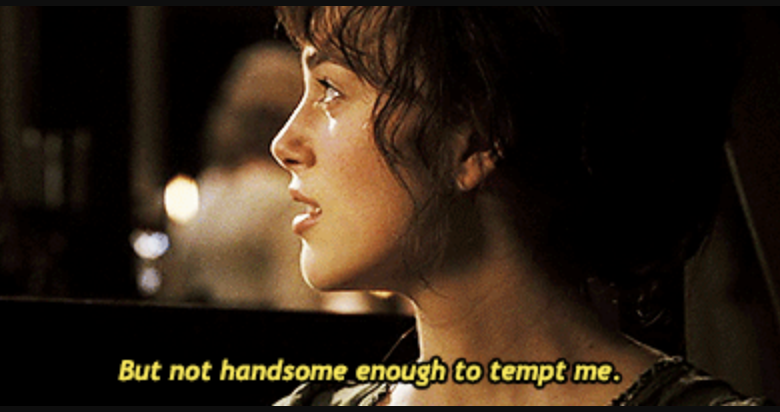
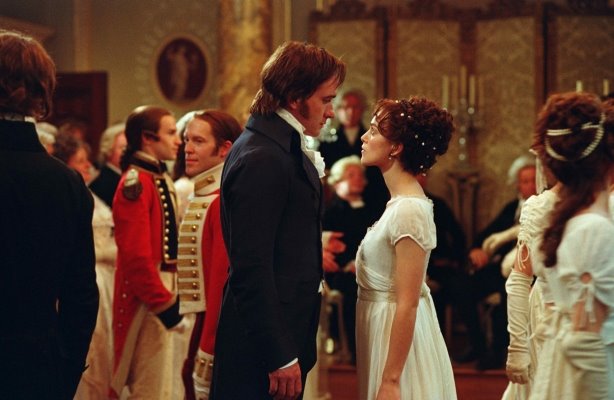
P&P Example: There’s a reason Jane Austen’s first draft was titled “First Impressions.” In Pride and Prejudice, the bad first impression occurs when Mr. Darcy snubs Elizabeth at the ball when they first meet. She overhears Darcy when Bingley says he should dance: “You are dancing with the only handsome girl in the room.”
Worse yet, she hears his response when Mr. Bingley suggests he dance with her: “She is tolerable: but not handsome enough to tempt me; and I am in no humour at present to give consequence to young ladies who are slighted by other men.”
The end result: “Elizabeth remained with no very cordial feelings towards him.” She makes light of it it later, but it affects her more than she lets on. In the history of bad first impressions, Mr. Darcy’s is one of the worst!
Step 2: Confirmation
After the initial meeting or bad impression, there is a series of events in which the main character continues to see the other only through the lens of their first impression.
In this scenario, every next move the characters make only continues to confirm their bad first impressions. When one character tries to make amends or tries for a “do-over,” it usually doesn’t go well. As the characters continually bump into each other, they rub each other wrong. Often, there are further infractions and snubs that add to the initial impression.
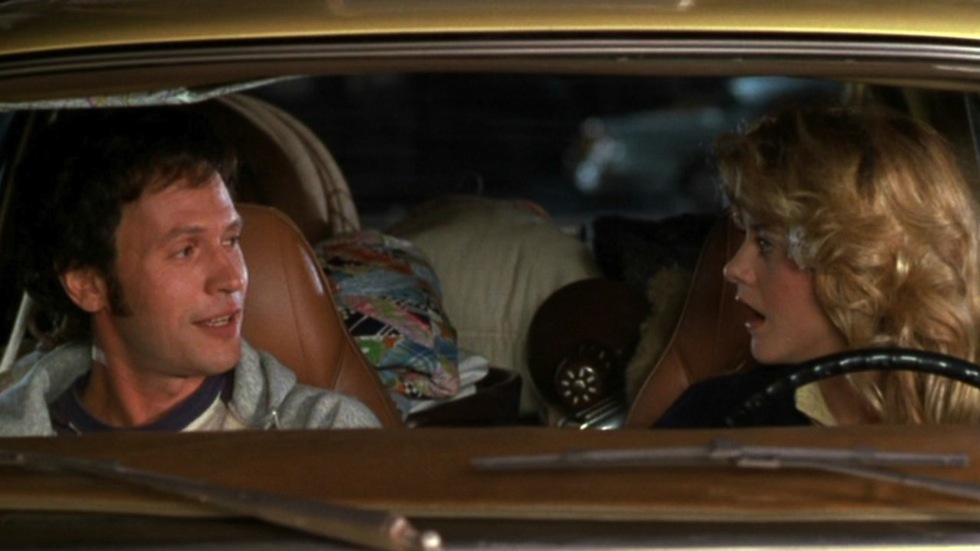
Modern Example: In When Harry Met Sally, Sally’s first impression of Harry, when they drive together on a long road trip, is that he’s arrogant and insensitive. Sally’s bad first impression of Harry is confirmed when they meet several years later. At first, he doesn’t recognize her. Later, he remembers who she is and offends Sally by asking if they slept together in college. Because of their initial interactions, Sally sees Harry as purely guy-friend material until much later in the movie.
P&P Example:
While Darcy finds himself more attracted to Elizabeth at each of their subsequent meetings, Elizabeth’s view of Darcy is unchanged: “to her he was only the man who made himself agreeable nowhere, and who had not thought her handsome enough to dance with.”
Austen builds on this negative first impression by adding further complications. From that first meeting, everything Darcy says or does is interpreted by Elizabeth through the lens of his bad first impression: When Mr. Darcy interferes with Jane and Mr. Bingley, it can only be because he’s arrogant and looks down on the Bennet family. When Mr. Wickham tells his tale about Darcy, Elizabeth quickly believes Wickham must be telling the truth (because Wickham is handsome and charming and Darcy is proud and rude). It takes several meetings, a lot of lively banter, a (bad) first marriage proposal, a lengthy explanatory letter, a visit to Pemberley, and a grand gesture to change Elizabeth’s mind.
Step 3: Attraction
During this step in a rom com, at least one character begins to see something unexpected in the other that makes them reconsider their first opinion. Beneath the initial animosity, anger, or annoyance, attraction begins to build and the characters find themselves (inexplicably) drawn to one another.
Arguments heat up (in more than one way) and turn into exasperated banter that one or the other finds enjoyable instead of infuriating. The characters begin to soften toward one another. Either one or both find that they can’t stop thinking about the other person.
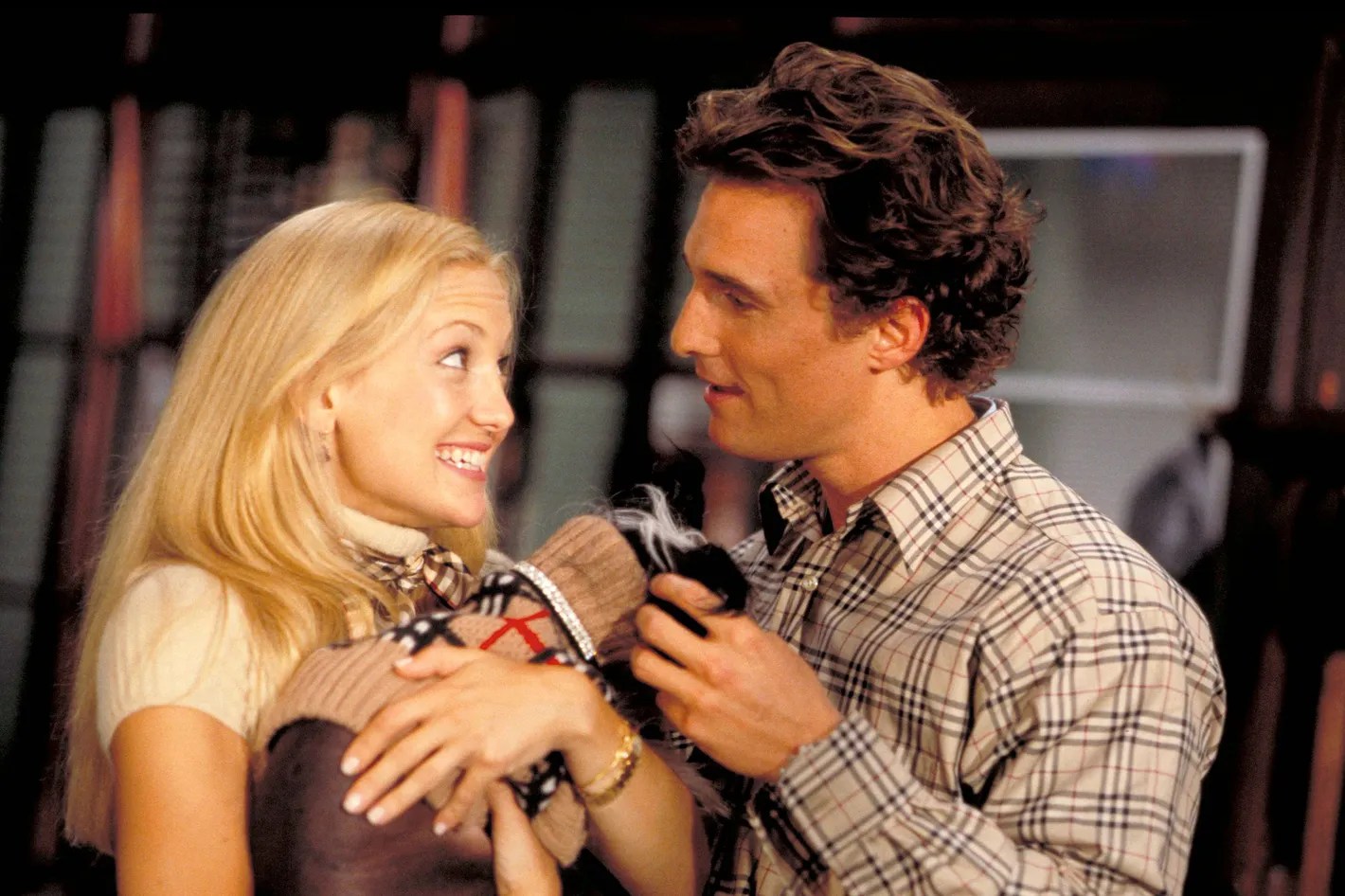
Modern Example: In How to Lose a Guy in 10 Days, Andie and Ben are in a fierce competition–but neither of them knows what the other is doing. While Andie does everything she can to prove she can lose Ben in 10 days, Ben tries to prove that he can make a girl fall in love with him in 10 days. As they face off, instead of pushing each other away, they both find the competition exhilarating.
P&P Example:
In Pride and Prejudice, while it takes longer for Elizabeth to realize her attraction to Mr. Darcy, this stage happens almost immediately for Darcy:
“…he began to find [her face] was rendered uncommonly intelligent by the beautiful expression of her dark eyes . . . he was forced to acknowledge her figure to be light and pleasing; he was caught by their easy playfulness.”
When Elizabeth refuses to dance with Darcy, he isn’t offended: “Her resistance had not injured her with the gentleman.” In fact, he stands in pleasant reverie, thinking about her: “I have been meditating on the very great pleasure which a pair of fine eyes in the face of a pretty woman can bestow.”
While it takes longer for Elizabeth to realize her attraction to Darcy, there’s no arguing the fact that she dearly loves to tease him, verbally spar with him, and toy with him right from the start. She flirts and makes fun of him because she thinks he’s always brooding and judging and looking down on her; meanwhile, he finds her absolutely bewitching.
Step 4: Making Amends
In this step of the typical enemies-to-lovers romantic movie plot, one character tries to make amends, smooth over ruffled feelings, explain a misunderstanding, or admit fault.
In this phase, there may be more misunderstandings and more complications, but it’s an important step toward the two main characters seeing each other as they really are and not as they first appeared. Often, the characters *just happen* to bump into each other on many occasions by chance. In this phase, one character tries to win over the other. Both begin to try to put their best foot forward.
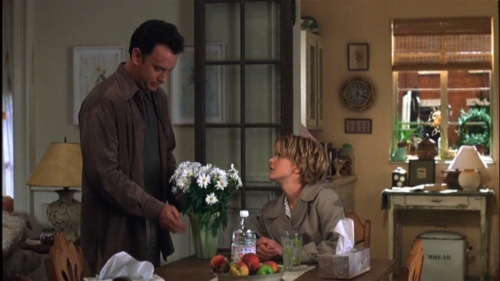
Modern Example: In You’ve Got Mail, Joe tries to show Kathleen that he’s not a heartless business man but is actually the secret pen pal she’s fallen in love with. He meets up with her, takes an interest in her world, tries to give her business advice, and asks her to be his friend. When she’s sick, he brings her daisies—her favorite flower—and take cares of her. Kathleen finds herself wishing Joe was her secret pen pal.
P&P Example:
In Pride and Prejudice, Elizabeth’s demeaner toward Darcy begins to soften over time as she gets to know him. First, she’s surprised and touched by his fondness for his sister. Later, when she reads Darcy’s letter, the narrative she’s believed about him is shattered. Next, when she visits Pemberley and he’s kind to her and her aunt and uncle Gardiner, her heart melts even further. (And it doesn’t hurt that Pemberley is quite something to behold!)
In each instance, as Darcy tries to put his best foot forward, Elizabeth notices something further about him that she didn’t realize before. She finds out that he’s more reserved than arrogant, that he keeps a close circle of family and friends, and that he isn’t naturally at ease in social situations. She notices that he cares for his sister Georgiana, for her aunt and uncle, and finally for her entire family’s reputation. When she visits Pemberley and realizes that he wants to make a good impression on her and on her relatives – and that he wants her to meet and get along with his sister – she is thrown off balance in the most delightful way.
Step 5: The Grand Gesture
In these types of romantic storylines, there is usually a moment where the “enemy / rival” often does something to save or help the other character. There is a great sacrifice or grand gesture that seals the deal.
Often in this phase, one characters needs help (or convincing) and the other swoops in to save the day in order to prove their love for the other character. This phase may also include apologies, gifts, or messages.
Modern Example: In New in Town, Lucy gives up her high-profile job in Miami and moves to Minnesota permanently. She negotiates a deal to save the local factory, makes it into an employee-owned company, and saves everyone’s jobs. She proves to Ted that she’s more than just a suit and that the people she loves are more important to her than any job.
P&P Example:
Austen sets the bar pretty high for grand gestures when Mr. Darcy personally hunts down Wickham and Lydia, forces Wickham to marry her, and pays off his enormous debts. He even tries to do it quietly, so that everyone will believe it was Mr. Gardiner who made all the arrangements. When Elizabeth later thanks him, he tells her that he did it for her:
“If you will thank me,” he replied, “let it be for yourself alone. That the wish of giving happiness to you might add force to the other inducements which led me on, I shall not attempt to deny. But your family owe me nothing. Much as I respect them, I believe I thought only of you.”
You Be the Judge
Do you think Pride and Prejudice has had a lasting affect on modern storytelling? Why are we drawn to the enemies-to-lovers theme? Are there other books or movies that fit this theme that I didn’t mention?
I’ll continue this series next month by looking at other common themes in modern romantic comedies that share similarities with Jane Austen’s great works. Next time you watch a favorite movie, start tracking how many plot devices hark back to our Jane!
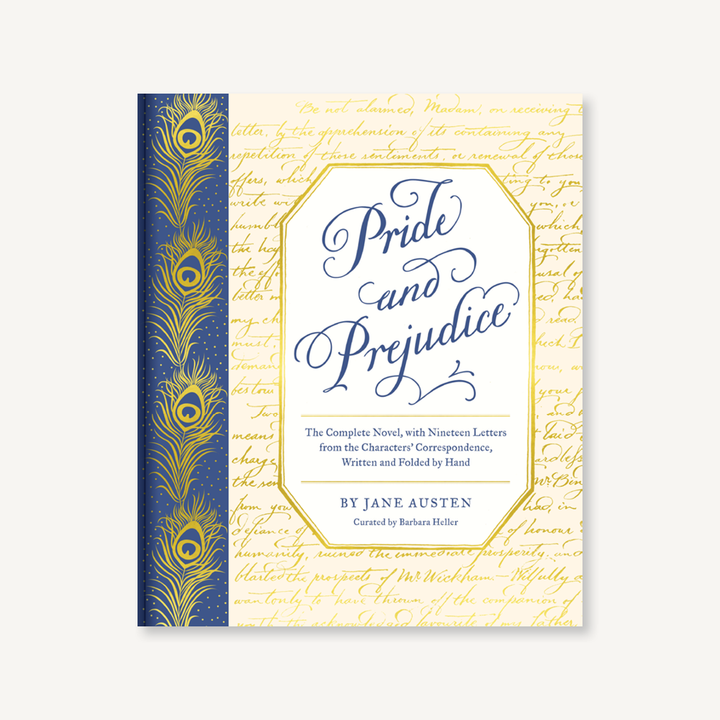
Inquiring Readers, On September 15th Chronicle Books will release an edition of Pride and Prejudice: The Complete Novel, with Nineteen Letters from the Characters’ Correspondence, Written and Folded by Hand, By Jane Austen, Curated by Barbara Heller. I received my lovely copy along with this text:
“This deluxe edition brings to life the letters exchanged among Jane Austen’s characters in Pride and Prejudice.
Glassine pockets placed throughout the book contain removable replicas of 19 letters from the story.
Pride and Prejudice letters with glassine inserts. Image Chronicle Books.
These powerful epistles include Lydia’s announcement of her elopement, Mr. Collins’s obsequious missives, and of course Darcy’s painfully honest letter to Elizabeth.
Nothing captures Jane Austen’s vivid emotion and keen wit better than her characters’ correspondence.
Each letter is re-created with gorgeous calligraphy.
Letters are hand-folded with painstaking attention to historical detail.
Perusing the letters will transport readers straight to the drawing-room at Netherfield or the breakfast table at Longbourn.”
Find Barbara Heller at BarbaraHeller.org, with information about her process and the scribes and graphic artist who designed the letters.
ChattyFeet Winners of Jane Austoe Socks!
In mid-August we held a contest regarding ChattyFeet’s Jane Austoe socks and received a variety of creative answers to our prompts.
We announced three winners on August 22nd–Denise, Mea, and Mary. Mea proudly sent images of her wearing the socks and holding them.
Mea holds her new socks
Jane Austoe & Mea
Denise, another contest winner, also sent in her images.
Denise with her new chattyfeet socks
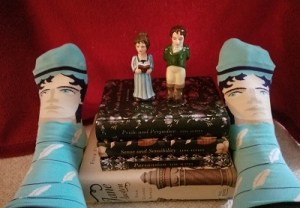
Denise and her socks view her Darcy and Lizzie figurines.
Vic received a surprise gift from Gil Kahana, the CEO of this funky, wonderful site. It was a literature box set of four outstanding authors: Jane Austoe, Virginia Wool, Ernestoe Hemingway, and Marcel Proustoe. I was thrilled and immediately donned two socks. Guess which author dominated!
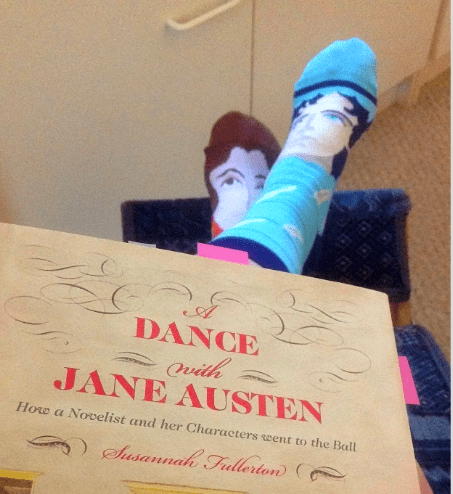
Vic wears rival authors on her feet whilst reading Fullerton’s A Dance With Jane Austen.
The box is as unique as the socks.
The socks inside the box. Let the socks do the talkin’
The top of the Literature Sock Collection
ChattyFeet does not stop at literature. Famous artists, scientists, and royals also receive the funky and humorous treatment. Jane Austoe is the latest design to receive foot accolades.
Fashionable Goodness: Christianity in Jane Austen's England is now available! By JAW contributor Brenda S. Cox. See Review. Available from Amazon and Jane Austen Books.
Available through December 31st, 2025. Click on image for details, and share this poster with other teachers and students!
The Obituary of Charlotte Collins by Andrew Capes
Click on image to read the story.
Comments
“My idea of good company…is the company of clever, well-informed people, who have a great deal of conversation.” – Jane Austen, Persuasion
Gentle readers: Please feel free to post your comments and continue the conversation! Due to SPAM, we will no longer accept comments on posts after 30 days of publication. In some instances, links will be removed from comments as well.
Administrators and Contributors
Vic Sanborn, founder of this blog, is supported by a team of talented and knowledgeable writers about Jane Austen and the Regency era. They are:
Tony Grant, who now contributes his photos from London and England
Click on their names to enter their own blogs.
In addition, we thank the many experts and authors who frequently contribute their posts and opinions, and who continue to do so freely or at our request.
Click here to enter the page. Topics include Regency fashion, historic foods, Jane Austen societies, British sites, related topics. Click on image.
May we suggest?
Hello, my name is Vic and I live in Maryland, USA. I have adored Jane Austen almost all of my life. I am a proud lifetime member of the Jane Austen Society of North America. This blog is a personal blog written and edited by me and my team. We do not accept any form of cash advertising, sponsorship, or paid topic insertions. However, we do accept and keep books and CDs to review.
If you would like to share a new site, or point out an error, please email us. (Yes, we are fallible. We'll own up to our mistakes and will make the corrections with a polite smile on our faces.) Write us at
Thank you for visiting this blog. Your comments and suggestions are most welcome.
Project Gutenberg: eBook of Stage-coach and Mail in Days of Yore, Volume 2 (of 2), by Charles G. Harper
STAGE-COACH AND MAIL IN DAYS OF YORE: A PICTURESQUE HISTORY
OF THE COACHING AGE, VOL. II, By CHARLES G. HARPER. 1903. Click on this link.






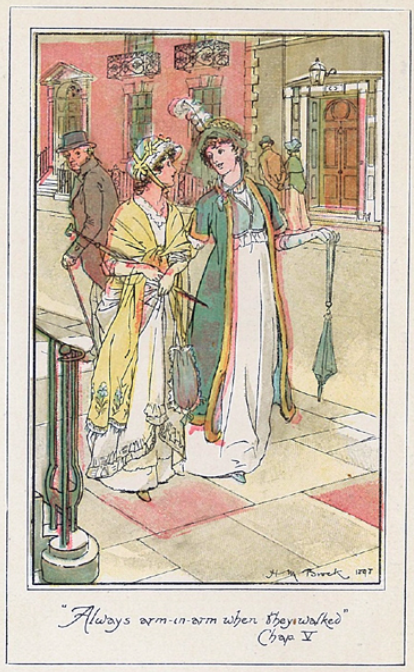
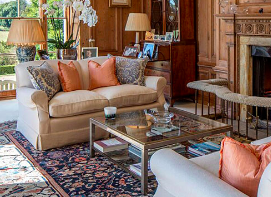 Just as this article surfaced, another one popped up! While Jane Austen is more popular than ever, which has me chuffed, this account does not quite describe the before and after differences of the Steventon House.
 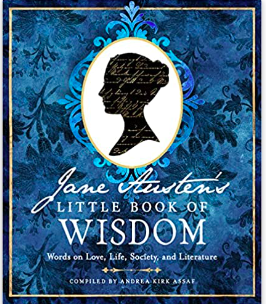 This book provides the reader with a quote a day or the opportunity to devour swaths of her genius at a time. Be that as it may, let’s gauge how many of Austen’s sayings are as inspiring and witty as ever:





 Inquiring Readers, On September 15th Chronicle Books will release an edition of Pride and Prejudice: The Complete Novel, with Nineteen Letters from the Characters’ Correspondence, Written and Folded by Hand, By Jane Austen, Curated by Barbara Heller. I received my lovely copy along with this text: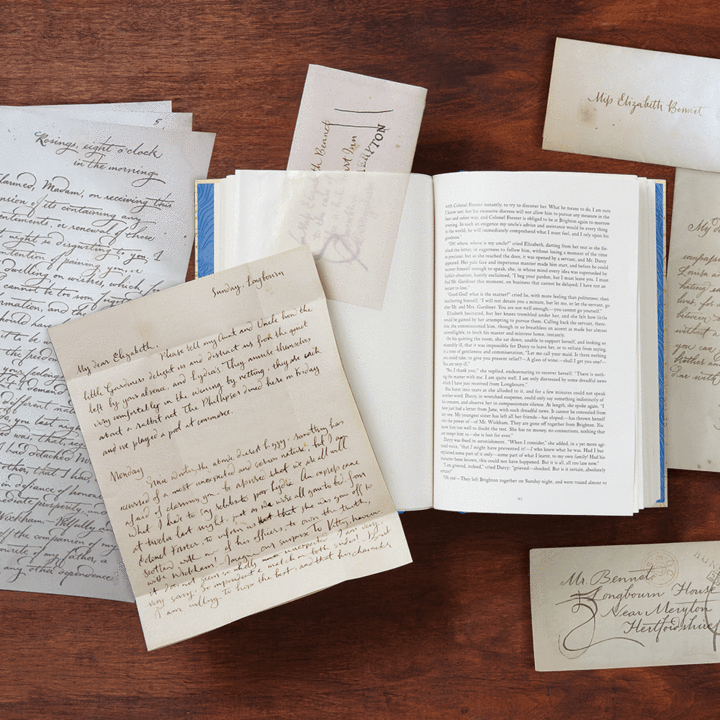












 Jane Austen's World