Feeds:
Posts
Comments

Archive for the ‘Jane Austen’s World’ Category

Inquiring Readers: This post combines two of my passions: Jane Austen and the Regency Era and Project Runway. Emilio Sosa’s (Esosa’s) beautiful fashions earned him the runner up position in Project Runway Season 7. Two of his sketches  for the costumes of Sense and Sensibility the Musical are included below.

CASTING ANNOUNCED FOR

WORLD PREMIERE OF

“SENSE & SENSIBILITY THE MUSICAL”

Image used with permission, @Carla Befera & Co.

Image used with permission, @Carla Befera & Co.


The Denver Center Theatre Company’s (DCTC) world premiere production of SENSE & SENSIBILITY THE MUSICAL,with book and lyrics by Jeffrey Haddow and music by Neal Hampton, will receive its world premiere production April 5 – May 26, 2013 in The Stage Theatre at the Denver Center for Performing Arts at 14th and Champa.

Starring in the pivotal Dashwood sister roles will be Stephanie Rothenberg as Elinor and Mary Michael Patterson as Marianne. Ms. Rothenberg made her Broadway debut last season as Rosemary opposite Nick Jonas in How to Succeed in Business Without Really Trying and then starred as Princess Anne in the Guthrie Theater’s world premiere musical, Roman Holiday. Ms. Patterson had her Broadway debut in the Roundabout Theatre Company’s Tony-winning revival of Anything Goes.

The sisters’ romantic entanglements will be portrayed by three of Broadway’s leading men. Nick Verina, seen as Young Ben in the recent Broadway revival of Follies with Bernadette Peters, will take on the role of Edward; Jeremiah James, who starred as Billy Bigelow in the West End revival of Carousel and as Curly in the first national tour of Oklahoma!, will portray Willoughby; and Robert Petkoff, Broadway’s recent Lord Evelyn Oakleigh opposite Sutton Foster in Anything Goes, will be the upstanding Colonel Brandon.

Additional Broadway talent joining the cast includes Ed Dixon (Anything Goes, Sunday in the Park with George, Mary Poppins, How the Grinch Stole Christmas) as Sir John; Ruth Gottschall (Mary Poppins, The Music Man, Funny Thing…Forum) as Mrs. Jennings, and Joanna Glushak (Sunday in the Park with George, Urinetown, Les Misérables) as Mrs. Dashwood/Mrs. Ferrars.

Logo used with permission, courtesy @Carla Befera & Co.

Logo used with permission, courtesy @Carla Befera & Co.

The production boasts a formidable production team, including Set Designer Allen Moyer, Tony nominee for Grey Gardens; Costume Designer ESosa,2012 Tony nominee for The Gershwin’s Porgy and Bess and “Project Runway” finalist; acclaimed Lighting Designer James F. Ingalls; Sound Design byCraig Breitenbach (world premiere of The Laramie Project); Music Supervisor David Loud, whose recent Broadway productions include The Gershwin’sPorgy and Bess and The Scottsboro Boys; Music Director and Conductor Paul Masse, whose Broadway credits include The Scottsboro Boys, as well asCurtainsChicagoAvenue Q42nd Street, and Gypsy, and Orchestrations are by Kim Scharnberg and Neal Hampton.

Producing Artistic Director Kent Thompson selected SENSE & SENSIBILITY THE MUSICAL after it became a runaway hit at the 2012 Colorado New Play Summit.

Esosa was one of the contestants in Project Runway 7, and won runner up. Image Credit: Lifetime Television

Esosa was one of the contestants in Project Runway 7, and won runner up. Image Credit: Lifetime Television

About ESosa, the Costume Designer

ESosa, costume designer for Sense & Sensibility The Musical, based on Jane Austen’s much loved first novel, moves effortlessly between the fashion world and the theatre world. This rising fashion star, better known as Emilio to his Project Runway fans, is also widely admired for finishing second in Season 7 as well as in the most recent Project Runway All-Stars. Yet ESosa has supported himself for much of his career by designing costumes for more than 75 productions regionally and on Broadway.

Today he sees himself as a fashion designer first: “I’ve had a wonderful career in theatre and I’m very blessed, but when I look in the mirror, I always see a fashion designer first and a theatre designer second. I use elements of both, because my fashion informs my theatre and my theatre informs my fashion. They go hand in hand.”

So when conceiving the costumes for Sense & Sensibility, he approached it as a time-travelling fashion designer working in 1810: “I start by designing clothing, and then I worry about theatricalizing the garments later.”  The Regency period of Austen’s novels, recognized most of all for the signature Empire waistline of the ladies’ dresses, provided an abundance of elements to work with: stripes which allow for the creation of chevrons and diamonds, but also florals, polka dots, brocades, lace, jewelry, chiffon. “What was big in this period was transparency. It was a very sexy period for women and men. Bosoms were big, and bosoms don’t go out of style.”

And of course color. On Project Runway ESosa became known for his bold use of color. Will any of that be on display?

“Oh yes, we’ll be playing with bolder colors. You have some characters that call for it, like Lucy. She’s more of a free spirit. For me color is an indication of personality.” The two Dashwood sisters will be dressed in blues (Elinor) and pinks (Marianne). One can only imagine the color palette he’ll come up with for Mrs. [Jennings], the boisterous and comic busybody.

How will this production differ from fastidiously researched film and TV versions of Austen’s oeuvre that periodically come to us from across the pond?

“We’re going to be true to the period,” says ESosa, “but we’re going to experiment with color and pattern and make it visually exciting.” Marcia Milgrom Dodge, director of the musical, wanted to bring his “fearless fashion sensibility” to the refined, stately Regency fashions. “The world of Jane Austen is often depicted in film and television with slavish authenticity,” she explains. “I wanted someone who would honor the period but also be bold and find modern gestures that will illuminate character and help the audience identify with them in a very immediate way.  With his keen fabric choices, witty accessories and smart use of color, ESosa is exactly that designer to bring these beloved characters to vivid life.”

As far as the men are concerned, the designer says he’ll be staying very true to the period’s silhouette—tailcoats and top hats—again taking some liberties with color and fabric selections: “Where I have my freedom is in the color combinations, the details that we add, the shaping. We will tweak it a little. My goal is always to make my actors feel and look good and able to tell the story.”

Oddly enough, ESosa says he is more often recognized as a former Project Runway contestant by theatre people than by people from the fashion industry. Perhaps more theatre people watch the show than those who do fashion for a living? But the show has helped raise his profile in both worlds. He believes a series like Project Runway can do a lot of good: “It’s a great platform for American fashion, and I’m a great proponent of Made in America. I think as a country we need to support our homegrown artists, especially in fashion.”

Mrs. Ferrars costume sketch
Born in the Dominican Republic and brought to the United States at age 3, ESosa was raised in Fort Apache, a tough area of the South Bronx. His interest in art and fashion eventually took him out of the Bronx, first to Manhattan’s High School of Art and Design and then to the Pratt Institute in Brooklyn. One of his early professional jobs was as a personal dresser for Judith Jameson and as an apprentice costume-maker for the Alvin Ailey American Dance Theatre.

The story about how he landed his first Broadway production, Suzan-Lori Parks’ Topdog/Underdog, shows the moxie underlying ESosa’s low-key demeanor. Running into Public Theater artistic director George C. Wolfe in the streets of New York, he summoned his courage and went up to him, announcing “Mr. Wolfe, I’m the best costume designer you’ve never worked with.”

“George likes that kind of bravado,” the designer explained. “He was interested. …They brought me in and I had a great, great meeting with him.” Needless to say he got the job and even went on to design Suzan Lori Park’s wedding dress.

ESosa’s two-track career continues full steam ahead. The fashion designer recently launched his own clothing line and has shown collections in New York, Miami and Paris. The costume designer won a Lucile Lortel award for Lynn Nottage’s By the Way, Meet Vera Stark and was nominated for a Tony Award for his work on Porgy and Bess. He feels that his burgeoning fashion fame will not pull him away from the theatre: “I will always have a presence in the theatre. It’s just a matter of finding the balance. It’s part of my life. It’s part of my DNA.”

More About ESosa

More About Sense & Sensibility The Musical

April 5 – May 26 • Stage Theatre
Producing Partners: The Anschutz Foundation, Joy S. Burns, Daniel L. Ritchie, June Travis
Sponsored by The Ritz-Carlton, Denver and U.S. Bank
Signed & Audio Described • May 19, 1:30pm

SENSE & SENSIBILITY THE MUSICAL is based on the novel by Jane Austen. Book and lyrics by Jeffrey Haddow, Music by Neal Hampton. Directed and choreographed by Marcia Milgrom Dodge. 


Performance Schedule

Tuesday, Wednesday, and Thursday performances at 6:30pm

Friday and Saturday evening performances at 7:30pm

Saturday and Sunday matinees at 1:30pm

No children under four admitted.


Tickets and Subscriptions

Tickets ($55 – $65) are available now by calling 303.893.4100 or 800.641.1222 (TTY 303.893.9582). Subscribers enjoy free ticket exchanges, payment plans, priority offers to Broadway shows, discounted extra tickets, a dedicated VIP hotline, free events including talkbacks and receptions, and the best seats at the best prices, guaranteed.

SENSE & SENSIBILITY THE MUSICAL is presented by special arrangement with Betty Ann Besch Solinger and Alice Chebba Walsh. This production of SENSE & SENSIBILITY THE MUSICAL, generously sponsored by U.S. Bank and The Ritz-Carlton, is part of the Denver Center Theatre Companyand Denver Center Attractions (DCA) 2012/13 seasons. SENSE & SENSIBILITY THE MUSICAL Producing Partners: The Anschutz Foundation, Joy S. Burns, Daniel L. Ritchie, June Travis. DCTC is generously supported by Larimer Square, The Steinberg Charitable Trust and Wells Fargo Advisors. DCA is generously supported by United Airlines and Vectra Bank. Media sponsors are The Denver Post and CBS4.  The Denver Center for the Performing Arts is supported in part by the Scientific and Cultural Facilities District.  Please visit our website at www.denvercenter.org

**Please be advised that The Denver Center for the Performing Arts – denvercenter.org – is the ONLY authorized online seller of tickets for Denver Center Attractions (the Broadway touring productions) and the Denver Center Theatre Company (the resident theatre company productions). Currently there are scalpers, also known as ‘second party vendors,’ selling tickets online at a rate more than double the standard price – and up. Tickets bought through these vendors MAY NOT BE VALID. You could not only be refused admission, but also lose your entire investment.

Read Full Post »

Aren’t these stamps representing Jane Austen’s six novels lovely? You can order them from the Royal Mail at this site: https://shop.royalmail.com/issue-by-issue/jane-austen/icat/janeausten/

Jane Austen stamps

The stamps were designed by illustrator and artist Angela Barrett. Born in Essex, UK, she was awarded an MA at the Royal College of Art where she was taught by Quentin Blake. Her illustrations have appeared in the Sunday Times Magazine, The Observer Magazine and House and Garden.

Read Full Post »

Dear readers, This is the latest article from frequent contributor, Patty Saffran, the Contributing Editor for Horse Directory Magazine, about the last surviving harness racing track on LI. One aspect is about the English Thoroughbred stallion Messenger, bred by Richard Grosvenor, First Earl of Grosvenor in the 18th C. The magnificent horse came to the US in 1788 and was the foundation stud of just about every important US Thoroughbred and Standardbred you’ve ever heard of including Seabiscuit, Man o’ War, Secretariat, Seattle Slew, etc. Messenger is buried on LI with a memorial plaque.

messenger-by-currier-and-ives-courtesy-of-the-harness-racing-museum-and-hall-of-fame-goshen-ny-public-domain.jpg

Messenger by Currier and Ives, courtesy of the Harness Racing Museum and Hall of Fame, Goshen, NY,-public domain image.

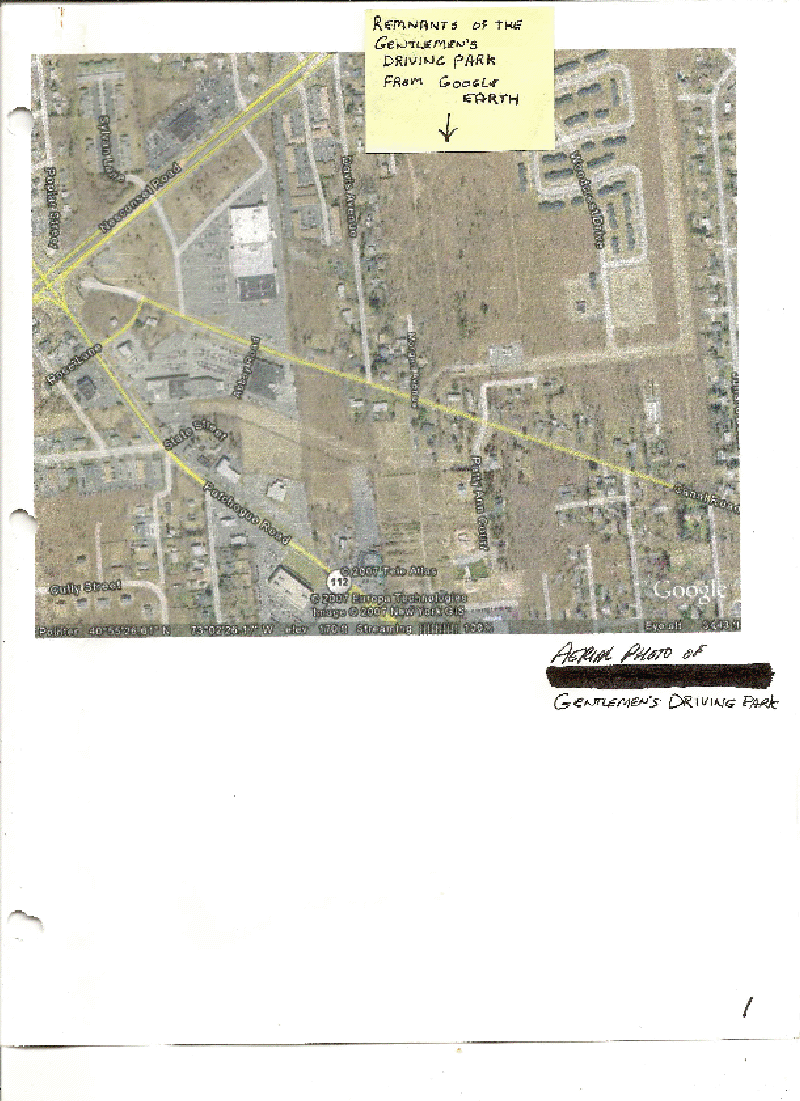
Port Jefferson Station, LI residents were once so wild about harness racing that they originally named their village Echo after their local hero, the famous bay gelding harness horse named Echo. Echo won many races at nearby harness tracks located in villages like Setauket, Huntington, and Smithtown and on his local track, the Gentlemen’s Driving Park, which was founded around 1880. There were twenty five harness tracks on LI in the 1880’s. While Echo and his contemporary harness horses may have been pushed aside for the auto and cement roads, the track where he raced, the Gentlemen’s Driving Park has miraculously survived. The Park is the only harness racing track left on Long Island and Jack Smith, President of the Cumsewogue Historical Society of Port Jefferson Station, and many other civic- minded residents are determined to preserve it.

harpers-weekly-trot-1881-wood-engraving-public-domain.jpg

Harpers Weekly trot, 1881, wood engraving, public-domain image.

Mr. Smith recently gave us a tour of the race track, now in a wooded area and hidden from the main road. While the half mile oval is overgrown in the center and on the perimeter, the track is still visible. As we walked around the track, he explained, “The Driving Park was once part of the Grand Circuit of Harness Racing Tracks of the North East and a member of the National Trotting Association. It was the site of many exciting races in its day. Adjacent to the track was the site of legendary owner and trainer Robert L. Davis’s Cumsewogue Training Stables – he also oversaw the race track. Today that land is occupied by the Davis Professional Park. The track itself is located in the woods east of Morgan Avenue and northeast of Canal Road. The oval track is clearly evident in aerial photos of the area.”

53_currier__ives_a_race_from_the_word_go_b.jpg

Currier and Ives, A race from the word go

Mr. Smith continued, “The Driving Park was in use for harness racing until about 1946, but most of the racing was up until about the time of WWI. The reason this track has survived is that until the mid 1950’s teenagers used to race jalopies there. Now, our township is in the process of acquiring the property and, to date, has purchased about half of the acreage. Our Councilman, Steve Fiore-Rosenfeld, has been very diligent in pursuing the acquisition of this historic property. It is being preserved and the land purchased through open space funding.”

On our tour, Mr. Smith said that he has found an actual ticket stub from a race day from July 4, 1892. Also, while looking for horseshoes with a metal detector, he found a pair of period field glasses. These and other items about the Gentlemen’s Driving Park were on recently on display during October-November 2012 at the town library.

viewer

In 1892,The Port Jefferson Echo (named after the town hero, Echo) reported: “The trotting and running events on the Gentlemen’s Driving Park [later called the Herman Floyd Race Track] on Thursday afternoon, attracted a large attendance, and the number no doubt would have been greatly augmented had the condition of weather been more favorable. Many ladies were present. The fact that no liquor is sold at the park and the absence of its attendant demoralizing scenes have made it possible for ladies to enjoy the races quite as well as their husbands or sweethearts”. Further back, it was reported that Decoration Day, now called Memorial Day, were special race days at the Park in the late 1880’s with ladies admitted free.

The revered local trotter, Echo, a bay gelding was originally bred and owned by Captain Nathaniel Dickerson. Dickerson’s breeding book has yet to be discovered but from the number of races Echo won and the price that Dickerson sold him to D.B. Goff for in 1881, $1,500. (over $34,000. today), he was considered a quality horse. At some point, Echo was sold to Frank Edsall of New York City, a known owner of harness horses who was such a racing devotee that when he died in 1898, he was buried in the famous harness racing town of Goshen, NY. Edsall owned Echo when he was finally defeated on August 9, 1884 in Smithtown by his arch rival Fredonia Boy owned by Colonel Beecher and George Ticehurst of Smithtown.

robert_l-_davis_robert-l-davis-owner-of-cumsewogue-training-stables-who-also-oversaw-the-adjacent-gentlemens-driving-park.jpg

Robert L. Davis, owner of Cumsewogue training stables, who also oversaw the adjacent gentlemens driving park

The Port Jefferson Times from August 2, 1884, describes Echo, with affection, something that is rarely seen anymore with reporting on horse racing, “Echo is the pet of the local turf, and the pride of Capt. Dickerson’s heart. A horse that defeats him, will be a good’un. It is doubtful that Solon can do it – ’tis possible that Fredonia Boy may.” The actual race on August 9, 1884 had the crowd in a stir, with lots of money bet on Echo. It was run at the distance of a mile in five heats. There was a judge’s dispute concerning two of the heats, resulting in one judge so disgusted he left the stand and had to be replaced. When it was all over, Fredonia Boy edged out his rival Echo in three out of five heats with Solon third. The analysis was, “The pride of Capt. Dickinson’s heart was broken” and the loss was pinned to Echo being “out of form”, and Fredonia Boy’s driver, Ticehust, being “the best in the county”. Times were between 2:40 and 2:33, with slower high wheelers. (After 1900, many races were run in faster smaller sulkies with tires and more aerodynamic lower driver positions, and the times started dropping.)

Edsall later entered Echo in another race he did not win at Narraganset in September 1884. A few months later, Edsall sold Echo. In The American Gentlemen’s Newspaper, NYC in November 1884, “By Frank Edsall of this city, has sold, through D. B. Goff. [Echo’s previous owner] to Mr. Wm. C. France, the bay gelding Echo, 2:28)4, by Regulus. He was bred by Captain Dickerson, of Port Jefferson. L. Echo was tried to the pole with F. D., 2244, last Saturday, and they speeded a quarter in 31 seconds.” This period sale notice is actually an exciting find today because it mentions Echo’s sire – Regulus. While the records seem to have been lost for Echo, Regulus has turned up in a stud book, Wallace’s American Trotting Register, Vol. 4. It turns out that Captain Dickerson bred possibly his unnamed mare to “Regulus (Suffolk Chief) foaled in 1864, got by Hambletonian 10, dam by American Star, bred by George Lorillard, N. Y. and owned by Joseph Rowland of Miller’s Place, LI [right next to Port Jefferson Station]”. With Echo’s pedigree going back to Hambletonian10, his sire, Abdullah, and thus also to Messenger, Echo is officially descended from the famous foundation sires of the Standardbred, horse royalty. The get from these sires had a natural ability to trot and pace fast. Even the sire of Messinger, Mambrino in England, was noted as preferring to trot around the pasture. Researchers today have discovered that a horse’s ability to trot or pace and to maintain that gait is genetically determined.

william-c-france-in-the-december-25-1894-edition-of-american-horse-breeder-magazine-public-domain.jpg

William C. France in the December 25 1894 edition of American Horse Breeder Magazine, public domain image

It turns out that Long Island turns is rich in horse history and figures in the saga of Messenger. The great Messenger was brought over from England by Irish sportsman Thomas Benger to stand at stud in Philadelphia in 1788 for $15. (Top Thoroughbred stud fees today are from $10,000. to over $100,000.) The gray Messenger was in demand as a sire for pacers, trotters and Thoroughbreds. Messenger was sold, resold and eventually retired to the Townsend Cock farm, Locust Valley, LI after a life at stud in nearby states and locally at the Philip Platt farm in Flushing LI. Messenger colicked and died at the Cock farm in 1808. At what is now called Messenger Hill Farm, a beautiful memorial bronze plaque to this stallion may be found sitting on a large rock along Duck Pond Road, just east of the Piping Rock Road intersection, opposite the Friends Meeting House. The text says:

“Approximately twenty paces to the south of this spot lies MESSENGER, Foaled in England in 1780, brought to America in 1788, Buried with military honors on January 28, 1808, Descended from England’s greatest Thoroughbreds, Son of Mambrino and of a daughter of turf, Bred by the First Earl of Grosvenor, No stallion ever imported into this country, Did more to improve our horse stock, None enriched more the stock of the whole world, Today his blood is carried by most American Thoroughbreds, As the great founder, Of the breed of Standard Bred light harness horses, His blood is now dominant, In America throughout Europe and in Australia, Among his direct descendants is every two minute trotter, ‘None but himself can be his parallel’, [Homer describing Hercules] In tribute to, His enduring greatness, This memorial has been erected by American horse lovers. A.D. 1935”.

messenger-rock-photos-by-amanda-fisk-courtesy-of-friends-academy-locust-valley-li.jpg

Messenger rock photos by Amanda Fisk, courtesy of Friends Academy, Locust Valley

Messenger’s line is through two of the Thoroughbred foundation sires on both sides (the Darley Arabian on the sire line and the Godolphin Arabian on the dam line). There is a bit of confusion concerning Messenger because Messinger’s sire is Mambrino and one son is also Mambrino. The son was bred in the US to Amazonia, possibly a daughter of a Messenger son, Saratoga. The mare was not beautiful but she was a speedy natural trotter. Amazonia contributed much to the eventual Standardbred’s impulse to trot or pace. Amazonia and Mambrino (US) produced Abdullah, also a homely horse but an incredibly fast trotter. The sires’ line of descent is as follows: Mambrino b. England 1768 – Messenger b. England 1780 – Mambrino b. US 1807 – Abdullah b. US 1823 – Hambletonian 10 b. US 1849, the most important North American sire of harness horses who was born in Orange Country, NY and sired 1,335 offspring for a stud fee of approximately $500. (Top Standardbred stud fees today are around $15,000.) Messenger’s descendants include the Thoroughbreds American Eclipse, Man o’ War, Kelso, Seattle Slew and Secretariat and the Standardbreds Niatross, Dan Patch, Greyhound and Bret Hanover.

Brookhaven

Messenger’s grandson Abdullah (sire of Hambletonian 10) was foaled in 1823 at the Tredwell farm, Salisbury Place, LI. Later in November 1854, Abdullah died later on LI of a not so fortunate fate. The horse’s brilliance and strength in a way condemned him. S.W. Parlin writes in The American Trotter 1905, “The man who took care of him [Abdullah] at one time stated to the writer that the cause of his lack of patronage late in life was the fact that many of his get, though good-gaited trotters, were inclined to pull too strongly on the bit when speeding on the road for the comfort of their drivers. [This made him a fantastic sire for racing harness horses.] It is said that the owner of Abdallah finally gave the horse to a farmer on Long Island, with the understanding that the farmer should care for the horse properly as long as the animal lived. The farmer became tired of his bargain, so the story goes, and sold the old horse to a fish peddler for thirty-five dollars. The fish broker hitched Abdallah to his cart, but the horse did not take kindly to that occupation and kicked himself free. The peddler then turned Abdallah loose, and he finally died on Long Island from neglect and starvation”.

Messenger Rock, photos by Amanda Fisk, courtesy of Friends Academy, Locust Valley, LI  2

Echo, the hero of Port Jefferson Station, who through Regulus was descended from the illustrious Messenger, Abdullah and Hambletonian 10, won races at the Gentleman’s Driving Park and on many other race tracks. As mentioned in the sale notice of 1884, Echo was sold by to William C. France. France at the time was a well known breeder of Standardbreds and Thoroughbreds. A few years before he died in New Rochelle in 1901 at his son’s home, France had financial difficulties. It was reported in his NY Times Obituary that he had been forced to sell his 387 Thoroughbreds [!] from his Highland Stock Farm in KY. France was known for having bred the famous trotters Fred Wilkes and Allie Wilkes at this same farm. After the sale notice for Echo, the trail runs cold for now as to where William C. France ran or retired Echo. Hopefully, more articles will turn up on Echo as well as period photographs of him and the Gentlemen’s Driving Park. Port Jefferson Station should be proud of its efforts to save this historic harness racing track from intrusive development.

Read Full Post »

Fabulous Dr. Lucy Worsley discusses the Regency Era in these videos. Wonderful.

Read Full Post »

Sewell, The Bennet sisters

Sewell, The Bennet sisters. The photos do not capture the detail of each image.

This year we celebrate all things Pride and Prejudice in honor of the novel’s 200 year anniversary. Just recently, Ruby Lane sold a rare, out of print, limited 1940 edition of Pride and Prejudice, illustrated by Helen Sewell, an illustrator of mainly children’s books. People today still recognize the original drawings she created for the Laura Ingalls Wilder Little House books.

Helen Sewell

Helen Sewell

About Helen Sewell

Sewell was born June 27, 1896 at Mare Island Navy Yard, California. Her family moved to Guam shortly afterward, where her father, William Elbridge Sewell, served as Governor.

Education

Sewell wanted to be an artist since the age of eight. At 12 years old, she began attending Pratt Institute’s Saturday classes and by 16 years of age was enrolled there full time. This was in place of completing high school. At Pratt, she studied classes with Alexander Archipenko, who was the underlying influence for her broken-cylinder figures.

"Not handsome enough"

“Not handsome enough”

mrs bennet

Mrs. Bennet

Sewell began her long career working on Christmas and greeting cards; her first illustrated publication was in 1923. She primarily illustrated children’s books by Laura Ingalls Wilder, Elizabeth Coatsworth, Eleanor Farjeon, and Frances Clarke Sayer. As with Pride and Prejudice and a 1957 edition of Sense and Sensibility, Sewell also created drawings for a small number of adult publications

Unguarded moments shows the full page illustration

Unguarded moments shows the full page illustration

Sewell’s style included a simple use of color, which at times eliminated black all together, and her use of the white paper.  Her line drawings were in imitation of 19th century steel engravings. She died in 1957 at the age of 61.

Illustration of the Gardiners on page 324

Illustration of the Gardiners on page 324

About the Limited 1940 edition of Pride and Prejudice

coverThe image at right is of a hardcover, green marbled slipcase. Quarter binding, green marbled board cover, with  brown faux leather spine. Heritage edition illustrations are signed by the illustrator. (The commercial issue would have fewer illustrations for the ordinary book buyer.) It is said that photographic images do the drawings no justice, for they are quite detailed when seen in person.


darcy and elizabeth

Darcy and Elizabeth dancing

sewell illustration

This limited edition book sold for $74 at Ruby Lane. I would gladly have paid more. Other limited edition books are selling for as much as $900 per copy. (Click on images for a larger view.)

Read Full Post »

« Newer Posts - Older Posts »