Feeds:
Posts
Comments

Archive for the ‘Northanger Abbey’ Category

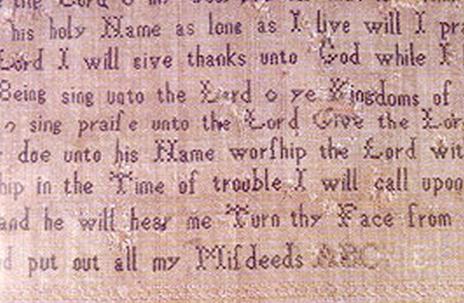
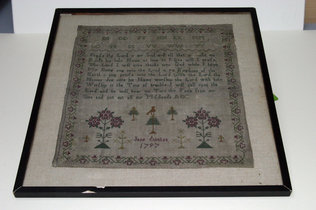
The Bodleian Library in Oxford recently exhibited a sampler (along with other items) for one day to celebrate World Book Day on March 1. This linen cross stitch sampler, purportedly made by a 12-year-old Jane Austen in 1787, was displayed for the very first time. The stitching has become frayed and undone, so that the sampler appears to have been made in 1797. A stylized border with flowering trees surround the words to the psalm, “Praise the Lord O my soul.”

The sampler was purchased in 1996 for over £2000. According to the sale catalogue, the “present owner, who lives in Gloucestershire, received the sampler as a present, folded inside a tobacco tin.” A note on the back of the frame states that an early owner was “related to Jane Austen the novelist” and that she had “received it as a memento” of Austen’s life. (Such a practice was very common after a person died. Letters and personal items were given to close friends and family members as a remembrance.)

I must add that this sampler’s provenance is doubtful. The provenance cannot be directly traced to Jane Austen, and “an early owner related to Jane Austen” simply does not provide enough reliable information.

Sampler detail. Image @Jane Austen Centre Gift Shop*

Jane Austen prided herself on her precise sewing skills. This sampler shows a more inexperienced hand than a seamstress in her later years. (I must add that a sampler I made at a similar age does not look nearly half as good.)

Jane mentions a young needlewoman in Northanger Abbey. Henry Tilney remarks upon the age difference between Catherine Morland and himself:

“I had entered on my studies at Oxford, while you were a good little girl working your sampler at home!”

To which she responds:  “Not very good I am afraid.”

More on the topic

Read Full Post »

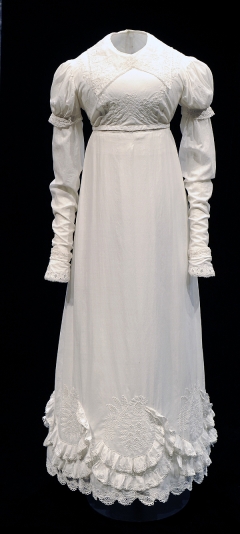
We’ve all come to associate Regency women’s fashion with delicate white muslin fabrics – sprigged muslin, spotted muslin,  checked and striped muslin, and embroidered muslin. Henry Tilney, the hero in Northanger Abbey, was well-acquainted with muslins through his sister, who wore only white.

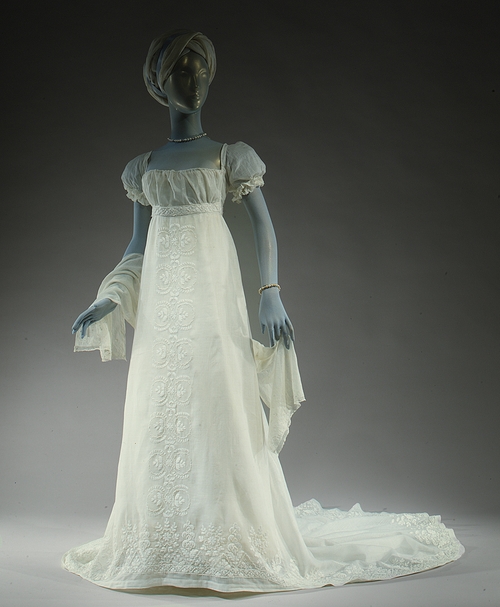
Sheer white muslin gown with whitework embroidery. Image @Vintage Textile

In the 17th century and until the late 18th century, England imported muslin, a thin cotton material, from India.  The British East India Company traded in Indian cotton, silk fabrics, and Dacca (Dhaka or modern-day Bangladesh) muslins. Muslins from Bengal, Bihar and Orissa were also imported. The delicate cloth, which first originated in the Middle East in the 9th century, was perfect for clothing and curtains in hot, arid countries. – Muslin: Encyclopedia Britannica

Muslin gown, 1816

Muslin was a finely woven light cotton fabric in plain weave without a pattern, and had identical warp and weft threads. The fabric selection is quite flexible, coming in a wide variety of weights and widths. It accepts dyes and paints so successfully that today it is often used for theatrical backdrops and photographic portraits. One observation must be made: muslins of the past were made of much finer, more delicate weave than today’s muslins. –  How Is Muslin Fabric Made?

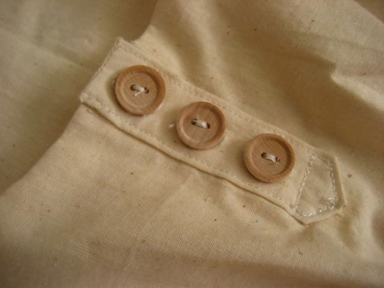
Buttons on a modern muslin fabric

Muslin gown circa 1815, Bath museum

An important feature of muslin fabrics is its ability to drape. Regency fashions were based on robes and garments from antiquity. The ability to drape and maneuver the fabric on the figure was an important feature of this cloth. Today, designers use muslin as a test garment for cutting and draping a design before creating the final dress from more expensive fabrics.

Another excellent feature of muslin is its ability to take dye, paints, and embroidery. The cloth accepted many patterns, motifs and designs that made it versatile and unique. Textile as Art

Plus the white fabric was a mark of gentility. White was difficult to keep clean or required constant cleaning. It was one thing for an aristocratic lady like Eleanor Tilney to wear white, but another for a maid to presume to wear such a high maintenance garment. Mrs Norris, that awful woman from Mansfield Park, approved of Mrs. Rushworth’s housekeeper’s action of turning away two housemaids for wearing white gowns.

Muslin evening dress. Image @Metropolitan Museum of Art

Embroidery transformed the simple white muslin gown into works of art. Whitework embroidery was particularly striking, but colored threads could be equally beautiful. The draping quality of the cloth lent itself well to columnar-shaped empire waist gowns.

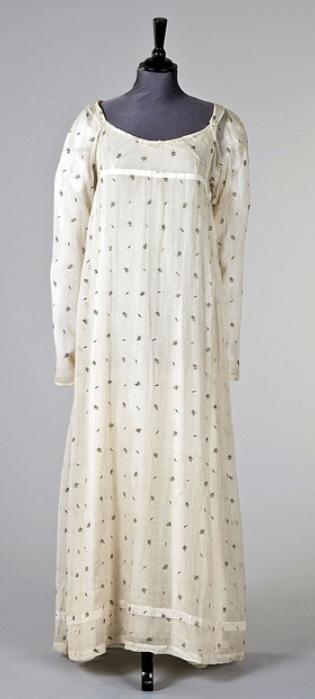
Indian sprigged muslin gown, 1800. Image@Kelly Taylor Auctions Trouvais

Muslin was imported from the Far East for centuries. Then the weavers in west Scotland, who were proficient in spinning fine cottons such as linen, cambric, and lawn, began to pay attention to weaving a finer, more delicate cloth.

Sheer muslin gown, 1800. Image @Victoria & Albert Museum

Muslins, therefore (plain for the most part in Glasgow, and fancy ornamented in Paisley),were among the earliest and principal cotton fabrics produced on the looms of the west of Scotland. About the year 1780 James Monteith, the father of Henry Monteith, the founder of the great printworks at Barrowfield, and of the spinning and weaving mills at Blantyre, warped a muslin web, the first attempted in Scotland; and he set himself resolutely to try to imitate or excel the famous products of Dacca and other Indian muslin-producing centres. As the yarn which could then be produced was not fine enough for his purposes, he procured a quantity of “bird-nest” Indian yarn, “and employed James Dalziel to weave a 6-4th 12” book with a handshuttle, for which he paid him 2Id. per ell for weaving;. It is worthy of remark that the same kind of web is now wrought at 2|d. per ell The second web was wove with a-fly shuttle, which was the second used in Scotland. The Indian yarn was so difficult to wind that Christian Gray, wife of Robert Dougall, bellman, got 6s. 0 J. for winding each pound of it. When the web was finished Mr Monteith ordered a dress of it to be embroidered with gold, which had presented to Her Majesty Queen Charlotte.”1

1817 Muslin day dress. Image @Bowes Museum

Once fairly established, the muslin trade and various other cotton manufactures developed with extraordinary rapidity, and diverged into a great variety of products which were disposed of through equally numerous channels. Among the earliest staples, along with plain book muslins, came mulls, jacconets or nainsooks, and checked and striped muslins. Ginghams and pullicats formed an early and very important trade with the West Indian market, as well as for home consumption. These articles for a long period afforded the chief employment to the hand-loom weavers in the numerous villages around Glasgow and throughout the west of Scotland. The weaving of sprigged or spotted muslins and lappets was subsequently introduced, the latter not having been commenced till 1814. Although the weaving of ordinary grey calico for bleaching or printing purposes has always held .and still retains an important place among Glasgow cotton manufactures, it has never been a peculiar feature of the cotton industry; and the very extensive bleaching and print-works of the locality have always been supplied with a proportion of their material from the great cotton manufacturing districts of Lancashire. – p 501, The Encyclopaedia Britannica: a dictionary of arts, sciences, and general literature, Volume 6, Thomas Spencer Bayne, 1888.

Embroidered muslin round gown, 1795. Image @Cathy Decker

More on the topic:

Read Full Post »

18th century robe a la Francaise. Image @Rijksmuseum

During the 18th century and much of the Regency era, trains were popular on evening and court dresses, and at times on walking gowns. The length of the train shortened as the 18th century progressed, but even shorter trains swept over lawns and grounds and sidewalks. This fashion turned out to be quite expensive, for after several short walks, the fabric would be quite soiled or would need replacement. Oliver Goldsmith wrote in Citizen of the world (1760):

Nothing can be better calculated to increase the price of silk than the present manner of dressing. A lady’s train is not bought but at some expense, and after it has swept  the public walks for a very few evenings, is fit to be worn no longer, more silk must be bought in order to repair the breach, and some ladies of peculiar economy are thus found to patch up their tails eight or ten times in a season.”

One imagines that the delicate muslin trains of the Regency era were as easily wrecked by wear and tear, and that only the rich could afford such an extravagant consumption. There were ways to save one’s train. In 1996’s Emma, Gwynneth Paltrow is seen holding up her train during the dance.

Emma's train is attached to her wrist.

In Northanger Abbey, Jane Austen described how Isabella Thorpe and Catherine Morland pinned up each others trains.

They called each other by their Christian name, were always arm in arm when they walked, pinned up each other’s train for the dance, and were not to be divided in the set; and if a rainy morning deprived them of other enjoyments, they were still resolute in meeting in defiance of wet and dirt, and shut themselves up, to read novels together.”

1800 sprigged muslin gown. Image @Christies

One can only conclude that trains (or tails, as Goldsmith called them) were an extravagance that the ordinary working woman did not indulge in wearing, for until mass production made cloth more affordable, the added lengths of cloth, plus the constant need for laundering and patching, would make this fashionable feature prohibitively high for most women.

Note: That Isabella and Catherine met  “in defiance of wet and dirt” meant something, for shoes and fabrics were so delicate at the time, that ladies tended to stay indoors on rainy days.


Read Full Post »

Available March 8, also as a Kindle book

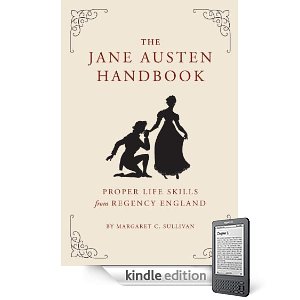
The Jane Austen Handbook: Proper Life Skills from Regency England by Margaret C. Sullivan, will be available for purchase on March 8. Ms. Sullivan, who many readers know as the editrix of Austenblog, has graciously consented to answer a few questions. Like her books and blog, her information is filled with wit and insight.

Thank you for taking the time to answer my questions, Margaret.

Hello to readers of Jane Austen’s World and thanks for having me!

1. How long did it take you to write The Jane Austen Handbook? Was it self-published at first? Who distributed the book? (I know that it sat proudly on the shelves of the gift shop at The Jane Austen Centre in Bath.)

It has always been published by Quirk Books! Just now it has a new cover. Also Quirk books are now being distributed by Random House. Before they were mostly in gift stores (Like the JA Centre–and my friend Julie Tynion sent me a photo of the book on the shelves of the gift shop at Jane Austen’s House Museum in Chawton. I think they heard my SQUEEEEE at the International Space Station.) The coolest place I think anyone told me they saw the book was the gift shop of the QE2, while she was still a cruise ship.

As to how long it took me to write it, I had six weeks between the offer and the due date for the first draft, so it was a pretty frantic time. However, the editor and I had worked out an outline so I wasn’t starting completely from scratch, and there were rewrites a little bit later, especially the section on dancing, which I think is my favorite and was greatly expanded in the rewrite stage.

I was working full-time while I was writing it as well, which in retrospect was not the smartest idea. At least near the end I should have taken some time off. I was worn out!

2. Did you approach Quirk Books or did they approach you in publishing this edition of your book?

They approached me. They already had a line of handbooks such as the Batman Handbook, the Spiderman Handbook, etc., which were usually geared towards big summer films. They wanted to do something more literary, and decided to do a Jane Austen Handbook to go along with the release of Becoming Jane. (And yes, I do realize that I am Irony’s Plaything in that regard.) The editor told me she found the blog and thought I would be a good candidate, and “stalked me online” for a few days before approaching me.

Jason Rekulak, Godfather of the Jane Austen Zombie Revolution (like I said, Irony’s Plaything), called me last year and said Random House was interested in re-releasing the book, and it was due for a reprint anyway, but they wanted a different cover. Et voila! Random House’s distribution is, I believe, more focused on traditional bookstores. Also, as a great enthusiast for ebooks, I’m really pleased that at last the Handbook will be available in digital, and I confess I’m also curious to see what the ebook will look like.

3. In regard to writing and publishing, what advice would you give a newbie writer?

As to advice for aspiring authors, I would say to always endeavor to be professional. Jane Austen was extremely professional in her dealings with publishers and fans. Then she abused them with great spirit among her friends. ;-) She was also very professional in the way she approached her craft. She worked at it and was an excellent self-editor, and knew what made a story enjoyable and what was good writing. It distresses me when authors let their emotions get the better of their professional demeanor. Bad reviews happen, and part of the job is learning to accept them, even when they hurt or don’t seem fair. Act like you’ve been there. Shoving your Published Author status in people’s faces seems vulgar to me. And once you arrive, help those who come after you!

4. You’ve been visible on the blogosphere since *cough* its dark ages. Am I right in thinking that your began Austenblog in 2004? What was being the queen of the Jane fandom like back then?

Yes! I created AustenBlog during the very hot July 4th weekend of 2004, and had an official launch later that month. Back then we were excited about a new film version of P&P! Once again: Irony’s Plaything!

I certainly wasn’t the queen of the Austen fandom then, nor am I now. ;-) I don’t think there is a queen. It’s much too anarchic a group. If they don’t like something or their desires aren’t being met, they’ll go make a website or online community of their own, especially now with all the great online tools available. Also nobody really knew about AustenBlog at first. It’s always been movies that attracted the most attention, so when the last bunch of films were being made and shown was when we first attracted a lot of attention. (Say it with me: Irony’s Plaything!)

5. Tell us about the changes in Jane fandom since then and what you think of future trends for Austen aficionados.

I think the main difference is that the fandom is becoming more diverse and I think as a whole not so “particularly friendly to very severe, very intense application,” as Mr. Tilney would say. Their Jane Austen fandom goes along with lots of other interests, some inter-related and some not. There are still obsessives as well, and I’m pleased to see more people having fun with their fandom and allowing themselves to be sometimes silly with it. It’s interesting, while JASNA tends to attract the more devoted fans, I’ve noticed a bit of a culture shift over the past ten years or so. The members are becoming a little more popular culture-oriented, or at least more aware of the popular culture aspects of the fandom, even if that’s not necessarily their cup of tea. Costuming has become a lot more popular. At my first AGM in 2000, only a handful of people dressed in period costume for at least part of the conference, and in the past couple of years it’s really taken off. I think the programs are becoming more diverse, too–there is something for everyone. Janeiteism is a big tent, and I celebrate it, even while I sometimes deplore the fringier groups. ;-)

6. Your love for Henry Tilney is well known. What are the qualities about this hero that attract you so? Which scene in Northanger Abbey in particular do you find memorable?

NA was the fifth of the six novels that I’d read (MP was last) and when this charming, funny guy showed up, I was instantly attracted to his obvious intelligence and wit and general coolness, but it seemed to me that in the other four novels I’d read, the funny, charming guy turned out to be the villain. Thus, I spent the whole book waiting for the other shoe to drop. Imagine my joy when I got to the end and realized it was not only fun to love Henry Tilney, it was the right thing to do.

Henry is not only charming, but honorable. He’s very human and really not as perfect as I’d like to pretend, but he is kind to Catherine, and besides his sister is practically the only person in the book who never condescends to her or treats her like she’s stupid or tries to trick her. If his conversation sometimes goes over her head, it’s paying her a compliment in a way–the compliment of rational companionship, if I may borrow a little from Miss Dashwood!

I have many favorite scenes, but I’ve picked one out, from Vol. II, Ch. I:

Henry smiled, and said, “How very little trouble it can give you to understand the motive of other people’s actions.”

“Why? — What do you mean?”

“With you, it is not, How is such a one likely to be influenced, What is the inducement most likely to act upon such a person’s feelings, age, situation, and probable habits of life considered? — but, How should I be influenced, what would be my inducement in acting so and so?”

“I do not understand you.”

“Then we are on very unequal terms, for I understand you perfectly well.”

“Me? — yes; I cannot speak well enough to be unintelligible.”

“Bravo! — an excellent satire on modern language.”

“But pray tell me what you mean.”

“Shall I indeed? — Do you really desire it? But you are not aware of the consequences; it will involve you in a very cruel embarrassment, and certainly bring on a disagreement between us.”

“No, no; it shall not do either; I am not afraid.”

“Well, then, I only meant that your attributing my brother’s wish of dancing with Miss Thorpe to good-nature alone convinced me of your being superior in good-nature yourself to all the rest of the world.”

Catherine blushed and disclaimed, and the gentleman’s predictions were verified. There was a something, however, in his words which repaid her for the pain of confusion; and that something occupied her mind so much that she drew back for some time, forgetting to speak or to listen, and almost forgetting where she was…

For all those who say that Henry isn’t really in love with Catherine, read that scene. He is not going to pay her profuse compliments that she might not trust to be real; and when he does pay her a compliment, he does it subtly, with humor, and with that “something” that gives Catherine the collywobbles. You can practically smell the pheromones flying back and forth. That man’s in love–and so is Catherine! I think in that scene her love for Henry turns the corner from a girlish crush to a deeper and more adult feeling.

7. My assumption is that you have been to England and visited a number of places that Jane Austen lived in and visited herself. Do you have any extraordinary memories that you’d like to share with us?

I traveled to the UK in October 2005 to celebrate the 200th anniversary of the Battle of Trafalgar–I’m a big Age of Sail fan as well–with my Horatian buddies (we Hornblower fans call ourselves Horatians). While in Portsmouth I walked the ramparts, like Fanny Price, and saw the ruins of the Marine chapel where they went to church (and also was amused to see a hair stylist shop run by one Andrew Price in downtown Portsmouth–nice to see the Prices are still in town, even if they are in trade). I felt very close to Captain Wentworth and his friends there. In London, we went to the National Portrait Gallery to visit Jane’s portrait, and the British Library to see her writing desk and the manuscripts for History of England and the canceled chapters of Persuasion.

We also went to Bath, and it was a real thrill. I kept running into Jane’s characters around every corner, especially as my two favorite books are the two Bath books, Persuasion and NA. I remember walking up Milsom Street, getting to the top of the street, looking up, and seeing “Edgar’s Buildings” engraved on the wall. Walking through Laura Place, down Pulteney Street, out to see 4 Sydney Place where the Austens lived, were all amazing–especially to know that in many ways they were nearly the same as in Jane Austen’s time. I also loved going up to Camden Place and seeing how utterly perfect it was to be the home of Sir Walter Elliot. All of Bath was, quite literally, at his feet; and yet it was built on unsteady land, and did not have the proper neoclassical regularity–it was all off-center. Perfect! And a really funny moment was when we were taking the bus uptown, and asked the bus driver to let us know when we were near Camden Crescent. He looked at our cameras and, clearly not a Janeite, said, “Taking pictures, luv? You should go over to Lansdowne Crescent instead. For my money, it’s the prettiest crescent in Bath.” I wonder what Sir Walter and Miss would have said to that! It was such a delightfully Austenian moment.

And of course we went to Chawton and Steventon. They were the places I felt closest to Jane herself. Chawton was charming, so peaceful and quiet, and inspiring for a writer. Finding Steventon was not easy–it was kind of like trying to find Shangri-La. The GPS sent us to Berkshire, which of course is totally the wrong direction. We drove despairingly around Basingstoke trying to find a local who could direct us, but we were a mile away from Steventon at one point and locals just looked at us blankly when we asked if they could give us directions. Finally we found a helpful person who gave us excellent directions, and arrived at the church in late afternoon just as the rain was letting up. I loved both St. Nicholas’ churches, in Chawton and Steventon–I loved that they were both still obviously working churches, and not just tourist attractions. Jane would have really appreciated that, I think. (And thanks to Mike for driving and his lovely pianoforte playing at Chawton, and Kathleen for the companionship, snark, and hosting me in London! I should have just let you guys ring the churchbell at Steventon.)

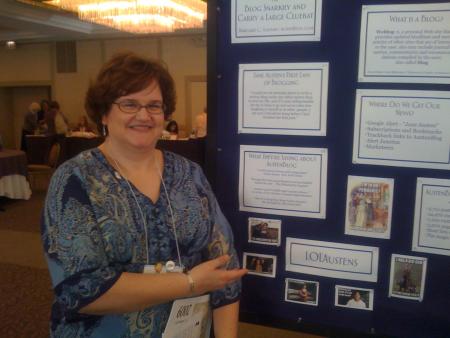
Margaret Sullivan at JASNA, 2008. Image @Laurie Viera Rigler

Margaret, it was a pleasure to interview you! I’ve seen your book and intend to review it soon. I can’t wait to read it. Vic

Thanks for the interview! This was really fun!

More on the topic:

Read Full Post »

Downton Abbey, a PBS Masterpiece Classic mini-series, is as much a tale about the servants below stairs as about the noble Earl of Grantham and his family who employed them. With the recent airing of the updated version of Upstairs Downstairs in Great Britain, I am sure a debate will long rage about which series portrayed their eras and class differences better. In both cases, the viewer is the winner.

Downton Abbey. Credit: Courtesy of © Carnival Film & Television Limited for MASTERPIECE

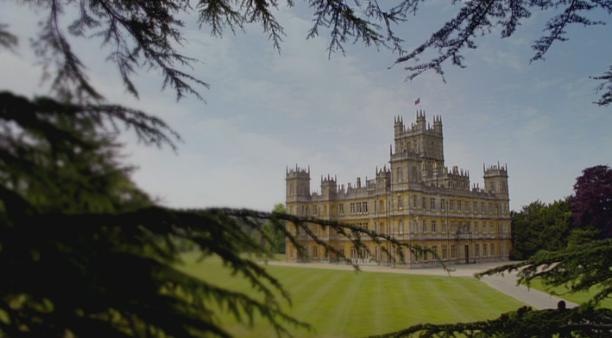
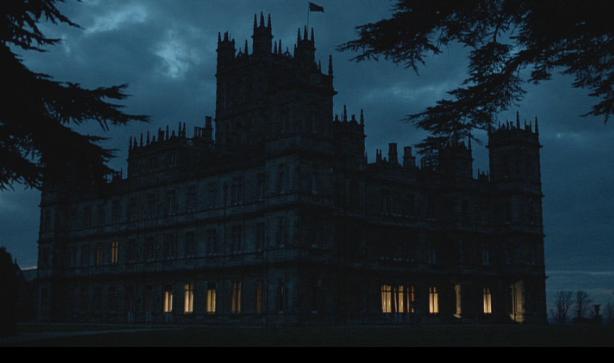
Downton Abbey (Highclere Castle, an “Elizabethan Pile”) Credit: Courtesy of © Carnival Film & Television Limited for MASTERPIECE

Images Credit: Courtesy of © Carnival Film & Television Limited for MASTERPIECE

No matter how expertly this mini-series of Downton Abbey tries to portray this bygone era, it is nearly impossible to capure life in an Edwardian country house exactly as it once was. The viewer should be aware that we can glimpse only a faint, musty, museum shadow of the complex and thriving community that a great English estate once supported.

Downton Abbey. Jane Austen's World. Credit: Courtesy of © Carnival Film & Television Limited for MASTERPIECE

The Crawleys and the servants of Downton Abbey. Credit: Courtesy of © Carnival Film & Television Limited for MASTERPIECE

Images Credit: Courtesy of © Carnival Film & Television Limited for MASTERPIECE

It is a well-known fact that grand country houses could only be run with a great deal of help. As early as the 18th century, Patrick Colquhoun estimated that there were around 910,000 domestic servants (in a population of 9 million). By 1911, the number of domestic servants had risen to 1.3 million. Eighty percent of the land during the Edwardian era was owned by only 3% of the population, yet these vast estates were considered major employers.

Downton Abbey. Credit: Courtesy of © Carnival Film & Television Limited for MASTERPIECE

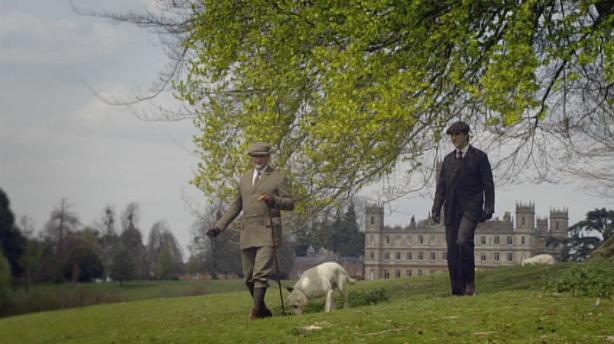
The earl (Hugh Bonneville) and his heir, Matthew Crawley (Dan Stevens), survey his vast estate. Credit: Courtesy of © Carnival Film & Television Limited for MASTERPIECE

In the grander and larger houses, the ratio of servants (both indoor and outdoor) to the family could approach 1:7 or 1:10, but as the industrial revolution introduced improvements in laundering, lawn maintenance, and cooking, the number of servants required to run a great estate was greatly reduced.
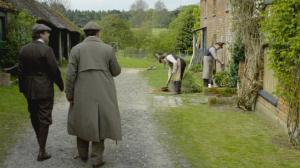
Credit: Courtesy of © Carnival Film & Television Limited for MASTERPIECE

The earl and his heir, Matthew Crawley, survey the cottages and outer buildings on his estate. Credit: Courtesy of © Carnival Film & Television Limited for MASTERPIECE

After World War One and the rise in taxes for each servant employed, many great families no longer kept two sets of house staff. They began to bring servants from their country house to their house in Town, leaving only a skeleton crew behind to maintain the family seat in their absence.
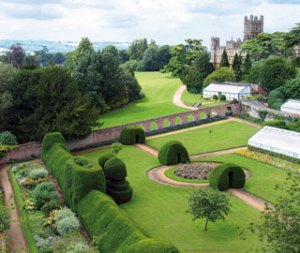
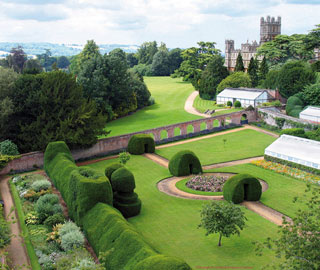
Grounds of Downton Abbey (Highclere Castle)

Country estates were designed to showcase the owner’s wealth via collections of art, furniture and other luxurious possessions, such as carriages, lawn tennis courts, and the like. The main house sat at the end of a long and winding drive through acres of beautifully landscaped park lands.

Downton Abbey.

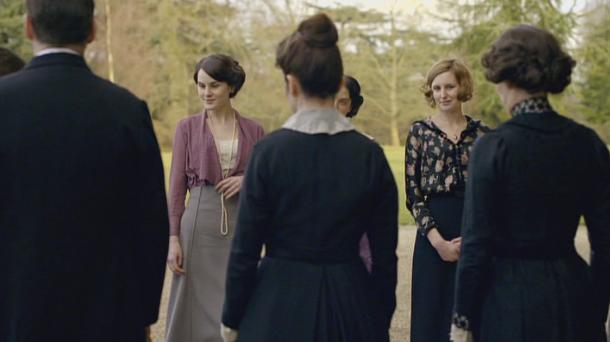
The Duke is greeted by both the family and the servants. Credit: Courtesy of © Carnival Film & Television Limited for MASTERPIECE

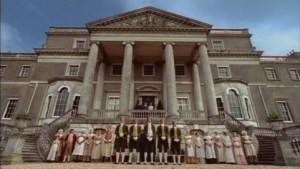
The spectacle did not end there, for approaching the house, guests would see a grand facade or an equally imposing flight of stairs that led to the first floor (or both). In Downtown Abbey, the family awaited the arrival of the Duke of Crowborough (Charlie Cox) along with their servants, who were arrayed in line according to their station.
Downton Abbey. Jane Austen's World

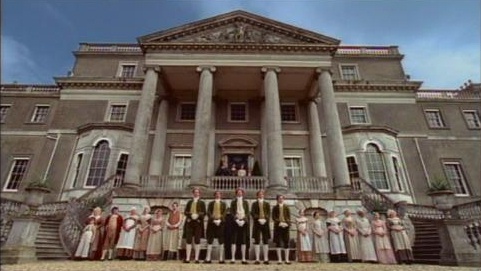
The servants await their new masters at Norland. Sense and Sensibility, 2008.

Such a display of staff was also evident in the 2008 adaptation of Sense and Sensibility, when Fanny and Robert Dashwood arrived to claim Norland Park.

Downton Abbey. Credit: Courtesy of © Carnival Film & Television Limited for MASTERPIECE

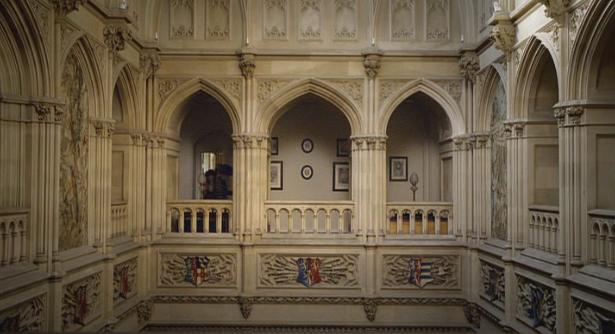
Grand interior hall of Downton Abbey, floor leading to the private rooms. Credit: Courtesy of © Carnival Film & Television Limited for MASTERPIECE

Once introductions had been made, the guests would ascend the imposing stairway and enter an equally impressive high-ceilinged hall that contained yet another grand staircase, which led to the private rooms upstairs. The ladies customarily brought their own maids, who would also require lodging. (In Gosford Park, a poor female relation had to make do with one of the hostesses’ house maids to help her with her dress and hair.)
Downton Abbey. Credit: Courtesy of © Carnival Film & Television Limited for MASTERPIECE

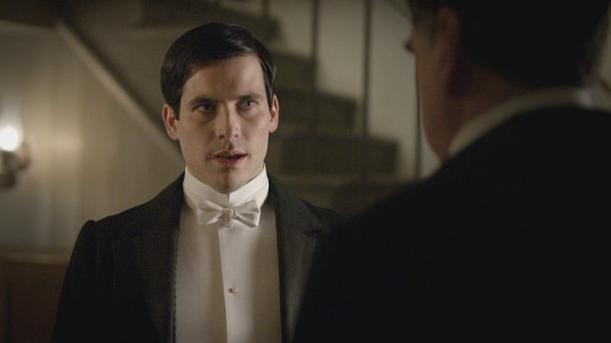
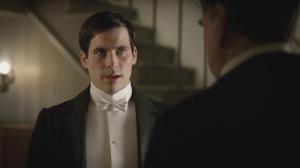
Thomas (Rob James-Collier), the first footman, is chosen to act as valet to the duke. Credit: Courtesy of © Carnival Film & Television Limited for MASTERPIECE

The guests’ servants were expected to enter the house through a separate, back servant’s entrance, and shared quarters with the regular staff. The host supplied his own butler or footmen to help serve as valet to his male guests.
Downton Abbey. Credit: Courtesy of © Carnival Film & Television Limited for MASTERPIECE

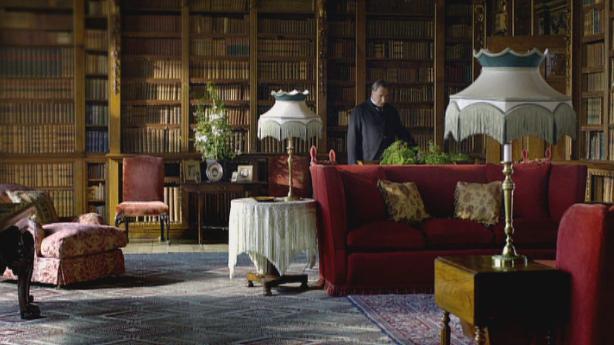
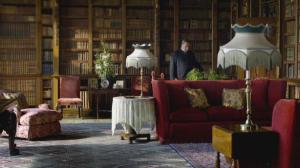
The Earl of Grantham’s impressive library/study. Credit: Courtesy of © Carnival Film & Television Limited for MASTERPIECE

A host’s willingness to lavishly entertain his guests did not necessarily reflect the family’s daily schedule:

In 1826 a German visitor to England remarked that: it requires a considerable fortune here to keep up a country house; for custom demands… a handsomely fitted-up house with elegant furniture, plate, servants in new and handsome liveries, a profusion of dishes and foreign wines, rare and expensive desserts… As long as there are visitors in the house, this way of life goes on; but many a family atones for it by meagre fare when alone; for which reasons, nobody here ventures to pay a visit in the country without being invited, and these invitations usually fix the day and hour… True hospitality this can hardly be called; it is rather the display of one’s own possessions, for the purpose of dazzling as many as possible.(3)” – The Country House: JASA

Downton Abbey. Jane Austen's World

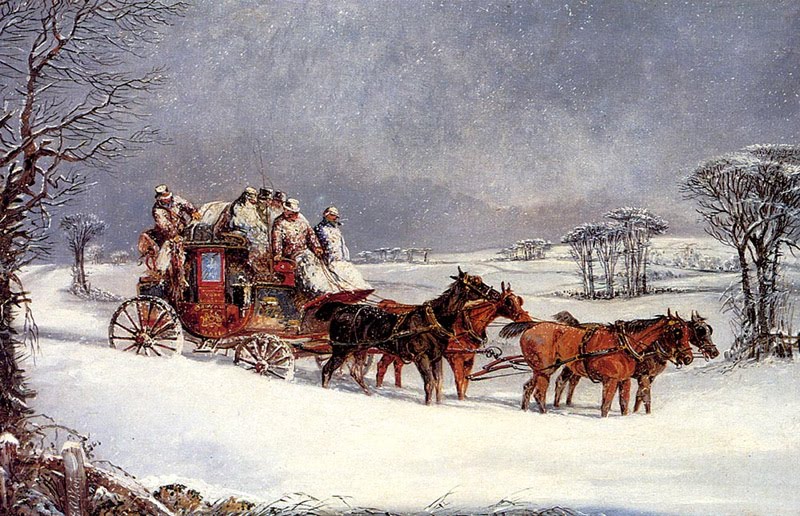
Travel in winter, Henry Alken, 1785

Guests stayed for a long time for a variety of reasons. In the 17th and 18th centuries, travel over a long distance was laboriously slow and difficult, for roads were notoriously poor and dangerous. Long visits, such as Cassandra Austen’s visits to her brother Edward in Godmersham Park, became a custom. Even during the Edwardian age, when travel was much improved, guests tended to stay for the weekend (Saturday through Monday). In Downton Abbey, the Duke of Crowborough arrived amidst much hope and anticipation, until he discovered that the estate had been entailed to a third cousin not the earl’s daughter, whom he had come to woo, and he cut his visit to one short day and evening, making an excuse that did not hold water.
Downton Abbey. Jane Austen's World

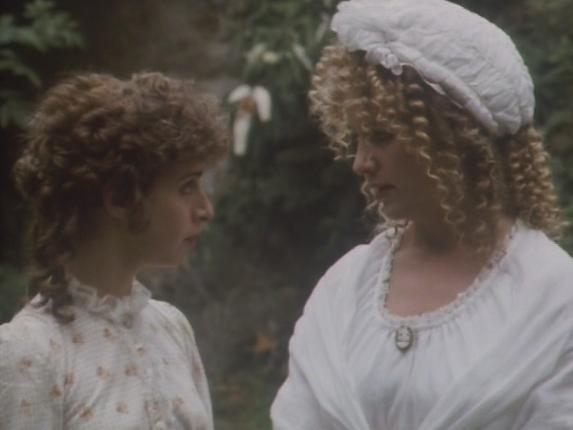
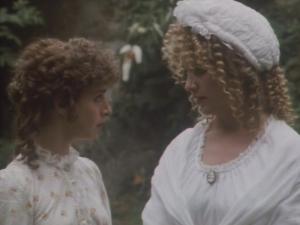
Catherine Morland (Katherine Schlessinger) and Eleanor Tilney (Ingrid Lacey), Northanger Abbey 1986

Even during the 18th century, when long-term guests were expected, some overstayed their welcome, like Jane Austen’s anti-heroine, Lady Susan Vernon, whose hostess (sister-in-law) despised her but was forced to tolerate her because she was ‘family.’ Desirable guests, like Catherine Morland of Northanger Abbey, were invited to extend their visit. In Catherine’s instance, Eleanor Tilney, a motherless young lady who lived without a female companion, found the young girl’s company delightful. By the time General Tilney discovered that Catherine was no heiress, she had been with the Allens in Bath and the Tilneys in Northanger Abbey for a total of 11 weeks. As previously noted, Edwardian hosts, while generous, expected house guest to stay for only three days. During this time every luxury was lavished upon them, but it was considered bad form if they stayed longer than arranged or without invitation.

Downton Abbey. Credit: Courtesy of © Carnival Film & Television Limited for MASTERPIECE

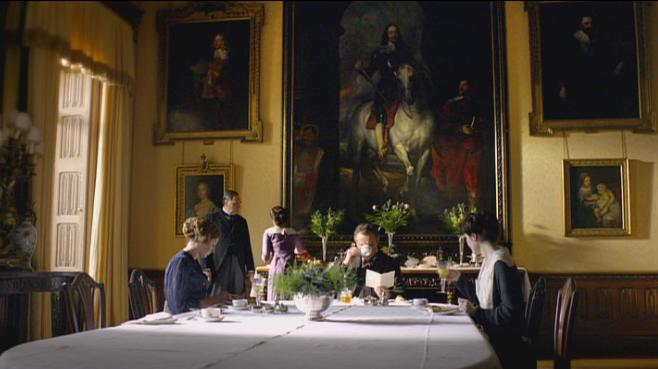
Breakfast was a substantial meal served at 9:30 a.m. Credit: Courtesy of © Carnival Film & Television Limited for MASTERPIECE

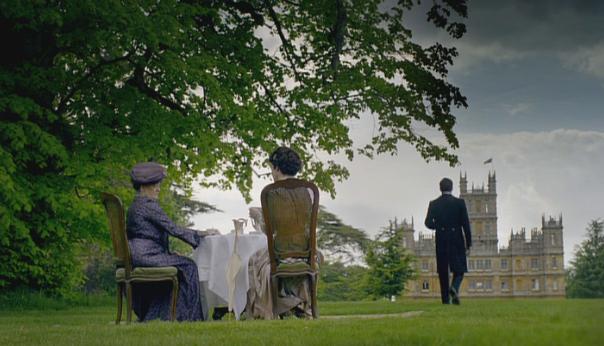
At set times, Edwardian guests would congregate in the common rooms, which included the drawing room, music room, dining room and breakfast room, the library or study, the gallery (where ancient family portraits were hung), the billiard room, and the conservatory. Vast lawns and gardens were laid out for promenading; guests could ride or walk through the parklands to view picturesque follys or dine alfresco (outdoors), take tea under an awning, or paint a vista or two.

Downton Abbey. Credit: Courtesy of © Carnival Film & Television Limited for MASTERPIECE

Taking tea alfresco. Credit: Courtesy of © Carnival Film & Television Limited for MASTERPIECE

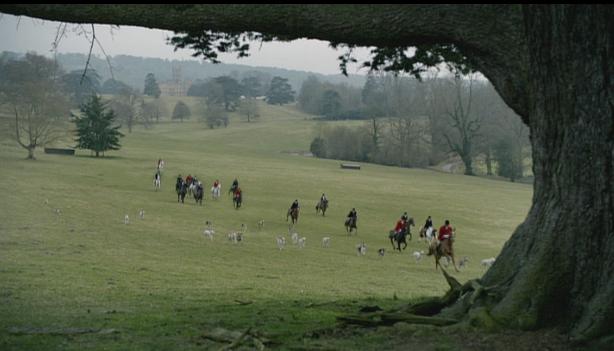
The reputation of a host rested on the entertainments, which helped to pass the time – walking, riding, shooting (in winter), and hunting (in fall) for outdoor activities; and card parties, musicales, and dances for indoor festivities. A fox hunt, such as the one depicted in Downton Abbey, required riding skill and stamina, for the chase would take riders over hills and dales, and hedges, and over long distances for much of the day.

Downton Abbey. Credit: Courtesy of © Carnival Film & Television Limited for MASTERPIECE

The hunt required riding skills and stamina.Credit: Courtesy of © Carnival Film & Television Limited for MASTERPIECE

Billiards made an appearance during the 17th century, and by the 19th century billiard rooms had become a staple. Private libraries offered a variety of books and periodicals. In the summer, Edwardians enjoyed lawn tennis, croquet, cricket, and golf (by the men).

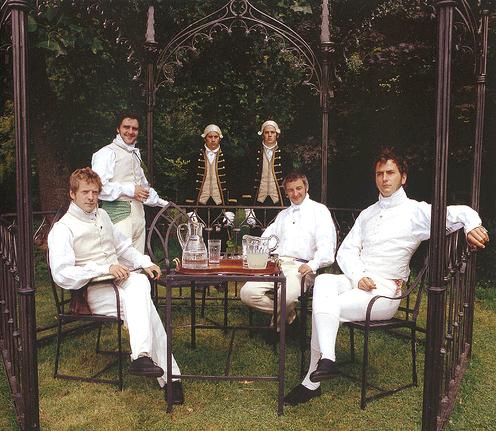
The male guests in Regency House Party (2004) could pretty well behave and move around as they pleased.

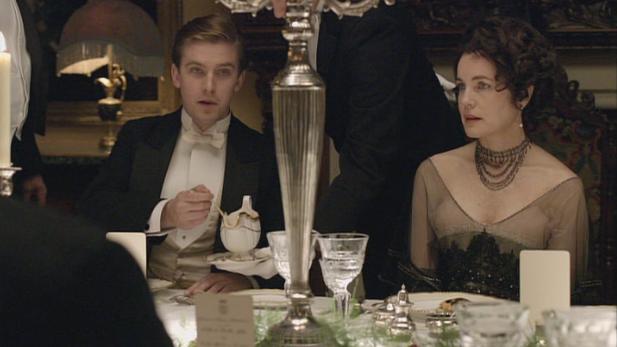
Ladies and gentlemen tended to spend the day apart. Male guests were more active and could engage in almost any activity during the day, except at the time reserved for dinner, when they were expected to show up. In an Edwardian house, men did not escort their female dining partners into the dining room. Rather, after the host served cocktails in the drawing room a half hour before the meal, the group moved to the dining room where they were seated according to a set pattern, with guests sitting between members of the family and their neighbors.
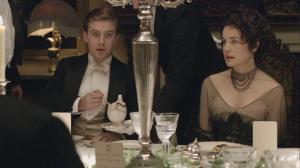
Downton Abbey. Credit: Courtesy of © Carnival Film & Television Limited for MASTERPIECE

The new heir of Downton Abbey (Dan Stevens) sits next to his hostess, the Countess of Grantham (Elizabeth McGovern). Credit: Courtesy of © Carnival Film & Television Limited for MASTERPIECE

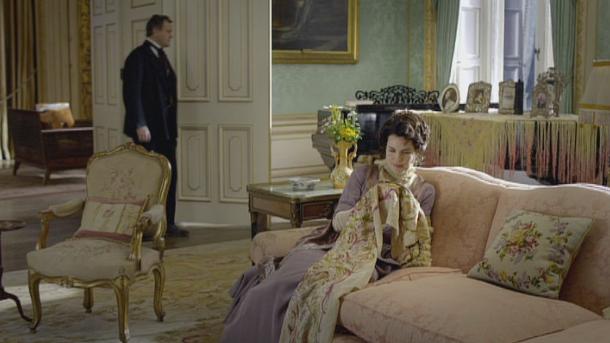
After dinner, the ladies would remove to the drawing room, which became increasingly larger and more feminine over time, while the gentleman relaxed at the dining room table, drinking port, smoking their cheroots, and discussing manly topics.

Downton Abbey. Credit: Courtesy of © Carnival Film & Television Limited for MASTERPIECE

The drawing room at Downton Abbey was large and feminine. Credit: Courtesy of © Carnival Film & Television Limited for MASTERPIECE

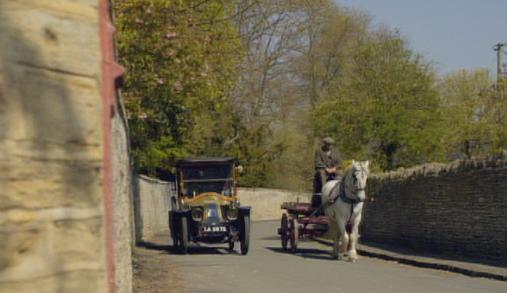
While an 18th century gentlemen would have talked about horse flesh and carriages, Edwardian guests would have included automobiles and their rapidly changing technology, road improvements, and the availability of petrol as well.

Downton Abbey. Credit: Courtesy of © Carnival Film & Television Limited for MASTERPIECE

Transportation was changing rapidly at the turn of the 20th century. Credit: Courtesy of © Carnival Film & Television Limited for MASTERPIECE

Unlike the gentlemen, a lady’s day was more restricted and confined. She spent her day following a set routine, starting with breakfast, and wearing appropriate outfits and getting into them and out of them. Mothers spent some time overseeing the nannies and the care of their children (if they were brought along). Ladies, married or not, would also receive visitors, sew, gossip, read, walk, participate in charity work, observe the men at sport (if invited) or take a ride in the carriage. They did join in on more active, outdoor games at set times during the appropriate season, such as cricket, croquet, lawn tennis, lawn bowling, and the like, but they would have been properly dressed for the occasion.

Downton Abbey. Credit: Courtesy of © Carnival Film & Television Limited for MASTERPIECE

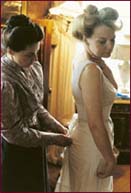
The head maid (Joanne Froggatt) dresses Lady Mary’s (Michelle Dockery) hair for dinner. Credit: Courtesy of © Carnival Film & Television Limited for MASTERPIECE

Imagine poor Eleanor Tilney in the late 18th century, alone in a grand house without female companionship, having no-one to talk to and forced to live a constricted life. No amount of walking, charity work, practicing the piano, or overseeing the household would have made up for her boredom, and thus Catherine Morland’s companionship was so welcome.

Manor House (2002), dressing Lady Olliff-Cooper. Image @PBS

In Regency House Party (the 2004 mini-series), the modern women who portrayed Regency ladies chafed under the strict rules of protocol, forced chaperonage, and daily tedium. A lady’s routine did not much improve during the Edwardian era, although towards the end of this period changing one’s gown for afternoon tea became obsolete.
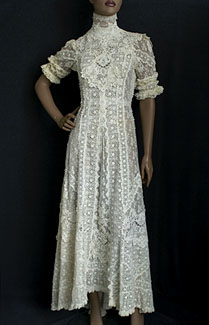
Tea gown, circa 1908. Image @Vintage Textiles

In Manor House, the 2002 mini-series set in the Edwardian era, Lady Olliff-Cooper’s spinster sister, the lowest-ranking member of the family, had so little to do and so little say in how she could spend her time, that Avril Anson (who in real life is a professor) left the series for a few episodes to maintain her sanity.

Downton Abbey. Credit: Courtesy of © Carnival Film & Television Limited for MASTERPIECE

Evelyn Napier (Brendan Patricks) and Matthew Crawley (Dan Stevens) eye their rival before dinner. Credit: Courtesy of © Carnival Film & Television Limited for MASTERPIECE

Lady Olliff-Cooper … [needed] to change her clothes five or six times a day. And very few of these dresses would be what today we’d call practical. Not only did each meal carry its own dress code, but if she needed to receive a visitor, pay a call or go riding, she’d have to change both her clothes and often her hairstyle as well.” Manor House, clothes

Anna Olliff-Cooper, who portrayed the lady of the house in Manor House, spent an enormous amount of her day changing into new gowns and having her hair dressed. She would stand passively as her maid did all the work. Anna noted how constricting the dresses were, and cried as she described how the tight sleeves of her gowns prevented her from raising her arms above her shoulders or from closely hugging her eleven-year old son. Even the fashions conspired to keep a women passive!

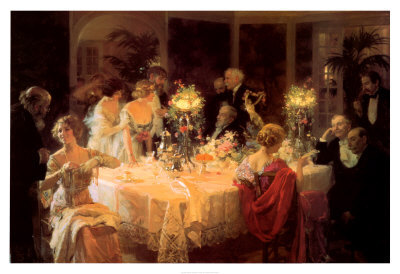
The Dinner Party, 1911, Jules Alexandre Grun

After they had finished their cigars and port, the gentlemen were obligated to rejoin the ladies for cards or music, or both, to while away the evening. The Duke’s behavior in Downton Abbey was egregious, for instead of joining the group for the rest of the evening, he went to bed early. The house party would stay up until 10:30 or so (unless a grand ball had been arranged, and then the guests would stay up until the wee hours of the morning).
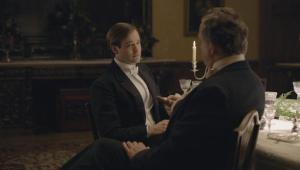
Downton Abbey. Credit: Courtesy of © Carnival Film & Television Limited for MASTERPIECE

Male conversation after dinner over port and cigars. The duke and earl have a frank conversation. Credit: Courtesy of © Carnival Film & Television Limited for MASTERPIECE

In either case, the last people in the house to retire for the night would be the servants, but their lives and schedule will be described in another post.

Look for Downton Abbey, Part One to air on PBS Masterpiece Classic on Sunday, January 9th! Once again PBS will host a twitter party! Stay tuned for details.

Downton Abbey. Credit: Courtesy of © Carnival Film & Television Limited for MASTERPIECE

End of the day at Downton Abbey. Credit: Courtesy of © Carnival Film & Television Limited for MASTERPIECE

More on the topic:

Images of Downton Abbey Season 1: Credit Courtesy of © Carnival Film & Television Limited for MASTERPIECE

Read Full Post »
« Newer Posts - Older Posts »