Feeds:
Posts
Comments

Archive for the ‘Pride and Prejudice’ Category

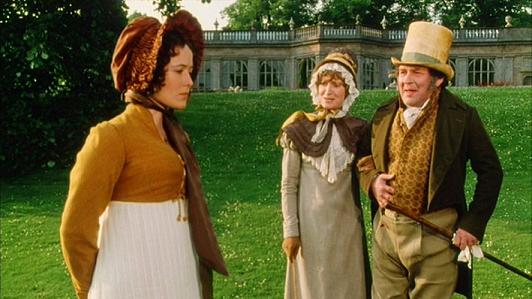
One of the most pivotal decisions in Pride and Prejudice was when Elizabeth Bennet agreed to visit Pemberley’s gardens and grounds with the Gardiners, only to suddenly encounter Mr. Darcy, who was not slated to return until the next day.

Such a visit to grand estates by the well-heeled and more common folk like Elizabeth and her aunt and uncle were quite common in the 18th century. They would have purchased an inexpensive guide book at a local inn or town, and read information about the paintings and objects inside the great houses, and a description of the gardens and their rustic buildings and ornaments.

Prospect of Stowe House by Benton Seeley

Stowe in particular was a destination point for visitors. Its magnificent gardens and grounds were a model and inspiration for other gardens of the Romantic era, which echoed the movement’s reverence for nature and aesthetic ideals. The blog of the current Duke of Buckingham and Chandos contains this passage:

“The house and gardens at Stowe, my family seat, were tourist attractions from around 1724, when my ancestor Lord Cobham set out the gardens. People came to visit the gardens and house, sometimes invited, often not. Topographical notes and poems were written. And in 1744 the first full guidebook to the house and grounds was published by Benton Seeley, a writing master in Buckingham. The guidebooks continued for a further 70 years and Seeley went on to become a printer and publisher, founding a business that wound up only in 1978.” – Duke of Buckingham and Chandos 

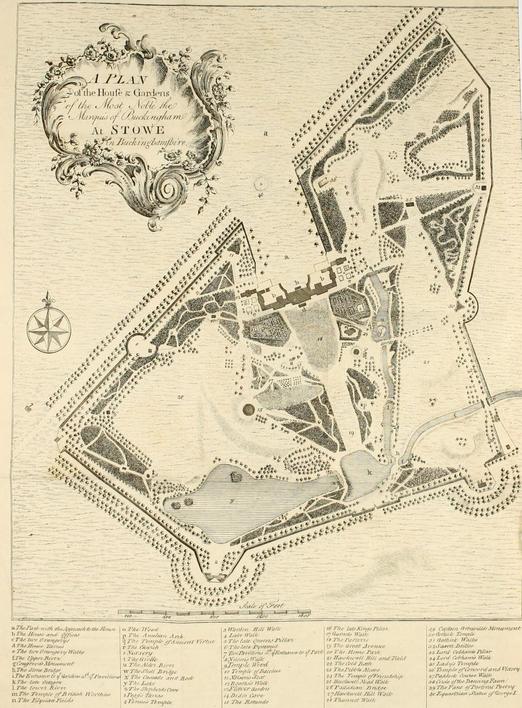
Seeley's plan of the house and gardens at Stowe.

Benton Seeley’s guidebook, Stowe: A Description of the Magnificent House and Gardens of The Right Honourable Richard Grenville Temple, Earl Temple… Embellished with a General Plan of the Gardens, and also a separate Plan of each Building, with Perspective Views of the same, was published in the same year that Elizabeth Montague described Stowe’s gardens as “beyond description, it gives the best idea of Paradise that can be.” Visitors came away from viewing Stowe’s natural gardens inspired to implement changes to their own grounds. Seeley’s guidebook helped to spread Stowe’s influence throughout the 18th century as the model for the ideal English garden. (Today the original guidebook sells for close to $2,000.)

Thomas Jefferson owned at least two of Seeley’s guidebooks. In fact, Stowe’s reputation as a gardening attraction had spread beyond the British Isles:

“When well-heeled Americans traveled to England in the late eighteenth century, they often sought out famous gardens to inspire their own designs at home. As Benton Seeley’s Stowe: A Description of the Magnificent House and Gardens shows, the gardens at Stowe were particularly large and ornate, featuring temples, pavilions, and statues strewn about the grounds. Thomas Jefferson and John Adams visited Stowe together in 1786 in what Abigail Adams called their “journey into the country.”- Better Homes and Gardens, Stanford University

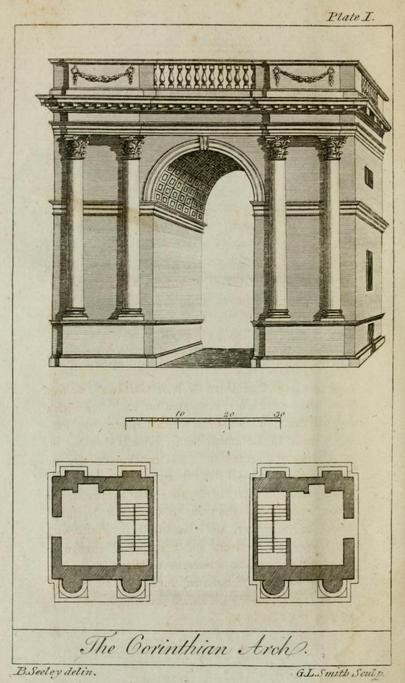
Corinthian Arch

Seeley’s Guide Book became historically significant. It went through seventeen editions between 1744 and 1797, continually undergoing improvements and revisions. The book’s influence was such that it helped to make the Stowe gardens among the most publicized and copied of the English landscape model. However, Seeley’s was not the only guidebook written for the famed Stowe gardens. In 1732 Lord Cobham’s nephew Gilbert West wrote a lengthy poem The Gardens of the Right Honourable Richard Viscount Cobham that is actually a guide to the gardens in verse form. Charles Bridgeman commissioned 15 engravings of the gardens from Jacques Rigaud, and these were published in 1739 (Wikipedia), five years before Seeley’s guide.

The Stowe gardens and grounds were extensive, offering planned vistas along a winding path, parterres, canals, large swaths of meadows, places for isolation and retreat, rustic buildings, and an emphasis on natural grandeur over formal symmetry. The 4th Baronet, Viscount Cobham, who married a rich brewery heiress, implemented the garden changes at Stowe in 1711. By 1724, the gardens rested on 24 acres and required the labor of 30 men. Garden maintenance cost the family 827 pounds in 1749-1750. Multiply that amount by 50, and you gain a quick idea of the cost in today’s terms. This sum represented almost all the spare money Lord Cobham could afford on the house and grounds.

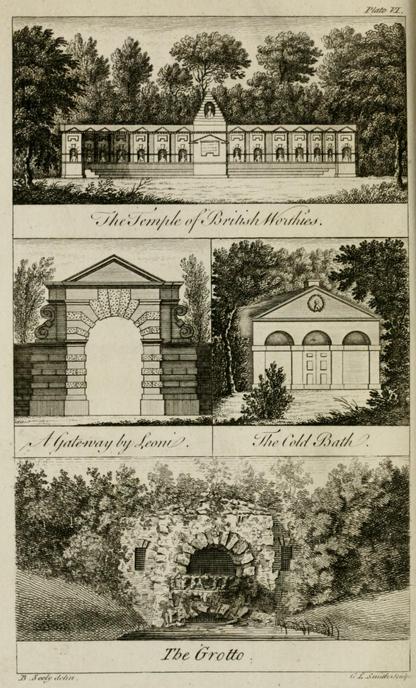
The grotto was originally designed by William Kent in the late 1730s as a symmetrical, freestanding structure decorated with flints, colored glass, and shells. Soon covered over with earth, it was then described as a “romantic retirement.” By the 1780s, it was more deeply buried, resurfaced with tufa, and planted with vines and conifers for a cavernous effect.- Romantic Gardens: Nature, Art, and Landscape Design, 2010, The Morgan Library Museum

In “A fine house richly furnished: pemberley and the visiting of country houses,” Stephen Clarke, a London lawyer and architectural historian discusses the kind of information a guidebook owner could expect. A New Description of Blenheim by Mayor, 1811, offered the following General Information in its preface:

“BLENHEIM may be seen every afternoon, from three till five o’Clock, except on Sundays and public Days. On Fair days at Woodstock, likewise, it can be seen only by particular permission.

COMPANY who arrive in the morning may take the ride of the Park, or the walk of the Gardens, before dinner, and after that visit the Palace.

The CHINA GALLERY, PARK, and GARDENS, will, on proper application, be shewn at any hour of the day, except during the time of Divine Service on Sundays.”

In 1776, the Wilton visitors book showed 2, 324 visitors in the last year.

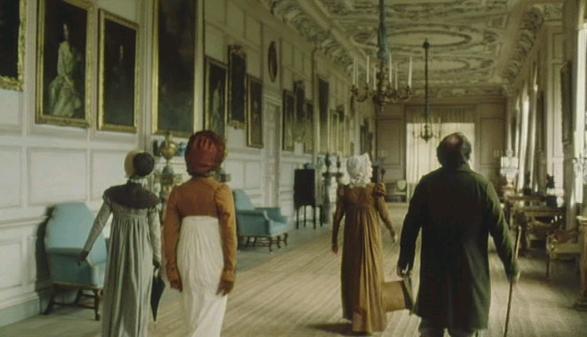
The housekeeper guides Elizabeth and the Gardiners through Pemberley's interior

As discussed on this blog in another post, The Housekeeper as a Guide to a Great Country Estate, housekeepers and other servants stood to make a great deal of extra money from tourists.

“The rapacity of housekeepers-and, in the larger houses, of the other staff–was a common complaint. At Blenheim during his tour of 1810-1811, Louis Simond was required to pay the porter at the gate, the woman showing the china collection, the woman showing the theatre, the woman showing the pleasure grounds, the gardener showing the park, and the upper servant showing the house–at a total cost of 19s. (qtd. in Ousby 81). There are similar complaints of Woburn, Chatsworth, and other great houses. Horace Walpole wryly remarked that he should have married his own housekeeper, who had grown rich on showing Strawberry Hill, as the only way of recouping some of his expense on the house (Walpole Correspondence 33, 411) –

At most houses, the traveller would send in his name to the porter or housekeeper to request access–at Hagley in 1800 Mrs. Lybbe Powys, (5) a perceptive visitor of country houses, noted that “we sent in our names for leave to walk round Lord Curzon’s [actually Lord Lyttelton’s] grounds, and he desired we would go into any part of it we chose, without being attended by his gardener” (Lybbe Powys 339). Elizabeth and the Gardiners were of course accompanied by the gardener in the park at Pemberley, as was normal. – A fine house richly furnished: pemberley and the visiting of country houses, Stephen Clarke

In the YouTube video below, one can get a sense of Stowe’s grounds and gardens in the first 3 ½ minutes. Enjoy the tour!

More on the topic:

Read Full Post »

By Tony Grant. All rights reserved

Jane Austen knew Brighton. In Pride and Prejudice it is the place Lydia Bennett rushes off to, enamoured of the regimental officers who had inhabited Meryton for a while before being moved to Brighton, especially Wickham. It is the place she elopes with Wickham from.

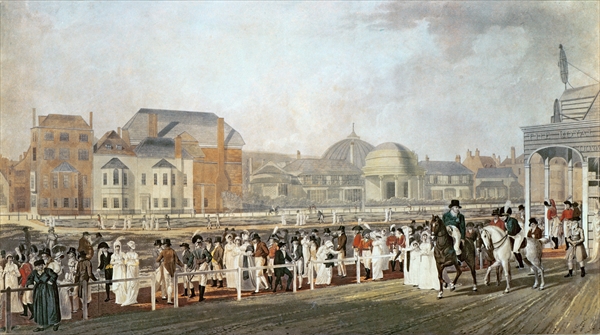
Brighton as it looked in Jane Austen's day. Charles Richards

It could be interpreted that Brighton is Jane’s symbol of profligacy and impulsive actions. It could be argued that this was so especially as the Prince Regent used Brighton in this way. The regiment Lydia has gone to be near is there to defend the coast against invasion. This is the time of the Napoleonic Wars when invasion is a threat and the total disruption of the world Lydia, the Bennet sisters and Jane herself knew.

Brighton Beach, John Constable, 1824

Brighton was also a new type of place. Jane begins to explore the development of seaside resorts in her unfinished novel Sanditon. It was the sort of place that people came from far afield and from various points of the compass, strangers, to be thrown together for short periods of time. It is interesting to see Jane begin to explore the loosening of moral codes and social rules within this sort of setting. Beau Nash invented his own code for these places at Bath and Tunbridge Wells. He had to invent a way for people to socialise.

Brighton Museum, The Pavilion Stable Block. Image @Tony Grant

Lydia Bennet has been shopping in the scene where Brighton is introduced in Pride and Prejudice and has obviously come back from her expedition with something not at all suitable.

“ Besides, it will not much signify what one wears this summer, after the — shire have left Meryton, and they are going in a fortnight.”

“Are they indeed?” cried Elizabeth, with the greatest satisfaction.

“They are going to be encamped near Brighton: and I do so want papa too take us all three for the summer! It would be such a delicious scheme, and I dare say would hardly cost anything at all. Mamma would like to go too of all things! Only think what a miserable summer else we shall have!”

“Yes,” thought Ellizabeth,”that would be a delightful scheme, indeed, and completely do for us at once. Good Heaven! Brighton, and whole campful of soldiers, to us, who have been overset already by one regiment of militia, and the monthly balls of Meryton.”

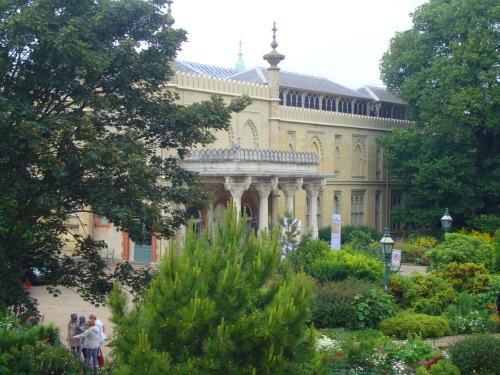
Brighton Pavilion close up. Image @Tony Grant

So it appears that Lydia wants to go to Brighton and Elizabeth does not. In each case, to be fair to Brighton, their reasoning comes from a consideration of the military presence there. Lydia wants to go because of the regiment she has become acquainted with near Meryton and Elizabeth doesn’t want to, because of the same reason. Their views are not formed here by Brighton itself. At this time Brighton was becoming a very popular seaside resort frequented by no less a profligate person as the Prince Regent himself.

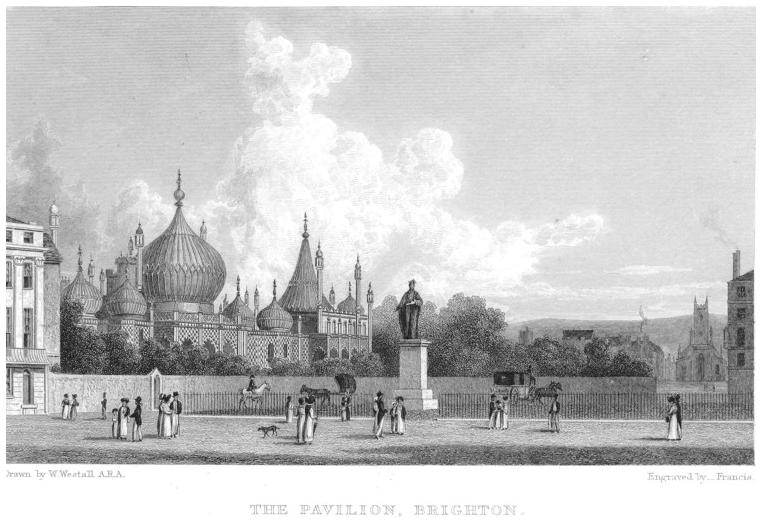
The Pavilion, Brighton by Westall

There he built a magnificent palace called The Brighton Pavilion. As for Jane Austen’s personal opinion we can only conjecture. She liked fun and dancing. Brighton had an abundance of these. She also enjoyed the seaside. The Austens visited Lyme and other seaside places in Devon and Cornwall and possibly South Wales.

The stable block from the Pavilion. Image @Tony Grant

Brighton Pavilion was begun in 1787. It was a farm house which the Prince Regent bought. There, he could have liaisons with Mrs Fitzherbert, his secret lover, away from the glare and attention of London. He got the architect Henry Holland, who had designed Carlton House , to develop it for him.

Brighton Beach today. Image @Tony Grant

Between 1815 and 1822, the designer John Nash redesigned and extended the Pavilion. It is the work of Nash which we see today.

On bank Holiday Monday, 30th May, Marilyn, myself, Emily and Abigail drove down to Brighton from Wimbledon. It was a lovely sunny day. Brighton sea front was a little breezy and the water was too cold to go in for a dip but it was one of those bright sparkling days fresh and invigorating
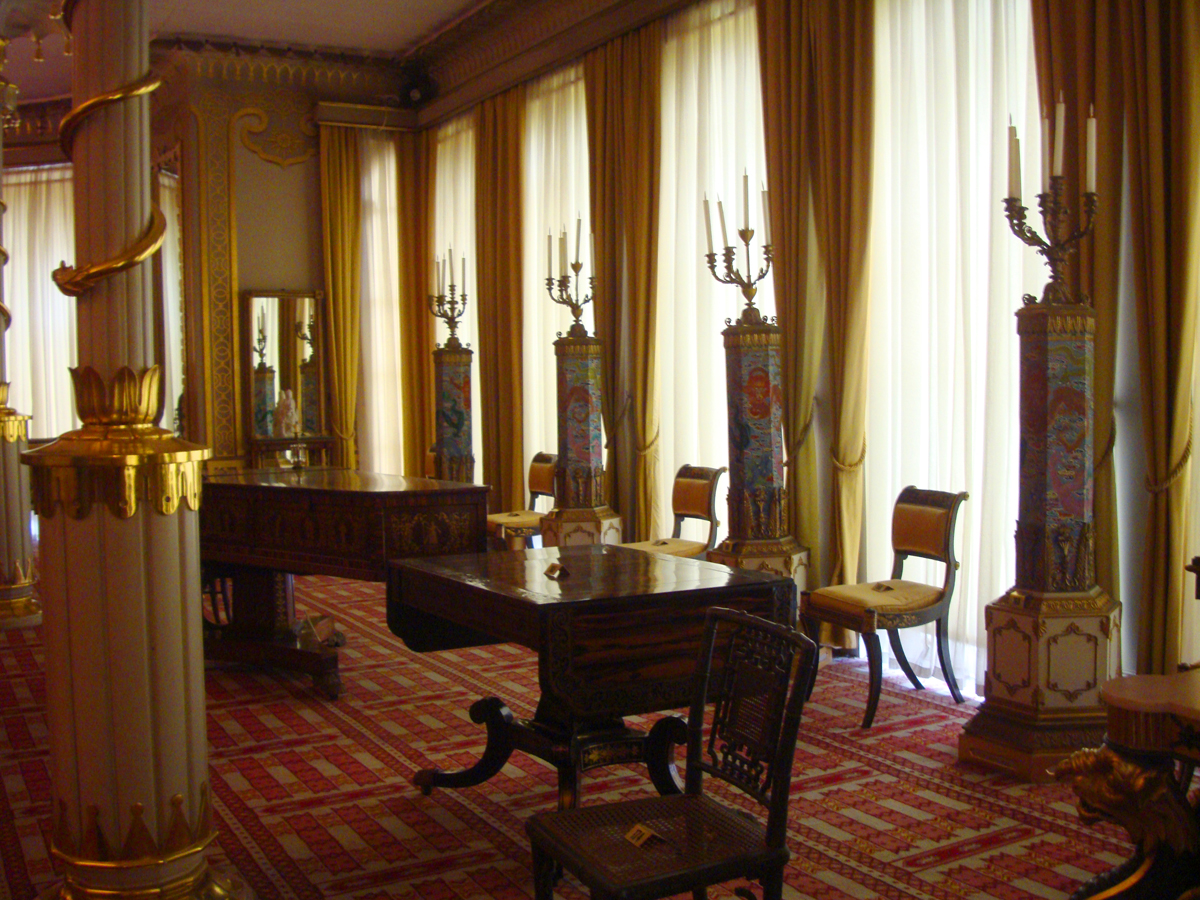
and to be in Brighton was glorious. We went into the Pavilion to explore the magnificent interiors.

Dining table at Royal Pavilion. Image @Stay in Sussex

Photography is not allowed inside the pavilion. They are very strict about this. We saw some professional photographers, who queued at the entrance in front of us, turned away amidst quite a hullaballoo. They said they had received permission to come and photograph the interior of the pavilion. The security people argued they had not been informed and had no paper work to confirm their assertions. When we got inside, I had put my DSLR safely away in its bag and zipped it up firmly.

The retiring room after dinner. Image @Tony Grant

However, I slipped a small SONY digital camera inside my sleeve just in case an opportunity to snap a furtive, clandestine picture arose. There are a lot of security cameras around the pavilion so I had to position myself out of view of the cameras to take the pictures I did take. Some are blurred because of my hurried attempts. A person near me was asked to put their camera away but I escaped notice.

Upstairs inside the Pavilion. Image @Tony Grant

I think the city council of Brighton and Hove, who own the pavilion, don’t want some plastic copy of the pavilion ending up as a casino in Las Vegas. Ha! Ha!

Car parking. Image @Tony Grant

Brighton today is a glorious mixture of the brash, the tacky, and the brilliant. It has a very special feel to it like no other place. You can feel a very creative energy about the city.

Church Street. Image @Tony Grant

There is some magnificent graffiti , great restaurants and pubs and a whole community of new artistic entrepreneurs starting businesses connected with fashion, music, art and theatre.

Cafe society. Image @Tony Grant

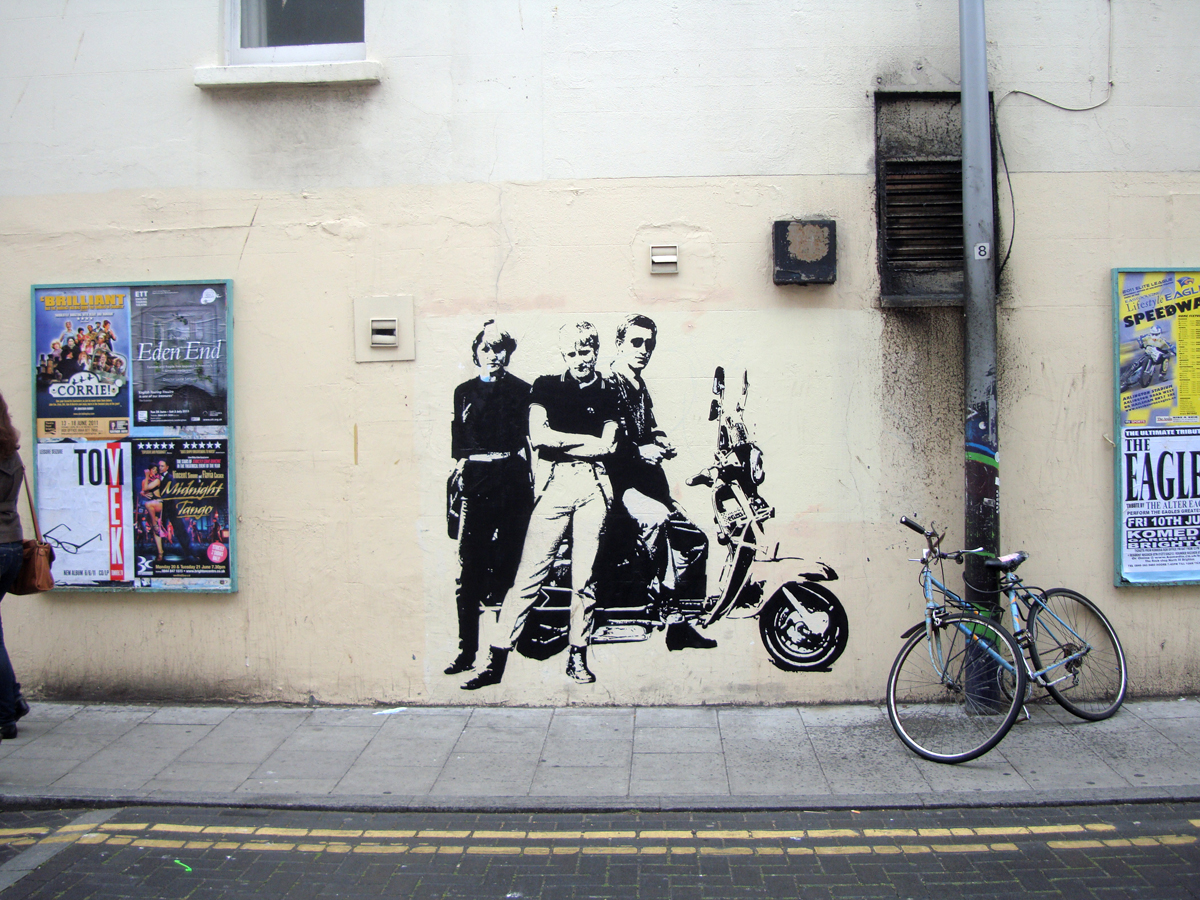
I found one piece of graffiti that made my heart beat that little bit faster. Compared to most graffiti in Brighton it looked understated but I think it must be an original Banksy. Nobody has ever interviewed Banksy and obviously that is not his real name. Nobody knows what he looks like. He is
a mystery to the public. Since the 1990’s, from his first wall cartoons in Bristol where he originates he has made social , religious and political comments through his art. His graffiti appears in the most unusual places. He has had books of his work published and art galleries show his work all over Europe.

Banksy's Mods Reduced. Image@Tony Grant

So I had found an iconic Banksy!!! Across the road and down an alleyway from a café we were having a cup of tea in. It shows some Mods. The Mods were a subculture of youth that originated in the early to mid sixties. They wore smart clothes with military style parkas and RAF, red, white
and blue roundels on their backs.

Mod on his bike

They rode motor scooters, Vespas and such like. They listened to Pete Townsend and the WHO. The Who were a MOD group and their lyrics reflect the MOD culture.

Smart MODS and their scooter

They were working class youth, factory workers, with their girlfriends, who challenged society in their own special way through clothes, music and lifestyle. Brighton and Margate were two coastal resorts they frequented, especially on Bank Holidays and weekends in the summer.

MODS and the police

They would gather in their thousands. In opposition, the Rockers, leather clad and motorbike riders who rode BSA and Triumph 650’s, another sub culture of the time who listened to Elvis music, would come and challenge them on the beaches of Brighton and Margate. There would be pitched battles on the beach at Brighton using, stones, chains, knives and deck chairs.

MODS deck chairs

Deck chairs were always readily at hand on the beach. People would end up in hospital. The WHO film, Quadrophenia, is about one such MOD group coming to Brighton. A pitched battle on the beach is portrayed in the film and of course the music is The Who. So you can imagine my excitement seeing a real Banksy recalling those times and the meaning it has for Brighton.

Brighton has other memories too. Our political parties have a conference every year to discuss any progress made, to air views and opinions and to announce new policies. The conferences are held at the major seaside resorts around the country, Blackpool, Brighton and Bournemouth. Each political party takes it in turn to congregate in each resort.

The Grand Hotel. Image @Tony Grant

You might remember on the 12th October 1984 at The Grand Hotel in Brighton, The Provisional IRA blew up the Conservative Party. Margaret Thatcher was working late in the hotel when the bomb went off. They wanted to assassinate Thatcher. They failed to kill any government minister
but Norman Tebbits wife was crippled for life. Some other officials were killed and thirty four were badly injured and rushed to hospital. The Grand Hotel has been rebuilt and extended and presents a magnificent structure right on the seafront.

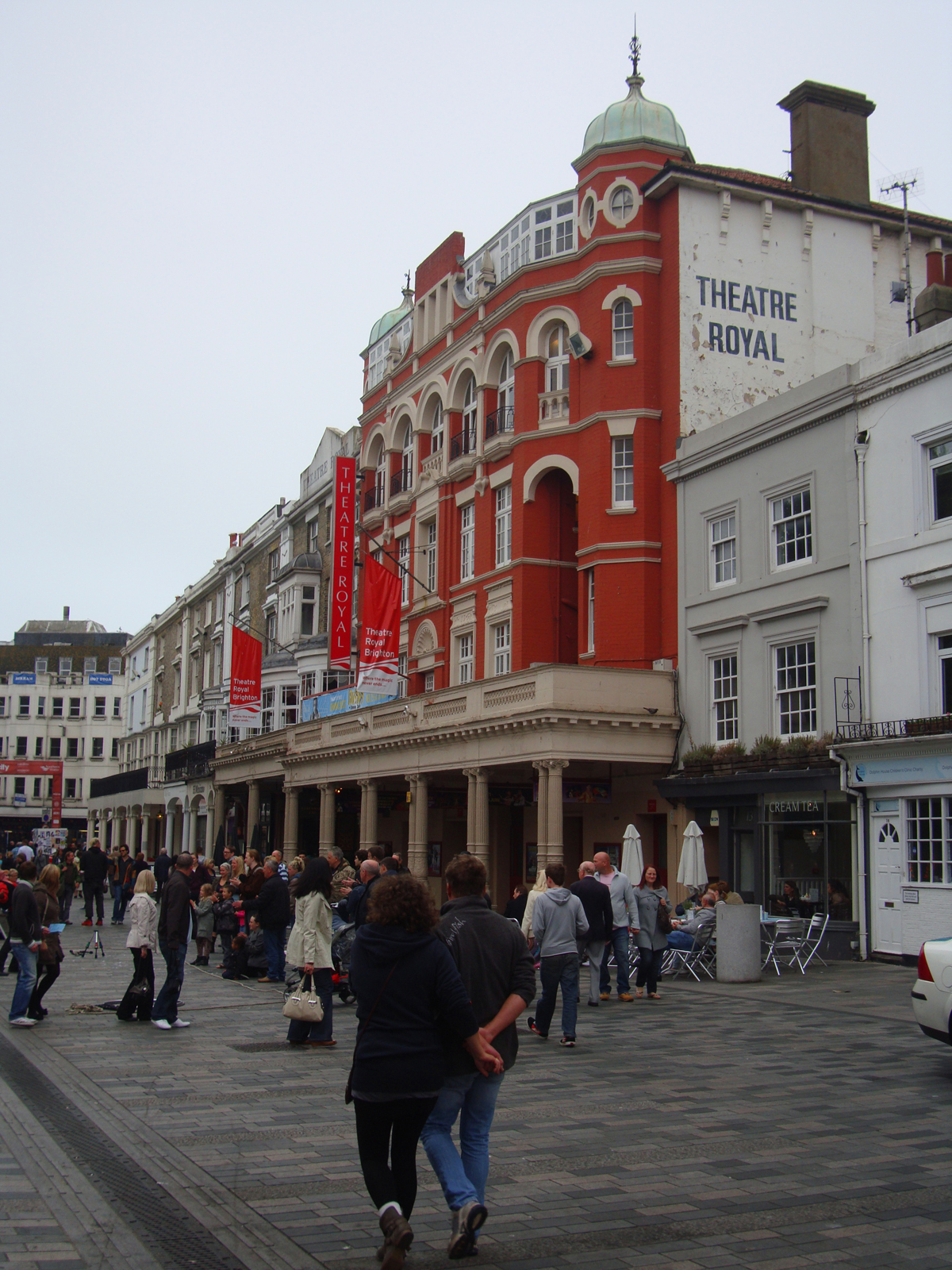
Theatre Royal. Image @Tony Grant

Brighton is famous as a film set. Apart from The Who’s Quadrophenia, some minor B comedy movies from the fifties were filmed there starring Norman Wisdom. Oh What A Lovely War, directed by Richard Attenborough used Brighton Pier extensively and just recently the dark and sinister,
Brighton Rock starring Helen Mirren, based on Graham Greens novel of the same name is set there.

Brighton. Image @Tony Grant

Some film clips:

Brighton shop, 1930z styles. Image @Tony Grant

Purple Heart. Image @Tony Grant

The Sussex. Image @Tony Grant

Read Full Post »

From the desk of Shelley DeWees…The Uprising.

If Elizabeth had not known better, she would have sworn he was deliberately throwing himself in her way, but she did know better. Whenever they were in company together, Darcy was usually cool and aloof, yet he chose to stare at her constantly, and with a level of intensity that had begun to make her uncomfortable. Sure such a handsome, wealthy, intelligent man, who was used to nothing but the very finest in society, could not deign to look upon a woman of her inferior station and circumstances in life unless it was to find fault; and, indeed, she knew he had found fault with her, almost from the very first moment of their acquaintance at the assembly in Meryton some weeks ago.”

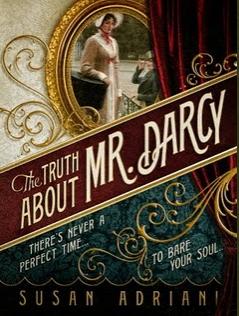
A departure from P&P while still calling itself a re-telling, The Truth About Mr. Darcy is a middle-of-the-road revisit to the beloved land of Jane’s Hertfordshire….it’s not stupendous, it’s not terrible. It starts slow. It ends slow. But the middle is a moderately interesting take on Darcy and Elizabeth’s path to matrimony, with all its major ups (money money everywhere) and smallish downs (minor disagreements followed by make-up sex).

The back of the book poses a question to Mr. Darcy. Should he tell the truth about his old nemesis George Wickham in order to protect the good citizens of Meryton from Wickham’s lies and secrets? Well, in a word, yes. He should. And does within the first two chapters, employing a moment of self-truth that would, had it occurred in the original P&P, caused all measure of heartache and sadness to be averted. What to do now? Especially since Elizabeth immediately follows suit in working out her out neurosis with prejudice right away, denying his first proposal but agreeing to a courtship that she reasons (admirably and in a drastic departure from Ms. Austen’s typical character attributes) will help her actually know this guy, this supposed husband/lover/friend/parent/guardian person she’s to spend her life attached to. Thus, the relationship begins, burgeoning passions ensue, then the wedding, and before you know it the book is over.

It’s a lovely story in all actuality, and Adriani tells it well. There seem to be a lot of modern flavors working here, including the aforementioned “let’s get to know that dude over there before agreeing to marriage” thing and the departure from the “let’s not have any sexual contact before the big day” thing. Having always suspected that many people in Regency England were guilty of violations of propriety in the name of love and/or passion, I found that rather refreshing and, frankly, long overdue in Austen spin offs. That Adriani should take a modern view of relationships and graft it onto Darcy and Elizabeth I found impressive and inspiring! Go you, Ms. Adriani! The courtship is honest and communicative, and paves the way for many heartfelt conversations and even more heartfelt turns in the sack (which were all super sexy but got to be little gratuitous by the end).

Spoiler Alert in this paragraph:

The rest of the experience in The Truth About Mr. Darcy was good-ish, not great, not horrific. There was, however, one moment where my hand went to my forehead, accompanied by an outspoken “Oh come ON!” and an exasperated sigh when Mr. Wickham’s nature was explored. Not only is he a debt-ridden scoundrel mired in controversy, he’s a near-rapist, and one sly wink away from a serial killer. Really? I mean, he’s a snotty spoiled dandy, but a rapist? It seemed like the dichotomy of good vs. bad was just a wee bit overused, both with Wickham and with Mr. Collins, whose refused proposal sparks a deluge of conceit and even revenge. In The Truth About Mr. Darcy, it seems as though you’re either a shining paradigm of virtue or the scum on the bottom rung of the ladder of humanity. A little bit of creative character development would’ve been a better choice.

Still, Susan Adriani’s debut novel is not entirely without success. It’s well written and fairly engaging, sexy, and compelling in a conventional sort of way. Those of you gentle readers whose hearts go aflutter at the notion of revisiting P&P won’t be disappointed. If you’re on the fence about these sorts of things, you might be better off skipping this one.

Be aware that this book is for mature readers only.

Read Full Post »

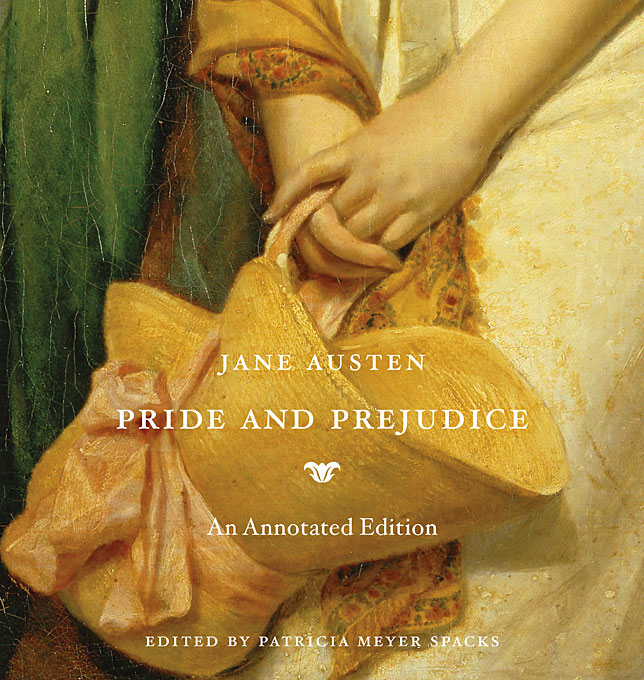
Coming in October is the new annotated edition of Pride and Prejudice by Patricia Myer Spacks. Here’s a peek I took for you of this beautifully illustrated and informative book.

Click here to view this blog listed at Harvard University Press. I’m chuffed!

Read Full Post »

Jane Austen fans tend to read her books repeatedly throughout their lives.  In an article in the Guardian UK, Charlotte Higgins describes how her identity with a Jane Austen character changes with age. Here are some of her thoughts:

If you read Jane Austen more or less annually, as I have done since my late teens, you end up marking yourself against the characters. Oh reader, when I first read Pride and Prejudice I was Lydia’s age. I am about to become older than the delightful Mrs Croft in Persuasion. I still hang on to Anne Elliot, though. A tender 27 she may be, but in modern money I reckon you can give her another 10 years.

This is so true. I am starting to identify more with Mrs. Croft and Lady Russell than Anne Elliot. Charlotte Higgins goes on to say:

Persuasion is a very middle-aged novel, with its melancholic flavour and its acknowledgement that yes, you can make a grotesque mess of your life (the romance part I find much less satisfactory than the bleakly comic first three quarters of the book, essentially before one reaches Bath). It is true, however, that you can tell you are middle-aged when you start to empathise with P&P’s Mrs Bennet: with what Sir Walter Elliot would call “the rapid increase of the crow’s foot” comes a sense of sympathy with this character, written off as absurd in one’s heedless youth. At least she is trying to save her daughters from a future of poverty. And she’s certainly not getting any help from that husband of hers.

So true again. Only in recent years have I become impatient with Mr. Bennet and more sympathetic with his silly wife. I have also become more observant of Mrs. Jennings in Sense and Sensibility, of how hospitable she is, how she tries to become a matchmaker to all the unmarried ladies, and how her house is open to guest seemingly all the time. Yes, she is a silly and irritating woman, traits I could not stand when I was young (thus I could not appreciate her other than as a comic relief character), but now I rather like her positive qualities, as I do Mrs. Palmer’s. Elinor Dashwood is aware of Mrs. Palmer’s good nature and would tolerate her better if she weren’t such an unflaggingly cheerful airhead all the time.

Mrs. Jennings and Mrs. Palmer, Sense and Sensibility

As I get older I see that Lady Catherine de Bourgh is all bluster, and that her authority over Elizabeth Bennet is precisely zero. Young Lizzie is smart enough to know that, but as a 19 year-old reader, I was in awe of Lizzie’s stubborn attitude towards that lady when she stormed to Longbourn to demand Lizzie promise never to marry Mr. Darcy.

Mr. Bennet reading. Image from Jim and Ellen Moody

There are other ways that my attitude towards Jane Austen’s novels is changing. I notice how few happy marriages are portrayed. Right off the bat I can think of only the Crofts, the Gardiners, the John Knightleys, and the Musgroves. These days, I am more on the side of a pragmatic Charlotte Lucas, who has learned long ago not to look at the world through rose colored glasses, than Elizabeth, who waits for love. To be sure, she snagged her Mr. Darcy, but would Charlotte have had such an opportunity? I think not. I also see that Fanny Price’s strength of character and resolve in the face of so much bullying is a trait to admire; and that Mr. Bennet’s extensive library and unwillingness to compromise a cushy lifestyle were acquired at the expense of his family’s future financial security.

As the years roll by, my tastes and preferences for Jane’s novels are changing. Persuasion and Pride and Prejudice are running neck and neck in my favorite category. P&P used to have the field all to itself. While I loathed Mansfield Park the first time I read it, I don’t mind it so much now, and I find Emma less and less interesting and much too long . Perhaps I should lay the book aside for a few years.

Are your tastes and preferences changing towards Jane Austen’s books and characters as time goes on? How? Curious minds want to know.

Read Full Post »

« Newer Posts - Older Posts »