Feeds:
Posts
Comments

Archive for the ‘Regency Life’ Category

Gentle readers, in celebration of Pride and Prejudice’s 200 year anniversary, Jane Austen’s World will feature a regular article about Jane Austen’s most popular novel throughout 2013. We can count on frequent contributor Tony Grant from London Calling to provide us with a unique perspective. Enjoy!

All good films have a car chase. Some originate from well written, exciting, nail-biting, on the edge of your seats, breathless descriptions in a novel.
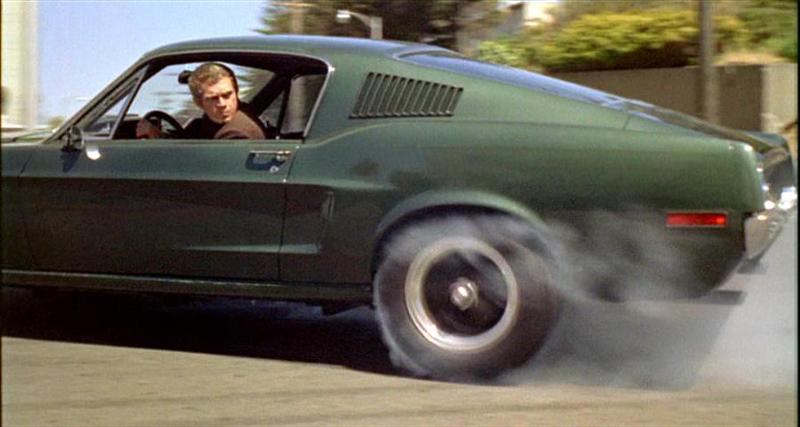
Steve McQueen in mustang

Steve McQueen in mustang

Let it not be said Pride and Prejudice doesn’t have it’s nail biter, it’s moment of burning rubber and screeching tyres that is right up there with Steve McQueen ripping up the streets of San Francisco in Bullitt, hurling his Ford Mustang over the lips of hills and down daredevil slopes with a street fighters aggression or Michael Caine escaping the Italian police with wheels spitting gravel and door smashing bravado in his supercharged mini cooper GT along the Corniche, “not many people know that,” or John Thaw in The Sweeney, as gritty streetwise cop Jack Regan thundering through the Isle of Dogs in his 3 litre V6 Ford Consul GT. Mr Bennett has his contenders, but not, may I dare say, his equals, oh no.

Elizabeth Bennett, who is visiting Derbyshire with her aunt and uncle, the Gardeners has received a letter from her sister Jane

Since writing the above, dearest Lizzy, something has occurred of a most unexpected and serious nature; but I am afraid of alarming you — be assured that we are all well. What I have to say relates to poor Lydia. An express came at twelve last night, just as we were all gone to bed, from Colonel Forster, to inform us that she was gone off to Scotland with one of his officers; to own the truth, with Wickham!”

Image of eloping couple. 1815

Image of eloping couple. 1815

This piece of information about Lydia sets in motion, literally, a series of coach journeys and desperate searchings that rivals anything Steve McQueen or Michael Caine partook of.

Michael Caine: Nuts to your watches! You just be at the Piazza at a quarter to..
Steve McQueen: Look, you work your side of the street, and I’ll work mine.
Det. Insp. Jack Regan: Remember, no guns unless they use ’em.

Mr Gardner and Mr Bennett walking the streets of London, searching for Wickham and Lydia could well have used lines like those. What needs to be said, what needs to be done, never changes whatever century, don’t you think?

“…and all three being actuated by one spirit, every thing relating to their journey was speedily settled. They were to be off as soon as possible.”
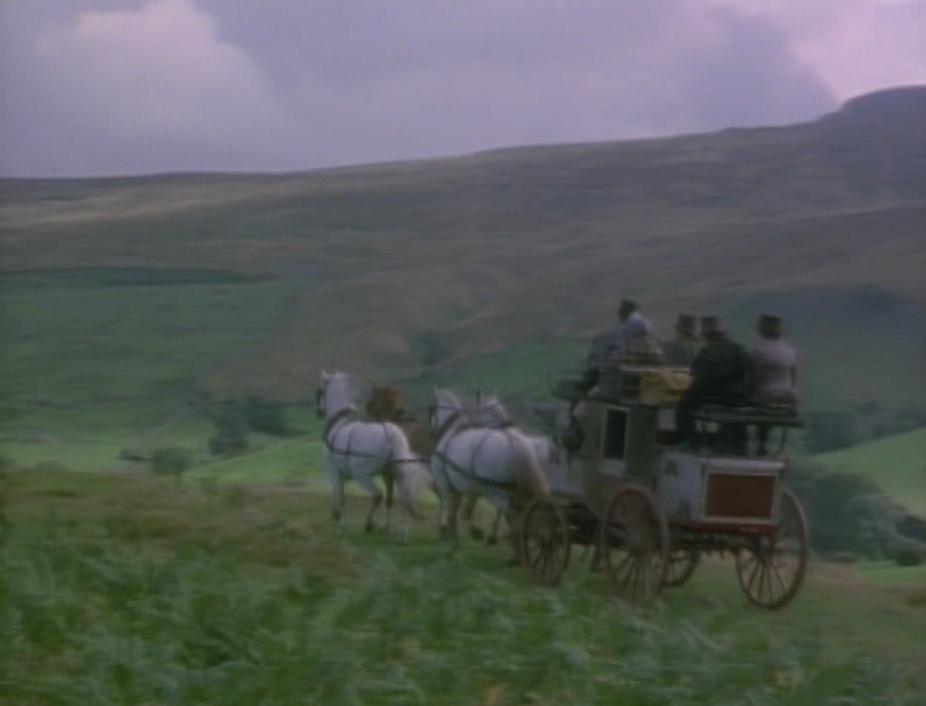
Coach travel

Coach travel

And so Mr and Mrs Gardner and Lizzie Bennett sped south to Longbourn at the hair-raising speed of 10 miles per hour or more, on the occasion of increased velocity being achieved when long flat straight roads presented themselves; jolted and tossed about, no doubt, like three potatoes in a sack.

But Lydia and Wickham were as devious and cunning as any mafia on the streets of Naples, or ruthless bank robbers from the East End of London or murderous killers off the dangerous streets of San Francisco. Gretna Green was, dare I say, a red herring. They spread rumours, gasp, horror; they planned and they plotted, they predicted and they saw clearly with their crazed, devious minds thinking out brilliantly, their next move. They lived the heady adrenalin pumped life of criminals on the run.

Mr Bennett “… did trace them easily to Clapham, but no farther; for on entering that place they removed into a Hackney coach and dismissed the chaise that brought them from Epsom.”

Oh gosh and golly, what subterfuge, what dastardly cunning. They actually changed from a chaise to a hackney coach.The evil mind games of those criminals. But they were hunted, yes, hunted, by Mr Bennett, he, a wily, ruthless backwoodsman who once he smelled the scent of his prey cannot, will not, be put off his quest. Mrs Bennett was right to be desperate in her concerns,

And now here’s Mr Bennett gone away and I know he will fight Wickham, wherever he meets him, and then he will be killed, and what is to become of us all?”.

Popeye Doyle himself could not compete with Mr Bennett surely in his ruthless endeavour

 The son of a bitch is here. I saw him. I’m gonna get him.”

But our Mr Bennett in his utter, focused, desperate determination can but say,

“Who should suffer but myself? It has been my own doing, and I ought to feel it.”

Good gracious, the man is a titan of hot-blooded aggression. Surely nothing can prevail? Wickham has met his match.
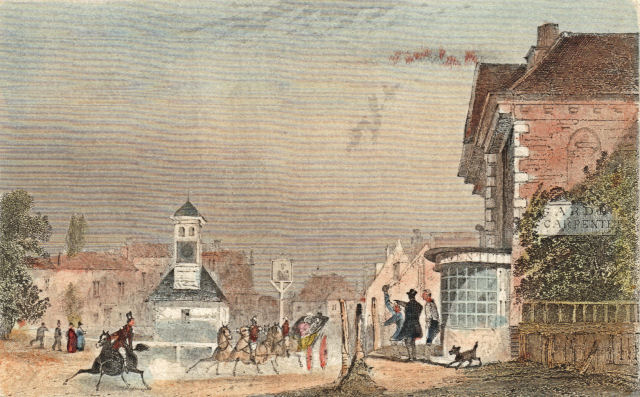
epsom

Epsom Watch House & Clock c1840 from Dugdale’s England & Wales
Image courtesy of Surrey Libraries and is held in the
Epsom & Ewell Local And Family History Centre

Elizabeth was desperate to know what lengths, what depths her father would go to retrieve his wayward daughter, her very own sister.

He meant, I believe,” replied Jane, “to go to Epsom, the place where they last changed horses, see the postilions, and try if anything could be made out from them. His principal object must be to discover the number of the hackney coach which took them from Clapham. “

Of course, a touch of sheer genius; find out the number of the Hackney Coach. That would do it. He would be sure to find them then.
And after all this searching, this animal desperation, this wolf like howl of anguish ripped from the primeval instinctive depths of Mr Bennett’s heart, what then? What could be the consequences? So after many letters flying backwards and forwards, if anything, P&P appears to hinge very often on the writing, sending and receiving of letters, Mr Gardner has appeared to pay Wickhams debts,, Mr Bennet has only to provide a paltry £100 a year, he can’t believ his luck and can’t quite work out the finances as if he ever could work out his finances. (Aside: we all know who really has settled the finances, don’t we?? Ha! Ha! It’s getting more like a pantomime all the time this. Mrs Bennnet as Widow Twanky and Mr Bennet as Baron Hardup.)

He had never before supposed that, could Wickham be prevailed on to marry his daughter, it would be done with so little inconvenience to himself as by the present arrangement. He would scarcely be ten pounds a year the loser, by the hundred that was to be paid them; for, what with her board and pocket allowance, and the continual presents in money which passed to her through her mother’s hands, Lydia’s expenses had been very little within that sum.

That it would be done with such trifling exertion on his side, too, was another very welcome surprise; for his chief wish at present was to have as little trouble in the business as possible. When the first transports of rage which had produced his activity in seeking her were over, he naturally returned to all his former indolence.”
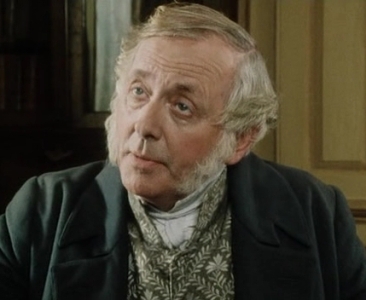
Mr. Bennet

Mr. Bennet

So Wickham was to marry Lydia and Mrs Bennett was happy and all was well with Mr Bennett and he could return to his former state of,” indolence.” A sort of Popeye Doyle with carpet slippers smoking a pipe and reading his newspaper seated at his fireside; a Michael Caine reminiscing about his past, cold eyed and tough emotionless roles in Get Carter relaxing now in his easy chair or Steve McQueen sitting back on his ranch, his rocking chair gently calming his fevered brain and letting his motorbikes go rusty, crying into his beer, or, even a Jack Regan from The Sweeney who could at last ,” Shut it!” himself. Ah, all was well in the end. Colonel Forster could return too to Brighton, to the lesser dangers of defending our shores and leading his regiment against Napoleon knocking at the very shingle on Brighton Beach. Mr and Mrs Gardner could return to the hustle and bustle and shops and markets of Gracechurch Street in the city and Lizzie and Jane, yes, well, we know what becomes of Lizzie and Jane,

Happy for all her maternal feelings was the day on which Mrs Bennet got rid of her two most deserving daughters. With what delighted pride she afterwards visited Mrs Bingley and talked of Mrs Darcy may be guessed.”

Lydia in connubial bliss and Wickham not so

Lydia in connubial bliss and Wickham apparently not so

So, in a novel dedicated to getting daughters married, a lot of horse and carriage mileage is accrued and many letters are written. We only hear of weddings, but we certainly know about how characters felt. Will, Lady Catherine ever get over being, “exceedingly angry” or will she just explode with high blood pressure?
Read Full Post »

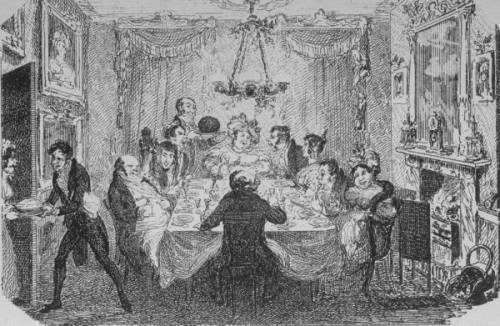
The week of Christmas and the new year has been traditionally a time for joy and celebration. In Jane Austen’s day, the decorations and celebrations weren’t quite so over-the-top commercial as they are today. Mistletoe, holly, and evergreen boughs decorated the halls, while roaring fires warmed hearth and home. Fine foods were prepared for friends and family at holiday gatherings, and gift giving was considered optional and not mandatory.

Cruikshank image. Holiday dinner party. Image @LIFE magazine.

Cruikshank image. Holiday dinner party. Image @LIFE magazine.

In her letters, Jane mentioned making wine. She was also  known to imbibe a glass or two, as did many Regency ladies. One can imagine that she heartily enjoyed a glass of homemade wine during long winter evenings. A Regency household in the country was akin to a cottage factory, processing freshly picked fruits and vegetables in summer and fall for consumption during the winter months.

Elderberry bushes, native to both Europe (Sambucus nigra)  and North America (Sambucus canadensis), ripened in August and September. The American elderberry can be found growing in old fields and meadows. The European elderberry blooms earlier than its American counterpart, with some sporting pink flowers. By Christmas, the first flasks of elderberry wine could be served at the table.  Some elder wines (depending on their strength) were ripened until spring. (Edible Landscaping)

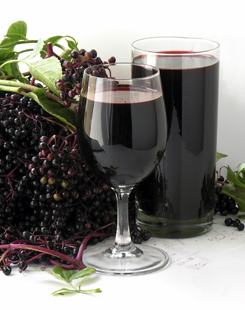
Elderberry wine has a rich red color.

Elderberry wine has a rich red color.

Mrs. Maria Eliza Ketelby Rundell’s elder wine recipe, written over two hundred years ago, reflects how housewives made the wine back then, using ingredients and kitchen supplies that were readily available. In 1806, John Murray (who published Emma, a second edition of Mansfield Park, Persuasion and Northanger Abbey)  published  A New System of Domestic Cookery: Founded up Principles of Economy; and Adapted to the Use of Private Families. Rundell’s cookbook became wildly popular in the first half of the 19th century in both England and America. One imagines that the Austen women were well aware of its existence.

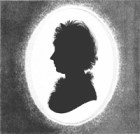
Mrs. Rundell

Mrs. Rundell

According to Mrs. Rundell:

English wines would be found particularly useful, now foreign are so high priced, and though sugar is dear, they may be made at a quarter of the expense. If carefully made, and kept three or four year,s a proportionable strength being given, they would answer the purpose of foreign wines for health, and cause a very considerable reduction in the expenditure.”

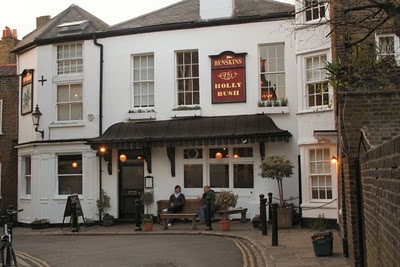
Holly Bush Inn, where Mrs. Rundell, it is speculated, wrote her recipes.

Holly Bush Inn, where Mrs. Rundell, it is speculated, wrote her recipes. Image @Persephone books (Link below)

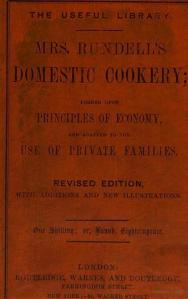
Rundell’s book of recipes went through dozens of editions in Britain and the United States, where it was published in 1807. The following recipe for Elder Wine comes from the Google eBook 1857 edition:

Rundell Domestic Cookery

Elder Wine.

To every quart of berries put two quarts of water, boil half an hour, run the liquor, and break the fruit through a hair sieve; then to every quart of juice put three quarters of a pound of Lisbon sugar, coarse but not the very coarsest. Boil the whole a quarter of an hour with some Jamaica peppers, gingers, and a few cloves. Pour it into a tub, and when of a proper warmth, into the barrel, with toast and yeast to work, which there is more difficulty to make it do than most other liquors. When it ceases to hiss, put a quart of brandy to eight gallons, and stop up. Bottle in the spring or at Christmas. The liquor must be in a warm place to make it work.

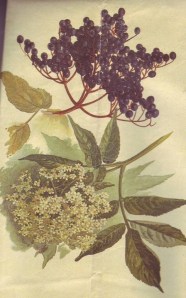
Elder berries and elder flowers. Public domain image

Elder berries and elder flowers. Public domain image

While Rundell’s recipe seems simple, some terms require explanation. In those days, sugar was classified according to place of origin, such as Brazil, or entrepot, a place of entry without excise duties, such as Lisbon. (Richard Bradley, 1736) Prospect book glossary.

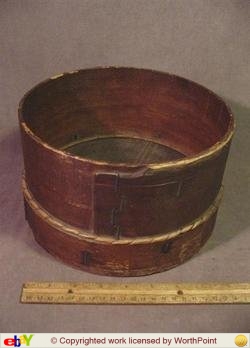
19th c. hair sieve

19th c. hair sieve

Image of Hair Sieve at Worth Point

The hair sieve mentioned by Rundell was most likely made with coarse horse hair, as shown in the above image. The mesh is quite fine. Sugar was an expensive commodity (Jane Austen was in charge of the tea and sugar stores in Chawton cottage, keeping the keys, no doubt, to the locked containers), but as previously explained, making your own wine provided a cost saving measure. The High Price of Sugar.

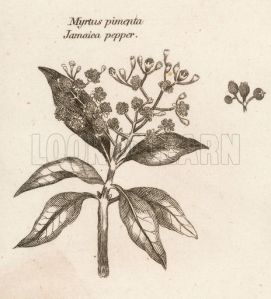
Jamaica peppers are generally known today as allspice. The peppers are larger than peppercorns and were gathered from Jamaica pepper trees. The “toast and yeast” mentioned in the recipe most likely meant bread yeast. Elder wine ferments particularly well in oak casks.

Jamaica pepper

Jamaica pepper

One can only guess what Mrs. Rundell’s elder wine, which was fortified with brandy, tasted like – strong, sweet, alcoholic, and fruity. The clusters of berries, dark purple when ripe, had many uses:

Elderberry bushes … [have] a long history of use for food, drink and medicinal purposes. Elderberry pie, jam and jelly, tarts, flavored drinks, and of course wine are a few of its better known uses.

Elderberry wine has a unique flavor that changes considerably over time. When too few berries are used, the wine is thin and unlikely to improve. When too many berries are used, the tannins and other flavor constituents may overpower the palate and require dilution, blending or prolonged aging to mellow. Between these extremes are wines that often offer exceptional enjoyment. – Winemaker Magazine

It seems that the berries had to be processed as quickly as possible after picking. There were times, I imagine, that the Austen women were busy working alongside their servants in the kitchen, processing foods, canning and pickling, and making wines and ales from recently harvested produce.

Another “job” that the Regency housewife assumed was that of nurse. Recipes for cough lozenges and simple medicinals made from herbs and plants were passed down through the generations. Elder berries were known to have many medicinal benefits:

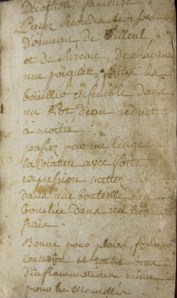
Recipe for a "Decoction fameuse," which contains elderberry (among other ingredients). Image @MCRS Rare Book Blog

Recipe for a “Decoction fameuse,” which contains elderberry (among other ingredients). Image @MCRS Rare Book Blog

Recent research shows that elder builds up the immune system and directly inhibits the influenza virus. Elder contains an enzyme that smoothes the spikes on the outside of the virus, which the virus uses to pierce through cell walls. Elderberries have also been recommended in cases of bronchitis, sore throat, coughs, asthma, colds and constipation.” – The Health Benefits of Elderberry Wine

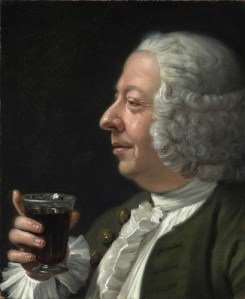
18th century red wine drinker, Franz Laktanz Graf Von Firmian

18th century red wine drinker taking his “medicine”, Franz Laktanz Graf Von Firmian

What better way to soothe one’s respiratory condition than with a nice glass of elder wine!

Ma(i)sonry Maisonry - Vintage 18th Century Wine Bottles - 1stdibs

This article from KansasCity.com, “Elderberry wine as a medicinal: A recent USDA reaction,” shows how ridiculous current U.S. health laws can be on the use of medication:

Federal authorities have seized bottles and drums of elderberry juice concentrate from a Kansas winery, contending that the company’s claims of its benefits for treating various diseases make the product a drug.

…”Products with unapproved disease claims are dangerous because they may cause consumers to delay or avoid legitimate treatments, Dara Corrigan, the FDA’s associate commissioner for regulatory affairs, said in a news release. “The FDA is committed to protecting consumers from unapproved products on the market.”

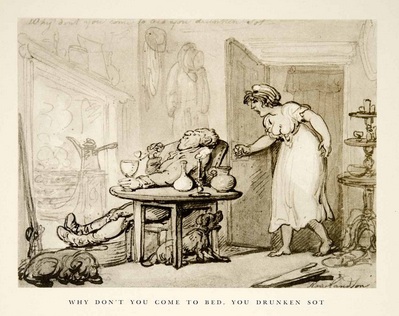
Aquatint, Rowlandson. Image @Amazon

Aquatone, Thomas Rowlandson. Image @Amazon

Wine was reserved not only for medicinal purposes or family gatherings, but for daily consumption. Bumpers of wine, or a tankard or cup filled to the brim, were common quantities.  The Georgians were notorious drinkers, for alcohol was safer than unboiled water and contaminated city or town wells.

London society of the Georgian period was renowned for its heavy consumption of alcohol. Poor people tended to drink beer or gin, but a wider range of alcoholic drinks was available to the rich. These included wines such as French claret; fortified wines such as sherry, port or Madeira; and spirits such as brandy and rum. It is noted in the text that Mr Stryver and Sydney Carton have wine, brandy, rum, sugar and lemons with which to concoct their punch.

During the Georgian period, beer might be drunk from pewter tankards, and other drinks, from glass goblets or tumblers.- Bookdrum

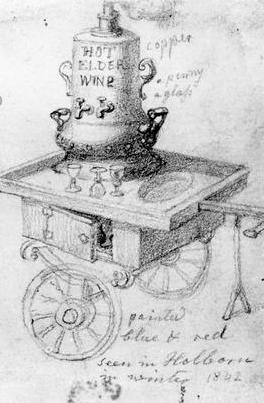
Detail, Elder Win Stand in Holborne, by George Scharff, 1842

Detail, Elder Wine Stand in Holborne in Winter, by George Scharff, 1842

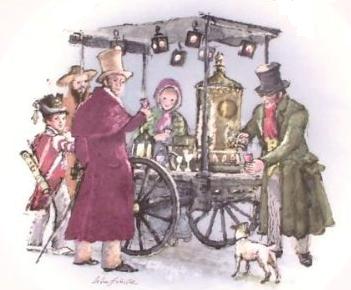
In winter, elder wine heated in coppers was sold for a penny per wine glass from portable wood stands that contained glassware. (See image above.) This tradition lasted at least through the Victorian era, as attested by the modern Wedgewood scene below.

More About the Topic

Wedgewood. Victorian scene of an elder wine stand

Wedgewood. Victorian scene of an elder wine stand

Read Full Post »

Inquiring readers:  CLD Stationery has been creating personalised stationery for over thirty years. Its staff has learned a great deal about the traditions and etiquette of stationery and letter writing through the ages, especially the history of personal correspondence, from beautiful writing instruments and the development of the quality of paper to the evolution of quality inks.  At my request, this post was written especially for Jane Austen’s World. Enjoy!

How many of us take pens and paper for granted? Correspondence is such an integral part of our daily lives and it has played such an important role in the history of our civilisation.

Jane Austen as we know well, was a prolific writer and not just of novels, she enjoyed writing many personal letters that are thankfully, still in existence today for us to enjoy.  In particular, there are many splendid examples of letters that Jane sent to her sister Cassandra that have been collected into this fascinating book.

“You deserve a longer letter than this; but it is my unhappy fate seldom to treat people so well as they deserve” From a letter to her sister Cassandra, 1798

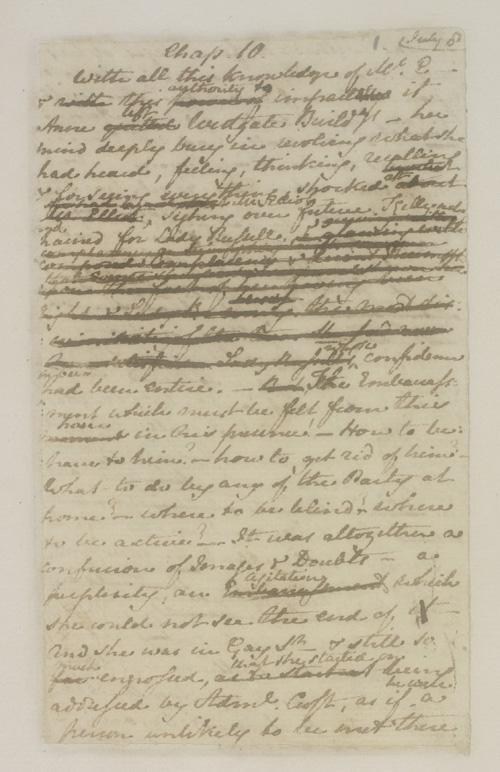
Her letters are delightfully witty and they are also beautifully written – despite her misgivings. When you think of how easy it is for us to write and edit our work today on a computer, it adds an extra dimension to her wonderful writing skills.  The image below shows a real excerpt in her own handwriting from the novel Persuasion.

http://www.janeausten.ac.uk/manuscripts/blpers/1.html

During Jane Austen’s life, metal pen nibs had already been invented but were still rare and much more expensive than using a quill pen.  The majority of people were still using feather quills for all their personal correspondence. Jane Austen at this time would be using a quill made from a large goose feather or perhaps even a crow’s feather for smaller text.  The most desirable and hiqh quality quills were made from swans or peacocks feathers.

The feather quill has the ability to hold a little ink, allowing for less dipping time than using a reed or fine brush, this accounts for its huge popularity.  Interestingly, the feather quill is still used today as the preferred choice for calligraphy experts, due to it’s flexibility. The quill is cut with a knife to vary the thickness of writing, creating the perfect bespoke nib for the writer.

“I must get a softer pen. This is harder. I am in agonies. … I am going to write nothing but short sentences. There shall be two full stops in every line.” From a letter to her sister Cassandra, 1813

The quill cannot just be taken from the goose and cut, it needs to be hardened and there is some skill needed in creating the perfect writing tool – as you can read from Jane’s frustrations with her own quill!

If, like Jane Austen, you are a prolific letter writer and you favour the personal touch of a handwritten letter, then do visit our CLD Stationery website where we have a great selection of personalised stationery, from invitations to correspondence cards.

Read Full Post »

Inquiring readers: Susannah Fullerton and I met in Brooklyn at the annual JASNA meeting, where she was promoting two books and gave two workshop presentations.  Here, then, is our share of our ongoing conversation:

Susannah, it was such a pleasure meeting you at the AGM in Brooklyn. I felt as if we had known each other for years, so instant was our connection. As we talked, I came to realize that you lecture, travel, act as guide, write, and have two books coming out in a HALF year, AND you are a wife, mother, and president of JASA (Jane Austen Society of Australia). At the conference you had boundless energy. How and where do you find the time to do it all and look so fresh and enthusiastic? I am in awe.

There’s a lovely quote in Emma when Miss Bates says, ‘It is such a happiness when good people get together – and they always do.” Vic, that’s how I felt when I met you in Brooklyn – an instant recognition that we had masses in common and would get on really well. I do have an incredibly busy life and it has been especially busy these last 2 years with 2 books to write. However, I do find it hard to say ‘no’ to lovely literary projects. I have been President of JASA for 17 years (I’m wondering if that should put me in the Guinness Book of Records?) and I have a fabulous committee, so running the society is a joy. Of course we are all very excited about next year’s big P & P anniversary. My literary tours are great fun. When you yourself get an incredible thrill from walking down the Gravel Walk in the footsteps of Anne Elliot and Capt. Wentworth, or seeing the topaz crosses at Chawton, or actually standing in the room where Jane Austen died (which I did on 2 of my literary tours) then it’s fantastic to be able to take other people on tours where they can share that same excitement. My tours are with ‘Australians Studying Abroad’, and I don’t only take tours to England but to France, Scotland and the USA as well. It’s all such fun that somehow I find the energy to do it all.

In reference to your interview on Jane Austen in Vermont, you mentioned that the time for a book about dance in Jane Austen’s time was right. I agree with you. What were some of the facts you uncovered that surprised you and that you were anxious to share with the world?

What really surprised me was that no-one had written a book on Jane Austen and dancing before now! I think what you find when you focus on one particular aspect of Jane Austen’s fiction is an increased awareness of how utterly brilliant she was. When I wrote Jane Austen and Crime I found that the tiniest bit of information about something like poaching was used by Austen in a way that had so many wider implications if you knew about the laws and perceptions of poaching at that time. In Mansfield Park Mr Rushworth boasts about his “zeal after poachers”, yet completely fails to stop Henry Crawford from ‘poaching’ his wife – the ‘poaching’ undercurrents in the novel are so brilliantly done. I found the same with dancing – when you learned exactly what behaviour was expected in a ballroom, you became so much more aware of the subtler nuances of dialogue and action. For example, it was not proper etiquette to compliment your partner on their dress or looks, because it was taken for granted that everyone would be nicely dressed at a ball. You shouldn’t praise someone for doing what it was assumed they would do anyway – ie, dress nicely. This gives extra point to Mrs Elton’s behaviour at the Crown Inn ball – of course, no-one compliments her on her dress because they are behaving properly, but Mrs Elton is desperate for such attention so she takes on the task herself: “How do you like my gown? How do you like my trimming? How has Wright done my hair?” etc. The more you delve into any aspect of Austen’s world, the more you find and you come away with an even greater awe of her incredible achievement!

Was there any information in A Dance With Jane Austen that you wished you had expanded upon but simply could not due to lack of space and time?

It could have been nice to have included more particular information about steps for individual dances, but unless you are a Regency dancer yourself, that information might be rather dull on the page – more fun to ‘do’ than to read about, I think.

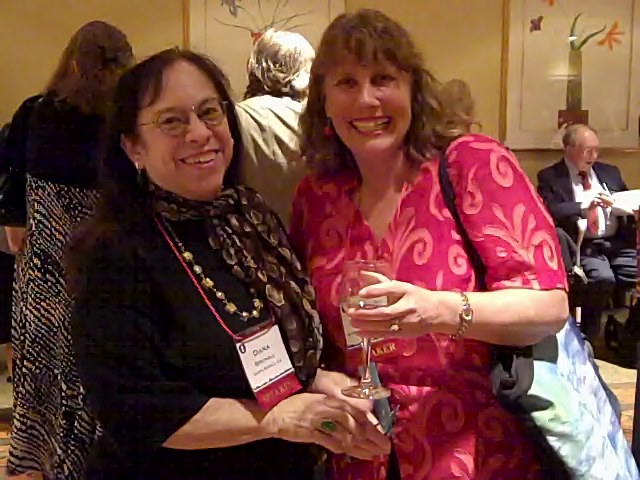
Authors Diana Birchall (l) and Susannah Fullerton (r) at the Brooklyn AGM

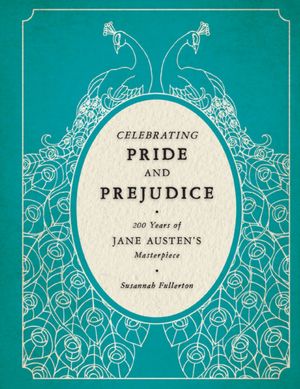
When we were at the AGM, you were promoting your next book as well, Celebrating Pride and Prejudice: 200 Years of Jane Austen’s Masterpiece. Other authors must be as curious as I am: How did you find the time to write TWO books with such close deadlines? Did you lock yourself in a closet and have food passed to you through a grate?

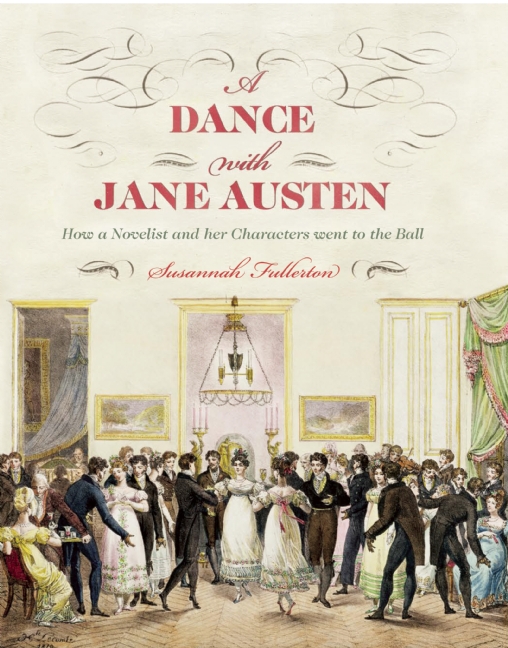
Just last week I received the most wonderful parcel in the post – two copies of Happily Ever After: Celebrating Jane Austen’s Pride and Prejudice and two copies of Celebrating Jane Austen’s Pride and Prejudice: 200 Years of Jane Austen’s Masterpiece. These are the UK and American editions of my new book. They are both gorgeous and I was so thrilled I danced round the kitchen with the copies in my arms! The book is dedicated to my daughter “my dearest loveliest Elinor Elizabeth” and she is really thrilled about that. Yes, it was quite a task to finish 2 books so close together. I was just finishing A Dance with Jane Austen when Frances Lincoln suddenly took up my suggestion that a book about 200 years of P & P would be a good idea. I must admit I lay awake most of that night, wondering if I could manage to do it given the tight time frame. But how could I resist? Spending 6 months with Elizabeth and Darcy was pure bliss and no book has given me so much pleasure to write. There were days when I was so involved I forgot to think about cooking dinner. Part of the joy was learning as I went along – discovering new depths and brilliancies in the novel. Just as an example – when I was writing my chapter on Elizabeth Bennet, I stopped to think about how she is first introduced to the reader. Most of us know her so well that it feels she has always been a part of our lives, but what are Elizabeth’s first words in the novel?? I had to go and check because I couldn’t actually remember the very first words she gets to speak in the text. And they are words that contradict her mother! In that age of conduct-book heroines, females who were expected to be obedient to parents, meek, silent and submissive, Elizabeth arrives on the literary scene with a contradiction!! Instantly we know that this woman is going to be different – unlike any heroine before (and of course since as well).

What should readers expect from Celebrating Pride and Prejudice that will make your book stand out from other publications about this novel?

I have tried in my book to give an all-round picture of why this novel has lasted 200 years and goes from strength to strength. I tell of its beginnings; Jane Austen’s struggles to get it out into the world; initial reactions to the book and then reactions as the 19thC continued and went into the 20thC; I have a chapter about the first sentence and why it has become so justly famous; I look at the use of letters in the text; I discuss the translations and how badly the novel fared for a long time in other languages and I look at the challenges faced by translators (would Mr and Mrs Bennet say ‘vous’ or ‘tu’ to each other? They have shared a bed and had 5 children, but still call each other Mr and Mrs – a translator has to make that sort of decision); I look at the extraordinary range of film versions (Dutch, Mormon, Spanish, Italian, Israeli etc); I look at the illustrations it has had foisted upon it over the years – some lovely and some truly terrible (and I include some fabulous pictures as examples) and the different sorts of covers it has been enclosed in; I look at P & P tourism which is now a big industry; I explore the amazing range of merchandise from baby’s nappies to skateboards, cosmetics to clothes pegs, china to jewellery etc. Some of the chapters I most enjoyed writing were about the characters of the novel – I have separate chapters on Darcy and Elizabeth, but then also include chapters on ‘her Relations’ and ‘his Relations’, and one on the ‘Other Characters’. I found that grouping them into ‘his’ and ‘her’ relatives made me think about them in a new way and helped make it clear why hero and heroine had become the sort of people they are.

Anything else you wish to add?

There is a T-shirt which has printed on it “What do you mean Mr Darcy isn’t real??” I think I need to buy that T-shirt! Elizabeth and Darcy, Mr and Mrs Bennet, Mr Collins and Lady Catherine, and all the characters of Pride and Prejudice are as real to me as the people I see every day. There is so much to celebrate about this utterly wonderful book by Jane Austen. My way of celebrating was to write a book about why it is so brilliant, and of course I very much hope that many readers will want to buy and read my book to discover just why, 200 years ago, the world became a far better place!

As always, Susannah, it is a pleasure chatting with you. I wish you nothing but the best and hope to see you during your spring tour in the U.S.! – Vic

NOTICE: CONTEST CLOSED. Congratulations Monica! Dear readers: Susannah is graciously giving away a free copy of A Dance With Jane Austen. Please leave your comment stating which Jane Austen character you would most like to dance with and why! The contest is open to all and closes at midnight November 27th, US Eastern Standard Time.

Susannah’s Books:

Preorder Celebrating Pride and Prejudice at this link.

Order A Dance With Jane Austen at this link

Order Susannah’s first book, Jane Austen and Crime, at this link

Read Full Post »

The two first dances, however, brought a return of distress; they were dances of mortification. Mr. Collins, awkward and solemn, apologizing instead of attending, and often moving wrong without being aware of it, gave her all the shame and misery which a disagreeable partner for a couple of dances can give. The moment of her release from him was ecstasy. – Elizabeth Bennet dancing with Mr. Collins at the Netherfield Ball

Mr. Collins could have used the services of the excellent caller at the Regency Ball at the JASNA AGM in Brooklyn. Had he been able to follow her direction (or had he learned his dance steps as a child, as did most well-bred Regency children), then he would not have made Elizabeth feel such shame about her partner. When I attended my first Regency ball, I felt as delighted as a child in a candy store at Christmas. The costumes and music lent authenticity to the event. Even those in modern dress (like myself) felt welcome.

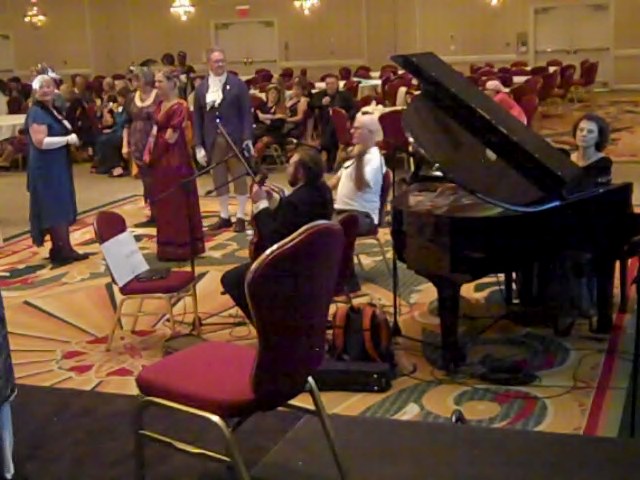
As you can see from the clip, individuals with a wide range of dancing talent were present. The caller, or calling master, taught the steps, people practiced, and then they danced to the lovely music provided by the trio.

Caller at the Regency Ball

An important social element was the calling of the dance by the leading lady (a position of honor), who would determine the figures, steps, and music to be danced. The rest of the set would listen to the calling dancing master or pick up the dance by observing the leading couple. Austen mentions in her letters instances in which she and her partner called the dance. – Regency Dance, Wikipedia

I love the next clip, in which the caller sensed a lack of concentration on behalf of her audience. Listen to her final words!

With so many people in one room, and (in those days) the heat from the candles, ballrooms tended to become hot. Flimsy gowns provided little advantage for over-heated bodies restrained by corsets; time and again fans came to the rescue, as in this short scene. The poor men simply had to grin and bear it and sweat the night away, for, believe me, an evening of dance with two sets per dance partner, could be quite strenuous.

After learning the various moves, the group danced the set. The musicians (a trio in this instance) then struck up the music and the dancers progressed through the set, the movements beautiful to behold. My humble flip camera did not do much justice to the proceedings, and could capture only a few of the moments. If you have never attended a Regency ball and are a Jane Austen fan, I suggest that you find a group in your area.

This experience makes Austen’s ballroom scenes come alive as I reread the passages. One also experiences the social aspects of the dance – the dancers themselves, the people arranged on the sidelines watching, the musicians, and the outer rooms, where others assembled and talked  or sought refreshment. In former days, game rooms would be set up for those who opted not to dance.

More images below. If anyone knows the names of the people I captured, please send them on! Thank you.

This slideshow requires JavaScript.

Read Full Post »

« Newer Posts - Older Posts »