Feeds:
Posts
Comments

Archive for the ‘Regency Life’ Category

Having just made a big move myself, I was intrigued by the thought that Jane Austen herself—not to mention several of her characters—knew what it took to move an entire household from one place to another.

One of the best resources available to us regarding a big move is the letter Austen wrote to Cassandra on January 3, 1801, prior to their family’s move to Bath from Steventon. From it, and from the details in her novels, we learn many interesting details about what a big move entailed.

If you’ve ever wanted some Regency advice on moving house, this is for you!

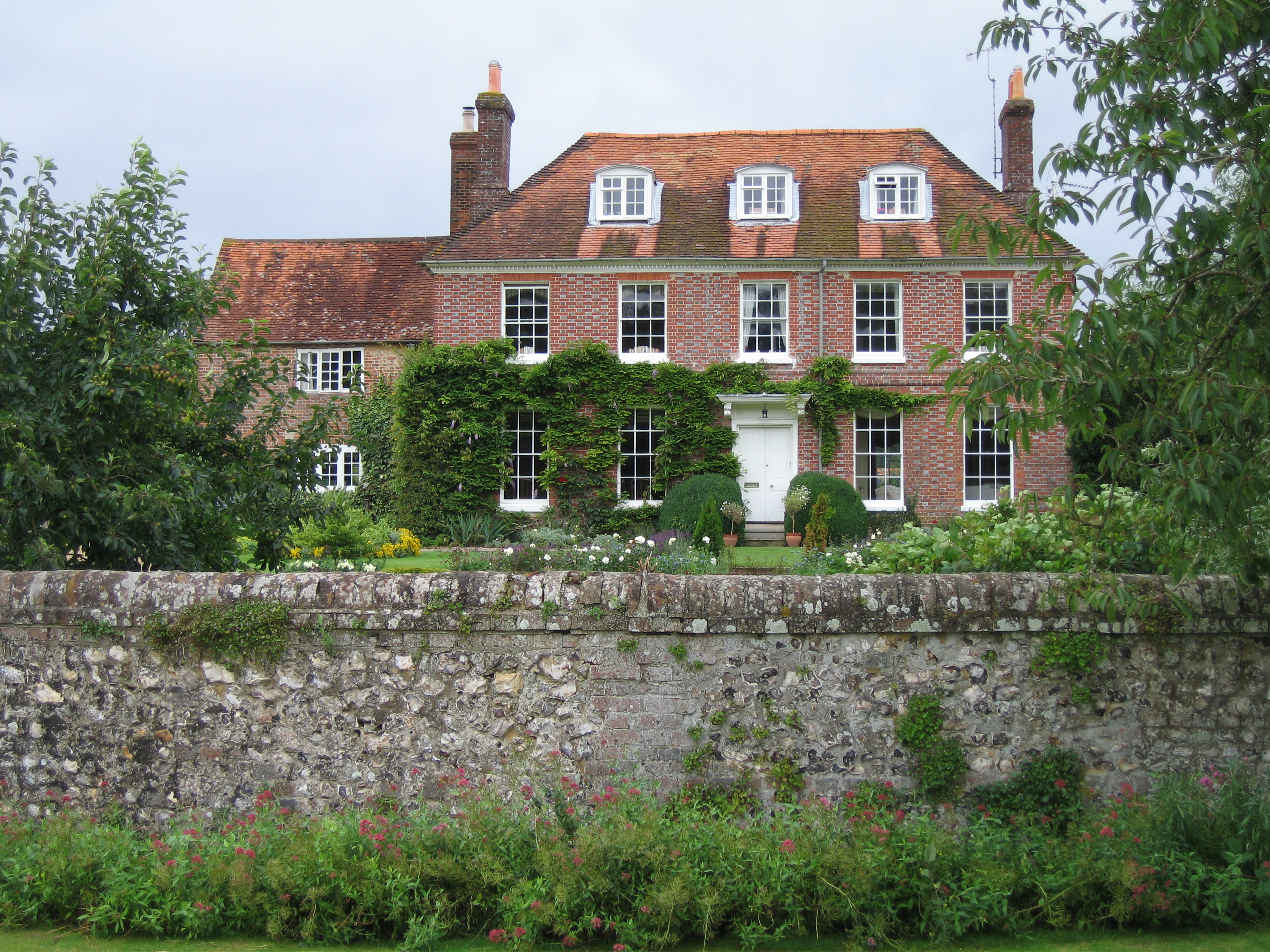
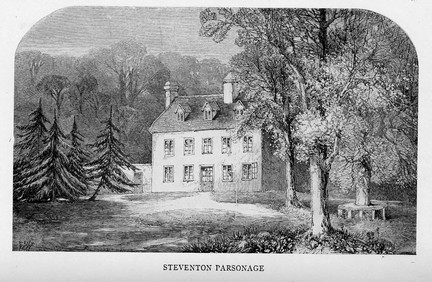
Image of Steventon Rectory, Wikimedia Commons
Steventon Rectory, Wikimedia Commons

Send Your Servants Ahead

In terms of logistics, members of the genteel class usually sent servants ahead of them when they went from one house to another, as we see when Mr. Bingley goes to Netherfield:

Why, my dear, you must know, Mrs. Long says that Netherfield is taken by a young man of large fortune from the north of England; that he came down on Monday in a chaise and four to see the place, and was so much delighted with it that he agreed with Mr. Morris immediately; that he is to take possession before Michaelmas, and some of his servants are to be in the house by the end of next week.

Pride and Prejudice

Similarly, Elinor and Marianne, when arriving in London with Mrs. Jennings after three days of travel, are greeted by “all the luxury of a good fire.” The house is “handsome, and handsomely fitted up.” Elinor writes to her mother before a dinner that will not “be ready in less than two hours from their arrival.” It’s clear that Mrs. Jennings employs servants who clean, cook, shop, and prepare the house for her visits.

Hire Good People

When preparing to move to Bath, Jane Austen’s mother wanted to keep two maids: “My mother looks forward with as much certainty as you can do to our keeping two maids; my father is the only one not in the secret.”

With her typical flair for humor, Austen hoped to engage other servants as well: “We plan having a steady cook and a young, giddy housemaid, with a sedate, middle-aged man, who is to undertake the double office of husband to the former and sweetheart to the latter. No children, of course, to be allowed on either side.”

Do Your Research

In Austen’s letter, she talks about several areas of Bath where they hoped to find a house: Westgate Buildings, Charles Street, and “some of the short streets leading from Laura Place or Pulteney Street.”

About Westgate Buildings, Austen wrote: “though quite in the lower part of the town, are not badly situated themselves. The street is broad, and has rather a good appearance.” Regarding Charles Street, she thought it “preferable”: “The buildings are new, and its nearness to Kingsmead Fields would be a pleasant circumstance.” And concerning the third area: “The houses in the streets near Laura Place I should expect to be above our price. Gay Street would be too high, except only the lower house on the left-hand side as you ascend.”

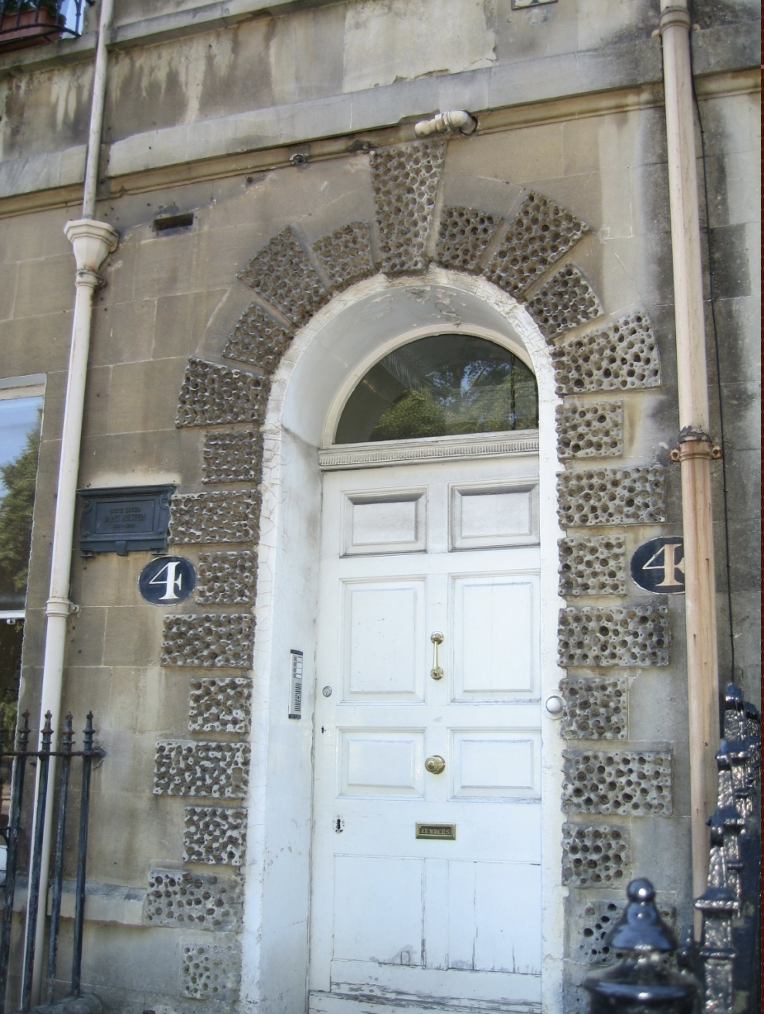
4 Syndey Place, Bath

Mrs. Austen seemed to have a preference: “her wishes are at present fixed on the corner house in Chapel Row, which opens into Prince’s Street. Her knowledge of it, however, is confined only to the outside, and therefore she is equally uncertain of its being really desirable as of its being to be had.”

None of the Austens were in favor of Oxford Buildings: “we all unite in particular dislike of that part of the town, and therefore hope to escape.”

Bring Your Art

We know from Austen’s letter that they planned to take the following pictures and paintings from Steventon to Bath: “[T]he battle-piece, Mr. Nibbs, Sir William East, and all the old heterogeneous miscellany, manuscript, Scriptural pieces dispersed over the house, are to be given to James.”

Good artwork is hard to find.

Of special note, Jane tells Cassandra, “Your own drawings will not cease to be your own, and the two paintings on tin will be at your disposal.”

Good Furniture is Worth Moving

Apparently, Rev. and Mrs. Austen had a very good bed that was irreplaceable: “My father and mother, wisely aware of the difficulty of finding in all Bath such a bed as their own, have resolved on taking it with them…” Austen wrote this about the rest of the household beds: “all the beds, indeed, that we shall want are to be removed — viz., besides theirs, our own two, the best for a spare one, and two for servants; and these necessary articles will probably be the only material ones that it would answer to send down.”

When it came to their dressers, they decided it was time for an upgrade: “I do not think it will be worth while to remove any of our chests of drawers; we shall be able to get some of a much more commodious sort, made of deal, and painted to look very neat…”

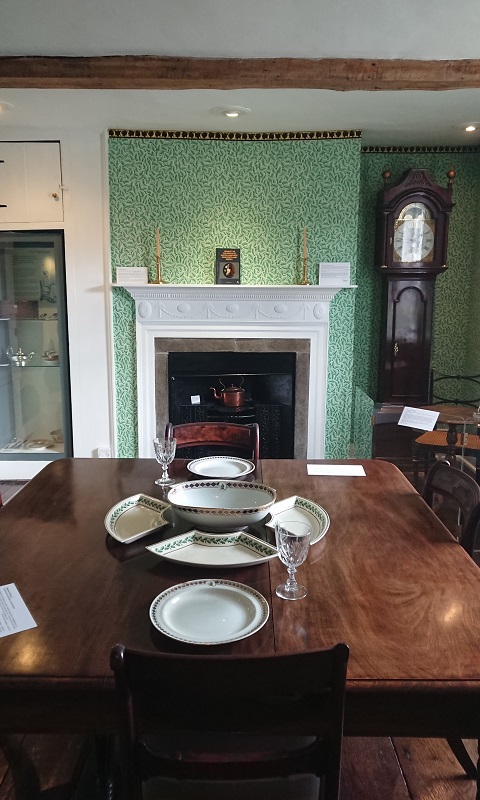
Image of dining room at the Jane Austen House Museum
Jane Austen’s House Museum in Chawton.

As to the rest of their furniture, they decided it would be better to replace most of it in Bath: “We have thought at times of removing the sideboard, or a Pembroke table, or some other piece of furniture, but, upon the whole, it has ended in thinking that the trouble and risk of the removal would be more than the advantage of having them at a place where everything may be purchased. Pray send your opinion.”

Jane’s final comments to Cassandra are amusing as ever: “My mother bargains for having no trouble at all in furnishing our house in Bath, and I have engaged for your willingly undertaking to do it all.”

Visit People on the Way

In Austen’s letter, she explains their family travel plans: “[M]y mother and our two selves are to travel down together, and my father follow us afterwards in about a fortnight or three weeks. We have promised to spend a couple of days at Ibthorp in our way. We must all meet at Bath, you know, before we set out for the sea, and, everything considered, I think the first plan as good as any.”

Ibthorpe, Photo by Rachel Dodge

Not So Different

Moving house in Jane Austen’s day was not quite so different from today. Though the modes of transportation and the methods of research and communication were somewhat different, I was delighted to find that the Austens’ moving plans were surprisingly applicable to mine! (Except for the servants.)


RACHEL DODGE teaches college English classes, gives talks at libraries, teas, and book clubs, and writes for Jane Austen’s World blog. She is the bestselling author of The Little Women DevotionalThe Anne of Green Gables Devotional and Praying with Jane: 31 Days Through the Prayers of Jane Austen. Coming this fall: The Secret Garden Devotional. You can visit Rachel online at www.RachelDodge.com.
Read Full Post »

Inquiring readers, I despise housework.  As I lugged my vacuum cleaner from room to room I thought: ‘It could be worse. I would only have a broom or mop had I lived in 1810.’

And so I should be grateful to clean my house in the 21st century. But what were the duties a typical maid of all work or housemaid during this era, and what cleaning supplies did they use?

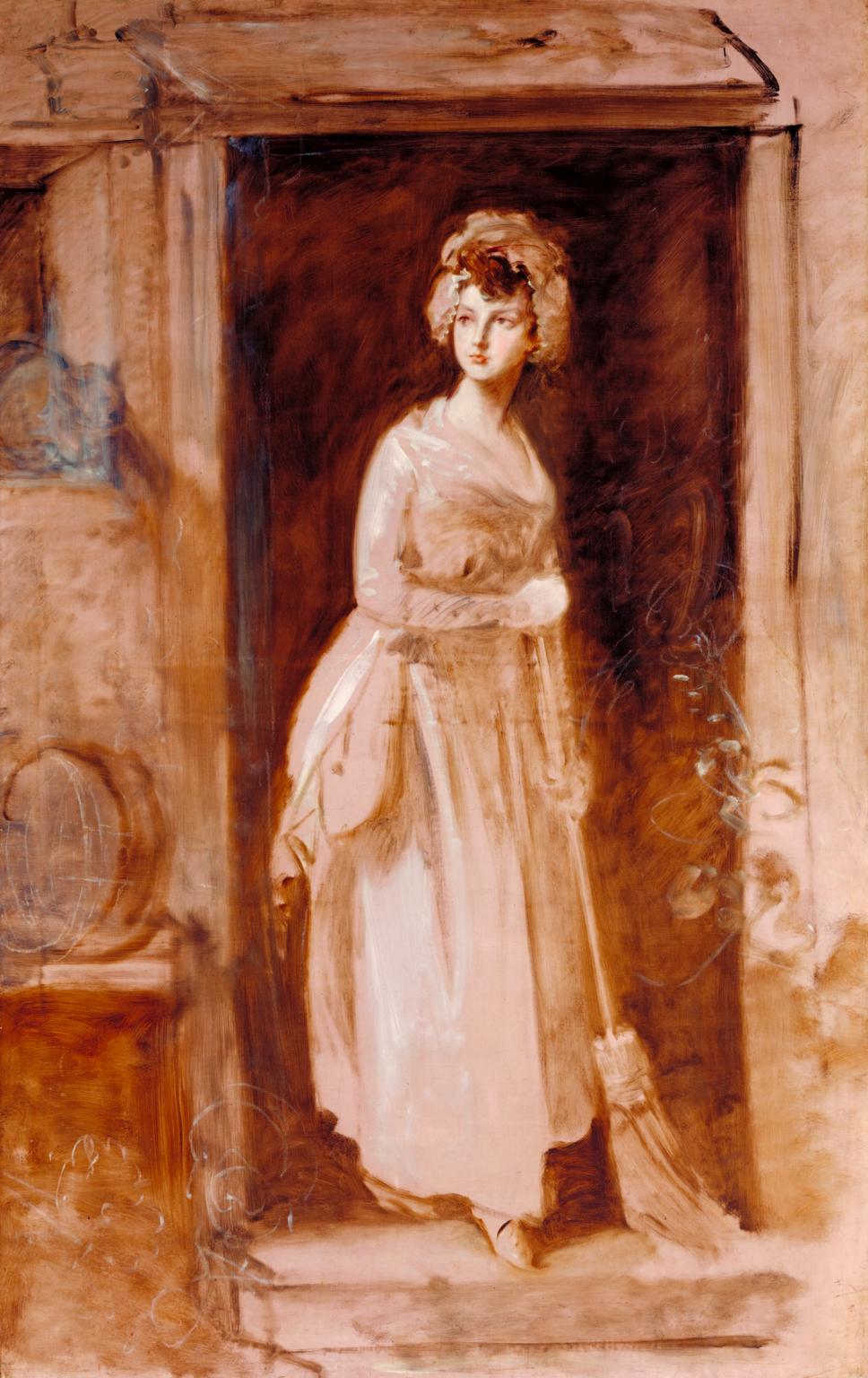
The Housemaid c.1782-6 by Thomas Gainsborough 1727-1788

The Housemaid c.1782-6 Thomas Gainsborough, Tate Gallery, Public Domain

Dusting & Sweeping:

A Georgian/Regency household experienced a daily fight with dust, one that was usually lost. A wealthy family could afford more than one housemaid, but ordinary housewives most likely only had a maid of all work to help her. The poor were left to their own devices. Most roads and lanes in cities and towns were made of dirt that turned into mud on rainy days. Animal droppings from horses and cattle driven through town by drovers dried into dust if not swept from the street. Brisk winds would sweep dirt and flakes and dried droppings through cracks and crevices around windows and under doors. On mild days, windows were cracked open to admit fresh air, allowing the detritus to drift in a constant invasion.

Front entrances (indoors and outdoors), floors, and rugs also required constant maintenance. The job to clean them was unceasing.

In 1776, Susannah Whatman wrote the following in The Housekeeping Book for her housemaids:

“In cleaning floors…use as little soap as possible (if any) in ‘scouring’ rooms. Fuller’s earth and fine sand preserves the colour of the boards, and does not leave a white appearance as soap does.[Note that this job was performed on hands and knees.] All the rooms to be dry scrubbed with white sand.”

Susannah also wanted her maids to use a painters brush on ledges, furniture, and window frames – then follow up with feather dusters. Under no circumstances were they to dust pictures “nor the frames of anything that had a gilt edge.” They were never to dust black busts.

[Other mistresses expected housemaids to dust daily with clean linen cloths. After cleaning spots on wood furniture, they rubbed the wood with linseed oil until shiny.]

Daily chores:

  • Rise early to prepare the ground floor for the family. (more about this below)
  • Sweep the hall and staircase, and the “banister occasionally rubbed with very little oil and every day with a dry cloth.”
  • “To keep a small mop in the cupboard of the WC (water closet), and use water everyday to keep the inside clean.” The maid also had instructions to use only warm water during frosty weather.
  • Sweep the steps in front of the house
  • Force back all the window shutters so they will not get warped. Regarding shutters and drapes, they must be regulated according to the movement of the sun to prevent the sun from shining in full on carpets, painted furniture, pictures, and furniture with mahogany wood. For north facing windows, “the rooms must be aired, and the flies and flygokdubgs destroyed in time.”
  • Work in the Storeroom after her housework is finished, except on Saturday

Weekly housekeeping duties:

  • Tuesdays wash her own things and the dusters in the morning, and help wash stockings. In the evening iron her own things.
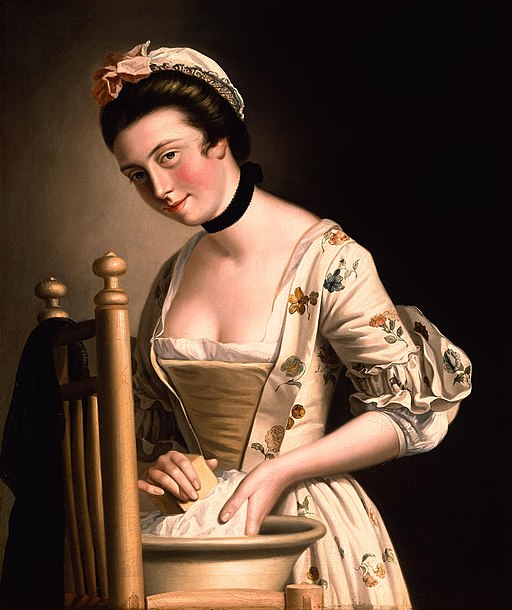
  • A_Woman_doing_Laundry_by_Henry_Robert_Morland

    A Woman Doing Laundry, Henry Robert Morland, 18th C., Denver Art Museum, public domain

  • Wednesdays fold with the Laundrymaid
  • Saturdays whisk the window curtains, and shake mats and carpets.

Her list goes on and on, which makes one wonder when and if the housemaid in Mrs Whatman’s house had any spare time

Daniel Pool in What Jane Austen Ate and Charles Dickens Knew states that housemaids were the women who kept the house running. I’d like to add that the housekeeper (or mistress of the house) made sure the people she supervised stuck to their daily, weekly, monthly, and yearly schedules in the performance of their duties.

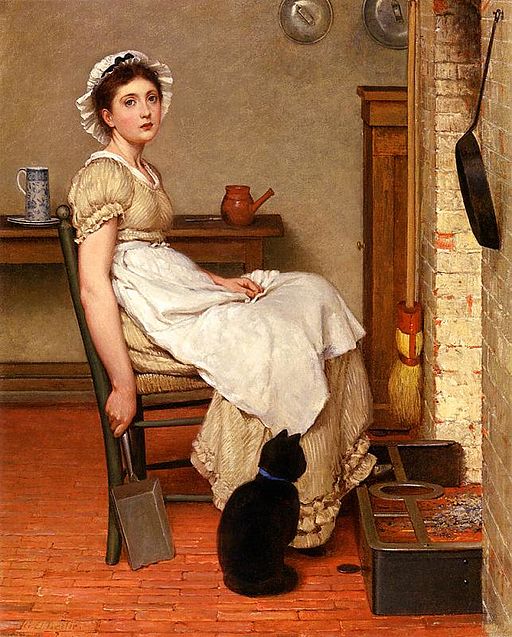
Leslie,_George_Dunlop_-_Her_first_place

Her First Place, George Dunlop Leslie, 19th c.?, Wikimedia, public domain work.

The reasons for the housemaids’ early rising was to make sure to lay & light the fires so that the family arose to a warm room. They then emptied grates of ash and cleaned them. For morning ablutions they hauled clean and heavy buckets of warm water up to the family’s rooms, sometimes as much as four times per day. After the family had bathed and washed and started their day, the maids took away dirty water and emptied chamber pots. They opened or closed curtains, then made beds in the morning and turned them down at night.

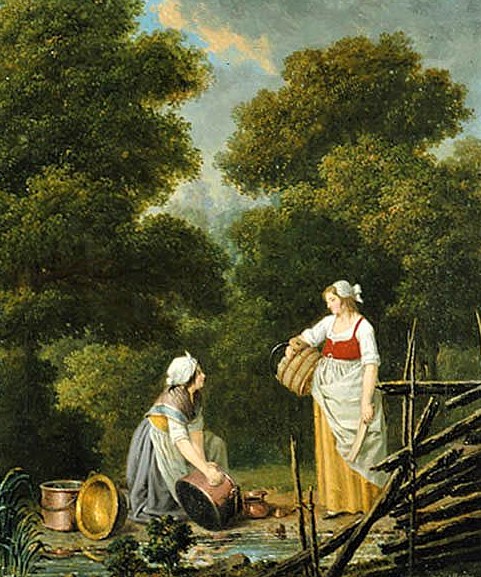
Pehr_Hilleström-Två_tjänsteflickor_vid_en_bäck (2)

Two Maid-Servants at a Brook, 1779, Pehr Hilleström, Public domain, via Wikimedia Commons

In the evening housemaids ironed or mended clothes, or tended to their own needs. Their day was never ending.

As the 19th century progressed, however, housework became less onerous. This was due to new inventions. Rumford fireplaces were more efficient and smaller than traditional fireplaces, and emitted more heat due to their design. Indoor plumbing was slowly introduced and by the end of the 19th century had become common even in middle class houses. Kitchen stoves with flat tops and doors that opened to an oven were invented and were sold by 1790. Their design encouraged the production of new flat-bottomed pots and pans. Insulated ice boxes kept an ice block from melting, keeping foods like milk and meats fresh. By 1809, methods of preserving food through sterilized glass containers or hermetically sealed cans reduced daily food preparation.

These inventions eased the intensive labor of maintaining and keeping a clean and smooth working household, allowing for fewer servants to perform the same chores or dividing the tasks in a different, more efficient way. Still, I thank my lucky stars for today’s automatic can openers, reusable storage containers, electric vacuum cleaners, freezers, water heaters, and sanitizers.

Regardless of our modern improvements, I still hate to do housework.

____________________

More About Female Servants:

Additional Sources:

Pool, Daniel. What Jane Austen Ate and Charles Dickens Knew: From fox hunting to whist — the facts of daily life in 19th-century England (1993). NY, Touchstone, published by Simon & Schuster.

Whatman, Susanna. The Housekeeping Book of Susanna Whatman. (Foreword by Christina Hardyment, afterword by Thomas Balston.) First published in 1776, published 1987. London, National Trust Classics.

Read Full Post »

I love the idea of a Regency-style Christmas season, complete with gifts, foods, and traditions that Jane Austen and her heroines might have enjoyed. Though Christmas traditions were different during Jane Austen’s time than they are today, as I share in my article about Regency Christmas Traditions, it’s fun to think of creative ideas that can make for a truly Austen-tatious holiday season.

In Persuasion, Austen paints a Christmas scene. It’s one of my favorite festive scenes, and I love to think of ways to recreate it:

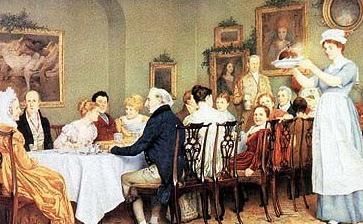
On one side was a table occupied by some chattering girls, cutting up silk and gold paper; and on the other were tressels and trays, bending under the weight of brawn and cold pies, where riotous boys were holding high revel; the whole completed by a roaring Christmas fire, which seemed determined to be heard, in spite of all the noise of the others. […] Charles and Mary also came in, of course, during their visit, and Mr Musgrove made a point of paying his respects to Lady Russell, and sat down close to her for ten minutes, talking with a very raised voice, but from the clamour of the children on his knees, generally in vain. It was a fine family-piece.

Persuasion, Jane Austen

Evergreen Decor:

Create your own holiday decorations the way people did during Jane Austen’s time. Trim your windows and home with holly branches and evergreen trimmings.

On Christmas Eve the children laid out the traditional holly branches on the window ledges…

Jane Austen: A Life, Claire Tomalin, p. 4.

For Regency-inspired holiday decorating ideas, check out this Jane Austen’s World article on Regency Era Christmas Evergreen Decorations.

Craft Table with Silver & Gold Paper:

Create a craft station for children and adults to make ornaments or other crafts like these: Christmas Crafts for Kids and Adults from Abbi Kirsten.

On one side was a table occupied by some chattering girls, cutting up silk and gold paper…

Persuasion, Jane Austen

Tressels and Trays:

…on the other were tressels and trays, bending under the weight of brawn and cold pies…

Persuasion, Jane Austen
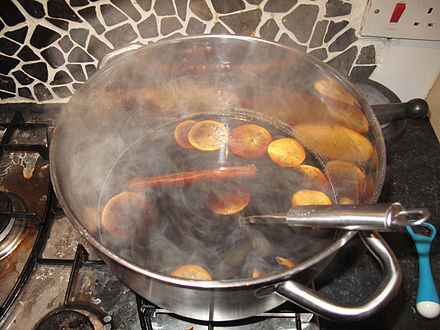
A pot of simmering wassail, infused with citrus fruit slices and cinnamon sticks. (Wikipedia Commons)

Riotous Games:

…riotous boys were holding high revel…

Persuasion, Jane Austen

A Roaring Fire:

…the whole completed by a roaring Christmas fire, which seemed determined to be heard, in spite of all the noise of the others.

Persuasion, Jane Austen

Jane-Inspired Gifts to Buy

This holiday season, add a little “Jane” to your gift giving! Here are a few shops and lists to peruse:

Austenesque Homemade Gifts

Want to make your own gifts? Check out these creative ideas!

Charitable Giving

Finally, charitable gift giving was a large part of the Regency Christmas season. On the day after Christmas, on St. Stephen’s Day (now called Boxing Day), people gave gifts to charities and to those in need.

The gentry gave gifts to the servants who worked in their homes and those hired to help on their land. Read The History of Boxing Day And How To Celebrate It (Lindsay Schlegel – Verity.com) for some modern-day ideas for ways to celebrate Boxing Day.


Now it’s your turn! What do you like to do around the holidays to make your gifts and get-togethers special? Do you have any Jane Austen traditions this time of year? I enjoy attending one of the local Jane Austen Birthday Teas in my area at this time of year. At home, I love to decorate the house with greenery and bake family recipes! -Rachel

RACHEL DODGE teaches college English classes, gives talks at libraries, teas, and book clubs, and writes for Jane Austen’s World blog and Jane Austen’s Regency World magazine. She is the bestselling author of The Anne of Green Gables Devotional: A Chapter-By-Chapter Companion for Kindred Spirits and Praying with Jane: 31 Days Through the Prayers of Jane Austen. Her newest book The Little Women Devotional is coming this January! You can visit Rachel online at www.RachelDodge.com.

Read Full Post »

As we investigate the private lives of Regency Women, it’s important to consider money and a woman’s private expenses. If a genteel woman was expected to dress a certain way, do her hair in the latest styles, wear the right shoes and accessories to accentuate her beauty, and care for her own private needs and beauty regimes, how did she pay for everything she needed?

If one of Jane Austen’s heroines (or Jane herself) wanted to purchase something like a bonnet or a ribbon or a new gown, where did she get the money? Who supplied her with money, what was the amount she might have to spend, and how often was it replenished? Let’s find out!

You are very right in supposing how my money would be spent—some of it, at least—my loose cash would certainly be employed in improving my collection of music and books.

Marianne Dashwood, Sense and Sensibility
Magazine of Female Fashions of London and Paris, No.21. London Dresses, 1799, Wikipedia Commons.

Pin Money

Pin money, also sometimes referred to as an allowance, was the money that genteel Regency women used for personal expenses, such as dresses, hats, shoes, and other things of that sort. She kept an accounting of it herself and must balance her own budget.

The history of the term “pin money” dates back to the 1500s: “At that time, pin money was a substantial sum that was used for important purchases. The expression is linked to the price of straight pins, once items that were very rare and expensive, and part of the necessary purchases to run a household” (Grammarist). Over time, the term became synonymous with a woman’s personal money.

For the most part, genteel Regency women were entirely reliant on their male relatives for any “loose cash” for their own personal expenses. As an unmarried woman, she would only have what money her father or a close male relative gave to her (or left to her). Once married, she only had what her husband gave to her or what she was entitled to as part of her marriage settlement.

British Sixpence, 1816, Wikipedia Commons.

Jane Austen’s Allowance

We know that Jane Austen herself had a small allowance from her father. In Oliver MacDonough’s Jane Austen: Real and Imagined Worlds, we read this: “Jane had nothing of her own beyond the pin-money allowed her by her father, which was probably only £20 a year.” Cassandra’s annual allowance, as noted in a letter from 28 December 1798 was twenty pounds: “If you will send my father an account of your Washing & Letter expenses, & c, he will send you a draft for the amount of it, as well as for your next quarter [£5, to be paid on 1 January].”

Mrs. Darcy’s Pin Money

Finally, Pride and Prejudice shows us how a generous allowance allowed married women to live in comfort, having enough for their own needs and for the needs of others, either for charitable giving or to help support family members.

We can now read Mrs. Bennet’s famous reaction to Elizabeth’s engagement to Mr. Darcy with even more interest:

Oh! my sweetest Lizzy! how rich and how great you will be! What pin-money, what jewels, what carriages you will have! Jane’s is nothing to it – nothing at all.

Mrs. Bennet, Pride and Prejudice
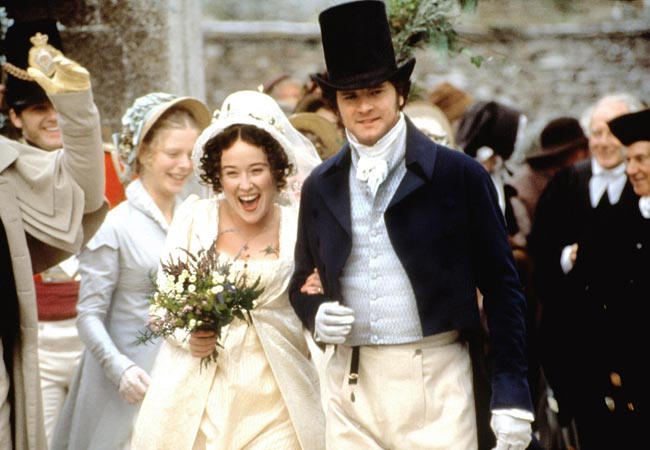
Jennifer Ehle and Colin Firth, Pride and Prejudice, 1995

And it seems that Mrs. Bennet was correct indeed. We see this play out when Lydia writes to Elizabeth at the end of Pride and Prejudice, hoping to get a regular allowance from Elizabeth and Darcy: “As it happened that Elizabeth had much rather not, she endeavoured in her answer to put an end to every intreaty and expectation of the kind.”

However, while the Darcys do not provide the Wickhams with a regular allowance, Elizabeth still kindly send gifts of money on a frequent basis to help Lydia. She gives this money out of her own private funds, which as the text implies, was substantial:

Such relief, however, as it was in her power to afford, by the practice of what might be called economy in her own private expenses, she frequently sent them. . . and whenever [the Wickhams] changed their quarters, either Jane or herself were sure of being applied to for some little assistance towards discharging their bills.

Pride and Prejudice, Jane Austen

The Love of Money

Money mattered greatly in the lives of Jane Austen’s Regency women. Having “loose cash” didn’t just provide for bonnets and gowns; it also provided for the safety and protection of several of Austen’s female characters. Money could be used as a means of control or generosity. It could limit a woman or give her greater freedom.

Join me again next month as we delve further into Regency Women: Money Matters and look closely at several instances where Austen uses a lady’s personal money (or lack thereof) as a clever plot device.


RACHEL DODGE teaches college English classes, gives talks at libraries, teas, and book clubs, and writes for Jane Austen’s World blog and Jane Austen’s Regency World magazine. She is the bestselling author of The Anne of Green Gables Devotional: A Chapter-By-Chapter Companion for Kindred Spirits and Praying with Jane: 31 Days Through the Prayers of Jane Austen. Her newest book The Little Women Devotional is now available for pre-order and releases December 2021. You can visit Rachel online at www.RachelDodge.com.


Read Full Post »

After my previous article on Regency Women: Beauty Behind the Scenes, I realized that the things I really want to know more about concerning Jane Austen’s Regency women aren’t (and weren’t) discussed as much as other topics such as beauty regimes.

I wanted to know about bodily functions (where in the world did a lady relieve herself if she was, say, at a ball?), feminine hygiene (what did women do during “that time of the month?”), and pregnancy and birth (why did so many women die as a result of childbirth?).

Finding this information wasn’t as easy as some of the other information I’ve researched over the years. Why? Because some of these topics (such as menstruation) weren’t discussed openly or written about during Jane Austen’s time. Scholarly authors and bloggers even sometimes make the joke, “maybe women didn’t menstruate back then!”

The truth is, Regency women had specific needs, just as women do now, but information about those needs was shared more discreetly. Women passed information, supplies, and advice to one another—from mother to daughter, sister to sister, cousin to cousin, and even friend to friend. Additionally, terms and nicknames were used for certain topics, such as “in that way” (pregnant); “lying-in” or “confinement” (nearing her due date); and “brought to bed” (gave birth). We can imagine that in some families, young women were informed about such topics without much or any discussion; in others, perhaps a bit more instruction was provided.

Mrs. Jennings and Mrs. Palmer, Sense and Sensibility

I can’t help wishing they had not travelled quite so fast, nor made such a long journey of it, for they came all round by London upon account of some business, for you know (nodding significantly and pointing to her daughter) it was wrong in her situation. I wanted her to stay at home and rest this morning, but she would come with us; she longed so much to see you all!”

Mrs. Palmer laughed, and said it would not do her any harm.

“She expects to be confined in February,” continued Mrs. Jennings.

Lady Middleton could no longer endure such a conversation, and therefore exerted herself to ask Mr. Palmer if there was any news in the paper.

Sense and Sensibility, Jane Austen (emphasis mine)

In attempt to shed some light on these topics, the following is an overview of each, along with a few resources that go into greater detail. As always, I heartily encourage our well-read JAW readers to comment with other resources that can help provide more information on these “privy” matters (pun intended).

Bodily Functions

At home, chamber pots were frequently used and kept under the bed, out of sight, and emptied and cleaned by a servant. A privy or outhouse was outside the home, away from the house. Many times, flowers were planted near the outhouse to help cover the odor. For an in-depth history of Regency plumbing, you can read this wonderful article from The Jane Austen Centre on The Development of Regency Plumbing.

But what about when a lady was traveling or at a ball? As some of you may already know, a fully dressed lady could (carefully) relieve herself using a small chamber pot called a bourdaloue (or bourdalou) without soiling her skirts. Her maid would stand nearby to help and/or receive the pot and empty it. (Note: Men were known to relieve themselves behind a screen into a chamber pot in the dining room.) For more on this strangely intriguing topic, you can read Vic’s engaging article, Regency Hygiene: The Bourdaloue.

Ladies Bourdaloue, a personal chamber pot.

Feminine hygiene and sanitary items

And what, pray tell, did a lady to do when menstruating? In her article “On ‘Flowers’: A short but frank post on how 18thC women dealt with menstruation,” Lucy Inglis has several interesting tidbits to share: Early sanitary pads were used by women in Georgian England, made from a variety of materials. “Women troubled by particularly heavy periods wrapped a belt or bandage about their hips and wore a baby’s muslin napkin looped over the front and back, with stitched ‘sanitary pads’ lining this loincloth.  These pads could be boiled and reused…”

As for tampons, this was surprisingly not unheard of. Early handbooks discuss “‘suppositories’ for the ‘privy place’ made from a smoothed stick, wrapped in absorbent linen rags and securely stitched. A long cord was sewn in. Some disposable; some boiled and reused” (Inglis). For menstrual cramps and other issues, herbal remedies were often used. For more on this topic and others like it, check out Inglis’ book Georgian London: Into the Streets.

Regency families were often large to account for high child mortality rates.

Pregnancy and childbirth

During the Regency era, childbirth was still one of the most dangerous threats to a woman’s health and life. Up to 20% of all women died either in childbirth, or immediately following birth, most often due to infection. (Many accounts place the infant mortality rate at about the same level.) The practice of washing hands, disinfecting instruments, and providing clean linens and ventilation in birthing chambers did not become common until about the 1840s, which then lowered the mortality rate from 18% to about 6% (Jane Austen Centre). To read an in-depth discussion of birth, birthing rooms, and advances in obstetrics, read here: “Developements in Childbirth in Regency and Victorian England: Childbirth and Lying-In during the Regency” by Kathleen Charon.

Some of the issues that plagued new mothers and babies were due to limited medical practices and a lack of simple hygiene, but there were other factors at play as well. For instance, instead of having women move, walk, and get a breath fresh air, a “lying-in” or “confinement” period was observed before, during, and even after giving birth.

During the birth, a midwife would likely be in attendance; in some instances, a doctor might come. The birthing room was heated and enclosed so that women would not catch cold; however, the stifling rooms often caused a host of other issues, including an increase in infection. After giving birth, women were kept in bed, often given only weak tea and a liquid diet, instead of hearty, nourishing foods to help her heal and gain strength.

I have just received a note from James to say that Mary was brought to bed last night, at eleven o’clock, of a fine little boy, and that everything is going on very well. My mother had desired to know nothing of it before it should be all over, and we were clever enough to prevent her having any suspicion of it…

Jane Austen’s Letters, Godmersham Park, 17 November 1798.
Queen Charlotte, King George IIIs consort, gave birth to 15 children in 21 years. These are their 6 eldest.

Indeed, life for women in Jane Austen’s Regency England, even as part of the upper classes, was uncomfortable, difficult, and dangerous. When I think of my own birth, and the births of my two children, by caesarean section, with the help modern medicine, I stand amazed at the bravery of the women who came before me. To say I’m thankful for the miraculous advances in medicine and obstetrics today would be an understatement.

This, I’m sure, is only the tip of the iceberg with these topics. If you have other resources to share, such as books, articles, podcasts, or talks, please include them in the comments! Next month, check back for my upcoming article, Regency Women: Pin Money and Private Expenses.


RACHEL DODGE teaches college English classes, gives talks at libraries, teas, and book clubs, and writes for Jane Austen’s World blog and Jane Austen’s Regency World magazine. She is the bestselling author of The Anne of Green Gables Devotional: A Chapter-By-Chapter Companion for Kindred Spirits and Praying with Jane: 31 Days Through the Prayers of Jane Austen. Her newest book The Little Women Devotional is now available for pre-order and releases December 2021. You can visit Rachel online at www.RachelDodge.com.
Read Full Post »

« Newer Posts - Older Posts »