Feeds:
Posts
Comments

Archive for the ‘Regency Period’ Category

Copyright (c) Jane Austen’s World.

Jane Austen fans are more familiar with Adam Buck’s small watercolor portraits on pin up print cards than the artist’s name. This format was popular during the Regency era.

Sophia Western, Adam Buck

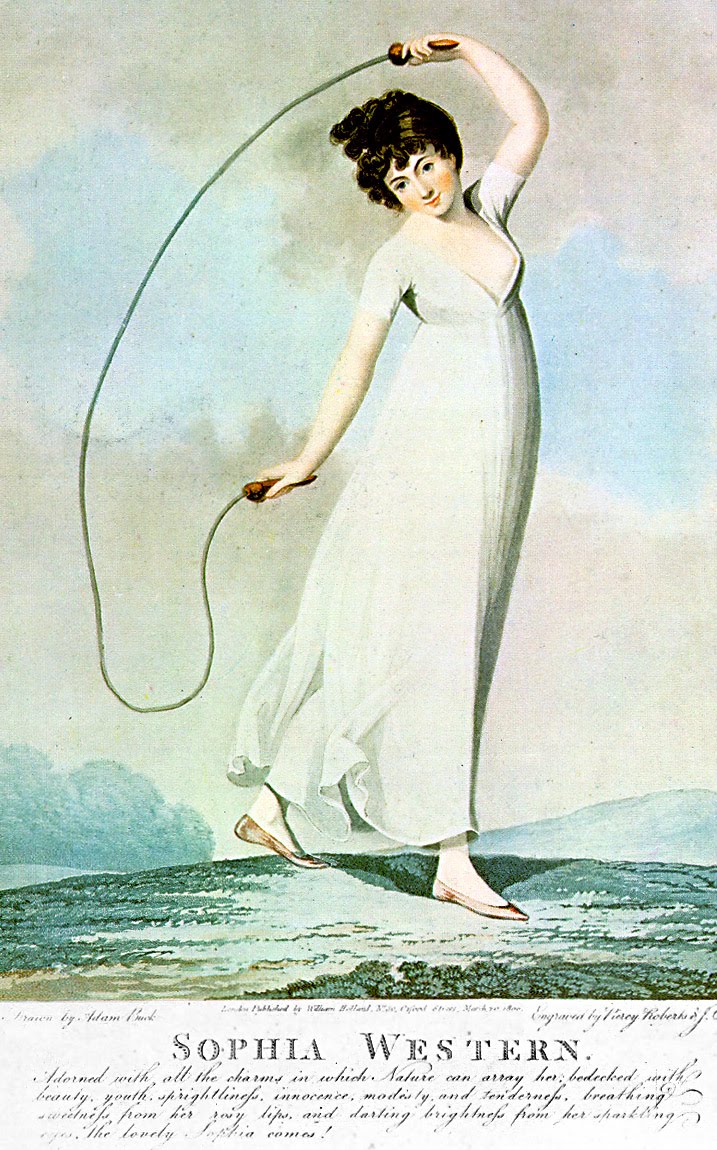
Sophia Western, an 1800 engraving after an Adam Buck drawing, depicts a Tom Jones heroine with a jumping rope. She wears a Regency gown, rather than a costume from 1749, when Fielding’s book was published.

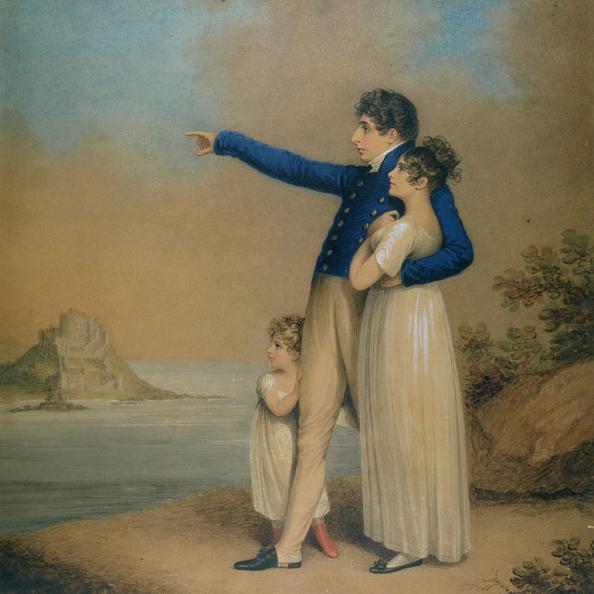
Roberth Southey with Daughter and Son, Adam Buck

Born in 1759 in Ireland, Buck left his native land in 1795 to establish a studio in London, where his small portraits in pencil, oil, crayons, or watercolour were quite popular. His linear, lightly colored neoclassical drawings and paintings showed scenes of domesticity and motherhood in classic attitudes that resembled those on Greek vases. The artist is said to be largely self-taught.

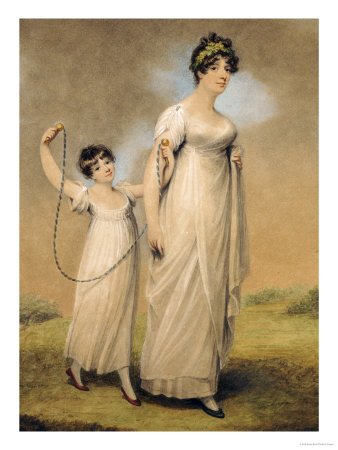
Portrait of a mother and her daughter, Adam Buck

Two … Irish artists brothers of the name of Buck deserve attention. Their pencil groups, slightly coloured, were very popular ,and especially those in which the sitters were grouped in classic attitudes resembling those on Greek vases. The reason for the existence of these portraits was the love that Adam Buck especially had for Greek art. He issued a book on the paintings on Greek vases ,and he modelled many of his best miniatures, as well as his pencil groups, on the classic scenes so dear to him. His work, as a rule, can be distinguished by the exquisite drawing of the profile. His brother, Frederick, who commenced in his profession by painting portraits in crayon, also painted miniatures following on the lines of Adam Buck. Neither of the men were very good col ourists but both were accurate draughtsmen.” – How to Identify Portrait Miniatures, George Charles Williamson, Alyn Williams

Mother and Child, Adam Buck, Victoria and Albert Museum

Buck produced a book in 1812, “Paintings on Greek Vases”, that contained 100 plates designed and engraved by himself. He exhibited his work at the Royal Academy between 1795 and 1833.

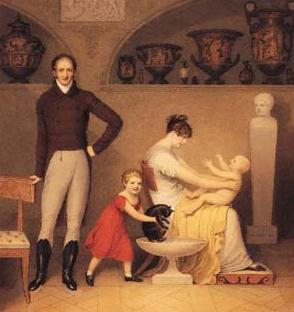
Adam Buck, Self portrait with wife and children, 1813.

Buck’s distinctive linear designs were also used on China ware and in fashion plates. See the Adam Buck inspired bat-printed porcelain images on Candice Hern’s site.

Herculaneum Pottery with Children at Play Pattern in the style of Adam Buck

More on the topic:

Read Full Post »

Copryright (c) Jane Austen’s World. This post is in honor of Thanksgiving and all the cooks, feminine or masculine, who toil hard in the kitchen to feed their families on this special holiday.

I am sure that the ladies there had nothing to do with the mysteries of the stew-pot or the preserving-pan” – James Edward Austen-Leigh, writing about his aunts, Jane and Cassandra Austen, and grandmother, Mrs Austen, when they lived at Steventon Rectory.

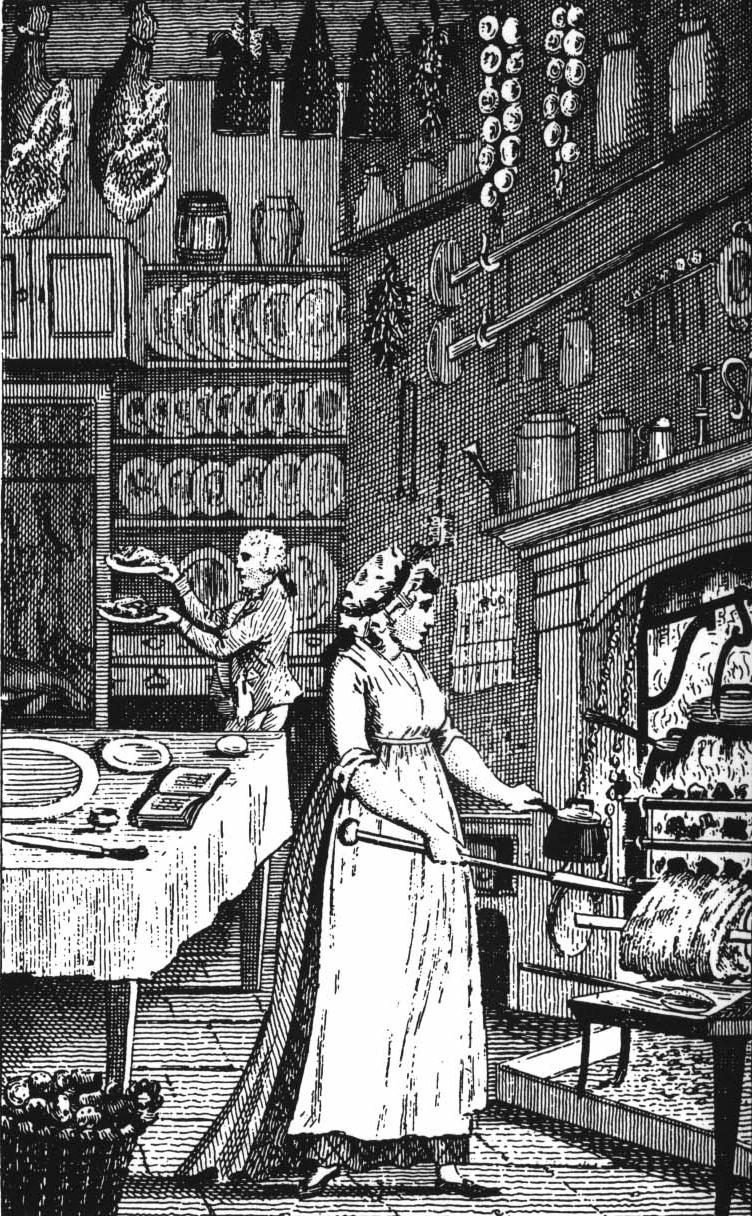
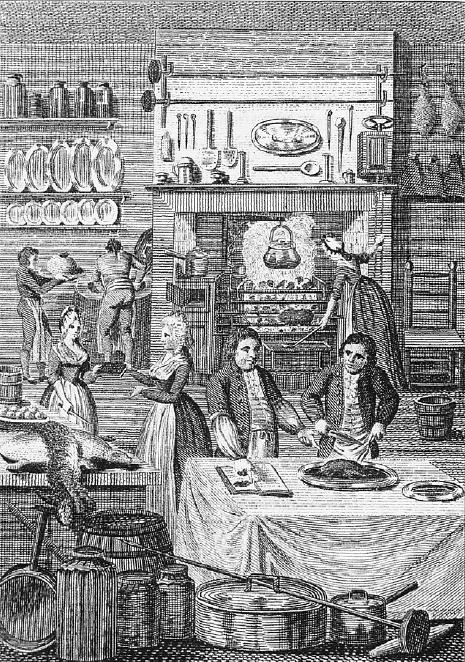
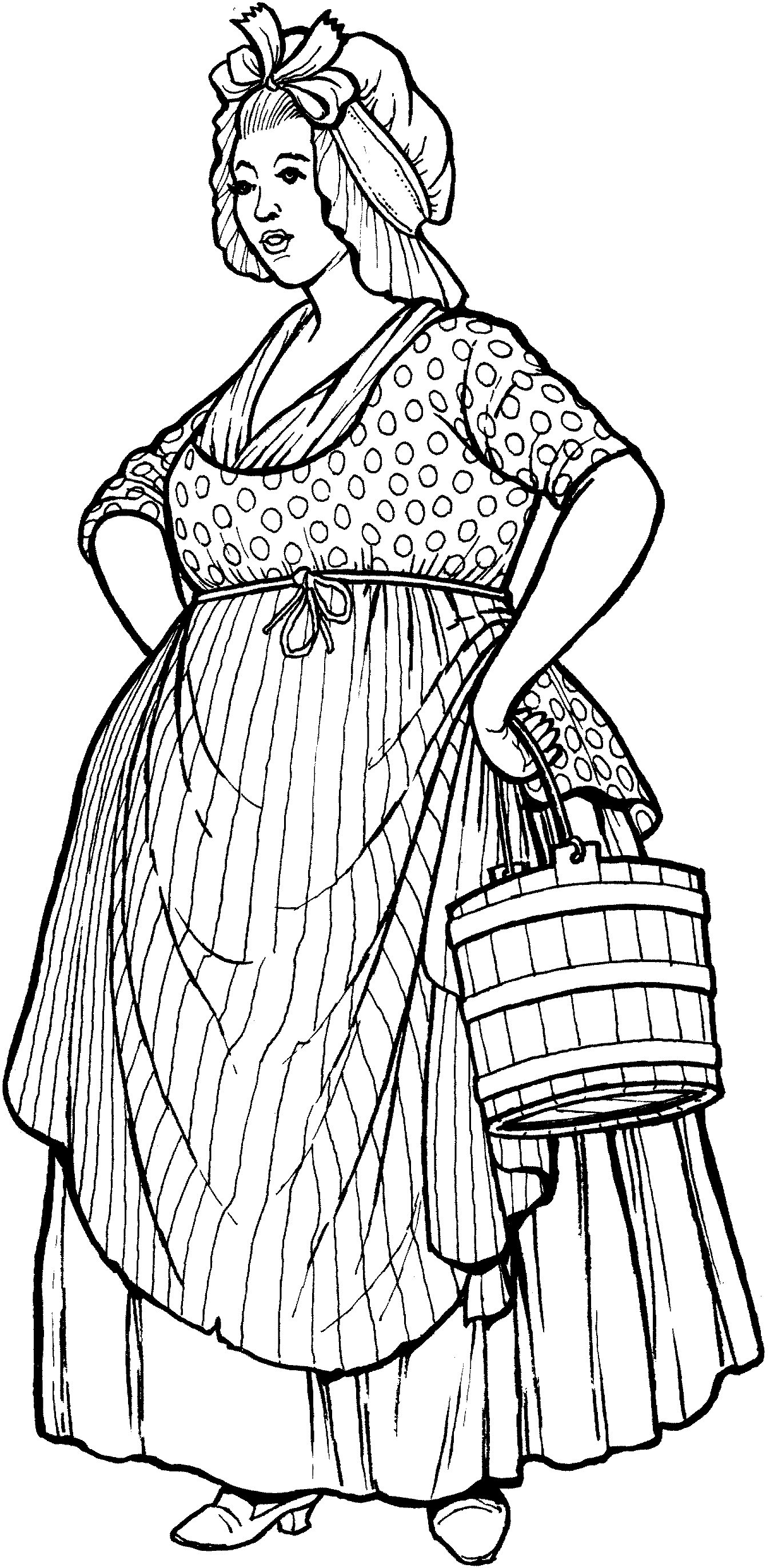
18th century kitchen servants prepare a meal. Image @Jane Austen Cookbook

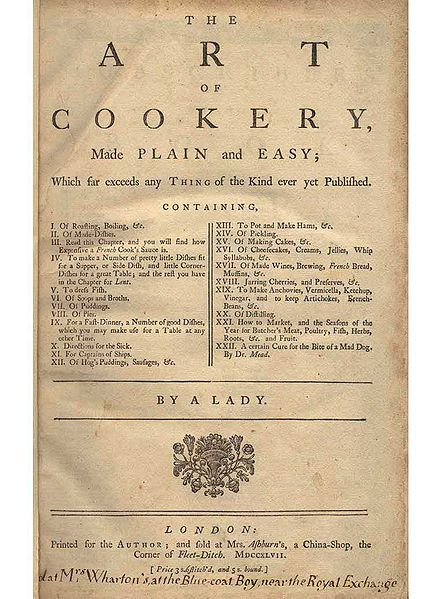
In 1747, Mrs.Hannah Glasse wrote her historic The Art of Cookery Made Plain and Easy, an easy-to-understand cookbook for the lower class chefs who cooked for the rich. Her recipes were simple and came with detailed instructions, a revolutionary thought at the time.

The Art of Cookery’s first distinction was simplicity – simple instructions, accessible ingredients, an accent on thrift, easy recipes and practical help with weights and timing. Out went the bewildering text of former cookery books (“pass it off brown” became “fry it brown in some good butter”; “draw him with parsley” became “throw some parsley over him”). Out went French nonsense: no complicated patisserie that an ordinary cook could not hope to cook successfully. Glasse took into account the limitations of the average middle-class kitchen: the small number of staff, the basic cooking equipment, limited funds. – Hannah Glasse, The Original Domestic Goddess forum

Hannah Glasse's The Art of Cookery Made Plain and Easy

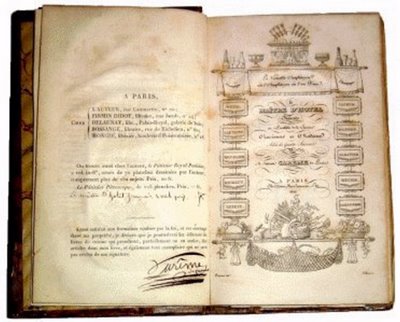
Until Mrs. Glasse wrote her popular cookery book (17 editions appeared in the 18th century), these instructional books had been largely written by male chefs who offered complicated French recipes without detailed or practical directions. (To see what I mean, check Antonin Careme’s recipe for Les Petits Vol-Au-Vents a la Nesle at this link.) Like Jane Austen, Hannah signed her books “By a Lady”.

Antonin Careme's cookbook

Mrs. Glasse had always intended to sell her cookery book to mistresses of gentry families or the rising middle class, who would then instruct their cooks to prepare foods from her simplified recipes, which she collected. “My Intention is to instruct the lower Sort [so that] every servant who can read will be capable of making a tolerable good Cook,” she wrote in her preface.

Frontispiece from William Augustus Henderson, The Housekeeper’s Instructor, 6th edition, c.1800. This same picture appeared in the very first edition of c.1791and it shows the mistress presenting the cookery book to her servant, while a young man is instructed in the art of carving with the aid of another book.*

Hanna’s revolutionary approach, which included the first known printed recipe for curry and instructions for making a hamburger, made sense. In the morning, it was the custom of the mistress of the household to speak to the cook or housekeeper about the day’s meals and give directions for the day. The servants in turn would interpret her instructions. (Often their mistress had to read the recipes to them, for many lower class people still could not read.)

In theory, the recipes from Hannah’s cookbook would help the lady of the house stay out of the kitchen and enjoy a few moments of free time. But the servant turnover rate was high and often the mistress had to roll up her sleeves and actively participate in the kitchen. Many households with just two or three servants could not afford a mistress of leisure, and they, like Mrs. Austen in the kitchens of Steventon Rectory and Chawton Cottage, would toil alongside their cook staff.

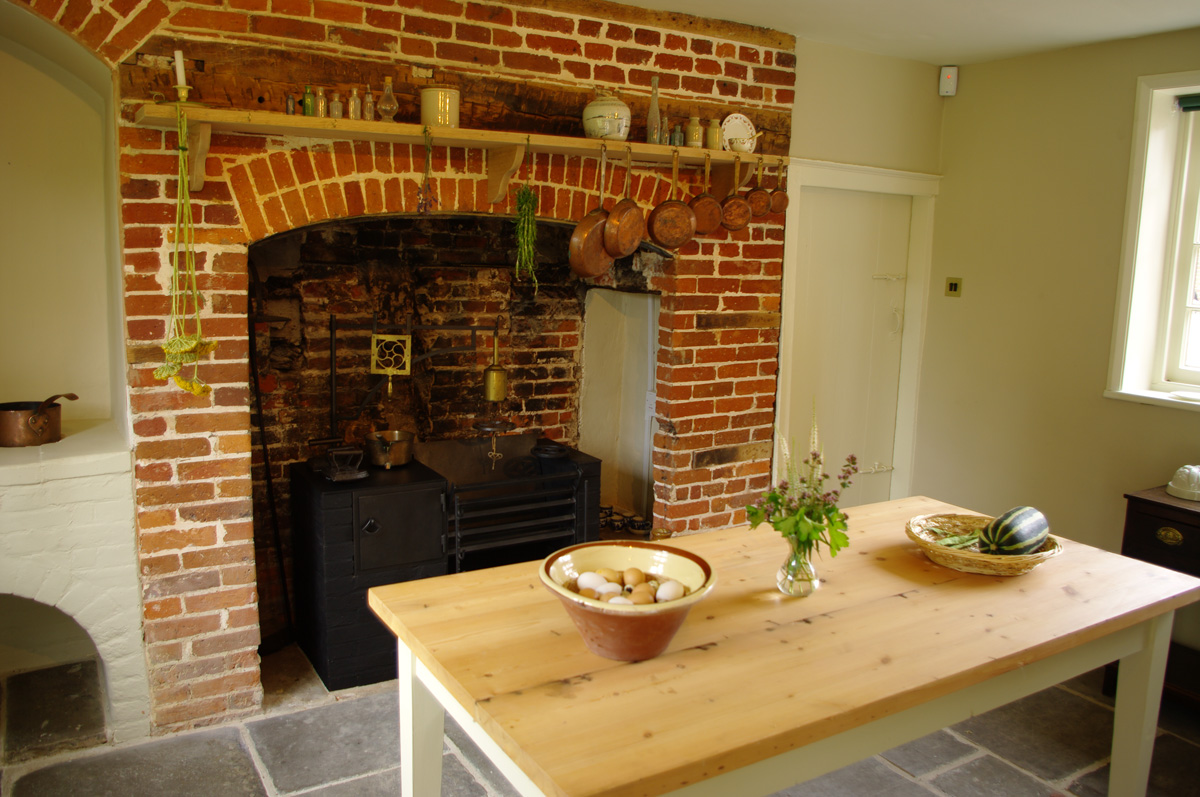
The simple kitchen at Chawton cottage. Image @Tony Grant

At the start of the 18th century the French courtly way of cooking still prevailed in genteel households. As the century progressed, more and more women like Hannah Glasse began to write cookery books that offered not only simpler versions of French recipes, but instructions for making traditional English pies, tarts, and cakes as well. Compared to the expensive cookbooks written by male chefs, cookery books written by women were quite affordable, for they were priced between 2 s. and 6 d.

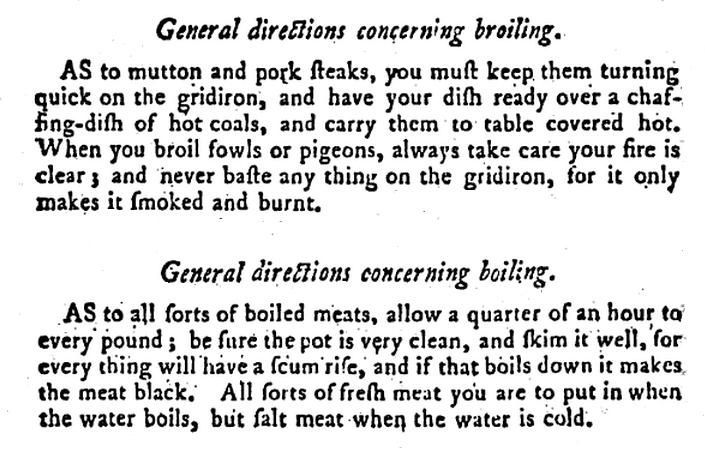
Hannah Glasse's practical directions for boiling and broiling

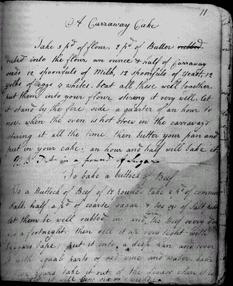
Publishers took advantage of the brisk trade, for with the changes in agricultural practices,  food was becoming more abundant for the rising middle classes. Large editions of cheap English cookery books by a variety of female cooks were distributed to a wide new audience of less wealthy and largely female readers who had money to spend on food. Before Hannah Glasse and her cohort, cooks and housewives  had been accustomed to sharing recipes in private journals (such as Marthat Lloyd’s) or handing them down by word-of-mouth.

Martha Lloyd's recipe for caraway cake written in her journal.

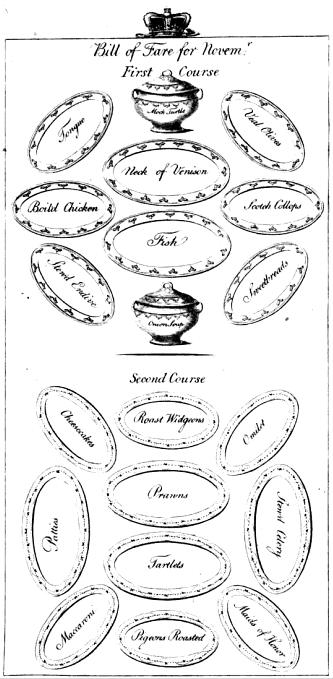
Female authors tended to share their native English recipes in their cookery books. As the century progressed, the content of these cookery books began to change. Aside from printing recipes, these books began to include medical instructions for poultices and the like; bills of fare for certain seasons or special gatherings; household and marketing tips; etc.

Bill of fare for November, The Universal Cook, 1792

By the end of the 18th century, cookery books also included heavy doses of servant etiquette and moral advice. At this time plain English fare had replaced French cuisine, although wealthy households continued to employ French chefs as expensive status symbols.  In the mid-19th century cookery books that targeted the working classes, such as Mrs. Beeton’s famous book on Household Management, began to be serialized in magazines, as well as published in book form.

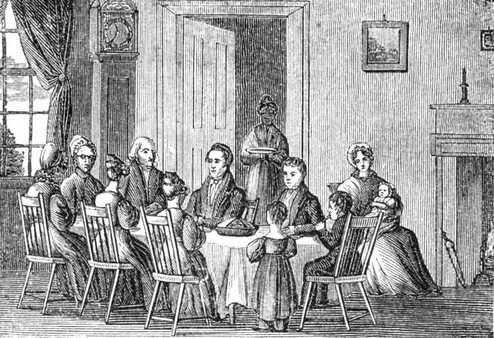
Family at meal time

Before ending this post, I would like to refer you back to James Edward Austen-Leigh’s quote at top. In contrast to what he wrote (for he did not know his aunts or grandmother well), Jane Austen scholar Maggie Lane reminds us that housewives who consulted with their cook and housekeeper  about the day’s meals still felt comfortable working in the kitchen. She writes in Jane Austen and Food:

“though they may not have stirred the pot or the pan themselves, Mrs. Austen and her daughters perfectly understood what was going on within them…The fact that their friend and one-time house-mate Martha Lloyd made a collection of recipes to which Mrs. Austen contributed is proof that the processes of cookery were understood by women of their class.”

More on the topic:

Read Full Post »

Copyright (c) Jane Austen’s World. Mrs. James Ward Thorne of Chicago was no ordinary luxury-loving, self-indulgent socialite.  Her love for doll houses as a child spilled over into adulthood, and she collected miniature furniture as she traveled through Europe. Her hobby led her to commission cabinetmakers and architects to recreate dozens of detailed historically accurate and important rooms on a scale of one inch to one foot. Each room was not only made to scale, but so were the upholstery, textiles, rugs, and curtains, which were fashioned by the Needlework Guild of Chicago.

Mrs Thorne bequeathed 26 European rooms and 98 American rooms to the Art Institute of Chicago. When I visited that world renowned museum, I had the forethought to bring my Flip Camera. My amateurish videos managed to capture the three-dimensional quality of the rooms and how they were lighted. Each room provides a peek into another space, giving the sense that doors and windows open up to a real world outside or lead to hallways and other important spaces.

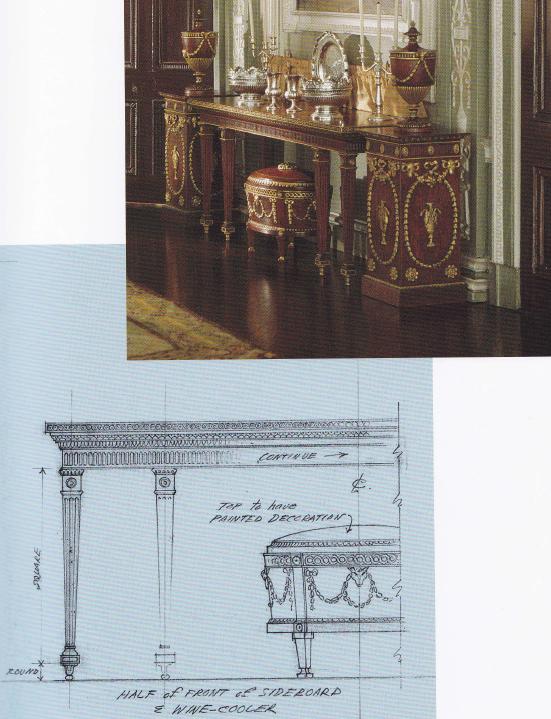
Detail of side table with flanking pedestals and oval wine cooler, with architectural drawing.

Image scanned from Miniature Rooms: The Thorne Rooms at the Art Institute of Chicago.

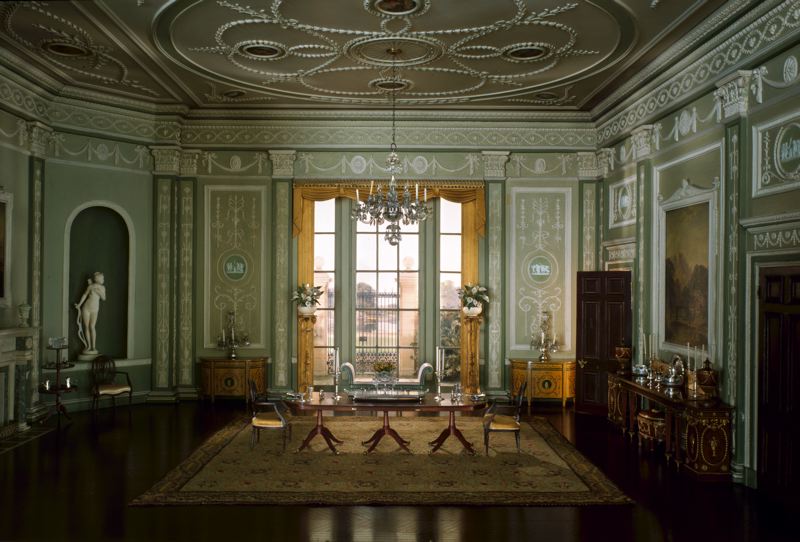
This remarkably detailed model of an English dining room was based on the interior of the dining room designed by Robert Adam at Home House in London. Features from the dining room in Saltram in Devonshire were also incorporated into the miniature. Comparing the miniature model (below) with the life-sized recreated Adam dining room from Lansdown House, which is now housed at the Metropolitan Museum in New York city, one can see how faithful Mrs. Thorne and her artisans were in recreating details and proportions.

About this work: Art Institute of Chicago

Like Adam, who had control over all aspects of the design, including the architecture, decoration, antiques, furniture,wall papers, paint and plasterwork, Mrs. Thorne closely oversaw each detail of her exquisite rooms. The furniture throughout Mrs. Thorne’s version of the Adam dining room were decorated with ram’s heads, as was the frieze. The urns on the fireplace mantle are copies of Wedgwood examples, and the paintings over the mantle and side table are after Claude Lorrain.

Dining room, Lansdowne House, Metropolitan Museum of Art

Heilbrun Timeline of Art History

More on the topic:

Read Full Post »

Copyright @ Jane Austen’s World

Before that you suffer it to be washed, lay it all night in urine, the next day rub all the spots in the urine as if you were washing in water; then lay it in more urine another night and then rub it again, and so do till you find they be quite out.
Hannah Woolley, The Compleat Servant-Maid, 1677

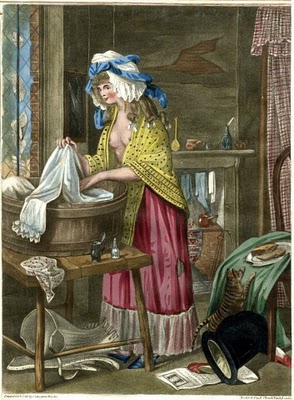
The Last Shift, Carrington Bowles

Urine for spot cleaning? Yes, you read the first word correctly.  Since the middle ages, professionals belonging to guilds manufactured soap and candles, for both products required tallow. They traditionally manufactured soaps from sodium or potassium salt or alkalis present in plant materials, and boiled the ingredients with animal fat. In the 19th century, it was discovered how to make caustic soda from brine. Soap makers no longer relied on cut wood to make soap and the cleaning industry was never the same again.

Before innovations during the Industrial Revolution changed laundry day forever, it was generally known that that alkaline substances, such as bleach or ash, dissolved or disintegrated stains and soils, enhancing the water’s ability to clean clothes.

Urine is alkaline, and since the days of ancient Rome, this by-product of the human body was used as a bleaching agent. “Pecunia non olet — money does not stink”,  Emperor Vespasian reportedly said when he started taxing this trade.*

Yes, urine stinks. But so do bleach and vinegar, a weak acid. The stinking ingredient that turns us off and that makes urine such a good cleaning agent – ammonia – is a substance that our modern cleaning products include in abundance.**  Eighteenth century English wool manufacturers used both urine and sheep or pig manure for washing. In addition, urine also sets dye. (The seller of my beautiful little handmade rug from Turkey cautioned that its vegetable dyes were set with goat urine. Twenty years after its purchase, the rug no longer smells, but its fragile colors must be vigilantly protected from direct sunlight.)

As recently as the early 20th century, urine was collected in barrels in Japan and fermented for use in laundering. The Japanese threw the contents of their slop jar into the barrel, then separated the feces from the liquid urine. The feces were used as fertilizer to enrich the soil, and the urine was collected by laundry shops, who fermented the liquid and used it  as a bleaching agent by pounding it into the cloth. – Edible Soap, A Harmless Natural Soap for the Family. It is the fermentation process that probably made urine safe to handle, much like fermented beer or distilled alcohol were safe to drink in the days before sterilization.

Urine from the animal of choice was also used to improve the complexion. Samuel Pepys’ wife decided to try the urine of puppies (‘puppy-dog water’), for instance, in March 1664 (Diary of Samuel Pepys). This may have been less foolish than spending a hundred bucks on a small pot of modern-day moisturiser, since the ‘active’ ingredient in urine is urea, and urea creams are inexpensive, effective and regularly recommended by dermatologists. – The Thirteenth Depository: A Wheel of Time Blog

This YouTube video uses urine to demonstrate that it is as powerful a cleanser as commercial products.

More on the Topic

*The Historical Development for Washing Laundrys

**Pepys Diary

Read Full Post »


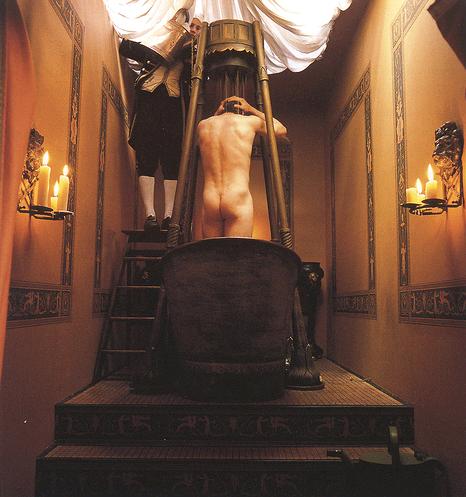
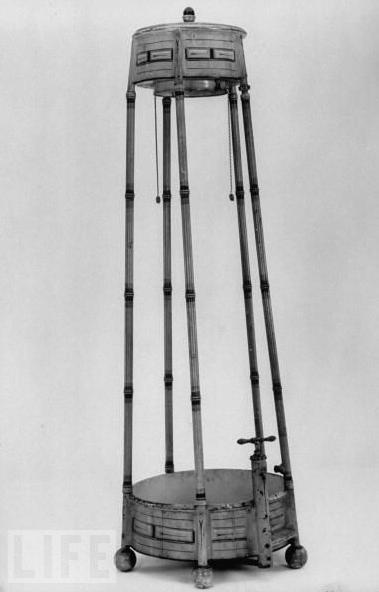
Copyright (c) Jane Austen’s World. Take a good look at this contraption. Life Magazine gave it the following description:

A treasury of old tubbery, Regency shower 12 feet high was a fancy bathing apparatus in England around 1810, pump lifted water from tank at bottom through pipe to top tank, water could be used over and over again.” – Life Magazine image

Readers familiar with the Regency era know that attitudes towards bathing and hygiene were on the cusp of change. In the early 18th century, a person might wash their face and hands daily, but at the most they would bathe every few weeks or months. Towards the end of the century, cleanliness was no longer regarded as frivolous by a growing number of people. Beau Brummel was a particular proponent of bathing and his affectation for cleanliness became the dandy’s creed. Others began to associate bathing with good health.

Washing made a comeback in the later 18th century. The age of revolution and romanticism valued simplicity and naturalness, and water – in the form of mountain torrents and medicinal springs – became fashionable. Rousseau recommended bathing children in ice-cold water, winter and summer, and a sophisticated clientele sought to relieve its frayed nerves and overtaxed digestions by taking the waters at spas. John Wesley, the founder of Methodism, who invented the phrase “Cleanliness is next to godliness”, wrote a manual claiming that cold baths had been known to cure blind-ness and leprosy, as well as “hysterick cholik” in ladies. – Review of Clean, An Unsanitized History of Washing
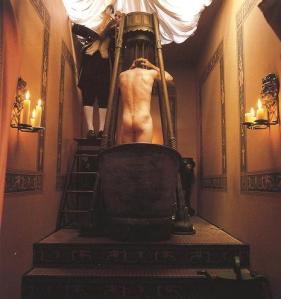
Image from Regency House Party.

The Americans echoed the British attitude towards cleanliness:

Until the last third of the 18th century, bathing practices were not clearly defined or categorized. The perceived effects on the body of the cold and warm bath were debated regularly in prescriptive literature, as were reasons for bathing in the first place. Motives for bathing changed somewhat over time, and different methods had specific connotations: did one bathe for pleasure, as a restorative of good health, for leisure and/or hot weather refreshment, as a luxurious display, or for actual, bodily cleanliness? Whatever the motivation, it was then up to the bather to decide whether she or he adhered to the cold or warm water method. – Bathing, Monticello.org

The pump is evident in this portable bath shower from the mid 19th c.

If a person opted to take a shower, the effect was at first quite bracing, for only cold water was used with this fairly new contraption, invented  in 1767)by William Feetham. In the image from Regency House Party, a servant is seen pouring water into the basin, but Feetham’s patented invention included a pump that forced the water to the upper basin and a chain that was pulled by the bather to pour water over himself. The advantage was that less water was used in bathing (A typical bath tub would require from 6-8 buckets of heated water to be carried from the nearest water source and up several flights of stairs). The early shower system’s disadvantage was clear:  the same water would be reused during the course of the shower. Not only did one reuse dirty water, but one felt quite cold during the process.

When the temperature of a bed-room ranges below the freezing-point, there is no inducement . . . to waste any unnecessary time in washing,” wrote Charles Francis Adams, grandson of President John Quincy Adams and brother of historian Henry Adams.  To Bathe or Not to Bathe

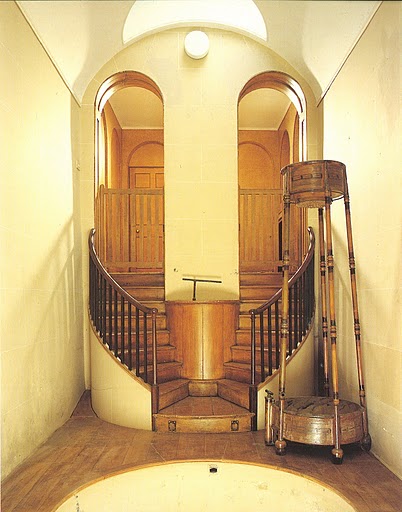
The elaborate bath house at Wimpole Hall, Cambridgeshire, with the shower made by Alexander Boyd of New Bond Street (See their mark below).
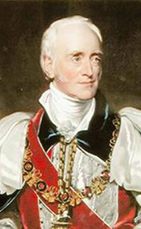
Philip Yorke, 3rd Earl of Hardwicke

The bath house at Wimpole Hall was unusual for its day. Around 1792, Sir John Soane designed the plunge pool for the 3rd Earl of Hardwicke. The pool held 2,199 gallons of water that was heated by a boiler below it in the basement.
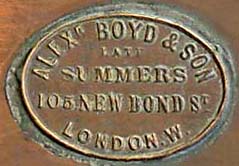
The 10 – 12 ft tall metal supports, or poles, of these showers were painted to resemble bamboo wood and even offered a shower curtain for privacy. To protect their hair, bathers wore a conical hat made out of oil cloth.

Until plumbing with warm water was introduced inside the bathroom, the use of shower baths remained rare. Towards the middle of the 19th century, attitudes began to change.

Plumbers began to introduce indoor plumbing, and inventors experimented with perfecting showering tools and pumping in hot water. Improvements in showering equipment was continuous, as the patent given to William Feetham (below) in 1822 attests:  To William Feetham of Ludgate Hill, in the City of London, Stove grate Maker and Furnishing Iron monger, for his Invention of certain Improvements on Shower Baths, Sealed June 13 1822.

The intention of these improvements is to enable the patient, who is using the bath to regulate the flow of water, and thereby to soften the shower according as inclination or circumstances may require. This object is effected by two contrivances: the first is an adjustable stop, which may be set so as to prevent the cock from turning beyond any certain distance, so as to limit the opening of the water way to any required discharge; the second is a division of the perforated box or strainer into several chambers by two or more circular concentric partitions, by which limited quantities of water let out from the cistern above are necessarily confined to limited portions of the surface of the strainer …  Read more about the patent in The London Journal of Arts and Sciences, Vol. 5, Sherwood, Neely, and Jones, 1823, p284-6.

Feetham's Shower Bath, 1822

The Patentee states: “I do not claim, or intend hereby to claim, as my invention any of the parts which may be already in use, but I do claim the means of regulating the flow of the water from the cock of a shower bath, and also the method of extending, or contracting within central limits, the shower of water at pleasure.”

In December, 1822, Mr. Feetham was granted the patent for the following improvements:

Shower bath patent #4680 granted December 13, 1822

By the 1870’s, even middle class houses began to have hot water pumped in, for the increased rents the landlords were able to command for houses with hot water made it worthwhile for them to invest in plumbing.  Sponge baths were still recommended for “invigorating the system,” and as late as 1875 The Ladies Everyday Book cautioned that it was a great mistake to make a bath a regular event.

Godey’s Ladys Book, a popular ladies magazine in the U.S., reflected the changes in attitude towards bathing (as does John Leech’s 1851 cartoon):

Godey’s, June 1855:
The shower -bath  has the merit of being attainable by most persons, at any rate when at home, and is now made in various portable shapes. The shock communicated by it is not always safe; but it is powerful in its action, and the first disagreeable sensation after pulling the fatal string is succeeded by a delicious feeling of renewed health and vitality. The dose of water is generally made too large; and, by diminishing this, and wearing one of the high-peaked or extinguisher caps now in use, to break the fall of the descending torrent upon the head, the terrors of the shower-bath  may be abated, while the beneficial effects are retained.

Godey’s, March 1858:
The Shower Bath, whether of fresh or salt water, whether quite cold or tepid, is a valuable agent in the treatment of many nervous affections; it will suit some whom the general bath will not. It is well for persons of weak habit, or who suffer from the head, to have a thin layer of warm water put in the bottom of the shower bath  before getting in. Useful hand shower  baths are now manufactured for children.
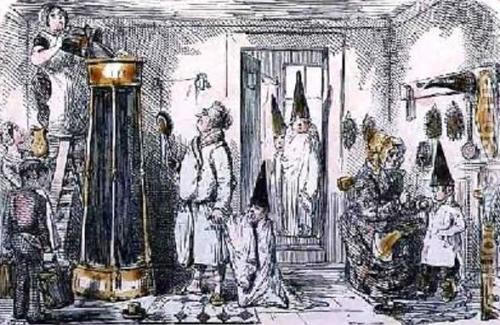
Domestic Sanitary Regulation, John Leech 1851. In this scene, the shower is installed in the kitchen. The children are wearing the conical caps to protect their hair as they wait their turn wearing blankets, jackets or robes.

More on the topic:

Read Full Post »
« Newer Posts - Older Posts »