Feeds:
Posts
Comments

Archive for the ‘Regency style’ Category

I spent a lazy Sunday catching up on the many posts I am unable to read during the week. Imagine my delight when I landed on Madame Guillotine’s blog and read her impressions about her visit to the Fashion Museum in Bath.  With increasing excitement, I viewed her close up images of several of the most beautiful 18th and early 19th century gowns imaginable. Melanie graciously allowed me to showcase her posts. (I concentrated on the early 19th century examples.) Do rush over and view all her photos. They are simply amazing.

I have just got home after an amazing couple of hours spent studying some of the eighteenth century dresses in the vast collections (I think they said they have 80,000 pieces in their archives) of the Fashion Museum in Bath.
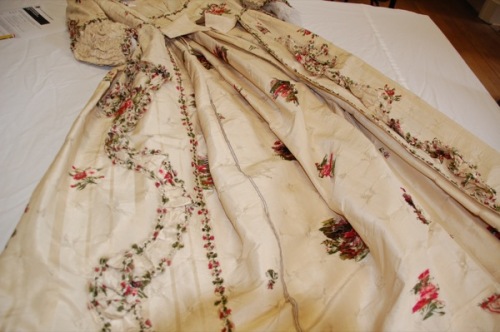
English, silk, 1770-73.

It was amazing seeing the hook and eye arrangements that they used to do up the bodices, the neat seam work and even the staining beneath the armpits which serves as a reminder that these are the real deal and not just mere costumes!
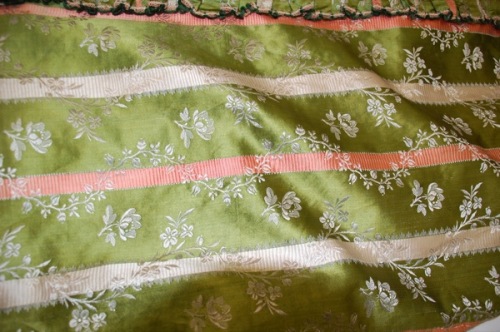
French, sacque gown, 1760-63. Image @Madame Guillotine

They were really keen on combinations of pink and green during the eighteenth century – a colour combination that seems to have vanished from fashion, alas.
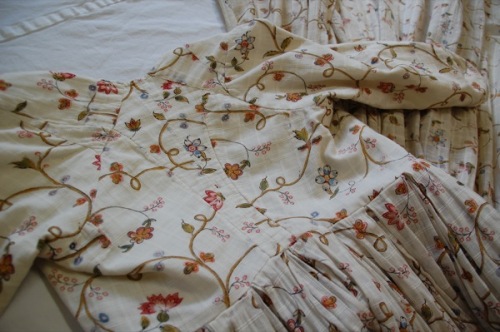
A floral printed muslin from 1793-97. Image @Madame Guillotine

[This dress] is really is lovely – very floaty and romantic with a pretty floral print. You can really imagine Marianne Dashwood in this one!
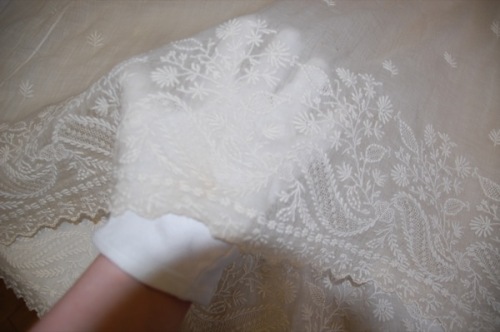
Muslin dress, 1813-20. Image @Madame Guillotine

This dress was so beautiful but really worryingly see through! You forget this about muslin when you see them in period dramas…
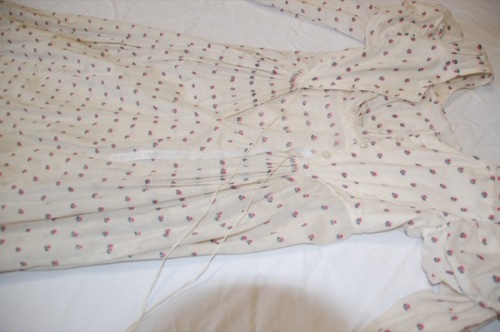
Patterned muslin dress, 1815-20. Image @Madame Guillotine

This is the sort of thing that a Heyer heroine would have worn.

These images are just a foretaste of the many photos that Melanie took at the Fashion Museum. To read both her posts, click on the two links below:
Read Full Post »

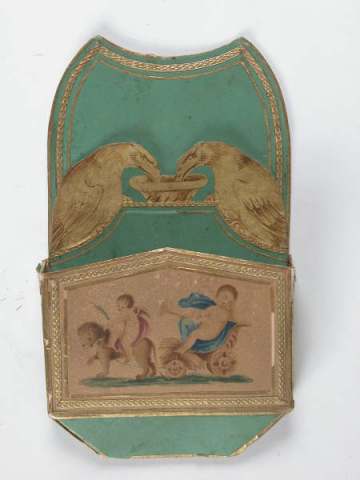
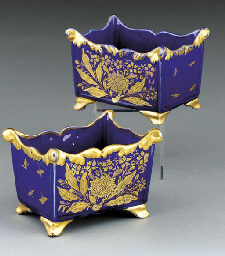
One of a pair of card racks made of decorated cardboard, French, c. 1820, at Attingham. ©National Trust/Claire Reeves

About two weeks ago, The National Trust asked a question about card racks: How were they used? The organization had acquired a number of beautiful examples of 1820’s card racks from Attingham, an estate in Shropshire.  Laurel Ann from Austenprose referred me to the site and to Emile de Bruijn, who had asked the question. I jumped right in, only to discover how little I (or anyone, really) knew about the topic. There was much lively speculation about these beautiful items.

Card racks are small, only large enough to hold visiting cards or small notes. They were designed to be hung somewhere, perhaps on a wall, or over a fireplace mantle. Many were made from cardboard, yet sturdier porcelain examples exist. Their true purpose is now obscure and has faded from memory.

These facts came out as I researched the topic:

It seems that young ladies decorated these card racks from the turn of the 19th c. until at least 1830. Mary Russel Mitford wrote in Our village: sketches of rural character and scenery, Volume 4, 1830:

With regard to accomplishments she knew what was commonly taught in a country school above twenty years ago, and nothing more: played a little, sang a little, talked a little, indifferent French, painted shells; and roses, not particularly like nature, on card-racks and hand screens; danced admirably; and was the best player at battledore, and shuttlecock, hunt the slipper, and blind man’s buff in the county.” p. 131

French emigres made card racks to earn a living:

During the period when the French emigres were so numerous in this country, he (Rudolph Ackermann) was one of the first to relieve their distress by liberal employment. He had seldom less than fifty nobles priests and ladies engaged in manufacturing screens, card racks, flower stands, and other ornaments.” – English coloured books, 1906, Martin Hardie

Rudolph Ackermann kept on hand in his Repository the supplies ladies needed for making hand made items:

No. 3 is a new embossed gold seed-paper. It is used, in a variety of ways, for ladies’ fancy work — in card-racks, hand and fire-screens, chimney ornaments, boxes, watch–stands and cases, &c. It is manufactured by Mr. S. Solomon, and sold, wholesale and retail, at R. Ackermann’s Repository, No., 101, Strand.” – From The Repository of arts, literature, commerce, manufactures, fashions and politics (1809)

And of course I found a Jane Austen connection. In Persuasion, Mrs. Smith makes pin money by creating hand made items:

One might argue that perhaps Nurse Rooke’s patients themselves are practicing charity by buying the thread-cases, pin-cushions, and card-racks. One finds, however, that they do not do so willingly. Nurse Rooke is skilled not only in invalid care, but also in sales. In the case of Mrs. Wallis, Nurse Rooke’s current invalid, Mrs. Smith says, “‘I mean to make my profit of Mrs. Wallis . . . . She has plenty of money, and I intend she shall buy all the high-priced things I have in hand now’” Thread-cases, Pin-cushions, and Card-racks: Women’s Work in the City in Jane Austen’s Persuasion, Susan E. Jones, Persuasions Online

Ironstone ware card rack. Image @Christie's

More speculation and information about card racks can be found in the comment section of the National Trust post. (I have included only my own findings.) It is fascinating to learn how quickly a once popular pasttime has lost its meaning. If anyone can help the staff at The National Trust, do go over and leave a comment.

Read Full Post »

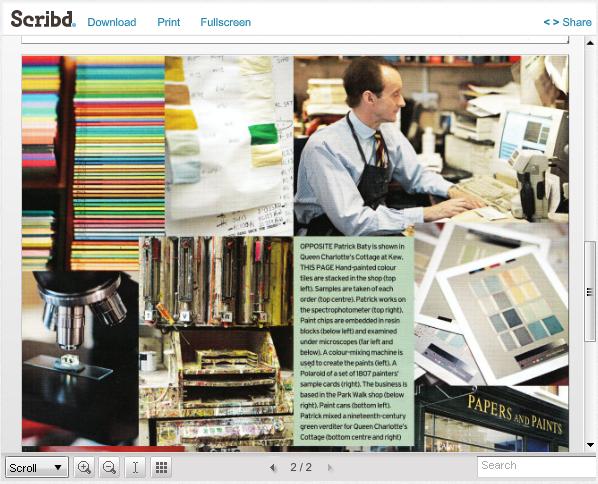
Inquiring readers: Patrick Baty of Papers and Paints is noted for his analysis of paint colours of the interiors and exteriors of buildings of architectural significance. He is consulted on both sides of the Atlantic. Mr. Baty has graciously allowed me to reproduce his blog post about exterior paint colours in the city of Bath. A link to more detailed articles sit at the bottom of this post.

Patrick was commissioned to carry out an analysis of the paint on a number of buildings in the City. The purpose was to establish the decorative history of representative doors, windows and railings and to see whether one colour predominated on each element.

How had external painted surfaces appeared when Jane Austen lived there in the early 19th century, for example?

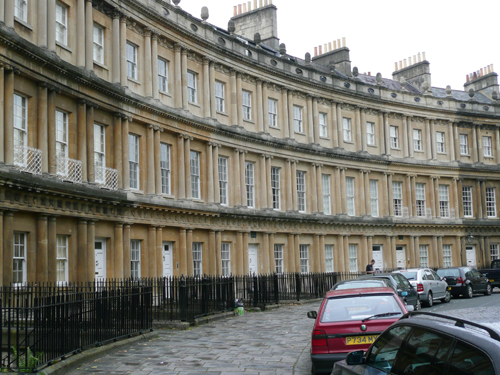
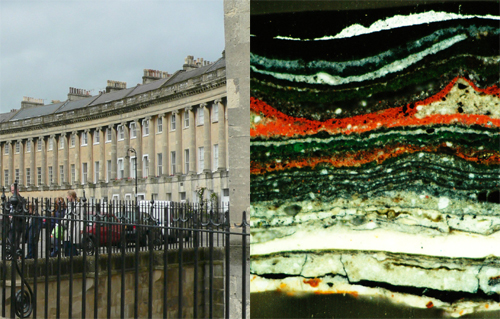
Royal Crescent

The Royal Crescent was built between 1767 and 1774. When the railings were sampled, 27 individual schemes were found, which suggests an average repainting cycle of about eight years. The first scheme was a pale lead (grey) colour. This kind of colour was used on the next fifteen occasions – probably until the end of the 19th century. Dark green and red-brown has been used subsequently, with black employed twice and then only since the 1970s.

Lead Colour

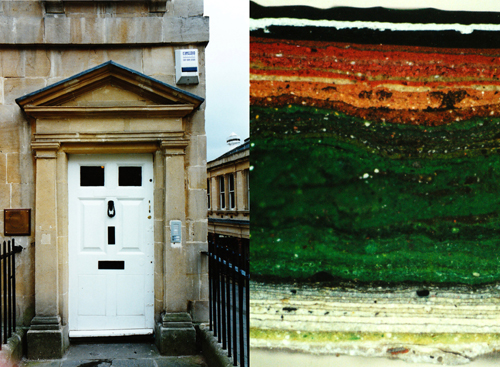
7 Alfred Street

Alfred Street is believed to have been built in 1772. When the railings of No 7 were sampled approximately 45 individual schemes were found, which suggests a repainting cycle of about five years. A stone colour was employed initially and variants of this appeared until the 1810s, when lead colour was introduced. Dark green appears to have been used from the middle of the 19th century, before giving way to red-brown. Black was only applied on the last three occasions.

Bronze Green

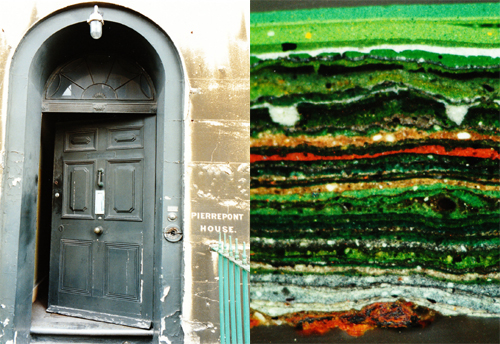
Pierrepont House

36 schemes were encountered on the railings of Pierrepont House. Lead colour was employed until the middle of the 19th century, when dark green was introduced. Black has never been used on these railings.

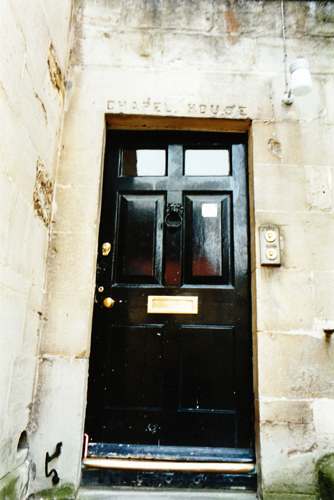
Chapel House

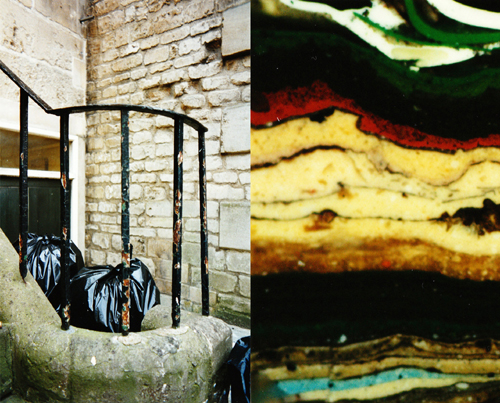
Chapel House railing

The railings of Chapel House, behind the Countess of Huntingdon’s Chapel, displayed approximately 38 decorative schemes. As the Chapel was built in 1765 this suggests a repainting cycle of about six years. The first two schemes were in lead colour and the third was in a stone colour. Unusually blue was employed on the fourth occasion. The remainder of the sequence consisted of variants of stone colour and dark green. Black had only been adopted in the 1980s.

As will be seen from the few examples cited here, grey and stone colours were employed on railings in the 18th and early 19th centuries. Dark green seems to have been generally adopted from about 1850 and, perhaps surprisingly, black only made its appearance in the late 20th century. Its use has nothing to do with being a sign of mourning for the death of Prince Albert – a belief held by many of the cognoscenti. This has been borne out by examining numerous examples of external ironwork across the country.

Specialist Profile, Patrick Baty

Patrick Baty provides more fascinating information about exterior paint colors on his blog, Patrick Baty, in three downloadable Scribd documents: External Paintwork, The Colour of Chelsea, and The Use of Colour on Architectural Ironwork, 1660 – 1960. You can also read an article about him,Specialist Profile, on the blog.

Please note: I place no ads on my blog, nor do I collect revenue from them. The ads you see in the comment section were placed there by WordPress.

Read Full Post »

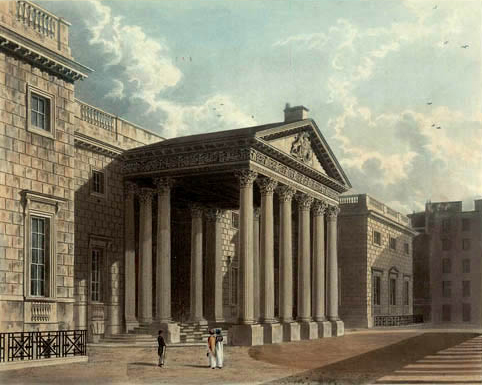
Carlton House was the town house of the Prince Regent for several decades from 1783 until it was demolished forty years later. It faced the south side of Pall Mall, and its gardens abutted St. James’s Park in the St James’s district of London. The location of the house, now replaced by Carlton House Terrace, was a main reason for the creation of John Nash’s ceremonial route from St James’s to Regent’s Park via Regent Street, All Souls, Langham Place and Park Square. Lower Regent Street and Waterloo Place were originally laid out to form the approach to its front entrance

An existing early eighteenth century house had been sold in 1732 to Frederick, Prince of Wales, and son of George I. William Kent had been employed to lay out the garden of which no trace remains. Frederick’s widow, Augusta, enlarged the house, had the entrance gates and porter’s lodge redesigned and a colonnaded porch built. She died in 1772 and for some years the house was unoccupied.

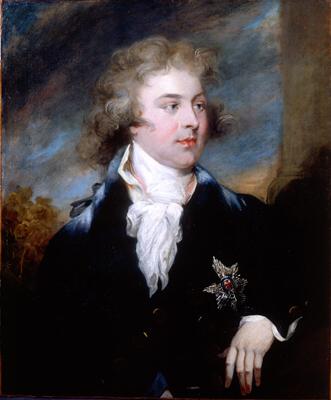
Portrait of The Prince of Wales, later King George IV (1762 – 1830) 1790. John Russell RA

In 1783 George III handed the house over, with £60,000 to refurbish it, to George, Prince of Wales on his coming of age. During the following years the interiors were remodelled and refurnished on a palatial scale.

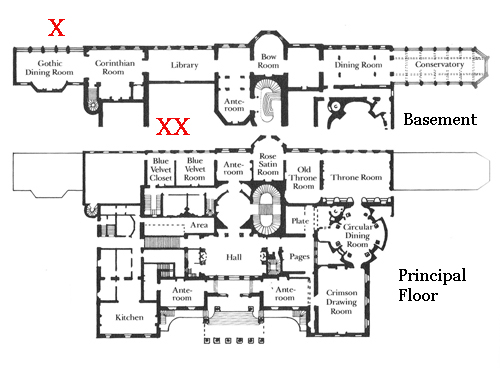
Carlton House ca.1825. As published in Britton and Pugin, Public Buildings of London. 1825. Patrick has worked on elements from the areas marked with a cross

Initially Sir William Chambers was appointed as architect, but he was quickly replaced by Henry Holland. Both Chambers and Holland were proponents of the French neoclassical style of architecture, and Carlton House would be extremely influential in introducing the Louis XVI style to England.

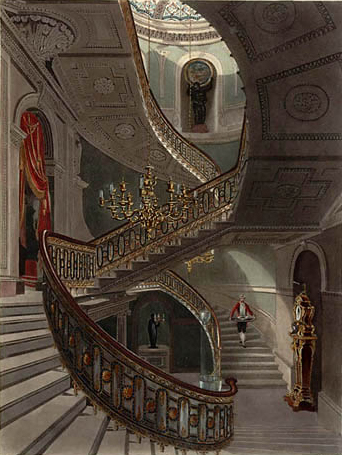
The Grand Staircase

Holland began working first on the State Apartments along the south (garden) front, the principal reception rooms of the house. Construction commenced in 1784. By the time of his marriage to Mrs Fitzherbert in December 1785, however, construction at Carlton House came to a halt because of the Prince of Wales’ mounting debts. Costs continued to soar and more money had to be found by the Prince…  Continue to read this post on Patrick Baty’s blog.

Inquiring Readers, Patrick Baty is one of the foremost authorities on architectural paint and colour on historic architecture and interiors. These days, the majority of Patrick’s time is spent as a historic paint consultant, sampling paint layers on buildings, bridges and architectural details to produce a forensic history of the decoration from creation to the present day. He has graciously allowed me to link to his post about Carlton House.

Other posts by Patrick Baty on this blog:

Read Full Post »

Bandeau: in clothing and fashion, the term means a narrow band of ribbon, velvet, etc., worn round the head. A wide range of materials make up a hair bandeau, including jewels, ribbons, cloth, and flowers. In some cases, a tiara can be said to be an elaborate form of the bandeau. This head band has been popular since the beginning of recorded history, for the decoration is flattering for almost any hair style. The bandeau provides an instant frame for curls, adds color, and can hold unruly hair in place. Bandeaux were quite popular during the Regency era as both formal and informal head wear.

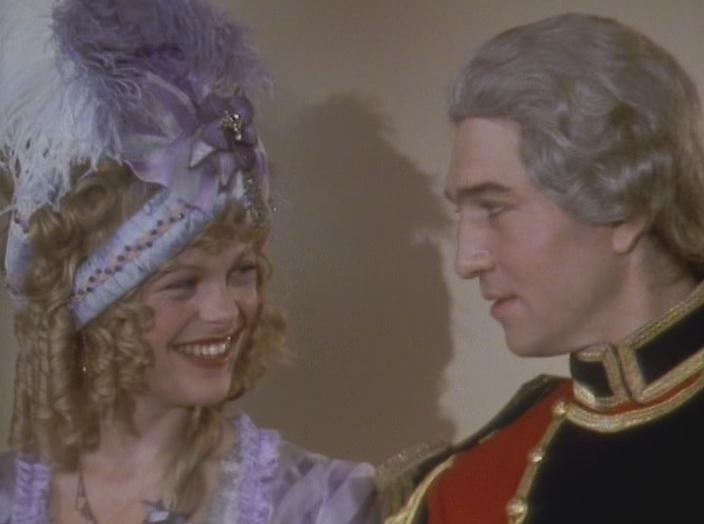
Structured bandeau with feathers. Northanger Abbey (Cassie Stuart and Greg Hicks) 1986

In the image above, Isabella Thorpe’s bandeau resembles an open turban. It play an integral part in the hair design.

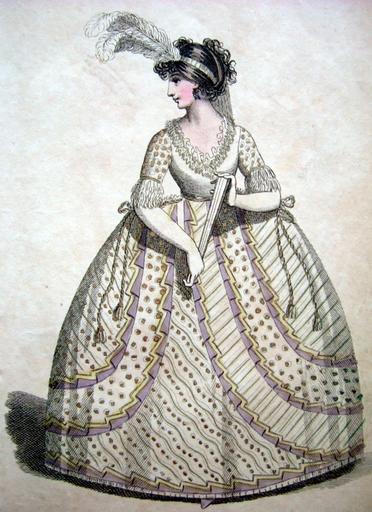
Court gown, 1799. This bandeau, worn for a formal event, also holds feathers, as in the above photo.

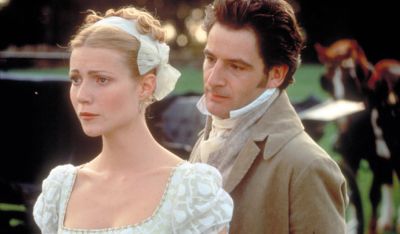
Bandeau made of ribbon, similar to the illustration below, but with the bow to the side. This is an informal use of a bandeau, which carries enough "weight" to serve as a headcover. Emma (Gwynneth Paltrow and Jeremy Northam) 1996

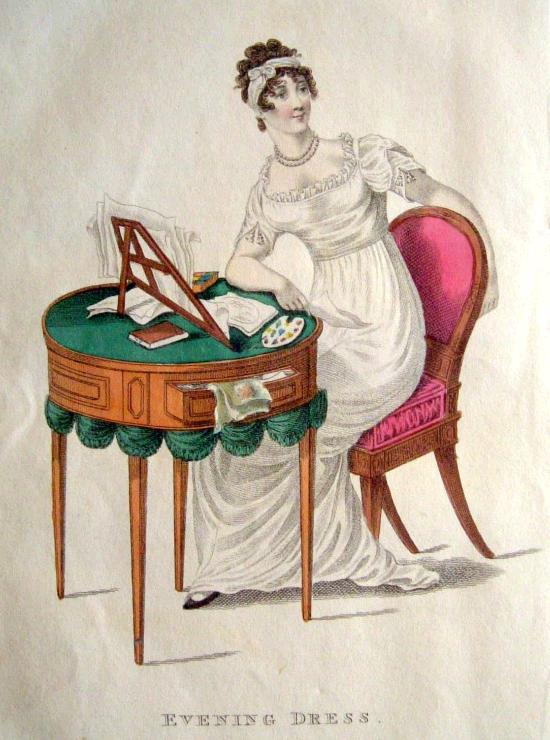
1812 La Belle Assemblee, evening dress and bandeau, which frames the curls beautifully.

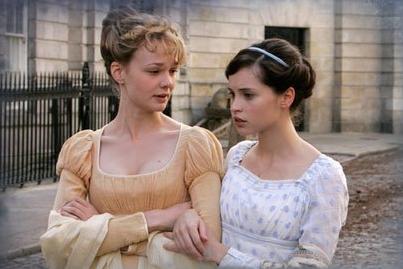
Felicity as Catherine Morland (2007) wears a thin bandeau. This image is inaccurate in that ladies in those days did not venture outdoors without a head cover. We can tell that Isabella (Carey Mulligan) is “fast” for she reveals more of her bosom during the day than is ladylike and wears no hat while strolling through Bath.

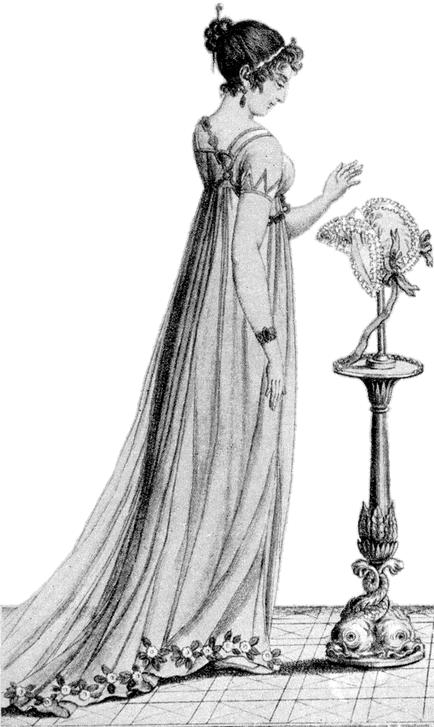
Woman wearing a chemise dress (1799) and thin bandeau, and contemplating a hat.

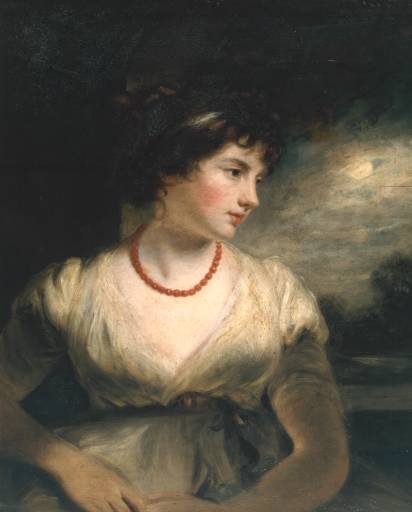
The Countess of Oxford wears a thin ribbon bandeau. Painted by John Hoppner, 1797.


Rolinda Sharples painted a flower bandeau for the lady at front and center of this detail.

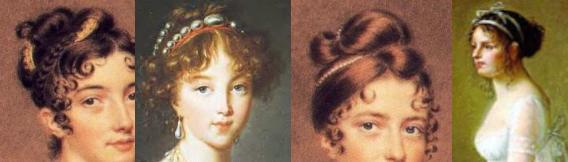
Thin satin or silk ribbon bandeau woven into the hair on the righ;, bandeaux made with pearls in the center two images; and gold ornamental combs in the hairstyle on the left.

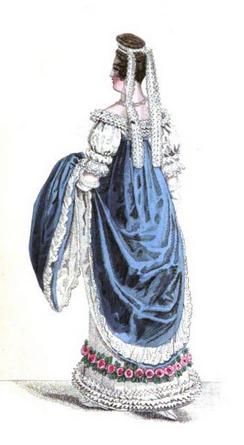
Bandeau with long lace streamers. 1818 French court dress, La Belle Assemblee.

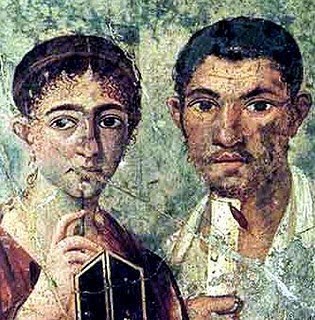
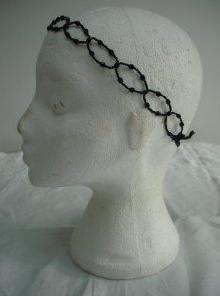
Bandeaux have been popular throughout the ages, and continue to be so.

Pompeii couple. The woman at left wears a thin bandeau.

Beaded bandeau from the Edwardian Era

Haley Steinfeld, 2011 Oscars

Gallery of Fashion – Women’s bandeaux

Read Full Post »

« Newer Posts - Older Posts »