Feeds:
Posts
Comments

Archive for the ‘Regency style’ Category

Allemande

Definition of an Allemande -Music:
An allemande (also spelled allemanda, almain, or alman) (from French “German”) is one of the most popular instrumental dance forms in Baroque music, and a standard element of a suite, generally the first or second movement.

Definition of an Allemande – Dance:

A 17th and 18th century court dance developed in France from a German folk dance: a dance step with arms interlaced.

The name ‘country dance’ has nothing to do with country as opposed to town, but comes from the French ‘contre-danse’, describing the way in which the dancers start by standing up facing each other in two long rows, men on one side and girls on the other. The leading couple would then move off down the row, the other couples falling in behind them; there was no fancy footwork involved, but the dancers would weave their way in a variety of patterns across the floor, linking arms or hands with their partners s the figure required – the ‘allemande’figure involved a ‘a great deal of going hand in hand, and passing the hands over heach other’s heads in an elegant manner’. – Jane Austen, The World of Her Novels, Deirdre Le Faye, p. 104.

More on the topic:

Read Full Post »

Gentle reader, This post was written by Tony Grant of London Calling, whose association with this topic is mentioned at the bottom.

I’ve been reading a book recently called, The British Museum is falling Down, by David Lodge. One of the main threads of the story is that Roman Catholic, Adam Appleby, a research student, husband and father of three and with possibly one more on the way, goes off one night into the surreal and ethereal world of a smog bound London to visit an old lady in Bayswater who knew the writer, Egbert Merrymarsh. The author he is researching for his thesis. There is the possibility she has an unknown manuscript by this writer that would make Adam’s thesis shed new light and insights into the writers work and life. Within this world of smog, where he can hardly see in front of his own nose, he stumbles into sexual temptation, meat cleaver wielding characters from a sort of hades underworld and his strongly anti contraception, Irish parish priest, who he has a conversation with inside a shop that sells whips, corsets, chains and belts to be used for sexual gratification. The priest remains unaware of the shops purpose. The whole scenario had me laughing out loud. The story is a morality play but one hell of a funny one.

What makes it funny? Trying to explain humour is a death knell. Humour happens!!! And we enjoy it. To analyse it takes the humour away and the joke is lost. However a few pointers might be; humour is created when, misunderstandings lead to a series of unlikely mishaps, which often can be related to ourselves. The use of highly unlikely and ridiculous metaphors and similes with a strong ring of truth also can create humour. Negative statements cancelling each other out to make something positive or direct, can create a chuckle of recognition. Unlikely scenarios and happenings being put side by side can be funny. Opposing statements creating a third view. But, we must be taken by surprise to really laugh out loud.

Word play of every sort is what jokes are made from. Jane Austen was good at this. Throughout her letters and often in her novels there are examples of what people describe as waspishness. Sometimes this can be hurtful or even insulting to the person she talks about, if that person were to hear or read what Jane said about them. Some of them did, because she wrote the letter directly to them. Cassandra, Martha Lloyd and her own mother, Mrs Austen, did not escape.


Jane's Ballroom


Sunday 10th January 1796 to Cassandra written from Steventon.

Jane has just turned 21 the month before. This is the first letter we have of hers and one of her most famous because in this letter she extols the virtues of Tom Lefroy but it is not towards Tom she turns her twist of humour, it is towards another young man. She is relating to Cassandra the events of a ball at Ashe the night before.

“ I danced twice with Warren last night, and once with Charles Watkins, and, to my inexpressible astonishment, I entirely escaped John Lifford. I was forced to fight for it however.”

Bad breath, body odour, an inexpressibly boring way of talking, I wonder what it was?

Sunday 9th November 1800 to Cassandra from Steventon.

“Earle Harwood has been giving uneasiness to his family, & Talk to the neighbourhood; – in the present instance he is only unfortunate & not at fault.- About ten days ago, in cocking a pistol in the guard-room at Marcou, he accidently shot himself through the Thigh. Two young Scottish surgeons in the island were polite enough to propose taking off the Thigh at once but to that he could not consent; & accordingly in his wounded state was put on board a cutter & conveyed to Haslar Hospital at Gosport; where the bullet was extracted & where he now is I hope in a fair way of doing well.”

The more you consider this story you begin to think, how? what? did he really? were they going to? Sometimes telling a story straight is enough.

Here is one of my favourite quotes in a letter to Cassandra. I wonder how Cassandra was left feeling? The speed of this delivery is enough to bring a smile.


Jane's letters


Friday 31st May 1811

“ I will not say that your Mulberry trees are dead, but I am afraid they are not alive. We shall have pease soon- “

A double negative if I am not mistaken. A master of the art.


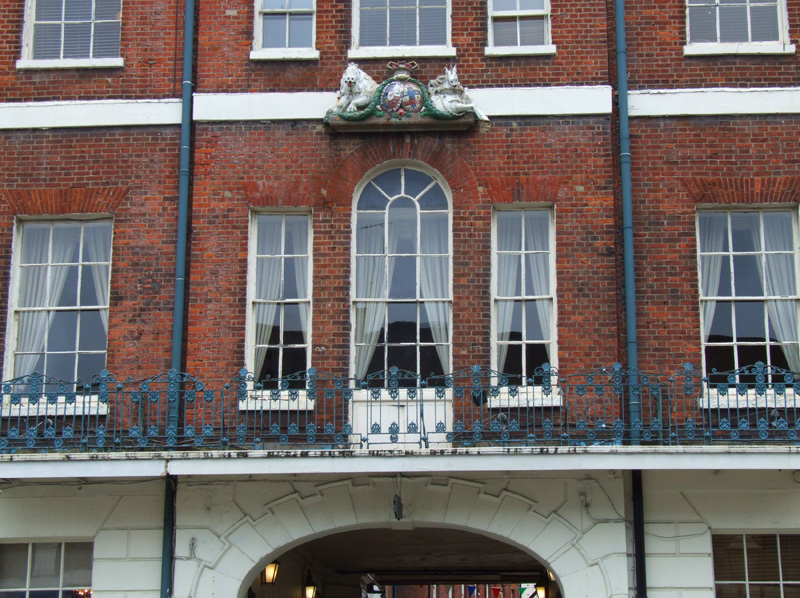
Castle Square today


Wednesday 28th December 1808 from Castle Square to Cassandra.

“ We spent Friday evening with our friends at the boarding house, & and our curiosity was gratified by the sight of their fellow inmates, Mrs Drew & Miss Hook, Mr Wynne and Mr Fitzhugh, the latter is brother to Mrs Lance, & very much the gentleman. He has lived in that house more than twenty years, & poor man is so totally deaf, that they say he could not hear a cannon, were it fired close to him; having no cannon at hand to make the experiment, I took it for granted, & talked to him a little with my fingers, which was funny enough.”

From the sublime to the ridiculous and back again. That’s almost a scene from Monty Python.


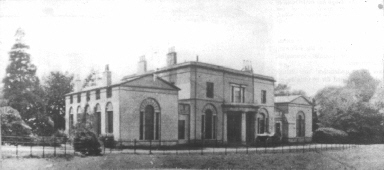
Chessil House, the home of the Lances.


Mrs Lance, who was mentioned in the last quotation comes under Jane’s scrutiny a few times over the two years the Austens are in Southampton. Mrs Lance was the wife of a well to do merchant and local politician, who owned a beautiful mansion and grounds just outside of Southampton at Bitterne Park. Two roads are named after the Lances to this day. The house no longer exists.


Little Lances Hill. On part of the Lance's estate.


Just after Jane, Mrs Austen and Martha move to Southampton they receive cards from Mrs Lance inviting them to tea. A mutual friend has informed Mrs Lance of the Austens coming to Southampton.

Thursday 8th January 1807 from Southampton to Cassandra.

“ We found only Mrs Lance at home, and whether she boasts any offspring beside a grand pianoforte did not appear.”

Synical, waspish,how would you describe that comment? Poor Mrs Lance obviously thought a lot of her pianoforte. Maybe she mentioned nothing else. Mrs Lance did have daughters and they appear in other letters and especially in Jane’s description of a ball at The Dolphin Hotel in Southampton’ s High Street.

Tuesday 24th January 1809 from Castle Square to Cassandra.

“The room was tolerably full, & the ball opened by Miss Glyn; – the Miss Lances had partners, Capt. Dauvergne’s friend appeared in regimentals, Caroline Maitland had an Officer to flirt with, & Mr John Harrison was deputed by Capt. Smith being himself absent, to ask me to dance, – Everything went well you see, especially after we had tucked Mrs Lance’s neckerchief in behind,& fastened it with a pin.”

What on earth was going on there? Can you imagine the scene?


The Dolphin Hotel. Jane Austen attended balls here.


There is another ball Jane describes that took place at The Dolphin. Her sharp observation is in evidence here.

Friday 9th December 1808 from Castle Square to Cassandra.

“The room was tolerably full & there were perhaps thirty couple of Dancers; – the melancholy part was to see so many dozen young Women standing by without partners, & each of them with two ugly naked shoulders! – It was the same room we danced in 15 years ago! – I thought it all over – &in spite of the shame of being so much older, felt with thankfulness that I was quite as happy now as then. – We paid an additional shilling for Tea, which we took as we chose in an adjoining & very comfortable room. – There were only four dances and it went to my heart that the Miss Lances ( one of them too named Emma!) should have partners only for two.- You will not expect to hear that I was asked to dance – but I was…..”

This is not what you might term funny but perhaps confrontational in the style of Lenny Bruce. It’s confessional and opinionated. The emotions and the thoughts waver between memory, sadness, melancholy, joy and happiness. Jane is contemplating her past and her present.

I couldn’t possibly finish without a quote about, “The Americans.” Jane is staying with Henry at Hans Place. Henry hasn’t been well. Jane has been privy to a conversation between Henry and some of his banker friends, or, Henry has related their thoughts and beliefs to her.


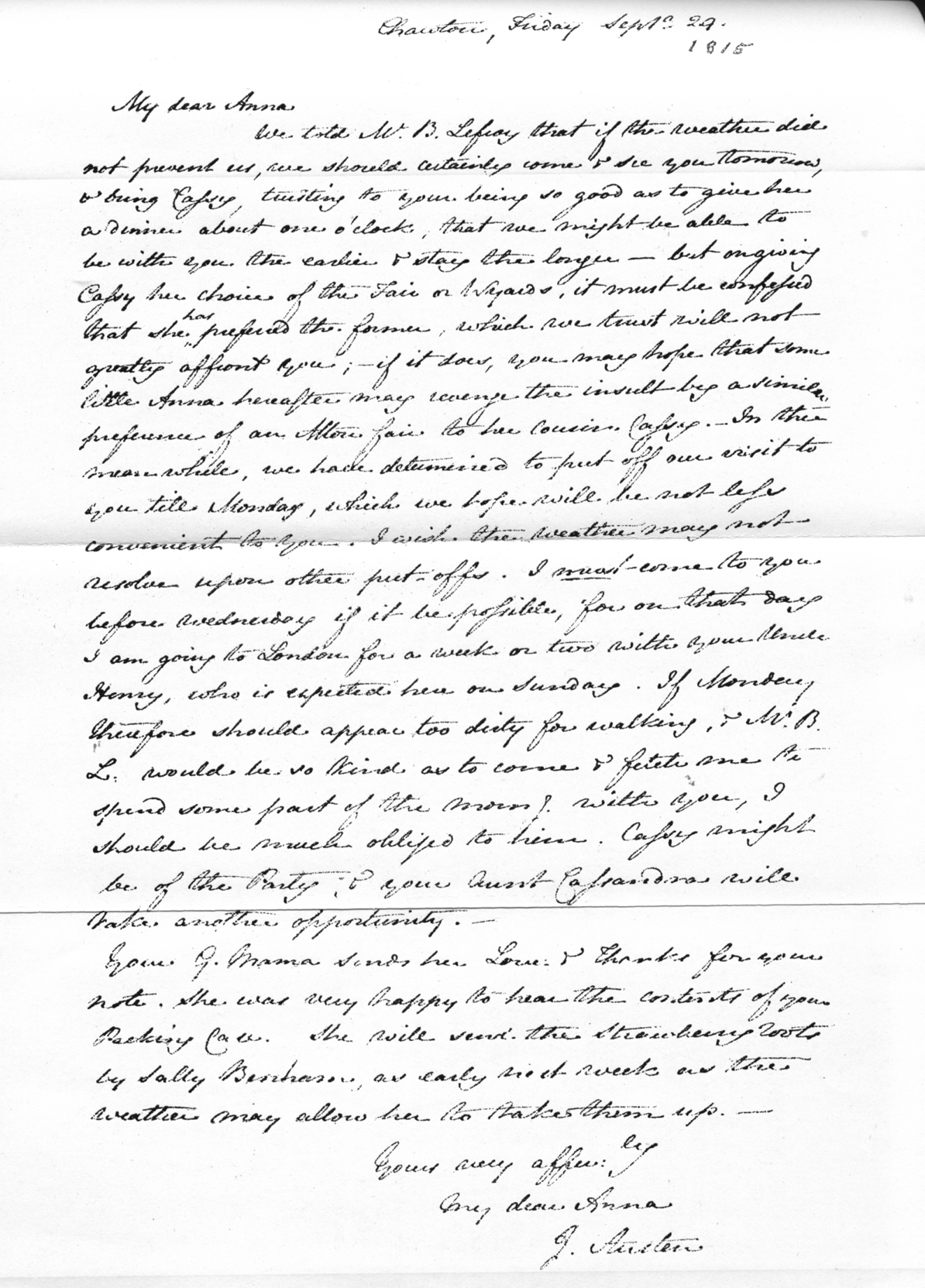
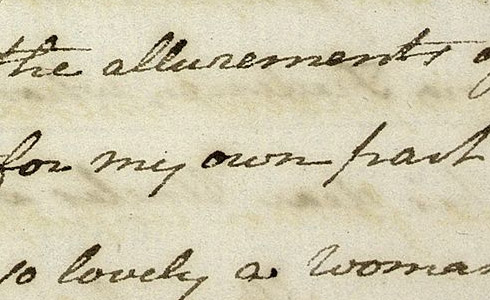
Jane's handwriting


Friday 2nd September 1814 from Hans Place to Martha Lloyd.

“ His view and the view of those he mixes with, of Politics is not cheerful – with regard to an American War I mean; – they consider it as certain, & as what is to ruin us. The Americans cannot be conquered, & we shall all be teaching them the skill in War, which they may now want. We are to make them good Sailors & Soldiers & gain nothing ourselves. – If we are to be ruined, it cannot be helped – but I place my hope of better things on a claim to the protection of Heaven, as a Religious Nation, a nation in spite of much evil improving in religion, which I cannot believe the Americans to possess.”

Powerful Lenny Bruce type stuff again. Confessional.

Any talk shows over there that could accommodate our Jane?

There are so many instances of Jane’s wit, humour, waspishness and deep intelligence throughout her letters. One of you could write a post with the same title as this and choose entirely different quotations. I can only regard what I have written here as a taste, a mere flavour. The letters are worth reading. Although they were thoroughly culled by Cassandra after Jane’s death, they do give us a deep insight into her thoughts, worries, beliefs, hopes and joys. Letters are very direct things. It’s the writer’s immediate voice talking to you.


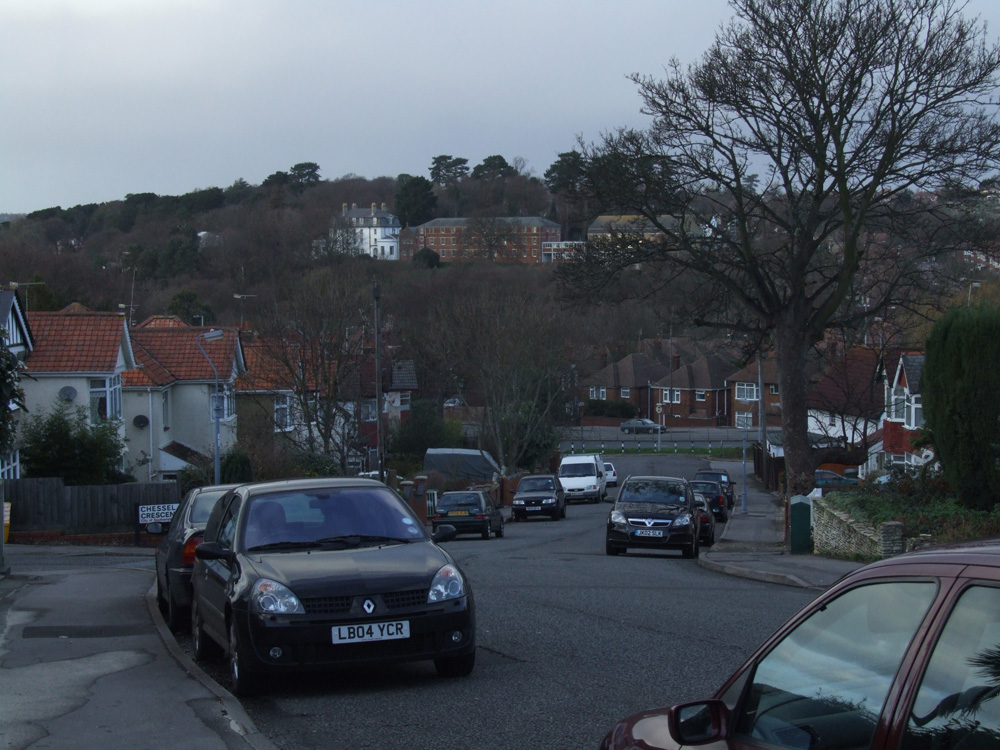
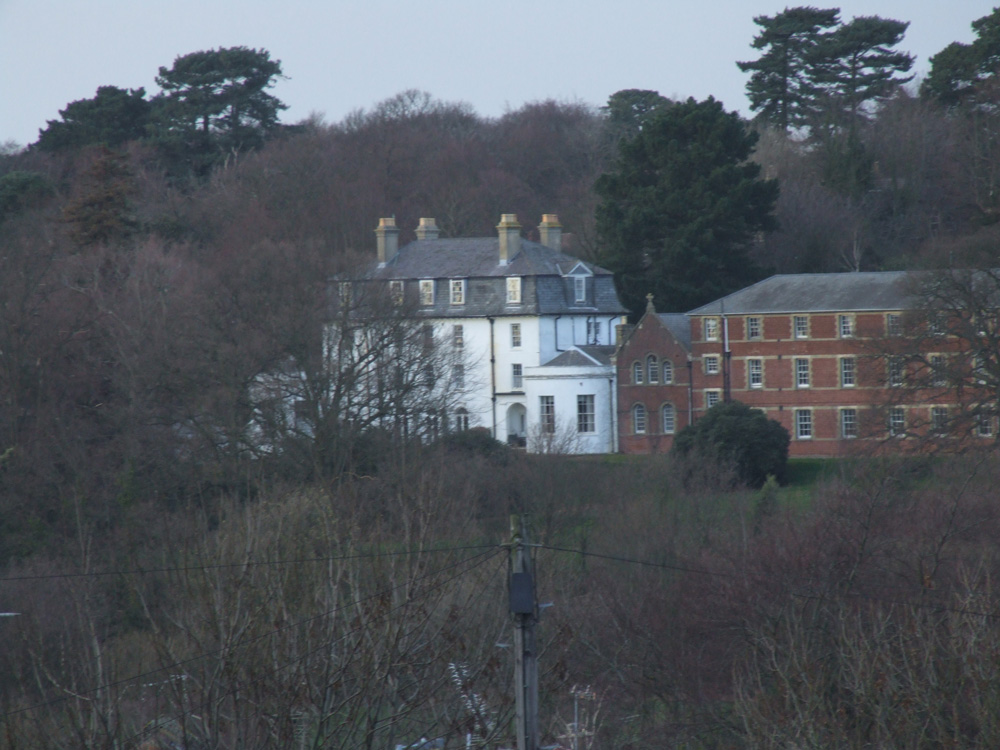
The white houseis 18th century. Jane would have seen this on the other side of the valley from Chessil House.


PS. The white house on the opposite side of the valley to where the Lances lived is my old school in Southampton still run today by the, de La Mennais Brothers, a French order from Brittany. It was their boarding school I went to at Cheswardine Hall in Shropshire – A connections between me and Jane!!!!!!!!!!!!!!

Read Full Post »

Dancing With Mr. Darcy is a fabulous book. A book reviewer isn’t supposed to reveal an opinion right away, but I have many reasons for liking this compilation, which began as a short story competition in 2009 sponsored by Chawton House Library to celebrate the bicentenary of Jane Austen’s arrival in the Hampshire village of Chawton. This was a momentous occasion in Jane’s life, for she would enjoy her most productive years there.

Dancing with Mr. Darcy is great for bed time reading.

When my head hits the pillow, I can stay awake for 20 minutes at the most. That’s just the right amount of time to savor one of these stories, which is between 2,000-2,500 words in length, reflect upon it, and turn off the light. The book will remain on your bedstand for at least 20 nights if you stick to this schedule. But here’s the kicker: It’s hard to put down.

The stories are truly original.

The inspiration for these stories was taken from any theme in Jane Austen’s novels, like a character or single sentence. Authors could also draw upon Chawton House, an Elizabethan mansion, as their muse. Whatever they decided, they were encouraged to get their creative juices flowing. And were they ever!

The book opens with a story inspired by Chawton and a dead Jane Austen crossing the River Styx . She is accused in a Higher Court by the older female characters she created for wilfully portraying them as manipulative harpies and scolds. I wondered how author Victoria Owen would resolve this curious plot, but it ended beautifully and logically. Another story that drew my attention was Felicity Cowie’s ‘One Character in Search of Her Love Story Role‘, in which the central charcter, Hannah Peel, a contemporary heroine, finds her voice by interacting with classic literary heroines, including Jane Bennet and Jane Eyre.

Fresh voices are given an opportunity to shine.

Unknown authors do not often get to compete in a public forum for an opportunity to have their work published with the backing of a prestigious institution. I read the short biographies at the end of the book, and while many of the authors took creative writing or majored in English, some are still students, one lives on a farm, another is a book reviewer, several are scholars, another is a math and science teacher, and yet another was educated to be a lady. With such a variety of backgrounds, it is no wonder that the stories are not clichéd.

Many of the tales had contemporary settings, and there were times that I had to puzzle out just what their connection was to Jane Austen or Chawton house. Like all compilations, I preferred some stories over others, such as Kelly Brendel’s Somewhere, inspired by a passage in Mansfield Park, and Eight Years Later, which is Elaine Grotefeld’s take of love lost and found again in the mode of Persuasion.

Jane Austen would have approved.

The variety of the stories, and their excellence and fresh approach to the Austenesque genre makes this book stand out from the pack. Jane Austen would have approved of their original plots, their intelligent writing, and the variety of ideas that sprang from the original impetus. These twenty stories were selected from 300 submissions, and one can only imagine how many good stories barely missed the cut.

Sarah Waters at Chawton House, July 2009. Image @Chawton House

In a different way, I found this compilation equally as thrilling as A Truth Universally Acknowledged, edited by Susannah Carson, a book of critical insights by famous authors about Jane Austen that I adored and reviewed late last year. Stories that are judged, weighted, or juried tend to have an edginess and contemporary bite that attract me.

In this instance, the stories were judged by a Chair judge, Sarah Waters, the author of Tipping the Velvet and Fingersmith, and a panel of judges: BBC journalist Lindsay Ashford; author Mary Hammond; Rebecca Smith (five-times great niece of Jane Austen, descended through her brother Frances); and freelance editor Janet Thomas.

The book is available today at your local or online bookseller. Run, don’t walk to obtain your own copy. I give it three out of three Regency fans and then some.

Read Full Post »


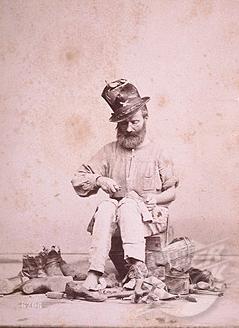
Bootmaker, 1845


He wore green trousers and a red jacket and his hat was leather with a narrow brim and a purple band all around the crown. He was sitting on a wooden stool, hammering away at a pair of boots that he was making, with the tools of his trade all laid out beside him: the lap-stone, the stirrup, the whet-board, the pincers and the nippers. As he worked he sang a little song to himself, to go with the rhythm of the hammering:

A Gentle Craft that hath the Art,
To steal soon into a Lady’s Heart.
Here you may see what Guile can do,
The Crown doth stoop to th’ Maker of a Shoe.

The Other End of the Rainbow, David Gardiner


16th Century Shoemaker Shop


In the Middle Ages, tradesmen formed guilds that protected their trades. Those who worked with fine leather were known as Cordwainers,  named after the very finest leather that was imported from Cordoba, Spain. In later years, those who processed leather formed their own guild, but  shoemakers retained the name of Cordwainer. Cobblers were distinct from Cordwainers, for they only repaired shoes, but over the years, this distinction began to weaken.  – Cordwainers: History.


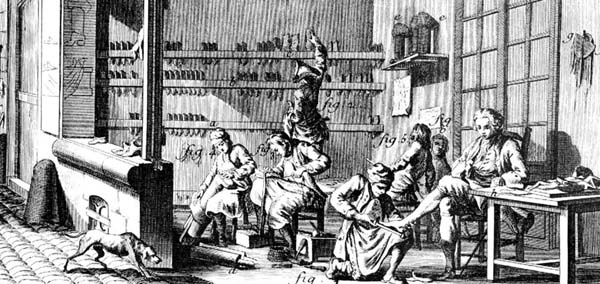
18th Century Shoe Shop


At the time, the shoemaking trade consisted of division according to the type of shoes made: men’s, women’s, and shoes for workers, such as night-soil men and slaughterhouse men. There were different operations performed by different persons: cutting leathers, sewing uppers, and joining heel and sole. And there were production sites, such as shop masters and cellar, garret and stall masters. Shoe masters employed many people in large operations that hired many workers (there were only 600 or 700 of these), but over 30,000 individuals worked as journeymen, countryworkers, apprentices and cheap garret masters.*


Shoe Seller, 1840


By the 18th century, most boot and shoemakers barely made a subsistence wage. The majority of individuals who made shoes worked for very low wages, about 9s or 10 s a week. Many could barely afford their own lodging, and if they did, the accommodations were mean and poor.  The wages, while low for men, were even lower for women – who worked in shoe closing and shoe binding – and for children.*


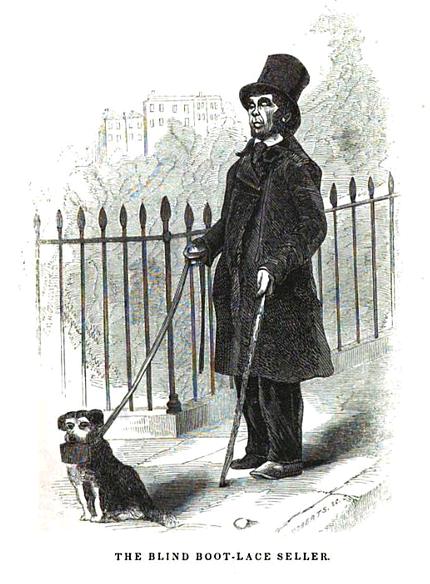
Blind bootlace seller, Mayhew


The life of a shoemaker was a hard scrabble life, for their trade depended on leather, the purchase of which required money or credit. Some shoemakers were known to stretch their goods by reducing the thickness of the leather used for heels and soles. Others, desperate to feed their families, would steal food or clothing and be jailed or, worse, hung after they were caught.*  -*London Hanged: crime and civil society in the eighteenth century, Peter Linebaugh


19th century shoe cobbler


Yet the shoemaking business was not totally abysmal:


Shoes over the 18th Century**


Shoemaking flourished in the 18th century, and boot- and shoe-makers were the most numerous of all Salisbury craftsmen throughout the 19th century and until the First World War. It was said that in the later 19th century ‘in hundreds of houses the shoe-binders, the closers and finishers were busy week in week out’. The business with the longest history is Moore Brothers, whose origins can be found in William Moore, boot and shoemaker in 1822 and 1830, and Henry Rowe, established in Catherine Street in 1842, who had moved by 1867 to Silver Street. By 1875 these premises were occupied by Rowe, Moore and Moore, a firm which subsequently became James and William Moore Brothers. The firm moved to its present premises in the New Canal at the end of the 19th century.  – Salisbury Economic History Since 1621


Yellow silk shoes with buckles, French, c. 1760's. @Bata Shoe Museum


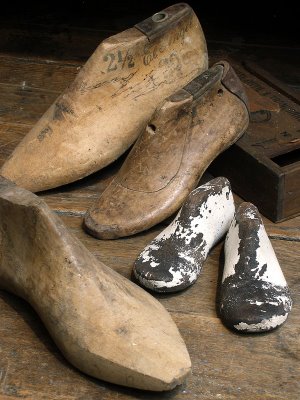
Early in the Georgian era the fashion for high heels (as much as 3″) made it difficult for cobblers to make “paired lasts” for left and right shoes. The “last” of the shoe is footprint of the shoe, which can be straight or without a left or right side. Many of the 18th and 19th century shoes and boots were produced on straight lasts. As the person wore the shoes, they “molded” to the foot, creating a left side and right side over time. –  The Bootmaker


1810-1820 woven straw shoes


After the French Revolution, shoe heels began to disappear, symbolizing that everyone was born on the same level. Delicate silk uppers began to be replaced by more affordable, sturdier leathers.


1891 silk shoe made with straight lasts***.


But the shoes continued to be made with straight lasts, a technique that continued into the 20th century.


Vintage shoe lasts


As late as 1850 most shoes were made on absolutely straight lasts, there being no difference between the right and the left shoe. Breaking in a new pair of shoes was not easy. There were but two widths to a size; a basic last was used to produce what was known as a “slim” shoe. When it was necessary to make a “fat” or “stout” shoe the shoemaker placed over the cone of the last a pad of leather to create the additional foot room needed. – Fashion Through Time, History of Your Shoes


Shoemaker's shop, 1849


Tools used by bootmakers and cobblers included: awls for punching holes in leather; hot burnishers that rubbed soles and heels to a shine; sole knives that shaped soles; stretching pliers which stretched the leather upppers; marking wheels to mark where the needle should go throught the sole, and size sticks to measure the foot. “By 1750 shoemakers were making shoes in different sizes for anyone who wanted to buy them. Before that they only made shoes on special order.” – Tradesmen/shoemaker.

Sources:


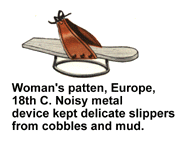
Pattens went out of fashion in the early 19th century. Jane Austen recalled their noise on cobblestones in Bath. It was common for women to trip while wearing this awkward device.


Read Full Post »

( A discussion about what friendship might be. A few thoughts and considerations while writing about Jane and Martha. You might agree. You might not. I am open for criticism. Guest writer Tony Grant of London Calling)
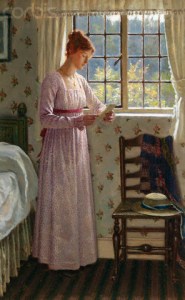
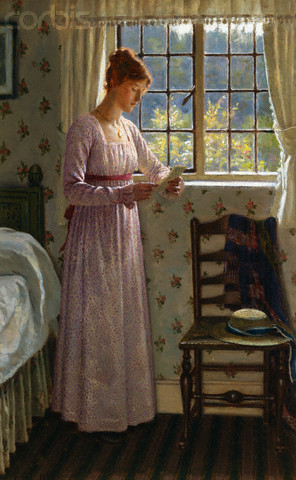
The Letter, Edmund Blair Leighton

Jane Austen didn’t marry. There are suggestions she did have love affairs but they did not come to fruition. Did this make her human experience less than those who have the love of another human? She had the love of her family and especially her sister Cassandra. She had the love of Martha Lloyd her best friend. She experienced love from other human beings and she gave love to others.

Lets have a look at what we can find out about Jane’s relationship with Martha Lloyd, her best friend.

Who was Martha Lloyd?

Martha Lloyd was born in 1765. Her mother, Martha Craven, had been the daughter of the Royal governor of South Carolina. Martha Craven , although coming from a wealthy background, married an obscure country vicar called the Reverend Nowis Lloyd who was the rector of Little Hinton, Wiltshire and who also, in 1771, became the vicar of Enborne near Newbury in Berkshire. After the Reverend Nowis died Martha and her two sisters, Mary and Eliza were left with their cruel and some say insane mother. They escaped by going to live with an aunt who lived in Newbury. They also have a brother but he died in a smallpox epidemic. Martha and Mary were both left scarred for life by the same epidemic. The younger sister, Eliza, is supposed to have escaped the epidemic unscathed. She married

It is not known how exactly the Lloyd family and the Austen family met but they had many acquaintances in common. The two families became very close after the Reverend Nowis died in 1789. The Reverend Austen gave the widow and her three daughters his unused parsonage at Deane a mile from Steventon. So Jane and Cassandra lived very close to the Lloyd sisters and they saw a lot of each other. There were not many chances to form close acquaintances in the countryside and the daughters of both families all became close friends, especially Martha Lloyd and Jane Austen. Jane was ten years younger than Martha but they obviously got on very well. Martha became like a second sister to Jane.

When James Austen married in 1792 he took over the parish at Deane and so required the parsonage there. The Lloyd family had to move out and went to Ibthorpe, a small hamlet near Hurstbourne Tarrant in Hampshire, fifteen miles further away. This must have been hard for Jane and Martha. They had no independent transport to visit each other.

Mary Lloyd, the younger of the two sisters, married James Austen as his second wife, after his first wife died.

The Reverend George Austen died on January 21st 1805 in Bath. Martha’s mother died soon after. Mrs Austen, Cassandra, Jane, and Martha decided to pool their resources and live together. They first moved to Southampton together to live with Jane’s brother Frank’s wife Mary, in Castle Square. Frank and Mary had only just got married and Frank had to go away to sea. The arrangement was beneficial to all concerned. Apparently they all got on well together.

On July 7th 1809 Jane, her mother, her sister Cassandra and Martha moved to the cottage at Chawton on their brother Edward Knight’s estate.

Martha knew all about Jane’s writing exploits, something Jane kept secret from most people. She even dedicated some early works to Martha, her friend. A sure sign of Jane’s close trusting affinity with Martha.

Jane’s letters show evidence of her easy and close relationship to Martha. Her comments are often teasing and full of fun about Martha but always show love for her friend. Sometimes there are mere asides mentioning Martha within a discussion about other people or other things. Martha’s opinion or what Martha is doing at the moment of writing. It’s as though she is always in Jane’s mind and presence.

Tuesday 11th June 1799, writing from Queen Square, Bath, to Cassandra.

“ I am very glad You liked my Lace, & so is Martha-& we are all glad together.-I have got your cloak home, which is quite delightful!….”

Again on Friday 9th December 1808 from castle Square to Cassandra.

“ Our Ball was rather more amusing than I expected, Martha liked it very much, & I did not gape until the last quarter of an hour.-It was past nine before we were sent for & not twelve when we returned…”
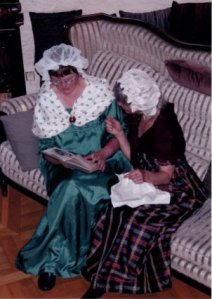
Jane Austen Invites, Sue Humphreys.* A Theatre Someone production ‘Jane Austen invites…’ written by Susan Leather, Lesley Sherwood & Sue Humphreys.

Jane’s letters have many short references to Martha. She is always present.

Other letters tell more detailed stories about Martha. While living in Castle Square, Southampton, the Austen’s attended services at All Saints church in the High Street where Dr Mant was the vicar. Dr Mant was well known in Southampton. He had been the headmaster of King Edward VII’s Grammar School in the town . He had also been a professor of Divinity at Oxford and written religious discussion pamphlets. He was a super star in the firmament of vicars. He was a very charismatic preacher too. Dr Mant had his following of inspired young ladies. Martha was apparently a besotted member of this clan.

Tuesday 17th January 1809 from castle Square to Cassandra.

“ Martha and Dr Mant are as bad as ever, he runs after her for having spoken to a Gentleman while she was near him the day before.- Poor Mrs Mant can stand it no longer; she is retired to one of her married daughters.”

This story sounds quite scandalous. One wonders what is Martha’s attractiveness. She obviously has a passionate heart and is prone to,”love.” A certain, young girlish tendency towards infatuation. And, poor Mrs Mant, what of her, indeed. Scandal is in the air or is Jane being creative with the truth? She feels free to be personal. She definitely has a relaxed attitude towards her dear friend. She is being very personal in this letter. Being able to get that close to somebody and maybe even play with their emotions is a sign of something close in a relationship.

Another letter highlights this playfulness again.

Tuesday 11th June 1799 form Queen Square to Cassandra.

“ I would not let Martha read First Impressions again upon any account,& am very glad that I did not leave it in your power.- She is very cunning , but I see through her design;-she means to publish it from memory & one more perusal will enable her to do it.”

And then there is the close affection and freedom each feels in the others presence expressed in this story of a night spent together. You can imagine the enjoyment of each others presence in this letter. Jane is full of fun and teasing.

Wednesday 9th January 1799 from Steventon to Cassandra.

“ You express so little anxiety about my being murdered under Ash Park Copse by Mr Hulbert’s servant that I have a great mind not to tell whether I was or not,&shall only say that I did not return home that night or the next, as Martha kindly made room for me in her bed, which was the shut up one in the new nursery.-Nurse and the child slept on the floor;&there we all were in some confusion& great comfort;- the bed did exceedingly well for us, both to lie awake in and talk till two o’clock,& to sleep in the rest of the night.-I love Martha better than ever …….”

These are two girls having the time of their lives. Totally at one, relaxed and full of fun with each other.

There are only four letters in existence that Jane wrote to Martha. The first, written in 1800 has two parts. Jane’s letters are always full of news about people and places she and the recipient of the letter have in common and in some ways we the present day reader of those letters are left out of this private world unless we find out for ourselves about her references. This first letter we have to Martha is partly taken up with this sort of news about people and places. However what makes this letter different is the opening, where Jane expresses her wish to be with Martha. There is an intensity shown in these words maybe even a passion to see her friend, revealed here.
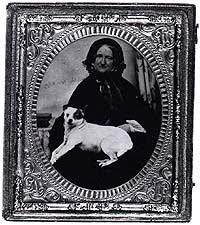
Martha Lloyd lived long enough to be photographed

To Martha Lloyd, Thursday 13th November 1800 from Steventon:

“-You are very good at wishing to see me at Ibthorpe so soon, & I am equally good in wishing to come to you; I believe our merit in that respect is much upon a par, our Self denial mutually strong.-Having paid this tribute of praise to the Virtue of both, I shall have done with Panegyric & proceed to plain matter of fact.-In about a fortnights time I hope to be with you; I have two reasons for being not being able to come before; I wish so to arrange my visit to spend some days with you after your mother’s return, in the 1st place that I may have the pleasure of seeing her, & in the 2nd, that I may have a better chance of bringing you back with me.- Your promise in my favour was not quite absolute, but if your will is not perverse, You & I will do all in our power to overcome your scruples of conscience.- I hope we will meet next week to talk all this over, till we have tired ourselves with the very idea of my visit before my visit begins.”

Compare this to an exchange between Romeo and Juliet.

Act III Scene V Capulet’s Orchard:

Juliet:
Art thou gone so? Love, lord, ay husband, friend! I must hear from thee every day in the hour
For in a minute there are many days!
O, by this count I shall be much in years
Ere again I behold my Romeo!

Romeo:
Farewell! I will omit no opportunity
That may convey my greetings, love, to thee.

Juliet:
O thinks thou we shall ever meet again?

Romeo:
I doubt it not; and all these woes shall serve
For sweet discourses in our time to come.

The two situations are not exactly the same. There is no added angst of the forbidden meeting driving on the will to meet between Martha and Jane but there is the want brought about by separation.

Friendship indeed.

Is this what it’s all about?

Are we hard wired to get the friends we have? Hard wired meaning, made to relate with and find love with a certain person or type of person.

How do we get a friend? We choose friends, or do we? They have to come into our proximity, live near us, or be near us for part of our lives so we can actually meet. We could meet them at school, or university. They could be neighbours, attend a club we go to, work in a place we work in or be introduced to us. We have to make regular contact for some time in our life, with them, for the friendship to take wing and fly. So finding friends is accidental to a certain degree. But, we meet many people accidentally. They don’t all become our friends. So what is it, this friendship thing?

My opening question asked, “Are we hard wired to get the friends we have?” Our personality, our way of thinking, what we say, how we say it, our sense of humour, our moods, all these intangible things that make us the individual we are must in some way meld with these intangible things found in another person and somehow they are illuminated, expanded, ignited with this coming together.
Is friendship love? We love our husband , wife or partner. We love our children. We do love our friends. What are these different aspects of love? Or, are they different? Aren’t they the same?

Our children come from our bodies. Marriage is formalised in a church ceremony or a civil ceremony. Partners are people we at some stage decide to stay with. But do these guarantee love, friendship, a close relationship? A loving relationship of whatever label is beyond the label. The labels are just signs. But signs can be false. Do we all really love our husband, wife or partner all the time, part of the time or never? Do we really love our children because they come from us? Don’t we fall out drift apart, sometimes? Relationships can be split and the name friend, partner, wife, husband loses it’s meaning. So a real deep love and friendship is beyond the outward signs and words.

Why do we need a loving relationship?
They take us beyond ourselves. They take us beyond and out of ourselves. Phrases come to mind, “I love them more than life itself. I love them more than myself.” And there are other phrases, which describe it.

What is it all about? It’s a sort of searching and if we are lucky, a finding of something that necessary, life ennobling, deep within ourselves and even outside of ourselves. But is a husband, wife, partner, son, daughter, friend, enough and finally necessary? Do those relationships go deep enough? Does our real need go deeper?

What about those who stay single or people whose relationships are broken? Or consider the contemplative monk or nun who hardly ever speak, the celibate in or out of the religious life, the rejected and dejected, the drug addict, alcoholic, the tramp, the drop outs from society, those who have nobody, is their human experience less and are they denied love somehow because they don’t appear to have a close loving human relationship with someone? How deep can we go with this love thing? Is there something more infinitely deeper than the merely human side of it? Are human relationships, human love, really just a taste of something deeper and even more profound? Human relationships can be fickle, wither and dry up. People also die. Is the need and search for love within us naturally there? Are we born with the desire and need for it? What could it all be out? I don’t know.

But Jane had her friend.

Other posts by Tony Grant

*Image from Theatre Someone

Read Full Post »
« Newer Posts - Older Posts »