Feeds:
Posts
Comments

Archive for the ‘Regency style’ Category

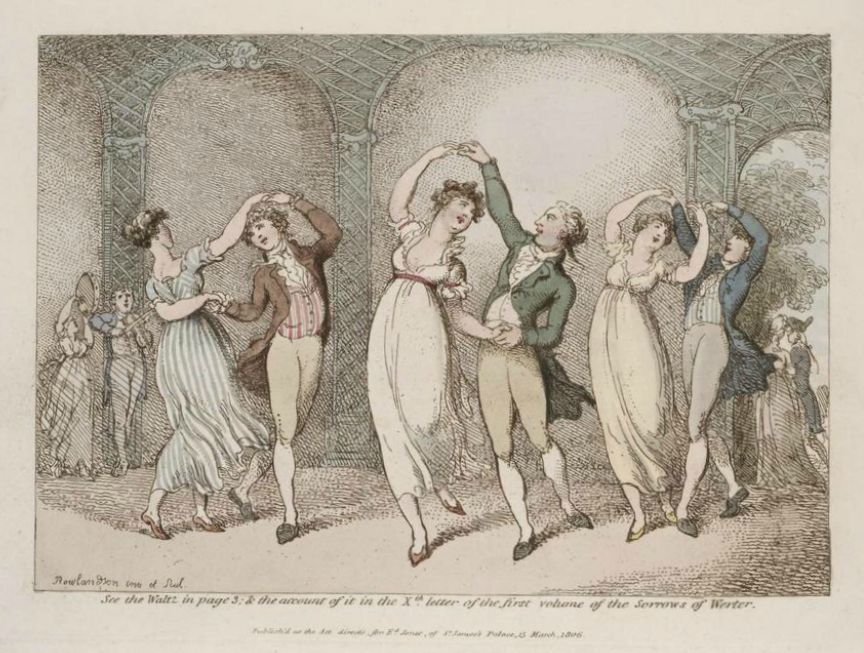
When Lady Caroline Lamb met Byron in 1812, the waltz was starting to gain traction with the more progressive elements of Society. This couples dance was considered rather racy in an age when stately group English country dances were the primary offerings at Almack’s.

Thomas Rowlandson’s image of the waltz in 1806

The vivacious and racy Lady Caroline Lamb met Lord Byron in 1812. She recalled that time in a letter she wrote 12 years later:

Devonshire House at that time was closed from my uncles death for one year – at Melbourne House where I lived the Waltzes and Quadrilles were being daily practised – Lady Jersey, Lady Cowper, the Duke of Devonshire, Miss Milbank, and a number of foreigners coming here to learn…

You may imagine what forty or fifty people dancing from 12 in the morning until near dinner time all young gay & noisy were.
In the evenings we either had opposition suppers or went out to Balls and routs – Such was the life I then led when Moore and Rogers introduced Lord Byron to me… Caroline Lamb, 1824, in a letter to Captain Thomas Medwin

It is interesting to note that Caroline mentions Lady Jersey and Lady Cowper, two of the patronesses of Almack’s, where the waltz was banned. Eventually, however, the ultra exclusive Almack’s would cave in, and by 1814 the waltz was finally sanctioned. Young ladies would still need approval before a gentleman could clasp his arm around her waist, but the doors had been opened beyond the confines of the upper classes.

La Walze, Le Bon Genre, 1810. This caricature has a feeling of decadence.

By 1815, when Jane Austen’s Emma was published, the waltz has become so respectable that it would be danced in Highbury at the home of the Coles.

Mrs Weston, capital in her country-dances, was seated, and beginning an irresistible waltz; and Frank Churchill, coming up with most becoming gallantry to Emma, had secured her hand, and led her up to the top.” – Emma

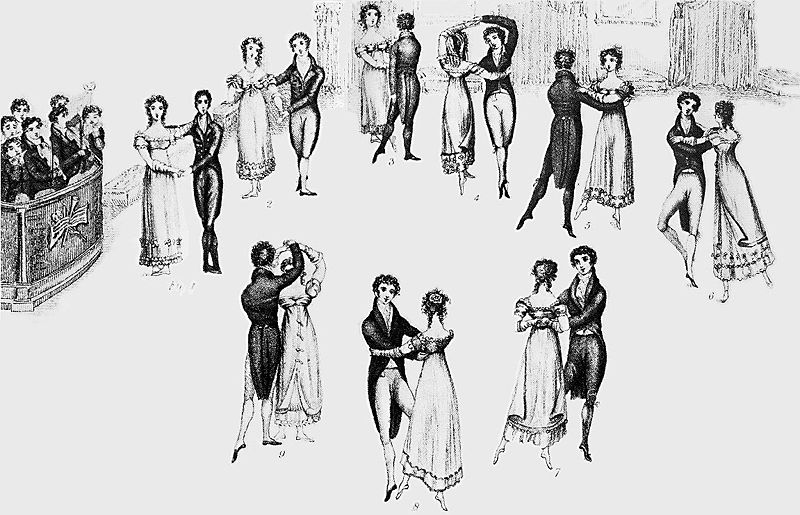
The waltz looks gentrified in this 1816 illustration.

More on the topic:
Read Full Post »

As a blogger who is curious about all things in Jane Austen’s world and customs in her past that might have influenced her, I am still amazed at how one tiny clue points to another until I land on a series of sites that open up a whole new topic. While history foodies probably know about the elaborate lengths that pastry chefs took to please their patrons, the visual results of a full banquet are simply astounding. I can only assume that Georgian taste buds were equally pleased.

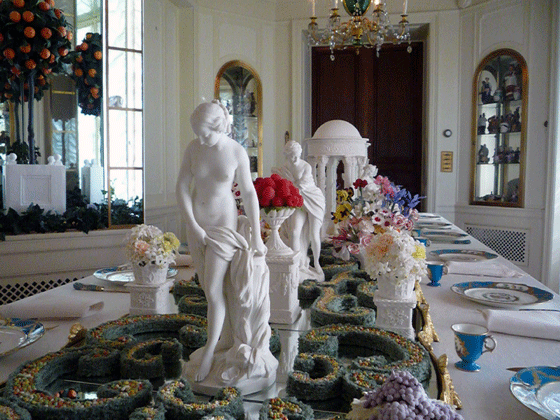
Modern chef and historian, Ivan Day, recreated a feast from the past using sugar structures and porcelain figures to arrange a fanciful garden centerpieces for the table.

I already knew about The Prince Regent’s elaborate 1811 dinner at Carlton House, which was described as thus:

“Along the centre of the table about six inches above the surface, a canal of pure water continued flowing from a silver fountain beautifully constructed at the head of the table. Its banks were covered with green moss aquatic flowers; gold and silver fish swam and sported through the bubbling current, which produced a pleasing murmur where it fell, and formed a cascade at the outlet.” – The Gentleman’s Magazine, describing the Prince Regent’s fete at Carlton House, June 19, 1811 in honor of the exiled French royal family.

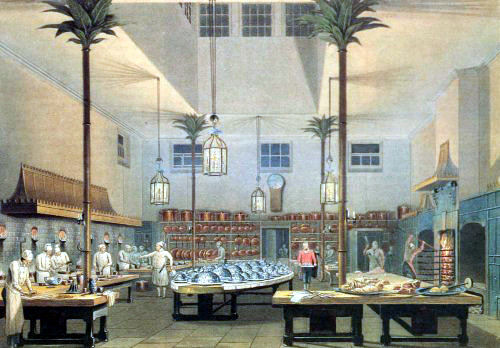
The great kitchen at the Prince Regent’s Pavilion at Brighton could accommodate creating dishes for huge and fanciful banquets.

So great was the interest that the doors of Carlton House were opened for three days in a row. But instead of satisfying the curiosity of the masses, the result was ever-increasing crowds. Chaos ensued.

‘The condescension of the Prince in extending the permission to view the arrangements for the late fete at Carlton House has nearly been attended with fatal consequences,’ reported one newspaper. Read more: http://www.dailymail.co.uk/news/article-1039063/As-Queen-opens-Palace-Ballroom-public-story-decadent-royal-banquet-ever.html#ixzz1s7ijkAEv

Detail of the design for an elaborate garden centerpiece. These engravings were showcased in Le Cannameliste Français by famed confectionary chef, Joseph Gilliers, in the mid-18th century. View the entire centerpiece here: Click on this link.

The banquet featured a recreation of a landscape at its center. Such a method of decorating a table was not new, especially when it came to desserts. Elaborate set pieces with architectural French influence were created for tables using spun sugar and Sevres bisque figures to create fantasy landscapes. Before the Napoleonic Wars, travel over the English Channel between British and French courtiers and diplomats was common, and thus the French chef’s custom of creating these elaborate centerpieces became well-known in England. Upper class households vied for highly paid (and desired) French chefs, and by the 1820s these gentlemen had by and large invaded British upper class kitchens. Their ability to create dishes that feasted both the eyes and the stomach was unrivaled.

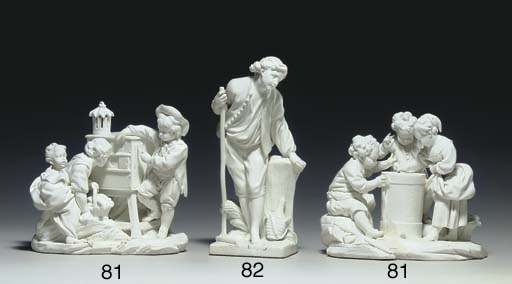
 SEVRES BISCUIT FIGURES CIRCA 1755, Modeled after François Boucher. Image @Christies.

This was an era when confectionary was considered as much a branch of the decorative arts as of cuisine, and porcelain for the table represented prestige as well as a demonstration of power. The combination of French chef, porcelain, and fanciful confectionary desserts served as symbols of prestige and wealth, for no ordinary household could offer such an extravagant display of food and panoply. (View this porcelain table centerpiece set.)

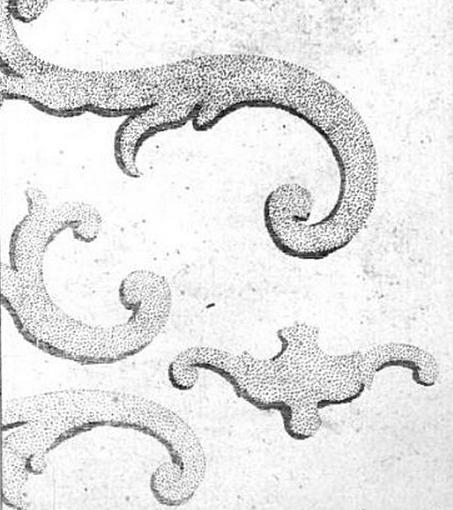
Detail of Gilliers’ templates for cut outs.

Most of the images of the banquets and figurines are copyrighted. I encourage you to click on the links to view the spectacular results of sugar and porcelain table centerpieces that mimic gardens, sculptures, and figures based on famous paintings. The fanciful recreation included redesigning tables as well.

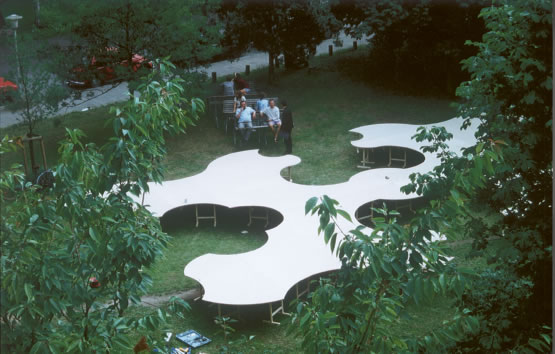
Modern version of Gilliers table. Image @Simon Beer.

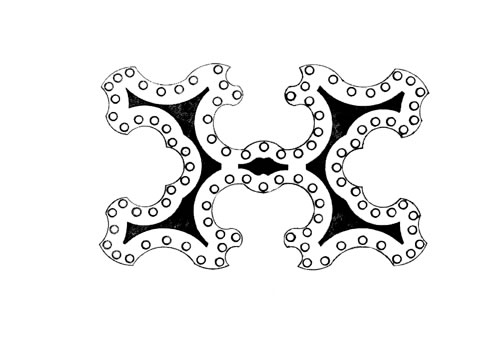
Gilliers’ 1751 sketch of the table, plus seating.

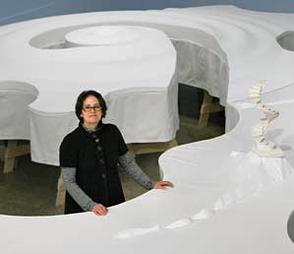
Amy Hauft, VCU sculpture department. Confectioner Joseph Gilliers conceived his 100-seat rococo fantasy for the serving of a single course — dessert — in a garden setting. The centerpiece atop the tailored white tablecloth was to be a sculpture made of sugar paste fortified with dried sturgeon bladder. There is no record that this table was ever built by Gilliers. Image@Richmond Times Dispatch

More on this fascinating topic:

Ivan Day’s  pavilion made from a “pastillage sugar paste for an exhibition at the Met in NYC two years ago. They were exact replicas of ones made for Maria Theresa, the Empress of Austria in 1740. “

Read Full Post »

Since the 18th century, satirists have had a fun time mocking dandies. In Hogarth to Cruickshank: social change in graphic satire, 1967, (Walker Publishing)  Mary Dorothy George classified 3 different kinds of print-shop dandies: 1.) the notorious dandy, 2) the effeminate dandy, and 3) dandies who were slavish in their imitation of  Beau Brummel.

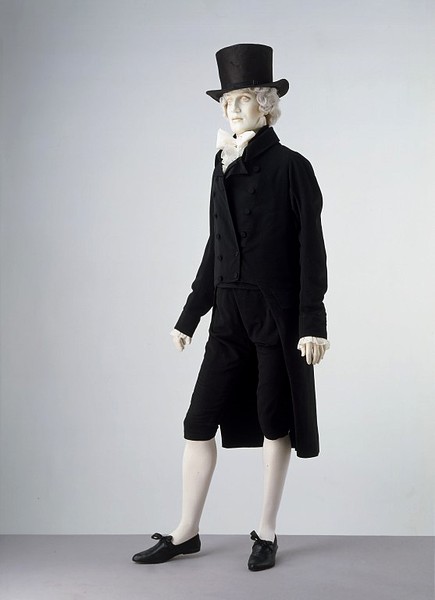
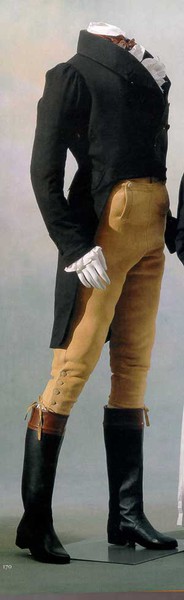
Buckskin breeches, clawhammer coat, and riding boots. This ensemble from the Kyoto Costume Institute could well have been worn by Mr. Darcy as he toured the grounds of Pemberley.

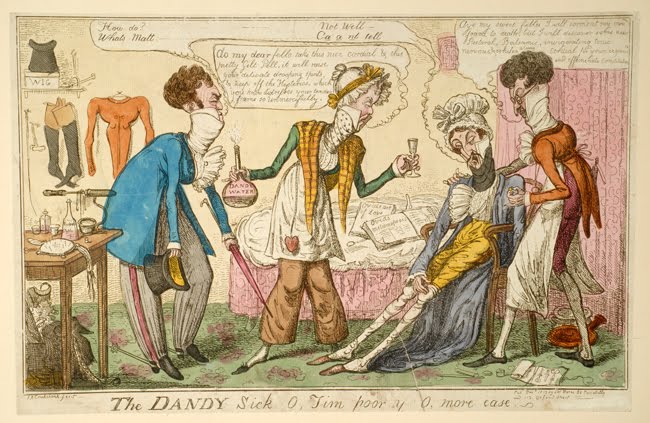
I would add to those categories two more distinctions: the powerful dandy and the ridiculous dandy, or one who, from behavior or social standing, is a wholly ridiculous and insignificant creature. The latter exquisites, along with the slavish imitators and effeminate dandies, were fodder for cartoonists, especially Robert and Isaac Cruikshank, who took great glee in lampooning them in a series of hand colored engravings.

This exquisite was a wholly ridiculous creature, a true fashion victim.

According to Jane Rendell in a Pursuit of Pleasure, the word dandy may have originated from “jack-a-dandy”, a Scottish description of a person dressing up at a fair. The word dates back to the late 18th century/early 19th centuries. In the Dictionary of the Vulgar Tongue, published in 1788, Francis Grose describes the dandy:

Dandy.  That’s the dandy;  i.e. the ton, the clever thing

Dandy.  grey Russet. A dirty brown. His coat’s dandy grey russet the colour of the Devil’s nutting bag.

Dandy. Prat. An insignificant or trifling fellow.

An effeminate dandy required a great deal of care. Cruikshank.

Much later, the word “dandy” is used to describe “Satinist” – Obs. rare”1, [f. Satin sb. + -ist.] A wearer of satin, a dandy. A new English dictionary on historical principles: founded mainly on the materials collected by the Philological Society, Volume 8, Part 2, 1914.

Beau Brummel’s influence in modifying men’s behavior and dress ranged far and wide, influencing the Prince Regent and his set.

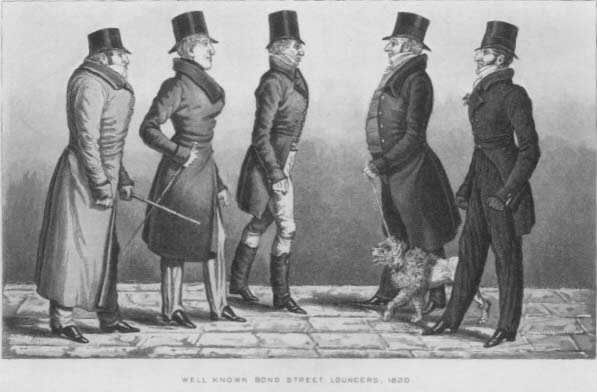
Prinny’s set, or the Prince Regent’s friends, consisted of the Earl of Sefton, the Duke of Devonshire, Lord Manners, “Poodle” Bing, and the Duke of Beaufort, serious dandies all. Somber and rich, these men epitomized the powerful, restrained dandy. Image @The Georgian Index

In Jane Austen and Representations of Regency England, Issue 33; Issue 61, Roger Sales identifies Henry Crawford and Tom Bertram of Mansfield Park as dandies: Tom because he is the quintessential Regency sports man, as well as rich and handsome; Henry, because of his mode of address, which shows a haughty attitude towards rural workers, and because he fashions his conversation “into exquisity little mirrors to reflect his own sense of superiority.” Henry makes elegant bows and frequently mocks others. His manners, like Beau Brummel’s, verge frequently on insolence – his stance is one of ennui and superiority at the same time. While Henry is not as handsome as Tom, he commands a room with his personality. I would classify Tom and Henry as notorious dandies, for both pushed the limits of what was considered proper behavior. The more modest Edmund Bertram would never behave like either man.

Hessian boots

John Thorpe of Northanger Abbey belongs in the category of the ridiculous dandy. He drives a gig, but imagines it to rival a phaeton, which is like comparing a toyota corrolla to a sleek jaguar. John uses cant, and one imagines that his clothes are too loud and his shirt points too high.

Great coat with numerous capes, a favorite menswear item described by romance writers.

As for Mr. Darcy, his looks and dress are effortlessly elegant. He doesn’t try to impress; he simply is a superior man. His arrogance, which Elizabeth Bennet found so off putting at first, comes naturally, for he is placed securely high in society. His inheritance and the cares, responsibilities and duties that great wealth bring exemplify the qualities of a gentleman who is a cut above the rest.  Beau Brummel, I imagine, would have found very little fault with Mr. Darcy.

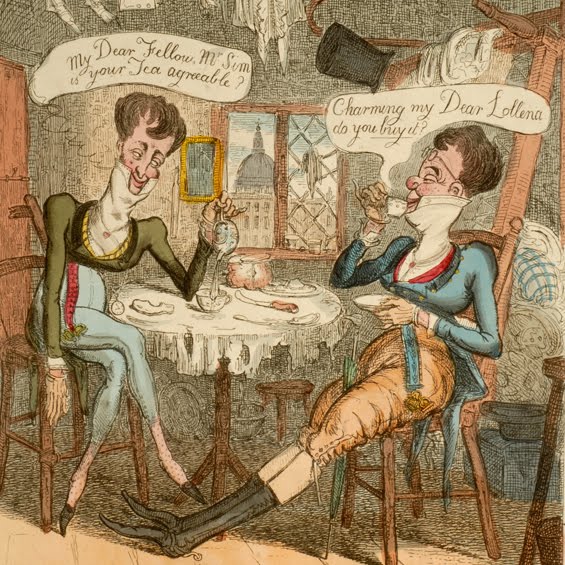
Two dandies by Cruikshank dresssed to the nines. While exquisitely rigged out, they take tea in a mean hovel of a room. Note the ragged curtains and table cloth, the dishes on the floor and the wash hanging on the line overhead.

While the term dandy has come to mean many things, among my favorite cartoons of the Regency era are those that make sport of them. These caricatures must have been popular then, and are irresistible to view now.

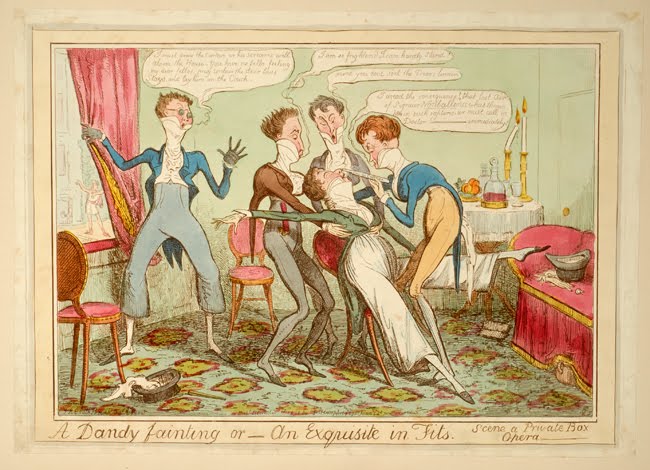
A Dandy Fainting, or an Exquisite in Fits, Cruikshank. This scene at a private box at the opera gives one a sense of how similar it is to today’s private boxes at a stadium. Note the table with food and drink; the couch, and the curtain that allowed for privacy.

Read Full Post »

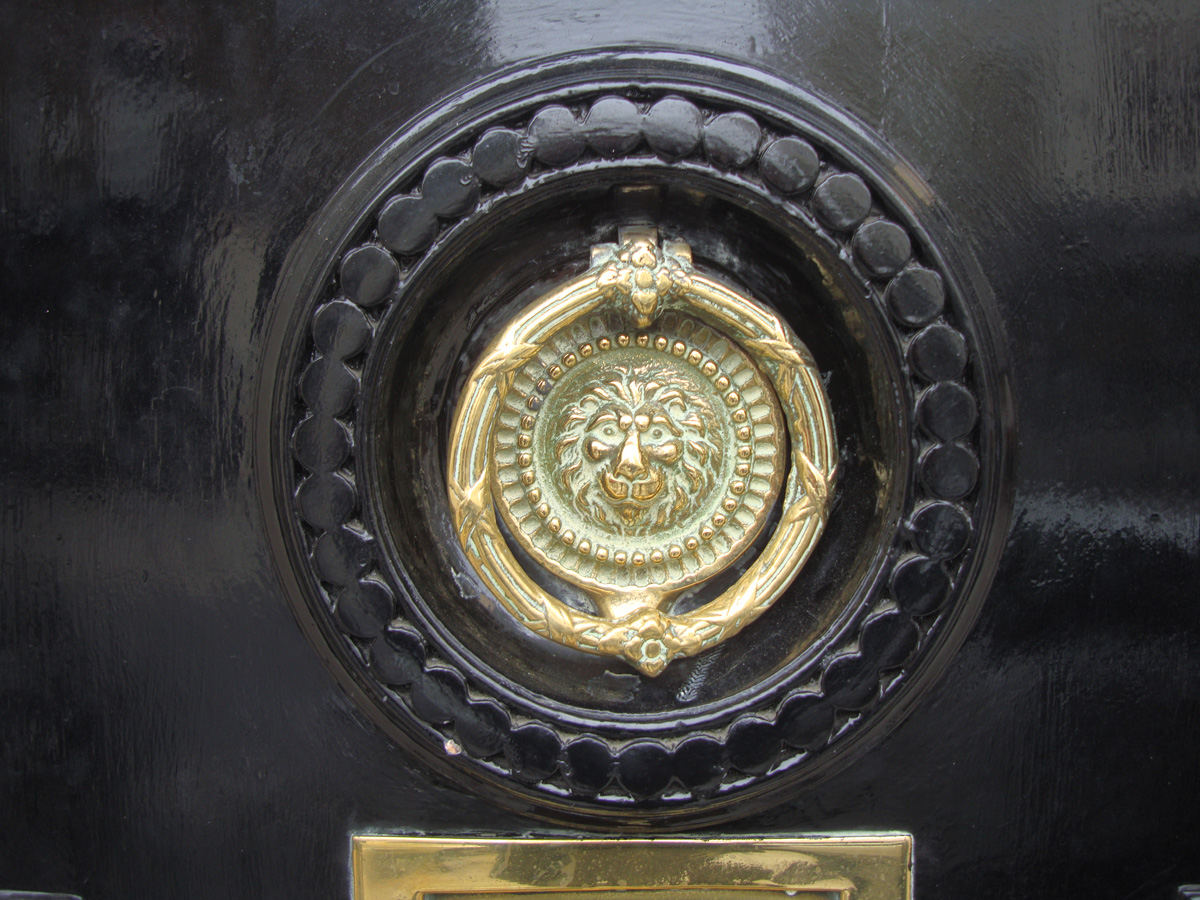
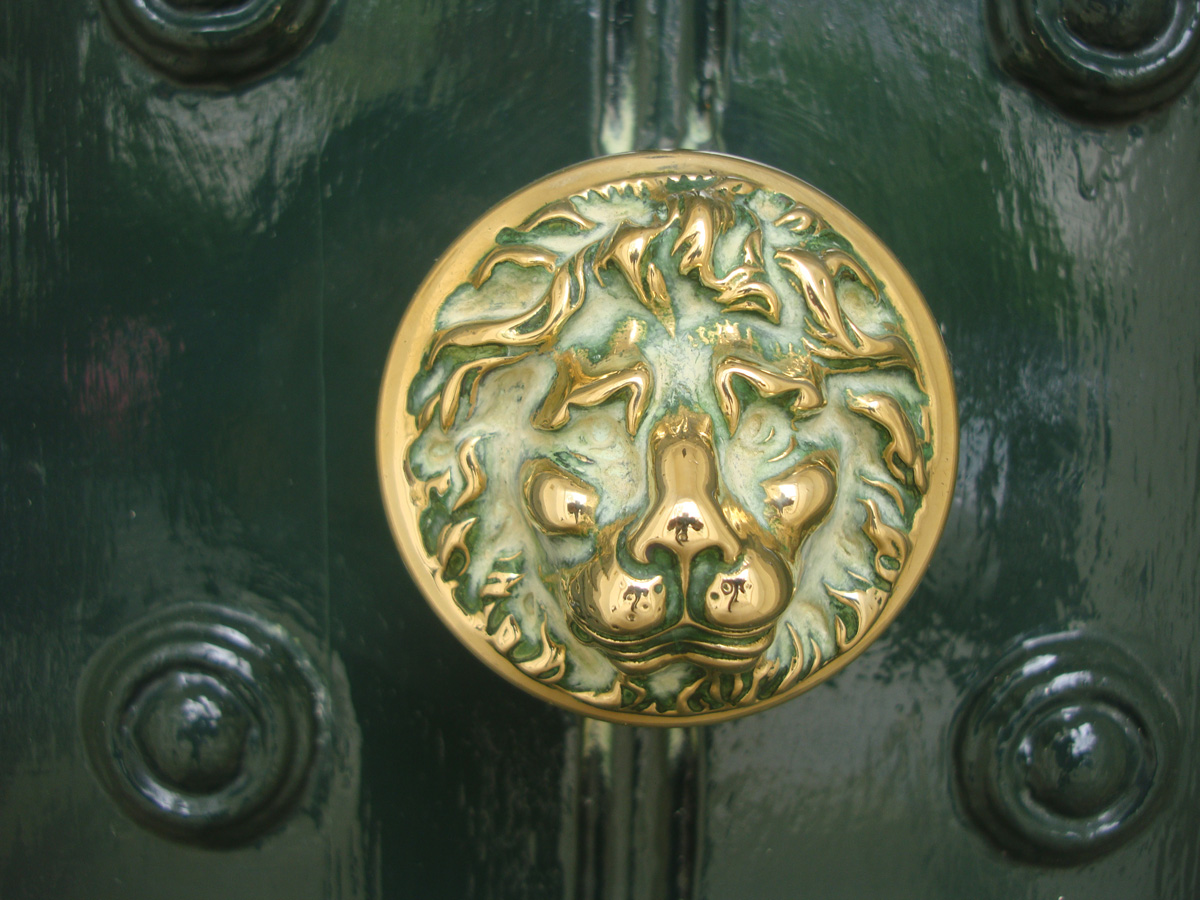
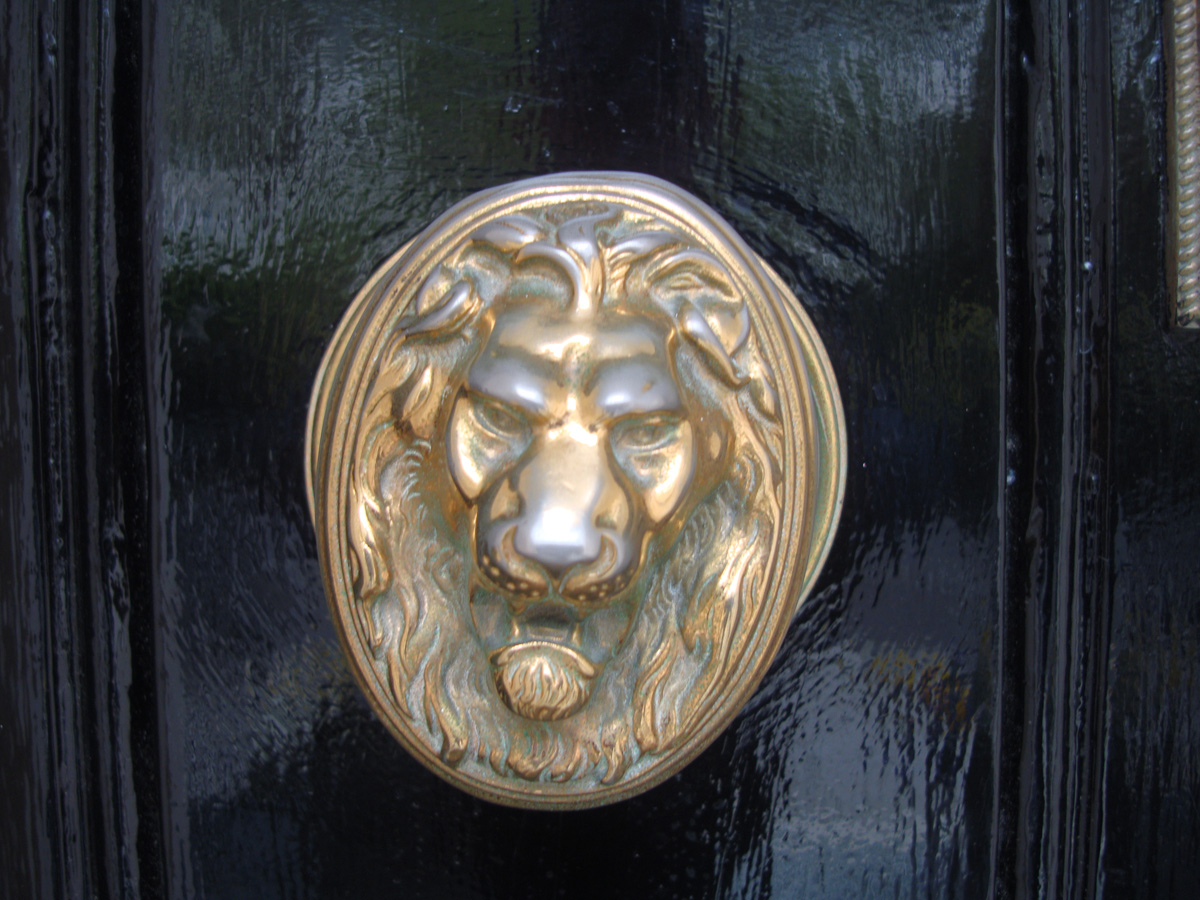
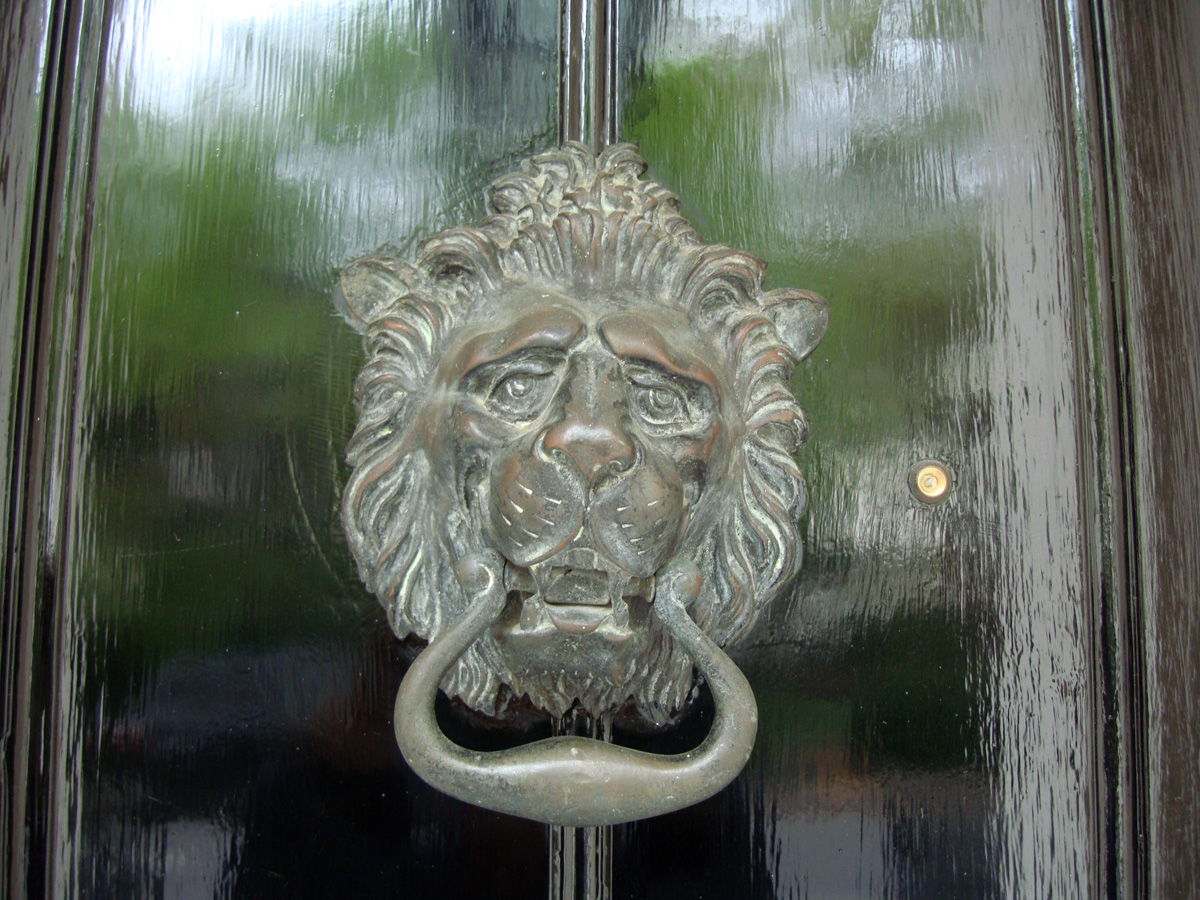
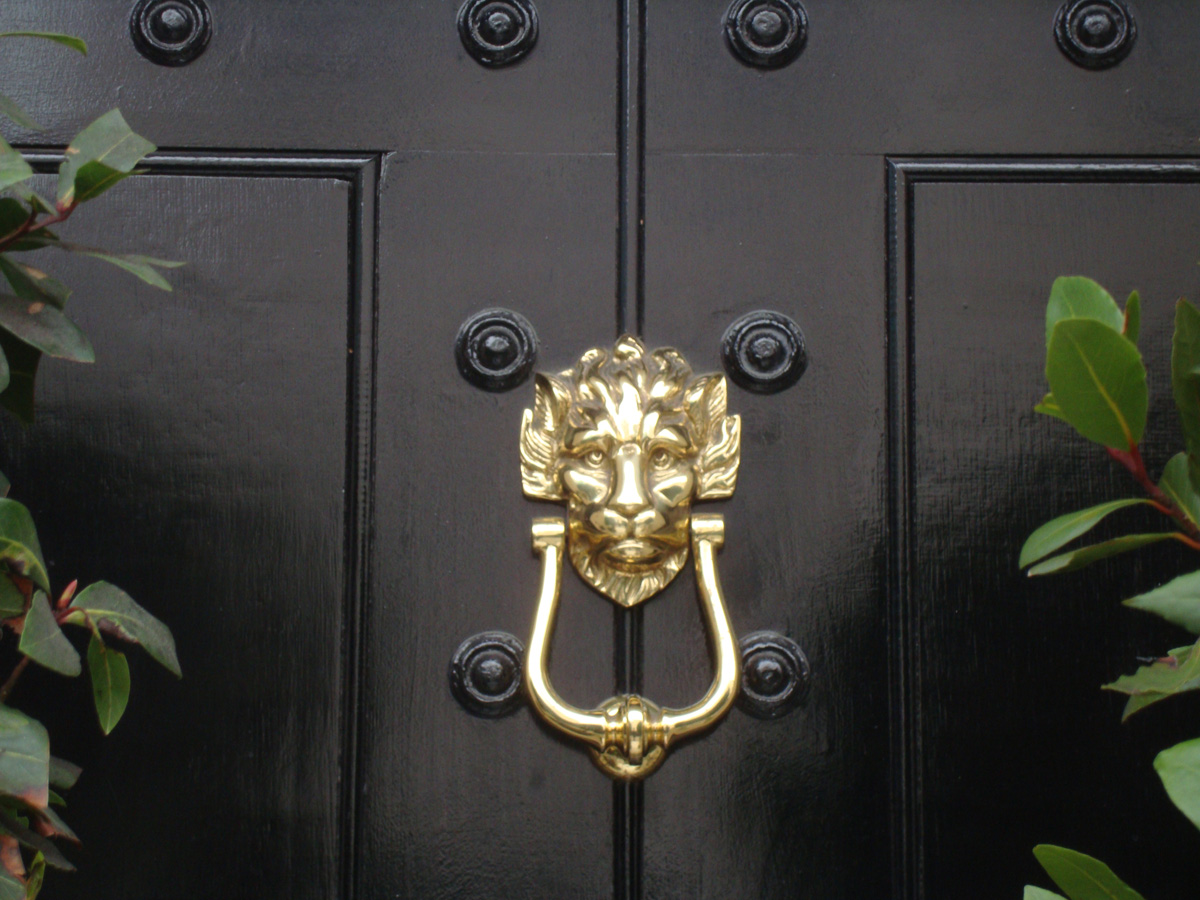
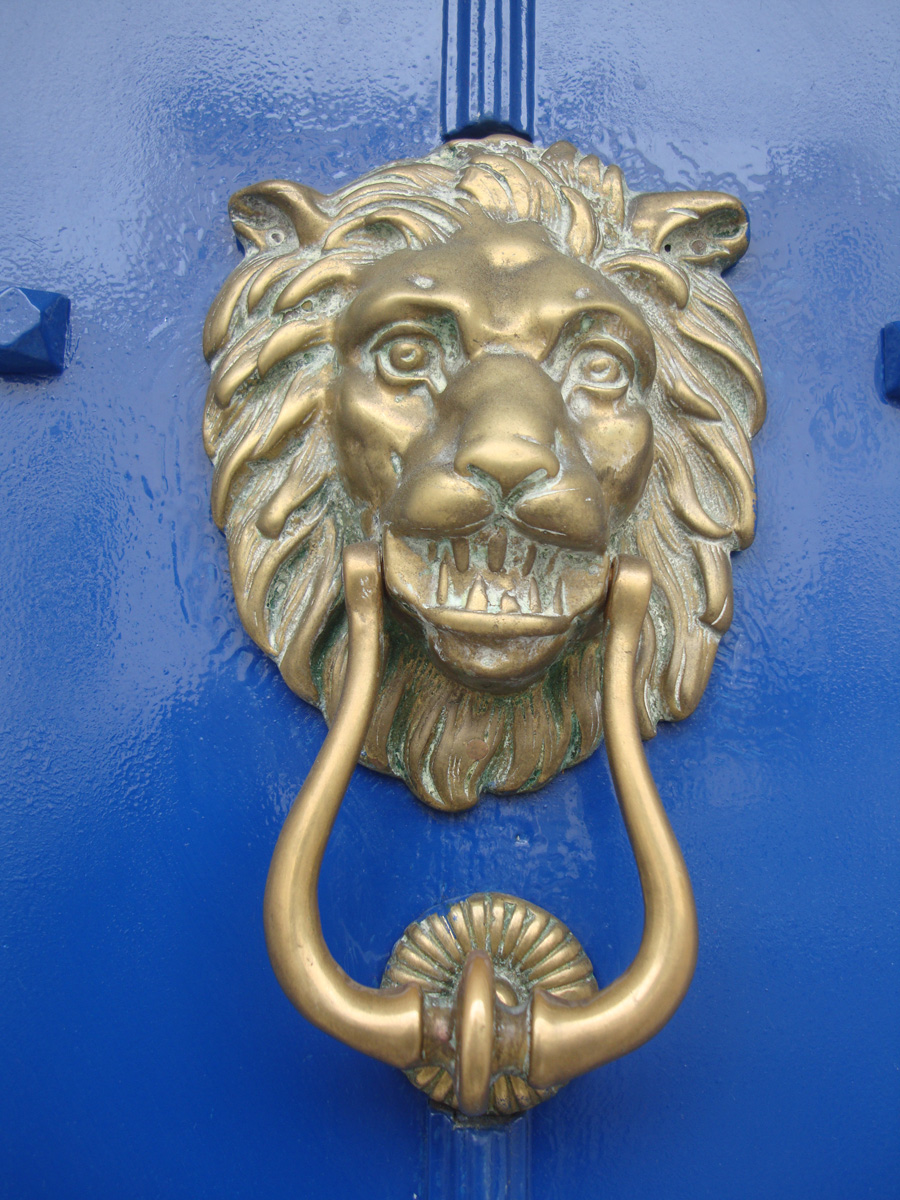
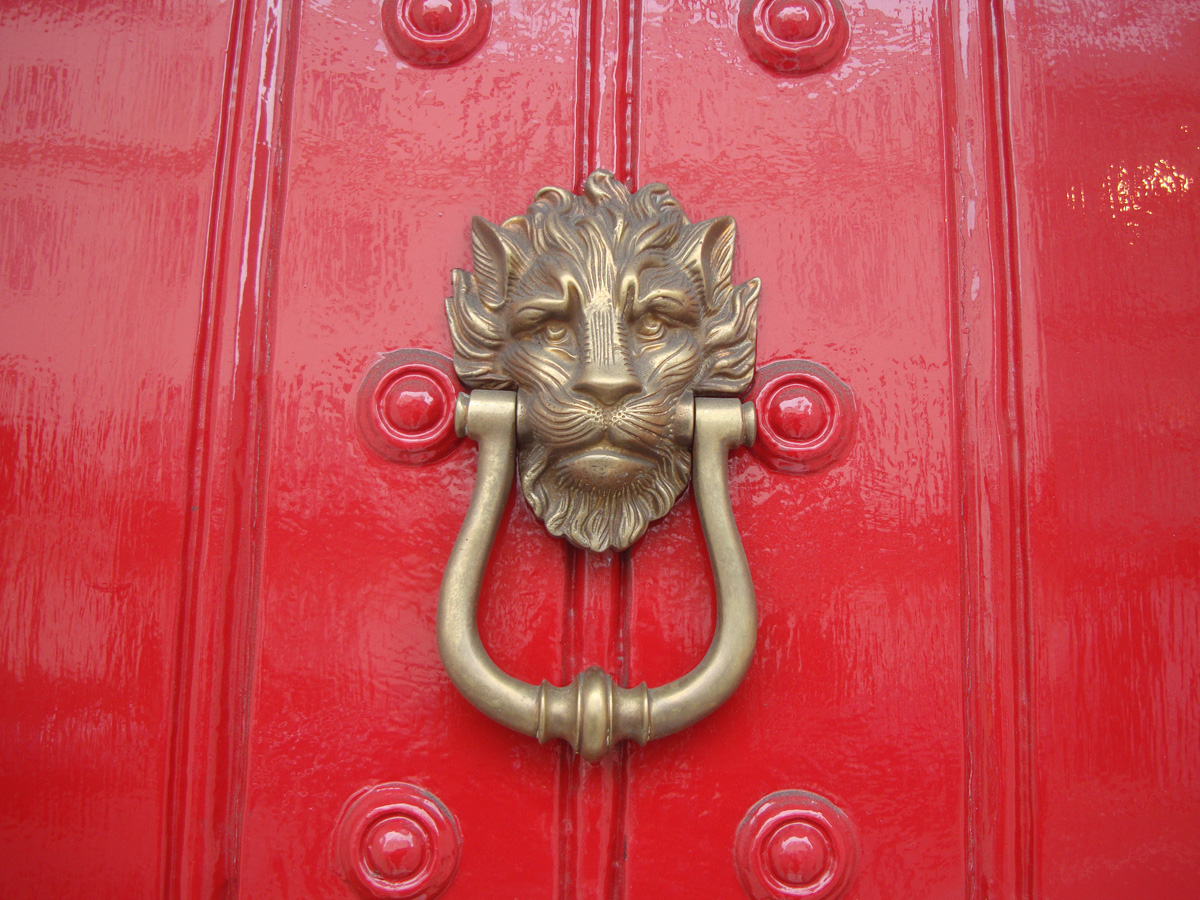
Inquiring readers, guest blogger Tony Grant is a marvelous photographer, as you might have discovered from the images that accompany his posts. A week or so ago he wrote a post about door knockers. He provided only two original images: the rest came from the web. Last weekend he rectified the situation, saying:

I drove into London to meet my daughter off the Cardiff coach at Victoria Coach Station today. I think I did an article on Belgravia once connected with the upstairs Downstairs series. Victoria is in Belgravia.To cut this story short, I had time to have a walk around Belgravia and along Eaton Square. The doors to those houses have a superfluity of Lion head door knockers.
What I have discovered taking these photographs is that  each lion head has it’s  own personality. They are all different which means they were all made individually, each from their own unique mould.

What struck me in viewing those photos is how beautifully painted the doors are. Tony is right – the lions all have their own personalities! Enjoy. Click on each image to view the larger photo.

Read Full Post »

I’ve placed these gorgeous Ackermann fashion plates here  to wish my readers who are mothers a Happy Mother’s day. Aren’t these images precious?

1812 morning dress or domestic dress.

Click on images to enlarge.

1826 evening gowns, March.

Read Full Post »

« Newer Posts - Older Posts »