Feeds:
Posts
Comments

Archive for the ‘Regency style’ Category

Dressing in a 1790s round gown is a short 23 second clip.

This video of getting into an 1805 gown has been around longer, but is worth revisiting. Koshkacat has a fabulous site. In this video one can see why a maid’s (or a relative’s) help is required.

At the bottom of this web page by Wm Booth Draper, you will see the sort of straight pins that were used to close gowns.

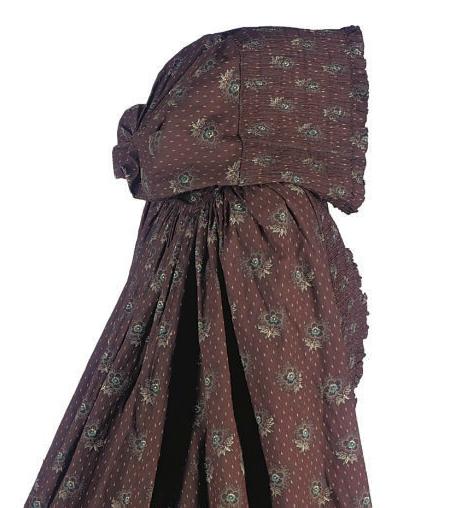
This chocolate brown chintz cloak from 1790 has a cream and turquoise floral print. The hood and edges are deeply pleated, and the entire garment is lined in cream flannel with a scarlet floral print and a tan print cotton. Images@Christie’s.

Read Full Post »

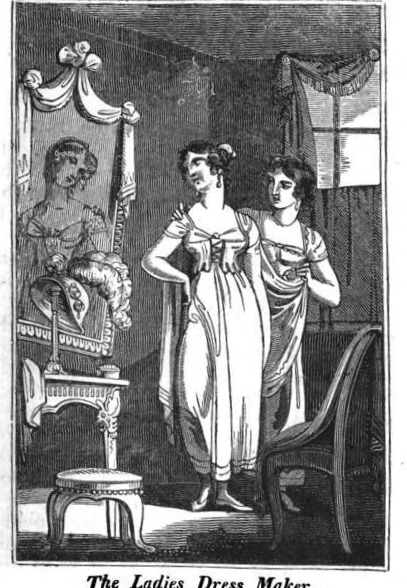
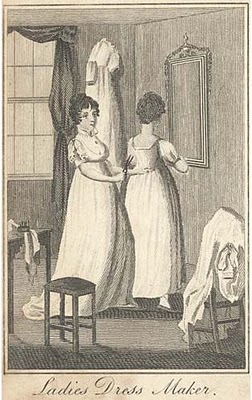
Gentle readers: Today I present to you this chapter about The Dress Maker in its entirety from a book in the public domain, Book of English Trades, and library of the useful arts, published in 1818.

THE LADIES’ DRESS-MAKER.

Image from the book: "The plate represents the Dress-Maker taking the pattern off from* a lady, by means of a piece of paper or cloth: the pattern, if taken in cloth, becomes afterwards the lining of the dress."

Under this head we shall include not only the business of a Mantua Maker, but also of a Milliner: for, although in London these two parts of in fact the same trade, are frequently separate, they are not always so, and in the country they are very commonly united.

The history of dress would be as voluminous as the history of mankind: dress is a thing subject to almost daily fluctuation, so that a history of the ladies’ dresses in England, for merely half a dozen years, would furnish matter for a bulky volume; we shall therefore not attempt it, but merely observe that the best, and, perhaps, the only excuse for such continual change in the empire of dress, is the opportunity which that change offers of employment to those persons who would otherwise have no immediate claim upon the rich and opulent; and thus, what would be retained in their coffers, is now scattered in a variety of ways amongst the community in the purchase of luxurious dress, and in the alterations which fashion is continually introducing.

In the Milliner, taste and fancy are required; with a quickness in discerning, imitating, and improving upon various fashions,which are perpetually changing among the higher circles.

  • Silks and Satins, of various sorts, are much used in this business; which were formerly imported into this country, but now are manufactured ia great perfection in Spitalfields and its neighbourhood.
  • Gauze is a very thin, slight, transparent kind of stuff, woven sometimes of silk, and sometimes only of thread.
  • Crape is a very light, transparent stuff; in some respects like gauze: but it is made of raw silk, gummed and twisted on the mill, and woven without crossing. It is used for mourning, and is now a very fashionable article in court-dresses.
  • Spangles are small, thin, round leaves of metal, pierced in the middle, which are sewed on as ornaments to dress.
  • Artificial Flowers are made, sometimes, of very fine coloured paper, sometimes of the inside linings upon which the silk worm spins its silk, but principally of cambric, which is a kind of linen made of flax, and was first manufactured at Cambray in France, whence its name.
  • Ribbands used by the Milliners are woven: of these there are different sorts, distinguished by different names; as, the China, the sarcenet, and the satin.
  • Muffs and fur tippets are sold by the Milliner; but the manufacture of them from the skin, is a distinct business.
  • Velvet is also used by Milliners, and is now much in fashion: it is a sort of stuff, or silk; the nap of which is formed of part of the threads of the warp, which the workman puts on a channeled ruler, and then cuts, by drawing a sharp steel tool along the channel of the ruler, to the end of the warp.
  • Muslin is a fine sort of cloth, wholly made of cotton, so named from the circumstance of having a downy nap on its surface, resembling moss, which in French is called mousse.

Dress Maker

The Ladies’ Dress-Maker’s customers are not always easily pleased; they frequently expect more from their dress than it is capable of giving. “Dress,” says Mr. Addison, ” is grown of universal use in the conduct of life. Civilities and respect are only paid to appearance. It is a varnish that gives a lustre to every action, that introduces us into all polite assemblies, and the only certain method of making most of the youth of our nation conspicuous: hence, Milton asserts of the fair sex,

-Of outward form
Elaborate, of in ward, less exact.’

“A lady of genius will give a genteel air to her whole dress, by a well fancied suit of knots, as a judicious writer gives a spirit to a whole sentence, by a single expression.”

The Dress-Maker must be an expert anatomist; and must, if judiciously chosen, have a name of French termination; she must know how to hide all defects in the proportions of the body, and must be able to mould the shape by the stays, that, while she corrects the body, she may not interfere with the pleasures of the palate.

The business of a Ladies’ Dress-Maker and Milliner, when conducted upon a large scale and in a fashionable situation, is very profitable ; but the mere work-women do not get any thing at all adequate to their labour. They are frequently obliged to sit up very late, and the recompense for extra work is, in general, a poor remuneration for the time spent.

More on the topic on this blog:

Read Full Post »

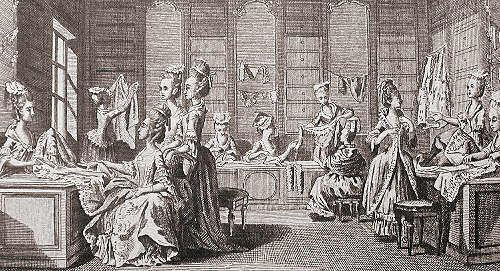
Early milliner shops were like our department stores, selling all manner of fashionable items. The image of a milliner shop in Paris shows the costumes we have come to associate with the era of Marie Antoinette. After the French Revolution, fashions changes drastically, for the French citizenry did not want to be reminded of the recent bloodshed or the ancient Regime. The rage in fashion was an imitation of the classical dress worn by the Greeks and Romans.

Dressmaker shop, 1775

The end of the 18th century witnessed a signal change in the style of women’s dress. The gown no longer consisted of two dresses, an under and an outer one. The formal styles which had prevailed throughout the century and brought into use stiff materials such as solid damasks, velvets, satins, and silks, were replaced by the fashion of the short-waisted clinging gown made of muslin and soft silk. This “Empire” mode characterized the dress of the first quarter of the 19th century. – The Encyclopedia Americana, Frederick Converse Beach, George Edwin Rines, 1902,  “costume”

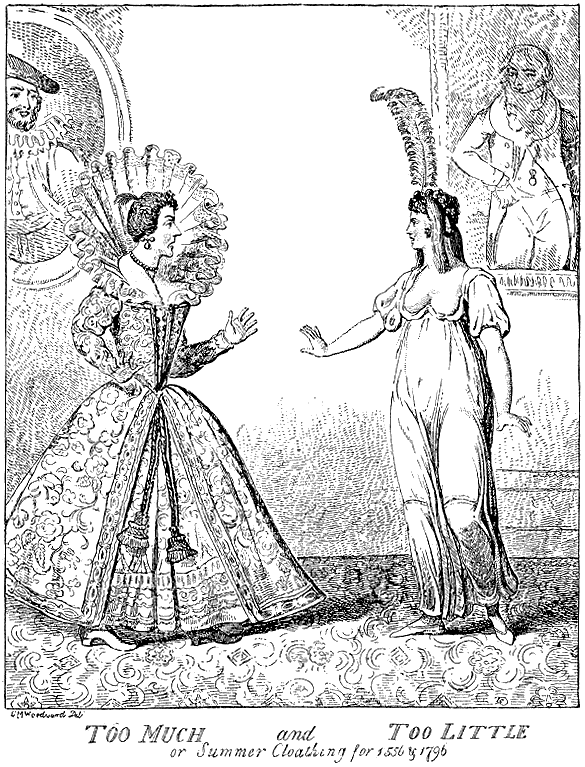
Too Much and Too Little, or Summer Cloathing for 1556 & 1796

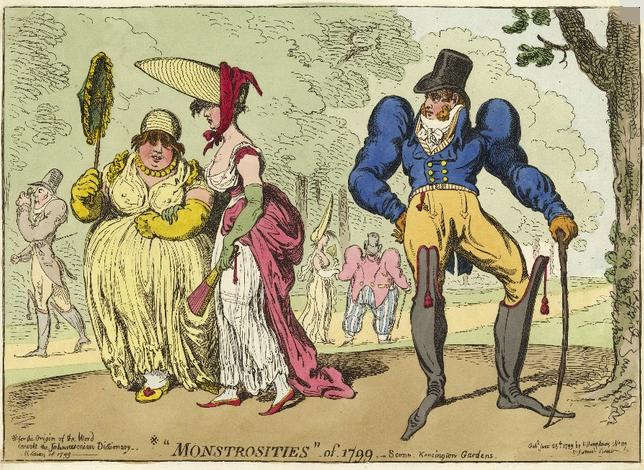
Parisians dressed in the new fashions were known as the “incroyables” (men) and the “merveilleuses,” (women.) These fashions were not at first admired and generally regarded as hideous. Caricaturists had a heyday making fun of these freaks of Fashion. British fashionistas shortly followed suit, as the cartoon by Gillray attests.

Monstrosities of 1799, Kensington Gardens, Gillray

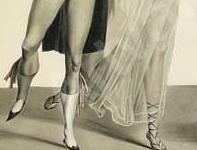
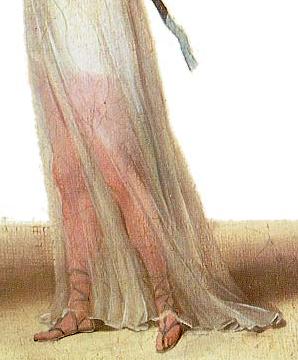
Macaronis turned into dandies, and gently bred ladies wore clothes so thin and diaphanous, that the shape of their legs showed clearly through the skirts. The muslin disease (catching a serious cold or pneumonia) lasted for as long as fashionable young women wore thin muslin dresses with bare necks and arms in damp and drafty buildings.

Merveilleuse et Incroyable. The close up of the dress reveals how sheer the fabrics were.

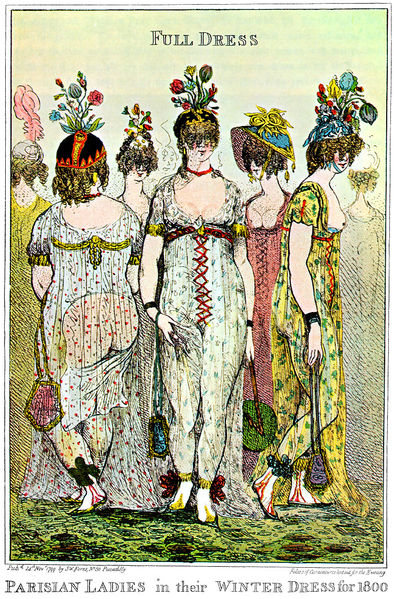
In some instances, nothing was left to the imagination. In the satirical image below by Isaac Cruikshank, the ladies are shown wearing next to nothing. Satire took many forms in the late 18th century. The Lady’s Monthly Museum featured a dialogue between a lady visiting Paris and a man milliner. His answer is hilarious.

Caricature by Isaac Cruikshank

Dialogue Between a Lady and A Man Milliner at Paris

“Citizen, I am just come to town: –pray, have the goodness to inform me how I must appear, to be in the fashion.”
“Madame, ’tis done in a moment; in two minutes I shall equip you in the first style. –Have the goodness to take off that bonnet.”
“Well.”
“Off that petticoat.”
“There it is.”
“Away with these pockets.”
“There they go.”
“Throw off that handkerchief.”
“’Tis done.”
“Away with that corset and sleeves.”
“Will that do?”
“Yes, Madame, you are now in the fashion. ‘Tis an easy matter, you see.–To be dressed in the fashion, you have only to undress.” – The Lady’s Monthly Museum, February 01, 1801, pg. 126.

Definition of a man milliner: A man who makes or deals in millinery, that occupation having been at one time predominantly performed by women; hence, contemptuously, a man who is busied with trifling occupations or embellishments.

Louis-Léopold Boilly painted a gown so sheer that without a petticoat, her short chemise is easily visible under the delicate muslin.

The days of the Revolution (1789 – 1799) brought in simple fashions. Corsets were discarded, the waist became short and the skirt clinging, and cheap materials were used. During the Directoire, the women adapted the classic style, borrowing from both Greek and Roman fashions. These costumes were scanty, and frequently were split up the sides. The dresses were often transparent and worn without chemises. The gentlemen of this fantastic period were styled “Incroyables,” “Unimaginables”; the ladies, “Merveilleuses” and “Impossibles.”  The men wore an exaggerated copy of what had been previously called the English fashion.- Costume design and illustration,  Ethel Traphagen, 1918,  p 120.

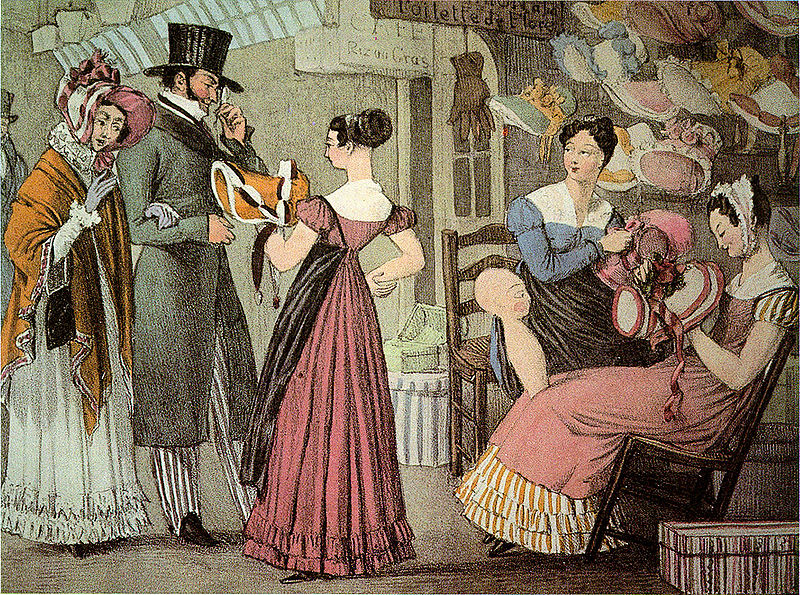
Millinery shop in Paris, 1822

A milliner could carry possibly a thousand different goods, becoming the forerunner of the modern department store. At this point, the term “milliner” was tied to the Latin word “mille,” meaning thousand.

The 18th Century milliner might have offered a thousand goods but all shared the quality of being fashionable accessories. Wares could include shoes, jewelry, table service, clocks, hosiery, fabrics, shirts, aprons, cloaks, caps, hats, muffs and mitts. – The Millinery Shop, Colonial Williamsburg

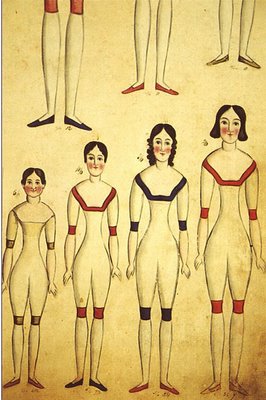
Milliner doll catalog, 1820s. These dolls were dressed in the fashion of the day. Look at the above image for a sample size of a doll. Image @Christine LeFever: Dolls and Fancywork

More on the topic:

Read Full Post »

Gentle Readers, With this article we once again benefit from Tony Grant’s expertise as a tour guide in England. He has written a lovely post about Steventon Rectory and its influence on Jane Austen’s description of Barton Cottage in Sense and Sensibility.

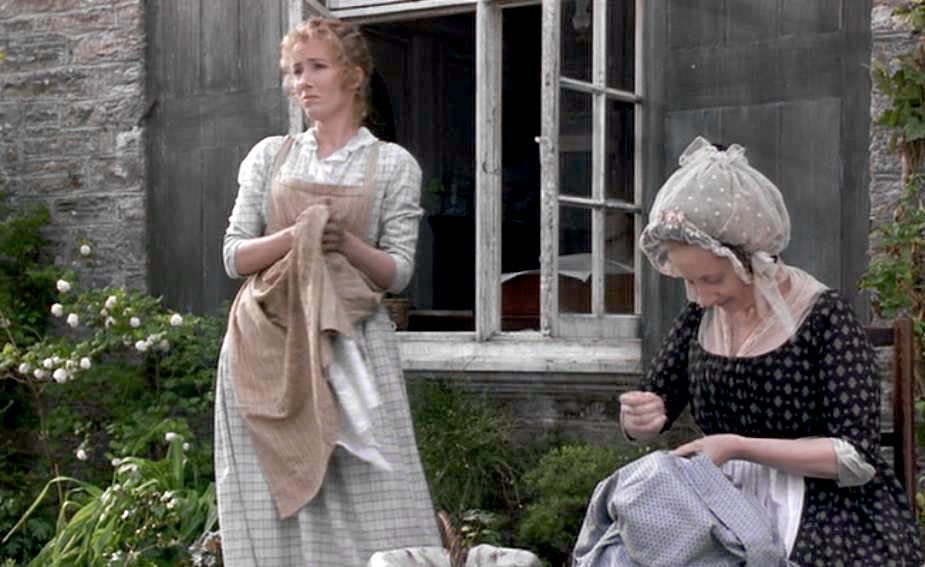
Does Barton Cottage, the cottage that Mrs Dashwood, Elinor and Marianne in Sense and Sensibility, retreat to and which is located in Devon, just north of Exeter, owe much to Steventon in Hampshire, Jane’s first home?

Elinor ( Emma Thompson) and Mrs. Dashwood (Gemma Jones) in front of Barton Cottage. Sense and Sensibility, 1995

I recently went to Steventon again, the birthplace of Jane Austen and where she spent her formative years until the age of twenty six. Steventon was where she thought she would spend the rest of her life. As soon as she was born she was sent to live with a family in the village. The mother of the household she was sent to became Jane’s wet nurse. Mrs Austen had nothing to do with her children as babies. This might provide an explanation for Jane’s aversion towards her mother as she grew older but it also explains that her attachment to Steventon was not just through her own family and the rectory but it was linked to the wider community and she had very close ties to some of the villagers.
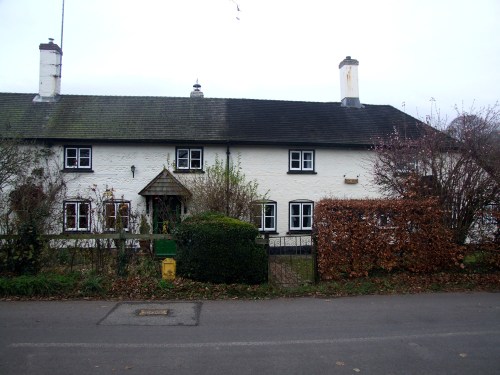
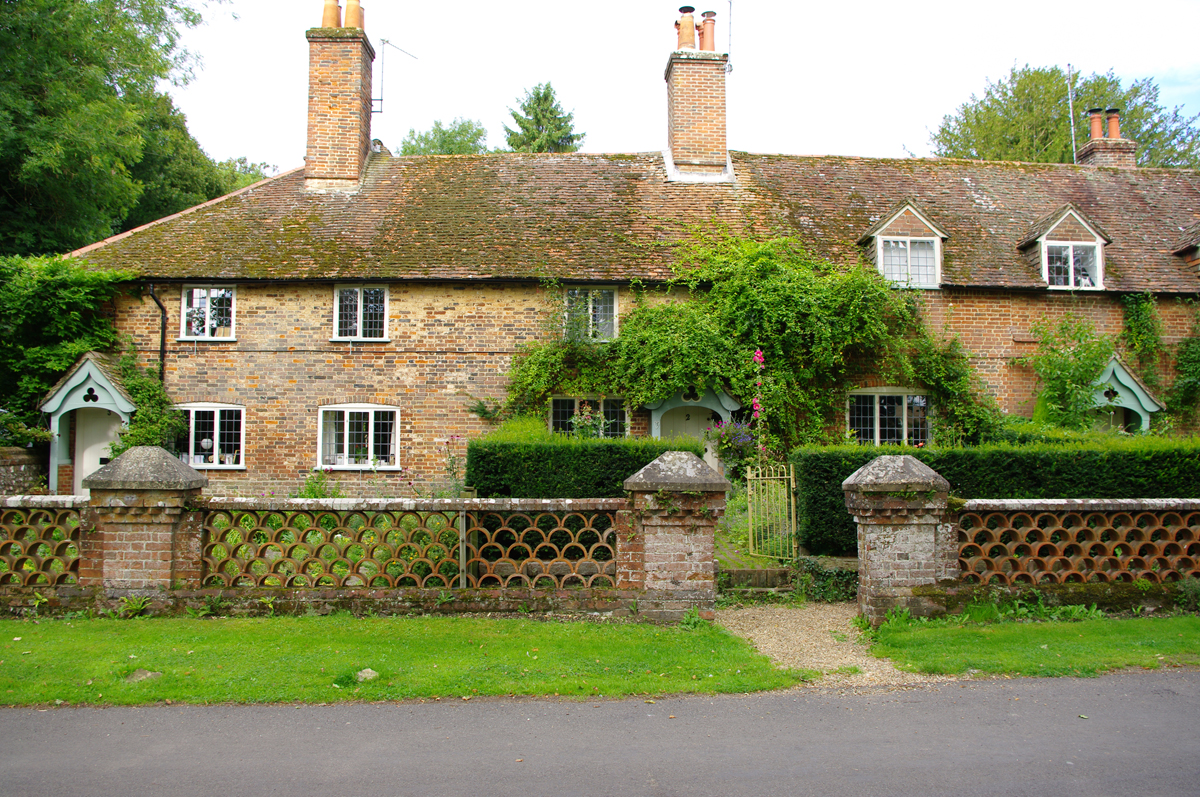
Row of cottages in Steventon. Image @Tony Grant

Steventon is set in a small Hampshire valley about five miles south west of Basingstoke, the nearest large town. When you visit Steventon today there are a few cottages and houses, not dissimilar in number to Jane’s days and a cross roads that has a cluster of old cottages, some of them terraced, set in a beautiful verdant landscape of fields and trees and gently rising downland.
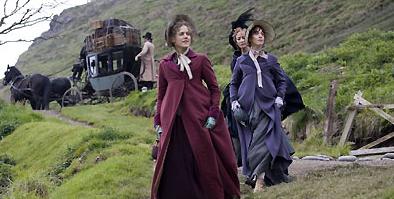
The Dashwood women see Barton Cottage for the first time. Sense and Sensibility, 2008.

“a view of Barton Valley as they entered it gave them cheerfulness. It was a pleasant fertile spot, well wooded and rich in pasture.”
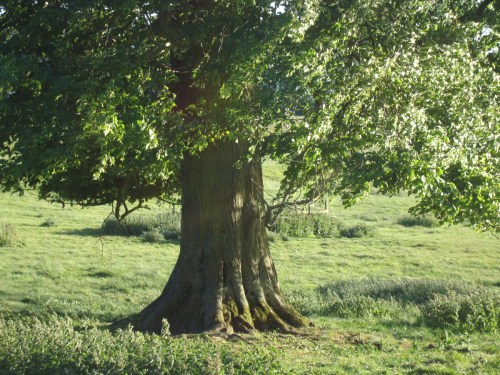
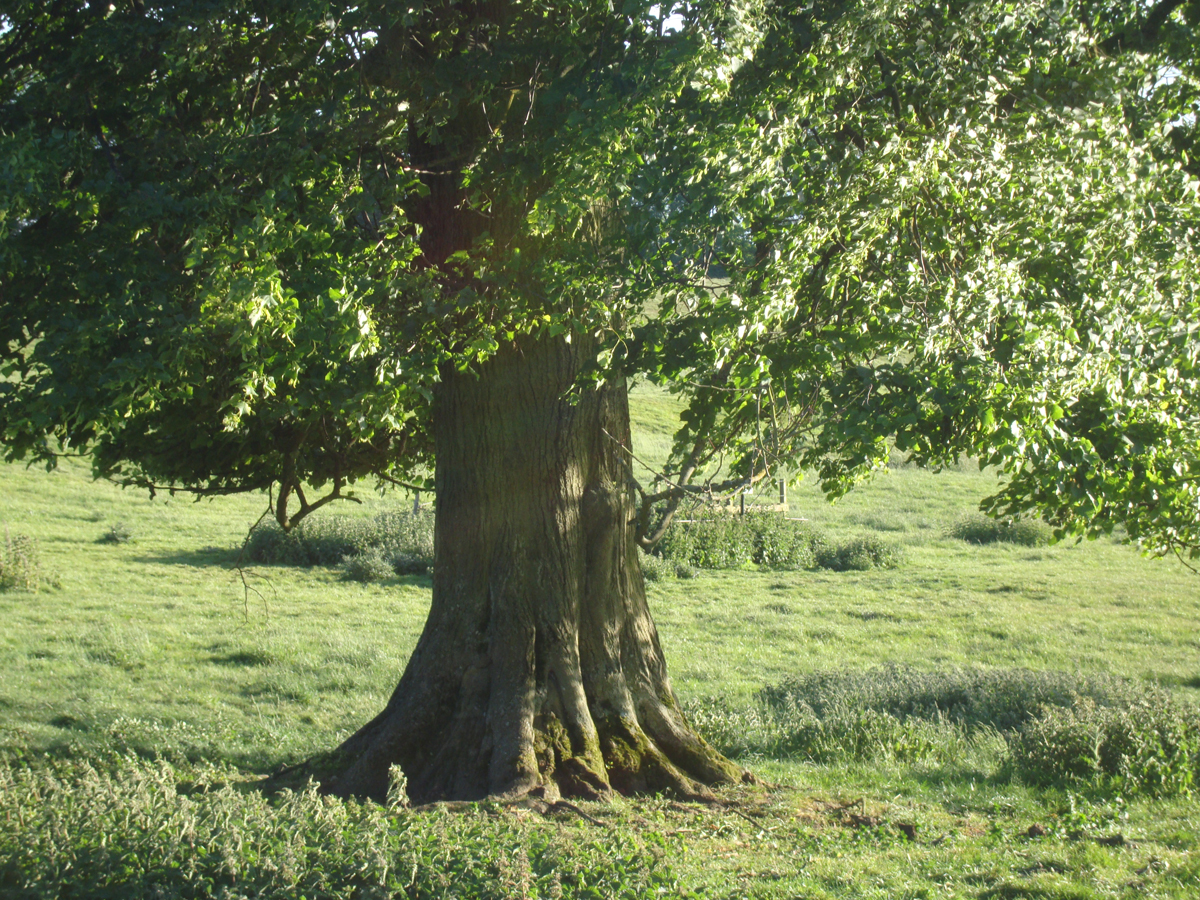
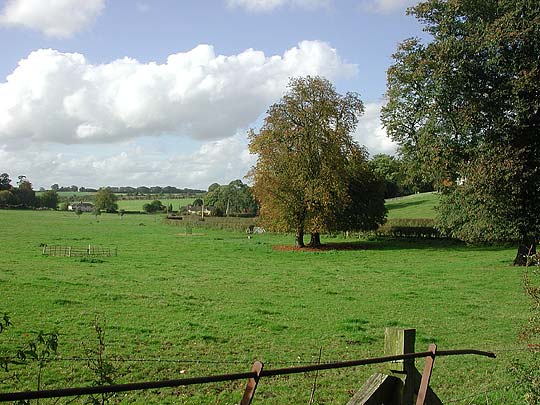
The site of the Rectory at Steventon. You can see the fence that surrounds the pump in back of the tree. Image @Tony Grant

Take the fork at the cross roads along the valley and within a few hundred yards you come to a lane that branches off to the right, almost hidden by bushes and trees. If you can stop at this corner and look into the field on the right, there are two or three tall mature trees , sycamore and ash, and next to one tree is a rustic wooden fenced area with an old water pump in the centre. This is the site of Steventon Rectory, Jane’s old home. The pump is presumed to be the pump the Austens had in their back yard. This rectory had become derelict, and was demolished by Edward Austen Knight when his son, William Knight, took over as vicar of Steventon.  When George Austen retired, he moved Jane, Cassandra and their mother to Bath. James Austen became the new vicar until his death in 1819, when Henry Austen stepped into the position.
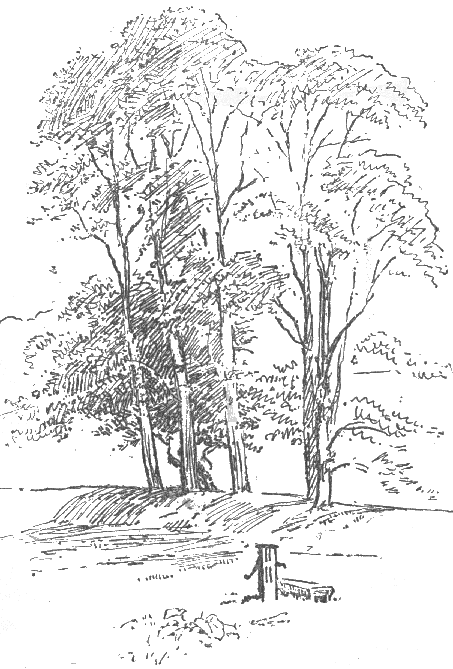
The pump. Relic at Steventon Rectory. Illustration by Ellen G. Hill, 1923.

Edward had the new rectory built in the valley in fields on the opposite side of the road.  It still stands today, a fine white house on the sunny side of the valley facing south east.
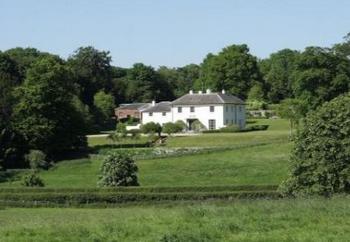
Steventon House, built by Jane's brother Edward c. 1820-22. Image @Jane Austen Today

Behind the site of the original rectory where Jane lived there is a grassy meadow sloping steeply upwards for a quarter of mile to where her father’s church, St Nicholas, is situated next to a large house where the Digweeds lived. Jane, Cassandra and her brothers often scrambled up the hill behind their rectory to play with the Digweed children.They were some of their childhood friends. There are cultivated fields, meadows and woody areas all around, especially on the top of the hill near the Digweeds home behind the rectory site.
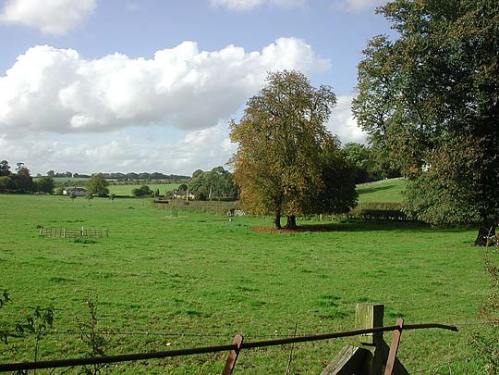
Site of the Steventon Rectory today. The fenced in pump is at left.

“The situation of the house was good. High hills rose immediately behind, and at no great distance on each side; some of which were open downs, the other cultivated and woody.”

The rectory Jane lived in would have been quite spacious because at least seven children lived there, five of her six brothers, herself and her sister Cassandra as well as her mother and father, a couple of servants and for much of the year, sons of some of the local gentry who sent their boys to the Reverend Austen for education and entry to Oxford or Cambridge. Oxford had been the Reverend Austen’s university. Her brother George did not live with the family however because of his disabilities. He was virtually adopted by another family who cared for him. Whether it was for financial gain I am not sure. So the rectory must have been spacious.

“Barton Cottage, though small, was comfortable and compact; but as a cottage it was defective, for the building was regular, the roof was tiled, the window shutters were not painted green, nor were the walls covered with honeysuckles. A narrow passage led directly through the house into the garden behind. On each side of the entrance was a sitting room about sixteen feet square; and beyond them were the offices and the stairs. Four bedrooms and two garrets formed the rest of the house.”
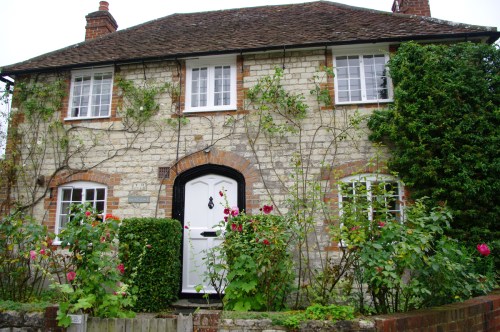
Cottage of local stone. Image @Tony Grant

Barton cottage doesn’t resemble the rectory from this description but Jane must have used her knowledge of cottages in the area of Steventon. Jane is very precise about the size of the two sitting rooms, sixteen feet square. The cottage is used in a special way within the novel. She describes it as being , “defective.” This is symbolic of the situation Elinor, Marianne and their mother are in. They are experiencing fractured times and are out of place financially, socially and the cottage they have come to, places them in a different strata of society than they are accustomed to. From the exact dimensions of the sitting rooms Jane Austen gives us, aren’t those rooms too small to socialise in the manner they are used to? It is a,”defective,” place on many levels and it’s not like other cottages.
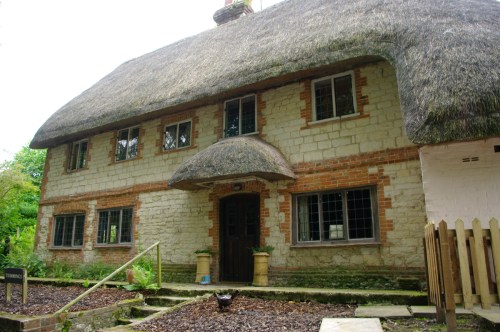
Cottage without honeysuckle. Image @Tony Grant

Jane would have been very familiar with the traditional country cottage but she makes Barton Cottage different, almost an eye sore, bare of climbing honeysuckle and green painted windows. Mrs Dashwood has plans for it, to change it and develop it. But can these come to fruition? Can the cottage be developed and grow? Can the Dashwood sisters adapt, develop and grow ? Does Barton owe much to Steventon? I would say so. Steventon formed Jane’s knowledge and experience of cottages and she used that knowledge of how cottages are and the meaning in social class and wealth different cottages might portray to incorporate the cottage at Barton into the fabric and meaning of Sense and Sensibility.
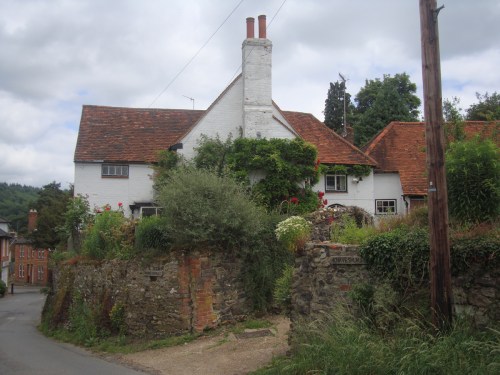
Cottage. Image @Tony Grant

Hampshire cottages:
If you ever visit Hampshire and pass through the countryside you will see a variety of types and styles of cottage. Cottages have always been built with local materials readily at hand.
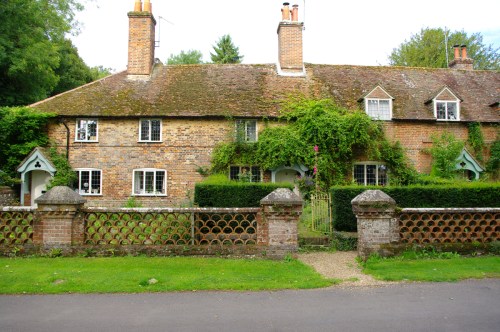
Clay tile roofs. Image @Tony Grant

In the Cotswolds you will find most villages made from Cotswold stone and roofed with tiles sliced from the same stone. This is a creamy yellow colour. Climbing roses, wisteria, lichen and mosses have had plenty of time to insinuate themselves into and on these mellow warm coloured buildings.
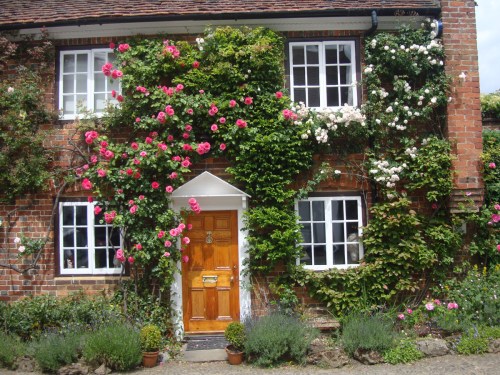
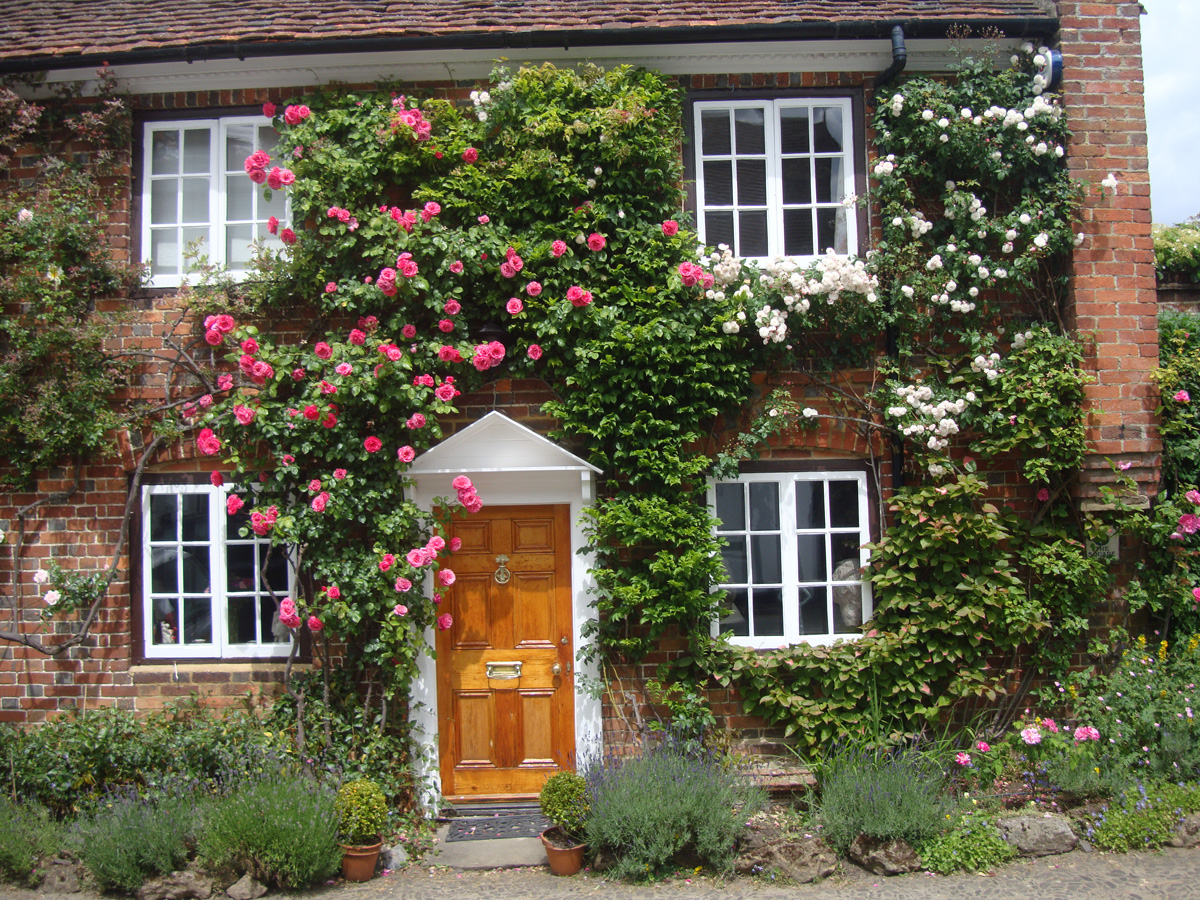
Roses round the door. Image @Tony Grant

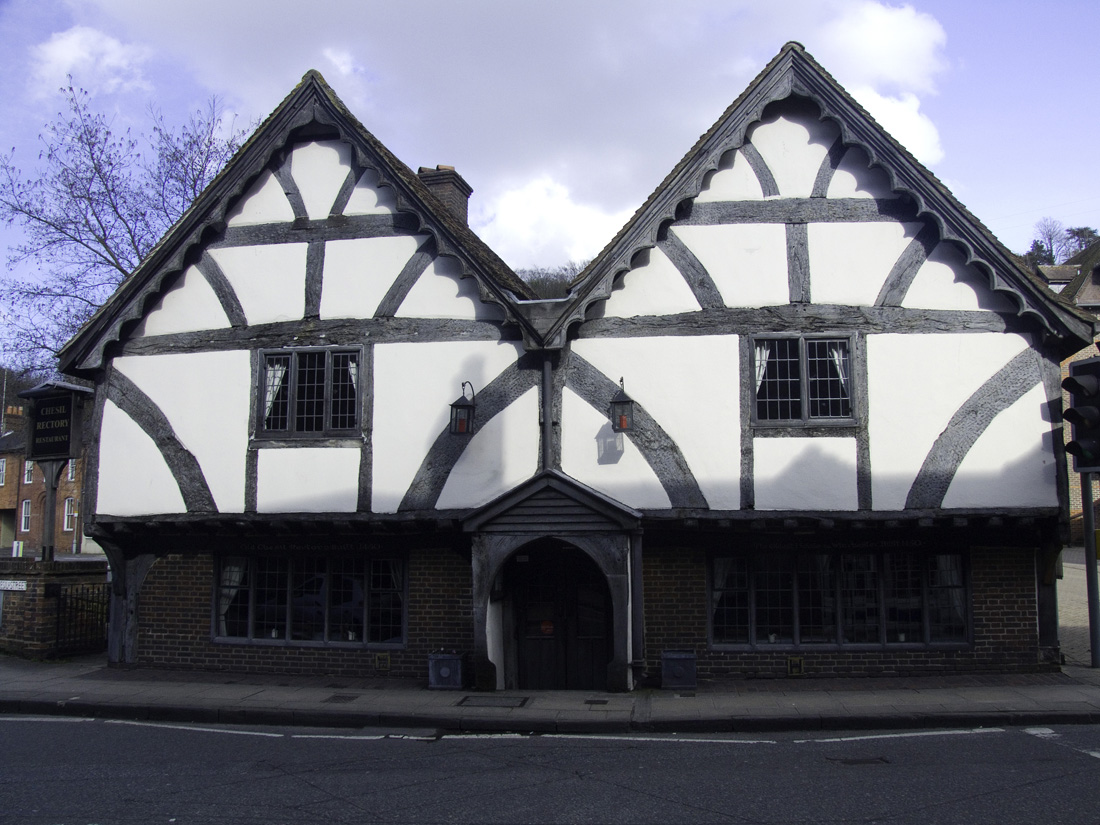
Hampshire, with its oak, elm and ash forests has many timber frame cottages. Great beams of wood cut from massive oaks have been merely incorporated into the frame and the spaces between the oak beamed framework filled with wattle and daub.
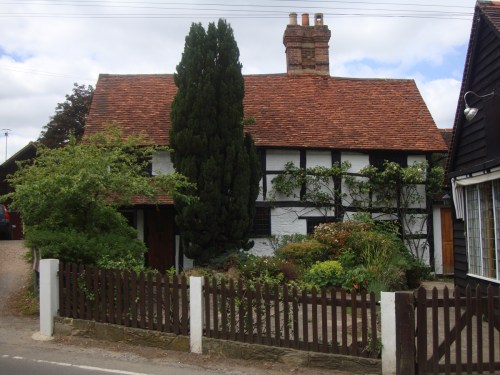
Cottage with wattle and daub. Image @Tony Grant

Wattle and daub being made from woven ash fencing and plastered with a mixture of cow dung, lime and straw. (Click here for a video.)

The oldest building in Winchester is made with wattle and daub. Image @Tony Grant

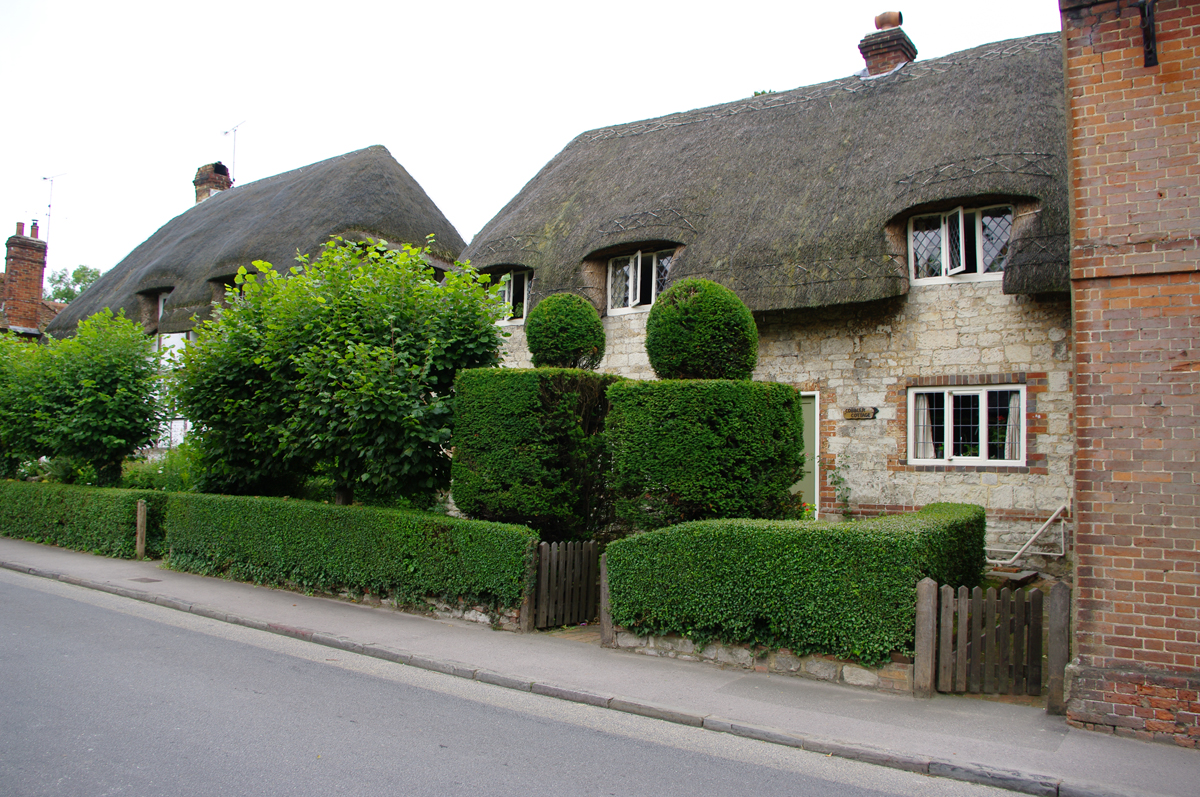
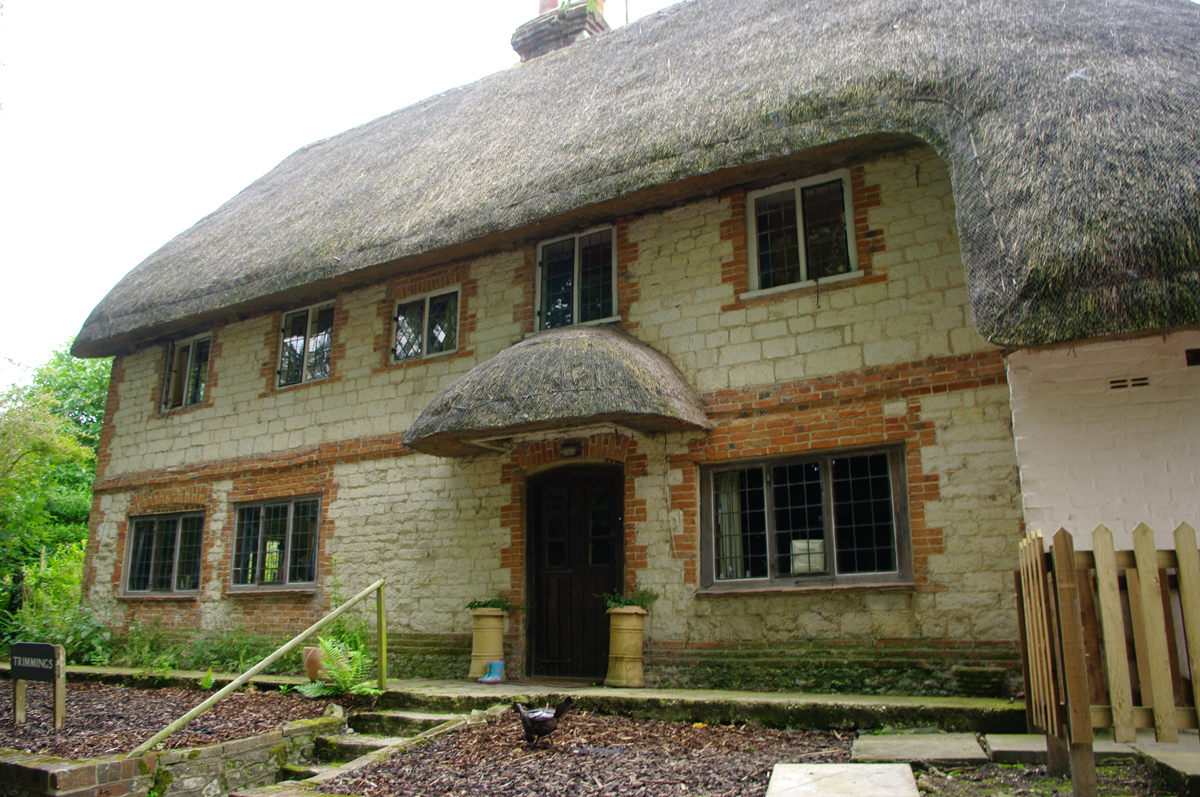
The roofs are thatched with reeds or wheat stalks. Some have clay tiles where local clay deposits provide the raw material and Hampshire brick works do the work of firing the tiles.

Thatched cottages. Image @Tony Grant

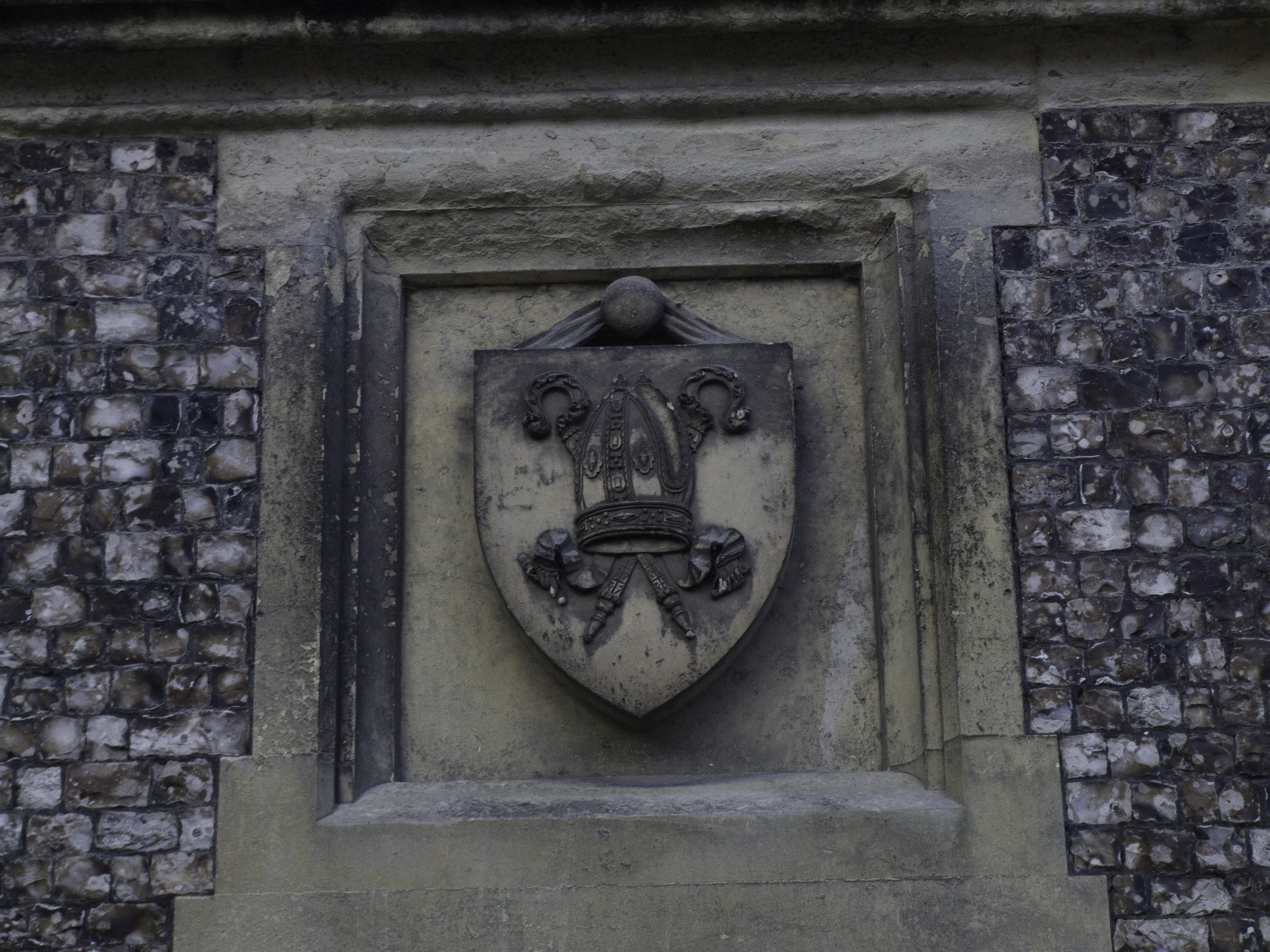
Many buildings are made of flint. Hampshire has large areas of chalk downland. Within the chalk are found nodules of flint.

Winchester College Shield erected on a wall made with flint building material. Click on photo for a larger image. Image @Tony Grant

Nobody is quite sure how flint is formed in the chalk but it is a very hard crystalline rock, glassy in substance. It has been one of the most versatile materials ever.
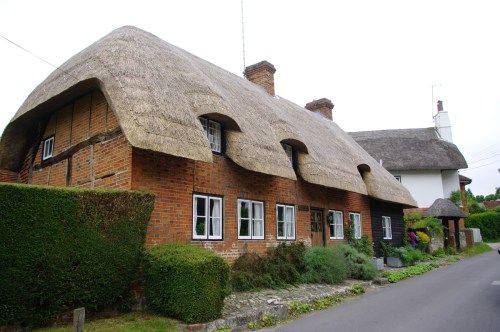
More thatched cottages. Image @Tony Grant

Stone age man used it for axes, arrow heads, scrapers and knives. It has been used and is still used to build strong walls. Flint lock muskets used tiny bits of flint fixed into their firing mechanism to create a spark which ignited the gunpowder to propel the musket ball down the barrel. Flint can be struck against flint or metal to create a spark to light a fire.

Chawton Cottage. Image @Tony Grant

More on the topic:

Read Full Post »

I came across this print by Isaak Cruikshank and was instantly captivated. Instead sketching studies of rich and influential people, Cruikshank used the images of ordinary folks. The study of physiognomy goes back a long time, but as early as the 18th century, it was regarded as a dangerous “science.”

Click on image for a larger view.

Physiognomy was regarded by those who cultivated it as a twofold science: (i) a mode of discriminating character by the outward appearance, and (2) a method of divination from form and feature. On account of the abuses of the latter aspect of the subject its practice was forbidden by the English law. By Ihe act of parliament 17 George II. c. 5 (1743) all persons pretending to have skill in physiognomy wore deemed rogues and vagabonds, and were liable to be publicly whipped, or sent to the house of correction until next sessions.1 The pursuit thus stigmatized as unlawful is one of great antiquity, and one which in ancient and medieval times had an extensive though now almost forgotten literature. It was Very early noticed that the good and evil passions by their continual exercise stamp their impress on the face, and that each particular passion has its own expression”. – The Encyclopedia Britannica, a dictionary of arts and sciences, Vol 21, Google eBook

Physiognomy studies, Charles LeBrun, 17th C

In About faces: physiognomy in nineteenth-century Britain, 2010 ,  Sharrona Pearl discusses the study of facial features and their relationship to character during Jane Austen’s and Charles Dickens’ day. Caricaturists felt the license to distort and exaggerate features, much as Cruikshank did. Portrait artists especially “learned how to communicate internal character and lived experience, while adhering strictly to the viewed external appearance.”

While Cruikshank’s images represented a fascinating study that provided a handy visual bank of expressions and features for the caricaturist, the study of physiognomy could take people down a dangerous path of fostering stereotypes.  Hitler took to this practice to an extreme when he offered descriptions of ideal Aryan features and contrasted them to the facial features of the “typical Jew”.  LeBrun’s image (above) compared people’s facial features to animals. There was nothing fun or funny about such sketches, which were more about prejudiced viewpoints than a reflection of  reality.

Physiognomy Studies after Pierre Thomas Le Clerc, 1760

While it is hard for humans to escape first impressions and to be judged by looks alone,  one has to tread carefully in making assumptions based on regular or irregular features. In the hands of a talented artist, however, one can tell much about the sitter’s character through the skilled manipulation of features and expression. Norman Rockwell tells a delightful tale about the nature of gossip in this masterful 20th century caricature. He needed no words to tell his humorous story.

Click on image for a larger view.

First image: Eighty-four physiognomic caricatures of English eighteenth century types. Etching by I. Cruikshank after G.M. Woodward.
1796 By: George Moutard Woodward after: Isaac Cruikshank
Published: Allen & West,London (15, Paternoster Row) : 1 August 1796
Size: platemark 24.9 x 37.1 cm.
Collection: Iconographic Collections
Library reference no.: ICV No 9699
Full Bibliographic Record Link to Wellcome Library Catalogue

Copyrighted work available under Creative Commons by-nc 2.0 UK: England & Wales, see http://images.wellcome.ac.uk/indexplus/page/Prices.html

Read Full Post »
« Newer Posts - Older Posts »